Sample Category Title
EUR/JPY Daily Outlook
Daily Pivots: (S1) 184.18; (P) 184.61; (R1) 185.19; More...
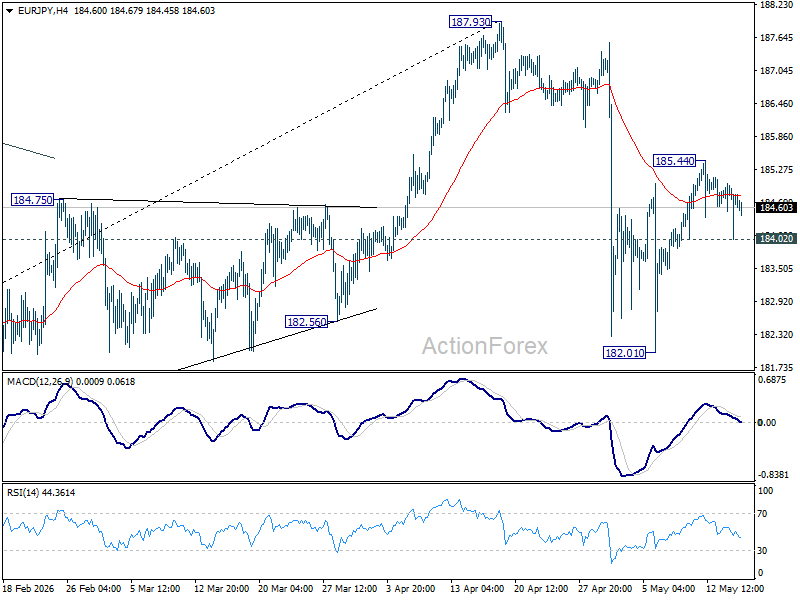
Intraday bias in EUR/JPY remains neutral for the moment. As noted before, pullback from 187.93 could have completed at 182.01 already. Further rise is in favor as long as 184.02 minor support holds. Above 185.44 will target a retest on 187.93 high. Nevertheless, break of 184.02 minor support will turn bias back to the downside towards 182.01 again.
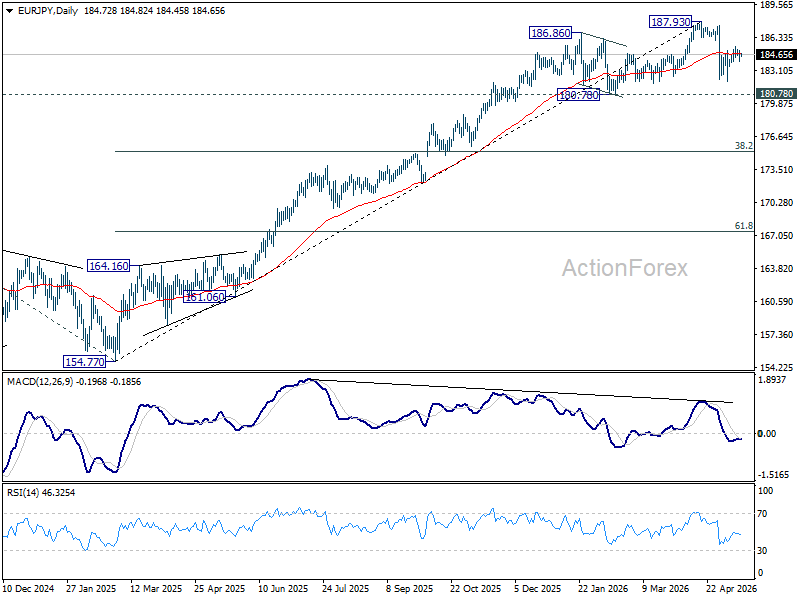
In the bigger picture, the pullback from 187.93 is steep, there is no sign of reversal yet. Uptrend from 114.42 is still expected to resume at a later stage to 78.6% projection of 124.37 (2022 low) to 175.41 (2025 high) from 154.77 at 194.88. However, sustained break of 55 W EMA (now at 178.04) will argue that it's already in a medium term down trend to 175.41 resistance turned support and below.
EUR/GBP Daily Outlook
Daily Pivots: (S1) 0.8662; (P) 0.8689; (R1) 0.8729; More…
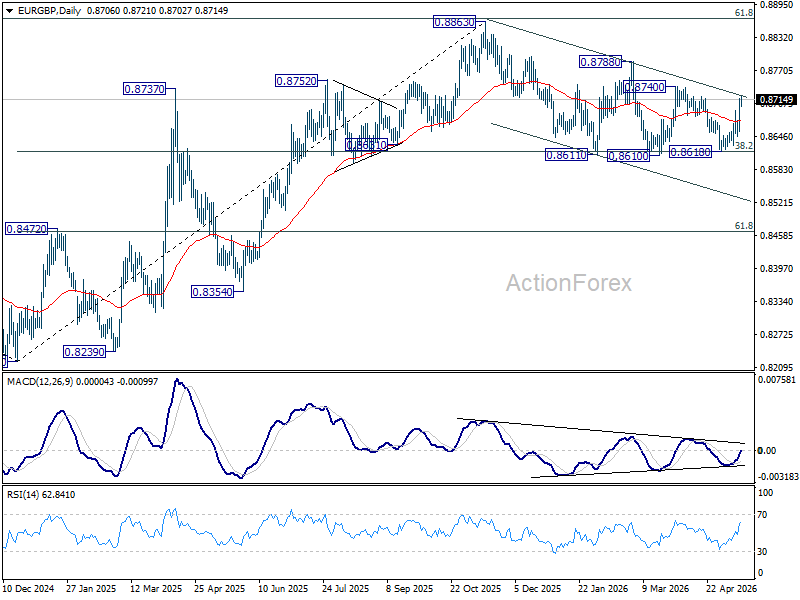
EUR/GBP's rebound from 0.8618 resumed after brief retreat and intraday bias is back on the upside. Further rise should be seen to 0.8740 resistance turned. Decisive break there should pave the way through 0.8788 to retest 0.8863 high. On the downside, below 0.8695 resistance turned support will turn bias neutral again.
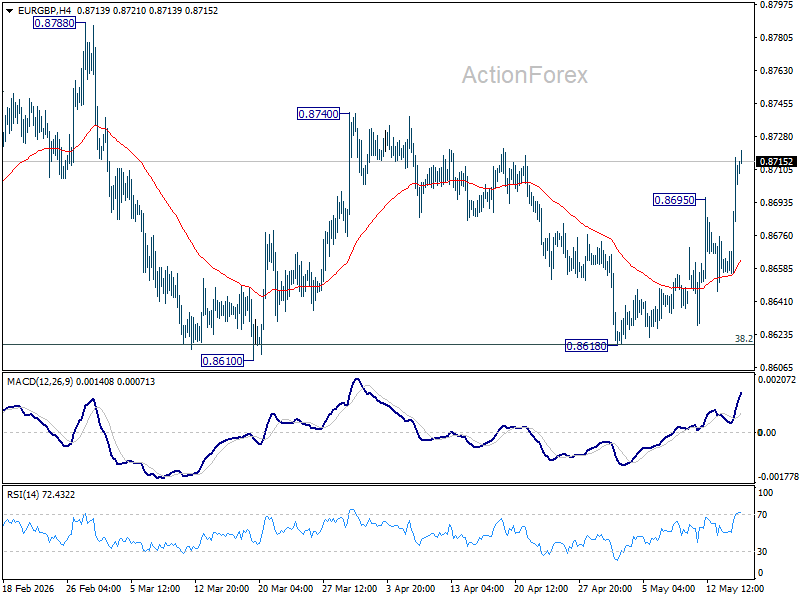
In the bigger picture, focus is back on 38.2% retracement of 0.8821 to 0.8863 at 0.8618. Strong rebound from there will retain medium term bullishness. Rise from 0.8221 should resume through 0.8863 at a later stage. Nevertheless, sustained break of 0.8618 will confirm that whole rise from 0.8221 has completed at 0.8863. Deeper decline should then be seen to 61.8% retracement at 0.8466 at least.
EUR/AUD Daily Outlook
Daily Pivots: (S1) 1.6110; (P) 1.6150; (R1) 1.6187; More...
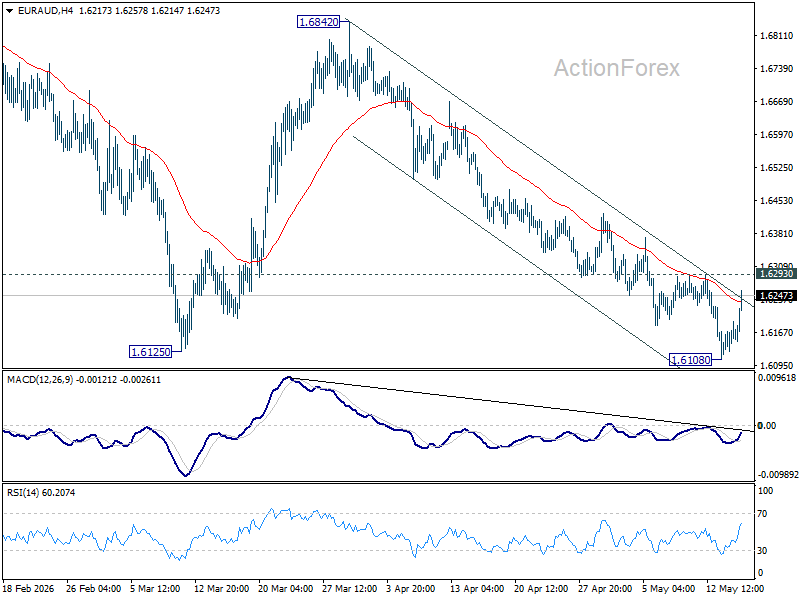
Intraday bias in EUR/AUD is turned neutral first with current recovery. On the upside, firm break of 1.6293 resistance will suggest that a short term bottom was already formed at 1.6108. Bias will be turned tot he upside for 55 D EMA (now at 1.6471). On the downside, below 1.6108 will extend larger fall from 1.8554 to 1.5913 fibonacci level.
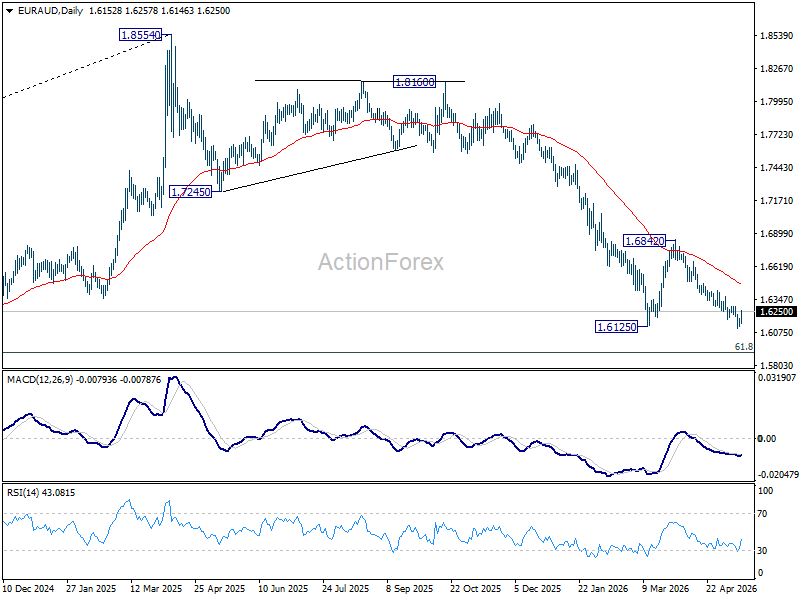
In the bigger picture, fall from 1.8554 (2025 high) is in progress and deeper decline should be seen to 61.8% retracement of 1.4281 to 1.8554 at 1.5913, which is slightly below 1.5963 structural support. Decisive break there will pave the way back to 1.4281 (2022 low). For now, risk will stay on the downside as long as 55 W EMA (now at 1.7039) holds, even in case of strong rebound.
EUR/CHF Daily Outlook
Daily Pivots: (S1) 0.9137; (P) 0.9148; (R1) 0.9154; More....
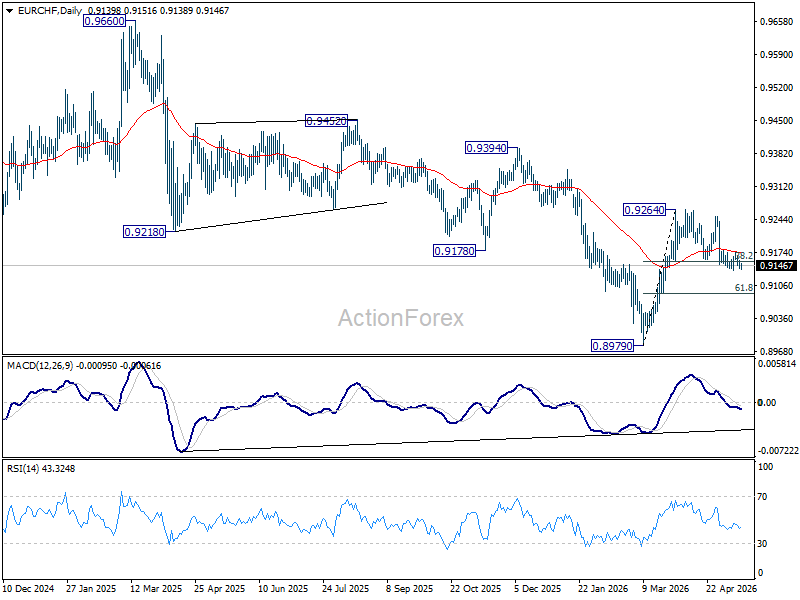
Intraday bias in EUR/CHF remains neutral first. On the downside, break of 0.9136 will confirm resumption of the fall from 0.9264. More importantly, sustained trading blow 0.9155 cluster support (38.2% retracement of 0.8979 to 0.9264 at 0.9155) will argue that rise from 0.8979 has completed. Deeper fall should be seen to 61.8% retracement at 0.9088 and possibly below. On the upside, break of 0.9177 resistance will bring stronger rally back to retest 0.9264.
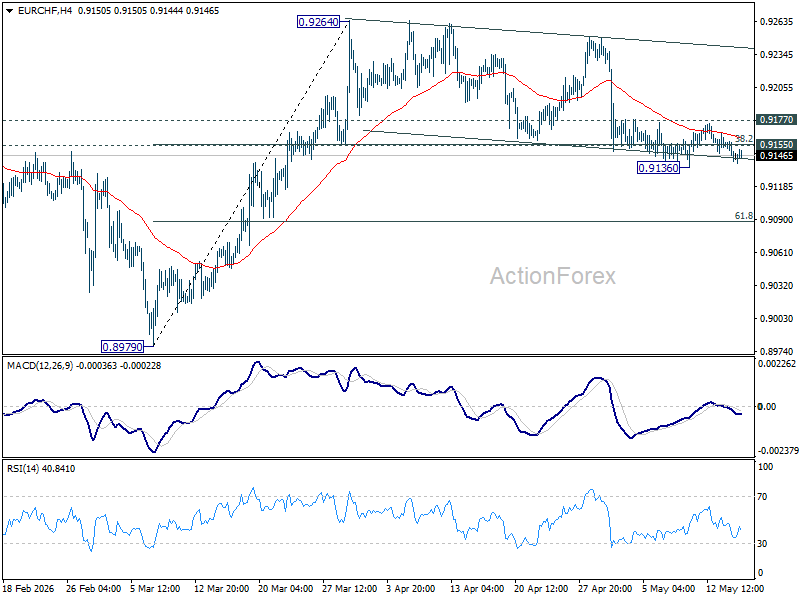
In the bigger picture, considering bullish convergence condition in W MACD, a medium term bottom should be in place at 0.8979. Sustained trading above 55 W EMA (now at 0.9241) will add more credence to this case. Further break of 0.9394 resistance will pave the way to 0.9660 resistance next. However rejection by the 55 W EMA will set up another fall through 0.8979 low at a later stage.
AUD/USD Daily Report
Daily Pivots: (S1) 0.7201; (P) 0.7232; (R1) 0.7250; More...
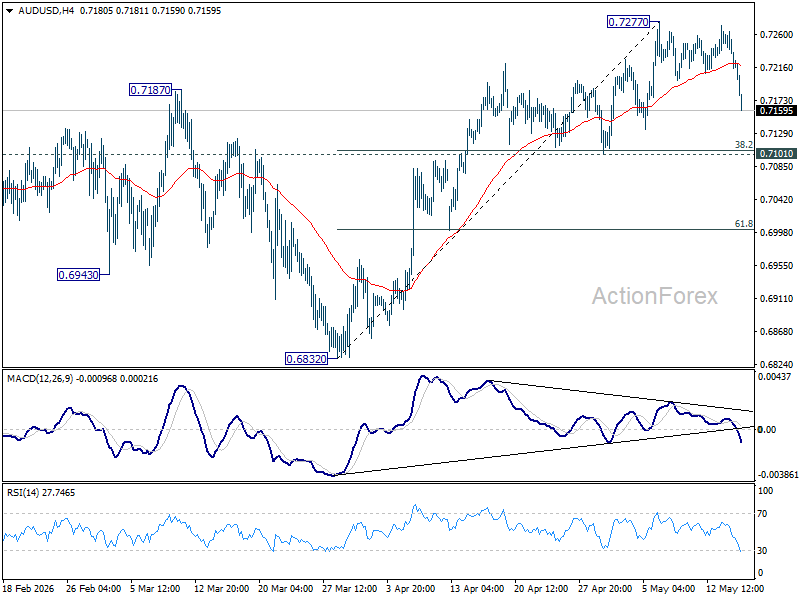
AUD/USD fall sharply today but stays well above 0.7101 support. Intraday bias remains neutral first, and further rise is in favor. On the upside, firm break of 0.7277 will resume larger up trend. However, decisive break of 0.7101 will bring deeper decline back towards 0.6832 support.
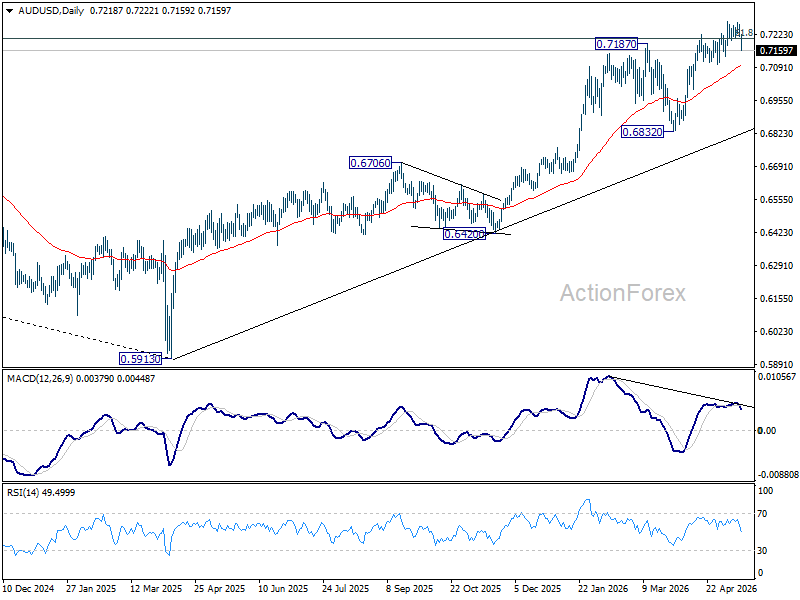
In the bigger picture, rise from 0.5913 (2024 low) is still in progress. Decisive break of 61.8% retracement of 0.8006 to 0.5913 at 0.7206 will solidify the case that it's already reversing the down trend from 0.8006 (2021 high). Further rally should then be seen to retest 0.8006. For now, outlook will remain bullish as long as 0.6832 support holds, in case of pullback.
USD/CAD Daily Outlook
Daily Pivots: (S1) 1.3697; (P) 1.3717; (R1) 1.3736; More...
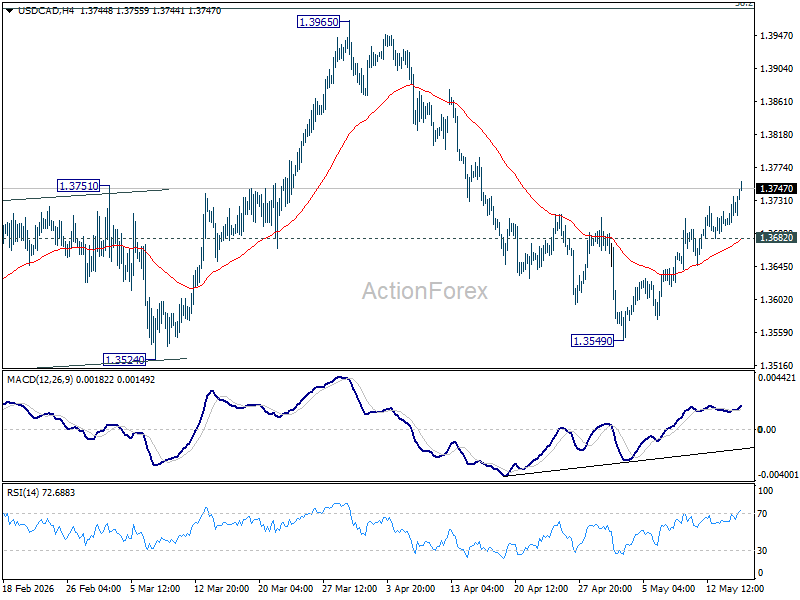
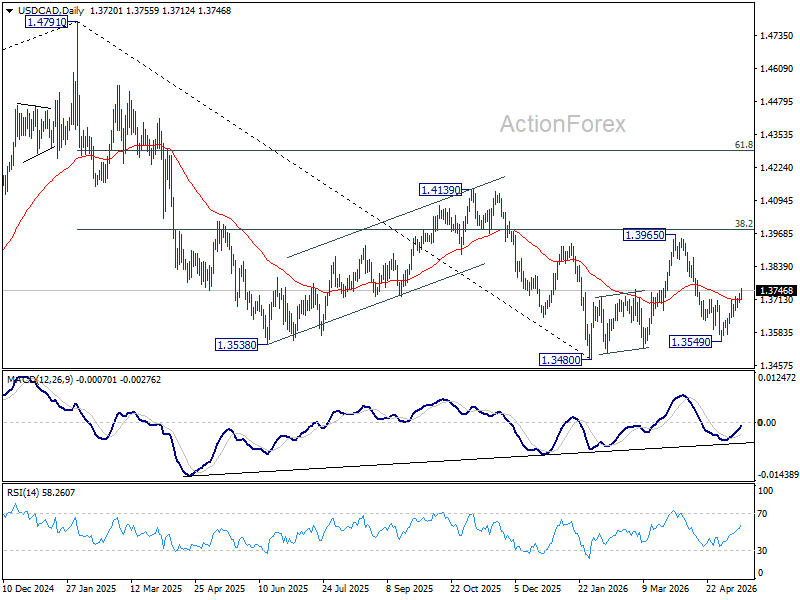
Intraday bias in USD/CAD remains on the upside. Rebound from 1.3549 is seen as the third leg of the corrective pattern from 1.3480. Further rise would be seen towards 1.3965 resistance. On the downside, below 1.3682 minor support will turn intraday bias neutral first.
In the bigger picture, price actions from 1.4791 are seen as a corrective pattern to the whole up trend from 1.2005 (2021 low). Deeper fall could be seen, as the pattern extends, to 61.8% retracement of 1.2005 to 1.4791 at 1.3069. However, decisive break of 38.2% retracement of 1.4791 to 1.3480 at 1.3981 will argue that the correction has completed with three waves down to 1.3480 already.
EUR/USD Daily Outlook
Daily Pivots: (S1) 1.1647; (P) 1.1684; (R1) 1.1703; More….
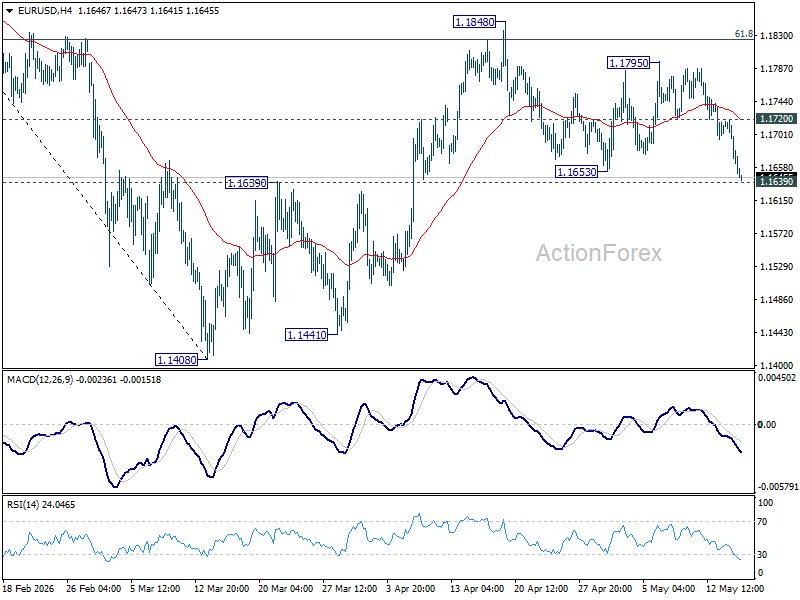
EUR/USD's fall from 1.1848 resumed by breaking 1.1653 support. Intraday bias is back on the downside. Decisive break of 1.1639 resistance turned support will indicate that rebound from 1.1408 has completed as a corrective three-wave move at 1.1848. Deeper fall should then be seen to retest 1.1408 low. On the upside, break of 1.1720 minor resistance will turn bias back to the upside for retesting 1.1848 instead.
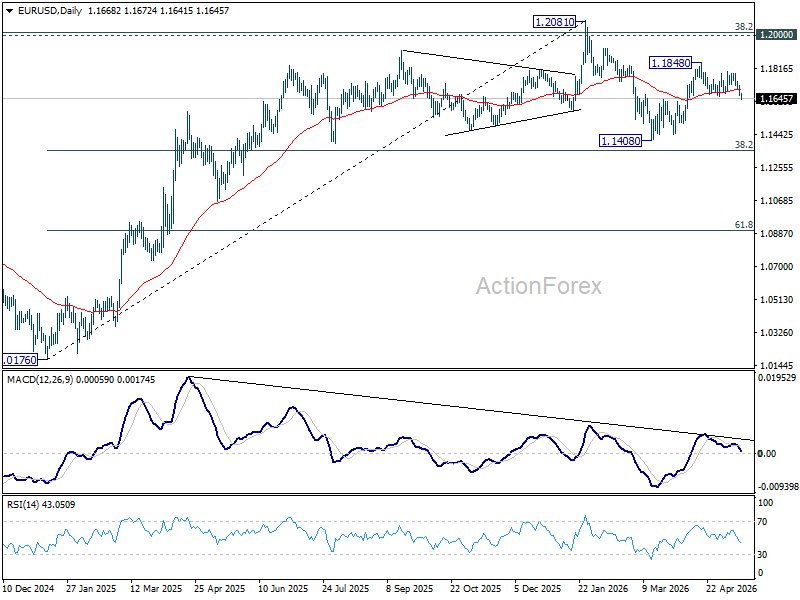
In the bigger picture, the strong support from 38.2% retracement of 1.0176 to 1.2081 at 1.1353 suggests that the pullback from 1.2081 is more likely a corrective move. Strong support was also found in 55 W EMA (now at 1.1539). Focus is back on 1.2 key cluster resistance level. Decisive break there will carry long term bullish implications. Nevertheless, break of 1.1408 support will revive the case of medium term bearish trend reversal.
USD/CHF Daily Outlook
Daily Pivots: (S1) 0.7813; (P) 0.7826; (R1) 0.7846; More….
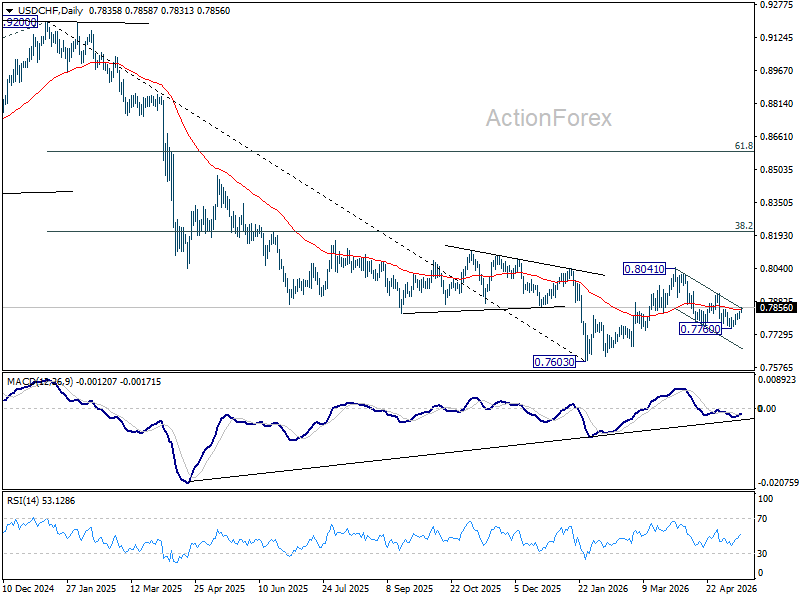
USD/CHF's break of 0.7847 resistance suggests short term bottoming at 0.7760. Intraday bias is back on the upside for 0.7923 resistance. Firm break there will argue that fall from 0.8041 has completed as a three wave correction, and bring further rise to retest this high. For now, risk will stay mildly on the upside as long as 0.7760 support holds, in case of retreat.
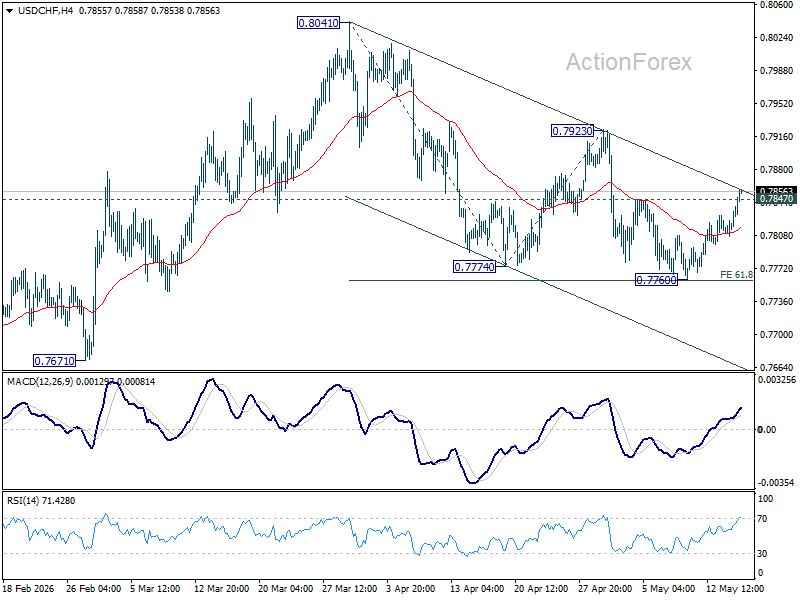
In the bigger picture, as long as 55 W EMA (now at 0.8051) holds, fall from 0.9200 is expected to continue, as part of the larger down trend. Firm break of 0.7603 will target 100% projection of 1.0146 (2022 high) to 0.8332 from 0.9200 at 0.7382.
USD/JPY Daily Outlook
Daily Pivots: (S1) 157.62; (P) 158.01; (R1) 158.74; More...
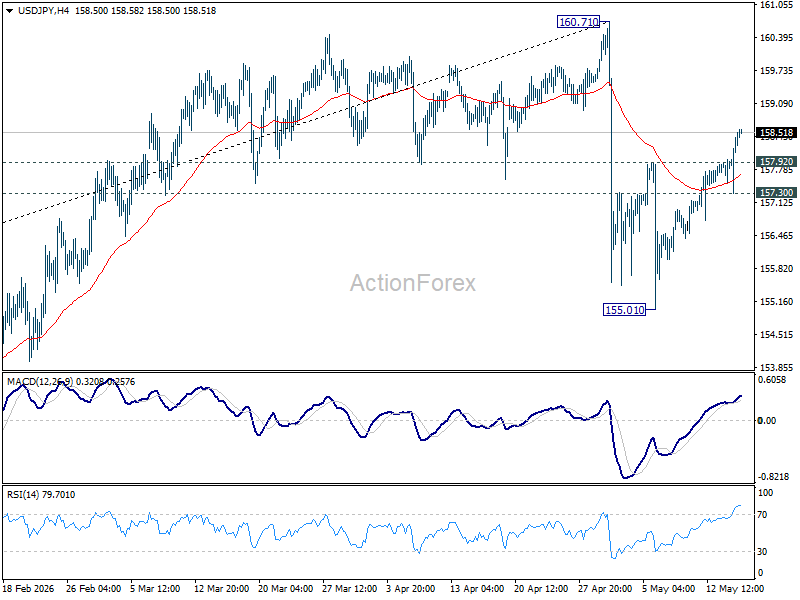
USD/JPY's extended rally and break of 157.92 resistance suggests that pullback from 160.71 has already completed at 155.01. Intraday bias is now on the upside for retesting 160.71 next. As this rebound is seen as the second leg of the corrective pattern from 160.71, strong resistance should emerge from there to limit upside. On the downside, break of 157.30 minor support will argue that the third leg could have started, and target 155.01 support instead.
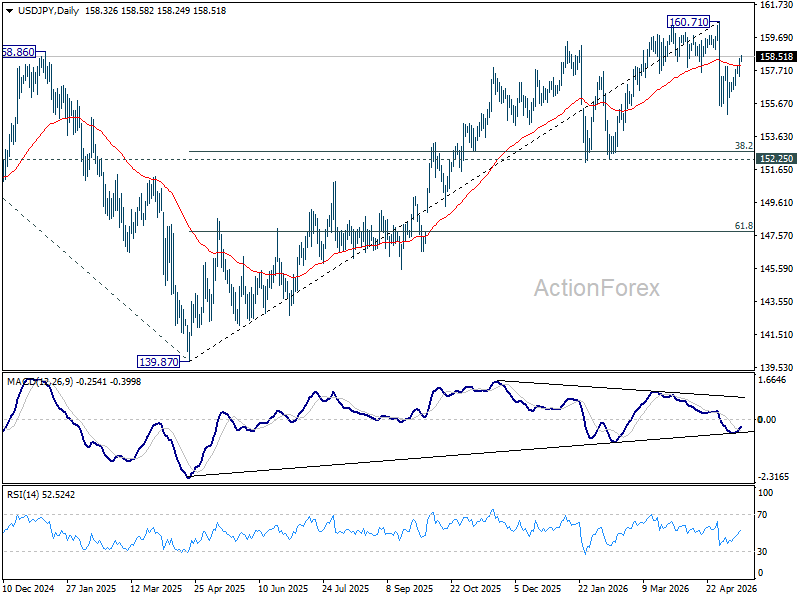
In the bigger picture, for now, corrective pattern from 161.94 (2024 high) is still seen as completed at 139.87. Rise from there is seen as resuming the long term up trend. So, break of 161.94 is expected at a later stage to resume the long term up trend. However, sustained break of 55 W EMA (now at 154.13) will dampen this view and bring deeper fall back towards 139.87 to extend the pattern from 161.94.
GBP/USD Daily Outlook
Daily Pivots: (S1) 1.3352; (P) 1.3442; (R1) 1.3490; More...
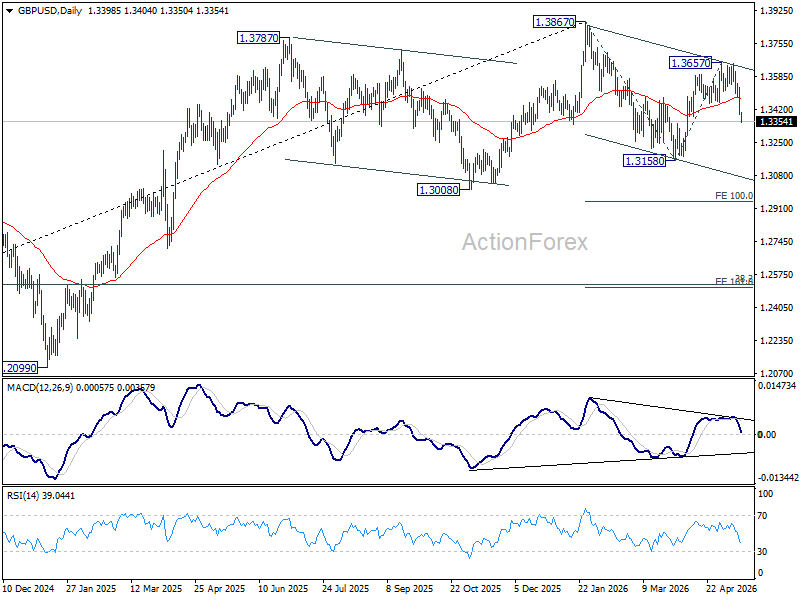
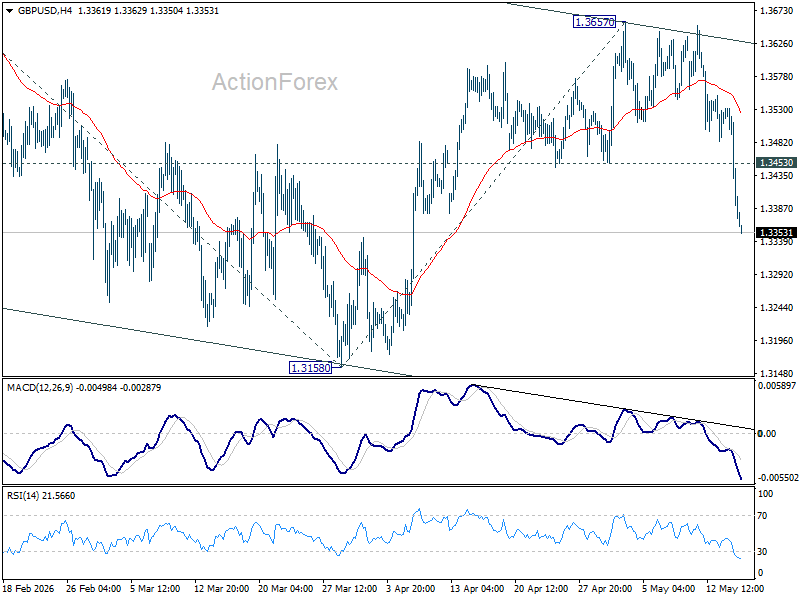
GBP/USD's steep decline today suggests that rebound from 1.3158 has already completed at 1.3657. Intraday bias is back on the downside for retesting 1.3158. Decisive break there will target 100% projection of 1.3867 to 1.3158 from 1.3657 at 1.2948. For now, risk will stay on the downside as long as 1.3453 support turned resistance holds, in case of recovery.
In the bigger picture, current development suggests that price actions from 1.3867 are merely a corrective pattern within the broader up trend from 1.0351 (2022 low). With 1.3008 support intact, medium term bullishness is maintained and break of 1.3867 is in favor for a later stage, towards 1.4248 key resistance (2021 high). However, firm break of 1.3008 will at least bring deeper fall to 38.2% retracement of 1.0351 to 1.3867 at 1.2524, with increased risk of bearish reversal.