Sample Category Title
BoC Accelerates Pace of Rate Cuts
The Bottom Line:
- The BoC made the leap to cut the overnight rate by 50 bps today, amid accumulating evidence that the economy and labour markets are weakening by more than what is necessary to achieve the 2% inflation target.
- The reduction won’t be the last one. The level of the overnight rate is still restrictive at 3.75% and the BoC in the press release hinted at future rate cuts will follow to support a return to stronger GDP growth.
Impact to Our Forecasts:
- We continue to expect one more 50-bps rate cut from the BoC this December to bring the overnight rate to the top end of the BoC’s estimate of its neutral range (3.25%) before a return to a more gradual pace of easing in 2025.
- Our base-case macroeconomic forecasts are weaker than the BoC’s. We think real GDP growth is more likely to stay subdued for longer in Canada as interest rates remain restrictive until 2025.
- We expect GDP growth of 1.3% in 2025, below the BoC’s projection of 2.1% and not meaningfully different from ~1% growth expected for this year.
- We also expect labour markets will continue to soften, with unemployment rate rising to 7% in the coming quarters and for softening activities combined to bring more disinflationary pressures in 2025.
- In terms of the terminal level of interest rates, we think BoC will cut to 2% by July next year, stimulative and a touch below the lower bound of the BoC’s own estimates of neutral rate at 2.25% - 3.25%.
The Details (meeting recap):
- BoC’s rate cut today was close to fully priced in in markets ahead of the meeting. Adding to odds of the 50-bps cut were the Q3 Business Outlook Survey and September’s inflation data last week, both pointed to lower present and future expected inflation in Canada.
- Governor Macklem led off his press conference saying that “we are back to low inflation” in Canada. Rather than focusing on a weak economy and the disinflation pressures that could follow, the BoC today highlighted balanced risks on inflation.
- On the upside, shelter and wage growth remain the main concerns but are both expected to slow. On the downside, a slower economic recovery (as we are anticipating) is "the biggest risk".
- With the output gap still deeply negative (the BoC's estimate was -0.75% to -1.75% in Q3) and monetary policy still restrictive, we think it'll take longer for demand to rebound and excess supply in the economy to be absorbed.
- Rate cuts will boost the economy with a lag. Even with interest rates moving lower, many borrowers can continue to expect debt payments to go up in the years ahead. That speaks to more urgency to “front-load” the easing.
Bank of Canada Accelerates Rate Cuts, Points to Greater Confidence in Inflation
The Bank of Canada (BoC) cut its overnight rate by 50 basis points, to 3.75%, while stating that it will continue with normalizing its balance sheet.
With inflation having "declined significantly" over the last few months, the bank said it "expects inflation to remain close to the target over the projection horizon." Notably in the Bank's Monetary Policy report (MPR), the quarterly forecast for core inflation is unchanged at +2%.
The bank highlighted the moderate pace of economic growth, stating "the economy grew at around 2% in the first half of the year and we expect growth of 1¾% in the second half. Consumption has continued to grow but is declining on a per person basis." The Bank expected GDP growth to "strengthen gradually" over the coming quarters supported by lower interest rates.
On the future path of policy, the bank noted that "if the economy evolves broadly in line with our latest forecast, we expect to reduce the policy rate further." However, it also noted that the timing and pace of further reductions will be guided by the data.
Key Implications
Now that headline CPI inflation has dropped below the 2% target, the BoC has gained confidence that it can cut rates at a quicker pace. While there isn't much in the way of a changing economic narrative - slow GDP growth and core inflation above 2% remain - the central bank is set on doing what it can to boost economic growth. Will a 50 bp move achieve this? Probably not, but the central bank felt it should do something with economic data continuing to show that the country is stuck in a rut. Hopefully we get a bit more clarity on this in the press conference.
This won't be the end of rate cuts. Even with the succession of policy cuts since June, rates are still way too high given the state of the economy. To bring rates into better balance, we have another 150 bps in cuts penciled in through 2025. So while the pace of cuts going forward is now highly uncertain, the direction for rates is firmly downwards.
USD/CAD Mid-Day Outlook
Daily Pivots: (S1) 1.3805; (P) 1.3825; (R1) 1.3835; More...
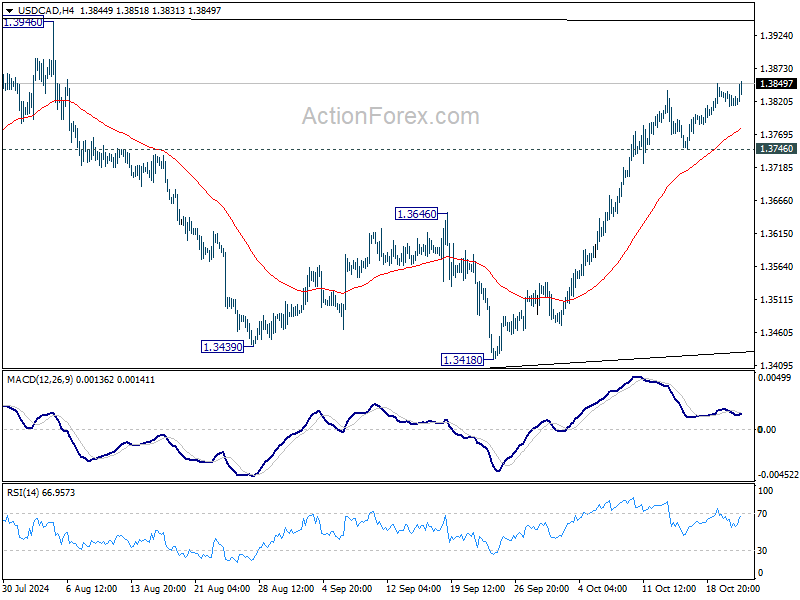
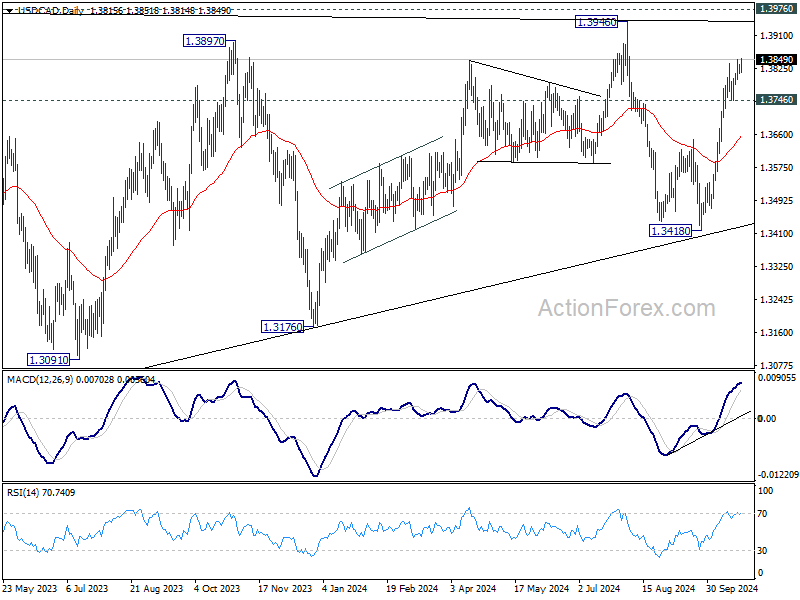
USD/CAD's from 1.3418 is extending in early US session. Intraday bias stays on the upside for retest of 1.3946/76 key resistance zone. Strong resistance might be seen there to limit upside. However, break of 1.3746 support is needed to confirm short term topping. Otherwise, further rise will remain in favor in case of retreat.
In the bigger picture, sideway consolidation pattern from 1.3976 (2022 high) might still extend further. While another decline cannot be ruled out, strong support should emerge above 1.2947 resistance turned support to bring rebound. Rise from 1.2005 (2021 low) is still in favor to resume at a later stage.
Debate heats up at ECB on possibility of a 50bps cut in Dec
A growing debate is emerging among ECB policymakers about whether to accelerate the pace of rate cuts, with some members suggesting a potential 50 bps reduction in December. The possibility arises after inflation data in September came in significantly lower than expected, fueling discussions on the appropriate policy response.
Portuguese ECB Governing Council member Mario Centeno signaled openness to a larger cut, telling CNBC, “Certainly 50 basis points can be on the table because we continue to be data dependent and the data we are getting points in that direction.” He emphasized the surprising nature of the recent inflation figures, stating, “The truth is that the print of inflation in September was very low, way lower than what we were expecting.”
Echoing the possibility of a sizable rate reduction, Dutch ECB Governing Council member Klaas Knot acknowledged that a half-point interest rate cut could not be excluded at the December meeting. However, he cautioned that such a move would require further economic deterioration. “I would also say that I see the risks surrounding that baseline as reasonably contained,” Knot added, suggesting that while the option is on the table, it is not yet the central scenario.
On a more cautious note, Austrian ECB Governing Council member Robert Holzmann expressed skepticism about the need for a 50 bps cut under current conditions. Speaking to CNBC, Holzmann said, “I’m sure some of my colleagues will go for a big cut, others not. In my case, I will say I will look at the data.” He added, “If things really get as bad as some claim, we can have another 25, 50 I would say at the moment with the data, no.”
Sunset Market Commentary
Markets
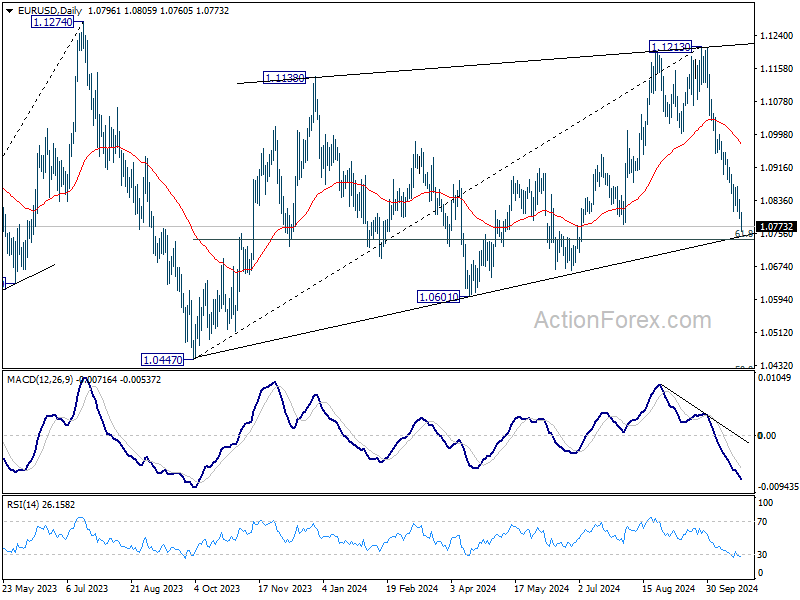
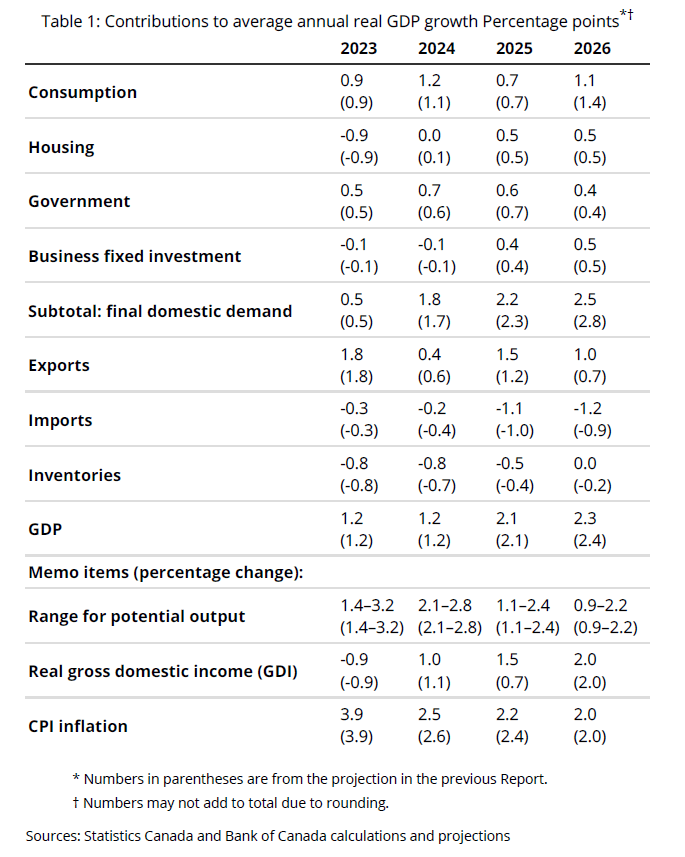
Yesterday’s ECB comments coming from Washington (IMF World Economic Outlook) almost exclusively sounded dovish. The disinflation process is running faster than hoped, downside growth risks might accelerate the process and even result in an inflation undershoot and more rate cuts towards neutral are coming. Central bankers didn’t push back against growing market odds of a 50 bps rate cut at the December meeting even if we still get two PMI surveys (starting tomorrow), two inflation readings, Q3 GDP data and Q3 wage numbers. Press agency Reuters this morning added to the debate. Citing sources close to discussions, they ran an article suggesting that ECB officials are starting to debate whether interest rates will need to be lowered to a level that stimulates economic activity i.e. below neutral (<2%). A small, but growing group of governors fears that the central bank fell behind the curve. They also want to drop the reference to restrictive rates in the policy statement to show that they are taking downside risks seriously. The current phrasing is: “the Governing Council is determined to ensure that inflation returns to its 2% medium-term target in a timely manner. It will keep policy rates sufficiently restrictive for as long as necessary to achieve this aim.” German Bunds outperform US Treasuries on the growing divergence between ECB and Fed. The German yield curve bull steepens with front end yields sinking up to 7 bps. US yields add 1.8 bps (2-yr) to 3.7 bps (10-yr) as the focus remains on November 5th presidential elections and a Trump risk premium. The single currency succumbs to growing pressure with EUR/USD changing hands below 1.0778 support. A sustained break, eg in case of weak PMI’s tomorrow, opens the path to the April low at 1.0601. EUR/GBP did a second attempt to take out the 0.83 big figure, but seems to be waiting for the thumbs up by BoE governor Bailey who speaks in Washington as well tonight. The trade-weighted dollar adds to this month’s impressive rally with DXY rising to 104.50 for the first time since early August payrolls and following market-meltdown. Full retracement to the 106-106.50 is the most likely way forward from a technical point of view. JPY is obviously the biggest victim of higher US yields and the stronger dollar. USD/JPY today surges from 151 to 153, putting the Bank of Japan again in a difficult position with JPY weakness adding to the policy & inflation puzzle. USD/CAD tests the recent top around 1.3850 after the Bank of Canada accelerated its cutting cycle to a 50 bps move (4.25% to 3.75%) meant to boost growth and keep CPI close to 2%. More rate cuts are coming with data determining the pace. The BoC lowered its CPI outlook to 2.5%-2.2%-2% for the 2024-2026 policy horizon with the GDP outlook little changed at 1.2%-2.1%-2.3%.
News & Views
National Bank of Poland member Kotecki said that weaker retail sales (-5.7% M/M & -3% Y/Y in September vs -1% & +1.8% expected) data give hope for a somewhat faster decline in inflation, but at present the conditions for any policy modification are not yet met. Kotecki assessed the retail sales data as worrying, but wants further information to draw conclusions. At the same time he pointed out that headline inflation since July is again rising, admittedly due to temporary factors, and that the peak is still ahead of us. Core inflation also stopped declining, indicating that conditions are not in place to modify policy. He concluded that data point to moderate economic recovery but at the same time relatively persistent inflation. High wage growth remains a source of concern. Given the weak economy in Europe, Kotecki finds the 3.9% expected 2025 growth in the Polish budget as too optimistic. The zloty weakness substantially further today with EUR/PLN jumping from the 4.32 area to currently 4.345.
South African headline inflation printed at 0.1% M/M in September, slowing the headline figure to 3.8% from 4.4% in August, the lowest since March 2021 and dropping back below the mid-point of the South African Reserve Bank’s (SARB) 3%-6% target. The decline was supported by positive base effects compared to last year and transport inflation (-2.8% Y/Y). Food price inflation was 4.7% Y/Y, but the monthly rise (0.6%) was the fastest since January. Core inflation (ex-food and energy) was 0.3% M/M and 4.1% Y/Y (also 4.1% in August). The SARB cautiously cut its policy rate for a first time in September by 25 bps from 8.25% to 8%. Inflation data keep the door open for gradual follow-up cuts (next meeting on Nov 21). The rand, which had a good run between February and end September, is losing some further ground today, trading at USD/ZAR 17.7 (compared to a YTD low at 17.03 end September).
BoC cuts rates by 50bps, signals further reductions ahead
BoC cut its overnight rate target by 50 bps to 3.75%, as widely expected, with inflation now "back around the 2% target." The central bank reaffirmed its easing bias, stating that if the economy continues to evolve as expected, "further reductions" in the policy rate can be expected. However, it stressed that rate adjustments will be made on a "one meeting at a time" basis.
BoC adjusted its inflation forecasts slightly lower, reducing the average CPI inflation projection from 2.6% to 2.5% for 2024, and from 2.4% to 2.2% for 2025, while maintaining the 2.0% target for 2026.
Recent data shows that headline inflation has dropped from 2.7% in June to 1.6% in September, aided by lower shelter costs, a decline in global oil prices, and consequently, lower gasoline prices. BoC's preferred core inflation measures are now below 2.5%, and inflation expectations from businesses and consumers have "largely normalized."
On the growth front, GDP projections remained mostly unchanged, with forecasts of 1.2% for 2024, 2.1% for 2025, and a slight downgrade from 2.4% to 2.3% in 2026. BoC expects growth to pick up gradually as interest rates decline, with stronger consumer spending, rising residential investment, and resilient export demand, particularly from the US, all contributing to the recovery.
(BOC) Bank of Canada reduces policy rate by 50 basis points to 3¾%
The Bank of Canada today reduced its target for the overnight rate to 3¾%, with the Bank Rate at 4% and the deposit rate at 3¾%. The Bank is continuing its policy of balance sheet normalization.
The Bank continues to expect the global economy to expand at a rate of about 3% over the next two years. Growth in the United States is now expected to be stronger than previously forecast while the outlook for China remains subdued. Growth in the euro area has been soft but should recover modestly next year. Inflation in advanced economies has declined in recent months, and is now around central bank targets. Global financial conditions have eased since July, in part because of market expectations of lower policy interest rates. Global oil prices are about $10 lower than assumed in the July Monetary Policy Report (MPR).
In Canada, the economy grew at around 2% in the first half of the year and we expect growth of 1¾% in the second half. Consumption has continued to grow but is declining on a per person basis. Exports have been boosted by the opening of the Trans Mountain Expansion pipeline. The labour market remains soft—the unemployment rate was at 6.5% in September. Population growth has continued to expand the labour force while hiring has been modest. This has particularly affected young people and newcomers to Canada. Wage growth remains elevated relative to productivity growth. Overall, the economy continues to be in excess supply.
GDP growth is forecast to strengthen gradually over the projection horizon, supported by lower interest rates. This forecast largely reflects the net effect of a gradual pick up in consumer spending per person and slower population growth. Residential investment growth is also projected to rise as strong demand for housing lifts sales and spending on renovations. Business investment is expected to strengthen as demand picks up, and exports should remain strong, supported by robust demand from the United States.
Overall, the Bank forecasts GDP growth of 1.2% in 2024, 2.1% in 2025, and 2.3% in 2026. As the economy strengthens, excess supply is gradually absorbed.
CPI inflation has declined significantly from 2.7% in June to 1.6% in September. Inflation in shelter costs remains elevated but has begun to ease. Excess supply elsewhere in the economy has reduced inflation in the prices of many goods and services. The drop in global oil prices has led to lower gasoline prices. These factors have all combined to bring inflation down. The Bank’s preferred measures of core inflation are now below 2½%. With inflationary pressures no longer broad-based, business and consumer inflation expectations have largely normalized.
The Bank expects inflation to remain close to the target over the projection horizon, with the upward and downward pressures on inflation roughly balancing out. The upward pressure from shelter and other services gradually diminishes, and the downward pressure on inflation recedes as excess supply in the economy is absorbed.
With inflation now back around the 2% target, Governing Council decided to reduce the policy rate by 50 basis points to support economic growth and keep inflation close to the middle of the 1% to 3% range. If the economy evolves broadly in line with our latest forecast, we expect to reduce the policy rate further. However, the timing and pace of further reductions in the policy rate will be guided by incoming information and our assessment of its implications for the inflation outlook. We will take decisions one meeting at a time. The Bank is committed to maintaining price stability for Canadians by keeping inflation close to the 2% target.
Information note
The next scheduled date for announcing the overnight rate target is December 11, 2024. The Bank will publish its next full outlook for the economy and inflation, including risks to the projection, in the MPR on January 29, 2025.
AUD/CAD Technical: BoC Jumbo Cut of 50 bps May Have Already Been Fully Priced In
- The Canadian dollar has weakened against most major currencies (except against the JPY) in the past four weeks.
- Short-term FX positioning suggests that the expected BoC’s 50 bps cut may have been fully priced in.
- Watch out for a potential short-term mean reversion decline in the AUD/CAD cross pair.
In a few hours’ time today, the Bank of Canada (BoC) will announce its latest monetary policy decision where the consensus is expecting a fourth consecutive interest rate cut to its key policy interest rate with a higher magnitude of 50 basis points (bps) to bring it down to 3.75%.
The rationale for having a high expectation of a jumbo cut of 50 bps assigned to today’s BoC interest rate decision is that the inflationary trend in Canada has decelerated below the 2% inflation target.
Canada’s core inflation rate ticked slightly higher to 1.6% y/y in September from a three-and-a-half-year low of 1.5% recorded in August but remained below BoC’s 2% target since April this year.
Slack in the labour market warrants a more dovish BoC
Coupled with a weakening labour market where the unemployment rate increased to a 34-month high of 6.6% in August, albeit a slight downtick to 6.5% in September, it is no longer economically viable for BoC to maintain a higher degree of restrictive monetary policy as the current key policy interest rate of 4.25% is significantly higher by 265 bps from the core inflation rate in Canada.
However, markets are forward-looking as the Canadian dollar has weakened against the major currencies except against the Japanese yen in the past four weeks which suggests that today’s 50 bps cut from BoC may have been fully priced in.
A mean reversion move to offset recent Canadian dollar weakness may be in progress
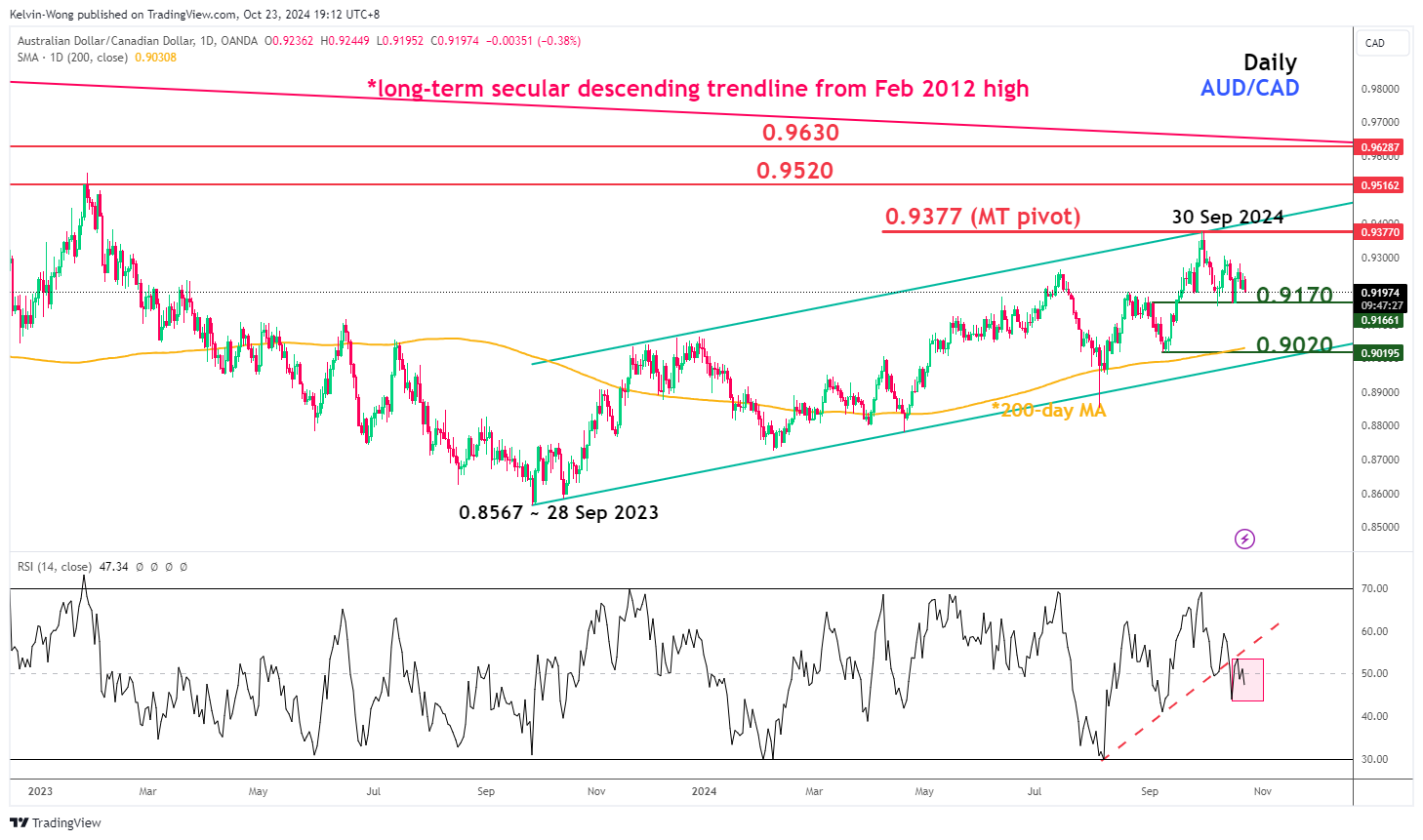
Fig 1: AUD/CAD medium-term & major trends as of 23 Oct 2024 (Source: TradingView, click to enlarge chart)
The major uptrend phase of the AUD/CAD cross pair in place since the 28 September 2023 low of 0.8567 reached and reacted off the upper boundary of its year-long ascending channel on 30 September 2024.
In addition, medium-term upside momentum has weakened significantly as the daily RSI momentum indicator has staged a bearish breakdown below its parallel ascending trendline support and slipped below the 50 level (see Fig 1).
Watch the 0.9377 key medium-term pivotal resistance and a break below the 0.9170 intermediate support reinforces the short-term mean reversion decline of the AUD/CAD to expose the 0.9020 medium-term support (also the 200-day moving average).
On the other hand, a clearance above 0.9377 may see further weakness in the Canadian dollar where the AUD/CAD cross pair may squeeze higher for the next medium-term resistances to come in at 0.9520 and 0.9630.
EUR/USD Dips to 11-Week Low
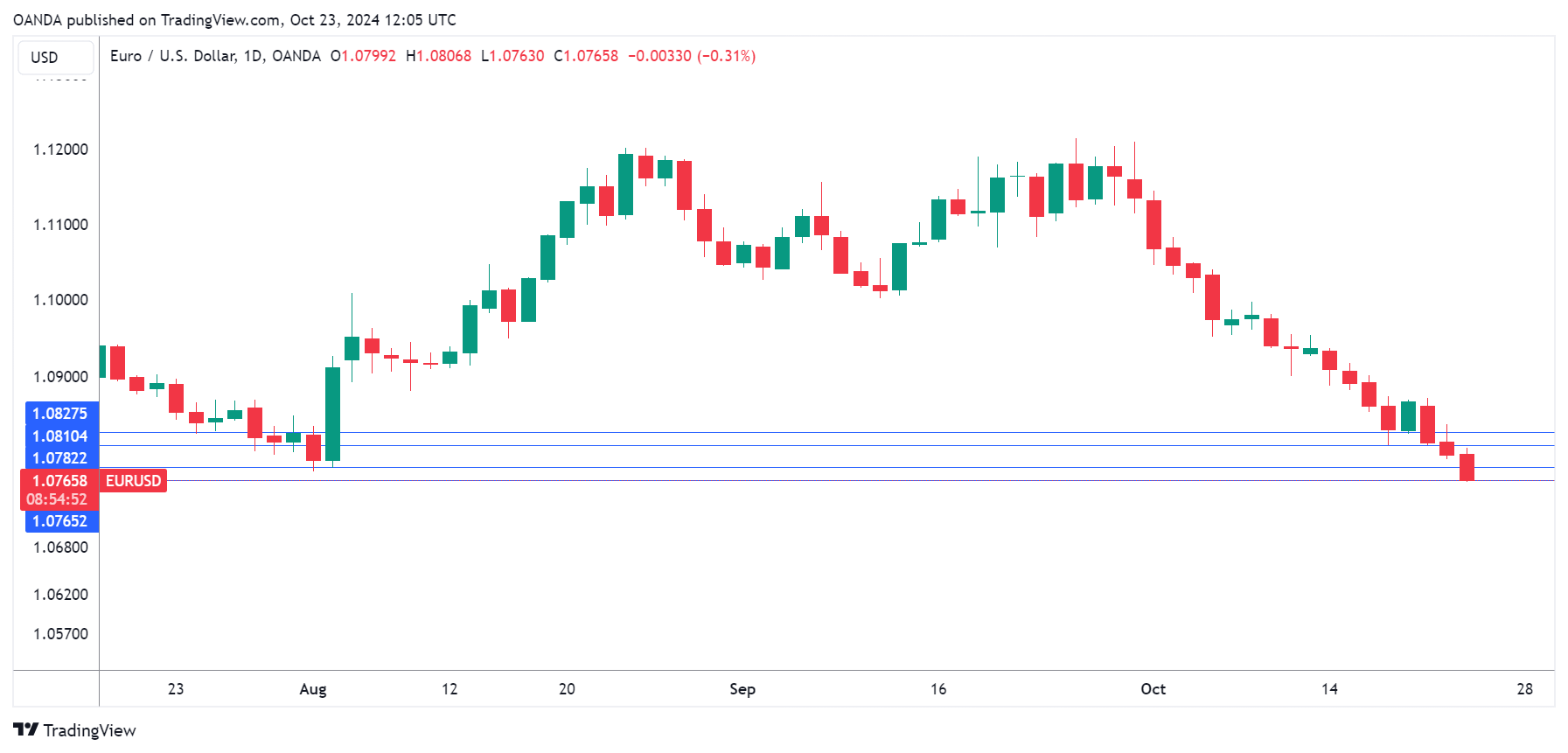
The euro is down for a third straight day on Wednesday. In the European session, EUR/USD is trading at 1.0767, down 0.29% on the day. The euro remains under pressure and has declined 3.3% in October.
Euro PMIs expected to show more of the same
The Eurozone releases the September PMI reports on Thursday, with little change expected. The manufacturing sector is in a prolonged depression and has contracted for 27 straight months. Domestic and international orders have been decreasing while input costs are rising. Business conditions have been worsening and there doesn’t seem to be a light at the end of the tunnel. The market estimate for the Manufacturing PMI is 45.3, compared to 45.0 in August. The 50 level separates contraction from expansion.
The services sector is in better shape, having expanded for seven consecutive months. The growth during this time has been modest and the September market estimate is 51.5, up from 50.5 in August.
The PMIs point to a weak eurozone economy and lower interest rates would provide a badly-needed boost. The European Central Bank cut rates last week, its second quarter-point cut in just five weeks. The deposit rate has been brought down to 3.25% and with inflation largely under control, the ECB is shifting from fighting inflation to boosting economic growth. This likely means further rate cuts before the end of the year.
The Federal Reserve jumped out of the rate-cutting gates in September, delivering a jumbo 50-basis point cut. Inflation dropped from 2.5% to 2.4% in September, closer to the Fed’s 2% target. Employment has become the number one priority and weak job numbers was a key reason why the Fed opted for an oversized cut in September. Fed members have signaled that more cuts are coming before year’s end but these will likely be in 25-bp increments, which is the traditional size of Fed rate hikes and cuts.
EUR/USD Technical
- EUR/USD is testing support at 1.0765. Below, there is support at 1.0737
- 1.0782 and 1.0810 are the next resistance lines
EUR/USD Mid-Day Outlook
Daily Pivots: (S1) 1.0782; (P) 1.0810; (R1) 1.0827; More...
Intraday bias in EUR/USD remains on the downside as fall from 1.1213 is in progress for 61.8% retracement of 1.0447 to 1.1213 at 1.0740. Firm break there will target 1.0601 support next. On the upside, break of 1.0871 resistance is needed to indicate short term bottoming. Otherwise, outlook will stay bearish in case of recovery.
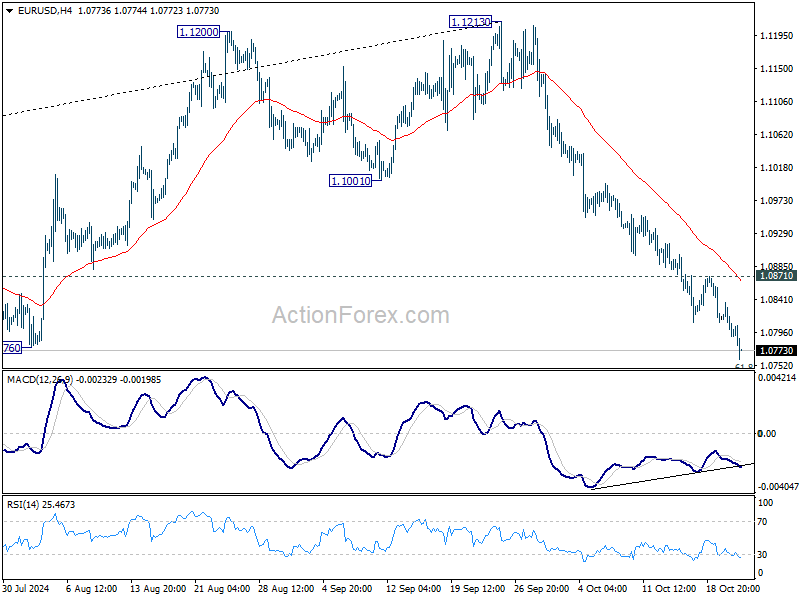
In the bigger picture, price actions from 1.1274 (2023 high) are seen as a consolidation pattern to up trend from 0.9534 (2022 low), with fall from 1.1213 as the third leg. Downside should be contained by 50% retracement of 0.9534 (2022 low) to 1.1274 at 1.0404, to bring up trend resumption at a later stage.