

Sample Category Title
GBPJPY Bounces Off Uptrend Line But Momentum is Weak
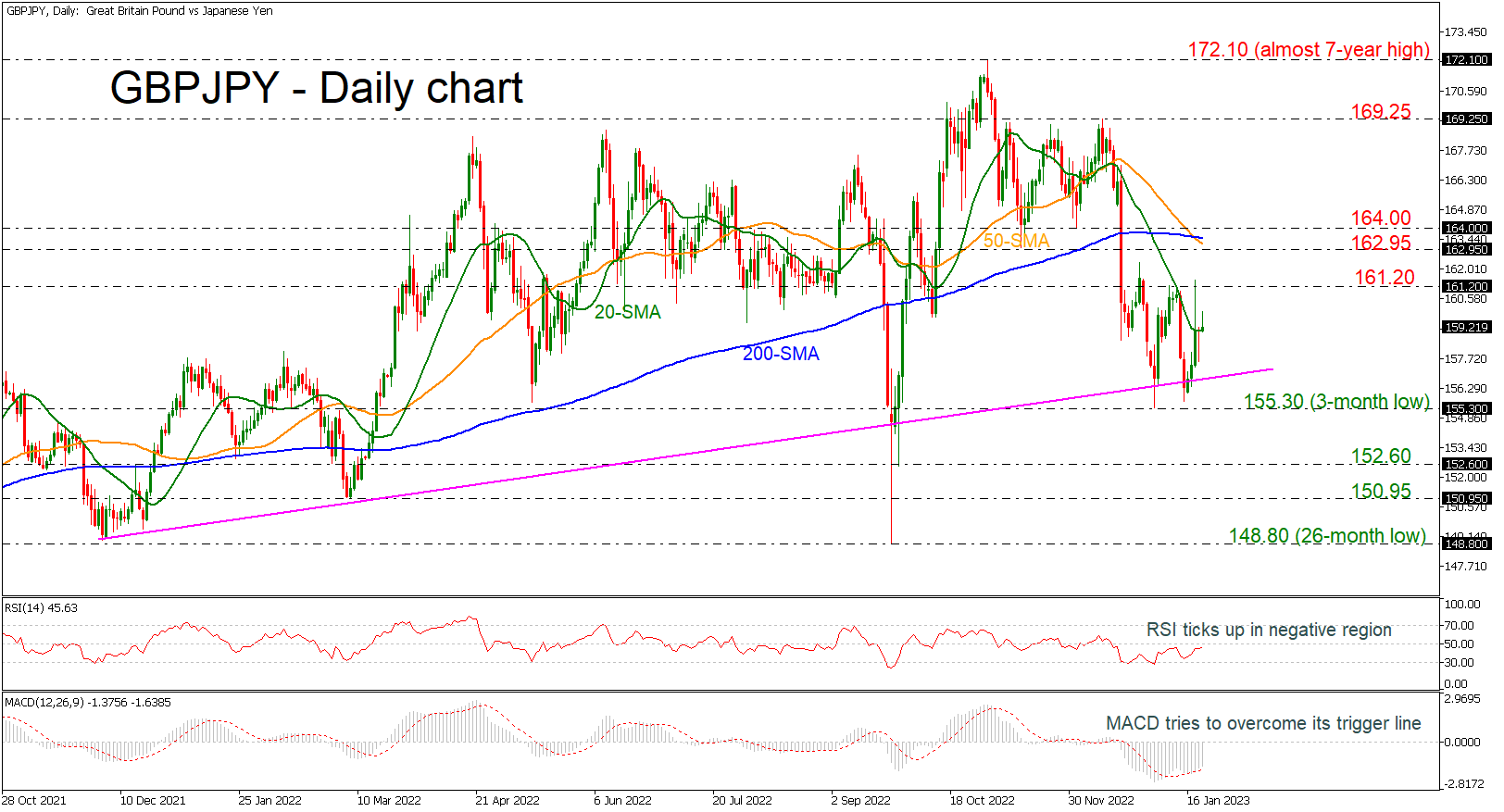
GBPJPY rebounded off the long-term ascending trend line and near the three-month low of 155.30. The price is currently trying to surpass the 20-day simple moving average (SMA) and the technical oscillators are confirming an upside movement. The RSI is ticking marginally up in the negative territory, while the MACD is surpassing its trigger line below the zero level.
Should GBPJPY make another run higher, it’s likely to meet resistance at 161.20 as this level has strongly capped prices since late December. A successful break above this key resistance area would open the way for the death cross between the 50- and the 200-day SMAs around 162.95. Above that, the pair needs to overcome another handle at 164.00.
If the soft positive momentum fails to hold and prices turn lower, the ascending trend line at 156.70 is the nearest support that could halt steeper declines. A potentially more important support, though, is the three-month trough of 155.30. If breached, it would shift the focus to the downside and prices would slip towards the 152.60 support.
In the bigger picture, GBPJPY would need to make a sustained climb above the bearish crossover in order for the short-term outlook to become convincingly bullish.
USDCAD Battles With 50-day SMA
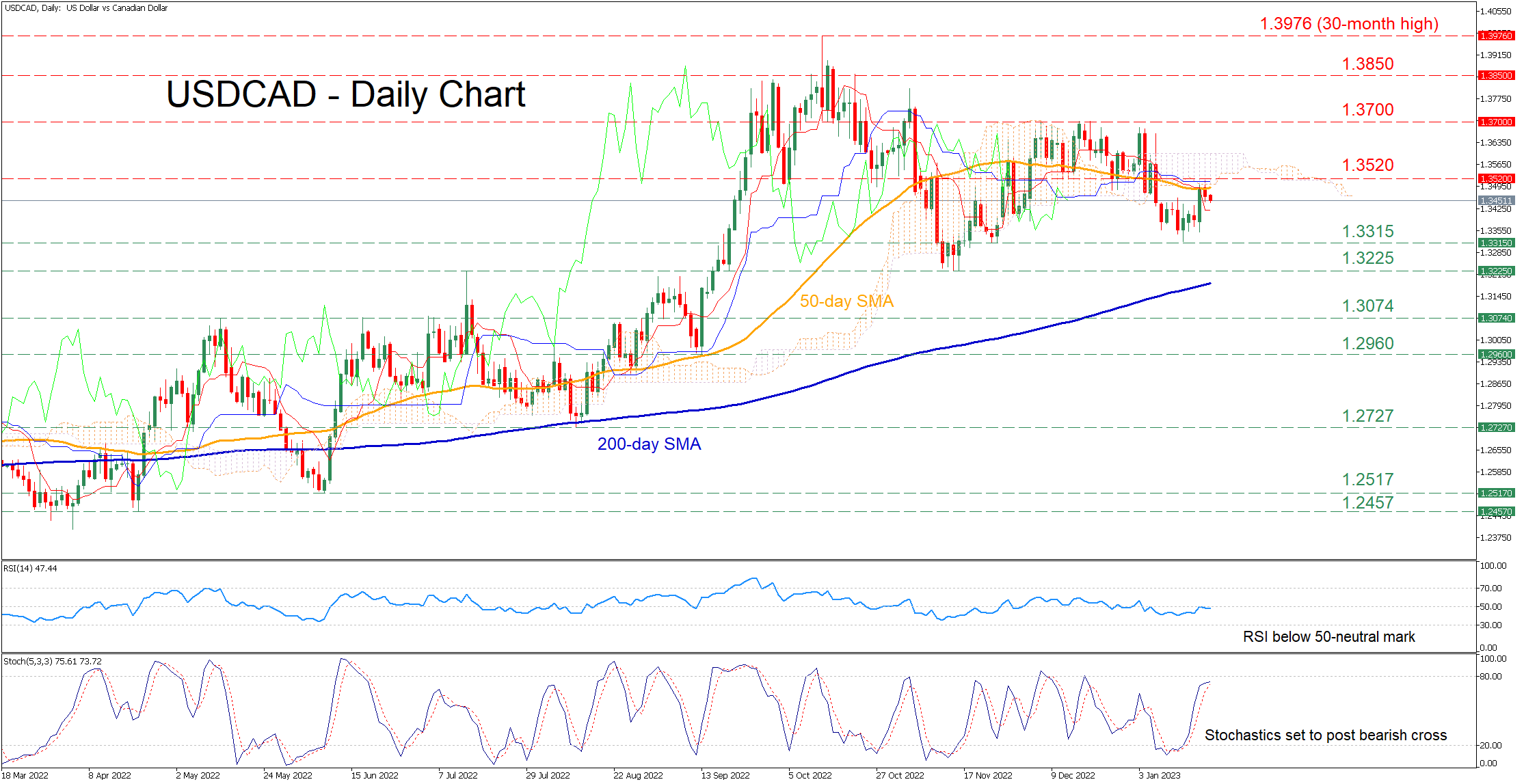
USDCAD had been in an uptrend since March, posting a fresh 30-month high of 1.3976 before experiencing a downside correction. In the short-term, the pair attempted to edge higher after breaking above its sideways pattern, but its advance got rejected at the 50-day simple moving average (SMA).
The momentum indicators currently suggest that near-term risks remain tilted to the downside. Specifically, the RSI has failed to cross above the 50-neutral mark, while the stochastic oscillator is set to post a bearish cross.
Should buying pressures persist, the recent low of 1.3315 could act as immediate support. Violating that zone, the price could test the November bottom of 1.3225. If that floor collapses, the bears may aim for 1.3074 before the 1.2960 support region comes under examination.
Alternatively, if the price manages to cross above the 50-day SMA, initial resistance could be met at the 1.3520 hurdle, which overlaps with the lower boundary of the Ichimoku cloud. Piercing through that wall, the pair might ascend towards 1.3700 or higher to challenge the 1.3850 barrier. A break above the latter could set the stage for the 30-month high of 1.3976.
In brief, USDCAD appears to be held down by the 50-day SMA. Therefore, a successful break above that zone could trigger a moderate rally to the upside.
EUR/USD Pair is Currently Consolidating Gains Near 1.0830
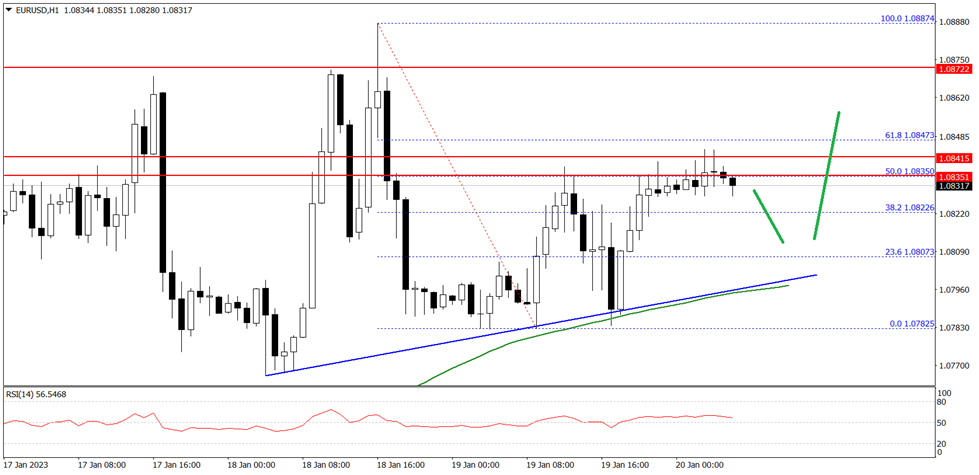
The Euro started a fresh increase from the 1.0770 zone against the US Dollar. The EUR/USD pair gained pace above the 1.0800 to move into a positive zone.
The pair even traded above the 1.0820 level and the 50 hourly simple moving average. It is currently consolidating gains near the 1.0830. An immediate resistance is near the 1.0840 level.
The first major resistance is near the 1.0850 level. A break above the 1.0850 resistance level could start another increase. In the stated case, it could rise towards the 1.0920 resistance.
Conversely, the pair might start another decline below 1.0820 on FXOpen. The next key support is near 1.0800 and a connecting bullish trend line on the hourly chart, below the pair could drop towards the 1.0770 level. Any more losses might send the pair towards the 1.0725 level in the near term.
Dow Jones 30 Breaks Support
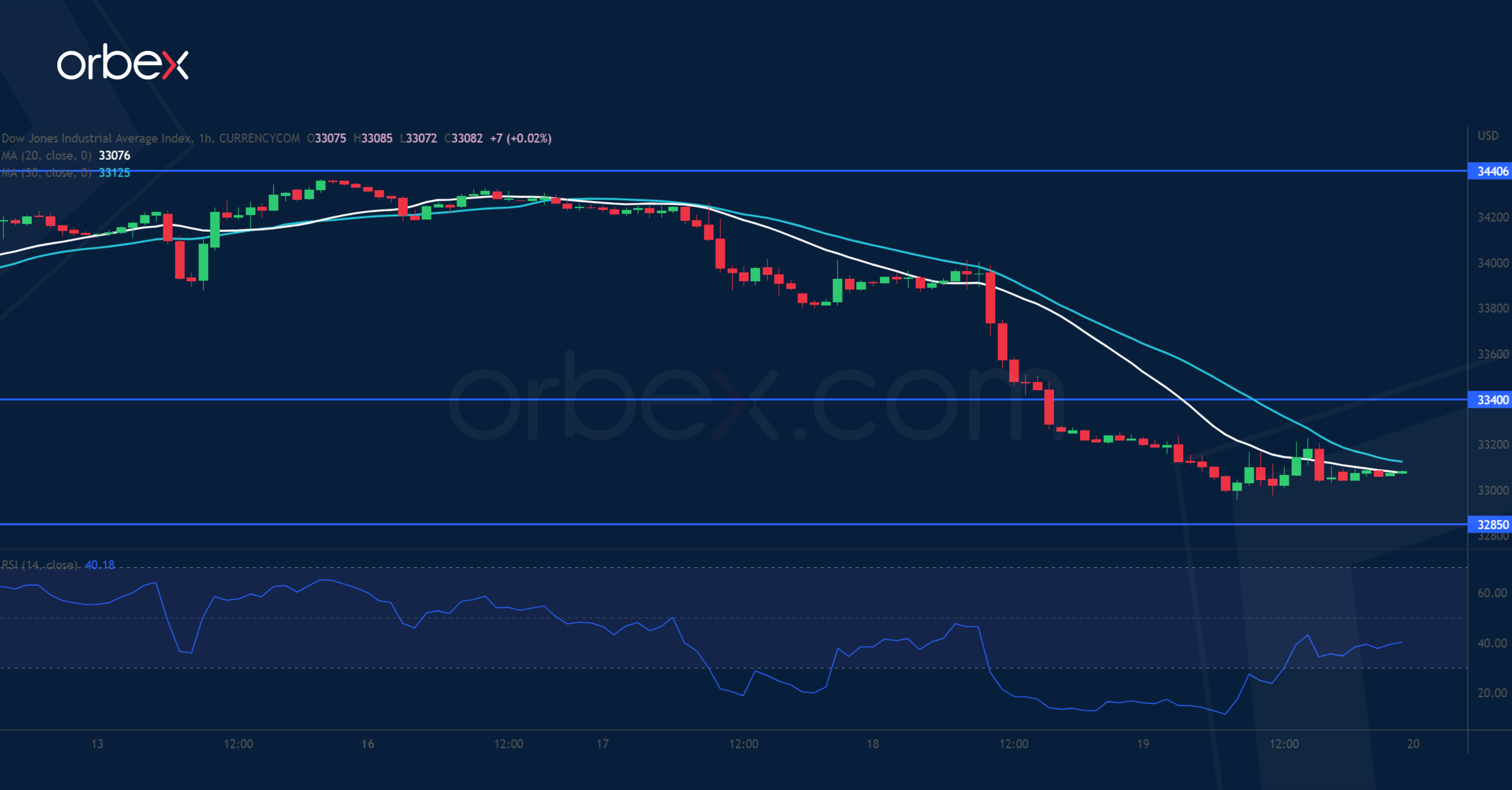
The Dow Jones 30 weakens as fewer jobless claims point to a tight US labour market. The mid-December liquidation point at 34400 has proved to be a tough level to crack. The price’s sharp reversal suggests that the bears could still have the final word. A clean cut through 33700 then 33400 has put the bulls on the defensive, with the latter becoming a fresh resistance. The index is now probing bids at the lower band of a previous consolidation at 32850. The RSI’ oversold condition may attract some bargain hunters.
US Oil Finds Support
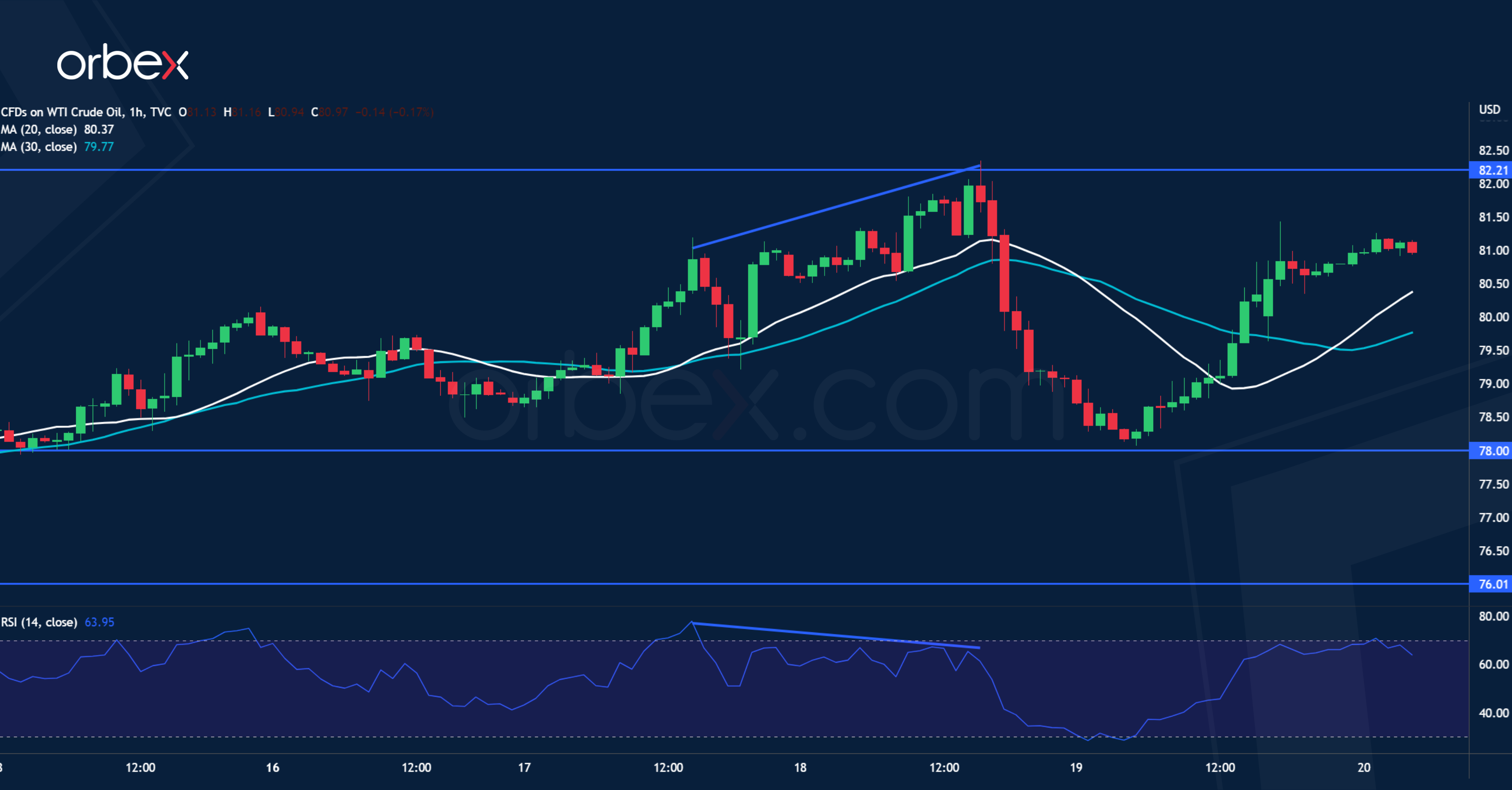
WTI crude bounced back after data showed Chinese demand rose its highest since February. A close above the previous high of 81.30 has been short-lived with the rally hitting a roadblock at 82.20, right under December’s high of 83.00. A break below 79.00 has forced leveraged buyers to bail out. Not all is lost though, this might be a correction after a bearish RSI divergence showed exhaustion on its way up. 78.00 on the 20-day moving average saw renewed interest. 76.00 would be the bulls’ second layer of defence.
AUD/USD Falls Back
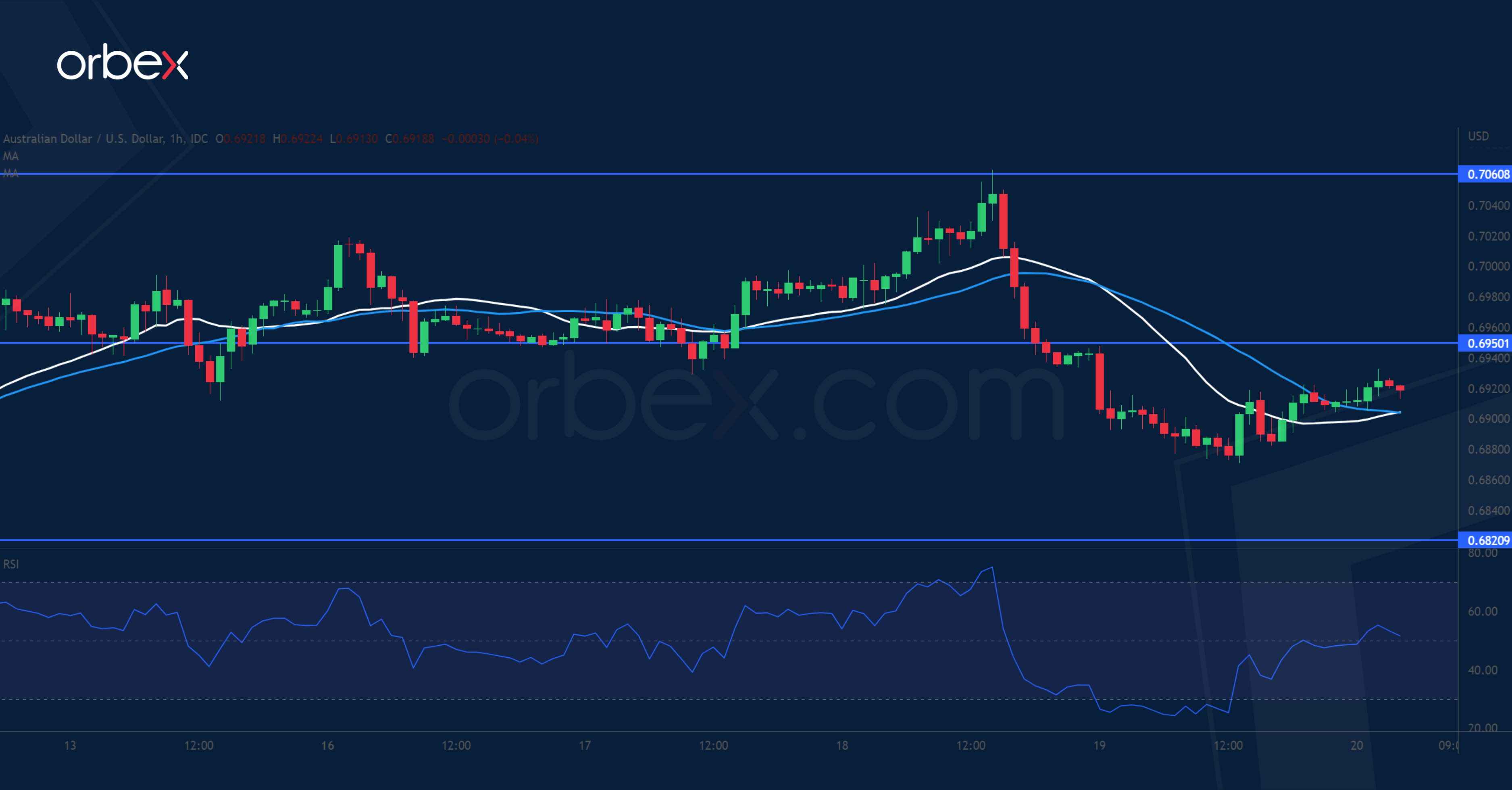
The Australian dollar softened after an uptick in December’s unemployment rate. A cut through 0.6940 has invalidated this demand zone, elbowing the bulls to the side. This left a shooting star on the daily chart, which may foreshadow a U-turn. 0.6820 near the base of a previous bullish breakout momentum sits on the 30-day moving average, making it an area of confluence. A deeper correction would test the daily low at 0.6720. On the upside, the buy side will need to push back to 0.6950 to relieve their trapped fellows first.
BoJ Clearly Removed the Sting Out of the Normalization Debate
Markets
The ECB took center stage yesterday. Several speeches from high-profile policymakers were due, including Dutch governor Knot and president Lagarde. Both stuck to the hawkish line set out at the December meeting. That message was later reinforced by the publication of that meeting’s minutes. Governors were not at all amused with market conditions having eased at that time, saying it was incompatible with bringing inflation back to target. The eventual 50 bps hike combined with strong guidance of more similar-sized hikes to come also was a clear compromise between the large number of members preferring a 75 bps move & some wanting a quicker starting QT pace and the rest of the committee. The core bond yield decline came to a halt. Bunds underperformed USTs with yields grinding 0.9 bps (30y) to 6.5 bps (2y) higher. US yields rose 3.9-4.4 bps in the 2y-5y segment and over 2 bps at the long end of the curve. Fed vice-chair Brainard held a balanced speech saying risks are becoming more two-sided, referring to cooling wages and consumer demand but stressing the need for higher rates for longer. Stock markets lost ground, especially in Europe but the dollar failed to capitalize on that. DXY barely kept the 102 barrier. EUR/USD rose back above 1.08. Sterling initially defied the risk-off again. But some profit-taking action took place when EUR/GBP hit support at 0.8721 (April 2021 correction high/June 2022 interim high).
The Japanese yen is underperforming in a risk-on session. Inflation rose to the highest in decades (see below) but the BoJ clearly removed the sting out of the normalization debate, for now at least. USD/JPY advances to above 129 and yields in the region again point downwards (10y reference yield -3.6 bps to 0.4%). China’s yuan eases a tad (USD/CNY 6.78) after the PBOC, with today’s injection included, flushed the local market with a record amount of short-term cash this week ahead of the Lunar NY holidays next week. NY Fed Williams sided with the rest of the colleagues arguing for further tightening in order to get sufficiently restrictive rates. US yields this morning add a few more bps.
It’s the final day at the WEF in Davos today. It’s again packed with central bank speeches though we don’t expect them to hold any additional information. Their message is clear and it’s up to markets to either embrace or keep ignoring it. We’ve seen core bond yields bottoming yesterday but it is all very preliminary. And recent evidence has shown that it doesn’t take much (usually one bad data release) to thwart the process, especially in the US. The 10y yield over there should take out 3.50% asap and preferably the 3.58/63% area soon thereafter to flip the technical picture but that’s more than a day’s work. It’s also a prerequisite for the dollar to sustainably recover (through interest rate support and risk aversion). UK retail sales end the data-heavy week on a disappointing note. (Core) retail turnover in December dropped 1(.1)% m/m to be 5.8% (6.1%) lower y/y. The numbers defied a hoped-for rebound after already declining in November. It’s a conflicting element for the Bank of England after a solid labour market report and still-double digit inflation earlier this week. Sterling extended an early fall. EUR/GBP rises to 0.876.
News Headlines
Japanese national inflation accelerated for both the headline and the core (ex. fresh food) reading gauge to 4% Y/Y, respectively up from 3.8% Y/Y and 3.7% Y/Y. The headline figure hit this barrier for the first time since 1991. For the core measure we have to go back to December 1981. The even narrower index which filters energy as well, increased from 2.8% Y/Y to 3% Y/Y. The inflation data add to (market) pressure on the Bank of Japan to take a next step in its monetary policy normalization process. They unexpectedly increased the tolerance band around the 0% YCC target for the 10-yr yield from 25 bps to 50 bps at the end of December, but refrained from taking a next step at Wednesday’s policy meeting with governor Kuroda sticking to his line that inflation is mainly driven by the higher cost of energy. Kuroda’s term ends after the next, March, policy meeting with some expecting the BoJ’s U-turn under a new governor in April.
UK GfK consumer confidence unexpectedly fell from -42 to -45 in January. It continues hovering near all-time lows (-49 Sept2022). Details showed a deterioration in all sub-components apart from “personal finances next 12 months” (-27 from -29). “Climate for major purchases” and “Saving Intentions” showed the biggest declines, dropping 6 points to respectively 14 and -40.
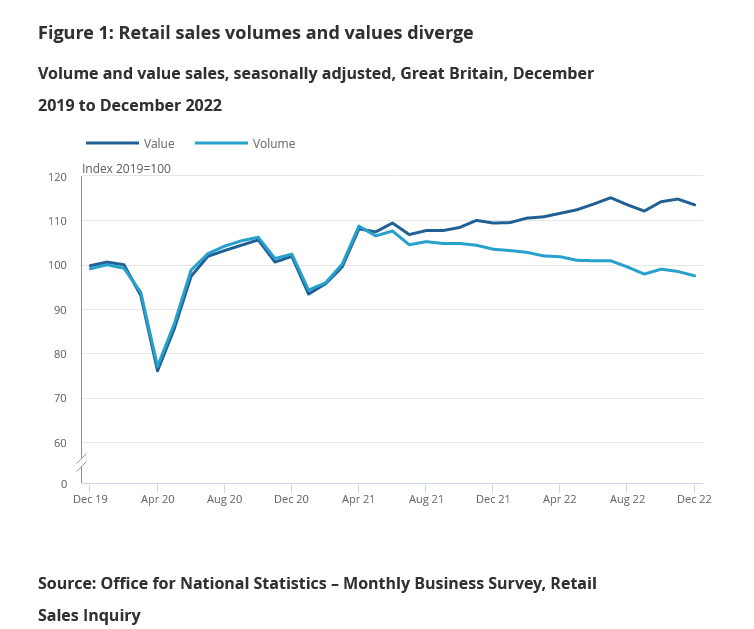
UK retail sales volume down -1.0% mom in Dec, value down -1.2% mom
UK retail sales volume declined -1.0% mom in December, much worse than expectation of 0.4% mom. Ex-fuel sales dropped -1.1% mom, below expectation of 0.4% mom. Sales value decreased -1.2% mom while ex-fuel sales value declined -1.0% mom.
Between 2021 and 2022, retail sales volume fell by -3.0%, "as the lifting of restrictions on hospitality led to a return to eating out, and rising prices and the cost of living affected sales volumes."
Netflix Up, P&G Down
The S&P500 traded lower for a third day, the US yields rebounded, as the US reached its debt ceiling yesterday.
Wow, Netflix
Netflix added nearly 7.7 million new subscribers last quarter, versus only around 4.5 mio expected by the market. Harry and Meghan, among other popular shows in the Q4 clearly did the trick. The share popped almost 10% higher in the afterhours trading.
Why not more?
Because the earnings per share largely missed estimates due to a loss related to euro-denominated debt – as the euro rallied 10% from October to the end of the year. But the company’s profit margin still topped analysts’ expectations.
The results have been a relief for Netflix which was trading more than 3% down at yesterday’s close. We will likely see the recovery extend to $350 per share, the levels it was trading before the second big slump last year, in April, but the levels prior to last January slump, around $500 per share seem like a faraway dream.
Especially given that the early-year stock rally is set to gently fade away. The S&P 500 traded lower for the third straight day, having failed to clear a very critical resistance zone, above 4000 level, where the 200-DMA, and the ceiling of the 2022 bearish trend prevented investors from extending the rally into a new, bullish era, with no major justification on the company, or macroeconomic level.
In this sense, P&G hasn’t been as lucky as Netflix. Their sales fell 6% in Q4, after they raised prices 10%. Price increases for P&G products may have hit a critical point where customers are no longer willing to pay for
Mixed bag of news
The Federal Reserve (Fed) is not stepping back from its rate hike talk – despite easing inflation and easing activity – and the Fed officials keep repeating that the rates will go higher, and stay high for a long time.
Major banks and institutions agree that the US is faced with a mild recession.
In the meantime, the US jobs figures continue to look strong enough to justify more rate hikes from the Fed. Yesterday, the US jobless claims fell below 200’000 for the first time since last September, tempering news that Microsoft and Amazon scrap 28’000 jobs, together.
Where do these people go is anybody’s guess.
And if all this is not enough, the US reached its debt ceiling yesterday, and began using special measures to avoid a payments default. US treasury department is altering investments in two government-run funds for retirees - a move that will free enough cash to allow the US government to pay for its expenses until June. Then, we will see.
For now, there are no signs of agreement whatsoever between Republicans and Biden administration. Biden doesn’t want to cut spending.
In the FX
The US dollar index remains under pressure.
The dollar-yen is better bid despite the data showing that inflation in Japan hit 4% in December, as expected.
The EURUSD remains bid below the 1.08 level, while Cable continues flirting with the 1.24 mark.
The euro-sterling is down to the 50 and 100-DMA levels as a result of a surprisingly stronger sterling this week.
Sterling’s strength is the result of a near-record wages growth, and inflation above 10%. But if you ask Mr. Bailey, two months of slowing inflation is ‘the beginning of a sign that a corner has been turned’.
It’s clearly overly optimistic when you think that inflation in Britain is still above 10%.
Worse, Bloomberg’s English Breakfast index is 20% higher on average compared to last year, as the tea bags cost 10% more, the butter block and eggs are 30% more expensive, while milk prices are up by 50%!
Either Mr. Bailey doesn’t eat the breakfast of an average Brit, or he simply doesn’t earn the average salary of a Brit…
Still, the Bank of England (BoE) is expected to hike the interest rates by 50bp at the next policy meeting, and that expectation is giving support to the pound.
In the Eurozone, however, Christine Lagarde sounds way more down to earth. She accepts that inflation around 9% is still ‘way too high’ for Europe and that the European Central Bank (ECB) should continue fighting it with more rate hikes.
A vision that the Swiss National Bank’s (SNB) Thomas Jordan shares, as well. More hikes are probably needed in Switzerland, he said, even though inflation is at a relatively low 2.8%.
A tighter SNB policy, combined with the inflation gap between Switzerland and the US, supports a further downside move in dollar-franc to 0.90 mark.
ECB Holds the Course
Market movers today
Data calendar for Friday is almost empty. We have only UK retail sales due in the morning and US existing home sales out in the afternoon.
ECB's Lagarde will again be on air from Davos but as she was also speaking yesterday, we do not expect much news.
Also two Fed speakers, Harker and Waller, will be on the wires today ahead of the quiet period that starts on Saturday.
The 60 second overview
ECB: Minutes from the December ECB meeting showed that 'a large number' of officials initially preferred at 75bp hike, but with the Governing Council eventually compromising on a smaller 50bp increase accompanied by hawkish rate guidance and start of QT. Hawkish comments from President Lagarde at the World Economic Forum in Davos suggested that ECB was determined to 'stay the course' and signalled further significant rate rises lie ahead to get inflation under control. She also highlighted that the economic outlook for euro area has improved and that this economic year should be better than feared. The hawkish comments sent the implied ECB peak rate pricing back to 3.4% and EUR/USD back above 1.08.
Norges Bank decision to leave policy rates unchanged at yesterday's meeting was the first G10 central bank (except Japan) to do so. The signal of 25bp March hike was maintained though. Our base case has been for the December hike to mark the final hike of the cycle. Meanwhile, with hard data keeping up better than expected, the recent easing of global financial conditions alongside the positive global demand shocks from China reopening and higher European real disposable incomes, conditions look increasingly set for a final 25bp hike in March.
US: The US Treasury began tapping two government-run retirement funds to avoid a default after the debt ceiling was hit, steps that should allow payments to continue until early June. Treasury Secretary Yellen urged Congress to boost the borrowing limit, though Republicans and Democrats show no signs of ending their stand-off.
Japan: Inflation reached 4% for the first time in more than four decades, with core inflation at 3% also hitting the highest level since 1991. Amid further signs of building price pressures, the figures add to market speculation of a policy change by Bank of Japan. We share that view and think a hike in the policy rate to 0% and another increase in the yield curve control target likely awaits in Q2 23.
FI: ECB members pushed back against the recent repricing of lower yields yesterday. EUR rates grinded gradually higher in yield terms during the day. Bunds ended 4bp higher on the day amid minor intra-euro area spread changes. The front-end underperformed the longer part of the curve, as ECB rate hike expectations repriced significantly, unwinding most of the rally on Tuesday/Wednesday. Compared to Monday, ECB policy peak rate as priced by markets is just 3bp lower now at around 3.4%.
FX: Overall, little changed in G10 FX overnight. EUR/USD hovers just north of 1.08 after both Fed (e.g. Collins) and ECB (e.g. Lagarde) suggest they will deliver according to forward guidance, that is, Fed toward 5.00-5.25% and ECB 'stay the course' and go 50bp at the next meeting. JPY slightly weaker vs peers where USD/JPY clawed back above 129. EUR/SEK moved to the higher end of the 11.10-11.20 range yesterday and EUR/NOK held just below the 10.75-area resistance.
Credit: Negative sentiment in equity markets drove credit spreads wider. ITraxx Xover was 17bp wider at 428bp, while Main was 4bp wider at 82bp. That said, the primary credit market was still open for business. In Scandi space, European Energy printed a EUR100m hybrid bond with a 10.75% coupon and made a EUR75m tap issue of its EUR 2026 senior unsecured bond at 99.50.