Sample Category Title
Bank of Japan surprise – another sign of a global dollar reversal
The Bank of Japan made a surprise move on Tuesday morning, extending the permissible yield range of 10-year government bonds. The decision caused the yen to strengthen by more than 3%, and the Nikkei225 index lost as much as 4% before recovering almost half of its initial decline.
The central bank of Japan said at the end of its regular meeting that it would switch from a 0.25% yield target to a 0.0-0.50% target range instead. As yields had been held at 0.25% solely due to BoJ purchases, the range extension immediately sent yields to the upper end of the range. This decision meant that the BoJ would print fewer yen to buy government bonds for the FX market, strengthening the currency.
Strictly speaking, the Bank of Japan has made monetary policy less accommodating. However, the difference with key rates of other countries remains disastrous, as it is the only one keeping rates negative with an active QE phase.
On the other hand, the signal from the softer central bank itself is definite and could be a trial balloon for a fundamental policy reversal. Bank of Japan meetings are no longer boring.
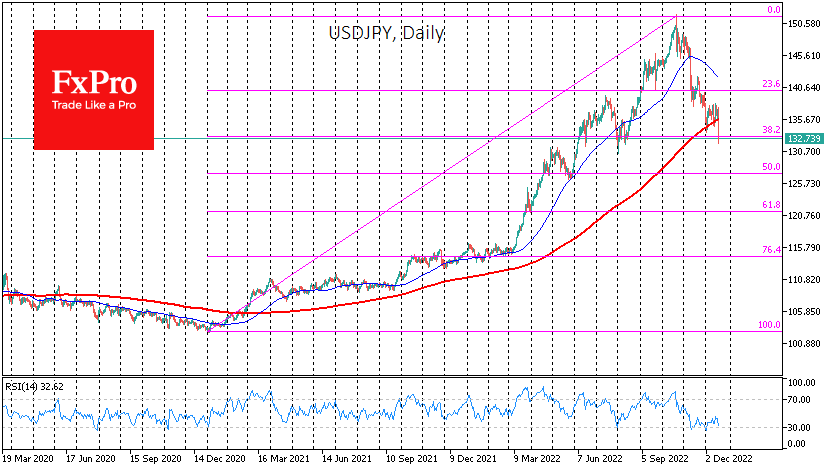
We also pay attention to the timing of the changes. The powerful interventions of the Japanese Ministry of Finance in November stopped the USDJPY rising and confirmed the reversal in the pair thanks to a decisive move down on a break-down of the 50-day moving average.
Throughout December, we saw a three-week consolidation of the pair just above the 200 SMA. The decisive move down after the extended consolidation has been reinforced by the fact that during the lull in the pair, the stop orders pulled closer to the market and are now triggered in droves.
A sharp pullback of the pair under its 200 SMA often signals the reversal of the long-term trend. We had similar signals earlier in the EURUSD and the GBPUSD.
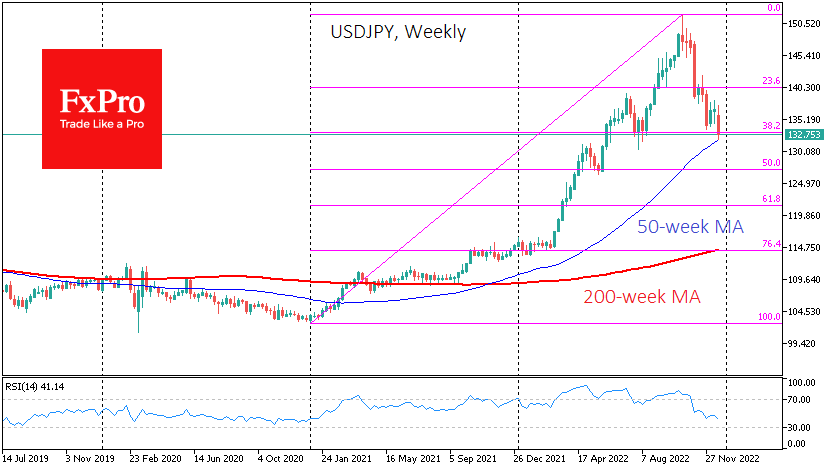
In addition, the fall of the USDJPY below 133 was below the 61.8% retracement of the entire momentum of the pair from the beginning of 2021 to the peak in October 2022. Market participants’ conviction of a hawkish reversal of Bank of Japan policy could trigger a new round of decline in the pair with a technical target near 127. This is where the 50% level of the mentioned last rally and the support area in May of the year gone by are concentrated.
BoJ Tweaks YCC – Global Bond Market Takes a Hit
- Bank of Japan (BoJ) surprised the market this morning by raising the upper band on its yield curve control (YCC) policy from 0.25% to 0.50%.
- Bond yields in Japan rose on the news with spillover to global bond markets and the Danish callable bond market. USD/JPY dropped to 132 on the move.
- We expect a policy rate hike to 0% in Q2 followed by a 25bp increase in the yield target to 0.25% and an increase in the fluctuation band from -0.25% to 0.75%.
In a surprise move, BoJ adjusted its yield curve control this morning. BoJ widened the band around its 10-year 0% yield target to +/-50bp from +/-25. The official explanation is that it will allow for a smoother formation of the yield curve. The move comes with a pledge to sharply increase bond buying, in order to stress that this is a fine-tuning move and not tightening. At the press conference, governor Kuroda also did his best to communicate that it is not a tightening move.
Inflation has picked up in Japan, but it remains an imported phenomenon. Service inflation, for instance, is on the rise, but still stands at just 0.8%. An increase in wage pressure is key for BoJ to achieve its goal of reflating the economy permanently. It remains our base case that a global recession will obstruct a significant increase in wage pressure. However, we see a risk that a new governor will differentiate less between domestically created inflation and imported inflation and will use this opportunity to modify BoJ's extreme position among global central banks – it is the only major central bank left with an easing stance.
Spring will be crunch time in Japan with the annual wage negotiations and a scheduled replacement of all three governors in BoJ. Based on today's move, we think the probability of further moves next year has increased and we expect a move away from negative interest rates after a new governor has been appointed, followed by a further loosening of the yield curve control. Specifically, we expect a policy rate hike to 0% in Q2 followed by a 25bp increase in the yield target to 0.25% and an increase in the fluctuation band from -0.25% to 0.75%.
After the announcement today the market has started to position for a possible rate hike from BoJ. The market now discounts a full 10bp interest rate increase by April, which would take short-term Japanese interest rates back to zero and a full 25bp interest rate increase by August. Yesterday, the market did not expect a full 25bp increase until November, i.e. the market expects a possible rate hike in Japan to be a theme for H1 next year.
Fixed income markets
The unexpected change to the YCC target will have a negative impact on the long end of the French government bond yield curve, as the market speculates about a further repatriation from French government bonds to Japanese government bonds, as we saw in e.g. US treasury bonds and Australian government bond markets in Asian trade this morning. 10Y US treasuries have risen some 8bp, while 10Y Aussie government bonds have risen 19bp. However, Japanese investors already sold significant amounts of foreign bonds in 2022. They reduced their holdings of US treasuries by around USD150bn in 2022 according to the numbers from the Japanese Ministry of Finance. See our monthly overview of the Japanese holdings in various foreign bond markets.
There is also likely to be some negative spillover effect on the Danish callable mortgage bond market, as the market expects Japanese investors to sell in the 30Y callable bonds. Here they also reduced their holdings in 2022 according to the monthly statistics, but much less compared to other foreign markets. Furthermore, when we look at foreign holdings of Danish callable bonds, there has only been a modest reduction in 2022. Foreigners have reduced their holdings of callable bonds from 35% to 33% according to the ownership statistics from the Danish central bank; see Danish Mortgage Bonds, 28 November 2022. 30Y callable mortgage bonds provide a solid yield pick-up relative to 10Y and 20Y JGBs when hedged back into JPY, while e.g. US treasuries give a negative yield.
The higher 10Y yield in Japan could increase the appetite for returning to Japanese government bonds as mentioned, but on the other hand, a stronger JPY is a positive factor when extending FX hedges. However, we would expect Japanese investors to continue to reduce Danish callable bonds to the same or partly higher extent as seen this year. Buybacks in lower coupon callable mortgage bonds should dampen the effects of the continued selloff due to Japanese investors holding up to 75% of their exposure in 30Y lower coupon callable bonds. We see this as a negative event for callable mortgage bonds overall - and especially the lower coupons.
FX market
USD/JPY dropped five big figures to around 132. A stronger JPY is in line with our expectations, but it comes earlier than expected. We continue to see headwind for JPY in the short run from the global inflation pressure and the pressure on the Fed to hike rates further, but we see a substantially stronger JPY on a 6-month horizon. We will adjust our JPY forecast in January.
As the decision marks the end of YCC in Japan, it poses a duration shock to global markets including FX. While JPY is the big winner, the underperformers should be found in the cluster of cyclically sensitive currencies that suffer from higher global real rates like SEK and NOK. In addition, AUD and NZD look vulnerable in a global duration shock in which Asian growth prospects take a hit. On balance, the shock is positive for USD and negative for EUR/USD, although we do not want to overstate the impact at this stage. We are short USD/JPY; see our FX Top Trades 2023, 2 December 2022.
USD/JPY Outlook: Yen Surges after BOJ’s Surprise Decision
The USDJPY was sharply lower in Asian / early European session on Tuesday (down around 3.3%) after the Bank of Japan left its interest rates unchanged but shocked markets by decision to widen the 10-yr bond yield movement from 25 basis points move either side, to 50 basis points.
The central bank expects its decision to allow more rise in long-term interest rates and to partially ease the costs of extended monetary stimulus.
The BoJ expect the latest measures to boost monetary policy framework and highlighted that it is not the beginning of exiting easy policy.
Investors bought yen after BoJ’s decision, sending the currency to the highest levels in 4 ½ months against US dollar.
Fresh acceleration lower weakened technical structure on a daily chart, as the pair eventually broke below 200DMA (135.72) which stayed below the price since late Feb 2021 and contained the recent attacks on Dec 2, 3 and 13,14.
Fresh bears also broke below former low at 133.62 (Dec 2), signaling continuation of a larger downtrend from 151.94 (Oct 21 peak, the highest since July 1990).
Negative momentum is gaining strength and moving averages turned to full bearish setup on daily chart, supporting the action, but RSI is near the border of oversold territory, suggesting that bears may face headwinds on approach to key supports at 130.39/00 (Aug 2 trough / psychological).
Close below 133.62 is needed to confirm bearish stance and keep focus at the downside, with selling upticks strategy favored while the action stays below 200DMA.
Res: 133.62; 134.51; 135.72; 136.22.
Sup: 132.09; 131.88; 130.80; 130.39.
USD/JPY Rockets after BoJ Shocker
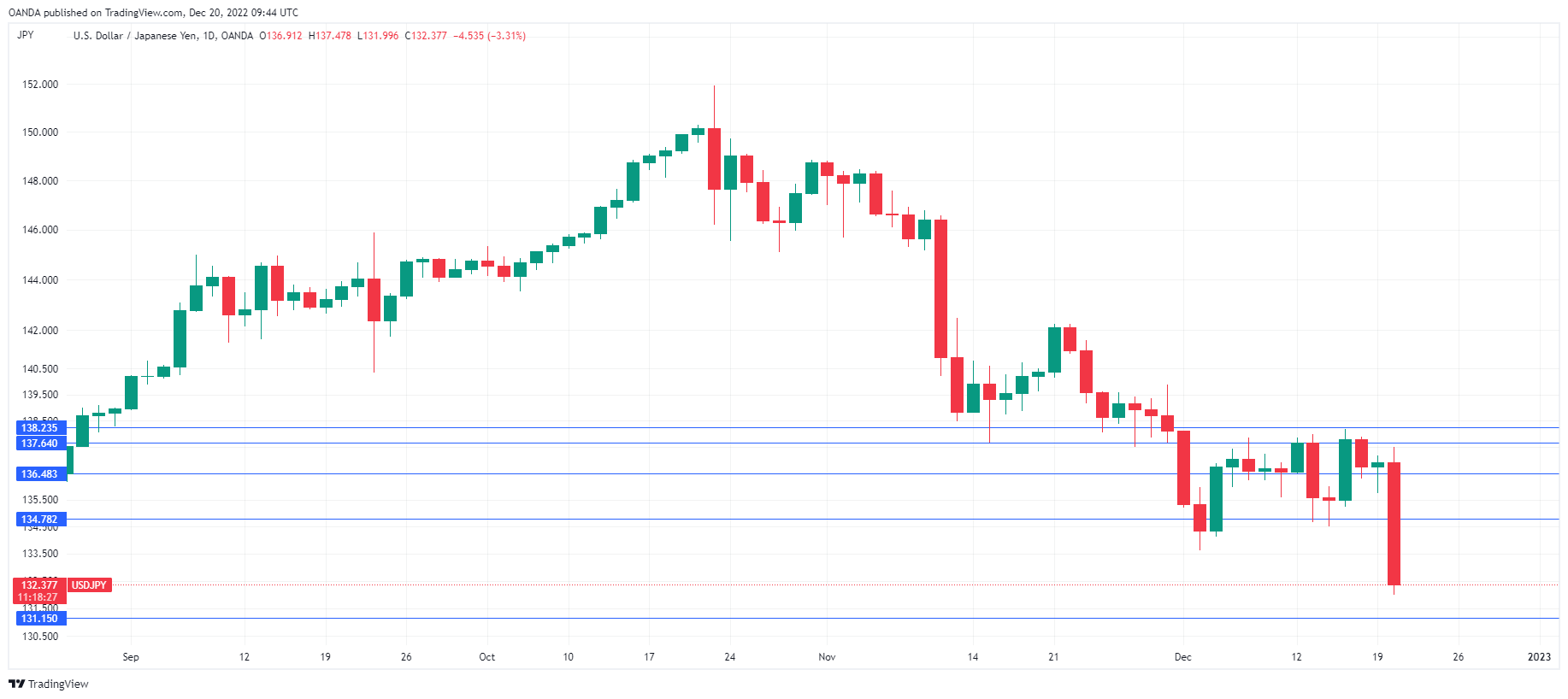
The Japanese yen has sent the dollar tumbling on Tuesday. USD/JPY has fallen 3.26% and is trading at 132.44 in Europe. In the Asian session, USD/JPY fell as low as 131.99 but has recovered slightly.
BoJ tweaks yield curve control
At the end of its policy meeting, the Bank of Japan stunned the markets with a change to its yield curve control (YCC). The BoJ announced it would widen the band around the 10-year bond yield to 50 basis points, up from 25 bp. The move allows long-term interest rates to rise higher and the reaction was deafening, as the yen soared and climbed to its highest level since August 11th. The move was completely unexpected, as the BoJ meeting was expected to be a sleeper with no policy changes. It was just yesterday that I wrote in these pages that the BoJ was not expected to change policy until the changing of the guard in April 2023, when Governor Kuroda steps down.
The BoJ move is certainly dramatic but needs to be kept in proportion. The BoJ is maintaining its YCC targets and said it would sharply increase bond purchases. This could be a signal that the Bank is tweaking its current ultra-loose policy and is not planning to withdraw stimulus.
The BOJ has staunchly defended its yield cap with massive bond purchases, and this has distorted the yield curve and fueled a sharp drop in the yen, which has contributed to higher costs for imports of raw materials. BoJ policy makers may have become uncomfortable with these side effects and felt that the time was right to take a small step towards normalisation. This ‘baby step’ packed a massive punch as seen in the yen’s reaction, and the markets will be looking for hints at further moves from Governor Kuroda as his term winds down.
USD/JPY Technical
- USD/JPY has broken below several support levels. The next support level is 131.13
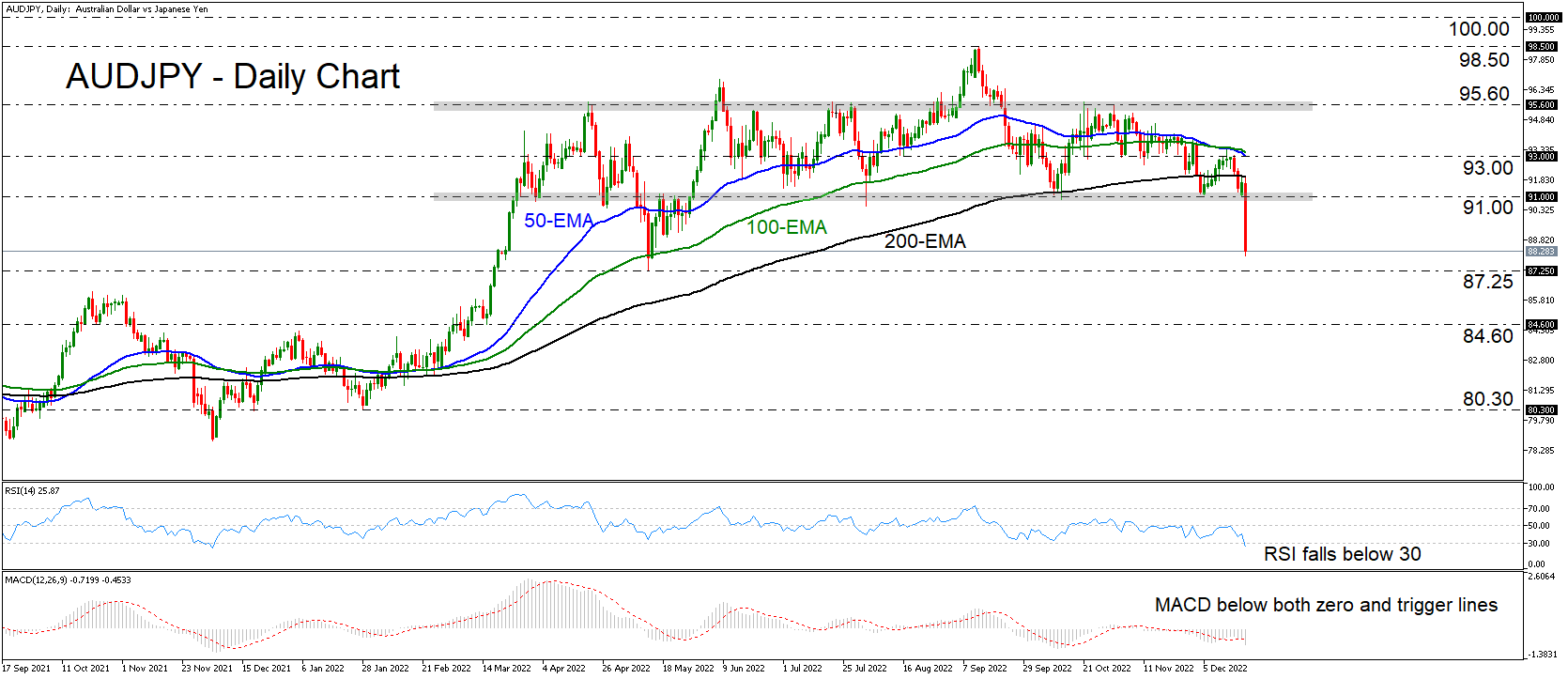
AUDJPY Tumbles Below Key Support Zone of 91.00
AUDJPY fell sharply on Tuesday after the BoJ raised the cap on 10-year bond yields. The pair broke below the key support (now turned into resistance) territory of 91.00, which had been stopping it from drifting lower since July. Up until now, AUDJPY is nearly 4.5% lower, which combined with the break below 91.00 suggests that the bears are back in the driver’s seat.
The daily oscillators are adding to that narrative by detecting strong bearish momentum. The RSI fell below its 30 line, while the MACD is lying below both its zero and trigger lines, pointing down as well.
If the bears are willing to stay in charge, they could eventually challenge the low of May 12 at 87.25, the break of which could extend the slide towards the 84.60 barrier, marked by the low of March 15. If there are no buyers to be found there either, the bears may get encouraged to dive all the way down to the 80.30 territory, marked as support by the low of January 27.
On the upside, a break above 95.60 may be needed to paint a bullish picture. That barrier served as strong resistance on multiple occasions this year. So, its break may result in advances towards the almost 8-year high of 98.50, hit on September 13, or the psychological round figure of 100.00.
To recap, AUDJPY tumbled on the BoJ decision, breaking the key support territory of 91.00. This confirmed a lower low and suggests that more declines may be in store for the foreseeable future.
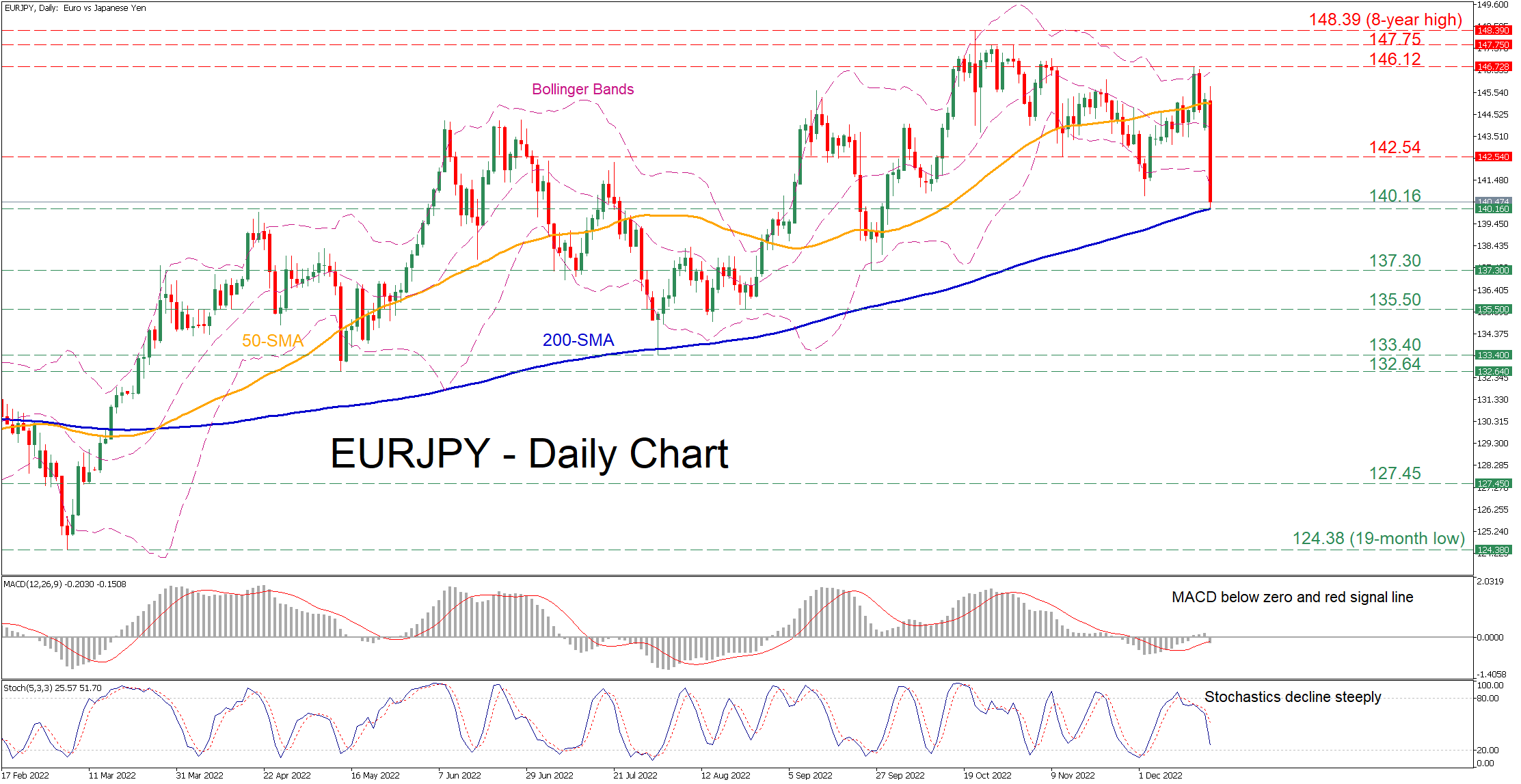
EURJPY Plummets after BoJ Surprises, 200-day SMA Caps Losses
EURJPY had been on a steady short-term recovery before experiencing a massive decline on the back of the BoJ’s latest decision to widen the band of its Yield Curve Control policy. For now, the retreat has come to a halt at the crucial 200-day simple moving average (SMA, but downside pressures persist.
The momentum indicators currently suggest that bearish forces are strengthening. Specifically, the MACD histogram has retreated below both zero and its red signal line, while the stochastic oscillator is descending steeply near the 20-ovesold zone.
If the decline resumes, initial support could be met at the 200-day SMA, currently at 146.10. Diving beneath that region, the price could descend towards the September low of 137.30 before 135.50 comes under examination. Failing to halt there, further declines could cease at the August bottom of 133.40.
On the flipside, should the pair correct higher and erase part of its downward spike, the 142.54 support could now act as resistance. A violation of that zone could shift the attention to 146.12 before the bulls aim at the 147.75 barrier. Jumping above the latter, the pair may then challenge the eight-year high of 148.39.
In brief, EURJPY declined significantly on the aftermath of the BoJ’s latest policy decision but found support at the 200-day SMA. Hence, if the crucial floor holds its ground, the pair is likely to exhibit an upside correction.
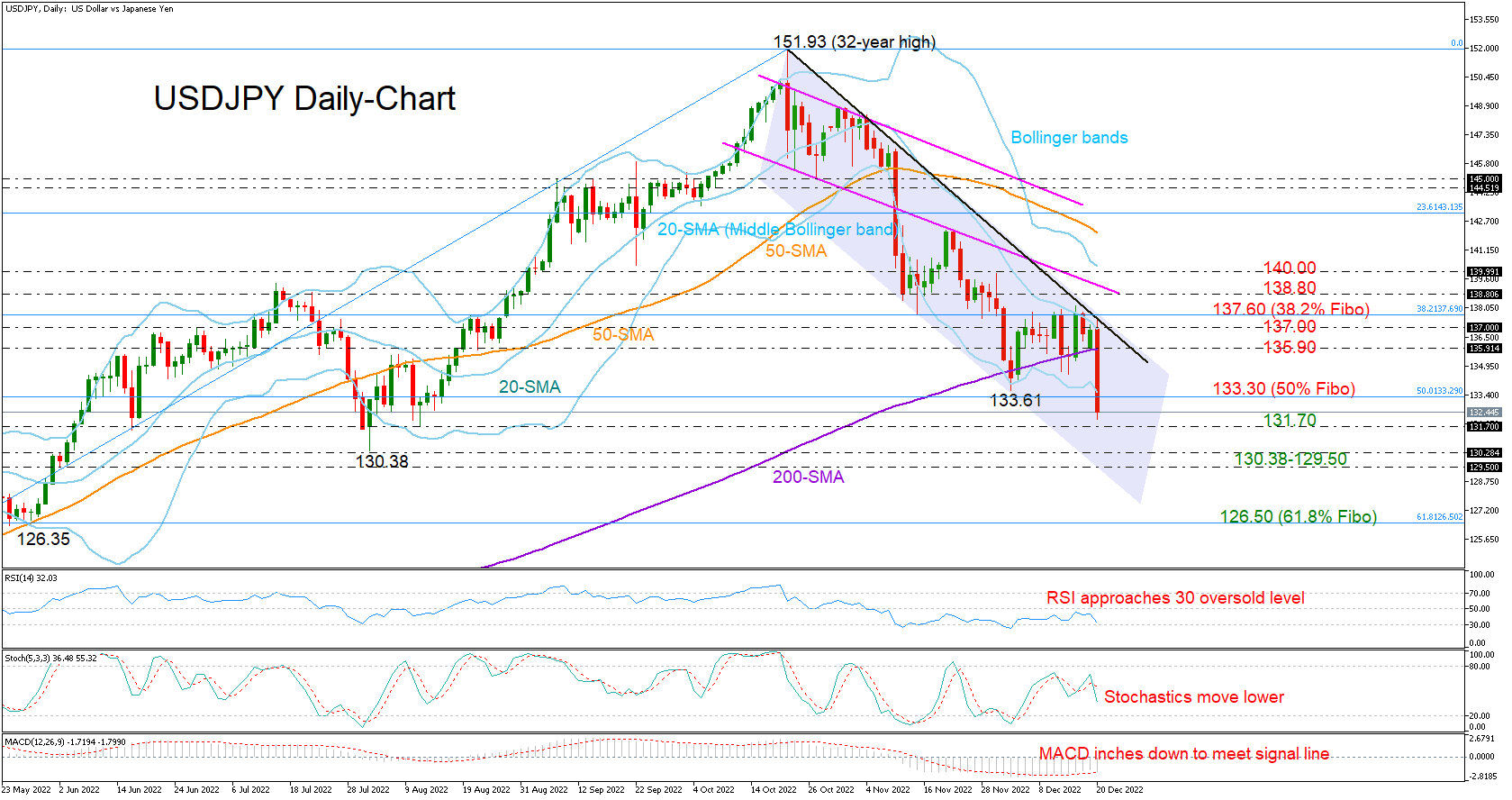
USDJPY Crashes on BoJ Surprise Tweak
USDJPY crashed to a four-month low of 132.26 in the wake of an unexpected hawkish tweak in the BoJ’s yield curve control early on Tuesday.
From a technical perspective, the bearish action was the outcome of the rejection near the key descending trendline and the 20-day simple moving average (SMA) at 137.00. With the price tumbling below the 200-day SMA for the first time in almost a year, traders will wait and see whether selling pressures will persist in the coming sessions.
The stochastics and the RSI have yet to confirm oversold conditions, signaling further depreciation in the market. Yet, with the price flirting with the lower Bollinger band, this initial sell-off may not last for long, especially as the crucial floor of 131.70 remains in sight. Failure to bounce here could worsen the bearish wave, shifting the spotlight to the August low of 130.38 and then to the 129.50 barrier. Moving lower, the pair may head for the 61.8% Fibonacci retracement of the March-October uptrend at 126.50. Note that May’s decline stopped around the same location.
Alternatively, a bounce back above the 50% Fibonacci of 133.29 could motivate an upside correction towards the 200-day SMA at 135.90. If the bulls win the battle with the resistance trendline at 137.00 and snap the 38.2% Fibonacci of 137.70 too, the recovery may continue towards the channel’s broken lower trendline seen at 138.80. The 140.00 mark could be the next target.
In brief, the short-term outlook for USDJPY has further darkened following the latest freefall in the price. We cannot rule out some stabilization, though a meaningful rally could be a tough job as several obstacles lay ahead.
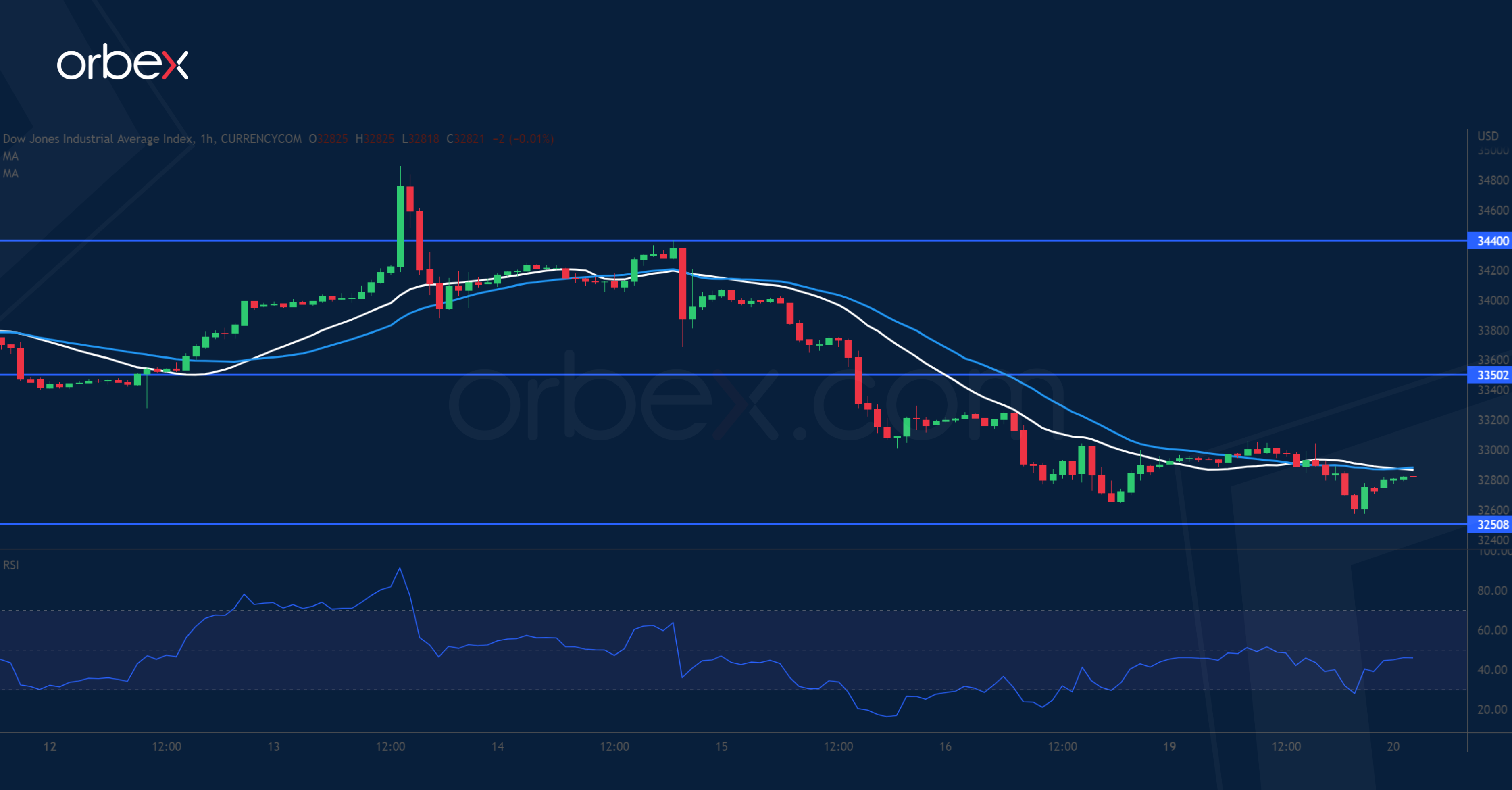
Dow Jones 30 Seeks Support
The Dow Jones 30 falls as investors offload risk assets over the prospect of further rate hikes. Last week’s reversal has dented the short-term mood, forcing leverage positions to abandon 33400 and lifting volatility. The index is looking to secure a foothold at 32500 which is a 38.2% Fibonacci retracement of the rally from October. The 50% level and daily low at 31800 is critical in keeping the recovery intact in the medium-term. On the upside, 33500 then 34100 are two obstacles to clear before the uptrend could resume.
AUD/USD Tests Major Support
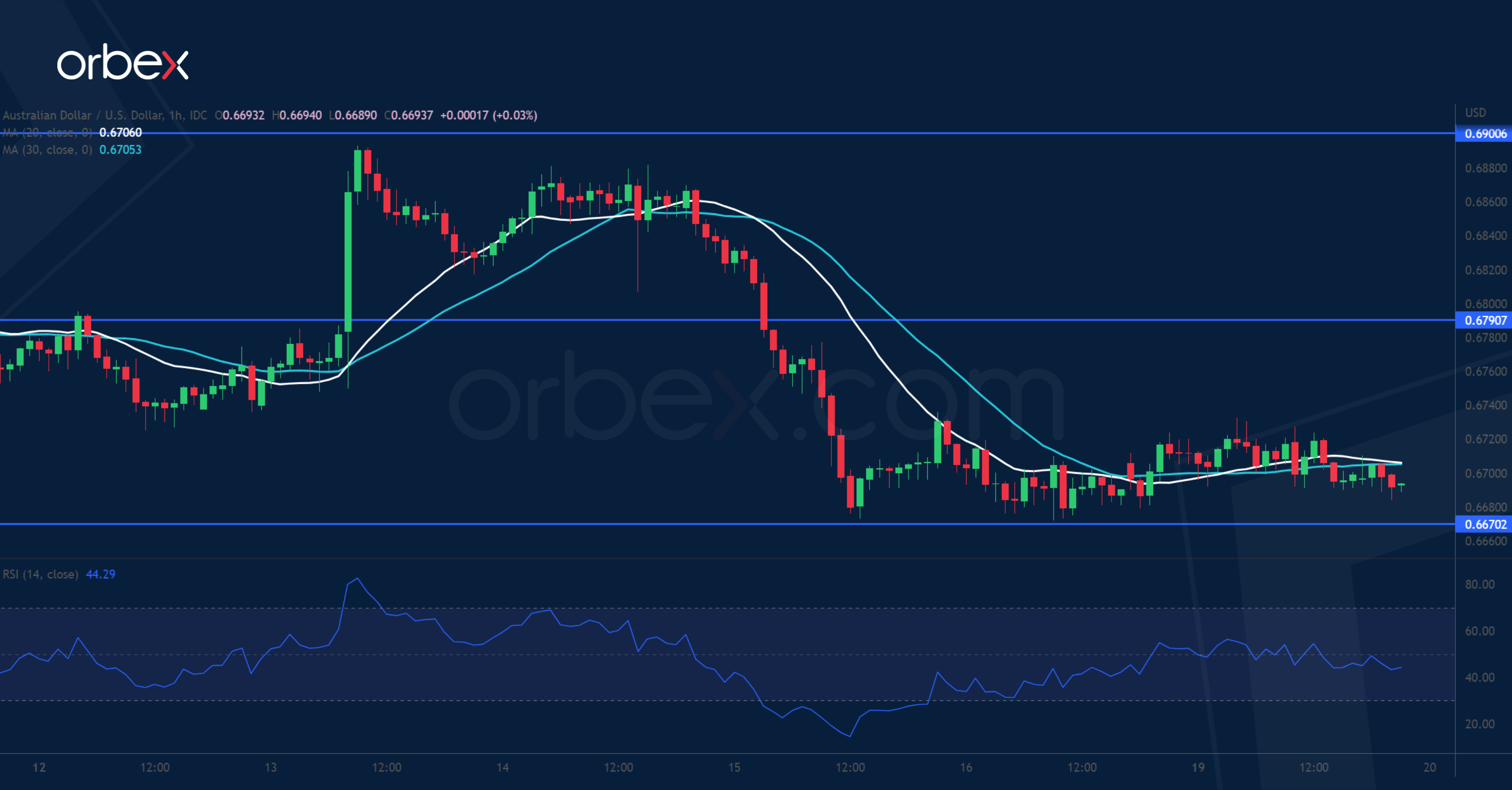
The Australian dollar slips as the RBA minutes hints at a possible pause in rate hikes. The pair has so far struggled to clear 0.6900 at the origin of the September sell-off. A combination of profit-taking and fresh selling has weighed on the aussie. A push under 0.6750 may have dampened the enthusiasm, putting the recent lows around 0.6670 at test. The bulls must lift offers in the newly formed supply zone around 0.6790 before they could regain control. Otherwise, a fall below said support could trigger a broader liquidation.
EUR/USD Consolidates Gains
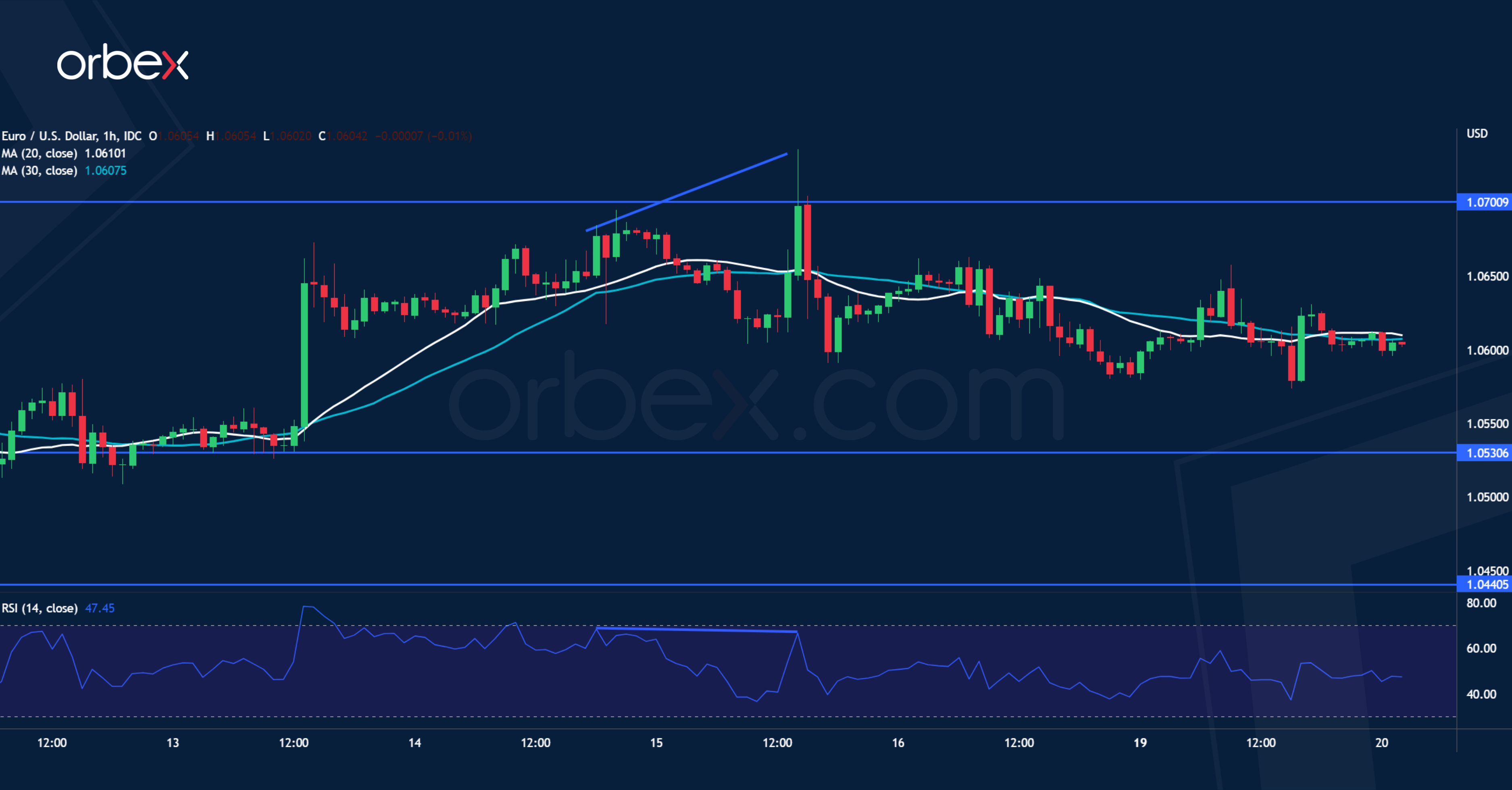
The euro found support after ECB officials pledged to keep raising interest rates. The pair came under pressure near last June’s high of 1.0780. A RSI divergence shows a deceleration in the upward momentum and could be significant in this supply zone. After traders took some chips off the table, new buying interests will need to follow through to maintain the single currency’s edge. 1.0530 is a key level to make that happen or the price could tumble below 1.0440. A rally back above 1.0700 would keep the bulls in play.