Sample Category Title
USD/CHF Mid-day Outlook
Daily Pivots: (S1) 0.9852; (P) 0.9912; (R1) 0.9975; More
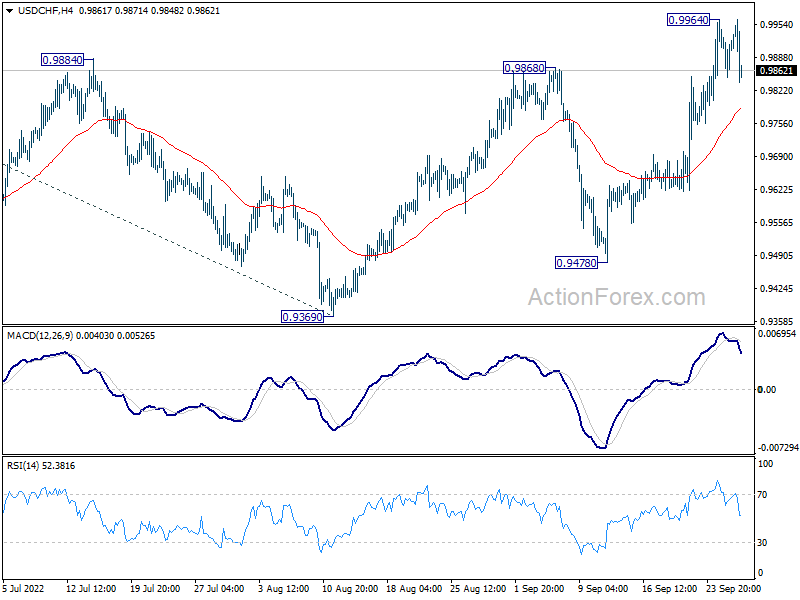
USD/CHF is staying in consolidation from 0.9964 and intraday bias stays neutral. In case of another retreat, downside should be contained by 4 hour 55 EMA (now at 0.9783). Break of 0.9964 will target 1.0063 high. Decisive break there will confirm resumption of larger up trend.
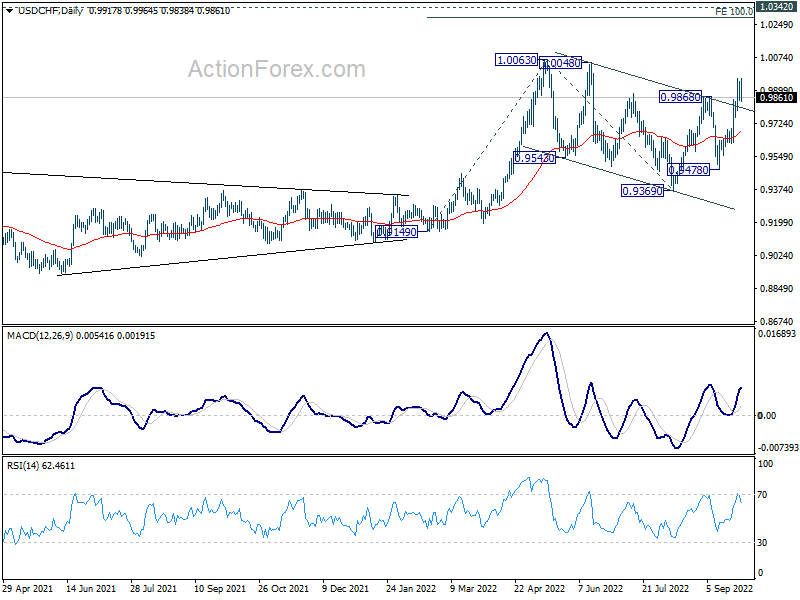
In the bigger picture, current development suggests that up trend from 0.8756 (2021 low) is still in progress. Sustained break of 1.0063 will target 100% projection of 0.9149 to 1.0063 from 0.9369 at 1.0283, and then 1.0342 (2016 high). For now, this will remain the favored case as long as 0.9369 support holds, even in case of deep pull back.
EUR/USD Mid-Day Outlook
Daily Pivots: (S1) 0.9551; (P) 0.9610; (R1) 0.9652; More...
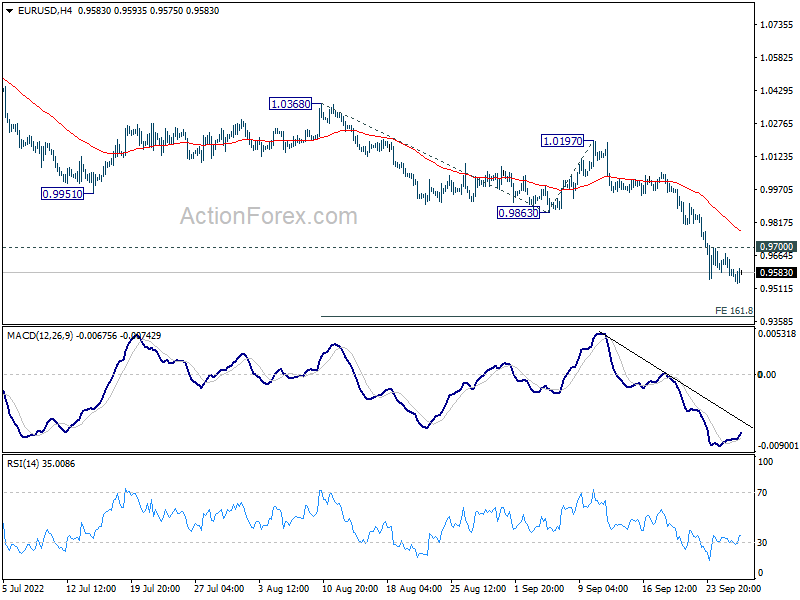
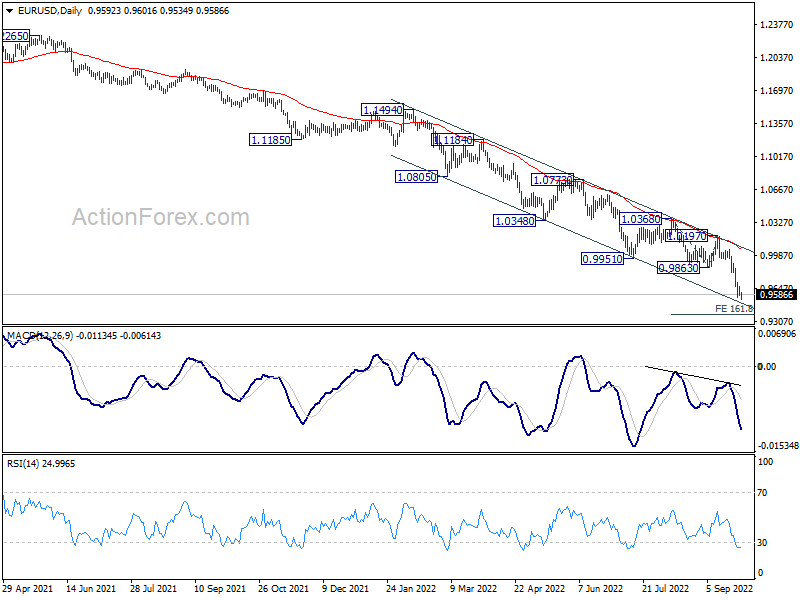
Intraday bias in EUR/USD stays mildly on the downside despite loss of downside momentum. Current down trend should target 161.8% projection of 1.0368 to 0.9863 from 1.0197 at 0.9380 next. On the upside, above 0.9700 minor resistance will turn intraday bias neutral again first, and bring consolidations again, before staging another decline.
In the bigger picture, down trend from 1.6039 (2008 high) is still in progress. Next target is 100% projection of 1.3993 to 1.0339 from 1.2348 at 0.8694. In any case, break of 1.0197 resistance is needed to be the first sign of medium term bottoming. Otherwise, outlook will stay bearish even with strong rebound.
GBP/USD Mid-Day Outlook
Daily Pivots: (S1) 1.0645; (P) 1.0742; (R1) 1.0829; More...
GBP/USD is staying in consolidation above 1.0351 temporary low and intraday bias remains neutral. While stronger recovery cannot be ruled out, upside should be limited by 4 hour 55 EMA (now at 1.1051). On the downside, break of 1.0351 will resume larger down trend towards parity next.
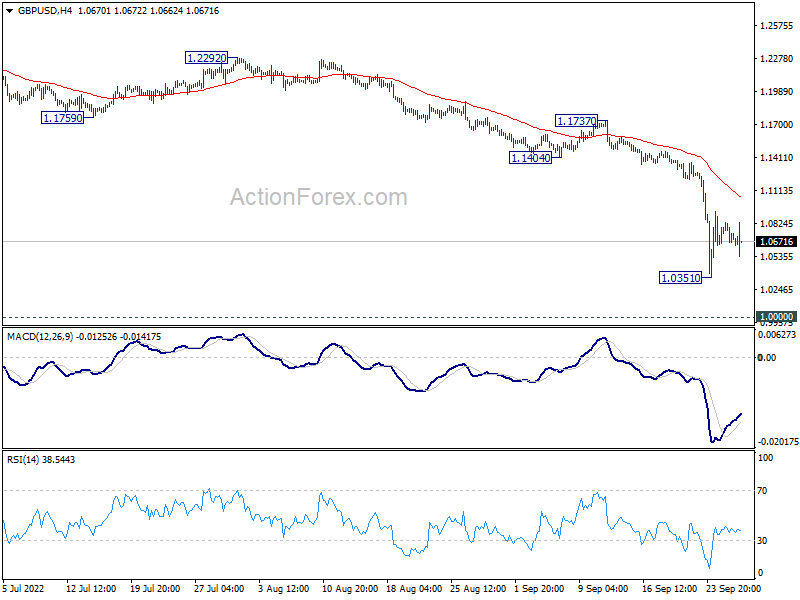
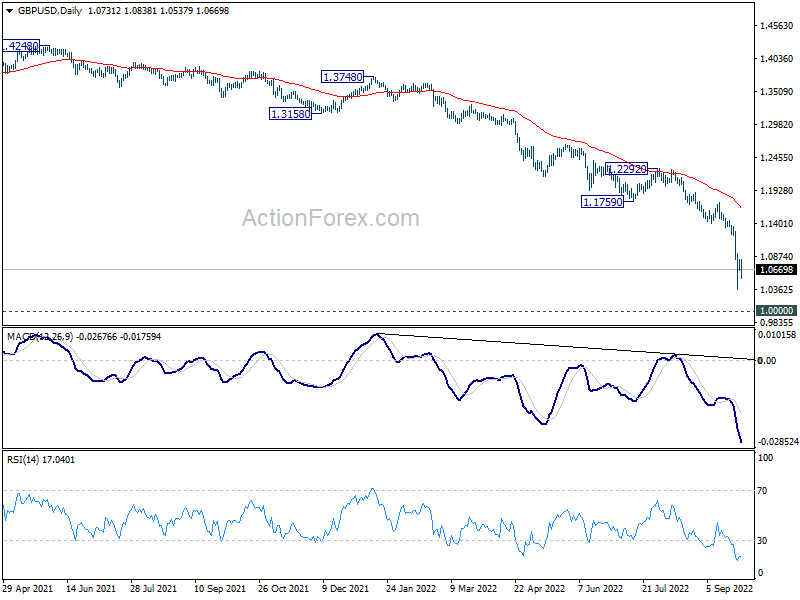
In the bigger picture, fall from 1.4248 (2018 high) is resuming long term down trend from 2.1161 (2007 high). Next target is 100% projection of 2.1161 to 1.3503 from 1.7190 at 0.9532. There is no scope of a medium term rebound as long as 1.1759 support turned resistance holds.
BoE Intervention Couldn’t Pop Sterling Up
In a surprised move, BoE announced to intervene in the gilt markets. While 10-year gilt yield drops notably on the news, the recovery in FTSE is just mild. Sterling also just fluctuates and it's trading as the weakest one for the day. On the other hand, Swiss Franc buyers jump in on worsening energy crisis in Europe, while Yen also firms up slightly. Dollar, Euro and Aussie are on the softer side.
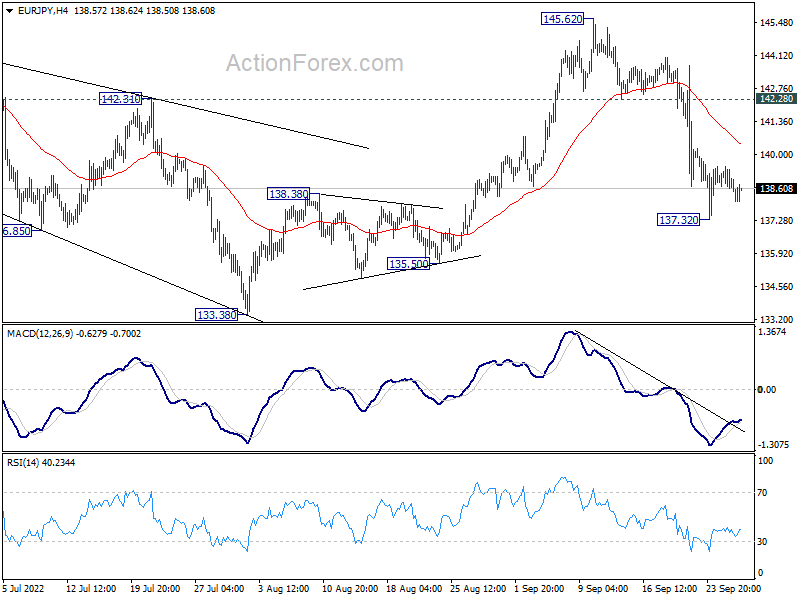
Technically, as US 10-year yield appears to be rejected by 4% handle for now, there is prospect of further rebound in Yen. So far, EUR/JPY's recovery from 137.32 has bee rather weak, and deeper decline is in favor. Break of 137.32 will resume the fall from 145.62 towards 133.38 key support. That, if happens, would also be followed by break of 148.93 temporary low in GBP/JPY.
In Europe, at the time of writing, FTSE is down -0.63%. DAX is down -0.69%. CAC is down -0.81%. Germany 10-year yield is down -0.018 at 2.212. UK 10-year yield is down -0.377 at 4.131. Earlier in Asia, Nikkei dropped -1.50%. Hong Kong HSI dropped -3.41%. China Shanghai SSE dropped -1.58%. Singapore Strait Times dropped -1.55%. Japan 10-year JGB yield dropped -0.0028 to 0.252.
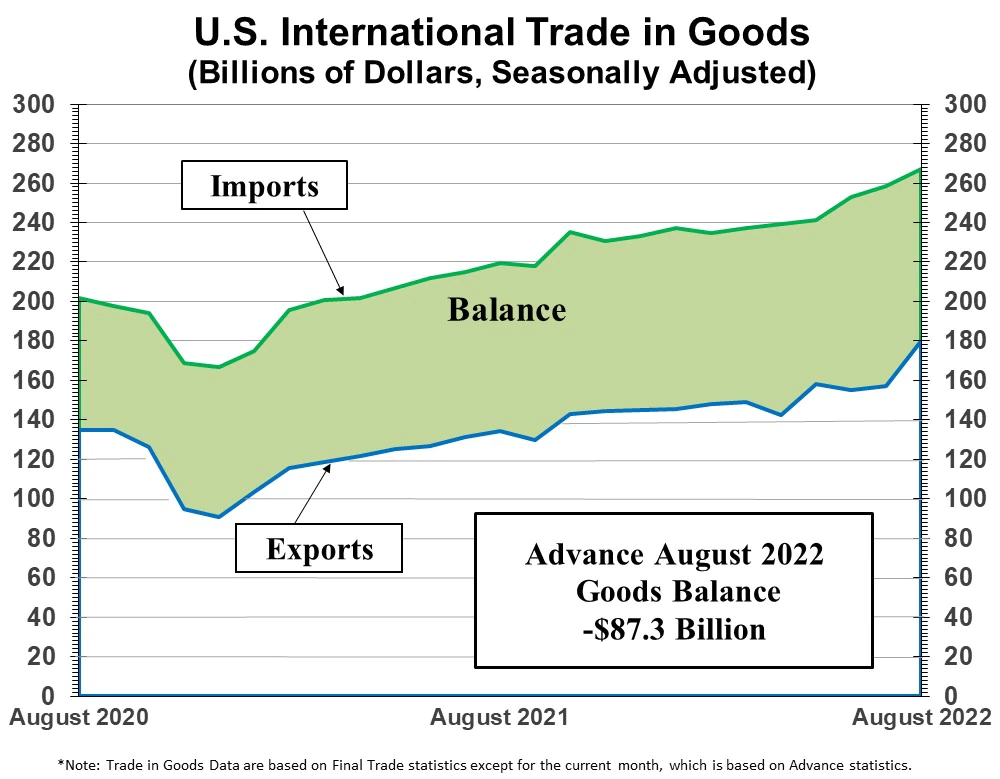
US goods exports dropped -0.9% mom in Aug, imports dropped -1.7% mom
US goods exports dropped -0.9% mom to USD 179.8B in August. Goods imports dropped -1.7% mom to USD 267.1B. Trade deficit came in at US D-87.3B, comparing with July's USD -90.2B.
Wholesale inventories rose 1.3% mom to USD 913.1B. Retail sales rose 1.4% mom to USD 741B.0B.
BoE announces gilt operation to restore orderly market conditions
BoE announced today to carry out temporary purchases of long-dated UK government bonds, to "restore orderly market conditions". It warned that the significant repricing of UK and global financial assets "has become more significant in the past day", particularly affecting long-dated government debt. Continuing or worsening dysfunction would be a "material risk" to financial stability.
The purchases will be carried out on "whatever scale is necessary" to effect this outcome. However, they will be "strictly time limited" with auctions taking place from today until October 14.
BoE also reiterated that a full assessment of the government's mini budget will be done at its "next scheduled meeting". BoE "will not hesitate to change interest rates by as much as needed to return inflation to the 2% target sustainably in the medium term, in line with its remit."
UK BRC shop price reported another record increase
UK BRC shop price index accelerated from 5.1% yoy to 5.7% yoy in August, hitting another record high since the index began in 2005. Food inflation surged from 9.3% yoy to 10.6% yoy. Non-food inflation also rose from 2.9% yoy to 3.3% yoy.
Helen Dickinson, Chief Executive, British Retail Consortium: "Retailers are battling huge cost pressures from the weak pound, rising energy bills and global commodity prices, high transport costs, a tight labour market and the cumulative burden of government-imposed costs."
Mike Watkins, Head of Retailer and Business Insight, NielsenIQ: "NielsenIQ data shows that 76% of consumers are saying they expect to be moderately or severely affected by the cost-of-living crisis over the next 3 months, up from 57% in the summer."
ECB Holzmann: 50 minimum, 75 a good guess, 100 too fast, for Oct meeting
ECB Governing Council member Robert Holzmann said "50 may be the minimum" rate hike at next meeting in October. He added, "could it be 100? It could but I don't see the necessity now to go as fast. I think 75 would be a good guess."
Holzmann also noted that ECB is still "some way" from neutral interest rate. He said lifting deposit rate from current 0.75% to 2.50% would definitely take it beyond neutral.
Regarding quantitative tightening, he said it's part of the normalization process, and will be discussed at a non-monetary-policy meeting next week in Cyprus.
ECB Lagarde: First destination is neutral rate
ECB President Christine Lagarde said in a conference today, "we have to return inflation to 2% in the medium term, and we will do what we have to do, which is to continue hiking interest rates in the next several meetings."
"Our primary goal is not to create a recession. Our primary objective is price stability and we have to deliver on that. If we were not delivering, it would hurt the economy far more," she said, adding that the "first destination" of rate hikes will be to reach neutral rate.
Separately, Governing Council member Peter Kazimir indicated that ECB may need to hike again by 75bps next month as inflation remains unacceptably high.
Germany Gfk Consumer Sentiment dropped to -42.5, new record low
Germany Gfk Consumer Sentiment for October dropped from -36.5 to -42.5, below expectation of -38.8. That's also a new record low. In September, economic expectations dropped from -47.6 to -21.9, lowest since 2009. Income expectations dropped from -45.3 to -67.7, a record low since 1991. Propensity to buy dropped from -15.7 to -19.5, lowest since 2008.
"The current very high inflation rates of almost eight percent are leading to large real income losses among consumers and thus to significantly reduced purchasing power," explains Rolf Bürkl, GfK consumer expert.
"Many households are currently forced to spend significantly more money on energy or to set money aside for significantly higher heating bills. Accordingly, they need to cut back on other expenses, such as new purchases. This is sending consumer sentiment plummeting to a new record low."
Australia retail sales rose 0.6% mom in Aug
Australia retail sales turnover rose 0.6% mom to AUD 34.88B in August, slightly above expectation of 0.5% mom. That's the eighth consecutive monthly increase.
Ben Dorber, head of retail statistics at the ABS, said: "This month's rise was driven by the combined increase in food related industries, with cafes, restaurants and takeaway food services up 1.3 per cent and food retailing up 1.1 per cent."
"While households continue to spend, non-food industry results were mixed and only contributed a small amount to the total rise in retail turnover."
GBP/USD Mid-Day Outlook
Daily Pivots: (S1) 1.0645; (P) 1.0742; (R1) 1.0829; More...
GBP/USD is staying in consolidation above 1.0351 temporary low and intraday bias remains neutral. While stronger recovery cannot be ruled out, upside should be limited by 4 hour 55 EMA (now at 1.1051). On the downside, break of 1.0351 will resume larger down trend towards parity next.
In the bigger picture, fall from 1.4248 (2018 high) is resuming long term down trend from 2.1161 (2007 high). Next target is 100% projection of 2.1161 to 1.3503 from 1.7190 at 0.9532. There is no scope of a medium term rebound as long as 1.1759 support turned resistance holds.
Economic Indicators Update
| GMT | Ccy | Events | Actual | Forecast | Previous | Revised |
|---|---|---|---|---|---|---|
| 23:01 | GBP | BRC Shop Price Index Y/Y Sep | 5.70% | 5.10% | ||
| 23:50 | JPY | BoJ Minutes | ||||
| 01:30 | AUD | Retail Sales M/M Aug | 0.60% | 0.50% | 1.30% | |
| 06:00 | EUR | Germany Gfk Consumer Confidence Oct | -42.5 | -38.8 | -36.5 | |
| 08:00 | CHF | Credit Suisse Economic Expectations Sep | -69.2 | -56.3 | ||
| 12:30 | USD | Goods Trade Balance (USD) Aug P | -87.3B | -88.0B | -90.2B | |
| 12:30 | USD | Wholesale Inventories Aug P | 1.30% | 0.40% | 0.60% | |
| 14:00 | USD | Pending Home Sales M/M Aug | -0.70% | -1.00% | ||
| 14:30 | USD | Crude Oil Inventories | 1.1M |
US goods exports dropped -0.9% mom in Aug, imports dropped -1.7% mom
US goods exports dropped -0.9% mom to USD 179.8B in August. Goods imports dropped -1.7% mom to USD 267.1B. Trade deficit came in at US D-87.3B, comparing with July's USD -90.2B.
Wholesale inventories rose 1.3% mom to USD 913.1B. Retail sales rose 1.4% mom to USD 741B.0B.
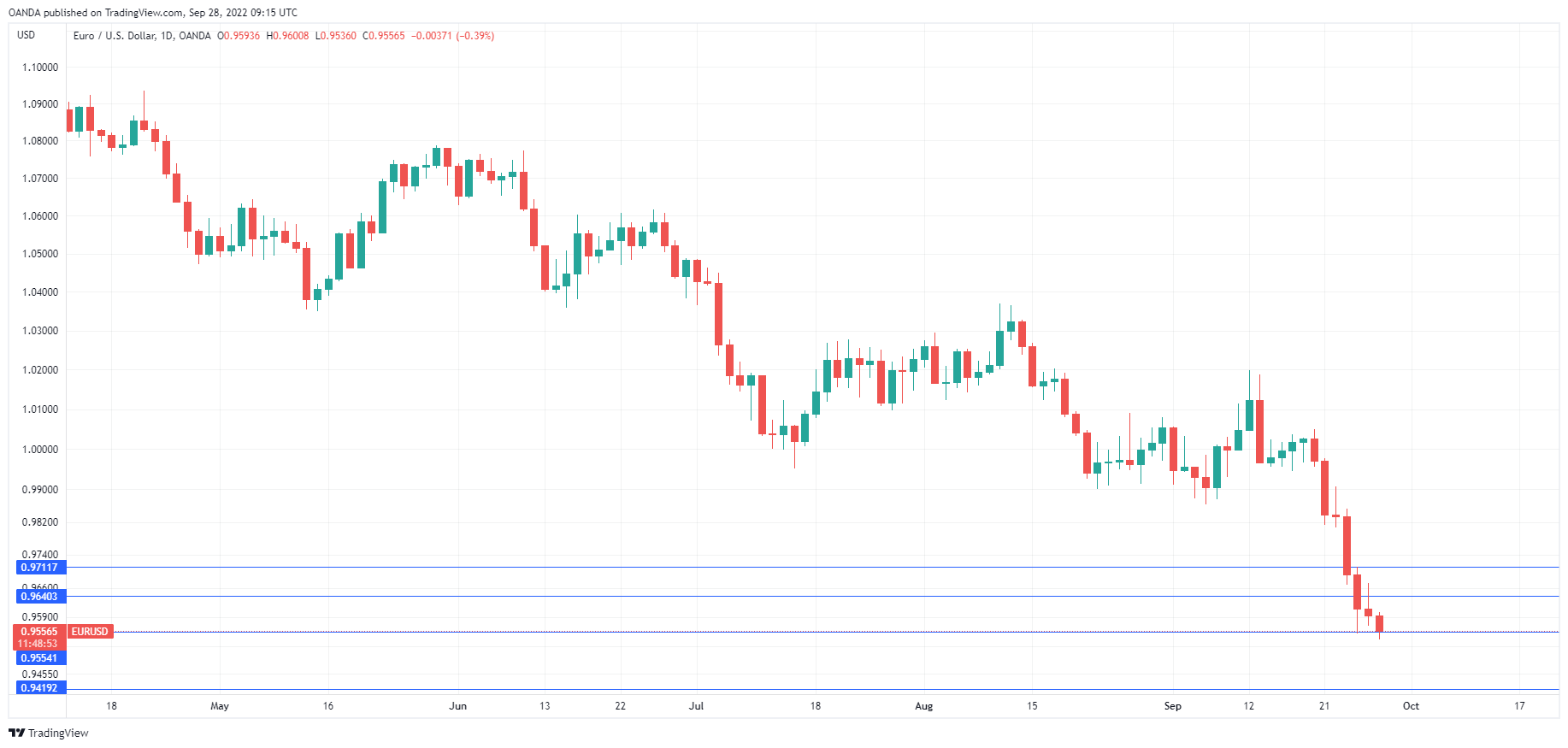
EUR/USD Falls to New 20-year Low
The euro is in negative territory today, after posting six straight days of losses. EUR/USD is trading at 0.9553 in Europe, down 0.41%.
Referendums, Nord Stream explosions weigh on euro
September can’t end fast enough for the euro, which has declined a massive 4.8% against the dollar. Earlier today, EUR/USD fell to 0.9536, its lowest level since June 2002. With the war in Ukraine escalating and Nord Stream reporting that its pipeline was deliberately damaged, it’s hard to be optimistic about the euro’s outlook.
The sham referendums in Russian-occupied Ukraine have ended and predictably, the vote to join Russia was close to 100%. Moscow is expected to declare on Friday that the territories are being annexed to the Russian Federation, sparking fears that Russia could resort to nuclear weapons to defend what it claims is Russian territory.
There was a further escalation in the Ukraine war last week, as explosions at the Nord Stream 1 and 2 pipelines are suspected to have been sabotaged. Nord Stream 2 has been shelved and Nord Stream 1 has been shut down for weeks, and any faint hopes that Russia might renew gas exports through Nord Stream have been dashed. European natural gas prices have jumped in response to the news.
The US dollar continues to rally, and 10-year Treasury yields pushed above 4.00% earlier today, for the first time since 2008. The markets are showing a healthy respect for Fed hawkishness, even after inflation weakened in the past two inflation reports. There is some optimism that the current rate-tightening cycle is reaching its end, with Fed member Evans stating that it will be appropriate to slow the pace of tightening at some point. For now, the US dollar has momentum, driven by an aggressive Fed and weak risk appetite.
EUR/USD Technical
- EUR/USD is testing support at 0.9554. Next, there is support at 0.9419
- There is resistance at 0.9640 and 0.9711
ECB Holzmann: 50 minimum, 75 a good guess, 100 too fast, for Oct meeting
ECB Governing Council member Robert Holzmann said "50 may be the minimum" rate hike at next meeting in October. He added, "could it be 100? It could but I don't see the necessity now to go as fast. I think 75 would be a good guess."
Holzmann also noted that ECB is still "some way" from neutral interest rate. He said lifting deposit rate from current 0.75% to 2.50% would definitely take it beyond neutral.
Regarding quantitative tightening, he said it's part of the normalization process, and will be discussed at a non-monetary-policy meeting next week in Cyprus.
What Now for Sterling after Investors Lose Confidence in the UK Economy?
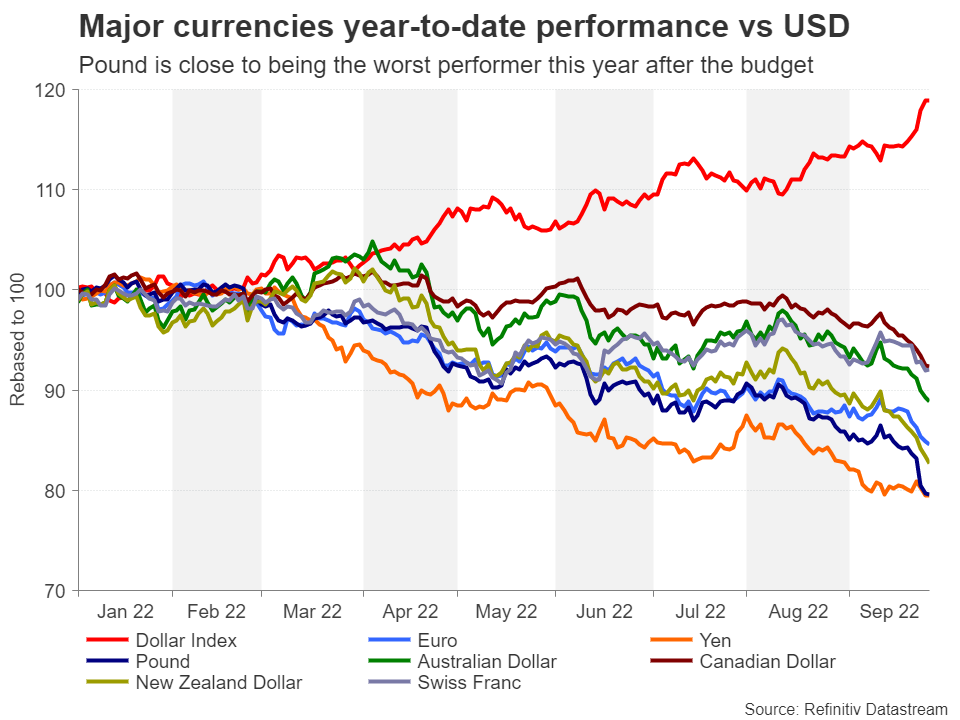
The pound crashed to an all-time low versus the US dollar this week as investors fled the UK after losing confidence in the new government’s economic vision. Having already been the second worst performing currency this year, sterling’s year-to-day losses now stand at 20%. But as the selloff shows some signs of easing and the currency stabilizing in FX markets, did the budget mark a permanent downgrade of UK assets, or was this a natural overreaction given the economic uncertainties and Britain’s twin-deficit problem?
Betting on trickle-down economics
It is not often that tax cuts spark such a massive risk-off episode as investors generally cheer growth-boosting measures by governments. So why did markets react so badly to Chancellor Kwasi Kwarteng’s mini budget, or ‘fiscal event’ as he dubbed it, which turned out to be a full budget in all but name? After all, there is no disputing that the UK economy is in serious need of a kickstart and in theory, Kwarteng’s historically large tax cuts should accomplish that.
The reality is that Britain’s current economic woes are not quite so simple that big tax cuts would solve everything. The government is betting on trickle-down economics – something championed by Margaret Thatcher in the 1980s – to create wealth from the top, which would then ‘trickle down’ to lower income groups.
A budget oblivious to high inflation
Back then, the policy proved to be the right remedy and was credited for triggering an economic boom. But investors have overwhelmingly decided that Liz Truss and her chancellor have vastly misjudged the present economic environment. The biggest flaw in the government’s thinking is that it ignores the single most pressing issue facing the country right now – high inflation.
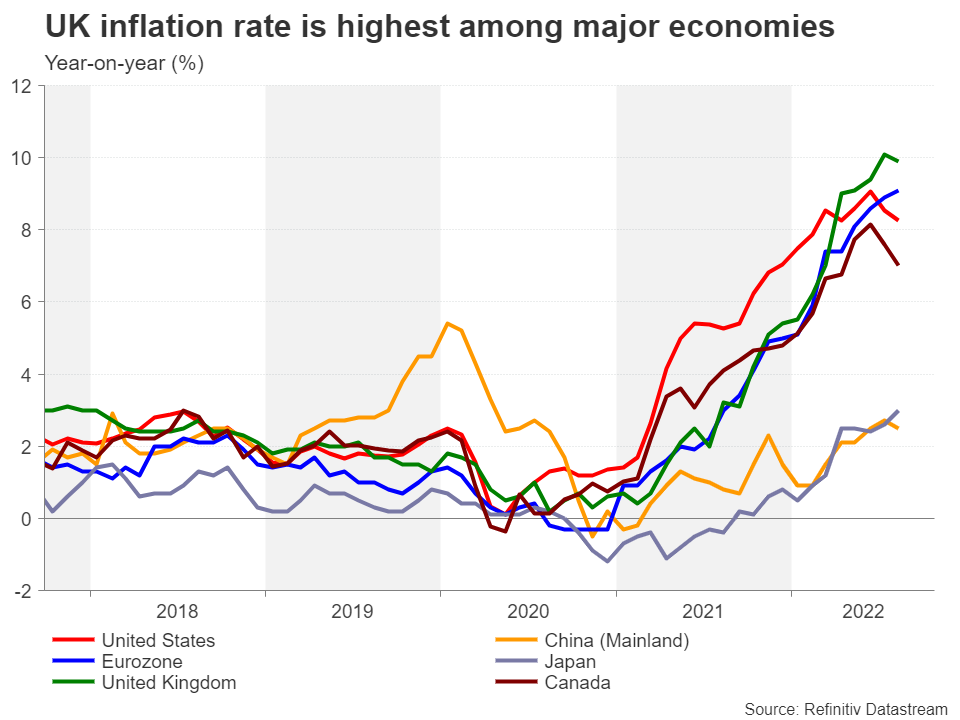
It is universally accepted that spiralling prices are undesirable for achieving economic stability and the Bank of England has a legal obligation to keep inflation around 2%. Yet, slashing taxes at a time when inflation is so hot only serves to fuel price pressures even further as lower taxes tend to increase household incomes, boosting consumption.
Bad timing
The Bank of England would then be forced to raise interest rates even more aggressively than it is doing so right now to meet its inflation target. This not only increases the odds of the economy falling off a cliff, but it also raises the cost for the government to borrow to fund the gap between spending and tax revenue.
It seems that the Truss team has based its economic calculations on the bygone post-financial crisis era when inflation was non-existent, interest rates were at rock bottom and central banks were printing money, all of which pinned bond yields near zero despite heavy borrowing by governments. But that is no longer the case as UK government bond, or gilt, yields have skyrocketed to pre-financial crisis levels and the Bank of England is now engaged in quantitative tightening.
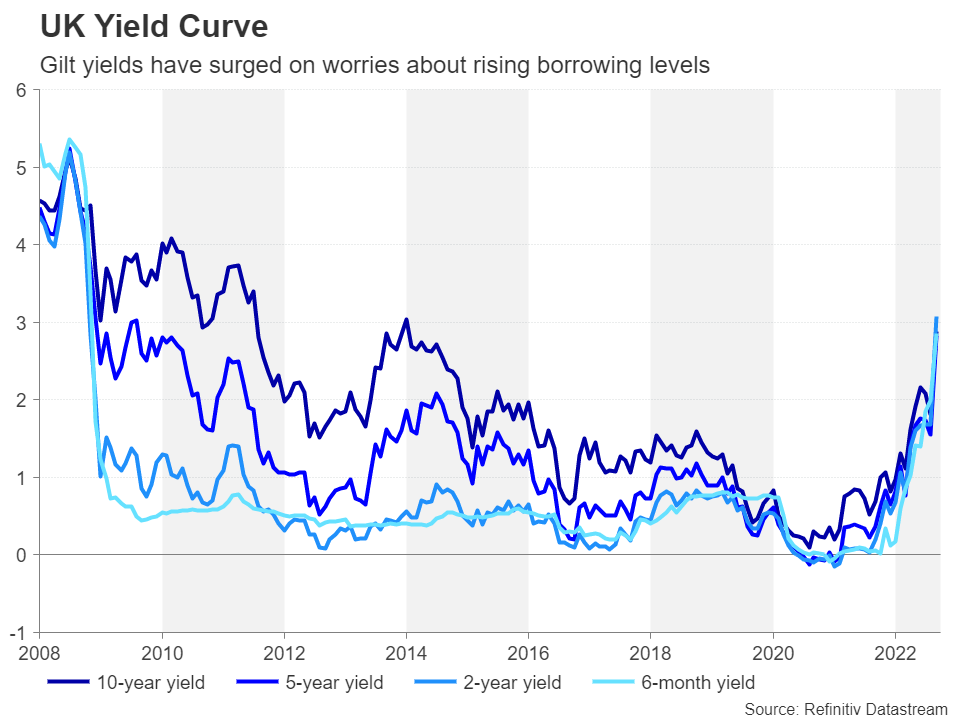
Moreover, if there ever was any possibility of the pandemic-induced inflation being transitory, those hopes were dashed when the energy crisis unfolded after Russia invaded Ukraine. Thus, high inflation is here to stay, at least through to 2023, meaning monetary policy is unlikely to be loosened before then.
A debt crisis in the making?
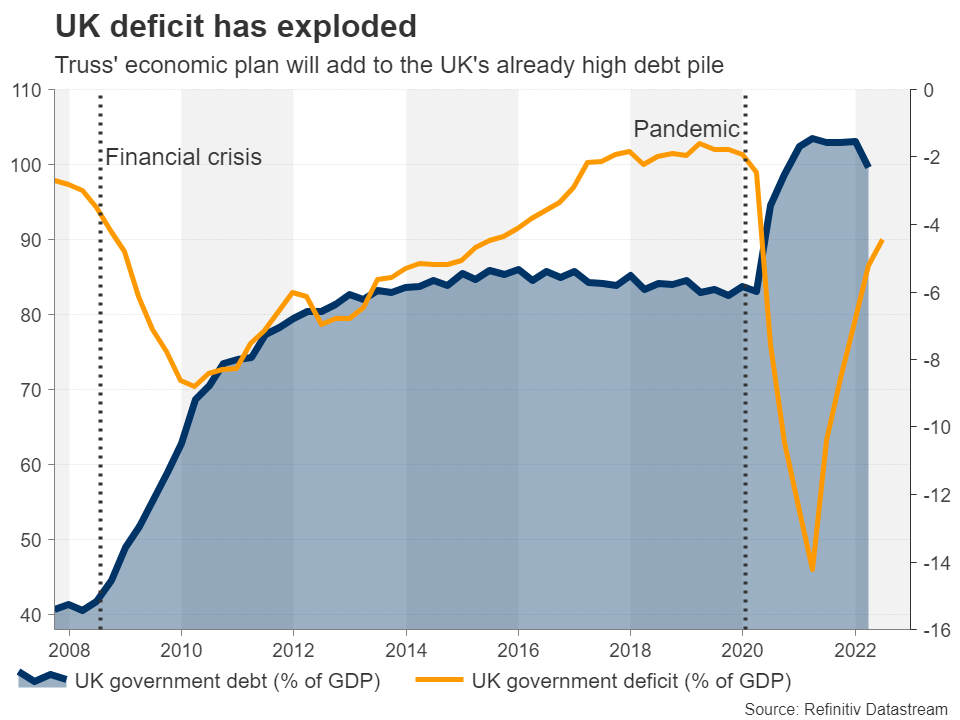
Investors fear that by borrowing excessively during a period of rising lending costs, the government will become overburdened with its interest payments, risking some kind of a debt crisis in the future. Exacerbating the issue about the sustainability of Britain’s soaring debt level is the fact that the government already had to borrow a lot during the pandemic and most recently, announced an energy relief package worth up to £150 billion to help households with high energy bills.
Economists would argue that the tax cuts could have been saved for a later date as the energy package alone, which is amongst the most generous in Europe, is expected to go a long way in easing the pain for consumers as well as keeping electricity and gas prices capped. Within this context, many would conclude that Truss’ and Kwarteng’s economic plan is nothing short of reckless and motivated purely by securing a victory at the next general election.
Voters are concerned about inequality
But even voters don’t seem too impressed, as the opposition Labour party has widened its lead over the Conservatives after the budget. In yet another miscalculation, the government couldn’t have picked a worse time during the cost-of-living crisis to introduce radical tax reforms that set to benefit the richest the most. Of course, it’s too soon to assume that the gamble won’t pay off and come the next election, as long as low- and middle-income workers are earning more, they might not care if the gap with the wealthiest has widened or not.
The problem is, can the government and Bank of England avert economic disaster before then? Kwarteng tried to calm market nerves by confirming that he will outline a medium-term fiscal plan on November 23 on how to lower borrowing as a share of GDP. But investors aren’t holding their breath.
How will the Bank of England respond?
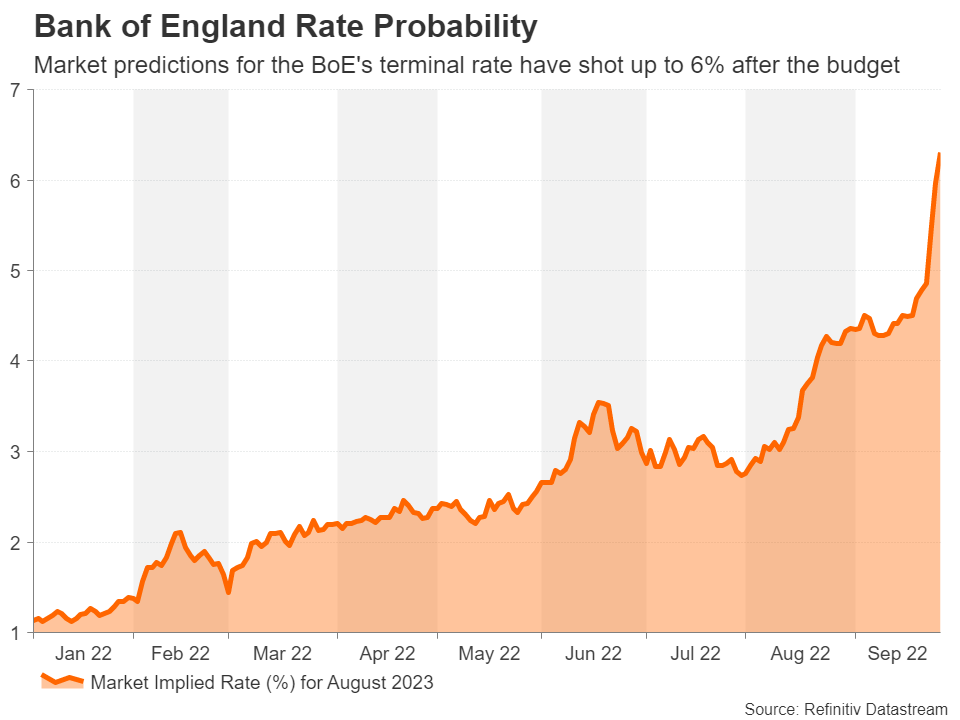
On its part, the Bank of England has hinted that it will respond fully to the market fallout, but not before its next meeting on November 3. In the meantime, it has decided to make temporary purchases of long-dated gilts in a bid to prevent yields from surging any further. Markets have priced in a 125-basis point rate hike for November, with about one in three probability of a 150-bps increase. What is even more significant, though, is how high markets have pushed up the projected terminal rate.
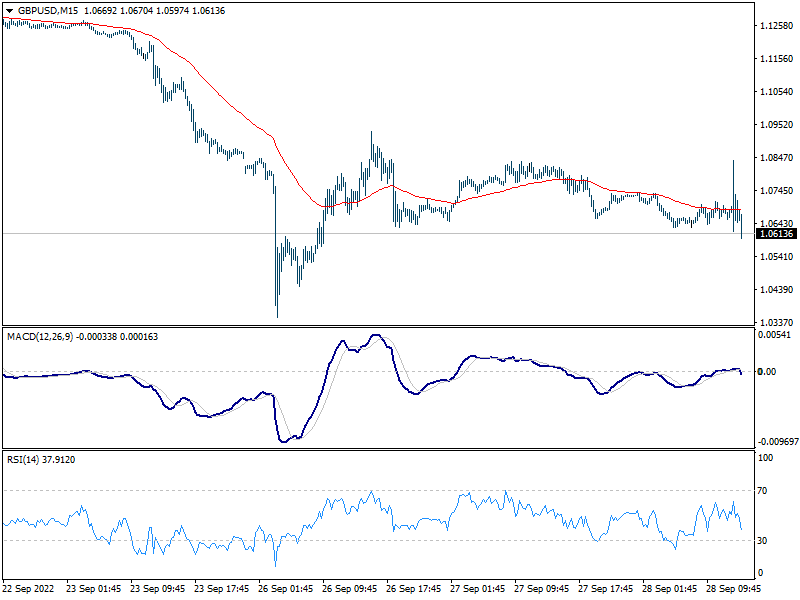
Prior to the budget, investors saw the Bank Rate peaking around 4.75%. It has since shot up to slightly more than 6.0% by August 2023. However, this has done little in defending the pound, which on Monday plummeted to an all-time low of $1.0382. This trough is just above the 361.8% Fibonacci extension of the July-August rebound at $1.0354, suggesting it may take some effort to pierce below this barrier, after which, the parity level of $1.00 would come into scope for traders.
However, if the market mood improves further in the coming days, the current recovery could extend until the 200% Fibonacci of $1.1221, otherwise, it may stall around the $1.07 area.
Pound’s fate depends on UK restoring its credibility
A jumbo-sized rate hike of more than 100-bps in November and a signal that more are on the way should help cable claw back its latest losses, but ultimately, it will be up to the government to restore the UK’s credibility in financial markets. Come November 23, Kwarteng will have to do a lot more than simply talk up the economy and hope that his ambitious 2.5% growth target is both feasible and sufficient enough to reduce debt as a ratio of GDP over the next few years.
Investors, though, will be wishing that the government goes back to the drawing board and returns with fresh ideas on raising additional revenue and finding new sources of savings. At the very least, markets will be on the lookout for some sort of a contingency plan. However, with Truss hell-bent on delivering the pledges she made in her leadership campaign, a U-turn doesn’t seem very likely.
There’s a strong chance therefore that the pound stays mired in uncertainty until the winter cloud has lifted over Europe. By which point, if the energy crisis hasn’t deepened and Truss’ policies begin to have some positive effect, there would be grounds for a meaningful rebound. But before then, BoE rate hikes will at best put a halt to the pound’s slide rather than lift it, while the UK’s large twin fiscal and current account deficits will ensure that it remains at the mercy of global risk sentiment.
BoE announces gilt operation to restore orderly market conditions
BoE announced today to carry out temporary purchases of long-dated UK government bonds, to "restore orderly market conditions". It warned that the significant repricing of UK and global financial assets "has become more significant in the past day", particularly affecting long-dated government debt. Continuing or worsening dysfunction would be a "material risk" to financial stability.
The purchases will be carried out on "whatever scale is necessary" to effect this outcome. However, they will be "strictly time limited" with auctions taking place from today until October 14.
BoE also reiterated that a full assessment of the government's mini budget will be done at its "next scheduled meeting". BoE "will not hesitate to change interest rates by as much as needed to return inflation to the 2% target sustainably in the medium term, in line with its remit."
GBP/USD was lifted briefly after the announcement, and turned south quickly.
EUR/USD Outlook: Bears Likely to Travel Further as Conditions Continue to Worsen
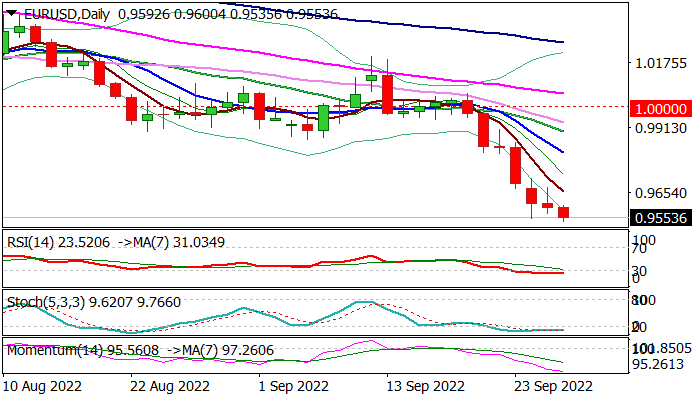
The Euro hit new marginally lower 20-year low in early Wednesday, as risk assets fell in Asia, lifting the dollar to new high.
Technical studies show indicators on daily chart in full bearish setup, with oversold conditions likely to slow bears for consolidative/corrective actions, before accelerating towards targets at 0.9301 /0.9000 (June 2002 low/psychological).
Falling 5DMA offers initial resistance at 0.9655, ahead of more significant Fibo barrier at 0.9691 (23.6% of 1.0197/0.9535), violation of which would signal correction and expose pivotal barriers at 0.9788/96 (Fibo 38.2%/falling daily Tenkan-sen).
Fundamentals are also not working in favor of Euro, as inflation in the EU is expected to rise further in September (Sep f/c 9.7% vs Aug 9.1%) and probably reach a double-digit levels in the near future, while the latest polls showed that the Federal Reserve will likely raise its key interest rate much higher than recently predicted, that would additionally boost dollar and further darken Euro’s outlook.
Res: 0.9600; 0.9655; 0.9691; 0.9788.
Sup: 0.9535; 0.9402; 0.9325; 0.9301.