

Sample Category Title
GBP/JPY Daily Outlook
Daily Pivots: (S1) 158.29; (P) 159.10; (R1) 160.32; More...
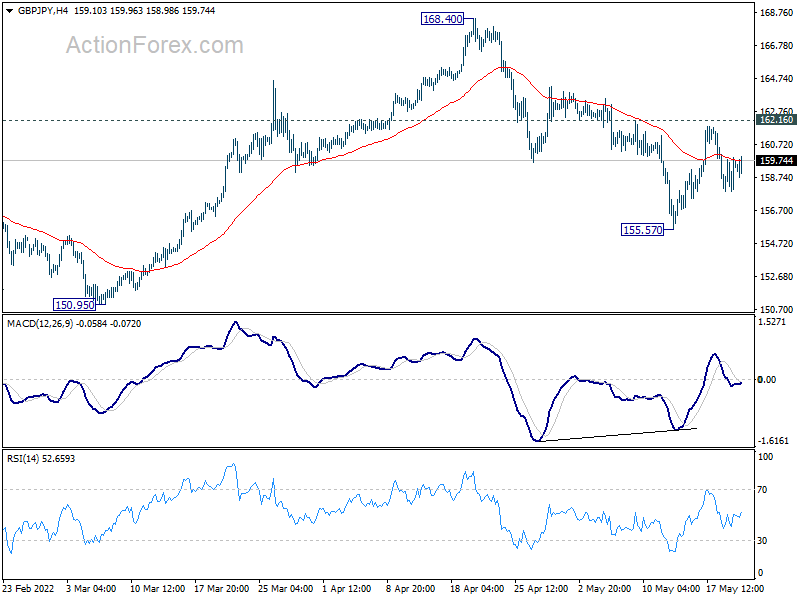
Intraday bias in GBP/JPY stays neutral and outlook is unchanged. Risk will stay on the downside as long as 162.16 minor resistance holds, as correction from 168.40 could extend. On the downside, below 155.57 will target 150.95 key structural support next. Nevertheless, firm break of 162.16 will indicate that the correction has completed, and bring retest of 168.40 high next.
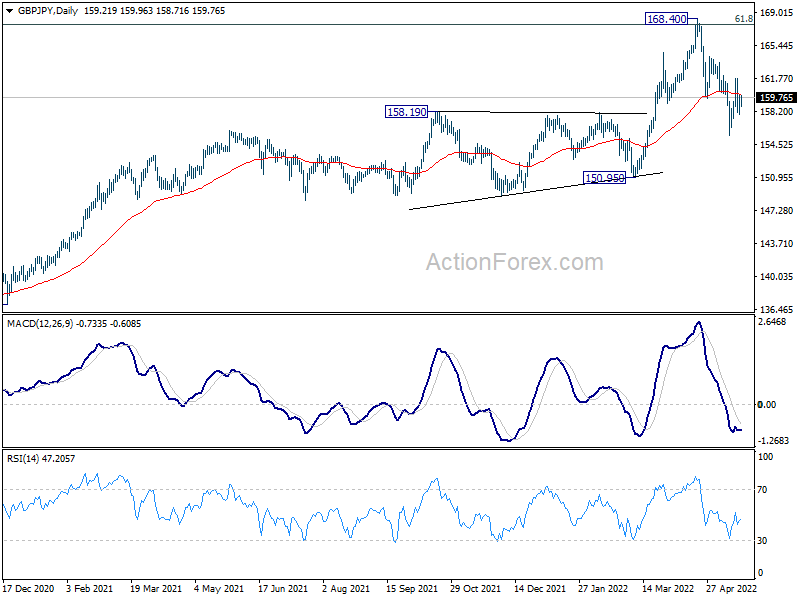
In the bigger picture, up trend from 123.94 (2020 low) is still in progress. Sustained break of 61.8% retracement of 195.86 (2015 high) to 122.75 (2016 low) at 167.93 will be a long term bullish signal, and could pave the way back to 195.86 high. This will now remain the favored case as long as 150.95 support holds, even in case of deep pull back. However, firm break of 150.95 will indicate rejection by 167.93, and bearish trend reversal.
EUR/JPY Daily Outlook
Daily Pivots: (S1) 134.33; (P) 134.89; (R1) 135.86; More....
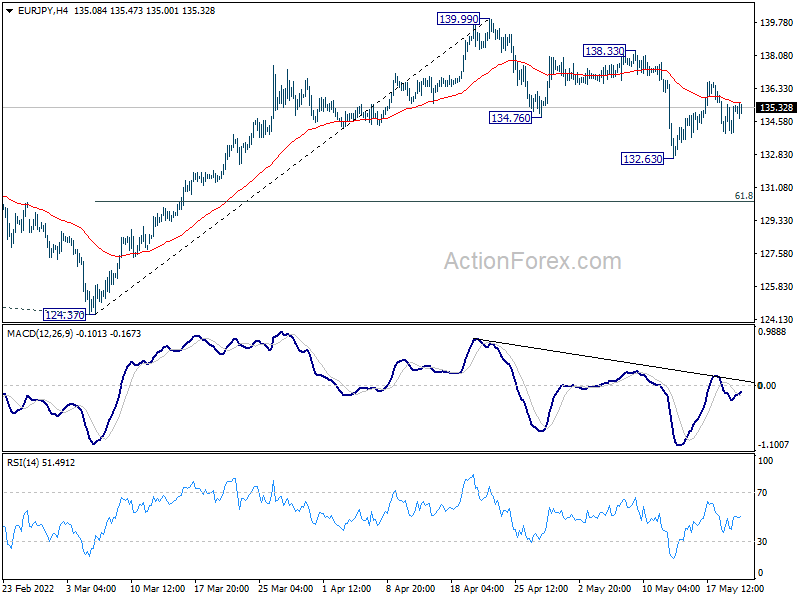
Intraday bias in EUR/JPY remains neutral and outlook is unchanged. Corrective fall from 139.99 could still extend lower. Below 132.63 will target 61.8% retracement of 124.37 to 139.99 at 130.33. Nevertheless, break of 138.33 will indicate that the correction has completed, and bring retest of 139.99 high next.
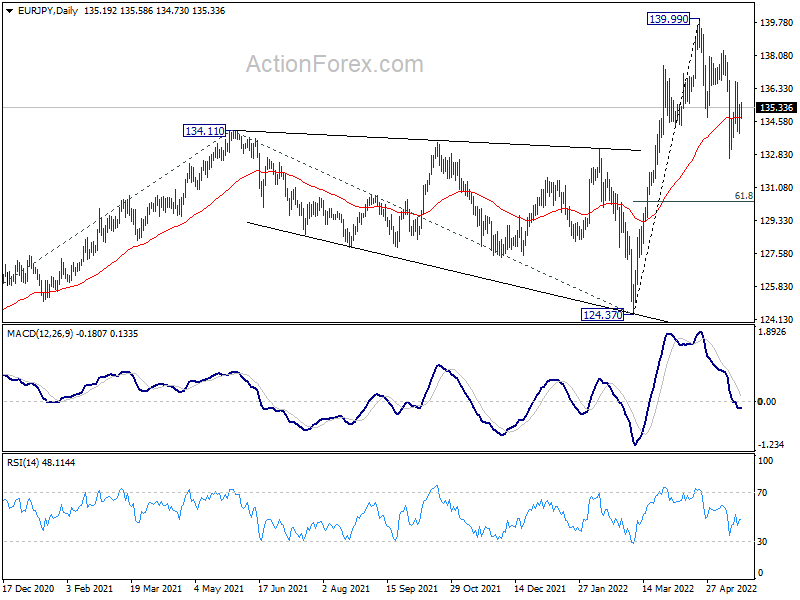
In the bigger picture, up trend from 114.42 (2020 low) is in progress. Such rise is seen as the third leg of the pattern from 109.30 (2016 low). Next target will be 100% projection of 114.42 to 134.11 from 124.37 at 144.06. In any case, outlook will now remain bullish as long as 124.37 support holds, in case of deep pull back.
EUR/GBP Daily Outlook
Daily Pivots: (S1) 0.8455; (P) 0.8475; (R1) 0.8502; More...
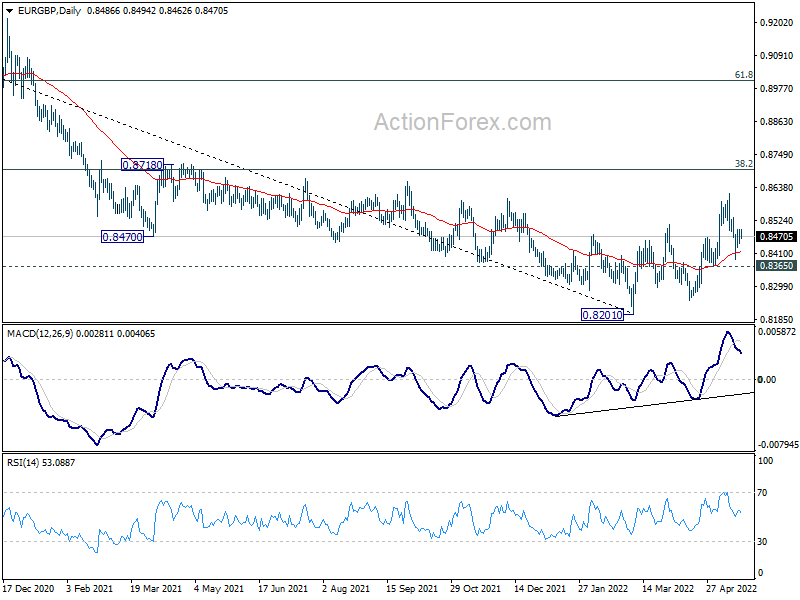
Intraday bias in EUR/USD remains neutral at this point and outlook is unchanged. With 0.8365 support intact, further rise is still in favor. On the upside, break of 0.8617 will resume rise from 0.8201 medium term bottom to 0.8697 medium term fibonacci level. However, break of 0.8365 will dampen this bullish view, and turn bias back to the downside instead.
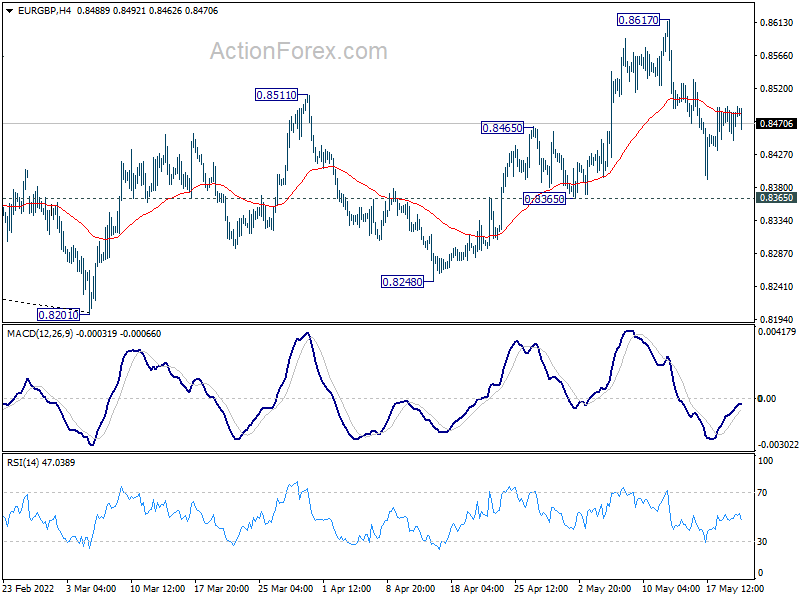
In the bigger picture, a medium term bottom could be in place at 0.8201, on bullish convergence condition in daily and weekly MACD. Rise from there could either be a correction to the down trend from 0.9499 (2020 high), or a medium term up trend itself. In either case, further rise should be seen to 38.2% retracement of 0.9499 to 0.8201 at 0.8697. Sustained break there will target 61.8% retracement at 0.9003.
EUR/AUD Daily Outlook
Daily Pivots: (S1) 1.4997; (P) 1.5027; (R1) 1.5081; More...
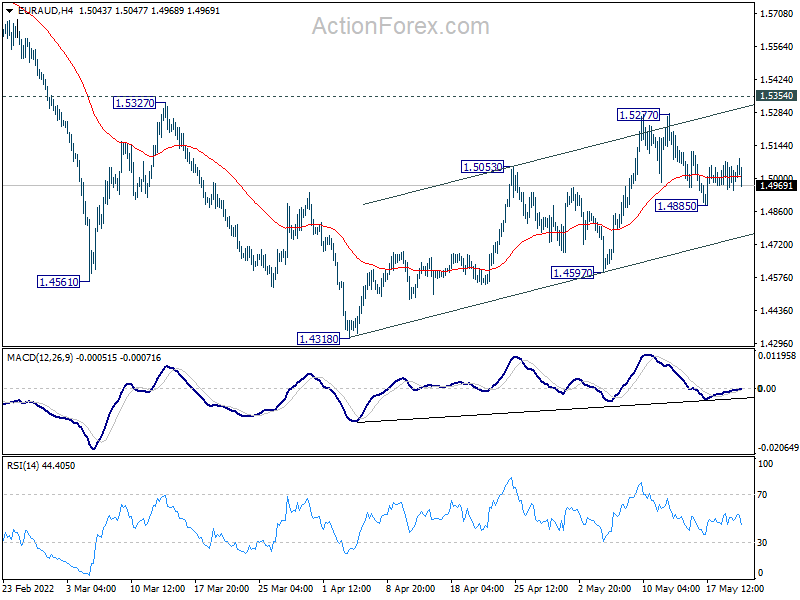
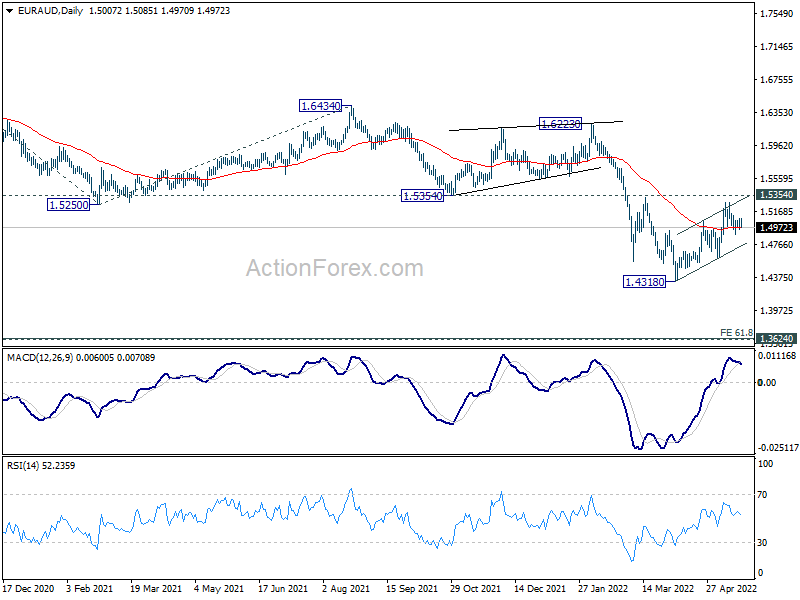
Intraday bias in EUR/AUD remains neutral and risk stays on the downside with 1.5227 resistance intact. Corrective rebound from 1.4318 could have completed with three waves up to 1.5277 already. Below 1.4885 will target 1.4597 support first. Break there will bring retest of 1.4318 low next.
In the bigger picture, as long as 1.5354 support turned resistance holds, larger down trend form 1.9799 (2020 high) is still expected to continue. On resumption, next target is 61.8% projection of 1.9799 to 1.5250 from 1.6434 at 1.3623, which is close to 1.3624 long term support (2017 low). However, firm break of 1.5354 will indicate medium term bottoming and bring stronger rally back to 1.6434 key resistance.
EUR/CHF Daily Outlook
Daily Pivots: (S1) 1.0230; (P) 1.0296; (R1) 1.0361; More....
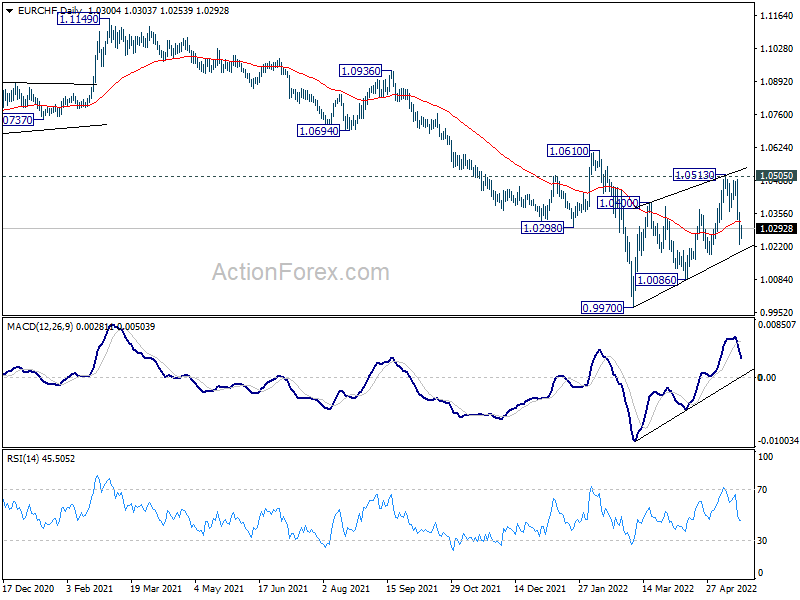
Intraday bias in EUR/CHF remains on the downside at this point. Corrective rebound from 0.9970 could have complete at 1.0513, after rejection by 1.0505 resistance. Deeper fall would be seen to 1.0186 support first. Break will target 1.0086 and below. On the upside, above 1.0359 minor resistance will turn intraday bias neutral first. But risk will stay on the downside as long as 1.0513 resistance holds.
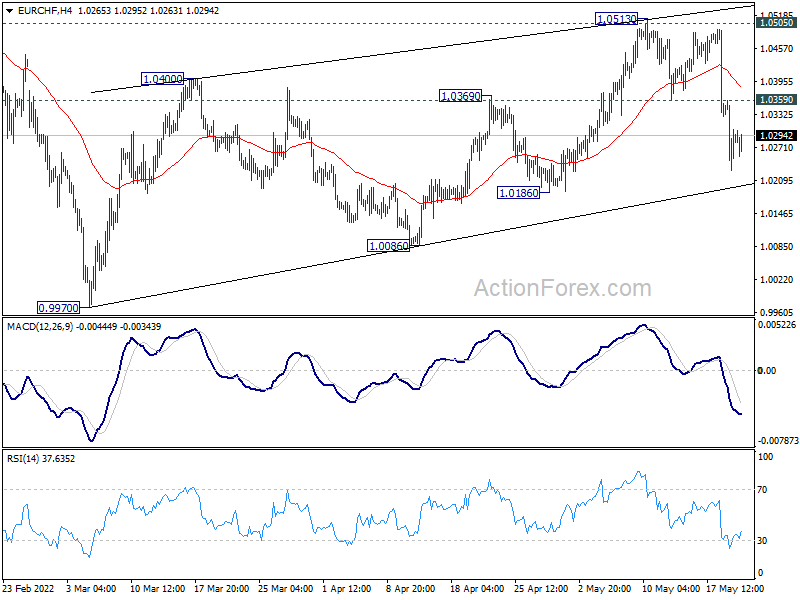
In the bigger picture, as long as 1.0505 support turned resistance (2020 low) holds, long term down trend from 1.2004 (2018 high) is expected to continue. Next target is 100% projection of 1.2004 to 1.0505 to 1.1149 at 0.9650. However, firm break of 1.0505 will suggest medium term bottoming, and bring stronger rebound towards 1.1149 structural resistance.
Bitcoin Entrenched at $30K
Bitcoin fluctuates around $30K and has crossed that line daily in one way or another over the past 12 days. A 3.5% increase in the day’s results on Thursday turned into another pullback on Friday morning.
Ethereum has strengthened by 3.5% in the past 24 hours, finding itself pegged at $2000. Other altcoins in the top 10 gained between 0.4% (Solana) and 5.5% (XRP).
Total cryptocurrency market capitalisation, according to CoinGecko, rose 3.1% overnight to $1.28 trillion. The Bitcoin Dominance Index rose 0.1% to 44.8%.
By Friday, the cryptocurrency fear and greed index is unchanged at 13 points (“extreme fear”).
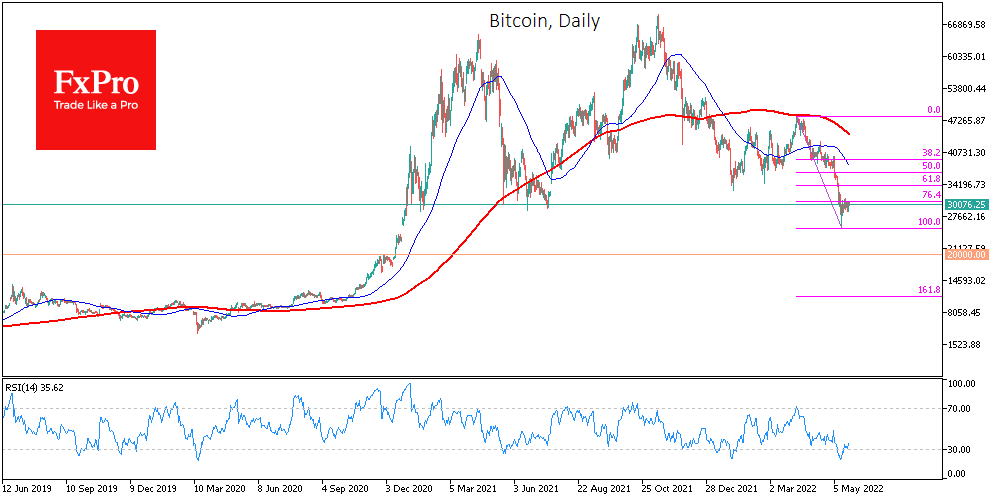
Bitcoin and the entire cryptocurrency market’s protracted tug-of-war promises to resolve with a strong move in one direction. However, there is hope for both bulls and bears. The latter has a minor advantage, as we saw this area touch down from above in January and June-July 2021. But now, all the fighting is concentrated below.
Among the crypto news that caught our eye:
MicroStrategy CEO Michael Saylor said his company would buy bitcoin at any price until it reached a million dollars.
Bitcoin’s drop below $30,000 last week came after a large volume of the cryptocurrency entered exchanges. According to IntoTheBlock, traders have sent around 40,000 BTC to exchanges since May 11.
According to an audit report by accounting firm MHA Cayman, USDT stable coin issuer Tether Holdings Limited reduced its reserves in the commercial papers by 17%, improving the quality of its funds.
The Ethereum development team said it would migrate the Ropsten test network to the Proof-of-Stake (PoS) consensus algorithm on June 8 2022.
According to the legislation, SEC chief Gary Gensler has warned that the regulator is ready to take new measures against unregistered cryptocurrency companies.
The US Commodity Futures Trading Commission (CFTC) believes that amid a rise in cryptocurrency crime, the watchdog must strengthen regulation of digital assets to crack down on fraud and manipulation.
Daily Technical Analysis
EUR/USD
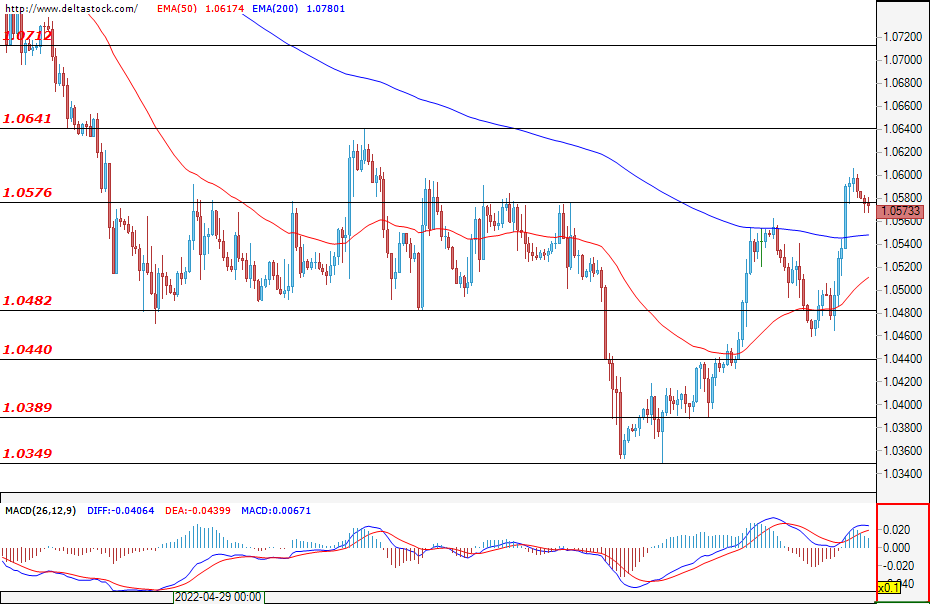
During today's trading session, the single European currency rose against the dollar by almost a figure. At the time of writing, the rate of the euro against the dollar is consolidating around the support at 1.0567 as the strength of the bulls proved insufficient to reach the key resistance at 1.0641. If the bears manage to fuel the sell-off, then the next hurdle for them would be the support at 1.0482. The remainder of the day holds no news or statements that are expected to strongly influence the currency pair.
USD/JPY
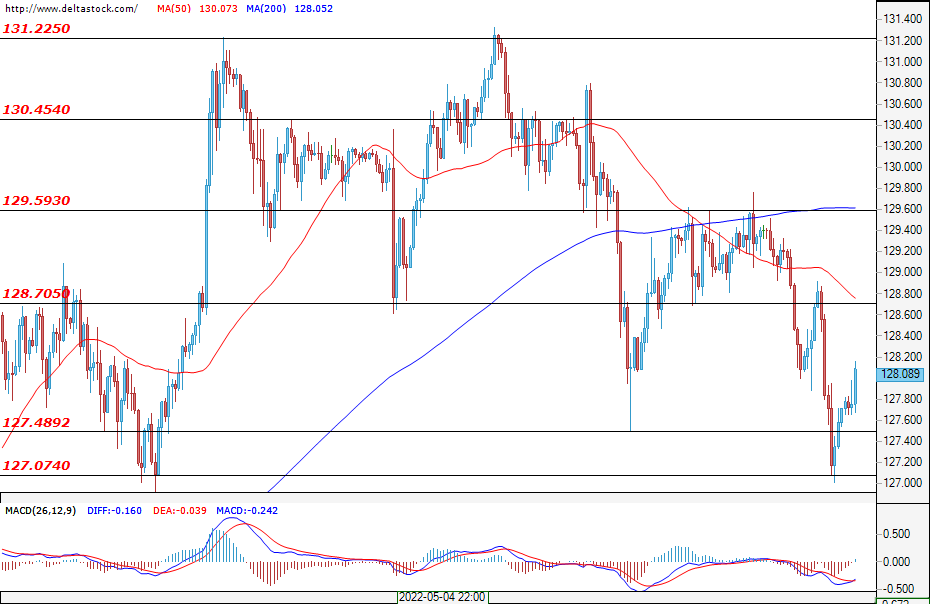
The dollar began to lose ground against the Japanese yen during today's trading session and managed to breach the first support at 127.48, heading towards the second one at 127.07. The bulls, on the other hand, managed to increase their purchases and dashed the bears’ hopes of breaching two supports in less than a day. At the time of writing, the dollar bulls are aiming at the first resistance of 128.70.
GBP/USD
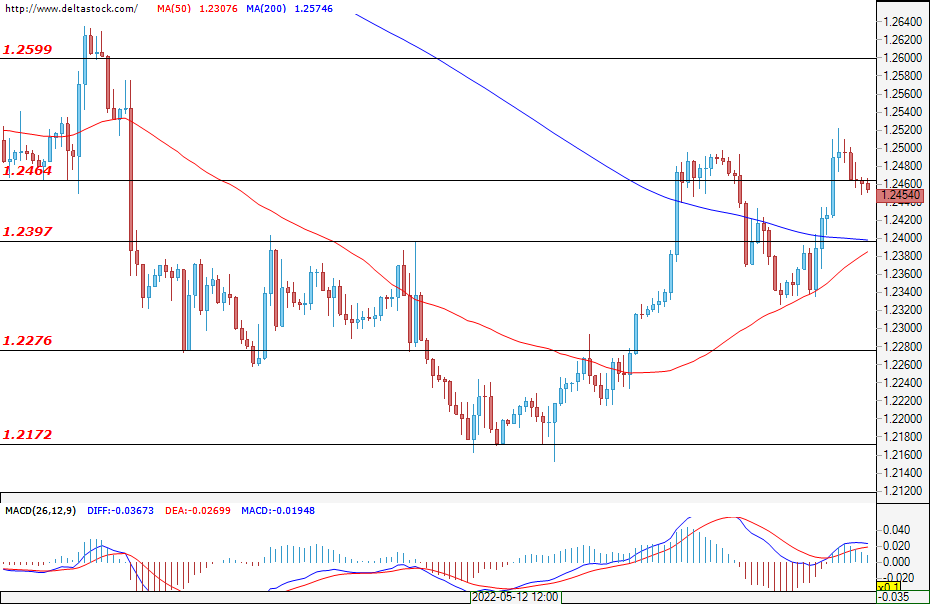
In a relatively volatile session, the bulls managed to breach two resistances in a matter of hours. A breach of the third one seemed like it was only a matter of time, but the bears managed to limit the rally and keep the bulls at the resistance of 1.2464. Those of the market participants who share positive sentiment will likely try another attack on the next resistance at 1.259. If the bears manage to stand their ground, then they in turn would try to breach the support at 1.2390.
EUGERMANY40
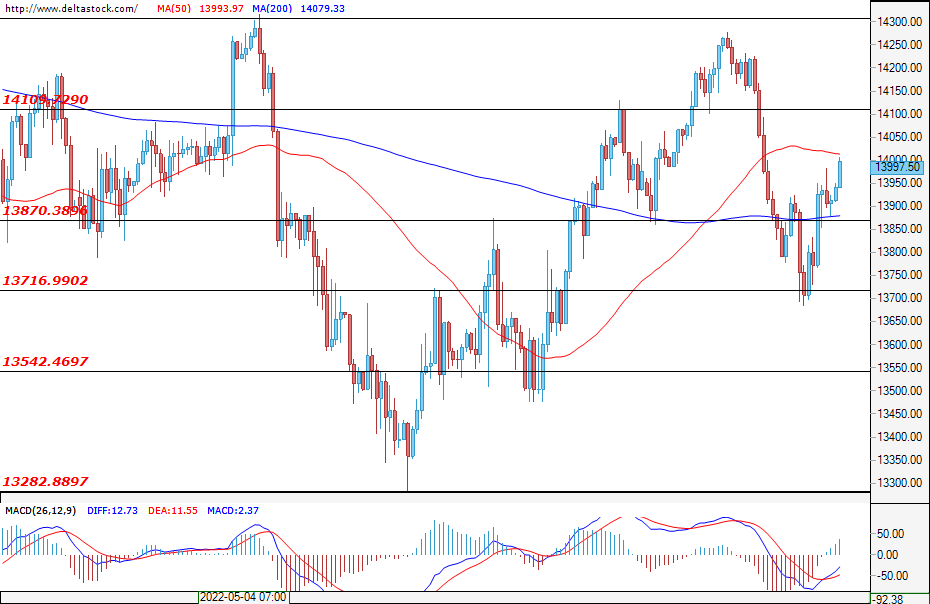
At the beginning of the trading session, it looked as if the bears were going to gain enough momentum to continue the sell-off as they managed to breach the first support at 13716, but failed to confirm their breach. The bulls sensed their opportunity to attack and did not hesitate, overcoming the resistance at 13870. At the time of writing, the next goal of the bulls would be to breach the resistance at 14109.
US30
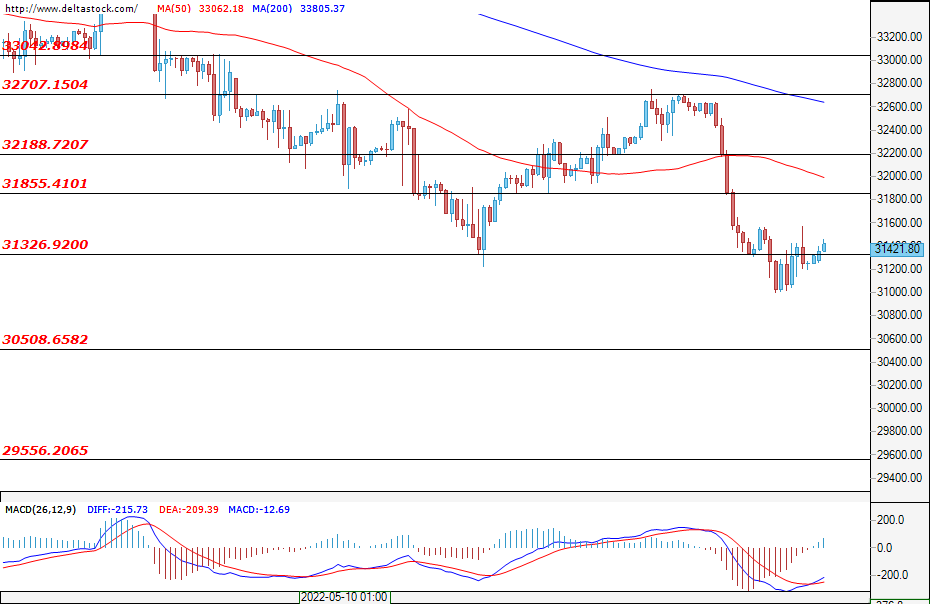
The day for the U.S. blue chips was relatively calm as neither the bears nor the bulls were able to take control over the market. Throughout the day, the index traded around the level of support at 31326. The first important target for the bulls, however, would be the resistance at 31855. If the bears want to become the dominant party, then they would first have to deal with the support at 31326 in order to reach the next one at 30508.
Rate Cut in China and Inflation in Japan
Market movers today
Today we get the euro area consumer confidence data for May. A rebound from the very depressed levels would be a welcome sign, but it might be too early in light of the mounting headwinds from still rising consumer prices.
We also get consumer confidence in Denmark. We expect rising prices are still being felt by consumers who will therefore have a negative opinion of their own finances. In contrast, we expect consumers' views on the Danish economy to improve, as the economy is still in fine fettle and the war in Ukraine has not escalated further.
In Norway, Friday brings Norges Bank's expectations survey for Q2. Both wage and price expectations have risen steadily since the start of last year, so the big question is whether they will now turn or keep on climbing. We will also be keeping a close eye on business leaders' profitability expectations.
Several ECB speakers are also on the wires.
The 60 second overview
Rate cut in China: Overnight, the People's Bank of China (PBoC) cut the five-year loan prime rate (a reference for mortgage rates), to 4.45% from 4.60%, which was larger than anticipated. The Chinese housing market has been under pressure for several months and both home sales and prices are declining. Additionally, the rest of the economy is under pressure from COVID-19 lockdowns. Unlike Western central banks, PBoC is in easing mode, which eventually should support global growth, all else equal. The rate cut supported risk sentiment overnight and Chinese stocks are up this morning.
China may buy cheap Russian oil: Apparently, China is in talks with Russia (at government level) as China would like to buy (cheap) Russian oil for its strategic reserves. Russian oil is trading with a discount because of fewer Western buyers.
Inflation in Japan: CPI inflation excluding fresh food in Japan rose to 2.1% y/y in April from 0.8% in March, slightly higher than consensus of 2.0%. Total CPI inflation rose to 2.5% y/y. High inflation is to a large extent a global phenomenon, which now seems to have arrived in Japan as well, although inflation remains significantly below what Europeans and Americans are currently experiencing. Bank of Japan is unlikely to react to above-target inflation just yet, as they would like to see it on a more sustained basis, also because inflation has been too low for so many years. The combination of easy monetary policy and weak JPY puts upward pressure on Japanese prices.
FI: Classic risk off moves dominated markets yesterday leaving yield curves bullish flattening and intra euro area spreads wider on continued concerns about growing recession risks. Bunds ended 8bp lower. The ECB minutes had no particular news. Swap spreads widened 2bp yesterday. In the late afternoon, media reported that the EC is set to prolong the suspension of the deficit and debt rules through the end of 2023. There was no immediate effect on peripheral spreads.
FX: Yesterday, broad USD depreciated despite still poor risk sentiment with notably EUR/USD briefly crossing the 1.06 mark. We still believe however, that USD weakness is temporary as we still see the current environment as USD positive. EUR/CHF fell below 1.03. EUR/DKK rose to around 7.4430, the highest level since March.
Equities: The free fall in equities took a breather on Thursday, with both Europe and US holding up fairly well. Nor were there any clear preference between cyclicals vs defensives: Materials and consumer discretionary outperformed, but also health care. Implied volatility moved somewhat lower. S&P closed down -0.6%, Nasdaq -0.3%, Dow -0.8% and Russell 2000 0.1% higher. US futures are 1% higher this morning.
Credit: Credit spreads followed equities in a bearish rout on Thursday. Itraxx Main closed 1.9bp wider, ending the day at 98.5bp. This was after briefly moving as high as 101.5bp intraday. Itraxx Crossover ended the day 11.2bp higher, to close at 476bp, after reaching slightly more than 493bp intraday. Aside from March 2020, the intraday high was the widest level seen in Crossover since the European debt crisis 10 years ago.
Nordic macro
Today brings Norges Bank's expectations survey for Q2. Both wage and price expectations have risen steadily since the start of last year, so the big question is whether they will now turn or keep on climbing. We will also be keeping a close eye on business leaders' profitability expectations, as overall costs are now rising so quickly that margins have to be coming under pressure. This could put a damper on wages despite the tight labour market.
Will the Gold Rally Extend?
The US equities closed Thursday’s session in the negative following a choppy trading session, as investors’ hearts pounded between buying the dip, or selling further on recession fear. The latter gained the upper hand; the S&P500 lost 0.58%, while Nasdaq slid 0.44%.
The S&P500 is a stone’s throw from stepping into a bear market, and if the index closes the week lower, it would be the longest losing streak since the dotcom crisis. And there is nothing Jerome Powell will do to save the day.
Could the gold rally extend?
The US 10-year yield declined yesterday, and the sharp retreat in the US yields gave a boost to gold. The yellow metal jumped $25 dollar in a single move, reviving the bulls’ hopes to see the rally extend higher. Is it possible?
Well, the falling yields have been the major trigger of the gold rebound yesterday, therefore the positive momentum could remain short lived, as the medium-term trend for the US yields remains comfortably positive on the back of prospects of higher interest rates in the US. The Federal Reserve (Fed) declared war against inflation, and it will raise the interest rates. The higher rates will have a straight positive impact on the yields.
From a technical perspective, gold is at an important crossroads. It is now testing the 200-DMA resistance, which also coincides with the negative correction band top, building since mid-April. The actual levels are interesting for topsellers, who bet on further positive pressure on the yields, which would continue pressuring gold lower.
But if the 200-DMA resistance is broken to the upside, we could see the rally persist toward the $1880/1900 range. And the Russian shock on gold supply could support that move.
I still maintain my bearish outlook for gold in the medium to long run based on the expectation of higher yields, as the Fed won’t get rid of inflation fast enough.
The dollar must ease to let majors gain field on their own reasons
Yesterday’s retreat in the US yields pulled the dollar lower. The US dollar index eased 103 mark, and the majors gained against a broadly softer greenback.
The EURUSD flirted with the 1.06 mark. as Cable had a quick rebound above the 1.25 mark.
But the outlook for majors broadly depends on the dollar’s performance. We must see a sustained downside correction in the US dollar to let the euro and the sterling have a sustained positive correction.
As per the dollar, only a slowdown in the equity selloff could soften the dollar appetite and let it lose some field against its major peers. As a result, the US yields, and the dynamic in the equity markets are what mostly determine the value of the pound and the single currency against the dollar.
If we could get rid of the dollar skew, the euro could start trading on its own reasons, and the euro traders could finally bring in the expectations that the European Central Bank (ECB) would raise the rates by July to fight the rising European inflation - which would rationally lead to some upside correction in the euro.
Err on the Side of Caution with Regards to Risk Sentiment
Markets
European stock markets eventually lost 1.5% to 2% yesterday. Given WS’s performance on Wednesday evening, the damage remained “contained”. It’s nevertheless telling that stocks barely managed to show some form of intraday rebound following those steep opening losses.
Market wires played that same tune. Central bankers are preparing to up the ante in both tackling inflation and re-anchoring inflation expectations even if it can cause harm to an already weakening economy. US stock markets ended a day fluctuating near the sell-off lows with daily losses of 0.25% to 0.75%. Again, unconvincing.
Eco data included a small tick-up in weekly jobless claims, but especially an unexpected drop in Philly Fed Business Outlook (lowest since May 2020). Details differed from the weak Empire Manufacturing Survey earlier this week. New orders and shipments improved, with the employment component, average workweek and inventories dragging the headline number lower. Both prices paid and received remain at elevated levels, but moderated compared to April.
Safe haven flows underpinned core bonds. The US yield curve bull steepened with yields sliding by 6.1 bps (2-yr) to 1.5 bps (30-yr). The German yield curve bull flattened with yields dropping 1.7 bps (2-yr) to 7.9 bps (30-yr).
Unlike Wednesday, the dollar failed to profit in this climate. The nature of bond move in the US (underperformance front end) has likely to do with it. The trade-weighted greenback closed below 103 for the first time since early May. Support stands at 102.35 which is the neckline of a double top formation. USD/JPY shows a more or less similar technical formation with neckline support tested at 126.95. EUR/USD closed just below 1.06, compared with opening levels around 1.0460. First, minor, resistance, arrives at 1.0642.
Asian stock markets gain around 1% this morning with China (up to 2.5%) outperforming. The rumoured PBOC rate cut came this morning. The central bank cut the 5-yr loan prime rate by 15 bps from 4.6% to 4.45%. The rate is key reference for home mortgages and aimed to boost loan demand. The 1-yr loan prime rate was left unchanged at 3.7%. The response on global bonds and FX markets is much more guarded. Interestingly, the Chinese yuan gains (in a sign of a softer USD) with USD/CNY moving back below 6.70 for the first time since early May.
Ahead of the weekend, we’re inclined to err on the side of caution with regards to risk sentiment. UK April retail sales this morning beat consensus, by rising 1.4% M/M both for the headline and core number. Sterling isn’t impressed, with EUR/GBP trading just shy of the 0.85 big figure.
News Headlines
Japanese headline inflation and a measure excluding fresh food jumped to 2.5% and 2.1% respectively in April, from 1.2% and 0.8% in March. It’s the first time since 2014-2015 that inflation surpasses the 2% BoJ target. Back then, tax hikes artificially boosted prices and statistical effects are at play this time too. April’s sharp acceleration is to a large extent the result of cheaper phone fees fading out from a year ago (adding 1 ppt to the figure). The narrowest core gauge (ex fresh food and energy) shot up as well, though remains with 0.8% (up from -0.7% last month) well below target. Today’s figures are unlikely to change the BoJ’s policy stance. It already said that the current surge is cost-push inflation and unsustainable. It may even hurt consumer spending instead and eventually act as an opposing force unless wage growth picks up materially. The Japanese yen trades unchanged around 127.67 this morning. GfK consumer confidence in the UK dropped to the lowest on record. At -40, down from -38 in April, it surpassed the previous trough seen in the aftermath of the GFC (-39). The economic situation over the last and next 12 months was seen darker still in May compared to the previous month. Personal finances for the next 12 months tanked in recent months in the midst of the worst cost-of-living crisis in decades. The indicator stood at -26 in April. At -25 in May, UK consumers barely expect the situation to improve any time soon. Saving intensions held at the post-pandemic low of 10. Sterling currently holds steady, south of EUR/GBP 0.85.