Sample Category Title
Fed Tightening Fears Boost US Dollar
US dollar soars on Fed tightening nervousness, weak euro
The euro and yen have tumbled since Thursday, and US bond yields have noticeably firmed once again as Fed rate hike fears increase the closer we get to May’s FOMC. That has combined to punish the dollar index substantially higher, rising 0.50% to 100.33 on Thursday. The dollar index rose slightly on Friday and has gained 0.20% to 100.70 in Asia today. Resistance at 100.90 is within sight, and a move through 101.00 would signal more gains targeting the 2020 pandemic-panic highs at 103.00. Support is between 99.40 and 99.55.
The ECB policy decision, where it signalled little to no intention of increasing the pace of tightening or removing QE earlier, saw EUR/USD sold heavily on Thursday. EUR/USD traded between 1.0750 and 1.0900 before finally finishing 0.60% lower at 1.0830. The single currency eased slightly on Friday before moving 0.20% lower to 1.0785 in Asia today. The euro is now facing a serious test of the multi-decade support line at 1.0800. A daily close will increase bearish nerves, and a weekly close below it will be a powerful bearish signal. Initial targets are 1.0600 and 1.0300 and potentially a fall through 1.0000. Rallies in and around 1.0950 should find plenty of sellers. Ukraine and energy fears and a dovish ECB make a sustainable rally in the euro challenging now. Only a sudden narrowing of the US/Core-Europe rate differential will likely change the outlook.
Sterling is holding above 1.3000 for now at 1.3030, as markets price in hikes by the BOE in May, and heavy EUR/GBP selling supports GBP/USD. Rallies have been limited to the 1.3150 regions, though, and the risk remains skewed towards a comprehensive failure of 1.3000, which should target 1.2700 initially. The Australian and New Zealand dollars have both suffered heavy losses over the past few sessions, as risk aversion increases, and with both central banks perceived as being too slow to move on inflation. AUD/USD had fallen to 0.7360 and has support at 0.7300. NZD/USD has broken its uptrend line at 0.6815 last week, retreating to 0.6730 today. As risks of a hard landing increase, NZD/USD remains the more vulnerable. Failure of 0.6815 now could see NZD/USD fall all the way back to 0.6500 in the weeks ahead, with 0.50% priced into the next RBNZ meeting.
The widening US/Japan yield gap has seen USD/JPY soar over the past two sessions, reaching 126.65 this morning, taking out previous resistance at 125.80, which becomes initial support, followed by 125.00. Expect the official rhetoric from Tokyo to move up a notch this week now, although any dips are probably ones to buy. USD/JPY is now entirely at the mercy of the rate differential, and unless that reverses sharply, USD/JPY should target 128.00 eventually.
Asian currencies are weaker today, following the sharp move higher by US yields on Thursday, China’s economic nerves, and higher oil prices. USD/KRW has risen 0.45% to 1233.75 today, with USD/TWD climbing 0.35% and USD/JPY rising by 0.15%. Both USD/CNY and USD/CNH are also approaching one-year trendline resistance levels at 6.3770 and 6.3950 respectively. Daily closes above would signal another leg of yuan weakness. As I have said ad nauseam previously, the slow pace of Asian monetary normalisation will present challenges to Asian FX as US rates keep moving higher. A slowing China will add to those concerns meaning we are likely to see Asia FX rates move lower over the coming quarter.
China GDP Beat Reveals Cracks
With most of Europe, as well as Hong Kong, Australia, and New Zealand on holiday today, the focus of the day has been on this morning’s tier-1 data releases from China. China GDP YoY for Q1 beat expectations, rising by 4.80% (4.50% exp), and rising 1.30% QoQ (0.60% exp). Industrial Production in March fell to 5.0% YoY from 7.50% in February while Retail Sales had a big miss, slumping to -3.50% YoY (-1.60% exp.) in March from 6.70% in February. Meanwhile, Unemployment in March rose to 5.80% from 5.50% previously, and Capacity Utilisation fell to 75.80% from 77.40% previously.
Overall, the data suggest that China started the year well, but as the quarter has moved on the headwinds have gotten stronger. A slowing property market, sweeping Covid restrictions, the Ukraine invasion pushing up base commodity and energy prices, and a central bank still intent on deleveraging sectors of the economy, have all combined to weigh on China’s growth. About the only thing missing is a meaningful rise in inflation, which is some small sliver of comfort.
It is little surprise, therefore, that mainland equities are heading south today once again, despite China’s PBOC cutting the RRR by 0.25% on Friday, allowing banks to lend more, with agricultural banks’ RRR being trimmed by 0.50%. Markets were disappointed that the 1-year MTF was not also cut on Friday and China’s have your cake and eat it approach seems to be facing more challenges by the day. China will have a second bite of the cherry on Wednesday, when it announces its latest 1 and 5-year Loan Prime Rate decisions.
Virus restrictions across China appear to be heading the wrong way, even as Hong Kong cases plummet. Markets are already seeing the impact on production and trade from the Shanghai lockdowns, and if these start spreading, the picture for China dims considerably, even without the downstream impact from the Russian invasion of Ukraine. China’s official 5.50% GDP target becomes more challenging by the day as consumer sentiment plummets, production costs rise and Covid policies threaten to wreak havoc with production and logistics. Eventually, this will weigh on other Asian markets as well.
Singapore’s Non-Oil Exports (NODX) fell to 7.70% YoY in March and fell by 2.30%, MoM. Admittedly, it is a volatile data series, but the growth of both electronic and non-electronic exports slowed. Not all of this can be attributed to China of course, but the timing is unfortunate as the MAS has just tightened monetary policy aggressively. The Malaysia and Indonesia trade balances later today will make interesting reading, especially if exports to China ease.
With US and European markets closed on Friday, making Thursday the technical end of the week, we had a choppy session. Firstly, markets did not like a continuation by the ECB, of the glacial pace of a move towards tightening. One can hardly blame them given the events on Europe’s Eastern border, but markets punished the euro, which has slumped to multi-decade support around 1.0800.
In the US, markets took fright at inflation and an impending 0.50% hike by the FOMC in early May. US yields shot higher, and equities slumped once again. Admittedly, part of the equity move could be related to investors reducing risk over the long weekend, an eminently sensible idea. However, US index futures on the big three have headed directly south this morning as well, along with Asian stock markets. Ominously, futures on US 10-year bonds have fallen heavily as well, indicating yields will open higher in the US this afternoon.
That has been great for the US dollar, which rallied strongly on Thursday, and booked gains on Friday and today as well. Substantial falls by the Japanese yen and the euro have led the way, highlighting that the impact of interest rate differentials appears to be accelerating. Both the BOJ and ECB have signalled that interest rates are going nowhere in a hurry. One wonders when the same forces will start to materially impact the yuan and low yield currencies around Asia.
The week is relatively light on the data front globally, certainly for heavyweight data prints. US Housing Starts tomorrow and Markit PMIs on Friday are the highlights. In Europe, we get Eurozone Industrial Production on Wednesday and Markit and Eurozone PMIs for the bloc on Friday. I would suggest all the European data has downside risk. In Asia, apart from trade balances and China’s LPRs, we see India release March WPIs for food, manufacturing, and inflation. Upside prints will increase the noise around the pace of the RBI’s move to a tightening bias and will probably be a headwind for the Sensex.
Japan releases Industrial Production tomorrow, and the trade balance on Wednesday, both of which have downside risks. It releases inflation on Friday, but I haven’t looked at that for 20 years and nor should you. We already know the answer. Apart from being another reason to be long USD/JPY, the main volatility this week from Japan will come from officials speaking about the yen and “watching markets closely” as the yen continues to be crushed by the US Dollar.
On the geopolitical front, the brave defenders of Mariupol have given the Russians a one-fingered salute regarding their kind offer to surrender, although they appear to be on their last legs and the city will not be Russia’s Stalingrad. Realistically, we are not likely to get another way of Ukraine risk aversion sweeping markets until Russia finishes reconstituting and resupplying its forces and commences its offensive in eastern Ukraine.
EURUSD Pokes at 2-Year Base, Bias Remains Bearish
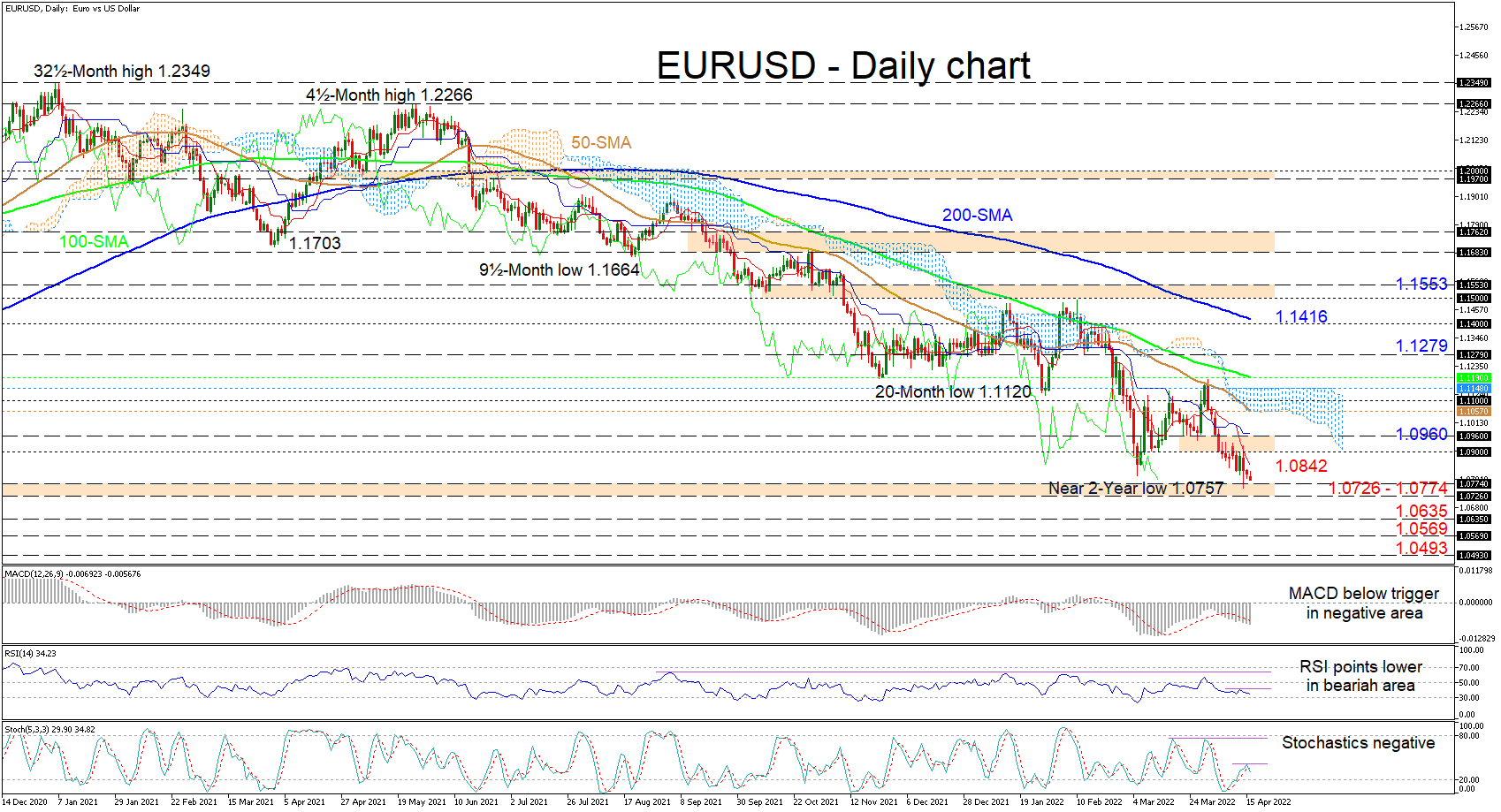
EURUSD is taunting the 1.0726-1.0774 key support border after recently taking a fresh jab at it. The descending simple moving averages (SMAs) are defending the near 11-month downtrend from the 1.2266 high.
Furthermore, the Ichimoku lines are indicating a pause in downward forces, while the short-term oscillators are suggesting a commanding negative bearing in the pair. The MACD has remained beneath its red trigger line, while the RSI is sliding towards the 30 oversold mark, both sponsoring more negative momentum in the pair. Additionally, the renewed negative charge in the stochastic oscillator, is hinting that sellers are sustaining downward pressure in the pair.
In the negative scenario, downward friction could commence from the critical 1.0726-1.0774 support foundation that extends back to the lows over the early part of April until mid-May 2020 period. If this crucial barricade fails to suppress negative tendencies from gathering speed, the March 2020 low of 1.0635 could draw traders’ attention. From here, unsuccessful attempts from buyers to find their feet at this 35-month trough could steer the pair to test the April 2017 low of 1.0569 ahead of the February 2017 trough of 1.0493.
However, if the price bounces off the 1.0726-1.0774 floor, upside constraints could originate at the red Tenkan-sen line at 1.0842 ahead of the 1.0900-1.0960 resistance barrier, which is capped by the blue Kijun-sen line. Recouping more of the previously lost ground, the pair may then encounter a tough resistance region between the falling 50-day SMA at 1.1057 until the Ichimoku cloud’s upper band at 1.1148. In the event profound buying pressures endure above the cloud and push over the nearby 100-day SMA at 1.1190, the bulls could then seek out the 1.1279 barrier before eyeing the 200-day SMA, which is nearing the 1.1400 price vicinity.
Summarizing, EURUSD is sustaining a bearish bias below the SMAs and the 1.1184 high. A dive in the price below the 1.0726-1.0774 base could significantly hurt positive prospects in the pair. That said, for a clearer optimistic outlook to return, the price would need to pilot beyond the 1.1500-1.1553 obstacle.
Gold Price Moved into a Short-Term Positive Zone above $1.965
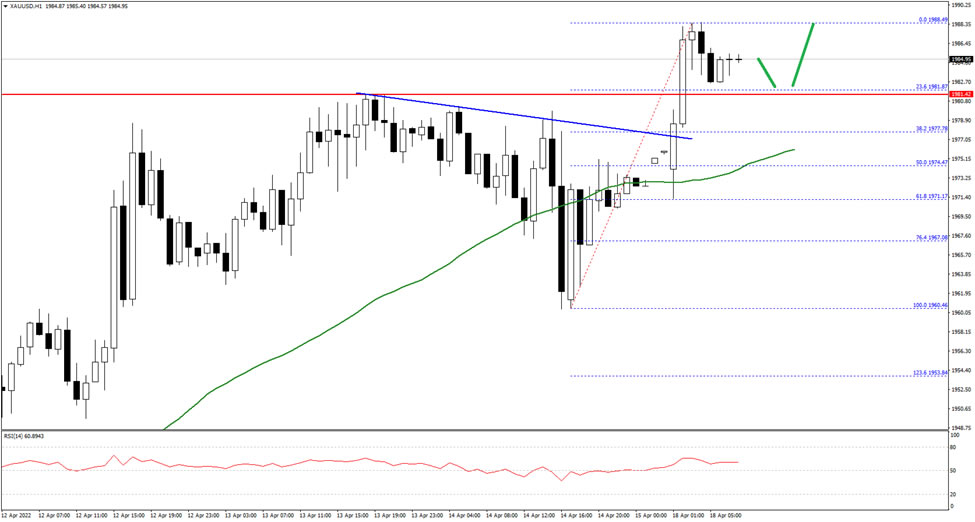
Gold price started a fresh increase from the $1,950 pivot level against the US Dollar. The price broke the $1,965 resistance zone to move into a short-term bullish zone.
There was a move above a key bearish trend line with resistance near $1,975 on the hourly chart. The price even climbed above the $1,980 and settled above the 50 hourly simple moving average. It is now trading near the $1,985 level and consolidating gains.
An immediate resistance is near the $1,988 level. The next main resistance could be near the $2,000 level, above which the price could start another steady increase. In the stated case, it could rise towards $2,025.
If not, the price could decline below $1,980 on FXOpen. The next major support is near the $1,965 level, below which the price might decline towards the $1,950 support level in the near term.
Gold heads for 2,000 as bullish bias grows
Gold brought the 2,000 number back into scope after halting Friday’s setback near the former resistance of 1,959.
The RSI and the MACD are currently heading northwards, endorsing the bullish appetite in the market. Of course, the Stochastics have already entered the overbought zone, suggesting that room for improvement is probably narrowing, though as long as they trend northwards, upside price movements are more likely than downside ones. The 20-day simple moving average (SMA) has recently avoided a bearish intersection with the 50-day SMA, sending bullish vibes as well.
Stretching beyond the crucial 2,000 level, which is also the 23.6% Fibonacci retracement of the 1,780 – 2,070 upleg, the bulls may push for a close above the all-time high of 2,079 from August 2020. If their efforts prove successful, traders may immediately target the 2,100 psychological mark, where any violation could activate fresh buying orders, likely up to the 161.8% Fibonacci retracement of the latest downfall at 2,183.
If the bulls run out of fuel around 2,000, the precious metal will probably pivot southwards to seek support near 1,959 again. Failure to bounce here this time could confirm a bearish extension towards the 50% Fibonacci of 1,924 and the 50-day SMA, while a break below 1,915 could stage a more aggressive sell-off towards the 1,890 – 1,870 zone. The latter would also downgrade the bullish outlook to neutral.
In brief, the yellow metal is expected to haunt more gains in the short term. A decisive close above 2,000 could boost the price towards the previous record high of 2,079. Otherwise, some consolidation may develop between 2,000 and 1,959.

Daily Technical Analysis
EUR/USD
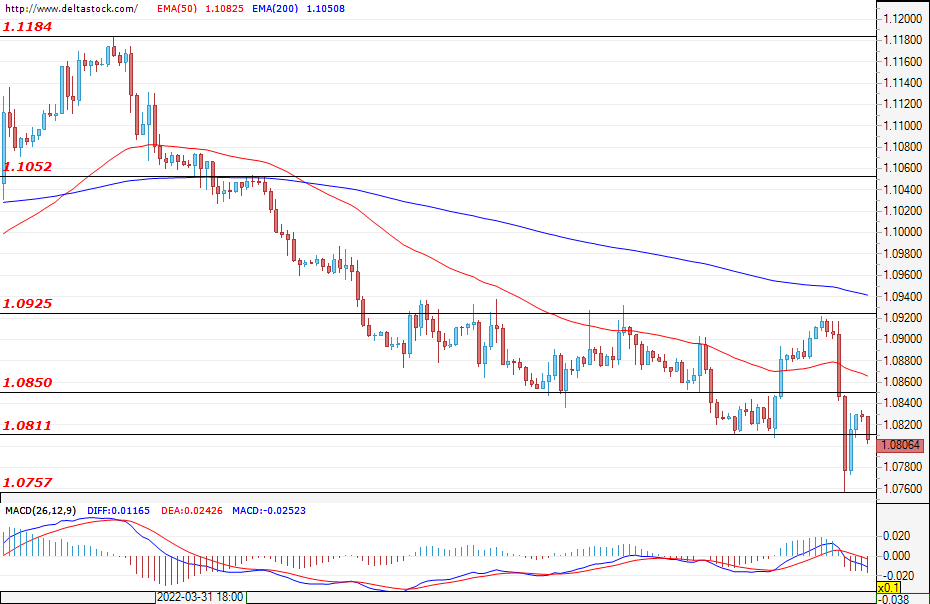
The single European currency continued its weekly trend and fell sharply against the U.S. dollar on the last trading day last week. The reason for the strong bearish attack was the decision to keep the key interest rate in Europe at 0.00%, which was taken as a response to the 7.5% inflation growth in the region as per the ECB’s data. On the day of the announcement, the session started positively, once more reaching levels at around 1.0925, but soon after the euro hit a low of 1.0757. The rocky session ended with a slight increase back towards 1.0834. This week will begin slowly – with an official holiday (Easter) in a number of European countries – and without much macroeconomic data. If the pressure continues, then a decline towards levels below 1.0757 is more likely, as is a deepening towards the bottom at around 1.0640. However, if the bulls find support in the coming days, then we could witness another test of the resistance at around 1.0925.
USD/JPY
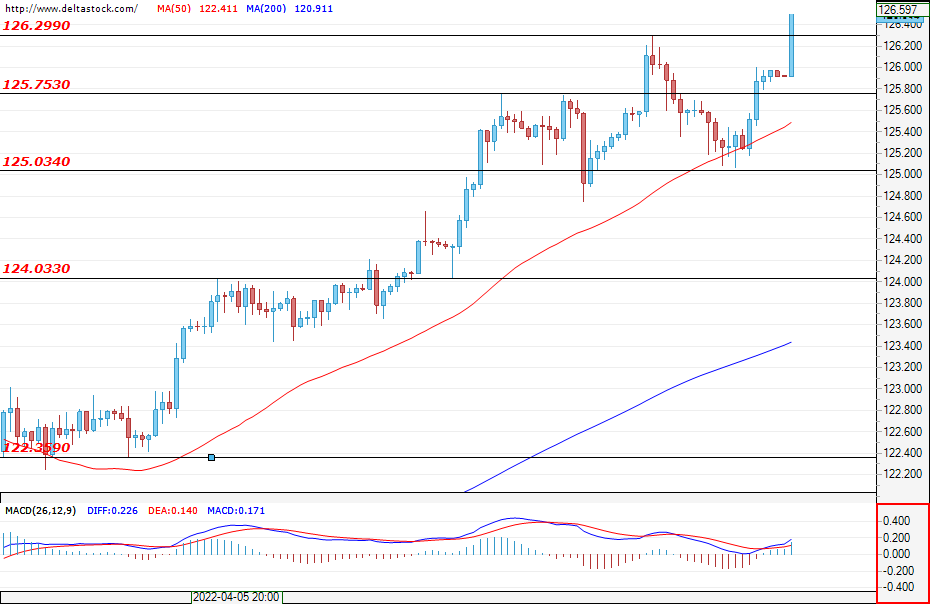
The yen session started with a slight correction towards 125.03, but soon after we saw another acceleration of the uptrend thanks to the strengthened U.S. dollar. The movements conquered the peak at 126.00, where the price stayed right up to the closing bell. Тhe market sentiment for reaching higher prices remains unchanged and so the Ninja may reach levels of 129.00 this week. That being said, corrections should not be ruled out and the supports at around 125.03 should be monitored. The Fed leader's remarks on Thursday will be important for traders as they could affect the dollar’s movements..
GBP/USD
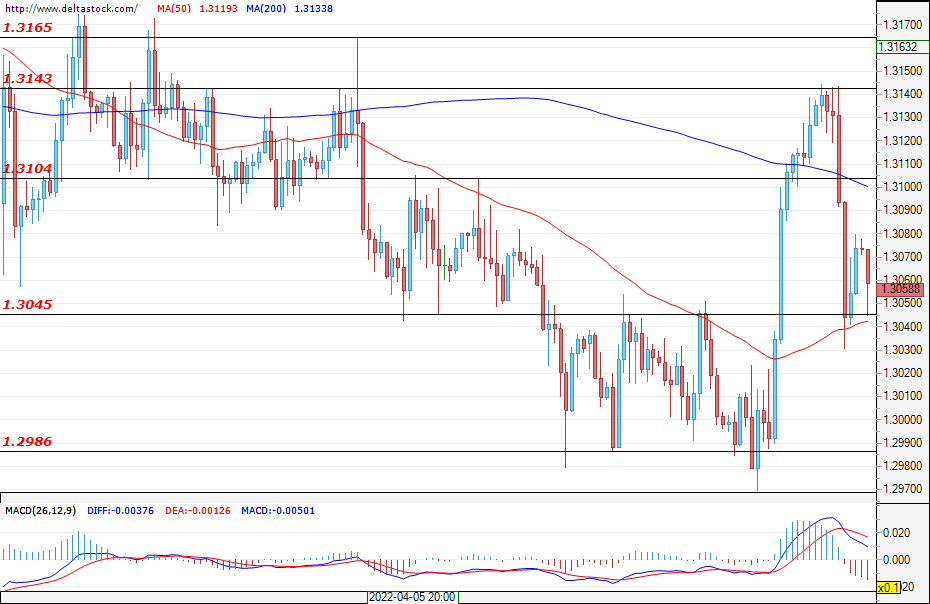
The trading session in the sterling also started positively, climbing towards 1.3143 – a move still driven by the positive CPI data for the UK that came out on Wednesday. However, the downward trend did not wait and the immense strength of the dollar yanked the pound towards the bottom of 1.3032. The day ended with a slight recovery and the market closed at around 1.3080. The beginning of the week is shaping up to be calm, with no significant market data available due to the Easter holidays, so the first more notable movements are likely to be spurred by the statements of BoE gov. Andrew Bailey, scheduled for Thursday and Friday. Downward movements are more likely and we could see a return towards 1.2986 and a possible deepening towards 1.2850. However, if instead the dollar weakens and the bulls gain momentum, then the Cable may bounce back up at least towards the level of 1.3165.
EUGERMANY40
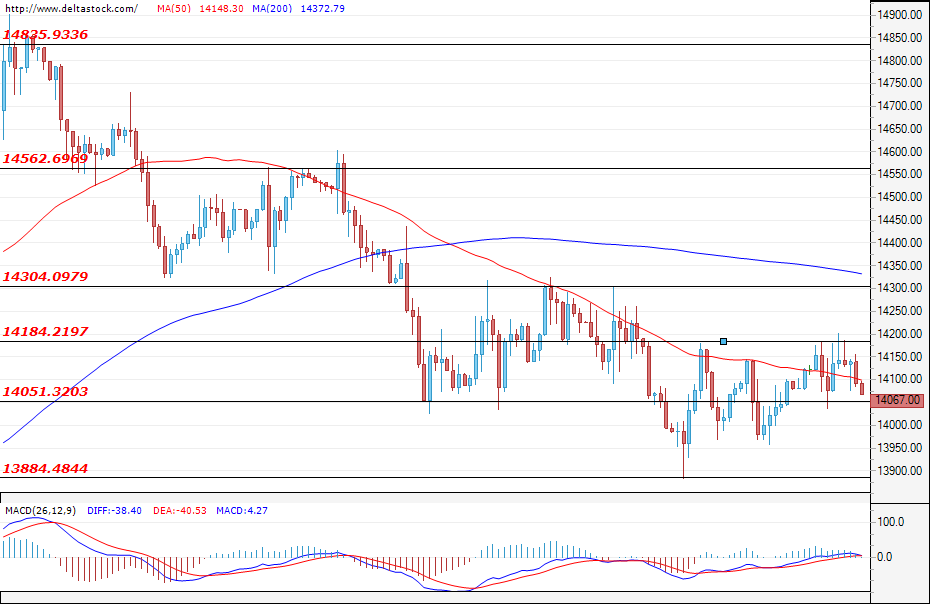
On the last day of the week, the German index paused its decline and managed to score slight gains, supported by the movements in the euro on the same day. The bulls had the opportunity to attack, and with the news that the interest rates in Europe will remain at zero, the index managed to rise towards 14200. The EUGERMANY40, however, failed to hold onto its gains, and at the end of the session closed at around 14050. The downward trend is a more likely scenario and so we can expect for the index to reach levels at around 13884 and to further deepen towards 13580, but if last week’s daily rise continues, then we could again see it reaching the resistance at around 14560. This week,f traders will focus on managers’ data on the German Manufacturing PMI on Friday.
US30
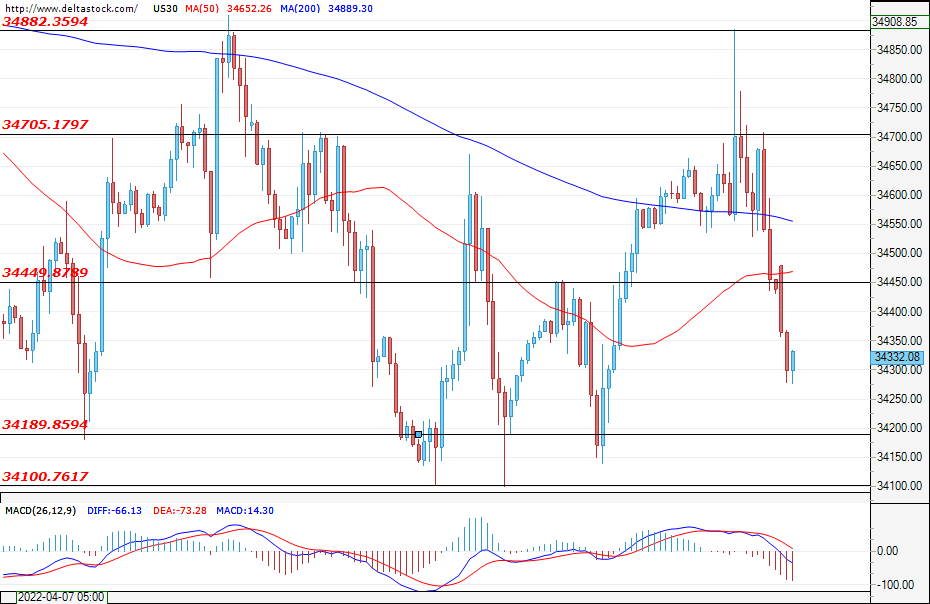
The blue-chip index started the day with a slow rise, which quickly accelerated around the opening of New York stock exchange and reached a peak at 34882. However, the downward trend did not stall, and following the breach of 34705, the index reached the bottom at around 34445, at which point the session ended. Jerome Powell’s speeches will be closely monitored this week as they can provide clues about the speed at which the U.S. interest rates will be increased. A decline towards the support at about 34100 is a likely scenario and it could even deepen further towards 33800. However, if the index once more returns to its previous range-bound trading, then we could see a rebound back towards 34700.
Investors’ Eyes on the Yield Curve
Following a shortened trading week in which equities declined, commodity prices shot higher, and US 10-year Treasury yields hit a new three-year high, US equity futures are pointing to further selling pressure this morning.
Recession fears led the US 2-year/10-year yield curve to invert earlier this month for the first time since 2019. However, this inversion did not last long. The short end of the curve or 2-year Treasury yields hovered near 2.5% indicating that the Fed will raise rates by 200 to 225 basis points by year-end; meanwhile, 10-year yields are a few basis points away from 3%.
No one has an answer as to when and how a recession will hit. But the probability of one occurring is on the rise. Inflation in the world’s largest economy is running at a four-decade high, the Fed is scrambling to tighten policy and likely to start raising rates in 50 basis points increments, China’s zero-Covid policy is creating further supply chain shocks, and of course there is a war in Ukraine that is showing no signs of ending soon.
While Fed officials remain confident that tightening policy will not crash the economy, many believe the pace of tightening and balance sheet runoff are the ingredients for a hard landing. We will get to know who’s right over next 12 to 18 months.
What we know now is that the rise in US Treasury yields is harming risk and we can see it in most asset classes including tech stocks, consumer cyclicals, and even digital currencies and NFTs. Such tough times may bring long term opportunities as valuations come down to earth, however we’re still far away from cheap valuations when it comes to growth stocks.
Sector that tends to outperform the market in such times are the defensive ones. Utilities, consumer staples, and healthcare are the three main defensive sectors and that why they all posted gains this month. So, if an investor is in the recession camp, these are the sectors that they are likely to be overweight in.
The earnings season kicks into a higher gear this week with results from American Express, Bank of America, Bank of New York Mellon, IBM, Johnson & Johnson, Netflix, and Tesla. Investors need to see strong beats and positive guidance to keep taking risk as US 10-year yields approach 3%.
CAD/JPY Rises Along the Trendline
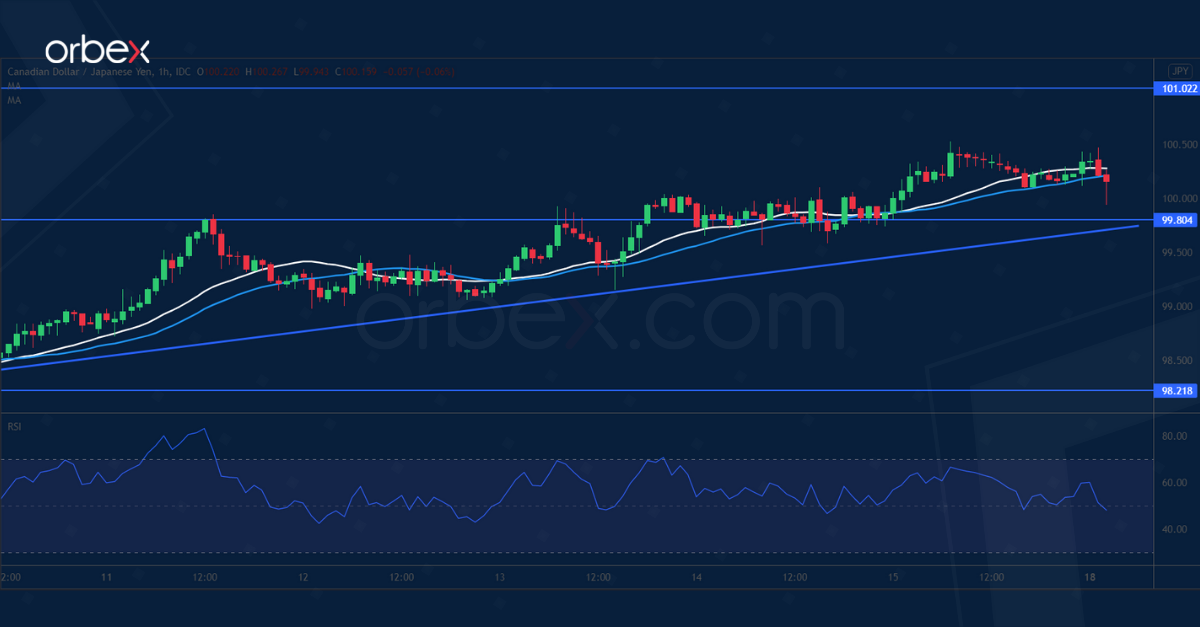
The Canadian dollar rallies thanks to the Bank of Canada’s hawkish stance. A break above last month’s high and the psychological level of 100.00 has put the pair back on track after a 2-week long consolidation.
Sentiment remains overwhelmingly bullish as the bears hesitate to jump in. The loonie is climbing along a rising trendline and 101.00 from June 2015 high is the next resistance.
A pullback is likely to find support from trend followers. 99.80 coincides with the trendline, making it a congestion area.
EUR/GBP Breaks Below Daily Support
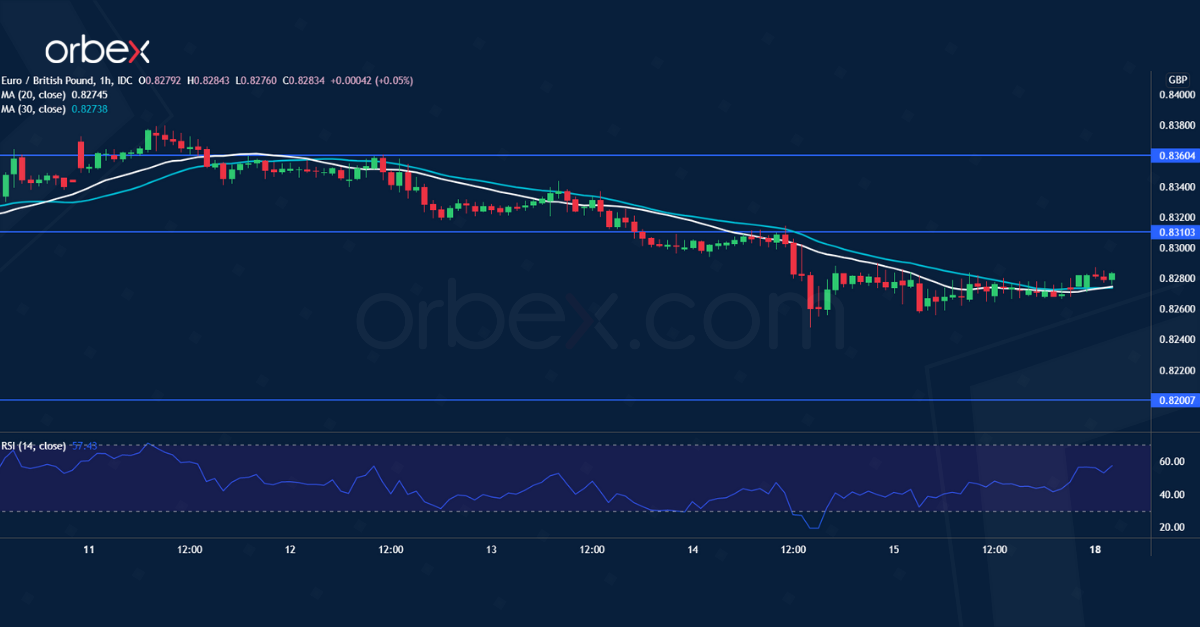
The ECB’s patience regarding its monetary policy continues to weigh on the single currency. The latest drop below the daily support (0.8300) is an invalidation of the recent rebound and could further depress the euro.
While trapped bulls seek to bail out, there could be stiff selling pressure near 0.8310, which has turned into resistance. An oversold RSI may cause a brief rally but the bears may see it as an opportunity to push lower.
March’s lows near 0.8200 would be the next target when momentum comes around.
USD/CHF Tests Daily Resistance
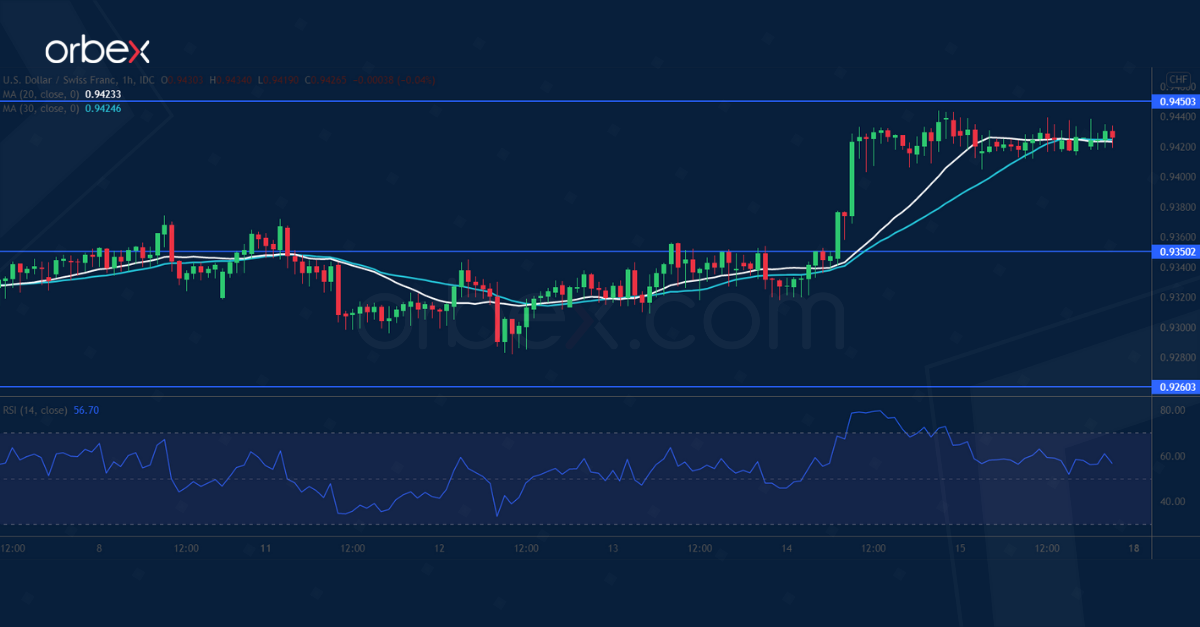
The US dollar edged higher as Treasury yields touched a 3-year high. A surge above the supply zone around 0.9370 is a strong sign that the bulls have regained control of the direction.
The daily resistance at 0.9450 is the sellers’ last stronghold, a breakout could end the year-long consolidation and extend the reversal to 0.9600.
The RSI’s overbought condition may cause a limited pullback as intraday traders unwind their positions. 0.9350 from the former supply zone is now a fresh support to gauge buyers’ commitment.