

Sample Category Title
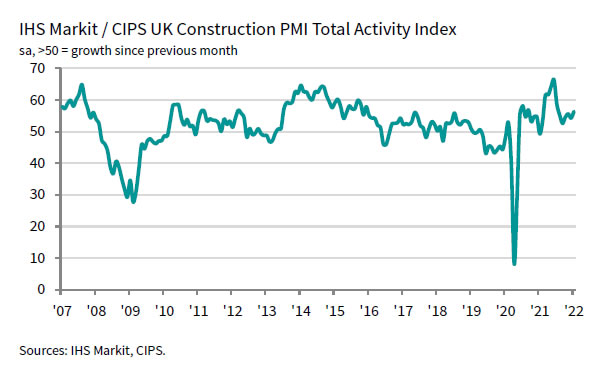
UK PMI construction rose to 56.3, overall cost inflation eased
UK PMI Construction rose from 54.3 to 56.3 in January, above expectation of 54.3. Markit said the sector gained momentum after subdued end to 2021. Commercial activity helped to offset weaker rise in house building. Cost inflation dipped to 10-month low as supply issues eased.
Tim Moore, Director at IHS Markit said: "UK construction companies started the year on a strong footing as business activity picked up speed and new orders expanded to the greatest extent since last August... Higher energy, transport and raw material bills led to across the board increases in input prices during January, but fewer supply issues helped ease the overall rate of cost inflation to its lowest since March 2021."
ECB Flips the Hawkish Switch, US Jobs Coming Up
- Nonfarm payrolls likely to disappoint, might even turn negative
- ECB opens door for rate hikes and faster taper, euro soars
- BoE raises rates, announces balance sheet reduction
Weak payrolls unlikely to keep dollar down
The latest US employment report will be in the spotlight today. Nonfarm payrolls are forecast to have risen by 150k in January, but market participants are probably positioned for a much weaker print by now.
Nonfarm payrolls are calculated from survey data, which is collected in the second week of each month. In January, this was the week when covid cases peaked as Omicron spread uncontrollably. If someone was out sick during this week and was not getting paid sick leave, they would be counted as unemployed.
Hence, this could artificially skew nonfarm payrolls lower this month, and even a negative number cannot be ruled out. The case for a disappointing print is supported by several labor market indicators, such as the ADP report, jobless claims, and the employment index of the ISM services survey.
In the markets, the knee-jerk reaction in the dollar might be negative as trading algorithms react to a disappointing nonfarm payrolls print. However, any weakness is unlikely to last long, since a soft number wouldn’t represent the true state of the labor market, which is actually quite tight.
Indeed, Fed officials like Thomas Barkin have already said they would view any disappointment as a temporary setback given the covid numbers for the month. For the Fed, wage growth is the most important metric at this stage of the cycle, and if that fires up today, it could overshadow any misfortune in payrolls.
ECB opens door to higher rates
The European Central Bank poured gasoline on speculation that higher interest rates are on the menu for this year, stressing that inflation may be stickier than expected and that monetary policy will likely have to respond. Reports after the meeting said “a sizable minority” of policymakers had pushed for immediate action, and that tapering will likely be accelerated next month.
In essence, the ECB wants to speed up the taper process so that it has the option to raise rates later in the year, if the inflation outlook demands it. All this ignited a stampede in the market as traders rushed to price everything in, catapulting European yields higher and sending the euro into overdrive.
Around 50 basis points of rate hikes are now priced in by year end, which is probably on the optimistic side of what is possible given the state of the economy but not completely unrealistic. While euro/dollar is riding this ECB repricing higher, the big picture hasn’t fundamentally changed so long as euro area wage dynamics remain muted, and another hot US inflation print next week could turn the momentum around.
BoE hikes, stocks ride the rollercoaster
The Bank of England did not disappoint either. It raised rates by a quarter-point and announced plans to reduce its balance sheet, but sent a very hawkish message with four of the nine officials voting for an even larger rate increase to combat inflation.
The message was loud and clear - inflation may be persistent, so all options are on the table. Markets are currently pricing in another five rate hikes for this year, which seems a little aggressive. The pound spiked higher on the news but quickly surrendered most of its gains, with euro/sterling reversing in spectacular fashion after the ECB also raised the stakes.
In the equity space, Wall Street lost ground as higher yields and the fallout from Facebook dampened the mood, although some blockbuster results from Amazon after the bell seem to have restored order to the force. Finally, oil prices continue to trade like a rocket ship, encouraged by signs that OPEC members might not have the firepower to meet their production quotas.
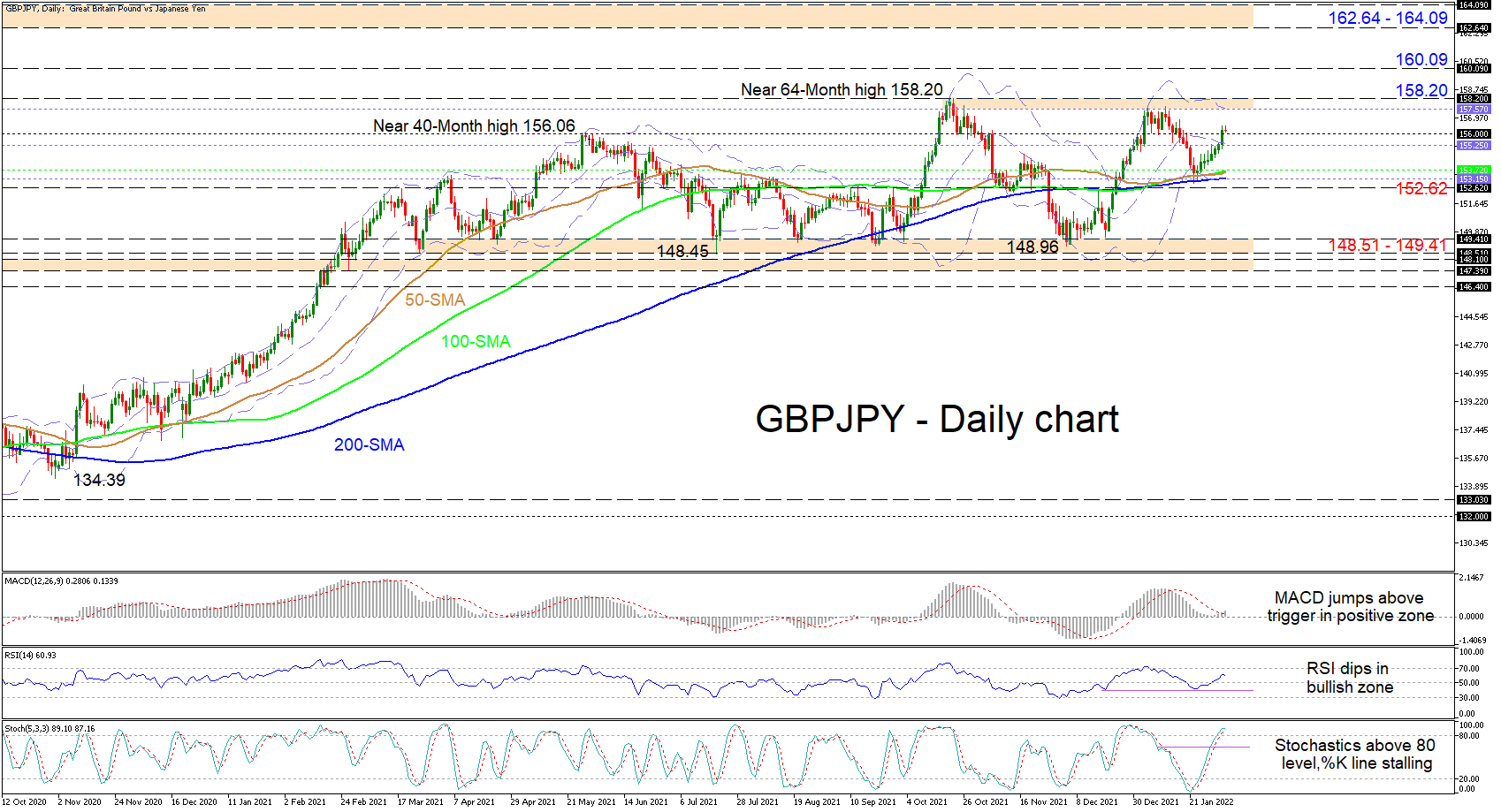
GBPJPY Buyers Dominate after Bounce on MAs
GBPJPY has recorded eight consecutive green candles after rebounding off the simple moving averages (SMAs), but the positive drive has diminished significantly following the breach of the 156.00 level. Nonetheless, the gradual incline in the SMAs, is suggesting that the neutral-to-bullish mood remains active.
The short-term oscillators mirror the bullish demeanour in the pair but are currently reflecting a slight waning in upside momentum. The MACD, a tad above zero, is endorsing positive momentum with its climb back above its red trigger line. Currently, the RSI in the bullish region has marginally rolled over and in the overbought territory, the stochastic %K line is stalling, thus together promoting lifeless upside forces.
Lifting off the 156.00 handle, the pair could encounter preliminary bullish constraints around the 157.57-158.20 zone, formed by the upper Bollinger band and the more than 5-year high of 158.20. Conquering this tough barrier, which has restrained the pair to a broad trading range since October 2021, the price could challenge the 160.09 high from back in June 2016, where the pair collapsed 27 full points. Should this resistance fail to terminate additional gains from evolving, the price may then seek out the 162.64-164.09 obstacle, which is linked to an area of highs over the March-May 2016 period.
Otherwise, if the price slips beneath the 156.00 hurdle, prompt footing could arise from the mid-Bollinger band at 155.25. In the event the mid-Bollinger band is overlooked, a dive in the price may then encounter a hardened area of support stretching from the 100-day SMA at 153.72 until the 152.62 barrier. If selling pressures break down this buffer zone, which encompasses the 50- and 200-day averages, the lower Bollinger band and the January 24 trough, the price may snowball towards the 148.51-149.41 base that has held since March 2021.
Summarizing, GBPJPY is exhibiting a neutral-to-bullish bias north of the SMAs and the fresh trough at 152.89. A break above the portrayed ceiling of 157.57-158.20 could juice up the bullish bias, while a retreat stretching beneath the 152.62 barrier may reinforce negative tendencies.
EUR/USD Outlook: Post-ECB Bullish Acceleration Pressures Key 1.1500 Resistance Zone
The Euro continues to trend higher for the fifth straight day, with extension of Thursday’s post-ECB 1.2% rally, pressuring key 1.1500 resistance zone (Jan 14 lower top / 200WMA).
The single currency was boosted by more hawkish that expected ECB and change in the central bank’s narrative, while Swiss National Bank’s intervention also helped and lifted euro against Swiss franc.
Bulls emerged above the top of thick daily loud, generating generated fresh positive signal which requires confirmation on today’s close above the cloud.
Daily techs turned to bullish mode, supporting the action, with the pair being on track for the biggest weekly advance since the third week of March 2020, setting scope for further gains.
Caution on overbought stochastic and RSI turning sideways, which warn that bulls may face headwinds at 1.1500 resistance zone and take a breather.
Broken daily cloud top (1.1439) and 100DMA (1.1428) mark solid supports which should ideally hold, but deeper dips cannot be ruled out, with 1.1400/1.1345 supports expected to hold and keep fresh bulls in play.
US non-farm payrolls is key event today, with expectations that job growth slowed in January amid surge in infections in Omicron variant.
Res: 1.1482; 1.1501; 1.1558; 1.1602.
Sup: 1.1430; 1.1400; 1.1345; 1.1329.

CAD/JPY Awaits Breakout
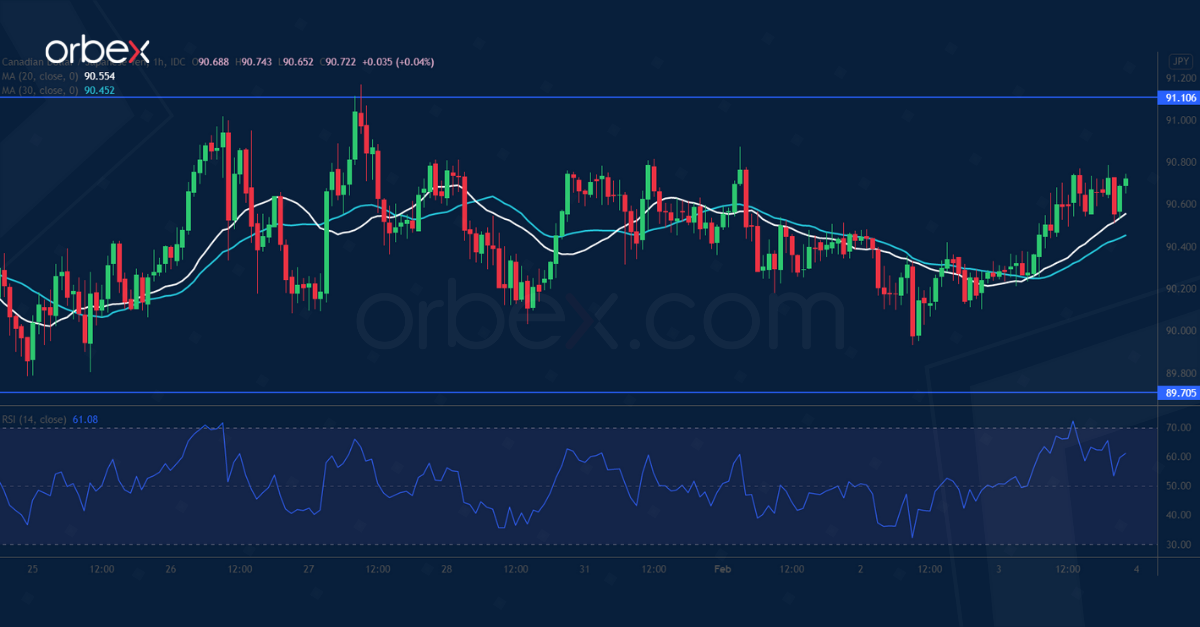
The Canadian dollar recovers over growing risk appetite. A fall below the demand zone around 90.60 weighed on sentiment as the loonie struggled to make a higher high.
The pair found support at 89.70 in what used to be a former supply area on the daily chart. The current consolidation is a sign of indecision. 91.10 proves to be a tough resistance to crack.
A bullish breakout could bring the price to the recent peak at 92.00. Failing that, the pair may suffer from another round of sell-off below 89.10.
GBP/USD Tests Resistance
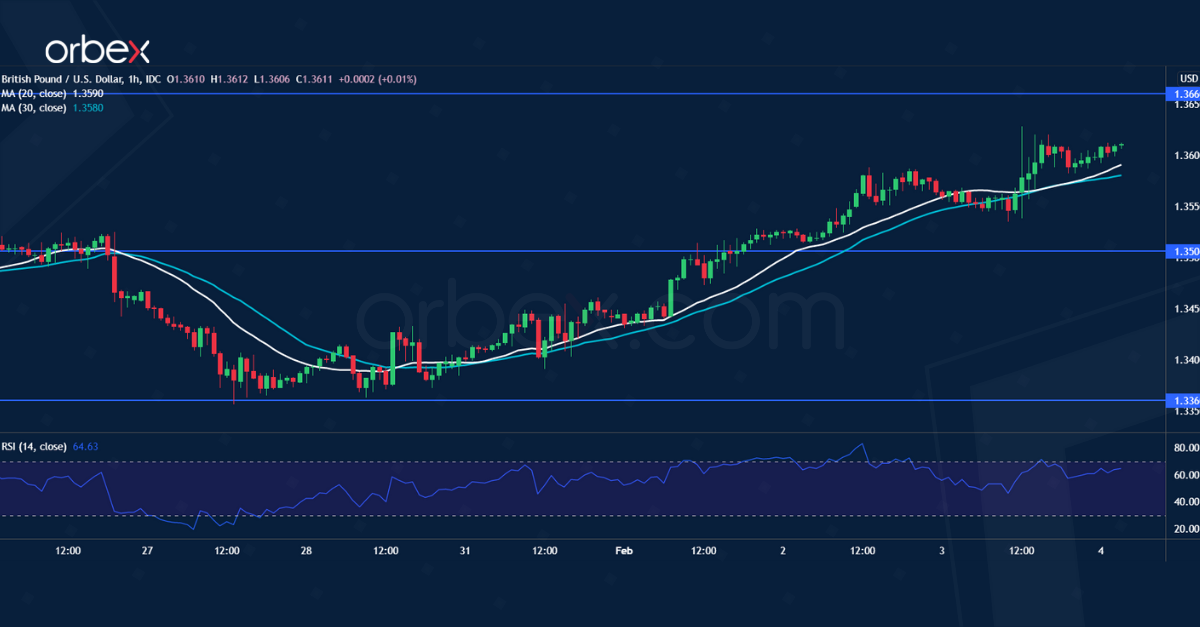
The pound popped higher after the BOE raised interest rates to 0.5%.
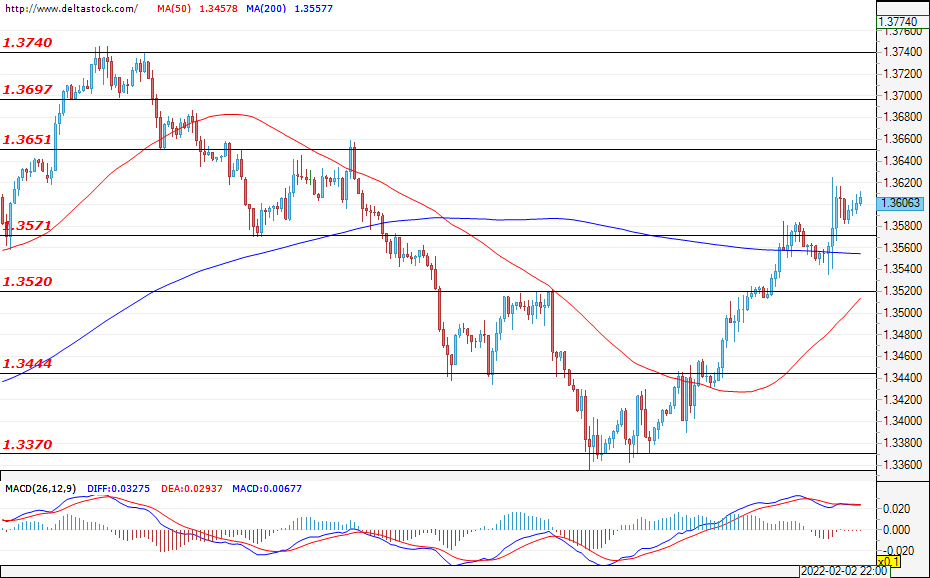
The latest rebound above the resistance at 1.3520 has prompted sellers to cover. Then the rally is accelerating towards 1.3660 which is a major hurdle from the sell-off in late January.
A bullish breakout could turn sentiment in the sterling’s favor and send the price to the previous peak at 1.3740. On the downside, 1.3500 is an important support and its breach could invalidate the recovery despite the bullish catalyst.
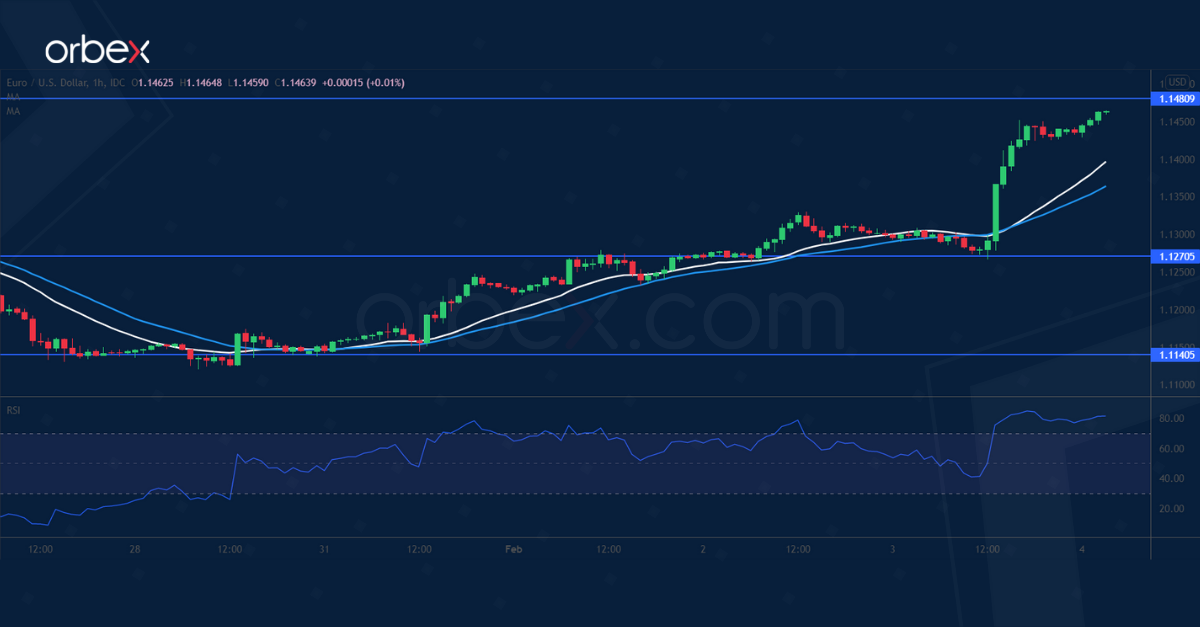
EUR/USD Breaks Higher
The euro soared as traders bet that persistent inflation could force the ECB to act sooner than later.
A break below the daily support at 1.1300 had put the single currency under pressure. However, a swift rebound above this support-turned-resistance indicates strong commitment from the buy-side.
The pair is rising towards the January peak at 1.1480. The RSI’s triple top in the overbought area may slow the momentum down as intraday buyers take a break. 1.1270 is a key support to keep the rebound relevant.
USDCAD Ticks Marginally Up in Short Term
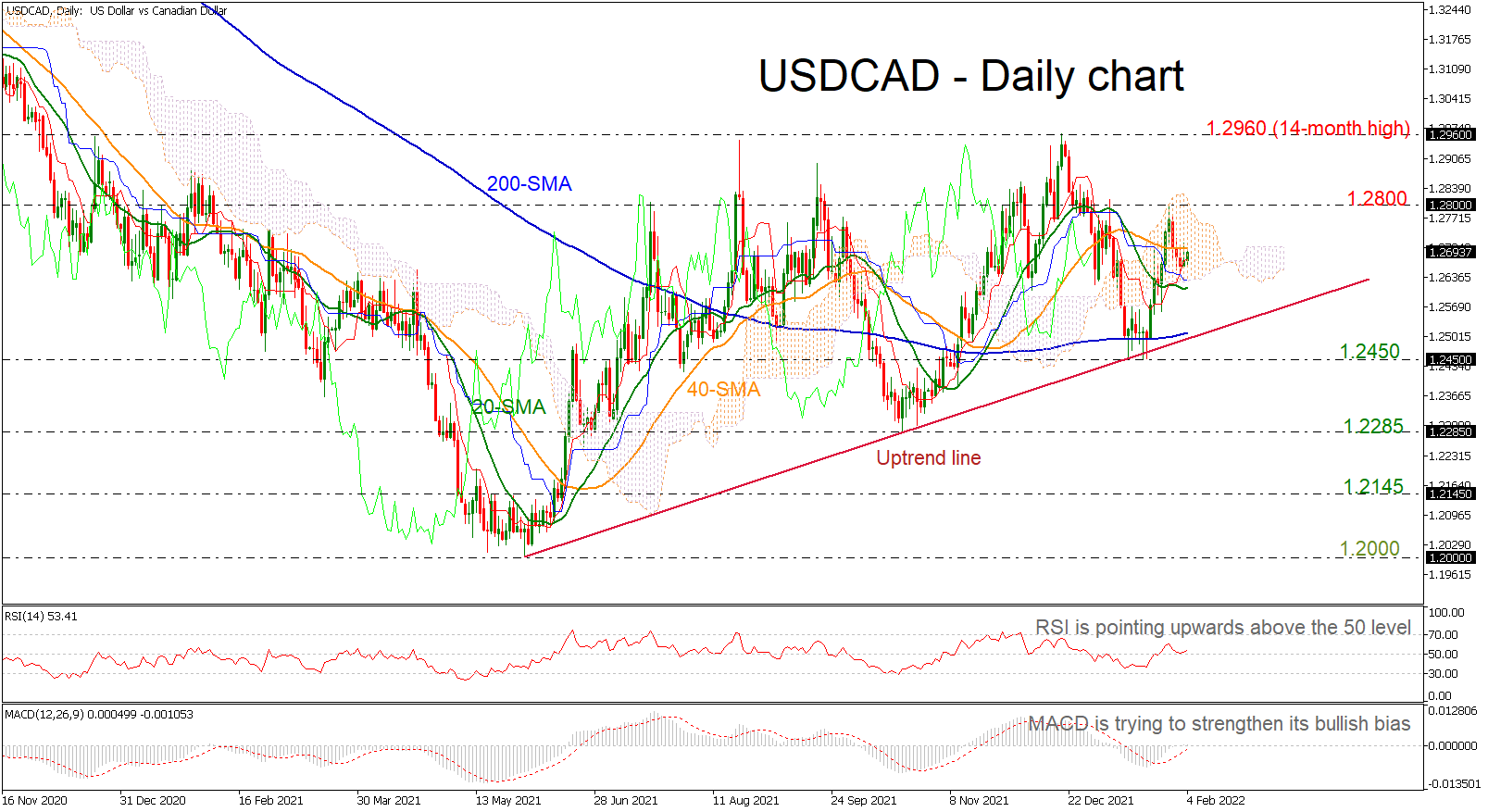
USDCAD is rising somewhat in the short-term, hovering within the Ichimoku cloud and the 20- and 40-day simple moving average (SMAs). Regarding the technical indicators, the RSI indicator is pointing slightly upwards in the positive region, while the MACD is flattening around the zero level, suggesting the weak momentum on price.
If the pair overcomes the 40-day SMA, the next stop could be at the 1.2800 psychological level before the rally finds strong resistance at the 14-month high of 1.2960.
On the flip side, in case of downside corrections, immediate support could come from the 20-day SMA at 1.2615. Also, the 200-day SMA at 1.2510 could attract traders’ attention, which is standing around the ascending trend line. A dive below this crucial line may shift the positive outlook to neutral.
Overall, USDCAD is in a positive bias in the short- and the long-term outlooks. Any movement beneath the 200-day SMA and the uptrend line could change this view.
Daily Technical Analysis
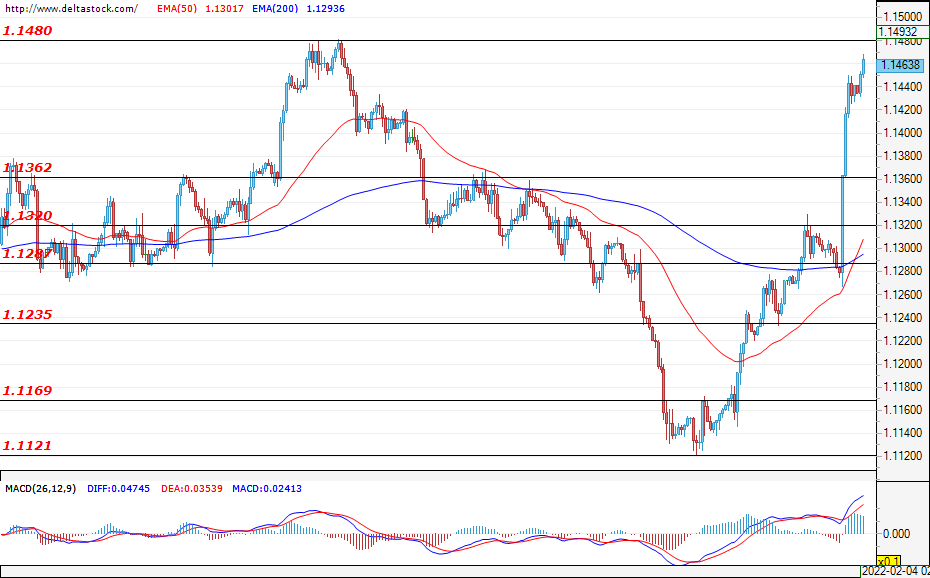
EUR/USD
Since the beginning of the week, we have witnessed the appreciation of the single European currency against the U.S. dollar, as at the time of writing the analysis, the currency pair is sitting just below the resistance level at 1.1480. The zone at 1.1362 was easily overcome, with the most likely scenario being for a test of the mentioned resistance zone at 1.1480. During today's session, market participants will closely follow the announcement of the retail sales data for the eurozone (10:00 GMT), as well as the non-farm payroll change data for the U.S. (13:30 GMT), together with the unemployment rate change data, again for the U.S. (13:30 GMT).
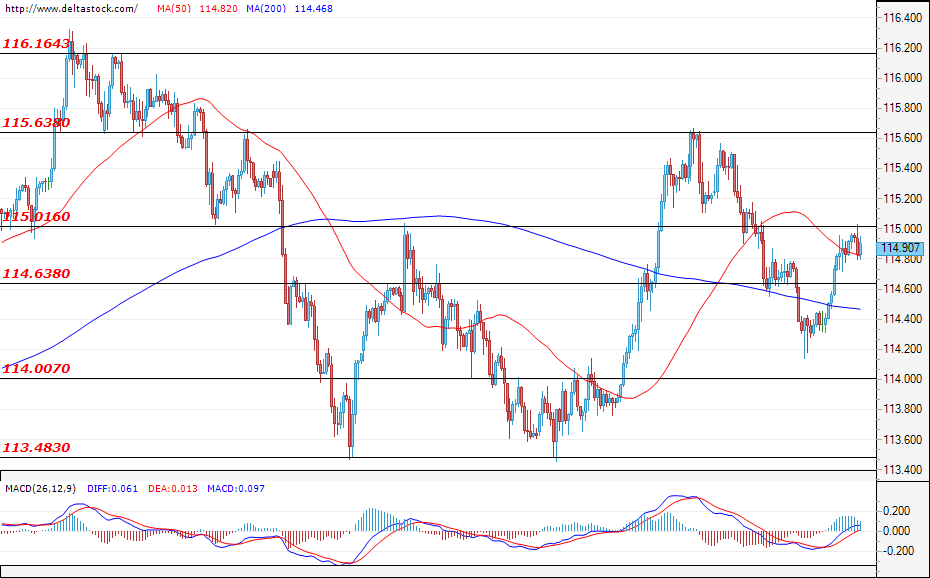
USD/JPY
The depreciation of the U.S. dollar against the Japanese yen was limited above the support level at 114.00 in yesterday's trading session, and the subsequent appreciation slowed its pace around the resistance level at 115.00. Despite the current consolidation, the most likely scenario is for a test of the aforementioned resistance. A successful breach here could give the bulls the necessary incentive to continue their upward move towards the next significant resistance zone at 115.63.
GBP/USD
The British pound continued to appreciate against the U.S. dollar, and after a successful breach of the resistance zone at 1.3570, market participants are likely to be able to lead the trade up to the next significant resistance at 1.3650. Looking from the higher time frames, we can still see the lower highs and much deeper troughs, and so the overall sentiment at the moment remains negative. In the current situation, if the bears prevail and limit the appreciation below the resistance zone at 1.3650, then a further deepening of the depreciation towards the main support at 1.3370 is not excluded.
EUGERMANY40
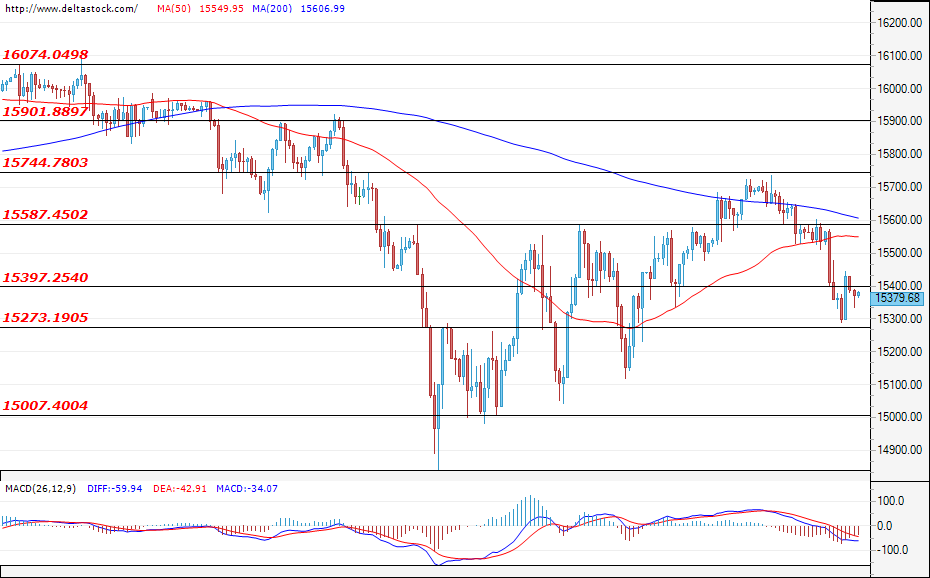
At the time of writing, the German index is trying to breach the resistance zone at 15400, with its first attempt so far being unsuccessful. The economic news, mentioned in the EUR/USD analysis, could affect the volatility of the index during the last session for this week. This, in turn, could determine the future move for the EUGERMANY40, although the higher time frames show us that the range move is remaining intact in the channel of 14800 – 16300.
DOW
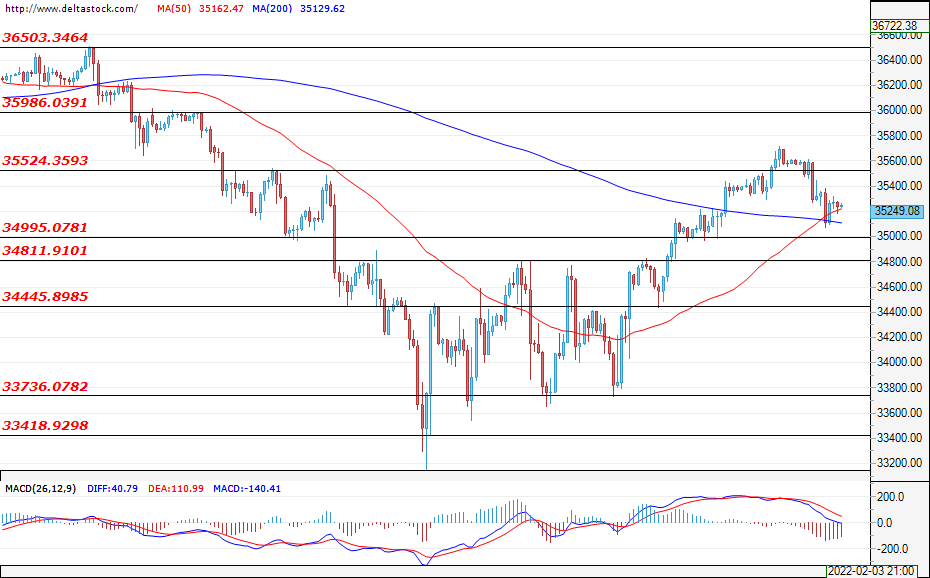
The appreciation of the U.S. blue-chip stock index was limited around the resistance at 35524 and the subsequent decline may deepen further, if the bears manage to gain enough momentum. The announcement of the non-farm payroll change data for the U.S. (today; 13:30 GMT) will play an important role in determining the future direction of the U.S. index. Increased volatility around that time is also expected.
Japanese Bond Markets this Morning Inspired by ECB
Markets
A hawkish hike and a hawkish hold. The Bank of England raised rates by 25 bps to 0.50%, initiated the natural roll off of the balance sheet and will actively start selling from the corporate bond portfolio. Four out of the nine MPC members voted for a 50 bps increase. Inflation is now expected to peak at more than 7% vs 5% previously. If the BoE would follow the market policy rate path (peak rate at 1.5-1.75% by mid-2023), prices would still increase by more than 2% in 2023 and only ease back to/below target in 2024. (Further) tightening policy is necessary to kill off inflation that’s eating away UK incomes/spending and is weighing on growth. UK yields rallied 9.8 to 11.5bps higher. The short end underperformed. Markets pulled forward the next policy milestone, expecting 1% policy rates already in May. This would mean the BoE starts actively selling government bonds.
EUR/GBP briefly hit support at the 0.828 zone but then the ECB came and shocked. There were no changes in policy but there were in the tone. There is unanimous concern on inflation and their upwards risks. Lagarde finally admitted we’re in a different situation and said it needs to be reassessed based on the data. This will happen at the March meeting when inflation forecasts will most certainly be raised to north of 2%, allowing for a quicker end of net buying and a rate hike later this year. Euro area money markets raised their tightening bets and now anticipate more than 40 bps of rate increases. It jolted the front end of the European swap curve by 14.1-15.7 bps! The long end added 2.3 (30y) to 8.9 bps (10y). German yields rose in similar fashion. European yields pulled those in the US 4.2-6.3 bps higher across the curve.
The euro shot up, ignoring the equity selloff in both Europe (-2%) and the US (almost -4%!). This was the trigger the common currency has been waiting for all this time. EUR/USD surged from 1.1304 to 1.144. EUR/GBP closed above 0.84 (from 0.8327). EUR/JPY: from 129.37 to 131.54. And the list goes on.
Japanese bond markets this morning are inspired by the ECB (see below). Asian stocks are surprisingly resilient given moves in Europe and the US yesterday. The German bund continues to underperform USTs. The euro builds on yesterday’s momentum. EUR/USD is nearing a three-month high (1.1456).
US payrolls are today’s headliner. Omicron may have weighed on employment in December. Consensus expects a rather meagre 125k job growth after the disappointing ADP job report earlier this week. Developments on European markets require at least as much attention though. We’re keeping a close eye at market positioning, both in European rates and the currency, now the dust has settled a bit. The picture in EUR/USD definitely turned for the better. First meaningful resistance in EUR/USD is located at 1.1526 but that’s a bridge too far for the time being. The recent surge in European yields may also dial back a bit going into the weekend.
News Headlines
All eyes are on Bank of Japan governor Kuroda after yesterday’s dramatic ECB press conference. He must be the last man standing when it comes to ultra-easy monetary policy. He testified before parliament this morning, stressing that Japanese inflation is low even excluding temporary factors. BoJ member Wakatabe yesterday also warned against premature tightening and even keeps easing options open. Whatever the BoJ says, Japanese interest rates started moving in the other direction. Japanese yields add up to 3 bps this morning with the belly of the curve underperforming the wings. The Japanese 5y yield briefly turned positive for the first time since 2016.The food price index of the UN Food and Agricultural Organization rose 1.1% in January to 135.7, challenging peak levels of 2011. A monthly 4.2% rise in vegetable oils was an important driver, mainly due to supply side constrains. The FAO is concerned the impact of these constraints won’t ease quickly. Dairy prices (+ 2.4% m/m) also increased for the fifth consecutive month due to reduced availability exports from Western Europe and expected lower production from Oceania. The cereal index increased marginally (0.1%), as did the meat index. Sugar was the only subindex to decease (3.1% M/M). Persistent high/rising food prices suggest further upside risks for inflation, especially in developing countries.