Sample Category Title
EUR And GBP Should Remain Weak Against Canadian Dollar
EUR and GBP have seen a strong sell off against Canadian Dollar in the last few weeks and in this article we will take a look at the swing sequences in EURCAD and GBPCAD to present the path of least resistance and also look at the future targets.
EURCAD Cycle from 3.2018 Peak is Incomplete
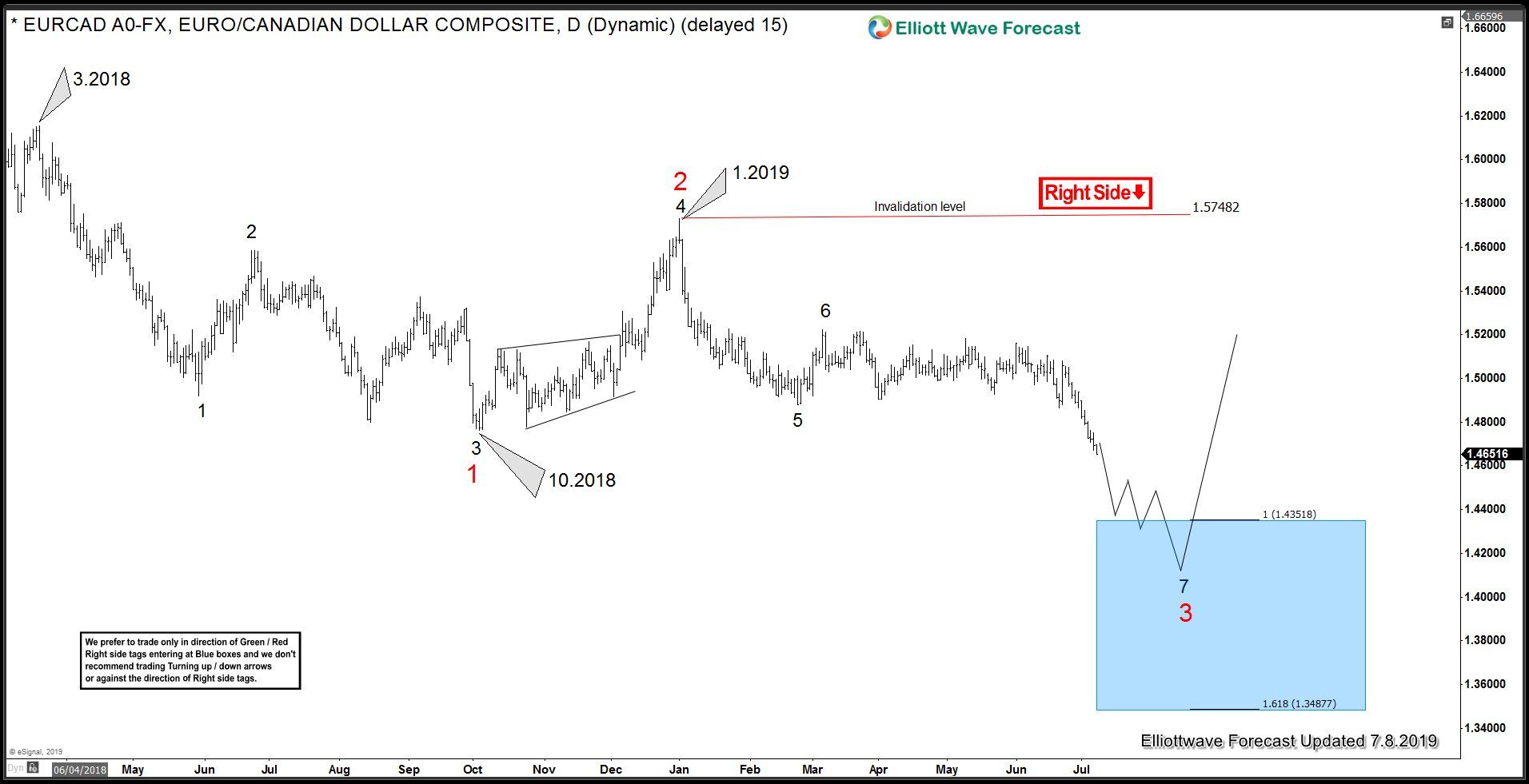
Chart below shows the cycle from 3.2018 peak is still in progress and with the break below 10.2018 low, 1.43518 – 1.34877 is the next logical target. As far as bounces fail below the peak at point “6”, the target area shown with blue box remains valid. Furthermore, there is a bearish sequence down from 1.2019 peak which also calls for more downside. Structure of the decline from 1.2019 peak could either be a Zigzag Elliott Wave structure or a corrective double three Elliott Wave structure. In either case, the target remains valid as far as bounces remain below 3.6.2019 (1.5228) peak. In case the decline from 1.2019 peak is unfolding as a Zigzag Elliott wave structure, bounces will be shallow and in case it’s unfolding as a double three Elliott wave structure, we could soon see a bigger bounce to correct the decline from 3.6.2019 (1.5228) peak before pair turns lower again. In either case, bounces should find sellers in 3, 7 or 11 swings until 1.43518 – 1.34877 area is not reached. Once this area has been reached, then we expect to see the buyers appearing to produce a larger 3 waves bounce which should correct at least the cycle from 1.2019 peak.
GBP – Canadian Dollar Cycle From 3.2018 Peak is Incomplete
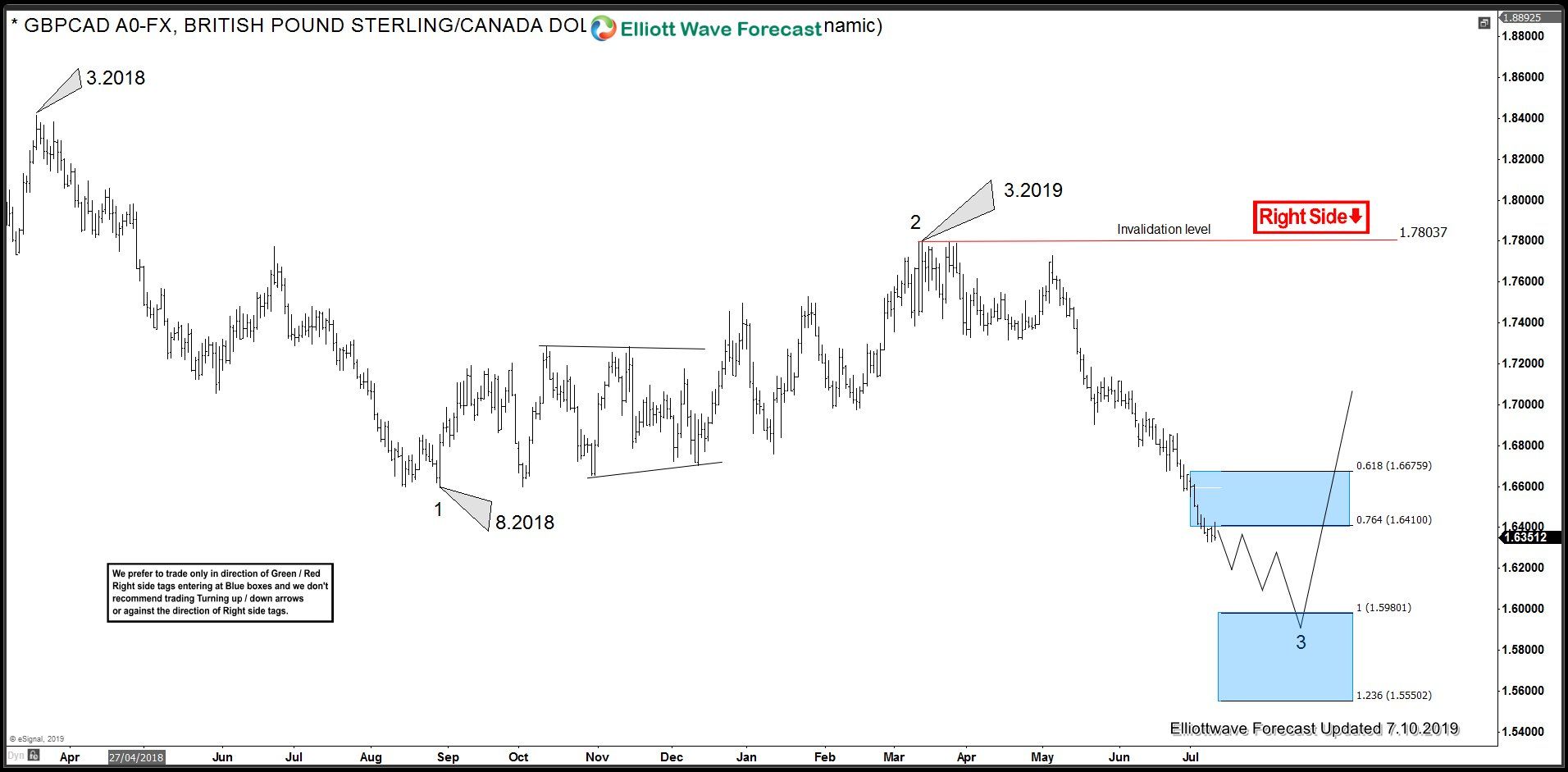
GBPCAD cycle from 3.2018 peak is also incomplete because it has not yet reached the ideal target at 1.59801 – 1.55502. Structure of the decline from 3.2018 peak is likely to become a zigzag because so far pair has not shown any reaction from 0.618 – 0.764 Fibonacci extension area of the decline from 3.2018 high to 8.2018 low which supports the view that it would get to 1.59801 – 1.55502 area without a major bounce in the middle but even if we do get a bigger bounce and structure of the decline from 3.2018 peak becomes 7 swings, pair should still find sellers in the bounce in 3, 7 or 11 swings until it doesn’t reach 1.59801 – 1.55502.
Looking at these two charts, it becomes evident that EUR and GBP should remain weak against CAD until EURCAD doesn’t reach 1.43518 – 1.34877 and GBPUSD doesn’t reach 1.59801 – 1.55502 area.
JP225 Index Finds Support On Uptrend Line And 50-Day SMA, Sideways Move In Near Term
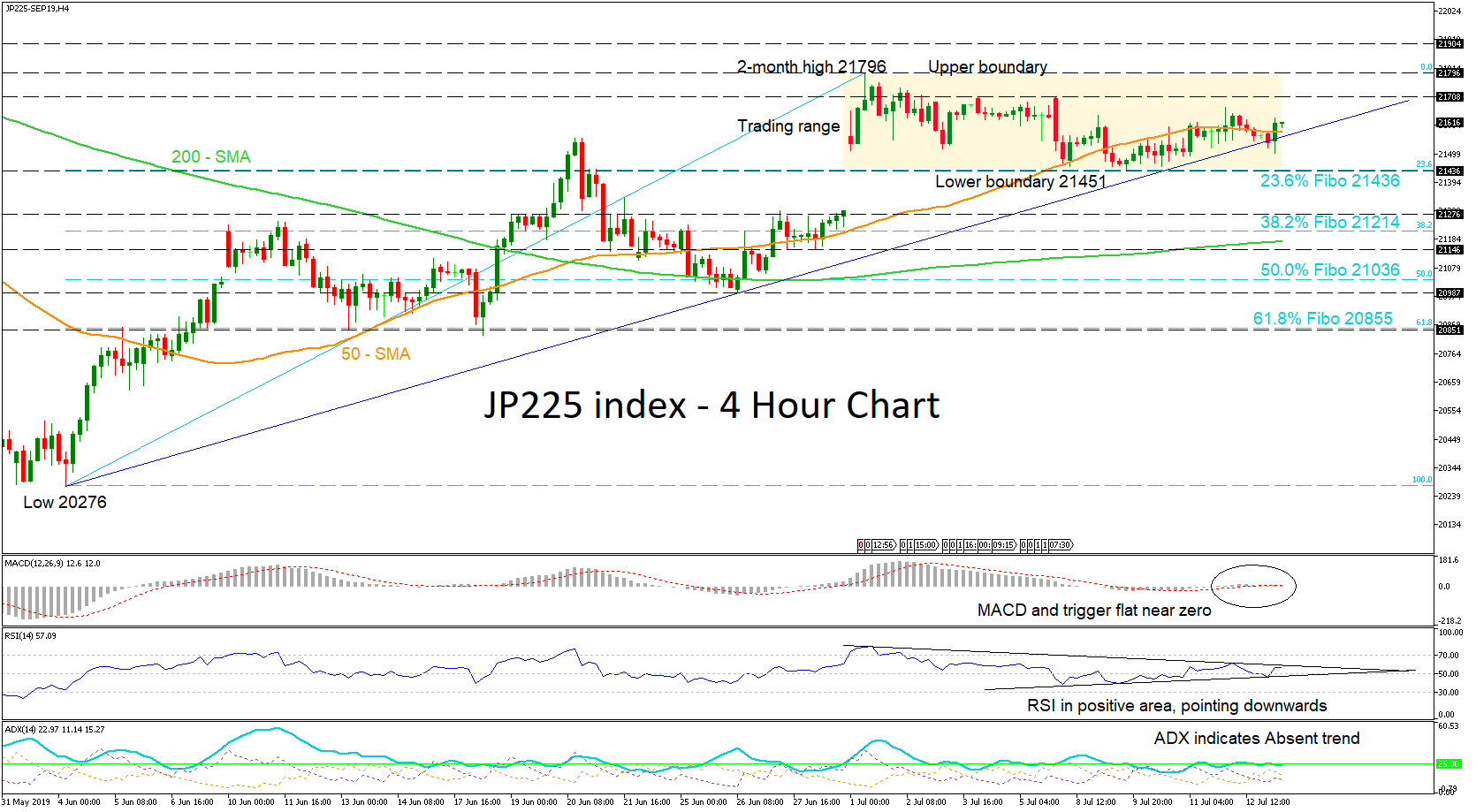
The JP225 stock index has been ascending since June 4, from the low of 20,276 to a two-month high of 21,796. The index gapped upwards on July 1, only to shift to a two-week trading range with lower and upper boundaries of 21,451 and 21,796 respectively.
The index currently finds support on the 50-day simple moving average (SMA), coupled with the uptrend line coming from the low of 20,276. The ADX confirms the absence of the trend, whereas other indicators agree that a short-term weakness of momentum is apparent, with the MACD, the trigger line and the RSI flattening in the positive area.
In case that, a short- to medium-term bullish bias persists, the immediate resistance of 21,708 would be tested before the two-month high and upper boundary near 21,796 would be reconsidered. Any additional gains might see next obstacle of 21,904.
On the other hand, if the price manages to shift the sentiment bearish, and penetrate the 50-day SMA and the uptrend line, the lower boundary of 21,451 could be re-seen before the 23.6% Fibonacci of the up move from 20,276 to 21,796, of 21,436. Bearish endurance could bring into play the support areas, before the gap, of 21,276, until the 38.2% Fibonacci becomes an issue at 21,214.
Overall, the outlook in the short- to medium-term is neutral, awaiting a direction jump.
Stocks Aim For New Records As Chinese Data Lift Sentiment
- US stocks eye new record highs as earnings season begins
- Dollar pulls back as markets digest Powell’s cautiousness
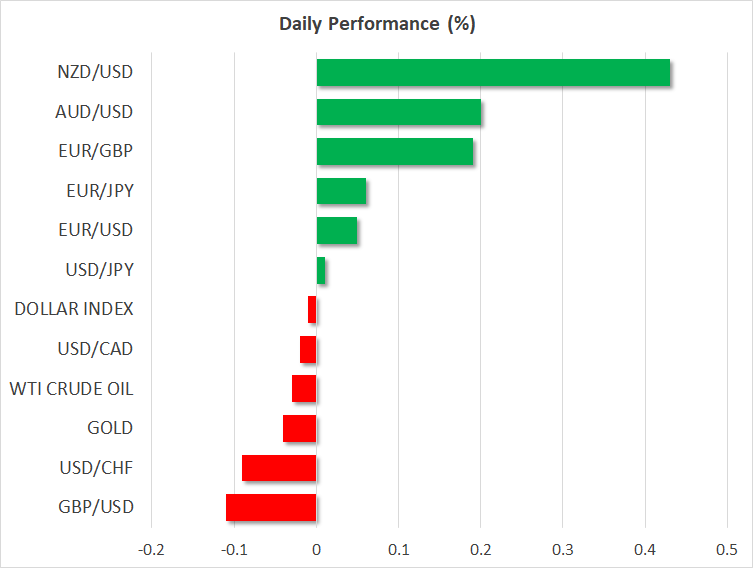
- Kiwi outperforms on Chinese data, looks to crucial inflation numbers
Solid Chinese data calm slowdown fears, boost risk appetite
Global markets kicked off the week in a risk-on mood, with the major US stock indices set to open at new record highs and commodity currencies like the kiwi outperforming in the FX arena, following a batch of encouraging Chinese data. As expected, annual GDP growth slowed to 6.2% in Q2, the weakest pace in nearly three decades. However, the details were upbeat, with industrial production, retail sales, and fixed asset investment for June all overcoming expectations.
In a nutshell, growth may have slowed, but the stimulus measures seem to have been effective in containing the slowdown. Similarly, the trade war may have done less damage than feared so far, judging by the stellar industrial production print.
Looking ahead, risk sentiment will likely take its cue from how Fed rate-cut expectations evolve (more below), and from any signals out of the trade talks. On the latter, there have been zero signs of progress, with the recently announced US sale of weapons to Taiwan also amplifying the geopolitical dimension of this conflict. The road to any deal will therefore be particularly difficult – unless Trump softens his demands to score a ‘victory’ ahead of the US election race.
The US earnings season, which kicks off today with major names like Citigroup releasing their quarterly results, could also prove crucial in shaping risk appetite.
Dollar retreats as traders digest Powell’s remarks
The greenback retreated on Friday and remains on the back foot early on Monday, without any noteworthy US developments to speak of. The move is likely an ‘aftershock’ following Fed chief Powell’s dovish remarks last week, when he clearly endorsed expectations for a July rate cut by focusing on the negatives and downplaying the positives in the economy.
Markets continue to price a ~20% probability for a ‘double’ rate cut of 50 basis points at the July 31 meeting, which seems rather extreme, as even some of the most dovish Fed officials have noted. If these aggressive expectations are priced out heading into the July 31 rate decision, the greenback may rebound somewhat. In this sense, some remarks by New York Fed president Williams today (12:30 GMT) could attract attention.
Overall though, the outlook for the dollar remains gloomy. The global central banks are entering an easing cycle, and the Fed has much more room to cut rates than anyone else. Hence, the potential downside in the dollar may be greater than the euro’s or the yen’s, as both the ECB and BoJ have much less scope to ease, given their already-negative rates.
New Zealand’s inflation data coming up for kiwi
On the data front, the next major release will be New Zealand’s CPI figures for Q2, due early on Tuesday. Forecasts point to a rebound in the nation’s inflation rate, but markets seem convinced that this won’t be enough to keep the RBNZ from slashing rates in August, attaching a ~72% probability for such action.
Hence, any surprise in these prints will likely be crucial in setting expectations for that event, and hence for the kiwi’s near term direction. 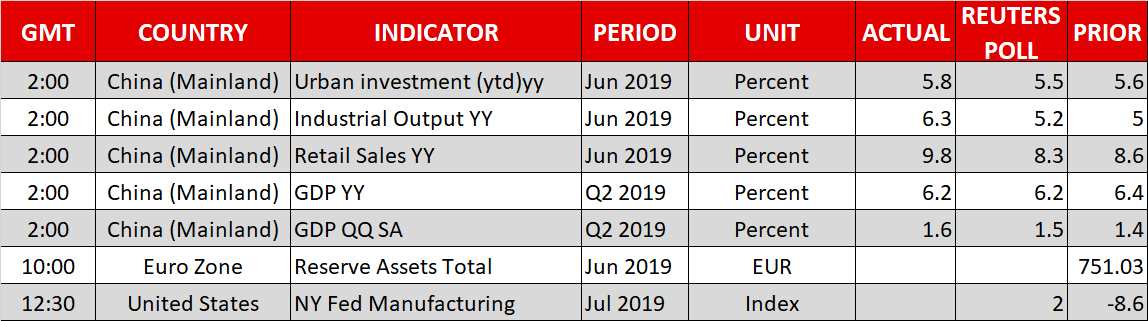
Global business activity expectations dropped decade low, marked deterioration in US
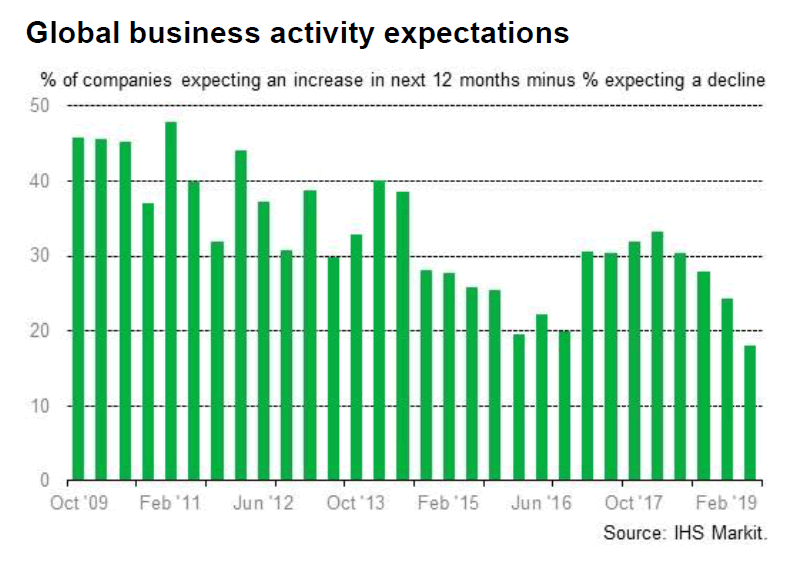
Markit Global Business Outlook Survey dropped from 24 in February to 18 in in July, hitting the lowest since data were first collected in 2009. The survey was carried out three times per year, and if shows net balance of global firms predicting rising output in the coming year.
US has seen the biggest slide in business optimism apart from Brazil, down to 16. Confidence ticked higher in Eurozone to 27, but remained closed to six-year lows. UK also improved slightly 32, joint second-weakest since 2009. Japan's reading dropped to three-year low at 11.
Commenting on the survey, Chris Williamson, Chief Business Economist at IHS Markit, said:
"The global business mood has darkened to the gloomiest since the height of the financial crisis in 2009. Escalating trade tensions have fuelled the downturn in optimism, exacerbating wider worries about slowing economic growth in key markets.
"Not only does the survey indicate a further weakening of global economic growth in the second half of 2019, but companies are expecting profits to be especially hard hit, which is leading to a pull-back in both hiring and business investment around the world. This in turn adds to the risk of the downturn becoming more entrenched in coming months, absent renewed policy stimulus measures.
"The big change since earlier in the year has been a marked deterioration of optimism among US companies, alongside a slide in business optimism in China, indicating how trade war tensions are hurting both economies. In contrast, sentiment picked up slightly in the eurozone and UK, albeit remaining worryingly subdued."
Gold Stays Flat As Markets Price In July Rate Cut
The precious metal was seen trading flat as investors are currently pricing in a rate cut from the Fed at the July meeting. The projected 25 basis point rate cut is expected at the Fed meeting due next week.
Will XAUUSD Break Out from the Range?
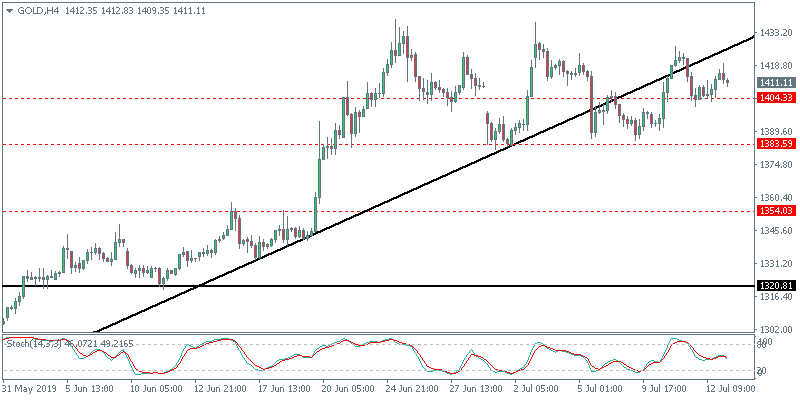
The gains in gold prices have been limited ever since prices rallied to post a six-year high. Since then, price has remained somewhat range-bound near the top end of the rally. The resistance is formed at 1423 and the support is seen at 1383. A breakout from this range is required in order for some trend to set in. The bias remains to the downside, for a correction toward 1341.
Crude Oil Closes Higher On The Week
Price of WTI crude oil closed higher on the week, settling above the $60.00 handle. The gains in the commodity came as the Gulf of Mexico saw a 30% shutdown in production due to the tropical storm Barry. Prices were flat by Friday with both the EIA and OPEC expecting to see oil surplus in the year ahead.
Crude Oil Closes Flat Below Resistance
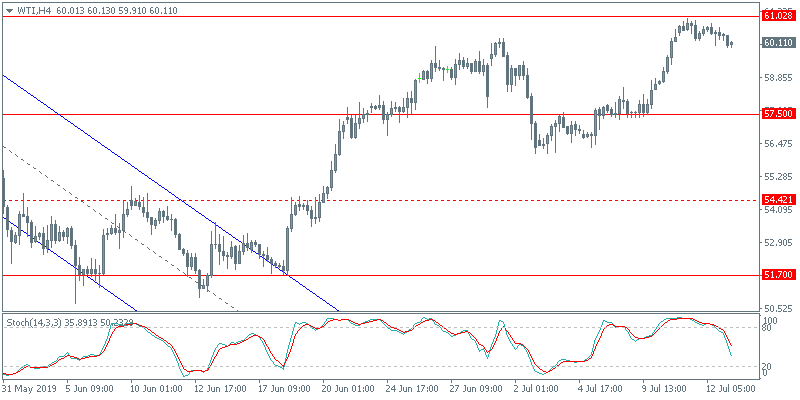
WTI Crude oil prices closed with a doji pattern on Friday. This marked a second consecutive doji formed below the resistance area of 61.00. A bearish follow-through from here could signal a short term correction. This will keep the commodity within the range of 61.00 and 57.50.
Germany Economy Ministry expects weak basic economic trend for Q2
Germany's Economy Ministry said in the monthly reported that the industrial economy continues to develop "sluggishly" as "headwind" from foreign demand remains "palpable". Additionally, current data suggests a "calmer" pace in the service sector. And this indicates a "weak basic economic trend" for Q2.
The report further noted that "after the cautious development in the second quarter, the buoyant forces could again come to bear stronger if the external environment calmed down again." But there are "significant downside risks" due to trade conflicts, Brexit and geopolitical tensions.
Euro Gains As Industrial Production Rises
The euro got a boost from the latest industrial production figures. Data showed that the eurozone's industrial production grew 0.9% on the month in May. This was better than the forecasts for a 0.2% increase. Despite the uptick in industrial production, the overall industrial activity still remains weak.
Will the EURUSD Push Higher?
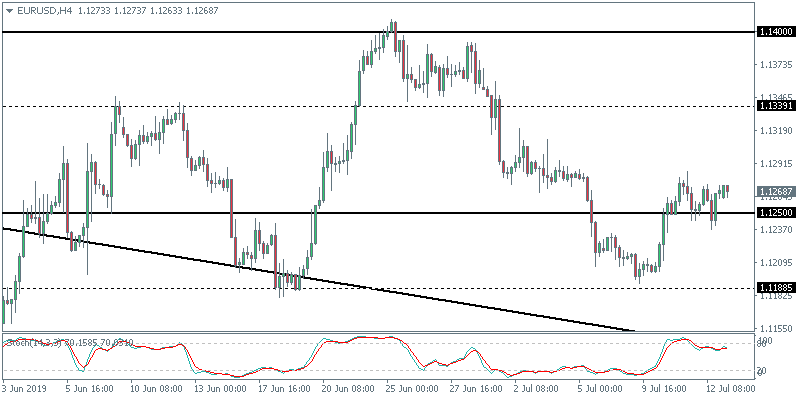
The currency pair has been in a rebound after prices fell close to the support area of 1.1188 last week. Price action quickly recovered to reclaim the 1.1250 level which is currently working as support. A continuation to the upside will keep the common currency on track to test the 1.1400 level where resistance is likely to form.
Markets In No Hurry To Rejoice In Strong Data From China
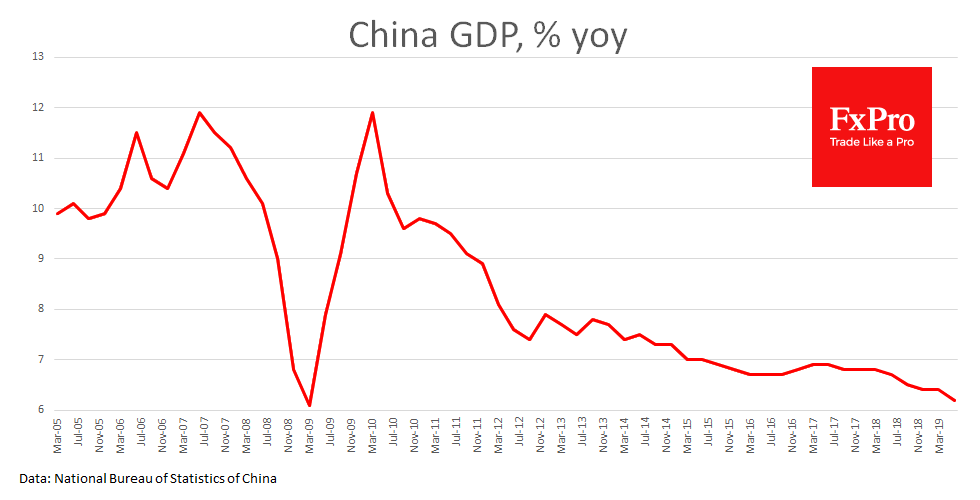
China's quarterly GDP lowered concerns around growth rates, slightly exceeding expectations. In Q2, the growth rate of the country's economy increased to 1.6% which is higher than expected. It is also better than 1.4% it was in the first three months of the year.
The initial market reaction was the strengthening of the purchases of stocks and the yuan, but rather quickly the market participants became more attentive. First, the annual growth rate (6.2%) was the lowest in the last 27 years. Secondly, there were concerns that the Chinese authorities might limit stimulus, noting the success of the measures already taken. Third, the effect of trade conflicts has not yet been fully reflected in the figures, since it was only in the middle of the quarter that new import tariffs were put in place by the United States.
Stocks
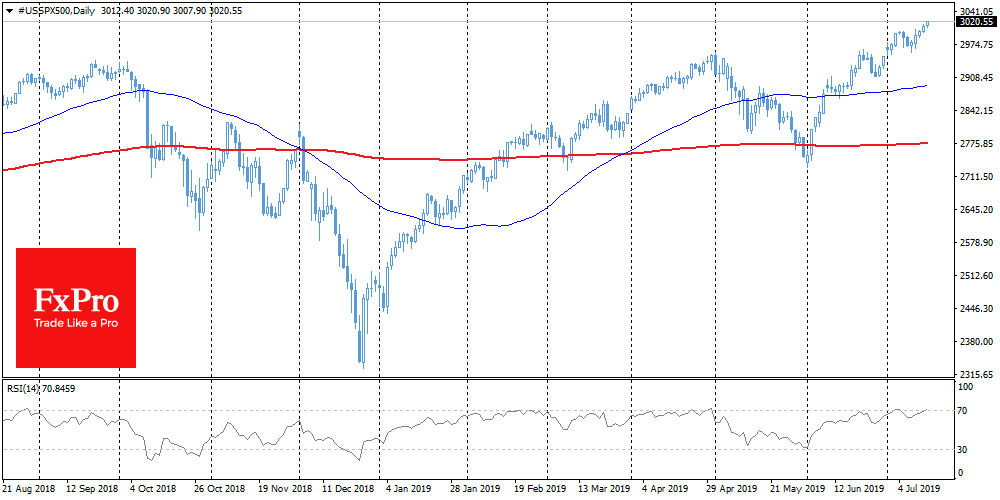
Chinese markets, trading back the data above the expectations, managed to rebound from three-week lows, but due to their caution about prospects, the growth did not evolve, leaving the main indices near last Friday’s levels. US stock futures, at the same time, continue to rewrite their historical highs. On the technical side, the S&P500 and Dow Jones are near overbought levels, but the Nasdaq is still lagging behind.
EURUSD
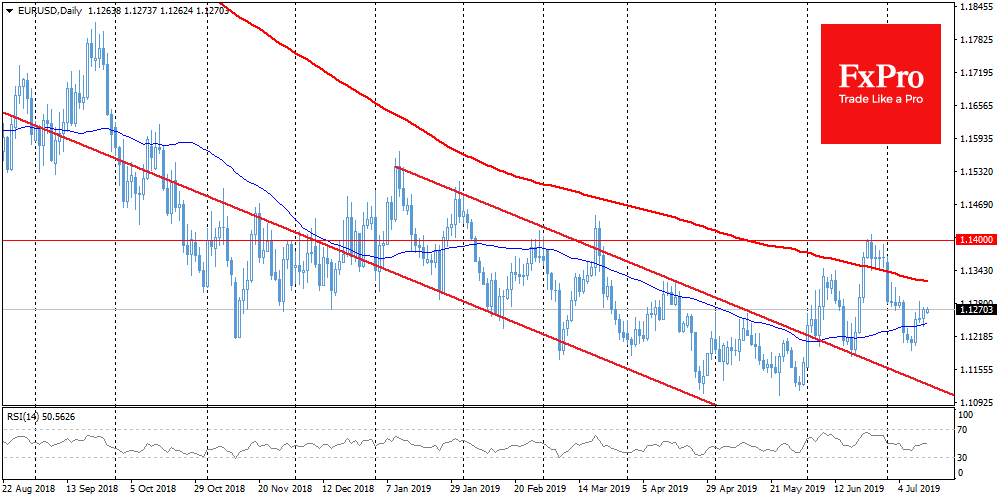
Euro is experiencing temporary difficulties with growth above 1.1270, where it continues trading for the third session in a row. Strong inflation data from the US seems to have tipped the scales towards debt markets, returning the yield on 10-year government bonds to above 2%. The growth in yields of such securities is a sign of market confidence in the long-term growth rate of the economy. Higher interest rates support the dollar, as increase the yield on such bonds.
AUDUSD
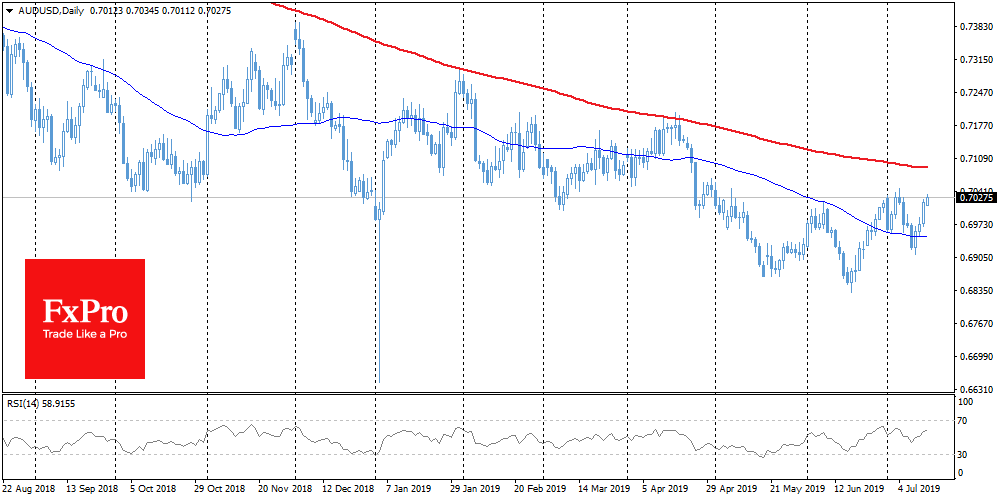
News from China supported the growth of the Australian dollar. AUDUSD on Friday returned above 0.7000 and now is testing the early May highs, trading near 0.7030. This pair is often viewed as an indicator of global investor sentiment towards the Chinese economy, since Australia is strongly tied to exports to China. The level of 0.7000 in recent years serves as a kind of indicator, the fall under which occurs during the period of maximum fear around the growth of the Chinese rates. In light of this, a pair reversal for growth may reflect a positive signal.
Forex Technical Analysis: EUR/USD, USD/JPY, GBP/USD
EUR/USD
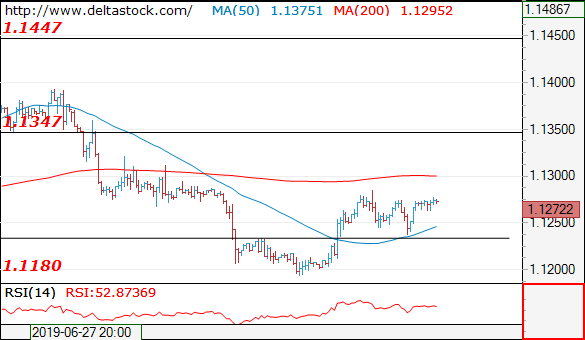
Current level - 1.1272
The pattern below 1.1285 is obviously corrective, preceding a rise towards 1.1350 zone. Initial support lies at 1.1240.
| Resistance | Support | ||
| intraday | intraweek | intraday | intraweek |
| 1.1350 | 1.1570 | 1.1240 | 1.1110 |
| 1.1410 | 1.1820 | 1.1180 | 1.1010 |
USD/JPY
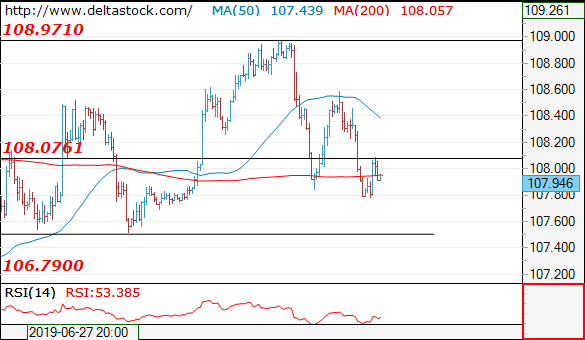
Current level - 107.94
Intraday allow a rise towards 108.40 area, being the final leg of the consolidation above 107.80, preceding a dip to 107.50.
| Resistance | Support | ||
| intraday | intraweek | intraday | intraweek |
| 108.20 | 109.80 | 107.80 | 106.70 |
| 109.00 | 112.40 | 107.50 | 104.50 |
GBP/USD
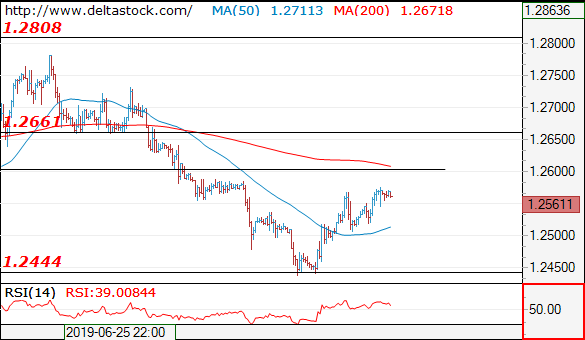
Current level - 1.2561
I favor a rise through 1.2600, towards 1.2660 hurdle. Initial support is seen at 1.2500.
| Resistance | Support | ||
| intraday | intraweek | intraday | intraweek |
| 1.2600 | 1.2890 | 1.2480 | 1.2440 |
| 1.2660 | 1.3170 | 1.2440 | 1.2360 |