Sample Category Title
EURUSD Bears Pierce 1.12 Support Level; Negative Bias Strengthens
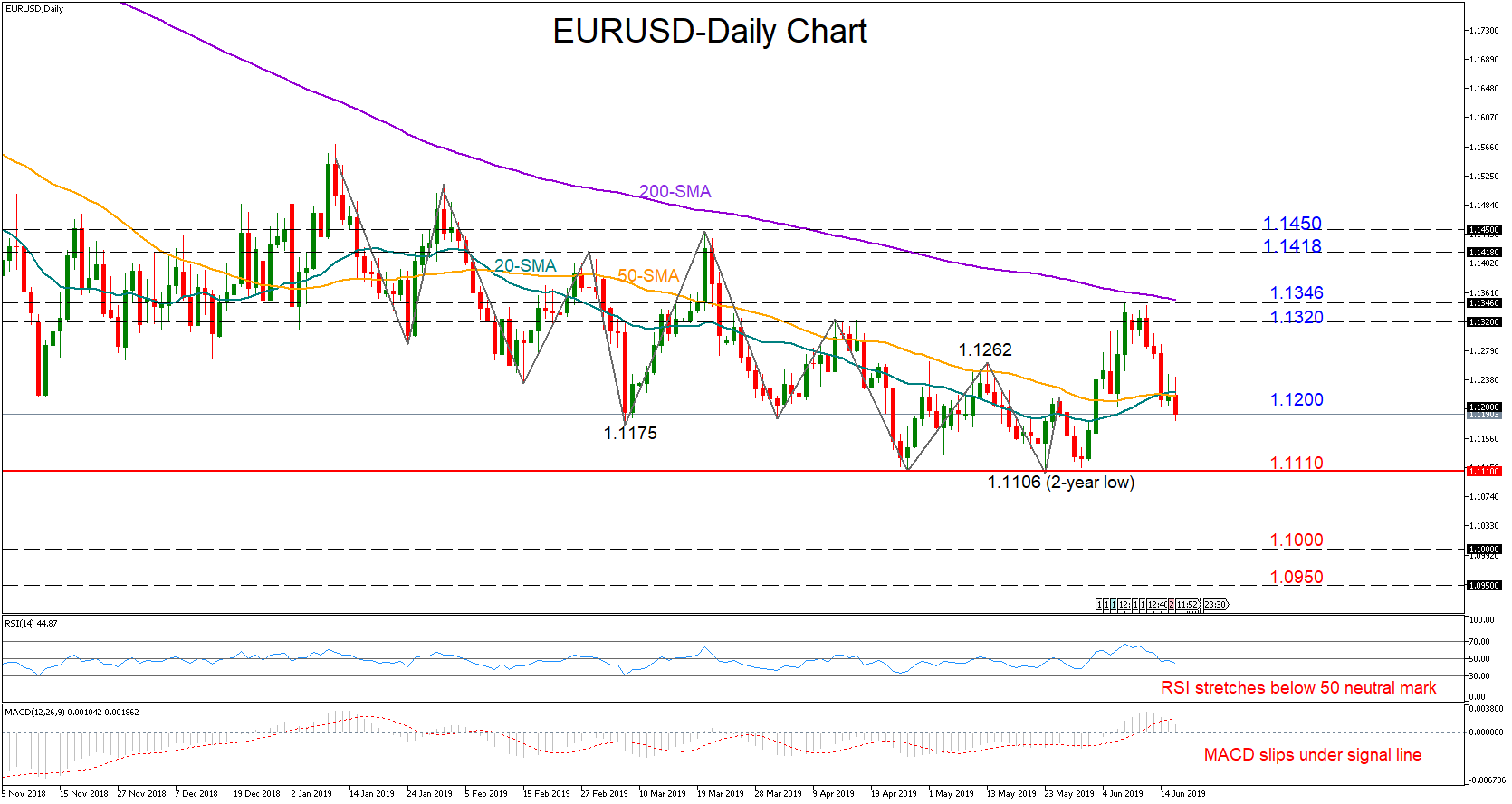
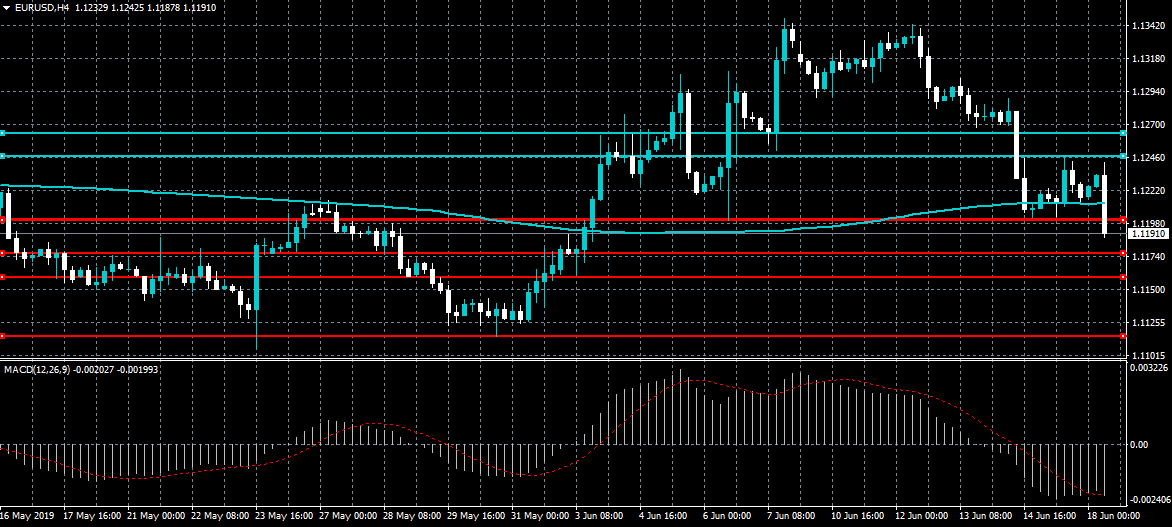
EURUSD is currently trading below the 1.1200 level that kept bears in check in the previous two sessions, with the RSI and the MACD suggesting more downside to follow as the former is losing momentum below its 50 neutral mark and the latter is weakening below its red signal line.
Should the market come under stronger negative pressure, the 1.1110 bottom could prove tough to break through as it did earlier this year. If not, the selling may get new legs, with support coming next somewhere between 1.10-1.0950.
Alternatively, the market would need to overcome the May 13 high of 1.1262 to improve buying confidence until the 1.1320-1.1346 area. Higher and comfortably above the 200-day simple moving average (SMA), the bullish action may pick up steam towards the 1.1418-1.1450 zone.
Meanwhile in the medium-term picture, which looks at the three-month performance, the sentiment could turn from neutral to positive if the price manages to climb above 1.1450. However, the discouraging movement in the 50-day SMA, which trends below the 200-day SMA, signals that chances for an outlook reversal are currently slim.
In brief, EURUSD is currently looking bearish in the short-term and neutral in medium-term.
New ECB Call – Rate Cut and Restart of QE
- On the back of Draghi's speech in Sintra this morning and Benoit Coeuré's interview in the Financial Times yesterday, we change our call for the ECB outlook. We now expect ECB to cut rates by 20bp, introduce a tiering system, extended forward guidance, and restart QE in a package which could come already in September.
- In ECB perspective, nose-diving inflation expectations and a higher probability of looming risks will materialise has caused a change in the change in call.
When and how, not if
At the annual ECB conference in Sintra, Portugal, Draghi gave another seminal speech, similar to 2017. However, this time, Draghi opened the door wide open to new easing where he was specific that 'coming weeks, the Governing Council will deliberate how our instruments can be adapted commensurate to the severity of the risk to price stability.' Importantly, there has been a huge change from ECB in past 12 days since the last GC meeting as ECB will now act if there is no improvement in the in the economic outlook, so that inflation to target is threatened which compares to ECB acting if downside risks materialise.
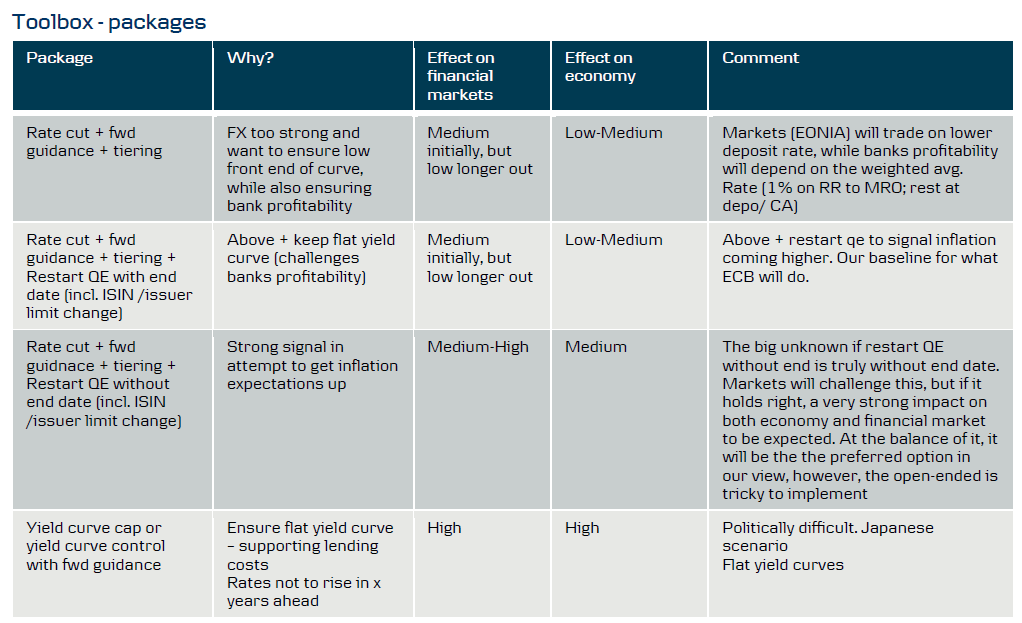
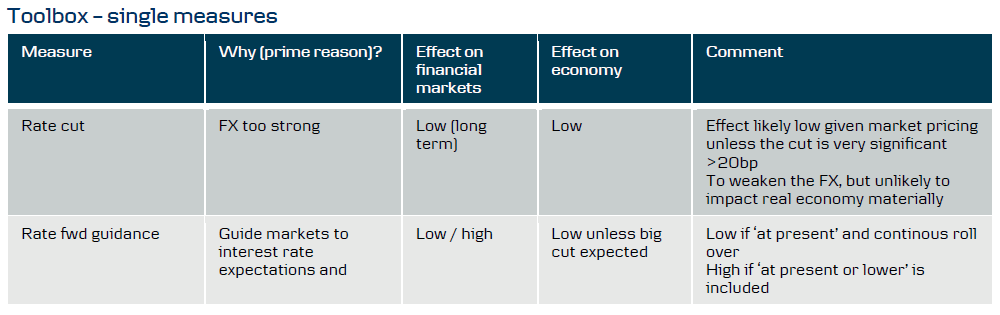
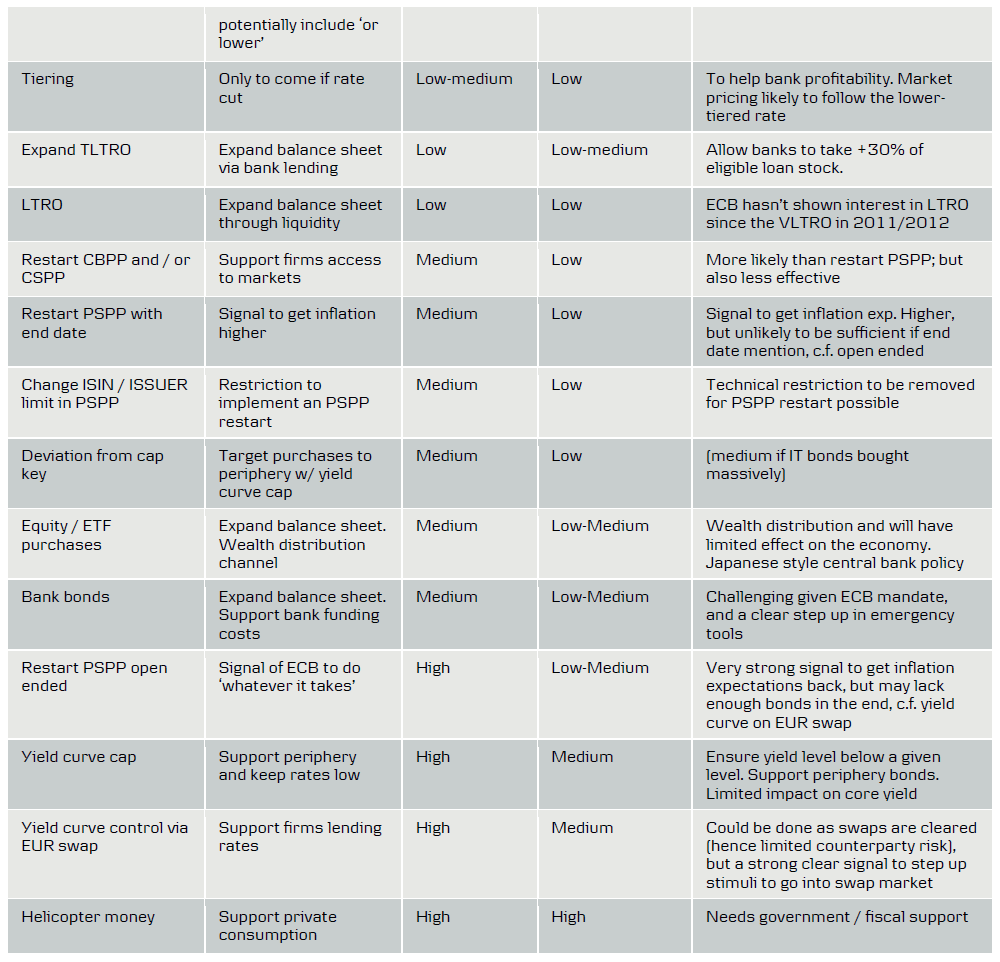
Therefore, the question now remains when and how ECB will stimulate and not about if the will stimulate the market. As ECB will debate this over the next weeks it's difficult to call exactly what the measures will entail (annex has a list of possibilities). Draghi has previously shown a preference to deploy multiple measures at the same time and we expect ECB to come with a three part package; rate cut, tiering and QE restart.
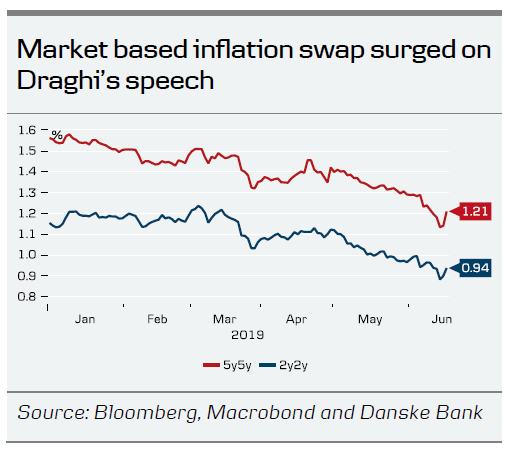
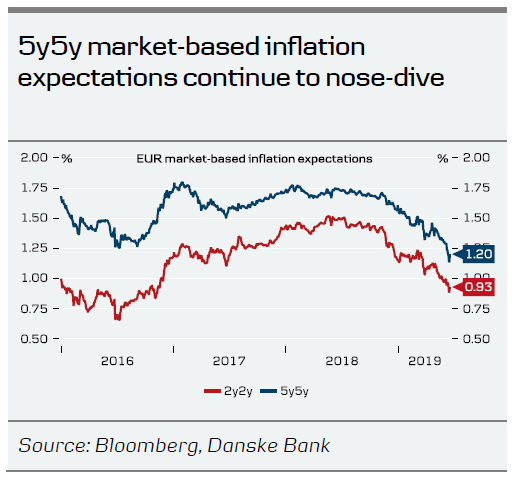
The market impact and most prominently, the market inflation based inflation expectations has been very benign to the ECB. The 5y5y has surged from record lows of 1.13% to 1.21% in a sign of credibility in the ECB's new measures. However, the level is still very low and still far from ECB's target so the ECB has to deliver and come with a big package to satisfy markets.
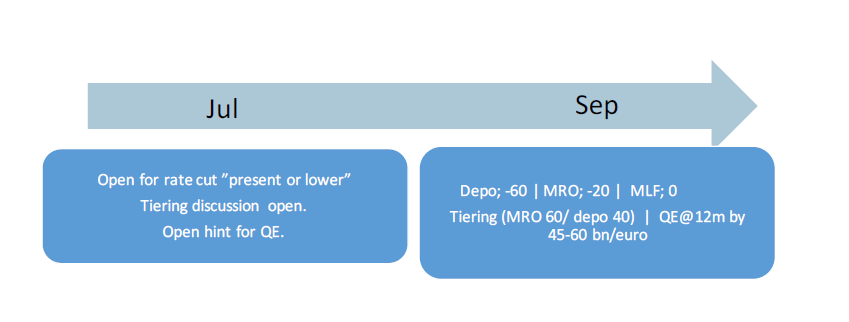
We expect ECB to open for further easing in the July meeting, and announcement in September, alongside new staff projections, but also acknowledge a risk to earlier announcement should market and economic sentiment suffer.
A Bloomberg source story just now suggested ECB to favour a rate cut as the primary tool.
Potential timeline of coming meetings
Rate cut
Today Draghi said that 'We remain able to enhance our forward guidance by adjusting its bias [from current at 'present levels'] and 'further cuts in policy interest rates and mitigating measures to contain any side effects remain part of our tools.' Consequently, we expect ECB to include 'at present or lower' levels in the July meeting, but only cut rates in September as part of a package together with restart of QE. As the Sintra piece entails a sense of urgency and bold statements, we a 20bp cut in the deposit rate and the MRO rate and 25bp in the lending rate, to the new rates being -60bp, -20bp and 0% respectively. That said, there are naturally a wide range of options of ECB possibility to cut, however we do expect a rate cut of at least 10bp and no more than 20bp. Should ECB 'only' come with a 10bp cut in September, we expect a further rate cut later this year as well. Markets are currently pricing a 10bp curve in September.
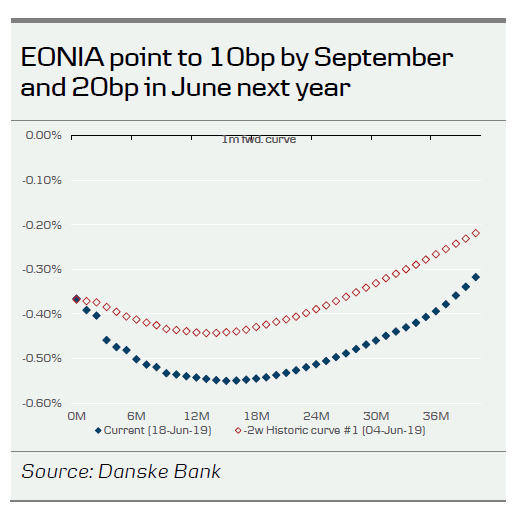
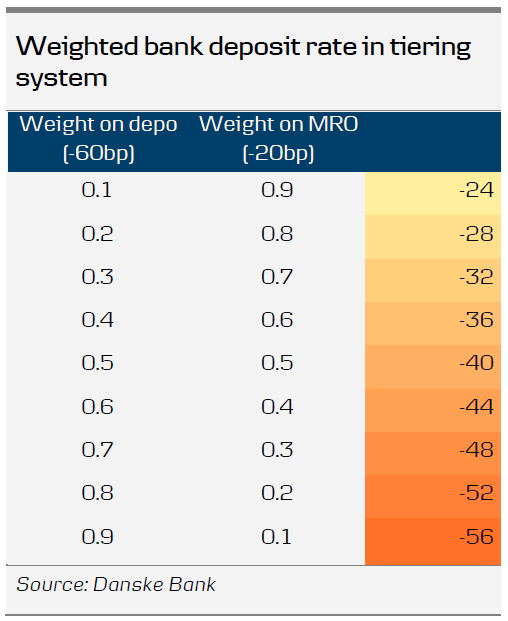
At the same time, we expect a tiering system announced in a format where banks can now deposit up to 40% of the reserve requirements at the MRO (from current 1%) and 60% at the deposit rate. ECB has previously expressed concern with the banks' profitability and if their concern continues, the weighted average deposit rate should not decline from current -39bp (1% at MRO and 99% at deposit rate). That can be achieved by multiple combinations. We currently favour 60% at MRO and 40% at depo, but all options are on the table (see also table below). See also tiering in GBW from 29 March 2019 for further discussion of tiering system.
QE restart
Just similar to Coeuré yesterday and the ECB press conference 12 days ago, Draghi emphasised the considerable headroom that ECB still have on the APP and reiterated the ECJ ruling to buy bonds proportionally. As we already discussed, a lift of the ISIN and issuer limits seems a formality as 'the limits we establish on our tools are specific to the contingencies we face'. Consequently, our baseline is that ECB will restart QE for the 12 months at a monthly pace of 45-60bn / month.
A conservative update of the ISIN limits to 50%, taking into account the already ECB PSPP holdings indicate approx. ECB 1.8trl primarily in the govie space. That means that if ECB would purchase with EUR40bn per month they would have room for 45months and 60bn per month gives 30months, i.e. plenty of room for ECB to implement QE.
The struggle to avoid negative yields to intensify
Further easing from the ECB points to more of the same. Investors will once again be forced further out on the curve in respect of both duration and credit to avoid the negative yields. It points to even flatter curve 10s30s as core and semi-core 10Y yields are now trading in negative or close to negative.
In Government Bonds Weekly from June 7, we recommended to enter a 10-20y flattener in France. It basically, reflects this view. QE will benefit France and the Japanese investor that likes France will be forced out on the curve to get at positive yield.
Periphery in general will benefit directly from a new QE programme given their relative high debt levels and not least 'high' yield levels. In periphery, we have been in strong favour of Spain relative to Italy given since the political uncertainty in Italy. However, it might be time to go long Italy even as BTP's have already rallied strongly. There is little else to buy for investors.
In Yield Outlook:10Y Bund Yields stuck in negative territory that we published June 17 we had a 3M forecast for 10Y Bund Yields at -0.35%. We now lower that target to -0.45%.
Do not expect a text-book steepening of the curve
Normally, we would expect a steepening of the curve 2-10y when the central bank opens the door for rate cuts. However, this text-book reaction is less likely this time due to the struggle to avoid negative yields and the expectations that a new QE programme will be introduced. However, there are still some mitigating factors for the flattening trade and that is if we see a pick-up in market inflation expectations. Today, 5y5y inflation expectations have jumped 6bp to 1.21%.
But we doubt that inflation expectations will rise any significantly. Further easing from ECB will support the recovery in the Euro zone, but it is hardly a silver bullet.
Furthermore, the neutral real rate is still very low in the Euro zone and likely falling. We estimate it around -1% in Research Global: Euro area rate to stay very low for very long from June 13. In other words the neutral nominal depo rate is probably only slightly above zero.
Euro Drops as Draghi Swerves Markets by Joining Parade for Policy Weapons
The Euro has erased earlier gains to shed 0.5 percent against the US Dollar, as European Central Bank (ECB) President Mario Draghi cited the possibility of more economic stimulus for the Eurozone, which may include lowering interest rates further into negative territory.
Draghi’s comments appeared vigorously dovish and stand in high contrast to what he conveyed just earlier this month, that interest rates are expected to remain at present levels until at least mid-2020.
Central bankers talk up policy weapons amid looming downside risks
Draghi is part of the parade of major central bankers, including the Fed, BOJ and PBOC, who have been parading the arsenal of policy weapons at their disposal that can be used to counter downside economic risks.
Perhaps more worrisome for Euro investors is the signalling effect of Draghi’s latest comments, suggesting that the Eurozone’s economic fundamentals are not as robust as expected and may require more policy aid after all.
Should global economic conditions deteriorate further and feature more prominently in the EU’s economic data, that may drastically lower the bar for an ECB rate cut. Even then, investors will be left to ponder whether sending interest rates into further negative territory would be the medicine that the EU economy requires.
Euro appears to have a path-of-less-resistance to the downside
With EURUSD now trading below the psychological 1.12 level and having wiped out most of its month-to-date gains, the currency pair has found a potentially easier path towards the downside as it tests the 1.11 support line over the immediate term. Limited relief for the Euro may come in the form of a Federal Reserve that makes a sudden and significant dovish pivot this week, which may allow the Euro to retrace its path back above the 1.12 mark.
Into US session: Euro weakest on ECB Draghi, Yen strongest on falling yields
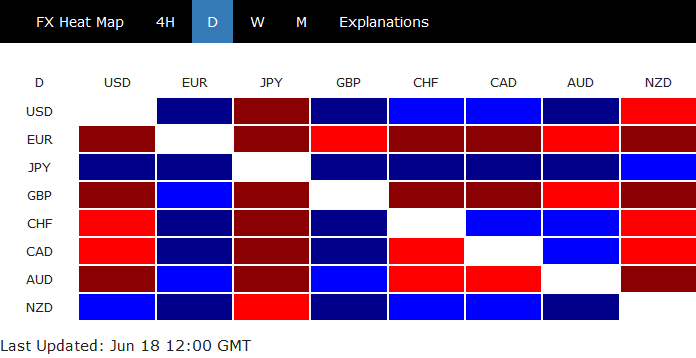
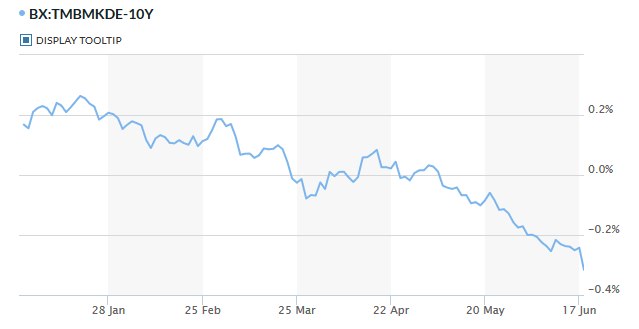
Entering into US session, Euro is the weakest one for today, overshadowing Aussie and Sterling. Euro was knocked down by ECB President Mario Draghi's comments, which suggests that more monetary stimulus is underway. Additionally, German ZEW economic sentiments also tumbles sharply from -2.1 to -21.1 in June. German 10-year yield also dropped to new record low at -0.319, down -0.075. The development also drags down US 10-year yield, now at 2.022, down -0.068.
Sterling is the second weakest, as markets are pricing in no-deal Brexit as Boris Johnson is taking lead in Conservative leadership race. Australian Dollar is third weakest after RBA minutes said further rate cut is more likely than not. On the other hand, Yen is the strongest for today, as boosted by free fall in German and US yields. Dollar is third strongest, ignoring Trump's complaint on Draghi's comments.
In Europe, currently:
- FTSE is up 0.96%.
- DAX is up 1.43%.
- CAC is up 1.57%.
- German 10-year yield is down -0.0735 at -0.316.
Earlier in Asia:
- Nikkei dropped -0.72%.
- Hong Kong HSI rose 1.00%.
- China Shanghai SSE rose 0.09%.
- Singapore Strait Times rose 0.96%.
- Japan 10-year yield dropped -0.0032 to -0.129.
US President Trump complains ECB President Draghi’s comments on monetary stimulus
Trump complains ECB President Mario Draghi's comments earlier today, while triggers broad based selloff in Euro. He tweeted "Mario Draghi just announced more stimulus could come, which immediately dropped the Euro against the Dollar, making it unfairly easier for them to compete against the USA. They have been getting away with this for years, along with China and others."
There is no reaction to the tweet.
https://twitter.com/realDonaldTrump/status/1140935620291964928
USDJPY Range Break Needed
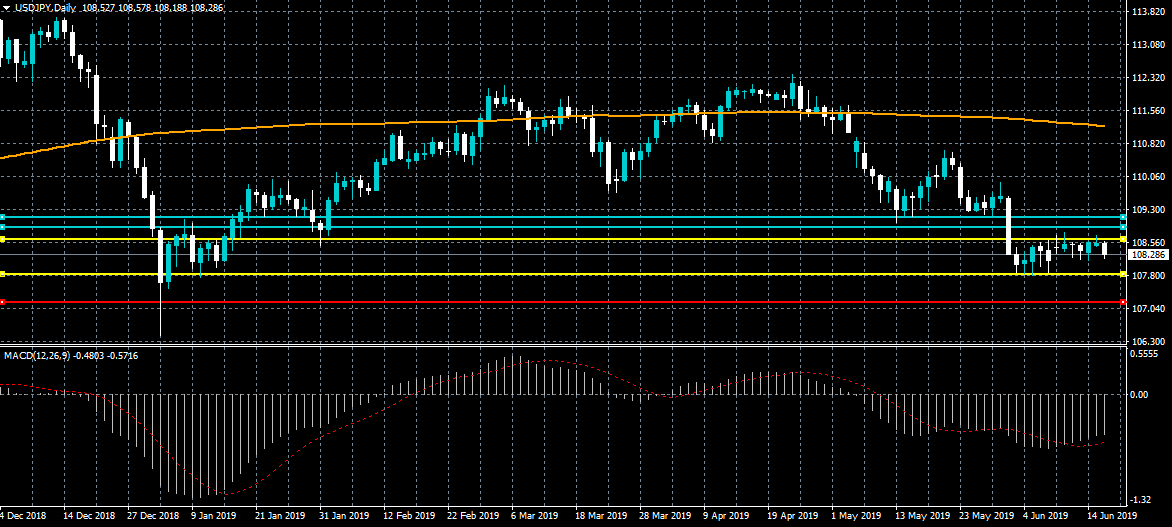
The US dollar is once again moving lower against the Japanese yen after a bearish reversal from the 108.60 resistance level on Monday. A clear range break is now needed, with USDJPY pair looking to move price under the 108.00 support level to accelerate selling. Overall, the USDJPY pair is failing to react to US dollar strength and is being driven by risk-off sentiment.
The USDJPY pair is only bearish while trading below the 108.60 level, key support remains at the 108.00 and 107.70 levels.
If the USDJPY pair trades above the 108.60 level, key technical resistance is found at the 108.80 and 109.00 levels.
EURUSD Under 1.1200
The euro currency has slipped below the 1.1200 level against the US dollar during the European trading session after ECB President Mario Draghi delivered a bearish speech. The EURUSD pair is under technical pressure below the 1.1200 level, with 1.1170 key support. Overall, bulls need to move price back above the 1.1230 level to negate the extreme bearish sentiment.
The EURUSD pair is heavily bearish while trading below the 1.1200 level, key technical support is found at the 1.1170 and 1.1150 levels.
If the EURUSD pair trades above the 1.1200 level, buyers may test the 1.1218 and 1.1230 levels.
EUR Inflation Roller-Coaster Continues
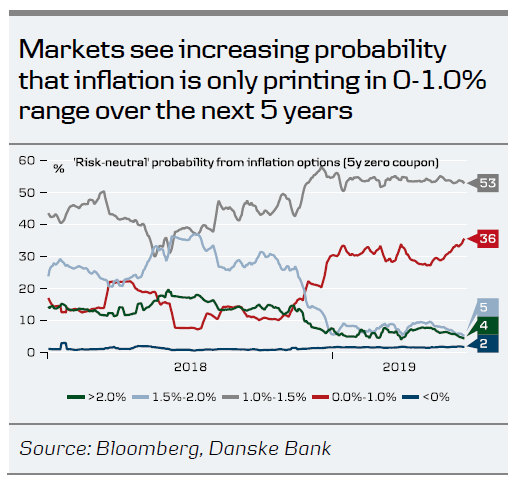
It is difficult for markets to be optimistic on the outlook for euro area inflation currently. Indeed, the slide in 5y5y market-based inflation expectations to a new all-time low of 1.13% suggests that investors’ patience with the ECB’s ‘delayed, not derailed narrative’ has run its course. Looking at the probability distribution from inflation options, markets are attaching a greater than 50% probability that euro inflation will print only between 1.0-1.5% over the next five years.
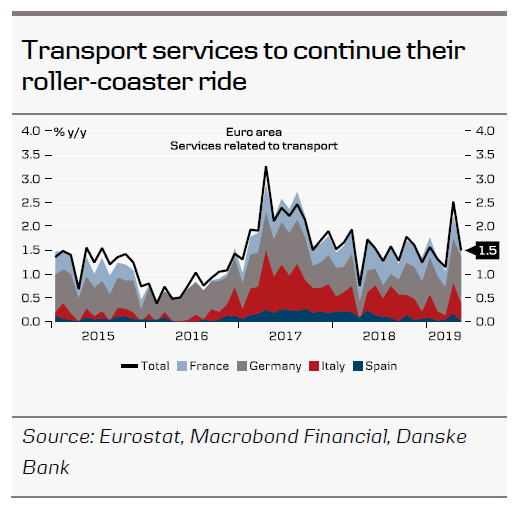
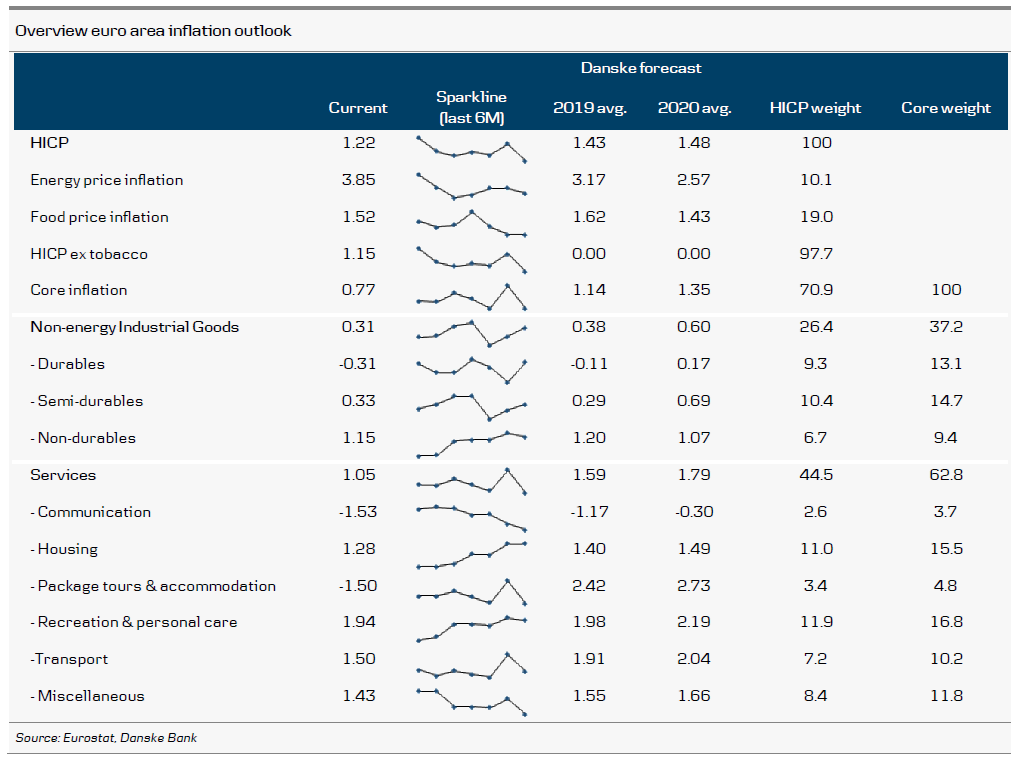
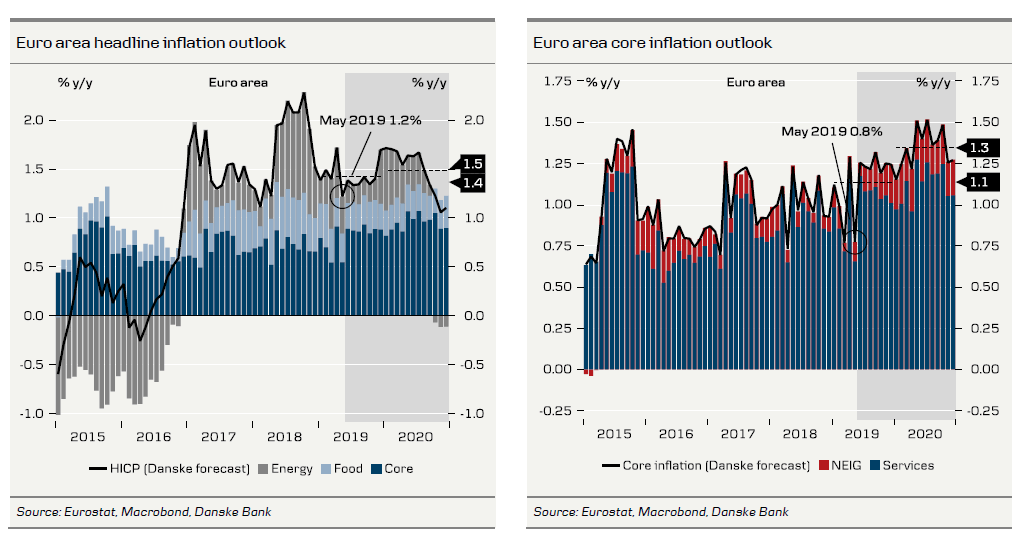
Nonetheless, the details of the final May HICP painted a less bleak picture about the state of underlying inflation pressures than the flash release suggested. Details revealed that calendar effects due to the differing timing of Whitsun in 2018 (May) and 2019 (June) were again an important driver of the decline in core inflation by 52pp back to 0.77% - just like the Easter effect in March in April. Services related to package tours & accommodation accounted for 57pp of the total 89pp drop in service price inflation during the month and excluding this volatile item, euro area core inflation is still showing signs of acceleration compared to 2018 (see chart). On another positive note, inflation in services related to recreation & personal care held steady at 1.94%.
Although NEIG inflation rose only marginally to 0.31%, inflation in durable goods picked up some speed in May (from -0.43% to -0.31%), which could be an early sign that the impact of a weaker effective EUR is starting to filter through. Indeed, higher import prices have signalled a turnaround for some months now (see also Inflation under the microscope: simmering, not boiling).
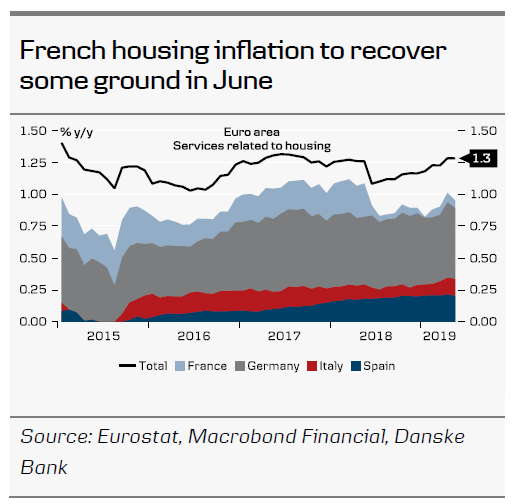
We expect the inflation roller-coaster to continue in June, as base effects remain in the driver’s seat when the ‘Whitsun effect’ will give an artificial boost to travel-related core inflation items such as package tours and transport services, and the base effect from last year’s cut in French social housing costs drops out. Hence we look for core inflation to recover back to 1.3% in June, but we will probably have to wait until July for a ‘clean’ measure of the true underlying inflation picture. We still track euro area core inflation at rates of 1.2-1.3% by year end 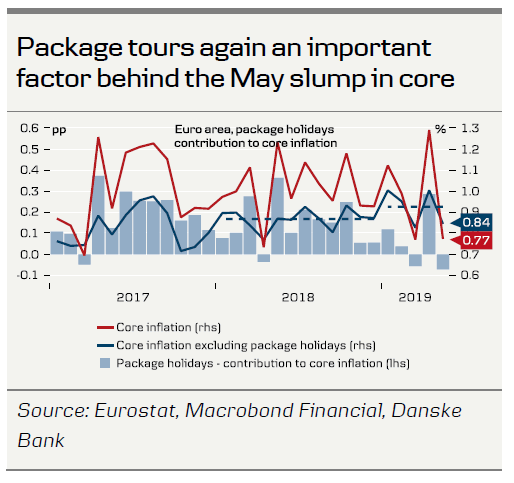
The US Dollar Has Become Stable Before The Fed Meeting
Last week, the US dollar recovered some losses against a basket of world currencies. At the moment, investors have taken a wait-and-see attitude before the Fed meeting. Some experts believe that the head of the Central Bank, Jerome Powell, may use this meeting to give signals about a possible reduction in interest rates in the current year. According to the CME FedWatch Tool, more than 60% of financial market participants believe that the Fed may cut interest rates at a meeting in July.
The British pound has dropped significantly against the US dollar due to growing concerns about the fact that Boris Johnson, the leading candidate for the post of British Prime Minister, could lead the UK to exit from the European Union without a deal with Brussels. Johnson, a former foreign secretary, gained Matt Hancock's support, that strengthened his position in the fight for leadership. This news surprised investors since Johnson was the face of the official campaign for Brexit in the 2016 referendum and promised to exit the UK from the EU with or without an agreement.
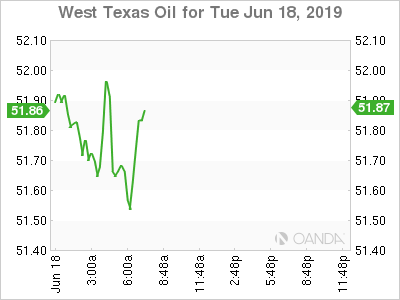
The bearish sentiment is still prevailing in the "black gold" market. At the moment, futures for the WTI crude oil are testing the mark of $51.85 per barrel. At 23:30 (GMT+3:00) a report on the API weekly crude oil stock will be published.
Market Indicators
- Yesterday, the bullish sentiment was observed in the US stock market: #SPY (+0.04%), #DIA (+0.07%), #QQQ (+0.60%).
- The 10-year US government bonds yield has been declining. Currently, the indicator is at the level of 2.05-2.06%.
The news feed on 2019.06.18:
- German ZEW economic sentiment index at 12:00 (GMT+3:00);
- Data on Eurozone inflation at 12:00 (GMT+3:00);
- Statistics on the real estate market in the US at 15:30 (GMT+3:00).
Oil Softer On OPEC Date Uncertainty And Demand Concerns
Crude prices traded lower after the Pentagon committed more troops to the Middle East and as OPEC and allies slowly make progress on scheduling their next meeting to discuss production cuts. The decision by the US to send more troops could be a sign that the US may try to assure safe travels by oil tankers in the region following multiple attacks over the past several weeks. Further evidence was also released adding to the US speculation that Iran was behind the attacks of this week’s attacks in the Gulf of Oman.
OPEC and friends have had a lot of difficulty on when to reschedule the 176th OPEC meeting, which was expected on June 25th. It appears that Iran is offering meeting between July 10th and 12th, possible progress we could see an agreement on a date being reached since Iran is no longer insisting on keeping the original date. The decision needs to be unanimous by OPEC and we should find out shortly if the rest of the cartel agrees.
Even if we see OPEC and allies agree on extending production cuts, global demand will need a boost for oil prices to rise higher. Trade progress at the G20 summit in Japan is mandatory for the demand side argument for stronger crude prices.
Oil remains in bear market territory and key support remains the $50 a barrel level for WTI.