Sample Category Title
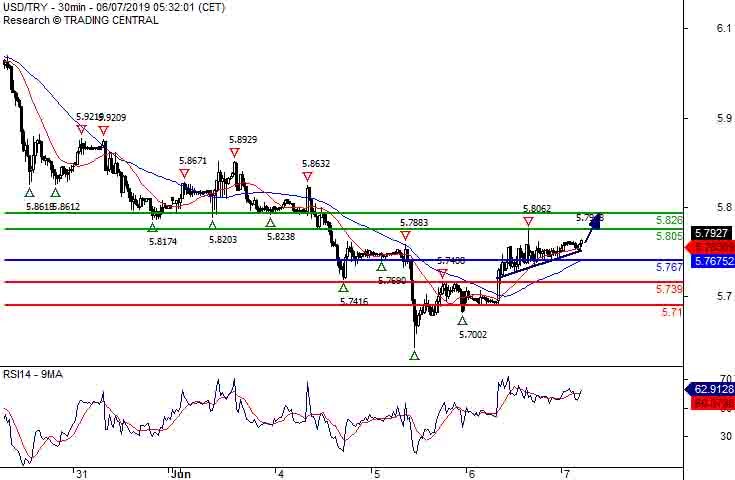
USD/TRY Look For 5.8260
Pivot (invalidation): 5.7670
Our preference Long positions above 5.7670 with targets at 5.8050 & 5.8260 in extension.
Alternative scenario Below 5.7670 look for further downside with 5.7390 & 5.7100 as targets.
Comment The RSI lacks downward momentum.
AUD/USD Bullish Bias Above 0.6970
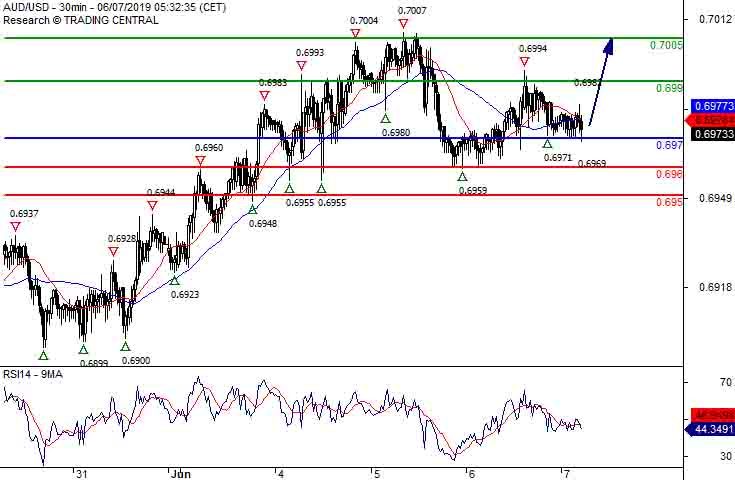
Pivot (invalidation): 0.6970
Our preference Long positions above 0.6970 with targets at 0.6990 & 0.7005 in extension.
Alternative scenario Below 0.6970 look for further downside with 0.6960 & 0.6950 as targets.
Comment A support base at 0.6970 has formed and has allowed for a temporary stabilisation.
USD/CAD Under Pressure
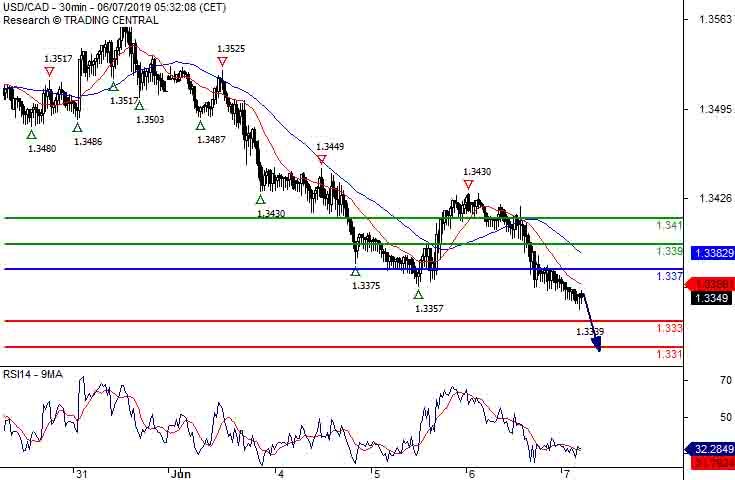
Pivot (invalidation): 1.3370
Our preference Short positions below 1.3370 with targets at 1.3330 & 1.3310 in extension.
Alternative scenario Above 1.3370 look for further upside with 1.3390 & 1.3410 as targets.
Comment The break below 1.3370 is a negative signal that has opened a path to 1.3330
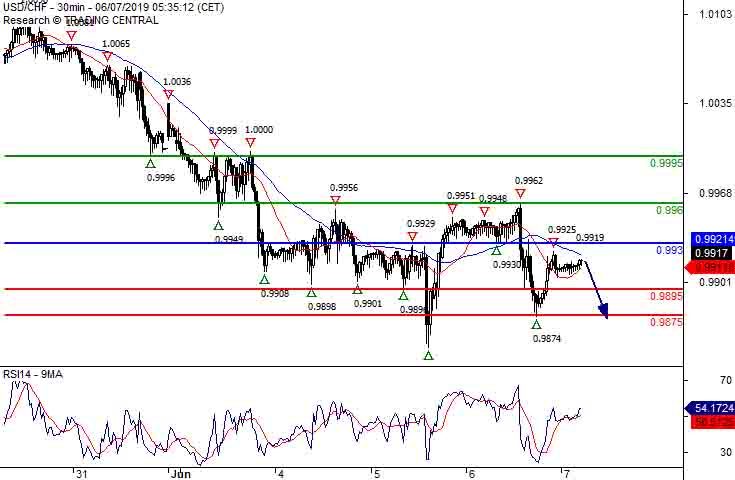
USD/CHF Key Resistance At 0.9930
Pivot (invalidation): 0.9930
Our preference Short positions below 0.9930 with targets at 0.9895 & 0.9875 in extension.
Alternative scenario Above 0.9930 look for further upside with 0.9960 & 0.9995 as targets.
Comment The upward potential is likely to be limited by the resistance at 0.9930.
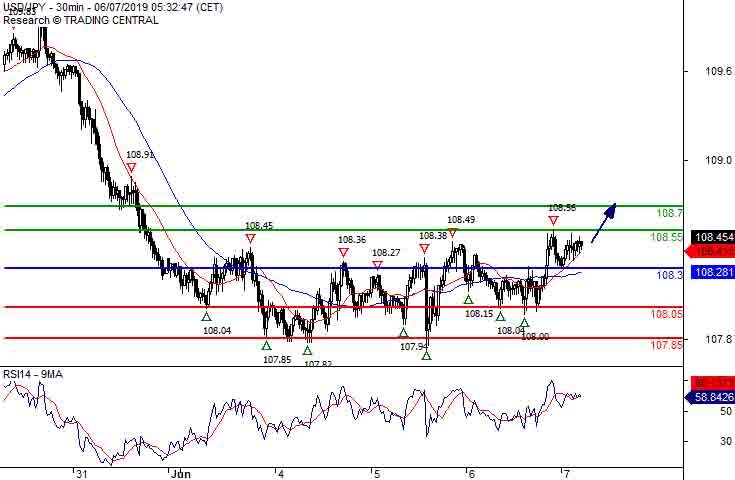
USD/JPY 108.70 Expected
Pivot (invalidation): 108.30
Our preference Long positions above 108.30 with targets at 108.55 & 108.70 in extension.
Alternative scenario Below 108.30 look for further downside with 108.05 & 107.85 as targets.
Comment The RSI is bullish and calls for further upside.
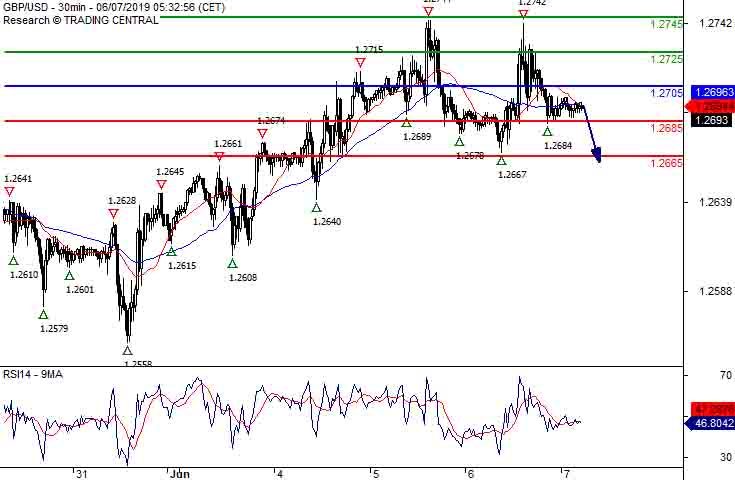
GBP/USD Key Resistance At 1.2705
Pivot (invalidation): 1.2705
Our preference Short positions below 1.2705 with targets at 1.2685 & 1.2665 in extension.
Alternative scenario Above 1.2705 look for further upside with 1.2725 & 1.2745 as targets.
Comment As Long as the resistance at 1.2705 is not surpassed, the risk of the break below 1.2685 remains high.
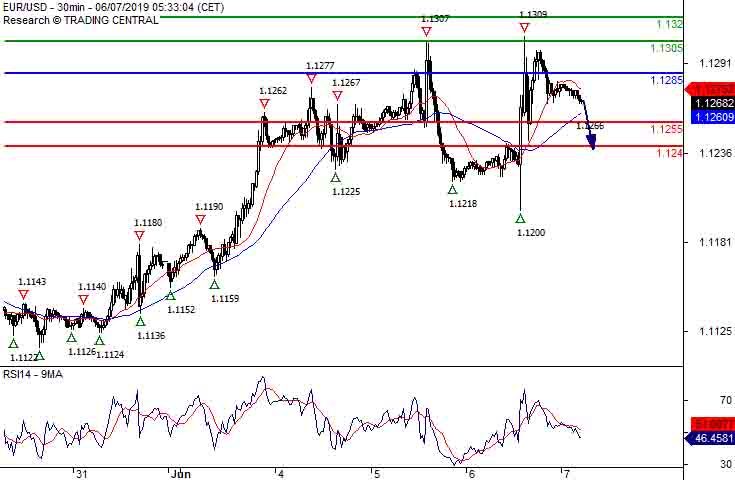
EUR/USD Under Pressure
Pivot (invalidation): 1.1285
Our preference Short positions below 1.1285 with targets at 1.1255 & 1.1240 in extension.
Alternative scenario Above 1.1285 look for further upside with 1.1305 & 1.1320 as targets.
Comment The RSI shows downside momentum.
Markets To Focus On US Jobs Report In Test Of Dollar Bulls’ Nerves
Dollar bullshave been showing signs of nervousness this week, with the US Dollar index (DXY) testing the 96.8 support level in recent days. Recent rhetoric by Fed officials have cracked open the door for policy easing this year, as markets pile on the bets that a US rate cut could come as soon as July, all of which is putting downward pressure on the Greenback.
Given the Dollar's sensitivity of late, traders may parrot the Fed's claims of being “data-dependent”, where by Friday's US non-farm payrolls could prompt an outsized move in DXY.A much weaker-than-expected jobs report could see the Dollar index opening up a path towards the lower bounds of the 96-handle, while justifying calls for a US rate cut.
Euro gains as ECB indicates willingness to continue supporting EU economy
The recent rise in EURUSD met resistance at the 1.13 level this week, as ECB President Mario Draghi signaled continued policy support for the EU economy amid heightened uncertainties on the global stage. Although appearing less dovish than expected, the European Central Bank has pledged to hold rates at historic lows until at least early 2020, as the EU economy contends with persistent uncertainties on the global stage.
According to Draghi, incoming data points towards weaker growth in Q2 and Q3, even as growth projections were revised downwards for both 2020 and 2021. Headline inflation is also likely to decline over the coming months. With risks in the form of Italy's budget conflict, Brexit uncertainties, and persistent trade tensions exposing the Eurozone to negative shocks, the outlook for the Euro remains tilted to the downside, which makes any meaningful gains for the bloc's currency that much harder to come by.
Markets cast watchful eye over US-Mexico negotiations
Equity markets are set to carve out gains on Friday ahead of the June 10 deadline for US tariffs being imposed on Mexican imports. Investors appear to be holding out hope that the ongoing US-Mexico negotiations could at least result in a delaying of the five percent US tariffs, as already heightened barriers to global trade cast a very dark cloud over the global economic outlook.
In the event that President Trump holds off on imposing the new tariffs come Monday, that should allow some breathing space for risky assets to notch limited gains. However, should those US tariffs be imposed next week, safe haven assets such as Gold and Yen could climb another leg higher, while global stocks and EM currencies could see another selloff.
Markets are clearly nervous about the potential fallout from the intensifying US-led trade conflict against its major trading partners, with a full-blown US-China trade war threatening to fuel fears of a recession. Such a backdrop may lead to a new 2019 high for Gold, with Bullion having gained over two percent this week, while the Yen threatens to strengthen past the 108 psychological mark against the US Dollar.
Greenback Rises Ahead Of NFP Data
The US dollar index rose slightly ahead of important NFP data. The numbers are expected to show that the economy added 185k jobs in May. This will be lower than the 263K created in April. The private nonfarm payrolls are expected to be 175K, lower than April’s 236k. The unemployment rate is expected to remain unchanged at 3.6% while the participation rate is expected to increase to 62.9%. The average hourly earnings are expected to remain unchanged at 3.2%. On Wednesday, data from ADP showed that the economy created just 27k jobs.
The Japanese yen weakened slightly after the country released weak household spending data. In April, the housing spending is expected to have declined by -1.4%, which was lower than the 0.1% gain in March. Investors were expecting the spending to decline by -0.3%. In April, the household spending increased by 1.3%, which was lower than the expected 2.6%. While the country’s unemployment rate is at historic lows, it has failed to increase inflation, which means that the BOJ could hold rates at the current levels for a longer period.
Later today, investors will receive the unemployment rate from Switzerland. The unemployment rate is expected to remain unchanged at 2.4%. In Germany for April exports are expected to decline by -0.9% while imports are expected to decline by -0.2%. The trade surplus is expected to decline to 18.6 billion euros. In France, the trade deficit is expected to decline to 4.9 billion euros for May. In Canada, the unemployment rate is expected to remain unchanged at 5.7% while the participation rate is expected to drop slightly to 65.8%. The economy is expected to have created 8K jobs in May.
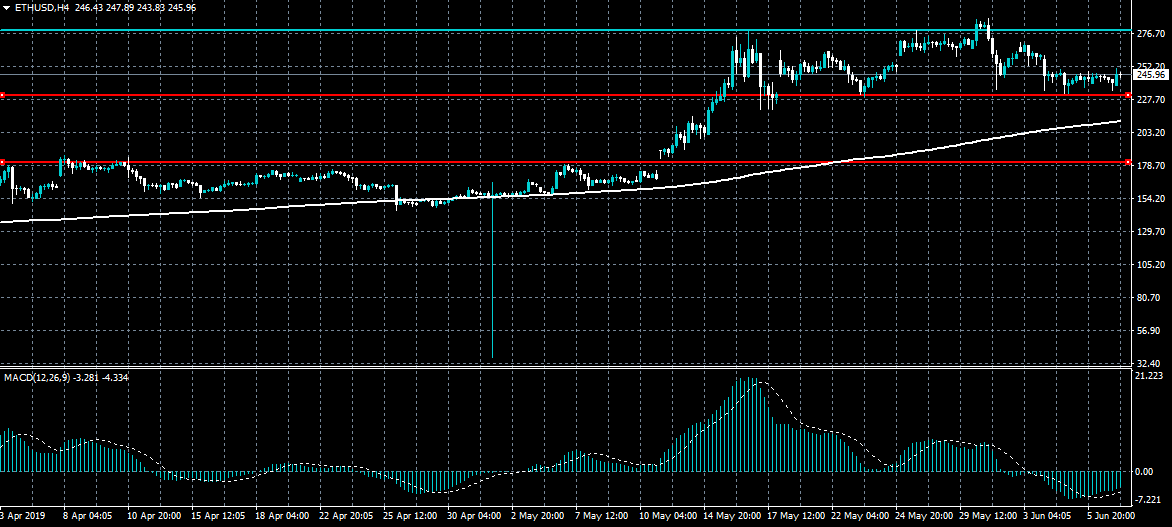
EUR/USD
The EUR/USD pair declined to a low of 1.1266 ahead of the US NFP data. The price is along the lower line of the Envelopes indicator. The RSI is slightly below the overbought level of 70. The price is also between the 100% and 61.8% Fibonacci Retracement level. Today, the pair could remain within range as traders wait for NFP data.
USD/CAD
The USD/CAD pair has been falling this week. The pair has declined from a high of 1.3565 to a low of 1.3345. On the hourly chart below, the pair is currently along the lower line of the Envelopes indicator while the RSI remains below the oversold level of 30. The Bears Power indicator remains below the neutral level, but the selling momentum is declining. While the downward momentum may continue, the pair could move in either direction after the jobs data.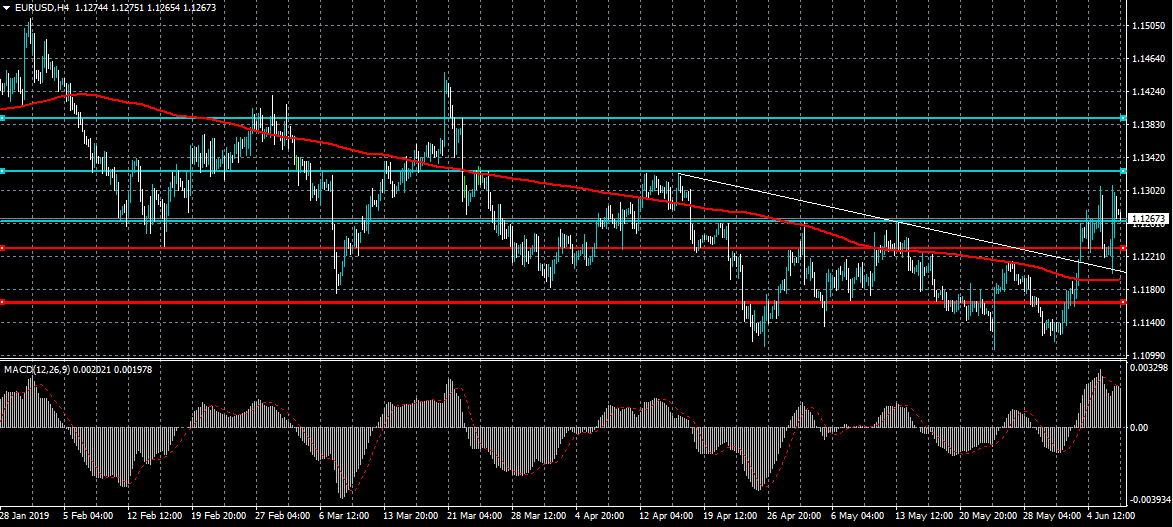
USD/JPY
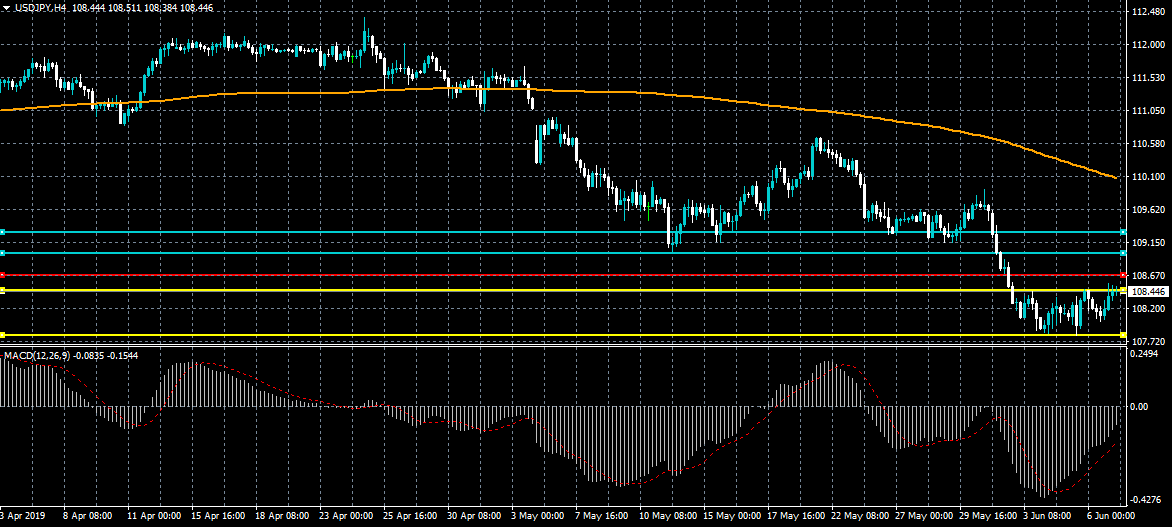
The USD/JPY pair has been range-bound this week. The pair is now trading at 108.45, which is slightly higher than the weekly low of 107.80. On the 30-minute chart, this price is slightly above the 25-day and 50-day moving averages. The accumulation/distribution indicator has been moving higher. Today, the pair looks likely to remain within this range before the US NFP data and then move sharply in either direction afterwards.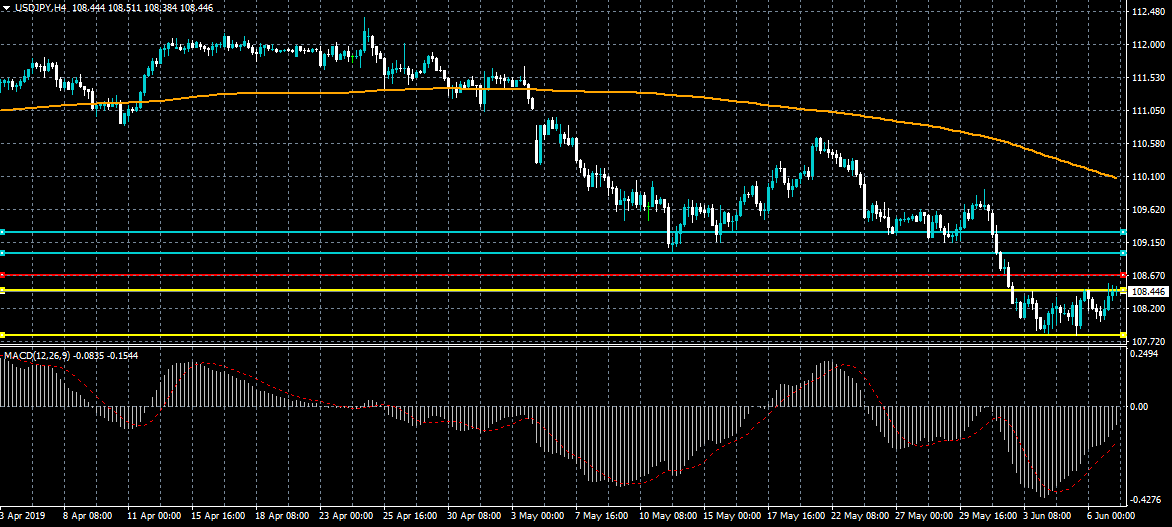
USDJPY 108.65 Upcoming Resistance
The US dollar has started to rise against the Japanese yen currency, with buyers now attempting to break away from the pair’s recently established trading range. The 108.65 level offers solid resistance, while the 109.00 level is the major intraday resistance level. If the move higher is a false breakout, the USDJPY pair could easily still test towards the 107.40 level this week.
The USDJPY pair is only bearish while trading below the 108.44 level, key support is found at the 107.70 and 107.40 levels.
If the USDJPY pair trades above the 108.44 level, key technical resistance is found at the 108.65 and 109.00 levels.