

Sample Category Title
Gold: Yellow Metal Reverses Its Gain In The Morning Session
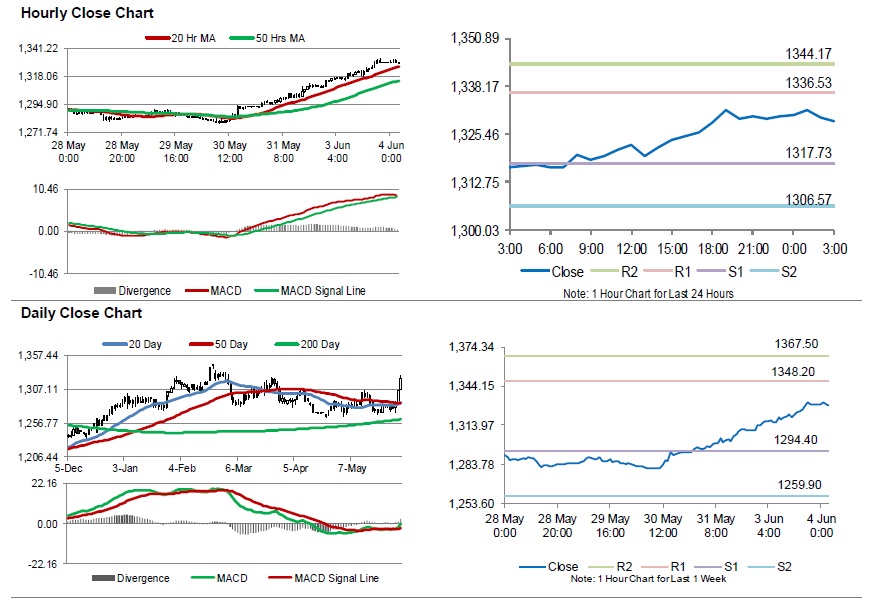
For the 24 hours to 23:00 GMT, Gold rose 0.99% against the USD and closed at USD1329.7 per ounce, amid broad weakness in the greenback.
In the Asian session, at GMT0300, the pair is trading at 1328.90, with gold trading 0.06% lower against the USD from yesterday’s close.
The pair is expected to find support at 1317.73, and a fall through could take it to the next support level of 1306.57. The pair is expected to find its first resistance at 1336.53, and a rise through could take it to the next resistance level of 1344.17.
The yellow metal is trading above its 20 Hr and 50 Hr moving averages.
Silver: White Metal Trading On A Weaker Footing In The Asian Session
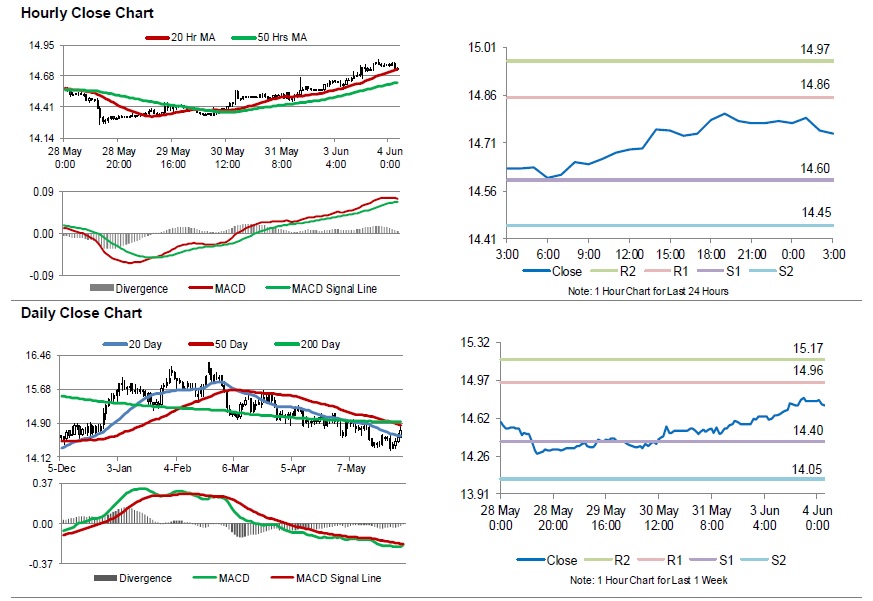
For the 24 hours to 23:00 GMT, Silver rose 0.99% against the USD and closed at USD14.78 per ounce, supported by gains in gold prices.
In the Asian session, at GMT0300, the pair is trading at 14.74, with silver trading 0.27% lower against the USD from yesterday’s close.
The pair is expected to find support at 14.60, and a fall through could take it to the next support level of 14.45. The pair is expected to find its first resistance at 14.86, and a rise through could take it to the next resistance level of 14.97.
The white metal is showing convergence with its 20 Hr moving average and trading above its 50 Hr moving average.
Crude Oil: Oil Trading Higher, Ahead Of API’s Weekly Crude Oil Stockpiles Data
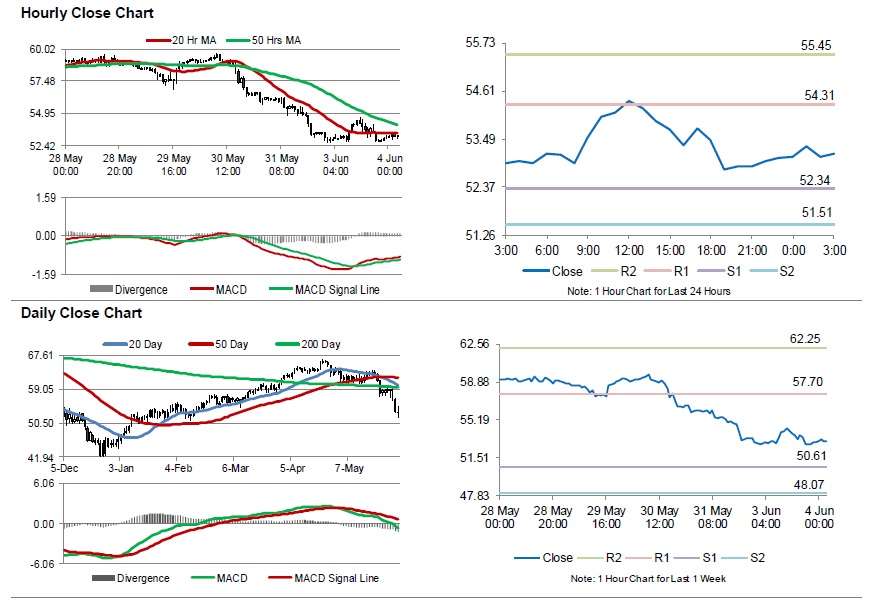
For the 24 hours to 23:00 GMT, Crude Oil rose 0.38% against the USD and closed at USD53.06 per barrel, after Saudi Arabia indicated that OPEC along with Russia would tighten global oil supplies to avoid a surplus.
In the Asian session, at GMT0300, the pair is trading at 53.16, with oil trading 0.19% higher against the USD from yesterday's close.
The pair is expected to find support at 52.34, and a fall through could take it to the next support level of 51.51. The pair is expected to find its first resistance at 54.31, and a rise through could take it to the next resistance level of 55.45.
Crude oil is trading below its 20 Hr and 50 Hr moving averages.
Mexico rejects safe third country proposal, pledges retaliation to US tariffs
As Mexican officials are meeting US counterparts this week to avert sudden increase in tariffs, Foreign Minister Marcelo Ebrard rejected that the so called "safe third country" proposal. Under this option favored by some US officials, Mexico will be forced to handle Central Americans seeking asylum in the US. Ebrard said "an agreement about a safe third country would not be acceptable for Mexico... They have not yet proposed it to me. But it would not be acceptable and they know it."
Ebrard also hit back at Trump's claims that Mexico was doing "nothing" to help the US. And he said 250k more immigrants would reach the United States in 2019 without its efforts. He reiterated the country's commitment to continue to work on curbing migration flows from Central America to US.
Separately, Mexican Economy Minister Graciela Marquez warned in a statement that Trump's tariffs on Mexican imports would affect all 50 US states, harm value chains, consumers and trade-related jobs in both countries. The proposed tariffs would cause total economic damage to the agriculture sector of $117 million per month in both countries. Marquez also pledged to retaliate if the proposed tariffs were imposed.
Mexico's ambassador to the United States, Martha Barcena, also warned "Tariffs, along with the decision to cancel aid programs to the northern Central American countries, could have a counterproductive effect and would not reduce migration flows."
US accused China for blame game and misrepresentation of history on trade war
On Monday, US Trade Representative and Treasury Department issued a joint statement in response to China's "White Paper" on trade negotiations. The statement criticized China for pursuing a "blame game misrepresenting the nature and history of trade negotiations between the two countries." And, all started with "unfair trade practices that China has engaged in for decades, which have contributed to persistent and unsustainable trade deficits"
They also hit back on China's claims and noted "our insistence on detailed and enforceable commitments from the Chinese in no way constitutes a threat to Chinese sovereignty." They emphasized that "the issues discussed are common to trade agreements and are necessary to address the systemic issues that have contributed to persistent and unsustainable trade deficits."
Elliott Wave View: Impulsive Rally In $GDX
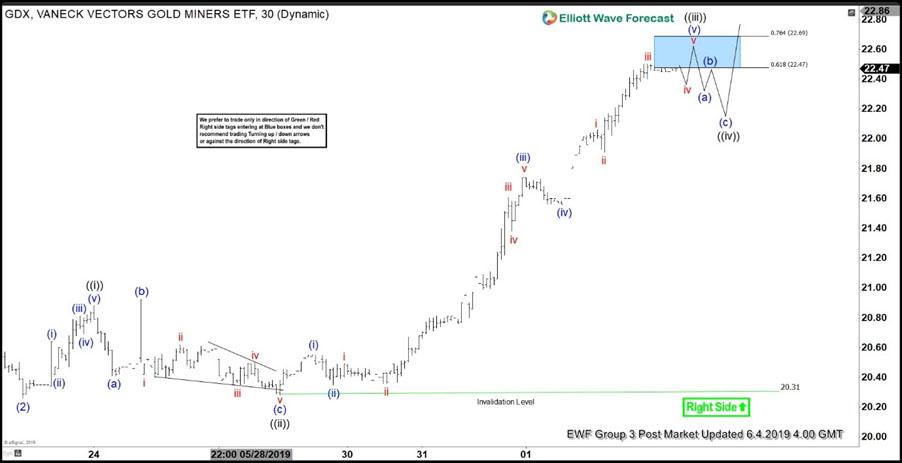
Elliott wave view in Gold Miners ETF ($GDX) suggests the pullback to $20.26 ended wave (2). Wave (3) is currently in progress and the internal subdivides as an impulse Elliott Wave structure. Up from $20.26, Wave ((i)) ended at $20.88, wave ((ii)) ended at $20.31 and wave ((iii)) can end soon at $22.47 – $22.69 area. It should then pullback in 3, 7, or 11 swing within wave ((iv)) to correct rally from May 29 low before the rally resumes again in wave ((v)).
We can see from the chart below the internal of wave ((i)) and ((iii)) also subdivide as an impulse in lesser degree. The internal of wave ((ii)) subdivides as an expanded Flat Elliott Wave structure. Potential target for wave ((iv)) is 23.6 – 38.2 Fibonacci retracement of wave ((iii)). In order to measure wave ((iv)) potential support area, we need to see wave ((iii)) fully completed first. We don’t like selling $GDX and expect buyers to appear in 3, 7, or 11 swing as far as pivot at $20.31 low stays intact. In larger time frame, if $GDX can break above Feb 21 peak ($23.70), then it should create a bullish sequence from Sept 11, 2018 low opening up more upside.
Australian Retail Sales Soften Again
Apr sales: –0.1%mth, 2.8%yr (mkt f/c 0.2%). Holiday disruptions a factor? But detail suggests wealth effect drag intensifying.
The April retail update came in weaker than expected, sales dipping 0.1% in the month compared to consensus forecasts of a 0.2% gain. Annual growth slowed to 2.8%yr, the slowest pace since mid 2018.
The timing of public holidays may have been a factor in April, with Easter falling in the month this year and the ANZAC day public holiday a week later encouraging many to take leave. While the ABS tries to adjust for these shifting seasonal effects, there may have been more of a dampening effect compared to previous years.
That said, both the sub-category and state detail in April point to wealth effect spillovers from the Sydney and Melbourne led housing market corrections weighing on sales. In particular, household goods retail sales – a bellwether for discretionary 'durables' spending – fell 0.9% in the month and NSW and Vic both recorded more pronounced 0.4% declines.
The remaining sub-category detail shows a 0.2% gain in the large basic food retail category and more mixed results elsewhere – clothing down 1.2%mth and cafes & restaurants down 0.7%mth but both coming off sold gains in March; and department stores up 1.8%mth and 'other retailing' up 0.8%mth but both coming off declines last month. Needless to say it pays to look through the monthly volatility.
Looking at sales across the major states: NSW –0.4%mth, +1.2%yr; Vic –0.4%mth, +3.7%yr; Qld +0.7%mth, +6.0%yr; SA +0.6%mth, +0.5%yr; and WA +0.1%mth, +2.6%yr.
Looking by channel, online sales look to have posted a reasonably solid 1.1% gain in the April month, although the annual pace of growth in this segment continues to slow.
The breakdown by retailer size shows weakness concentrated amongst small retailers, sales in the segment down 0.9%mth. Large non-food retailers saw a flat result while large food retailers recorded a 0.6% gain.
Overall the April retail update is clearly on the soft side, marking a weak start to the June quarter and with some worrying signs that wealth effect drags may be intensifying.
RBA cuts cash rate by 25bps to 1.25%, full statement
RBA cut cash rate by 25bps to 1.25% as widely expected. The objective of the cut is to "assist with faster progress in reducing unemployment" and thus, "achieve more assured progress towards the inflation target". More importantly, RBA leaves the option open for more rate cut. It will "continue to monitor developments in the labour market closely and adjust monetary policy" for the objectives.
On the economy, RBA expects growth to be around 2.75% in 2019 and 2020. Outlook for household consumption is the "main domestic uncertainty, which is "affected by a protracted period of low income growth and declining housing prices". The central bank noted the tick up in unemployment to 5.2% in April. But the data suggests that "Australian economy can sustain a lower rate of unemployment." RBA also noted "lower than expected" inflation outcomes which "suggest subdued inflationary pressures across much of the economy". But inflation is still expected be at 1.75% in 2019 and 2.00% in 2020.
Full statement below:
Statement by Philip Lowe, Governor: Monetary Policy Decision
At its meeting today, the Board decided to lower the cash rate by 25 basis points to 1.25 per cent. The Board took this decision to support employment growth and provide greater confidence that inflation will be consistent with the medium-term target.
The outlook for the global economy remains reasonable, although the downside risks stemming from the trade disputes have increased. Growth in international trade remains weak and the increased uncertainty is affecting investment intentions in a number of countries. In China, the authorities have taken steps to support the economy, while addressing risks in the financial system. In most advanced economies, inflation remains subdued, unemployment rates are low and wages growth has picked up.
Global financial conditions remain accommodative. Long-term bond yields and risk premiums are low. In Australia, long-term bond yields are at historically low levels. Bank funding costs have also declined further, with money-market spreads having fully reversed the increases that took place last year. The Australian dollar has depreciated a little over the past few months and is at the low end of its narrow range of recent times.
The central scenario remains for the Australian economy to grow by around 2¾ per cent in 2019 and 2020. This outlook is supported by increased investment in infrastructure and a pick-up in activity in the resources sector, partly in response to an increase in the prices of Australia's exports. The main domestic uncertainty continues to be the outlook for household consumption, which is being affected by a protracted period of low income growth and declining housing prices. Some pick-up in growth in household disposable income is expected and this should support consumption.
Employment growth has been strong over the past year, labour force participation has been increasing, the vacancy rate remains high and there are reports of skills shortages in some areas. Despite these developments, there has been little further inroads into the spare capacity in the labour market of late. The unemployment rate had been steady at around 5 per cent for some months, but ticked up to 5.2 per cent in April. The strong employment growth over the past year or so has led to a pick-up in wages growth in the private sector, although overall wages growth remains low. A further gradual lift in wages growth is expected and this would be a welcome development. Taken together, these labour market outcomes suggest that the Australian economy can sustain a lower rate of unemployment.
The recent inflation outcomes have been lower than expected and suggest subdued inflationary pressures across much of the economy. Inflation is still however anticipated to pick up, and will be boosted in the June quarter by increases in petrol prices. The central scenario remains for underlying inflation to be 1¾ per cent this year, 2 per cent in 2020 and a little higher after that.
The adjustment in established housing markets is continuing, after the earlier large run-up in prices in some cities. Conditions remain soft, although in some markets the rate of price decline has slowed and auction clearance rates have increased. Growth in housing credit has also stabilised recently. Credit conditions have been tightened and the demand for credit by investors has been subdued for some time. Mortgage rates remain low and there is strong competition for borrowers of high credit quality.
Today's decision to lower the cash rate will help make further inroads into the spare capacity in the economy. It will assist with faster progress in reducing unemployment and achieve more assured progress towards the inflation target. The Board will continue to monitor developments in the labour market closely and adjust monetary policy to support sustainable growth in the economy and the achievement of the inflation target over time.
(RBA) Statement by Philip Lowe, Governor: Monetary Policy Decision
At its meeting today, the Board decided to lower the cash rate by 25 basis points to 1.25 per cent. The Board took this decision to support employment growth and provide greater confidence that inflation will be consistent with the medium-term target.
The outlook for the global economy remains reasonable, although the downside risks stemming from the trade disputes have increased. Growth in international trade remains weak and the increased uncertainty is affecting investment intentions in a number of countries. In China, the authorities have taken steps to support the economy, while addressing risks in the financial system. In most advanced economies, inflation remains subdued, unemployment rates are low and wages growth has picked up.
Global financial conditions remain accommodative. Long-term bond yields and risk premiums are low. In Australia, long-term bond yields are at historically low levels. Bank funding costs have also declined further, with money-market spreads having fully reversed the increases that took place last year. The Australian dollar has depreciated a little over the past few months and is at the low end of its narrow range of recent times.
The central scenario remains for the Australian economy to grow by around 2¾ per cent in 2019 and 2020. This outlook is supported by increased investment in infrastructure and a pick-up in activity in the resources sector, partly in response to an increase in the prices of Australia's exports. The main domestic uncertainty continues to be the outlook for household consumption, which is being affected by a protracted period of low income growth and declining housing prices. Some pick-up in growth in household disposable income is expected and this should support consumption.
Employment growth has been strong over the past year, labour force participation has been increasing, the vacancy rate remains high and there are reports of skills shortages in some areas. Despite these developments, there has been little further inroads into the spare capacity in the labour market of late. The unemployment rate had been steady at around 5 per cent for some months, but ticked up to 5.2 per cent in April. The strong employment growth over the past year or so has led to a pick-up in wages growth in the private sector, although overall wages growth remains low. A further gradual lift in wages growth is expected and this would be a welcome development. Taken together, these labour market outcomes suggest that the Australian economy can sustain a lower rate of unemployment.
The recent inflation outcomes have been lower than expected and suggest subdued inflationary pressures across much of the economy. Inflation is still however anticipated to pick up, and will be boosted in the June quarter by increases in petrol prices. The central scenario remains for underlying inflation to be 1¾ per cent this year, 2 per cent in 2020 and a little higher after that.
The adjustment in established housing markets is continuing, after the earlier large run-up in prices in some cities. Conditions remain soft, although in some markets the rate of price decline has slowed and auction clearance rates have increased. Growth in housing credit has also stabilised recently. Credit conditions have been tightened and the demand for credit by investors has been subdued for some time. Mortgage rates remain low and there is strong competition for borrowers of high credit quality.
Today's decision to lower the cash rate will help make further inroads into the spare capacity in the economy. It will assist with faster progress in reducing unemployment and achieve more assured progress towards the inflation target. The Board will continue to monitor developments in the labour market closely and adjust monetary policy to support sustainable growth in the economy and the achievement of the inflation target over time.
ECB Preview- More on Dovish Side. Focus on Forward Guidance Extension and Pricing of TLTRO-III
We expect the ECB to deliver a more dovish message in June. We expect to see changes in the forward guidance. ECB would also announce the technical details of TLTRO-III. The economic projections would probably similar to the previous ones, despite modest upside surprise in the first quarter GDP growth. Discussion on the tiered deposit rate system might take a backseat in June. ECB would continue to leave the main refi rate, the marginal lending rate and the deposit rate unchanged at 0%, 0.25% and -0.40%, respectively. It would also keep reinvesting the proceeds from maturing securities purchased during the QE program which was completed in December 2019.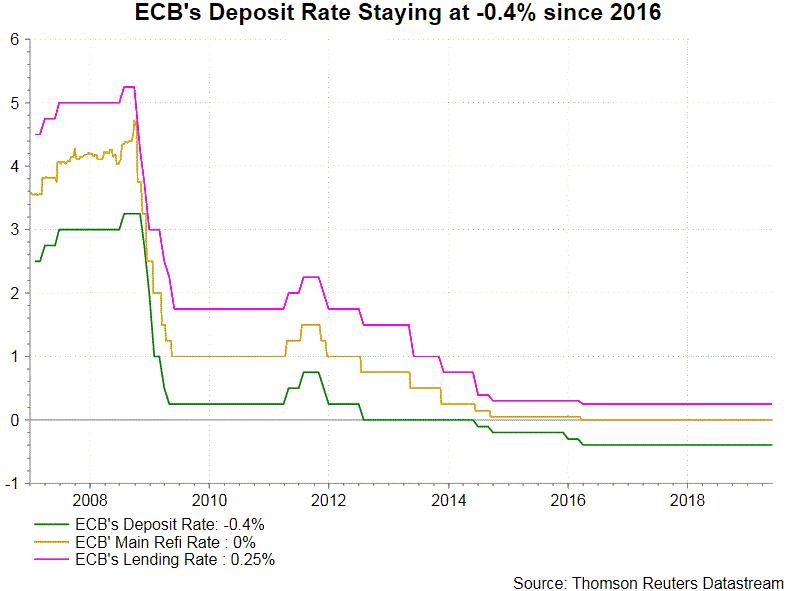
Staff Economic Projections: There are both upside and downside surprises since the March projections. GDP growth and unemployment rate appears upbeat while inflation has remained weak. US-China trade war has escalated while Brexit uncertainty has prolonged. On net, we do not see much room for changes in the economic projections.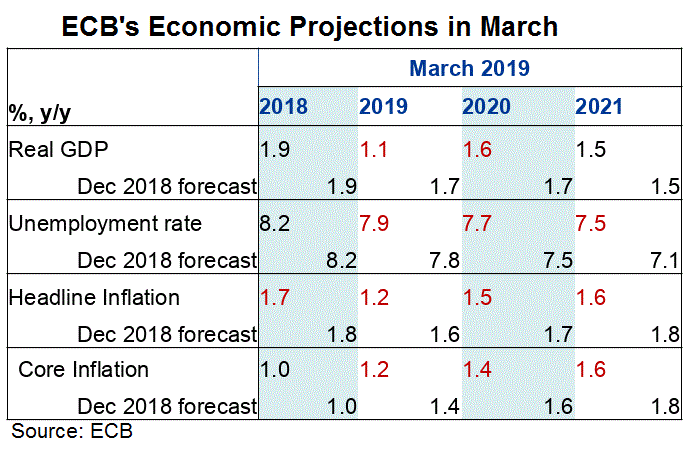
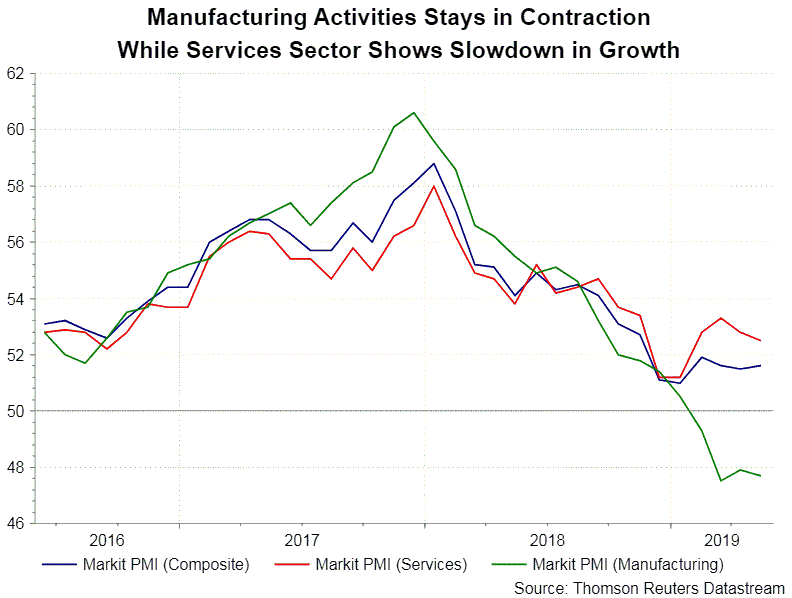
Flash estimate shows that Eurozone’s economy expanded +0.4% q/q in 1Q19. This marks a rebound from 0.1-0.2% growth in the previous 2 quarters. However, PMI data for April (47.9) and May (47.7) suggest that the manufacturing sector stay in contraction, signaling that second quarter growth could falter. As noted in the PMI report, the region’s “manufacturing remained in contraction during May, suggesting the sector will act as a drag on the wider economy in the second quarter”. Moreover, “a fourth successive monthly drop in output and further steep decline in new orders underscored how the sector remains in its toughest spell since 2013. Companies are tightening their belts, cutting back on spending and hiring. Input buying, inventories and employment are all now in decline as manufacturers worry about being exposed to a further downturn in demand.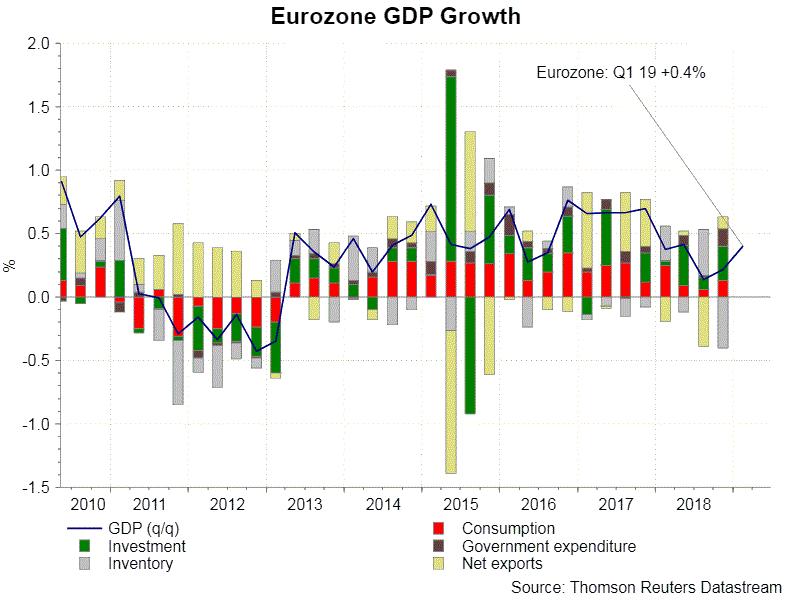
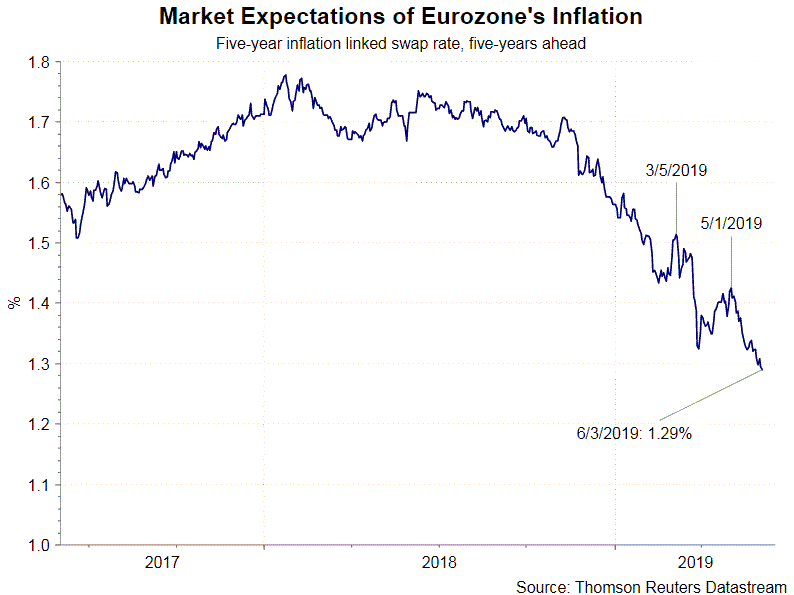
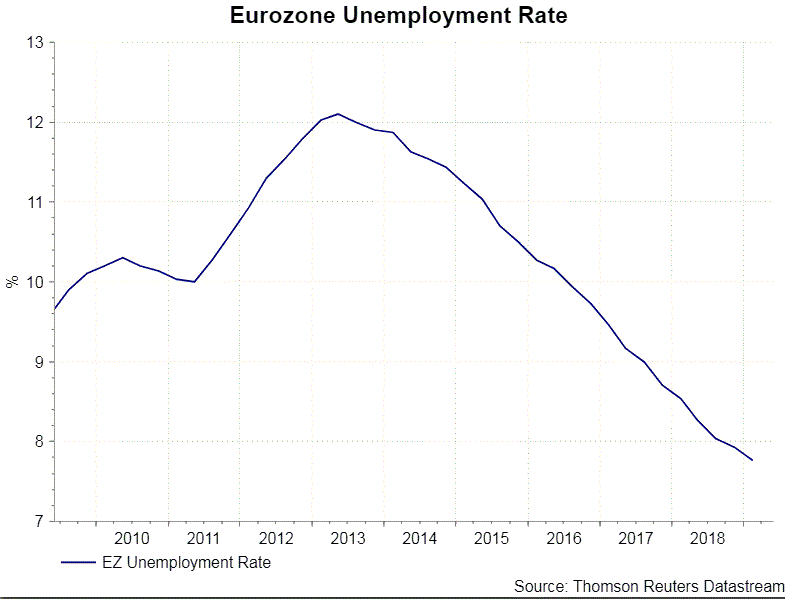
 Although headline inflation picked up to +1.7% y/y in April, it stays below the +2% target. The market expects inflation in May (due today) to have decelerated further to +1.3% y/y. Market expects Eurozone’s soft inflation environment to persist for sometime. Currently trading at 1.29%, the 5y5y inflation swap has been dropping quite sharply recently. ECB’s revelation of its discussion of tiering and the April meeting minutes were two events causing the decline. On a positive note, the job market has been resilient with the unemployment rate continuing the downtrend.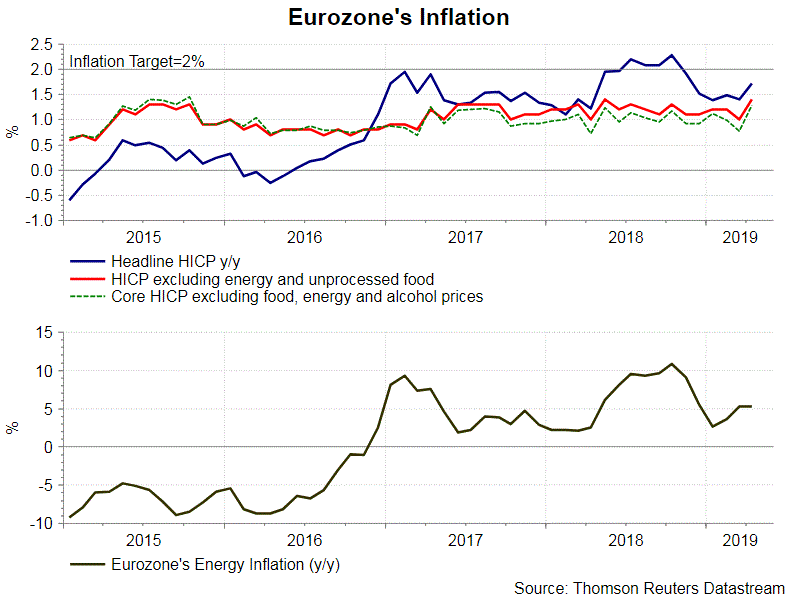
 Extension in Forward Guidance: In April, ECB reiterated that the policy rates would “remain at their present levels at least through the end of 2019, and in any case for as long as necessary to ensure the continued sustained convergence of inflation to levels that are below, but close to, 2% over the medium term”. Since downside risks to the growth outlook have heightened and the market has pushed forward the timing that the inflation target can be achieved, we expect ECB to adjust the forward guidance in June to signal that the policy rates would stay unchanged for a longer period of time, say, March or June, 2020.
Technical Details of TLTRO-III: ECB noted in April that details of the operation would “be communicated at one of our forthcoming meetings”. We believe June is the best timing to make this announcement, as the operation would take effect in September. Although it is possible that ECB would delay it until July, making such announcement at the upcoming meeting would be more appropriate as it comes along with updated economic projections and adjustment of forward guidance.
The closely-watched feature is pricing, which would be determined by two criteria. First, it will take into account a thorough assessment of the bank-based transmission channel of monetary policy. Second, it will consider further developments in the economic outlook. Back in 2016, TLTRO-II offered a conditional rate of -0.4% (same as ECB’s deposit rate) to banks that could meet certain lending benchmarks. We expect the new round of operation should also be priced at negative rate. Moreover, under TLTRO-II, banks could borrow up to 30% of the amount of their existing stock of loans to non-financial corporations and households. We look forward to the clarification on the definition of “eligible loans” for the new operation.