Sample Category Title
USD/CAD Weekly Outlook
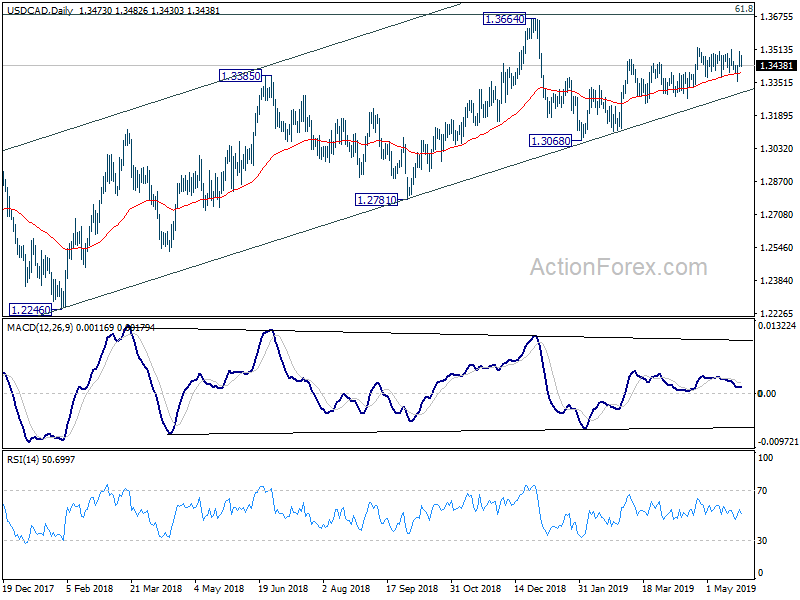
USD/CAD's consolidation from 1.3521 extended last week with a sharp decline to 1.3357 but quickly rebounded. Initial bias remains neutral this week and outlook is unchanged. In case of another fall, downside should be contained above 1.3274 support to bring rally resumption. On the upside, firm break of 1.3521 will resume the whole rise from 1.3068 to retest 1.3664 high. However, decisive break of 1.3274 support will indicate completion of rise from 1.3068 and turn outlook bearish.
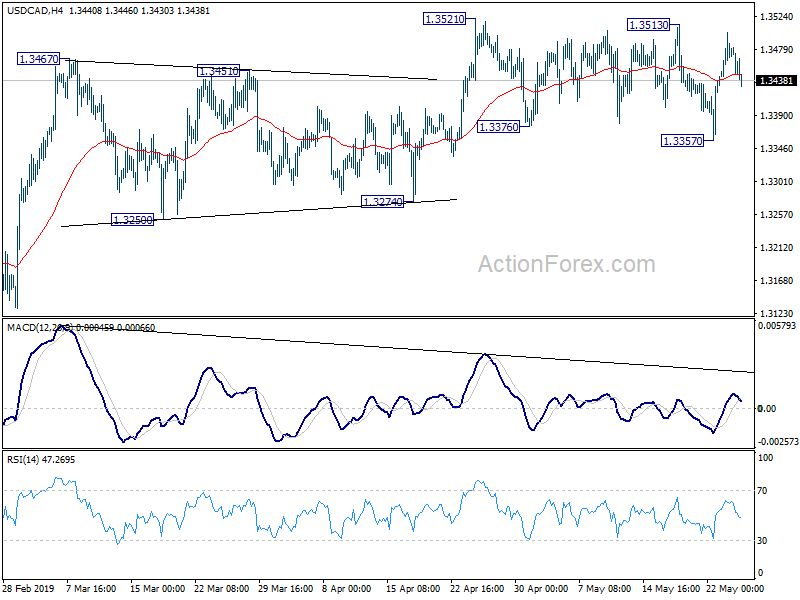
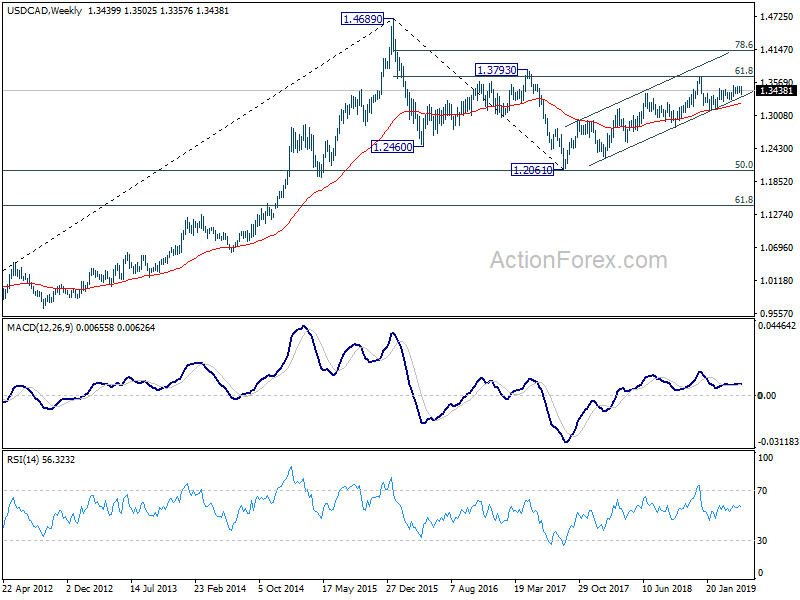
In the bigger picture, USD/CAD is staying well inside medium term rising channel (support at 1.3304). Thus, the up trend from 1.2061 (2017 low) should be in progress. On the upside, decisive break of 61.8% retracement of 1.4689 (2016 high) to 1.2061 at 1.3685 will pave the way to 78.6% retracement at 1.4127 next. This will remain the favored case as long as 1.3068 support holds. However, sustained break the channel support will be the first sign of medium term reversal. Firm break of 1.3068 would confirm.
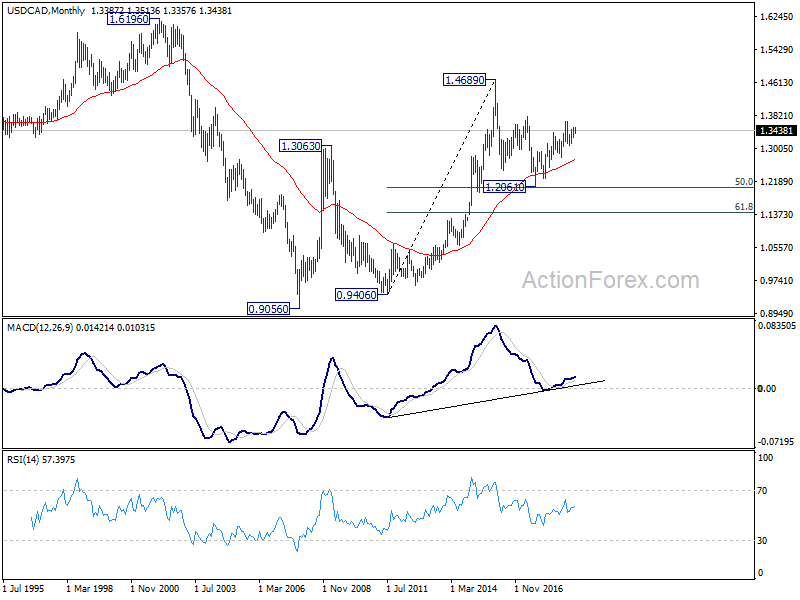
In the longer term picture, corrective fall from 1.4689 (2015 high) should have completed with three waves down to 1.2061, just ahead of 50% retracement of 0.9406 (2011 low) to 1.4689 (2015 high) at 1.2048. The development keeps long term up trend from 0.9406 and that from 0.9056 (2007 low) intact. For now, there is still prospect of extending the long term up trend through 1.4689.
EUR/GBP Weekly Outlook
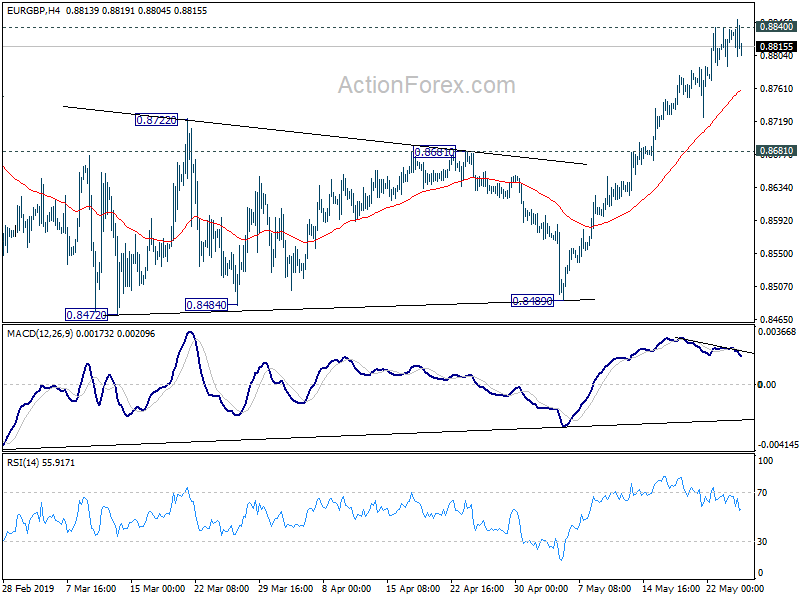
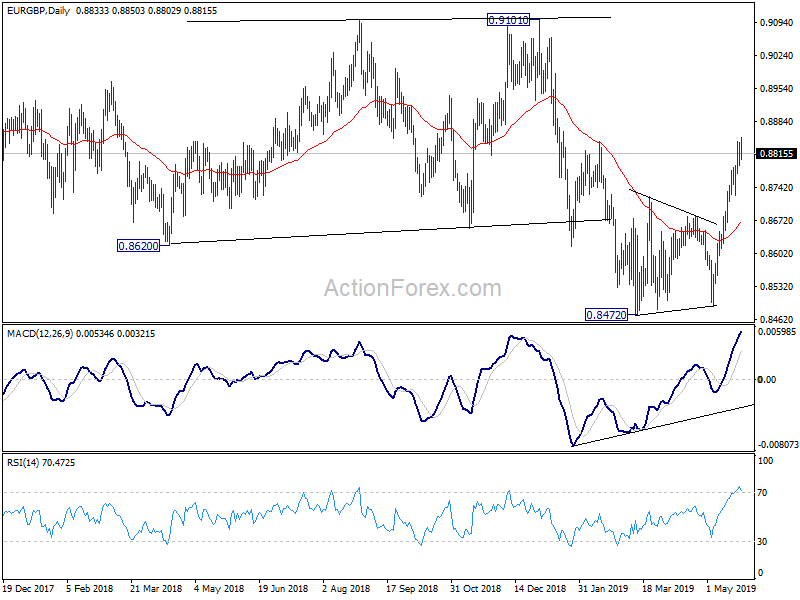
EUR/GBP's rally continued last week and hit as high as 0.8850, breached 0.8840 resistance. Upside momentum is diminishing mildly as seen in 4 hour MACD. But there is no clear sign of topping yet. Further rise is in favor this week first. Sustained break of 0.8840 will target 0.9101 key resistance next. On the downside, break of 0.8681 resistance turned support is needed to indicate completion of rise from 0.8489. Otherwise, near term outlook will remain cautiously bullish in case of deep retreat.
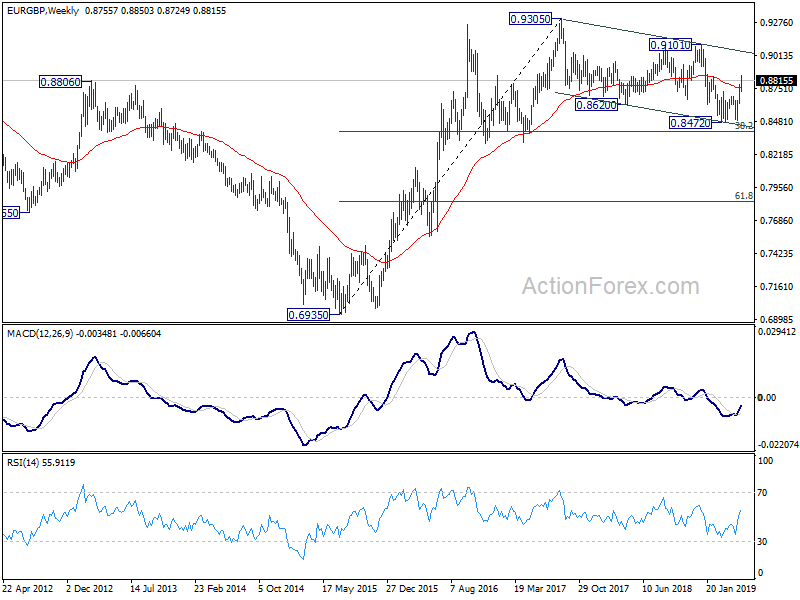
In the bigger picture, medium term decline from 0.9305 (2017 high) is seen as a corrective move. No change in this view. Current development argues that it might have completed with three waves down to 0.8472, just ahead of 38.2% retracement of 0.6935 (2015 low) to 0.9306 at 0.8400, after hitting 55 month EMA (now at 0.8511). Decisive break of 0.9101 resistance will confirm this bullish case. Nevertheless, as EUR/GBP is still staying inside long term falling channel, correction from 0.9305 could still extend to 0.8400 fibonacci level before completion.
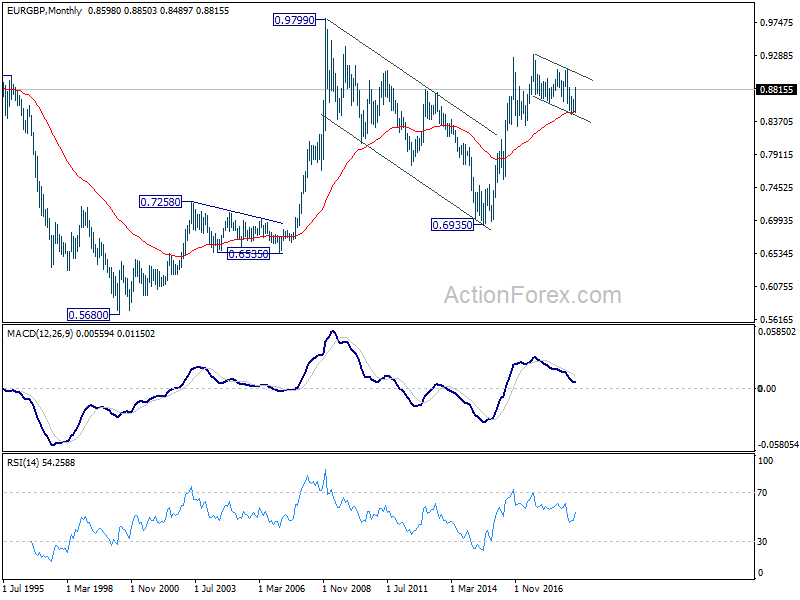
In the long term picture, we're holding on to the view that rise from 0.6935 (2015 low) is resuming the up trend from 0.5680 (2000 low). As long as 50% retracement of 0.6935 to 0.9304 at 0.8120 holds, further rise should be seen through 0.9305 to 0.9799 and above down the road.
EUR/AUD Weekly Outlook
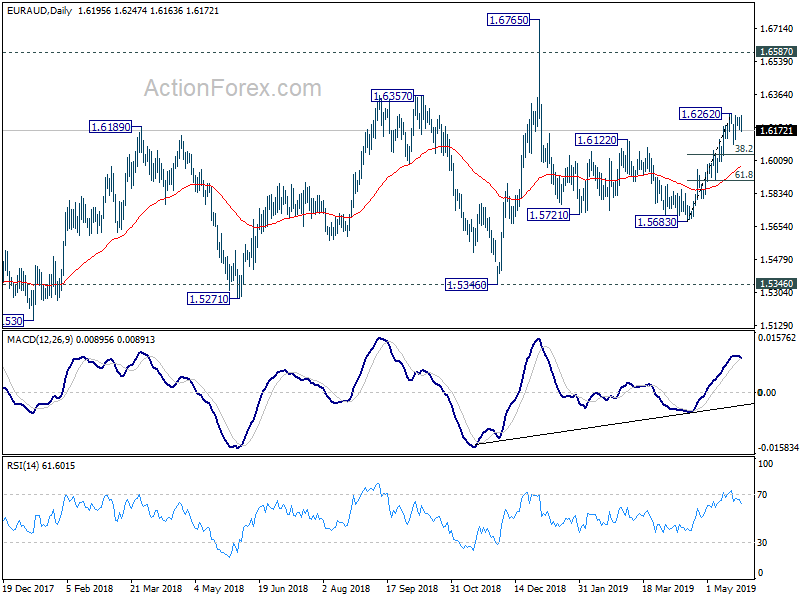
EUR/AUD turned into consolidation below 1.6262 last week but near term bullish outlook is unchanged. Initial bias stays neutral this week for some more sideway trading. In case of deeper pull back, downside should be contained by 38.2% retracement of 1.5683 to 1.6262 at 1.6041 to bring rise resumption. Current development argues that correction from 1.6765 has completed with three waves down to 1.5683. On the upside, break of 1.6262 will pave the way to retest 1.6765 high.
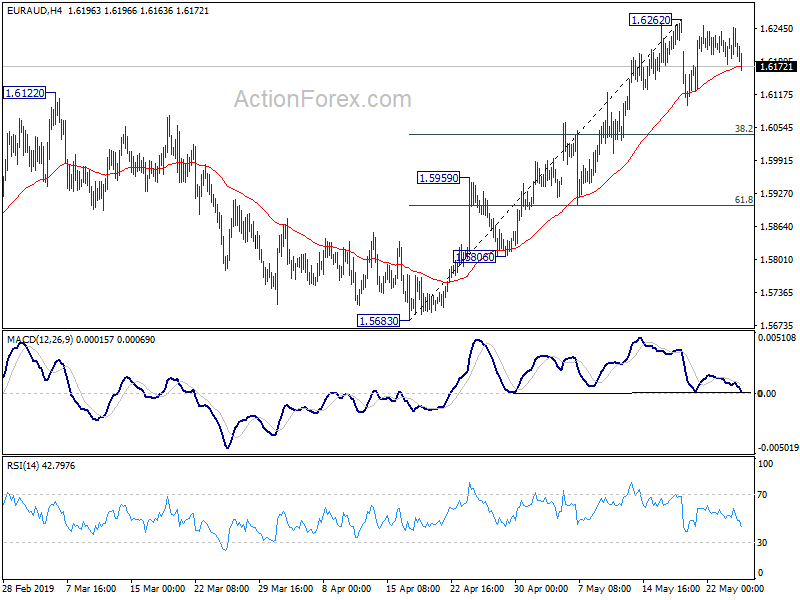
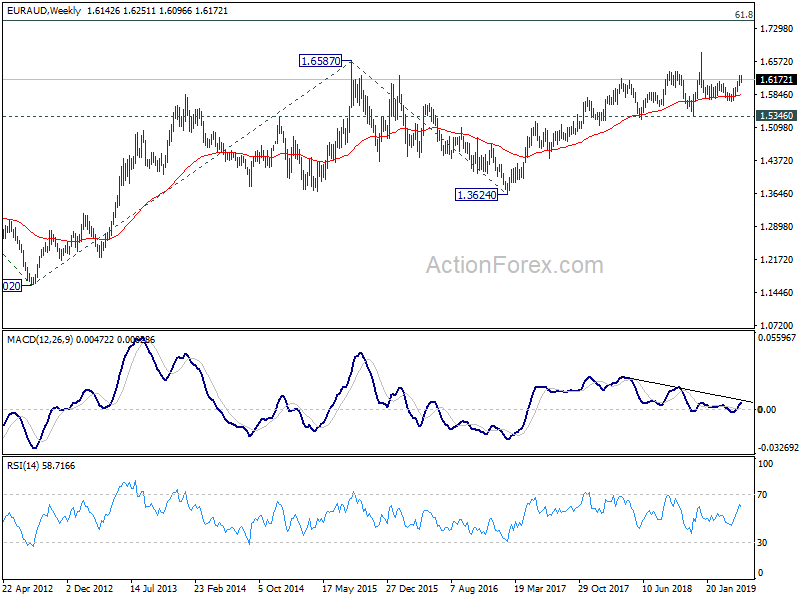
In the bigger picture, as long as 1.5346 support holds, outlook will still remain bullish. Up trend from 1.1602 (2012 low) is expected to resume sooner or later. Break of 1.6765 will target 61.8% retracement of 2.1127 (2008 high) to 1.1602 at 1.7488 next. However, firm break of 1.5346 key support will indicate trend reversal, with bearish divergence condition in weekly MACD, and turn outlook bearish.
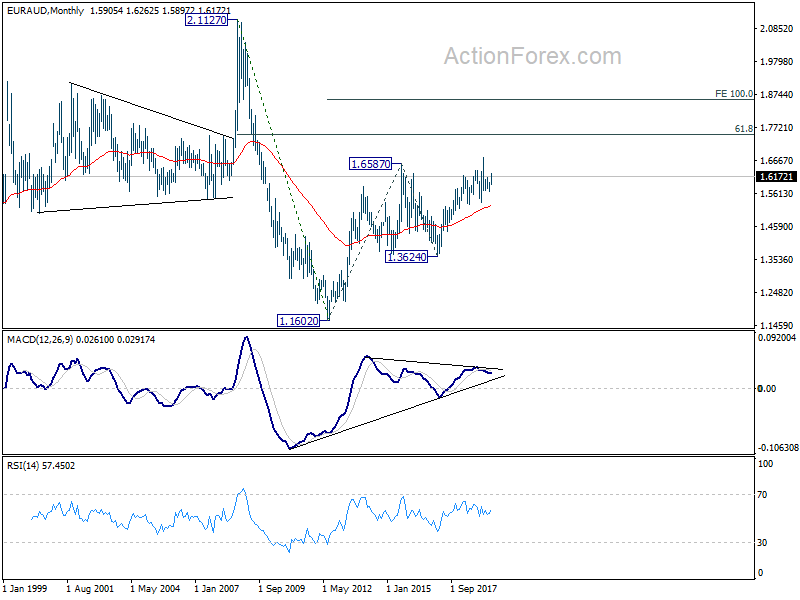
In the longer term picture, the rise from 1.1602 long term bottom (2012 low) is still in progress for 61.8% retracement of 2.1127 to 1.1602 at 1.7488. Firm break there will pave the way to 100% projection of 1.1602 to 1.6587 from 1.3624 at 1.8069. This will remain the favored case as long as 1.5346 remains intact.
EUR/CHF Weekly Outlook
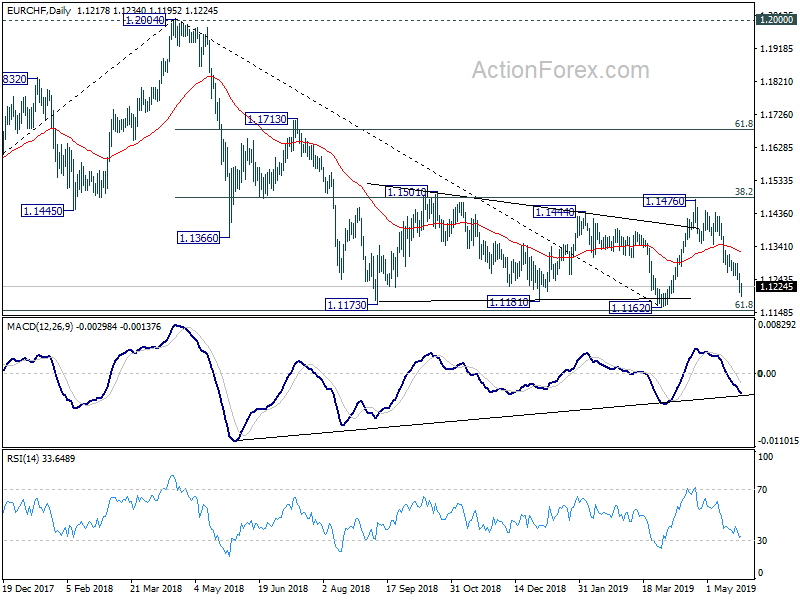
EUR/CHF's fall from 1.1476 extended to as low as 1.1195 last week. There is no sign of bottoming yet and further decline is in favor this week towards 1.1162 key support. For now, we'd still expect strong support above 1.1162 to bring rebound. On the upside, break of 1.1292 minor resistance will turn bias back to the upside. However, sustained break of 1.1162 could carry larger bearish implication and turn outlook bearish.
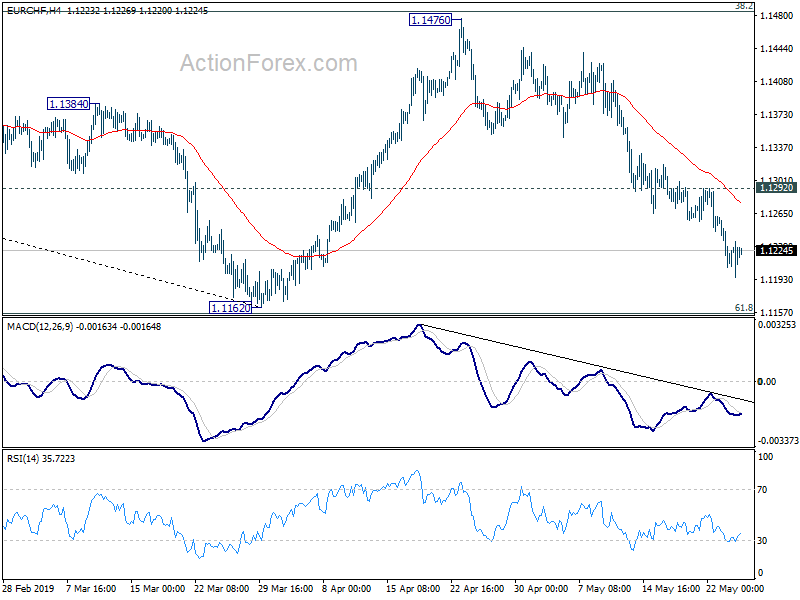
In the bigger picture, at this point, we're slightly favoring the case that corrective fall from 1.2004 has completed at 1.1162 after being supported by 61.8% retracement of 1.0629 to 1.2004 at 1.1154. Decisive break of 1.1501 resistance should confirm and target 1.1713 resistance next. On the downside, sustained break of 1.1154 will confirm resumption of decline from 1.2004 and target 1.0629 support next.
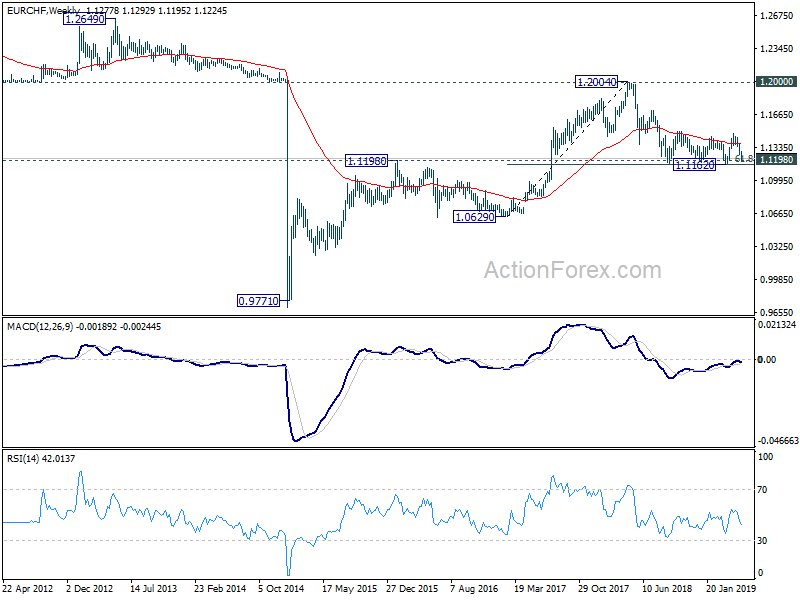
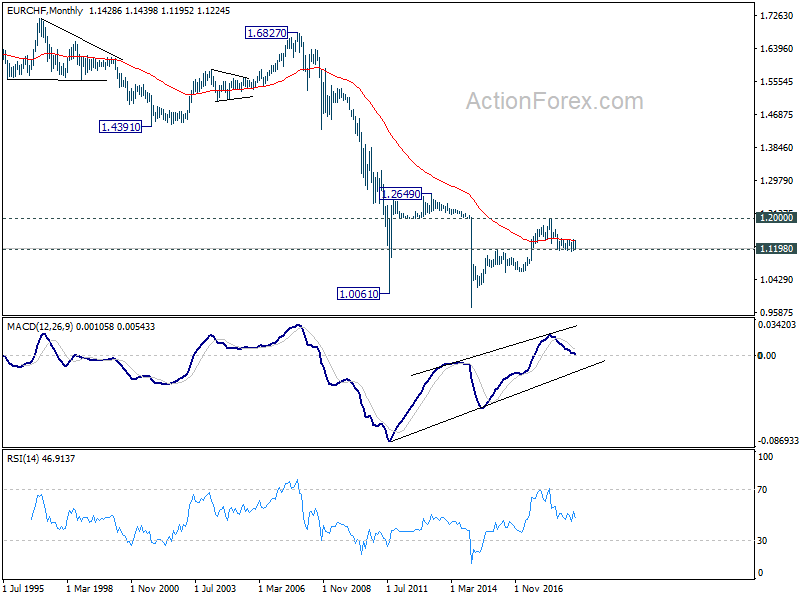
In the long term picture, current development suggests that medium term fall from 1.2004 is merely a corrective move. That is, up trend from 0.9771 is not completed yet. Nevertheless, there is little prospect of up trend resumption yet. More range trading should be seen in medium term. However, firm break of 61.8% retracement of 1.0629 to 1.2004 at 1.1154 will argue that the long term trend has reversed. In this case, deeper decline could be seen back to 1.0629 support and below.
EUR/JPY Weekly Outlook
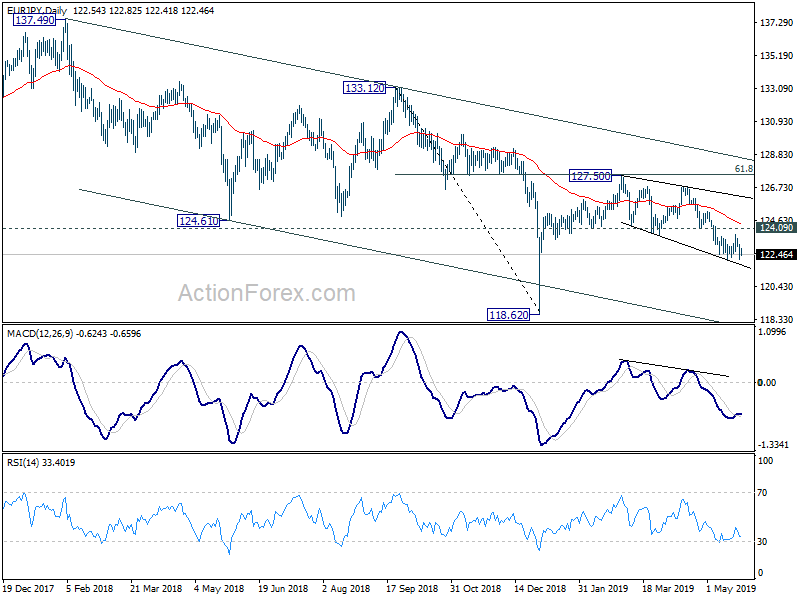
EUR/JPY stayed in consolidation from 122.08 last week and outlook is unchanged. Initial bias remains neutral this week and some more sideway trading could be seen first. In case of another recovery, upside should be limited by 124.09 support turned resistance to bring fall resumption eventually. On the downside, firm break of 122.08 will resume the fall from 127.50 and target 118.62 low next. Nevertheless, firm break of 124.09 will at least bring stronger rebound back to 125.23 resistance and above.
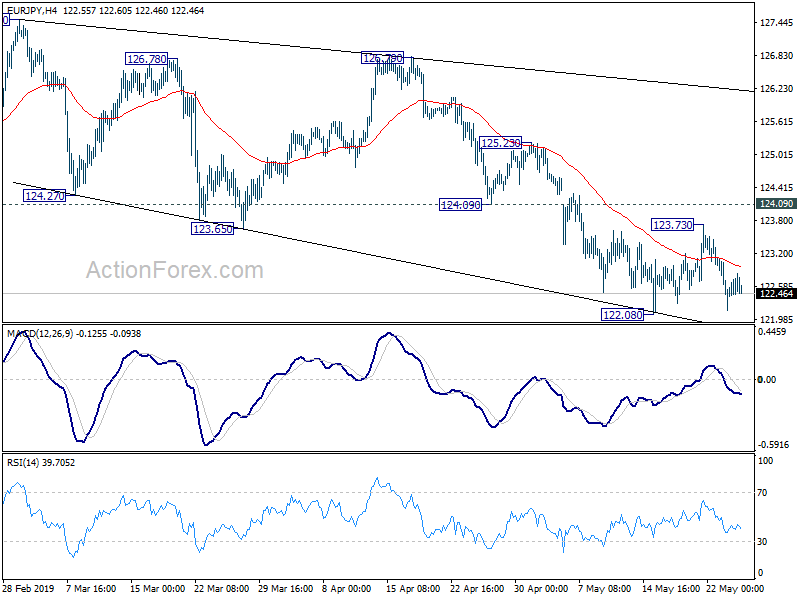
In the bigger picture, current development argues that rebound from 118.62 is merely a correction and has completed at 127.50. EUR/JPY is staying in long term falling channel from 137.49 (2018 high). Decisive break of 118.62 will confirm resumption of this medium term fall and target 109.20 low. For now, this will be the favored case as long as 125.23 resistance holds.
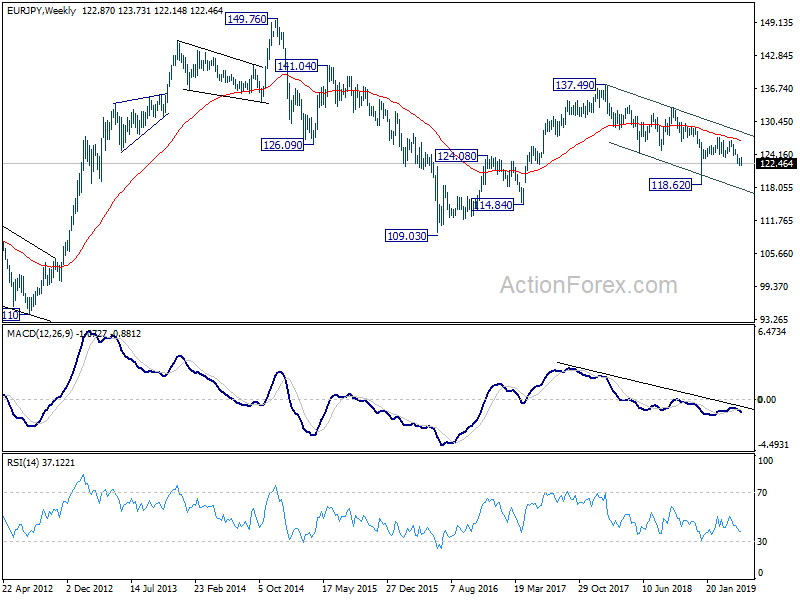
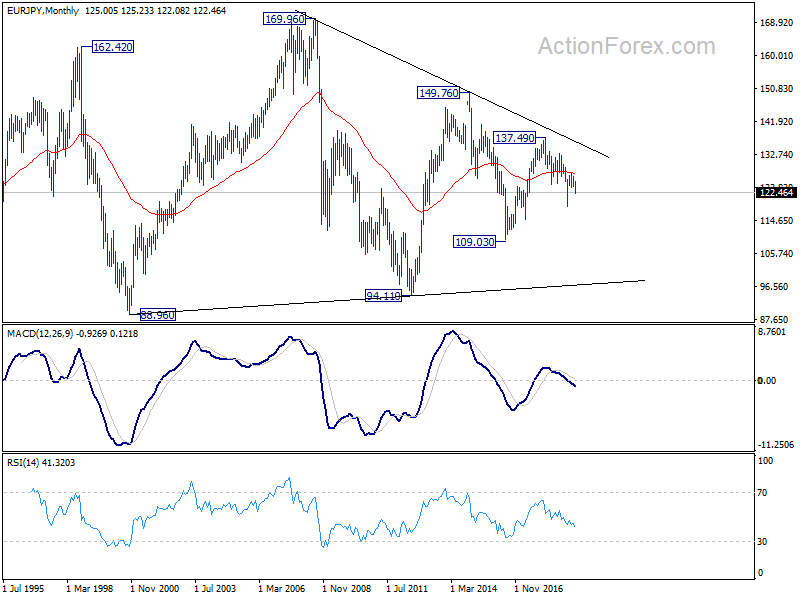
In the long term picture, EUR/JPY is staying in long term sideway pattern, established since 2000. Fall from 137.49 is seen as a falling leg inside the pattern. Break of 118.62 will extend this falling leg through 109.03 low. On the upside, break of 133.12 resistance bring retest of 149.76 (2014 high).
GBP/JPY Weekly Outlook
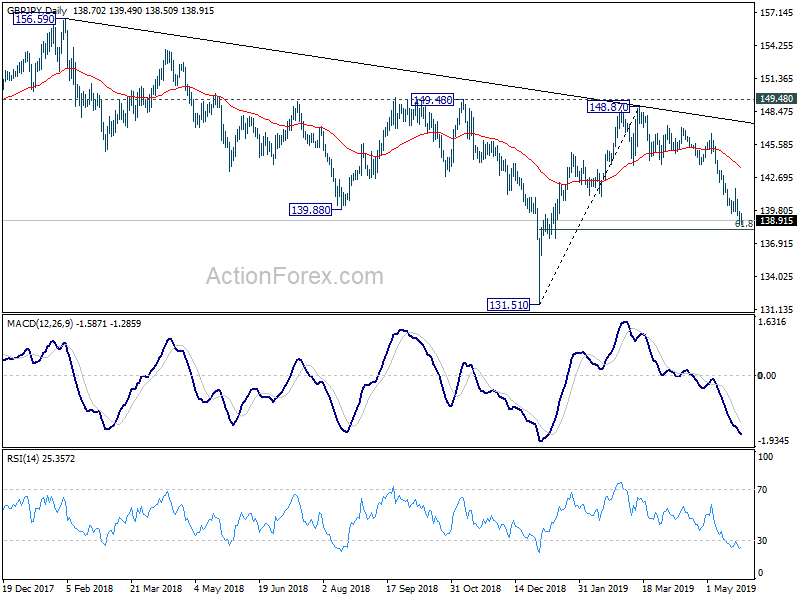
GBP/JPY dropped to as low as 138.50 last week as the decline from 148.87 extended. Downside momentum diminished mildly but there is no clear sign of bottoming yet. Further decline is expected initial this week to 61.8% retracement of 131.51 to 148.87 at 138.14. Sustained break there will pave the way to retest 131.51 low. On the upside, break of 141.73 minor resistance is needed to indicate short term bottoming. Otherwise, outlook will remain bearish in case of recovery.
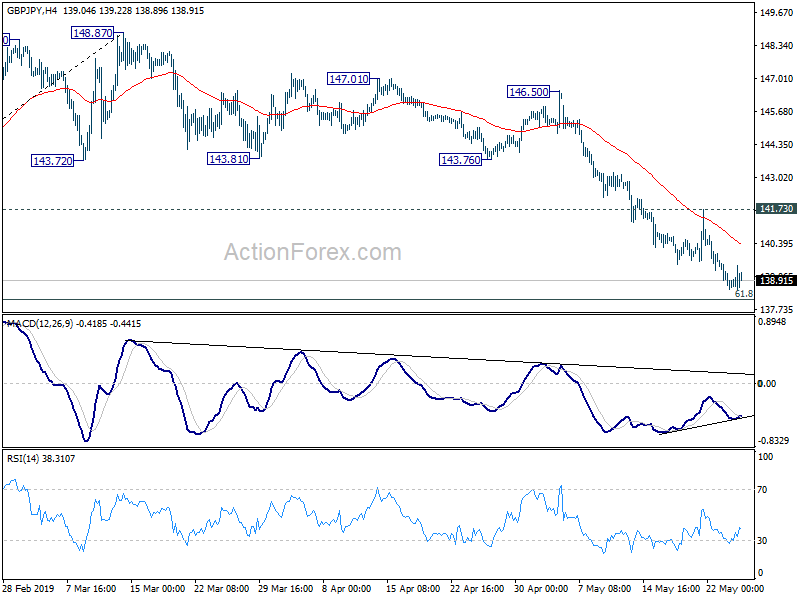
In the bigger picture, current development suggests that GBP/JPY was rejected by 149.98 key resistance. And medium term fall from 156.59 is still in progress. Break of 131.51 will target 122.36 (2016 low). On the other hand, decisive break of 149.98 should confirm that medium term fall from 156.59 (2018 high) has completed at 131.51 already. Further rally would be seen back to 156.59 resistance and above.
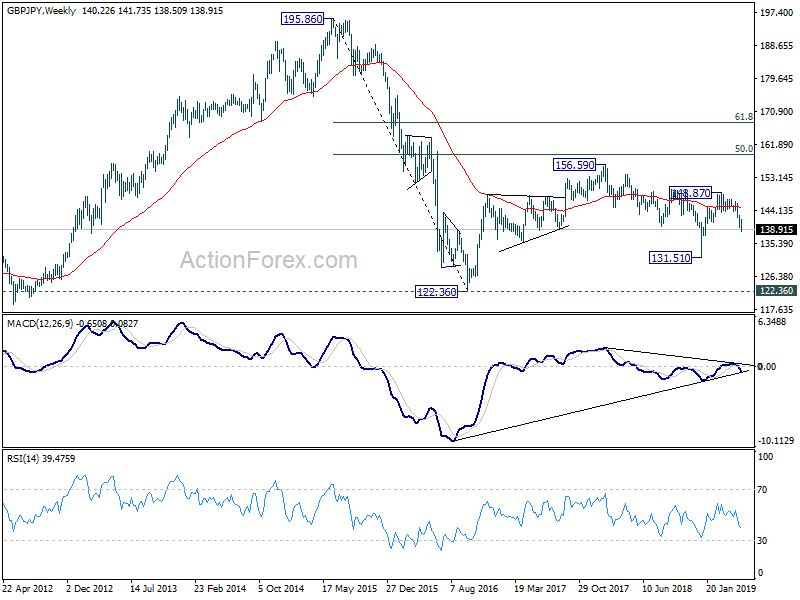
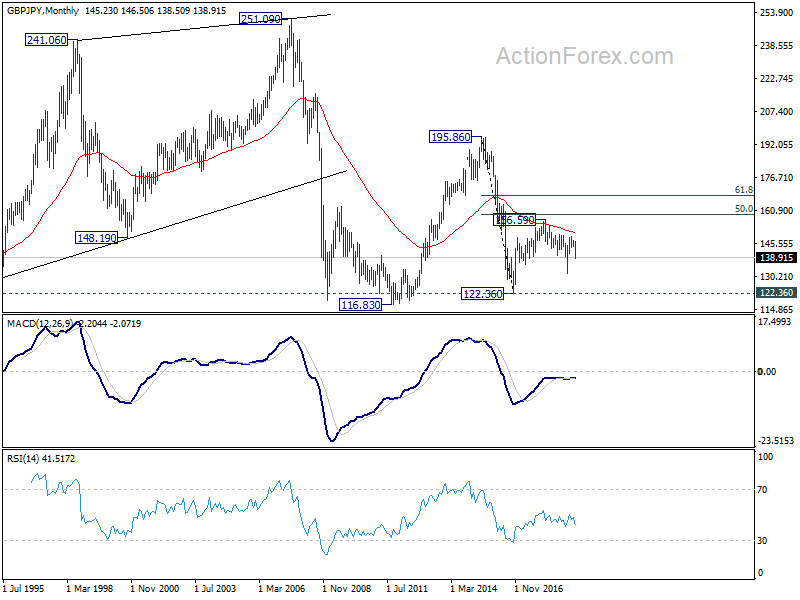
In the longer term picture, the rise from 122.36 (2016 low) to 156.59 (2018 high) doesn't display a clear impulsive structure. Thus, we're treating price actions from 122.36 as a corrective pattern. In case of an extension, strong resistance is likely to be seen at 50% retracement of 195.86 (2015 high) to 122.36 at 159.11 to limit upside. On the downside, break of 131.51 support will bring 122.26 low back into focus.
Treasury Yield in Free Fall, But the Worst in the Markets are Yet to Come
Sterling was the weakest one last week as it suffered persistent selloff ahead of UK Prime Minister Theresa May's announcement on resignation. The Pound has indeed stabilized since then after the speculation was realized. Without May, the Brexit path ahead becomes even more uncertain. The key lies on who May's successor would be. Brexit hard-liner Boris Johnson is the favorite. But we'd doubt how much support he'd get from Conservatives on this specific issue of Brexit. More importantly, even if Johnson would prefer no-deal Brexit, we'd doubt if he can get this through the parliament. So far, to the general public, he doesn't display any more charisma than May.
Dollar was the second weakest one as dragged down by free fall in treasury yields. Escalation in US-China trade war was seen as a key factor of risk aversion. But firstly, Dollar's performance was not disastrous and only displayed clear bearishness against Yen and Swiss Franc. Secondly, the global stock markets weren't in crashes despite some volatility. We'd argue that the worst is not being priced in the markets yet.
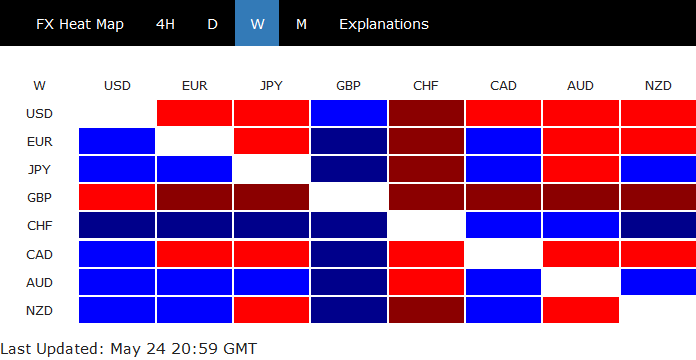
Swiss Franc and Yen were among the strongest ones for the week, on falling yields, rightly so. But Australian Dollar was a surprised second. RBA Governor Philip Lowe indicated that June is probably the time for another rate cut. After that, Westpac revised their forecast to predict three cuts this year. Surprised win of Liberal-led coalition gave the Aussie a solid base. It's further boosted by strong rally in iron ore prices. One these two factors fade, Aussie will be back under pressure.
US-China tension will only escalate, before finding a resolution
Tensions between US and China escalated much since the negotiations collapsed weeks ago. Global technology companies started to cut off their ties with Chinese telecom giant Huawei after US moves to sanction it. That came despite US Commerce Department's announcement to temporary ease some restrictions.
Trump boasted the chance for a quick trade deal, and claimed even the "very dangerous" Huawei could be included as part of the agreement. But no one is listening after Trump misjudged the situations and gave false hope of a deal so many times. It's now believed that the 25% tariffs on USD 300B in all other Chinese imports would be imposed eventually. And the US is having more Chinese tech companies in radar for Huawei kind of isolations.
On the Chinese side, they continued to deny any claims against them, ranging from government orchestrated IP theft, to Huawei's ties to the Communist Party controlled army. Instead of looking at ways to rectify their ill practices, China just continued with hard line rhetorics, mentally preparing their citizens for a "new long march".
For now, no meeting is scheduled for more trade talks. No Trump-Xi summit is arranged. We don't see any intention to come back to the table soon.
US PMIs show serious risks in the economy
We're not going to dig deep into the academic aspects on the impacts of prolonged US-China trade war. These reports from IMF and OECD are worth a read if you're interested. Instead, we'd look what data have been reflecting.
A big warning regarding the US economy came from May PMIs released last week. US PMI manufacturing dropped sharply to 50.6, down from 52.6, It's also the lowest level in 116 months. PMI services dropped to 50.9, down from 53.0, lowest level in 39 months. PMI Composite dropped to 50.9, down from 53.0, a 36-month low.
The effects of recent escalation in US-China trade war were likely not fully reflected in the PMI readings yet. Manufacturing could drag on the economy further into Q3 as no quick fix is seen in the tensions. Services are not likely to offer any more help to ease the slowdown. We might start to see upcoming data confirming this bearish picture.
Talking about PMIs, German PMI manufacturing was stuck at 44.3 in May, deep in contraction region. Services also started to lose momentum with PMI services dropped to 55.0. For Eurozone as a whole, PMI manufacturing dropped to 47.7. PMI services dropped to 52.5. There were signs slowdown in manufacturing is spreading over to the services sector.
China PMI manufacturing to be released this week will probably be the most important one to indicate how bad the sector has been performance. From there, we might gauge further impact from the current round of tariff escalations.
Dollar extended consolidations, futures implies 77% of Fed cut this year
Dollar did turn weaker last week on falling yields. But there is no clear sign of bearish reversal yet. Clearly, GBP/USD is in near term decline. EUR/USD is held well below 1.1263 near term resistance AUD/USD is kept well below 0.6988 support turned resistance. USD/CAD is just in consolidation from 1.3521. Clear bearish sign was seen in USD/CHF which break through 1.0005 temporary low. USD/JPY does look like it's resuming recent fall from 112.40. But it has to break through 109.20 support first.
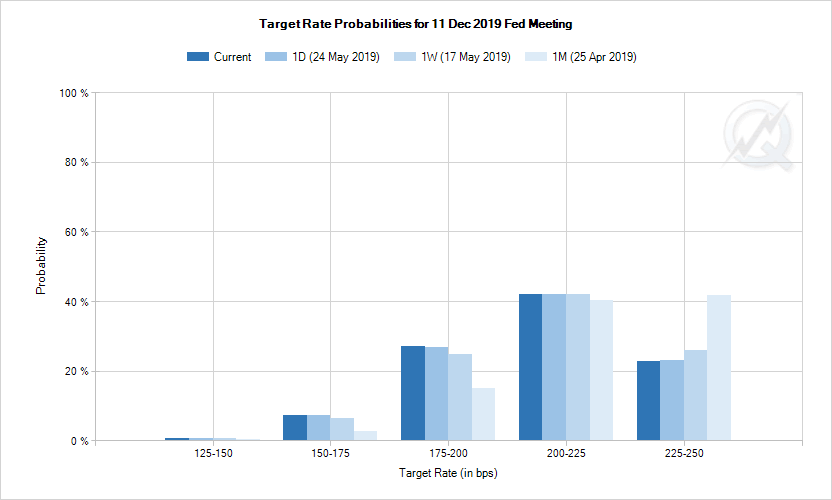
Fed fund futures are pricing in 77.3% chance of Fed cut by December meeting. That's slightly higher than 74% a week ago. A month ago, only around 58.2% chance was implied. So, the speculations of Fed cut didn't intensify much last week. Based on recent comments by Fed officials, most are firm on the patience stance. We'd not expecting any preemptive rate cut until there are hard data pointing to deterioration in employment and inflation.
10-year yield in free fall, might test 2% before bottoming
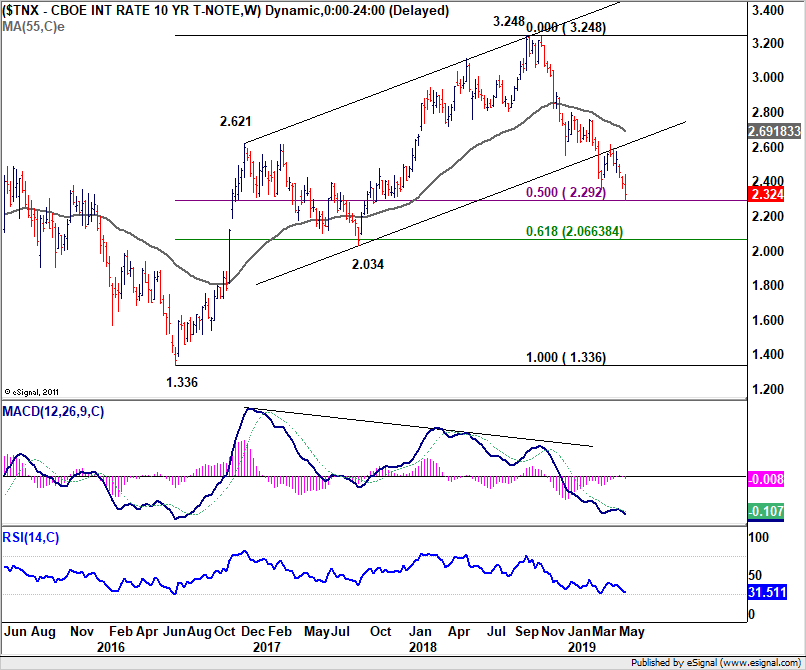
Risk aversion was mainly reflected in US treasury yields last week. 10-year yield accelerated through 2.356 low to as low as 2..294 before closing at 2.324. Some support is happening around 50% retracement of 1.336 to 3.248 at 2.292. But near term outlook will remain bearish as long as last week's high at 2.441 holds. We'd expect further decline to 61.8% retracement at 2.066, which is close to 2.034 support as well as 2.0 psychological level. Strong support could only be seen around that level to bring sustainable rebound.
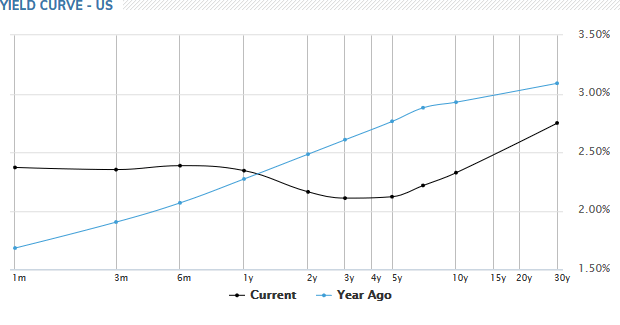
However, it should be noted that with 3-month yield is now currently at 2.353. That is, the most important part of yield curve, 3-month to 10-year, is inverted again. We're expecting deeper decline in stocks, while risks are piling up for global and US economies. Thus, at this point, we'd prefer not to rule out a firm break in 2.0 handle for 10-year yield yet.
No global stock market crash yet, but risks are growing
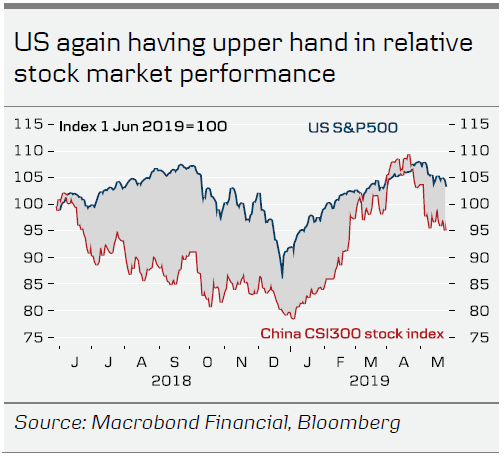
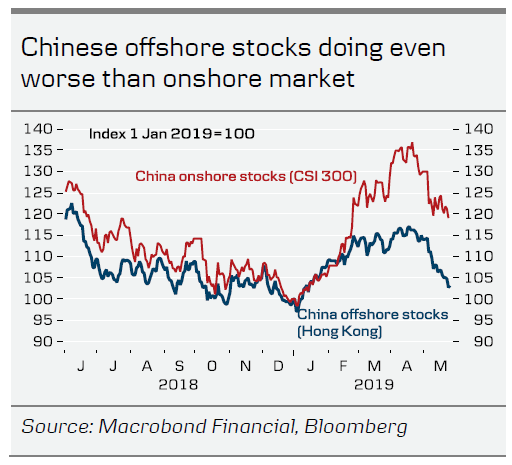
While the development in US treasury yields were rather terrible, global stocks were relative steady instead. Most major global indices were kept above prior week's low, except NASDAQ and China Shanghai SSE. Yet, SSE was held above May's low. Thus, last week's declines in major indices were largely part of near term consolidative moves. Investors haven't really panicked over last week's developments, at least not stock investors.
DOW hit as low as 25328.09, before closing at 25585.69, which was kept above prior week's low at 25222.51. S&P 500 hit as low as 2805.49 then closed at 2826.06, above prior week's low at 2801.43. NASDAQ was the worse one, hitting as low as 7585.32 then closed at 7637.01, which was still above prior week's low at 7627.22 even though it was breached. DAX dipped to as low as 11926.34 then closed at 12011.04, kept above prior week's low at 11844.47. Nikkei hit weekly low at 20922.00, then closed at 21117.22, above prior week's low at 20751.44. China Shanghai SSE dropped to weekly low at 2838.45 then closed at 2852.99. Prior week's low at 2872.83 was broken. But May's low at 2838.38 was defended so far.
Though, it should be noted that developments in DOW, S&P 500 and NASDAQ together suggest that risks are rather heavy on the downside, at least for the near term. S&P 500 alone doesn't look too bad as it was just gyrating around a flat 55 day EMA. A rebound from current level to retest 2954.13 high cannot be ruled out.
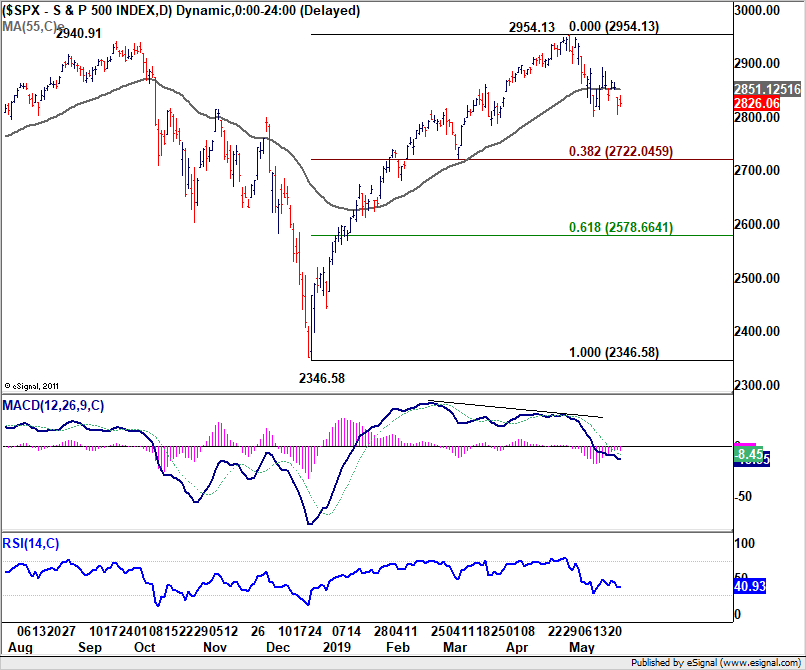
However, NASDAQ's picture was worse with the decline from 8176.08 extended through 7627.22 support. It's clearly in progress for 38.2% retracement of 6190.01 to 8176.08 at 7417.46.
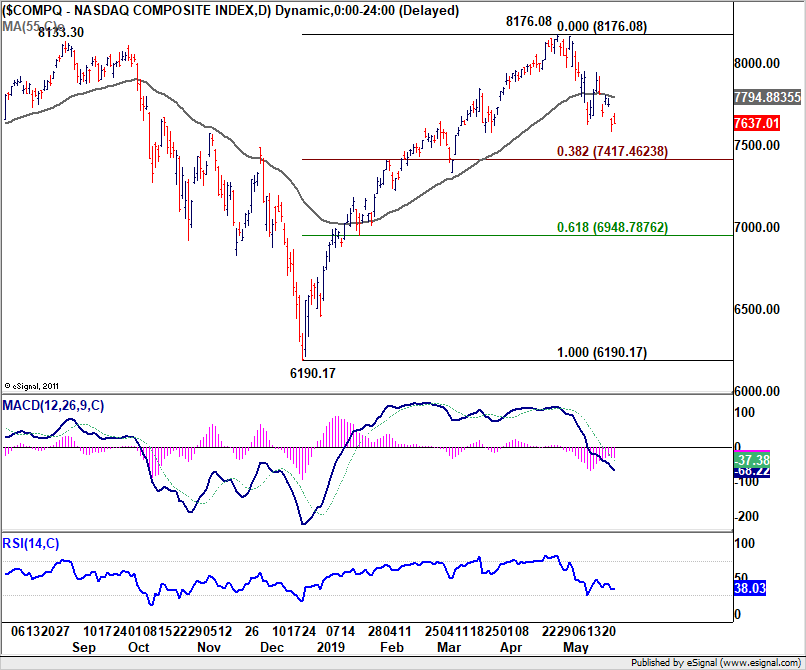
DOW didn't make a ne low last week. But it's outlook is actually even worse as consolidation from 25384.03 is completely held below 55 day EMA. Fall from 26695.96 should at least have a test on 38.2% retracement of 21712.53 to 26695.96 at 24792.29. Hence, together, the developments suggest that S&P 500 should head lower to corresponding fibonacci level at 2722.04.
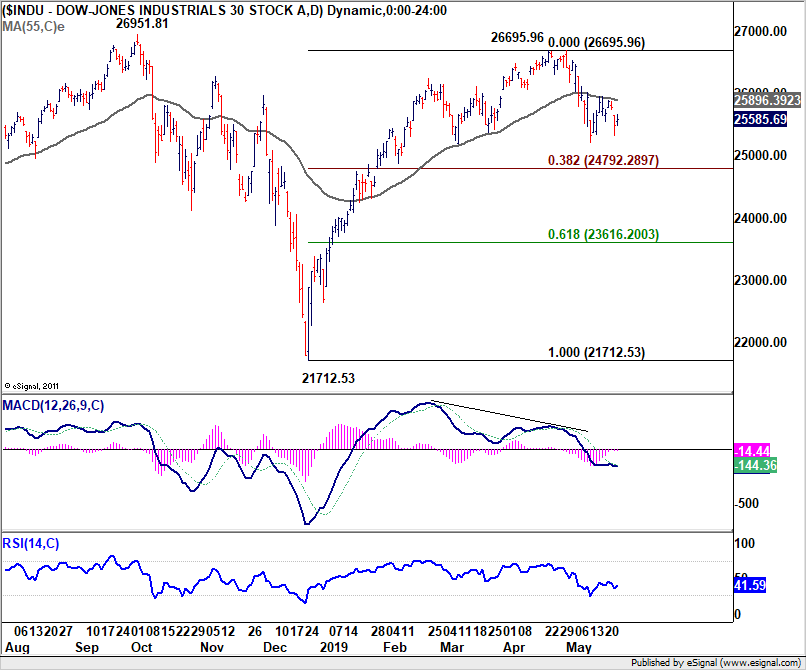
Our base case is actually more bearish then this. DOW's fall from 26695.96 is seen as the third leg of consolidation pattern from 29651.81. We'd anticipate an easy break of 24792.28 fibo level ahead. And a test on 27121.53 support could be seen. S&P 500 and NASDAQ are expected to follow such developments.
GBP/JPY Weekly Outlook
GBP/JPY dropped to as low as 138.50 last week as the decline from 148.87 extended. Downside momentum diminished mildly but there is no clear sign of bottoming yet. Further decline is expected initial this week to 61.8% retracement of 131.51 to 148.87 at 138.14. Sustained break there will pave the way to retest 131.51 low. On the upside, break of 141.73 minor resistance is needed to indicate short term bottoming. Otherwise, outlook will remain bearish incase of recovery.
In the bigger picture, current development suggests that GBP/JPY was rejected by 149.98 key resistance. And medium term fall from 156.59 is still in progress. Break of 131.51 will target 122.36 (2016 low). On the other hand, decisive break of 149.98 should confirm that medium term fall from 156.59 (2018 high) has completed at 131.51 already. Further rally would be seen back to 156.59 resistance and above.
In the longer term picture, the rise from 122.36 (2016 low) to 156.59 (2018 high) doesn't display a clear impulsive structure. Thus, we're treating price actions from 122.36 as a corrective pattern. In case of an extension, strong resistance is likely to be seen at 50% retracement of 195.86 (2015 high) to 122.36 at 159.11 to limit upside. On the downside, break of 131.51 support will bring 122.26 low back into focus.
May’s Resignation Means Brexit is Back to Square One
One word perfectly sums up the events of this week. Disappointing. For some it began with the uninspiring conclusion of Game of Thrones, long-term stock investors grimaced at the lack of progress with the US-China trade war, and FX traders will see the British pound remain in limbo after Prime Minister May admitted defeat in failing to deliver a Brexit deal.
Theresa May’s watch will end on June 7th and the Brexit process basically goes back to square one. The short-term fate of the British pound will depend on the final candidates preference for type of Brexit (soft/hard) and if they appear capable of negotiating across party lines to secure the votes in getting a deal pushed through Parliament.
- Brexit Aftermath: New PM to decide on hard or soft Brexit
- Trade talks need to resume before irreparable damage to confidence
- Oil geopolitical risks to heat up this summer
European politics remain front and center as Nationalist and far-right parties are expected to make progress in gaining European Parliamentary seats. The result from the elections will likely deliver further friction within the bloc and more hurdles on integration. The trade war has delivered a major blow to risk appetite with all three major US indexes posting weekly losses, as well big monthly declines. Both the Chinese and Americans appear poised to ramp up domestic support/stimulus in the event of a prolonged standoff. Someone will blink and lead the return to the negotiating table, both sides are motivated, but we may need to see more market carnage before that happens. Key upcoming events include a rate decision from the Bank of Canada, the annual budget release for New Zealand, US preliminary Q1 GDP reading, China’s Manufacturing PMI reading and Canadian GDP.
PM Boris Johnson unlikely
Theresa May’s announcement means Brexit is right back to where we were right after the Referendum. The Brexit outcomes are still plentiful: We could see the Brexit deadline extended beyond Halloween, a general election is very possible or a second referendum asking for a no-deal or to remain.
Uncertainty will remain in place until we learn more about who will take over the negotiations and that process will take almost two months. The current favorite to replace Theresa May is former Foreign Secretary Boris Johnson, a hardliner that would suggest a greater risk for a no-deal Brexit. History however is not on Mr. Johnson’s side, as he was the odds on favorite last time.
The British pound is likely to remain volatile and the risks could be to the upside following the recent precipitous drop. The markets will likely expect an orderly exit, and that should prove supportive for cable.
Dollar bottom in place
The latest reports on housing and durable goods is not pointing an optimistic outlook for the US economy. US economic data points still outperform the other advanced economies, but its strength is heavily priced in FX markets, which could mean we may have just seen a key bottom put in place for the dollar.
While the financial markets have been hit with a wave of risk aversion that has sent bond market yields plummeting. Despite the recent optimism from the Fed and their minutes, risks to the downside are growing and the Fed may need to deliver another dovish message in the coming months that cement rate cut bets in the nearer future. Current expectations are at 55% for a rate cut at the September meeting, but that could increase as growth has been dealt a strong blow from the US-China trade war and cautious tones from this past earnings season.
Oil
Crude prices have been battered by global demand concerns, rising stockpiles in the US and fading expectations that OPEC and their allies will unanimously be on board and deliver an extension of production cuts this year. The markets have been closely paying attention to the trade war between two largest economies and the lack of progress is likely to put an unexpected dent in demand forecasts for the second quarter.
The wildcard for oil remains geopolitical risks as tensions remain high between the US and Iran. The US appears set on showing Iran they are prepared for an escalation in the region. President Trump is sending 1,500 troops to assure freedom of navigation in the area. While both sides appear not interested in starting a war, tensions are flaring up and the risks for some conflict are growing.
Spare capacity and output at risk should support for a stabilization in prices in the short-term, but if we see another multi-million barrel build with US inventories, oil could see the bearish correction continue.
Gold
Gold prices remain in a quagmire as wave of risk aversion that has sent bond market yields plummeting has yielded minuscule gains for the safe-haven. The last six weeks of yellow metal trading has seen alternative bullish/bearish trading that for the most part has been kept in a tight $1,270 to $1,300 range. The deflationary conditions globally have hurt the inflationary pressure reason for owning gold. With US equities hovering within 5% of their record highs, gold is likely to have difficulty breaking out. Gold may need the Fed to confirm what markets are pricing in already and signal rate cuts are coming. That however may not happen anytime soon, if we see a resumption of constructive trade talks between the US and China.
Bitcoin
Some past Bitcoin skeptics, such as JP Morgan and Facebook are becoming believers in cryptocurrencies. The recent surge with Bitcoin was supported on the continued progress with mainstream commerce adoption. First, we saw JP Morgan create the first US bank-backed cryptocurrency, then we saw Fidelity launch plans for institutional bitcoin trading, and E-Trade intends to offer cryptocurrency trading on their platforms. The financial community is seeing more companies want to take advantage of the digital currency and the latest to join is Facebook. The social media giant aims at competing with banks in offering secure and cheaper ways of sending money.
Bitcoin is meteoric rise immediately was followed by a tulip-mania crash. The current rally is seeing price trade around the $8,000 level and further mainstream acceptance could prove vital for the bullish momentum to continue. To the upside the psychological $10,000 level provides key resistance, while $6,500 remains major support.
Summary 5/27 – 5/31
Monday, May 27, 2019
[php_everywhere instance="1"]
Tuesday, May 28, 2019
[php_everywhere instance="2"]
Wednesday, May 29, 2019
[php_everywhere instance="3"]
Thursday, May 30, 2019
[php_everywhere instance="4"]
Friday, May 31, 2019
[php_everywhere instance="5"]
China Weekly Letter – US Pulls Out the Heavy Weapons by Targeting Huawei
- The US blacklisting of Huawei is a clear escalation of the trade war; Xi-Trump meeting in June could be at risk
- Xi Jinping prepares people for a new 'Long March' and calls for self-reliance
- Poor US manufacturing data challenges Trump's 'maximum pressure' strategy
US ban on Huawei is significant
This week it became clear that the US is pulling out the heavy weapons to pressure China into offering concessions in the trade war . After Washington put Huawei on the so-called 'entity list' a wide range of US suppliers to Huawei announced they had to halt deliveries. Among the companies were chip makers Intel Corp., Qualcomm Inc. and Broadcom Inc. Google has cut off the supply of hardware and some software products to Huawei, meaning that Huawei mobile device users will not be able to use Google apps such as Gmail, YouTube and its Google Play app store. The ban also affects international companies outside the US if their products have more than 25% content of US products. It led several global technology companies to put a halt to deliveries as well. The US Commerce Department granted a 90-day reprieve on the ban, but the move was limited in scope and mainly to give users time to adjust to the change.
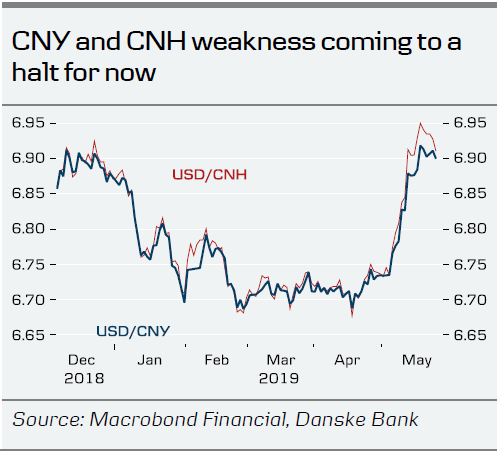
China has not yet retaliated to the blacklisting of Huawei, but Chinese Commerce Ministry spokesman Gao Feng said at a weekly briefing that negotiations can only continue if the US 'correct their wrong actions'. He added that China would closely monitor relevant developments and 'prepare necessary responses'.
Huawei founder, Ren Zhengei, said a clash with the US had been 'inevitable' because Huawei's aim to be a global leader threatened US interests. Ren claimed Huawei has been preparing for this and that the ban would not impact Huawei's 5G plans. According to some analysts, Huawei has built an inventory of US product supplies to maintain production for the rest of the year. Huawei's own chip company HiSilicon struck a defiant tone on Friday last week, saying the company had prepared for a US ban for some time through development of its own chips and that Huawei will aim to be self-reliant going forward. However, tech experts are not convinced by Huawei's back-up plan, as Huawei most likely still depends on US and other foreign technology companies in many different areas.
US President Donald Trump hinted on Thursday that the Huawei ban could be part of a trade deal . On the prospect of a deal he stated "It's happening, it's happening fast and I think things probably are going to happen fast with China because I cannot imagine that they can be thrilled with thousands of companies leaving their shores for other places". A China adviser this week said the latest events meant that a Xi-Trump meeting at the G20 meeting in Osaka in late June was now 'up in the air '.
Comment: Blacklisting Huawei is a very serious move, in our view, and even if the ban is lifted as part of a deal, considerable damage will likely remain. In future, mobile phone buyers will wonder whether they can rely on access to Google apps such as Gmail and YouTube. Half of Huawei's 200m unit sales are generated outside China.
Apart from being a bargaining chip in the trade talks, the ban may also be an attempt to halt Huawei's rollout of 5G networks in China as well as in other countries. Huawei is widely known to offer the best 5G network in the world and by not allowing it in the US, American companies will be at a disadvantage in sectors such as Artificial Intelligence and the Internet of Things. Other countries may also think twice about choosing Huawei for 5G networks as the threat from the US will not go away. It remains to be seen if China will retaliate and, if so, how. Xi Jinping visited a rare earths facility this week, which may be a signal to Trump that China is considering restricting US access to rare earths. Rare earths are needed in many high-tech products such as mobile phones, electric vehicles and missiles. China is estimated to have 90% of global rare earth production. Xi was accompanied by China's chief negotiator in the trade talks, Vice Premier Liu He.
The move on Huawei is also seen in China as the US speaking with two tongues. On the one hand, the US claims Huawei is dangerous because it is affiliated with the state. On the other hand the US government itself is exercising its own power on US tech companies.
Xi prepares for a new 'Long March', calls for self-reliance
On top of the defiant tone in state media, China this week sent another signal, that the country is not about to give in to US pressures but instead is preparing for a long drawn-out conflict. Xi Jinping visited the place in Jiangxi where the so-called 'Long March' started in 1934. It lasted for a year after a strenuous march of 4.000 miles following a defeat to the Nationalists. "We are now embarking on a new Long March, and we must start all over again", Xi said. On the trip to Jiangxi Xi also called for self-reliance within technology and said "Only if we own our own intellectual property and core technologies, then can we produce products with core competitiveness and [we] won't be beaten in intensifying competition". A senior official said on Friday that China will increase its support and subsidies for tech companies amid rising protectionism from the US.
Comment: It is clear by now that China is vulnerable as long as it depends on US technology. China is thus likely to double down on its technological ambitions. It will only add to the global tech race and rivalry with the US.
US manufacturing takes a hit, and consumers feel higher prices
In a survey by the American Chamber of Commerce in China, 74.9% of US businesses say that tariffs are having a negative effect on their business. The US economy may increasingly feel the headwind from the trade war as the PMI new orders index in May dropped to the lowest level since 2009. A New York Fed report also estimates that the latest tariff increase by Trump raises annual costs for US households by USD831. Next week's Chinese PMI will give the first indication of how the trade war escalation is affecting China's economy.
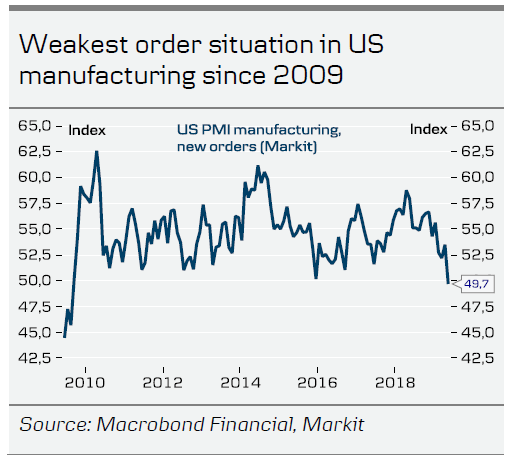
Comment: While trade talks are in deadlock right now, we believe that a trade deal will be back on the table when the damage to the US economy and markets becomes more apparent. The poor manufacturing data may be the start of this. It's hard to see a deal without pressure from a further sell-off in US stock markets, as China is digging in and stock market weakness is likely needed for Trump to soften the current stance. If China decides to cancel the Xi-Trump meeting in June, this could be a catalyst for a further market sell-off, in our view.