Sample Category Title
Weekly Economic and Financial Commentary: Global Economy Pauses, But Will It Refresh?
U.S. Review
Housing Looking Up as Dark Trade Clouds Gather
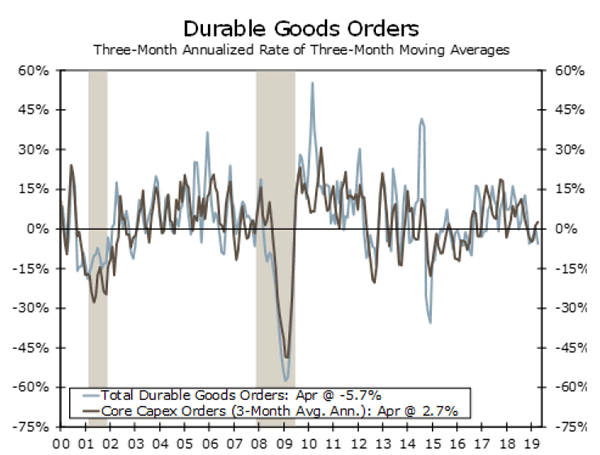
- Durable goods orders slipped 2.1% during April. The grounding of the 737 MAX led to a 25.1% drop in commercial aircraft orders. However, core capex orders also fell 0.9%, a signal that business investment should continue to be subdued.
- Home sales stumbled during April. Existing sales fell 0.4% and new sales dropped 6.9%, though the monthly weakness masks a more positive trend driven by lower mortgage rates.
- Minutes for the early May FOMC meeting appear to confirm our view that the Fed is not likely to raise interest rates this year.
Housing Looking Up as Dark Trade Clouds Gather
Dark clouds continued to gather over the once-promising trade discussions between the United States and China. Increasingly stark dialogue sent financial markets into a tizzy this week, an indication that there is a wider gap between the two parties than many observers had initially thought. On a more auspicious note, tariffs imposed last year on steel and aluminum imported from Mexico and Canada were lifted this week, which will likely bring the USMCA trade agreement a step closer to ratification.
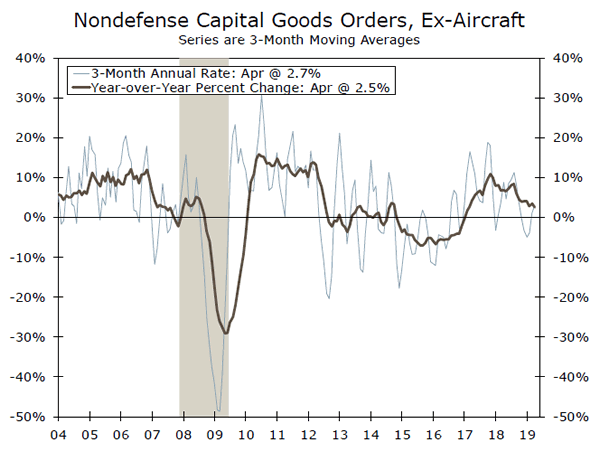
Trade headwinds are likely playing a role in weakness out of the factory sector. Durable goods orders fell 2.1% during April. Orders have been influenced by volatile aircraft orders in recent months, and this was again the case. The grounding of the Boeing 737 MAX and subsequent negative headlines have led to net cancellations, which weighed heavily on April's outcome. The civilian aircraft component of orders fell 25.1% while shipments declined 16.0%. That said, the weakness in orders extends beyond commercial aircraft. Core capex orders also slipped 0.9%, and have slowed to 2.5% year-over-year. Overall, manufacturing activity should continue to be subdued in coming months amid heightened trade frictions and sluggish global growth.
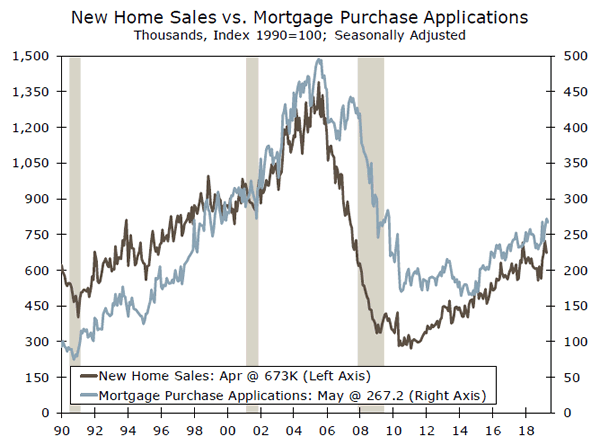
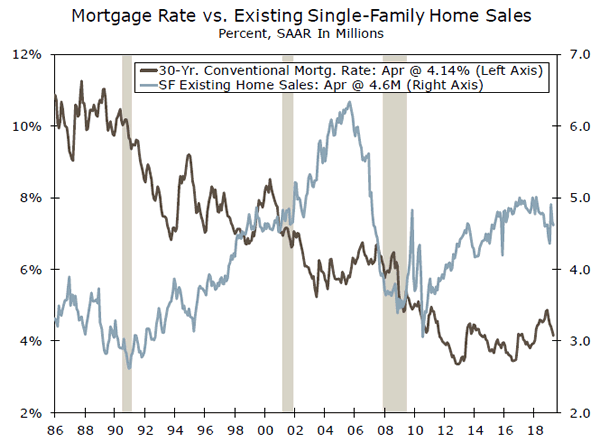
On a brighter note, lower mortgage rates have helped stymie the sharp pullback in home sales seen last year but have not reversed it. Declines in both new and existing home sales during April mask an overall improving trend in the housing market. New home sales came in below expectations, falling 6.9% in April. However, the report contained significant revisions to prior months' data, which showed sales reached a cycle-high 723,000-unit pace during March. Furthermore, the 673,000-unit sales pace hit in April was the fourth strongest since 2007. New home sales have likely been helped by builders offering discounts to clear rapidly rising inventories, however the trend is clearly improving and sales are now running 7.0% ahead of their year-ago pace.
Existing home sales also posted a drop and fell 0.4% during the month. While underwhelming, existing sales remain fairly solid and are running just slightly below their year-ago pace. A significant breakout is unlikely this year, but sales should be stronger than they have been the past few months. The rate on the 30-year fixed-rate mortgage fell to 4.14% in April, the lowest point since early last year. A pickup in purchase applications has followed. Through May 10, the purchase application index is 4.0% above the level averaged last year during that same period.
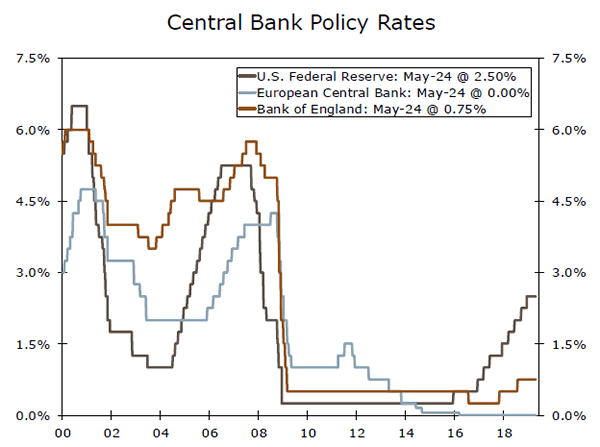
Meanwhile, the minutes for the early-May FOMC meeting revealed that the strong GDP report in Q1 assuaged many officials' fears of the mounting downside risks which had accumulated towards the end of 2018. While many Fed officials believe most of the weakness in core inflation is transitory, some members argued the downside risks to inflation have increased. Bear in mind that the recent escalation in trade tensions occurred after the meeting and the imposition of additional tariffs on goods imported from China may cause many Fed members to reassess risks to the outlook. However, the minutes reaffirm our stance that the Fed will likely keep further interest rate hikes on hold for the rest of the year.
U.S. Outlook
Consumer Confidence Index • Tuesday
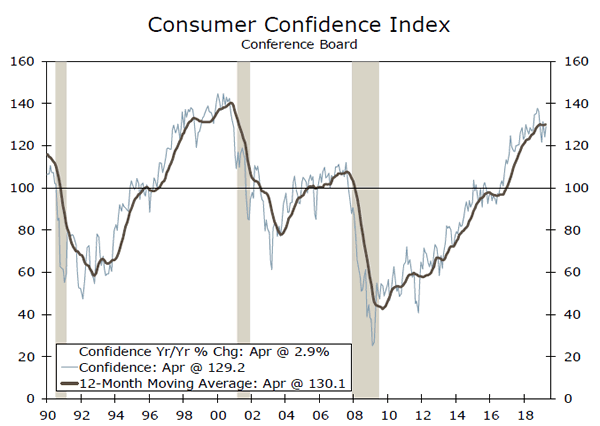
Consumer confidence came to a halt in recent months. Mounting trade tensions between the United States and China, an uncertain path forward for monetary policy and financial market volatility have imparted some instability in monthly optimism measures.
As recently as October, the consumer confidence index trended to its cycle high of 137.9, just before the market sell-off to end last year weighed on optimism. But, even as the S&P 500 regained its lost ground this year, lingering trade tensions and policy uncertainty prevented a renewed gain in ebullience. The preliminary print for the University of Michigan consumer sentiment index—final print to be released Friday—suggests that sentiment remained limited in May.
But, the Conference Board's survey was completed before the more recent weakness in financial markets and prior to the escalation of the trade war, so we may see a bit of a bounce in May.
Previous: 129.2 Wells Fargo: 137.2 Consensus: 130.0
Q1 Corporate Profits • Thursday
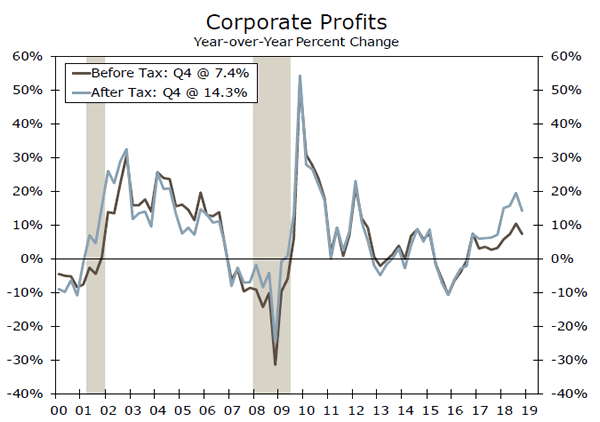
U.S. corporations saw profits surge in 2018, due in part to a boost from favorable corporate tax reform enacted in late 2017, but also to the strong rate of economic growth. As the tax cuts dropped out of the year-over-year calculations, it was only natural for after-tax profits to decelerate this year. The pace of growth in before-tax profits has held up slightly better, but is expected to slow. With the second release of Q1 GDP next week, we receive the first look at corporate profit growth. We have written previously that S&P 500 earnings metrics and the economy-wide measure of profit growth that feeds into GDP differ in coverage and methodology. While expectations of corporate earnings-per-share have been volatile in recent months, we expect pre-tax profit growth to slow based on our forecast that real GDP growth will downshift this year. We will be paying particular attention to increased cost pressures stemming from tariffs, which are a wild card for profit margins.
Previous: 7.4% (Before-tax, Year-over-Year) Wells Fargo: 6.2% (Before-tax, Year-over-Year)
Personal Income & Spending • Friday
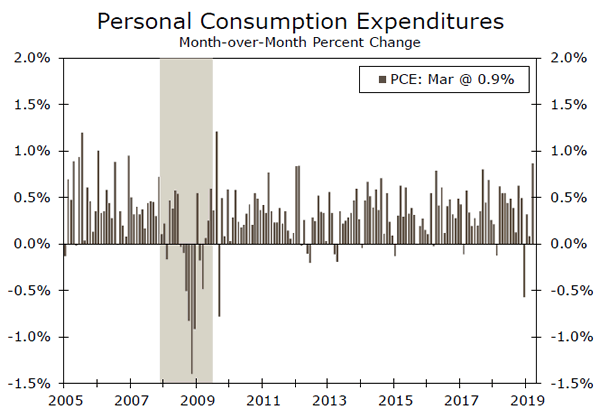
The all-but-static economic environment of late has not only weighed on consumer confidence but purchasing habits as well. In recent months, consumer data have lagged and in some ways been misleading, like the still-curious drop in December spending, sparking fear of a broad retrenchment. Spending ended the first quarter with a solid 0.9% increase, suggesting some momentum headed into Q2. But, with April retail sales falling 0.2%, another surge in April spending is unlikely. Baring a huge retrenchment in May and June, spending should still be on track for a decent quarter. Of additional focus on Friday will be the core PCE deflator. The recent Fed minutes disclosed that officials viewed the recent downshift in inflation as 'transitory', but others saw the anchoring of inflation expectations as a headwind to reaching its 2% target. We look for some pick-up in this measure, but we expect it to remain below 2% this year.
Previous: 0.1%, 0.9% Wells Fargo: 0.4%, 0.2% Consensus: 0.3%, 0.2% (Month-over-Month)
Global Review
Global Economy Pauses, But Will It Refresh?
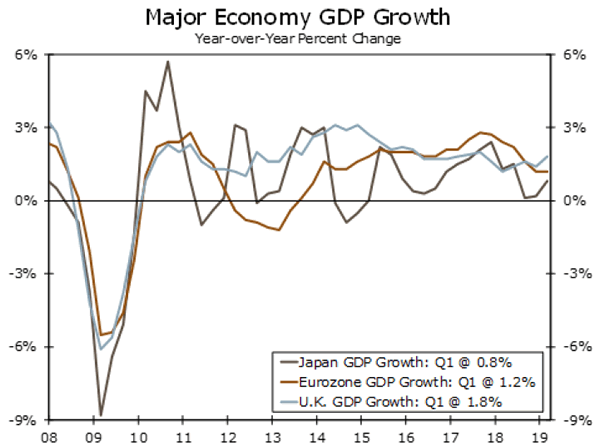
- Data out of foreign economies during the past week have been mixed, with no clear evidence that international growth was either speeding up or slowing down in early 2019.
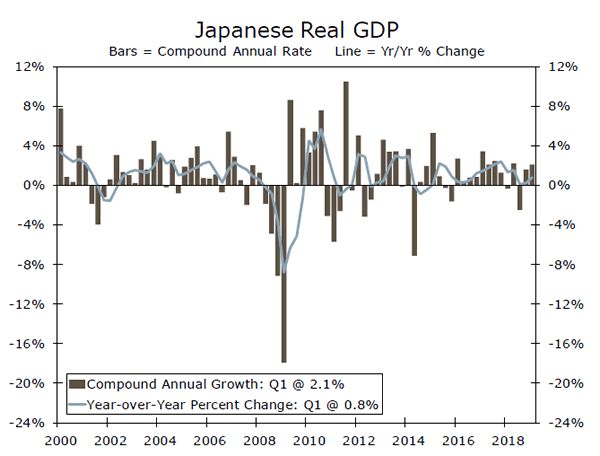
- Japan's Q1 GDP was firmer than expected, though mainly due to soft imports rather than strong domestic demand. March machinery orders were firmer than forecast, while exports were softer than forecast.
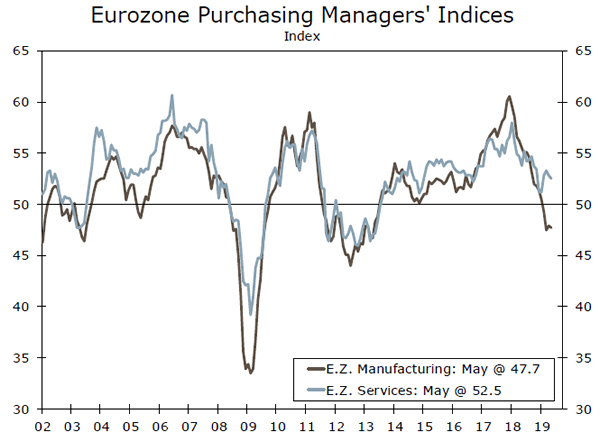
- After the U.K economy showed resilience in Q1, confidence surveys suggest a possible slowing in Q2. Meanwhile Eurozone PMIs eased in May, and it seems likely that Eurozone Q2 GDP growth might fall short of its Q1 pace.
Good News, Bad News
It was a mixed week for foreign economic data, starting with the release of Japan's Q1 GDP data on Monday. The figures looked impressive at first glance, with Japan's economy growing 2.1% quarter-over-quarter annualized. However, the underlying details were underwhelming. Household consumer spending fell at a 0.4% pace and business investment contracted at a 1.2% pace. Domestically the main sources of strength were residential investment and public investment. In fact the key driver behind the favorable headline growth figures was the large 17.2% quarterover- quarter annualized fall in imports, an indicator of still subdued domestic demand. With consumer spending growing only moderately, and the government still on track at this stage to raise the consumption tax in October, the Bank of Japan's accommodative monetary policy stance looks likely to persist for an extended period of time.
The news got slightly better as the week progressed as the April core CPI firmed to 0.9% year-over-year, and March core private machinery orders rose 3.8% month-over-month. That said, CPI inflation remains well short of the central bank's 2% inflation goal, while machinery orders are still down 0.7% compared to the same month a year ago.
U.K. Resilience Shows Some Signs of Cracking
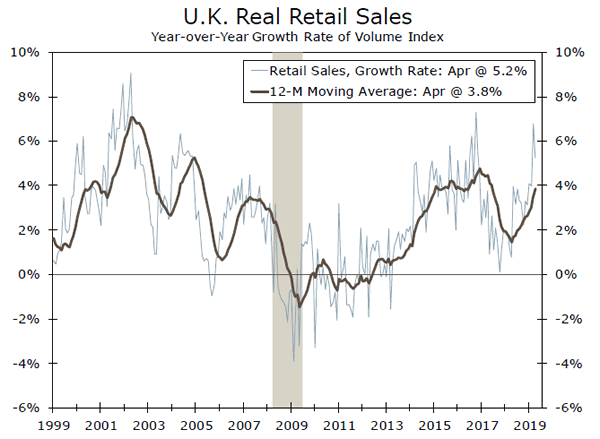
U.K. economic data have generally been resilient in early 2019, but showed some mild softening in the latest figures. After three months of strong gains, April retail sales fell 0.2% month-over-month, with sales growth slowing to 4.9% yearover- year from 6.3% in March. A May manufacturers' survey also showed a drop in the orders balance to -10, the weakest reading since late 2016. CPI inflation remained close to the central bank's target in April as the headline CPI rose 2.1% year-over-year and the core CPI rose 1.8%. However, while Brexit uncertainty hangs over the economy, we think a Bank of England rate hike is unlikely this year. On the Brexit front, U.K. PM May outlined her latest Brexit proposal, which included a referendum on her deal contingent on it being passed by parliament, and giving parliament a choice over the post-Brexit customs model. Those measures received little support, however, and the U.K. looks no closer to leaving the EU in the near future following May's subsequent announcement that she would step down as Prime Minister on June 7.
Eurozone Economy Struggling to Gain Traction
Finally, this week also saw the latest reading on the health of the Eurozone economy in the form of several confidence surveys from across the region. The Eurozone May manufacturing PMI eased to 47.7, remaining below the breakeven 50 level. The services PMI also dipped to 52.5. For Germany—the largest economy within the Eurozone—the May IFO business confidence index fell to 97.9, reaching its lowest level since late 2014. So far in Q2, the Eurozone composite PMI is tracking in line with its Q1 average, although it still appears likely that Q2 GDP growth could slow from the relatively solid 0.4% quarter-over-quarter gain seen in Q1.
Global Outlook
Switzerland GDP • Tuesday
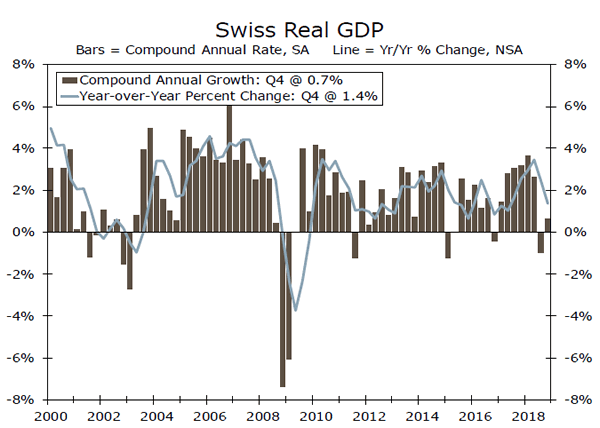
Switzerland's Q1 GDP is released next week and will likely show the economy began 2019 on a soft note. The economy came to a standstill during the second half of 2018, with essentially zero growth during that period. On a sequential basis, consumer spending barely grew, while private investment spending contracted in both Q3 and Q4. For Q1-2019, the consensus forecast is for GDP to rise 0.3% quarter-over-quarter, modestly topping the 0.2% gain seen in Q4. Consumer spending likely remained subdued, with real retail sales falling on an annual basis during Q1. Given modest growth and little inflation, we expect the Swiss National Bank to maintain its expansionary monetary policy for some time. In particular the central bank will likely keep its sight deposit rate at -0.75% for an extended period, while it has also said it will intervene in foreign exchange markets as needed to prevent excessive currency strength.
Previous: 0.2% Consensus: 0.3% (Quarter-over-Quarter)
China PMIs • Friday
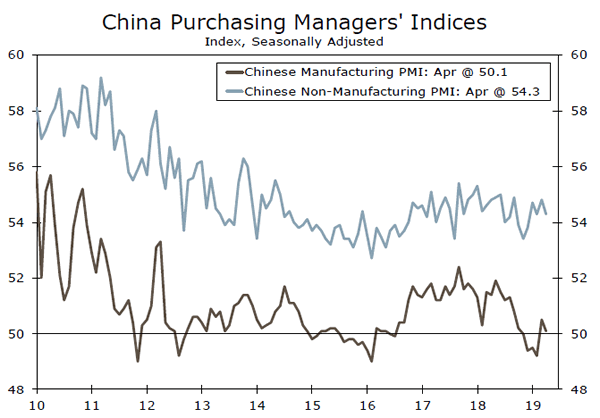
After a solid start to 2019, Chinese economic trends have become more mixed in recent months. The manufacturing and service sector PMIs both declined in April, while growth in April retail sales and industrial output also slowed noticeably from their March pace. With the latest escalation in trade tensions and imposition of tariffs between China and the United States, market participants may monitor Chinese economic data even more closely going forward given the potential fallout and disruptions from the current impasse.
The manufacturing PMI for May is expected to ease to 49.9, falling back below the key 50 level, while the services PMI is expected to hold steady in May at 54.3. We currently estimate that China's Q2 GDP slowed to 6.2% year-over-year, but the risk of a more pronounced slowdown later this year could increase if the current trade tensions persist.
Previous: 50.1 (Manufacturing), 54.3 (Services) Consensus: 49.9 (Manufacturing), 54.3 (Services)
Canadian GDP • Friday
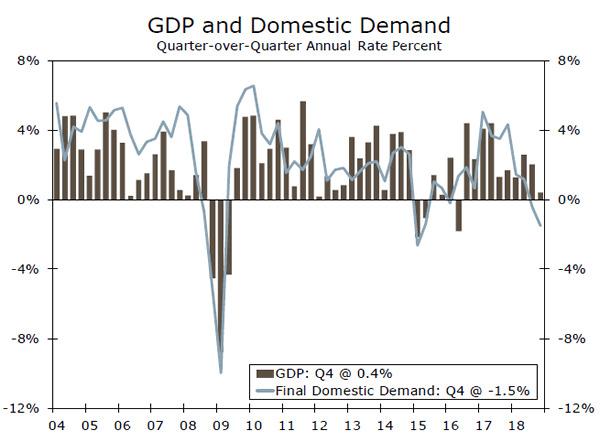
After ending 2018 on a weak note, Canadian economic growth is expected to improve moderately in Q1 2019. Q4 GDP rose just 0.4% quarter-over-quarter annualized, while final domestic demand was even softer, contracting at a 1.5% pace. While employment growth has been sturdy so far in 2019, retail sales data point to still subdued consumer spending in Q1, while mixed manufacturing sales also hint at only modest improvement in investment spending. That said, higher oil prices could impart a modest positive impulse on Canada's economic growth. The consensus is for Q1 GDP growth to rise to 0.8% quarter-over-quarter annualized, more than the 0.3% pace forecast from the Bank of Canada in its latest Monetary Policy Report. Speaking of the central bank, the Bank of Canada is widely expected to keep its policy interest rate at 1.75% given the sluggish growth backdrop and CPI inflation that is close to the central bank's target.
Previous: 0.4% Wells Fargo: 0.8% Consensus: 0.8% (Quarter-over-Quarter, Annualized)
Point of View
Interest Rate Watch
"Patient" Still the Name of the Game
Minutes from the latest FOMC meeting indicated officials were more confident that the U.S. economy would continue to expand at a decent rate in the near term. A strong labor market, improvements in confidence and financial conditions and "diminished downside risks both domestically and abroad" were all cited as factors expected to support growth the rest of this year.
"Some" participants were more concerned about the inflation outlook following recent soft PCE deflator readings. However, there was consensus that at least part of the recent weakness in inflation was due to transitory factors, echoing the views of Chair Powell in the post-meeting press conference.
With growth looking firmer and low inflation not an immediate concern, most officials seemed on board with a "patient approach to policy adjustments." In other words, FOMC officials remained in no hurry to move rates up or down.
So Much for Downside Risks Abating The minutes, however, are staler than usual. "Many" participants indicated the downside risks to growth earlier in the year had abated, but that was before U.S.-China trade tensions ratcheted up again. With downside risks rising again, it looks reasonable that markets are pricing in a rate cut as the FOMC's next move, but before year-end still looks premature in our view given the tight labor market and prospects for growth to remain above trend.
Thinking About Its Treasury Holdings
FOMC members were also presented scenarios by staff about the future maturity composition of the Fed's balance sheet. A shorter-maturity profile, where the Fed held securities maturing in three years or less, was presumed to be a better starting point if officials were to try to add accommodation at some point via a maturity extension program like "Operation Twist." However, a shorter-term profile was also thought to require a lower fed funds rate, all else equal. We expect the FOMC will eventually settle on a profile proportional to the universe of outstanding Treasury securities. That would still result in the Fed holding more short term Treasury securities, but keep the fed funds rate as its primary policy tool.
Credit Market Insights
China's "Hidden" Debt
The standard rule of China's financial system is that, the more state involvement, the cheaper the funding costs. Though, in areas of China where the public sector dominates the economy, US$1.1 trillion worth of debt sold by local government financing vehicles (LGFV) have the highest yields. LGFV bonds were established to stimulate growth through infrastructure investment during the global financial crisis. Investor participation has since increased, driven by the implicit government guarantee and the public's familiarity with the asset.
Recent subdued economic growth in China has increased pressure on the Chinese government to ensure LGFV bonds against default. LGFV bonds are still perceived as being "safe" since the government provides a financial backstop for the bonds. Investors remain cautious of the bonds' default risk amid China's tight credit conditions and unprecedented corporate and municipal bond defaults within the past year. The wave of defaults has placed upward pressure on LGFV bond yields, while the Chinese government's recent deleveraging efforts may have also contributed to rising bond yields.
Today, the Chinese government is focused on stabilizing the economy and implementing greater stimulus measures if trade threats continue to go back and forth with the United States. This is positive news for LGFV bonds in the near-term, as they support infrastructure projects and will be used to stimulate the Chinese economy.
Topic of the Week
Trade Escalation Threatens Investment
Fears about a prolonged trade battle between China and the United States flared this week, with both sides appearing to dig in. We maintain our view that the direct impact of an-all out trade war between the two nations would have a minimal impact on the U.S. economy. After all, exports to China account for less than 1% of GDP. The indirect effects, however, stand to be more pronounced, and need not wait for a full-blown trade war to ensue.
The uncertainty alone about trade relations stands to weigh on growth. The lack of clarity on input costs, and how competitive exports may be amid possible retaliatory tariffs—if allowed to be exported at all—are likely to lead some businesses to delay investment decisions. Tamped down expectations for growth, as disposable income weakens under the weight of tariffs, could further lead businesses to curtail investment.
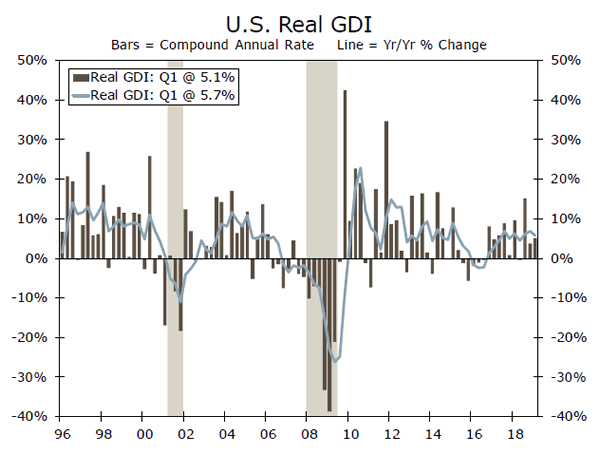
Could merely the fear of a trade war send the U.S. economy into a recession? We shocked our macroeconomic model and found it would take about a 15% decline in real investment to send the U.S. economy into a mild recession. To put that in perspective, at the nadir of the 2001 recession, which was considered to be brought about by imbalances in the business sector, investment fell only 11% year-over-year (top chart).
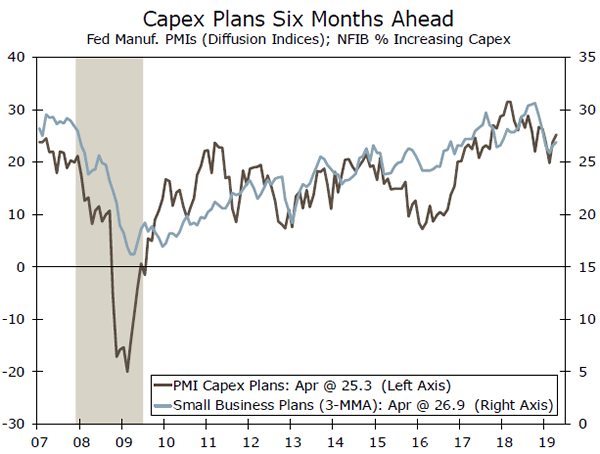
How likely is a 15% decline in investment at the moment? Through April, business capex plans were holding up rather well (bottom chart), while residential investment stands to be relatively insulated from the trade issues.
To some extent, our model overstates the hit to investment that would sink the economy into a recession. Presumably, if businesses are delaying an expansion or equipment purchase, they would also be thinking twice about hiring more workers. Slower hiring would weigh on income growth, and in turn consumer spending. More immediately, the negative implications of an extended trade war would contribute to tighter financial conditions, as we saw this week with the risk-off tone in financial markets.
The Weekly Bottom Line: Trade Woes Weigh on Markets
U.S. Highlights
- Pessimism dominated markets this week, as negative headlines about U.S.-China trade relations continued.
- UK PM Theresa May announced her resignation after repeated attempts to get her negotiated Brexit deal through parliament failed. The pound fell this week as markets worry about a no-deal Brexit on Oct. 31st.
- Indicators from the U.S. factory sector continue to point to a weakening trend in the face of softer foreign demand and sentiment.
Canadian Highlights
- It was a down week for markets as concerns about global growth and trade weighed on sentiment.
- Both retail and wholesale sales sent positive signals, rising in March, providing evidence of better momentum heading into spring.
- Still, we expect that the economy struggled to expand in the first quarter, growing just 0.4% annualized. A likely on-track economic outturn and intensifying trade tensions should balance positives, including the removal of steel and aluminum tariffs, leaving the Bank of Canada in its current holding pattern.
U.S. - Trade Woes Weigh on Markets
Global markets returned to a pessimistic mood this week, focusing on negative headlines about U.S.-China trade relations. Oil prices fell sharply on the week, as rising inventories in the U.S. had markets worried that trade uncertainty is dampening demand. Measures of manufacturing confidence across various regions were also weak. Manufacturing activity in Europe and Japan continued to contract. In the U.S., the Markit gauge of manufacturing confidence also showed a further deterioration in May.
To top it all off the Brexit saga came back to the fore, as Prime Minister Theresa May announced her resignation. May had been unable to get her negotiated Brexit deal through parliament. The way forward on Brexit remains unclear, and the new Conservative leader, who should be selected by the end of July, will not have a lot of time to chart a new course before the Oct 31st deadline for Britain to leave the EU. In the meantime, the cloud of uncertainty continues to hang over the UK economy, and the increased probability of a no-deal Brexit has weighed heavily on the pound over the past week.
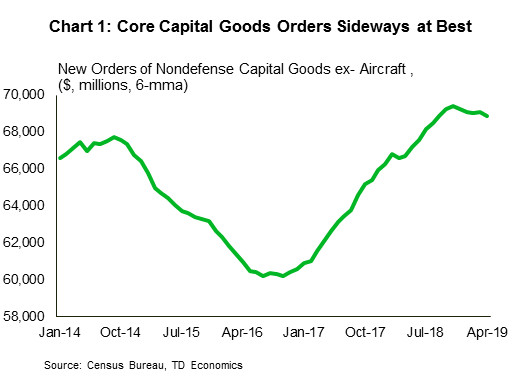
The sour news continued with the April durable goods orders report, which showed total orders fell 2.1% in April. Nondefense capital goods orders ex-aircraft – a closely watched gauge of business capital spending – was also down in April (-0.9%). Durable goods orders are quite volatile month-to-month, but on a trend basis (the six month moving average) orders have gone sideways at best since late 2018 (Chart 1). This is consistent with the theme discussed in last week's Bottom Line, that cracks continue to appear in the US manufacturing sector: foreign demand has cooled, and uncertainty on the trade front weighs on business sentiment and willingness to spend on new equipment.
The President has recognized the impact trade conflicts are having on at least one sector of the economy. He formally announced a $16 billion aid package for farmers hurt by Chinese retaliatory tariffs on key agricultural exports from the U.S. This amount is slightly larger than last year's aid package (around $12 billion). The combined cost of these packages more than outweighs the increase in customs duties the U.S. has collected since the Administration started ratcheting up import tariffs early in 2018 (Chart 2), erasing any fiscal benefits of the tariffs.
Amidst the headlines on ongoing trade tensions between the world's largest economies, the minutes from the most recent FOMC meeting already seemed a bit stale. These deliberations occurred before the latest increase in the tariff rate on certain Chinese imports. The minutes showed the FOMC's commitment to patient monetary policy, and a significant discussion on whether the recent softness in inflation is transitory, or a more persistent trend. The Committee is clearly divided on that topic, and a couple more months of data is likely to settle the debate. Inflation aside, given a building cloud of global economic uncertainty, a prolonged pause on rates seems a wise course of action.

Canada - Good End To a Weak Quarter
Trade-war related fears of a weaker global economic backdrop intensified as the week went on, sending government borrowing costs lower. Crude oil followed suit, shedding more than US$4 from the benchmark WTI contract. The S&P/TSX Composite index joined in, looking poised to end the week lower at the time of writing. Markets seemed to have ignored the relatively solid domestic data backdrop this week, focusing more on the external risks than the signs of improving domestic momentum.
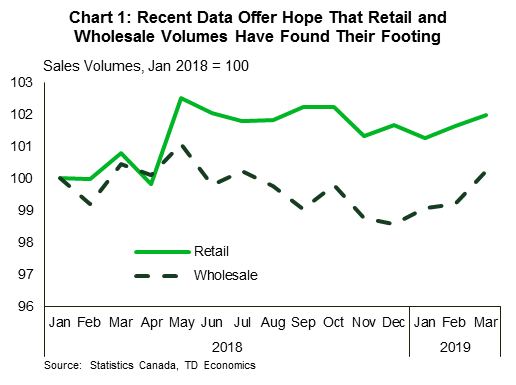
Indeed, on the data front, we got more signs that the recent economic soft patch may be ending. Retail sales rose 1.1% month-on-month in March. The gain was largely down to rising prices at the pump, leaving sales volumes up a more modest 0.3% on the month. While not a robust outturn (volumes are down a tick on the quarter as a whole), this was the second month of gains, a welcome break from the otherwise lackluster performance over the past year or so (Chart 1). The wholesale report revealed a similar story of improvement following time in the doldrums. In both cases it is notable that, although auto sales have been soft, there is some tentative evidence of improved conditions in other interest rate sensitive sectors. In particular, furniture and home furnishings, as well as the building material/garden equipment categories have shown signs of improvement, albeit from soft starting points.
These data point to a Canadian consumer regaining some confidence and spending power. Solid job markets and some upward movement in wages bode well for consumer spending, particularly given a Bank of Canada policy interest rate unlikely to move any time soon. On that front, we expect a more positive assessment of the economy with Wednesday's interest rate decision, pointing to strong labour markets and the removal of steel and aluminum tariffs. But, the intensified U.S.-China trade dispute is likely to also feature prominently, suggesting that ultimately, a holding pattern remains warranted.
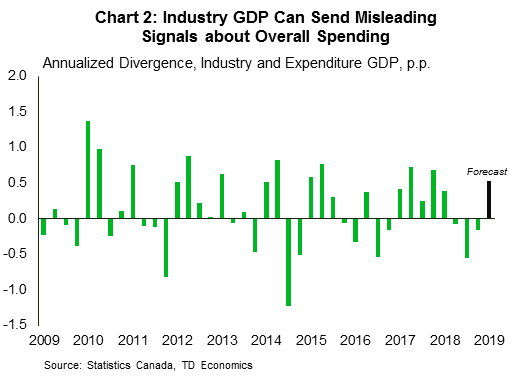
The other item likely to give the Bank of Canada assurance that the current policy setting is the right one will be Friday's first quarter GDP report, which should come in broadly in line with their forecast. We expect growth of just 0.4% q/q annualized, matching Q4's soft report. The details should be much better though. We see signs of a return of business investment, and rising incomes should help keep consumer spending solid. Such a soft headline outturn may seem surprising in light of the generally solid monthly GDP numbers (i.e. GDP by industry, with a robust March report in the cards), but a very weak export performance, measurement differences, and a downgraded picture of construction activity from Statistics Canada all point to quarterly (expenditure based) GDP underperforming the monthly indicators (Chart 2; potential revisions to the monthly profile may reduce this gap). Regardless of the headline number, the generally solid expected composition of growth and good momentum heading into Q2 will be a welcome change from recent economic performances.
U.S.: Upcoming Key Economic Releases
U.S. Personal Income & Spending – Apri
Release Date: May 31, 2019
Previous: Income: 0.1% m/m; Spending: 0.9% m/m
TD Forecast: Income: 0.3% m/m; Spending: 0.1% m/m
Consensus: Income: 0.3% m/m; Spending: 0.2% m/m
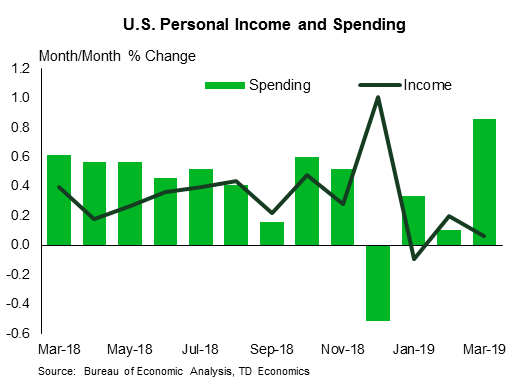
We expect a solid 0.2% m/m increase in core PCE prices for April which should translate into a steady 1.6% y/y inflation rate after rounding, with risks skewed towards a softer print in our view. Headline PCE should firm by 0.1pp to 1.6% with prices up 0.3% m/m. We look for muted consumer spending after an outsized 0.9% m/m jump in March, with nominal personal spending up just 0.1% on the month. However, the choppiness in the spending data should fade as tight financial conditions and delayed tax refunds recede from view.
Canada: Upcoming Key Economic Releases
Bank of Canada Rate Decision
Release Date: May 29, 2019
Previous: 1.75%
TD Forecast: 1.75%
Consensus: 1.75%
We look for the Bank of Canada to hold rates unchanged at 1.75% during next week's meeting, where the policy statement should keep April's messaging largely intact. The domestic economic outlook has stabilized since the April BoC announcement, so we expect the Bank to describe the economy as evolving in line with expectations. The forward looking language should be unchanged, with the Bank continuing to focus on household spending, oil markets, and global trade uncertainty. The apparent deterioration in the trading relationship between the US and China should feature prominently, but the Governor's constructive comments on the labour market tilt the balance of risks towards a more optimistic statement.
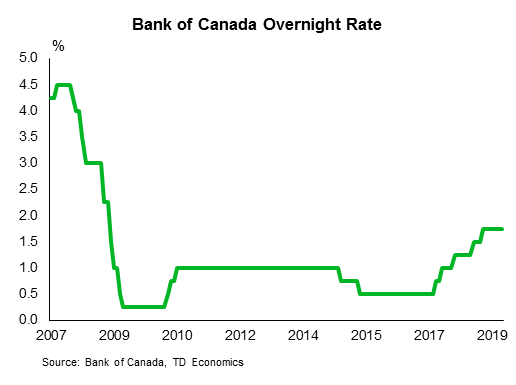
Canadian Real GDP - Q1/March
Release Date: May 31, 2019
Previous: 0.4% q/q, -0.1% m/m
TD Forecast: 0.4% q/q, 0.3% m/m
Consensus: 1.0% q/q, 0.3% m/m
We look for another soft quarter for economic activity with growth of just 0.4% (q/q, annualized) in Q1. Beneath the repeat headline number should be better details. Imports and other data suggest a rebound of business investment at the start of the year (+7.7%). A healthy labour market likely underpinned a moderate pickup in household spending (+2.1%), notably on services. Conversely, recently revised construction data and soft resale activity point to little growth in residential investment (+1.5%). The key headwind to GDP growth in Q1 will be the sizeable drop in exports (-5.6%), where the quarterly performance was disappointing across most product categories. Offsetting this is an expected jump in business inventories (adding 1.5 p.p. to headline growth) as levels in the energy sector remained elevated post-curtailment and stockpiles elsewhere continued to build.
Industry-level GDP should rebound by 0.3% in March on broad strength across goods and services. Construction activity appears to be the one soft spot on a pullback in both the residential and nonresidential components, although strong April housing starts suggest a rebound in the coming months. Elsewhere in the goods-producing sector we look for a rebound in manufacturing on the heels of a sharp pickup in real manufacturing sales while energy will make a positive contribution on higher crude oil output. Looking to services, the stabilization in existing home sales should lead to a rebound in real estate after cold weather drove a pullback in February, while higher wholesale and retail sales will also provide a tailwind. Services will also benefit from a rebound in rail transport after a combination of weaker crude exports and the CP derailment weighed on GDP in February. The 0.3% print will provide a solid handoff to Q2 where the Bank of Canada has set the bar low with projections for 1.3% quarterly growth.
It bears noting that the quarterly expenditure data is expected to diverge from its monthly counterpart (i.e., GDP by industry), which suggests Q1 growth near 1%. This divergence stems from measurement differences (including price deflators), the notable weakness in exports, and the risk of downward revisions to the monthly data in light of weaker reported construction activity this week. Divergences between the two measures are common and can be large, but are difficult to forecast, presenting an important upside risk to our Q1 national accounts forecast.
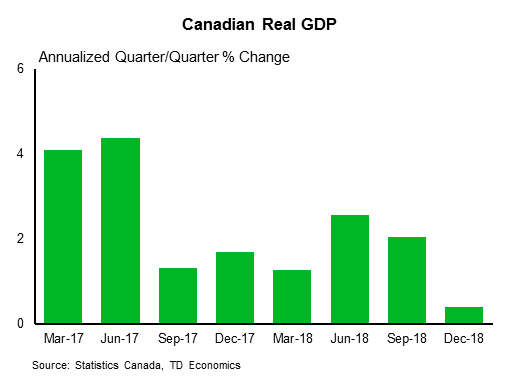
Forward Guidance: International Trade Tensions Unlikely to Sway the Bank of Canada Rate Decision
International trade tensions unlikely to sway the Bank of Canada rate decision Wednesday – Q1 GDP data to follow
The Bank of Canada is not expected to make any substantive changes in Wednesday’s policy decision. Certainly not to the level of interest rates but also to the guidance – or lack there-of – on the likelihood of any future moves after the April decision dropped any explicit reference to the need for future hikes. US-China trade tensions have intensified since then, and there has been some slowing in US industrial output that could yet spill over to Canada. Governor Poloz has highlighted before, though, that risks around trade run in both directions. The removal of US tariffs on Canadian steel & aluminium products, and Canada’s removal of retaliatory measures, arguably leave international trade developments roughly a wash since the last policy decision.
Policymakers have probably been encouraged by signs of stabilization in housing markets in the spring – aside from Vancouver where regulatory measures aimed at cooling the market have been more pronounced. GDP growth is still likely to be quite soft for a second straight quarter in Q1 (to be released Friday, after the policy decision). But the BoC’s call for a 0.3% increase looks if anything a touch on the low side and much of the softness can still be traced to mandated oil production cuts in Alberta and unusually severe winter weather. Employment growth has remained shockingly strong. The divergence with economic growth numbers is a circle that still needs to be squared but, as Governor Poloz has argued, it is also one more reason to think that the underlying growth backdrop is stronger than recent headline GDP numbers would suggest. Perhaps most importantly, core inflation trends have been locked firmly around the central bank’s 2% inflation target. Comments from Governor Poloz after the last policy meeting suggested there is still at least an implicit bias to push rates higher rather than lower at some point, but there is nothing in the inflation data pushing for a move one way or another at the moment.
Our own estimate for Q1 GDP growth is a touch stronger than the BoC’s call at 0.7%. Stronger growth in economic indicators for March and April to-date have bolstered our view that bad weather was to blame for a 0.1% drop in GDP in February. We are looking for a 0.2% increase in March on the back of rebounding transportation and manufacturing output as well as the beginnings of a pickup in oil production after declines to start the year in the wake of Alberta’s production curtailments. The composition of Q1 GDP growth should look uninspiring once again with a big build in inventories offsetting another soft quarter for household spending and a pullback in exports. But stronger monthly GDP in March would still leave the odds in favour of a bounce-back in growth to a 2% rate in Q2.
MARKET WRAP: May’s Departure Moves FTSE Higher
Pound had more than 100 pip move today and the volatility continues *Crude recovers some of its losses.
Stocks
- The S&P 500 Index trying to recover from this week’s bruises and up by 0.51% as of 15:30 London time; the Nasdaq 100 saored 0.77%.
- The Stoxx Europe 600 Index remained sensitive as European elections take place but the index is up by 0.73%.
- The U.K.’s FTSE 100 Index reacted positively to Theresa May’s resignation and moved higher by 0.81%.
- The MSCI Emerging Market Index recovered 0.8% move away from its 19-week low.
Currencies
- The Dollar Spot Index moved dropped lower after another feeble economic reading and lost nearly 0.12%.
- The Euro continued to suffer from losses and dropped by 0.12% to $1.1194.
- The British pound had many zigzags today and lost nearly 0.10% to $1.2665.
- The Japanese yen, suffered from more losses and lost 0.05% to 109.58 per dollar.
Bonds
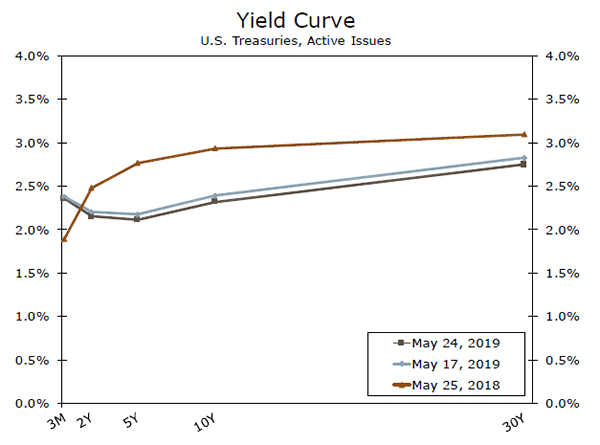
- The yield on 10-year Treasuries moved higher by one basis point to 2.33%.
- Germany’s 10-year yield rose by one basis point to -0.12%.
- Britain’s 10-year yield increased by one basis points 0.961%.
Commodities
- Gold price moved lower by 0.29% to $1,281 an ounce.
- West Texas continued its uptrend and gained 0.64% to $58.31 a barrel
Week Ahead – US PCE Inflation, BoC Meeting and Aussie Q1 Capex Eyed amid Rising Risk Aversion
As trade tensions continue to simmer and there’s no end in sight to the Brexit turmoil, risk sentiment will probably remain the biggest driver for forex markets in the coming week. But there will still be several market-moving events for investors to keep a watch on. PCE inflation numbers from the United States, Canadian Q1 GDP estimates and a Bank of Canada meeting, as well as capital expenditure figures from Australia will be the main highlights.
Aussie to stay on the defensive
As the Reserve Bank of Australia’s next policy meeting nears on June 4, traders will be looking for further confirmation from upcoming releases that the central bank will cut rates at that meeting. Earlier this week, RBA Governor Philip Lowe gave his strongest indication yet, saying the Bank “will consider the case” for a rate cut at the meeting. Unusually though, the Australian dollar, although it remains on the back foot, has not made fresh lows as the surprise election win for the ruling Conservative coalition government has provided some support on the expectation that there will be large tax cuts to boost the economy.
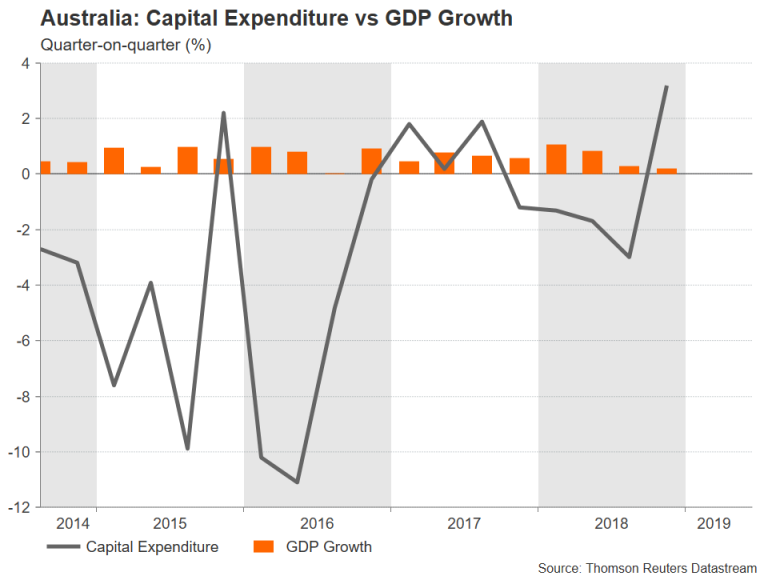
The agenda for the aussie next week is pretty busy: April building approvals are due on Thursday along with first quarter capital expenditure figures. Private sector lending data will follow on Friday. The capex report will be the most important as it’s seen as a good indicator of GDP growth, which will be published on June 5. PMI numbers from China will also be relevant for the risk-sensitive aussie as any weakness in the manufacturing PMIs on Friday would have a negative impact on the market mood at a time when the global outlook is already deteriorating from a worsening trade war.
Yen bears face a losing battle
With the US-China trade war entering unchartered territory, the threat of a no-deal Brexit rising, renewed jitters about global growth and not to mention flaring tensions in the Middle East, investors are likely to continue to seek safety in risk-free assets such as government bonds and of course, the yen and the Swiss franc. The Japanese currency has been a long-time favourite for investors at times of market panic given Japan’s status as the world’s number one creditor nation.
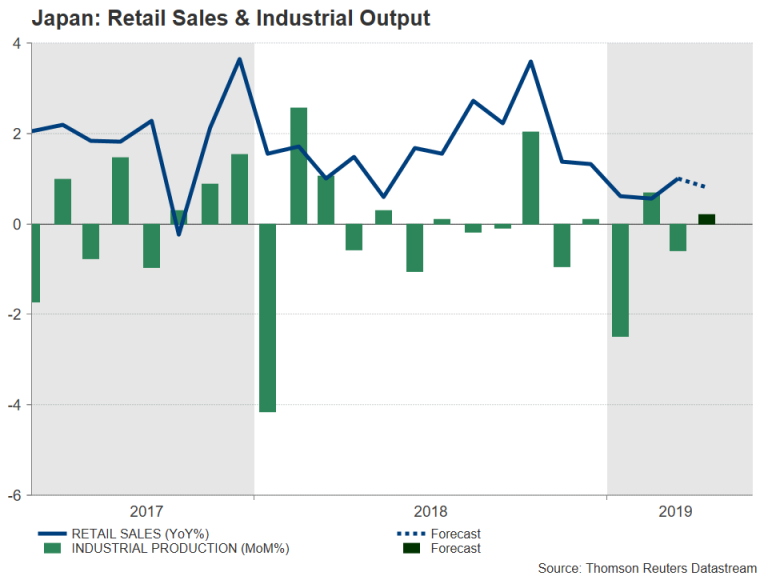
The yen is therefore expected to move in line with risk appetite, with next Friday’s releases out of Japan struggling for attention. Nevertheless, with the increasing possibility that the Bank of Japan will have to ramp up its stimulus at some point later this year, data on April industrial output and retail sales will be watched to gauge the health of the Japanese economy.
European elections to set tone for the euro
The only noteworthy release out of the Eurozone next week is the Economic Sentiment Indicator for May on Tuesday. Following the flash PMIs this week that were underwhelming, the ESI is not expected to paint a significantly different picture for the Eurozone economy. This means the focus in the coming days will be on politics as the results of the June 23-26 European Parliament elections will be known when trading starts on Monday.
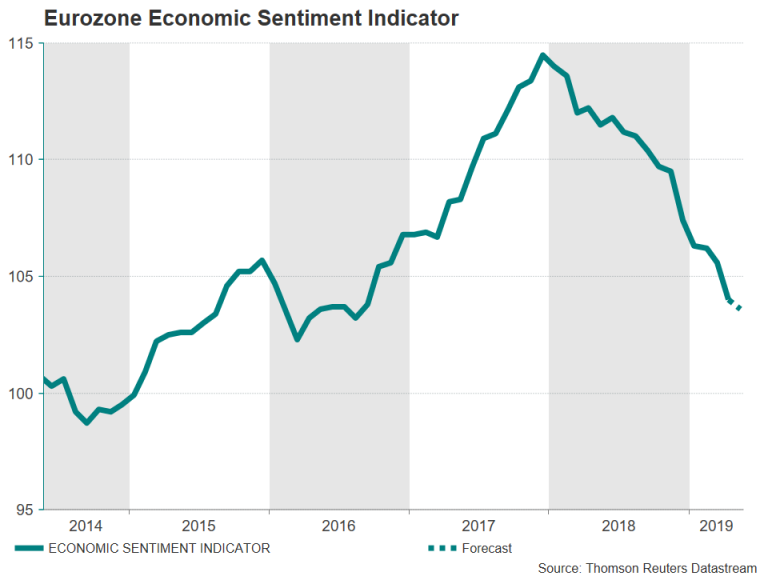
If there’s a sizeable shift away from centrist parties to populist movements, the euro is likely to face some downside pressure. However, unless there are any big shocks in favour of Eurosceptic and populist parties, any sell-off will probably be limited.
The UK calendar is also looking very light so politics will be the main driver for sterling too. As had been highly speculated and following intense pressure from all sides for her to step down, Prime Minister May has announced she will resign on June 7, paving the way for a new leader. All eyes have now swiftly turned to the leadership race, specifically, the confirmed and rumoured contenders to replace her, and what that could mean for the type of Brexit the next UK prime minister pursues.
Canada to publish Q1 GDP data as BoC meets
The Bank of Canada joined the Fed in hitting the pause button earlier this year, but unlike the Fed, the BoC has maintained a tightening bias. Despite that, the Canadian dollar is up just 1% versus the greenback this year and has been bound between the C$1.3520 and 1.3350 levels for the past month. Next week’s GDP release and BoC policy meeting have the potential to break the loonie outside of this range if they substantially alter the outlook for interest rates.
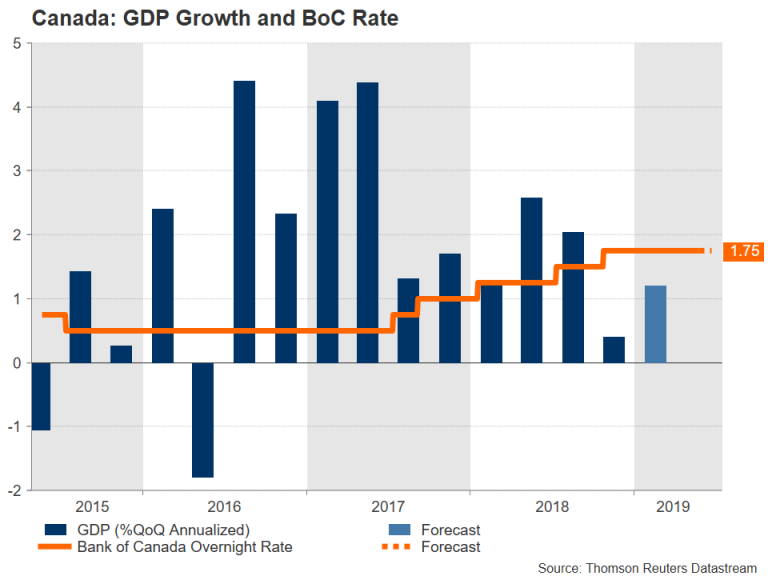
BoC Governor Stephen Poloz is expected to reaffirm his recent view that the “the natural tendency is for interest rates to still go up a bit” when the Bank announces its latest policy decision on Wednesday. On Friday, first quarter GDP estimates will be key in helping policymakers decide whether the economy is on the mend from the soft patch experienced at the end of 2018.
US GDP revision and PCE inflation main focus for the dollar
The US week will get off to a quiet start as American markets will be closed on Monday for Memorial Day. But the data will start pouring in on Tuesday with housing figures potentially attracting some interest if there’s any unexpected weakness in either the official or the S&P CoreLogic Case-Shiller home price index for March. The Conference Board’s consumer confidence index is also due on Tuesday and is forecast to edge up from 129.2 to 129.8 in May.
More housing indicators will follow on Thursday with pending home sales for April. But the spotlight will be on the second estimate of GDP growth in the first quarter. The preliminary estimate had shown the US economy expanded by an annualized rate of 3.2% in Q1. Analysts are predicting a small downward revision to 3.1% in the second print.
The main highlight for the US dollar, though, will likely come from the personal income and outlays report on Friday. Personal income growth is anticipated to have accelerated slightly to 0.2% month-on-month in April, while personal consumption is forecast to have moderated from 0.9% to 0.2% m/m. More importantly, the core personal consumption expenditures (PCE) price index, which the Fed tracks for its inflation target, is projected to have stayed unchanged at 1.6% year-on-year in April.
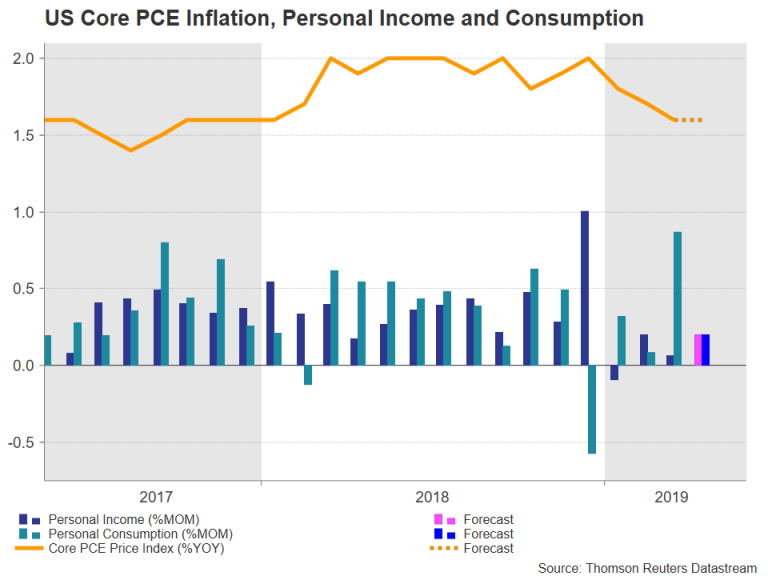
Should the core PCE price index fail to head higher over the next few months, or worse, drift further lower, pressure would grow on the Fed to cut rates. The US central bank has so far stuck to its neutral stance even as global risks to growth rise. But even if the Fed did start to signal a move towards a rate cut, the absence of bright spots elsewhere in the world is likely to keep dollar in demand.
Weekly Focus – As Sentiment Turns Sour, We Look for Hard Data to Match
Market movers ahead
- Next week will be fairly slow in terms of US data and we should get a better sense of how resilient the US economy is to the global slowdown the following week, with ISM manufacturing and the May jobs report coming out.
- We also look forward to hearing more from multiple FOMC members.
- Results from this week's European Parliament election should ensure overall pro-EU sentiment in the Parliament but the political centre could be more fragmented.
- Brexit has returned to the spotlight, with GBP falling and the likelihood of a negative scenario increasing and a leadership contest in the Conservative party coming up.
- The setback in the trade war is set to take its toll on Chinese PMI and, rather than a recovery, we now expect it to move sideways at a quite low level in coming months.
- In Sweden, we expect data do deteriorate, with weak GDP figures and manufacturing confidence declining. In contrast, in Norway and Denmark, we expect data - including GDP figures - to hold up well.
Weekly wrap-up
- PMI releases cast doubt on the outlook for the global economy and, notably, the decline in US services PMI was troubling, given the strength of the US labour market.
- While the global central banks have not reacted yet to the weakening sentiment, they may be forced to reconsider their stance and markets are pricing Fed cuts.
- Weak economic releases and renewed Brexit uncertainty have hit risk sentiment badly. The stock market has declined and US yields fell sharply.
Sunset Market Commentary
Markets
Global core bonds are close to unchanged. Following yesterday’s risk-off rally, when EU/US equity markets fell and core bonds jumped higher, risk sentiment was mixed overnight. The White House proposed tariffs on goods from countries found to have undervalued currencies, targeting i.a. China, Japan and South Korea. Core bonds stabilized and lost marginal ground ahead of the EU opening bell. Despite EU equities trading cautiously higher throughout the day, German Bunds proved resilient. UK PM May announcing her resignation was the talk of the day, but had no impact on bond trading. With an empty EMU eco calendar, moves in the German Bund are muted. The German yield curve is cautiously edging up with yield gains up to +0.8 bps (30-yr). Moves in US Treasuries were similar as the cautious risk rebound spread to the US session as well. Chinese messages that no official talks took place on a Trump-Xi meeting supported US Treasuries only marginally. US factory data (durable goods orders) declined, but printed close to expectations. The US yield curve is mixed with yield changes varying between -0.2 bps (10-yr) to +0.9 bps (2-yr). Peripheral spreads over the German 10-yr yield tightened with Greece (-8 bps) and Italy (-8 bps) outperforming as Italian deputy PM Salvini struck a more conciliatory tone on changing the EU fiscal rules.
USD traders were looking for guidance today after yesterday’s intraday setback of the dollar. Yesterday, a poor US PMI suggested that the US economy is also at risk to face stronger headwinds from the trade war. The dollar might lose further interest rate support. At the same time, the US intending to take action against countries whose currencies are too weak against the dollar, can be seen as an indication that the US is targeting a weaker dollar overall. EUR/USD briefly filled bids just north of 1.12, but the move couldn’t be extended. EUR/USD settled again in the high 1.11 area awaiting guidance from the US. At the start of the US session, China’s Ambassador in the US made some guarded comments on the current status of the US-China trade talks. US yields, equities and the dollar lost a few ticks. The US April orders for durable goods also printed below expectation. EUR/USD rebounded to the 1.12 area, but there was again no follow-through price action. USD/JPY changing hands in the mid 109 area as US (and UK) investors look forward to a long weekend.
UK PM May announced today she will step down as leader of the conservative party, marking the end of an era in UK politics. Sterling gained modest ground after the statement and EUR/GBP dropped (temporary) to the low 0.88 area. After recent sterling decline, quite some negative news is probably already discounted. The inability of EUR/GBP to clear the 0.8840 resistance has also maybe inspired some investors to reduce sterling short exposure going into a long weekend. EUR/GBP dropped temporary to the low 0.88 area. UK April retail sales also printed better than expected, but we doubt this helped sterling much. In a longer term perspective, the UK and sterling are probably heading for a new period of elevated uncertainty. The battle to replace May might be intense and the new leader is expected to pursue a harder Brexit than May did. Ultimately, a no-deal scenario might again be on the radar. Tough comments from Boris Johnson this afternoon confirmed this scenario. The post-May sterling rebound is already undone. EUR/GBP is again testing the 0.8840 area. Cable is changing hands in the upper half of the 1.26 big figure.
News Headlines
US/Sino trade talks must be based on mutual respect, a Chinese representative said today. He added that dialogue is the only way out of the trade dispute but suggested that a meeting between Trump and Xi won’t occur in the near future. US equity futures and rates edged lower.
US data slightly disappointed. Durable goods orders decreased (-2.1%) in April little more than expected (-2.0%) and had the March figures revised downwardly. Capital goods shipments (excl. aircrafts), considered a proxy for the US GDP capex component, flatlined vs. a slight decrease expected but March figures were cut to -0.6% (vs. 0.0% earlier).
US: Modest Weakening in Durable Goods Made Worse by Aircraft
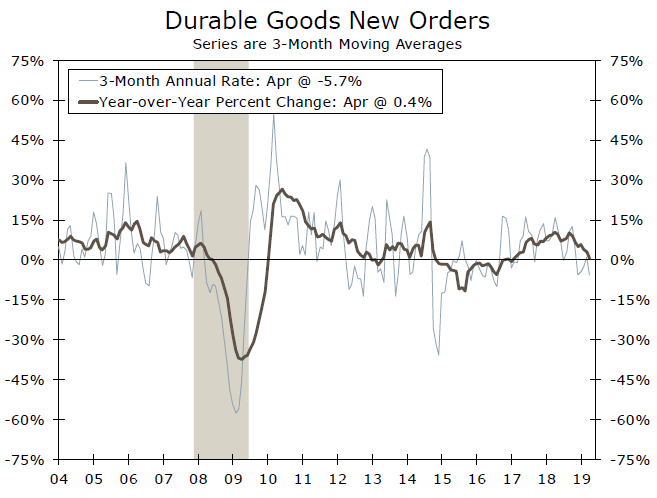
Durable goods fell 2.1% in April. While a 25.1% plunge in civilian aircraft orders weighed on the headline, the underlying details were not terribly encouraging. Second quarter equipment spending is now likely to fall.
It's More than an Aircraft Story
Durable goods orders fell 2.1% in April. This was not a huge surprise. Of the 66 economists who submitted a forecast to Bloomberg for durable goods orders this month, none had expected an increase. Boeing's ongoing challenges with its 737 MAX family of aircraft were expected to manifest themselves in today's report and were certainly evident in the 25.1% decline in civilian aircraft orders. That said, the weakness reaches beyond just aircraft. It is a matter of speculation as to when Boeing will have a fix in place for the 737 MAX and when shipments pick back up again. Most aerospace analysts expect this to be a matter of months, at which point we would expect to see headline durable goods orders boosted by aircraft for a few months.
Autos Slump
It would not be accurate however to say that the weakness here is all aircraftrelated as a number of other categories posted declines as well. Orders for motor vehicles and parts, now down for the third time in the first four months of the year, posted a decline of 3.4% in April—the second largest one month drop in bookings for autos in the past four years. In a separate report, sales to dealers from auto makers slowed to an annualized pace of just 16.4 million in April; that too is the second slowest pace in the past four years.
Momentum Loss Even Before Tariff Escalation
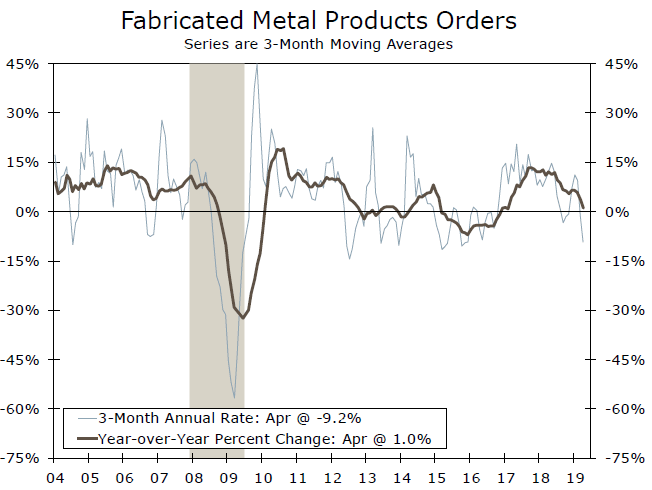
Other key areas are also reflecting some of the slowing indicated by the April drop in the ISM index and in some of the regional Fed surveys. Notably, primary and fabricated metals have both experienced declines in two out of the past three months.
Recall that these data are for April and do not reflect the recent escalation in the trade war, which lifted tariffs to 25% on roughly $200 billion of goods coming in from China. The precise timing of the new higher rate will be phased in throughout May, but effective June 1, imports on affected goods from China will be subject to the higher rate.
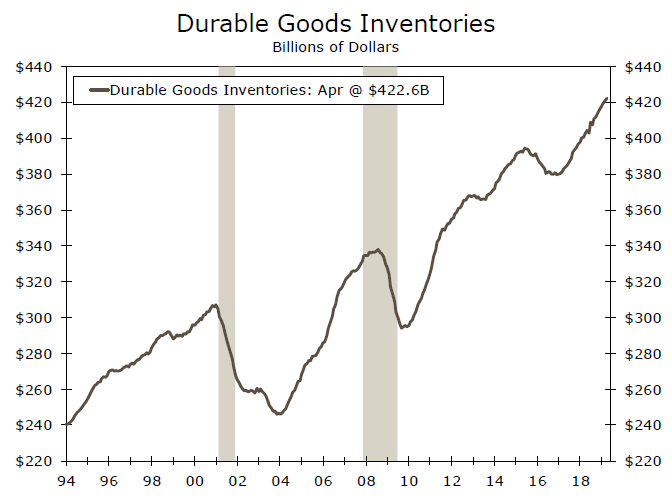
In addition to the pronounced volatility in global financial markets, the tariffs have been identified in the ISM report and in corporate earnings announcements as a factor negatively impacting profitability as well as creating supply chain headaches. Whether businesses are taking on additional inventory in anticipation of higher future costs or because they are concerned about product availability is unclear, but an inventory build is clearly under way. The inventory-to-shipments ratio rose to 1.67—the highest since July 2017.
With non-defense capital goods shipments having fallen in four out of the past five months, including a 3.0% drop in April, equipment spending is poised to decline in the second quarter.
USD/JPY Mid-Day Outlook
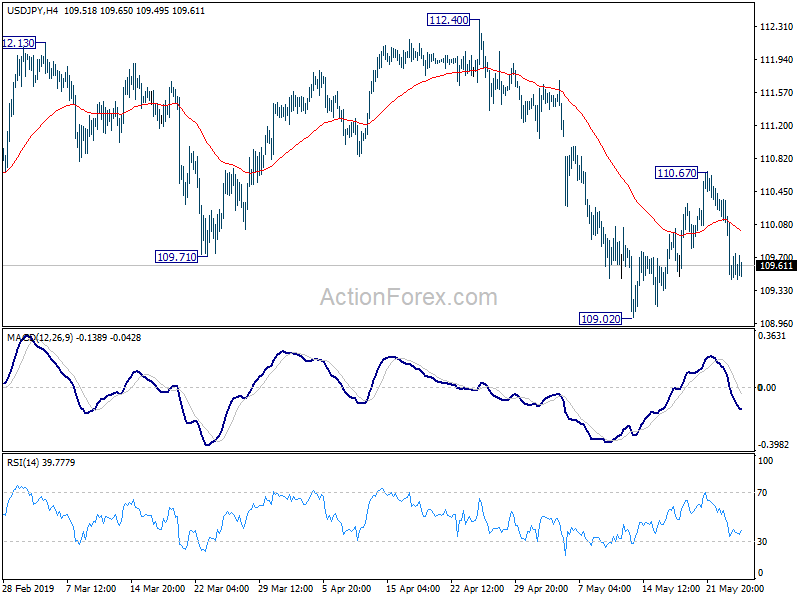
Daily Pivots: (S1) 109.24; (P) 109.80; (R1) 110.16; More...
Intraday bias in USD/JPY remains on the downside for 109.02 low first. Break will resume the fall form 112.40 and should target 104.69 low. In any case, near term outlook will stay bearish as long as 55 day EMA (now at 110.73) holds.
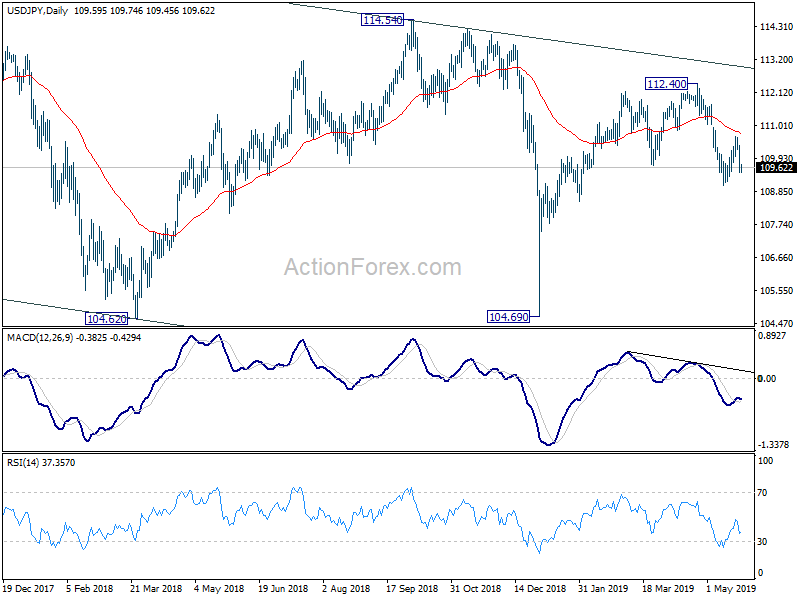
In the bigger picture, USD/JPY is staying inside falling channel from 118.65. Currently development suggests that rebound from 104.69 is only a corrective move. And fall from 118.65 is not completed yet. Decisive break of 104.69 will extend the down trend towards 98.97 support (2016 low). For now, we'd expect strong support above there to bring rebound.
USD/CHF Mid-Day Outlook
Daily Pivots: (S1) 1.0005; (P) 1.0052; (R1) 1.0082; More...
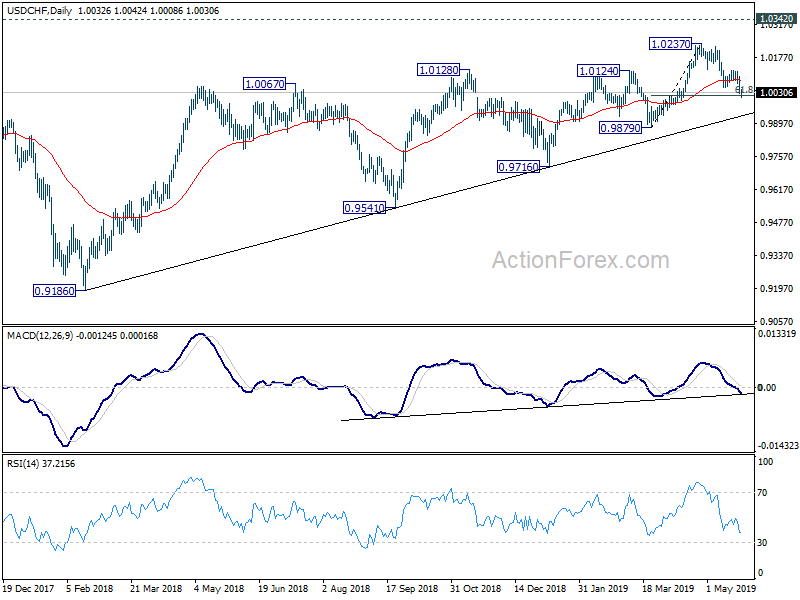
Intraday bias in USD/CHF remains on the downside as fall from 1.0237 is in progress. Sustained break of 61.8% retracement of 0.9879 to 1.0237 at 1.0016 will pave the way to retest 0.9879 key support. On the upside, break of 1.0119 resistance will suggest that the decline from 1.0237 has completed and turn bias to the upside.
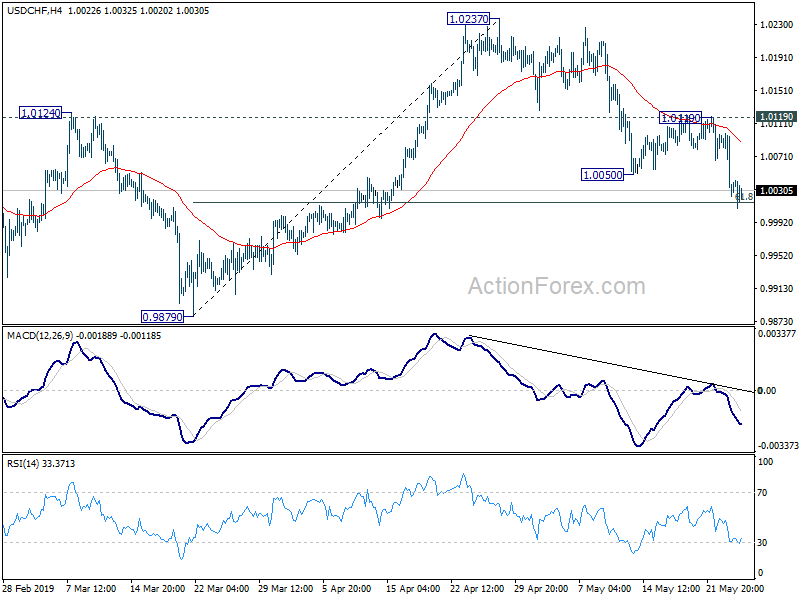
In the bigger picture, as long as 0.9879 support holds, medium term up trend form 0.9186 is still in progress. Break of 1.0237 will target 1.0342 resistance next. For now, we'd be cautious on strong resistance from there to limit upside, until we see medium term upside acceleration. However, decisive break of 0.9879 will be a strong sign of medium term reversal. Focus will be turned back to 0.9716 support for confirmation.