Sample Category Title
UK PMI services rose to 50.4, marginal expansion only
UK PMI services rose to 50.4 in April, up from 48.9 and matched expectations. March's reading was a 32-month low. Markit noted marginal rise in service sector business activity. New work dips for the fourth month in a row. Input cost inflation accelerates to its highest since January.
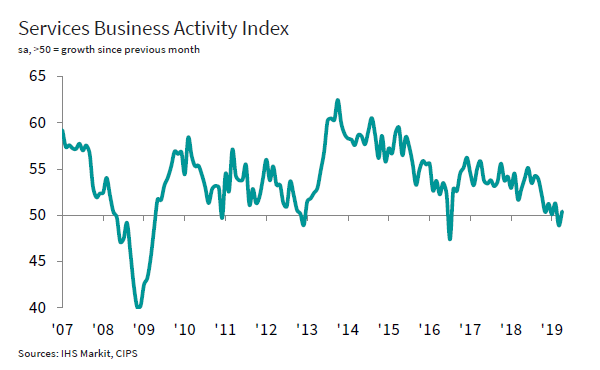
Chris Williamson, Chief Business Economist at IHS Markit, which compiles the survey:
"A near-stagnant service sector in April means that all three major parts of the economy were struggling to grow in April. Although the service sector joined construction in reporting a return to growth, in both cases the expansions were only marginal. An upturn in manufacturing is meanwhile showing signs of waning, as a temporary boost from Brexit-related stockpiling faded in April.
"The resulting rise in business activity signalled collectively by April's PMI surveys was only marginal, suggesting the economy remained more or less stalled at the start of the second quarter.
"The disappointing start to the second quarter follows a first quarter in which the average PMI reading was the lowest since late 2012 and indicative of the economy flat-lining.
"Although business grew more optimistic about the outlook, linked in part to more favourable prospects amid the reduced threat of an imminent 'no deal' Brexit, forward-looking indicators such as order books and backlogs of work hint at a near-term sustained weakness of demand, which has already filtered through to a reduction of employment.
"Both GDP and labour market numbers could therefore disappoint in coming months, as the weakness of the survey data feeds through to official data."
USD Index Unchanged Ahead Of NFP Data
The USD was relatively unchanged ahead of the official government jobs numbers. The numbers are expected to show that the economy added 181K, which will be higher than the 179K added in March. On Wednesday, data from ADP showed the NFP at 275K. The private non-farm payrolls are expected to decline slightly to 179K while the unemployment rate is expected to remain unchanged at 3.8%. The participation rate is expected to decline slightly to 62.9% from the previous 63%, while wages are expected to increase by 3.3%. The average hourly week is expected to remain at 34.5. Investors will also watch out for the ISM manufacturing PMI, which is expected to show an increase of 57.2.
The Australian dollar was relatively unmoved after a series of weak economic data. Today, data showed that the services PMI in April rose to 50.1, which was slightly lower than the expected 50.5. This was lower than the previous month’s 49.3. In March, building approvals contracted by -15.5%, which was worse than the expected contraction of -12.5%. In February, the approvals had jumped by 19.1%. The private house approvals declined by minis 3.2%. The housing sector in Australia is going through a challenging period as house prices fall in most places.
Investors will also focus on the European Union, as the region is expected to release CPI data. In April, the headline CPI is expected to have risen by 1.6%, which will be higher than the previous 1.4%. The core CPI, which excludes the volatile food and energy products, is expected to have risen by 1.0%, higher than the previous 0.8%. The PPI, which measures the change in price of goods sold by companies, is expected to have remained unchanged at 3.0%.
EUR/USD
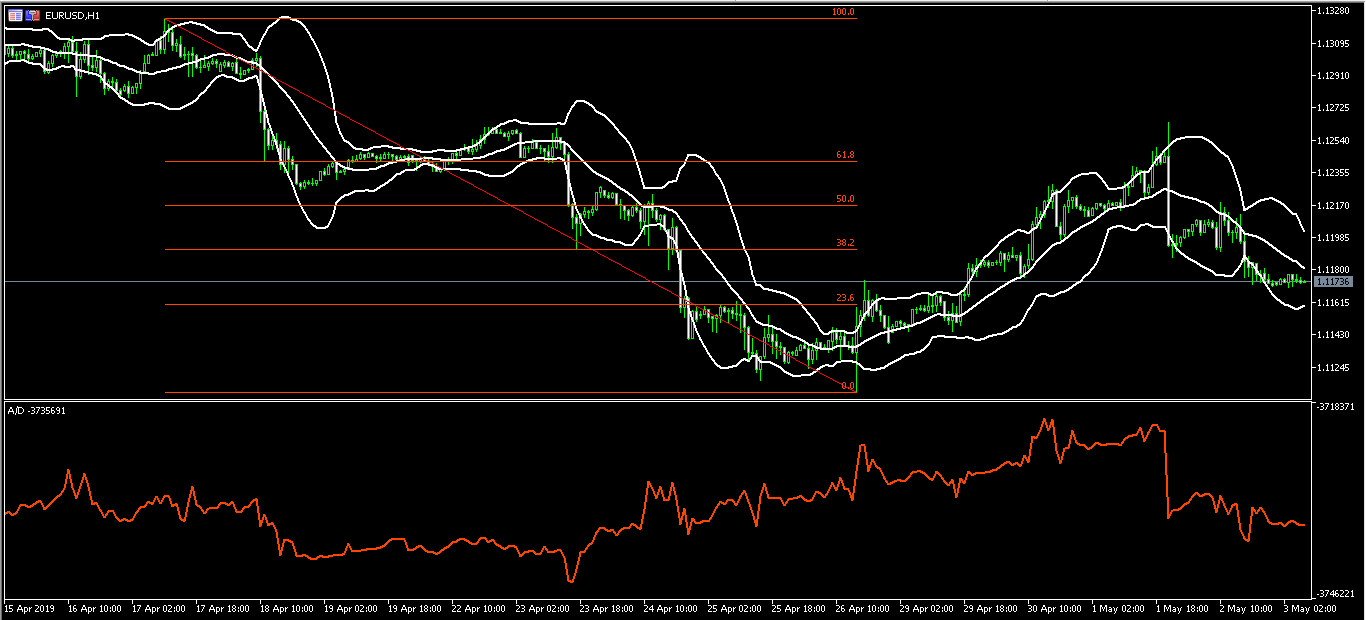
The EUR/USD pair remained relatively unchanged in the Asian session. It is now trading at 1.1173, which is slightly below the middle line of the Bollinger Bands. The accumulation/distribution indicator has moved slightly lower while the price is slightly above the 23.6% Fibonacci Retracement level. There is a likelihood that the price will remain relatively unchanged ahead of the jobs numbers. It will then move sharply in either direction, with potential areas being the 1.1200 and 1.1100.
AUD/USD
The AUD/USD pair remained along the important support shown below. The pair is trading at 0.6998, which is slightly below the support of 0.7000. On the hourly chart, this price is slightly below the 25-day and 50-day moving averages, while the RSI has risen to almost 50. The accumulation/distribution has started moving upwards. There is a likelihood that the price will remain along these levels ahead of the NFP data.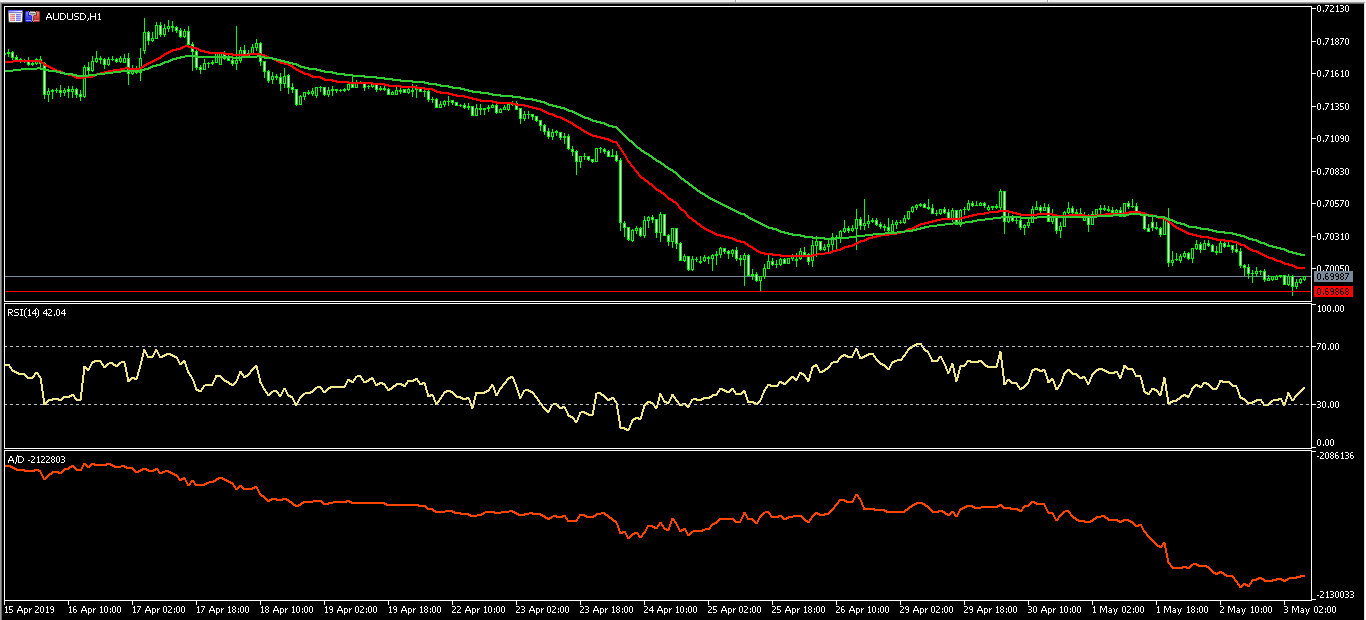
GBP/USD
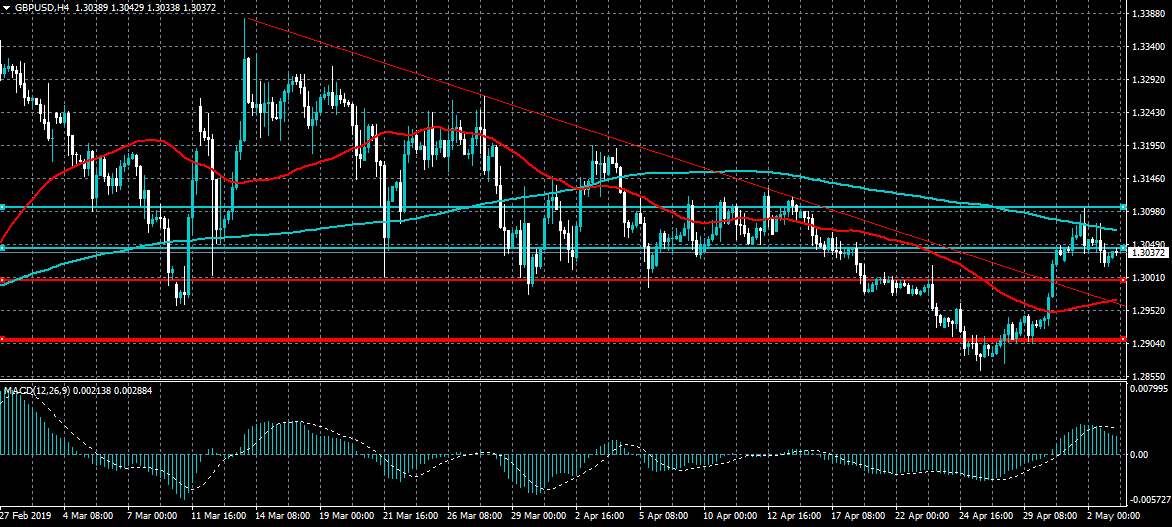
The GBP/USD pair rose slightly to a high of 1.3038 ahead of the important construction PMI data. The pair’s price is slightly along the middle line of the Bollinger Bands. The volumes indicator has reduced while the signal line of the MACD has started moving higher. The pair could still retest the 1.3000 level.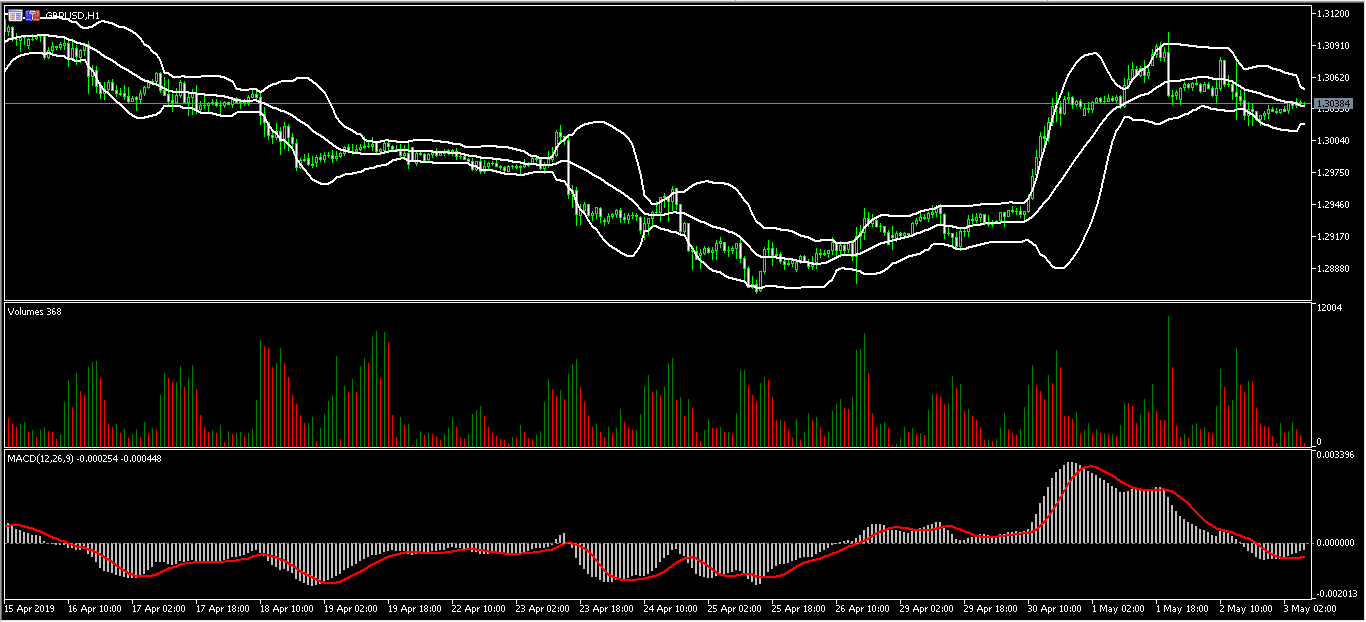
EUR/USD Pressured By Moving Averages
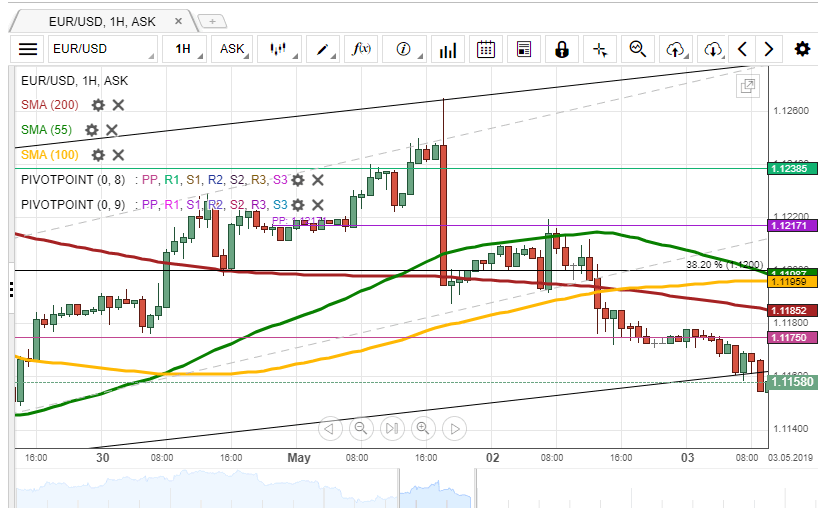
Yesterday, the EUR/USD currency pair stepped lower to the weekly PP at the 1.1175 mark. During today's morning, the pair declined to the lower boundary of the short-term ascending channel at 1.1160.
From a theoretical point of view, it is likely, that a reversal north could occur in the nearest future. A possible upside target is the range between the Fibonacci 38.20% retracement and the monthly PP, located at 1.1200 and 1.1217 respectively.
However, given that the exchange rate is pressured by the 55-, 100– and 200-hour SMAs located circa 1.1195, it is expected, that bears could prevail in the market, and the rate target the 1.1140 level.
GBP/USD Pressured By 55-Hour SMA
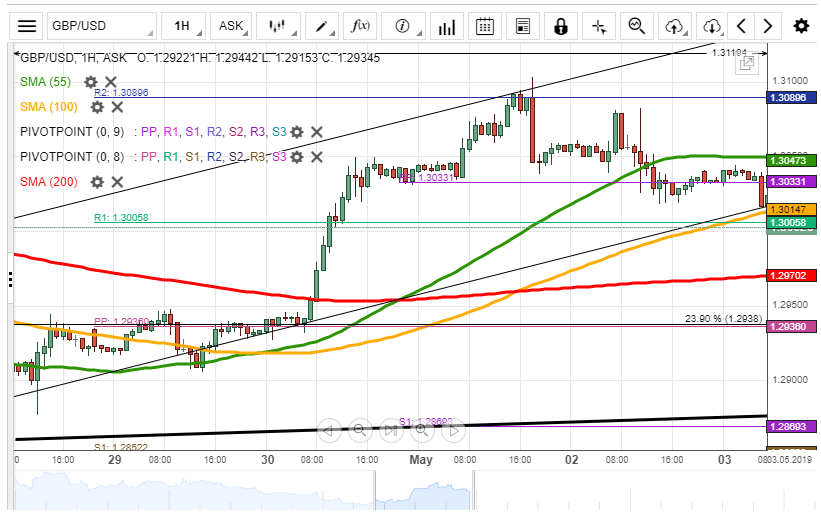
On Thursday, the GBP/USD exchange rate traded sideways around the monthly PP at the 1.3033 mark.
Given that the rate is trading near the lower boundary of the short-term ascending channel at 1.3020, it is expected, that a reversal north could occur in the nearest future. In this case, the pair has to surpass the resistance formed by the 55-hour SMA at 1.3049.
However, if the given resistance holds, it is likely, that the exchange rate could trade sideways between the given SMA and the weekly R1 at 1.3006. It is unlikely, that bears could prevail in the market, and the British Pound could decline lower than the 200-hour SMA at 1.2970.
USD/JPY: Short-Term Channel In Sight
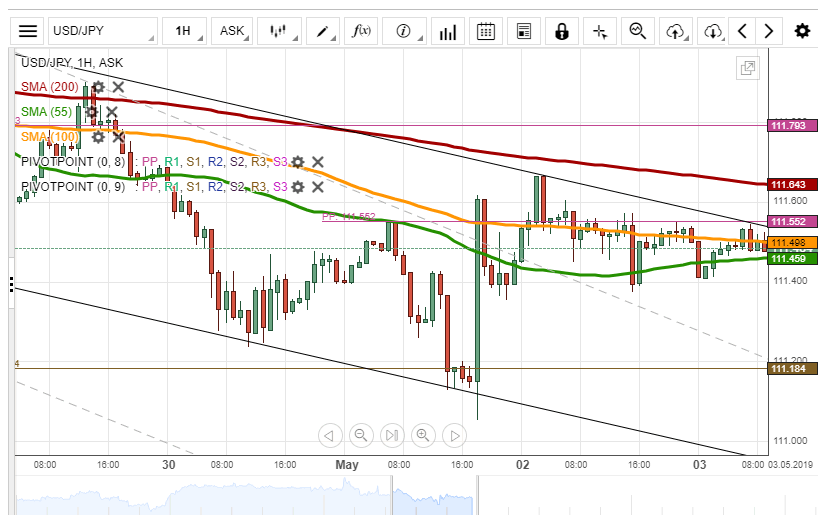
Yesterday, the USD/JPY currency pair tried to surpass the resistance level formed by the 100-hour SMA and the monthly PP at 111.55.
From a theoretical point of view, a reversal south should occur in the nearest future, as the pair is trading near the upper boundary of the short-term descending channel at 111.53. A possible downside target is the psychological level at 111.30.
If the given channel does not hold, it is likely, that a breakout north could occur. However, the exchange rate has to surpass the 200-hour SMA, currently located at 111.64.
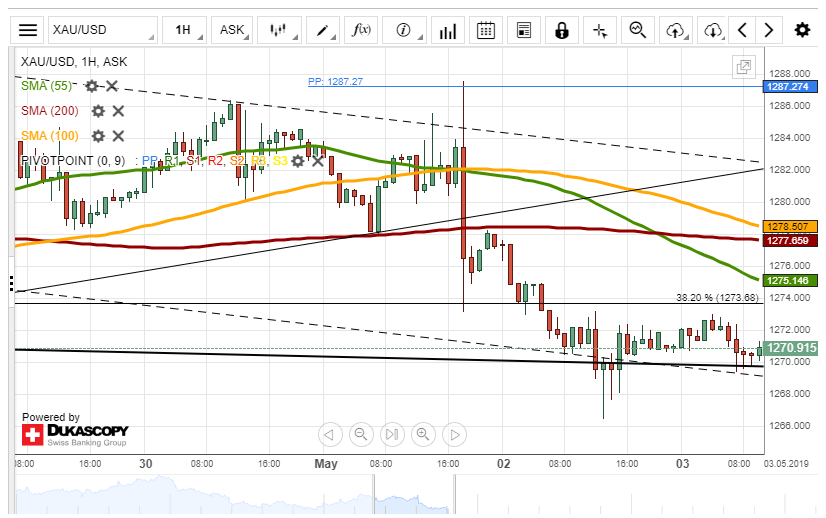
XAU/USD Testing Falling Wedge Pattern
During the previous trading session, the price for gold traded sideways between the Fibonacci 38.20% retracement and the lower boundary of the falling wedge pattern, located at 1,273.68 and 1,269.55 respectively.
Given that the XAU/USD exchange rate is pressured by the 55-, 100– and 200-hour SMAs, it is likely, that a breakout north from the pattern could occur. A possible downside target is the psychological level at 1,266.00.
However, if the given pattern holds, it is expected, that the rate could continue to trade sideways around the 1,272.00 level. It is unlikely, that some upside potential could prevail in the market due to the given resistance
Is The Equity Rally Over ?
Some investors were convinced that the Federal Reserve would bow to pressure from Donald Trump and deliver a rate cut, or at least operate a dovish in its monetary policy assessment. It didn’t happened. It thus came as no surprise that equities struggled to add gains, especially as most indices are currently testing key resistance levels. After climbing to all-time high levels last Thursday, the S&P 500 failed to holds ground above the 2,940 threshold and stabilised around 2,917 points, down more than 1.20% from its record high. Across the Atlantic, the situation is relatively similar as the EuroSTOXX 600 tumbled on the 395 threshold, which corresponds roughly to the top of its multi-year range. However, on Friday, both indices are blinking green against and are testing fresh highs again.
Regarding Wednesday meeting, it would have been easy to conclude that the FOMC has mislead markets by choosing to stand idle, which ultimately triggered a small correction in equity markets. However, we believe that is more Donald Trump who misled investors by calling aggressively for a rate cut, while the economic situation does not justify such a move. Even though central banks have more than a fair share of responsibility in the decade long bull market, it is still not their job to prop up equity prices. The Fed is now in a good old “wait-and-see” mode and may stay there many months. Against such a backdrop, investors would have choice but to start monitor hard data again and read the tea leaves as well to figure out Powell’s next move.
April job report is due today. The least we can is that market participants do not have high expectations as nonfarm payrolls should print at 190k, down from 196k in March. The unemployment rate is expected to come in stable at 3.8%. On the bright side, investors anticipate that nominal average wage growth would have accelerated to 0.3%m/m from 0.1% in the previous month. In the FX market, the dollar continues to climb its way back after a sharp-sell off. We believe that the Fed decision to stay on the sidelines would give leg to the dollar rally, especially against the backdrop of faltering growth and loose monetary policy in most other countries.
Swissie in decline as economic data recede
As expected, the Swiss economy is facing a slowdown phase in 2Q 2019. Recent economic figures presented a rather gloomy outlook. The April manufacturing PMI gauge is now in contraction territory, while regardless of a slowdown in CPI figures at first sight, it seems that Swiss consumers will pay more for their actual consumption. Furthermore, the resumption of downturn in the KOF barometer indicator and private consumption makes the picture less pleasing.
The recent publication of the first quarter 2019 results of Geberit, Switzerland's leading supplier of sanitary products stating that 2019 is going to be a challenging year due to increasing volatility in the EU (i.e. Brexit, Italian politics) and a slowdown in construction activities, is precursor of what might happen on the Swiss economy. Despite the not-so alarming tone from economists, April manufacturing PMI have been falling at 48.5 (prior: 50.3), its lowest level since September 2015 after the SNB de-pegged the EUR/CHF rate of 1.20 while forecasts were pointing to a rebound to 51. Furthermore, the Raiffeisen SME PMI, although still above the 50 mark, shows a downward trend in order books, thus requiring careful monitoring of future developments. Consumer prices remain in line with expectations, with y/y and m/m figures at 0.70% and 0.20% respectively while a rebound in gasoline (+3.70%) and airline transportation (+4.90%) prices from March should weigh on Swiss consumption. Although the situation remains under control, further caution is required, as an escalation of trade tensions between the US and the EU could have adverse consequences on the Swiss exporting industry.
EUR/CHF is trading at 1.13904, heading along 1.14170 short-term.
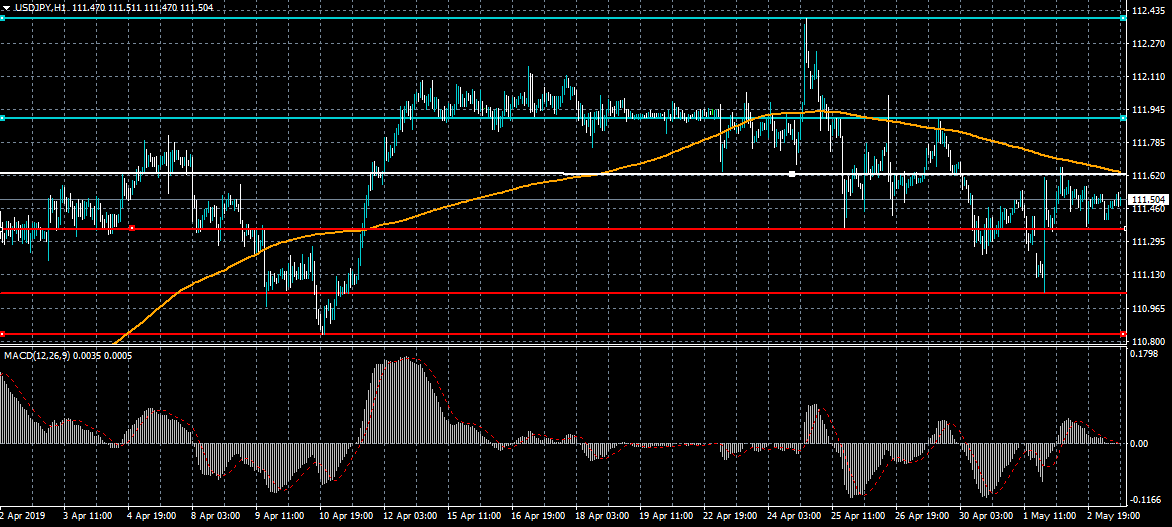
USDJPY Still Under Pressure
The US dollar remains under downside pressure against the Japanese yen currency on Friday following a sharp decline in US equity markets. The USDJPY pair is currently struggling to move above the 111.60 resistance level as overall risk sentiment is fairly subdued. Traders now await the release of the United States monthly jobs report, with expectations tilted to the upside.
The USDJPY pair is only bullish while trading above the 111.60, key intraday resistance is found at the 111.88 and 112.40 levels.
If the USDJPY pair holds below the 111.60 level, key intraday support is found at the 111.35 and 110.80 levels.
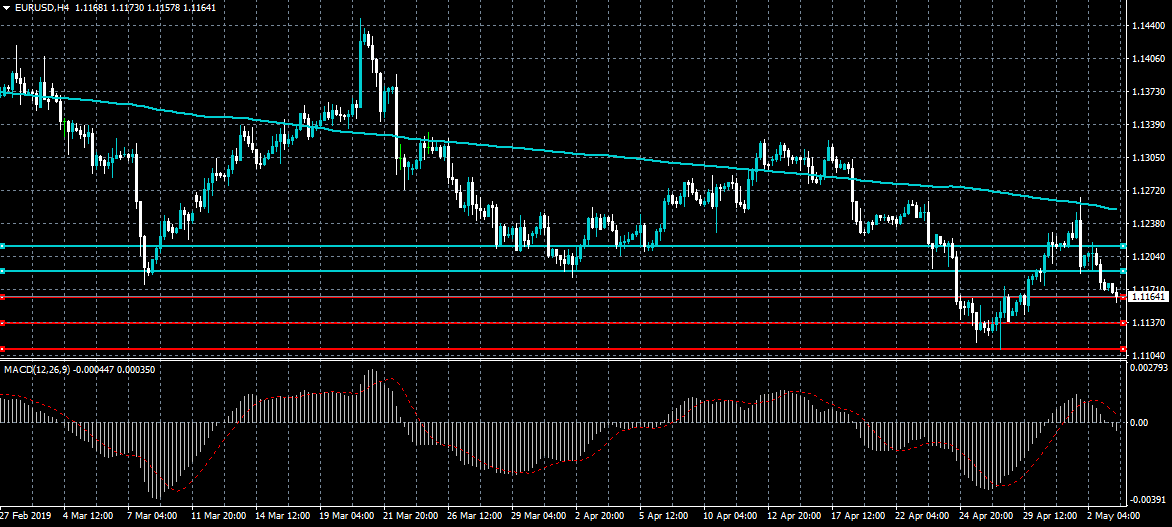
EURUSD Testing Critical Support
The euro has continued to edge lower against the US dollar during the European trading session, with the pair now testing critical technical support. The 1.1135 level currently offers the strongest form of technical support before the yearly price low comes into focus once again. Technical indicators across the four-hour time frame suggest that the EURUSD pair will continue to decline.
The EURUSD pair is heavily bearish while trading below the 1.1164 level, key technical support is found at the 1.1135 and 1.1110 levels.
If the EURUSD pair moves above the 1.1190 level, key technical resistance remains at the 1.1216 and 1.1250 levels.
GBPUSD 1.3000 Now Key Support
The British pound is back under downside pressure against the US dollar after the Bank of England revised its inflation expectations lower during yesterday’s rate meeting. The GBPUSD pair has a bearish intraday bias while trading below the 1.3050 level and may target the 1.3000 support level. Overall, traders are likely to remain cautious ahead of today’s important monthly jobs report from the United States economy.
The GBPUSD pair is only bullish while trading above the 1.3050 level, key resistance is found at the 1.3100 and 1.3130 levels.
If the GBPUSD pair continues to trade below the 1.3050 level, key intraday support is found at the 1.3000 and 1.2970 levels.