Sample Category Title
EURJPY Advances Inside Ichimoku Cloud, Descending Channel Holds
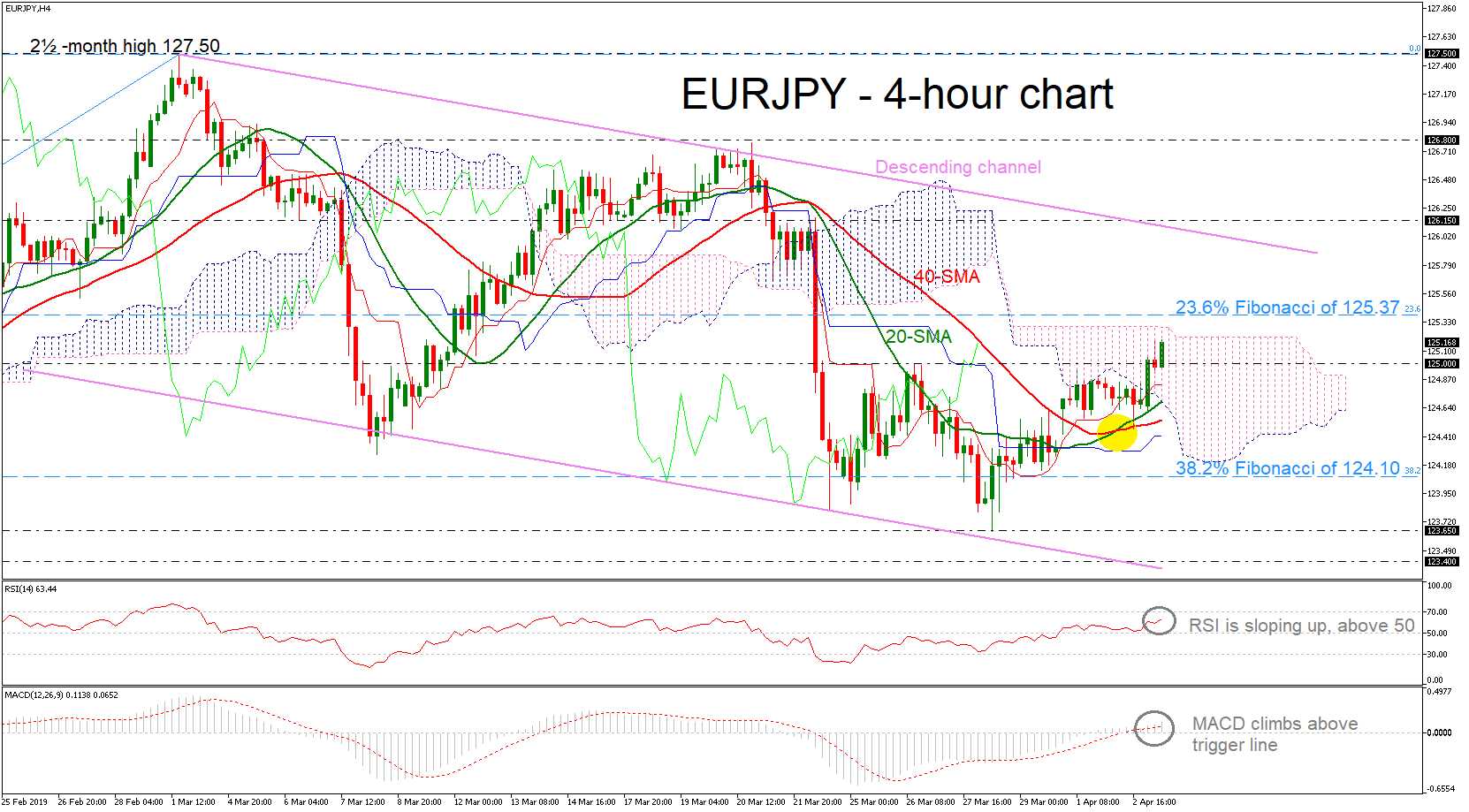
EURJPY is trading higher in the 4-hour chart after it posted a bullish cross within the 20- and 40-simple moving averages (SMAs). The RSI indicator is pointing to the upside in the bullish area, while the MACD oscillator is trying to strengthen its momentum above the trigger line. Currently, the pair remains within the Ichimoku cloud as the red Tenkan-sen line and the blue Kijun-sen line are signaling flat movement in price action.
However, if the market continues the upside movement in the near term, the pair could touch the upper band of the Ichimoku cloud around 125.30 and the 23.6% Fibonacci retracement level of the upleg from 118.57 to 127.50, near 125.37. In case of a higher extension, the price could challenge the 126.15 hurdle taken from the highs on March 22, penetrating the descending channel to the upside.
In the alternative scenario, if the market pushes the pair lower, the price could rest near the immediate support of 125.00. More declines could also meet the 20-SMA and then the 40-SMA currently at 124.70 and 124.55 respectively. An aggressive run below these lines could open the door for the 38.2% Fibonacci of 124.10.
In the longer timeframe, the price remains in a bearish channel following the pullback on two-and-a-half-month high of 127.50, and only an advance above this level could bring the bullish outlook back into play.
Aussie Strengthens On Hopes For US-SIno Negotiations
The Aussie strengthened yesterday and during today’s Asian session against the greenback as hopes revived for further progress in the US-Sino negotiations. The hopes were instigated by a Financial Times report which stated that most differences between the two countries were resolved. Analysts point out that the market reacted calmly until now, as it may have more or less expected that a trade deal was possible. That being said, we see the case for the main catalyst of a sharper market reaction, to be if the discussed deal, could overturn the bearish outlook of economists worldwide about a possible slowdown of the economy. It should also be noted that analysts also point out towards a more risk on mood in the markets. AUD/USD strengthened yesterday and during today’s Asian session, aiming for the 0.7120 (R1) resistance line. We could see the pair continuing to trade in a bullish market, should the positive headlines about the US-Sino negotiations continue to reel in. Also the pair might prove sensitive to today’s financial releases. Should the bulls continue to be in charge, we could see the pair breaking the 0.7120 (R1) resistance line and aim for the 0.7190 (R2) resistance barrier. Should on the other hand the bears take over, we could see the pair aiming if not breaking below the 0.7065 (S1) support line.
Pound gains as Theresa May seeks Brexit delay.
The GBP strengthened yesterday on hopes of a softer Brexit, as Theresa May seems to be seeking a further delay of the Brexit date. UK’s PM could be needing more time in order to sit down with the Labour Party, in an effort to break the Brexit deadlock. According to analysts, Theresa May could be recognizing that she will not be able to gather the necessary majority through here own party and is currently seeking opposition support. Should that be the case we could see her changing her stance in favor of a softer Brexit which may include the UK remaining in the EU customs union. It should be noted though that Theresa May’s leverage over the Labour party may be weak. Theresa May and Jeremy Corbyn are to meet, but before that they will be facing each other at the PM’s weekly questions and answers session in the UK Parliament. We could see the pound being sensitive and if positive headlines reel in, we could see the pound strengthening. After a drop in the European session yesterday, Cable rose once again and broke the 1.3070 (S1) resistance line (now turned to support), aiming for higher grounds. Should there be further positive headlines about Brexit, we could see the pair rising even further, albeit it should be noted that bullish course could be reversed if negative news reach the market. Also please be advised that the pair could be sensitive on both sides, as to today’s financial releases. Should the pair find fresh buying orders along its path, we could see it breaking the 1.3175 (R1) resistance line and aim for the 1.3265(R2) resistance barrier. If cable comes under the selling interest of the market, it could break the 1.3070 (S1) support line and aim for the 1.2970 (S2).
Other economic highlights, today and early tomorrow
In today’s European session, we get Turkey’s CPI rate for March, Eurozone’s final composite PMI for March and retail sales for February. Also in the European session we get from the UK the Services PMI while in the American session, we get the US ISM non-Manufacturing PMI for March and the EIA crude oil inventories figure. As for speakers, please note that Atlanta Fed President Bostic and Minneapolis Fed President Kashkari will be speaking today.
AUD/USD H4
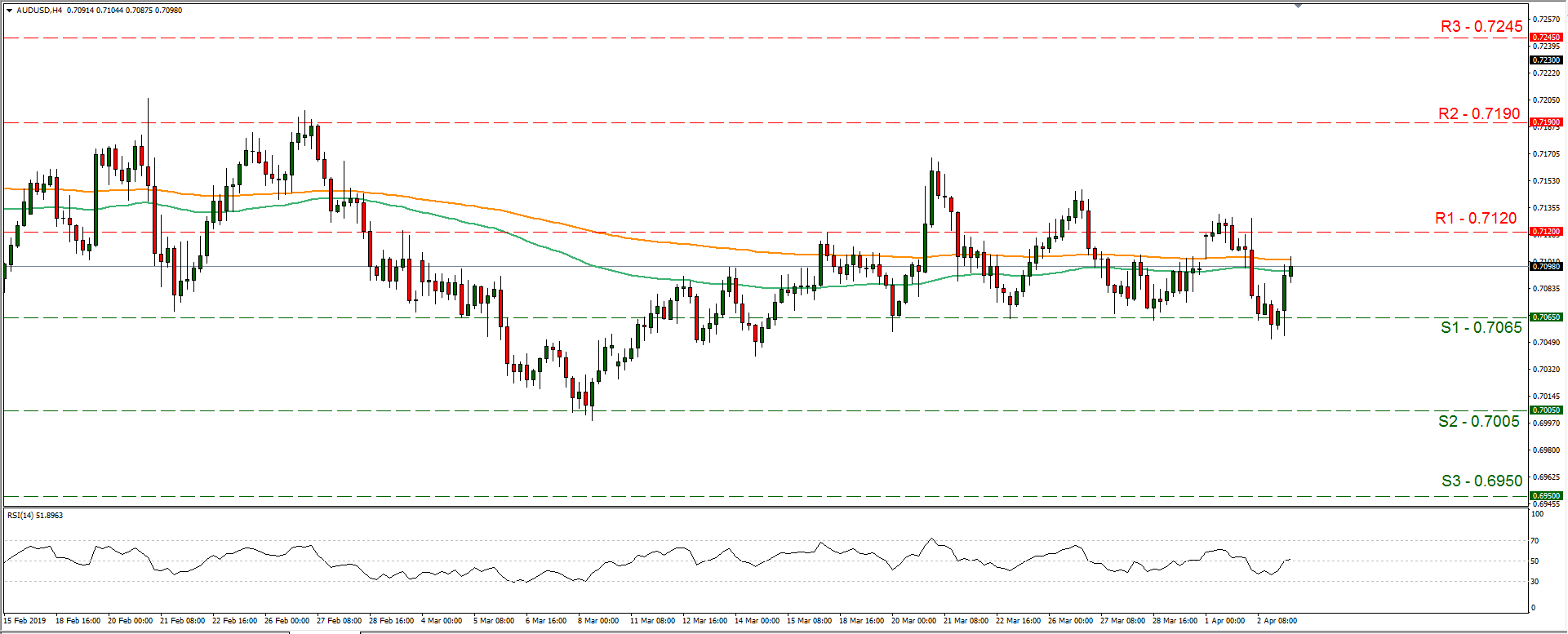
Support: 0.7065 (S1), 0.7005 (S2), 0.6950 (S3)
Resistance: 0.7120 (R1), 0.7190 (R2), 0.7245 (R3)
GBP/USD H4
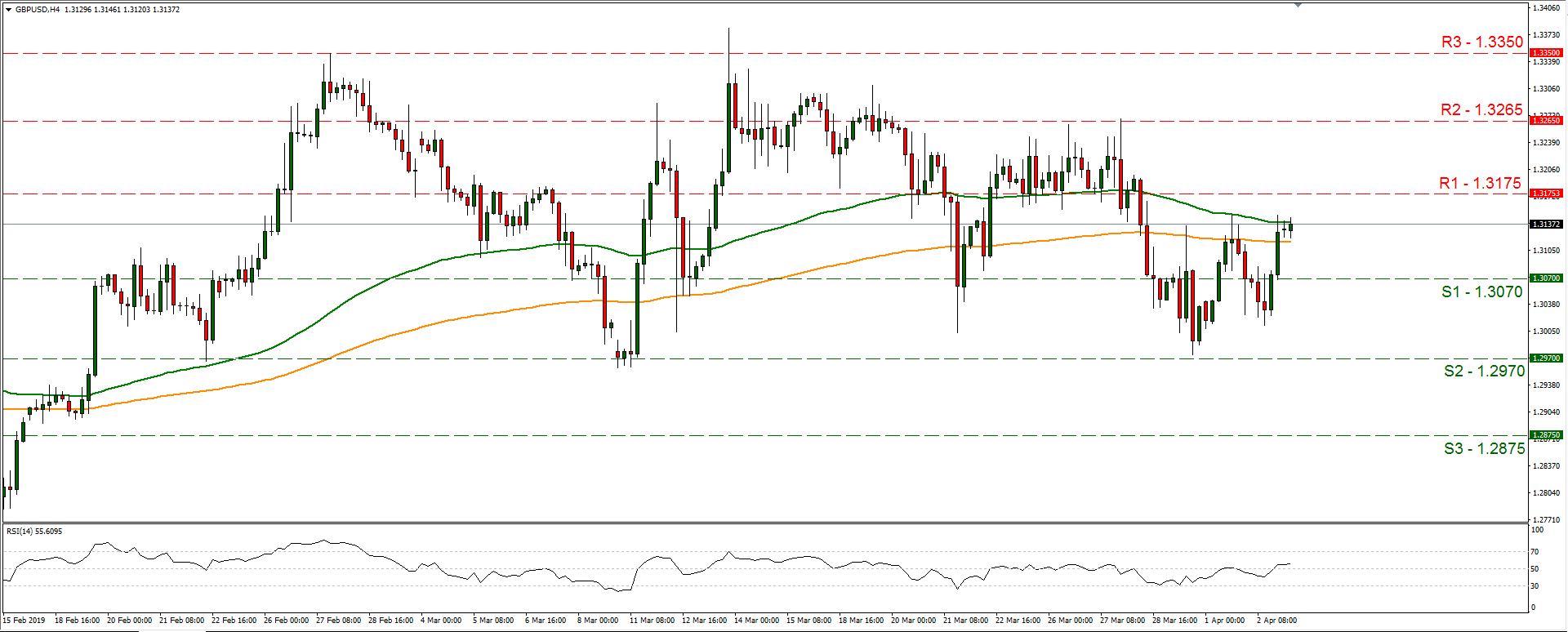
Support: 1.3070 (S1), 1.2970 (S2), 1.2875 (S3)
Resistance: 1.3175 (R1), 1.3265 (R2), 1.3350 (R3)
Crude Reaches YTD High As Progress Is Seen In US-China Talks
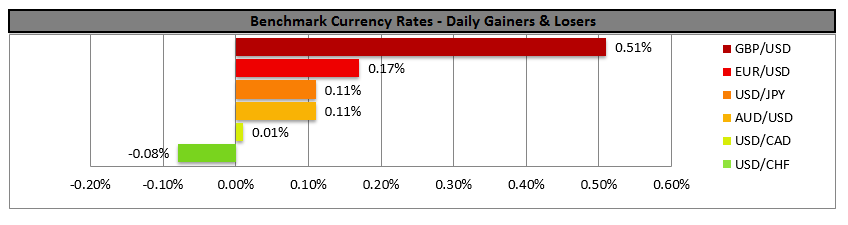
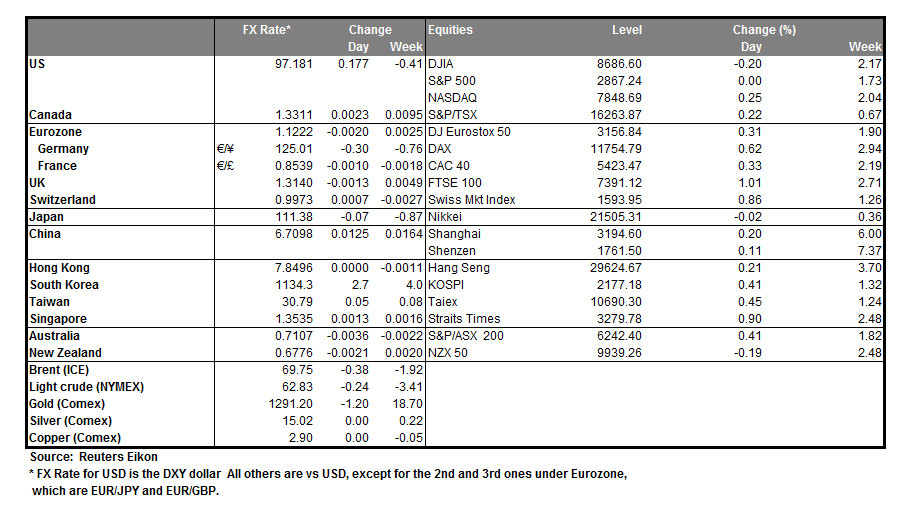
The price of crude oil rose in overnight trading even after the American Petroleum Institute (API) data showed increased inventories in the United States. Both the West Texas Intermediate (WTI) and Brent reached their highest levels this year. The numbers showed that inventories rose by 2.96 million barrels, which was higher than last week’s 1.9 million. Later today, the EIA will release the inventory numbers, which are expected to show a drawdown of slightly under 500K barrels. The recent rally has been fueled by the cuts by OPEC and Russia and a continued decrease in the US wells. Yesterday, it was announced that 3 countries, which were granted waivers to import from Iran, had cut their production to zero. The other countries are waiting for the deadline of the waiver in the coming month.
The USD index eased a bit after it emerged that China and the US had resolved most of the outstanding issues on trade. According to reports, the only major issue that is remaining is how to implement and enforce the agreement. After yesterday’s trip to China by a US delegation, the Chinese are in Washington this week for a potentially climactic negotiation session. The two main hindrances to a deal are the fate of US levies on Chinese goods and the terms of an enforcement mechanism demanded by Washington. The deal reached includes an increase in Chinese purchases of Chinese goods, measures to reign in on forced tech transfers, intellectual property theft, and measures for China to open up its economy to American firms.
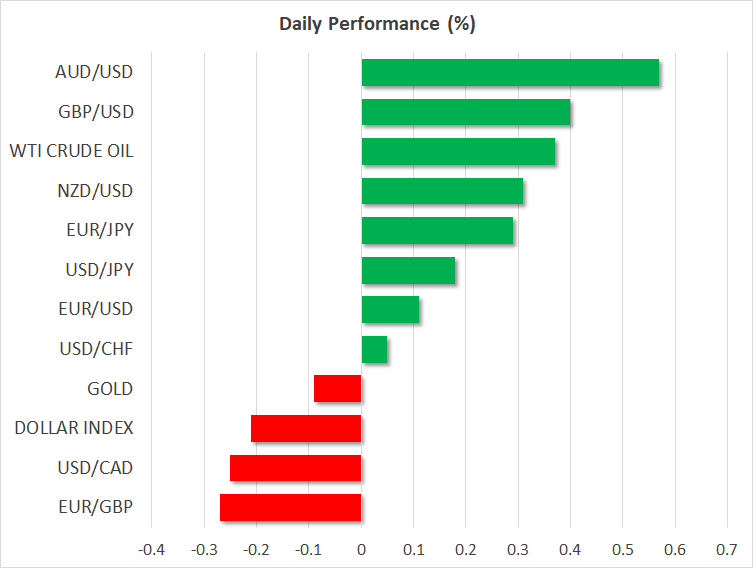
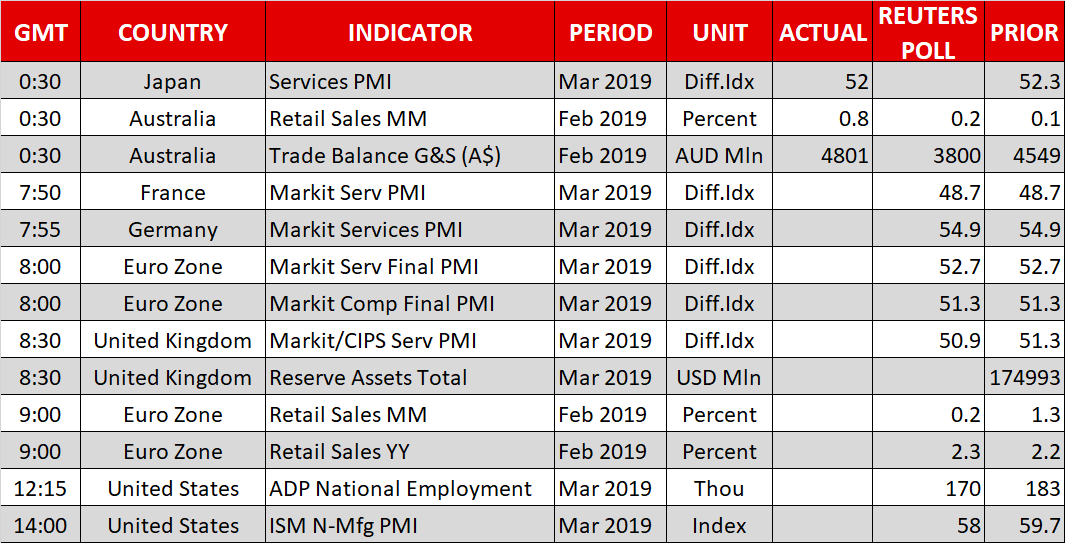
The Australian dollar jumped after the country released impressive retail sales numbers. In February, retail sales rose by 0.8%, which was higher than the expected 0.3%. The trade surplus in the month increased to A$4.8 billion, which was higher than the expected A$3.7 billion. The currency was also boosted by impressive services PMI data from China. In March, the activity in the services sector increased to 54.4, which was higher than the expected 52.3. In February, it was at 41.1.
Today, traders will continue to pay attention to Brexit. Yesterday, Theresa May said that she will ask the European Union for another ‘short’ extension for Article 50. This is because Britain is scheduled to leave the European Union without a deal on April 12. The Uk will also release the services PMI data, which is expected to remain unchanged at 51.0. In the United States, traders will receive employment numbers from ADP. These numbers are expected to show an increase of 184K. ISM will also release the non-manufacturing PMI data.
EUR/USD
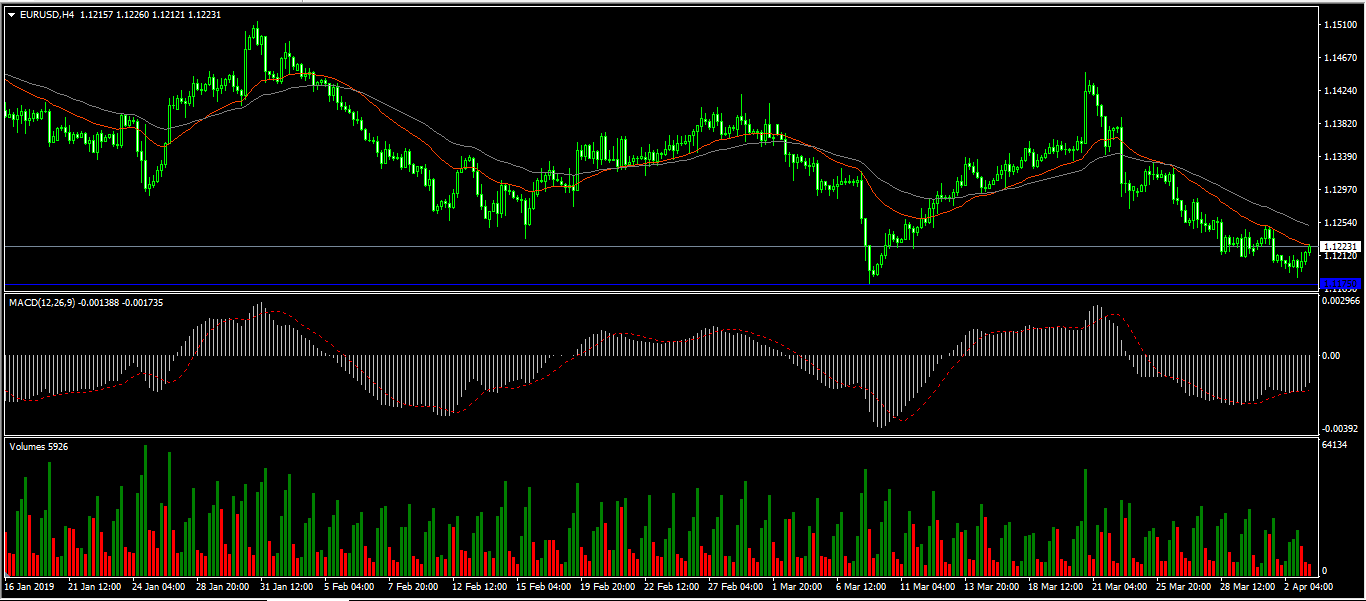
After a few days of declines, the EUR/USD pair moved higher ahead of the employment numbers. The pair is now trading at 1.1225, which is higher than yesterday’s low of 1.1182. On the four-hour chart, this price is along the 25-day moving average and slightly below the 50-day EMA. At the same time, the signal line of the MACD indicator is moving high. However, this could be a false breakout, because of the significantly low volumes in the pair, which means that the downward trend could resume.
XBR/USD
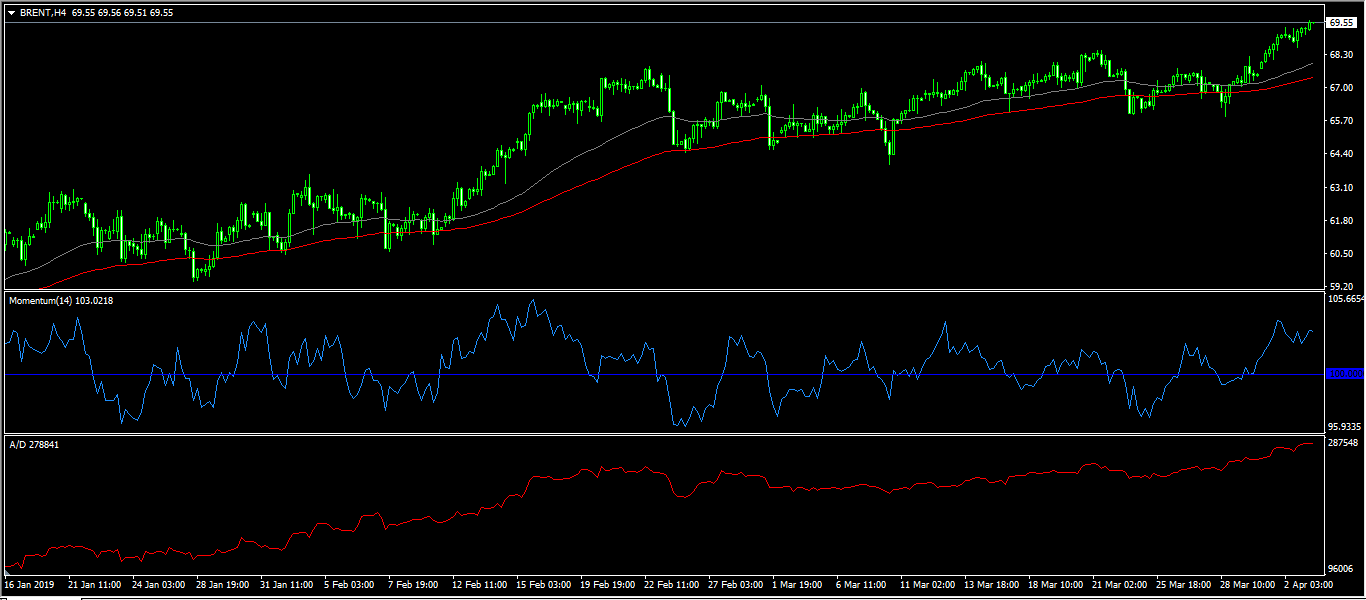
This year, the XBR/USD pair has been on a sharp increase and today, it touched the YTD high of 69.63. On the four-hour chart, the momentum indicator has remained above the 100 level while the pair remains above all the moving averages. The Accumulation and Distribution indicator has continued to rally. Therefore, there is a likelihood that the momentum will continue, with the next important level to watch being 70.
AUD/USD
Yesterday, the AUD/USD pair declined sharply after the RBA interest rates decision. Today, the pair jumped after the release of impressive retail and trade data from Australia and the services PMI from China. The pair reached a high of 0.7105. This led the Relative Strength Index (RSI) to jump closer to the overbought level of 30. The pair’s price remained along the upper line of the Bollinger Bands. The pair could remain along these prices as traders wait for the US jobs numbers.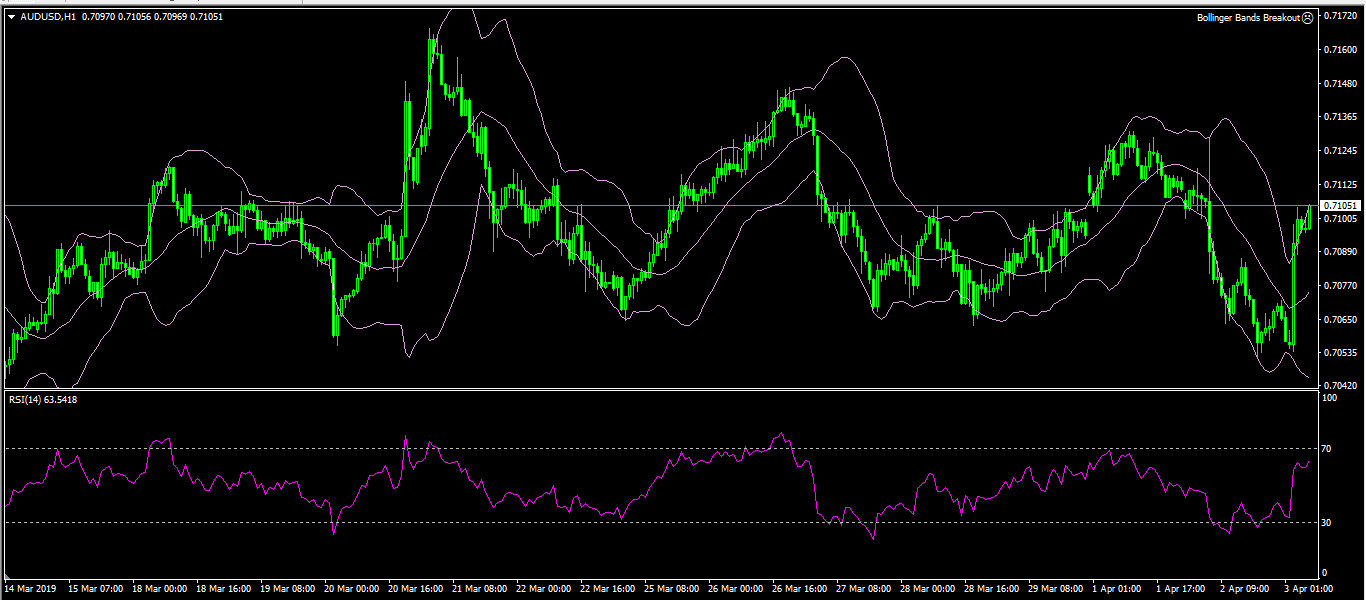
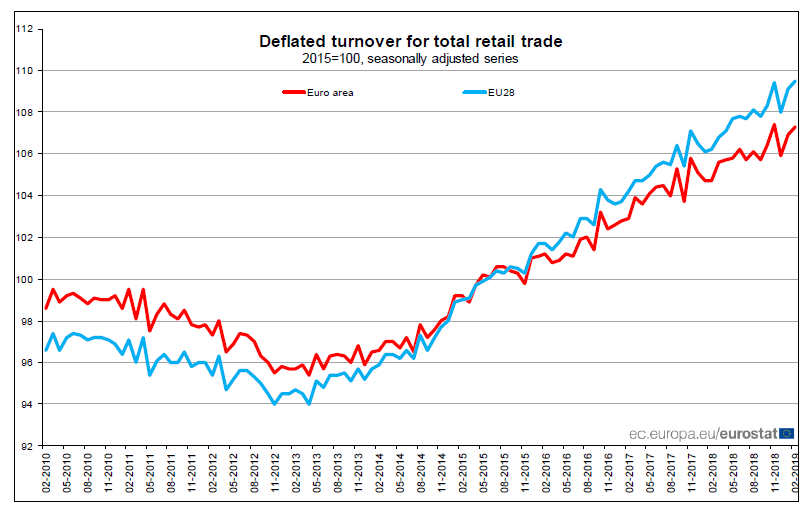
Eurozone retail sales rose 0.4% in Feb versus exp 0.1%
Eurozone retail sales rose 0.4% mom in February, well above expectation of 0.1% mom. Though, it's still notably lower than January's growth of 0.9% mom. In EU 28, retail sales also rose 0.4%.
UK PMI services dropped to 48.9, risk of sliding into a deepening downturn in coming months
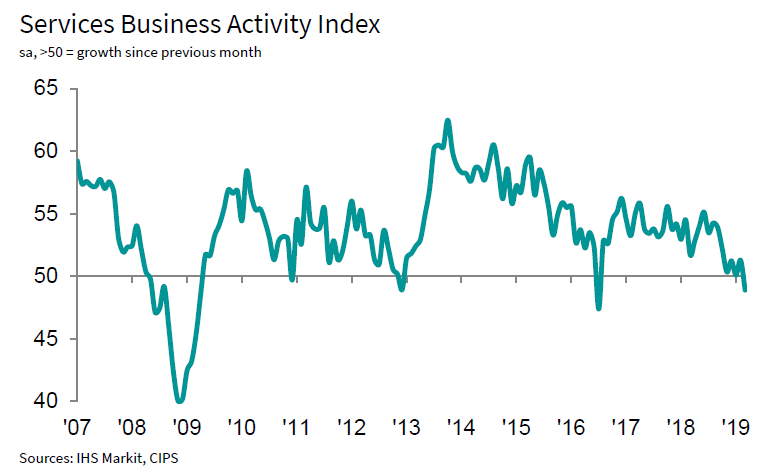
UK PMI services dropped to 48.9 in March, down from 51.3 and missed expectation of 51.3. That's the first contraction reading since July 2016. Markit noted slight reduction in service sector activity. New orders fall for the third month running in March. And, prices charged increase at the slowest pace since June 2017. All sector PMI dropped to 50.0, down from 51.4.
Chris Williamson, Chief Business Economist at IHS Markit, which compiles the survey:
"A drop in service sector activity indicates that UK GDP contracted in March, with the economy stalling over the first quarter as a whole and at risk of sliding into a deepening downturn in coming months. Both the services and construction sectors are now in decline and manufacturing is only expanding because of emergency stockpiling ahead of Brexit.
"The underlying picture of demand is even worse than the headline numbers suggest. Service sector order books have contracted at the steepest rate since the height of the global financial crisis in 2009 so far this year, with companies reporting that Brexit uncertainty has dampened demand and led to cancelled or deferred spending, exacerbating a headwind from slower global economic growth.
"A stalling of the economy in the first quarter will therefore likely turn into a downturn in the second quarter unless demand revives suddenly which, given the recent escalation of Brexit uncertainty, seems highly improbable. Such a scenario leaves the current consensus forecast for the UK economy to grow 1.3% in 2019 looking far too optimistic. IHS Markit currently expects to see just 0.8% growth in 2019, and even this modest performance is perhaps somewhat hopeful given the recent lack of any Brexit developments."
Eurozone PMI composite finalized at 53.3, suggests 0.2% growth in Q1
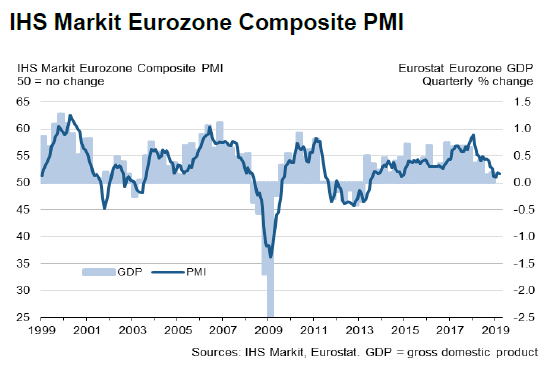
Eurozone PMI services was finalized at 53.3 in March, revised up from 52.7, up from February final at 52.8. PMI composite was finalized at 51.6, down from February's 51.9. Among the member states, France PMI composite was finalized at 48.9, a 2-month low. Germany PMI composite was finalized at 51.4, a 69-month low. Italy PMI composite improved to 5.15, a 6-month high.
Chris Williamson, Chief Business Economist at IHS Markit said:
"The final eurozone PMI for March confirms the sluggish end to the first quarter, with business growth ebbing to one of the most lethargic rates seen since 2014.
"Only at the turn of the year, when business was hit by headwinds such as widespread 'yellow vest' protests in France and an auto sector struggling with new emissions regulations, has growth been slower over the past four years. The rebound from these temporary headwinds has clearly been disappointing and is already losing momentum, led by a deepening downturn in manufacturing. The goods producing sector reports that global growth worries have intensified, meaning customers continue to pull back on spending.
"The service sector has managed to sustain a relatively resilient rate of growth but has also lost momentum in recent months. This should come as no surprise as history tells us that robust service sector growth usually depends on a healthy manufacturing economy.
"At current levels, the PMI remains consistent with GDP rising by 0.2% in the first quarter, but unless manufacturing pulls out of its downturn the overall pace of economic growth will likely weaken in the second quarter as the malaise spreads to the service sector. In this respect, with forward-looking indicators from the manufacturing sector suggesting goods production will fall further in the coming months, downside risk to the outlook have intensified."
Bitcoin – Holding On To Tuesday’s Gains
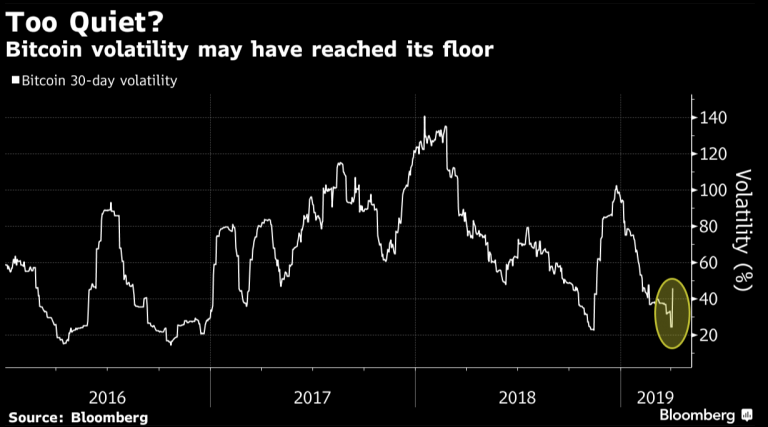
It was like the good old days in the crypto market on Tuesday, as traders in Europe and the US woke up to a more than 20% rally in bitcoin. Safe to say, it had become the forgotten instrument for a while as the very volatility it was known for slipped away and price consolidated around $4,000.
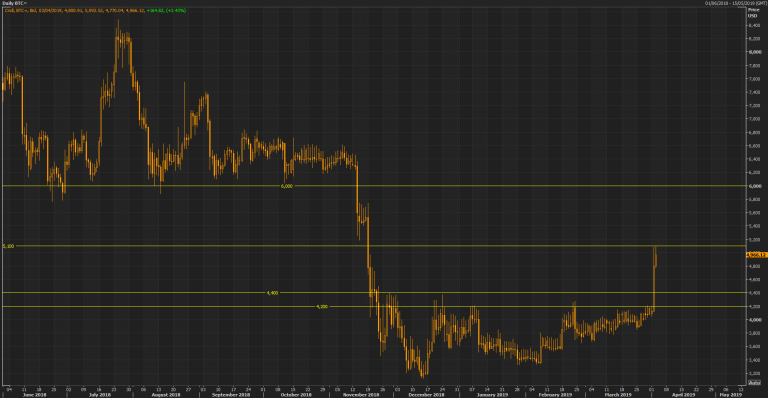
In the absence of any real catalyst though, many are left to question whether there's anything of substance behind the bounce or if it's just a short squeeze. Bitcoin has found some resistance around $5,100 – previous support – but the real test will come around $6,000 which was a significant support zone throughout 2018, a break of which in November sparked the move back to almost $3,000.
Naturally people are looking for reasons for the rally on Tuesday, something that will support and sustain the breakout but as yet, it would appear there's not much there. There have been various attempts to explain it and the most plausible may be a large order at a time when we've seen a prolonged squeeze and price was near long-term resistance.
EUR/GBP Daily Outlook
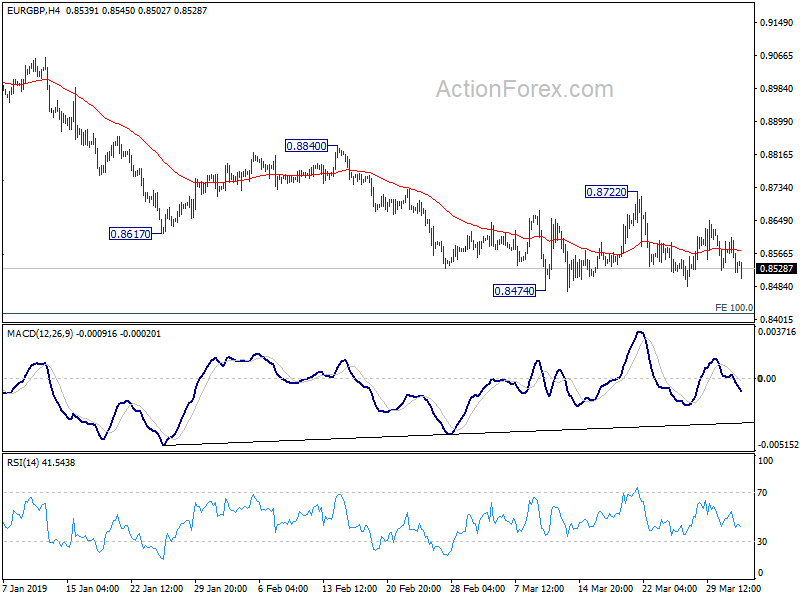
Daily Pivots: (S1) 0.8496; (P) 0.8496; (R1) 0.8586; More...
EUR/GBP is still gyrating in range of 0.8474/8722 and intraday bias remains neutral. Near term outlook remains bearish as long as 0.8722 resistance holds. On the downside, break of 0.8474 will resume larger down trend for 0.8416 long term projection next. On the upside, though, break of 0.8722 will resume the rebound from 0.8474 to 0.8840 resistance first.
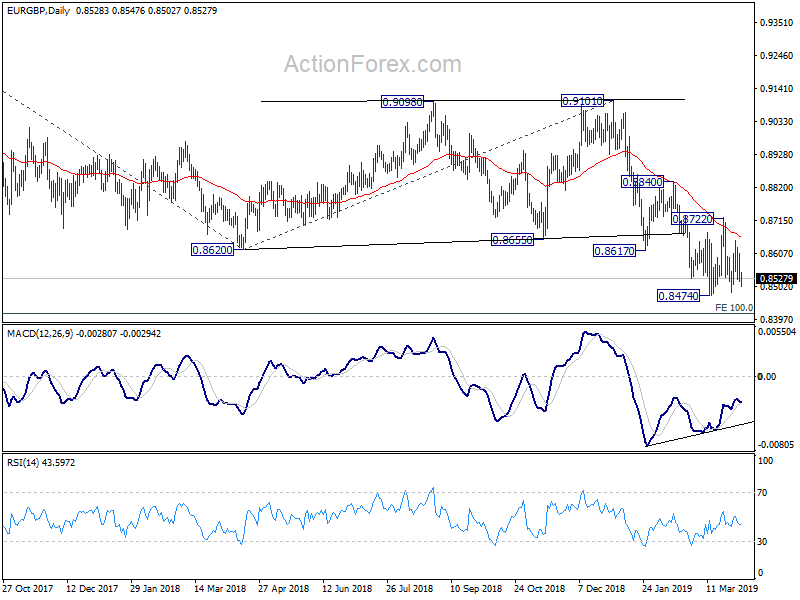
In the bigger picture, EUR/GBP is seen as staying in long term range pattern started at 0.9304 (2016 high). Current fall from 0.9305 (2017 high), is a falling leg inside the pattern. Such decline could extend to 100% projection of 0.9305 to 0.8620 from 0.9101 at 0.8416 and possibly below. But for now, we'd expect strong support around 0.8312 support to contain downside and bring rebound.
Pound Climbs As May Warms Up To Corbyn, Stocks Jump
- Encouraging trade signals lift risk sentiment; high-level talks resume today
- Sterling climbs as May warms up to Corbyn to break deadlock
- Dollar pulls back ahead of ADP report and ISM non-manufacturing PMI
Risk appetite boosted by hopes for trade breakthrough
After a relatively uneventful session on Tuesday, during which major US stock indices such as the S&P 500 closed flat, risk sentiment was lifted overnight by some encouraging signs on the trade front. Reports suggest that top US and Chinese officials have ‘resolved most of the issues' required to finalize a deal but are still far apart on the enforcement mechanism of any agreement.
In truth, this was nothing new, as US officials like Lighthizer made it clear long ago they want to preserve the right to unilaterally reimpose tariffs if they deem China is ‘violating' the accord – something China has resisted ferociously. Regardless, the market saw this as yet another sign a deal is inching closer, with Asian stock indices being a sea of green today and futures tracking the US markets also pointing to a notably higher open. High-level talks will resume today in Washington, and should the relevant negotiators echo the optimistic sentiment that a deal is truly close, then risky assets could extend their latest gains.
Pound reverses higher as May warms up to Corbyn
In the UK, prime minister May announced that she will meet with the leader of the opposition Labour party – Jeremy Corbyn – for talks, in an attempt to break the Brexit deadlock. This bipartisan gesture of compromise, which is rather uncommon in British politics, fueled hopes that May is finally ready to alter her ‘red lines' and accept a softer form of Brexit – for instance, one that includes a permanent customs union. Such a route would solve the Irish border issue and avoid the havoc of a no-deal outcome, but it would also leave the UK unable to strike its own trade deals with other countries and infuriate hardliners in May's party.
The pound, for its part, liked the news. It immediately soared on the announcement and is also performing well early on Wednesday, as this development raises further the odds that the UK will ask for a long extension at the special EU summit next week and diminishes the likelihood of a disorderly exit. The UK services PMI for March will be released today, though any headlines from the May-Corbyn meeting will most probably eclipse economic news in driving the pound.
Dollar pulls back as euro shows signs of life again
The world's most traded currency pair, euro/dollar, is posting some gains early today and looks set to snap a six-day losing streak. The euro has been battered lately, as more signs have emerged that the Eurozone economy likely slowed further in the first quarter of the year, with the continued uncertainty in Brexit adding the ‘icing on the cake'. On the other side of the equation, the dollar has remained in high demand even despite the Fed's dovish U-turn, mainly due to the US economy still being the ‘prettiest of an ugly bunch'.
Can this trend continue? The ‘real test' for euro/dollar will likely be whether it can hold above the March lows around 1.1175. A decisive break below that area would signal that the broader downtrend is back in force, whereas a meaningful rebound may suggest the pair is in a range. As for what could trigger such a break, or rebound, important events are plentiful. The US ADP employment report for March and the ISM non-manufacturing PMI will both be released today, ahead of the official US jobs data on Friday and the ECB meeting next week.
Elsewhere, Bitcoin soared yesterday, touching a high of around $5000, without any clear catalyst or news behind the move.
BTCUSD Turns Bullish
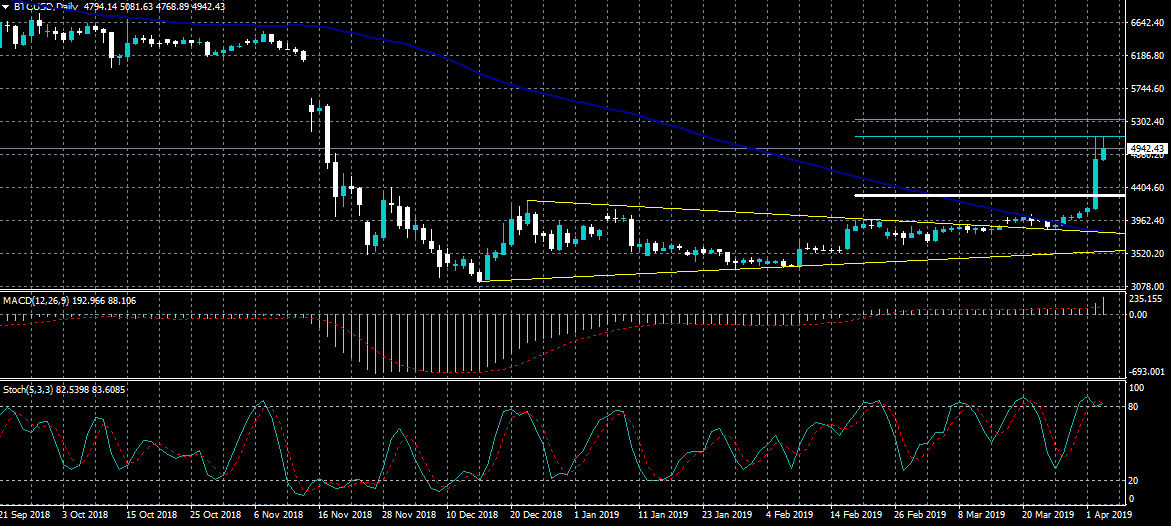
Bitcoin has surged to a fresh 2019 trading high, with the number one cryptocurrency by market capitalization briefly trading above the psychological $5,000 resistance level. The BTCUSD pair has a strong weekly bullish bias while trading above the $4,225 support level. If the bullish move continues, the BTCUSD pair could extend towards the $5,550 level over the medium-term.
The BTCUSD pair is bullish while trading above the $4,225 level, key technical resistance remains at the $5,000 and $5,500 levels.
If the BTCUSD pair trades under the $4,225 level, sellers may test towards the $4,110 and $3,985 support levels.