

Sample Category Title
US update: Pound soft as Brexit vote awaited, no support from ERG and DUP
Sterling remains the weakest one for today as markets await Brexit meaningful vote in the UK. Brexit minister is expected to make the closing speech in the Commons, setting up the vote at 7pm London time, or 1900GMT. Ahead of that May warned in the parliament that "if this vote is not passed tonight, if this deal is not passed, then Brexit could be lost."
May secured some changes to the deal, with an instrument and a new statement that provide the UK a way to suspend the Irish backstop. But Attorney General Geoffrey Cox has made sure in his new legal advice that UK could still be trapped inside the backstop forever. And, Cox said that the "legal risks remains unchanged.".
Head of Brexiteer group ERG Bill Cash said "in the light of our own legal analysis and others we do not recommend accepting the government's motion today". Northern Ireland's DUP leader also said the won't back the deal as "sufficient progress has not be achieved". May's Brexit deal lost the meaningful vote by 230 votes back in January. There might be some improvement this time but chance remains slim for the deal to be passed.
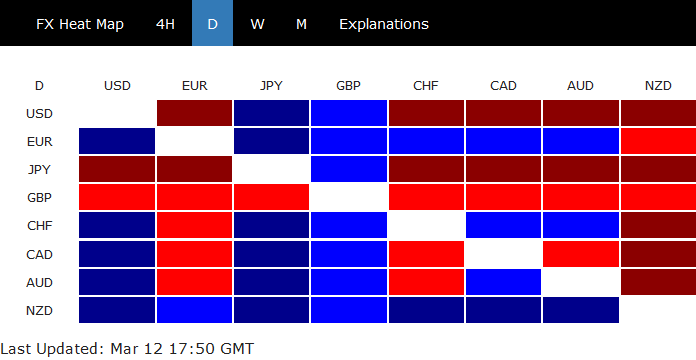
Elsewhere in the currency markets, Yen is currently the second weakest, followed by Dollar. New Zealand Dollar is the strongest, followed by Euro. There is no clear theme, except Brexit.
In other markets:
- DOW is down -0.40%.
- S&P 500 is up 0.38%.
- NASDAQ is up 0.61%.
- 10-year yield is down -0.0207 at 2.621.
In Europe:
- FTSE closed up 0.29%.
- DAX closed down -0.17%.
- CAC closed up 0.08%.
- German 10-year yield is down -0.0143 at 0.057.
British Pound Jumpy ahead of Crucial parliament Vote
GBP/USD is showing significant swings on Tuesday, moving as much as 1 percent. In North American trade, the pair is trading at 1.3114, down 0.29% on the day. In economic news, sharp British indicators were unable to boost the pound, as they have been overshadowed by the upcoming Brexit vote in parliament.
British GDP gained 0.5% in January, above the estimate of 0.2%. Manufacturing production jumped 0.8%, beating the forecast of 0.2%. In the U.S., Core CPI edged down to 0.1%, shy of the estimate of 0.2%. CPI remained steady at 0.2%. On Wednesday, the U.K. government releases its annual budget, while the U.S. publishes PPI and durable goods orders data.
It is crunch time for the long and windy Brexit saga, with parliament set to vote on the government’s withdrawal agreement later on Tuesday. Will this vote be any different than the first attempt in January, which the government lost by some 290 votes? Prime Minister May said she had secured “legally binding” changes from the E.U., which would allow the U.K. to cancel the backstop arrangement over Ireland, but it’s questionable if this will be enough to sway Conservative MPs, many who fear that the backstop will prevent the U.K. from getting out of the European Union. If the vote on withdrawal is rejected by lawmakers, the next step is one on a no-deal Brexit, and the second on requesting the EU to extend Article 50 and delay Brexit past March 29. Traders should be prepared for strong movement from GBP/USD in the North American session.
U.S. inflation numbers remain well below the Federal Reserve’s inflation target of 2.0 percent. This has given the Fed plenty of breathing room regarding rate hikes, as policymakers continue to signal that the Fed could hold off until the second half of the year. In a television interview on Sunday, Jerome Powell left no doubt about where the Fed stands, saying that the Fed would remain patient and did not felt any hurry to change interest rate policy. The dovish stance of the Fed could weigh on the dollar, as a lack of rate hikes makes the greenback less attractive to investors.
Postcard from China: Trade War Set to End, Tech War Here to Stay
Key points
- The trade war is set to end soon but the tech war is here to stay.
- China's rise and the relative decline of the US are set to create friction in years to come.
- China's tech rise is moving fast but the country still depends on US tech in key areas.
- We witnessed China's rapid development within artificial intelligence close up in a 'Dream Town' in Hangzhou.
- We do not expect China to hit a debt crisis but credit availability for the private sector is a big challenge
A week ago, we came back from a trip in China, which took us to Shanghai, Hangzhou and Hong Kong. We talked to a wide range of people at companies, research houses, academics, institutions and visited an 'Artificial Intelligence Dream Town'. Below are the main takeaways from our trip.
From trade war to tech war
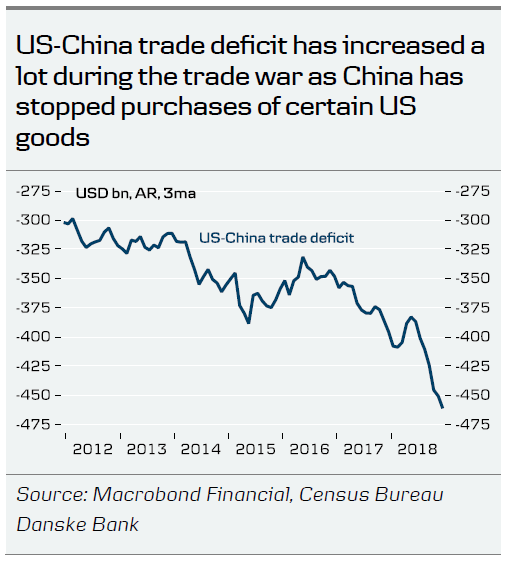
Not surprisingly, the trade war is currently at the forefront of all discussions in China. There is now broad consensus that a trade deal is coming but views differ on what kind of deal it will be. A sceptical camp dominates, which sees a 'weak deal' that the US hawks are not going to like and that could lead the trade issue to flare up again later. However, Donald Trump now wants a deal, as he will be setting out on the campaign trail soon and wants a deal with China in the package that carries gifts to key voters, as well as a strong economy and rallying equity markets.
However, the consensus view is that trade deal or not, the ongoing tech war between the US and China is set to continue. This implies (a) very strict investment restrictions on Chinese companies in the US, (b) more export controls on technology, (c) targeting specific Chinese tech companies (such as Huawei) and (d) aiming to build an alliance with other western countries to limit Chinese access to western technology.
It is clear that sentiment among US observers of China has taken a sharp turn to a more critical stance. There are few 'panda huggers' left in Washington as well as among Americans in China. The negative view is bipartisan and widespread and includes the media and academics as well. Trust between the US, the sole super power since the end of the cold war in 1991, and the rising power of China, is at a low point. Almost everyone expects the friction to continue as China grows bigger and more confident and the US defends its position as the world's super power and aims to contain the rise of Chinese influence in the world.
The change in US sentiment has happened rapidly in recent years and is a consequence of many things. Over the past five years, under Xi Jinping, it became clear that China is not moving towards a system of western democracy. Instead, it plans to stick to a one-party system based on old Chinese traditions, with a very strong state. The removal of the two-term limit on the presidency in 2018 underlines this. In addition, China has increased its presence on the global stage with the Belt and Road Initiative, initiating the AIIB and the BRICS bank, and increasing its military role in the South China Sea. The time when China kept a low profile (Deng Xiaoping's 'hide your strength, bide your time') on the global stage is over. Finally, an increase in control and surveillance, combined with human rights issues, has hardened the stance towards China in the US.
Most people doubt that we are entering a new 'cold war' in the old sense that we will get two separate blocks. The world is much too integrated for this today and the economic cost for the west would be substantially higher (missing out on Chinese growth) compared with what was the case in the Cold War with the Soviet Union. For most countries, it is set to be a balancing act, with one foot in each camp but further in one than in the other.
Geopolitical tensions are likely to continue with further conflicts in the South China Sea, friction regarding Taiwan and the US looking to offer an alternative to the Belt and Road Initiative and warning other countries not to join it. We are already seeing the US and China using both carrot and stick approaches with other countries to get them on 'their side' or at least not to oppose them. However, the US is gradually losing relative power and we may see more countries catering to China in order to reap the economic benefits of a good relationship with China, not least the other emerging markets and developing countries.
China's tech rise is rapid but it is still behind in some key areas
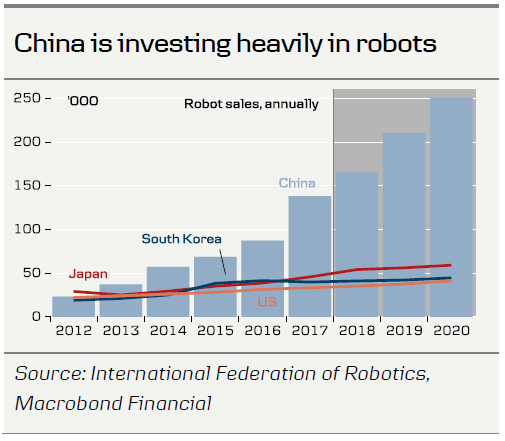
Another issue that is high on the agenda in China is the very rapid rise within tech. China has already moved to the frontier in areas such as mobile phones, 5G networks, super computers, e-commerce, mobile pay, high-speed trains and drone technology and is moving very fast within artificial intelligence. China is still lacking behind within semiconductors, robots, manufacturing technology and aviation. It is still highly dependent on the US within semiconductors and the whole ecosystem needed to catch up in this area implies that it will take at least five to 10 years. However, China is set to double its investments to speed this up, as the trade war has made it clear that China is very dependent on the US in this field and thus vulnerable.
Within artificial intelligence, China has some clear advantages in a very large population providing significant amounts of data. China's tech development also benefits from millions of engineers being educated every year and a very strong work ethic among start-ups, which involves working '996' (09:00 to 21:00 six days a week) and in some cases '997'.
On our visit to Hangzhou (a city one hour from Shanghai, with 9 million people), we had a tour of an Artificial Intelligence Dream Town, which was a spectacle of China's speed within the tech area. The Dream Town hosts 2,000 people working in start-ups, who focus on artificial intelligence. Each month 30 start-ups compete for four places in the Dream Town. Here they are affiliated with incubator funds and have free accommodation for three years, sponsored by the government. There is a close co-operation with universities nearby and the tech giant Alibaba, which has its headquarters in Hangzhou (CEO Jack Ma's hometown).
The exhibition centre was a glimpse into the future of how artificial intelligence will become part of our lives in a completely new way and how China is likely to be at the forefront of this development, competing head to head with the US. We witnessed how China is also ahead in using drone technology. A drone delivery installation close to a KFC and Starbucks in the middle of the Dream Town can deliver food and coffee within a radius of 3km. The customer enters the order into a KFC or Starbucks app and one of the outlets personnel puts the delivery in a box attached to the drone, which then delivers it. Unfortunately, we did not have time to try it but our hosts told us it was running and working well.
Hong Kong and Greater Bay Area
The last stop on our trip was Hong Kong. The city continues to thrive on Chinese growth and is home to a vibrant financial community and a host of foreign and Chinese companies. Hong Kong is set to become increasingly integrated with the mainland as part of the Greater Bay Area project, which aims to create a high-tech economic and financial powerhouse. The Greater Bay Area will link nine cities in Guangdong province with Hong Kong and Macau (see more here The plan is to leverage the strong financial centre and trade hub of Hong Kong with the high-tech capabilities of cities such as Shenzhen (called the Silicon Valley for hardware) and Guangzhou. The Hong Kong-Zhuhai-Macau Bridge, which opened earlier this year, is part of a vision to increase integration and foster a world-leading economic zone. The Greater Bay Area zone is home to 67 million people and has a GDP of USD1.39trn, almost double the size of the San Francisco Bay Area GDP of USD0.78trn. By 2030, China expects the area's GDP to triple to the size of the German economy today.
No debt crisis but struggle to get credit to the private sector
While in Hong Kong, we also had the chance to discuss the Chinese challenges relating to debt and inadequate credit availability for the private sector. A meeting with the IMF and an asset manager threw more light on the battle to deleverage state-owned enterprises (SOEs) and reduce risks from shadow banking while at the same time securing credit availability for the SME companies in the private sector.
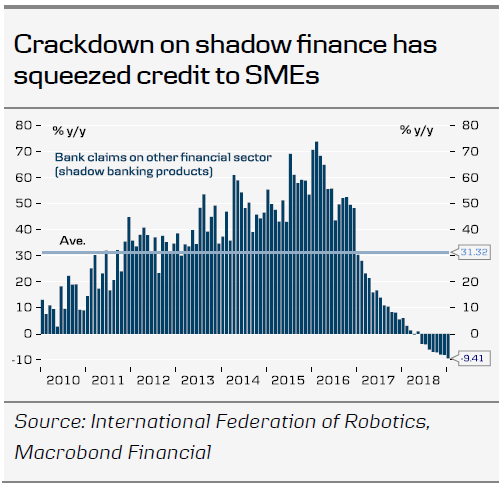
Over the past two years, China has elevated financial risks to the top of the political agenda. Deleveraging of highly indebted SOEs and controlling the risks from rapid growth in shadow finance have been at the forefront of the government battle against risks to the economy. However, the crack down on shadow finance in particular has had a significant negative effect on the private sector, especially SMEs. Shadow finance products (such as wealth management products) have been key in allocating capital from Chinese households to private sector companies. While the large banks prefer to lend to SOEs, the smaller and medium-sized banks have generally been the place for SME companies to get funding. The loans were increasingly off balance via wealth management products and other savings products, which made the financial system more vulnerable. As a consequence, the government has tightened significantly rules on wealth management products, trust loans, etc., which has added more loans back to the balance sheets of small and medium-sized banks. Consequently, they have had to set aside more capital and it has hampered their lending capacity and thus restricted credit availability for companies. Adding the trade war on top of this has created a perfect storm that has thrown a lot of sand in the lending machine to private companies.
The government and central bank are keenly aware of this and have taken many steps over the past year to incentivise banks to lend more money to the private sector. However, it has widely been like pushing on a string and it is still a key challenge to unlock this credit squeeze. We believe we are likely see more measures this year to do this. The government is also said to be relaxing the rules a bit on shadow finance again to open up again this credit channel a bit more for the private sector (see SCMP, 10 March for more on this). However, the government keeps facing the balancing act of underpinning growth in the short term while not creating new risks for the longer term. This is also something premier Li Keqiang mentioned specifically in his Work Report at the National People's Congress last week.
Conclusion: trade war set to end, tech war to continue and China to stay on track for surpassing the US
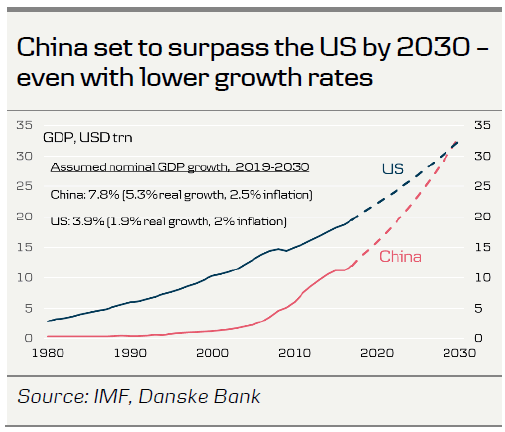
To sum up, this was another very giving trip that opened up yet new sides to the Chinese box of complexity, opaqueness and at the same time economic vibrancy. We came away with the impression that the trade war is set to end soon but that the US-China rivalry is far from over. In addition, we believe we will have to get used to living with the possibility that new areas of friction could flare up from time to time. In our view, there is no doubt that the tech war is here to stay. We also witnessed again close up the Chinese speed in development and investments when it comes to innovation and tech and we were reminded of the challenges that China also faces, not least in recalibrating its financial system to make it more stable, while at the same time securing credit for the most productive parts of the economy. However, we see adaptability and focus on solving problems as one of the key strengths of the Chinese economy. Hence, we expect it to continue to be the bumblebee that should not be able to fly and yet does. We are still optimistic that China can overcome the numerous challenges it faces (only a few of which we mention here) and continue its rise to become the biggest economy in the world over the next 10-15 years as it surpasses the US around 2030. We expect continued high growth and plenty of opportunities but also more competition as Chinese companies become more efficient and increasingly go global.
US Durable Goods Orders Due, as Dollar Rally Eases
The next focal point for the dollar will be the release of durable goods orders for January, on Wednesday at 12:30 GMT. Forecasts point to a relatively soft set of data, which may further amplify concerns around a looming US slowdown, and by extent cause the greenback to give back more of its recent gains. In the bigger picture, the US currency will likely take its cue from the signals the Fed sends at its policy meeting next week.
New orders for durable goods in the US are expected to have declined by 0.5% on a monthly basis in January, after rising by 1.2% in December. Excluding transportation equipment, ‘core’ orders are projected to have risen by a marginal 0.1%, the same pace as previously. Perhaps the most important measure to watch though, will be orders for non-defense capital goods excluding aircrafts, which is viewed as a proxy for business spending and investment. That metric is also forecast to have ticked up by 0.1%, after falling by 1.0% in December.
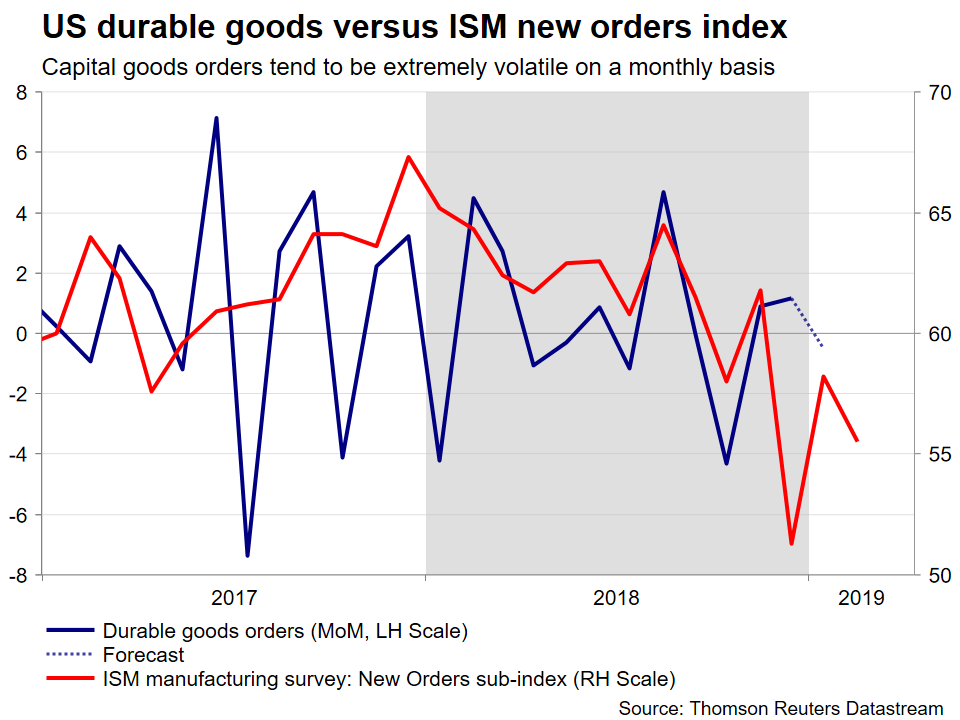
If the actual prints meet the projections, that would signal that the softness in business spending seen in late 2018 has carried over into 2019, spelling bad news for economic growth. Expectations for US growth in Q1 are already extremely subdued, with the Atlanta Fed GDPNow model pointing to an anemic 0.2% annualized expansion.
Against this backdrop, a weak set of durable goods could exacerbate worries that the US economy barely grew at the start of 2019, or even contracted, weighing on the dollar. Looking at dollar/yen technically, immediate support to declines may be found near 110.75, the March 8 low, before the 110.0 handle attracts attention.
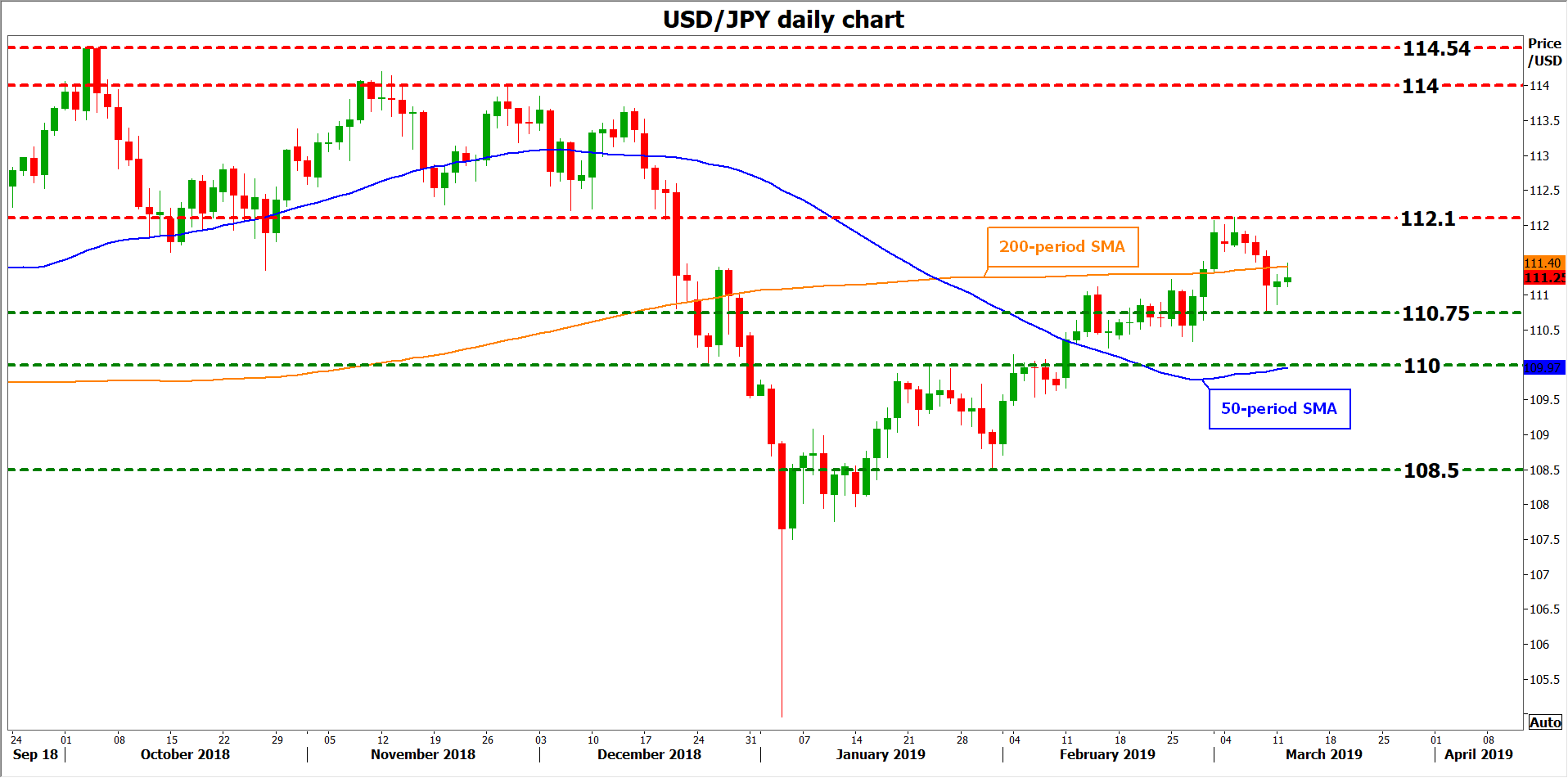
On the flipside, if capital goods orders beat expectations – allaying concerns around a slowdown – then the US currency could come under renewed buying interest. Resistance to advances in dollar/yen may come at 112.10, which capped the gains on March 5, with an upside break opening the door for a test of the 114.0 zone.
Besides durable goods, US producer price index (PPI) for February will also be released but considering that the consumer price index (CPI) for that month is already out, the PPI is unlikely to attract much attention.
Finally, perhaps the most significant driver for the dollar’s near-term direction will be what the Fed signals when it gathers next week. Specifically, will policymakers keep a rate increase in 2019 on the table in their latest ‘dot plot’, or will they shift to indicating no rate hikes at all? Market pricing currently implies a small probability for rate cuts this year, not rate hikes, so even the faintest hint of a future rate increase could come as a ‘hawkish’ surprise for traders, putting the wind back into the dollar’s sails.
Japanese Manufacturing Data Dips, But Yen Yawns
It continues to be a quiet week for USD/JPY. In Tuesday’s North American session, the pair is trading at 111.14, down 0.06% on the day. On the release front, Japanese BSI Manufacturing Index slipped 7.3 points in the fourth quarter, its steepest decline since 2016. In the U.S., Core CPI edged down to 0.1%, shy of the estimate of 0.2%. CPI remained steady at 0.2%. Later in the day, Japan releases Core Machinery Orders and PPI. On Wednesday, the U.S. publishes PPI and durable goods orders data.
U.S. inflation numbers remain well below the Federal Reserve’s inflation target of 2.0 percent. This has given the Fed plenty of breathing room regarding rate hikes, as policymakers continue to signal that the Fed could hold off until the second half of the year. In a television interview on Sunday, Jerome Powell left no doubt about where the Fed stands, saying that the Fed would remain patient and did not felt any hurry to change interest rate policy. The dovish stance of the Fed could weigh on the dollar, as a lack of rate hikes makes the greenback less attractive to investors.
The markets are not expecting any changes in monetary policy from the Bank of Japan, which will hold a policy meeting later this week. There is little pressure on policymakers to raise interest rates, especially with the Federal Reserve and ECB putting a freeze on rate hikes for the time being. However, the BoJ is concerned that the Japanese yen could rise if the global economy takes a downturn in 2019, which would weigh on exports and push inflation levels lower. If the yen does move higher, the bank will have to consider additional stimulus in order to keep the currency in check. This means that it’s unlikely that the safe-haven yen will be posting significant gains in the next few months, barring geopolitical turmoil.
Sunset Market Commentary
Markets
Global core bonds are gaining ground today with US Treasuries outperforming German Bunds. Risk sentiment remained positive overnight with Asian bourses tracking WS gains and UK PM May whom returned from Strasbourg with concessions from the EU that were seen lifting chances to get her deal through Parliament today. Both US Treasuries and German Bunds opened lower in the run-up to the EU opening bell. European equities opened higher but changed course quiet immediately, causing core bonds to erase intraday losses. Core bonds maintained the upward trend throughout the day, supported by a below-consensus rise of the US NFIB small business optimism (101.7 vs 102.5 expected) and weaker than expected US consumer inflation data in February. Headline inflation rose 0.2% (M/M) as expected, but core inflation cooled in February from 0.2% to 0.1% (M/M). US real average weekly earnings growth slowed to 1.6% from 1.9%. Both the German and US yield curve edge lower, respectively with changes up to -0.6 bps (German 2-yr) and up to -1.2 bps (US 10-yr). Peripheral spreads widen today with Greece (+17 bps) underperforming as Eurozone finance ministers are said to delay the release of €1bn of funding to Athens.
EUR/USD trading was mainly driven by two separate factors today: Brexit and the US CPI data. European equity markets opened with a risk-on sentiment this morning and this optimism was at least partially inspired by the a last minute Brexit deal reached yesterday in Strasbourg. EUR/USD rebounded to the 1.1280/85 area, but the rally did run into resistance as the dollar regained ground on persistent Brexit uncertainty going into the start of the US trading session. At that time, the focus for trading turned (at least temporary) from the UK/EU to the US. The US February CPI printed softer than expected. Markets saw this as reinforcing the Fed wait-and-see approach as they are looking forward to next week’s Fed policy meeting. EUR/USD retested the intraday top in the 1.1280/85 area. However, with Brexit uncertainty to stay extremely elevated, further euro gains were blocked. EUR/USD is currently trading in the 1.1270 area. USD/JPY hovers in the 111.20 area, near the intraday lows.
Intraday swings of sterling were driving by the (quickly) developing Brexit story as the UK Parliament is having a new meaningful vote on Brexit this evening. Markets in general and sterling in particular, reacted in quite a positive way to the new assurances UK PM May received from the EU after a last-minute meeting with EU Commission President Juncker. Sterling strengthened. EUR/GBP even dropped temporary to the 0.85 area, the strongest level for the UK currency since May 2017. Already at that time, the proposal already said that risk of the UK deliberately being held in the backstop agreement was reduced, but not removed. However, the market assessment on the political fate of the ‘new’ deal changed as the UK Attorney General Cox indicated the new agreement was legally binding, but at the same time that the legal risk to the UK remained unchanged. EUR/GBP jumped back above the 0.86 level but sterling momentum again improved slightly during the formal hearing of UK’s Cox. At of writing of this report, UK PM May tries a final attempt to convince Parliament on her deal.
News Headlines
Swedish inflation slowed to 1.9% YoY (0.7% MoM) in February. That’s slightly below the 2% market consensus and well below the Riksbank 2.4% forecast. Core measures (0.8% MoM, 1.4% YoY) matched estimates. The Swedish krona weakened slightly to EUR/SEK 10.57 as the soft data causes markets to doubt this year’s Riskbank hiking intentions.
The Mexican government has put an oil refinery project, for which it foresaw $2.5bn, on hold and instead will redirect the funds to the troubled oil champion Pemex. The state-owned energy company is under pressure by huge taxes and debt and has been a cause of concern. The Mexican peso advances 0.5% to USD/MXN 19.32.
US: Consumer Price Inflation Still In Check
Consumer price inflation edged up in February as gas and grocery costs increased. Core prices ticked up 0.1%, keeping the trend near 2%. Nothing in this report suggests the FOMC is likely to adjust its "patient" stance soon.
Gas and Groceries Prices Pick Up in February
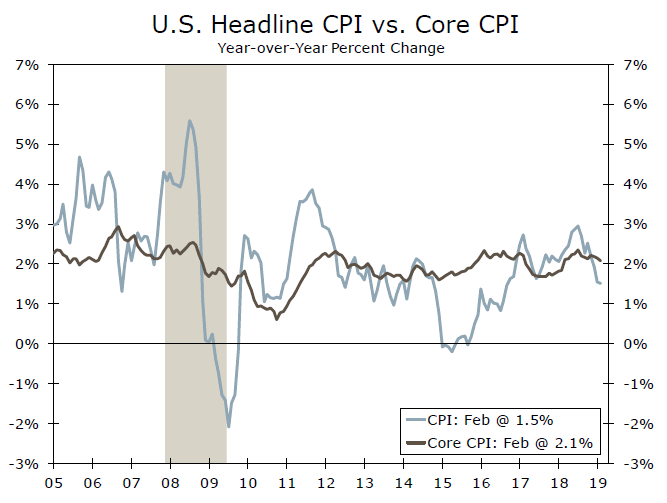
Consumer price inflation continues to be fairly tame. The CPI rose 0.2% in February, but slipped to 1.5% on a year-ago basis due to lower energy prices over the past year. Core inflation slowed, but is running at a 2.1% annualized pace over the past three months and on a year-over-year basis, close to the FOMC's goal.
Higher energy prices over the month lifted the headline. After three straight months of declines, gasoline prices rose 1.5%. Prices are still down 9.1% over the past year, as energy prices have shaved 0.4 points from headline CPI and supported real income growth. With gas prices up about 3% through the first third of March according to AAA, however, the bump to real income from low gas prices is beginning to fade.
Food prices also picked up over the month, with prices for food at home and away both rising 0.4%. That was the largest gain at grocery stores in nearly five years, but likely overstates the trend for the next few months as agricultural commodity prices, which lead grocery prices, remain under pressure. Growing wage costs, however, should keep costs for dining out rising close to a 3% pace.
Core Inflation Slows a Touch
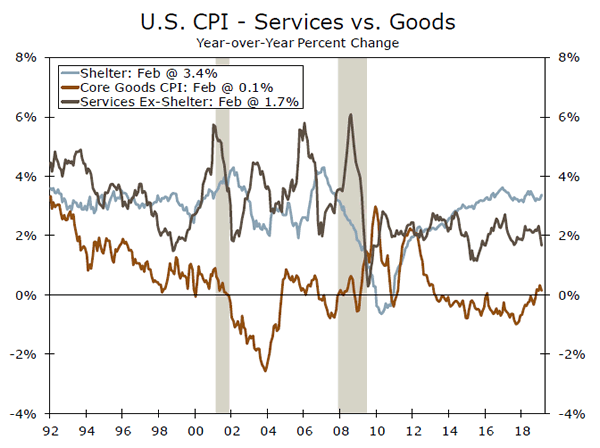
Core inflation eased up a bit in February, as prices rose 0.1% (0.11% before rounding) after five months of 0.2% gains. The weaker print can be traced to a drop in core goods prices, which fell 0.2%. That was not wholly surprising— a hefty 1.1% jump in apparel prices in January was going to be tough to repeat, and used car prices (down 0.7%) were due for a pullback, based on the Manheim Used Vehicle index. Lower prices for new vehicles and prescription drugs also dragged down core goods prices.
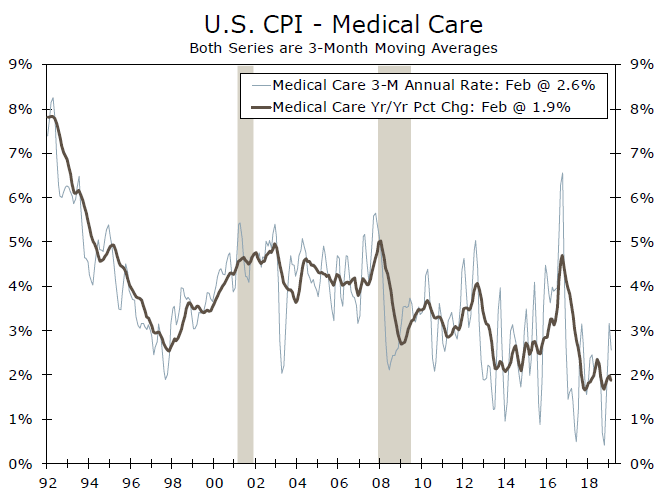
Services inflation held up better, with prices rising 0.2%. Shelter costs rose 0.3% for a fourth-straight month. Notably, core services were boosted by gains in lodging away from home and airfare—two volatile components— which raises the prospect for payback next month. Prices for services less shelter were flat as gains in education and personal care offset declines in recreation. Medical services prices were flat, keeping the growth trend in consumer healthcare costs historically slow.
No Need Yet for FOMC to Lose Its Patience
While labor costs have been heating up—average hourly earnings growth hit a new cycle high in February—the pass-through to consumer price inflation continues to be only modest. Stronger productivity growth over the past year has kept unit labor costs in check, while historically high profit margins leave companies some scope to absorb higher labor costs. As a result, inflation looks unlikely to get out of hand. That should allow the FOMC to keep its patient stances over the next few months and watch incoming data. We expect the inflation trend to remain firm near 2%.
Gold Rebounds on SMAs’ Bullish Cross and Holds in Ichimoku Cloud
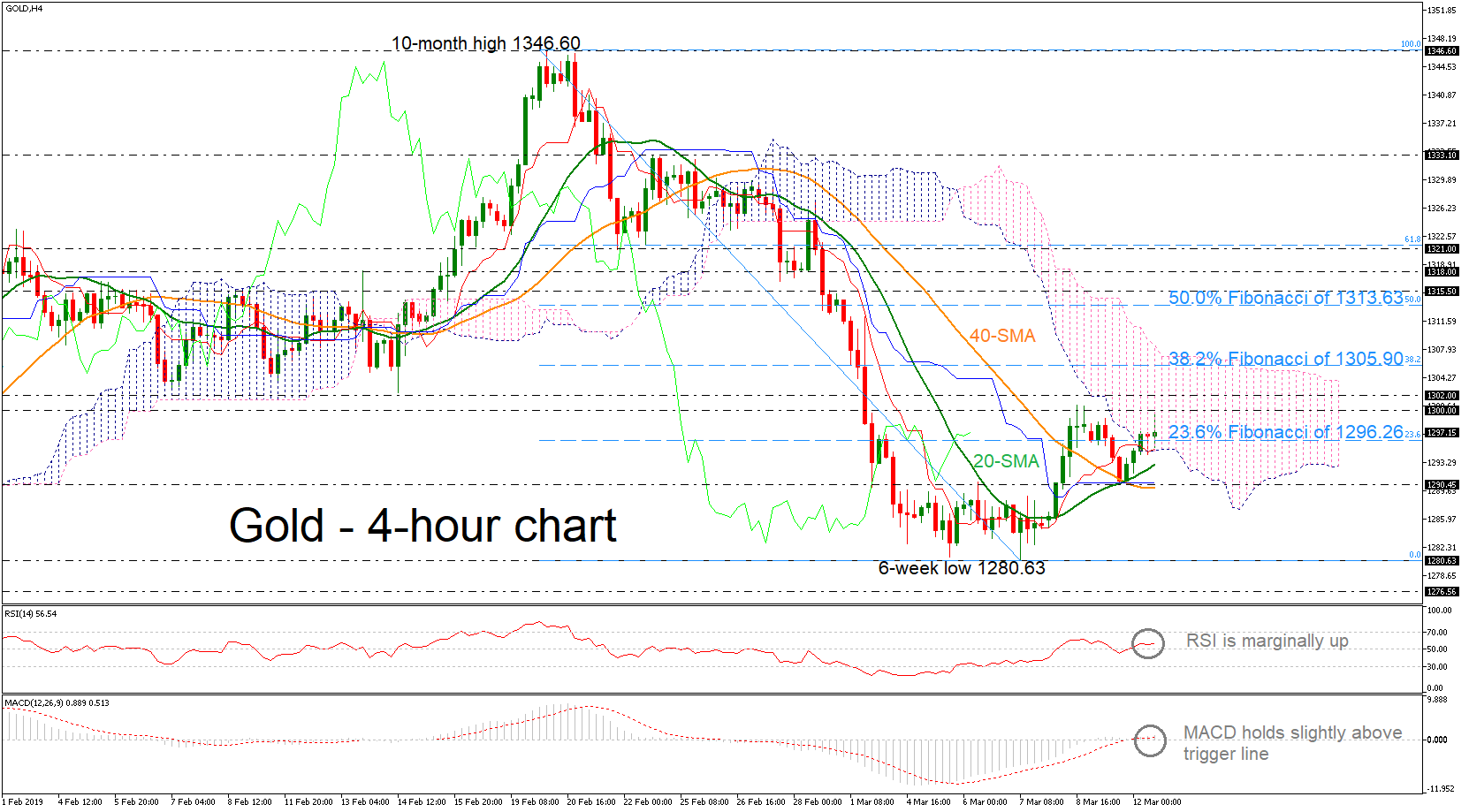
Gold has been trading within the Ichimoku cloud after the rebound on the bullish crossover of the 20-and 40-simple moving averages (SMAs) around 1290.45 in the 4-hour chart. Looking at momentum indicators, the RSI is strengthening momentum above the 50 level as it is sloping upwards, while the MACD is trying to surpass the trigger line in the positive zone.
Immediate resistance would likely come from the 1300 – 1302 zone as the price successfully climbed above the 23.6% Fibonacci retracement level of the downleg from 1346.60 to 1280.63, near 1296.26. Higher up, the 38.2% Fibonacci of 1305.90 and the 50.0% Fibonacci of 1313.63 could be the next targets to look for.
On the other side, if the price continues the downfall, support would initially come from the1290.45 strong region, which overlaps with the flat blue Kijun-sen line and the 40-SMA. Slipping below this area, the yellow metal could hit the 6-week low of 1280.63.
In the more medium-term picture, the price is still endorsing the bullish view following the upward reversal at the 19-month low of 1160.
DUP confirms it won’t back May’s Brexit deal
DUP party leader Arlene Foster tweeted that they won't back May's Brexit deal in today's meaningful vote. DUP said in a statement that "sufficient progress has not be achieved" and May just made "limited progress" with the EU.
https://twitter.com/DUPleader/status/1105470920825733120
German Merkel: Pressure from outside is not the right instrument to convince UK parliament
German Chancellor Angela Merkel said "clear, far-reaching proposals have been made that take into account the concerns of Britain and that seek to find answers to them." She wanted an orderly Brexit but the UK parliament now had to decide. But she noted that "pressure from outside is not the right instrument to convince people". And, "we expressly support this step. But this is not about pressure, it is about partnership where one tries to protect one's own interests and others' interests to find a solution".
Yesterday, European Commission President Jean-Claude Juncker warned that "there will be no third chance, there will be no further interpretations of the interpretations, no further assurances of the re-assurances – if the meaningful vote tomorrow fails." "The choice is clear: it is this deal, or Brexit may not happen at all. Let's bring the UK's withdrawal to an orderly end. We owe it to history," Juncker added.