

Sample Category Title
USD/CHF Weekly Outlook
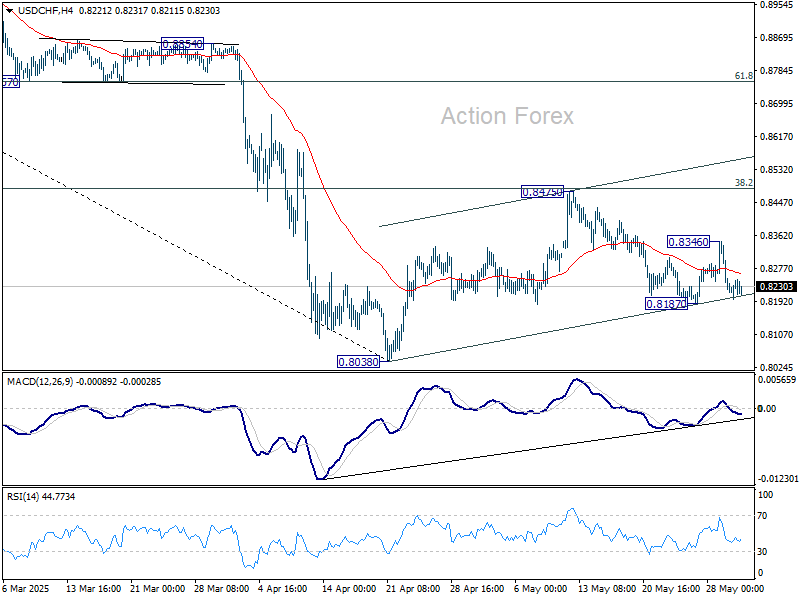
Price actions from 0.8038 are seen as a corrective pattern to the decline from 0.9200, which might still be extending. On the downside, below 0.8187 will bring retest of 0.8038 low. On the upside, above 0.8346 will bring stronger rebound to 0.8475. But after all, larger down trend is expected to resume after the correction completes.
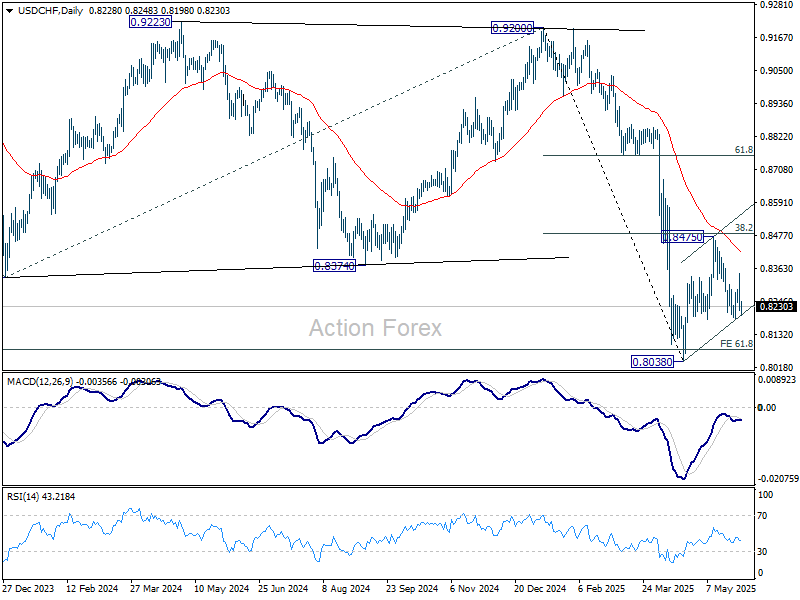
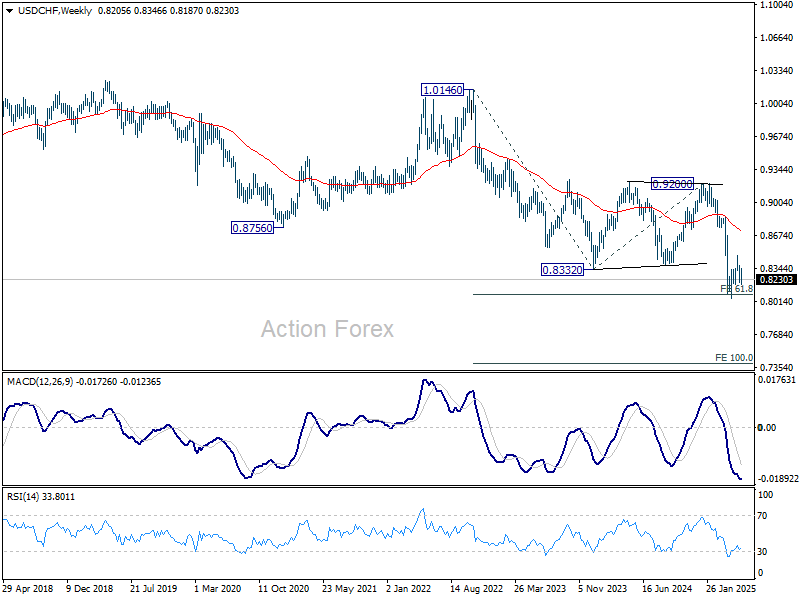
In the bigger picture, long term down trend from 1.0342 (2017 high) is still in progress and met 61.8% projection of 1.0146 (2022 high) to 0.8332 from 0.9200 at 0.8079 already. In any case, outlook will stay bearish as long as 55 W EMA (now at 0.8732) holds. Sustained break of 0.8079 will target 100% projection at 0.7382.
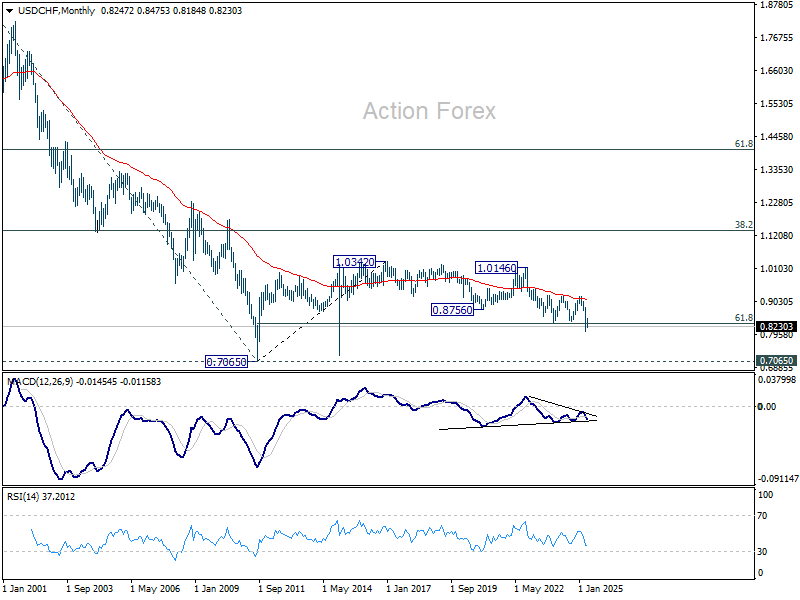
In the long term picture, price action from 0.7065 (2011 low ) are seen as a corrective pattern to the multi-decade down trend from 1.8305 (2000 high). It's uncertain if the fall from 1.0342 is the second leg of the pattern, or resumption of the down trend. But in either case, sustained trading below 61.8% retracement of 0.7065 to 1.0342 at 0.8317 will pave the way back to 0.7065.
AUD/USD Weekly Report
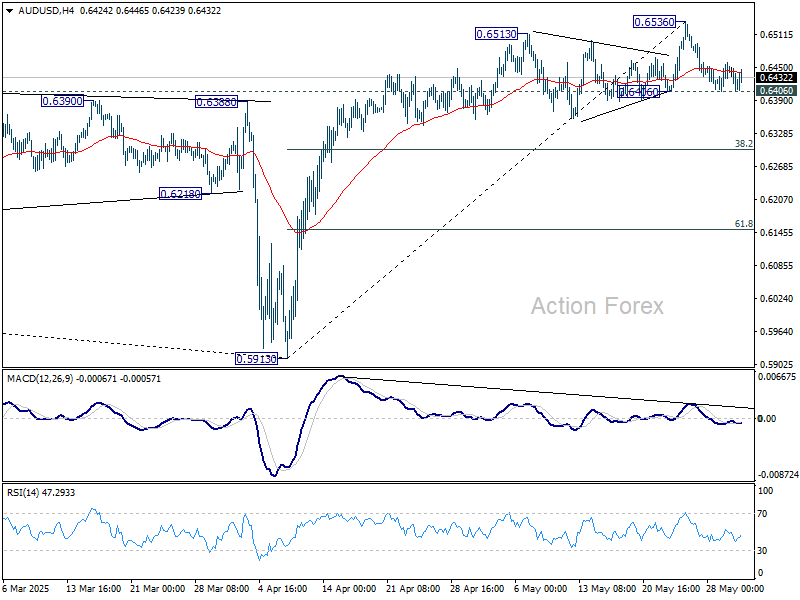
AUD/USD edged higher to 0.6536 but quickly retreated. Still, downside is contained by 0.6406 support so far. Initial bias remains neutral this week, and further rise is mildly in favor. Above 0.6536 will resume the rally from 0.5913 to 61.8% retracement of 0.6941 to 0.5913 at 0.6548. However, firm break of 0.6406 will confirm short term topping, and turn bias back to the downside for 38.2% retracement of 0.5913 to 0.6536 at 0.6298.
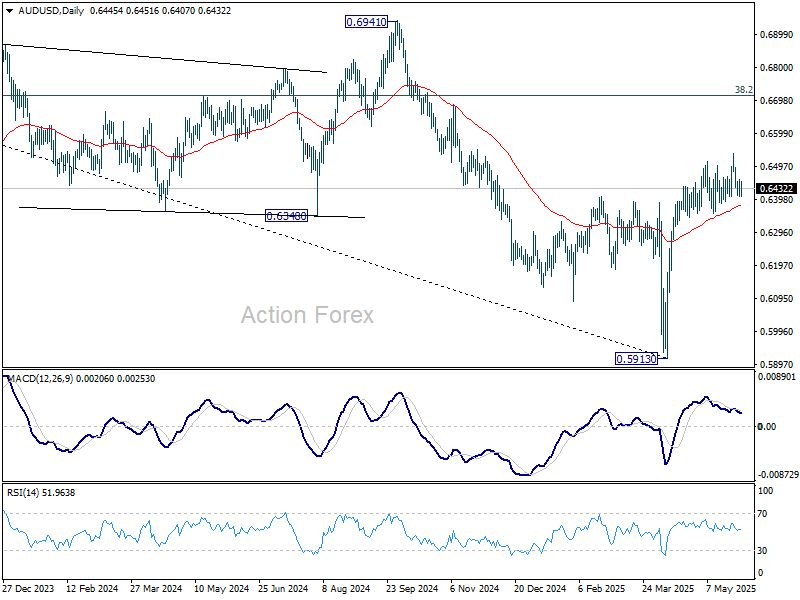
In the bigger picture, AUD/USD is still struggling to sustain above 55 W EMA (now at 0.6441) cleanly, and outlook is mixed. Sustained trading above 55 W EMA will indicate that rise from 0.5913 is at least correcting the down trend from 0.8006 (2021 high), with risk of trend reversal. Further rise should be seen to 38.2% retracement of 0.8006 to 0.5913 at 0.6713. However, rejection by 55 W EMA will revive medium term bearishness for another fail through 0.5913 at a later stage.
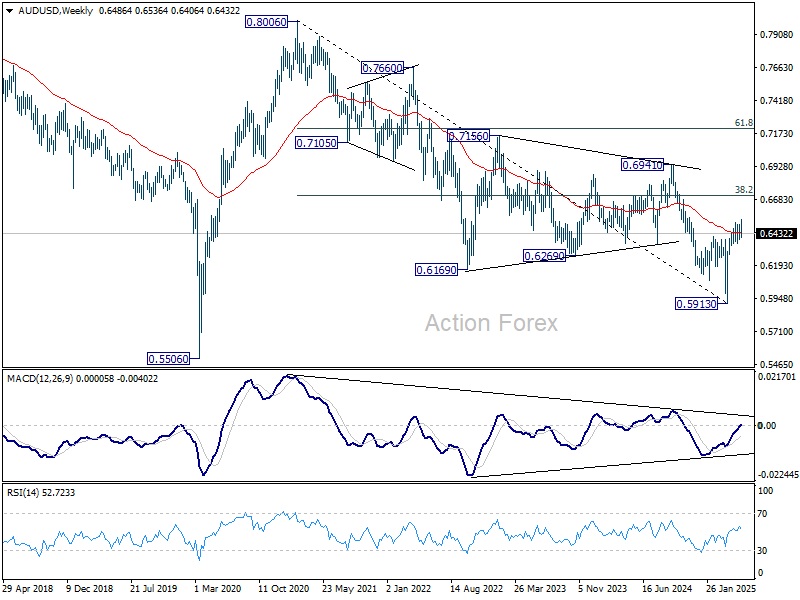
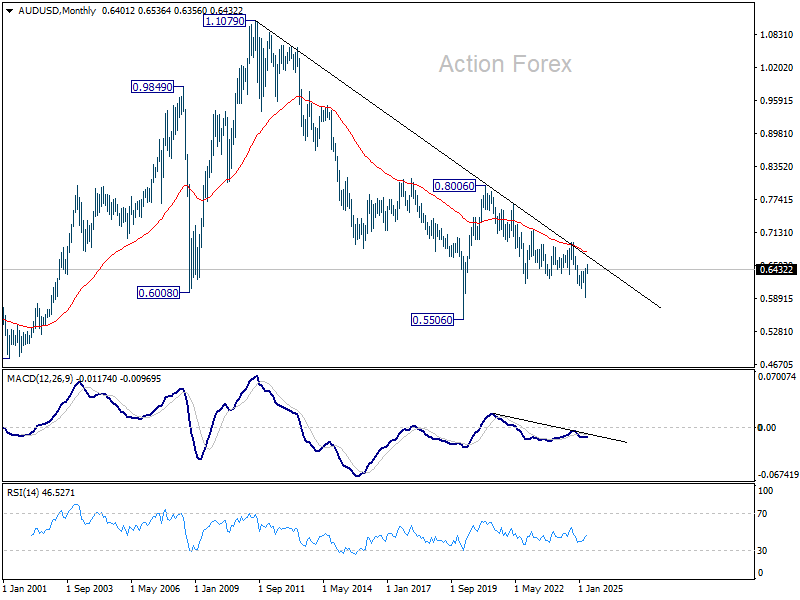
In the long term picture, fall from 0.8006 is seen as the second leg of the corrective pattern from 0.5506 long term bottom (2020 low). Hence, in case of deeper decline, strong support should emerge above 0.5506 to contain downside to bring reversal. On the upside, firm break of 0.6941 will argue that the third leg has already started back to 0.8006.
USD/CAD Weekly Outlook
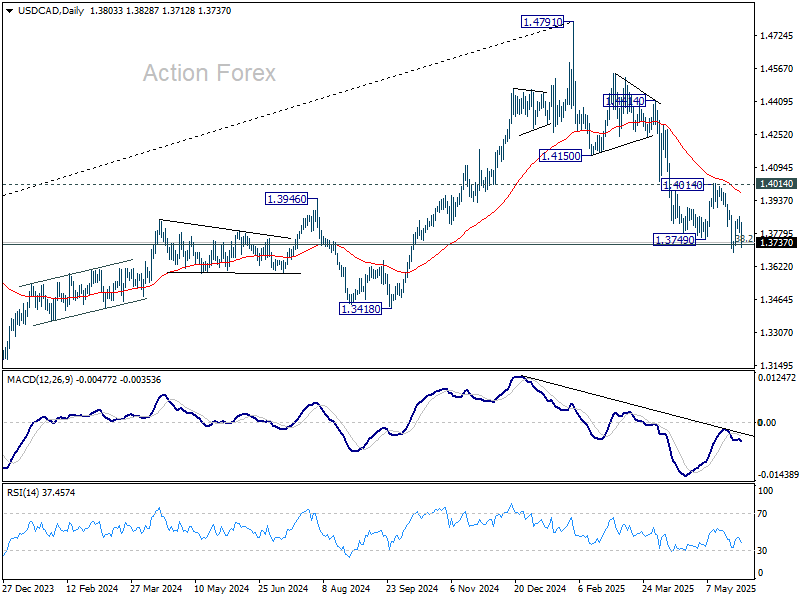
USD/CAD rebounded after edging lower to 1.3685, but upside was limited well below 1.4014 resistance. Initial bias remains neutral this week first, and near term outlook stays bearish. On the downside, break of 1.3685 will resume whole fall from 1.4791 towards 1.3418 support.
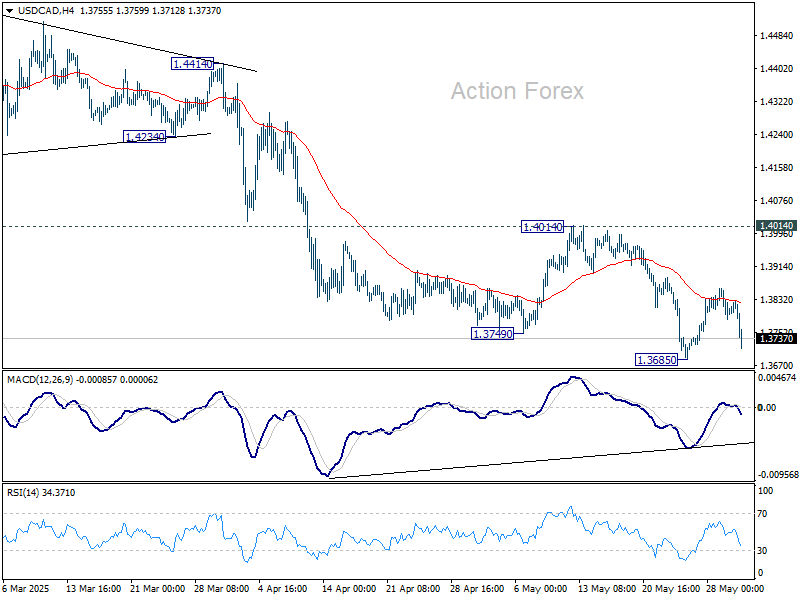
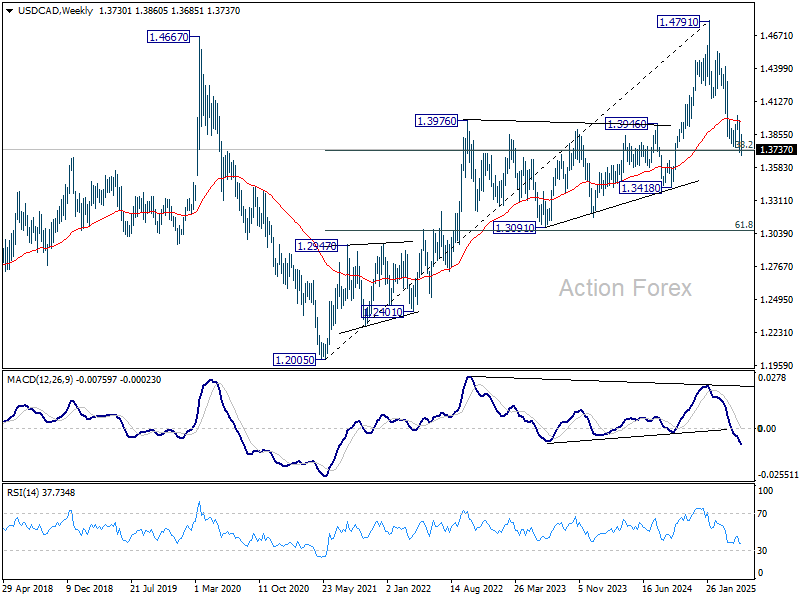
In the bigger picture, price actions from 1.4791 medium term top could either be a correction to rise from 1.2005 (2021 low), or trend reversal. In either case, further decline is expected as long as 1.4014 resistance holds. Firm break of 38.2% retracement of 1.2005 (2021 low) to 1.4791 at 1.3727 will pave the way back to 61.8% retracement at 1.3069.
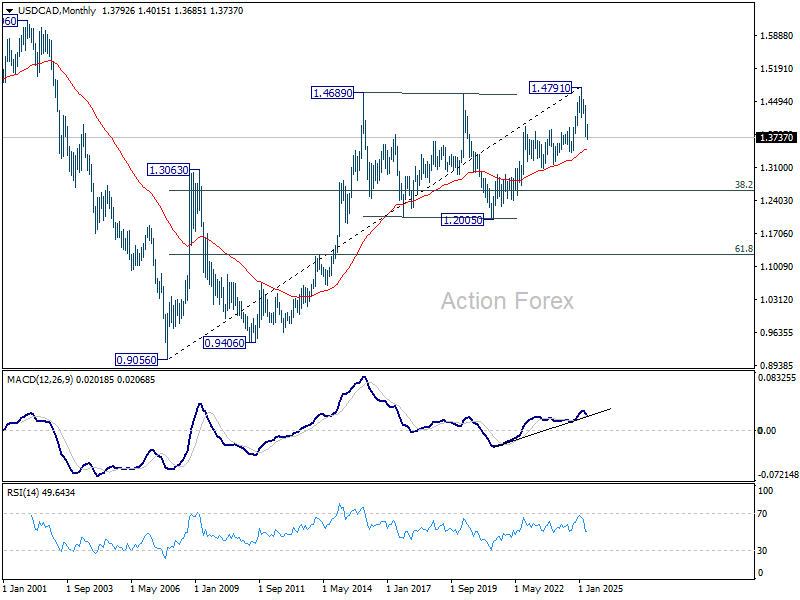
In the long term picture, as long as 55 M EMA (now at 1.3485) holds, up trend from 0.9056 (2007 low) should still resume through 1.4791 at a later stage. However, sustained trading below 55 M EMA will argue that the up trend has already completed, with rise from 1.2005 to 1.4791 as the fifth wave. 1.4791 would then be seen as a long term top and deeper medium term down trend should then follow.
GBP/JPY Weekly Outlook
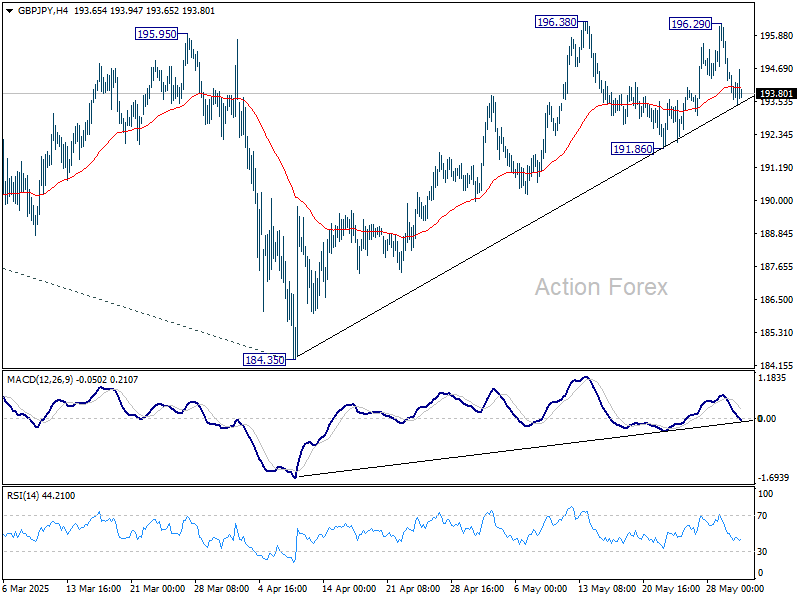
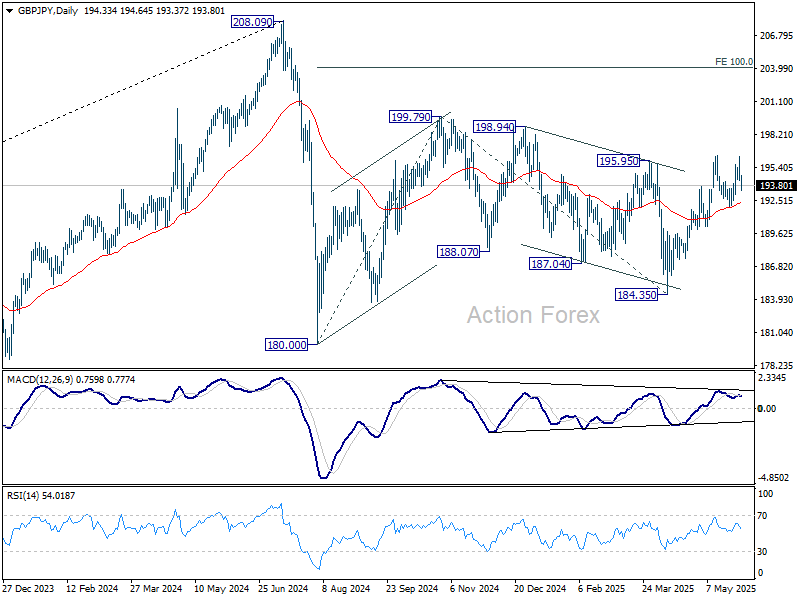
GBP/JPY rebounded notably last week but failed to break through 196.38 resistance. Initial bias remains neutral this week first. Further rise is in favor as long as 191.86 support holds. Firm break of 196.38 will resume whole rally from 184.35. However, firm break of 191.86 will indicate near term reversal and turn bias back to the downside.
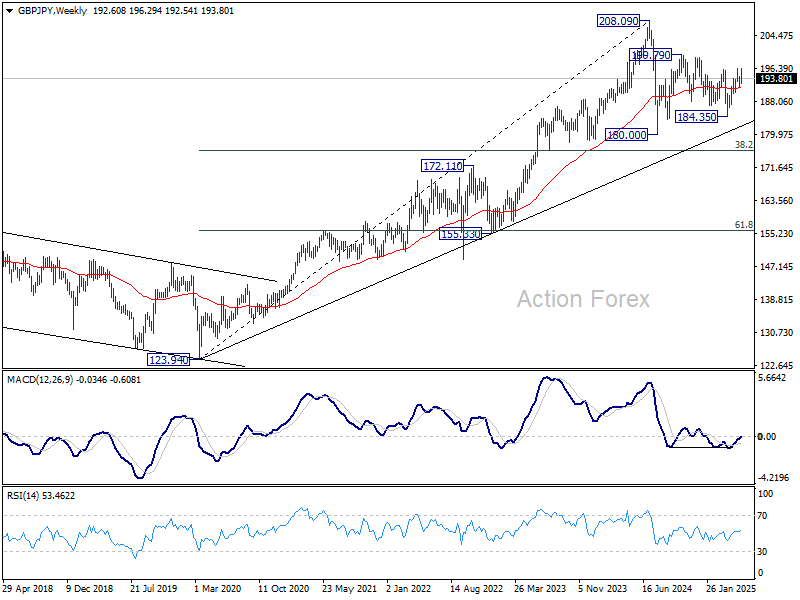
In the bigger picture, price actions from 208.09 are seen as a correction to rally from 123.94 (2020 low). Strong support should be seen from 38.2% retracement of 123.94 to 208.09 at 175.94 to contain downside. However, sustained break of 175.94 will bring deeper fall even still as a correction.
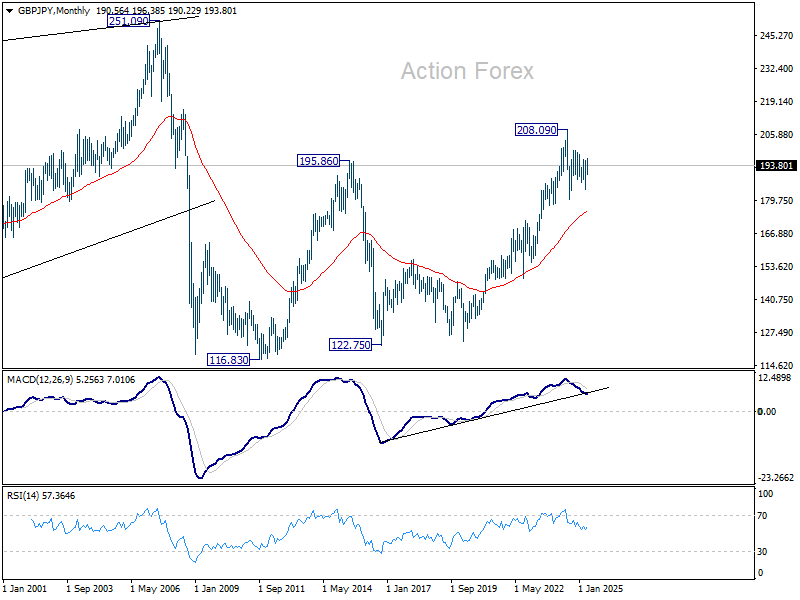
In the longer term picture, while a medium term top was formed at 208.09 (2024 high), it's still early to conclude that the up trend from 122.75 (2016 low) has completed. But GBP/JPY is at least in a medium term corrective phase, with risk of correction to 55 M EMA (now at 175.85).
EUR/JPY Weekly Outlook
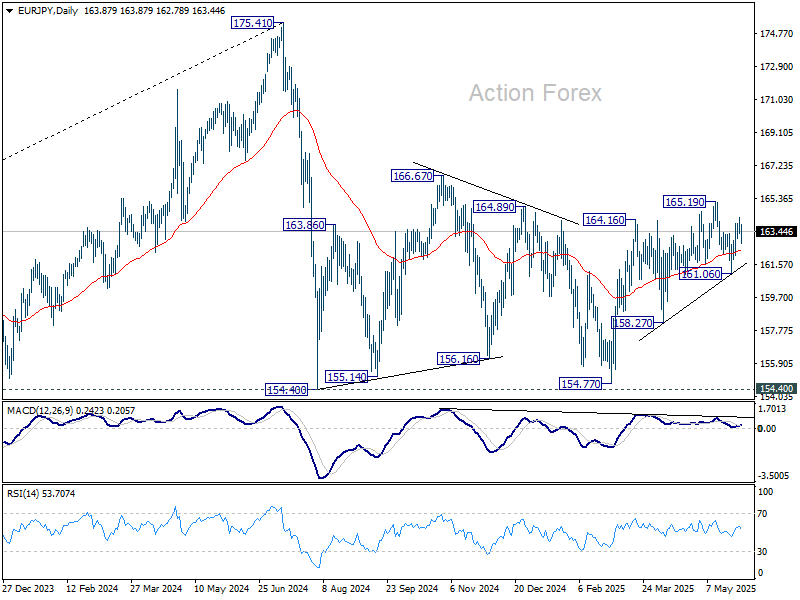
EUR/JPY extended the rebound from 161.06 last week but failed to break through 165.19 resistance. Initial bias remains neutral this week first. On the upside, above 164.24 will bring retest of 165.19 resistance first. Firm break there will resume while rise from 154.77 to 166.67 resistance. On the downside, however, break of 161.06 will resume the decline from 165.19 instead.
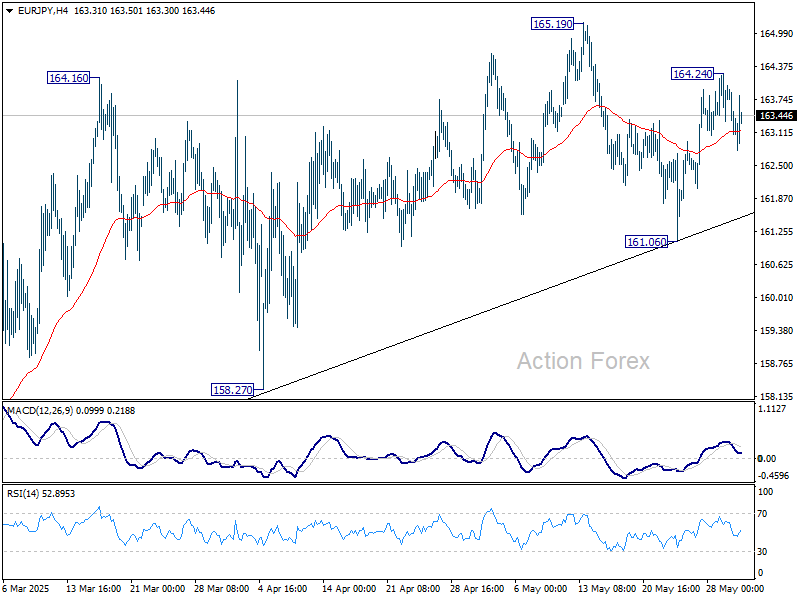
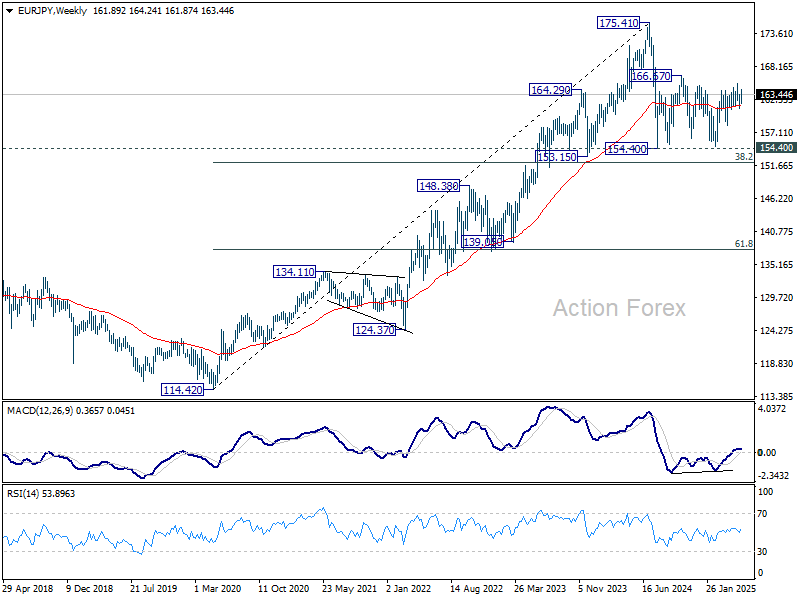
In the bigger picture, price actions from 175.41 are seen as correction to rally from 114.42 (2020 low). Strong support should be seen from 38.2% retracement of 114.42 to 175.41 at 152.11 to contain downside. However, sustained break of 152.11 will bring deeper fall even still as a correction.
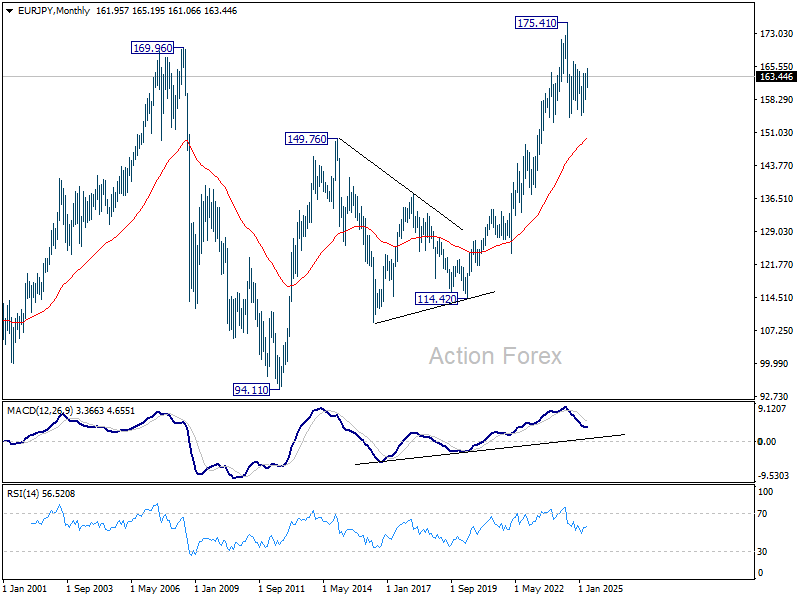
In the long term picture, while 175.41 is at least a medium term top, it's still early to conclude that up trend from 94.11 (2012 low) has completed. A medium term corrective phase is in progress with risk of deeper fall back to 55 M EMA (now at 149.91).
EUR/GBP Weekly Outlook
EUR/GBP's rebounded after dipping to 0.8354 last week. The development suggests that a short term bottom was formed, on bullish convergence condition in 4H MACD. Initial bias is mildly on the upside this week for 0.8458 resistance, and then 38.2% retracement of 0.8737 to 0.8354 at 0.8500. Nevertheless, break of 0.8354 will resume the decline from 0.8737 instead.
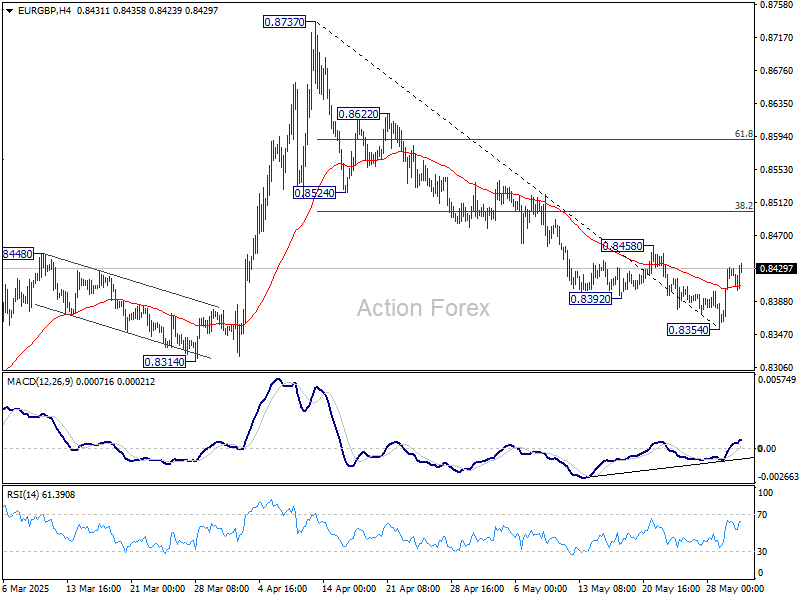
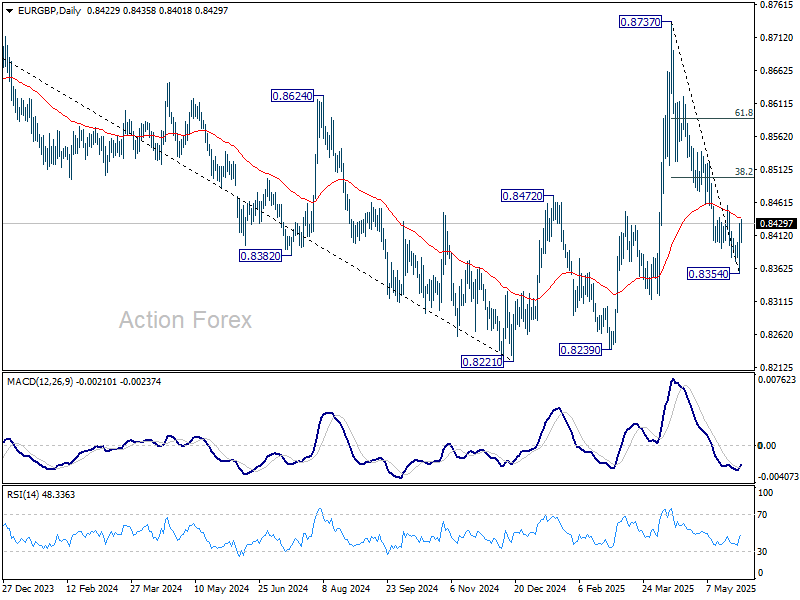
In the bigger picture, price actions from 0.8221 medium term bottom are merely forming a corrective pattern. There is no clear momentum to break through 0.8201 key support (2022 low) yet. Hence, range trading is expected between 0.8221/8737 for now.
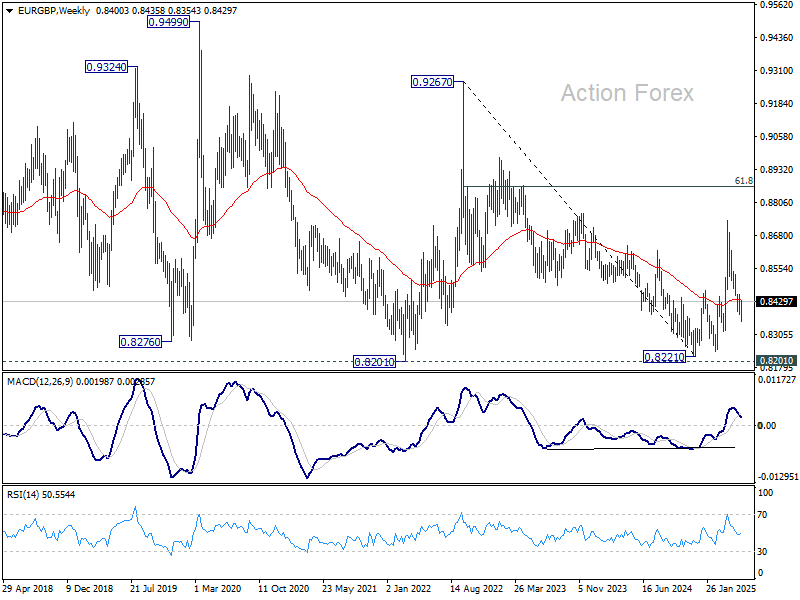
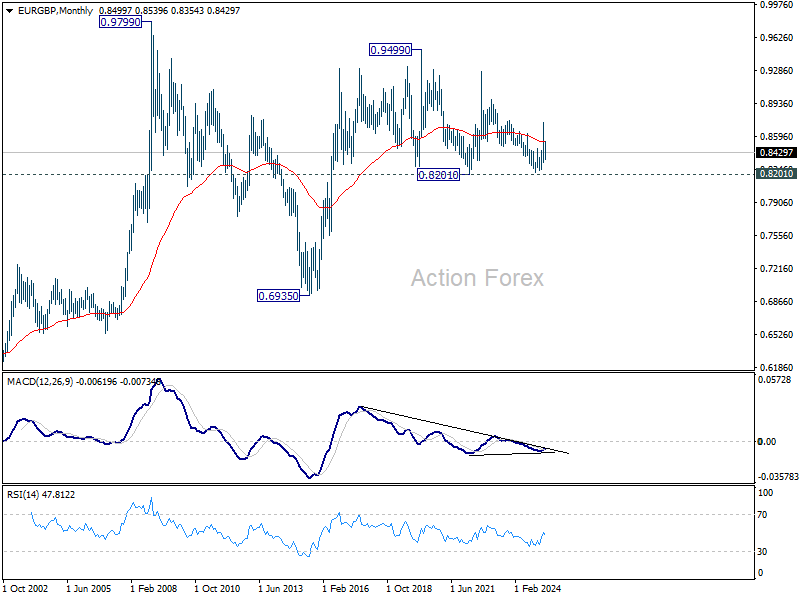
In the long term picture, price action from 0.9499 (2020 high) is seen as part of the long term range pattern from 0.9799 (2008 high). Range trading should continue between 0.8201 and 0.9499, until there is clear signal of imminent breakout.
EUR/AUD Weekly Outlook
EUR/AUD's rebound from 1.7245 resumed last week and the development suggests that fall from 1.8554 might have completed as a correction. Initial bias stays on the upside this week for 38.2% retracement of 1.8554 to 1.7245 at 1.7745. Firm break there will solidify this bullish case and target 61.8% retracement at 1.8054. On the downside, however, break of 1.7460 support will bring retest of 1.7245 instead.
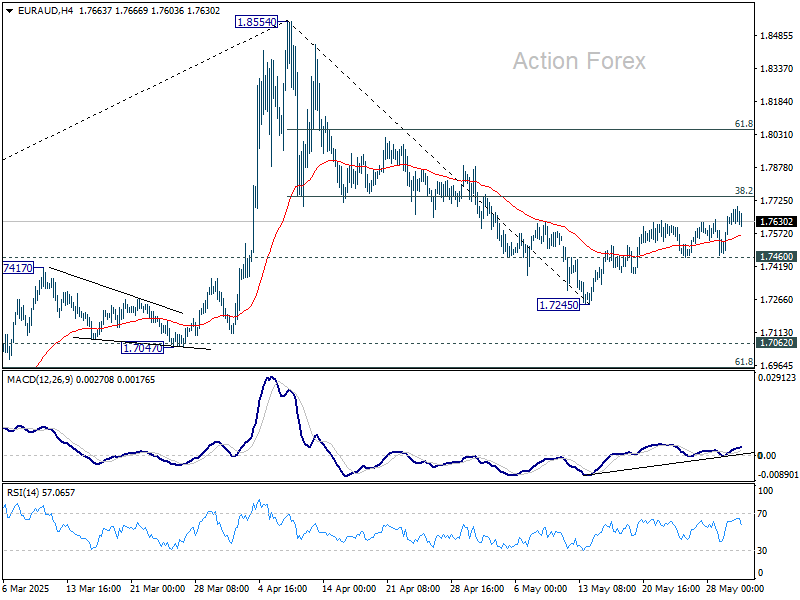
In the bigger picture, as long as 1.7062 resistance turned support (2023 high) holds, up trend from 1.4281 (2022 low) should still be in progress. Break of 1.8554 is expected after the whole corrective pattern from there completes. However, sustained break of 1.7062 will bring deeper fall back to 1.5963 support.
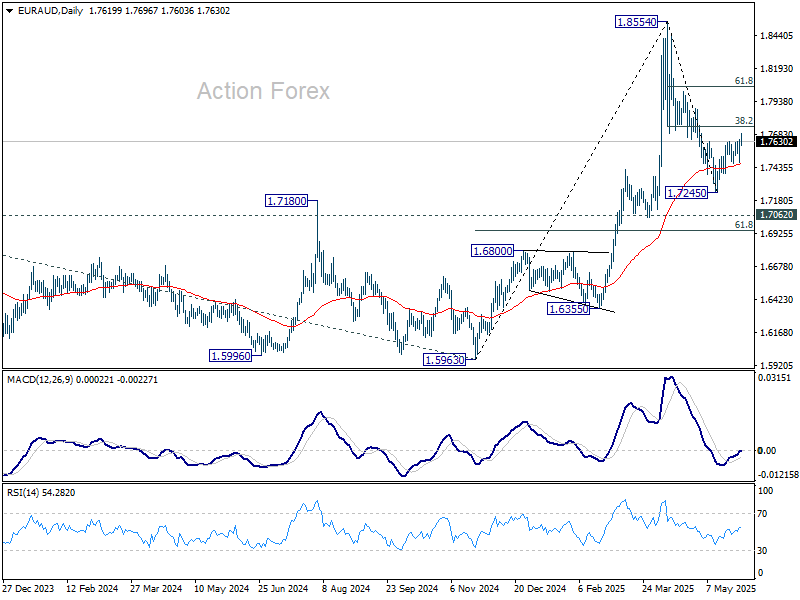
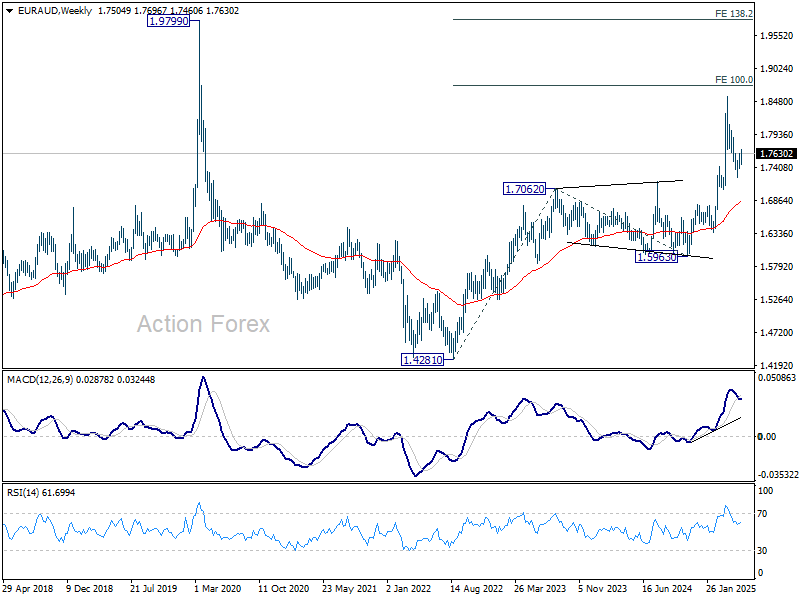
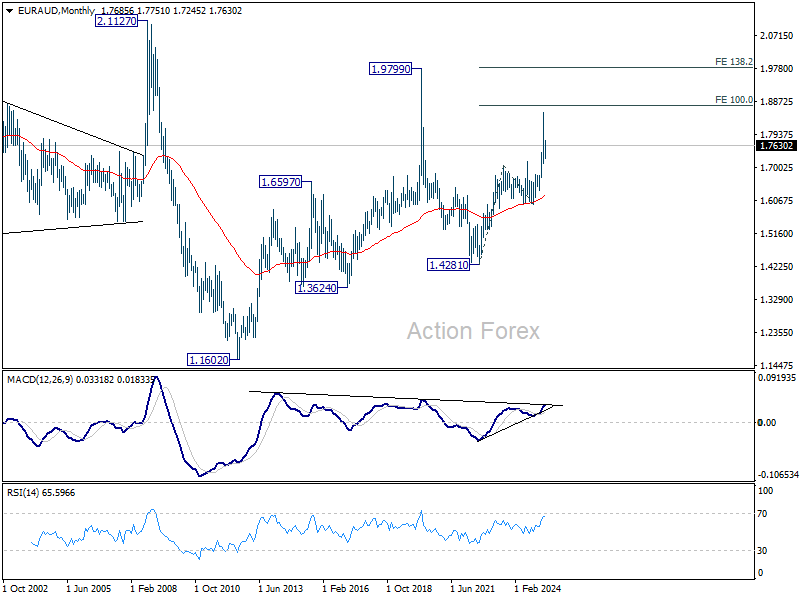
In the longer term picture, rise from 1.4281 is seen as the second leg of the pattern from 1.9799 (2020 high), which is part of the pattern from 2.1127 (2008 high). As long as 55 M EMA (now at 1.6240) holds, this second leg could still extend higher. Break of 1.8554 will target 100% projection of 1.4281 to 1.7062 from 1.5963 at 1.8744. However, firm break of 1.8744 projection level with strong momentum will argue that it's indeed resuming the up trend from 1.1602 (2012 low).
EUR/CHF Weekly Outlook
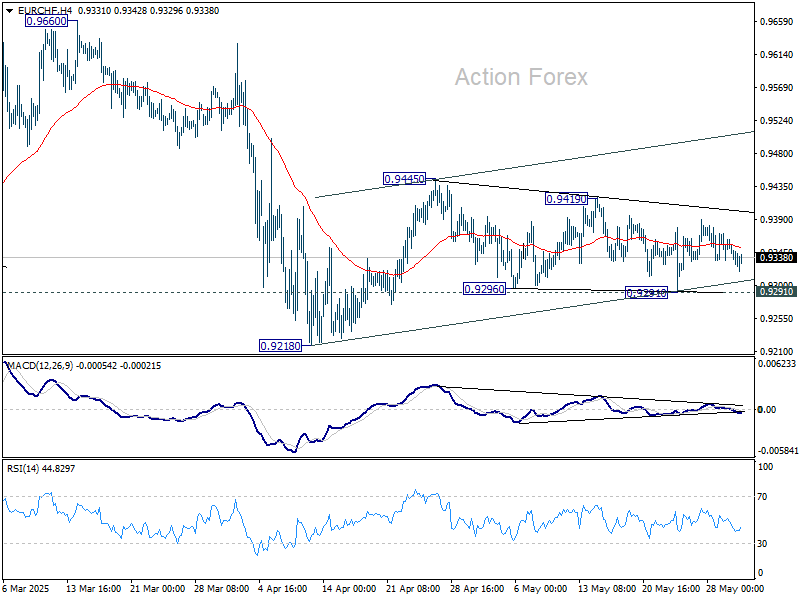
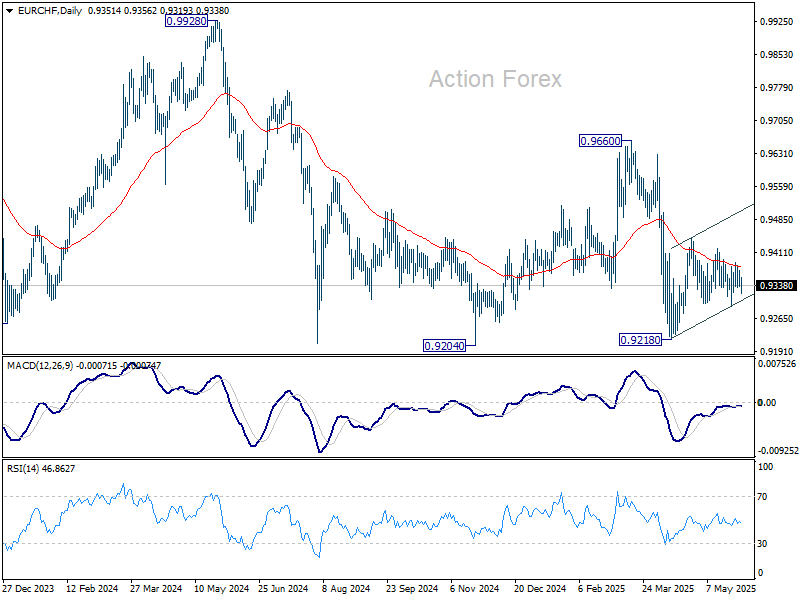
EUR/CHF continued to gyrate inside established range last week and outlook is unchanged. Initial bias remains neutral this week first. Rise from 0.9218 might continue, either as a correction to fall from 0.9660, or the third leg of the pattern from 0.9204. On the upside, above 0.9419 will target 0.9445 resistance and above. Nevertheless, on the downside, firm break of 0.9291 will bring retest of 0.9218 low.
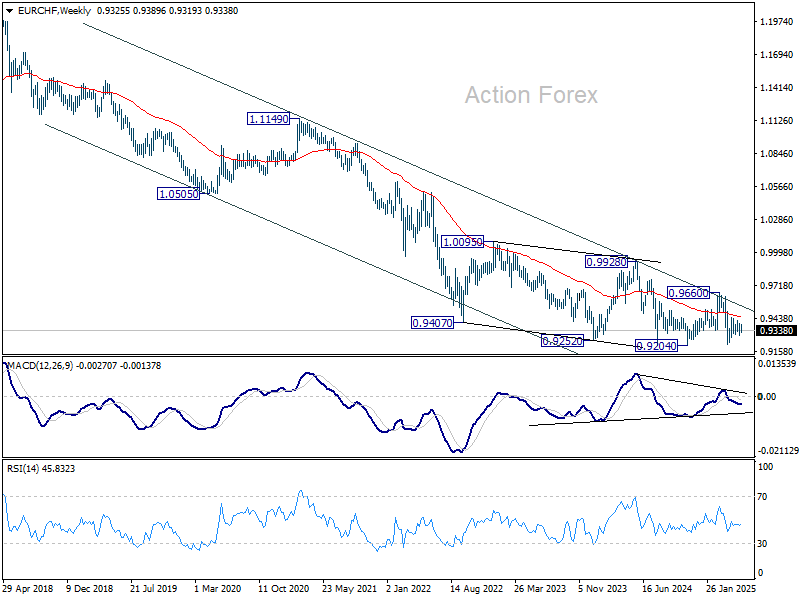
In the bigger picture, prior rejection by long-term falling channel resistance (now at 0.9527) retains medium term bearishness. That is, down trend from 1.2004 (2018 high) is still in progress. Firm break of 0.9204 (2024 low) will confirm resumption. This will remain the favored case as long as 0.9660 resistance holds.
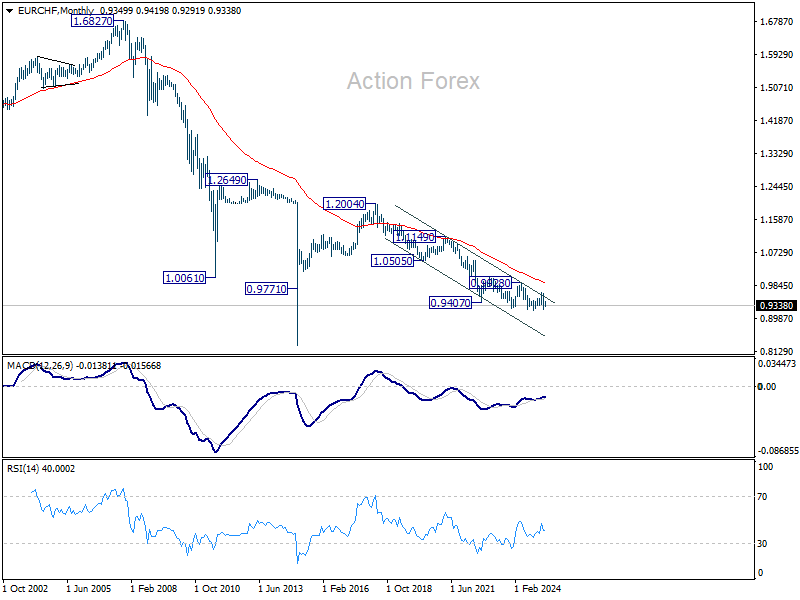
In the long term picture, overall long term down trend is still in force in EUR/CHF. Outlook will continue to stay bearish as long as 55 M EMA (now at 0.9919) holds.
Week Ahead: May NFP, Bank of Canada and ECB Rate Decisions
Week in Review: Trump Taco, USD indecision and RBNZ Rate decision
This week was once again filled with tradable action in markets.
The week started off with closed US and UK markets, a broadly positive sentiment taking global indices higher in the beginning of the week with the Nikkei 225 leading the charge.
The US Dollar also started the week on a good note, although things have since changed with Wednesday evening Taco Trump headlines: The US Federal Court have cancelled the US President's plan to impose record tariffs on key economic partners.
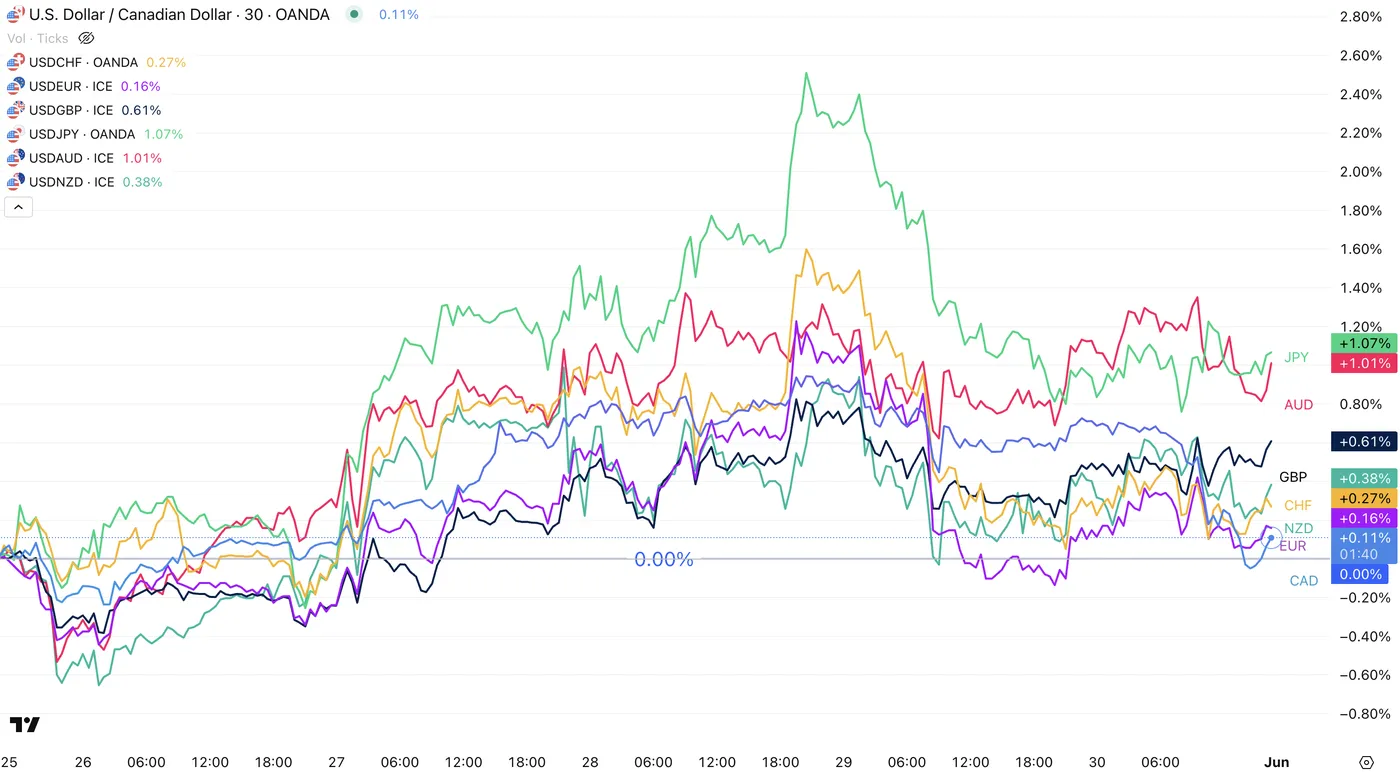
A picture of the USD performance vs all majors, May 30. Source: TradingView
Indices all around the globe have finished the week green though off their highs. It was a week packed with earnings as we have observed releases for big names such as Nvidia, Dell and Costco who all beat their expectations.
The Nasdaq is beating all US Indices having enjoyed the earnings beats from NVDA and DELL. It is finishing the week up 1.96%
One of the themes that did not help to continue the good news was more uncertainty, as equity markets were on the road to return to their all-time highs though failed to do so.
In the currency space, the US dollar ended up leading—not by strength, but by being the least weak in a choppy week.
The Japanese yen took the biggest hit, following Monday evening remarks from Japan’s Finance Minister that triggered a notable drop in the currency.
We can't forget the biggest headline, the previously mentioned Taco Trump.
This story refers to the U.S. Federal Court’s recent rejection of former President Donald Trump’s trade tariff policies. The court ruled that Trump had overstepped his authority when imposing certain import taxes.
This led to major swings in the Dollar Index as it seesawed above the 100.00 level, then came right back below. The index is closing around 99.40.
For commodities, Gold held around the $3,300 level and stays close to $200 below its all-time high. It seems that the market is awaiting for more news before taking a clear direction. The precious metal still finishes down 2% on the week.
Oil is down almost the same, with fears of higher supply. The price is still constrained between a 60.5 and 64 range.
Bitcoin on the other hand is down above 3.5% on the week, slightly rejecting the all-time highs though prices are still above the key mark of $100,000.
The Week Ahead: May NFP and Rate Decisions for the BoC and ECB
Next week is packed with key data compared to last week. We will see the release of high impact data from the US, China, Canada and Europe. This should be more fuel for volatility, especially if we see any data that provides more clarity on the impact of the most recent Trade Wars.
Asia Pacific Markets Outlook
The week won't be as packed with data for the APAC compared to last week.
We will start off with Minutes from the last RBA Meeting to see if the Australian Central Bank confirms their dovish tone from the May 21 meeting - reminder that they have cut rates by 25 bps at that meeting taking their core policy rate to 3.85%.
We will also see the Caixin Manufacturing PMI Release from China, expected at 50.6, followed by the Services data on Wednesday 4th of June expected at 50.7.
We will observe how tariff menaces impacted the top global exporter.
Finally we are expecting the Australian release for PMIs and Import/Export data.
Do not forget the speech from the BoJ Governor Ueda at 3:50 AM E.T. during the night on Tuesday June 3rd.
Europe, US and UK Market Outlook
Expect a big week for European and North-American markets.
The week starts with PMI Data from Italy, Germany, Canada and the more market-moving US ISM Manufacturing, releasing on Monday June 2nd at 10:00 - Consensus is at 48.7.
Tuesday June 3rd will see the release of the Eurozone CPI which doesn't tend to move markets too much as it is an aggregate of all European countries' CPIs - it may although still impact EUR currency pairs.
Wednesday's most important event will be the Bank of Canada Rate Decision at 9:30, expected to stay put- Rates are at 2.75%.
The Press conference at 10:30 might be more important though to monitor where Governor Macklem is standing regarding his views on the Canadian economy.
We will also have the US Services PMI Release expected at 52.
Thursday we will have the ECB Rate Decision, expected to cut by 25 bps to from 2.4% to 2.15% (Main Refinancing Operations Rate) though the decision is not unanimous. The decision will be out at 8:15 A.M E.T. on the 5th of June.
The rate decision will be followed by mid-tier data from Canada (Ivey PMIs) and the weekly Jobless Claims report.
And to conclude the week, for Friday June 6th, the biggest data will be the release of the US NFP report expected at 130K at 8:30, with the Canadian Jobs data released at the same time and being preceded by Europe Retail Sales at 5:00 E.T.
Most impactful Economic Calendar releases for Next Week
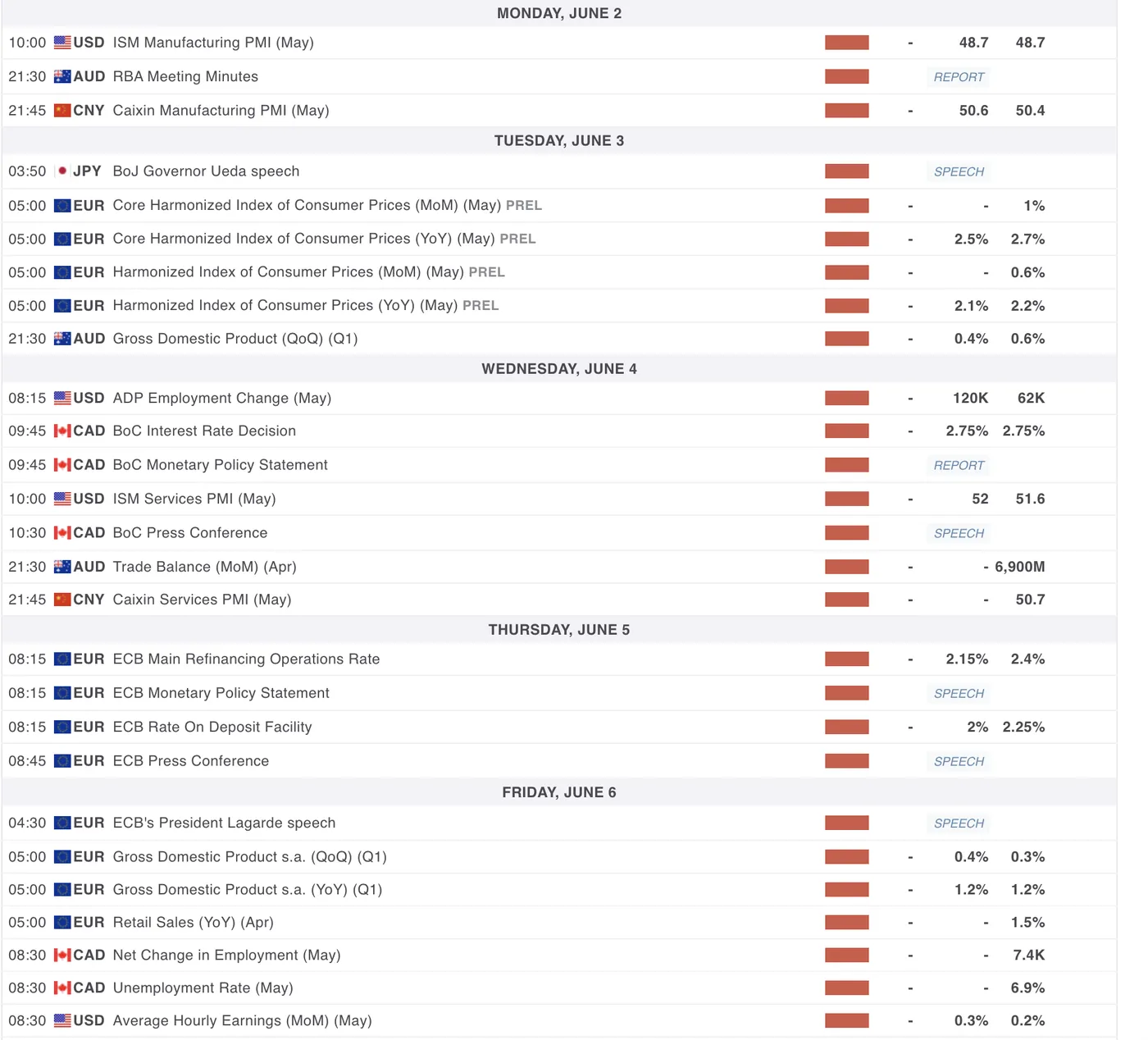
For all market-moving economic releases and events, see the MarketPulse Economic Calendar. (click to enlarge)
Safe Trades for the week ahead!
The Weekly Bottom Line: President Trump, the King, and the BoC
Canadian Highlights
- A U.S. court decision to block U.S. IEEPA tariffs could be a win for Canadian manufacturers if it’s upheld. Still, the U.S. has other legal means to impose tariffs on Canada, and sector-specific ones remain in place.
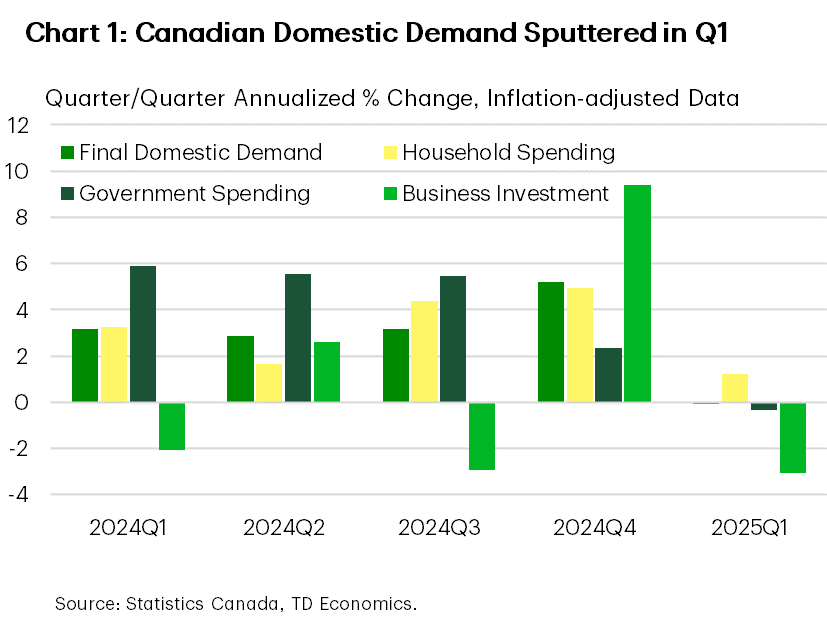
- Canadian GDP advanced at a reasonably firm 2.2% pace in Q1. However, domestic demand flatlined, reinforcing the narrative that Canada’s economy is softening.
- Markets expect Bank of Canada to hold the line on rates next week, although we still see two more cuts taking place this year as evidence of economic weakness mounts.
U.S. Highlights
- The tariff news felt like a tennis match this week. Tariff threats on the EU were paused. Then a court struck down the IEEPA tariffs, only to have an appeal court say they could remain in place.
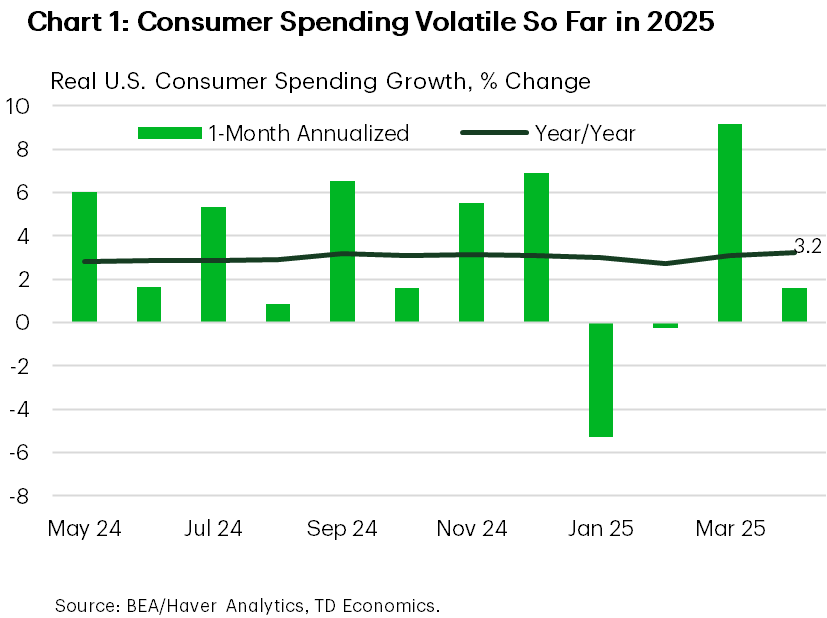
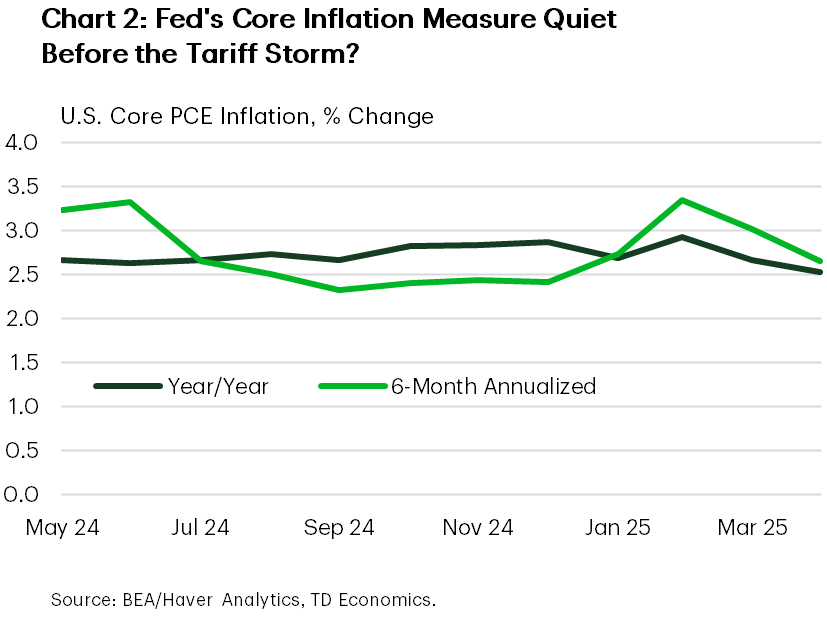
- The economic data showed that inflation pressures were steady through April, while consumer spending has been very volatile so far in 2025.
- President Trump also voiced his desire for rate cuts directly to the Fed Chair this week. Powell reinforced his message that the Fed will be guided by the data.
Canada – President Trump, the King, and the BoC
Canadian equities were certainly on their best behaviour the week of King Charles’ visit to open Canadian Parliament – a first for a monarch since 1977. The TSX surged, although this had little to do with the royal visit, but rather improved sentiment after President Trump’s announcement that the deadline for punishing tariffs on the European Union would be pushed back to allow more time for negotiations.
Probably more notable for Canada was a U.S. court’s decision to block tariffs imposed by the U.S. through its International Emergency Economic Powers Act (IEEPA). The tariffs are staying on for now as the U.S. government appeals the decision, but if the IEEPA tariffs are indeed struck down, that would mean the end to the reciprocal U.S. import taxes announced in April and the duties applied in response to fentanyl trafficking. In Canada’s case, this means the 25% tariffs on non-CUSMA compliant items (10% on energy and other critical minerals) would be gone. However, product-specific tariffs are unaffected by the decision, leaving Canadian steel, aluminum and autos still tariffed. What’s more, the U.S. can use other means to impose tariffs, so the global trading system is not out of the woods yet.
Pivoting back to the Monarch’s Canadian visit, his throne speech was largely a reiteration of policies we’ve heard from the federal government. However, he did make the notable point that Canada will be involved with the European Union’s plan to significantly bolster its defense spending. As of now, Canada is targeting an increase in its defense spending to 2% of Canada’s GDP. However, this week’s announcement from NATO that this target for member countries is likely to be raised to 5% could ramp up the pressure on Canada to spend a significant degree more.
Even getting Canada’s defense expenditures from 2.0% to 3.5% of GDP would require about $45 billion per year in additional spending, so this effort could lift economic growth over time. In the here and now, however, the domestic side of Canada’s economy is flagging. This morning’s GDP report showed that while topline economic growth exceeded expectations (driven by tariff-front running) domestic demand was flat (Chart 1). It wasn’t all bad news however, as Statcan’s preliminary estimate pointed to a 0.1% monthly gain in April’s GDP, offering some upside risk to our forecast for a Q2 contraction.
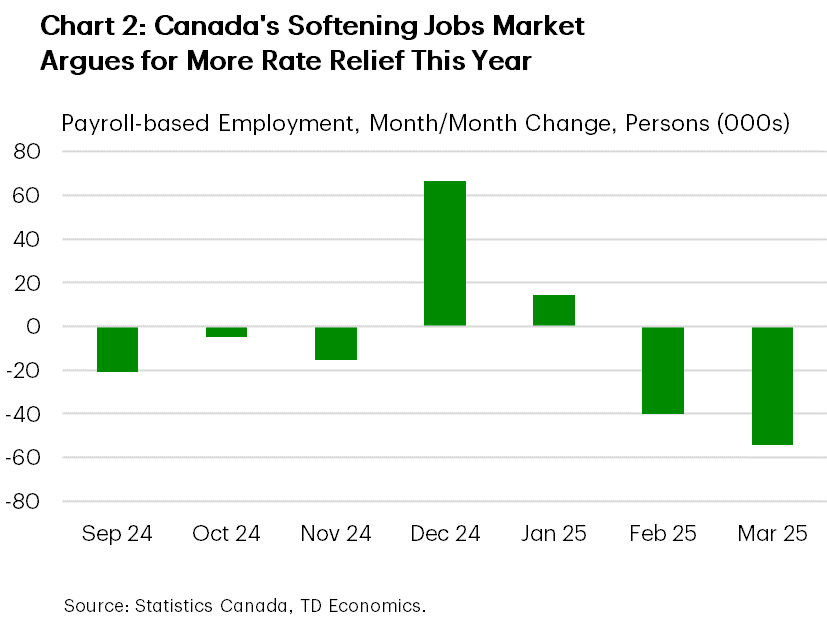
Next week, all eyes will be on the Bank of Canada’s interest rate decision. As it stands, markets expect policymakers to hold the line on rates, especially with a hot core inflation print in April, the federal election bringing the possibility of stimulus, and some global de-escalation in the trade war since the Bank’s last decision in April. On the other hand, Canada’s jobs market is weakening – a narrative reinforced by this week’s payroll data (Chart 2), and domestic activity flatlined in the first quarter. As Canada is likely entering a weak growth period, two more cuts are likely on tap for this year, even if the Bank stands pat next week.
U.S. – Tariff News Tennis Match Continues
Equity markets looked to end the week in the black as the tariff news tennis match seemed to net out on the good news side. The week started with a pause on Trump’s 50% tariff threat against the European Union, then a court struck down some of the Trump administrations’ tariffs before the appellate court deemed they could remain in place for now.
A U.S. trade court invalidated the Trump administration’s use of the International Emergency Economic Powers Act (IEEPA) to levy tariffs. These tariffs include the Canada/Mexico/China “fentanyl” tariffs and the 10% “reciprocal” tariffs. The court ruling has no impact on sectoral tariffs, including those on steel & aluminum and autos. These court battles don’t make it any clearer what will happen with tariffs in the near-term. The administration has other tools they could use to implement tariffs, so this may just be a bump in the road.
The revisions to first quarter economic growth didn’t really change the narrative. The slight contraction in the economy was due to a huge surge in imports, while the domestic economy was still running at a solid 2.5% pace. However, some of that growth was likely due to tariff front-running. These distortions make it harder to get a read on underlying momentum in the economy.
One potential warning sign in the first quarter data was a decline in corporate profits. The drop was seen in nonfinancial firms, which may be a signal that they are coming under pressure. However, April’s personal income data showed that income gains on the household side have been resilient. Incomes were boosted by the implementation of the Social Security Fairness Act, which provided a one-time lift. But even so, wages and salaries continue to grow at a healthy clip. Combined with softer spending growth, the personal savings rate ticked up to its highest level in a year, suggesting consumers have some gas in the tank.
Consumers did take a bit of a breather in April after a solid increase in outlays in March (Chart 1). Consumer spending has been quite volatile so far in 2025, whipsawed by natural disasters and swings in durable goods purchases on things like autos as they try to front run tariffs. This makes it difficult to discern a trend in consumer spending. Even so, we expect that weaker sentiment and a softer labor market ahead will cool the pace of spending in the coming quarters.
The inflation news was steady-as-she goes in April (Chart 2). However, it is a bit early yet to see much inflation pressure from tariffs. We expect inflation will be lifted above 3% later this year as companies pass along higher tariffs to consumers.
President Trump met with Fed Chair Powell for the first time in his second term, reiterating his view that the Fed is making a mistake by not lowering interest rates. Powell stressed that policy decisions would be dependent on the economic data. The Fed minutes from their decision in early May suggested that they are in no hurry to cut rates as they wait for more clarity on the tariff front. Volatility is making it difficult to get clarity on the economic data these days. Add it all up, and the Fed’s wait and see approach is warranted for now.