

Sample Category Title
US Treasurer Mnuchin and USTR Lighthizer arrive in Beijing for trade talks
US Treasury Secretary Steven Mnuchin and Trade Representative Robert Lighthizer arrived in Beijing today, ahead of the high-level meeting on Thursday.
Mnuchin told reporters that "it's great to be here back in Beijing," and "we're looking forward to several important days of talks."
Lighthizer arrived earlier but didn't any any questions from reporters.
Canadian Dollar Strengthens, Markets Eye US Jobs Report
USD/CAD has moved lower in the Tuesday session. In the North American session, the pair is trading at 1.3256, down 0.33% on the day. On the release front, there are no Canadian events until Thursday. In the U.S., JOLTS Jobs Openings is expected to slow to 6.84 million. On Wednesday, the U.S. releases CPI reports.
The Federal Reserve hit the rate trigger four times in 2018, as the Fed responded agressively to a red-hot U.S. economy. However, the global trade war and slower U.S. growth has resulted in the Fed lowering its forecast to two hikes in 2019. This could be overly optimistic, as the rate futures market has forecasted no rate hikes until 2020. On Monday, Fed President Michelle Bowman said that she was satisified with current monetary policy , and that the labor market and inflation levels had put the economy in a “good place”.
Canada’s labor market ended the week with an exclamation mark, as the economy created 66.8 thousand jobs in January, crushing the estimate of 6.5 thousand. It was the second banner reading in three months. Still, the Bank of Canada is not expected to raise rates at its next meeting on March 6. Weak oil prices are weighing on inflation, and the Canadian dollar is down 1.1 percent in February. Similar the Fed, the BoC has become more dovish, after raising rates three times in 2018.
EUR/USD Dips To 3-Month Low As Euro Under Pressure
EUR/USD is unchanged in the Tuesday session, after sustaining losses on Monday. Currently, the pair is trading at 1.1278, up 0.02% on the day. It’s another slow day on the data calendar, with no eurozone or German data releases. In the U.S., JOLTS Jobs Openings is expected to slow to 6.84 million. On Wednesday, the eurozone releases industrial production and the U.S. releases CPI reports.
European Union finance ministers are meeting in Brussels on Tuesday, and high on the agenda is a proposal for a eurozone budget. Unsurprisingly, the proposal is controversial, as members have sharply diverging views on the subject. France supports a large budget, while fiscal-conscious Germany is in favor a scaled-down budget. The current proposal calls for a budget of 55 billion euros. With the eurozone economy experiencing a slowdown which has affected Germany and other large members, policymakers may be more open to the idea of pooling funds and create a budget in order to strengthen the eurozone and the euro.
The euro has been on a six-day slide, losing 1.6% in that time. The catalyst for the downturn has been disappointing data out of the eurozone and Germany. Recent consumer data has been soft, with retail sales and inflation pointing lower. German manufacturing is also in trouble, with factory orders and industrial production recording declines. The global trade war has dampened the appetite for German and eurozone exports, which has weighed on the manufacturing sector. The U.S. poised to impose new tariffs on China on March 2 if a trade deal between the two countries is not reached. Although the sides are talking, there has been little sign of progress. If the tariffs are put in place, investors could send the euro sharply lower.
GBPUSD Breakdown Continues
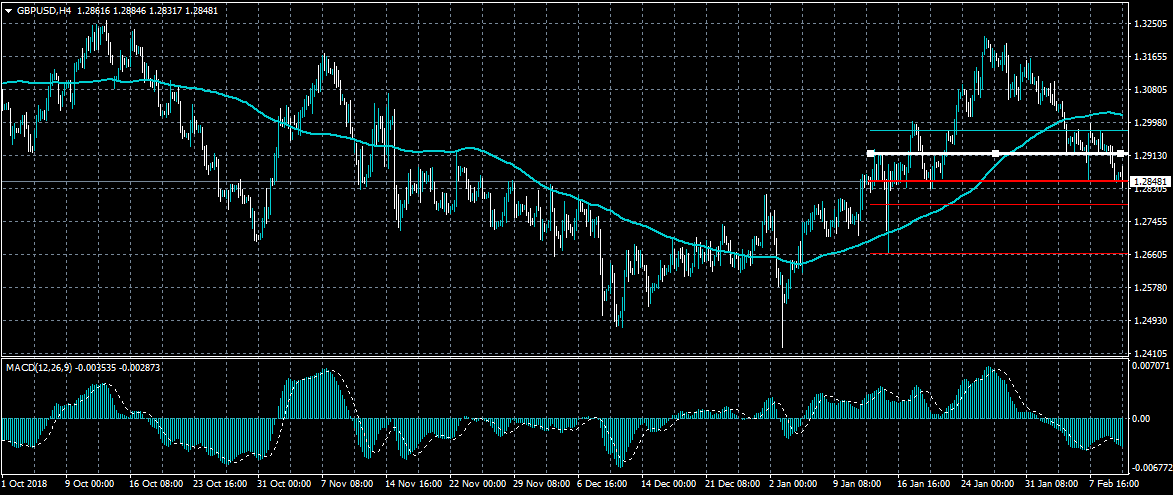
The British pound has continued to slip lower against the US dollar during the European trading session, with the pair touching a three-week trading low. The 1.2830 level is now key support, with near-term weakness in the GBPUSD pair expected while price trades below the 1.2850 level. Brexit uncertainty, technical selling and overall US dollar strength are all major factors weighing on sterling at the moment.
The GBPUSD pair is heavily bearish while trading below the 1.2850 level, key technical support is found the 1.2830 and 1.2780 levels
If the GBPUSD pair moves above the 1.2850 level, buyers may test towards the 1.2890 and 1.2920 levels.
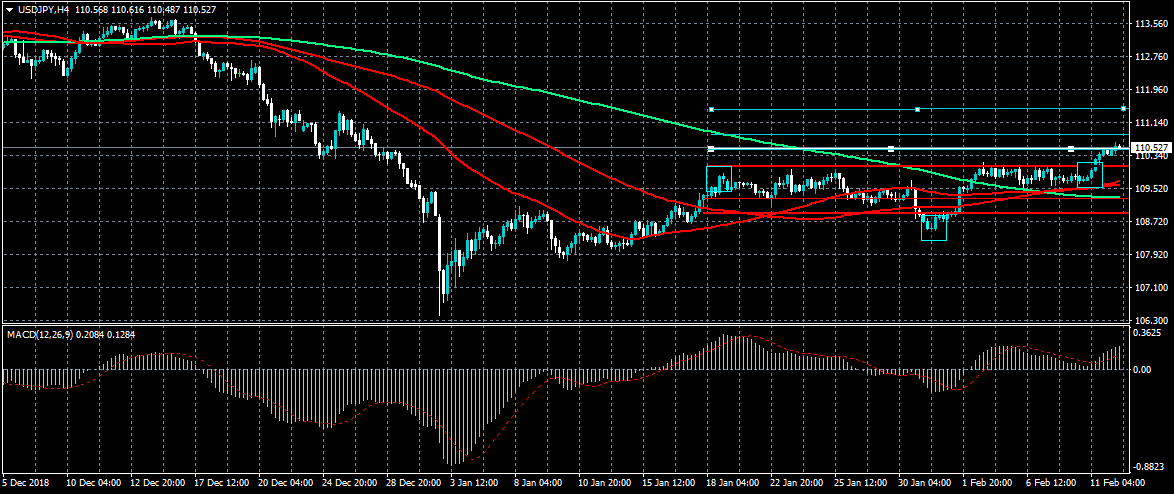
USDJPY 110.80 Upcoming Resistance
The US dollar continues to advance against the Japanese yen currency on Tuesday, as the bullish inverted head and shoulders pattern on the four-hour time frame continues to play out. Further gains towards the 110.80 resistance level should be expected on an intraday basis. If the 110.40 support level is broken to the downside, USDJPY sellers will likely test the inverted head and shoulders pattern neckline around the 110.00 support region.
The USDJPY pair is strongly bullish while trading above the 110.40 level, key technical resistance is found at the 110.80 and 111.40 levels.
If the USDJPY pair moves below the 110.40 level, sellers may test towards the 110.24 and 110.00 support levels.
UK Inflation To Dip Below 2%, January Retail Sales Eyed After Weak GDP
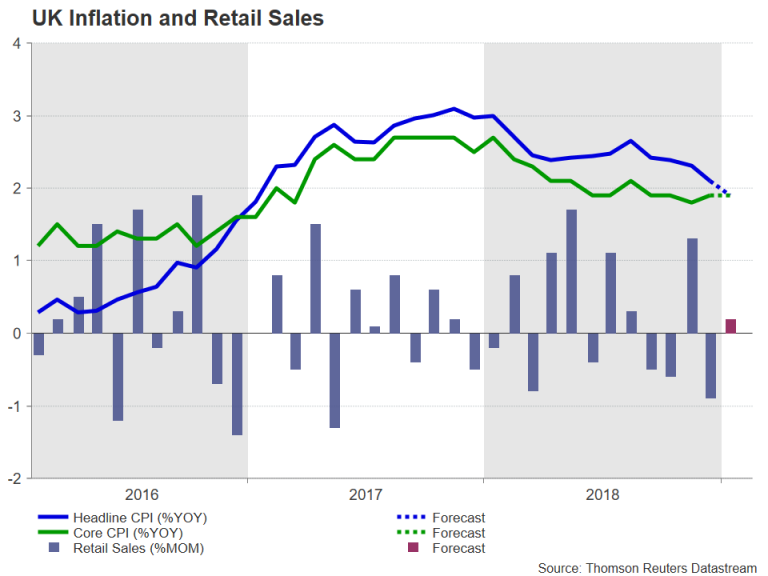
After the disappointing GDP numbers for the fourth quarter, the pound is unlikely to find much support from the next set of data to be published in the UK this week. January inflation and retail sales readings are due on Wednesday and Friday, respectively, at 09:30 GMT. Both reports are expected to point to further weakness in the British economy, as a combination of lingering Brexit uncertainty and global growth slowdown take their toll.
Prices pressures in the UK have been easing since late 2017 when annual inflation peaked at 3.1%. But with the effects of the pound’s slump after the 2016 Brexit referendum dropping out of the CPI calculations, oil prices falling back sharply, and subdued global demand, the headline rate is expected to slip below the Bank of England’s 2% target in January, from 2.1% to 1.9% year-on-year. The core rate, which excludes energy, food, alcoholic beverages and tobacco, is forecast to remain unchanged at 1.9%.
The inflation numbers alone are unlikely to worry the Bank of England, who is already anticipating for the consumer price index to ease below 2% in the first quarter of 2019 before rising back above it towards the end of the year. With inflation projected to stay above 2% in 2020 and 2021, the Bank is likely to resume its rate hike cycle if there is a smooth Brexit. That possibility is what’s currently preventing the pound from sliding more sharply amid a deteriorating growth picture in the UK.
The British economy expanded by just 0.2% quarter-on-quarter in the final three months of 2018, and in December alone, GDP fell by 0.4% over the month, signalling further softness for Q1 2019. The dismal January PMI prints released earlier this month confirm the worsening trend at the start of 2019, and the BoE’s latest growth projections published last week may already be looking overoptimistic even if a disorderly Brexit is averted.
Further evidence of a sluggish economy will probably be found in Friday’s retail sales figures. After December’s bigger-than-expected 0.9% drop, retail sales are set for only a modest rebound in January, rising by 0.2% month-on-month. The 12-month rate is forecast to have picked up from 3.0% to 3.4%, while the core measure that excludes fuel sales is expected to have increased by 0.2% m/m.
Should the inflation and retail sales figures send more warning signs about UK growth, dampening expectations about future rate hikes by the Bank of England, the pound could easily lose the grip on the immediate support level of $1.2825. This happens to be near the 50% Fibonacci of the January uptrend and falling below it would also take price action below the 50-day moving average. Such a move could accelerate the declines towards the $1.2675 support region before attention turns to January’s 21-month low of $1.2436.
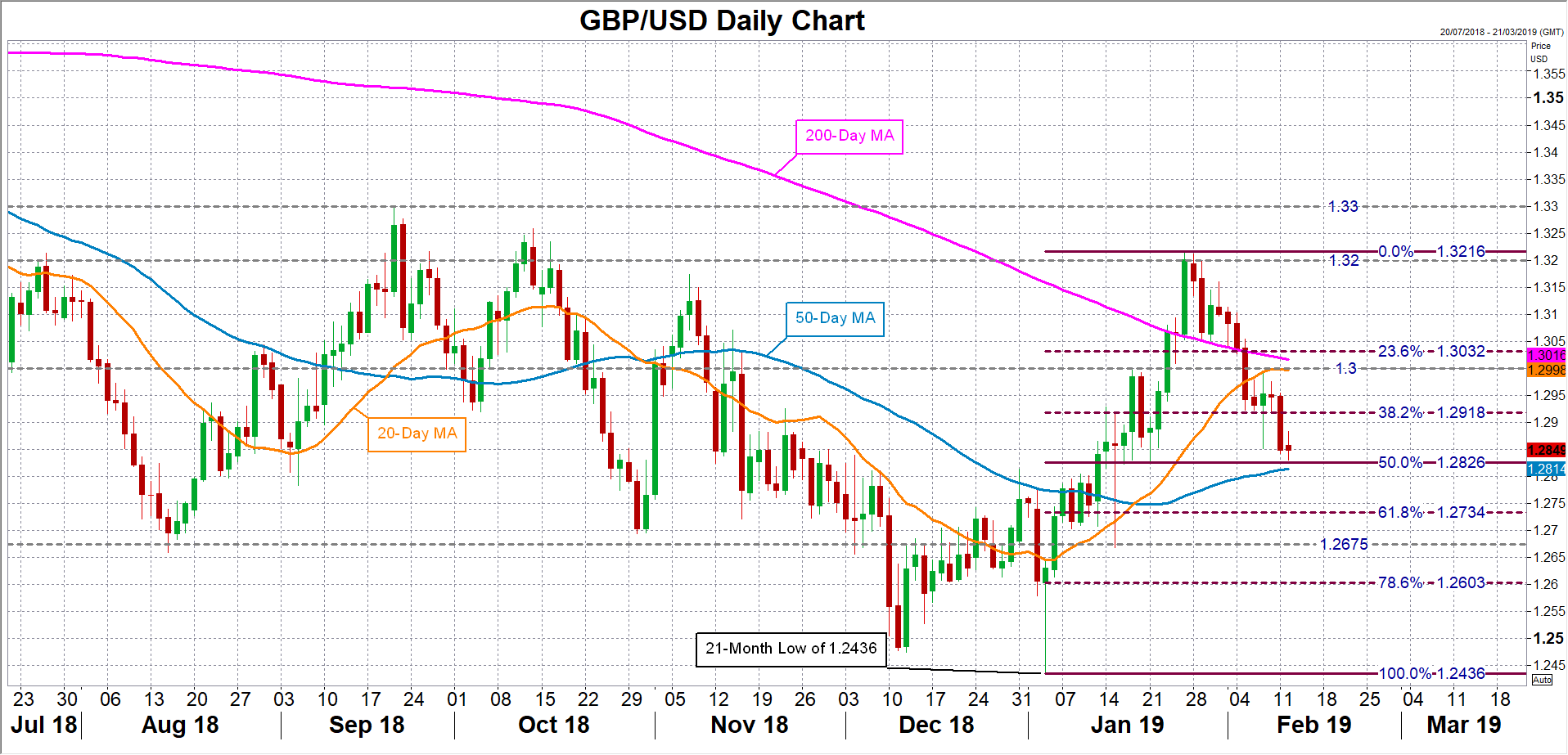
However, if the data isn’t as soft as what’s being anticipated, particularly the retail sales numbers, sterling could post a mini-rebound, barring of course any negative headlines surrounding Brexit. The pound could initially attempt to take on the 38.2% Fibonacci at $1.2918 before targeting the $1.30 handle, which is just above the 20-day moving average. A break above $1.30 would clear the way for the January peak of $1.3216.
WTI Oil Outlook: Tuesday’s Hammer Could Be Initial Reversal Signal
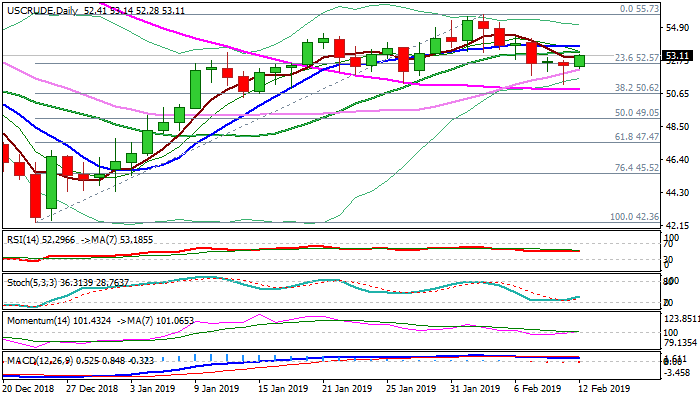
WTI oil edges higher on Tuesday as traders booked some profit's after week-long pullback from $55.73 high started showing initial signs of stall. Monday's hammer candle suggests that $55.73/$51.23 corrective dip might be over after bears repeatedly failed to clearly break below 200WMA ($52.33). Daily momentum emerged into positive territory and stochastic turned north from sideways mode (just above oversold border line) adding to positive signals. Today's bullish close may generate initial bullish signal, but extension and close above converged 20/10SMA's ($53.34/66 respectively) is needed t generate reversal signal. Fundamentals remain mixed as OPEC-lead production cut and US sanctions on Iran and Venezuela underpin but fears of global economic growth slowdown, partially offset positive impact. Traders would look for fresh signals from US API crude stocks report, due today, and Wednesday's EIA US crude inventories report.
Res: 53.34 53.66, 54.28, 55.15
Sup: 52.33, 51.23, 50.94, 50.62
Risk-On Appetite Aided By Continued Optimism On Upcoming US-China Trade Talks
Notes/Observations
- Risk-on appetite continues as USTR Lighthizer arrives in Beijing ahead of key trade talks
- Risk-on sentiment also benefiting from reports that US lawmakers reached a tentative border security deal in an attempt to avert another government shutdown
Asia:
- BOJ announcement related to daily bond buying operation saw a cut in the 10-25-year maturity range (1st time since July 2018). JGB buying reduced by ¥20B to ¥180B for that maturity range
- Ministry of Commerce (MOFCOM): Trade in goods still maintained growing trend in January; consumption growth was likely to slow in 2019
Europe:
- UK PM May said to be preparing to resign in the summer so she can influence who succeeded her. PM May aimed to head off a leadership bid by rival Boris Johnson. Under the suspected plan, May would call time on her Premiership shortly after finally delivering Brexit.
- UK govt Spokesperson noted that Monday’s talks between EU Brexit Negotiator Barnier and UK Brexit Sec Barclay had ended and parties agreed to more talks to find a breakthrough on the Brexit impasse
- UK Govt official Lidington (de facto Dep PM) said to have a meeting with former EU Commission President Van Rompuy. Said to be understood PM May wanted to enlist him to discuss making changes to the Irish backstop
- Eurogroup nominated Ireland's Lane for ECB Board as Chief economist (as expected)
- Northern League party said to have a draft proposal for Constitutional change that would allow the govt to sell gold reserves. Italy Dep PM Salvini stated that Bank of Italy's gold was the Italian's property. Use of gold reserves could be interesting
Americas:
- Democratic and Republican negotiators said to have reached an agreement in principle to fund border security and avoid another partial govt shutdown this weekend. The deal might include $1.38B for physical barriers and would include 55 miles of fencing. Funding for Immigration and Customs Enforcement beds is expected to stay at ~40.5K beds. Sen Shelby (R-AL): Agreement in principle reached on shutdown talks; border bill to have some money for a barrier; Rep Lowey (D) said staff members could work out the full details by Wed.
- US Undersecretary for International Affairs Malpass: March 1st deadline for US-China trade deal would not be extended; US deputy-level delegation was currently in Beijing for the second day of trade talks
Macro
- (US) United States: US-China trade talks continue with officials from both sides offering market-friendly soundbites. Nobody expects the intellectual property issue to be resolved to the full satisfaction of the Trump administration, but there is an underlying narrative that suggests that with increasing evidence of slowing in global growth, and with President Trump already going into campaigning mode into the 2020 elections, there is scope for compromise. This would most likely take the form of a suspension of the tariff hike the U.S. has threatened to implement in March, maintaining the exiting 10% duties but avoiding the hike to a 25% tariff on $200B of Chinese goods the U.S. imports.
- (EU) Eurozone: Bundesbank President Weidmann said "central banks should beware of overburdening", adding "in order to defend their independence, central banks should interpret their mandates narrowly and seek the support for the broad public. People's trust gives us scope to take decisions that are not always popular in the short run". Weidmann also warned again that "we have not yet done enough to crisis-proof the euro area once and for all", adding that "it could become more and more difficult for the ECB to focus on the focus on its promise of a stable currency".
- (IT) Italy: Domestic assets have outperformed this week with regional elections cited as a major reason. The results though showed support for the Five Star Movement waning which does not suggest that Italian politics will get any more stable, or EU-friendly for that matter. In fact the European Parliament elections at the end of May look set to offer Salvini a greater share of the power and risk early and the elections if necessary.
SPEAKERS/FIXED INCOME/FX/COMMODITIES/ERRATUM
Equities
- Indices [Stoxx600 +0.62% at 363.36, FTSE +0.39% at 7,157.06, DAX +1.14% at 11,140.53, CAC-40 +0.95% at 5,061.98, IBEX-35 +0.67% at 8,996.45, FTSE MIB +0.93% at 19,769.50, SMI +0.84% at 9,138.50, S&P 500 Futures +0.59%]
Market Focal Points/Key Themes:
- European Indices continue the positive momentum for the week trading modestly higher across the board as earnings take center stage. Shares on French Tyre name Michelin trades sharply higher after the company reported inline results and 2019 outlook; Wessanen also rises sharply on earnings. Other eatable earners include Randstad and Metro AG which trade higher on earnings with Kering also rising on strong Gucci sales growth. Steel giant Thyssenkrupp trades lower after earnings and weak cash flow; TUI trades lower as its Q1 losses widened while broker Plus500 trades over 30% lower after warning profits to be materially below expectations.
- In other news Moberg Pharma trades over 40% following earnings and the signing of an exclusive license agreement with Bayer; Debenhams also rises sharply after securing an additional 12-month senior secured credit facility.
- Looking ahead notable earners include Huntsman, Under Armour, Sabre and Welltower among others.
Equities
- Consumer discretionary: Kering [KER.FR] -2.5% (earnings; raises dividend), Debenhams [DEB.UK] +33.5% (agreement on credit injection), Metro [B4B.DE] -1% (earnings), Wessanen [WES.NL] +19.5% (earnings)
- Consumer staples: Norway Royal Salmon [NRS.NO] -9% (earnings)
- Materials: ThyssenKrupp [TKA.DE] -2% (earnings), Covestro [1COV.DE] +3% (CEO comments on M&A)
- Financials: Randstad Holding [RAND.NL] +3% (earnings), Plus500 [PLUS.UK] -30% (earnings)
- Healthcare: Moberg Pharma [MOB.SE] +39% (earnings; agreement with Bayer), Indivior [INDV.UK] -0.5% (court denies motion to stay)
- Industrials: Michelin [ML.FR] +10.5% (earnings)
- Technology: Wirecard [WDI.DE] +1.5% (analyst action)
- Telecom: Swisscom [SCMN.CH] -1% (comments on Comcom decision)
Speakers
- ECB’s Nowotny (Austria): To look at a decision on rates in the summer (**Reminder: On Jan 24th ECB Draghi affirmed policy guidance that interest rates to remain at their present levels at least through the summer of 2019)
- ECB's Weidmann (Germany): ECB bond buying could jeopardize its independence; must not become overburdened. Good reasons to maintain a medium outlook on inflation. Economic weakness had been a bit more protracted than expected
- UK Commons leader Leadsom: PM May to tell Parliament to hold its nerve on Brexit. Parliament to support PM May Brexit deal providing that the Irish backstop was not permanent. To hold meaningful vote asap; vote to come when issue of backstop was sorted out
- European Finance Ministers said to have agreed on reform of Financial authorities
- Brazil Central Bank reiterated view that reforms and adjustments are key to keeping inflation low. Less uncertainty on reforms would quicken economic recovery. Current interest rate level is stimulative; outlook required monetary policy flexibility
- South Africa Central Bank Dep Gov Mminele: FX volatility remained a risk to CPI. Power and water tariffs were risks to inflation
- India Govt and central bank (RBI) said to be closely monitoring external position. Monitoring the INR currency (Rupee) exchange rate in both real and nominal terms
- Bank of Korea (BOK) Jan Minutes: Member saw external uncertainties increasing while domestic growth had been slowing. One member noted that further adjustment on policy accommodation should be taken cautiously after taken economic data and inflation trend
- Venezuela Oil Min Quevedo: Current exports between 1.2-1.3M bpd
- Saudi Energy Min Falih: Mar oil production to be reduced to 9.8M bpd (**Reminder: On Jan 17th OPEC Monthly Report put - Saudi Arabia Dec oil production 10.62M)
Currencies/ Fixed Income
- USD developing a bullish technical outlook with dealers believing the greenback could test 2018 highs.
- EUR/USD staying below the 1.13 level and keeping the door open for a potential move towards 1.10. The recent soft economic data making markets to re-evalauate any potential ECB tightening. ECB’s Nowotny did noted that the general Council would look at a decision on rates in the summer
- GBP continued to remain vulnerable without a clear Brexit path ahead. The GBP/USD was trading in the mid-1.28 ahead after a spat of UK data on Monday highlighted that Brexit uncertainty had taken a toll on the UK economy
Economic Data
- (SE) Sweden Jan PES Unemployment Rate: 3.7% v 3.8% prior
- (US) Jan NFIB Small Business Optimism: 101.2 v 103.0e
- (MY) Malaysia end-Jan Foreign Reserves: $102.1B v $101.7B prior
- (NG) Nigeria Q4 GDP Y/Y: 2.4% v 2.1%e
- (TW) Taiwan Jan CPI Y/Y: 0.2% v 0.3%e; CPI Core Y/Y: 0.5% v 0.6%e; WPI Y/Y: 0.8% v 0.8% prior
- (ES) Spain Dec House transactions Y/Y: 3.8% v 2.8% prior
- (HU) Hungary Jan CPI M/M: 0.3% v 0.4%e; Y/Y: 2.7% v 2.8%e
- (TW) Taiwan Jan Foreign Reserves: $463.0B v $461.8B prior
- (ZA) South Africa Q4 Unemployment Rate: 27.1% v 27.5%e
Fixed Income Issuance
- (UK) Bank of England (BOE) to sell $2.0B in 3-year notes; guidance seen +4bps to mid-swaps
- (EU) EFSF opened its book to sell 2024 and 2043 bonds via syndicate
- (LV) Latvia to sell EUR-denominated 30-year bond; guidance seen low 70bps area to mid-swaps
- (ID) Indonesia sold total IDR25.0T vs. IDR15T target in 3-month, 12-month bills and 5-year, 10-year, 15-year, 20-year and 30-year Bonds
- (NL) Netherlands Debt Agency (DSTA) opened books to sell 0.25% July 2029 DSL bonds; guidance seen +22.5-23.5bps
- (ES) Spain Debt Agency (Tesoro) sold total €4.25B vs. €4.0-5.0B indicated range in 6-month and 12-month Bills
- (IT) Italy Debt Agency (Tesoro) sold €6.5B vs. €6.5B indicated in 12-month bills; Avg Yield: 0.181% v 0.285% prior; Bid-to-cover: 1.65x v 1.54x prior
- (CH) Switzerland sold CHF635.3M in 6-month Bills; Avg Yield: -0.755% v -0.825% prior
Looking Ahead
- (PT) Bank of Portugal Dec ECB financing to Portuguese Banks: No est v €18.7B prior
- 05:30 (UK) Weekly John Lewis LFL Sales data
- 05:30 (EU) ECB allotment in 7-Day Main Refinancing Tender (MRO)
- 05:30 (HU) Hungary Debt Agency (AKK) to sell in 3-month Bills
- 05:30 (ZA) South Africa to sell combined ZAR2.85B in 2030, 2035 and 2044 bonds
- 06:00 (IL) Israel Jan Consumer Confidence: No est v 117 prior
- 06:00 (PT) Portugal Jan Final CPI M/M: No est v -1.2% prelim; Y/Y: No est v 0.4% prelim
- 06:00 (PT) Portugal Jan Final CPI EU Harmonized M/M: No est v -1.3% prelim; Y/Y: No est v 0.5% prelim
- 06:00 (ZA) South Africa Dec Manufacturing Production M/M: 0.4%e v 0.7% prior; Y/Y: 1.4%e v 1.6% prior
- 06:00 (BR) Brazil CONAB crop report
- 06:00 (TR) Turkey to sell Bonds
- 06:45 (US) Daily Libor Fixing
- 07:00 (IN) India Jan CPI Y/Y: 2.6%e v 2.2% prior
- 07:00 (IN) India Dec Industrial Production Y/Y: 1.5%e v 0.5% prior
- 07:45 (US) Weekly Chain Store Sales data
- 08:00 (UK) Baltic Dry Bulk Index
- 08:00 (UK) BOE Gov Carney
- 08:00 (RU) Russia announces upcoming OFZ Bond issuance
- 08:55 (US) Weekly Redbook Retail Sales data
- 09:00 (EU) Weekly ECB Forex Reserves
- 10:00 (US) Dec JOLTS Job Openings: 6.832Me v 6.888M prior
- 11:00 (NZ) New Zealand Jan QV House Prices Y/Y: No est v 3.2% prior
- 11: 00 (US) Fed Chair Powell
- 15:50 (AU) RBA's Heath in Sydney
- 16:30 (US) Weekly API Oil Inventory data
Forex Technical Analysis: EUR/USD, USD/JPY, GBP/USD
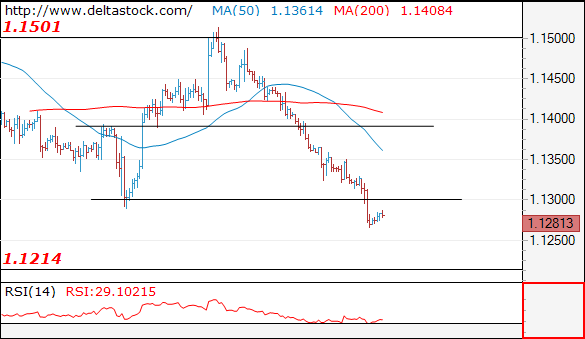
EUR/USD
Current level - 1.1281
The break below 1.1290 clearly shows a negative bias, for a dip to 1.1214 low. Initial intraday resistance is projected at 1.1300.
| Resistance | Support | ||
| intraday | intraweek | intraday | intraweek |
| 1.1300 | 1.1630 | 1.1214 | 1.1214 |
| 1.1350 | 1.1820 | 1.1214 | 1.1100 |
USD/JPY
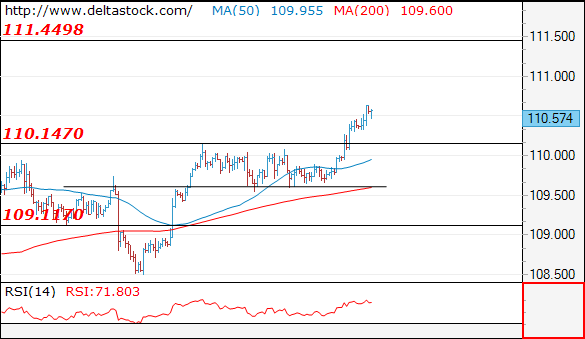
Current level - 110.57
The pair broke through 110.20 hurdle and the outlook remains positive, for a rise towards 111.45 area. Initial support lies at 110.20.
| Resistance | Support | ||
| intraday | intraweek | intraday | intraweek |
| 111.45 | 111.45 | 110.20 | 106.70 |
| 112.10 | 114.50 | 109.60 | 104.60 |
GBP/USD
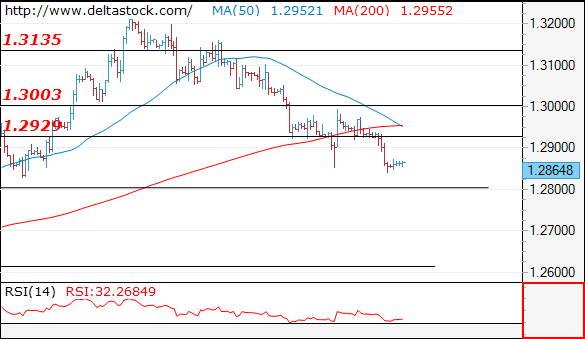
Current level - 1.2864
The bias is bearish, for a break through 1.2800, towards 1.2700 area. Initial resistance lies at 1.2890.
| Resistance | Support | ||
| intraday | intraweek | intraday | intraweek |
| 1.2890 | 1.3290 | 1.2800 | 1.2800 |
| 1.3000 | 1.3480 | 1.2700 | 1.2610 |
Markets Higher As Deal Agreed To Prevent Shutdown
Shutdown averted, trade talks with China more important
The US equity market rally has stalled over the last couple of weeks, with increased uncertainty around trade talks with China, a government shutdown and a potential earnings recession weighing on investor confidence.
Reports overnight suggest that one of these may have been averted, with Democrats and Republicans apparently reaching an agreement that will prevent another government shutdown. All of the details are still not know but the reported number agreed for physical barriers – around $1.375 billion – is well short of what Trump was demanding which may be a blocker to the deal getting over the line, unless other means of funding have also been found.
A deal to avoid another shutdown may resolve another unwanted distraction for the US but I’m not sure it was ever viewed as a major risk factor for the markets. They may be trading in the green ahead of the open but I don’t think this is a game changer, unlike the negotiations with China. The escalation of the trade war between the two countries has undoubtedly been disruptive and remains a significant risk, with fears of recessions – both economic and earnings – very real and a major threat for markets.
Success in these negotiations will provide a welcome distraction for Trump and his team and draw any attention away from the failure to secure the full funding for the wall. Officials are in Beijing this week and appear optimistic that a deal can be agreed by the end of this month, despite recent suggestions that the two sides remain far apart. From a markets perspective, we just need to avoid more tariffs so an extension to the 90-day truce will be encouraging and could keep investors on board.
May to push for more time
The Brexit saga continues today, with Theresa May addressing Parliament a day earlier than planned to urge MPs to give her more time to negotiate the changes to the backstop arrangement that can get the support of the House. This request is unlikely to come without its criticism but MPs are likely to allow her the extra time to do so. But time is fast running out so amendments will still likely be tabled on Thursday in an attempt to prevent May running down the clock any more. Another “meaningful” vote is then likely at the end of February, one month before Brexit day. Traders remain relatively laid back about this though, with the pound remaining under some pressure but well off the recent lows. I still think there is a belief that a deal – probably May’s – gets over the line.
Gold continues to show resilience
Gold continues to show strong resilience in the face of a stronger dollar. The greenback is relatively flat today but this comes on the back of another strong session on Monday. This has taken the edge off the gold rally but there continues to be strong support, to the point that $1,300 is yet to be properly tested. At some point, something will have to give if the dollar continues this winning streak – eight days of gains already and on course for a ninth – but so far, gold bulls are holding firm.
OPEC monthly report eyed as oil trades near range lows
A stronger dollar, among other things, has also taken the edge off the rally in oil, with Brent and WTI both trading around recent range lows. We seem to be going through a holding phase, whereby traders are optimistic about price but lacking evidence to support the next breakout. Oil inventories have been rising and US output is at record highs, while at the same time the global economic outlook is uncertain. The OPEC monthly report today may be a bullish catalyst for oil if it shows strong compliance with previously agreed cuts but this has been called into question recently, particularly with Russia which has reportedly been slow to cut to agreed levels. Oil bulls may well have to be more patient before OPEC+ efforts start to pay off.