Sample Category Title
Silver Retreats after Bullish Movement from Double Bottom
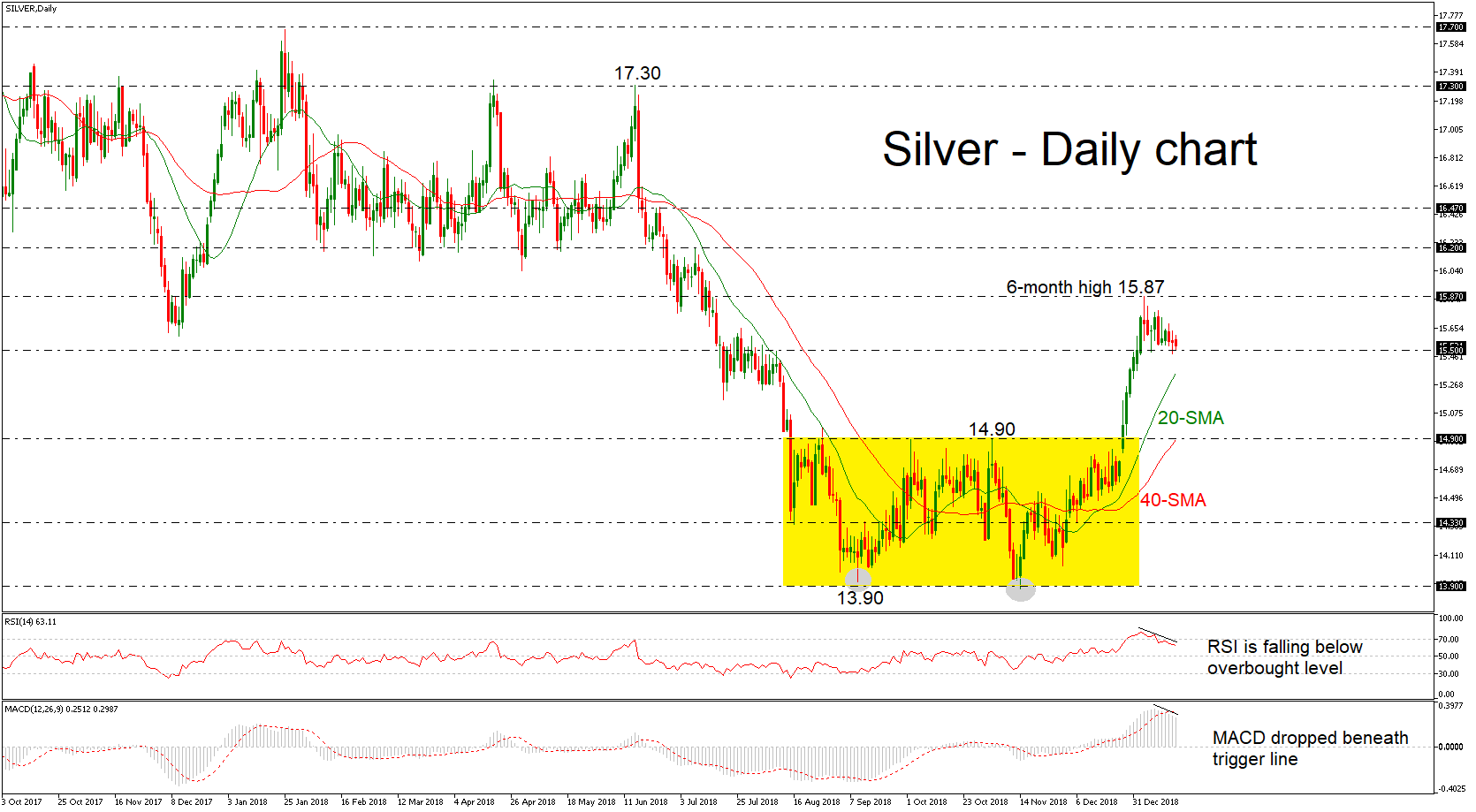
Silver has been moving sideways since the price hit the six-month high of 15.87 on January 4. The neutral to bearish picture in the very short-term looks to last for a while longer after prices failed to stand near the aforementioned high.
Technically, in the daily timeframe, the RSI lies below the 70 level and is falling, while the MACD oscillator printed a bearish cross with its trigger line in the positive area as well.
Looking at the bigger picture the commodity posted a double bottom formation around 13.90 and exited from the narrow range of 13.90 – 14.90, creating an upward tendency. In case of a continuation of this move, the bulls could break the 15.87 resistance and send prices towards the 16.20 barrier. More advances could drive the market to the next stop of 16.47, identified by the high on June 25.
Alternatively, additional declines may drive the price towards the 20-day simple moving average (SMA) around 15.35 at the time of writing, before the 14.90 support, which overlaps with the 40-day SMA, comes into view. Beneath the latter, 14.33 could be another level in focus.
Summarizing, in the long-term view, the white metal has remained in a downtrend since July 2017, without a significant bullish correction.
DAX Gains Ground, But Weak Eurozone Inflation Raises Concerns
The DAX index has posted gains in the Thursday session. Currently, the index is at 10,879, up 0.25% on the day. In economic news, Eurozone CPI dropped sharply to 1.6% in December, down from 1.9% a month earlier. This marked the lowest level since April.
With the eurozone struggling, there are plenty of headaches for ECB policymakers, and Mario Draghi shared some of his concerns on Tuesday at a plenary session on the ECB annual report. Draghi highlighted Brexit and the U.S-China trade war as significant concerns and noted that eurozone economic conditions have been weaker than expected, adding that the eurozone was undergoing a slowdown but was not heading into recession. The ECB holds its next policy meeting on January 24, with no change in monetary policy expected.
The DAX has recorded five straight months in the red, but that could change in January, as the index has posted strong gains of 3.9% in January. This is a far cry from the December meltdown of 8.4%, as equity markets try to shake off an awful 2018. Still, there are dark clouds on the horizon. The global trade war has hurt the eurozone export and manufacturing sectors, and the giant Chinese economy continues to show signs of a slowdown. Earlier in the week, China released dismal economic numbers, with exports down 4.4 percent from a year earlier and imports plunging 7.6 percent. The slowdown in China has taken a toll on corporate profits and continues to be a major concern for investors and policymakers.
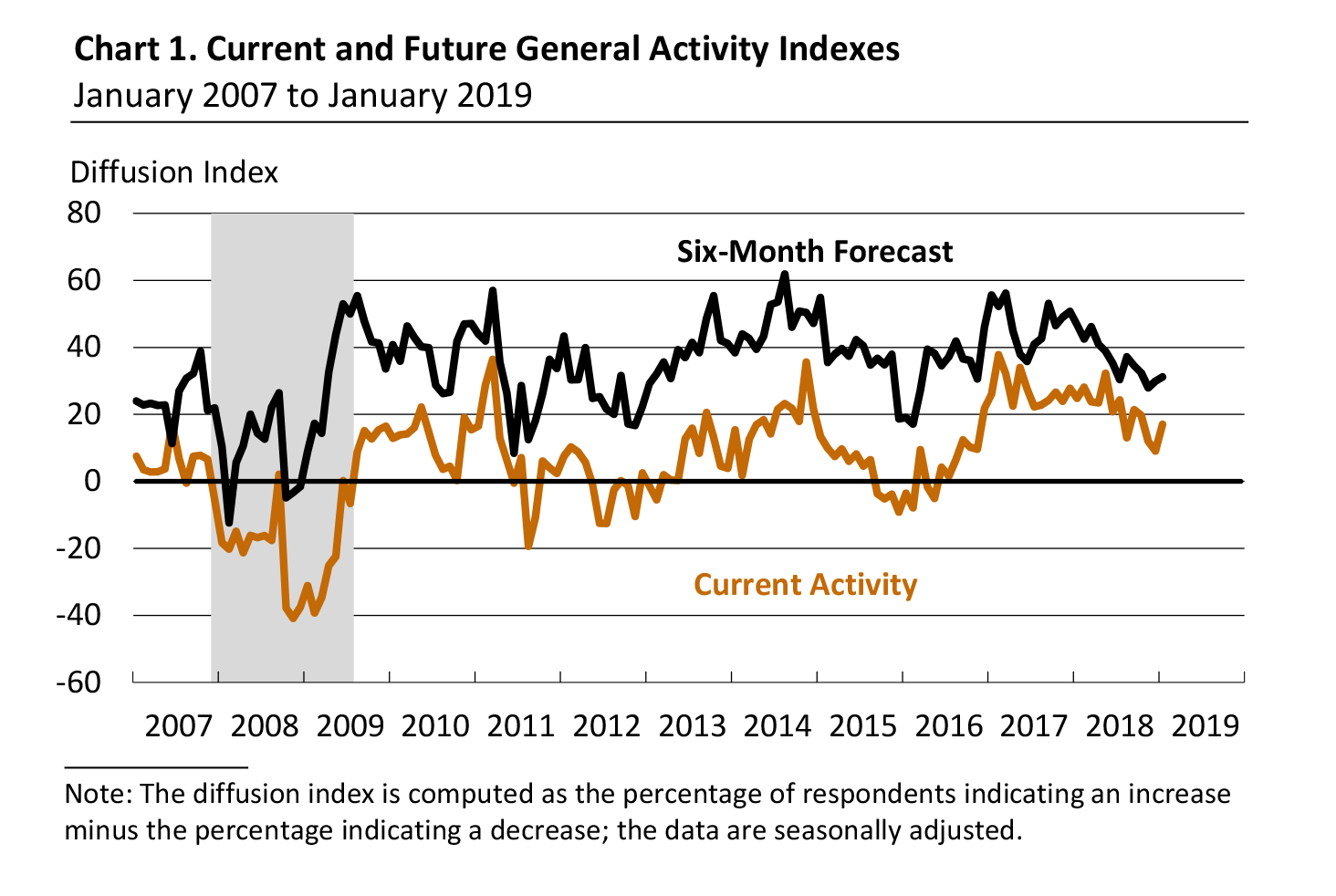
Philadelphia Fed Manufacturing Business Outlook jumped to 17, vs expectation 10.1
Philadelphia Fed Manufacturing Business Outlook rose notably to 17 in January, up from 9.4 and beat expectation of 10.1.
Looking at the details, the general activity and new orders indicators increased from their readings last month, while the indicators for shipments and employment decreased. The firms reported growth in the underlying demand for their products and are generally optimistic about future growth and employment.
US initial jobless claims dropped to 213k vs expectation 218k
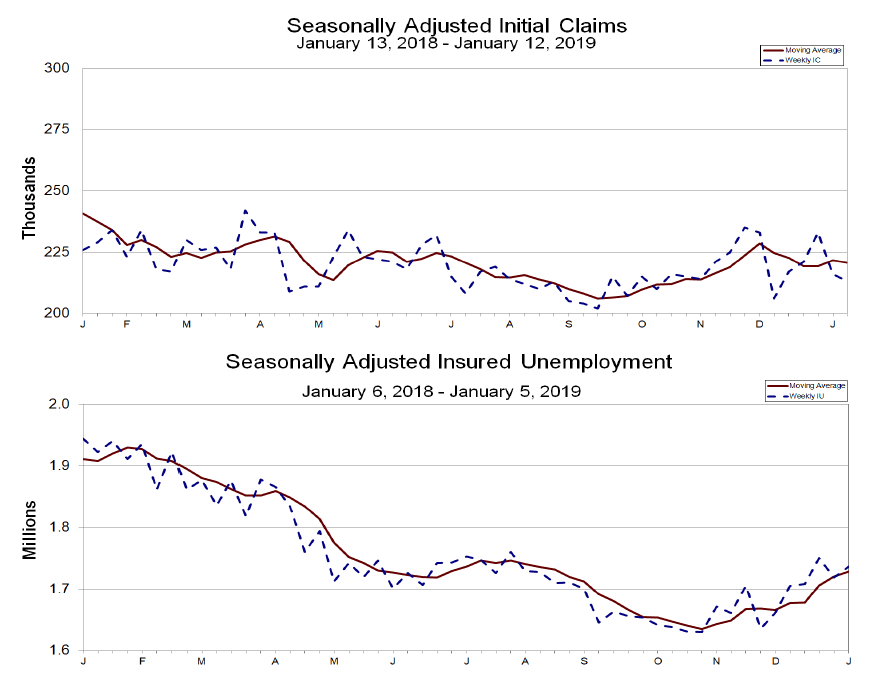
US initial jobless claims dropped -3k to 213k in the week ending January 12, slightly below expectation of 218k. Four week moving average of initial claims dropped -1k to 220.75k.
Continuing claims rose 18k to 1.737M in the week ending January 5. Four-week moving average of continuing claims rose 8k to 1.7285M.
Canadian Dollar Dips ahead of Canadian ADP Nonfarm Payrolls
USD/CAD has posted gains in the Thursday session. Currently, the pair is trading at 1.3302, up 0.35% on the day. On the release front, Canada publishes ADP nonfarm payrolls, while the U.S. posts unemployment claims and the Philly Fed Manufacturing Index.
Last week, the Bank of Canada lowered its growth forecast for 2019 to 1.7%, down from 2.1%. The bank also noted concerns over lower oil prices and the global trade war, both of which have hurt the economy. Still, the BoC expects economic activity to strengthen in the second half of the year, so it appears unlikely that the BoC will raise rates in the first quarter. An important factor in rate policy is the level of inflation, and investors are braced for a soft reading from CPI for December. CPI is expected to post a second successive decline of 0.4%. If inflation remains weak, the BoC will have an easier time holding off from rate cuts.
The U.S. government shutdown has meant that the flow of economic data has been reduced. This has magnified the importance of the Beige Book, which was released on Wednesday. The report found that businesses across the country had become less optimistic, due to higher interest rates, swings in the financial markets and global trade tensions. At the same time, most of the regional Feds said that growth in their region was “modest to moderate”. The report reiterates the recent dovish stance we are seeing from the Federal Reserve, which has sent strong signals to the markets that rate hikes could be on hold for the near future.
Into US session: Yen strongest but Sterling is catching up
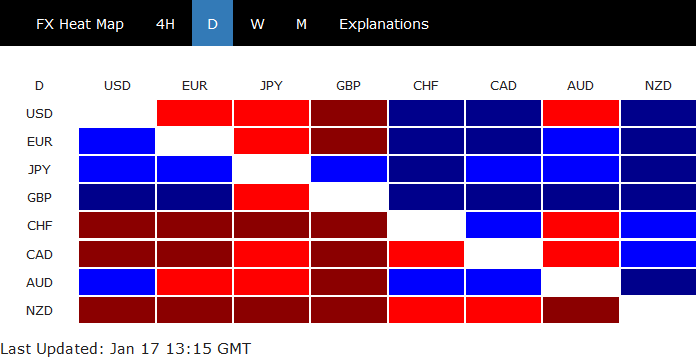
Entering into US session, Yen is trading generally higher as helped by mild risk aversion today. Sterling is also enjoying some renewed buying. EUR/GBP takes lead by extending recent fall from 0.9101. GBP/USD is also set to take on 1.2930 temporary top very soon.
New Zealand Dollar is the weakest one for today so far, followed by Canadian and then Swiss Franc. WTI crude oil's recovery is losing steam after hitting 52.73 earlier this week and is now back at 51.4.
In European markets, at the time of writing:
- FTSE is down -0.73%.
- DAD is down -0.31%.
- CAC is down -0.46%.
- German 10-year yield is down -0.0026 at 0.223.
Earlier in Asia:
- Nikkei dropped -0.20%.
- Hong Kong HSI dropped -0.54%.
- China Shanghai SSE dropped -0.42%.
- Singapore Strait Times dropped -0.45%.
- Japan 10-year JGB yield rose 0.0044 to 0.012.
Brexit: No article 50 extension request, plan B to be voted on Jan 29
UK Prime Minister Theresa May's spokesman said to that that she has not raised the idea of extending Article 50 beyond March 29. And the spokesman also noted that "It is not something we have raised with the EU or suggested we wish to do". On the other hand, European Commission spokesman Margaritis Schinas also said "We have not received such a request from the UK for an extension". And, "should there be a UK request to extend, this will be decided unanimously by the 27 and of course the request will have to set out the reasons for such an extension,"
May is expected to "table an amendable motion and to make a statement about the way forward" in the coming Monday. The Conservative Party's leader in the House of Commons Andrea Leadsom told the parliament today that "A full day's debate on the motion will take place on Tuesday 29 January, subject to the agreement of the house."
Regarding the possibility of a second referendum, opposition Labour leader Jeremy Corbyn said "If a second referendum takes place, then obviously the party will decide what role we will play in that ... but I can't really go along with the idea that it should simply be a re-run of what happened in 2016". And, "there has to be a discussion about the options that we put forward,"
EUR/USD Will Depreciate To 1.1360 Level
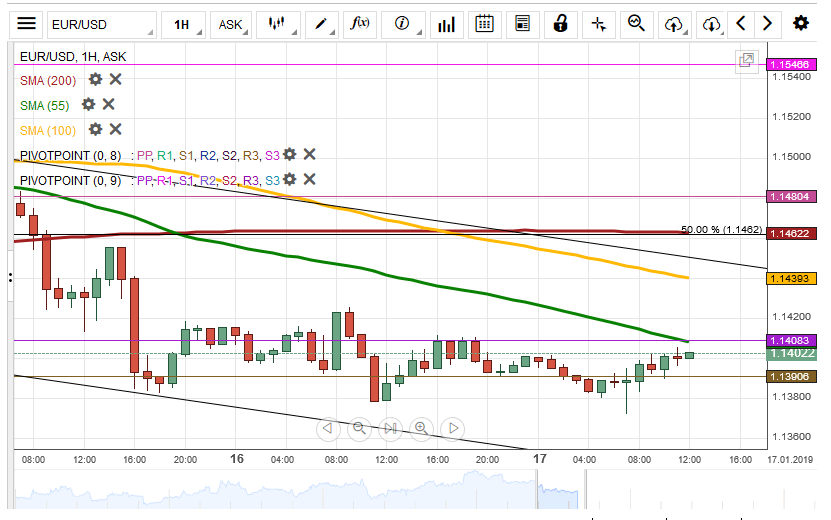
During the previous trading day, the currency exchange rate traded between the weekly S1 and the monthly PP to stay at the 1.1380 level. On Thursday morning, the rate continued trading at the same level at the 1.1397 mark.
In regards to the near-term future, most likely, the European Single Currency will be resisted by the monthly pivot point at 1.1408 and the 55-hour simple moving average to trade below the 1.1360 level.
However, the rate could use the support of the weekly S1 to break the resistance levels to trade at 1.1420.
GBP/USD Trades Towards 1.2950
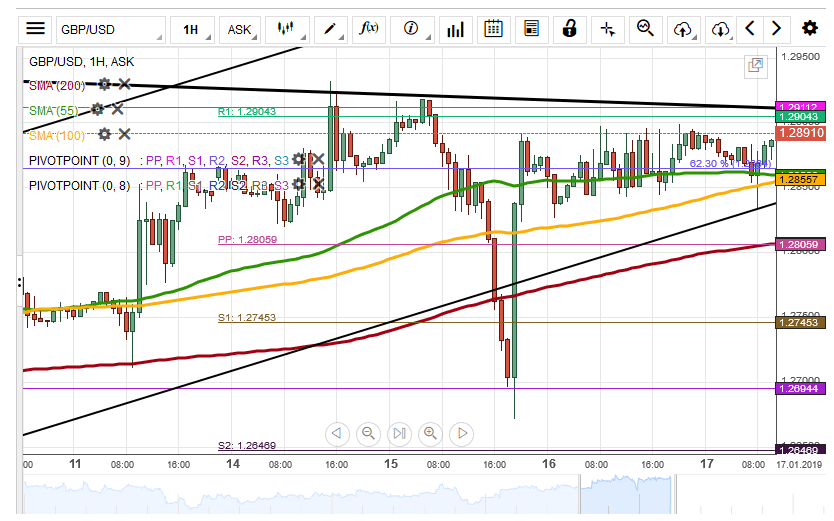
During the previous trading session, the rate was supported by the 55-hour SMA to trade sideways at the 1.2840 level. On Thursday morning, the rate was located at 1.2872.
It is expected that the British Pound will be supported by the SMAs and the 62.30% Fibo at 1.2864 to push the rate towards the medium pattern line at 1.2908. Most likely, the medium pattern line will retrace the British Pound to the 1.2800 level.
On the other hand, the support levels could push the rate to break the resistance of the medium pattern line towards the weekly R2 at 1.2964.
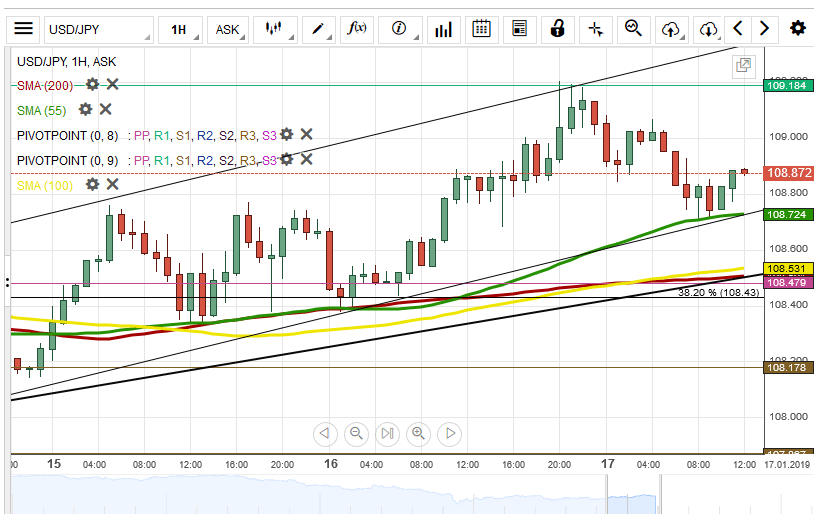
USD/JPY Surges Towards Weekly R1 At 109.18
Due to the fact that the previous patterns were broken, the chart was fully reviewed to draw freshly new patterns.
During Thursday's morning hours, the currency exchange rate was surging towards the weekly R1 which is located at the 109.18 mark. Moreover, the surge is supported by the 55-hour simple moving average.
It is expected that the USD/JPY will reach the 109.00 level during the trading session.