Sample Category Title
QE Details: The End Is Here – Reinvestments To Stay
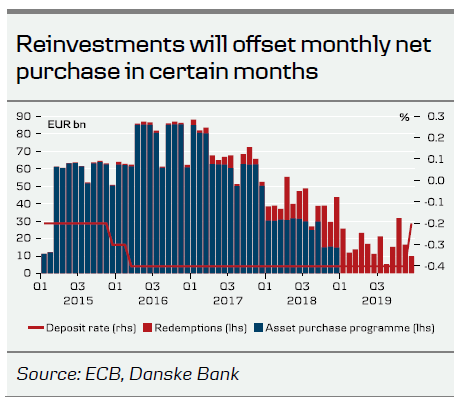
The ECB published the final numbers of the APP programme, thereby concluding the net asset purchase programme. The QE figures for December showed the PSPP rose as expected to a 90% share of total PSPP holdings.
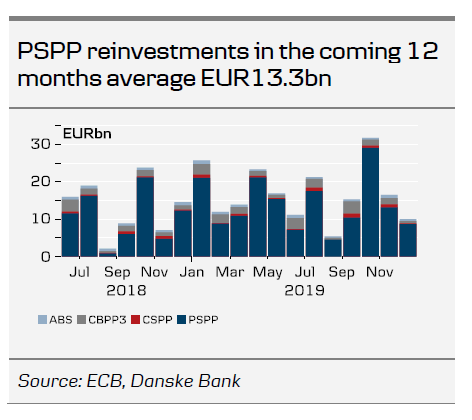
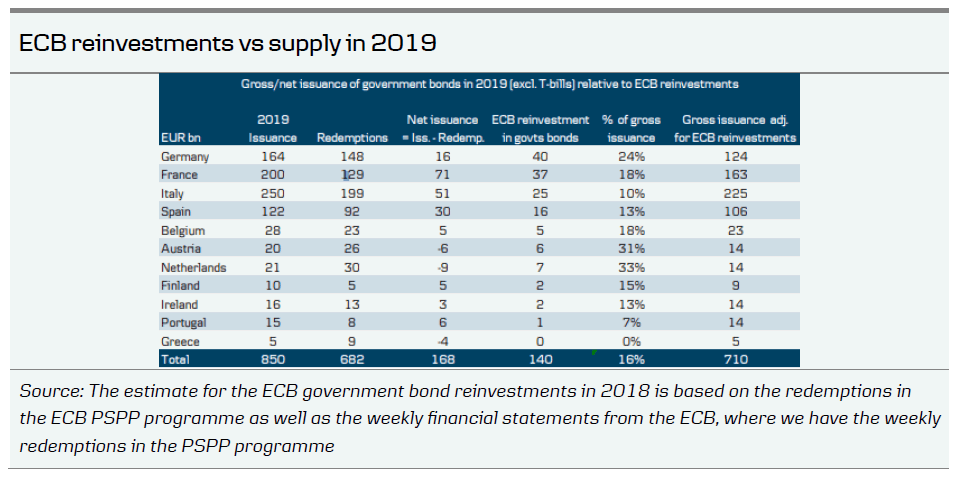
With the conclusion of the APP, we also received the full redemption profile for 2019. PSPP redemptions will total EUR167bn under the PSPP. On Tuesday, we published our EUR FI: guide to Q1 issuance and thoughts on supply in 2019, where we highlighted our expectations for coming EGB net supply (net of QE). We expect EUR140bn (of the EUR167bn in PSPP) will be reinvested in EGBs.
In December, alongside ending its net purchases the ECB published its new guidance on reinvestments. ECB decided to reinvest at least until past the first rate hike and in any case for as long as necessary. Importantly, as a rule reinvestments will be in the jurisdiction where they fall due, but with a gradual adjustment to reduce the cumulative capital key deviations (with no time frame). The cumulated capital key deviations were marginally changed in December, as expected.
With the conclusion of the net asset purchases, we will also discontinue the monthly update in this format and refer readers to the Government Bonds Weekly in particular


USD/JPY Tumbles, Recovery Remains Limited
Key Highlights
- The US Dollar declined more than 500 pips from the 111.40 high against the Japanese Yen.
- There is a major bearish trend line formed with resistance at 109.60 on the 4-hours chart of USD/JPY.
- The US ADP Employment Change in Dec 2018 increased 271K, more than the 178K forecast.
- Today in the US, the nonfarm payrolls figure for Dec 2018 will be released, which is forecasted to rise from 155K to 177K.
USDJPY Technical Analysis
The US Dollar fell significantly from the 113.00 swing high against the Japanese Yen. The USD/JPY pair fell more than 800 pips and broke the 110.00 and 108.00 support levels.
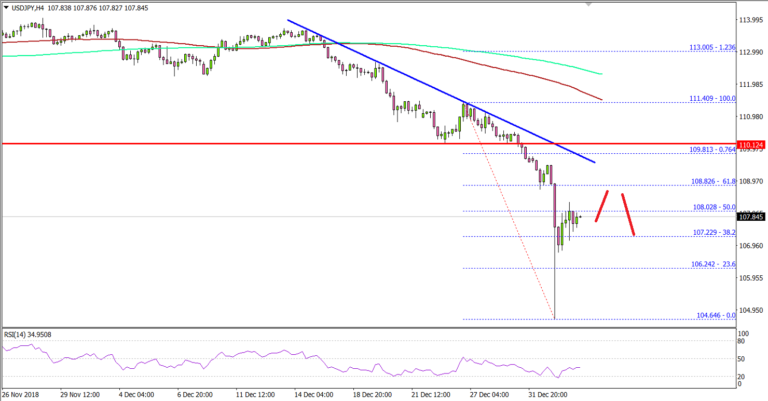
Looking at the 4-hours chart, the pair even broke the 106.00 support level and the 100 simple moving average (red, 4-hours). A new yearly low was formed at 104.64 before the pair started a solid upside correction.
It recovered above the 107.00 resistance and the 23.6% Fib retracement level of the recent decline from the 111.40 high to 104.64 low. On the upside, there are many hurdles for buyers near the 108.50 and 109.00 resistance levels.
Moreover, there is a major bearish trend line formed with resistance at 109.60 on the same chart. Besides, the 61.8% Fib retracement level of the recent decline from the 111.40 high to 104.64 low is also near the 108.80 level.
If there is a break above the 108.80 and 109.00 resistance levels, there could be an upside drift above the 110.00 resistance. On the downside, an initial support is near the 107.00 level, below which the pair may trade towards the 106.20 support level.
Besides, GBP/USD and EUR/USD is recovering nicely, but there are many barriers on the upside for buyers.
Economic Releases to Watch Today
- Euro Zone CPI for Dec 2018 (YoY) (Prelim) – Forecast +1.8%, versus +1.9% previous.
- Euro Zone Core CPI for Dec 2018 (YoY) (Prelim) – Forecast +1.0%, versus +1.0% previous.
- US nonfarm payrolls Dec 2018 – Forecast 177K, versus 155K previous.
- US Unemployment Rate Dec 2018 – Forecast 3.7%, versus 3.7% previous.
- Canada’s Net Employment Change Dec 2018 – Forecast 5.0K, versus 94.1K previous.
- Canada’s Unemployment Rate Dec 2018 – Forecast 5.7%, versus 5.6% previous.
Pressure Grows For US And China To Resolve Trade Dispute
The strong fundamentals of the US economy are starting to show more than a chink in it’s armor, while the PBOC’s recent efforts have done little to stem the recent slump in Chinese data.
The US continues to post robust employment figures, but the rest of the economy is telling a different story. Earlier this morning, the ADP employment report showed private payrolls increased by 271,000, the best increase in almost 2 years. Tomorrow the Non-Farm Payroll is expected to show 180,000 jobs were created in December, up from 155,000 printed in November.
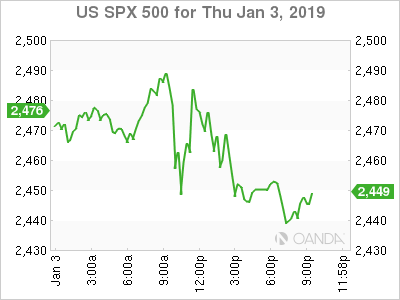
After the New York open, the ISM Manufacturing reading for December dropped to 54.1, the biggest fall since October 2008. US stocks fell sharply lower today and Treasuries continued to rally on both the disappointing data and key warning from Apple.
China has been printing terrible data over the past month and if the trade war does not see more positive steps, the data should deteriorate further.
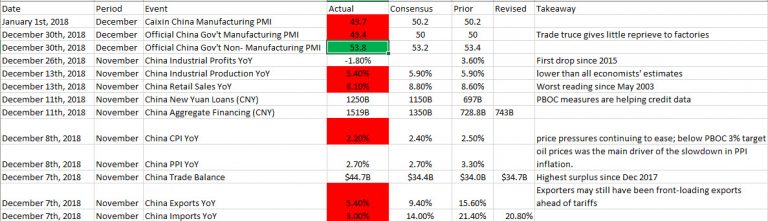
The PBOC began the year by increasing lending to small-medium enterprises (SMEs), basically expanding the criteria of a previously announced RRR cut. The move could increase liquidity by up to CNY400 billion. On the December 21st Work Conference, China’s decision to drop the “neutral” description of its monetary settings signaled adjustments in policy measures could be marginal.
China may have to abandon the wait and see approach with trade negotiations and monetary policy. Expectations should also increase for a RRR cut early this quarter from the PBOC.
President Trump and Fed
When talking about the US, the focus will first fall on President Trump and at a close second is the Fed. The President will need a win and the motivation to put the trade war behind him will be needed for him to have a chance in 2020. The government shutdown is also an issue that he may need to take some concessions on the border wall, in order to move forward and focus on an infra-structure deal.
A key focus for Wall Street is Fed Chair Powell’s stance of Quantitative Tightening (QT) being on auto-pilot. Today Fed’s Kaplan, who will not be a voting member until 2020, provided a willingness to be open-minded about adjusting the Fed’s balance sheet runoff if needed. Wall Street liked that comment and did provide a limited and short-lived bounce. Kaplan, who is a dove, also supports the idea of pausing the tightening cycle until global uncertainties are resolved. The markets will need to hear caution on the domestic economy due to global uncertainties directly from Fed Chair Powell and that the balance sheet runoff is not on auto-pilot. Powell will be speaking on Friday, January 4th at the American Economic Association’s Annual Meeting alongside former Fed Chairs Yellen and Bernanke. The market is no longer pricing rate increases in 2019, but possibly a cut in December now. At the December meeting they lowered 2019 rate hike increases from three to two, but will not address this until the March meeting.
Expectations are growing for both China and the US to become more constructive on trade and accommodative.
Dollar Looks To NFP For Fundamental Strength
The US dollar is mixed against major pairs on Thursday. The Flash crash that hit the currency markets boosted the JPY and the CAD against the USD. The greenback is higher against all other majors ahead of the release of the U.S. non farm payrolls (NFP) on Friday, January 4 at 8:30 am EST. The United States is expected to gain close to 180,000 jobs in December, traders will focus on wage data for clues into inflationary pressures released in the same report. The government shutdown in the US limited insight into the state of American jobs and the NFP will bring a definite light on the employment situation. The U.S. Federal Reserve is expected to hike twice in 2019, but a slowdown in the economy could shift the pace of monetary policy tightening. Fed Chair Jerome Powell will be part of a Fed Central Bank chiefs panel in Atlanta and will have the final word this week on monetary policy.
- US expected to have added 177,000 jobs in December
- US wages forecasted to have gained 0.3 percent
- Canada to have added 6,800 jobs after huge gain in November
Yen Surges After Apple Sends Dollar Plummeting
The USD/JPY lost 1.77 percent on Thursday and 2.56 percent this week as softer US economic indicators have combined with Apple’s warning that it will miss its quarterly sales target due to lower China sales triggered by trade war uncertainty. The Japanese currency was the de facto safe haven for investors with the JPY hitting 8 month highs ahead of the release of the NFP. US employment has been a steady pillar of the recovery after the crisis, but the emphasis has been on wage recovery which has been slower than expected. The Fed under Chair Yellen and then Chair Powell has not been afraid to hike awaiting inflation to catch up, but as political uncertainty is jeopardizing local and global growth the central bank could be forced to pause its normalization plans.
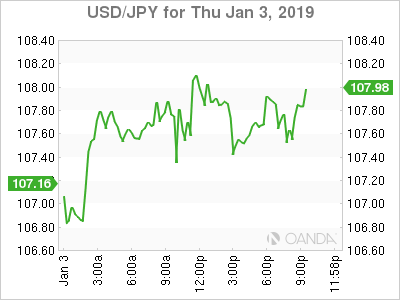
The US dollar advanced against most majors in the past 12 months, but the yen’s safety rating in the last month of the year and the beginning of 2019 have made the currency the preferred destination for investors looking to hedge their USD exposure. The stock market sell off in December trigged a flight to safety. Trade war escalation is not out of the question despite the assurances of China and the US at the G20 and as more US companies start feeling the pain in their bottom line the more urgent it will be for the two nations to restart negotiations.
The NFP report could be a shot in the arm for the US dollar if expectations of 177,000 jobs are met along with a 0.3 percent wage growth component. Chair Powell has been under fire by the Trump administration but has remained steady and transparent with the market lending credibility to the central bank.
Loonie Soars After Flash Crash on Stronger Oil Prices
The USD/CAD lost 1.22 percent on Thursday. The Loonie gained on the dollar after the release of Apple’s announcement of missed revenue projections during the Asian session caused large moves in the forex market. Canadian jobs numbers will be released on Friday alongside the NFP report. There is anticipation for the employment data after the monster 94,100 gain in November. December is a more modest 6.8 forecast, but it would not be unusual to see a correction after such a big gain.
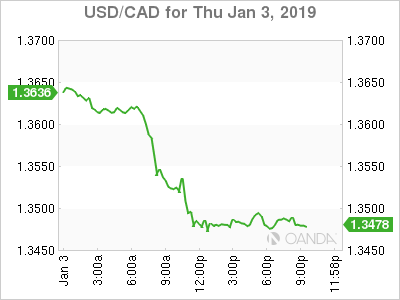
The Canadian dollar touched a two week high on the back of a softer greenback. The ADP private payrolls in the US beat expectations, but the ISM Manufacturing PMI missed to the downside raising more concerns about an economic slowdown despite the index still coming in above 50, which is considered expansionary. The greenback was boosted by the Fed’s willingness to hike rates, and now the CME Fedwatch tools shows investor expectation has switched from rate hikes, to rate cuts in 2019. The Bank of Canada (BoC) will be up first on January 9.
Govenor Poloz kept rates unchanged in December, but as inflation and a more optimistic Fed back then the expectation was for a Canadian interest rate hike in the first quarter. The end of 2018 and the rocky start to 2019 could keep Poloz’s finger off the trigger next week with traders keeping an eye on the results of the Canadian employment report.
Eco Data 1/4/19
[php_everywhere instance="1"]
Dollar lower on data and diving yields, stocks down but no follow through selling
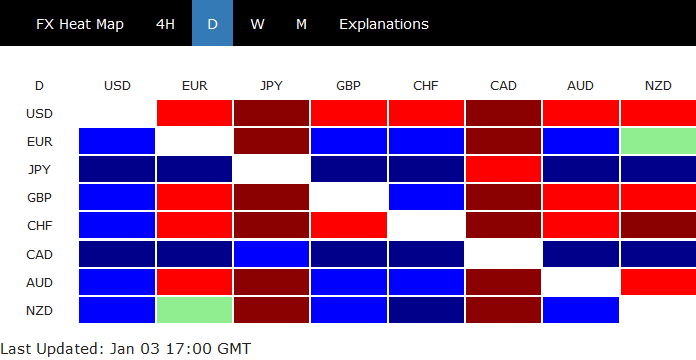
Dollar ignored better than expected ADP employment data. Instead, it responds negatively to ISM manufacturing miss and tumbles broadly in early US session. Additionally, the greenback is also weighed down by dovish comments from Dallas Fed Robert Kaplan, and the free fall in treasury yields.
Dollar is the weakest one for today so far, followed by Swiss Franc. Canadian Dollar over took Yen's place as the strongest as decline in USD/CAD gathers steam.
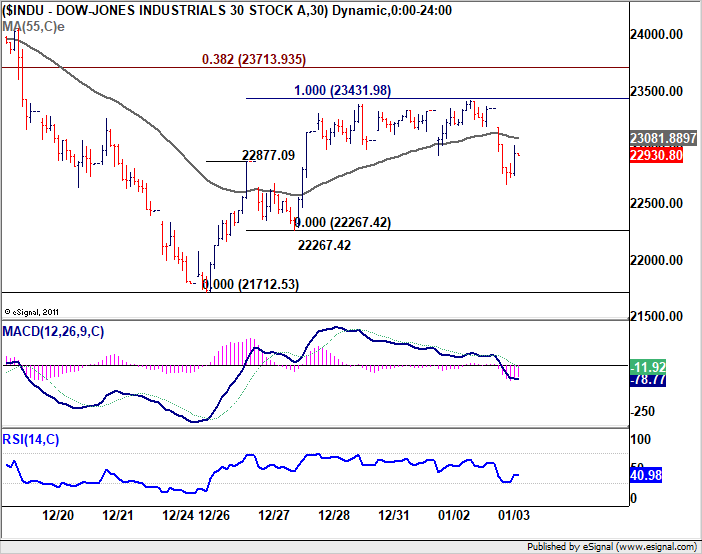
In the stock markets, DOW tumbles sharply to as low as 22668.77 initially on Apple as well as weak manufacturing data. But for now, there is no apparent follow through in selling yet. While we're expect strong resistance between 23431.98/23713.93 to limit upside to complete the corrective rebound from 21712.53, break of 22267.42 is needed to confirm completion of the rebound first.
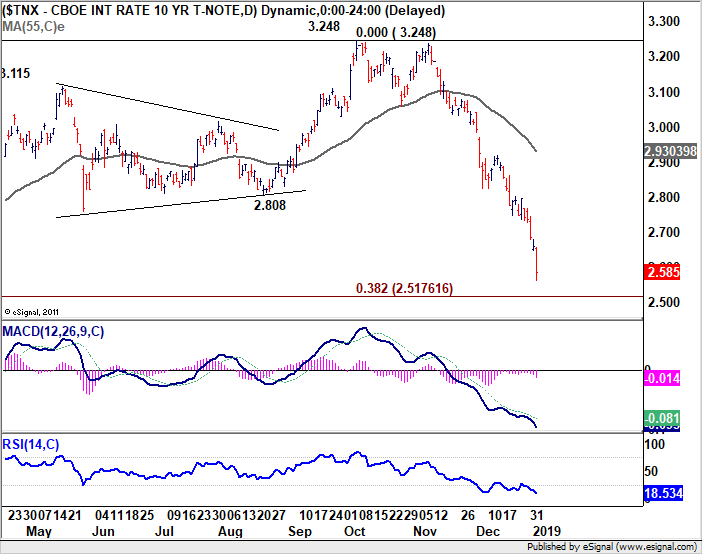
US 10 year yield is now down -0.074 at 2.587 as recent decline accelerates. We're expecting strong support from 2.517 fibonacci level but this view is getting vulnerable. Yield curve inversion is getting more serious with 1-year yield at 2.563, 2-year at 2.411, 3-year at 2.384 and 5-year at 2.340. It looks like it's just a matter of time for 1- to 10-year yield to invert.
White House Hassett: Apple’s sales will recover on successful trade negotiation with China
Chairman of the White House Council of Economic Advisers Kevin Hassett what that "it's not going to be just Apple who would be affected by slowdown in China". But rather "a heck of a lot of U.S. companies that have sales in China that are going to be watching their earnings being downgraded next year until we get a deal with China."
But Hassett added that slowdown "puts a lot of pressure on China to make a deal" with Trump on trade. And, "If we have a successful negotiation with China then Apple's sales and everybody else's sales will recover."
Spot Gold Advances Further on Weaker Dollar / Safe-Haven Demand; Psychological $1300 Barrier in Focus
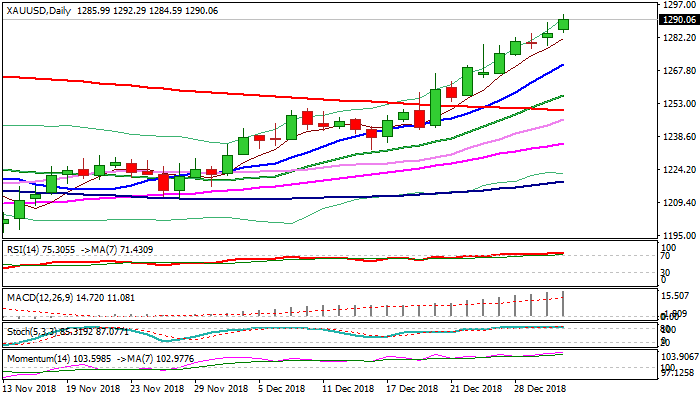
Spot gold reached new high at $1292 on Thursday (the highest since 10 June 2018), in extension of steep ascend, driven by increased safe-haven demand on fears of global growth slowdown and high market volatility.
The yellow metal rose over 2.5% in the first two trading days of the new year, with today’s extension through key barrier at $1286 (Fibo 61.8% of $1365/$1160) and penetration of narrowing weekly cloud (1285/1291), generating bullish signals
Weaker dollar despite much stronger than expected rise in US private employment (ADP report showed increase of 271K in Dec vs 179K f/c) and firmly bullish daily techs, add to gold’s strength.
Bulls look for fresh signal on close above $1286 Fibo barrier to open way for test of psychological $1300 level and possible extension towards $1309/16 (14 Jun 2018 lower high / Fibo 76.4%) on stronger bullish acceleration.
Rising 5SMA offers initial support at $1281 and guards ascending 10SMA pivot ($1270) which is expected to contain dips on overbought daily studies.
Res: 1292; 1300; 1309; 1316
Sup: 1284; 1281; 1274; 1270
Eurozone Inflation Not Going Anywhere; Could Upset ECB Plans
Eurostat will publish its preliminary estimates of Eurozone inflation for December on Friday at 10:00 GMT. The figures are expected to confirm that the European Central Bank made little progress in lifting underling inflation during 2018, putting into question its plans to begin raising interest rates in the final quarter of 2019.
The harmonised consumer price index (CPI) for the euro area is expected to have risen by an annual rate of 1.8% in December. Although this is marginally below November’s 1.9% rate and down from the 2.2% peak seen in October, headline inflation has remained near the ECB’s target of “below, but close to 2%”.
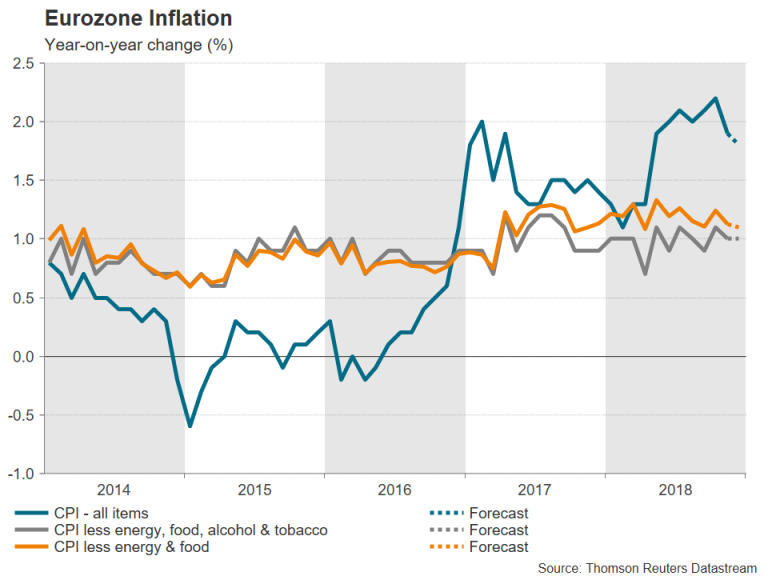
A bigger concern for the ECB though is the trend for underlying inflation. The two measures of core inflation have been stuck in a flat range since 2017 and have yet to demonstrate a sustained move upwards. The annual rate of CPI excluding energy and food is forecast to remain unchanged at 1.1%, while the rate that also excludes alcohol and tobacco is anticipated to hold steady at 1.0%.
If core inflation fails to pick up over the coming months, or worse, starts to edge lower, it would become increasingly hard for the ECB to maintain its existing forward guidance for normalizing policy. The euro could then find it difficult to continue its shallow recovery against the dollar, having slid to a 2-week low of $1.1307 on Thursday.
A negative surprise in the CPI numbers could see the euro falling below immediate support in the $1.1350 area and head towards $1.1325. If this supports also fails, it would become easier for the bears to retest the $1.1307 low, which, if breached, would drag the euro below the medium-term ascending trend line and shift the focus back to the downside.
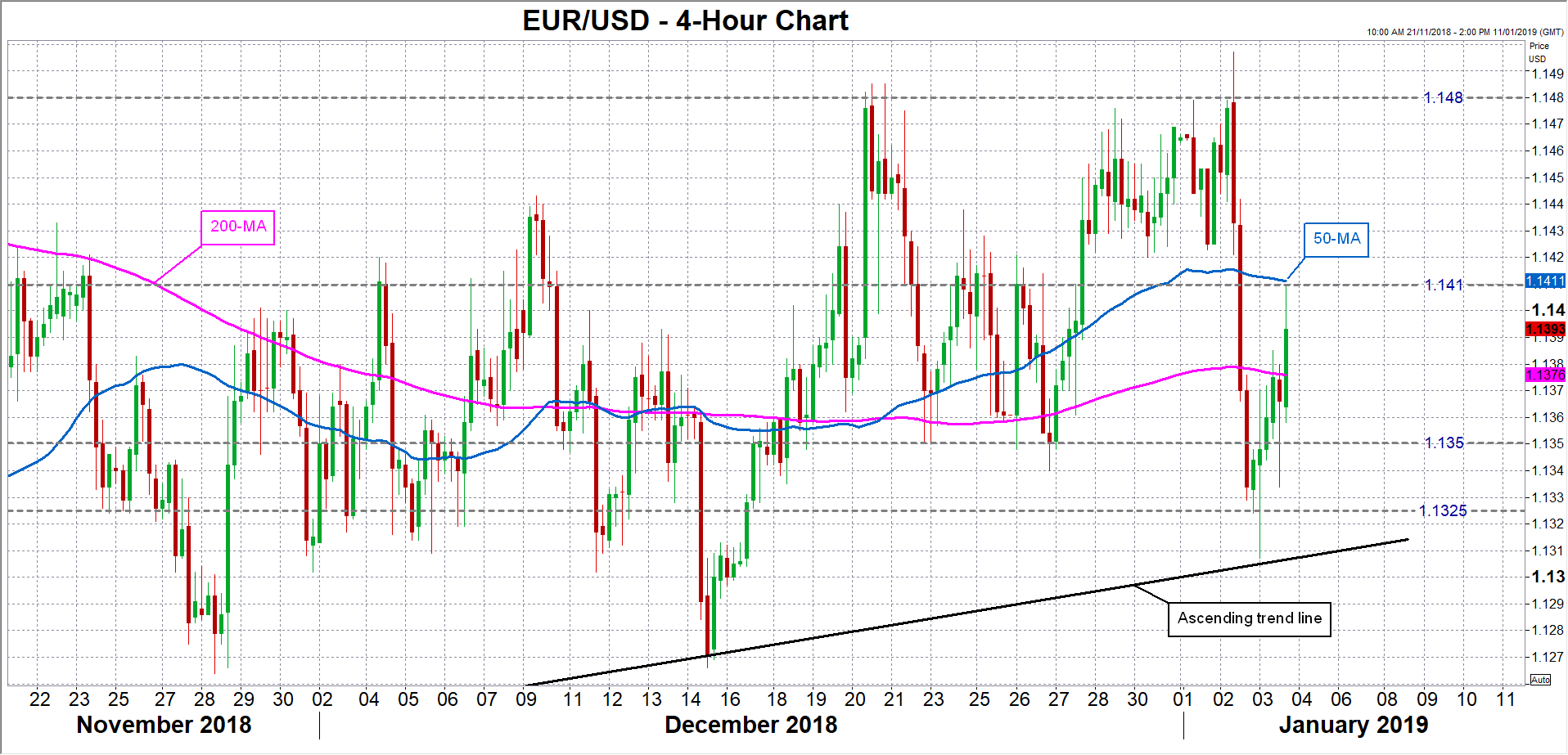
However, if the data shows some build-up of inflationary pressures, the euro may manage to cross above the 50-period moving average around $1.1410, strengthening the current weak upside momentum. A break above this hurdle would make it possible to successfully challenge the next key resistance at $1.1480.
Apple’s Warning Keeps Pressure on Stocks
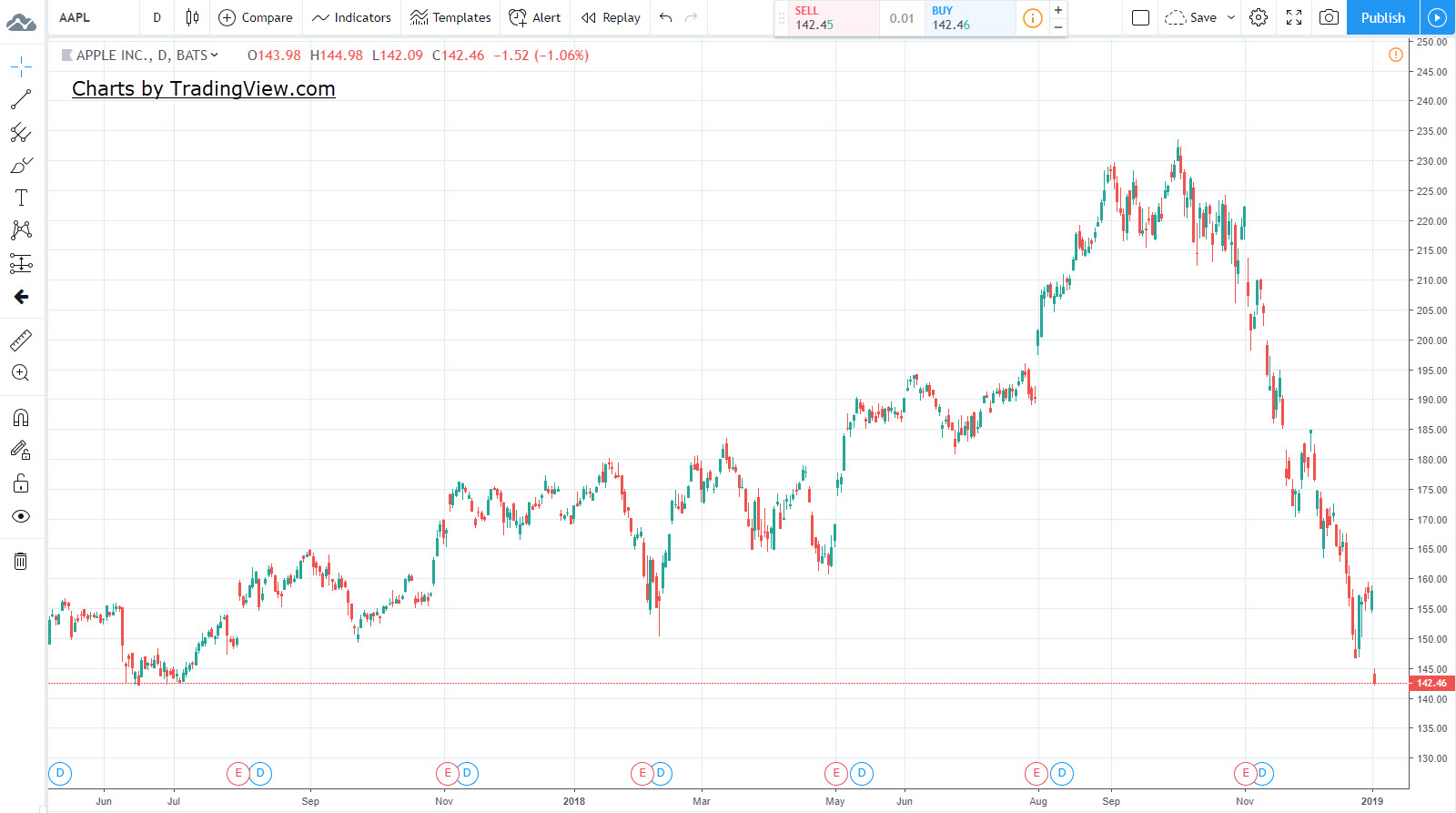
Apple is not a canary in coal mine, the markets are well aware of the global growth slowdown in China. The timing of the news from Apple is somewhat disturbing. The signs were there regarding smartphone buying trends in China, softer Chinese economic data and the strength of the US dollar. Many analysts see the revenue cut, which was the first cut in 15 years, implying a 12 million unit miss and that should have been clearly telegraphed earlier.
Apple is down $15.60, lower by 9.9%, which is the biggest fall since 2013. The Apple warning drove US stocks lower by over 2%, the 10-year Treasury fell 4.6bps to 2.576% which was an 11-month low.
Whether or not this recent decline with Apple will deter long-term investors is still debatable. iPhone growth is decelerating, but other parts of the business is performing well. Apple’s services have been a positive spot of the past few years, averaging 26% annual growth since 2014. The company is still generating $65 billion in free cash flow with a strong yield of 10%. The other key area of focus is the company buyback program. Apple will still have a good earnings per share next quarter because the company continues to exercise its share repurchases. Apple has returned $239 billion to stockholders, they average buying back $20 billion shares a year and have reduced the shares of outstanding shares close to 30%.
Some are comparing Apple to Nokia and are calling to oust CEO Tim Cook. The start of the year is a bad one for Apple and their suppliers, but if we see growth stabilize in China and the dollar weaken, we could see Apple stabilize this year.