

Sample Category Title
European update: Dollar trying to strike back, except vs Yen and Aussie
After the Fed Powell triggered selloff yesterday, Dollar is trying to regain some ground in US session. Nevertheless, it's underperforming both Yen and Aussie. Main focus will turn to minutes of November meeting later in the day. Of particular interest, everyone would like to see how "close" the current interest rate is to neutral, in policymakers mind. That is, did most FOMC members thought interest rates were now "just below" neutral? Or they believe it's "long way from" neutral?
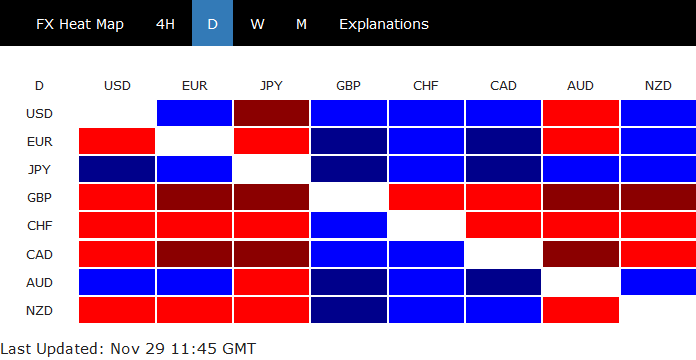
There are some rumors/reports flying around in European session, which don't carry much significance. EU Commissioner Günther Oettinger was quoted by WiWo expecting US auto tariffs to come before Christmas. While Euro trade slightly below Dollar, Yen and Aussie, it's up against all others. We can't really say that Euro drops on tariff worries. (European Commission just denied the report)
Staying in the currency markets, Sterling is the weakest one for today as UK steps closer to parliamentary vote of the Brexit deal. Swiss Franc is the second weakest after data GDP Q3 GDP unexpectedly contracted. Canadian is the third weakest as WTI crude oil drops below 50.
In other markets, major European index trade slightly higher. At the time of writing:
- FTSE is up 0.39%
- DAX is up 0.19%
- CAC is up 0.44%
- German 10 year yield is down -0.0191 at 0.333
- Italian 10 year yield is down -0.0189 at 3.242. Spread stays below 300.
Earlier in Asia
- Nikkei rose 0.39% to 22262.60
- Singapore Strait Times rose 0.48% to 3109.44
- But Hong Kong HSI closed down -0.87% at 26451.03
- Shanghai SSE dropped -1.32% to 2567.44. It's a factor still capping AUD/USD at around 0.7314 resistance.
EUR/USD Skyrockets To 1.1380
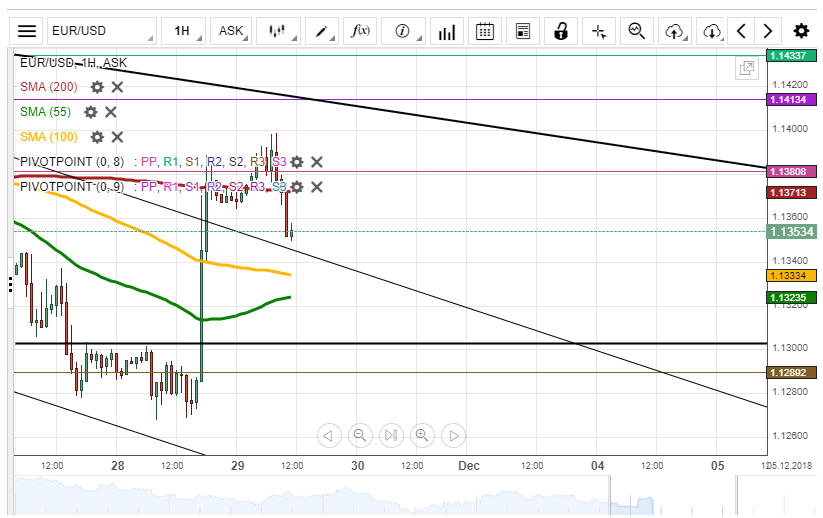
During Wednesday's trading session, the currency exchange pair broke most of the technical indicators to appreciate by 103 pips or 0.91%. During Thursday morning hours, the rate was trading near the weekly pivot point at the 1.1371 mark.
In regards to the near-term future, the currency exchange rate might trade sideways due to a lack of any fundamental news which could affect the rate. Most likely, the rate will be trading between the weekly pivot point at 1.1380 and the monthly pivot point at the 1.1413 during the trading session on Thursday.
However, the European Single Currency could pass through the support of the 200-hour simple moving average to trade at the 1.1340 level during the day.
GBP/USD Slumps To Trade At Previous Level
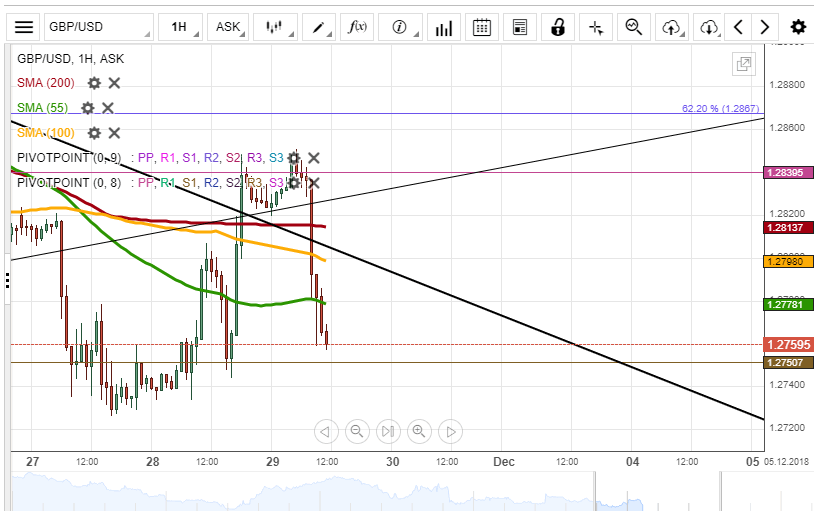
During Wednesday's trading session, the currency exchange rate broke most of the technical indicators to end the trading session at the 1.2818 mark. During Thursday morning hours, the British Pound diminished to trade at the 1.2769 mark.
In regards to the near-term future, most likely, the currency exchange rate might trade sideways to stay between the weekly S1 at 1.2750 and the upper boundary of the descending pattern line. Besides, the weekly S1 at 1.2750 should support the rate during the trading session on Thursday.
However, the British Pound could be resisted by the 100-hour simple moving average to pass through the 55-hour simple moving average and the support of the weekly S1 to trade at 1.2700 level.
USD/JPY Will Nudge
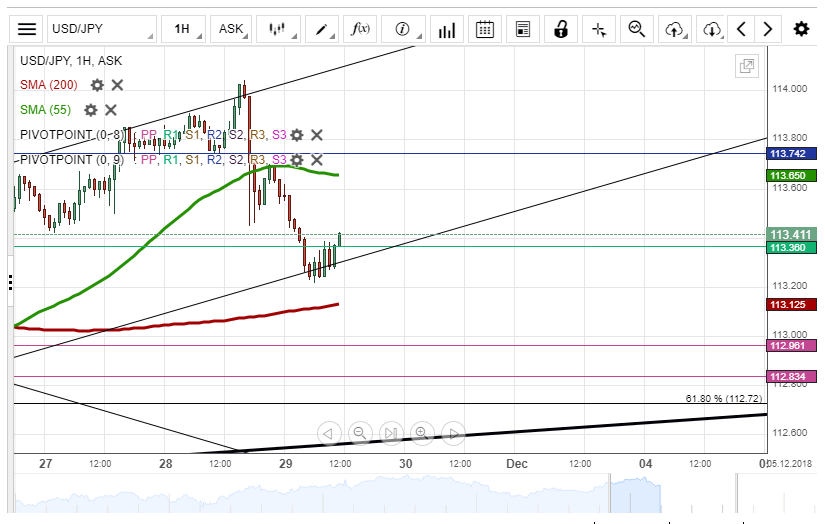
During Wednesday's trading session, the currency exchange rate passed through the support of the weekly R2 to end the trading session at the 113.54 mark. On Thursday morning, the US Dollar depreciated to pass through the support of the weekly R1 to trade at the 113.27 mark.
In regards to the near-term future, in all likelihood, the US Dollar will trade between the weekly R1 at 113.36 and the weekly R2 at 113.74. Moreover, the 55-hour SMA should resist the currency pair to prevent the rate from surge above the weekly R2.
On the other side, the resistance of the weekly R1 at 113.36 could push the US Dollar to trade outside of the previously drawn pattern.
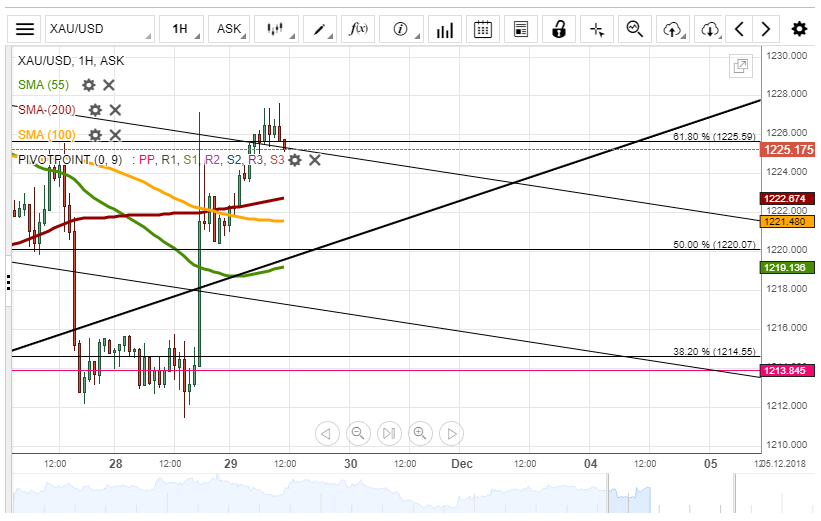
XAU/USD Recovers To Trade At 1,226.00
During Wednesday's trading session, the yellow metal broke most of the technical indicators to appreciate by 1096 pips or 0.90 %. During Thursday morning hours, the gold broke the resistance of the 61.80% Fibo to trade at the 1,226.42 mark.
In regards to the near-term future, most likely, the yellow metal will trade sideways to stay at the 1,228.00 level on Thursday. Besides, the 61.80% Fibonacci retracement level should support the gold during the day.
However, the yellow metal could pass through the support of the 61.80% Fibonacci retracement level to trade at the 1,222.00 level.
EUR/USD – Euro Steady Ahead Of German CPI, Fed Minutes
EUR/USD has ticked lower in the Thursday session, after posting considerable gains on Wednesday. Currently, the pair is trading at 1.1354, down 0.11% on the day. On the release front, German Preliminary CPI is expected to post a gain of 0.2%, unchanged from the previous release. German unemployment change came in at -16 thousand, better than the forecast of -10 thousand. It’s a busy day for U.S. indicators. Core PCE Price Index and Personal Spending are expected to post gains of 0.2% and o.4%, respectively. Unemployment claims are forecast to drop to 221 thousand and the Federal Reserve releases the minutes of its November policy meeting. On Friday, the eurozone releases CPI Flash Estimate and the U.S. publishes Chicago PMI. As well, the G-20 begins a 2-day summit in Argentina.
The U.S. dollar was broadly lower on Wednesday, courtesy of surprisingly dovish remarks from Fed Chair Jerome Powell. The Fed chair said that the current rate levels of 2-2.5 percent is “just below” the neutral range. This is in sharp contrast to Powell’s remarks just last month, when he said that rates were “a long way from neutral”. The backtrack is likely due to the change in economic conditions in recent weeks – GDP has been slowing, the stock markets are down and oil prices have fallen. The Fed may have decided that this required an easing up on rate hikes in 2019, and Powell delivered this message to the markets. Only a few months ago, there was talk of ‘a rate hike each quarter’ in 2019, but now, some analysts are predicting only one or two hikes next year. Despite Powell’s dovish remarks, the odds of a December rate have not diminished, which stand at 79%, according to the CME Group.
German confidence indicators slowed in November, and that could be bad news for the German and eurozone economies. GfK consumer climate dropped to 10.4 points, its weakest level since May 2017. Earlier in the week, Ifo Business Climate dropped to 102.3, missing the forecast of 102.0 points. This marked a 4-month low. The ongoing U.S-China trade war has hurt the German export sector, as German companies that export to both the U.S. and China are now facing higher tariffs. Germany’s economy posted a rare decline in the third quarter, with a contraction of 0.2%. Another problem is lower eurozone growth, as weak economic activity in the third quarter appears to be the story in the fourth quarter. As well, the looming departure of Britain from the European Union and the crisis over the Italian budget have weighed on business and consumer confidence levels in German.
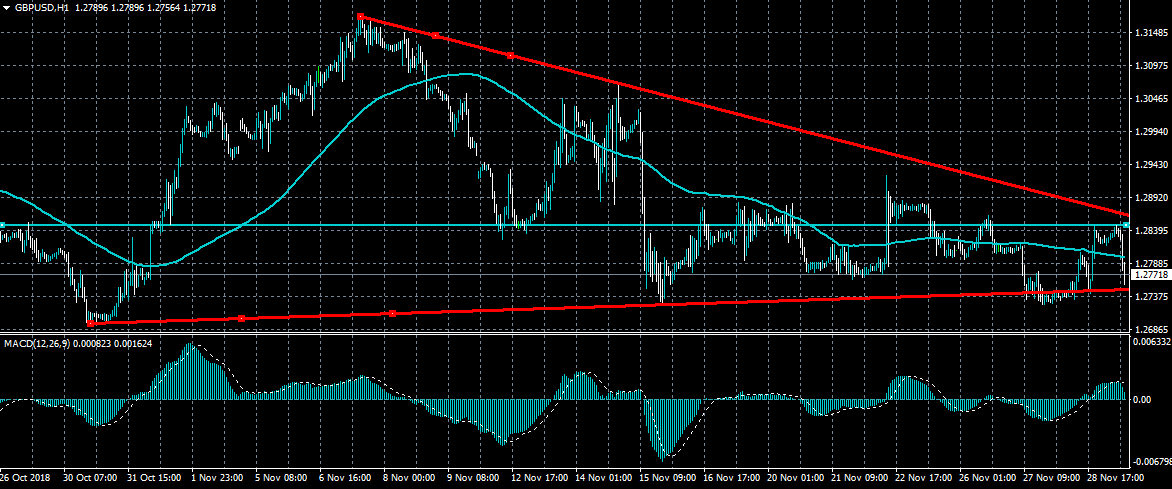
GBPUSD Moving Back To Trendline Support
The British pound has reversed earlier gains against the US dollar, after being strongly rejected from the 1.2848 resistance level during the European trading session. The GBPUSD pair is fast approaching key trendline support, located at the 1.2750 level. If the current down move fails to break below the 1.2750 support level, buyers will likely try to move price back above the 1.2800 resistance level.
The GBPUSD pair is strongly bearish while trading below the 1.2750 level, key technical support is found at the 1.2695 and 1.2662 levels.
If the GBPUSD pair trades above the 1.2800 level, key resistance is found at the 1.2848 and 1.2860 levels.
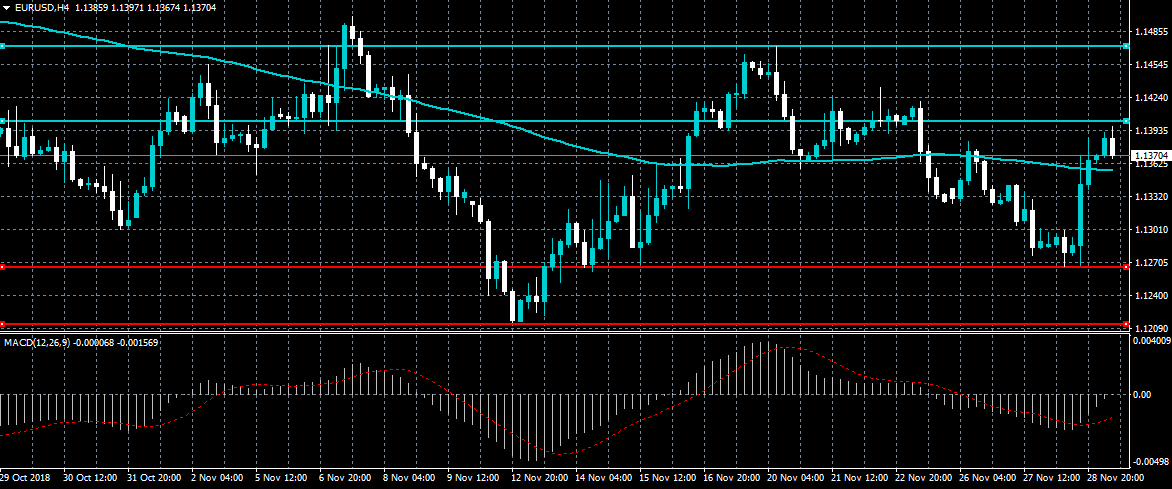
EURUSD Softens After Weak CPI Data
The euro has started to move lower against the US dollar, after weaker than expected CPI inflation data releases from the German and Spanish economies. The EURUSD pair is also under mild technical selling pressure, after a failed attempt to break above the 1.1400 resistance level. Traders now look to key inflation data from the United States economy and the release of the FOMC Meeting Minutes.
The EURUSD pair is only bullish while trading above the 1.1382 level, key technical resistance remains at the 1.1400 and 1.1470 levels.
If the EURUSD pair continues to trade below the 1.1382 level, sellers may test the 1.1330 and 1.1300 levels.
US 30 Index Crosses Above 200-Day SMA, Bullish Long-Term Outlook Still At Play
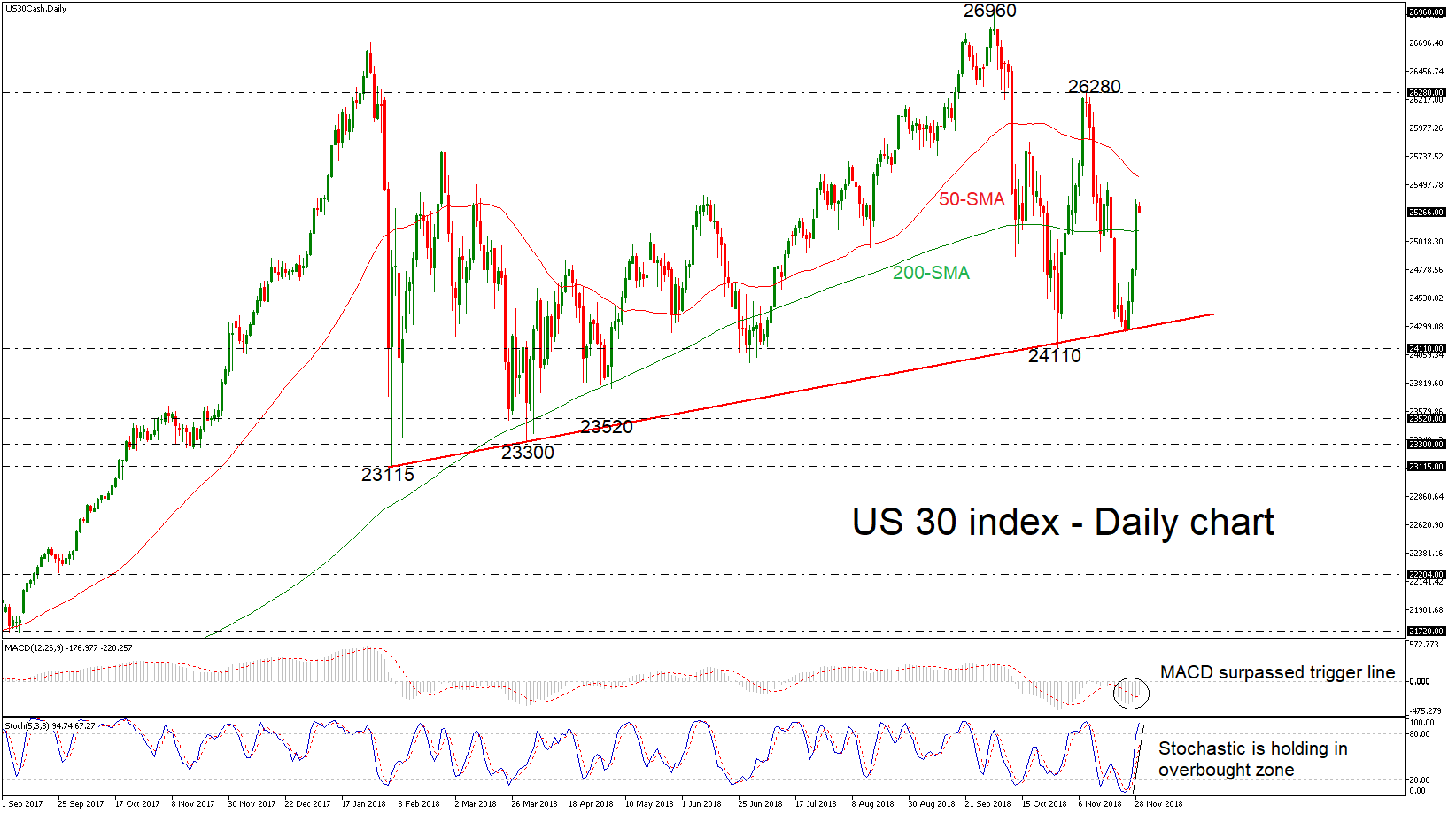
The US 30 index has been heading sharply higher over the previous three days, finding strong support on the rising trend line. The price successfully surpassed the 200-simple moving average (SMA) in the daily timeframe and the momentum indicators are endorsing the bullish view. The MACD oscillator turned higher above its signal line, while the %K line of the stochastic oscillator stands in the overbought zone.
Should the price continue to head north, the 50-day SMA is the next obstacle to look for around 25,557. A jump above these lines would bring the focus to the 26,280 resistance, taken from the peak on November 8.
Alternatively, it would be interesting to see whether the rising trend line can stop the bearish movements again. If this is not the case, the market could slip until the next barrier at the 24,110 support, which stands marginally below the diagonal line. Even lower, the 23,520 could act as a major support as well, confirming the scenario for more losses, identified by the trough on May 3.
Broadly, the index has been following an upward move and only a daily close below the rising trend line could increase the chances for a bearish tendency.
Nasdaq Is Ready To Launch BTC Futures In The Nearest Future
Nasdaq — the world's second-largest stock exchange — plans to roll out bitcoin futures in the first quarter of 2019 through a partnership with investment management firm VanEck. Gabor Gurbacs, VanEck's director of digital asset strategy, said the companies will launch a variety of bitcoin derivatives in early-2019, including a “regulated crypto 2.0 futures-type contract.”
Gurbacs made the announcement during the Consensus: Invest conference in New York on November 27, CNBC reported. In a follow-up tweet, Gurbacs said Nasdaq and VanEck will unveil “transparent, regulated and surveilled digital asset products, such as bitcoin futures contracts.”
Nasdaq has been working with the Commodity Futures Trading Commission (CFTC) to make sure it fully complies with any lingering regulatory concerns the country's main swaps regulator has. Gurbacs confirmed that VanEck also “ran a few extra miles working with the CFTC to bring about new standards for custody and surveillance.”
Meanwhile, Nasdaq's rival ICE (Intercontinental Exchange) — the parent company of the New York Stock Exchange — is also charging ahead with its own plans to launch a physically-settled bitcoin futures product in the first quarter of 2019. Separately, VanEck is still trying to win approval from the Securities and Exchange Commission to launch the first-ever bitcoin ETF. In August 2018, the SEC rejected nine bitcoin ETF applications, dashing the hopes of crypto evangelists like the Winklevoss twins, who have repeatedly failed to win SEC approval.