

Sample Category Title
EURUSD Update – Elliott Wave Analysis
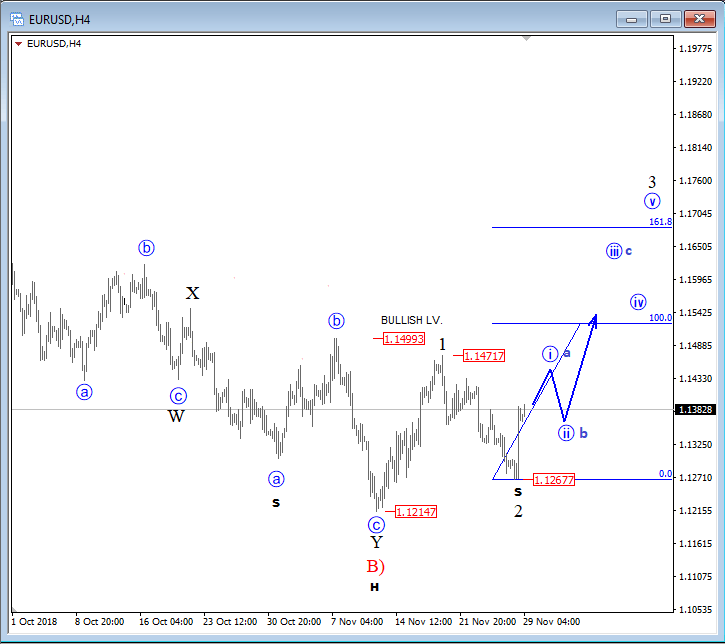
EURUSD has turned nicely higher yesterday from the 1.127 level which was quite expected as we were tracking a minor pullback labelled as wave 2. Current rally we now labelled as start of a new, five-wave cycle which can unfold in the next couple of days or weeks, labelled as wave 3 that can take price towards the 1.170 region. That said a break above the 1.150 region will confirm more upside.
EURUSD, 4h
GBP/USD Is Trapped In A Range Breakout Is Needed
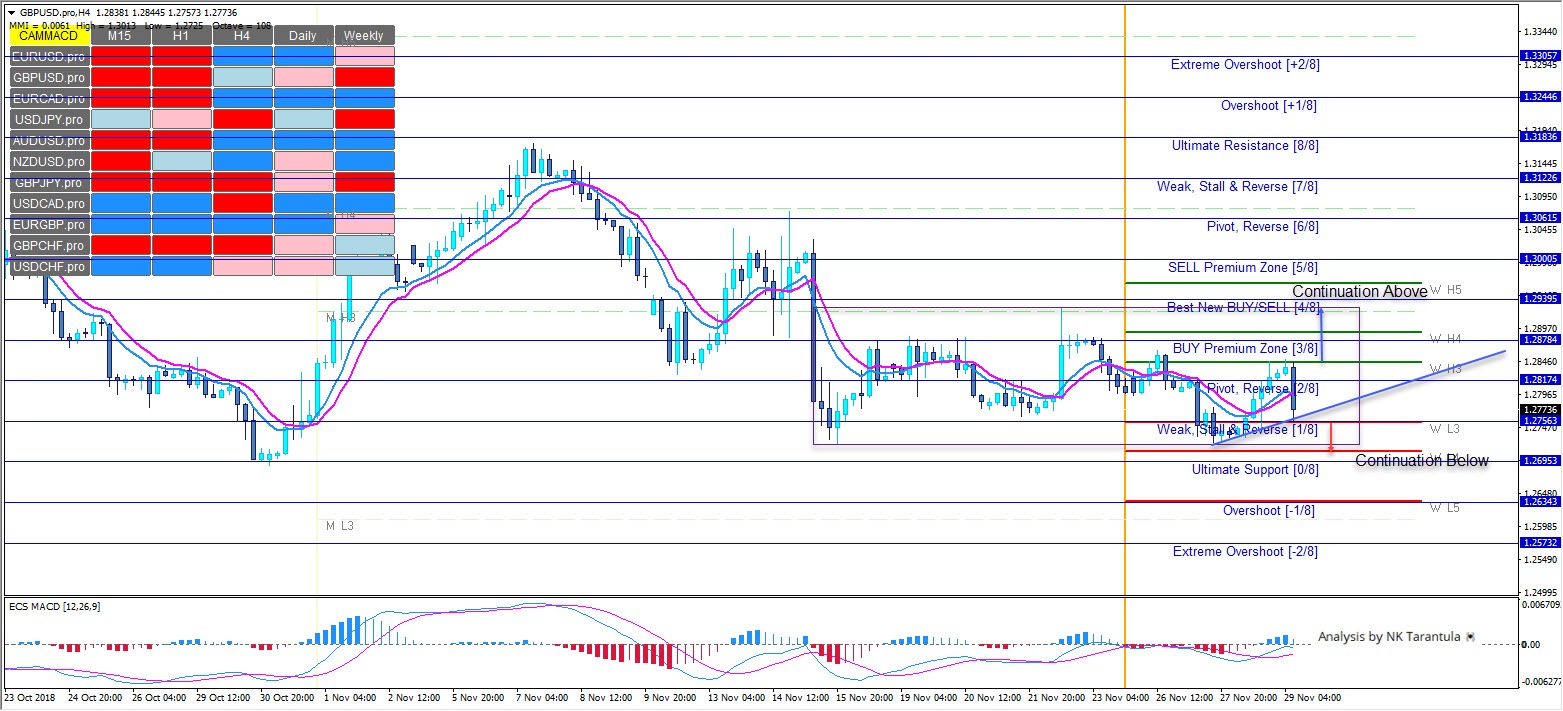
The GBP/USD is still technically bearish if we look through Weekly to H4 time frame. However, the broader look shows us the major range that has existed throughout since the mid-November. The Cable rejected the W H3 – 1.2850 and dropped towards 1.2755. However a break below 1.2750 is needed for next target – 1.2695. Only a 4h close below that level will spur now moment sellers towards the next confluence target at 1.2634.
On the contrary, another bounce above 1.2880 and the pair will look to reach 1.2940. Above 1.2940 next target is 1.3000 followed by 1.3060. As I said, the headline risk is huge and be careful, protect your profits with profit stops once the price has made it to any of these levels.
European GDP Data Disappoints In Session, Regional Inflation Data Slows From Month Ago Levels
Notes/Observations
- Both Swiss and Swedish economies register a surprise contraction for Q3 GDP; France YoY reading revised lower in its 2nd reading
- European inflation data decelerates (Spain misses expectations, German States lower compared to Oct readings
- WTI falls below $50/barrel ahead of next week OPEC meeting
Asia:
- BOJ Masai reiterated stance that must maintain current extremely easy policy to ensure positive momentum for prices is not disrupted. BOJ must closely look at cost and benefits of its policy from various perspectives
- Japan Oct Retail Sales M/M: 1.2% v 0.4%e; Retail Trade Y/Y: 3.5% v 2.7%e
Europe:
- Bank of England (BOE) on Brexit Scenarios: GBP currency could fall 15% in disruptive and 25% in disorderly Brexit; Response to any form of Brexit takes won't be automatic, reiterates moves could be in either direction
- BOE Financial Stability Report and Stress test results: All 7 banks, building society passed 2018 stress test. Contingent capital used at Lloyds, Barclays to pass under full implementation of new IFRS 9 accounting rule. No bank needed to strengthen capital position as a result of the stress test. Test showed sector could withstand a no-deal, no transition Brexit
- UK PM May to postpone announcement about NHS extra £20B per year in funding citing cites 'Brexit' rebellion forces. PM was expected to argue that only by backing her deal could Members of parliament (MPs) guarantee delivering the extra £394M/week to hospitals and General Practitioners
- UK Govt formally published its parliamentary format for Brexit debate. Debates to be held on December 4th, 5th, 6th, 10th and 11th with up to six amendments selected on the final day. oting on Brexit debate in UK Parliament to begin 14;00 ET (1900 GMT) on Tuesday, Dec 11
Americas:
- FED Chief Powell prepared remarks noted that the policy rate was just below estimates of neutral. Saw a great deal to like about the US economy. No preset policy path; paying very close attention to data ( INSIGHT: These remarks contrast to Powell's characterization in early October when he said "we are a long way from neutral at this point, probably."
- US Trade Rep Lighthizer: China had yet to offer meaningful proposals; Chinese policies on auto tariffs were egregious. To look at all available tools to equalize US auto tariffs on China vehicles to levels charged by China
Macro
- (US) United States: Fed Chairman Powell put a significant bid back under stocks after fine tuning his now less hawkish take on the proximity of the Funds rate to neutrality to "just below" from "a long way from." There were other dovish hints, reiterating that policy was "not on a pre-set course" and the Fed plans to "pay close attention to the data." He also downplayed risks in stock valuations, which he didn't see as excessive.
- (CH) Switzerland: Q3 GDP unexpectedly contracted -0.2% q/q, against expectations for an expansion of 0.4%. Weakness was due to both industrial and services sectors, as well as domestic demand and foreign trade. It highlights the dependence of the Swiss economy on developments elsewhere in Europe, but as in Germany also a sign that the manufacturing sector has limited capacity left while global trade tensions are starting to show up in weaker export numbers.
- (DE) Germany: Jobless numbers fell -17K m/m in November, pushing jobless rate down to a fresh record low of 5.0%. Confidence data may be signalling a slowdown in economic activity, but also continue to report a pronounced skills shortage even as headline GDP rates wane. This will continue to underpin a gradual rise in wage growth that is leaving Draghi sufficiently optimistic on underlying inflation trends to keep the ECB on track to phase out QE.
SPEAKERS/FIXED INCOME/FX/COMMODITIES/ERRATUM
Equities
- Indices [Stoxx600 +0.30% at 358.60, FTSE +0.55% at 7,042.75, DAX +0.38% at 11,341.42, CAC-40 +0.58% at 5,012.16, IBEX-35 +0.12% at 9,114.00, FTSE MIB +0.04% at 19,122.50, SMI +0.80% at 8,969.50, S&P 500 Futures -0.30%]
- Market Focal Points/Key Themes: Equities European Indices trade higher across the board although off the earlier high following sharp gains in Wallstreet overnight and mixed Asian Indices. US futures point to a lower open fading some of the gains seen yesterday. On the corporate front Deutsche Bank shares trade lower after the company confirmed its offices in Germany had been raided as part of a money laundering probe. On the earnings front Green King trades higher after positive results; Soitec, Britvic and Go-Ahead Group among others trading higher after earnings and trading updates. Daily Mail Group is a notable decliner after a decline in profits and Revenue. On the M&A front, Intu drops over 30% after a consortium pulled its offer for the company after uncertainty around current macro environment. Elsewhere UK major banking names trade slightly higher after passing the BoE stress test. Looking ahead notable earners include Tech Data Corp, TD Bank as well as retailers Express, Abercrombie, Dollar Tree and Build a Bear among others.
- Consumer discretionary: Sixt [SIX2.DE] +3% (Sixt denies reports of alleged interest to buy Hertz), Thomas Cook [TCG.UK] +3% (final earnings), Unilever [UNA.NL] -0.5 (CEO to retire), Go-Ahead Group [GOG.UK] +4% (trading update), Greene King [GNK.UK] +7% (earnings), Daily Mail [DMGT.UK] -10% (earnings), Britvic [BVIC.UK] +4% (earnings)
- Financials: Deutsche Bank [DBK.DE] -2.5% (Frankfurt HQ being searched by prosecutors as part of a money laundering probe), Royal Bank of Scotland [RBS.UK] +1%, Lloyds Banking Group [LLOY.UK] +1%, Barclays [BARC.UK] +1% (Bank of England stress test), Swiss Life [SLHN.CH] +2% (investor day; share buyback program), Intu Properties [INU.UK] -35% (Confirms withdrawal of possible offer; Provides corporate update)
- Industrials: Safran [SAF.FR] +3% (investor day), Höegh LNG Holding [HLNG.NO] +12% (earnings; post-earnings comments)
- Technology: Wirecard [WDI.DE] +3% (offers unique fully digital global loyalty solution), Soitec [SOI.FR] +10.5% (earnings)
Speakers
- Italy PM Conte said to be seeking to cut budget deficit target to 2.2%; 'optimistic' country could avoid Excessive Debt Procedure
- Italy Dep PM Salvini replied 'NO' when responding to a question on whether the Government is in talks with the EU on cutting 2019 budget deficit more than 0.2%
- EU could give Italy more time before the Excessive Debt Procedure (EDP) (**Reminder: On Nov 27th reports circulated that the EU Commission would open disciplinary action against Italy over its debt before Christmas (Dec 19th said to be the date)
- Northern Ireland's DUP Leader Foster: Believed that there was a better way forward than PM May's Brexit deal
- EU Brexit Chief Negotiator Barnier stated that negotiations were over; time for UK to ratify the Brexit deal; was the only possible deal
- UK PM May: UK should be ready for no deal Brexit if parliament defeats the Govt bill. Confirmed Dec 11th as the parliament vote on Brexit. Says EU has made it clear that this was the deal
- Norway Central Bank (Norges) Dep Gov Matsen: History shows that we must be prepared for deep and prolong declines in markets. In a crisis there would be no place to hide for a large global fund like Norway's sovereign wealth fund
- China Commerce Ministry (MOFCOM) spokesperson Gao Feng: Hoped that the US and China could reach a practical results in talks
- Philippines Finance Min Dominguez: to proceed with planned oil tax increase for 2019.
- Philippines Budget Sec Diokno stated that Oil tax decision was subject to President Duterte's approval. He added that the central bank saw CPI on target in 2019 and 2020 even with oil tax
- Philippines Central Bank (BSP) Gov Espenilla: Sees CPI returning to target by 2019-20 period
Currencies/Fixed Income
- USD having difficulty finding traction. US 10-year Note yield moves below the 3.00% level for 1st time since mid-Sept in the aftermath of Fed Chair Powell speech in NY on Wed where he noted that Fed funds rate was "just below" neutral - Softer European growth and inflation data failed to push the EUR currency lower but did dent any upside momentum for the time being. France Q3 GDP YoY reading was revised lower in its 2nd reading while Spain misses expectations for its Nov CPI and various German States saw lower readings compared to Oct
- GBP/USD saw its early gains evaporate as dealers pushed back their call for the next BOE rate hike by a few months into May 2020 over concerns that the upcoming Brexit vote would not pass parliament. The BOE did present its on Brexit Scenarios on Wed and noted that the GBP currency could fall 15% in disruptive and 25% in disorderly Brexit - A surprise contraction in Sweden Q3 GDP initial put the brakes on a Dec rate hike by the Riksbank. EUR/SEK was higher by 0.3% at 10.30 area
Economic Data
- (NL) Netherlands Nov Producer Confidence Index: 7.2 v 5.9 prior
- (ZA) South Africa Oct M3 Money Supply Y/Y: 6.0% v 7.0%e; Private Sector Credit Y/Y: 5.8% v 6.4%e
- (CH) Swiss Q3 GDP Q/Q: -0.2% v +0.4%e (1st contraction in 3 1/2 years); Y/Y: 2.4% v 2.9%e
- (NO) Norway Oct Credit Indicator Growth Y/Y: 5.7% v 5.6%e
- (TR) Turkey Nov Economic Confidence: 73.7 v 67.5 prior
- (FR) France Q3 Preliminary GDP (2nd reading) Q/Q: 0.4% v 0.4%e; Y/Y: 1.4% v 1.5%e
- (FR) France Oct Consumer Spending M/M: 0.8% v 0.6%e; Y/Y: 0.9% v 0.9%e
- (DE) Germany Nov CPI Saxony M/M: -0.1% v +0.2% prior; Y/Y: 2.1% v 2.5% prior
- (ES) Spain Nov Preliminary CPI M/M: -0.1% v +0.1%e; Y/Y: 1.7% v 2.0%e
- (ES) Spain Nov Preliminary CPI EU Harmonized M/M: -0.2% v 0.0%e; Y/Y: 1.7% v 2.0%e
- (ES) Spain Oct Adjusted Retail Sales Y/Y: +1.8% v -0.4% prior; Retail Sales YY: +4.7% v -3.1% prior
- (SE) Sweden Q3 GDP Q/Q: -0.2% v +0.2%e; Y/Y: 1.6% v 2.2%e
- (DE) Germany Nov Unemployment Change: -16K v -10K; Unemployment Claims Rate: 5.0% (record low) v 5.1%e
- (DE) Germany Nov CPI Brandenburg M/M: -0.1% v +0.1% prior; Y/Y: 1.8% v 2.3% prior
- (DE) Germany Nov CPI Hesse M/M: 0.3% v 0.1% prior; Y/Y: 2.1% v 2.2% prior
- (DE) Germany Nov CPI Bavaria M/M: 0.3% v 0.2% prior; Y/Y: 2.7% v 2.8% prior
- (IS) Iceland Nov CPI M/M: 0.2% v 0.6% prior; Y/Y: 3.3% v 2.8% prior
- (UK) Oct Net Consumer Credit: £0.9B v £1.0Be; Net Lending: £4.1B v £3.5Be
- (UK) Oct Mortgage Approvals: 67.1K v 64.5Ke
- (UK) Oct M4 Money Supply M/M: 0.7% v -0.3% prior; Y/Y: 1.0% v 0.9% prior; M4 Ex IOFCs 3M Annualized: 2.3% v 1.1% prior
- (DE) Germany Nov CPI North Rhine Westphalia M/M: 0.3% v 0.1% prior; Y/Y: 2.4% v 2.4% prior
- (ZA) South Africa Oct PPI M/M: 1.4% v 0.8%e; Y/Y: 6.9% v 6.3%e
- (EU) Euro Zone Nov Business Climate Indicator: 1.09 v 0.96e; Consumer Confidence (final reading): -3.9 v -3.9e; Economic Confidence: 109.5 v 109.1e; Industrial Confidence: 3.4 v 2.5e; Services Confidence: 13.3 v 13.1e
- (BR) Brazil Nov FGV Inflation IGPM M/M: -0.5% v -0.5%e; Y/Y: 9.7% v 9.7%e
- (PT) Portugal Nov Consumer Confidence: -1.8 v -1.1 prior; Economic Climate Indicator: 2.3 v 2.4 prior
Fixed Income Issuance
- (DK) Denmark sold total DKK5.78B in 3-month and 6-month Bills
- (IT) Italy Debt Agency (Tesoro)sold total €4.25B vs. €3.25-4.25B in 5-year and 10-year BTP Bonds
- Sold €2.0B vs. €1.5-2.0B indicated range in 2.45% Oct BTP bonds; Avg Yield: 2.35% v 2.58% prior; Bid-to-cover: 1.34x v 1.48x prior
- Sold €2.25B vs. €1.75-2.25B indicated range in 2.8% Dec 2028 BTP bonds; Avg Yield: 3.24% v 3.36% prior; Bid-to-cover: 1.41x v 1.49x prio
Looking Ahead
- (PT) Portugal Parliament Final Vote on 2019 Budget
- (BE) Belgium Nov CPI M/M: No est v 0.7% prior; Y/Y: No est v 2.8% prior
- (BR) Brazil Oct Central Govt Budget Balance (BRL): No est v -23.0B prior
- 05:30 (HU) Hungary Debt Agency (AKK) to sell 12-month bills
- 05:30 (PL) Poland to sell Bonds
- 06:00 (IL) Iceland Oct Unemployment Rate: No est v 4.0% prior
- 06:00 (PT) Portugal Oct Retail Sales M/M: No est v -1.7% prior; Y/Y: No est v 1.3% prior
- 06:00 (BR) Brazil Oct National Unemployment Rate: 11.7%e v 11.9% prior
- 06:00 (CA) Canada Nov CFIB Business Barometer: No est v 60.5 prior
- 06:30 (CL) Chile Central Bank Traders Survey
- 08:00 (RU) Russia Gold and Forex Reserve w/e Nov 23rd: No est v $459.3B prior
- 08:00 (DE) Germany Nov Preliminary CPI M/M: 0.2%e v 0.2% prior; Y/Y: 2.4%e v 2.5% prior
- 08:00 (DE) Germany Nov Preliminary CPI EU Harmonized M/M: 0.2%e v 0.1% prior; Y/Y: 2.3%e v 2.4% prior
- 08:10 (UK) Baltic Dry Bulk Index
- 08:30 (US) Oct Personal Income: 0.4%e v 0.2% prior; Personal Spending: 0.4%e v 0.4% prior; Real Personal Spending (PCE): 0.2%e v 0.3% prior
- 08:30 (US) Oct PCE Deflator M/M: 0.2%e v 0.1% prior; Y/Y: 2.1%e v 2.0% prior
- 08:30 (US) Oct PCE Core M/M: 0.2%e v 0.2% prior; Y/Y: 1.9%e v 2.0% prior
- 08:30 (US) Initial Jobless Claims: 220Ke v 224K prior; Continuing Claims: 1.66Me v 1.668M prior
- 08:30 (CA) Canada Q3 Current Account Balance: -$11.8Be v -$15.9B prior
- 08:30 (US) Weekly USDA Net Export Sales
- 10:00 (US) Oct Pending Home Sales M/M: 0.5%e v 0.5% prior; Y/Y: -2.8%e v -3.4% prior
- 10:00 (MX) Mexico Central Bank (Banxico) Nov Minutes
- 10:30 Weekly EIA Natural Gas Inventories
- 12:30 (NO) Norway Central Bank (Norges) Gov Olsen in Oslo
- 14:00 (US) FOMC Nov Minutes
- 14:00 (US) Fed's Evans (non-panel, dove) on panel
- 15:00 (US) Oct Agriculture Prices Received: No est v -4.6% prior; Prices Paid: No est v 2.3% prior
WTI Oil Outlook: WTI Break Below Psychological $50 Support For The First Time In 13 Months
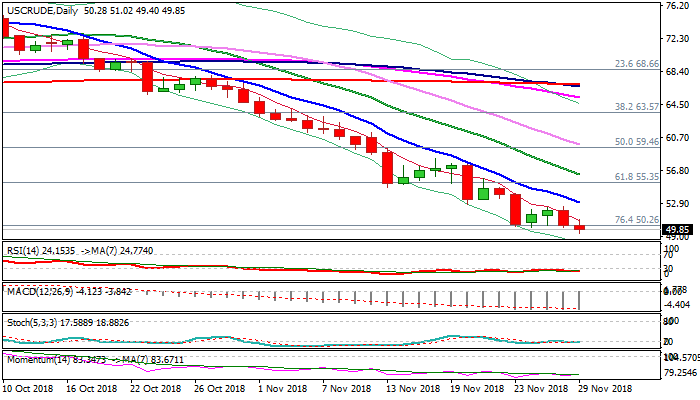
WTI oil eventually broke below psychological $50 support and hit new 2018 lows on Thursday, in extension strong fall previous day, generating strong signal of continuation of larger downtrend which took a breather above $50 pivot.
The overall sentiment remains firmly bearish and so far, there were no factors that could more significantly impact bears.
Rising fears on global oversupply and projections which see lower demand in 2019, along with concerns about escalation of trade conflict, keep oil prices under strong pressure.
Comments that OPEC and Russia may start reducing the output in order to stabilize global oil market, showed mild and short-lived impact and traders expect to get more clues about the action on week’s cartel’s meeting.
Focus turns on tomorrow’s G20 meeting in Argentina, with important events for oil being Trump/Xi meeting regarding trade conflict, as well as meeting between presidents of the US and Russia.
US President Trump favors lower oil prices, while Russia and Saudi Arabia want to push oil prices higher.
Sustained break below $50 support would be strong bearish signal for traders, as bears broke below 50% of 2016/2018 $26.04/$76.88 rally and could extend towards next key support at $45.46 (Fibo 61.8% of $26.04/$76.88).
Falling 10SMA (currently at $53.04) which tracks descend since early Oct, marks pivotal resistance and only firm break here would sideline bears.
Res: 50.00, 50.29, 51.02, 52.53
Sup: 49.40, 49.10, 48.58, 47.65
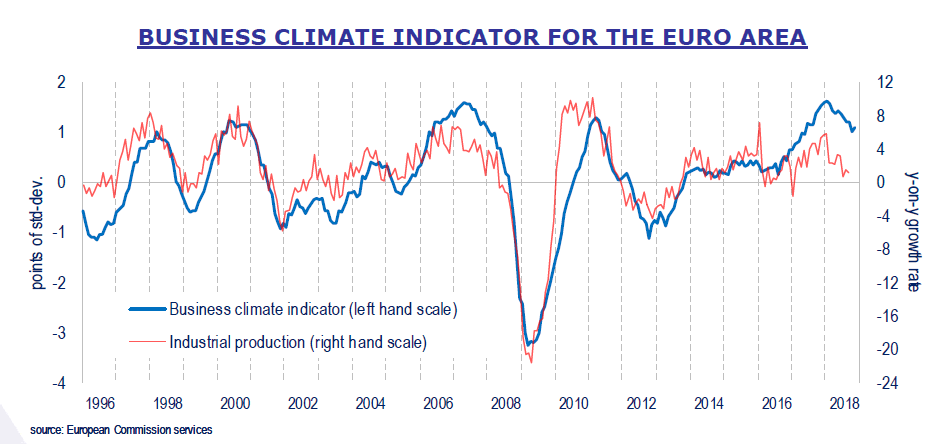
Eurozone business climate improved, economic confidence dropped less than expected
Eurozone (EA19) business climate improved to 1.09 in November, up from 1.01 and beat expectation of 0.96.
Eurozone economic confidence dropped to 109.5, down from 109.7 but beat expectation of 109.0. Industrial confidence rose to 3.4, up from 3.0 and beat expectation of 2.3. Services confidence was unchanged at 13.3, above expectation of 13.0. Consumer confidence was finalized at -3.9.
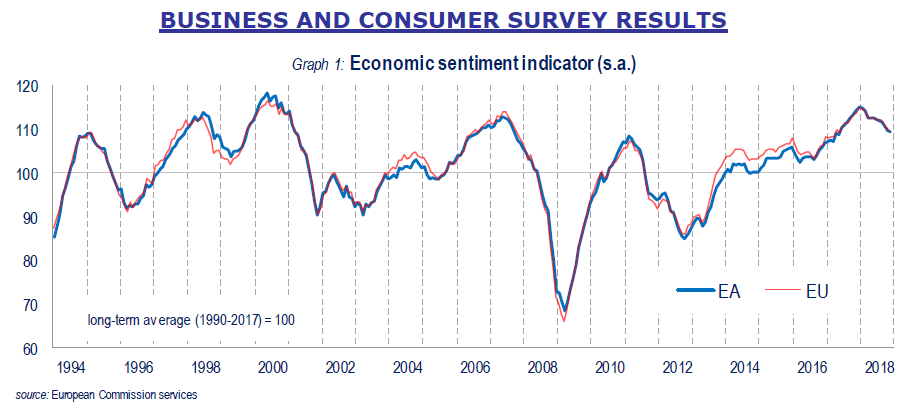
Also release in European session, German unemployment dropped -16k in November. Unemployment rate dropped 0.1% to 5.0% in October. French GDP rose 0.4% qoq in Q3, unrevised. UK mortgage approvals rose 1k to 67k in October. UK M4 money supply rose 0.7% mom in October.
Markets Bounce Back On Powell Comments
Markets are trading on a more upbeat note after yesterday's rally, although US futures are slightly in the red on the back of some early profit taking.
There remains a number of very real risk for the markets heading into the end of the year - be it trade wars, higher interest rates, Brexit or Italy, just to name some - but yesterday's rally will be very encouraging to investors. Stock markets will continue to be vulnerable to negative shocks in the near future but as we head into December, the so-called Santa rally may well be on the cards.
Powell clarifies position after October backlash
The release of the FOMC minutes from earlier this month has been somewhat overshadowed by Chairman Powell's comments on Wednesday, in which he sought to clarify his position on future interest rate moves. Powell sent markets into a frenzy at the start of October when he claimed "we're a long way from neutral" and may go beyond, forcing investors to re-evaluate just how many more hikes there'll be, how soon and how damaging they thought it would be.
While I don't believe the position of the Fed has changed, I think the attention these comments received – not to mention the criticism he personally has taken – have seen him quickly mature in the role and it will be reflected in his future statements. They clearly highlighted why policy makers go to such lengths to ensure their comments won't be misinterpreted, something that was evident in yesterday's remarks.
Traders will now turn their attention to the various pieces of data that will be released prior to the open on Wall Street. US inflation, income and spending numbers will be of interest, all of which are expected to once again paint a healthy picture for the US economy. Inflation continues to hover around the Fed's target – giving credibility to its policy of tightening in recent years – which income and spending numbers remain strong.
EU Barnier: The Brexit deal on table is the only deal possible
EU chief Brexit negotiator Michel Barnier told the EU parliament today that given the "high degree of complexity of all the issues surrounding the UK's withdrawal, the orderly withdrawal treaty that is on the table is the only deal possible". And he added that "this is now the moment of ratification".
Barnier also said "It's not a question of winners and losers because Brexit is a lose-lose. There is no added value". And "I am convinced we will be able to work together for a real and unprecedented partnership."
Separately, UK Prime Minister Theresa May continued her brainwashing rhetorics today. She said told a parliamentary committed, "the timetable is such that actually some people would need to take some practical steps in relation to no deal if the parliament were to vote down the deal on the 11th of December."
The Analytical Overview Of The Main Currency Pairs
The EUR/USD currency pair
Technical indicators of the currency pair:
Prev Open: 1.12864
Open: 1.13678
% chg. over the last day: +0.71
Day's range: 1.13824 – 1.13975
52 wk range: 1.1299 – 1.2557
Yesterday, EUR/USD was showing aggressive purchases. USD is weakened against the EUR after the release of the weak economic stats and statements by the head of the Federal Reserve. EUR/USD quotes grew by more than 100 points. At the moment, the local support and resistance levels are 1.13700 and 1.14000. Positions should be opened from these levels. Quotes have a tendency to grow further.
The news feed on 29.11.2018:
Unemployment Change in Germany (EU) – 10:55 (GMT+2:00);
Pending Home Sales (US) – 17:00 (GMT+2:00);
FOMC Minutes Release (US) – 21:00 (GMT+2:00).
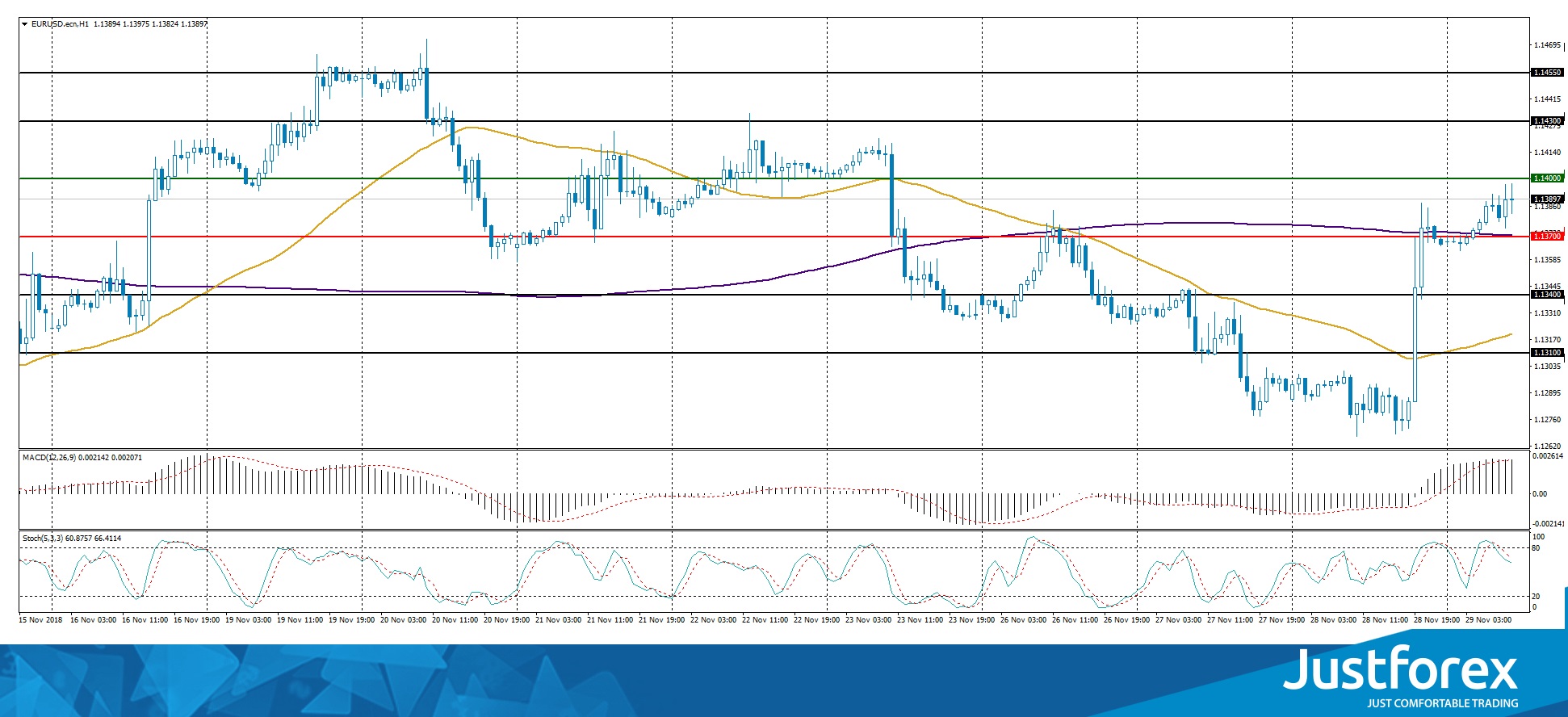
Indicators point to the power of buyers: the price has fixed above 50 MA and 200 MA.
The MACD histogram is in the positive zone but below the signal line, which gives a weak signal to sell EUR/USD.
Stochastic Oscillator is in the neutral zone, the %K line is below the %D line, which indicates the bearish sentiment.
Trading recommendations
Support levels: 1.13700, 1.13400, 1.13100
Resistance levels: 1.14000, 1.14300, 1.14550
If the price fixes above 1.14000, the EUR/USD quotes can grow further. The movement is tending to 1.14300-1.14550.
Alternatively, the EUR/USD can fall toward 1.13400-1.13100.
The GBP/USD currency pair
Technical indicators of the currency pair:
Prev Open: 1.27415
Open: 1.28235
% chg. over the last day: +0.56
Day's range: 1.27790 – 1.28345
52 wk range: 1.2662 – 1.4378
Yesterday, GBP/USD market was in a bullish mood. The quotes have grown by 80 points. Currently the quotes are descending and testing the 1.27750 support. The resistance is at 1.28300. Positions should be opened from the key levels, the quotes can descend further.
Today we do not expect any publication of important economic reports from the UK.
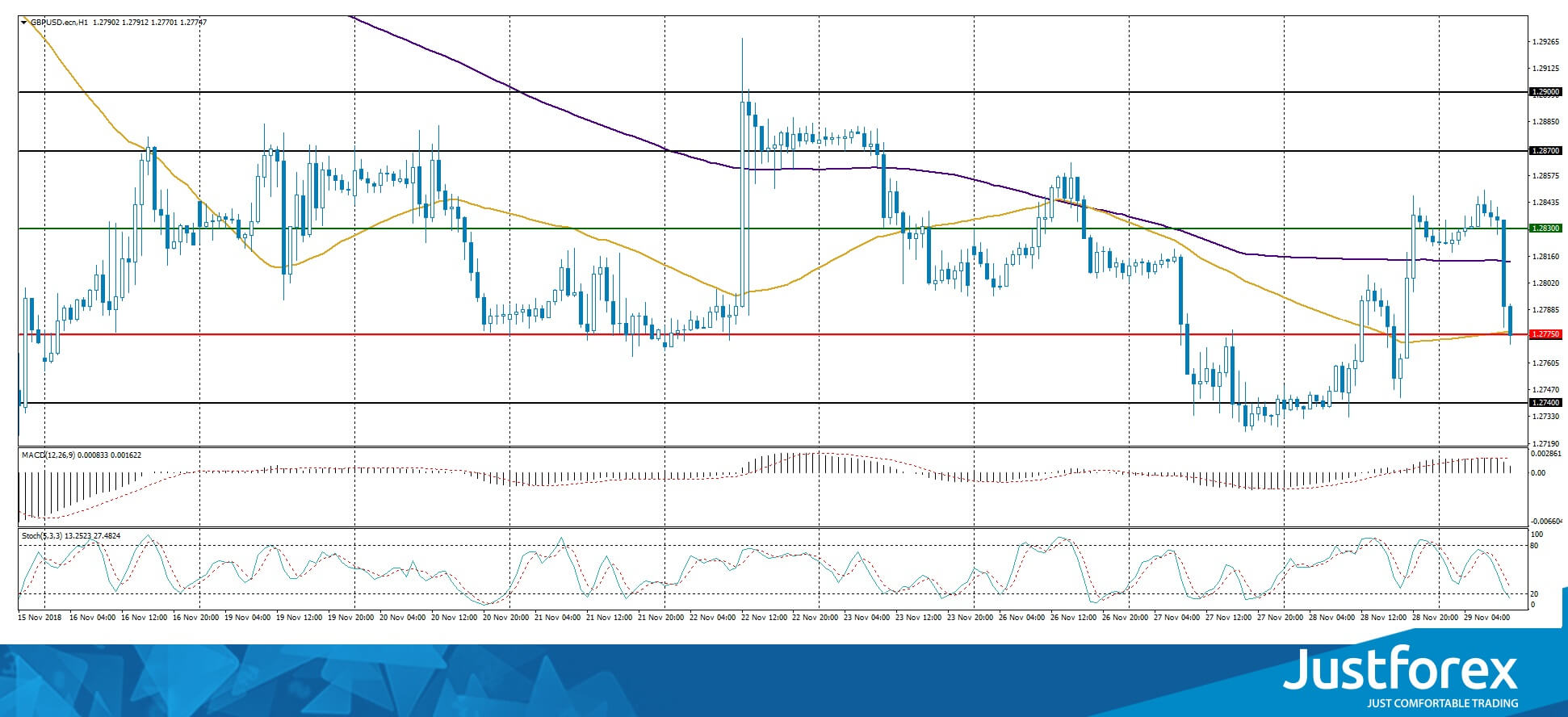
Indicators do not provide precise signals: the price is being traded between 50 MA and 200 MA.
The MACD histogram is in the positive zone, but below the signal line, which gives a weak signal to buy GBP/USD.
Stochastic Oscillator is in the neutral zone, the %K line has is below the %D line, which indicates a bearish sentiment.
Trading recommendations
Support levels: 1.27750, 1.27400
Resistance levels: 1.28300, 1.28700, 1.29000
If the price fixes below the mirror support level of 1.27750, a further drop in the GBP/USD quotes is expected. The movement is tending to 1.27400-1.27000.
Alternatively, GBP/USD can correct to the round level of 1.28300-1.28500.
The USD/CAD currency pair
Technical indicators of the currency pair:
Prev Open: 1.32922
Open: 1.32725
% chg. over the last day: -0.14
Day's range: 1.32533 – 1.32723
52 wk range: 1.2248 – 1.3387
Yesterday the USD/CAD market was in a bearish mood. At the moment the picture is ambiguous. The quotes are moving sideways. The local support and resistance are 1.32500 and 1.32850. Positions should be opened from these levels. Also, keep an eye on the oil quotes` dynamic.
The news feed on the economy of Canada is calm.
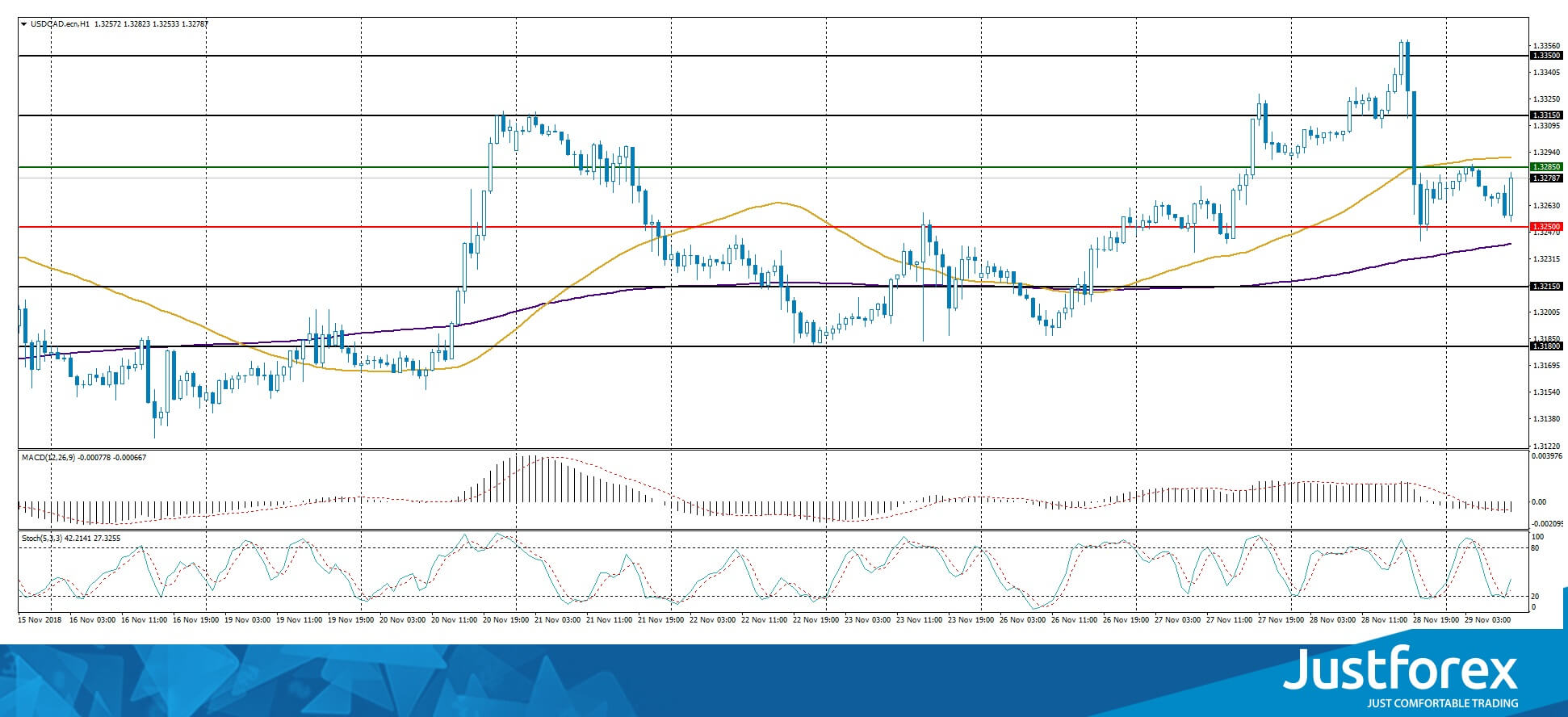
Indicators do not provide precise signals, the price is being traded between 50 MA and 200 MA.
The MACD histogram is in the negative zone, below the signal line, which gives a strong signal to sell USD/CAD.
The Stochastic Oscillator is in the neutral zone, the %K line is above the %D line, which indicates a bullish sentiment.
Trading recommendations
Support levels: 1.32500, 1.32150, 1.31800
Resistance levels: 1.32850, 1.33150, 1.33500
If the price fixes above the support level of 1.32500, you should consider selling USD/CAD. The movement is tending to 1.32150-1.31800.
Alternatively, the price fixes above 1.32850 and you should look for the market entry points to open long positions. The movement will tend toward 1.33150-1.33500.
The USD/JPY currency pair
Technical indicators of the currency pair:
Prev Open: 113.766
Open: 113.672
% chg. over the last day: -0.19
Day's range: 113.327 – 113.375
52 wk range: 104.56 – 114.74
USD/JPY is in a downward trend. The local support and resistance are 113.200 and 113.450. The quotes can descend further. You should keep an eye on the 10-year yield of the US Treasury bonds.
Publication of important economic reports from Japan is not planned.
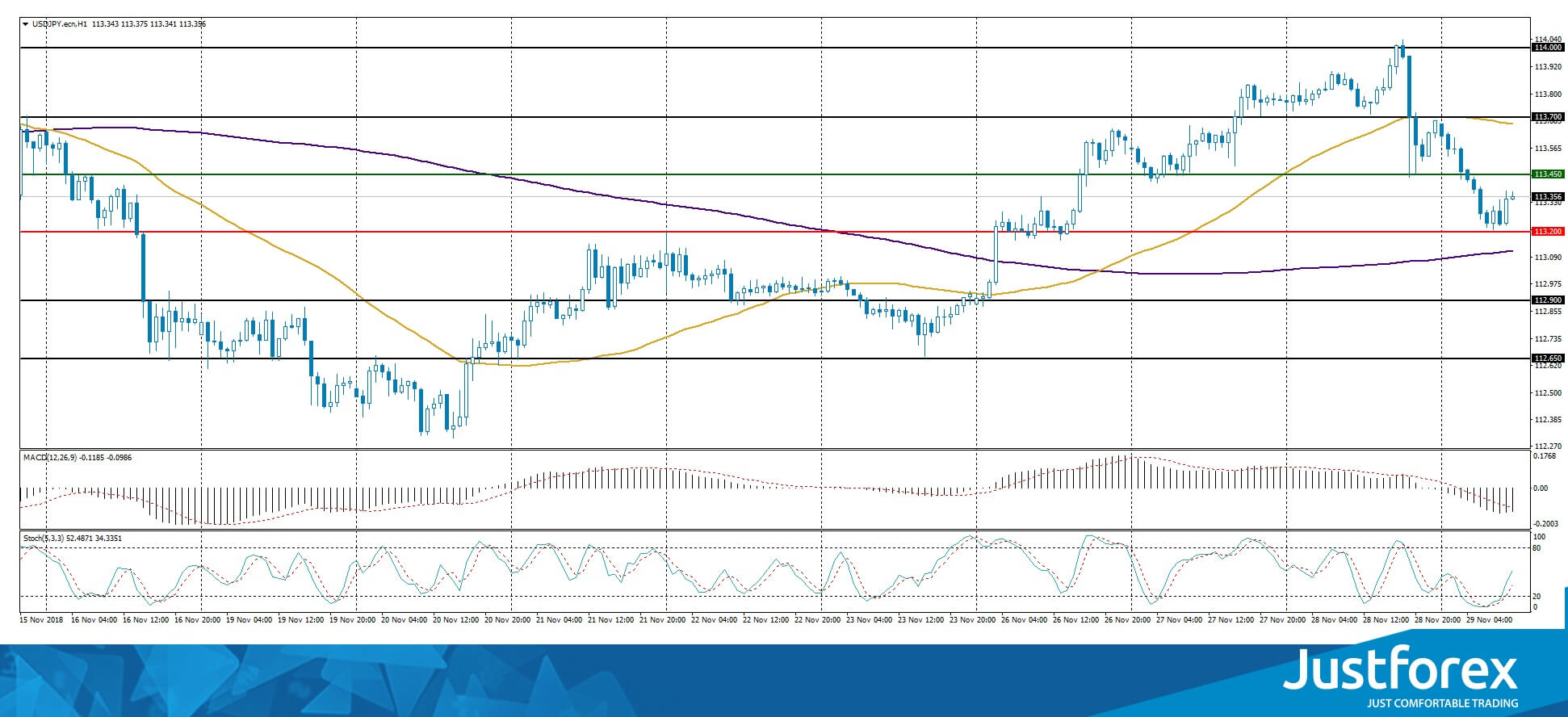
Indicators do not provide precise signals, the price has fixed between 50 MA and 200 MA.
The MACD histogram is in the negative zone, below the signal line, which gives a strong signal to sell USD/JPY.
Stochastic Oscillator is in the neutral zone, the %K line is above the %D line, which indicates the bullish sentiment.
Trading recommendations
Support levels: 113.200, 112.900, 112.650
Resistance levels: 113.450, 113.700, 114.000
If the price fixes below the local support of 113.200, further growth of the USD/JPY quotes is expected. The movement is tending to 112.900-112.650..
An alternative may be the USD/JPY currency pair growth to 113.700-114.000.
Loonie Turns To Canadian Q3 GDP To Halt Slide
The Canadian dollar has slid about 4% since the beginning of October on the back of the sell-off in crude oil – Canada's biggest export earner. The currency's weakness comes despite a mostly solid run of economic indicators out of Canada in recent months, which has allowed the Bank of Canada to pursue a monetary tightening path. Investors will therefore be watching Friday's third quarter GDP release, due at 13:30 GMT, for clues as to how soon the next BoC rate hike can be delivered.
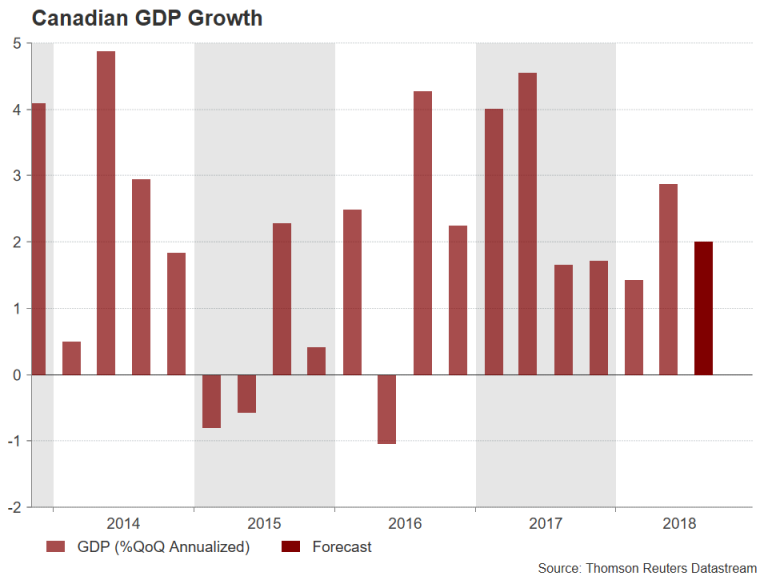
Canada's economy grew by an annualized 2.9% during the second quarter, picking up some steam after three straight quarters of below 2% growth. The strong growth rebound that accompanied the recovery in oil prices that began in 2016 appears to have moderated and GDP growth in the third quarter is expected to have eased again to an annualized rate of 2.0%. However, the BoC has signalled it will continue to raise interest rates as the economy is operating close to full capacity and sees the risks to inflation being to the upside.
The Bank of Canada's next meeting is on December 5 and most market participants are not expecting any change to the overnight rate, currently at 1.75%. According to overnight index swaps, the next rate hike is not priced in until the March 2019 meeting. But the odds for an earlier move could start to rise if the GDP numbers come in above consensus forecasts and incoming data after that, particularly inflation, is on the strong side.
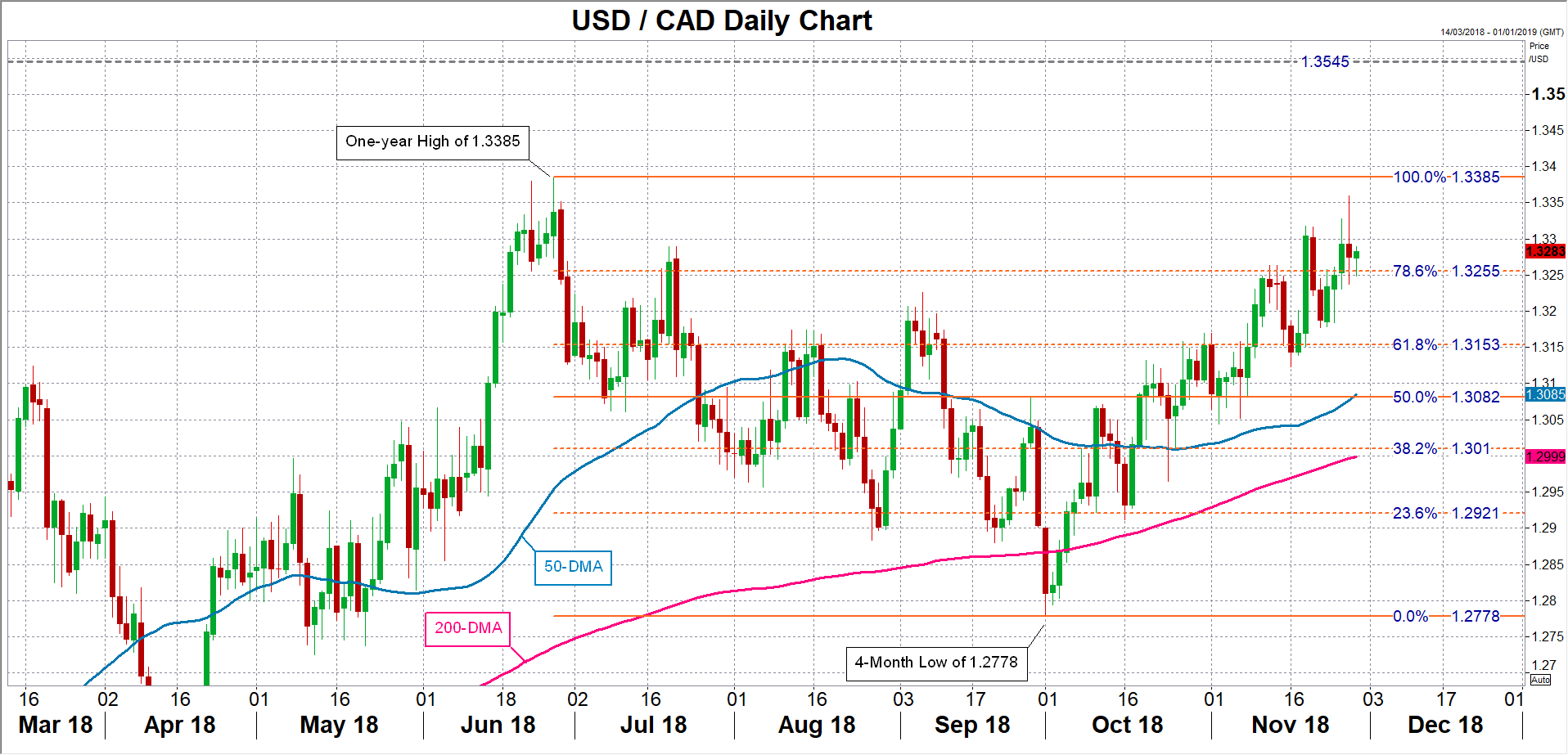
The loonie could enjoy a significant upside correction from rate hike expectations shifting forward as the Canadian currency had been looking a little oversold against the greenback after its recent losses. Dollar/loonie broke above the 1.33 level for the first time since June this week, hitting a 5-month peak. Stronger-than-expected GDP data could pull the pair below immediate support around 1.3255, which is the 78.6% Fibonacci retracement of the downleg from 1.3385 to 1.2778. Below this level, the next major support could come from the 1.3150 region, which is near the 61.8% Fibonacci level, while further down, steeper declines could pause at the 50% Fibonacci at 1.3082.
However, if the GDP numbers point to lacklustre growth, dollar/loonie could be set for additional gains, which could potentially be exasperated if this was to coincide with a further sell-off in oil. Dollar/loonie would eye the July top of 1.3385 in the event of disappointing data. Above this high, the area around 1.3545 is likely to come into focus as this was a frequently tested level in the past. A break higher would bring the 1.36 handle into range, which acted as resistance back in December 2016.
With the Bank of Canada maintaining a hawkish bias at its last policy meeting in October, a surprise early rate hike in December or January cannot be ruled out, especially given that the central bank has a history of catching the markets off guard. One of the things the BoC will be paying attention to in the GDP report is the employee compensation component for any signs of wage pressures. Like in most other advanced economies, wage growth in Canada has been muted since the financial crisis. Any indication that wage pressures are building could prompt the BoC to hike rates before March.
However, possibly offsetting accelerating wage growth are projections of lower oil production, which could hurt economic growth in the fourth quarter. Pipeline bottlenecks have led Canadian producers to restrict output in recent months to alleviate the problem. But the capacity constraints aren't likely to be resolved anytime soon, while the recent plunge in oil prices is only adding to local producers' woes.
Depending on how inflationary pressures and oil production evolve in the coming months, BoC Governor, Stephen Poloz, will probably keep markets guessing as to the timing of the next rate hike.
Japanese Inflation Set To Stay Muted, Risk Appetite More Crucial For Yen
Japan will see the release of a raft of economic data, including updated inflation figures for Tokyo, on Thursday at 2130 GMT. The numbers are expected to confirm inflationary pressures remain tepid, and that any policy shift from the BoJ remains a long way off. As such, they are unlikely to impact the yen much, which will probably continue to respond more to changes in risk appetite. In this respect, the upcoming Trump-Xi meeting may be pivotal.
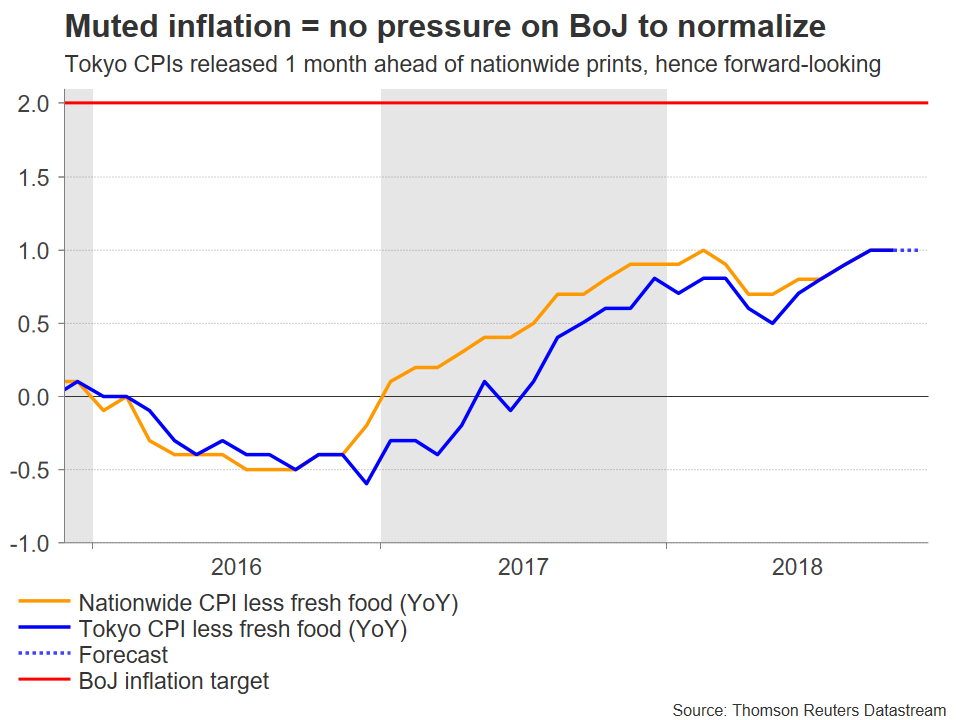
The Japanese inflation outlook has been particularly subdued in recent years, even despite the Bank of Japan’s (BoJ’s) best efforts to reflate prices through its massive stimulus program. This week’s Tokyo CPI readings, which are considered forward-looking gauges of the nationwide prints and hence crucial for BoJ decisions, are anticipated to reaffirm this narrative. The core CPI rate that excludes fresh food is projected to have held steady at 1.0% on a yearly basis in November, while no forecast is available for the headline figure.
Employment data, which will be released at the same time, are forecast to show that the unemployment rate held steady at 2.3% in October, just shy of a 27-year low. Twenty minutes later, at 2150 GMT, preliminary industrial production data for October will hit the markets and expectations are for a 1.2% m/m rise, a rebound following a contraction of 0.4% previously.
As for the market’s reaction, absent a major deviation from forecasts, these figures are unlikely to impact the yen notably; the currency doesn’t respond much to data. To explain why, it’s useful to consider the analogy of a foreign central bank – the Fed for instance. When US data improve, markets bet the Fed will raise rates faster, and the dollar consequently gains. Contrast this with the BoJ, which is highly unlikely to change its ultra-loose policy in the foreseeable future. Therefore, investors do not rush to buy or sell the yen on data releases that probably won’t have enough of an impact to lead to any policy changes. Put differently, anything short of a dramatic improvement in Japanese data that sparks speculation for BoJ normalization, will probably pass unnoticed by the yen.
Instead, the currency responds more to shifts in market sentiment, given its “safe-haven” status. When trade tensions escalate for example, the yen attracts defensive inflows, and vice versa. In this sense, the most crucial event may be the meeting between the US and Chinese presidents on Saturday. Investors hope that a “trade ceasefire” will be agreed, and if this is the case, the yen could tumble. On the contrary, a failure to reach an accord may see the currency gain.
While it’s nearly impossible to confidently predict whether a truce will actually be delivered, note that the pattern in recent months has been that haven-boosts to the yen tend to be short-lived, fading after a few sessions as the risks are judged to be less dire than they initially seemed. In other words, even if the yen does gain from this, it may be unable to sustain those gains for long – if recent price action is any guide.
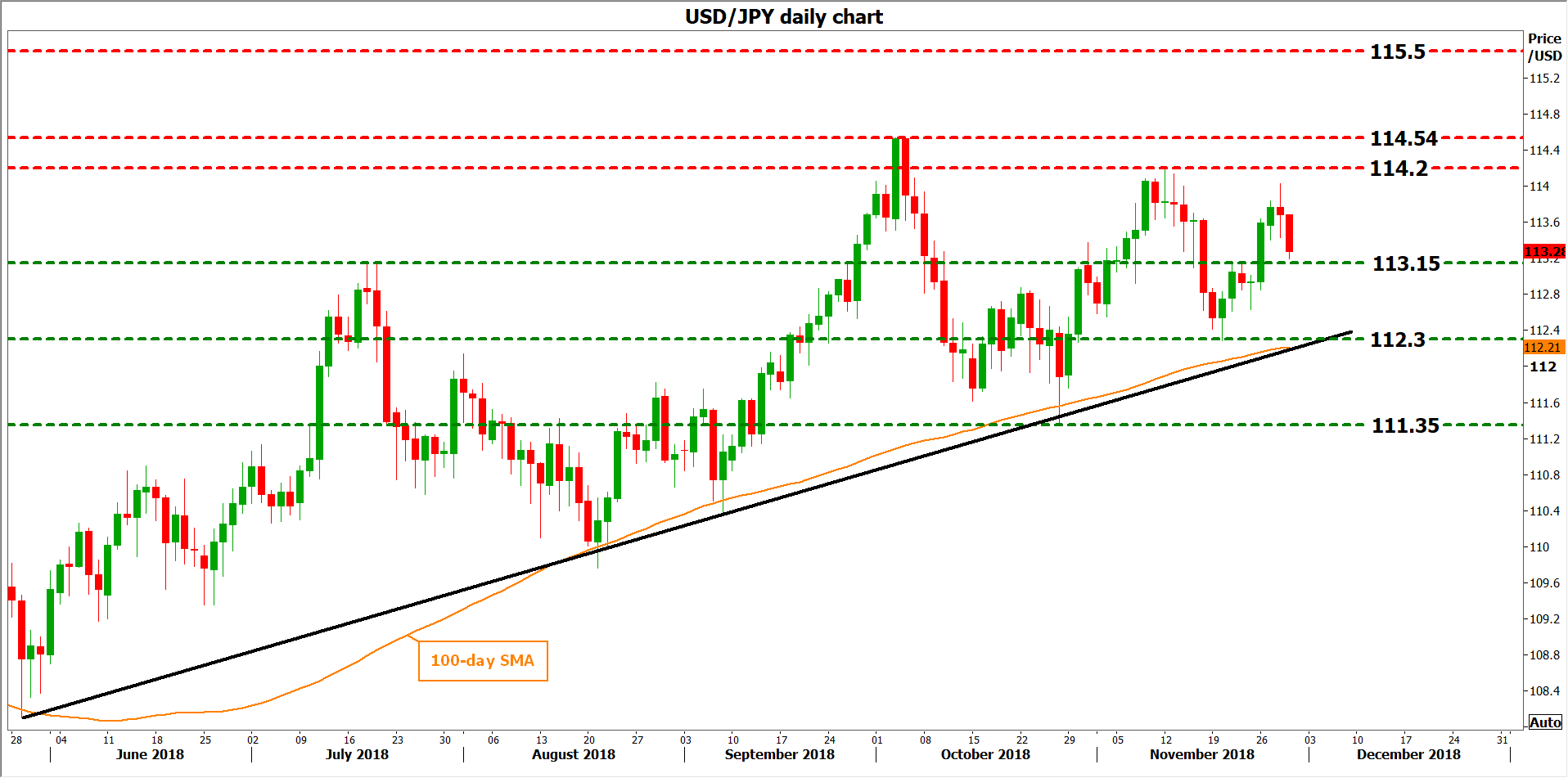
Technically, potential gains in dollar/yen may encounter resistance around the November 12 peak at 114.20, with the zone around it also encapsulating the October 3 high at 114.54. Even higher, sell orders may be found at 115.50, the March 2017 top.
On the flipside, further declines in the pair may stall initially near 113.15, which halted the advance on November 21. A downside break may see the pair test the crossroads of the 112.30 area and the uptrend line drawn from the lows of May 29. Lower still, the October 26 trough of 111.35 would attract attention.