

Sample Category Title
Oil Prices Dropped As Hopes For US Exemptions On The Iranian Oil Boycott Rise
Markets
On Friday, price action on US and EMU bond markets was mainly driven by US labour data and noise on the Italy budget. The payrolls showed ongoing US labour market strength, with data in line with expectations. US Treasuries initially gained limited ground after the payrolls, but resumed their down trend later. Both the US and EMU yield curves bear steepened. Regarding Bund trading, the EU and Italy still haven't found an agreement on how much the Italians can spend over the next three years. Even so, the Bund followed to a large extend the underlying trend from the US this time. The US Treasury market is closed today (Columbus day), but equity markets remain open Yesterday, the People's Bank of China cut banks' reserve requirement ratio again for the fourth time this year by 1 percentage point. The central bank eased monetary policy this year as its economy is losing momentum. The PBoC policy decision and solid PMI's couldn't offer rebuttal for Chinese markets as they re-opened after a week-long holiday. It made a catch-up for last week's worsened sentiment and opened substantially lower. The CSI 300 Index loses more than 3%. Today's eco calendar is rather thin, as it is the case for the rest of the week. US inflation numbers on Wednesday/Thursday can attract investors' attention. Third-quarter earnings season have started with the first companies reporting results this week.
On Friday, the dollar traded with a tentative positive bias going into the publication of the US payrolls. The report confirmed an ongoing healthy labour market. The unemployment rate dropped to a multi-decade low of 3.7%. Key average hourly earnings were as expected (2.8% Y/Y). The report was close to expectations. Later in the session, US yields touched new cycle highs, but that hardly helped the dollar. EUR/USD closed marginally stronger at 1.1524. USD/JPY struggled not to lose further ground as sentiment on risk remained negative (close at 113.72). Today, activity on US markets will be subdued in observance of Columbus Day. Sentiment in Asia remains risk-off as Chinese investors return from a holiday week. The PBOC eased monetary conditions (RRR). The yuan and other regional EM currencies stay in the defensive. This context favours the dollar. There are few European data. Headlines on Italy remain a wildcard. EUR/USD last week dropped temporary below the 1.15 support, but the payrolls were not able to force a sustained break. Even so, we continue to give the dollar the benefit of the doubt. A technical setback to the 1.13 area remains possible.
On Friday, sterling extended the comeback that started after the conservative Party meeting. EU diplomats again struck a positive tone indicating that a deal was possible/close. A new squeeze of sterling shorts pushed EUR/GBP below the 0.88 area. Over the weekend, comments from EU policy makers try to support the constructive narrative (intentions to offer the UK a ‘super-charged' free trade deal). Investors apparently don't want to be positioned too much short sterling going into a key phase of the talks. On the other hand, it is unsure whether any EU-UK deal will be able to convince hard-line Brexiteers in PM May's party. Even so, for now, sterling gets the benefit of the doubt.
News Headlines
China's central bank (PBOC) eased monetary policy further this weekend by cutting the reserve requirement ratios for most commercial banks by 1% point. With the move the PBOC seeks to increase liquidity in China's banking system to support business' financing.
Brazil's far-right election candidate Bolsonaro has won the first round of the presidential election, securing roughly 46% of the votes. As more than 50% of the votes were needed to secure an outright victory, Bolsonaro now faces rival contester and leftist Fernando Haddad (nearly 29% of the votes) in a second round on October 28.
Oil prices dropped as hopes for US exemptions on the Iranian oil boycott rise. The US is said to be in talks with countries that want to continue to buy Iranian oil after American sanctions are (re)imposed on November 4. Saudi Arabia also hinted it can ramp up oil production with its "if the markets needs that".
Risk Assets Under Pressure From Higher Interest Rates
Chinese equities took a big hit after traders returned from a week-long holiday. Efforts by the People's Bank of China to free more than $100 billion in liquidity through cutting the reserve requirement ratio were not enough to offset the fear of slowing growth, the escalated trade dispute, and the rise in U.S. interest rates. The CSI 300 fell 3.6% late morning led by the technology sector as investors had the chance to respond to reports claiming that Chinese intelligence agents planted microchips to hack big tech firms and U.S. government agencies.
Risk assets may continue to be under pressure with future markets indicating a lower open to European stocks today. Increasing geopolitical risks, Brexit negotiations, the U.S.-China trade dispute, and U.S. mid-term elections are all sources of uncertainty. However, in my opinion, the biggest threat to the U.S. bull market remains the rise in U.S. interest rates. Last week's selloff in Treasuries took the 10-year yields to 3.25%, a level last seen in April 2011. The longer-term 30-year yields climbed to 3.42%, the highest since July 2014. The U.S. has $230 billion worth of debt auction this week, and if this caused a further rally in yields, investors might start considering pulling back from riskier assets as risk-free ones are beginning to look very attractive.
Friday's non-farm payrolls report proved to be mixed, with job creation in September coming well below expectations at 134,000 vs the anticipated 185,000. However, the August figure was revised higher by 69,000, and the unemployment rate fell to a 50-year-low of 3.7%. The wage growth component of the report which has become a key indicator for inflation grew 0.3% in September and 2.8% Y-o-Y. Overall the report suggests that the labor market continues to tighten and the Fed needs to continue raising rates to manage the booming economy.
In currency markets, the Dollar was slightly higher against its peers. Euro and Sterling traders need to keep focusing on politics and interest rate differentials. Italy's Deputy Prime Minister Luigi Di Maio intends to stick to plans to increase the budget deficit in 2019. If Rome and Brussels continue to clash over Italy's budgetary plans, expect to see a renewed selloff in Italian assets and the Euro.
China Markets Return From Holiday In The Red
Headlines/Economic Data
- China tech names trade generally lower amid hacking concerns; China released new cybersecurity rules
- Tencent trades at the lowest level since July 2017
- China Caixin PMI Services data hits 3-month high, in line with earlier released official services PMI data
- (CN) Offshore yuan (CNH) Hibor rates rise despite China PBoC RRR cut
- In Q2, Yu'E Bao (largest money market fund in China) had the highest outflows in its history, assets declined to CNY1.45T v CNY1.69T (record) q/q (Fitch report)
- LME Aluminum declines over 3.5%: Norsk Hydro [NHY.NO] Alunorte received an approval related to its operations in Brazil
- China’s PBOC cuts RRR 100bps to 14.5% over the weekend, saying the cut will free up CNY 1.2T ($175M) of funds for lenders to provide to small businesses and offset short term borrowing by the banks. Will become effective Oct 15th
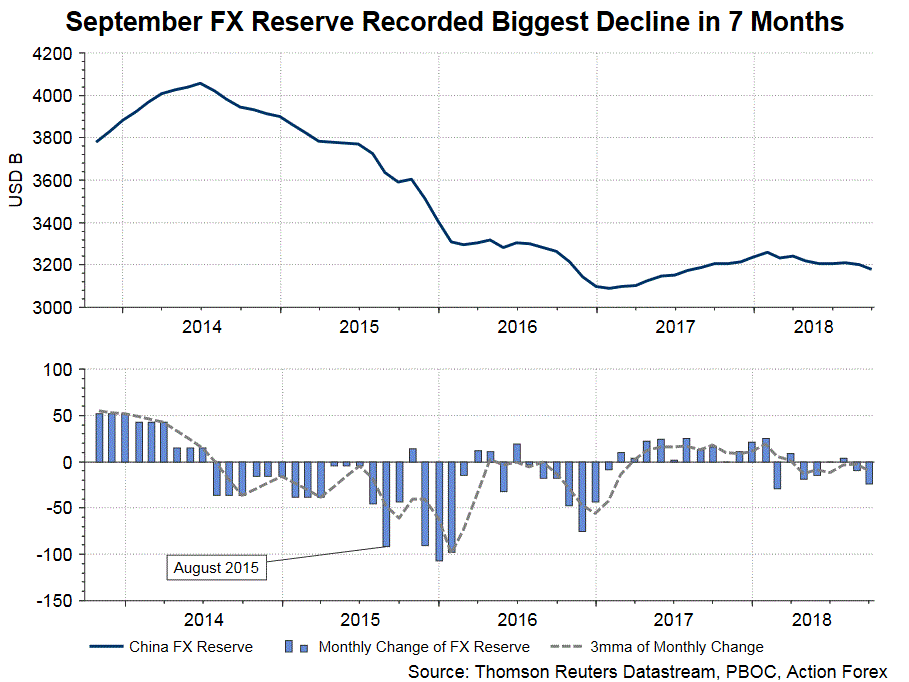
- China Sept Foreign Reserves fall more than expected, $3.087B v 3.105Te
- Taiwan dollar falls to March 2017 low and Singapore dollar a one year low
Australia/New Zealand
- ASX 200 opened -0.7%
- ANZ.AU Recorded A$374M in charges in H2 related to refunds to customers and related remediation costs; FY18 Cash profit to be impacted
- (AU) Australia Sept ANZ Job Advertisements m/m: -0.8% v -0.7% prior
- (AU) Australia sells A$500M v A$500M indicated in 2.75% Nov 2028 bonds, avg yield 2.7698%, bid to cover: 4.94x
- MYOB,[+19%], MYO.AU Confirms KKR affilliate TP offers to acquire 17.6% stake from Bain at A$3.70/shr cash 24% premium
- Medical Developments International, [+12%], MVP.AU Signs exclutive PENTROX deal for China
- (AU) JPMorgan analyst expects the Reserve Bank of Australia (RBA) to say the current macro-prudential and regulatory oversight are still required in its upcoming Financial Stability Review - US financial press (report to be released Friday)
Japan
- Nikkei 225 closed for holiday
- (JP) Japan PM Abe says would welcome the UK to the trans-pacific partnership (TPP) trade deal with 'open arms' - FT
- Sony, 6758.JP "Venom" top film in the N. American box office with $80.0M in sales; Worldwide $205.2M
- (JP) Japan PM Abe ruling party will not submit its constitutional revision proposal to the upcoming parliamentary session despite its promise to do so, because of lack of support from coalition partner Komeito - Nikkei
Korea
- Kospi opened -0.4%
- (KR) Bank of Korea (BoK) Gov Lee said the central bank may 'trim' its GDP growth forecast later in Oct, but it won't necessarily mean the BoK will stop seeking a rate increase - US financial press
- (KR) North Korea leader Kim has offered to stop ICBMs in return for war ending - Korean press
- (KR) China President Xi to visit North Korea soon according to South Korea president Moon
- (KR) North Korea leader Kim satisfied with US Sec of State Pompeo talks; US and N. Korea to hold working level talks at next summit
- (KR) South Korea sells KRW1.0T in 5-yr bonds, avg yield 2.285%; bid to cover 2.89x
China/Hong Kong
- Hang Seng opened +0.6%, Shanghai Composite -1.9%
- (US) Commerce Sec Ross considering anti-China poison pill, similar to those made with Mexico and Canada, could be made for future trade deals - financial press
- (CN) China released new cybersecurity rules which will give officials power to inspect the information technology of companies; the rules take effect as of Nov 1st - US financial press
- (CN) China Fin Min Liu Kun: Govt will adopt a more proactive fiscal policy but will not use strong stimulus policies – Xinhua
- (CN) China PBoC Open Market Operation (OMO): Skips OMO v skipped prior: Net: CNY100B drain v CNY40B drain prior (drains liquidity for the 7th straight session)
- (CN) China PBoC set yuan reference rate: 6.8957 v 6.8792 prior (weakest setting since March 11, 2017)
- (CN) CHINA SEPT CAIXIN PMI SERVICES: 53.1 V 51.4E (3-month high); PMI COMPOSITE: 52.1 V 52.0 PRIOR
Americas
- (US) US Congressional Budget Office (CBO) projects fiscal year 2018 federal budget deficit of $782B - US financial press
- (BR) Brazil candidate Bolsonaro leads Presidential race with 46.4% of the vote vs 28.8% for Haddad; The race to move to runoff on Oct 28th
- (US) Fed's Bullard (dove, non-voter): Reiterates does not see much inflation pressure for the US economy; my view is we are close to neutral [interest rates], don't need to get a lot higher with policy rate
Europe
- FCCN.UK Confirms reviewing strategic options including sale
- (UK) UK Brexiteers said to set 2022 limit to PM May's EU customs arrangement - UK press
- (EU) ECB said to warn lenders to curtail bookings in the UK following Brexit – FT
- (UK) EU President Juncker: Expect to reach a deal on Brexit in November if not done in October - Austrian press
Levels as of 01:30ET
- Hang Seng -0.6%; Shanghai Composite -2.7%; Kospi -0.4%; Nikkei225 closed; ASX 200 -1.4%
- Equity Futures: S&P500 +0.0%; Nasdaq100 +0.0%, Dax -0.0%; FTSE100 -0.2%
- EUR 1.1532-1.1510; JPY 113.94-113.66; AUD 0.7064-0.7046;NZD 0.6447-0.6424
- Dec Gold -0.4% at $1,200/oz; Nov Crude Oil -0.7% at $73.81/brl; Dec Copper -0.1% at $2.76/lb
EURUSD Rebounds On 7-Week Low, Neutral Outlook Holds
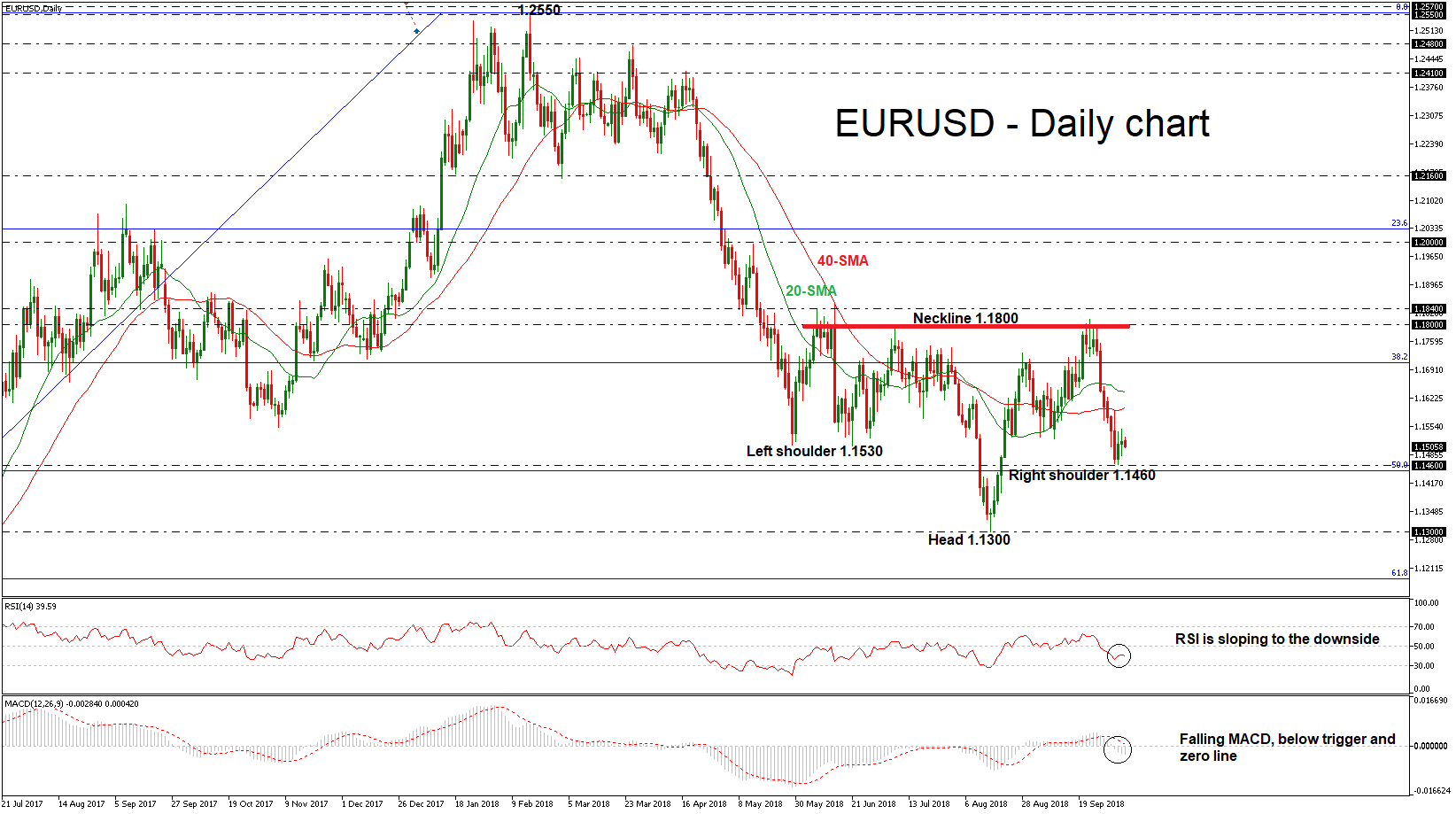
EURUSD had lost its positive momentum over the previous two weeks, after the bounce off the 1.1800 psychological level, challenging a new seven-month low of 1.1460. The neutral trend in short-term though could stay in place given that prices continue to fluctuate within the inverse head and shoulders pattern with neckline 1.1800 and head 1.1300.
From the technical point of view, in the daily timeframe, the RSI indicator is sloping slightly to the downside below the threshold of 50, suggesting that a low momentum price action would follow. The MACD oscillator is falling below the trigger and zero lines, confirming the recent negative structure.
Another extension to the downside below the 1.1460 support and the 50.0% Fibonacci retracement level of the upleg from 1.0340 to 1.2550, near 1.1450, could push the price towards the 1.1300 handle, identified by the doji candle on August 15. A significant step lower could bring the bearish sentiment into play again, sending the price probably until the 61.8% Fibonacci of 1.1185.
A reversal to the upside, however, could find immediate supports at the 40- and then at 20-simple moving averages (SMAs) around 1.1600 and 1.1640 at the time of writing. If the latter levels fail to halt bullish movements, the next target could be at the 38.2% Fibonacci of 1.1710. Moreover, further gains could send prices until the 1.1800 – 1.1840 resistance zone.
Regarding to the longer-timeframe, euro/dollar has been trading within an inverse head and shoulders pattern with left shoulder at 1.1530, right shoulder at 1.1460, neck line at 1.1800 and head at 1.1300 since June. A climb above the neckline would confirm the scenario for a reversal of the bearish structure in the medium-term.
China Eases Monetary Policy Further, Intervening to Avoid Sharp Fall in Renminbi
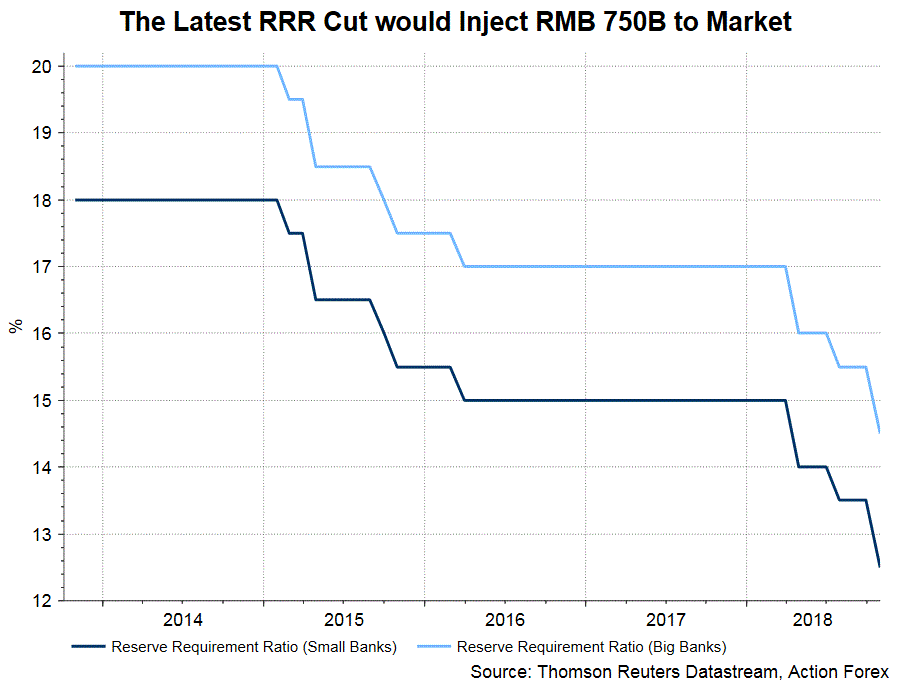
China announced to cut RRR by 100 bps, effective October 15 and applicable to all types of banks, including large commercial banks, joint-stock banks, city commercial banks, non-county rural commercial banks, and foreign banks whose current RRR stand at 15.5% (large banks) or 13.5% (small to medium banks). The move would release a total of RMB 1.2 trillion in liquidity, of which 450B is for offsetting maturing Medium-Term Lending Facility (MLF) loans and the rest (RMB 750B) injected into the banking system. PBOC reinforced that it would maintain the “prudent and neutral” monetary policy, and keep the renminbi (Chinese yuan) movement stable.
We have suggested that PBOC has tilted to the easing side, focusing on boosting domestic growth, and we have anticipated further RRR reduction in 4Q18. The announcement was surprising in the sense that the size of reduction, at 100 bps, was bigger than expected. Meanwhile, the timing of the announcement – just before the re-opening of China’s stock markets after golden week holiday- signals the intention to prevent equities from sharp selloff, after US’ escalation of trade war and release of weak September PMIs.
Growth Risk is to the Downside
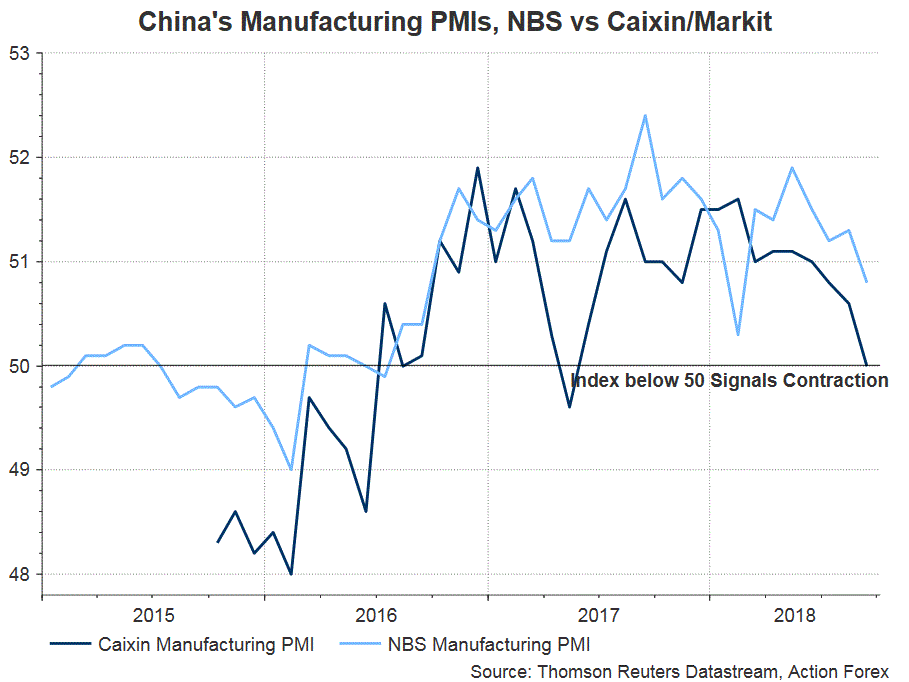
The government’s official manufacturing PMI dropped to 50.8 in September from 51.3 in August. Trade-related sub-indices fell markedly, while production and employment sub-indices also weakened. The “new export orders” sub-index fell -1.4 points to 48 while the “import” sub-index eased further to 48.5 from August’s 49.1. Both readings have stayed below 50 (signalling contraction) for three months in a row, indicating the negative impacts on trade after US’ first tariff imposed on July 6. “New orders index slipped -0.2 point to 52 and “production" sub- index dropped -0.3 points to 53. Focusing on SMEs, the final reading of Caixin/ Markit manufacturing PMI slipped -0.6 point to a 16-month low of 50 in September. This suggested that the country’s manufacturing activities are barely expanding.
Key September macroeconomic data due in coming weeks should point to further weakness. IP growth is expected to return to recent low level of 6% y/y, following a brief recovery to +6.1% in August. Retail sales might have expanded 9% y/y, steadying. Growth in urban FAI probably stayed at the weakest level at 5.3% in the first 9 months of the year. Disappointing third quarter data affirm the expectations that GDP growth would slow from the 1H18. Indeed, the slowdown might come in deeper than previously projected.
Decline in FX Reserve Signals Intervention
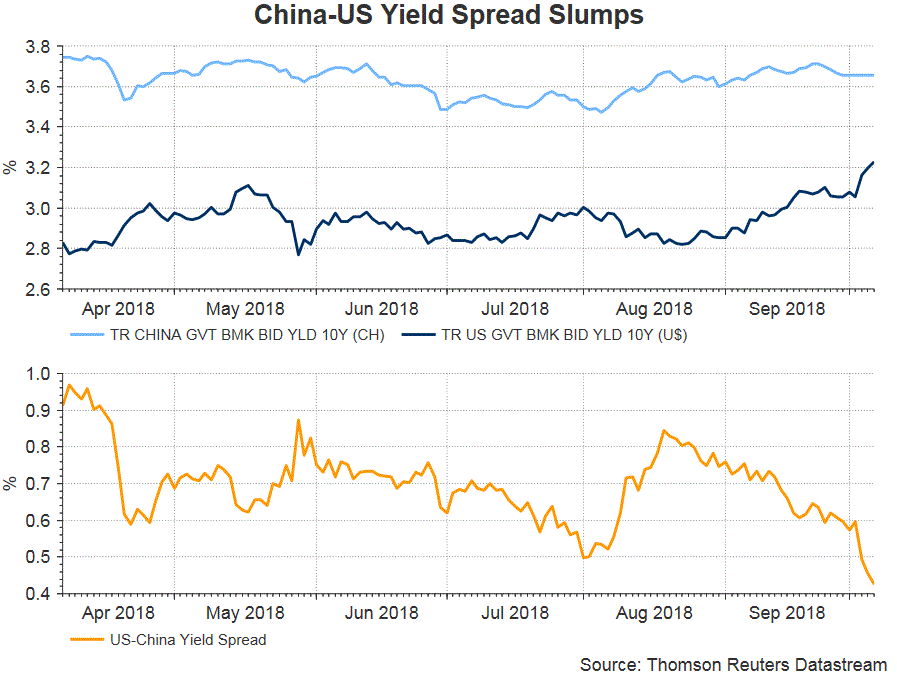
While not a perfect comparison, given the closeness of China's bond market, China-US 10-year treasury yield spread has narrowed to the level not seen since 2011. It would narrow further as China continues to loosen its monetary policy, while the Fed is on track to raise rates gradually. Indeed, the decline in yield spread has accelerated since October. Interestingly, renminbi has only weakened modestly during the period.
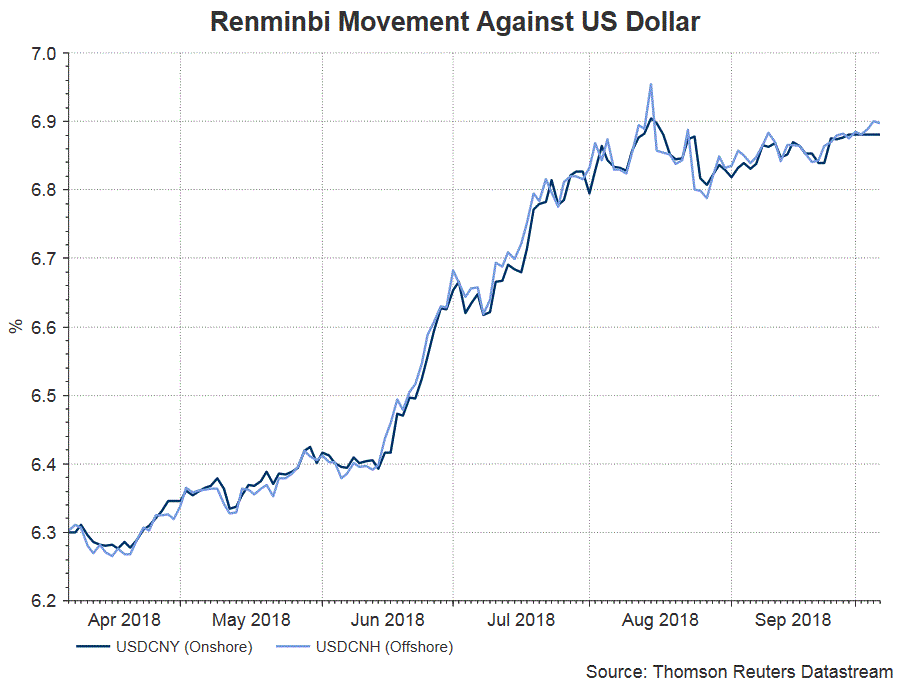 Despite ongoing claims of renminbi internationalization, the Chinese government has never eased its grip on exchange rate. China’s FX reserves fell USD 22.69B to USD 3087B in September. The decline not only exceeded consensus of a -USD 5 B fall but also marks the biggest fall since February. Valuation effect only contributed about USD 1.88B out of the USD 22.69B decline (about 8.29%) in FX reserve. This suggests that the government intervened the FX market, by selling foreign assets, to defend the value of renminbi. Some have been suggesting that China is depreciating its currency through accommodative monetary policy. The FX reserve data suggest that the government, while adopting accommodative measures to boost growth, is concerned about excess renminbi depreciation which would exacerbate capital outflow.
Weekly Wave Analysis EUR/USD, GBP/USD, USD/JPY
EUR/USD
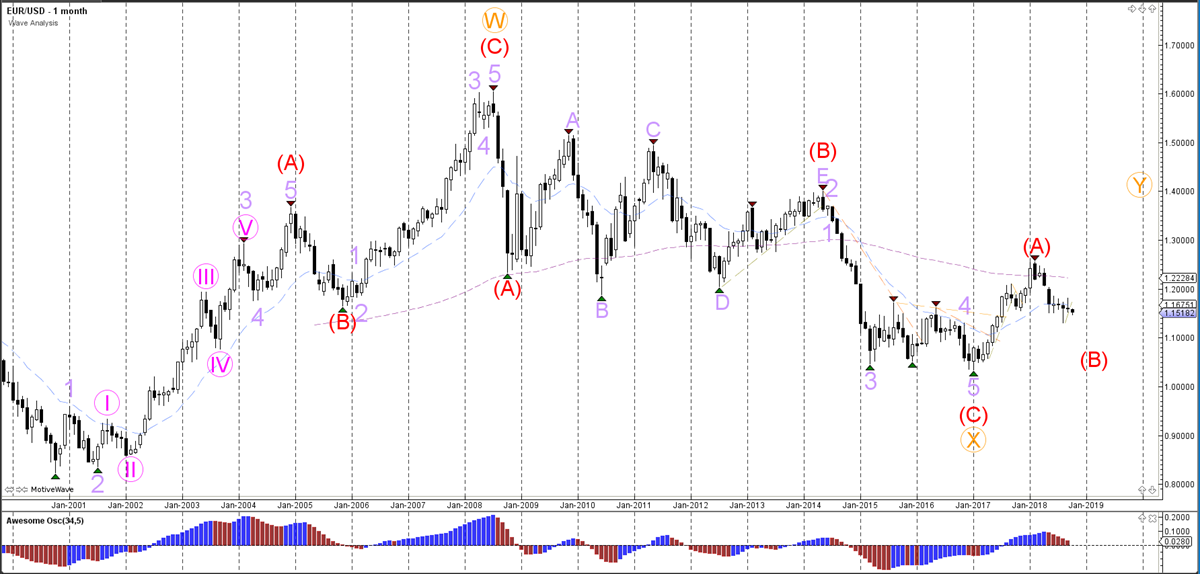
The EUR/USD currency pair has either completed a wave B (purple) at the recent high, or the price will still expand the bullish correction via the WXY (pink) within wave B (purple). The main support level to something to keep an eye on, because of the current 1.15 round level and the 78.6% Fibonacci level around 1.1410. A bullish break above the 1.1550 with intra-day trading could already indicate a potential bullish bounce.
Daily chart:
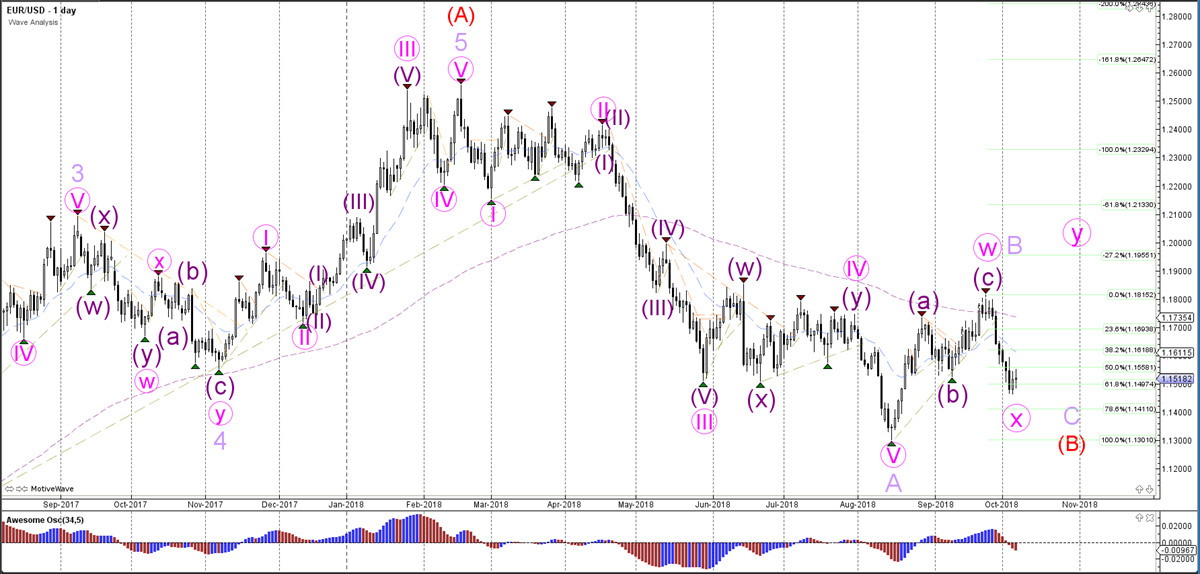
The EUR/USD currency pair is expecting a bearish ABC (purple) correction within wave B (red). The price is most likely retracing to the Fibonacci levels of wave B (purple).
Weekly chart:
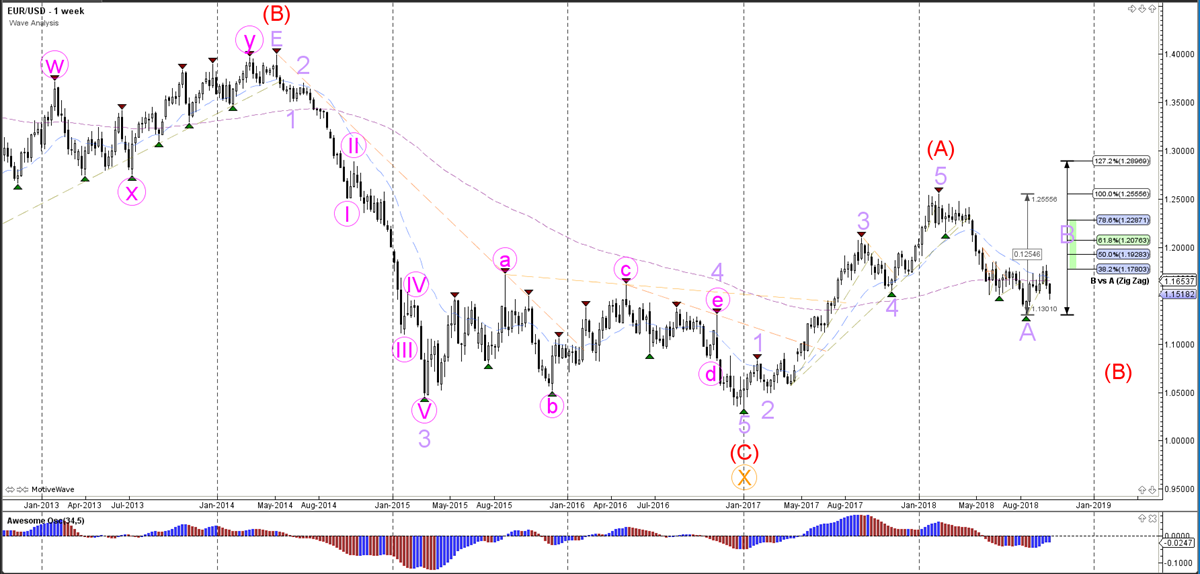
The EUR/USD currency pair has completed wave A (red) and the price is now probably in a wave B (red), unless the price breaks below the bottom of wave A.
Monthly chart:
GBP/USD
The GBP/USD currency pair made a bullish bounce at the support trend line (blue). A break below that support trend line could indicate a bearish breakout and trend continuation towards the Fibonacci targets of wave 5 (pink). A break above the previous top could indicate an expanded wave 4 (pink).
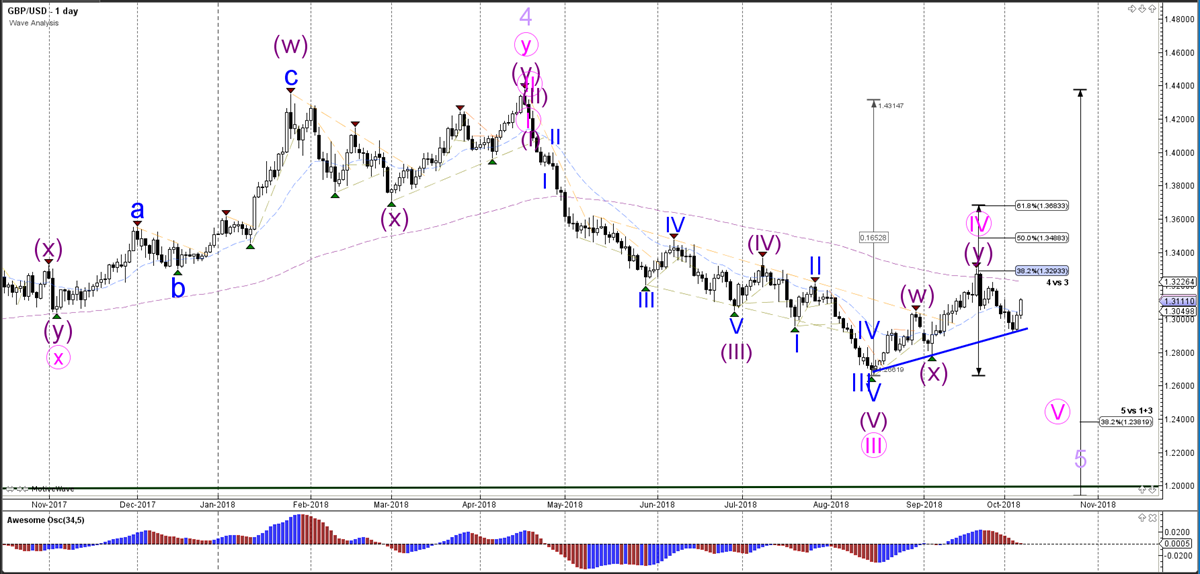
Daily chart:
The GBP/USD currency pair has probably started the bearish wave 5 after the price has completed a wave 4 (light purple) correction.
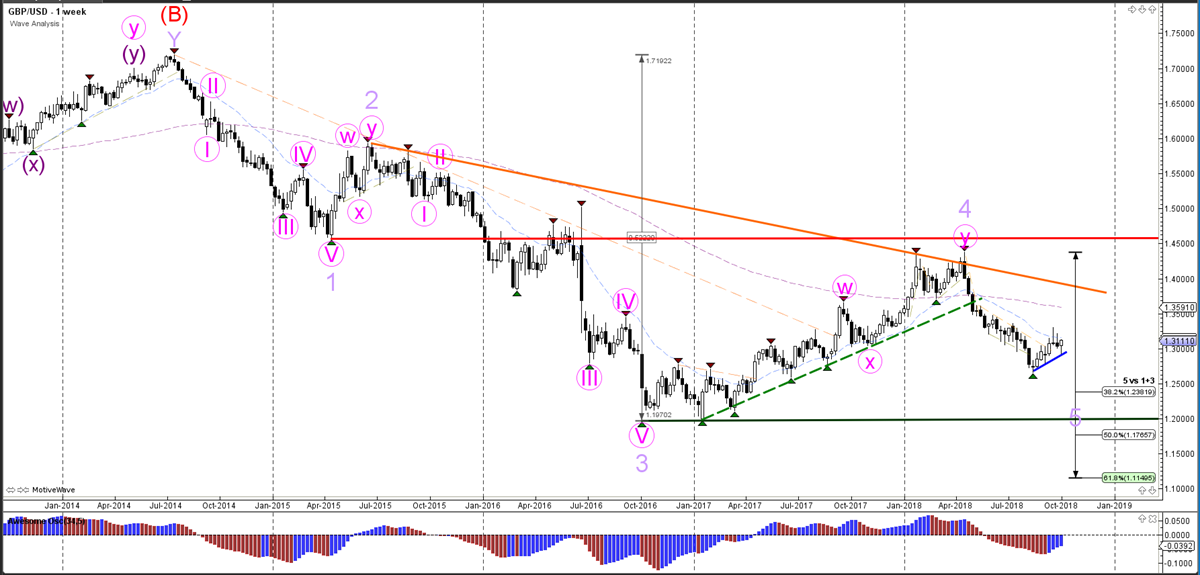
Weekly chart:
The GBP/USD currency pair is probably moving lower as part of the wave 5 (purple), whereas a bullish break above the resistance (orange) trend line indicates that a different wave pattern is valid.
Monthly chart:
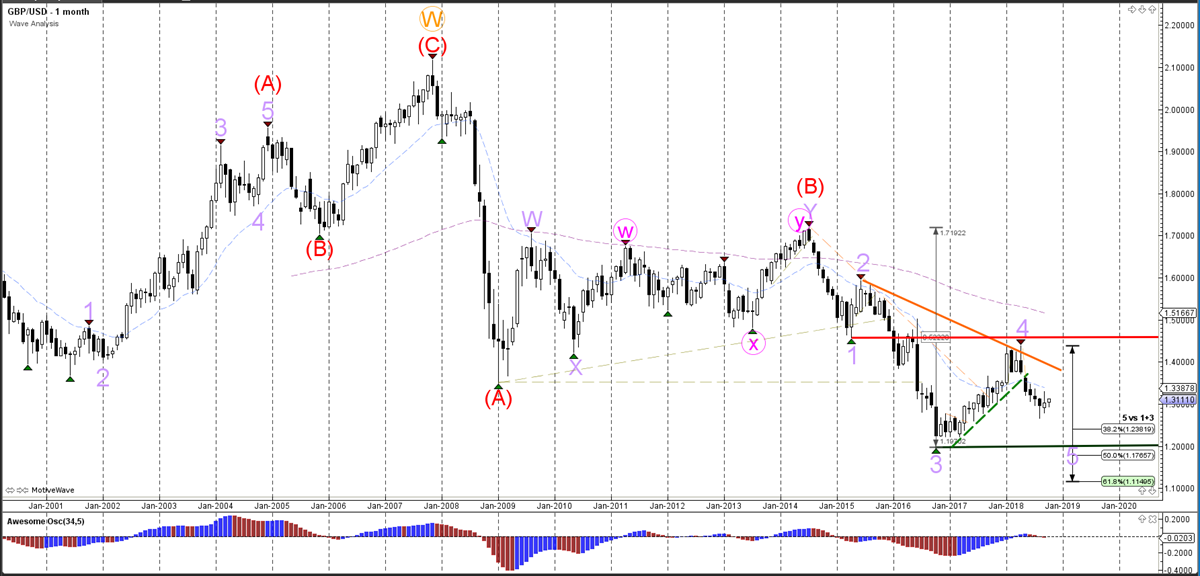
USD/JPY
The USD/JPY currency pair seems to be building a WXY (pink) correction within wave D (purple).
Daily chart:
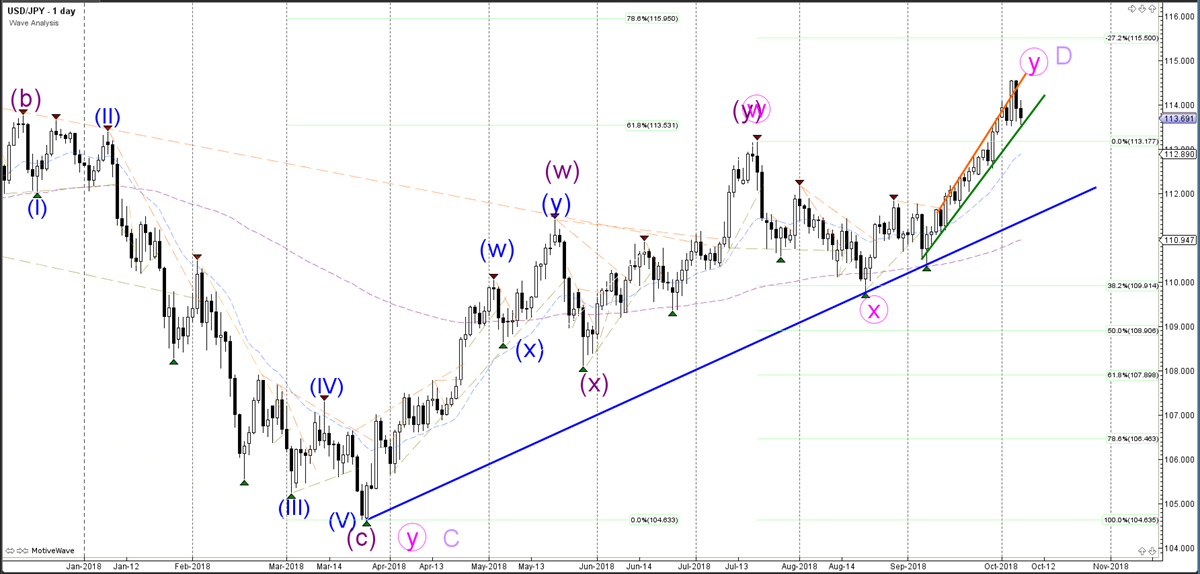
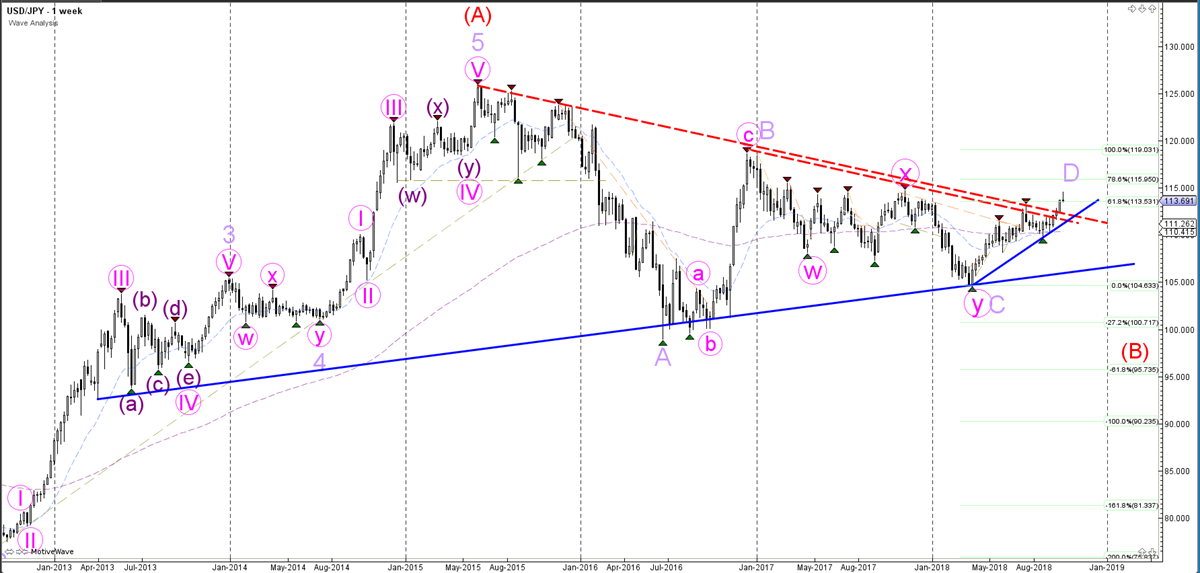
The USD/JPY currency pair broke above the resistance trend lines (dotted red), which is either the start of a bullish trend or still part of the larger ABCDE triangle (light purple) within wave B (red).
Weekly chart:
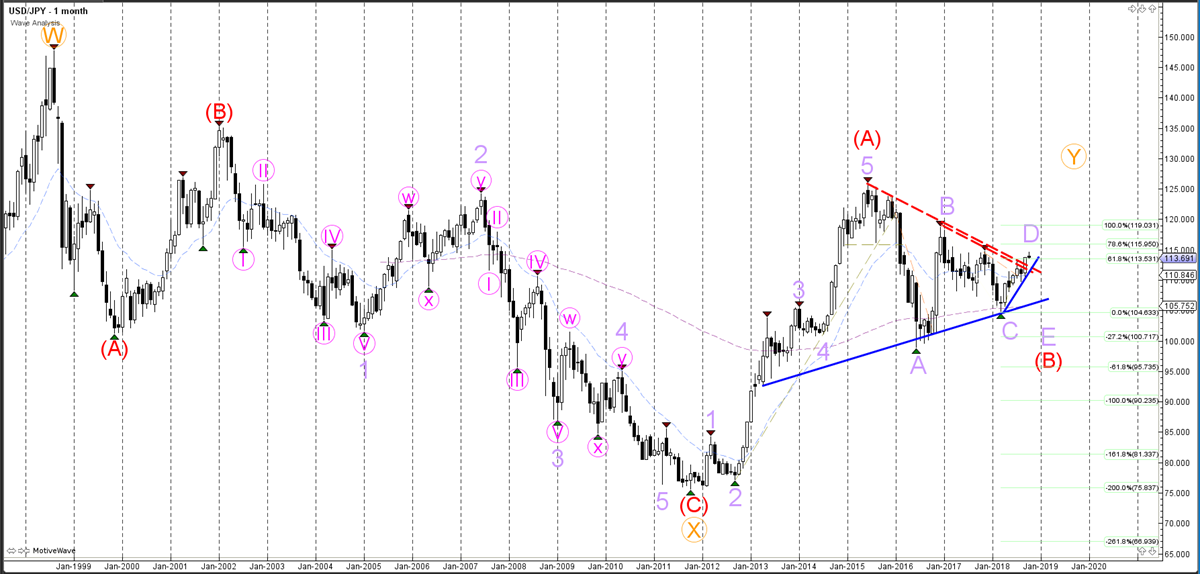
The USD/JPY currency pair is probably still in the wave D (light purple) of the triangle pattern, unless it breaks above the 78.6-100% Fibonacci resistance zone. Whether the price will bounce or break will depend on the upcoming candlestick patterns.
Monthly chart:
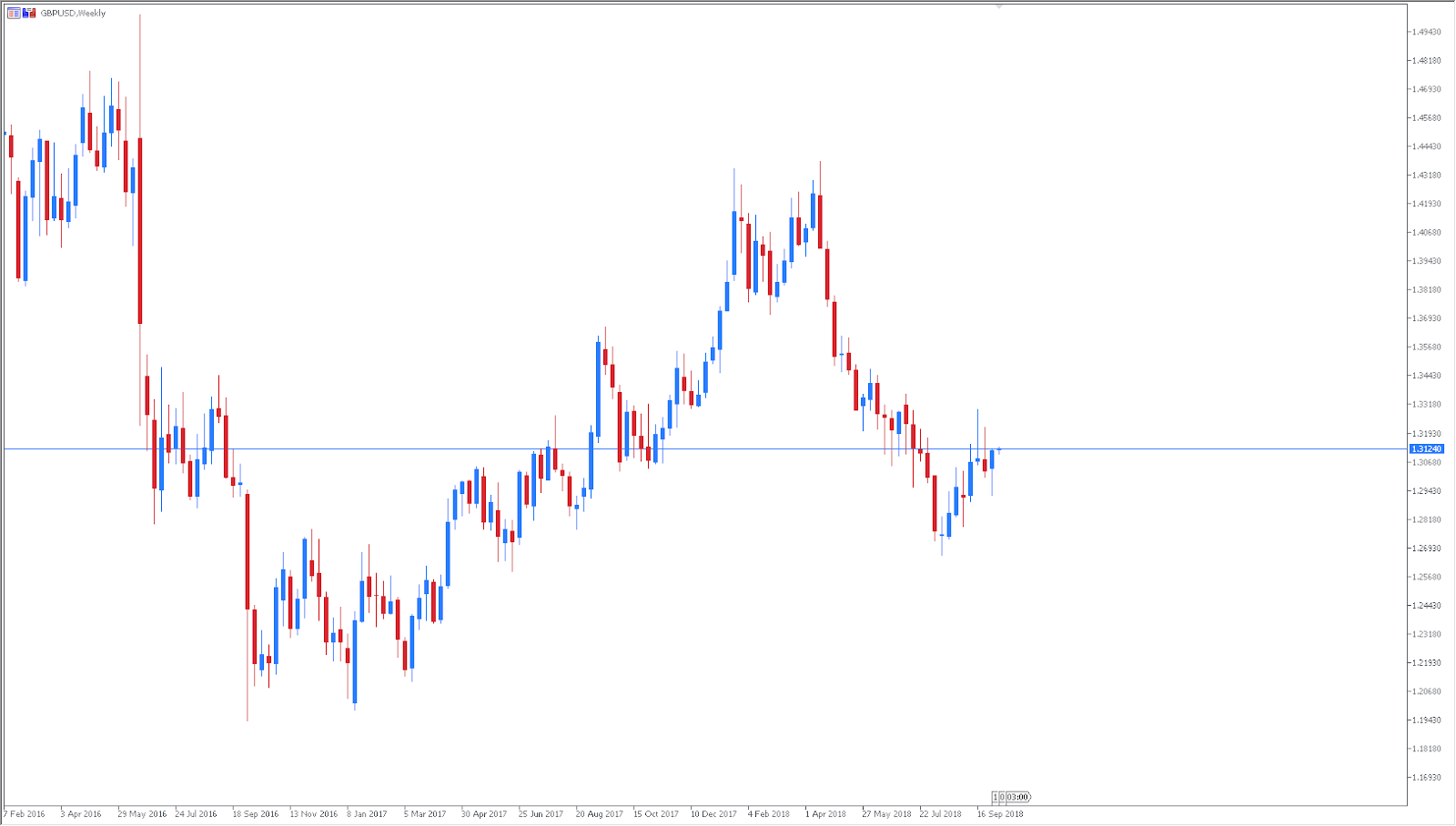
GBP/USD Potential For A Bullish Continuation Towards R2
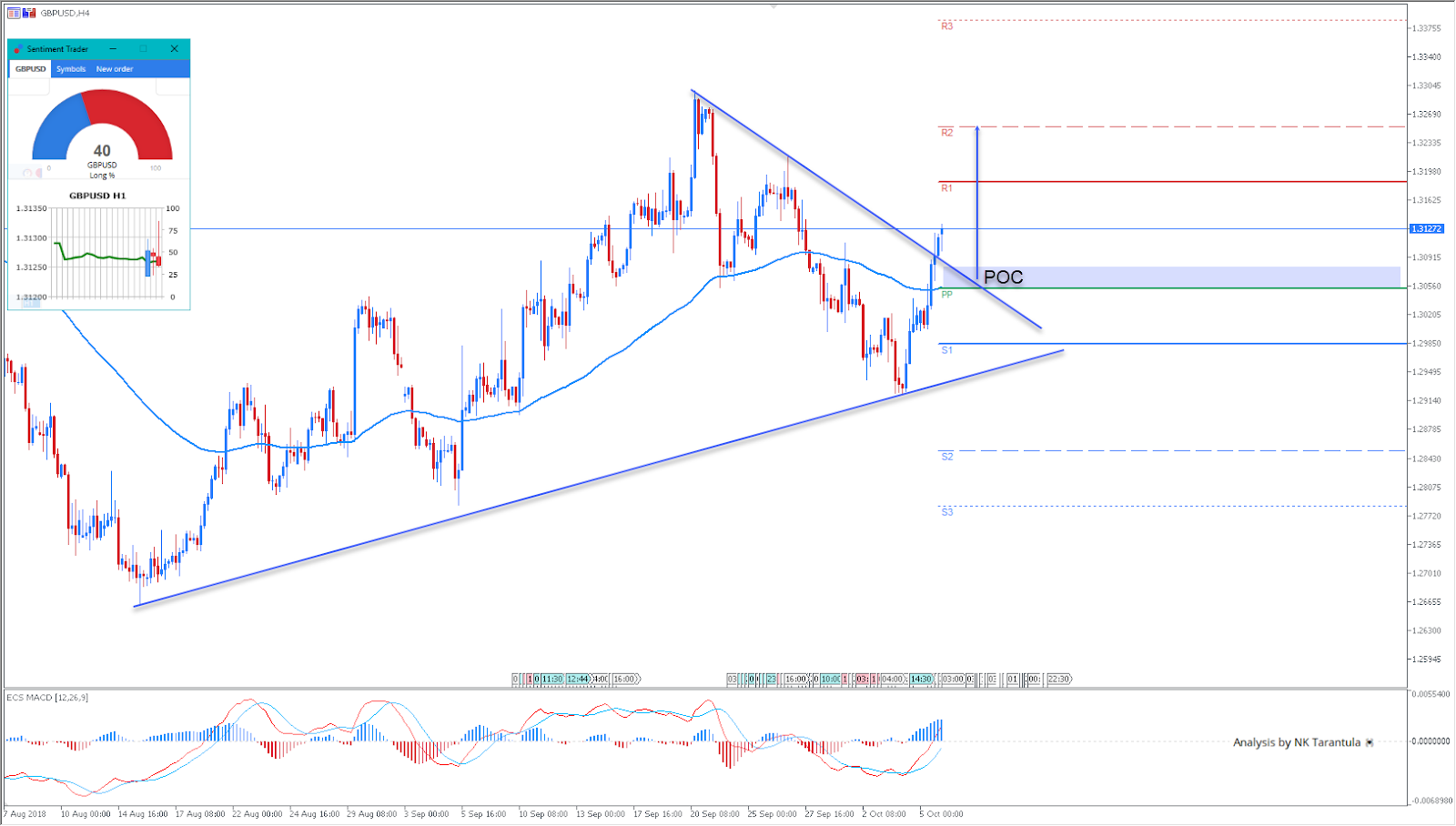
The GBP/USD currency pair has formed a breakout pattern just above the PP point support, and we could see a further upside potential towards the R2 pivot point. The main news release for the GBP is GDP (Gross Domestic Product) on Wednesday. For those unfamiliar with it, GDP measures a change in the total GVA of all goods and services produced by the economy. It's the broadest measure of economic activity and the primary gauge of the economy's health. Don't forget to follow our Forex calendar for all regular updates on the news,economic announcements, forecasts and much more.
Technically, the GBP/USD currency pair formed a retracement trend line and the break above it might initiate a bullish continuation. However, if the price retraces to the POC zone between 1.3060-80, bulls might be ready for another push to the upside. The GDP news might also cause higher volatility, so be prepared. Targets are 1.3184 and 1.3253. However if the GDP result is worse than expected, we might see 1.3000 retest again. Always pay attention to price action before you start making new entries. Consolidation usually precedes breakouts.
Pivot Lines - Weekly Support and Resistance
POC - POC - Point Of Confluence (The zone where we expect the price to react - aka the entry zone)
GBP/USD Testing 50-61.8% Fibonacci Resistance Zone
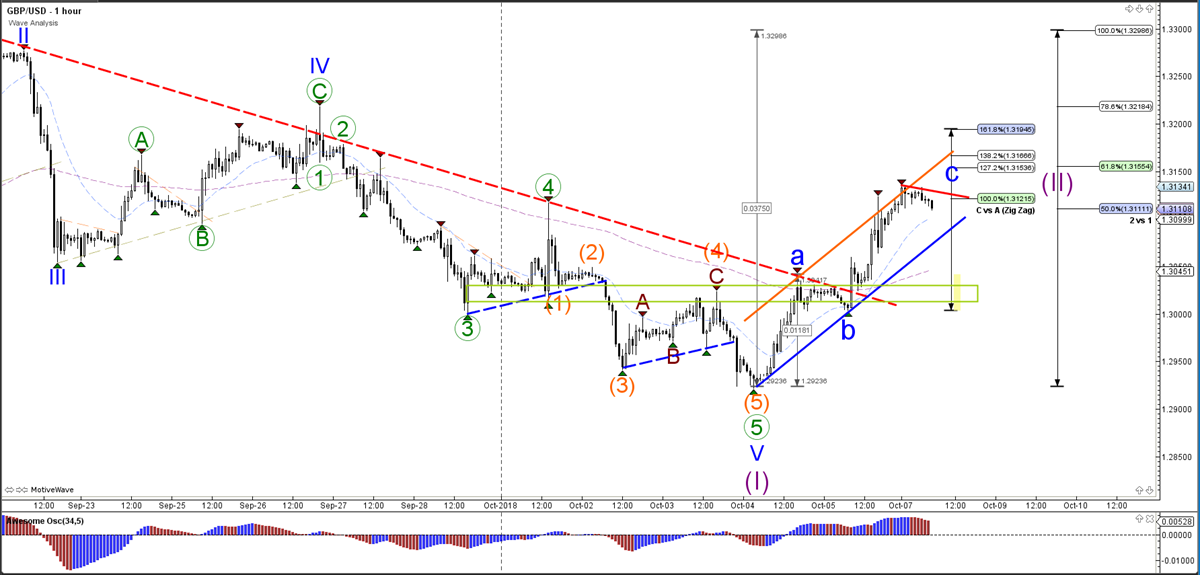
The GBPUSD currency pair broke above the resistance trend line (dotted red) for a bullish breakout, but the price is now struggling at the Fibonacci retracement levels of wave 2 vs 1. Whether the price manages to break or bounce depends on the candlestick patterns, and whether the price will break above the 100% Fib (invalidates wave 2) or below the support trend line (confirms wave 2).
The GBP/USD currency pair is testing the Fibonacci retracement levels of wave 2 vs 1. A break above the 100% Fibonacci level indicates an expanded and ongoing wave 4 (pink) rather than a wave 2 (purple).
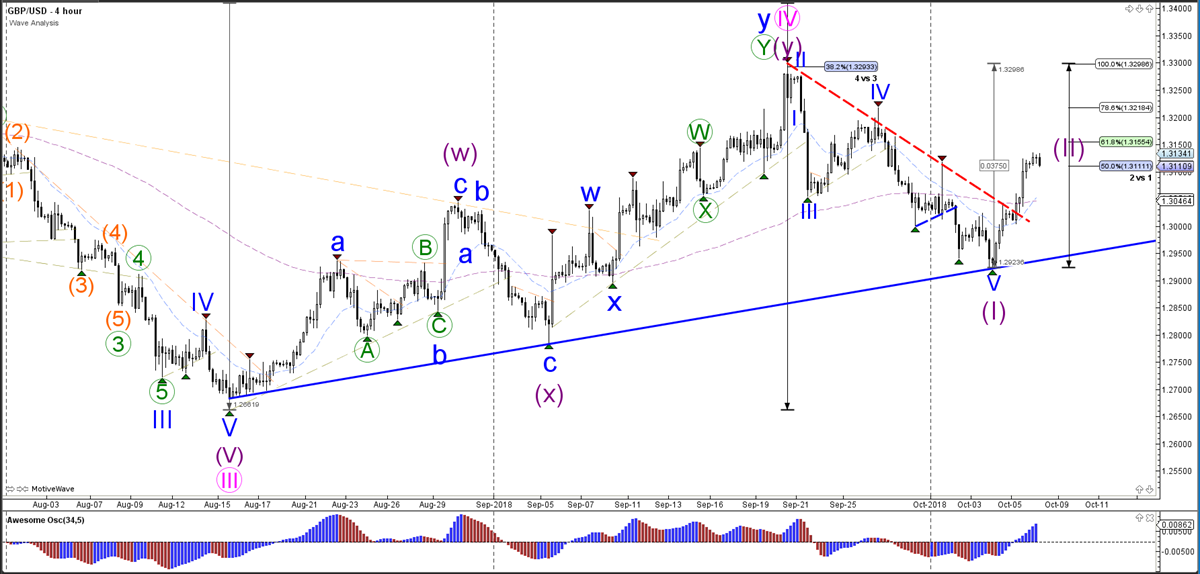
The GBP/USD currency pair seems to have completed a wave 4 (pink) correction at the 38.2% Fibonacci retracement level. The price, however, needs to break below the support trend line (blue) to confirm the start of the wave 5 (pink).
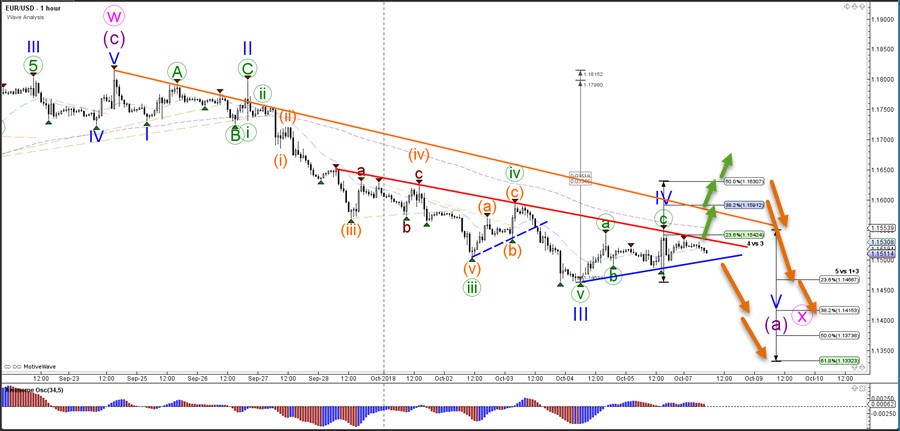
EUR/USD: Triangle Aims For 78.6% Fibonacci Support At 1.14
The EUR/USD is building a contracting triangle pattern and is awaiting a bullish or bearish breakout. A bullish breakout would make the wave X (pink) correction more likely whereas a bearish breakout could also indicate a downtrend.
Another key support zone for the EUR/USD is the 78.6% Fibonacci retracement level and a break below that could make the wave X (pink) less likely.
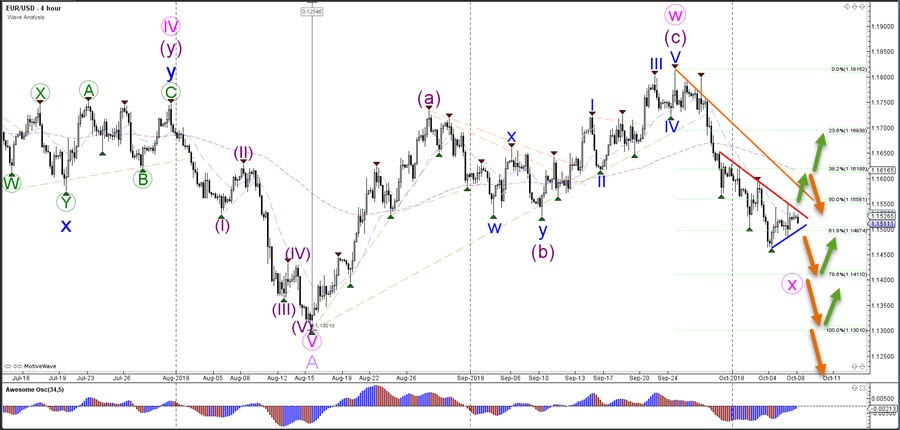
The EUR/USD made a pullback to the 23.6% Fibonacciretracement level of wave 4 vs 3, which has acted as resistance so far. A breakout below the support trend line (blue) would indicate a continuation lower. This could be as part of a wave 5 (blue) of wave A (purple) unless price breaks below the 78.6% Fib of the 4 hour chart because then a downtrend could be in play.
Trade War Induces China To Ease Monetary Policy Again
Market movers today
Key focus in European markets continues to be on Italy and the ongoing budget fight with the EU.
The UK and the EU are likely to negotiate heavily on Brexit in the coming week, ahead of the EU Summit on 18-19 October.
On the data front, today we will get German industrial production for August. Production has been weak in recent months, and a further decline in factory orders data on Friday points to continued headwinds to in production, as the car sector has been hit by new emission test procedures in Q3.
In the US, Fed member James Bullard (non-voter, dove) is set to speak.
In the Scandie markets, it is time for the Norwegian budget for 2019 (see next page).
Later this week, key data will be US inflation data, Chinese trade numbers and Swedish inflation.
Selected market news
Asian stocks came under pressure this morning, after China's central bank eased its monetary policy further over the weekend. The PBOC cut the reserve requirement ratios for most commercial banks by 1pp, freeing up capital in the banking system to assuage concerns about slowing economic growth. Recent months have already brought similar measures and we expect China to continue easing its monetary policy to cushion the adverse effect of further escalation in the ongoing US-China trade spat.
A weaker-than-expected US jobs report on Friday dampened some of the recent optimism regarding strong momentum in the US economy. Both payrolls (+134K) and earnings growth (2.8% y/y) disappointed, but we do not expect this to have a material impact on the Fed's hiking cycle. 10Y US Treasures pulled higher, topping 3.24%, while EUR/USD continues to trade around 1.15 this morning.
The Italian government released its new fiscal strategy, which probably left investors with more questions than before. Political tensions between the European Commission and Italy are growing as Deputy PM Di Maio dismissed concerns on Sunday that the current budget pointed to a significant deviation from the agreed fiscal path. The current stand-off between Italy and the Commission has led to renewed pressure on Italian government bond yields as well as the Italian equity market. The next focal point for markets will be 15 October, which is the deadline for the budget draft to be presented to Brussels, and our base case is now that the Commission will give a negative opinion on the Italian budget.
Brazil's presidential race goes into the second round, after far-right candidate Jair Bolsonaro came out on top, but at 46.3% failed to get an absolute majority. On 28 October he will face Workers' Party candidate Fernando Haddad (who got 28.9%) in a run-off.