Sample Category Title
WTI Oil Outlook: Bulls May Extend Consolidation Before Resuming, US Crude Stocks Data Eyed For Fresh Signal
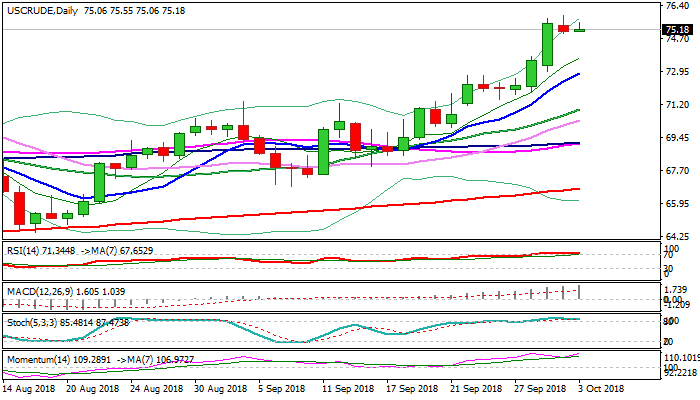
WTI oil price rose on Wednesday after shallow dip to $75 previous day, but remains under new four-year high at $75.89, posted yesterday.
Overall sentiment is bullish, as concerns about the impact on US sanctions on Iran rise and keep markets volatile. Fears of tighter oil market on supply shortage from Iran and Venezuela support price, which trades near the highest levels since late 2014 and bulls eye key double-Fibo barrier at $76.35/39 (Fibo 61.8% of $107.45/$26.04 / Fibo 138.2% expansion of the wave C from 66.85, 07 Sep trough).
Bulls were so far slightly impacted by repeated rise in US crude stocks (API report on Tuesday showed build of 0.90 million barrels vs previous week's build of 2.9 million barrels), with forecast for today's EIA report for 1.98 million barrels build vs previous week's build of 1.85 million barrels.
Stronger than expected build in crude inventories could delay bulls further, with extended dip to be seen as positioning for fresh advance, as bullish daily techs support scenario.
Extended pullback should find ground above $72.90 (rising 10SMA / Tuesday's low) to keep bulls intact.
Res: 75.34, 75.89, 76.35, 77.00
Sup: 74.92, 74.67, 73.76, 72.90
Italy Concerns Remains, May Seeks To Ease Brexit Fears
- Investors unconvinced by promises to trim Italian deficit;
- Eurosceptic coalition on collision course with Brussels;
- May takes to the podium as Brexit talks stall.
It's been a slightly more positive start to trading on Wednesday as investors welcome reports that the Italian government will seek to reduce the deficit over the next few years.
This follows a week in which the populist coalition government has embarked on a collision course with Brussels over its spending plans, as both parties attempt to stand by election pledges on spending and tax cuts while staying within the euros budget rules and not spreading panic among investors. After it was initially reported that the budget deficit would be 2.4% next year, investors bolted for the exits as this both exceeded expectations and was likely to be very problematic.
News that this will be reduced over the following years with the aim of falling to 2% by 2021 has come as a mild relief – enough for the FTSE MIB to pare some losses and Italian yields to drop slightly – but it's still higher than investors are clearly comfortable with. It has raised serious questions over the assumptions that have coincided with the projections, whether the targets are achievable and how the government would respond if the deficit doesn't shrink as they expect.
This leaves the Italian government on a collision course with Brussels, something I have no doubt they will relish given the eurosceptic views they hold and the opportunity it presents to cast them as unelected and unaccountable dictators seeking to prevent them following the will of the voters. The constant claims about how much better off Italy could be outside the euro – with yesterday's claims on its own currency solving most problems being the latest – are clearly an attempt to sway public opinion and the budget presents an ideal opportunity to continue these efforts.
In the near-term, concerns about Italy are primarily related to spending and the impact on its already bloated debts but in the longer-term, they also reflect the very real risk that the public could become more eurosceptic and talk of referendums could follow. For now, this is likely to be some time away and the fragility of the Italian banking sector and still large holdings of Italian bonds make investors very nervous.
In the UK, all eyes will be on the Tory annual conference where Prime Minister Theresa May is due to speak. With Brexit negotiations at a standstill as both sides are seemingly unable to agree on a solution to the North Irish border and support for May's Chequers plan hanging by a thread, people are looking for some much needed clarity on how things will proceed, although they may have to instead settle for more generic optimistic rhetoric and hope for no repeat of last year's quite shambolic performance.
The pound has been extremely sensitive to any Brexit developments, no matter how significant, so we could see plenty of volatility during today's speech. There have been reports that May is preparing a compromise on the border issue, in an attempt to get talks moving again, but I struggle to see where May will generate support on this from so it may have the same lifespan as the numerous other failed proposals.
Fed Evans: A slightly restrictive policy could keep extremely well economy going
Chicago Fed President Charles Evans said the US economy is doing "extremely well", the "fundamentals are strong, the labor market is doing terrific." He added that "I spent quite a long time indicating that I think inflation needs to get up to 2 percent, and here we are." Evans also noted "by setting the policy rate just a little above neutral, that will continue to keep things going for quite some time" referring to the "very well" state the economy is in.
Though, he also indicated that "Long-term inflation expectations are now, in my opinion, a little bit too low." Therefore, " we don't have to raise the funds rate as restrictively as we may have in the past.". And, "if the outlook continues to be as good as it is, at a slightly restrictive level and then hold there for quite some time until we begin to see signs that we need to make an adjustment."
Italy: Risk On, Risk Off?
Wednesday October 3: Five things the markets are talking about
European markets have so far shrugged off losses in Asia to post gains this morning amid hopes that Italy’s budget deficit could be lowered, but concerns about the country’s debt and budget plans remain.
The EUR (€1.1573) has rallied from yesterday’s six-week lows on hopes that Italy’s draft budget plan will pledge to cut the deficit to +2% in 2021, revising the government’s initial proposal. Italian bonds have surged after four-days of selling.
At least for the time being, the lack of contagion in the rest of the eurozone bond market from the rise in Italian government bonds shows that the budget talks are still perceived as a local issue, and this despite, Italy’s +2.4% deficit plan is a significant deviation from previous commitments.
Elsewhere, U.S Treasury yields remain atop of their recent highs after Fed Chair Powell yesterday welcomed wage growth, but expressed confidence that low unemployment would not support inflation that would require aggressive tightening.
Later this morning, U.K PM Theresa May will be speaking at the Tory party’s annual conference. Expect Brexit rhetoric to affect a hypersensitive sterling.
1. Stocks mixed results
In Japan, equities came under pressure overnight as automakers fell on a sharp decline in U.S new car sales last month and while financials retreated mostly on profit taking. The Nikkei share average lost -0.7%, though it was still holding at 27-year highs. The broader Topix fell -1.2%.
Down-under, Aussie stocks rallied from strong gains in resource-related stocks overnight, helped by higher gold and metal prices, while financials ended lower despite earlier gains. The S&P/ASX 200 index rose +0.3% at the close of trade. The benchmark fell -0.8% on Tuesday.
Note: Both China and S. Korea were closed for a holiday.
In Hong Kong, stocks fell for a second consecutive day, with investors staying on the sidelines preferring to look for hints on policy direction from China. The Hang Seng Index was down -0.52%.
In Europe, regional bourses have opened higher across the board. Investor risk sentiment has improved after Italian press reports new budget plans (see below). The financial and Telecom sector are the best performers, while the material sector is underperforming. Germany is closed for a holiday.
U.S stocks are set to open in the ‘black’ (+0.2%).
Indices: Stoxx600 +0.3% at 383.2, FTSE +0.2% at 7,487, DAX closed, CAC-40 +0.2% at 5,476, IBEX-35 +0.1% at 9,314, FTSE MIB +0.3% at 20,618, SMI +0.6% at 9,145, S&P 500 Futures +0.2%
2. Oil trades atop of its four-year highs
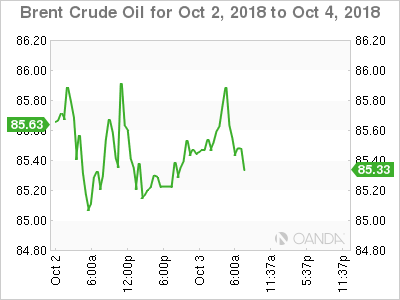
Oil trades atop of its four-year highs this morning, supported by expectations that U.S sanctions on Iran will tighten supply and strain the ability of the Saudi’s and other producers to pump more.
Brent crude is up +38c at +$85.18 a barrel. It reached +$85.45 on Monday, its highest level since November 2014. U.S crude (WTI) is up +24c at +$75.47.
Crude exports from Iran, OPEC’s third-largest producer, are already falling as the U.S sanctions kick in on November 4 deters buyers.
A recent survey of OPEC production found Iranian output in September fell by -100K bpd, while production from the group as a whole rose by +90K bpd from August.
Note: Crude prices have roughly tripled from lows hit in January 2016 after the OPEC and Russia cut output.
OPEC has so far ruled out any further production increase, beyond delivering the boost agreed in June, despite prices rallying further and more pressure from Trump.
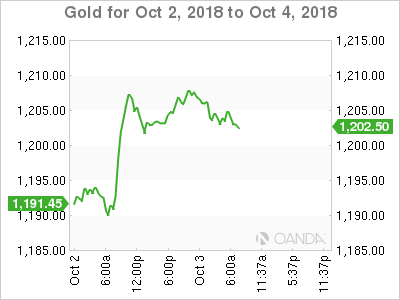
Ahead of the U.S open, gold prices have edged a tad higher in the Euro session after gaining over +1% yesterday, supported by safe-haven demand as Italy’s budget plan sets it on course for a potential clash with the E.U. Spot gold is up +0.1% at +$1,203.31, while U.S gold futures are up +0.1% to +$1,207.06 an ounce.
 3. Italian yields fall
In Europe, Italian bonds are rallying as some of the yesterday’s worries have eased on signs that Rome is open to cutting its budget deficits and debt in coming years.
Note: There are reports that the Italian deficit would fall to +2.2% of GDP in 2020 and to +2% in 2021 from the +2.4% earlier outlined.
Italian 2-year BTP yields have fallen -21 bps to +1.381%
In Germany, the 10-year Bund yields trade higher, indicating less investor appetite for safe havens amid the Italian turmoil. The 10-year Bund yield is trading +2 bps higher at +0.45%, while the 10-year BTP yield is trading -8 bps lower at +3.34%.
Elsewhere, the yield on U.S 10-year Treasuries has gained +1 bps to +3.07%.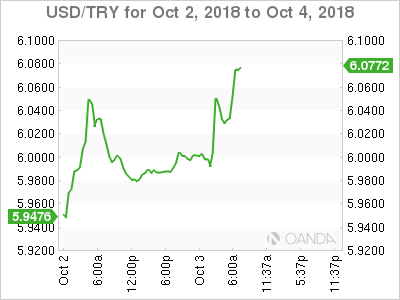
4. TRY falls on inflation data
The Turkish lira is under pressure after data this morning showed annual Turkish inflation jumped to +24.52% in September from +17.90% in August, lifting USD/TRY to a five-day high of $6.0912.
Note: The Central Bank of the Republic of Turkey (CBRT) has been reluctant in the past to hike rates to curb inflation, especially since President Erdogan has previously expressed a preference for lower interest rates.
The EUR (€1.1565) continues to be driven by the Italian budget projections, this time going up on reports that Italy may not pencil in another 2.4% deficit-to-GDP projection for 2020 and 2021.
Sterling (£1.3004) is again trading atop of the psychological £1.30 handle. Expect the pound to remain hypersensitive to Brexit comments from PM Theresa May when she addresses party members at the Conservative party conference this morning.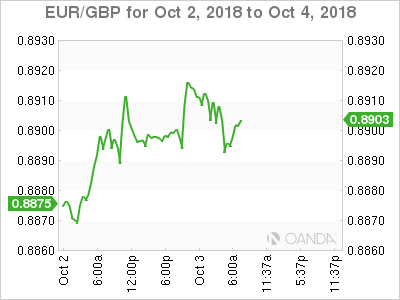
5. Eurozone retail sales fall for second consecutive month
Data this morning showed Eurozone retail sales fell for a second straight month in August, which may suggest that that economic growth has yet to rebound significantly from a slowdown in H1.
Eurostat reported retail sales across the 19-countries that use the ‘single’ unit was -0.2% lower in August than in July, although +1.8% up on the same month of 2017.
Last year, a surge in exports drove eurozone economic growth, but a weakening in overseas sales has been behind a loss of momentum this year. That has left the economy more reliant on household spending to drive the expansion, and falling retail sales are a major concern.
Note: Eurostat also cut its estimate for July to -0.6%, having previously calculated that sales fell by -0.2%.
Digging deeper, the drop in sales comes despite a fall in eurozone unemployment and a pickup in wage growth. But energy prices have risen more sharply over recent months, eating into the income available to spend on other goods and services.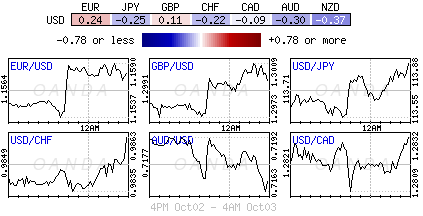
DAX Under Pressure Over Italy Budget
The DAX index has posted losses in the Wednesday session. Currently, the index is at 12,287 points, down 0.42% since Tuesday. In economic news, Germany and Eurozone services PMIs improved in September, with readings of 55.9 and 54.7 points, respectively. Eurozone retail sales declined 0.2%, missing the estimate of +0.2%.
The German and Eurozone services PMIs continued to show expansion in September. German Services PMI climbed from 55.0 to 55.9 points. This reading was the strongest since February, but missed the forecast of 56.5 points. Eurozone Services PMI improved to 54.7, matching the forecast. The news was less rosy from Eurozone retail sales, which posted a decline of 0.2% for a second straight month.
With Italy and the EU on a possible collision course over Italy’s budget, European markets remain under pressure. The European Union is unhappy with the proposed Italian budget, which increases spending, lowers taxes and sets the budget deficit at 2.4% of GDP for 2019. The European Commission must approve the budget, and EU policymakers have been pushing Rome to reduce the current deficit, which stands at 1.6% of GDP. EU Commissioner Pierre Moscovici said last week that the budget could breach EU fiscal regulations and called the Italian deficit “explosive”. The populist Italian government appeared to backtrack on Wednesday, and has now said that the budget deficit could be lowered in 2020 and 2021. Still, the budget remains a sore point for the EU, and the euro could lose ground if the EU and Italy remain at loggerheads over Italy’s fiscal policy.
EUR/USD – Euro Pauses From Slide As Italy Backtracks On Budget
EUR/USD has paused after recording losses for five straight sessions. Currently, the pair is trading at 1.1563, down 0.12% on the day. In economic news, Germany and Eurozone services PMIs improved in September, with readings of 55.9 and 54.7 points, respectively. Eurozone retail sales declined 0.2%, missing the estimate of +0.2%. In the U.S, ADP nonfarm payrolls will kick off a host of employment indicators during the week. The indicator is expected to jump to 185 thousand. We’ll also get a look at ISM Non-Manufacturing PMI, which is forecast to drop to 58.0 points. On Thursday, the U.S releases unemployment claims.
The German and Eurozone services sectors ended the third quarter on a high note, as services PMIs pointed to expansion. German Services PMI climbed from 55.0 to 55.9 points. This reading was the strongest since February, but missed the forecast of 56.5 points. Eurozone Services PMI improved to 54.7, matching the forecast. The news was less rosy from Eurozone retail sales, which posted a decline of 0.2% for a second straight month.
After sharp losses last week, the euro remains under pressure. On Tuesday, EUR/USD touched a low of 1.1505, its lowest level since mid-August. With Italy and the EU on a possible collision course over Italy’s budget, there could be more headwinds for the euro. The European Union is unhappy with the proposed Italian budget, which increases spending, lowers taxes and sets the budget deficit at 2.4% of GDP for 2019. The European Commission must approve the budget, and EU policymakers have been pushing Rome to reduce the current deficit, which stands at 1.6% of GDP. EU Commissioner Pierre Moscovici said last week that the budget could breach EU fiscal regulations and called the Italian deficit “explosive”. The populist Italian government appeared to backtrack on Wednesday, and has now said that the budget deficit could be lowered in 2020 and 2021. Still, the budget remains a sore point for the EU, and the euro could lose ground if the EU and Italy remain at loggerheads over Italy’s fiscal policy.
Italy EM Tria: Gradual reduction in deficit after 2019
Italy Economy Minister Giovanni Tria said today that the while the budget deficit will increased compared with previous forecast in 2019, "there will be a gradual reduction in the following years". His comments echo reports that the populist government has revised their original plan after strong pressure from the EU.
Originally, the plan was to have budget deficit target at 2.4% of GDP in the three years from 2019. But according to unnamed government sources, the plan now is to keep 2.4% in 2019, but lower to 2.2% in 2020 and then 2% in 2021.
Prime Minister Giuseppe Conte is due to meet with key ministers today. The details could then be defined after the meeting.
The Analytical Overview Of The Main Currency Pairs
The EUR/USD currency pair
Technical indicators of the currency pair:
Prev Open: 1.15791
Open: 1.15457
% chg. over the last day: -0.23
Day's range: 1.15752 – 1.15842
52 wk range: 1.0571 – 1.2557
During yesterday's trading session, sales prevailed on the EUR/USD currency pair. The euro weakened against a basket of currencies due to resumed concerns about the Italian budget. Today, quotes have started recovering. At the moment, the key support and resistance levels are: 1.15600 and 1.16000, respectively. We recommend opening positions from these marks.
The news feed on 2018.10.03:
ADP nonfarm employment change in the US at 15:15 (GMT+3:00);
ISM non-manufacturing business activity in the US at 17:00 (GMT+3:00).
We also recommend paying attention to the speech by the Fed Chairman Powell.
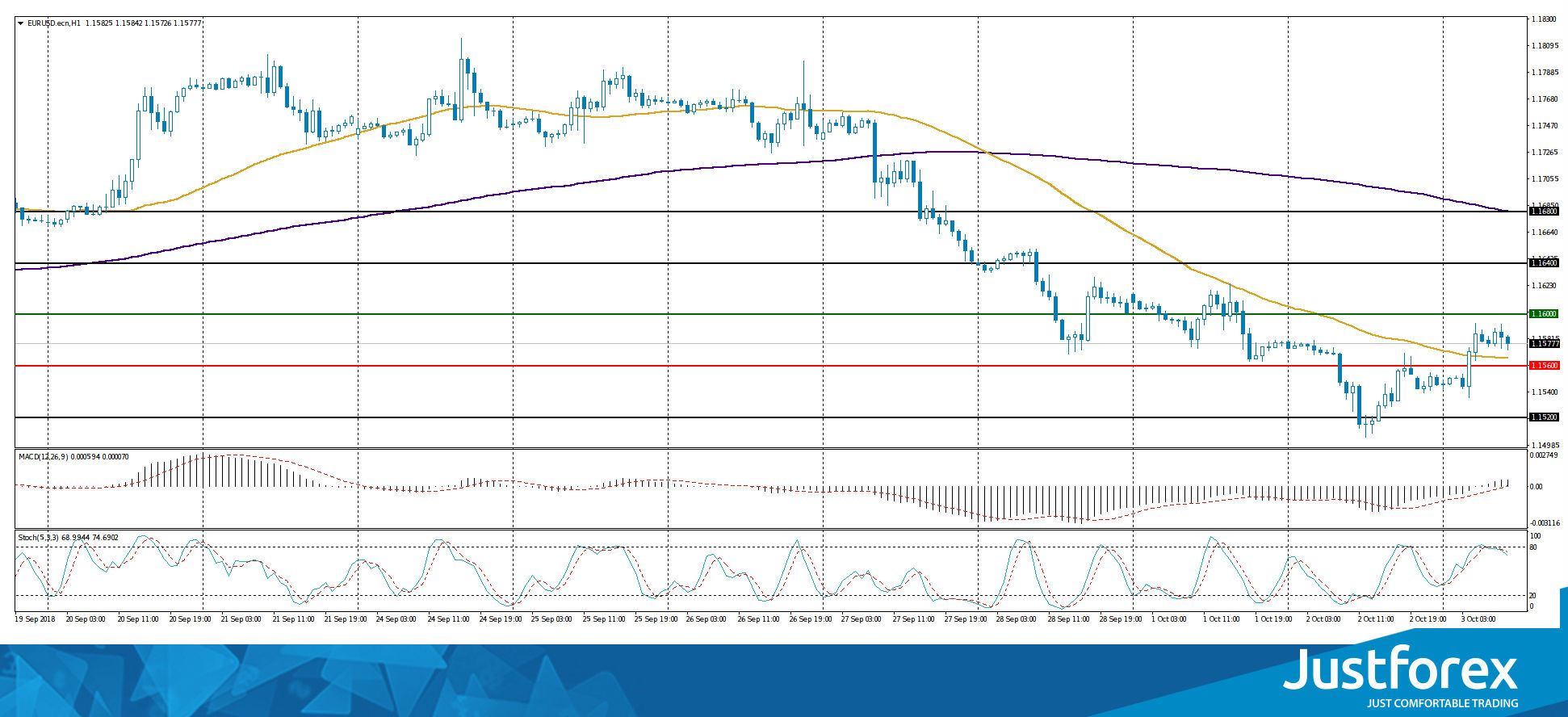
Indicators do not send accurate signals: the price has fixed between 50 MA and 200 MA.
The MACD histogram has moved to the positive zone, which gives a signal to buy EUR/USD.
Stochastic Oscillator is in the neutral zone, the %K line has crossed the %D line. There are no accurate signals.
Trading recommendations
Support levels: 1.15600, 1.15200
Resistance levels: 1.16000, 1.16400, 1.16800
If the price fixes below the support level of 1.15600, a further drop in the EUR/USD quotes is expected. The movement is tending to 1.15200-1.15000.
Alternative option. If the price fixes above the round level of 1.16000, we recommend considering purchases. The target movement level is 1.16400-1.16800.
The GBP/USD currency pair
Technical indicators of the currency pair:
Prev Open: 1.30423
Open: 1.29770
% chg. over the last day: -0.49
Day's range: 1.29972 – 1.30082
52 wk range: 1.2361 – 1.4345
Yesterday, the bearish sentiment was observed on the GBP/USD currency pair. In September, the index of economic activity in the UK construction sector fell from 52.9 to 52.1. Today, the correction of the quotes is observed. At the moment, the key support and resistance levels are: 1.29700 and 1.30200, respectively. Positions should be opened from these marks. Investors expect additional drivers.
At 11:30 (GMT+3:00) the index of economic activity in the UK services sector will be published.
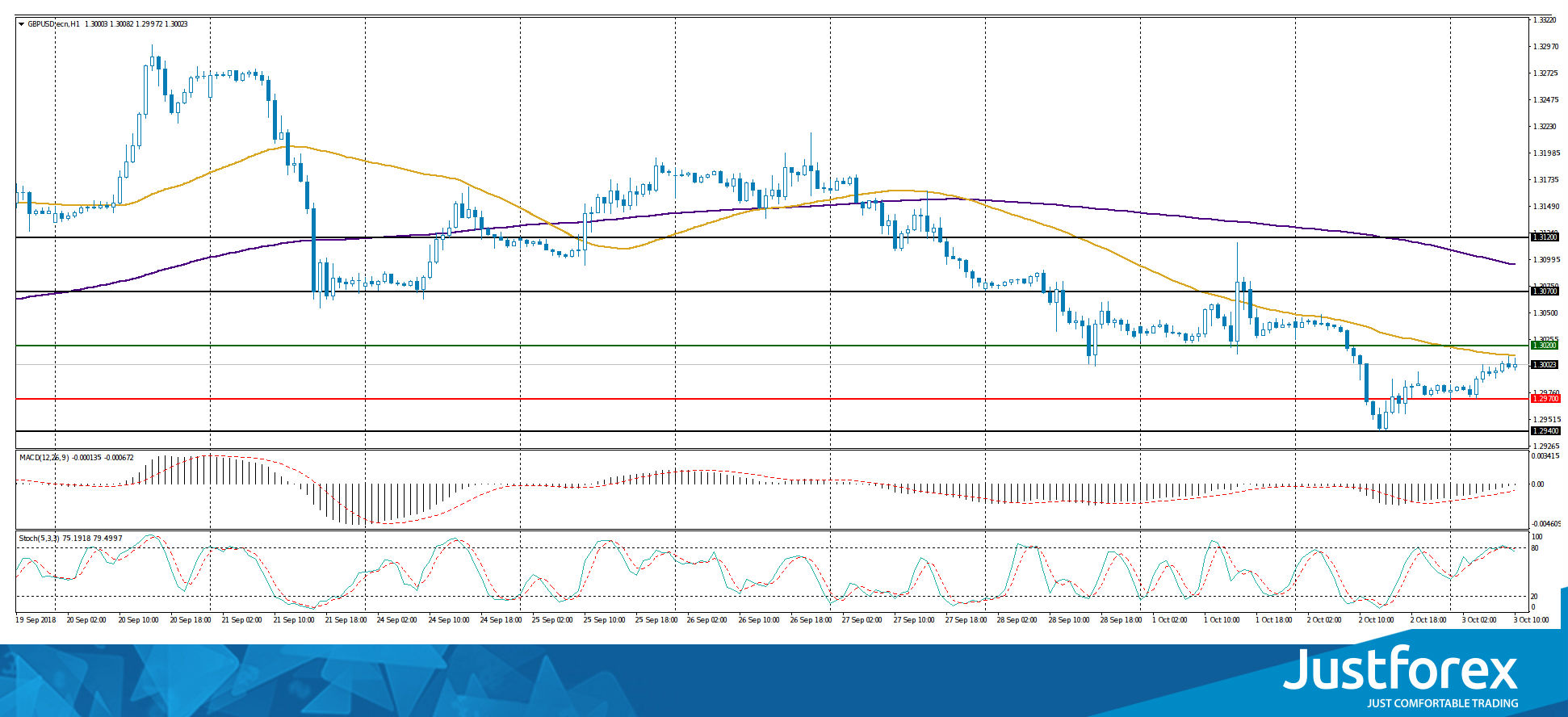
Indicators do not send accurate signals. The price is testing 50 MA.
The MACD histogram is near the 0 mark.
Stochastic Oscillator is located near the overbought zone, the %K line has crossed the %D line. There are no accurate signals.
Trading recommendations
Support levels: 1.29700, 1.29400, 1.29000
Resistance levels: 1.30200, 1.30700, 1.31200
If the price fixes below the support level of 1.29700, a further drop in the GBP/USD quotes is expected. The movement is tending to 1.29400-1.29000.
An alternative may be the growth of the GBP/USD currency pair to the level of 1.30700-1.31000.
The USD/CAD currency pair
Technical indicators of the currency pair:
Prev Open: 1.28095
Open: 1.28233
% chg. over the last day: +0.06
Day's range: 1.28215 – 1.28322
52 wk range: 1.2059 – 1.3795
At the moment, the technical pattern on the USD/CAD currency pair is ambiguous. Quotes are in a sideways trend. Investors assess a new trade agreement (USMCA) between the United States, Mexico and Canada. The key support and resistance levels are: 1.28100 and 1.28500, respectively. Positions should be opened from these marks. In the near future, correction of the USD/CAD quotes is not excluded.
Today, the publication of important economic reports from Canada is not planned.
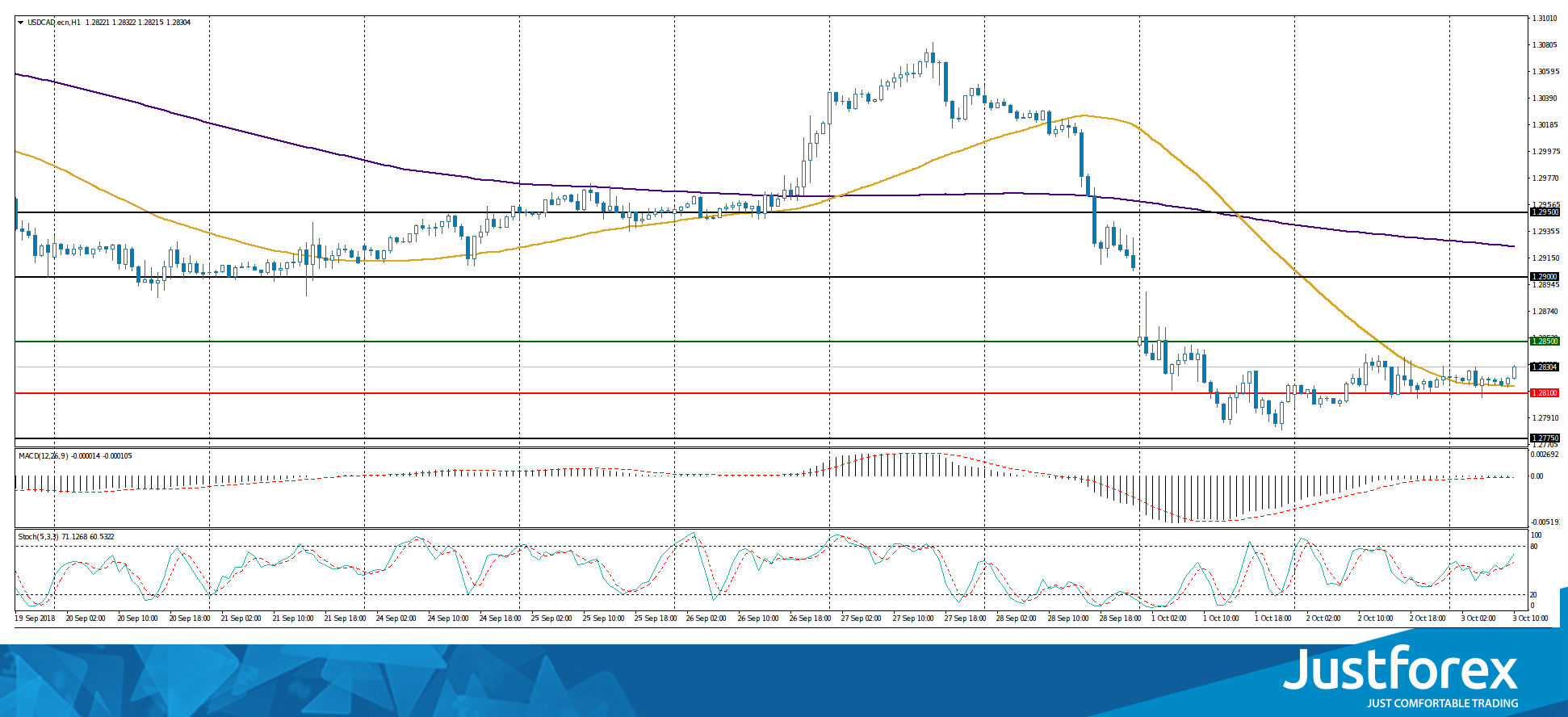
Indicators do not send accurate signals: the price has crossed 50 MA.
The MACD histogram is near the 0 mark.
The Stochastic Oscillator is in the neutral zone, the %K line is above the %D line, which indicates the growth of the USD/CAD quotes.
Trading recommendations
Support levels: 1.28100, 1.27750
Resistance levels: 1.28500, 1.29000, 1.29500
If the price fixes below 1.28100, we recommend looking for entry points to the market to open short positions. The target level for profit taking is 1.27750-1.27500.
Alternative option. If the price fixes above the resistance level of 1.28500, correction of the USD/CAD quotes is expected. The movement is tending to 1.29000-1.29200.
The USD/JPY currency pair
Technical indicators of the currency pair:
Prev Open: 113.875
Open: 113.632
% chg. over the last day: -0.32
Day's range: 113.875 – 113.882
52 wk range: 104.56 – 114.74
There is a variety of trends on the USD/JPY currency pair. Financial market participants expect additional drivers. At the moment, the key support and resistance levels are: 113.700 and 114.000, respectively. In the near future technical correction is not excluded. We recommend paying attention to the US government bonds yield, as well as to the news feed from the United States.
The news feed on the economy of Japan is calm.
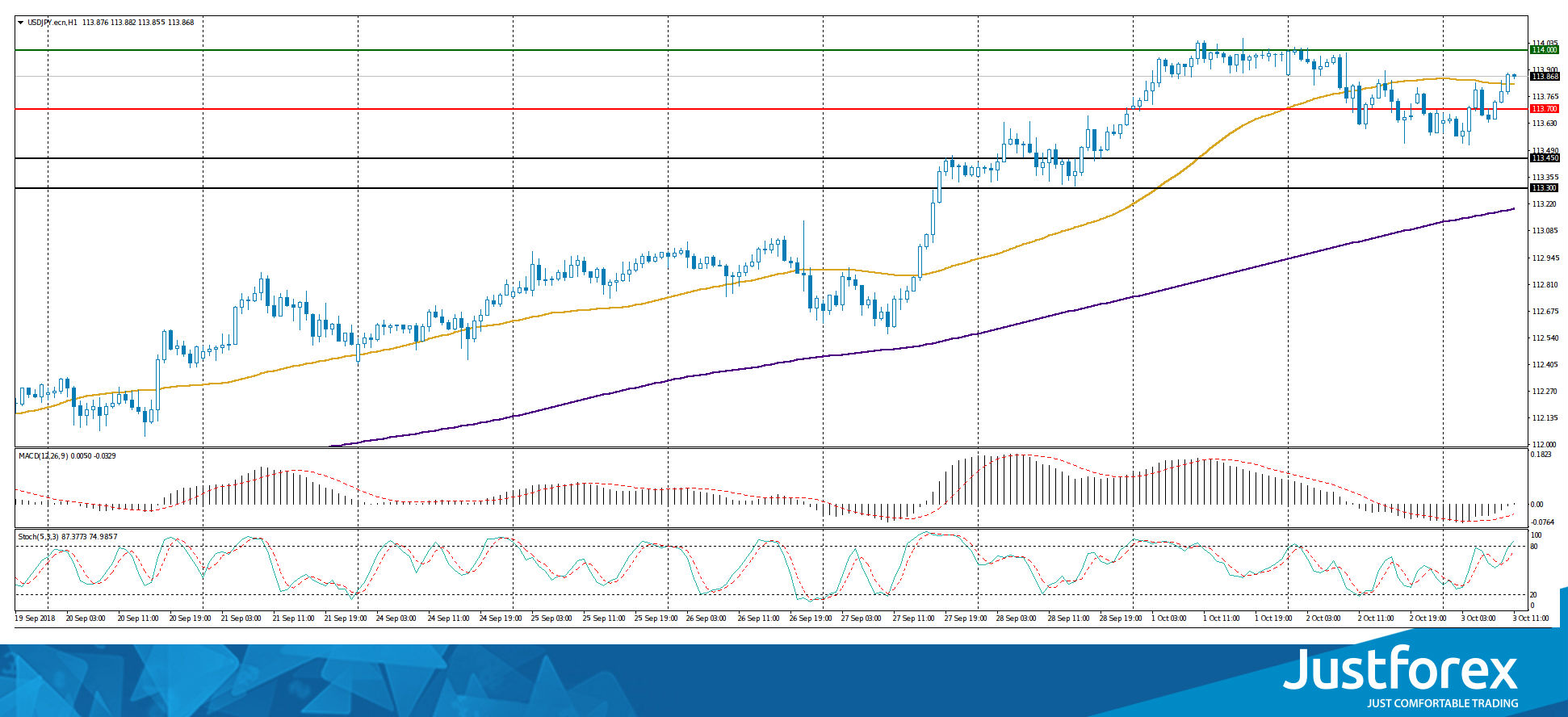
Indicators do not send accurate signals: the price has crossed 50 MA.
The MACD histogram is located near the 0 mark.
Stochastic Oscillator is located near the overbought zone, the %K line is above the %D line, which gives a weak signal to buy USD/JPY.
Trading recommendations
Support levels: 113.700, 113.450, 113.300
Resistance levels: 114.000, 114.500
If the price fixes below the support level of 113.700, correction of the USD/JPY currency pair is expected. The movement is tending to 113.400-113.200.
An alternative may be a further growth of the USD/JPY quotes to the level of 114.200-114.400.
USDJPY Correction Looks To Be Over
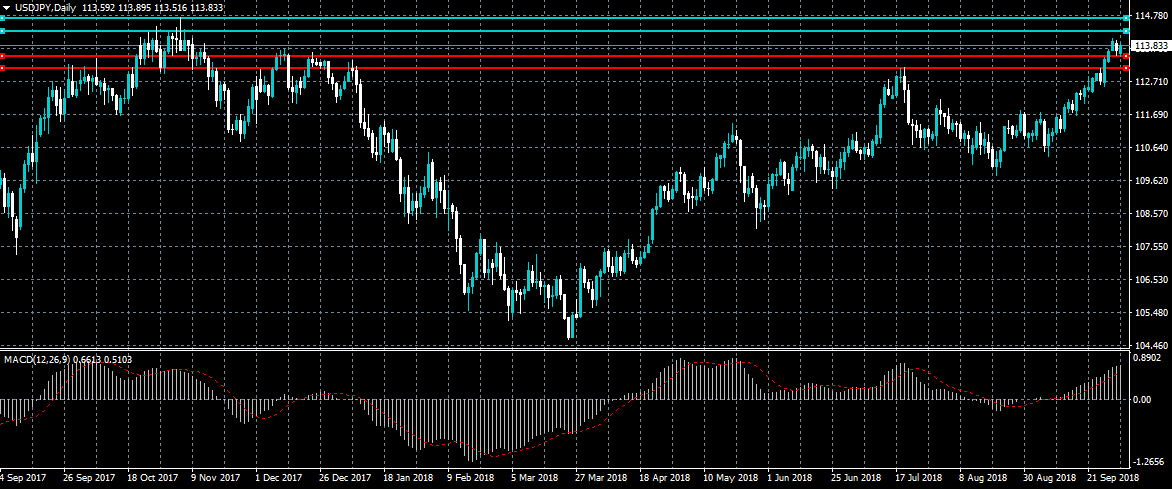
The US dollar has started to move higher against the Japanese yen currency, as Tuesday's much needed technical correction appears to be over. Buyers now need to break the 114.06 level, while sellers will need to force price below the 113.51 level to change the sentiment towards the USDJPY pair. Traders await scheduled speeches from a host of FOMC members and US PMI Manufacturing data.
The USDJPY pair is bullish while trading above the 113.80 level, key resistance above the 114.06 level is found at the 114.43 and 114.80 areas.
If the USDJPY pair moves below the 113.51 level, key technical support is found at the 113.30 and 112.92 levels.
GBPUSD Gaining Momentum As MACD Turns Higher
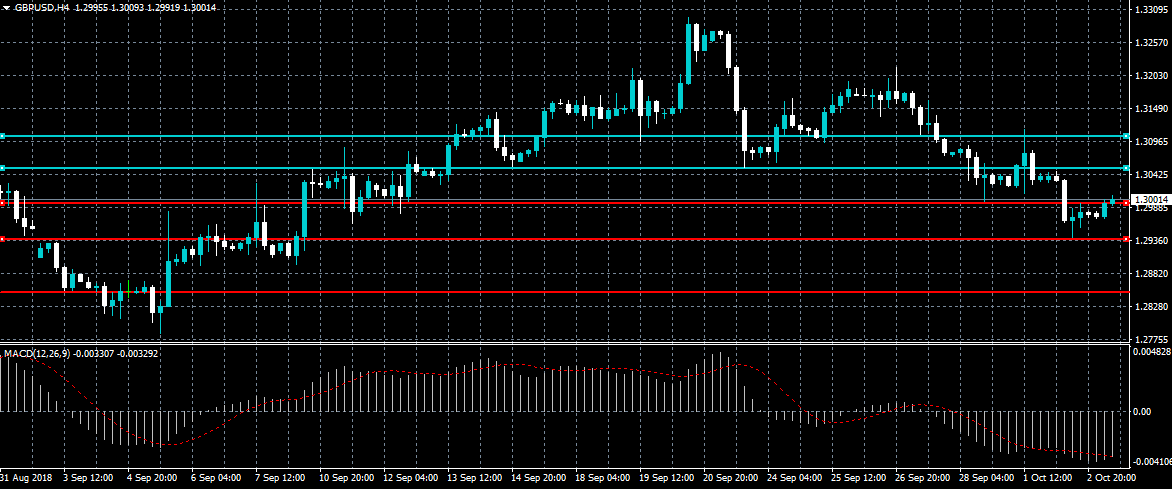
The British pound is starting to trade above the psychological 1.3000 level against the US dollar, despite UK PMI Services data coming in weaker than expected with a 53.9 reading. Buyers will aim to move price above the 1.3100 level if the bullish momentum continues, while sellers need to break the 1.2970 level. The MACD indicator is also attempting to trend higher across the four-hour time frame after a protracted downturn earlier this week.
The GBPUSD pair is bullish while trading above the 1.3000 level, key resistance is now found at the 1.3046 and 1.3100 levels.
If the GBPUSD pair trades below 1.3000 level, key support is found at the 1.2970 and 1.2860 levels.