Sample Category Title
Dollar Surged on Hawkish Fed While Treasury Yield Broke Significant Resistance
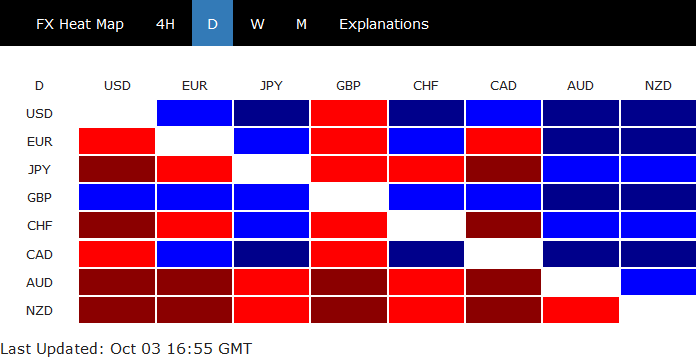
Dollar surged sharply overnight as boosted by hawkish Fedspeaks, strong rally in treasury yields as well as, solid services data. The greenback is paring some gains in Asian session, to Yen and Swiss Franc on risk aversion. But overall, Dollar remains firm, awaiting tomorrow's non-farm payroll report for more upside acceleration. Australian Dollar and New Zealand Dollar are the weakest ones, pressured by monetary policy divergence as well as falling Asian stocks.
DOW hit record high at 26951.81 overnight but pared back much gain to close at 26828.39, up only 0.20%. S&P 500 closed up 0.07% and NASDAQ gained 0.32%. The biggest movers were in bond markets. 10-year yield closed up 0.105 at 3.161, broken 3.115 key resistance with much conviction. Risk sentiments turned sour in Asia though. Nikkei is currently down -0.60%, Hong Kong HSI is down -1.68%. Singapore Strait Times is down -0.98%. China is still on holiday.
Technically, the immediately focus now is on 0.7084 in AUD/USD. Firm break there will resume the medium term down trend from 0.8135, January high. Another focus is 114.73 key medium term structural resistance in USD/JPY, which the pair could take on before end of the week.
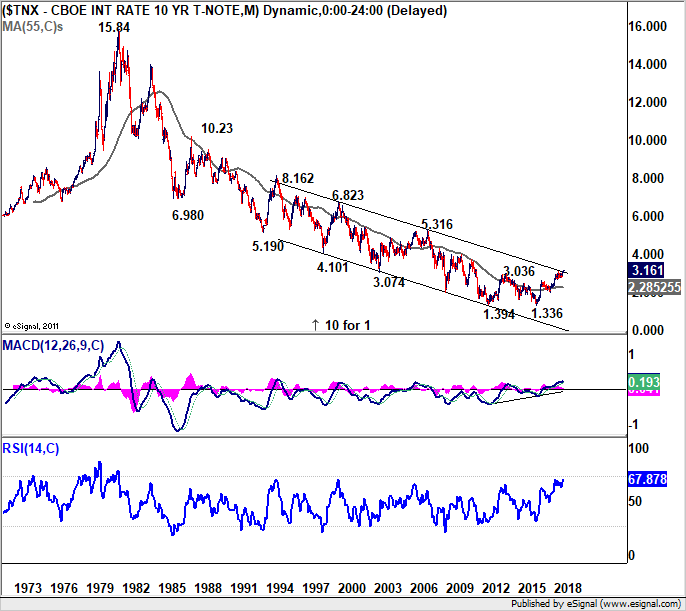
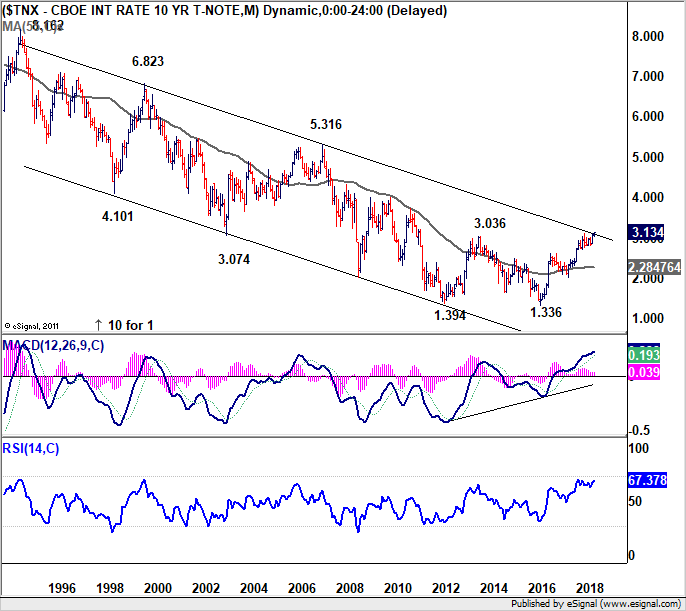
10 year yield breached multi-decade channel resistance
Rally in treasury yield carries much significance. 10-year yield has now breached multi-decade channel resistance. Of course, for now it's just a slight breach and confirms nothing considering the time frame. But the US economy is in an excellent shape which suggests more upside lies ahead in treasury yields. And sustained break of the channel would more likely be seen than not.
Powell led a chorus of hawkish Fedspeaks
Fed Chair Jerome Powell repeated his upbeat comments today. He said the US is experiencing "a remarkably positive set of economic circumstances, and we're working hard to try to sustain the expansion and keep unemployment low and keep inflation right on target". And, "there's really no reason to think that this cycle can't continue for quite some time." On interest rates, he said they are "still accommodative" and "we're gradually moving to a place where they'll be neutral." He added that "we may go past neutral. But we're a long way from neutral at this point, probably."
Other comments from Fed officials were generally hawkish. Chicago Fed President Charles Evans said "getting policy up to a slightly restrictive setting -- 3, 3.25 percent -- would be consistent with the strong economy and good inflation that we are looking at."
Philadelphia Fed President Patrick Harker said he preferred Fed's rate hike schedule to avoid inverting the yield curve and "it's just a question of timing". He added there is no need to "rush the normalization process". For now his forecasts are ""three this year, two next year, two year after."
Cleveland Fed President Loretta Mester said she supported a gradual pace of hiking. But she also noted that "if we end up having inflation move high up" or if it goes too much above target, "then we need to move policy faster."
Richmond Fed President Tom Barkin said "growth is solid, unemployment is low, and inflation is at target". He didn't touch directly on monetary policy but struck a tone of caution on flattening yield curve which "could suggest markets are losing confidence in the outlook.''
Italy PM Conte hailed budget respected commitments, it's courageous and serious
Italian Prime Minister Giuseppe Conte confirmed the budget deficits plan after meeting of ministers yesterday. The deficit targets are now 2.4% of GDP in 2019, 2.1% in 2020 and 1.8% in 2021. Conte predicted debt-to-GDP ratio to fall slightly from the current 131% to 130% in 2019, and then drop further to 126.5% by 2021.
Conte hailed the budget as "respected commitments, it is courageous and serious". And he added "we will show courage above all in 2019, because we believe that our country needs a budget that calls for strong growth".
Economy Minister Giovanni Tria said there would be additional investments of 0.2% in 2019, 0.3% in 2020, and 0.4% in 2021. And, he added "this describes the quality of the budget: we're aiming to have public investments as principal instrument to work on growth".
On the data front
Australia trade surplus widened to AUD 1.60B in August. Later in the day, US will release Challenger job cuts, jobless claims and factory orders. Canada will release Ivey PMI.
AUD/USD Daily Outlook
Daily Pivots: (S1) 0.7070; (P) 0.7134; (R1) 0.7166; More...
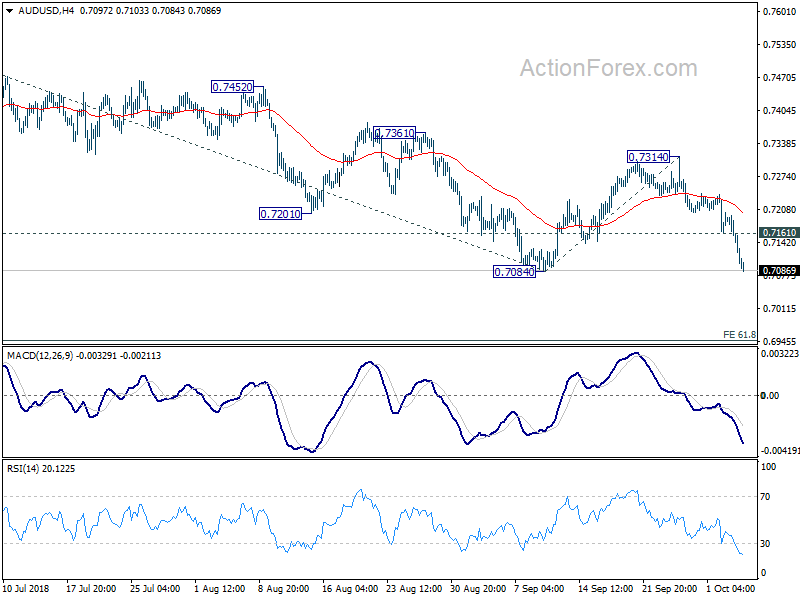
AUD/USD drops to as low as as 0.7084 so far as fall from 0.7314 extends. Intraday bias remains on the downside. Larger decline from 0.8135 is likely resuming. Break of 0.7084 will target 61.8% projection of 0.7676 to 0.7084 from 0.7314 at 0.6948 next. On the upside, break of 0.7161 minor resistance is needed to indicate short term bottoming. Otherwise, outlook will stay bearish in case of recovery.
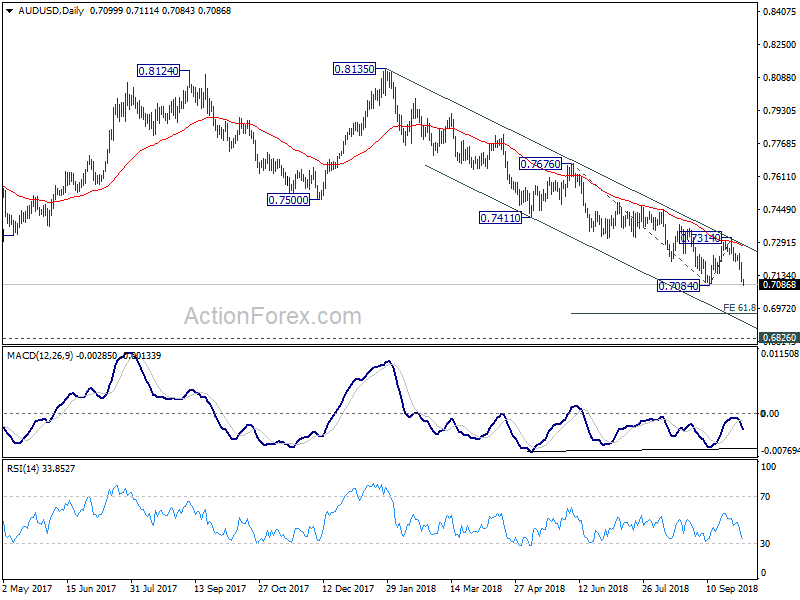
In the bigger picture, rebound from 0.6826 (2016 low) is seen as a corrective move that should be completed at 0.8135. Fall from there would extend to have a test on 0.6826. There is prospect of resuming long term down trend from 1.1079 (2011 high). Current downside momentum as seen in weekly MACD support this bearish case. Firm break of 0.6826 will target 0.6008 key support next (2008 low). On the upside, break of 0.7361 resistance, however, argues that a medium term bottom is possibly in place, and stronger rebound could follow. We'll assess the medium term outlook later if this happens.
Economic Indicators Update
| GMT | Ccy | Events | Actual | Forecast | Previous | Revised |
|---|---|---|---|---|---|---|
| 1:30 | AUD | Trade Balance Aug | 1.60B | 1.45B | 1.55B | |
| 11:30 | USD | Challenger Job Cuts Y/Y Sep | 13.70% | |||
| 12:30 | USD | Initial Jobless Claims (SEP 29) | 206K | 214K | ||
| 14:00 | CAD | Ivey PMI Sep | 61.4 | 61.9 | ||
| 14:00 | USD | Factory Orders Aug | 0.90% | -0.80% | ||
| 14:30 | USD | Natural Gas Storage | 46B |
Market Morning Briefing: Dollar Yen Should Test Its Nov ’17 High Of 115 By Next Week
STOCKS
Dow (26828.39, +0.20%) has moved up and is likely to test 27000 this week before seeing a short corrective dip from there. Support is seen near 26500 which if holds in the medium term could push the prices to levels above 27000. Medium term looks bullish.
Dax (12287.58, -0.42%) could trade in the 12200-12500 region in the near term. 12500 is a strong resistance just now but could eventually break on the upside in the medium term. In the weekly charts, a rise towards 12600-12800 in the longer run looks likely.
Nikkei (24043.48, -0.28%) has been coming off in the last 2-sessions. While below 24400, we could see a test of 23600 on the downside. Thereafter a rise back towards 24400+ is possible in the longer run.
Nifty (10858.25, -1.36%) could spend some time ranged above 10800 gradually attempting to rise towards 11200. Unless a break below 10800 is seen, we may expect support at 10800 to hold in the medium term.
COMMODITIES
Precious metals and Copper looks stable in the near term while the rally in Crude prices continue.
Commercial crude stored in US rose by 8mln barrels in the week ended 28th Sep according to government data. Saudi Arabia has increased oil output to head towards record high as per a news source. While the worries of cut in OPEC countries oil exports remain, Crude prices could continue to move up this month before the actual Iran sanctions date comes closer.
Brent (86.10) and WTI (76.23) are trading above the immediate resistance levels mentioned yesterday. While the crude prices head higher, a test of $90 and $80 is on the cards for the near term.
Gold (1200.60) and Copper (2.8225) are trading in a sideways range of 1190-1220 and 2.75-2.85 respectively and is likely to remain stable during the rest of the week. No major movement is expected in the near term unless a break on either side of the range is seen.
FOREX
A rise towards 90 on Brent could further weaken the Rupee towards 74.45 and then towards 75.27. US NFP data tomorrow could trigger further global Dollar strength.
Dollar Index (96.087) : In line with our expectation, Dollar Index broke above immediate resistance near 95.75 and now looks set to test long term resistance near 96.5 in the next couple of sessions. Watch out for US employment data tomorrow - it could trigger a break above 96.5.
Euro (1.1469) : As expected, Euro seems well on its way to test long term support near 1.14 in the next couple of sessions. It is likely to target the 200 weeks MA near 1.132 in the next couple of weeks.
Dollar Yen (114.35) should test its Nov '17 high of 115 by next week. It could go even higher above that to test channel resistance on daily line chart near 115.5-116.0and then come off from there.
Euro-Yen (131.135) : While Dollar Yen rises towards 115 and Euro falls towards 114, Euro Yen might stay above support near 131 on daily candles. Infact, from 3 day and weekly line chart, it looks bullish towards 133-134 in the next few weeks.
Pound (1.2930) : Support near 1.2975 has broken. A fall towards lower support (1.280-1.275) now looks likely by next week.
Aussie (0.7093) is testing long term support near 0.71 on weekly line chart. If it breaks below its previous low of 0.7085, it could become bearish towards 0.70 in the coming week.
Dollar Rupee (yesterday’s closing: 73.345; current offshore NDF: 73.84): May test 74.45. After that, 75.27 comes into picture. Keep a watch on Brent as it comes close to the long-term target/ Resistance of 90.
INTEREST RATES
Strong US economic growth and progress on trade deals between US-Canada-Mexico have taken US yields above crucial resistances, opening up chances of further bullishness in yields.
The US 10 Year (3.18%) and 30 year (3.34%) yields have broken above crucial resistances. They could now target 3.25% and 3.40% rather quickly in the near term.
The 10 Year German-US spread (-2.71%) has broken below the interim support near -2.65% and now looks further bearish towards -2.80% on long term chart.
The German 10 year yield (0.47%) meanwhile could remain capped below resistance near 0.50-0.55% in the next few weeks.
The Japan 30Yr (0.94%) is breaking above long term resistance level near 0.90%-0.93%. A sustained break above this level could be very bullish for global yields. Japan 10 year yield (0.15%) has also risen above 0.14% and could now even target 0.25% in the medium term.
The Indian 10Yr GOI (8.1120%) is likely to test crucial resistance near 8.25% on the upside over today-tomorrow. The rise in yields globally makes a break above 8.25% possible - in which case, the medium to long term target could be 9%.
Powell led a chorus of hawkish Fedspeaks
Fed Chair Jerome Powell repeated his upbeat comments today. He said the US is experiencing "a remarkably positive set of economic circumstances, and we're working hard to try to sustain the expansion and keep unemployment low and keep inflation right on target". And, "there's really no reason to think that this cycle can't continue for quite some time." On interest rates, he said they are "still accommodative" and "we're gradually moving to a place where they'll be neutral." He added that "we may go past neutral. But we're a long way from neutral at this point, probably."
Other comments from Fed officials were generally hawkish. Chicago Fed President Charles Evans said "getting policy up to a slightly restrictive setting -- 3, 3.25 percent -- would be consistent with the strong economy and good inflation that we are looking at."
Philadelphia Fed President Patrick Harker said he preferred Fed's rate hike schedule to avoid inverting the yield curve and "it's just a question of timing". He added there is no need to "rush the normalization process". For now his forecasts are ""three this year, two next year, two year after."
Cleveland Fed President Loretta Mester said she supported a gradual pace of hiking. But she also noted that "if we end up having inflation move high up" or if it goes too much above target, "then we need to move policy faster."
Richmond Fed President Tom Barkin said "growth is solid, unemployment is low, and inflation is at target". He didn't touch directly on monetary policy but struck a tone of caution on flattening yield curve which "could suggest markets are losing confidence in the outlook.''
Crude Oil Price Firmed at 4-Week High Despite Surprising Inventory Build
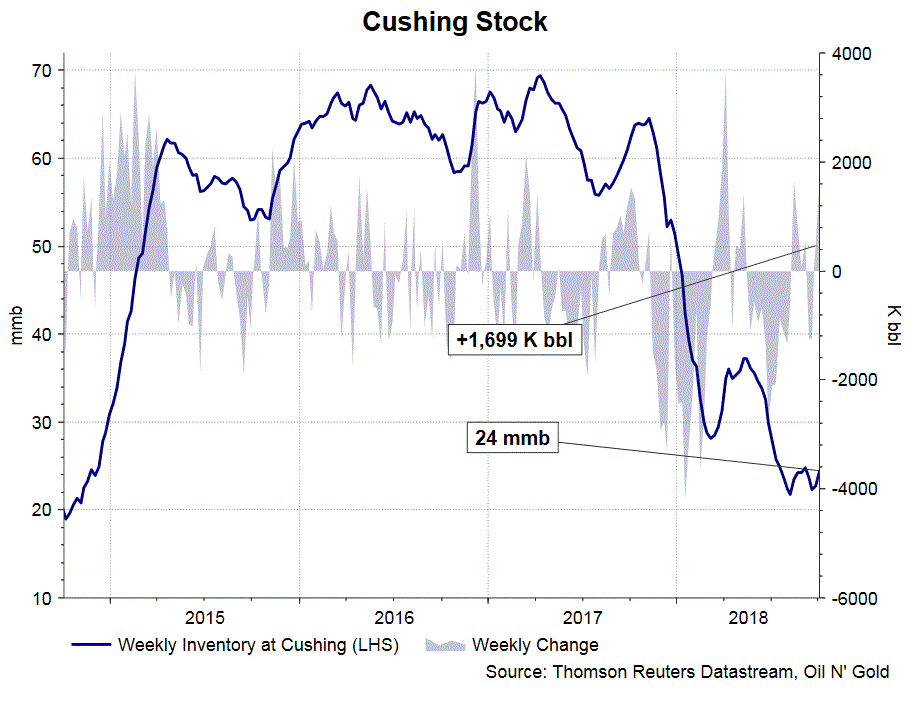
The report from the US Energy Information Administration (EIA) shows that total crude oil and petroleum products stocks jumped +7.96 mmb to 1248.71 mmb in the week ended September 28. Crude oil inventory rallied +7.98 mmb (consensus: +1.99 mmb) to 403.96 mmb. Inventories increased in 6 out of 5 PADDs. PADD III alone saw stockbuild of 6.58 mmb. Meanwhile, Cushing stock added +1.7 mmb to 24.49 mmb. Utilization rate steadied at 90.4% and crude production also stayed unchanged at 11.1M bpd for the week.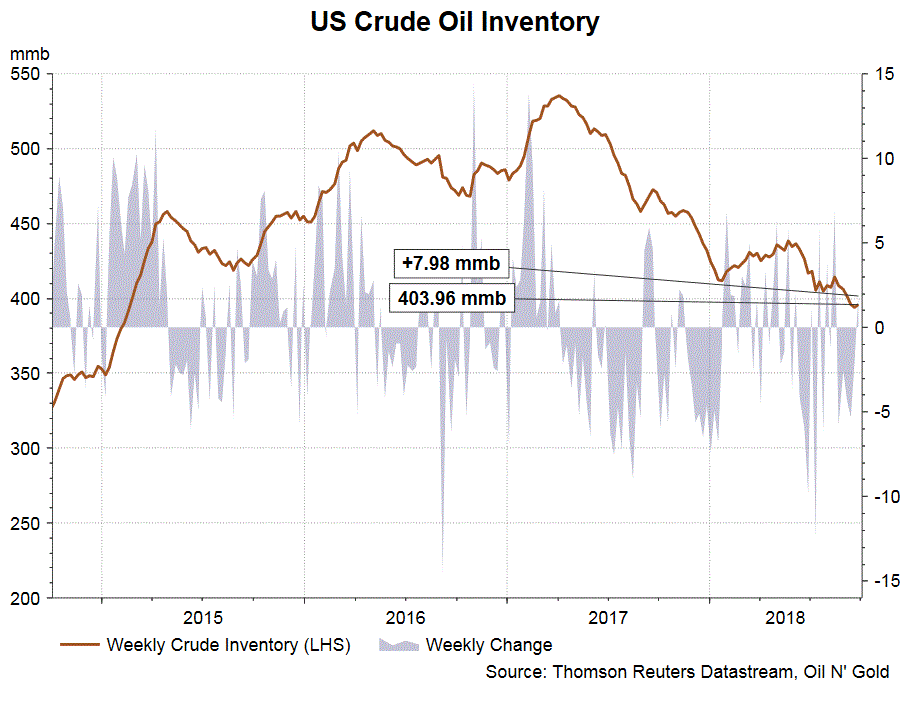
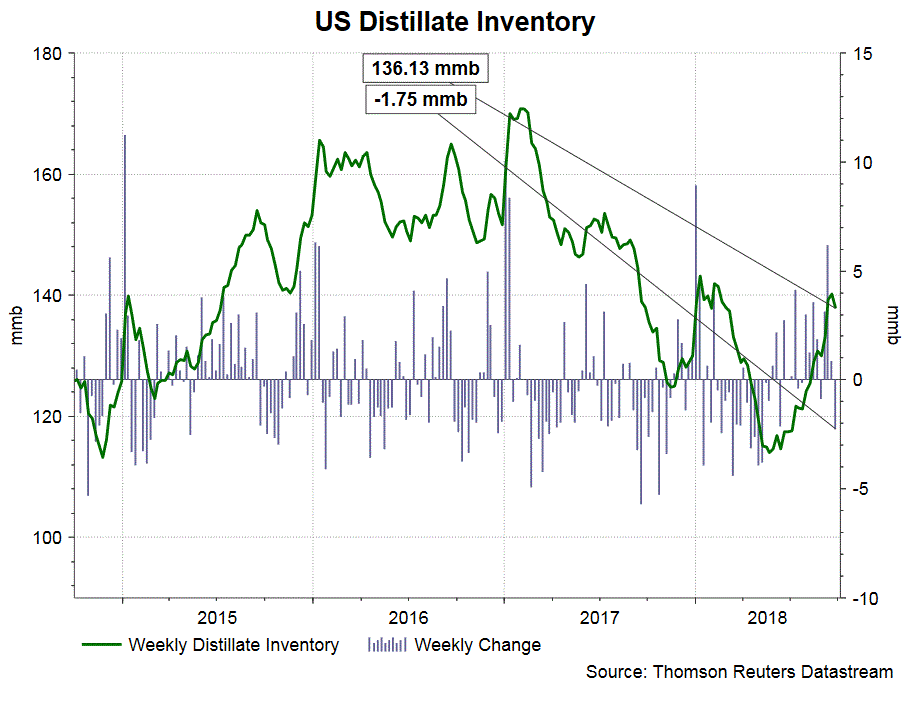
Concerning refined oil product inventories, gasoline inventory dropped -0.46 mmb to 235.22 mmb as demand gained +1.28% to 9.1M bpd. The market had anticipated a +1.32 mmb increase in stockpile. Production added +1.2% to 9.95M bpd while imports declined -17.38% to 0.71M bpd during the week. Distillate inventory fell -1.75 mmb to 136.13 mmb although demand sank -9.65% to 3.88M bpd. The market had anticipated a -1.3 mmb drop in inventory. Production added +0.68% to 5.03M bpd while imports rose +30.65% to 0.16M bpd during the week.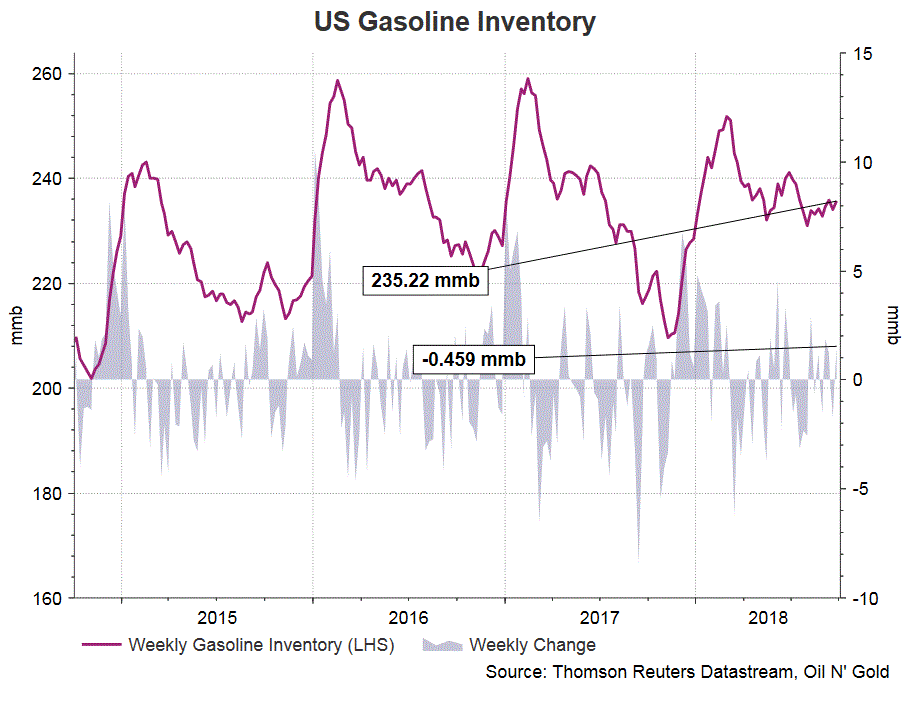
 Released after market close on Wednesday, the industry- sponsored API estimated that crude oil inventory jumped -0.91 mmb during the week. For refined oil products, gasoline stockpile fell -1.7 mmb while distillate was down -1.2 mmb.
EUR/JPY Remains Under Pressure Below 132.00
Key Highlights
- The Euro started a downside move after forming a short-term top at 133.10 against the Japanese Yen.
- There was a break below a key bullish trend line with support at 132.40 on the 4-hours chart of EUR/JPY.
- The US ADP Employment in Sep 2018 increased 230K, more than the 185K forecast.
- Today, the US Factory Orders report for August 2018 will be released, which is forecasted to rise 2.1% (MoM).
EURJPY Technical Analysis
The Euro made a couple of attempts to break the 133.10 resistance against the Japanese Yen, but it failed. As a result, the EUR/JPY pair declined below 132.00 and moved into a negative zone.
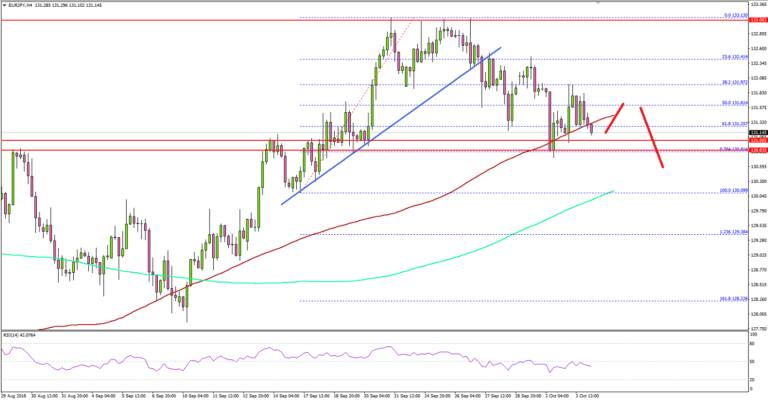
Looking at the 4-hours chart, the pair clearly formed a short-term top at 133.10 and declined towards the 131.00 support area. During the decline, the pair broke the 50% Fib retracement level of the last wave from the 130.09 low to 131.13 high.
More importantly, there was a break below a key bullish trend line with support at 132.40 on the same chart. However, the pair found support near 130.80 and it is currently consolidating losses.
On the upside, the broken support at 132.00 could act as a resistance. If the Euro buyers push the pair above the 132.00 hurdle, it could revisit the 133.00 resistance.
On the other hand, if the pair decline below the recent low, then it may well drop towards the 130.00 support. Below 130.00, the pair is likely to test the 1.236 Fib extension level of the last wave from the 130.09 low to 131.13 high at 129.38.
Fundamentally, the US ADP Employment Change figure for Sep 2018 was released recently. The market was looking for an increase of 185K, more than the last 163K.
However, the result was above the market forecast as the Private Sector Employment increased by 230K jobs from August to September 2018.
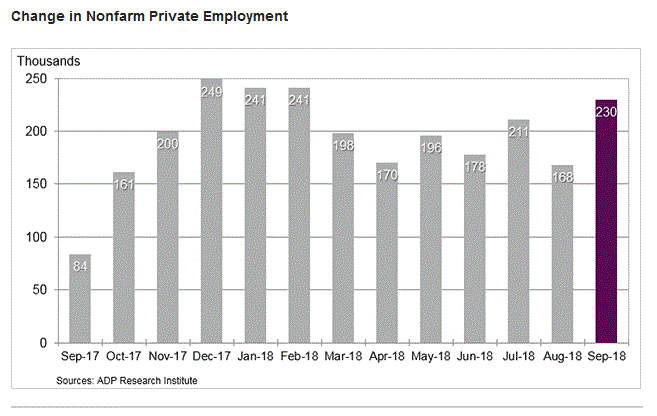
The outcome increased bearish pressures on EUR/USD, GBP/USD and other major pairs. There could be short-term recoveries, but the greenback is likely to accelerate gains in the near term.
Economic Releases to Watch Today
- US Initial Jobless Claims – Forecast 213K, versus 214K previous.
- US Factory Orders August 2018 (MoM) – Forecast +2.1%, versus -0.8% previous.
Italy PM Conte hailed budget respected commitments, it’s courageous and serious
Italian Prime Minister Giuseppe Conte confirmed the budget deficits plan after meeting of ministers yesterday. The deficit targets are now 2.4% of GDP in 2019, 2.1% in 2020 and 1.8% in 2021. Conte predicted debt-to-GDP ratio to fall slightly from the current 131% to 130% in 2019, and then drop further to 126.5% by 2021.
Conte hailed the budget as "respected commitments, it is courageous and serious". And he added "we will show courage above all in 2019, because we believe that our country needs a budget that calls for strong growth".
Economy Minister Giovanni Tria said there would be additional investments of 0.2% in 2019, 0.3% in 2020, and 0.4% in 2021. And, he added "this describes the quality of the budget: we're aiming to have public investments as principal instrument to work on growth".
CRUDE OIL – Looks To Extend Trend Resumption
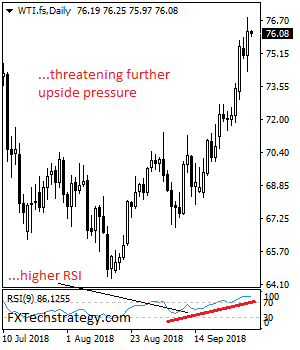
CRUDE OIL - looks to extend trend resumption following its rally on Wednesday. This has increased the risk of further upside pressure towards the 76.50 level. Further out, resistance comes in at the 77.00 level. A break above here will aim at the 77.50 level and then the 77.50 level followed by the 78.00 level. Its daily RSI is bullish and pointing higher suggesting further strength. On the downside, support comes in at the 75.50 level where a break will expose the 75.00 level. A cut through here will set the stage for a move lower towards the 74.50 level. Further down, support resides at the 74.00 level. All in all, CRUDE OIL remains biased to the upside in the medium term.
No Stopping The US Dollar Runaway Train At The Moment
US Markets
The US dollar is on a rampage as awe-inspiring beat on both the ADP and ISM services index combined with very supportive Fed speak sent the US dollar soaring.
Just another risk on the day for US market’s despite US bond yields surging. But look no further than the September ISM non-manufacturing report which massively surprised to the upside, confirming that the US economy is indeed ” firing on all cylinders “. And triggering hugely bullish signal for both the USD and a myriad of other US assets like US equities with the S&P rising to fresh session highs and US bond yields touching multi-year high water marks with the 10-year UST holding just above 3.16 %. To put things in perspective, the ISM just printed a 21-year high beating consensus expectation 61.6 vs 58!
Doubtlessly, nothing more bullish than the Dow printing record highs as US interest rates hit multi-year peaks. !!
No, if and or buts investors remain unambiguously bullish on the S&P 500. And with positive signs gradually showing up for the Shanghai Composite and the Nikkei, Asia equities, while still pulling up the rear, should make leaps and bounds this quarter even more if US-China resolves their trade issues. But at this stage, it looks like US markets don’t give a toss about China trade.
Oil Markets
The DOE data for last week showed a much more significant than expected 8.0 million barrels per day build in US commercial crude which generally suggests that oil prices should tumble. Given the market is doing the exact opposite with Brent touching $86 per barrel, it indicates the markets remain singularly focused on Iran sanction and the questionableness of OPEC’s amplitude to increase production quickly enough to offset any Iran supply loss. In other words, the market is focusing on spare production capacity and the US sanctions effectively drying up the physical markets.
So if you were waiting for a bullish catalyst; when OIL markets rally after a significant and highly unexpected DOE inventory build, price action can’t be any more telling than that. Absolutely, the stage is set for a test of Brent $90 per barrel which should provide clear sailing to the opulent $100 per barrel mark
All this on top of the other big news of the day from Riyadh that indeed Saudi Arabia and Russia will boost its output in October and November.Reuters
However, after dissecting the article, it was merely an affirmation of something that we had suspected all along, but now its confirmed that Saudi Arabia and Russia are working closely together in coordinating their response to the oil market. The headline confirms Saudi Arabia and Russia sideline discussion at a St. Petersburg conference back on May 25, subsequently ratified by OPEC
And yes, Saudi Arabia and Russia are both supplying additions barrels, but I genuinely believe both parties are as equally price sensitive as they are about making concessionary overtones. So, if the markets remain fluid and accept the additional barrels at or near current levels, triggering tears of joy to all oil producers, including those in Texas and Oklahoma Indeed the Saudi -Russia led mega oil cartel will be more than happy to add supply.
“The Russians and the Saudis agreed to add barrels to the market quietly with a view not to look like they are acting on Trump’s order to pump more,”
One quote in the article, however, reminded me of one of my long-held theories that we are on the cusp of a new axis of oil price control that would involve the wolds three mega-producers Saudi Arabia -Russia and the US. While I still think this locus of control will happen eventually, although the US inclusion will likely ruffle some middle east feather. But frankly, without offering US Shale producers a seat at the negotiating table, any coordinated efforts to stabilise prices over the long run could be difficult without their participation.
Gold Markets
Gold prices slid lower on Wednesday, triggered by a significant beat on the ISM resulting in higher US Bond Yields and a very strong USD. But with bond traders effortlessly taking out key interest rate levels, which are falling like ninepins, it does suggest the dollar rally has much more room to run. After waffling its way through September, the greenback is starting to reassert itself supported by a significant fair wind from the US rates markets with 10-Year UST holding north of 3.15 %. It is difficult to envision gold tracking any which way but down. Yesterday’s Italy inspired safe -haven rally is starting to look more and more like a massive missed opportunity, that’s if you didn’t sell, as, on a strong NFP print, gold could flop towards the mid $1180’s in a heartbeat.
Currency Markets
It’s not only the Aussie moving down under, but so is the Euro. And with the US10 Year Yields sliding through crucial resistance level like greased lightning, the Euro is folding like a cheap suit. But it was the constructive tone from Fed chair Powell that lit a fire under the dollar after he suggested that the Fed is a long way from neutral rates. So, assuming the US data supports I guess we can count on the Fed to roll out quarterly rate hike for the foreseeable future, or at least until there’s a downturn in US data Given the moves on USDJPY, it does indicate the EURUSD could fall further as the market aims at the next critical pivot level of 1.1420.
EM Asia
A tale of 2 barrels of oil
The Indian Rupee
With Brent test, $86 per barrel and the USD reassert itself across G-10 the Indian Rupee got hammered overnight. This trade was the equivalent of taking candy from a baby after yesterday’s comments from the RBI who are unwilling to react to what they believe is a knee-jerk reaction on INR and Oil, and utterly unwilling to a supporting a separate USD window for Oil companies.
We knew the Rupee was going to be in for a rough ride, but the voracity of the move is what frightening But with intervention proving futile due to India’s heavy reliance on imported oil and gas the import bill is going to be eye-watering and humungous and will continue to provide ammunition for currency speculators to target the Rupee.
But deferring to the Oxford Economics matrix, In India’s case ” A 10 per cent increase in oil prices can lower the real GDP level by 0.2 per cent four quarters later”, so this oil move is going to have lingering effects.
Malaysian Ringgit
On the other hand, the Malaysia Ringgit will be relatively insulated from the stronger dollar, and surging US yields as Malaysia pumps about 666 K barrels per day which generate a tidy some for the country and not to mention the downstream effect which is an absolute boon to Malaysia’s expansive oil and gas industry. While USDASIA will trade with a defensive posture, today the Ringgit should be viewed in a much better light than the regional peers, but demand will remain muted
Eco Data 10/4/18
[php_everywhere instance="1"]
Mid-US update: 10-year and 30-year yields break significant resistance, DOW hit records, Dollar strong
The strong rally in US treasury yields, followed record ISM non-manufacturing composite data, is the key development in US session today. At the time of writing. 30-year yield is up 0.80 % at 3.287, 10-yearyield up 0.075 at 3.131, 5-year yield up 0.065 at 3.009. Again, yield is stronger at the long end.
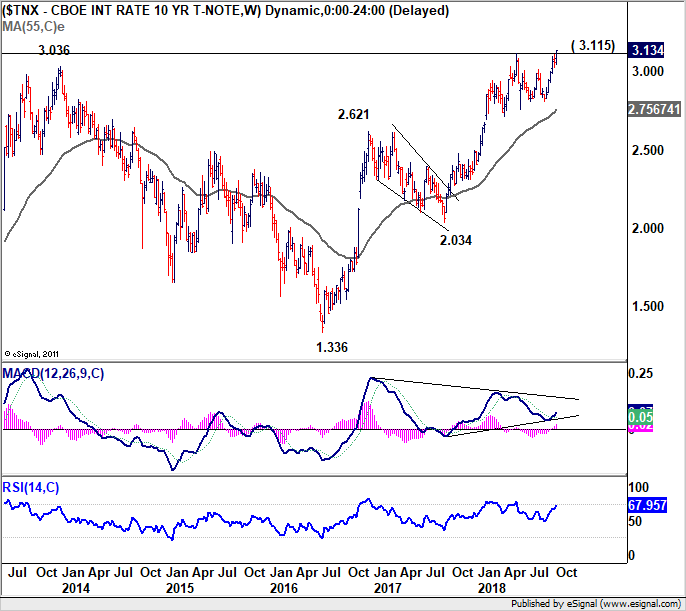
10 year yield (TNX) break of 3.115 resistance indicates resumption of medium term up trend from 1.336 (2016 low). More importantly, we're now seeing the chance of firm break of multi-decade trend line resistance, which will be a very bullish signal.
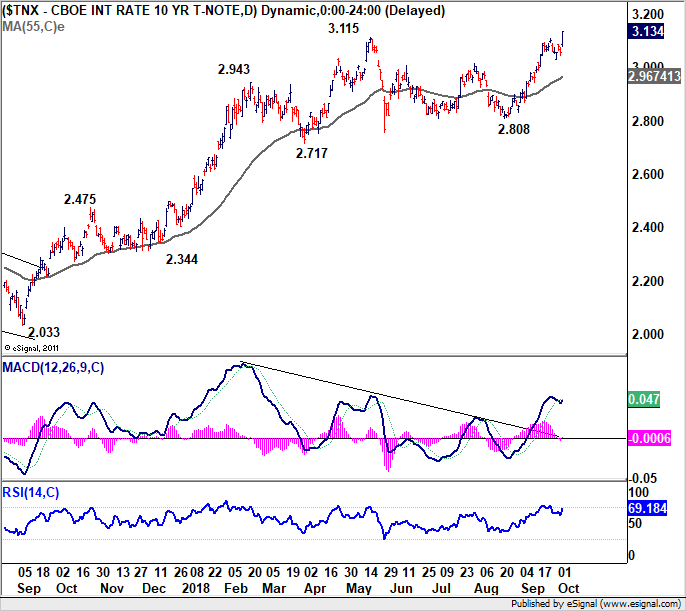
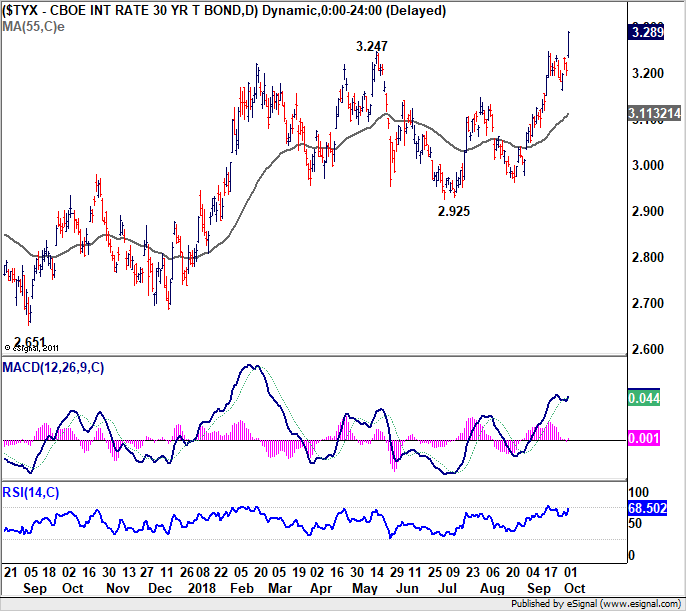
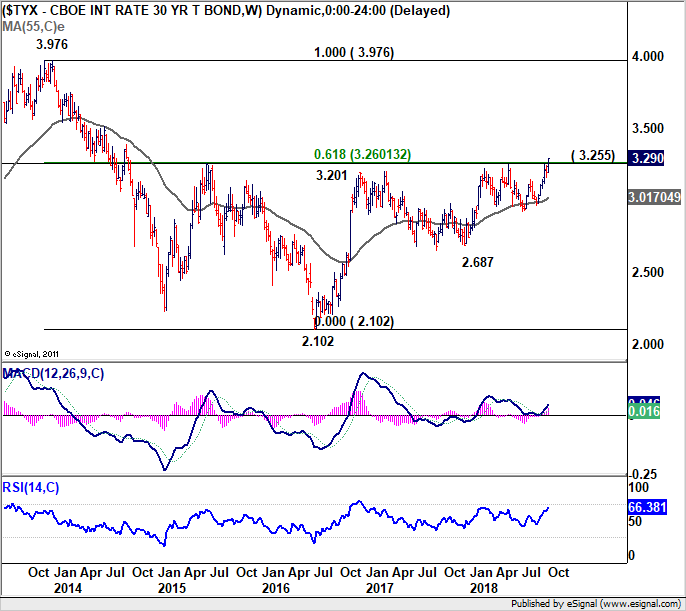
30 year yield (TYX) also breaks key resistance level at 3.255/60. Medium term rise from 2.102 (2016 low) is resuming and could possibly target next key resistance at 3.976. At the same time, TYX could also be heading for a break of multi decade trend line resistance too.
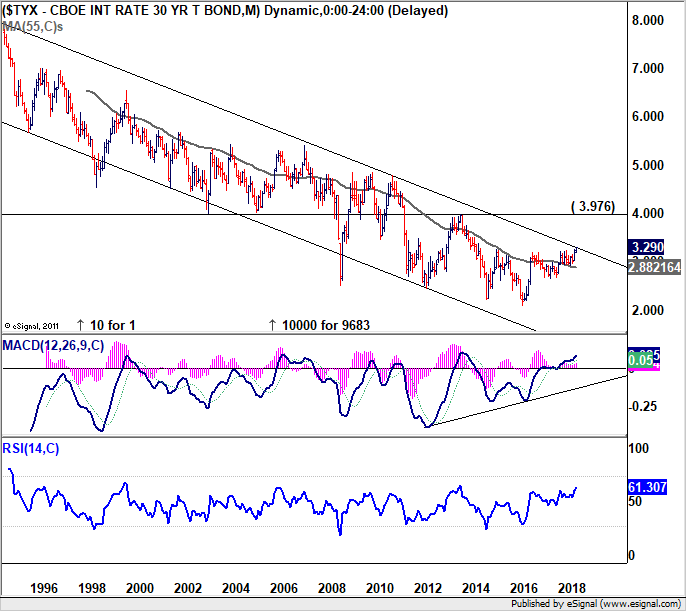
It would take some more time to confirm the underlying bullish momentum in both TNX and TYX. That's nevertheless very significant development if realized as mentioned above.
Of course, DOW's record run is also worth a mention as it hit new record high at 26951.81. DOW is currently up 0.58% at 26927. S&P is up 0.38% and is not far from another record. NASDAQ lags behind but it's still up 0.49%.
In the currency markets, Sterling remains the strongest one for today as somehow no news is good news. At least, there is no drama from PM May's speech at the Conservatives conference. But the pound could easily be overtaken by Dollar should it's consolidation finish. Canadian Dollar is the third strongest one for now. Australian and New Zealand Dollar are the weakest while Yen is the third. Monetary policy divergence plays a key role in the movements.