

Sample Category Title
GBP/USD Analysis: Will Surge To 1.3250
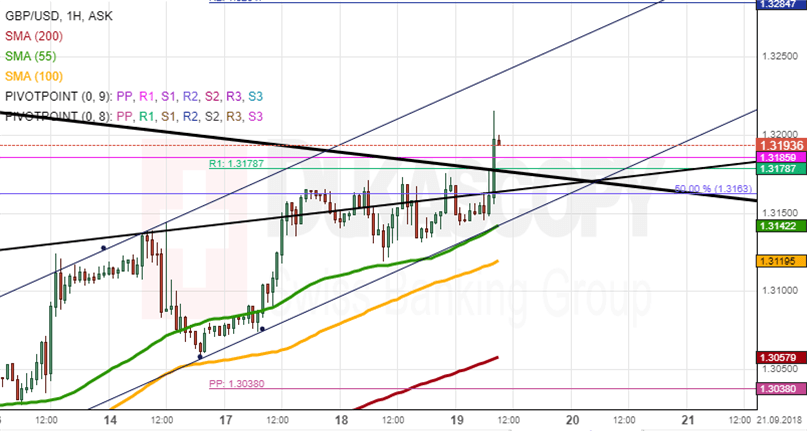
The British pound appreciated 0.23. % against the US Dollar since Tuesday's session. On Wednesday morning, the currency exchange pair was located at the 1.3157 mark at the medium-term pattern waiting for break-out.
The rate broke the resistance of 50.00% Fibo, the weekly R1 at the 1.3178 mark and the monthly R1 at the 1.3185 mark due to fundamentals on Wednesday at 8:30 GMT. Most likely, the rate will move upwards to the upper boundary of the trend-line.
Moreover, the monthly R1 at the 1.3185 should give an additional support to the rate to surge upwards near the 1.3250 level.
USD/JPY Analysis: Breaks Monthly R1 At 112.27
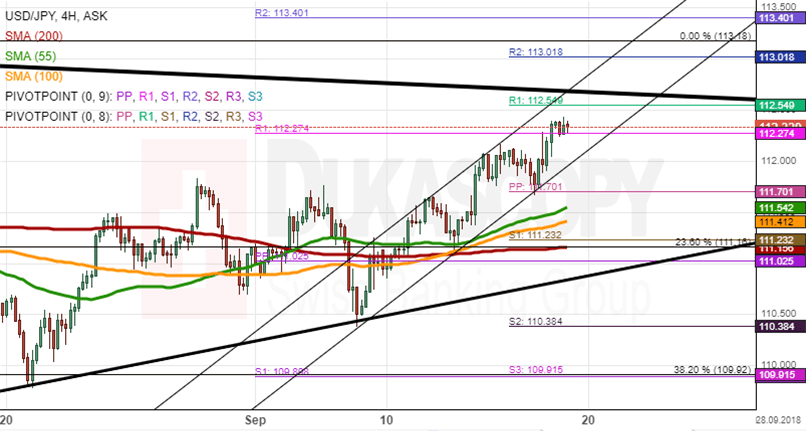
The US Dollar appreciated 0.62% against the Japanese Yen since Tuesday's session. The currency pair broke the monthly R1 at the 112.27 mark to trade at the 112.32 level during Wednesday's morning hours.
In regards to the near future, most likely, the rate will surge upwards to break the weekly R1 at the 112.54 mark and afterwards the rate might bounce off the upper boundary of the large-scale descending pattern to trade near the 112.40 level during today's session.
However, the rate might break the long-term pattern to move towards the weekly R2 at the 113.01 level.
XAU/USD Analysis: Will Surge Upwards
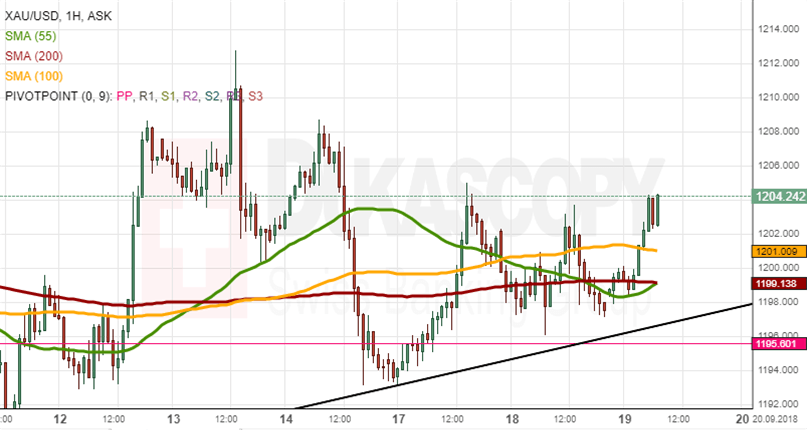
The gold price appreciated 0.46% since Tuesday's trading session. On Wednesday, the yellow metal was located at 1,204.24 mark.
In regards to the near future, the rate will surge upwards due to an absence of the technical indicators, which could stop the rate from the surge during the following trading days.
Besides, the technical indicators are showing that the yellow metal will move sideways during the trading day. Moreover, gold is supported by the simple moving averages, which will push the yellow metal to surge upwards.
Markets Flat As China Quickly Responds To Tariffs
- Ball back in Trump's court as China responds with counter-tariffs;
- UK inflation spikes in August sending sterling higher;
- GBP to remain sensitive to Brexit ahead of Salzburg summit.
Markets are taking new tariffs between the US and China in their stride again on Wednesday, with stocks in Europe and futures in the US looking quite flat ahead of the open on Wall Street.
The latest tit-for-tat between Washington and Beijing has been on the cards for some time and while investors would have preferred to avoid the need for them, they were prepared and it was well priced in. In fact, the US tariffs were probably towards the lower end of expectations so the announcement didn't really carry the same shock factor that previous announcements or reports have.
What may have a greater impact is Donald Trump following through quickly on phase three, as he has indicated he would which would dramatically ramp up the intensity and pace of the trade war between the two countries and could lead to more undesirable outcomes. There is clearly a good reason why the Trump administration has chosen not to include certain products – specifically those it stripped out after the consultation period – and opted initially for 10% rather than 25% and I think this may stop him acting in the rash manner he indicated he would.
Over in the UK, attention has switched briefly away from politics – or more specifically Brexit – and onto the data after CPI numbers for August showed prices rising by 2.7%, a significant beat on expectations. The release triggered quite a strong response in the pound, rallying above 1.32 against the dollar for the first time in almost two months before settling up around a quarter of a percent on the day.
I don't personally think this changes much from an interest rates perspective, especially in the near-term with the Bank of England having only recently raised interest rates to post-financial crisis highs and shown a willingness to proceed with caution over the coming years. We're also heading into a crucial period for Brexit talks and I think policy makers will want to withdraw from the spotlight during that time and then reassess the situation once the terms of the divorce are clearer.
The increase itself may also be temporary and reflect firms taking advantage of a great summer and enthusiastic consumer, something that may take its toll in the months ahead. I don't expect the BoE to react too much to this summer spike and instead take a more conservative view unless we see further evidence of it becoming a longer-term trend.
Sterling is going to remain sensitive to Brexit reports in the coming months and tomorrow's meeting in Salzburg will be the next hurdle. Traders will be paying very close attention to any comments coming from the summit and will be looking for any hints that significant progress is being made towards a deal that will avoid a disastrous no deal Brexit. Traders are clearly becoming more optimistic but that's coming from a low base, with a lot of pessimism having been priced in since April.
New Zealand GDP To Bounce Back In Q2 But Outlook Weighed By Weak Business Confidence
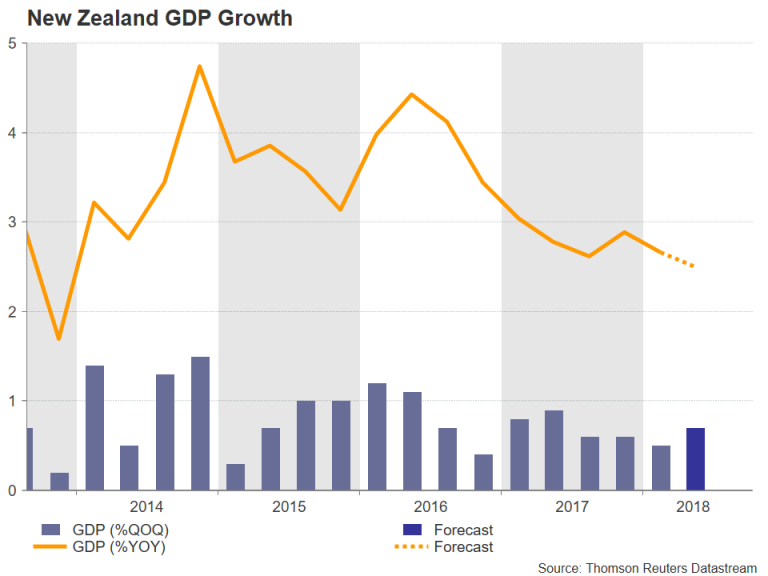
New Zealand's economy will fall under the spotlight when GDP growth numbers for the second quarter are published on Thursday (Wednesday, 22:45 GMT). After slowing to a more than one-year low of 0.5% quarter-on-quarter in the first three months, some pick-up is expected in the June quarter. However, the sustainability of any rebound remains in question as business pessimism has clouded the outlook. The New Zealand dollar is at risk of a sell-off if the data suggests growth was boosted by one-off factors.
Economic growth in New Zealand has been decelerating since the middle of 2016 even before the general election of September 2017 that brought a Labour-led government into power. GDP is expected to have expanded by 0.7% q/q in the second quarter, which, if confirmed, would make it the fastest pace in a year. However, on a 12-month basis, growth is forecast to slow to 2.5% from 2.7% in the prior quarter. Stronger exports and higher agricultural output likely contributed to the expected bounce in growth.
But even if the short-term economic picture improves, subdued business sentiment remains a concern as it has yet to recover from the inconclusive election outcome of last year that resulted in the formation of a coalition government, consisting of the centre-left Labour party and the populist New Zealand First party. Although the new government's policies haven't been as market unfriendly as feared, the poor survey readings suggest businesses have little faith in the Labour-led coalition's ability to manage the economy.
The closely-watched ANZ business confidence index fell to a 10-year low of -50.3% in August, indicating businesses remain gloomy about the outlook. If business sentiment fails to recover, it's almost certain the continued weakness will lead to companies cutting back on their investment and hiring plans, and this would weigh on future growth.
The Reserve Bank of New Zealand has already factored this risk in its outlook and recently adapted its stance to say that the next move in its official cash rate could be up or down. A worse-than-expected reading on Thursday would strengthen expectations of a rate cut, whereas an in-line or better-than-expected data could see the RBNZ toning down talk of a rate reduction, with the kiwi moving accordingly.
After managing to recover to a 2-week high of $0.6614 on Wednesday, kiwi/dollar could reverse lower should the GDP numbers disappoint. The first major support to watch for in case of a downside move is the area around 0.6540, which has been frequently tested over the past couple of months. A drop below this support barrier would open the way towards September's 2½-year low of 0.6499. A breach of this trough would increase the downside pressure and bring the 0.6430 level into focus.
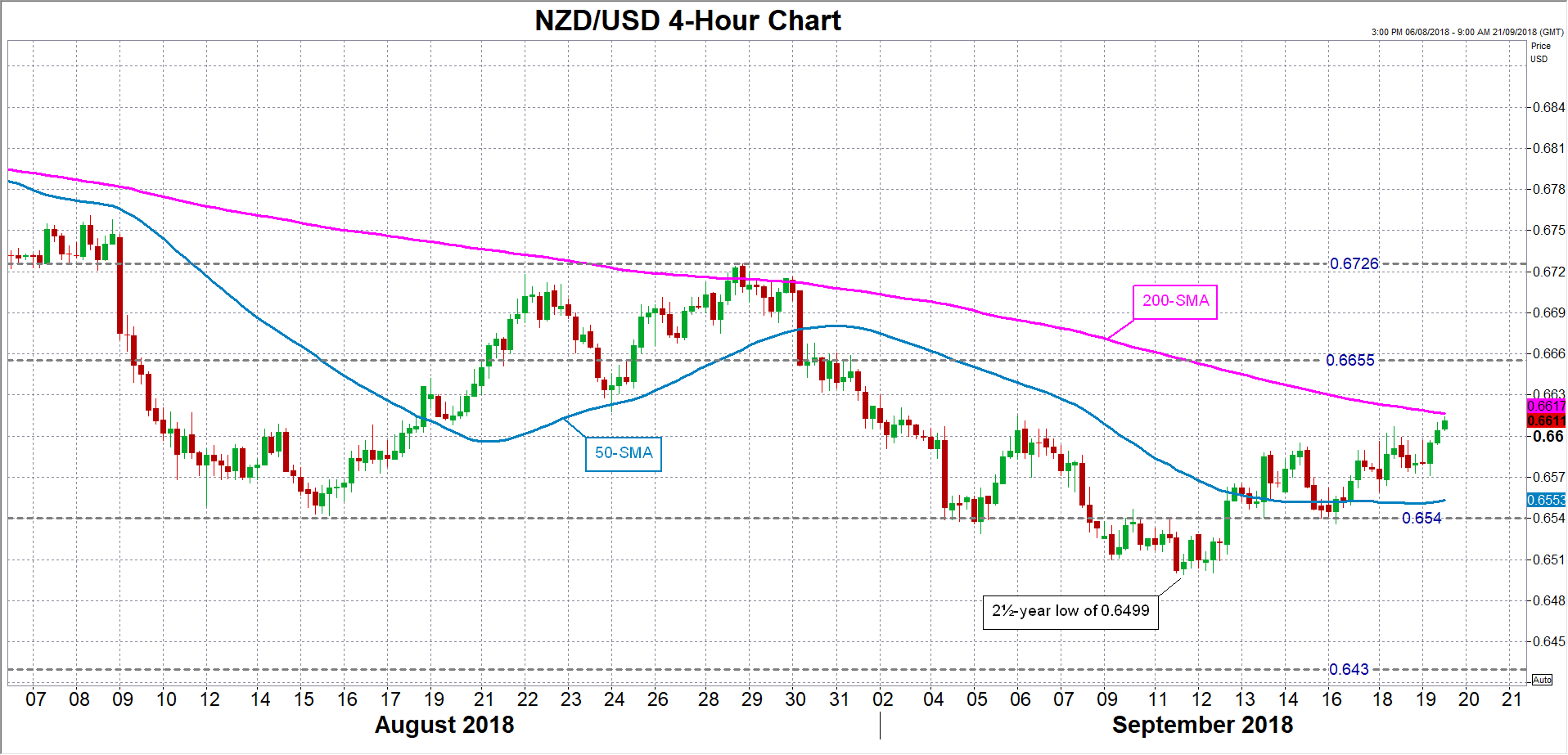
On the other hand, an upbeat set of growth figures could help kiwi/dollar extend its rebound to above the 200-period moving average, currently at 0.6617. A break above this mark could accelerate the gains and lead the pair towards the August peak of 0.6726, though it would first have to overcome resistance in the 0.6655 region.
USDJPY Tracking US Treasuries Higher
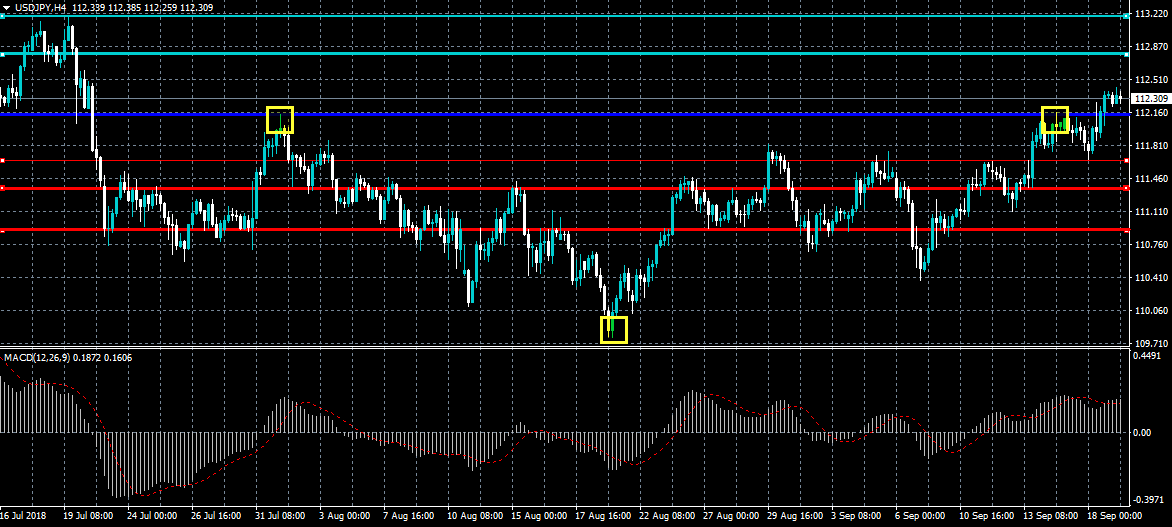
The US dollar has moved to a fresh monthly trading against the Japanese currency on Wednesday, as price continues to follow US Treasury-yields higher. The USDJPY pair looked past the Bank of Japan monetary policy decision as the central bank kept interest rates unchanged as widely expected. Traders should expect the USDJPY pair to move higher while price trades above the 112.00 level as the bullish pattern unfolds.
The USDJPY pair remains bullish while trading above the 111.75 level, key resistance is now found at the 112.80 and 113.20 levels.
If the USDJPY pair moves below the 112.00 level, key support is found at the 111.75 and 111.75 levels.
GBPUSD Strongly Bullish Above 1.3205
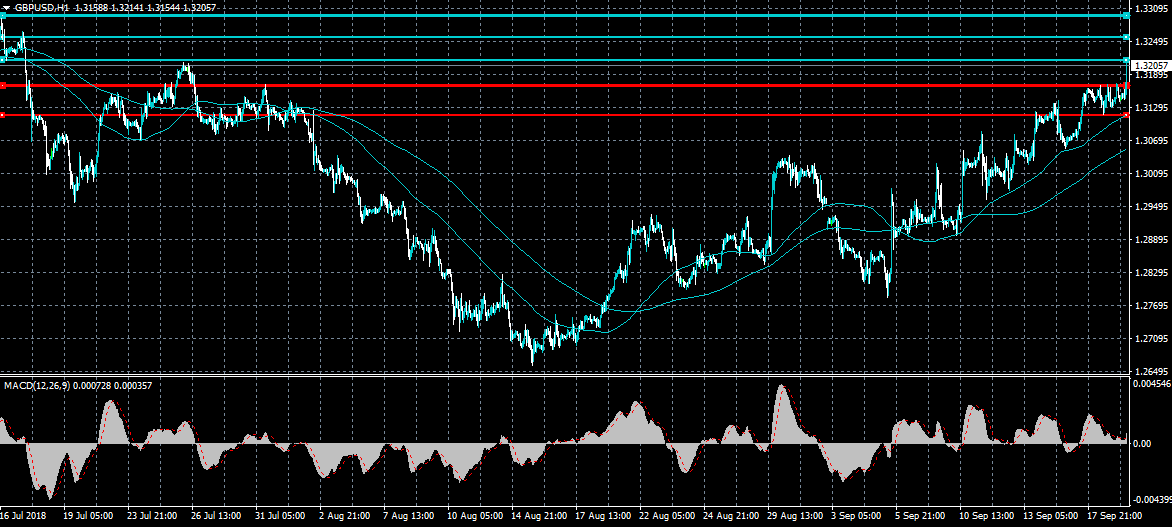
The British pound has soared above the 1.3200 level against the US dollar, after inflation data from the United Kingdom economy came in much better than expected. The GBPUSD pair is strongly bullish while trading above the 1.3205 technical level. Overall, the bullish inverted head and shoulders pattern continues to work, with the price now trading around a much larger bullish pattern.
The GBPUSD pair is strongly bullish while trading above the 1.32050 level, key resistance is found at the 1.3255 and 1.3300 levels.
If the GBPUSD pair moves below the 1.3205 level, key support is found at the 1.3171 and 1.3100 levels.
Technical Analysis: Sterling And DAX
DAX Index Picking Up the Momentum
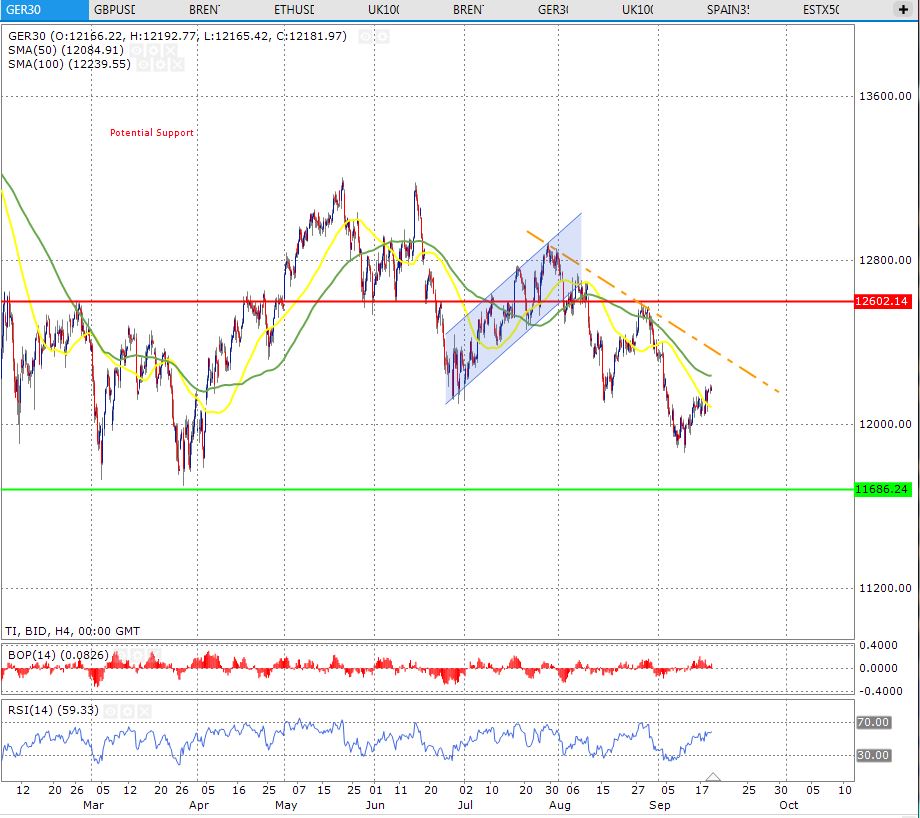
The German index – Dax has broken its upward channel (shown in light blue colour) on a 4-hour time frame. Since then, the price has made only lower highs and lower lows. These lower highs are joined together by a downward trend line shown in orange. The trend line confirms that the trend is skewed to the downside. The price of the Dax index is trading far from the downward trend line and the recent price action shows that the price is moving higher. The current bull momentum has been able to push the price above the 50-day moving average (shown in yellow) and the next resistance would be the 100-day moving average.
The RSI and Balance of Power are showing that the bulls have control of the price and it is likely that the price would test the resistance line (shown in red).
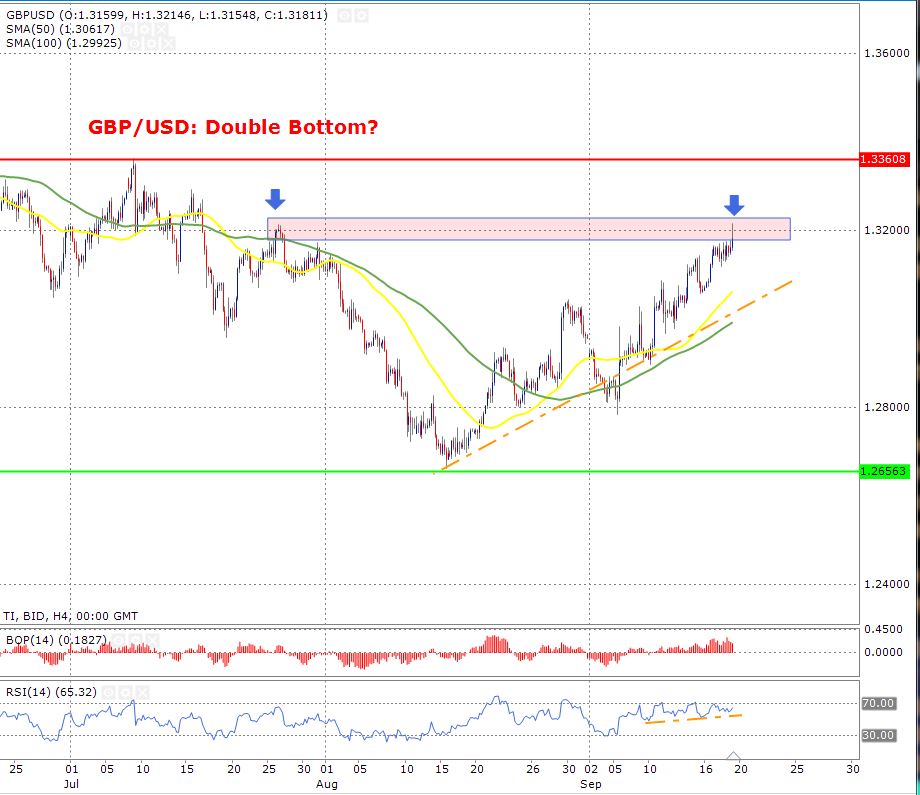
GBP/USD: Double Bottom?
The GBPUSD pair has reached a critical level on a 4-hour time frame. The price has entered in a small resistance zone show by a red rectangle on the chart. On the left-hand side, we have a small lower high formed (on the 25th July) and this is the first time the price has entered this area of resistance. At the same time, we also have double tops formed (show by two blue colour arrows). Double top
As for the trend, the bulls are in control of the price and the confirmation of this comes in two folds; the price is trading above the upward trend line shown in orange colour and it is also trading above the 50 and 100-day moving averages shown in yellow and green respectively.
The RSI is showing that there are chances that the price may retrace may back from this level and the confirmation of this will be if the RSI breaks below the trend line show on the RSI chart.
Traders Ready To Extend Rally | Trade Dispute Isn’t A Concern – At least For Now
Investors have paid more attention to Beijing's recent comments which conclude that the country doesn't have the plan to devalue its currency
US Futures and European markets are trading higher and picking up the momentum from Asia where investors have cheered the fact that China isn't interested in devaluing its currency.
Can the U.K. and the EU break the Brexit deadlock? This is the question on investors mind today. The European Union has signalled their readiness to come to some sort of resolution. Today marks the first day out of the three key days for Brexit summit which could lead us to the path where both U.K. and the EU could resolve their conflict. Hopes are high that this will mark the path to success and one can see this by looking at the sterling strength against the dollar.
Theresa May has bolstered her support at home and later in the evening, she is expected to lay down her plan for Brexit. Her message so far has been clear that she isn't prepared to carve out the piece of the U.K. but she is prepared to sign the deal if better terms are proposed.
So far, it is the U.K. which has been bowing to the EU's demand so it may be not far-fetched to say that Theresa May would have to use the same technique again to get things over the line. This is because the pessimism is something which cannot be ignored, there is no guarantee that the EU leaders who are meeting in Salzburg would be able to conclude something rock solid. The conversation can easily navigate them to a no deal path as well. This is despite the fact that the block's chief Brexit negotiator, Michael Barnier, has said that he is ready to improve the proposal.
Back in the equity markets over in Europe, investors have paid more attention to Beijing's recent comments which conclude that the country doesn't have the plan to devalue its currency to gain a competitive edge. This has stimulated the move in the Chinese Yuan. The currency has been under the hammer due to two reasons; sluggish domestic growth and impending trade war.
China has been blamed by the U.S. for devaluing its currency to gain a competitive edge. Over in Asia, we have seen that traders have felt more comfortable about China's recent comments on currency devaluation and this has bolstered the Asian equity market.
In terms of economic data, U.K. inflation data is likely to show weaker reading which will bring inflation more in line with the Bank of England's target. The bank's target for inflation by years end is 2%. Remember, that the committee's forecast back in August for inflation in Q4 was 2.3%
Under the current circumstances, it is likely that the inflation may touch 2% well before the year end and this would release the pressure on the bank when it comes to the matter of hiking the interest rates. On top of that, we do not expect the bank to move the needle on the interest rate any time soon as Brexit is the biggest threat.
GBP Better Bid Ahead Of Brexit Meeting
Stronger loonie as NAFTA talks resume
The Canadian dollar continues to strengthen, pushed by higher expectations of North American Free Trade talks. USD/CAD is trading lower at 1.2948 and weakening since the beginning of the week (-0.68%). The pair is expected to approach the 1.2930 range in the short-term. Renegotiations are starting on a positive note today, as Canada's Prime Minister Justin Trudeau hinted that a win-win agreement was likely. Continued US-China spats are CAD positive, as they push US President Trump to avoid additional trade confrontations. Still, time is ticking. An agreement must be signed by end September.
BoJ stays sidelined
As widely expected the BoJ kept interest rate unchanged at its September monetary meeting. The policy balance rate was maintained at -0.1%, while the 10-year yield target was left unchanged at 0%. The yen was little changed after the announcement and the press conference with USD/JPY trading sideways around 112.35. The currency pair has been trading in a relative tight range since the beginning of the summer following Donald Trump's decision to ignite a trade war with its main trade partners.
Therefore, Haruhiko Kuroda had to comment the potential consequences for Japan of a worsening trade war. Indeed, the US is a key market for Japan, especially for the auto industry as it account for more than 33% of exports to the US. This trade story is also of good diversion as it draw investors' attention away from the country's anaemic inflationary pressure. Indeed, core inflation is northing close to Boj's 2% inflation target. In July, the core measure printed at 0.8%y/y versus 0.9% in the previous month. August inflation figures are due for release next Friday. Headline measure should come in at 1.1%y/y, while the core gauge is expected at 0.9%.
Overall, the BoJ has no choice but to maintain its quantitative easing program. The monetary policy divergence with the Fed will accentuate, which would continue to push USD/JPY to the upside – at least as long as the Donald do not create too much trouble on the geopolitical scene. Indeed, the yen is still protected by its safe-haven status and with the recent escalation in the trade conflict between the US and China, investors have every reasons to stay long JPY.
GBP optimism ahead of Brexit meeting
Ahead of today's meeting in Salzburg, sterling is strengthening, currently trading along 1.3205 USD and approaching the 1.3215 range in the short-term. At stake is whether the pound will benefit or not. This depends on EU's view: many disparities remain, and the October deadline looms. We think the markets might be over-optimistic. The Bank of England will watch closely. Inflation is at its highest pace in 18 months, which could trigger a rate hike.