Sample Category Title
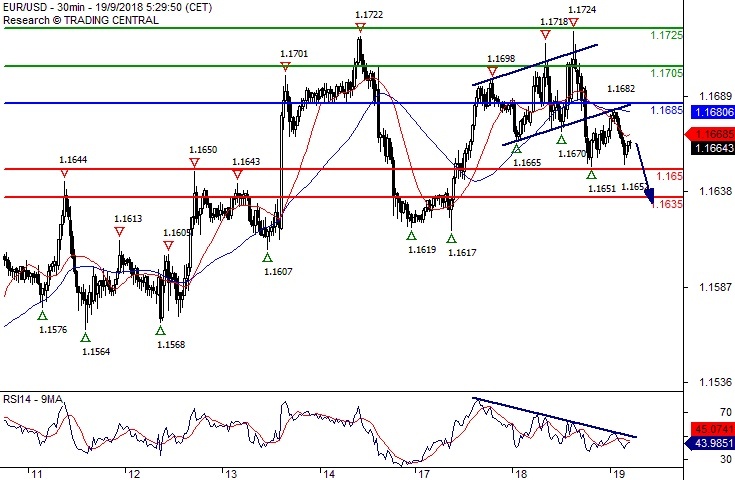
EUR/USD Towards 1.1635
Pivot (invalidation): 1.1685
Our preference Short positions below 1.1685 with targets at 1.1650 & 1.1635 in extension.
Alternative scenario Above 1.1685 look for further upside with 1.1705 & 1.1725 as targets.
Comment The RSI is capped by a declining trend line.
Sterling surges as CPI accelerated to 2.7%, beat BoE’s projections
Sterling surges broadly after stronger than expected consumer inflation reading. Headline CPI jumped to 2.7% yoy, up from 2.5% yoy and beat expectation of 2.4% yoy. Core CPI also accelerated to 2.1% yoy, up from 1.9% yoy and beat expectation of 1.8% yoy. The headline inflation reading is notably higher than BoE's own projection of 2.5% as projected in the latest inflation report. That could prompt policy rethink among BoE MPC members. And inflation hawks likes Michael Saunders now have some reasons to strike back. Full release of CPI here.
Also released, RPI jumped to 3.5% yoy, up from 3.2% yoy and beat expectation of 3.4% yoy. PPI input slowed to 8.7% yoy, down from 10.3% yoy. PPI output slowed to 2.9% yoy, down from 3.1% yoy. PPI output core slowed to 2.1% yoy, down from 2.3% yoy. Also from UK, house price index accelerated to 3.1% yoy in July, above expectation of 2.9% yoy.
AUDUSD Extends Rebound But Bearish Risks Still There
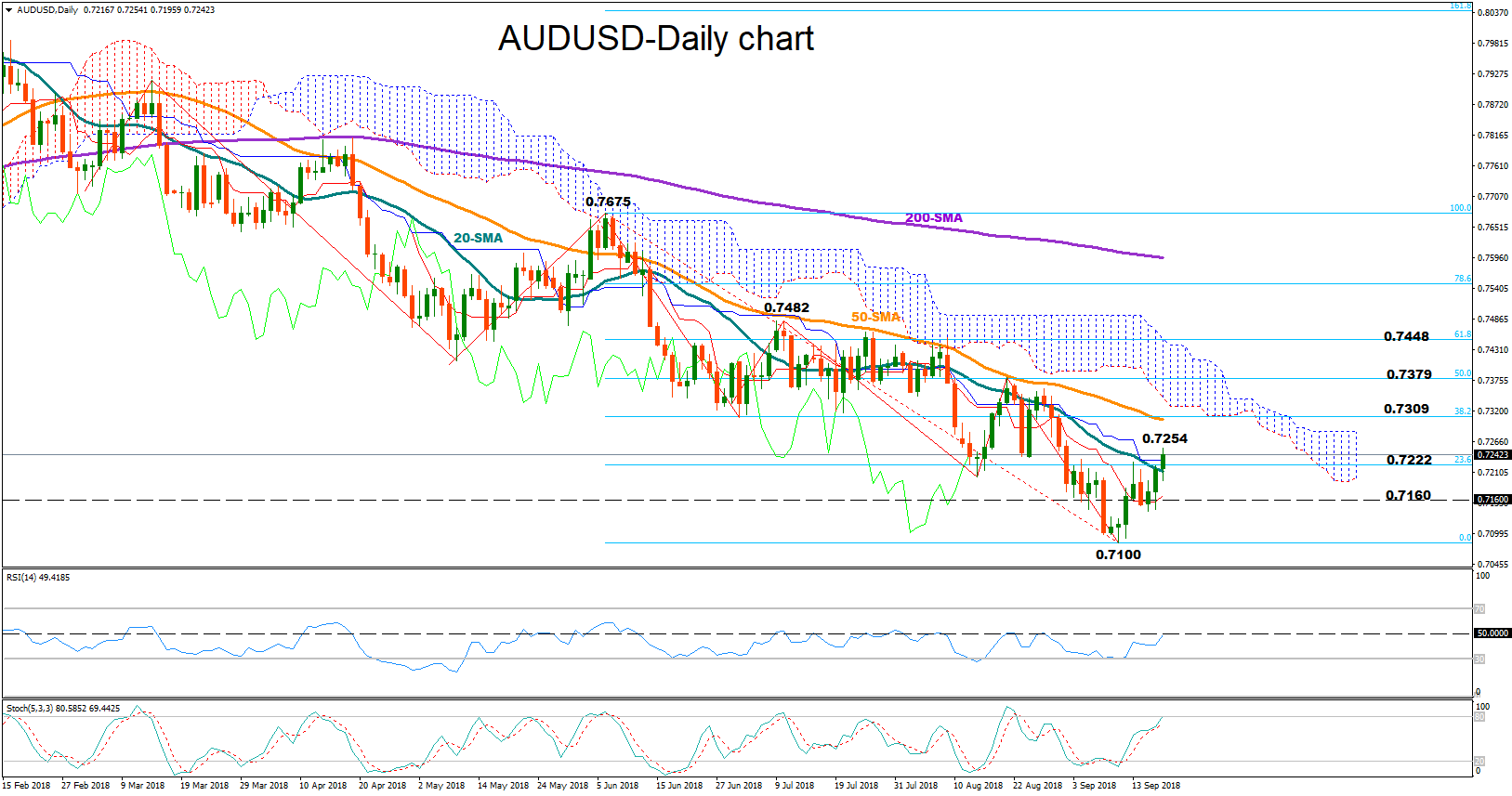
AUDUSD continues to attract buying interest for the third consecutive day, crawling up to 0.7254 early on Wednesday, the highest since the end of August. The RSI improved further but is still below its 50 neutral mark, a sign that negative risks are still in the background, while Stochastics support that the rally is overdone and bearish corrections are possible as the red %D line and the green %K line approach the overbought threshold of 80.
An extension to the upside may pause around the 38.2% Fibonacci retracement of the downleg from 0.7675 to 0.7100, near 0.7309 which acted as a barrier to downside movements in July. Slightly higher, the 50% Fibonacci of 0.7379 which coincides with the peak on August 21, could come under the radar as well, while the area between the 61.8% Fibonacci of 0.7448 and July’s high of 0.7482 may attract a greater attention as any decisive close above this zone would clearly violate the long-term downtrend. The latter would also pierce the Ichimoku cloud, signaling further bullish moves.
On the other hand, if the pair loses ground, traders will look for immediate support around 0.7222, the 23.6% Fibonacci. Even lower, the 0.7160 and 0.7144 marks taken from the lows on May and December 2016 respectively could come into view before bearish moves strengthen towards the 0.71 psychological level.
Turning to the bigger picture, the outlook holds bearish, with the price printing lower lows and lower highs since the end of January. The 50-day and the 200-day simple moving averages maintain a negative slope, signaling that the negative picture is likely to stay for longer.
To summarize, the short-term bias is skewed to the downside, while in the long-term, AUDUSD maintains a clear bearish outlook.
Markets Brush Aside Trade Concerns, UK Inflation In The Spotlight
Here are the latest developments in global markets:
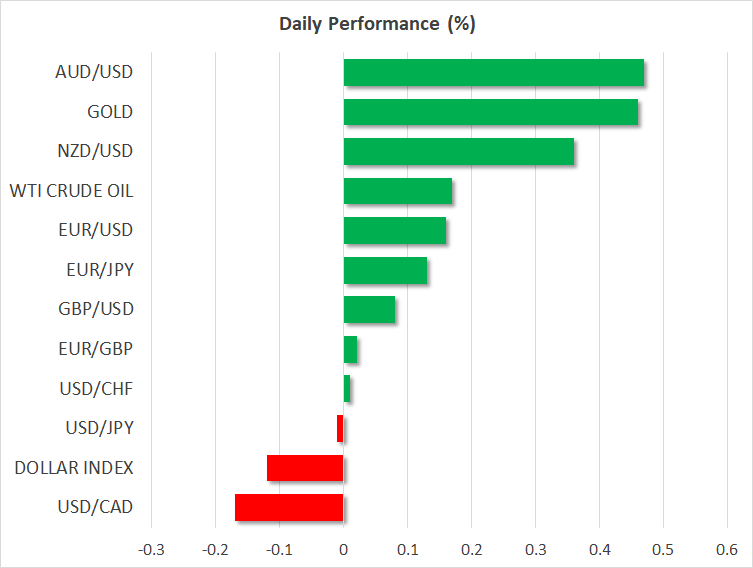
FOREX: The dollar index is lower on Wednesday, albeit not by much (-0.12%), giving back the slight gains it posted yesterday. The yen plunged across the board as investors rotated out of safe assets, after the US-China trade confrontation was perceived to be milder than feared. Meanwhile, risk-sensitive currencies like the aussie and kiwi recovered some lost ground.
STOCKS: US markets climbed on Tuesday, shrugging off trade worries as the tariff actions by both China and the US were somewhat less hostile than anticipated. The tech-heavy Nasdaq Composite (+0.76%) led the pack higher, while the Dow Jones (+0.71%) and the S&P 500 (+0.54%) tracked not far behind, with the latter eyeing its all-time highs again. Looking at futures, the S&P, Dow, and Nasdaq 100 appear set to open higher today as well, albeit only modestly so. Asia was a sea of green on Wednesday too. In Japan, the Nikkei 225 (+1.08%) and the Topix (+1.46%) advanced amid a weaker yen and optimism that neither the US nor China want to escalate things much further. In Hong Kong, the Hang Seng gained 1.13%. Similarly, in Europe, all major indices were set to open higher today, futures suggest.
COMMODITIES: Oil rallied on Tuesday, propelled higher by reports that Saudi Arabia would be comfortable allowing prices to rise above $80 per barrel, referring to Brent crude. These reports cast doubts on whether the Kingdom will indeed raise its production to offset supply outages from Iran. The precious liquid looks set to extend its gains today, as WTI is already up by 0.18% at $70.02 per barrel, while Brent is higher by 0.14% at $79.21/barrel. In precious metals, gold is up by 0.45% at $1,203 per ounce, remaining stuck in a very narrow range.
Major movers: Yen plunges, stocks surge as traders brush aside trade risks
Risk appetite staged a remarkable recovery on Tuesday, as traders brushed off concerns regarding the negative side-effects of a further escalation in the Sino-American trade skirmish. US stock markets bounced back, with the S&P 500 coming within breathing distance of its all-time highs, and risk-sensitive currencies such as the aussie recovering ground. Meanwhile, haven currencies like the yen plunged across the board and yields on US Treasuries surged, as investors rotated out of safer assets. Specifically, the yen fell to a fresh two-month low against the dollar, euro, and pound. At the same time, yields on 10-year US government bonds touched their highest level since May (3.05%), though the greenback failed to capitalize on this, ending the day nearly flat against a basket of six major currencies.
As for what triggered this sudden shift back to risk-taking, it seems to have been a case of “things could have been worse”. For starters, the US tariffs were smaller than expected at 10% for a temporary period. More importantly, China appeared reluctant to escalate the situation much further. Yes, the nation did announce retaliatory tariffs yesterday, but only on $60bn US goods (vs the $200bn in US tariffs), and at a lower rate of 5% for some products and 10% for others. If no other levies are announced from China, this could even be perceived as an attempt at deescalating tensions, given that these countermeasures fall well short of being “one-for-one” or equal in intensity. In addition, China did not flat out reject holding talks with the US, as it previously warned it would, keeping the prospect of another round of negotiations on the table.
Overnight, the Bank of Japan kept its policy unchanged, delivering no surprises. Policymakers reaffirmed that their ultra-loose policy framework will remain in place for a prolonged period. Given the absence of fresh signals, the yen barely reacted. With the BoJ keeping 10-year Japanese bond yields fixed around 0% while other major central banks like the Fed are raising rates, interest rate differentials between Japan and the US are widening, rendering the yen less attractive from a relative rates perspective. Hence, monetary policy divergence argues for a weaker yen over time, though the currency could always (and unexpectedly) attract safe-haven flows.
Elsewhere, the loonie spiked higher, touching a three-week high versus the dollar, buoyed by a surge in oil prices.
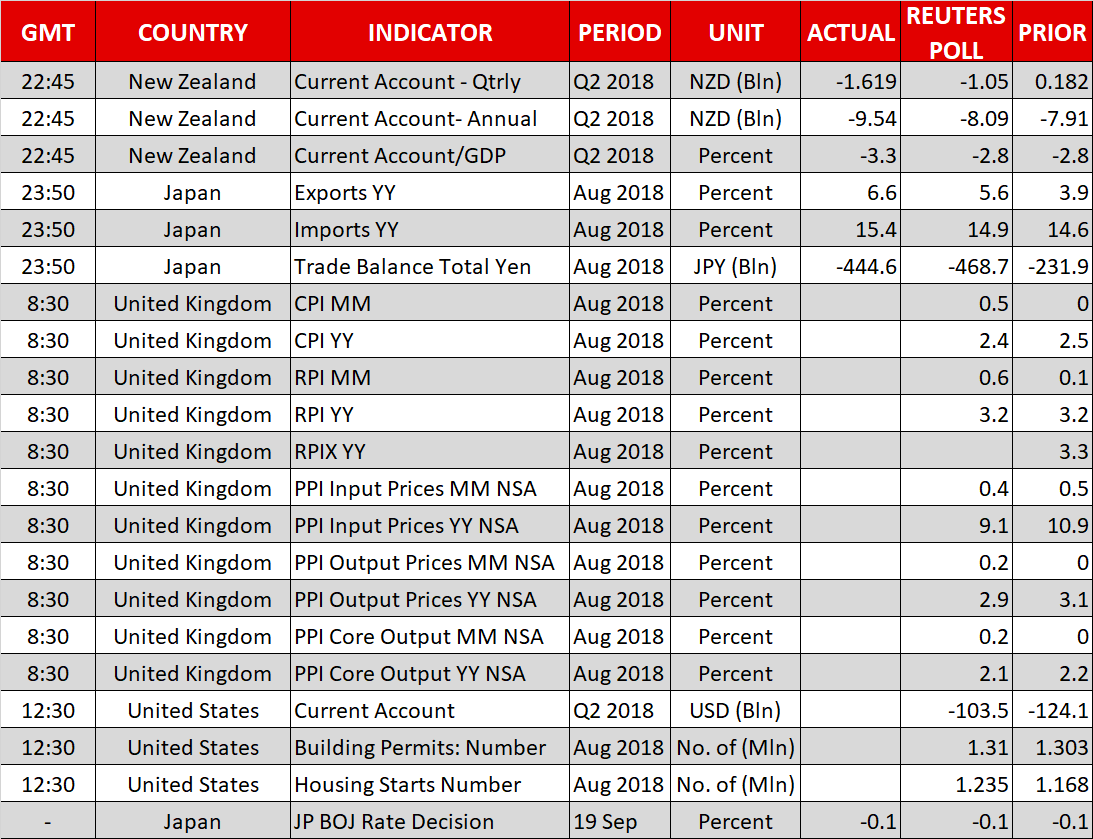
Day ahead: UK inflation in focus, with US housing starts also due
UK inflation figures are the highlight of the day in terms of data releases. Elsewhere, trade issues and Brexit remain in the background, with any headlines having the capacity to prove market moving.
On trade, developments will be monitored after the latest tariff shots between the world’s two largest economies; China announced retaliatory tariffs on $60 billion of US goods, with the US threatening to slap levies on practically all Chinese imports to the country.
UK inflation prints as gauged by the consumer price index (CPI) for August will be made public at 0830 GMT. Month-on-month, CPI is forecast to expand by 0.5% after exhibiting zero growth in July. Still, the year-on-year rate is expected to slightly weaken, standing at 2.4%, from 2.5% in July; the Bank of England’s target for annual inflation is at 2%. A data beat may be seen as exerting some pressure on the BoE to hit the rate-normalization button sooner rather than later, consequently boosting sterling. However, the central bank is also wary of updates on the Brexit front. In this respect, an EU summit commences in Salzburg today, with Brexit being on the agenda on Thursday.
Also out of the UK, producer price data, as well as the figures on retail price inflation, both for August, will be hitting the markets at the same time as the readings on CPI.
Out of the US, housing stars for August are due at 1230 GMT. The numbers of starts is anticipated to have increased by 5.8% m/m, after rising by 0.9% in July; housing starts fell to a nine-month low in June. Building permits for the same month are also due at 1230 GMT, as well as Q2’ current account figures, which are perhaps attracting more interest in light of Trump’s take on trade – the trade balance is one of the inputs used to arrive at the current account balance. The deficit in the current account is expected to narrow to $103.5 billion, from $124.1bn in Q1.
Bank of England policymaker Andy Haldane will be giving a lecture at 0800 GMT, with the ECB chief Mario Draghi stepping to the rostrum at 1300 GMT. Silvana Tenreyro, another BoE policymaker, will also be making a public appearance today.
In geopolitics, there seems to be some positive momentum for a breakthrough between North Korea and the US in denuclearizing the former.
In energy markets, EIA data on US crude stocks are due at 1430 GMT. A drawdown by roughly 2.7 million barrels is projected for the week ending September 14, following a fall by around 5.3mn during the previously tracked week.
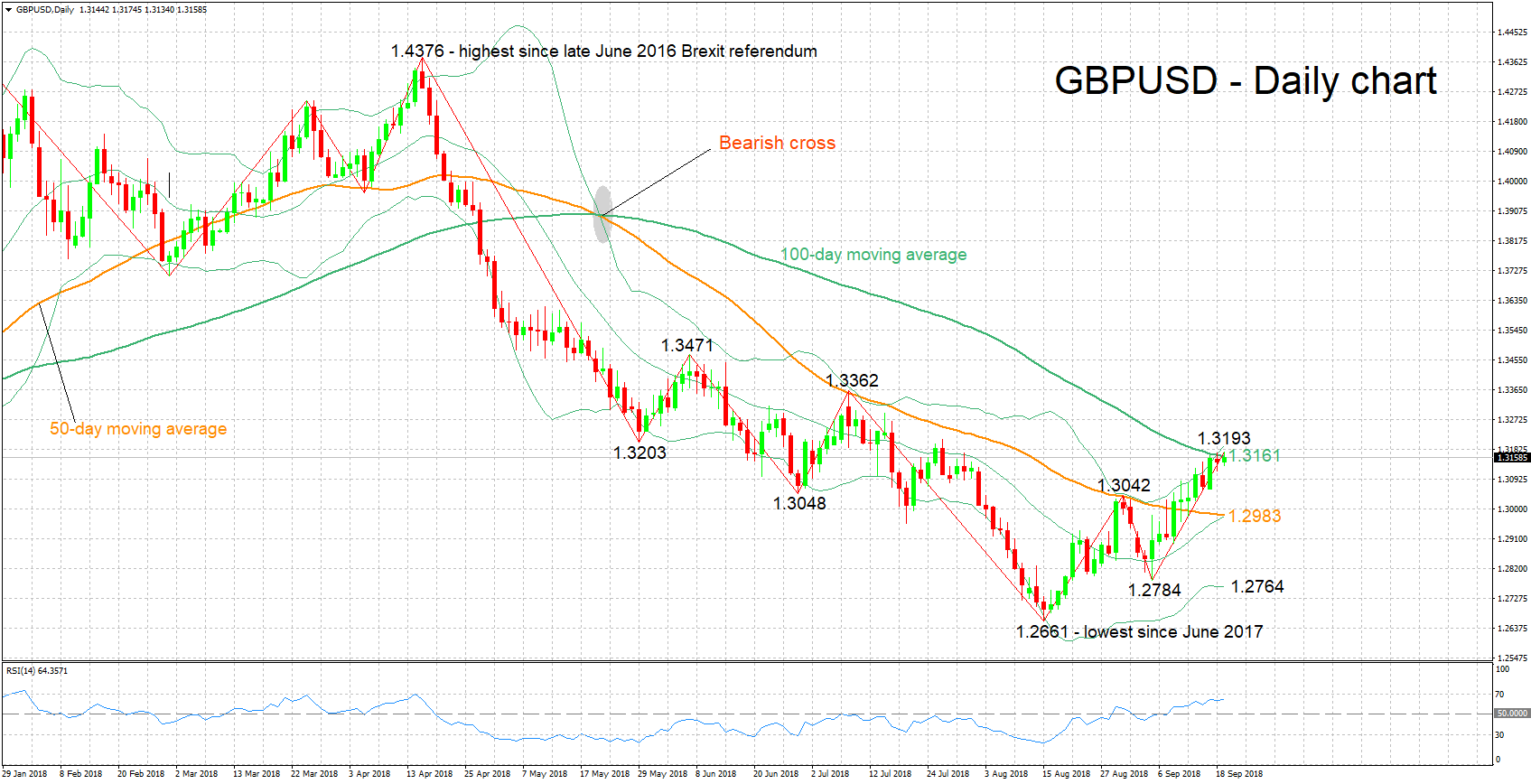
Technical Analysis: GBPUSD hits near 2-month high; positive momentum may be easing
GBPUSD posted a notable recovery from early September’s low of 1.2784. It is currently trading around 350 pips above that level, having hit a near two-month high of 1.3175 earlier on Wednesday. The RSI has been heading higher over the last couple of weeks, pointing to a bullish bias in the near-term. The indicator, though, is only moderately positively sloped at the moment, the implication being that bullish momentum may be easing.
Stronger-than-anticipated inflation readings out of the UK are likely to boost the pair. Immediate resistance to gains seems to be taking place around the current level of 100-day moving average line at 1.3161. Not far above lies the upper Bollinger band at 1.3193, with the area around it encapsulating the 1.32 round figure as well as being one of congestion between mid-June to mid-July. A previous peak at 1.3362 would increasingly come into scope in case of steeper gains.
On the downside and in the event of disappointing UK figures, support may come around a previous top at 1.3042, with the focus next turning to the 50-day MA at 1.2983 – this is where the middle Bollinger line roughly lies – a 20-day MA line –, with the 1.30 handle also being part of the zone around this point.
Brexit headlines can also move the pair.
Markets Crave Optimism: Dollar In Defense, Stocks Grow Despite Import Tariffs
Despite the expansion of tariffs between China and the United States, global markets remain positive. MSCI Asia ex Japan adds 0.7% this morning; Hong Kong’s Heng Seng increases by 1.1%, although China announced the introduction of 5-10%-tariffs for the U.S. imports of up to $60 billion. S&P500 added 0.5% on Tuesday to the levels above 2900, to important resistance where the correction began last month.
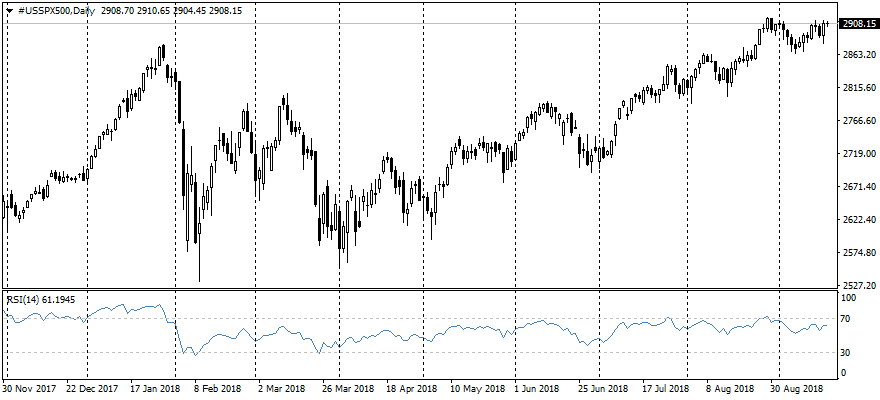
Among other important factors, it is worth highlighting the yield growth for 10-year U.S. Treasuries above 3%, up to the maximum since May. Even though usually a yield growth causes the strengthening of the national currency, the dollar almost has not changed for the recent 24 hours. The dollar index remains near 94.0. DXY only managed to depart from month-and-a-half lows in the evening, but in general the trend of this month remains bearish. 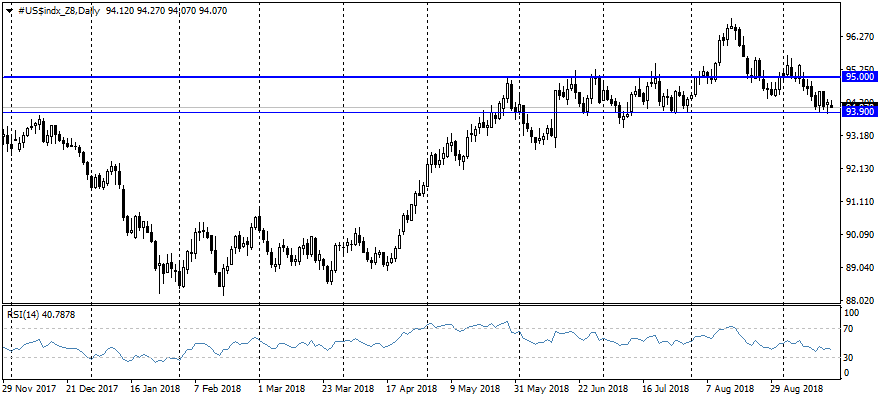
However, it is necessary to remain cautious about the current trend on the growth of EM stock markets and the weakening of the dollar. Despite the fact that the ECB is moving towards the wind down of its stimulus, it promises not to raise the rate for almost a year, unlike the Fed. The markets are almost sure that it will raise the rates next week and increase the expectations of another hike in December.
In Asia's stock markets, the current growth remains as a part of a technical rebound after a strong oversold earlier this month. In addition, the current round of the rhetoric tightening on international trade makes it almost impossible to end the dispute before the end of the year.
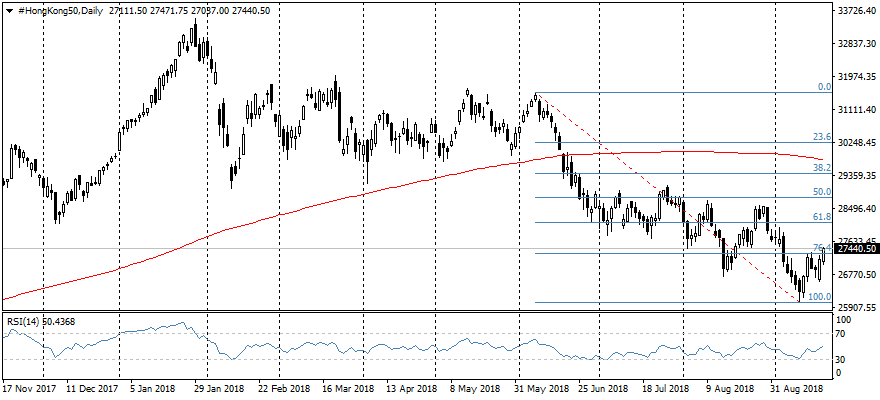
It is worth recalling that earlier this year the markets have been confident that trade conflicts would be solved before the end of summer. In the meantime, we see no US deals with China, the EU or NAFTA. Therefore, there are still many risks in the markets, which can send the markets downwards.
Etherum Trades In Narrow Range As It Lacks A Catalyst
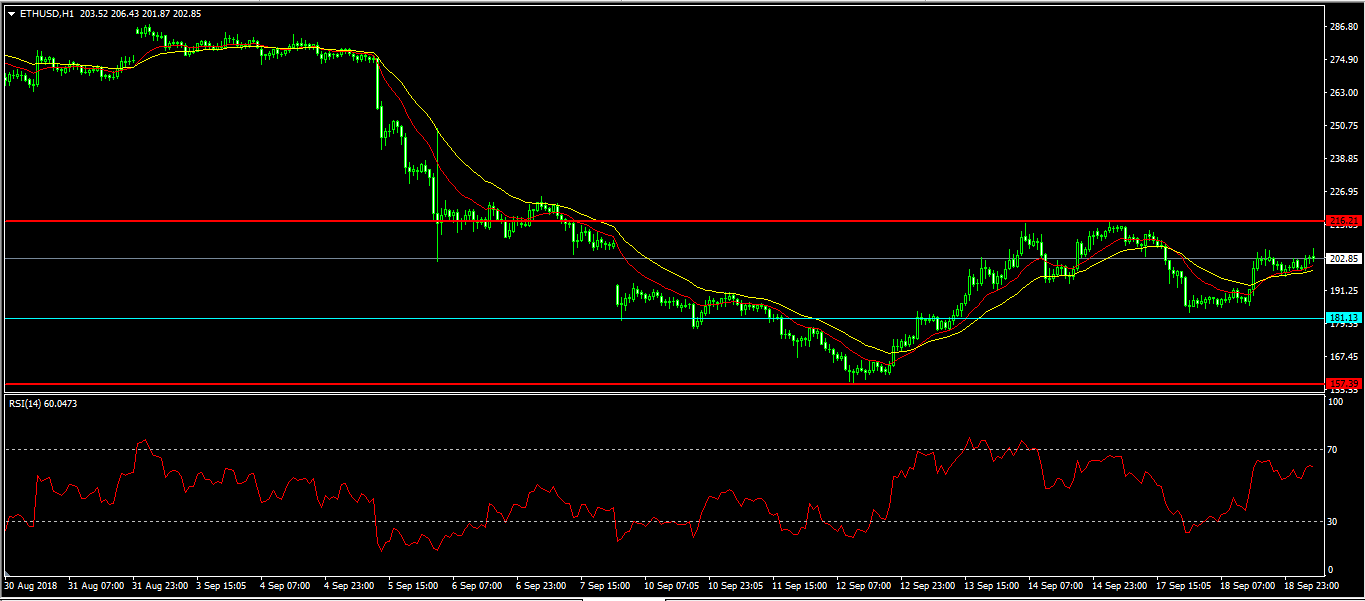
This month, the price of Ethereum declined to a YTD low of $157 – a continuation of the bearish moves that the cryptocurrency has made this year. At its peak, the price of one ETH was $1380. Then, it had a market capitalization of more than $120 billion. After last week’s decline, the price started to move up and reached a high of $215. This week, the price started going down and yesterday, it reached an intraday low of $181. This brings its total market cap to just $20 billion.
In the past few days, there has been no major news in the cryptocurrency market. The recent moves are associated with the reduced optimism about the role of ETH in the future. Two weeks ago, TechCrunch published an article which stated there was no major use case for ETH in the development of applications.
In general, the cryptocurrency industry has lost favour with some investors who believe that it is not delivering the intended promises. This has seen the price of cryptocurrencies lose market value. At their peak, cryptocurrencies were worth more than $800 billion. Today, they are worth about $200 billion. This makes the crash bigger than the dot-com bubble.
The ETH/USD pair is now trading at 202. This is lower than the weekly high of 215. The current price is within the narrow range it has been trading in over the past week. With no major news in the cryptocurrencies industry, the ETH/USD pair is likely to remain in this range as there are no catalysts to take it higher.
GBPUSD Traders Await Key UK Inflation Data
The British pound has pulled back from the 1.3170 level against the greenback, as traders book profits ahead of a raft of key UK data this morning. Sterling traders await the release of key inflation data from the United Kingdom economy, with expectations tilted to the upside. Buyers will attempt to move the GBPUSD pair towards the 1.3205 level, while sellers will try to move price below the 1.3100 level.
The GBPUSD pair is only bullish while trading above the 1.3100 level, key resistance is found at the 1.3170 and 1.3205 levels.
If the GBPUSD pair moves below the 1.3100 level, key support remains at the 1.3060 and 1.3000 levels.

EURUSD Under Pressure After Tenchnical Failure
The euro currency has fallen from a three-week trading high against the US dollar after short-term buyers once again failed to break the 1.1730 resistance level. Rising US treasury-yields helped pushed the EURUSD pair lower, with the US ten-year bond yield rising to its highest trading level since May. Sellers will attempt to break the 1.1650 level while buyers need to push price above the 1.1700 resistance level.
The EURUSD pair only bullish while trading above the 1.1650 level, key resistance remains at the 1.1730 and 1.1750 levels.
If the EURUSD pair moves below the 1.1650 level, key support is found at 1.1628 and 1.1600 levels.

Japanese Yen Little Moved As BOJ Leaves Interest Rates Unchanged
The Japanese yen was little moved after the Bank of Japan (BOJ) left interest rates unchanged. This was the 32nd month straight of no monetary policy changes.
The base lending rate was left at minus 0.1%, which was expected by analysts. In August, the central bank tweaked its ¥80tn-a-year quantitative easing program to strengthen its framework for powerful continuous easing. This was unlike other central banks such as the ECB, FED, and BOE, which are in the tightening phase. Meanwhile, Japan released better than expected trade data. Exports in August rose by 6.6% while imports rose by 15.4%. The trade balance was minus ¥445 billion, which was better than the expected ¥469 billion.
The Kiwi moved slightly higher than the US dollar after New Zealand released trade numbers for the second quarter. In the quarter, the current account fell to N$9.54 billion, which was higher than the expected N$8.09 billion. On a quarter-on-quarter basis, the current account fell to N$1.62 billion, which was higher than the expected N$1.32 billion. The current account percentage of the GDP was -3.30%, which was lower than the expected -2.80%. The current account measures the difference in value between exported and imported goods, services, and interest payments.
Sterling was little moved against the USD ahead of important inflation data. In the morning today, the Office of National Statistics (ONS) will release CPI data for August. The headline CPI number is expected to rise by 2.4%, which is lower than last month’s 2.5%. The core CPI is expected to rise by an annualized rate of 1.8%, which will be lower than the expected 1.9%. While the CPI numbers will be important, traders will pay closer attention to the progress in the ongoing Brexit talks.
EUR/USD
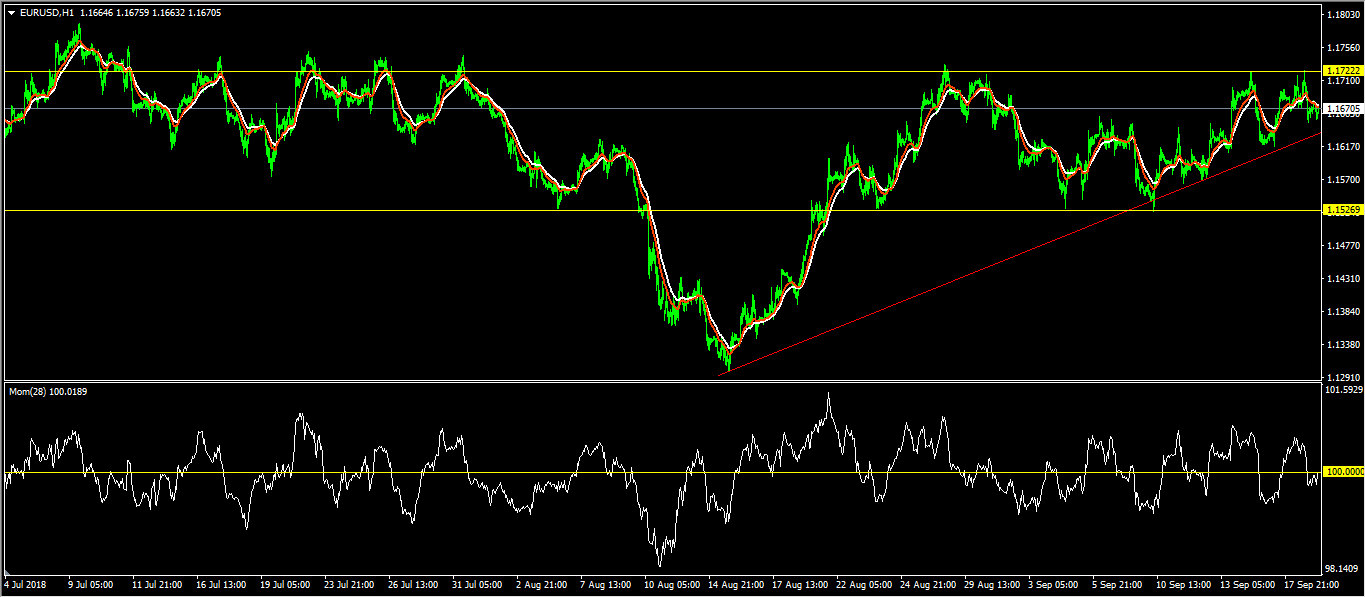
The EUR/USD fell in the Asian session to a low of 1.1650, which was the lowest level since Monday. It is now trading at 1.1673, which is in line with the 21 and 14-day Exponential Moving Average (EMA) and above the important support shown below. It is also between the narrow range the pair has been in the past few days. The pair could head lower if it crosses the important support of 1.1636.
USD/JPY
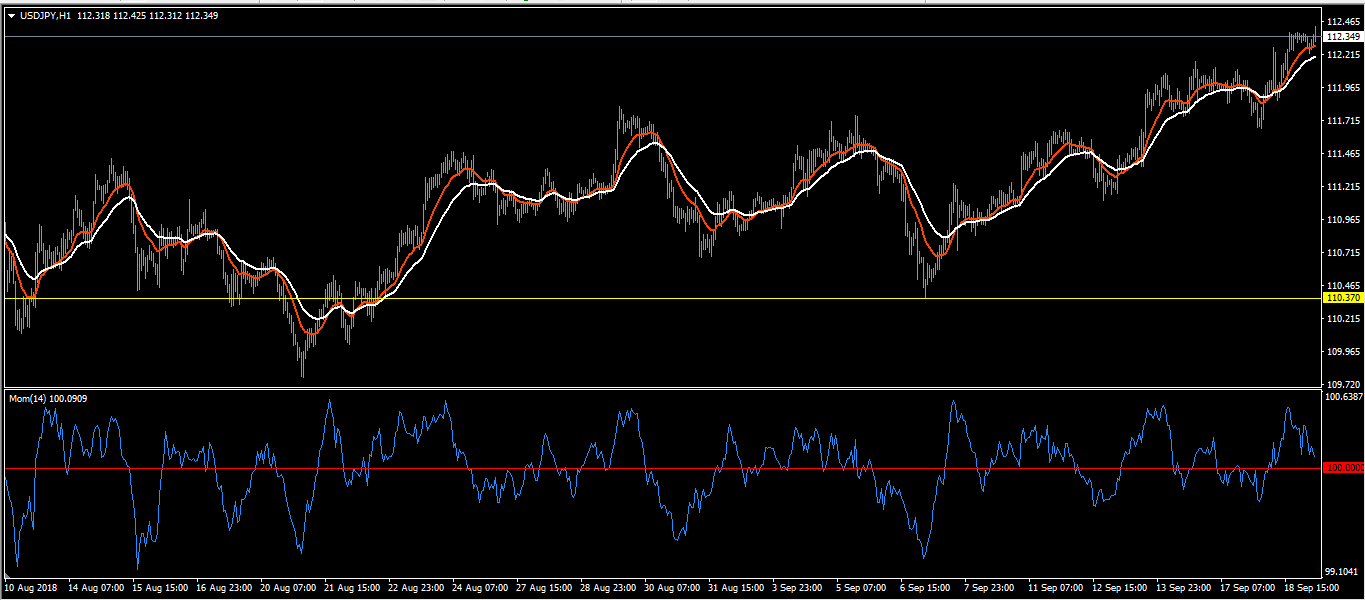
The USD/JPY pair started an important upward trend almost two weeks ago. In that period, it moved from 110.37 to a high of 112.45. Today’s high was the highest level since July this year. The 28-day EMA is currently on the right side of the shorter 14-day EMA. The momentum indicator is falling as the pair moves up, which is a divergence pattern. There is a likelihood that the upward momentum will continue because there are no major economic data expected from the US today.
NZD/USD
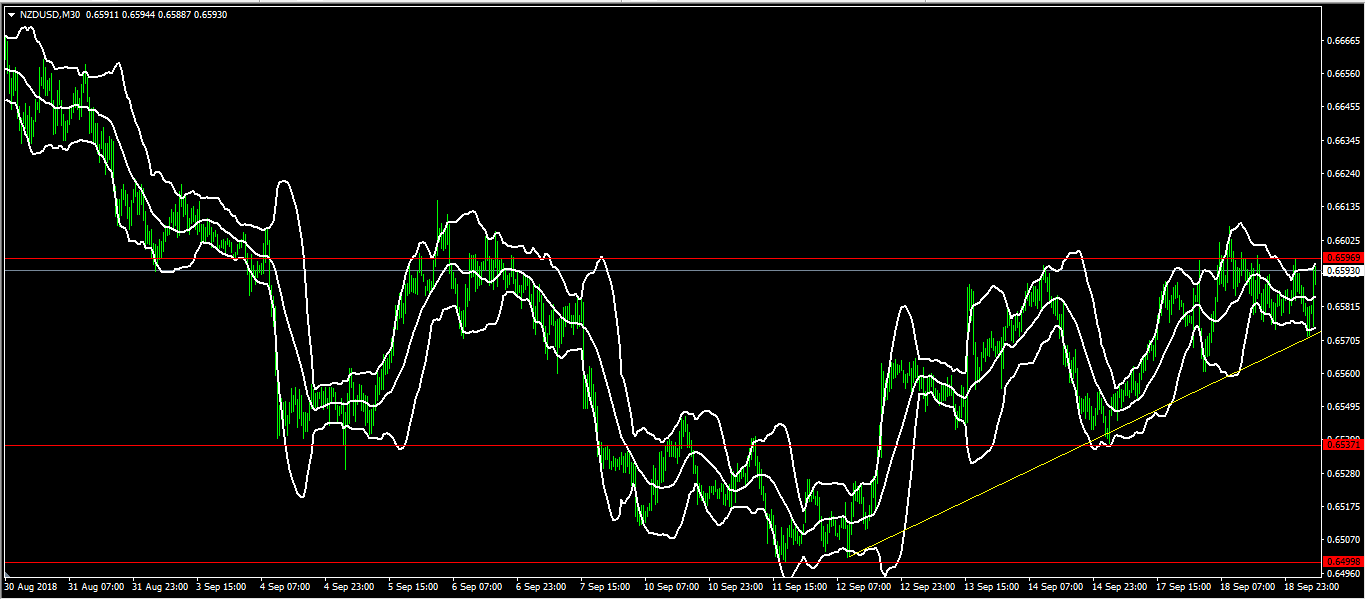
The New Zealand dollar was slightly up against the USD after positive data from New Zealand. The pair is now trading at the important resistance level of 0.6600. In the past few days, the pair has been making higher highs and higher lows. This came after a massive sell-off on the kiwi that started in August. The current price is along the upper Bollinger Band. There is a likelihood that the pair will continue moving up, in line with the new bullish momentum.
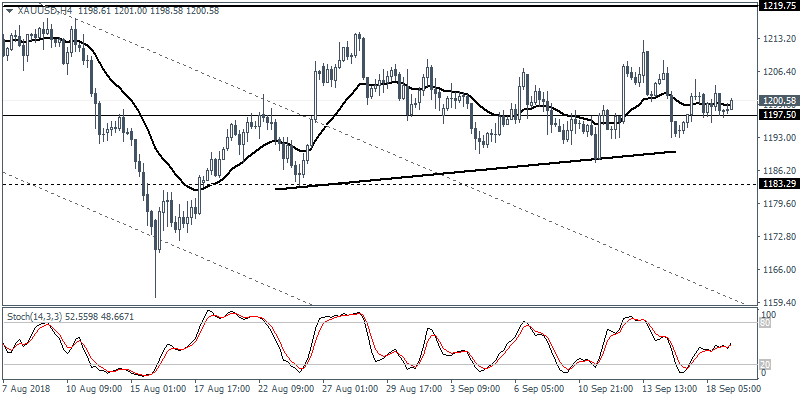
XAUUSD Intraday Analysis
XAUUSD (1200.58): Price action in gold remains subdued as the consolidation continues near the 1197.50 level of support. However, given the failure to post lower highs, we expect to see a turnaround in prices. To the upside, the target remains at 1219.75 while to the downside, a breakdown below 1197.50 could trigger declines to 1183.30. The trend is flat at the moment, but this could potentially change on a strong rally if the previous high at 1212.55 is breached.