Sample Category Title
GBP/USD Bounce At 78.6% Fib Creates Triangle Pattern
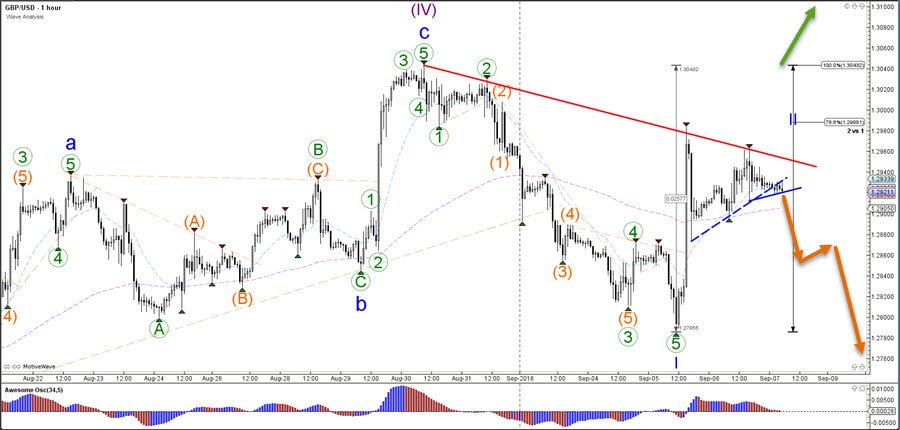
The GBP/USD could still be in a wave 2 (blue) because price did not break above the previous top and 100% Fib. Price will however need to break below the support to confirm a bearish breakout.
The GBP/USD is probably building a wave 1-2 pattern within the waves 5.
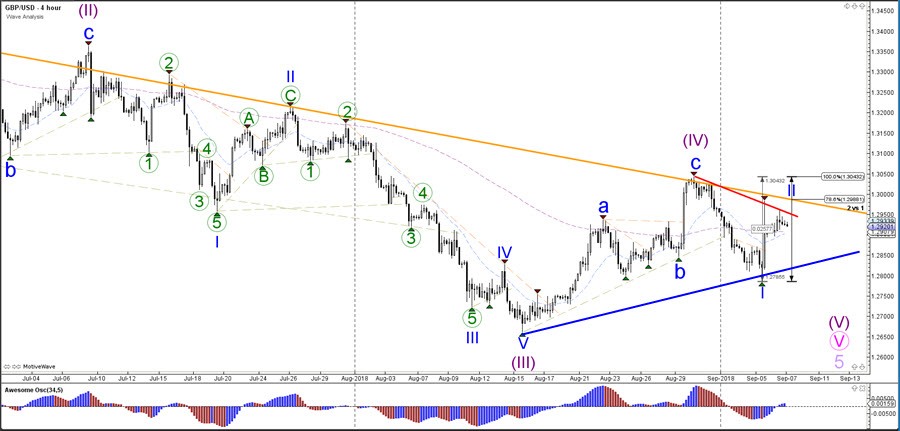
The GBP/USD made a bounce at the deep Fibonacci levelswhich is typical for a wave 2. Price needs to break, make a pullback and continue before downside becomes more likely. The trend lines indicate indecision at the moment and a triangle chart pattern.
Solid US Jobs Report On The Horizon
Market movers today
We expect a solid August US jobs report , which is the key event today. We do not expect the report to impact Fed policy, which is set to deliver two more hikes this year.
Final euro area Q2 GDP figures are out. We do not expect a revision from the 0.4% q/q, but the component breakdown will be interesting and likely show that domestic demand has been the main growth driver. After weak factory orders released yesterday, German industrial production for July could also surprise on the downside.
Selected market news
We expect a solid US August jobs report today The US labour market and domestic economy is doing well, despite trade war related disruption. We estimate average hourly earnings rose 0.2% m/m, which would leave the annual growth rate unchanged at 2.7% y/y. We think non-farm payroll rose 200,000, making up for some of the disappointment in July when payrolls came in at 157,000. The unemployment rate was likely unchanged at 3.9%. The report is very unlikely to change the Fed's plan to deliver two more hikes this year.
On the US economy and messy indicators. We've seen very strong manufacturing and services ISMs this week, which indicate a strong US economy. As a caveat with regards to payrolls, the ADP was on the weak side and August payrolls have a seasonal component whereby they tend to surprise on the downside. Then again the ADP linkage to payrolls has been compromised severely in recent years.
The Riksbank delayed its first rate hike in seven years once again univocal by stating that October is out of scope. We now expect it to raise interest rates for in December. The Governor of the Riksbank Stefan Ingves made it clear that hikes would come in increments of 25 bps. He recalled that whilst serving as a deputy governor in the Riksbank in the 90 s that they had made changes of 5 and 10 bps. He quipped that it had made for a lot of work and little economic impact. Our thinking on the Riksbank meeting can be found in Reading the Markets Sweden .
The weekend heralds the other major event for Sweden, namely the general election on Sunday. We expect a minority government outcome led by Ulf Kristersson and the Moderates. Expect results on how well different parties fared late on Sunday. We may very well see a messy political situation in the first few weeks following the election.
EUR/USD Decision Zone At 61.8% Fibonacci Support
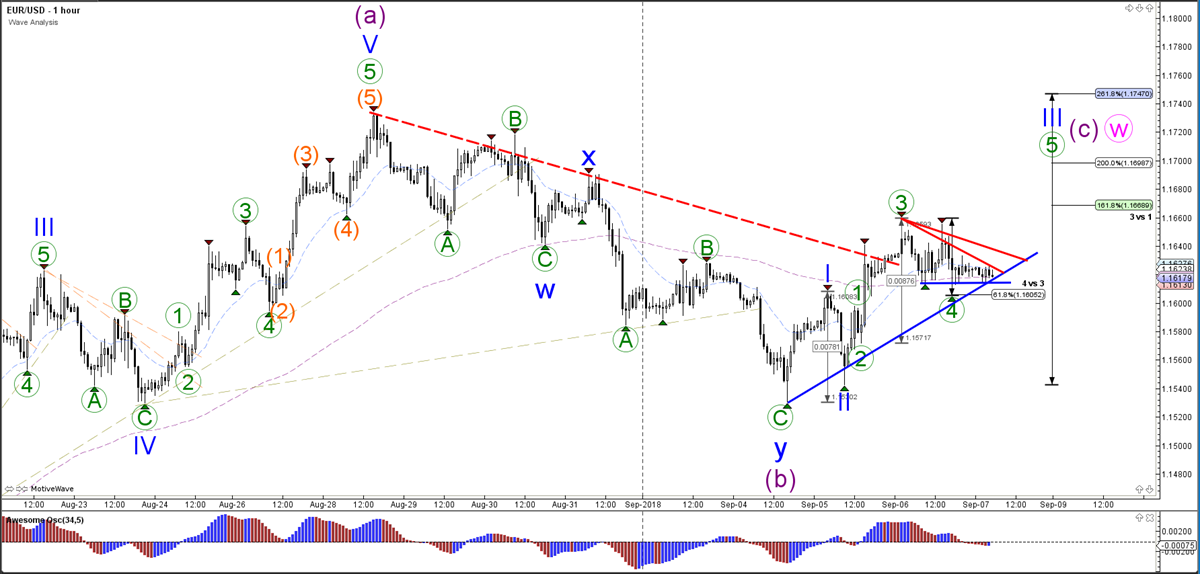
The EUR/USD seems to be building a bullish ABC zigzag (purple). The price will need to break above the resistance trend line (red) before it can confirm the wave C pattern, whereas a break below the support trend line could indicate a deeper wave B (purple), which could test the support zone at 1.15 again.
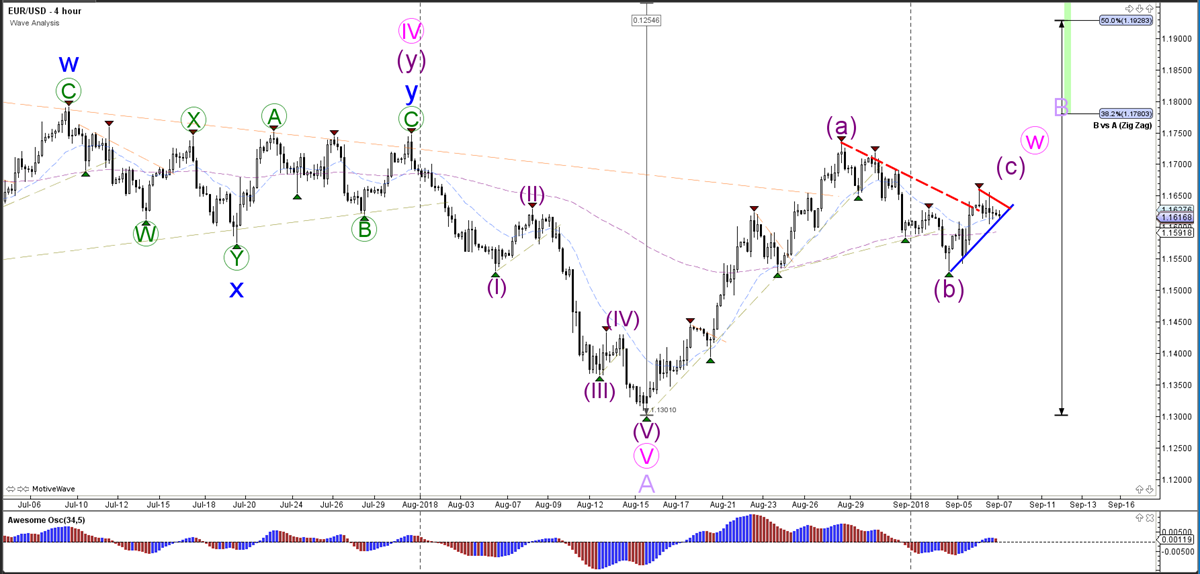
The EUR/USD has broken above the resistance trend line (dotted red) but is now moving sideways and is building a chart pattern. The price could be in a wave 4 (green) pattern as long as it stays above the 61.8% Fibonacci support level.
German Factory Orders Declined In July, On Trade Worries
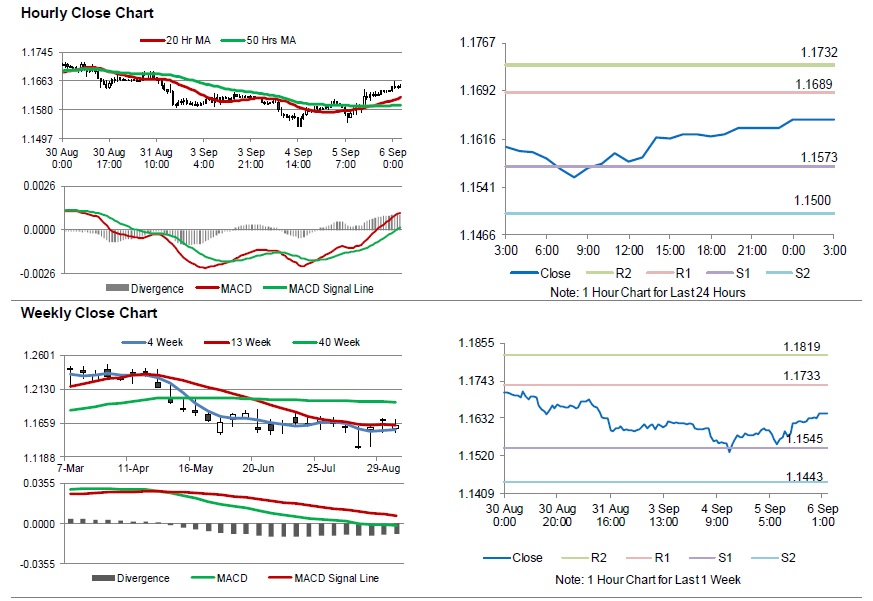
For the 24 hours to 23:00 GMT, the EUR declined 0.07% against the USD and closed at 1.1625.
Macroeconomic data showed that Germany's seasonally adjusted factory orders unexpectedly eased 0.9% on a monthly basis in July, weighed down by US President Donald Trump's protectionist policies and defying market expectations for a gain of 1.8%. In the previous month, factory orders had declined by a revised 3.9%.
In the US, data revealed that the US final Markit services PMI dipped to a level of 54.8 in August, overshooting market consensus for a fall to a level of 55.2. The preliminary figures had recorded a drop to 55.2. In the previous month, the PMI had registered a level of 56.0. Moreover, the nation's factory orders retreated 0.8% on a monthly basis in July, more than market expectations for a decline of 0.6%. Factory orders had advanced by a revised 0.6% in the prior month. Also, final durable goods orders dropped 1.7% on a monthly basis in July, in line with market expectations and confirming the preliminary print. In the previous month, durable goods orders had registered a revised rise of 0.7%.
On the contrary, the non-manufacturing PMI climbed to 58.5 in August, compared to market expectations for an advance to 56.8. The non-manufacturing PMI had registered a reading of 55.7 in the prior month. Further, the region's seasonally adjusted initial jobless claims surprisingly fell to a level of 203.0K in the week ended 01 September, registering its lowest level since December 1969 and compared to a reading of 213.0K in the previous week. Market participants had envisaged the initial jobless claims to record a steady reading. Moreover, the US ADP private sector employment climbed 163.0 K in August, less than market anticipation for an advance of 200.0K and after registering an increase of 219.0K in the previous month.
In the Asian session, at GMT0300, the pair is trading at 1.1619, with the EUR trading 0.05% lower against the USD from yesterday's close.
The pair is expected to find support at 1.1598, and a fall through could take it to the next support level of 1.1578. The pair is expected to find its first resistance at 1.1647, and a rise through could take it to the next resistance level of 1.1676.
Moving ahead, investors will keep an eye on the Eurozone's 2Q GDP figures, due to be released in a few hours along with Germany's trade balance data and industrial production, both for July, set to release in a while. Later in the day, the US non-farm payrolls, unemployment rate and average hourly earnings, all for August, will keep traders on their toes.
The currency pair is showing convergence with its 20 Hr and 50 Hr moving averages.
Sterling Trading A Tad Lower In The Morning Session
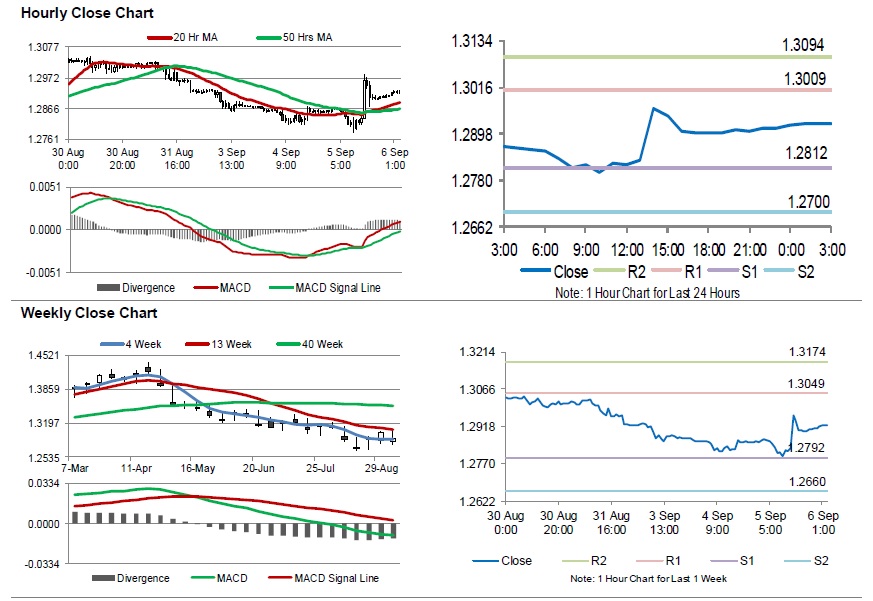
For the 24 hours to 23:00 GMT, the GBP rose 0.14% against the USD and closed at 1.2929.
In the Asian session, at GMT0300, the pair is trading at 1.2924, with the GBP trading slightly lower against the USD from yesterday’s close.
The pair is expected to find support at 1.2893, and a fall through could take it to the next support level of 1.2863. The pair is expected to find its first resistance at 1.2958, and a rise through could take it to the next resistance level of 1.2993.
Looking ahead, investors will closely monitor UK’s Halifax house price index for August, scheduled to release in a while.
The currency pair is showing convergence with its 20 Hr moving average and trading above its 50 Hr moving average.
Japanese Yen Extends Its Gains In The Asian Session
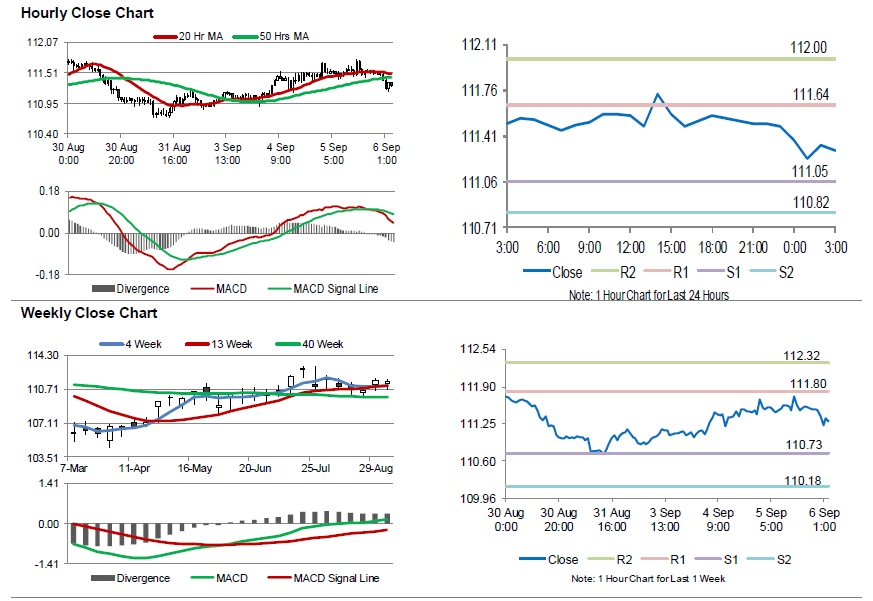
For the 24 hours to 23:00 GMT, the USD declined 0.73% against the JPY and closed at 110.67.
In the Asian session, at GMT0300, the pair is trading at 110.58, with the USD trading 0.08% lower against the JPY from yesterday’s close.
The pair is expected to find support at 110.16, and a fall through could take it to the next support level of 109.75. The pair is expected to find its first resistance at 111.21, and a rise through could take it to the next resistance level of 111.85.
Going forward, investors would keep a close watch on Japan’s leading and coincident indices, both for July, set to release in a while.
The currency pair is trading below its 20 Hr and 50 Hr moving averages.
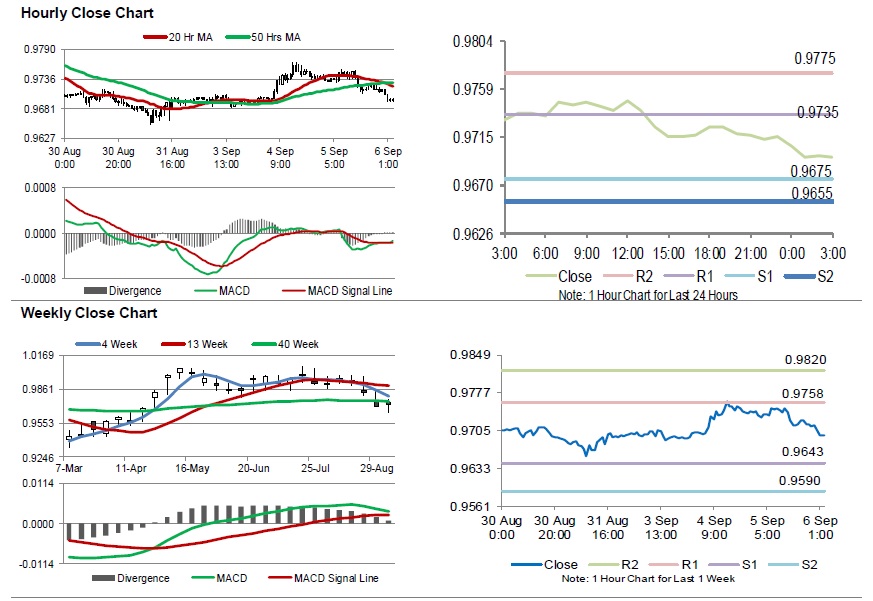
Switzerland’s Economy Expanded More-Than-Estimated In 2Q 2018
For the 24 hours to 23:00 GMT, the USD declined 0.66% against the CHF and closed at 0.9651.
Data showed that Switzerland's gross domestic product (GDP) advanced 3.4% on a yearly basis in 2Q 2018, boosting expectations for further interest rate hikes and beating market expectations for a rise of 2.4%. In the previous quarter, the GDP had recorded a revised rise of 2.9%
In the Asian session, at GMT0300, the pair is trading at 0.9654, with the USD trading a tad higher against the CHF from yesterday's close.
The pair is expected to find support at 0.9632, and a fall through could take it to the next support level of 0.9611. The pair is expected to find its first resistance at 0.9693, and a rise through could take it to the next resistance level of 0.9733.
Going ahead, traders will closely monitor Switzerland's unemployment rate for August, set to release in a while.
The currency pair is trading below its 20 Hr and 50 Hr moving averages.
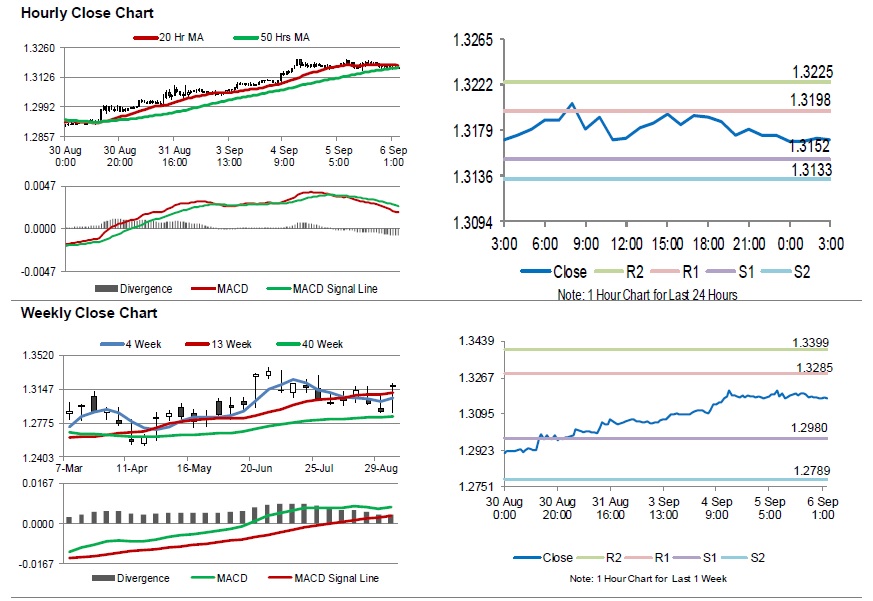
Canada’s Building Permits Unexpectedly Dropped In July
For the 24 hours to 23:00 GMT, the USD declined 0.17% against the CAD and closed at 1.3152.
On the data front, Canada's building permits unexpectedly eased 0.1% on a monthly basis in July, defying market expectations for a rise of 1.0%. Building permits had registered a revised drop of 1.3% in the prior month.
In the Asian session, at GMT0300, the pair is trading at 1.3129, with the USD trading 0.17% lower against the CAD from yesterday's close.
The pair is expected to find support at 1.3087, and a fall through could take it to the next support level of 1.3044. The pair is expected to find its first resistance at 1.3199, and a rise through could take it to the next resistance level of 1.3268.
Looking forward, investors would await Canada's unemployment rate and the Ivey purchasing managers' index, both for August, scheduled to release later in the day.
The currency pair is trading below its 20 Hr and 50 Hr moving averages.
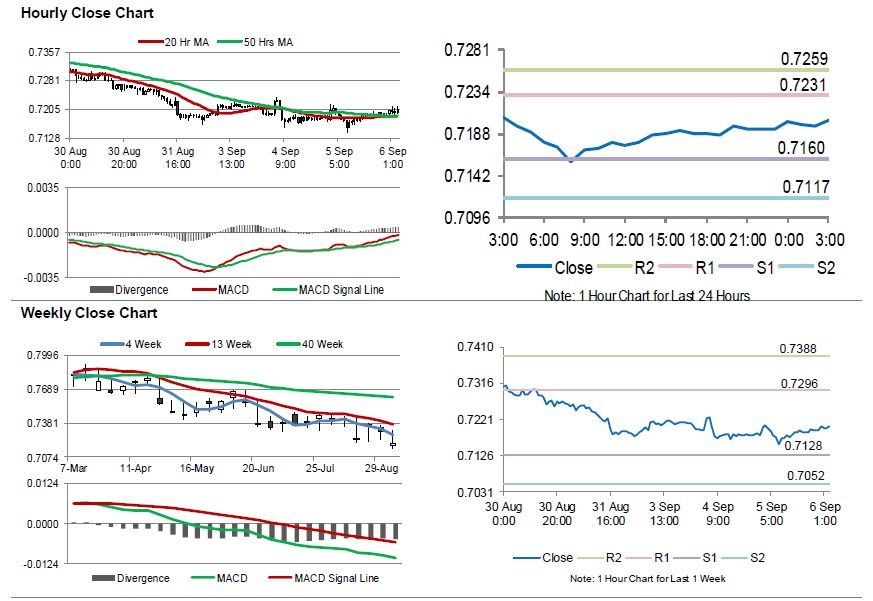
Aussie Trading Lower In The Asian Session
For the 24 hours to 23:00 GMT, the AUD rose 0.10% against the USD and closed at 0.7200.
LME Copper prices rose 1.5% or $90.0/MT to $5940.0/MT. Aluminium prices declined 0.8% or $15.5/MT to $2030.5/MT.
In the Asian session, at GMT0300, the pair is trading at 0.7172, with the AUD trading 0.39% lower against the USD from yesterday’s close.
Overnight data indicated that the AIG performance of construction index eased to a level of 51.8 in August, compared to a reading of 52.0 in the previous month. On the contrary, seasonally adjusted home loan approvals unexpectedly rose 0.4% on a monthly basis in July. Home loan approvals had fallen by a revised 0.8% in the previous month.
The pair is expected to find support at 0.7155, and a fall through could take it to the next support level of 0.7138. The pair is expected to find its first resistance at 0.72, and a rise through could take it to the next resistance level of 0.7228.
Trading trend in the Aussie is expected to be determined by the Australia’s NAB business confidence, Westpac consumer confidence index and unemployment rate, all set to release next week.
The currency pair is showing convergence with its 20 Hr and 50 Hr moving averages.
Gold: Yellow Metal Trading On A Stronger Footing In The Morning Session
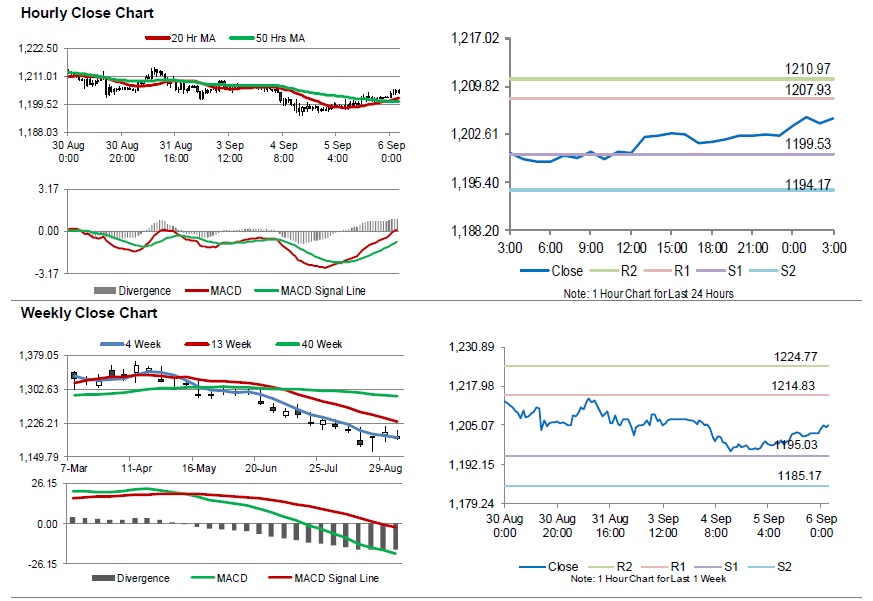
For the 24 hours to 23:00 GMT, Gold rose 0.27% against the USD and closed at USD1205.60 per ounce, amid weakness in the US dollar.
In the Asian session, at GMT0300, the pair is trading at 1207.70, with gold trading 0.17% higher against the USD from yesterday’s close.
The pair is expected to find support at 1201.23, and a fall through could take it to the next support level of 1194.77. The pair is expected to find its first resistance at 1213.43, and a rise through could take it to the next resistance level of 1219.17.
The yellow metal is showing convergence with its 20 Hr moving average and trading above its 50 Hr moving average.