

Sample Category Title
GBPUSD To Weaken Further Below 1.3070
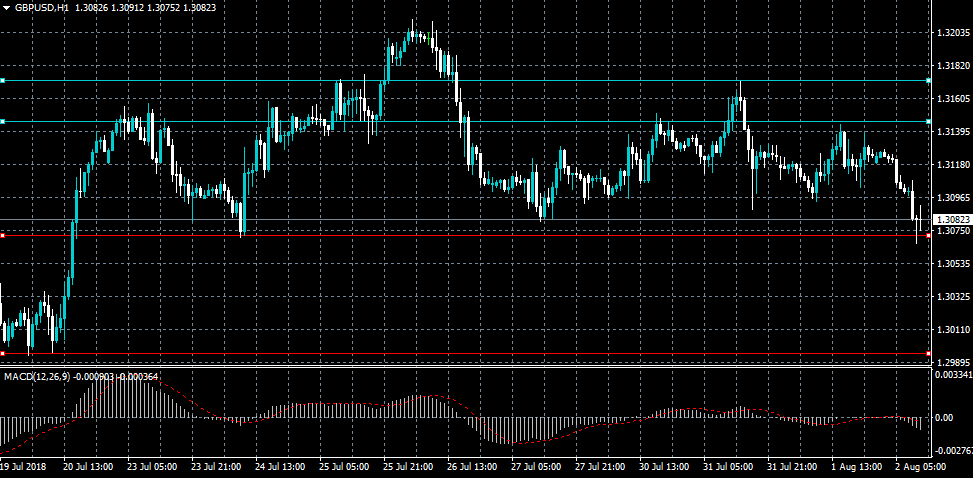
The British pound remains under heavy selling pressure against the US Dollar, ahead of today’s key interest rate decision from the Bank of England. The GBPUSD pair is likely to weaken further below the 1.3070 level, as it marks a head and shoulders neckline break. Sellers are likely to target the 1.3000 level, while buyers need to stabilize price above the 1.3205 resistance level.
The GBPUSD pair is strongly bearish while trading below the 1.3070 level, key support is now found at the 1.3000 and 1.2958 levels.
If the GBPUSD pair trades above the 1.3101 level, buyers are likely to target the 1.3205 and 1.3245 resistance levels.
BoE Carney’s post meeting press conference, live stream
https://www.youtube.com/watch?v=y3c59kGU-5s
Summary on interest rates
"With domestically-generated inflation building and the prospect of excess demand in the economy emerging, a modest tightening of monetary policy is now appropriate to return inflation to its 2 percent target, and to keep it there."
"Gradual tightening of monetary policy is likely to be required in order to return inflation sustainably to its target at a conventional horizon.
"Structural factors that have pushed down the trend equilibrium real rate are likely to persist.
"Domestic short-term factors (particularly headwinds from uncertainty and fiscal drag) will fade slowly.
"R* expected to rise gradually. Policy needs to walk - not run- to stand still".
EURUSD Testing Key Breakout Zone
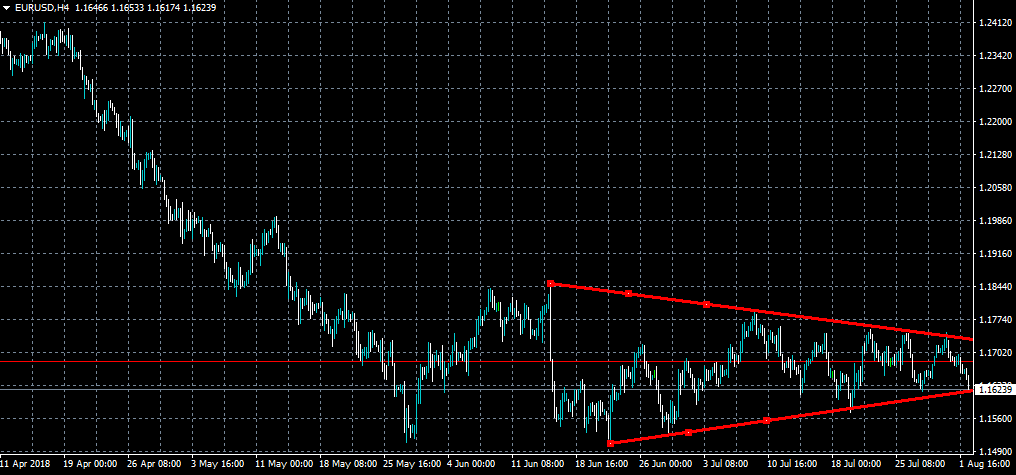
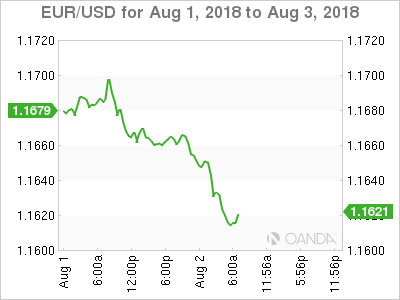
The euro currency has fallen to a fresh weekly trading-low against the greenback following a strong move higher in the value of the U.S. Dollar Index. The EURUSD pair is now probing the bottom-end of the neutral symmetrical triangle pattern, with the price so far reaching the 1.1618 level. Sellers will try to target the 1.1510 level if the triangle breaks, while buyers attempt to stabilize price above the 1.1650 level.
The EURUSD pair is strongly bearish while trading below the 1.1623 level, key support is found at the 1.1600 and 1.1510 levels.
If the EURUSD pair trades above the 1.1650 level, key technical resistance is found at the 1.1724 and 1.1790 levels.
BoE Inflation Report shows slowing conditioning rate path
The new projections in the Inflation report suggests that after this rate hike, there would be a lot of room for BoE to wait and see. And, there could be only one more hike within the forecast horizon through Q3 2021.
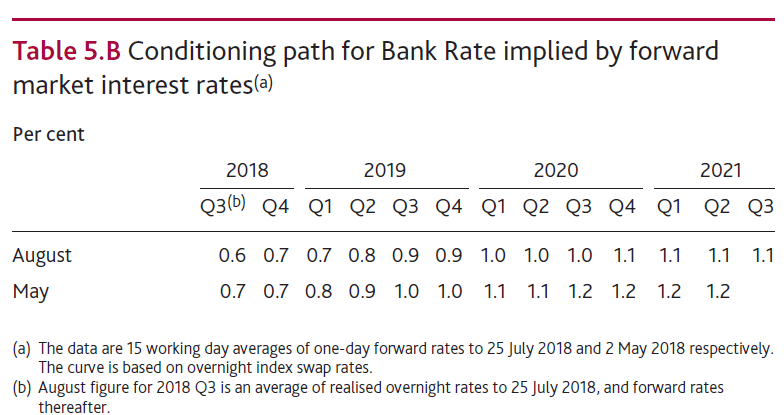 In the quarterly Inflation Report, the rate path as condition by BoE for economic forecasts is slow than May's.
In the current conditioning path, the Bank rate will hit 0.9% in Q4 2019 1.1% in Q4 2020 and stay there till Q3 2021.
In May's conditioning path, the Bank rate will reach 1.0% already in Q3 2019, and then 1.2% in Q3 2020 and stays there till Q2 2021.
That is, the current path argues that the next hike could happen in Q1 2020, instead of Q3 2019. And there could be no more rate hike in the forecast horizon.
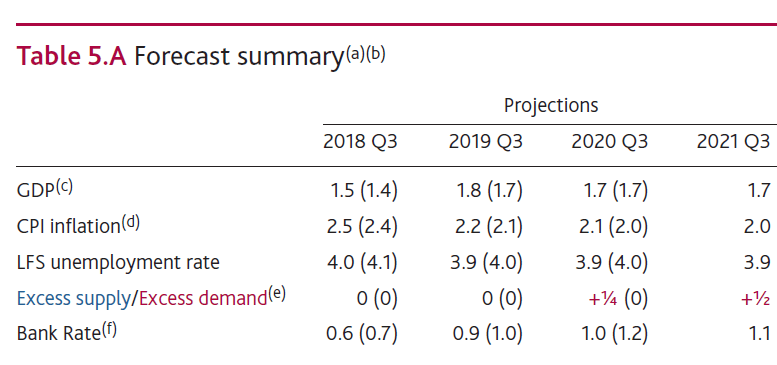
With such conditioning path, GDP (exclude backcast) is projected to growth faster by 1.5% in the four-quarter to Q3 2018, and 1.8% in the four-quarter to Q3, 2019. But GDP growth in the four-quarter to Q3 2020 is unchanged at 1.7%. Inflation will return to target later at 2.0% in Q3 2021, instead of Q3 2020. But, at 2.2% in Q3 2019 and 2.1% in Q3 2020, it's reasonably close to target.
BoE voted unanimously to raise Bank rate by 25bps to 0.75%
BoE voted unanimously by 9-0 to raise Bank Rate by 25bps to 0.75%. That's the second hike since the global financial crisis in more than a decade. Asset purchase target is held at GBP 435B, also by unanimous vote.
The updated economic projections are "broadly similar" to May's. GDP is projected to growth by around 1.75% on average over the forecast period. The rate is slightly slower than "diminished rate of supply growth" averaging around 1.50%. There is "very limited degree of slack in the economy". And "small margin of excess demand" will emerge by late 2019 to feed into inflation.
On inflation, taken all considerations, conditioned by market pricing on interest rates, "CPI inflation remains slightly above 2% through most of the forecast period, reaching the target in the third year."
BoE maintained tightening bias and said "ongoing tightening of monetary policy over the forecast period would be appropriate" But the pace of rate hike will be gradual and limited.
Below is the full statement.
Monetary Policy Committee voted unanimously to raise Bank Rate to 0.75%
The Bank of England's Monetary Policy Committee (MPC) sets monetary policy to meet the 2% inflation target, and in a way that helps to sustain growth and employment. At its meeting ending on 1 August 2018, the MPC voted unanimously to increase Bank Rate by 0.25 percentage points, to 0.75%.
The Committee voted unanimously to maintain the stock of sterling non-financial investment-grade corporate bond purchases, financed by the issuance of central bank reserves, at £10 billion. The Committee also voted unanimously to maintain the stock of UK government bond purchases, financed by the issuance of central bank reserves, at £435 billion.
Since the May Inflation Report, the near-term outlook has evolved broadly in line with the MPC's expectations. Recent data appear to confirm that the dip in output in the first quarter was temporary, with momentum recovering in the second quarter. The labour market has continued to tighten and unit labour cost growth has firmed.
The MPC's updated projections for inflation and activity are set out in the August Inflation Report and are broadly similar to its projections in May.
In the MPC's central forecast, conditioned on the gently rising path of Bank Rate implied by current market yields, GDP is expected to grow by around 1¾% per year on average over the forecast period. Global demand grows above its estimated potential rate and financial conditions remain accommodative, although both are somewhat less supportive of UK activity over the forecast period. Net trade and business investment continue to support UK activity, while consumption grows in line with the subdued pace of real incomes.
Although modest by historical standards, the projected pace of GDP growth over the forecast is slightly faster than the diminished rate of supply growth, which averages around 1½% per year. The MPC continues to judge that the UK economy currently has a very limited degree of slack. Unemployment is low and is projected to fall a little further. In the MPC's central projection, therefore, a small margin of excess demand emerges by late 2019 and builds thereafter, feeding through into higher growth in domestic costs than has been seen over recent years.
CPI inflation was 2.4% in June, pushed above the 2% target by external cost pressures resulting from the effects of sterling's past depreciation and higher energy prices. The contribution of external pressures is projected to ease over the forecast period while the contribution of domestic cost pressures is expected to rise. Taking these influences together, and conditioned on the gently rising path of Bank Rate implied by current market yields, CPI inflation remains slightly above 2% through most of the forecast period, reaching the target in the third year.
The MPC continues to recognise that the economic outlook could be influenced significantly by the response of households, businesses and financial markets to developments related to the process of EU withdrawal.
The Committee judges that an increase in Bank Rate of 0.25 percentage points is warranted at this meeting.
The Committee also judges that, were the economy to continue to develop broadly in line with its Inflation Report projections, an ongoing tightening of monetary policy over the forecast period would be appropriate to return inflation sustainably to the 2% target at a conventional horizon. Any future increases in Bank Rate are likely to be at a gradual pace and to a limited extent.
(BOE) Monetary Policy Committee voted unanimously to raise Bank Rate to 0.75%
The Bank of England's Monetary Policy Committee (MPC) sets monetary policy to meet the 2% inflation target, and in a way that helps to sustain growth and employment. At its meeting ending on 1 August 2018, the MPC voted unanimously to increase Bank Rate by 0.25 percentage points, to 0.75%.
The Committee voted unanimously to maintain the stock of sterling non-financial investment-grade corporate bond purchases, financed by the issuance of central bank reserves, at £10 billion. The Committee also voted unanimously to maintain the stock of UK government bond purchases, financed by the issuance of central bank reserves, at £435 billion.
Since the May Inflation Report, the near-term outlook has evolved broadly in line with the MPC's expectations. Recent data appear to confirm that the dip in output in the first quarter was temporary, with momentum recovering in the second quarter. The labour market has continued to tighten and unit labour cost growth has firmed.
The MPC's updated projections for inflation and activity are set out in the August Inflation Report and are broadly similar to its projections in May.
In the MPC's central forecast, conditioned on the gently rising path of Bank Rate implied by current market yields, GDP is expected to grow by around 1¾% per year on average over the forecast period. Global demand grows above its estimated potential rate and financial conditions remain accommodative, although both are somewhat less supportive of UK activity over the forecast period. Net trade and business investment continue to support UK activity, while consumption grows in line with the subdued pace of real incomes.
Although modest by historical standards, the projected pace of GDP growth over the forecast is slightly faster than the diminished rate of supply growth, which averages around 1½% per year. The MPC continues to judge that the UK economy currently has a very limited degree of slack. Unemployment is low and is projected to fall a little further. In the MPC's central projection, therefore, a small margin of excess demand emerges by late 2019 and builds thereafter, feeding through into higher growth in domestic costs than has been seen over recent years.
CPI inflation was 2.4% in June, pushed above the 2% target by external cost pressures resulting from the effects of sterling's past depreciation and higher energy prices. The contribution of external pressures is projected to ease over the forecast period while the contribution of domestic cost pressures is expected to rise. Taking these influences together, and conditioned on the gently rising path of Bank Rate implied by current market yields, CPI inflation remains slightly above 2% through most of the forecast period, reaching the target in the third year.
The MPC continues to recognise that the economic outlook could be influenced significantly by the response of households, businesses and financial markets to developments related to the process of EU withdrawal.
The Committee judges that an increase in Bank Rate of 0.25 percentage points is warranted at this meeting.
The Committee also judges that, were the economy to continue to develop broadly in line with its Inflation Report projections, an ongoing tightening of monetary policy over the forecast period would be appropriate to return inflation sustainably to the 2% target at a conventional horizon. Any future increases in Bank Rate are likely to be at a gradual pace and to a limited extent.
WTI OIL Outlook: Strong Pressure On Crude Stocks Build And Trade Tensions Persists
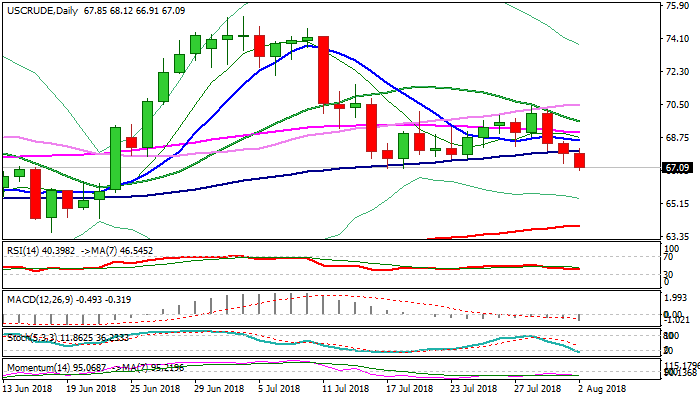
WTI oil holds firmly in red for the third straight day and probes below key support at $67.03 (17/18 July lows) on Thursday.
Surprise rise in crude inventories of 3.8 million barrels vs forecasted draw of 2.8 million barrels, added to existing pressure on increased output and concerns over trade tensions between the US and China.
Wednesday's surge through thin daily cloud and close below important Fibo support at $68.07 (61.8% of $63.58/$75.34 rally) was bullish signal, which looks for confirmation on sustained break below $67.03 pivot.
Completion of failure swing pattern on daily chart on break below $67.03 would open way for extension towards $66.36 (Fibo 76.4%) initially.
Daily techs in firm bearish setup support the notion, with bears to be possibly interrupted by limited upticks on oversold conditions.
Broken 100SMA which was key near-term support, now marks solid resistance at $68.03, expected to ideally cap.
Only extension above pivots at $68.99 (falling 55SMA) would sideline bears.
Res: 67.57, 68.03, 68.58, 68.99
Sup: 66.91, 66.36, 65.71, 64.33
Pound Under Pressure Ahead Of BoE Rate Decision
Here the latest developments in global markets:
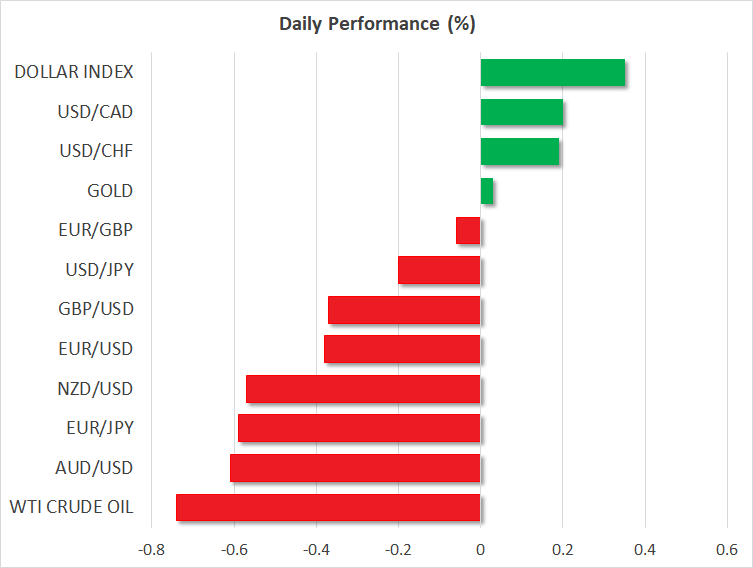
FOREX: The US dollar index, which measures the greenback against a basket of six currencies, advanced by 0.39% and touched a two-week high near 95.00 on Thursday. Dollar/yen was weaker on Thursday at 111.49 (-0.20%) despite the Fed reiterating that the US economic growth has been rising strongly and the job market has continued to strengthen. Yesterday the 10-year Japanese government bond yields reached a fresh one-and-a-half-year high, following the Bank of Japan’s decision to allow more flexibility in yields movements earlier in the week. Euro/dollar and pound/dollar declined by 0.41% and 0.39% respectively, despite that the UK’s construction PMI ticked surprisingly up to 55.8 in July from 53.1 before. The spotlight event of the day is the Bank of England’s monetary policy decision which is highly expected to deliver the second rate hike since the global financial crisis. In the antipodean sphere, aussie/dollar fell by 0.62% to 0.7357 and kiwi/dollar dropped by 0.57% to 0.6749. Meanwhile, dollar/loonie erased some losses of the previous day, adding 0.21%. Dollar/lira jumped to a record high once again, rising by 1.86% as the US imposed sanctions on its NATO ally over the imprisonment of an American pastor. The offshore yuan retreated to a 14-month low on the back of growing trade tensions between the US and China.
STOCKS: European equities edged aggressively lower on Thursday with significant losses. The pan-European STOXX 600 and the blue-chip Euro STOXX 50 declined by 0.86% and 1.31% respectively at 1030 GMT and are set to complete the second red day in a row. The German DAX 30 dived by 1.77%, the French CAC 40 tumbled by 0.87%, while the Italian FTSE MIB dipped by 0.87%. UK’s FTSE saw a strong sell-off as well, retreating by 0.87%. Futures tracking US stock indices were all in the red, pointing to a negative open after the FOMC monetary policy decision.
COMMODITIES: Oil prices moved lower today after a surprise gain in U.S. crude inventories exacerbated supply concerns. WTI crude stood near a six-week low of $67.13/barrel, losing 0.78% from its performance, while Brent fell by 0.36% to $72.13. In precious metals, gold was higher by 0.07% at $1215.30/ounce.
Day ahead: Bank England rate announcement in the center stage with trade developments eyed
The Bank of England (BoE) will be deciding on monetary policy later today. Markets are expecting the Bank to raise benchmark rates by a quarter percentage point to 0.75% (1100 GMT) with the probability for such an action standing at around 91% according to UK OIS. Since a rate increase has been already mostly priced in, the focus will turn to the voting structure, with investors eagerly awaiting to see whether continuing Brexit and trade uncertainties, as well as some recent weakness in British wage growth, is pushing some policymakers to the dovish side in terms of the rate outlook.
In the previous meeting, six policymakers backed no change in interest rates, while the remaining three voted in favor of a rate rise. Expectations now are for a 7-2 rate hike vote and should this come surprisingly different, the pound could see some fluctuation. In other words, in case a larger number of MPC policymakers support that rates should remain steady, the pound is likely to move south and vice versa. Still, a “dovish” rate hike is not unlikely as the lack of clarity on the Brexit front and growing whispers of a no-Brexit deal not long before Britain’s exit from the EU bloc could turn policymakers cautious on future rate increases. Moreover, risks around the US trade policy which threatens the state of global trade could further complicate matters for policymakers. Commentary on Brexit and trade topics – especially the former – are expected by the BoE chief, Mark Carney, who will be holding a press conference at 1130 GMT. Investors will be also be carefully monitoring the Bank’s inflation forecast report delivered today alongside the rate announcement.
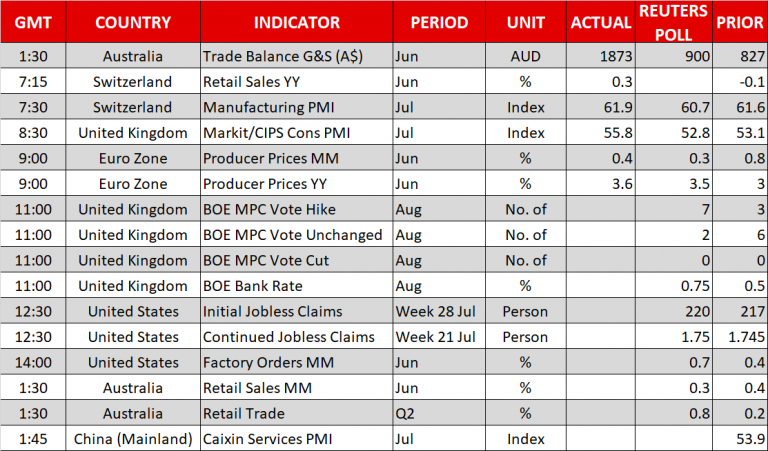
Meanwhile in the US, the economic calendar will feature initial jobless claims for the week ending July 28 at 1230 GMT and June’s factory goods orders at 1400 GMT. The numbers are expected to show that initial jobless claims have increased to 220,000 in the aforementioned period compared to 217,000 seen in the previously tracked week, while new orders by manufacturers are projected to grow by 0.7% m/m, above May’s 0.4%.
Updates on the US-China trade dispute, though, could be of greater importance to the dollar as tensions are not near to ease yet, with sources stating that the US president demands a 25% import tariff on $200 billion Chinese goods compared to 10% previously proposed. While the headlines weighed in Chinese financial markets, the Chinese deputy director of the Foreign Ministry Information Department said in return that “unilateral threats and pressure from the US will only backfire”, adding that door for dialogue is open from China’s side.
The NAFTA story will come under the spotlight too as Mexican negotiators are heading to Washington this week to restart talks with their US counterparts amid optimism that both countries could reach an agreement on the auto part which have been dragging on talks so far.
Elsewhere, retail sales for the month of June will be closely reviewed in Australia at 0130 GMT on Friday with forecasts supporting a stronger growth of 0.8% q/q in the second quarter, compared to 0.2% rise seen previously. Month-on-month, however, the measure is said to come slightly weaker, inching down by 0.1 percentage points to 0.3%. A beat in data could help the aussie, which is currently trading at 2-week lows versus the greenback, to pare losses. Chinese Caixin services PMI delivered a few minutes later at 0145 GMT could be supportive as well if the numbers prove encouraging.
BoE Hike A Close Call
Thursday August 2: Five things the markets are talking about
The Bank of England is more likely than not to hike interest rates +25 bps to +0.75% this morning (07:00 am EDT), but this has only recently become a closer call.
June's BoE meeting minutes showed that three out of nine MPC members voted to raise rates, opening the door wide for a hike at today's meet – futures are pricing a +91% odds.
Note: With those odds, the danger with today's decision is if the BoE don't go, then sterling (£1.3080) should plummet, otherwise the priced-in hike should have a limited impact.
However, for the 'doves' since then, June inflation has been lower than expected, earnings growth has slipped, and political and Brexit uncertainties are very much more heightened.
For the 'hawks,' the U.K economy continues to grow in line with, or slightly above, and employment is on the rise, two good reasons that should provide sufficient justification for a rate rise.
Elsewhere, global equities are a sea of 'red' ahead of the U.S open as President's Trumps latest threats to free trade again has rattled markets – Trump is considering increasing proposed levies on +$200B in Chinese imports to +25% from +10%.
The 'big' dollar has found support, while sovereign bonds trade mixed as central banks policy decisions dominate proceedings. In commodities, oil prices touch a new two-week low on U.S crude inventories supply concerns, while gold prices remain choppy.
1. Stocks have little support
Global stocks are on the back foot amid heightened concerns over the escalating trade dispute between the U.S and China.
In Japan, equities again felt the impact from the slide in the broader Asian markets following Trump's latest proposal on China imports. The Nikkei share average has pulled back from Wednesday's two-week highs, as Chinese stocks fell sharply. The index ended the day down -1.03%, while the broader Topix fell -1%.
Down-under, Aussie shares slid overnight, pulled down by global miners – BHP and Rio Tinto. The S&P/ASX 200 index fell -0.6%. In S. Korea, the Kospi index also weakened on trade escalation worries. At the close, the index was down -1.6%, pressured mostly by major electronics and steel sector shares.
In China and Hong Kong, stocks extended their previous day's losses as trade war fears, along with a Chinese vaccine scandal and signs of slowing domestic growth continue to undermine investor confidence.
At the close, the Shanghai Composite index was down -2% and the blue-chip CSI300 index fell -2.3%.
In Hong Kong, the Hang Seng index and the China Enterprises Index both ended down -2.2%.
In Europe, most regional bourses see red on geopolitical worries. Germany's export-heavy DAX has already fallen -1.2% and this despite a declining EUR (€1.1617).
U.S stocks are set to open 'deep' down (-0.4%).
Indices: Stoxx50 -1.1% at 3,470, FTSE -0.8% at 7,588, DAX -1.8% at 12,516, CAC-40 -0.7% at 5,461; IBEX-35 -1.0% at 9,700, FTSE MIB -1.30% at 21,507, SMI -0.4% at 9,136, S&P 500 Futures -0.4%
2. Oil steadies to trade higher after losses, gold choppy
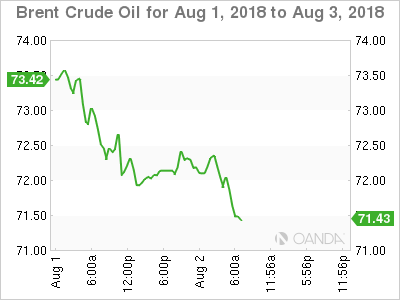
Ahead of the U.S open, crude oil prices have steadied after losses over the past two-days from a surprise increase in U.S crude inventories and renewed concerns over Sino-U.S trade friction.
Brent crude futures are up +16c, or +0.2%, at +$72.55 a barrel, after dropping -2.5% yesterday. U.S West Texas Intermediate (WTI) crude futures have rallied +6c, or +0.1%, to +$67.72 a barrel. They fell -1.6% yesterday.
Yesterday's EIA report showed that U.S crude inventories rose +3.8M barrels last week as imports jumped. The market was expecting a drawdown of -2.8M barrels.
However, providing some support on pullbacks is ongoing tensions between the U.S and Iran.
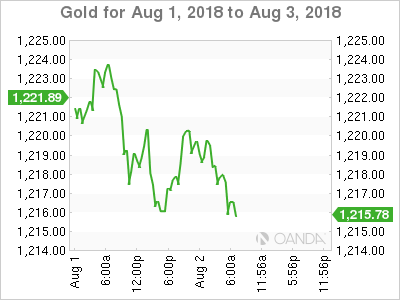
Gold prices are small better bid, recovering from the yesterday's session fall, supported by a weaker USD/JPY (¥111.44). Spot gold is up +0.2% at +$1,218.23 an ounce, after losing -0.65% Wednesday. U.S gold futures are little changed at +$1,226.70 an ounce.
3. Sovereign yields fall
Fears of an escalating trade dispute between the U.S and China is triggering a fall in some sovereign bonds yields.
In the Eurozone, German and French yields in particular have pulled back from their two-month highs as demand for safe-haven debt grows on trade fears.
In Germany, the 10-year Bund yield has eased -1 bps to +0.48%, while in the U.K, the 10-year Gilt yield has backed up +1 bps to +1.37%, the highest in seven-weeks.
Stateside, with the Fed leaving short-term interest rates unchanged yesterday, an upbeat assessment of the U.S economy's performance would suggest another rate increase is likely at the next meeting in September. The market is pricing in an additional two rate rises by year-end.
4. Turkish lira at a new record low
With global risk appetite dwindling on global trade concerns is benefiting the U.S dollar. Also providing support for the greenback are rate differentials, aided by the Fed emphasizing yesterday, the U.S economy's strength in a statement following its expected 'no rate hike' decision.
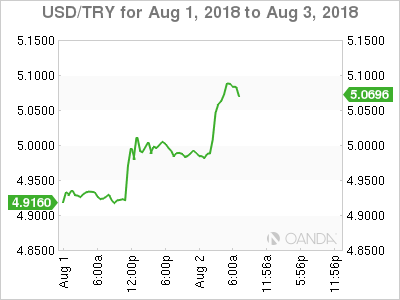
Overnight, the Turkish lira (TRY) has slid to a new record low outright of $5.0822 and is looking to go even lower. Year-to-date, brings its loss outright above -24% after the White House announced yesterday it would sanction the country over the detention of a U.S pastor.
Turkish inflation figures for July will be released tomorrow, and the market expects another acceleration. If so, this would be another negative factor for the TRY after the Central Bank of the Republic of Turkey (CBRT) recent decision not to hike their key interest rate.
GBP (£1.3071) is softer ahead of today's anticipated “dovish” rate hike by the BoE.
In Japan, the BoJ demonstrated its flexibility in it policy performing an unplanned purchased in the 5-10-year JGB range during the Asian session that helped to cap rising JGB yields. Officials commented that it acted to meet target of keeping the 10-year JGB curve around 0.00% with the operation. USD/JPY (¥111.57) is a tad softer on 'risk aversion' trading.
Finally, the offshore yuan has hit its weakest level outright in more than 14-months ahead of the open after China said it would retaliate against the U.S on trade. The Chinese currency lost -0.6% to ¥6.8654.
5. Euro area industrial producer prices rise
Data this morning from Eurostat show that in June, industrial producer prices rose by +0.4% m/m in both the euro area (EA19) and the EU28. Year-over-year, prices rose by +3.6% in the euro area and by +4.4% in the EU28.
Digging deeper, the increase in the euro area is due to rises of +1.1% in the energy sector, of +0.4% for intermediate goods and of +0.1% for durable consumer goods, while prices remained stable for capital goods and for non-durable consumer goods. Prices in total industry ex-energy rose by +0.2%.
In the EU28, the increase is due to rises of +1.2% in the energy sector, of +0.4% for intermediate goods and of +0.1% for capital goods, durable and non-durable consumer goods. Prices in total industry ex-energy rose by +0.2%.
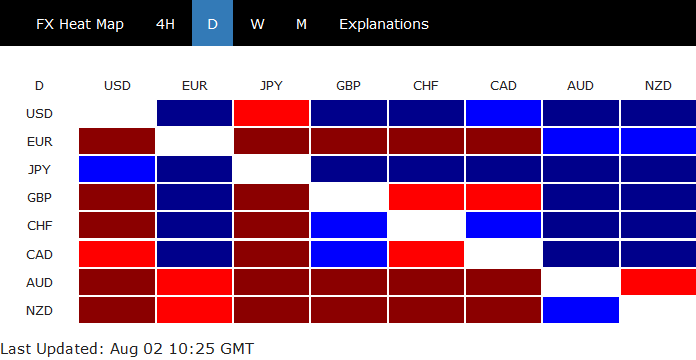
Yen and Dollar strong on trade war, Chinese stocks lost another -2%
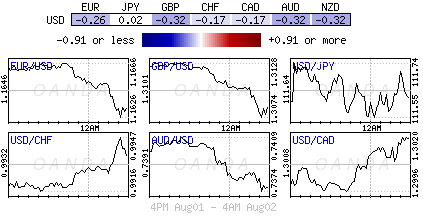
Yen and Dollar are so far the biggest winner today on concerns of US-China trade war. Australian Dollar and New Zealand Dollar lead the way down.
Trump's administration formally announced the intention to impose 25% on USD 200B in Chinese imports yesterday, more than double of the 10% rate in the original plan.
China is surprisingly quiet on the topic today. Chinese Foreign Ministry spokesman Geng Shuang just made "two statement" regarding the news in a regular press conference. Firstly, "we would advise the United States to correct its attitude and not try to engage in blackmail. This won't work on China." Secondly, "we would advise the U.S. side to return to reason, and not blindly let emotions affect their decisions, because in the end this will harm themselves."
That's it, not even any elaboration.
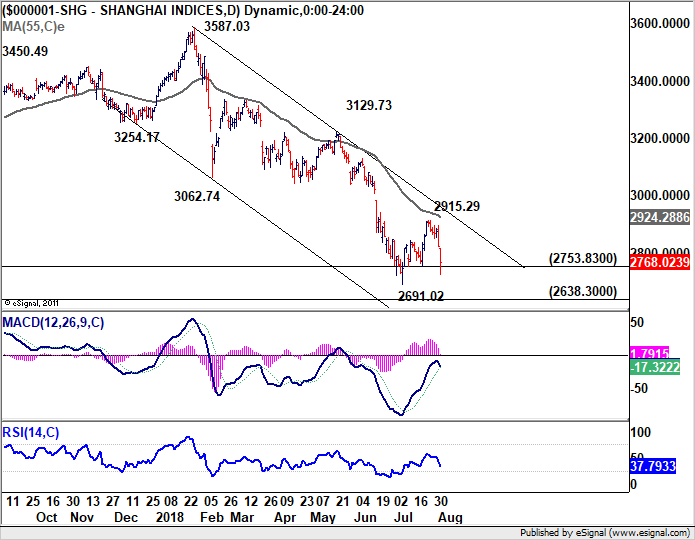
Nonetheless, the reactions in China stocks are loud and clear. The Shanghai SSE composite closed down -2.0% at 2768.02. The breach of 2753.83 support affirmed our view that rebound from 2691.02 has completed at 2915.29, ahead of 55 day EMA and key well inside medium term falling channel. The index should revisit the key support zone between 2016 low of 2638.30 and 2700. This is an area which could prompt serious government intervention. Let's seen if the Chinese national team would do anything there.
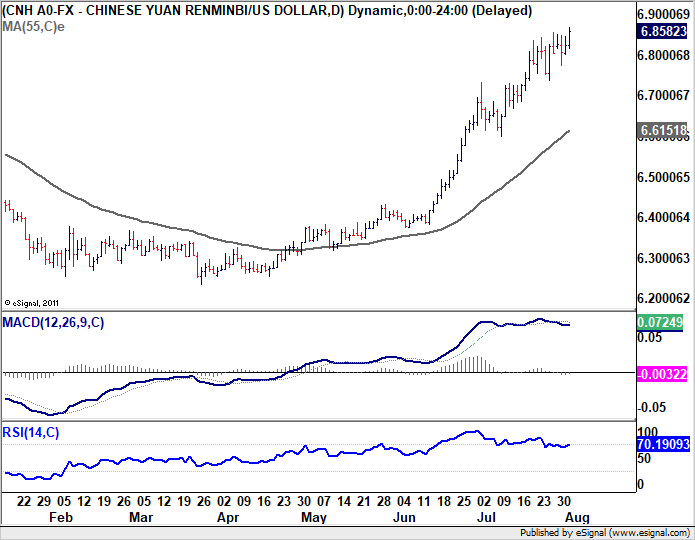
The USD/CNH (offshore Yuan). Rises to as high as 6.876 so far today and the Yuan's downtrend extends. We've argued here that Yuan's weakness is primarily due to economic weakness and loosening policies. Adding the severe impact of a full blown trade war with the US, the momentum of depreciation in Yuan doesn't seem right. We'd urge US Treasurer Steven Mnuchin to look into whether China is doing anything to slow Yuan's decline. If there is, Mnuchin should openly ask China not to perform such manipulations.
Also, remember that there was a report saying that Mnuchin is in private talks with Chinese Vice Premier Liu He on going back to the negotiation table? Hours later, there was another report regarding the 25% tariffs, which was formally announced within 24 hours. Who leaked the story to the media or it's a made up? If the unnamed source was from the Chinese side, the US response was quick and clear, no negotiation before concession. If the unnamed source was from the US side, whose team would he be in? Or does it signal that Mnuchin was once again isolated by the trade hawks?