Sample Category Title
Trade War Could Weigh On Aussie
RBA stands idle, trade war weighs
As widely expected, the Reserve bank of Australia left its official cash rate target unchanged at 1.50%. The overall tone of the statement remains positive with Governor Lowe staying positive on both Australian and global economic developments. However, he expressed reserves about the outlook for household consumption as “Household income has been growing slowly and debt levels are high”. The central bank remained cautious about the inflation outlook against the backdrop of “low growth in labour costs and strong competition in retailing”, but expects a gradual pick-up in the course of the year.
Nevertheless, the trade war initiated by the United States could dampen significantly Australia's economic outlook. Indeed, as an open economy that relies heavily on exports, a global trade war could have dramatic consequences; especially should the US impose trade tariffs on Chinese products, Australia's biggest trade partner.
After rising more than 1% on Monday, AUD/USD edged lower on Tuesday as investors take a step back to assess how much juice is left in the Aussie. Yesterday, the currency pair tumbled on the 0.7660 resistance level (Fibonacci 61.8% on April-May debasement). A break of this resistance would open the door towards the following one that stands at 0.7813 (high from April 19th).
Crude currencies
After a brief rally supported by speculation of tight supplies, crude oil crashed. WTI experienced its largest single-day fall since 2017, as supply increases hit the wires. Negotiations between OPEC and non-OPEC producers have moved faster than expected, but the biggest surprise was Saudi Arabia's commitment to "work with major producers and consumers within and outside OPEC to mitigate the effects of any supply shortages." We suspect producers will marginally increase output limits. Meanwhile, US inventories increased for their 14th week. In summary: higher oil prices cannot be relied on to support growth and therefore commodity currency valuations.
USD/CAD lower
Canada's trade balance is at record negative levels: additional oil revenues will not bridge the gap. Fear of a full-tilt trade war in steel and aluminium tariffs is weighing on growth. Manufacturing is close to overheating, yet households could tighten spending as housing markets weaken and credit tightens. Last week's Bank of Canada meeting triggered a CAD rally as the central bank removed “cautious” from its monetary policy statements. This raises the likelihood of a July rate hike: higher interest rates could be the catalyst for a stronger CAD.
EUR/GBP 4H Chart: Pairs Movement Uncertain
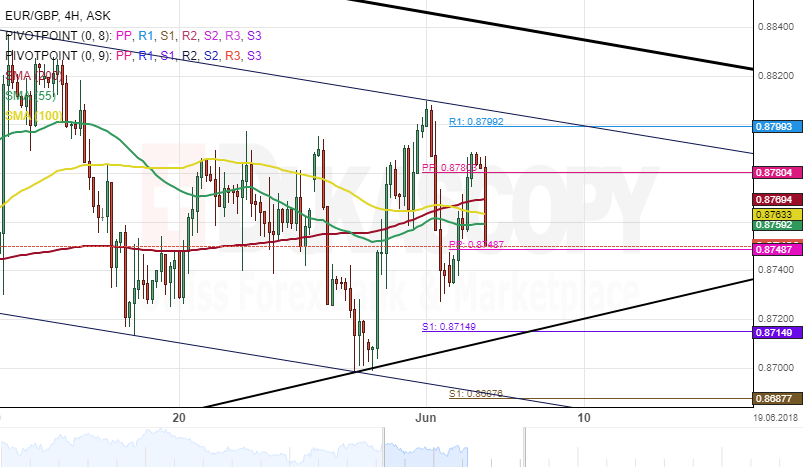
The common European currency continued to be constrained by several channels against the British Pound during the past few weeks. The currency pair has moved toward the upper border of a junior descending pattern.
During the last few days, the exchange rate has breached the 55-, 100-, and 200– hour SMAs and gradually moving north. However, a decisive movement has not be established as the pair continued to bounce between the up and lower boundaries of the junior pattern.
Technical indicators suggest that bulls could gain more ground over the currency exchange rate during the following trading session
USD/CHF 4H Chart: Bullish This Week
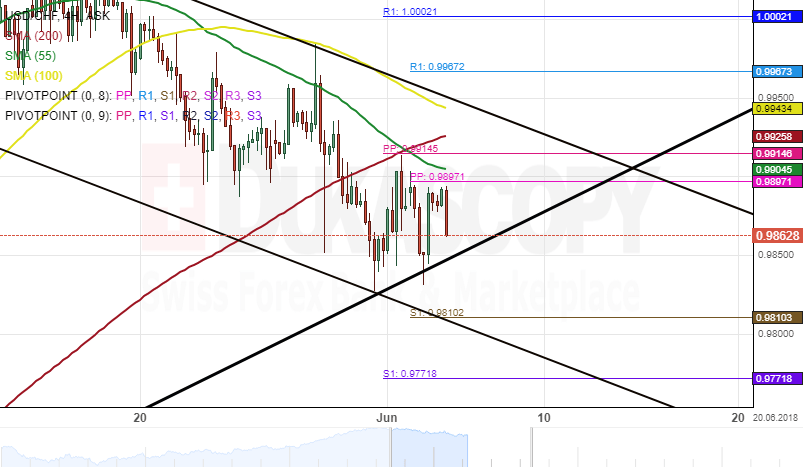
The USD/CHF exchange rate has been guided by a medium-term descending pattern. The pattern was established in early May and has driven the rate lower in between the line of a dominant ascending channel.
Following a test of the bottom border of the dominant channel late last week, bulls tried to strengthen; however, a resistance cluster formed by the combination of the 55– and 200– hour SMAs and the monthly pivot point at 0.99 pushed the rate south.
As for near future, it is likely that the currency exchange rate to strengthen this week toward the 100- hour simple moving average. Meanwhile, technical indicators are in favour for bulls to grow stronger during the following trading days.
Gold Analysis: Surrenders Under Bearish Pressure
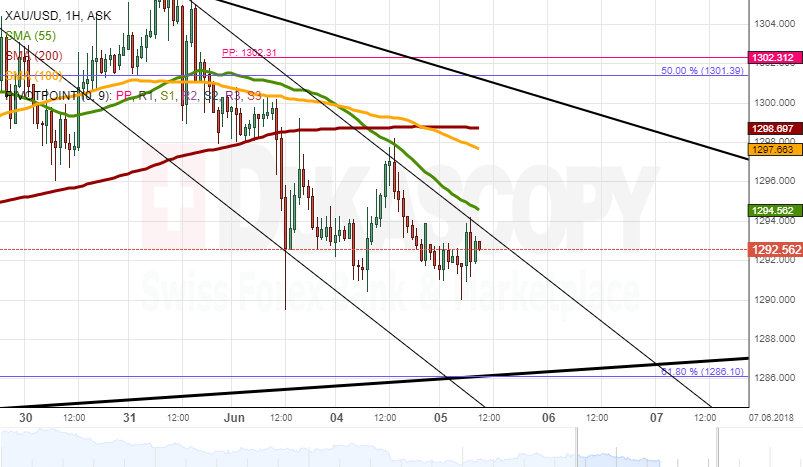
The yellow metal has generally maintained its position against the US Dollar during the previous two sessions. It tried to push higher early on Monday but was nevertheless stopped by the 55-, 100– and 200-hour SMAs. As a result, the pair fell back down to the 1,291.00 mark.
Technical indicators suggest that the rate might continue its movement south in this session, as well. A possible target is the 1,285.00 mark where the senior channel and the 61.80% Fibonacci retracement are located.
If looking to the upside, it is unlikely that bulls gather the necessary momentum to dash through the strong resistance of the aforementioned SMAs near 1,295.00.
USD/JPY Analysis: Sets 110.80 As Target
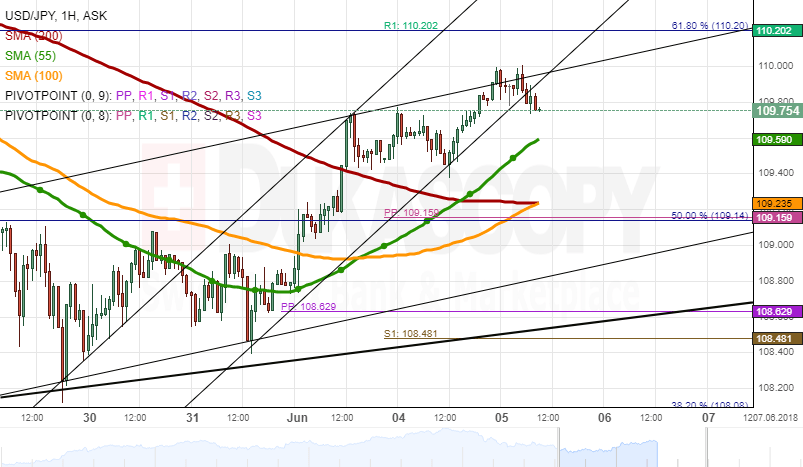
The USD/JPY exchange rate was tended north on Monday but wit no large gains apparent during this session. By Tuesday morning, the pair was located at a one-week channel slightly below the 110.00 mark.
If looking on the 4H chart, the pair surpassed the 100-period SMA—a move which might be interpreted as a bullish sign. This means that the US Dollar could breach the nearby weekly R1 and 61.80% Fibonacci retracement at 110.20 and continue its upward movement until the monthly R1 and the weekly R2 at 110.80.
In terms of downside potential, the 55-hour SMA could provide strong support at 109.60 and thus guide the pair back north. Meanwhile, it is unlikely that the 200– and 100-hour SMAs and the weekly PP at 109.20 are breached.
GBP/USD Analysis: Points To Bearish Move
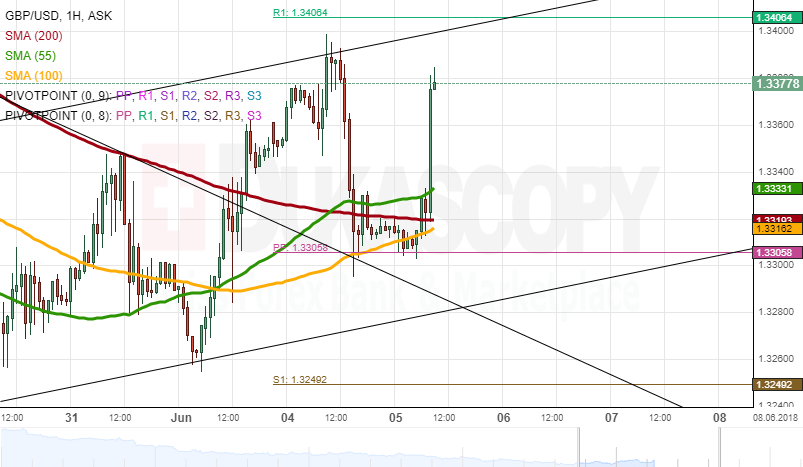
The Pound was relatively steady against the US Dollar early on Monday. This lack of direction changed mid-session when the pair fell 73 pips and consequently breached the 55– and 200-hour SMAs.
Further decline was stopped by the 100-hour moving average and the weekly PP at 1.3305. This level was surrendered early today, thus pointing to continuous bearish potential. Technical indicators support this scenario.
The nearest support is set by the bottom boundary of a one-week channel at 1.3280. This mark might not hold strong which should then result in a test of the weekly S1 at 1.3250.
In case the three SMAs are breached to the upside, gains are likely to be capped at 1.34 where strong resistance is apparent on both the 1H and 4H time-frames.
EUR/USD Analysis: Stuck In Range
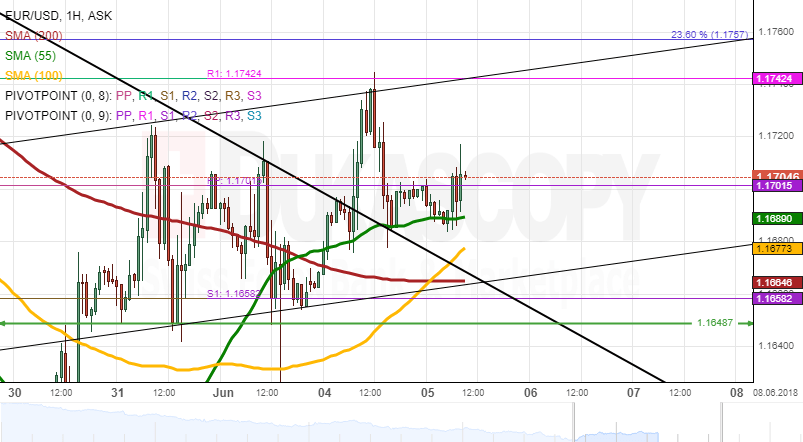
Upside risks prevailed during the first part of Monday with the Euro breaching the 55-hour SMA and an eight-week channel down. The pair subsequently edged higher but nevertheless fell short of the weekly R1 and the 23.60% Fibonacci retracement at 1.1760. The second part of the session was spent calmly, as the rate was trading in a narrow range between the aforementioned SMA and the 1.17 mark.
It is expected that the pair remains trading in the 1.1660/1.1750 range today. The southern barrier is set by the 55-period (4H) and the 100– and 200-hour SMAs, while the northern one—by the weekly R1 and the 100-period (4H) SMA.
It is likely that the 55-hour SMA guides the pair during the following hours prior to letting bears to lead the way later in the evening.
GBP/USD: UK Construction PMI
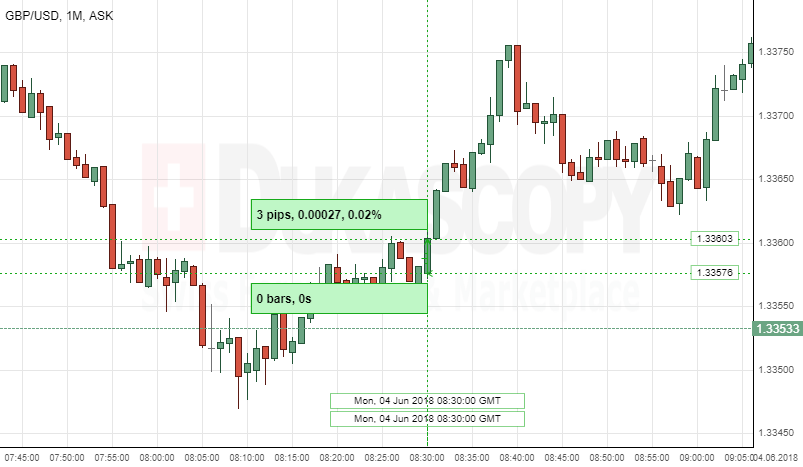
The British Pound strengthened against the Greenback, following UK Construction PMI data release on Monday. The GBP/USD currency pair gained only three pips, or 0.02%, to continue going up afterwards.
The Markit released Construction Purchasing Managers' Index data that came out a little bit better-than-expected, however stayed unchanged from the previous period of 52.5.
"Higher prices for fuel, raw material shortages, higher labor costs combined with slow delivery times were further obstacles to growth as firms nervously assessed their workforce for much-needed talent and sub-contractors could name their price," said Tim Moore, Senior Economist at IHS Markit and author of the Markit/CIPS Construction PMI.
EUR/USD: US ISM Manufacturing PMI
The Greenback weakened against the Eurozone's single currency, following the US ISM Manufacturing PMI data release on Friday. The EUR/USD currency pair gained only one pip, or 0.01%, to continue fluctuating in the 1.1665 area.
The Institute for Supply Management released Purchasing Managers Index data that came out better-than-expected of 58.7, compared to the 57.3 in the previous period.
"The upturn has stretched supply chains to the extent that May saw the greatest lengthening of delivery times in the near-ten year history of the survey," said Chris Williamson, Chief Business Economist at IHS Markit.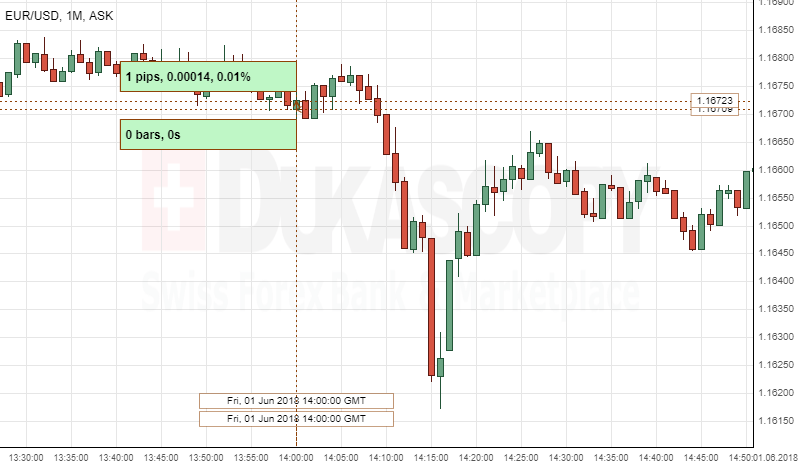
EUR/USD: US Average Hourly Earnings
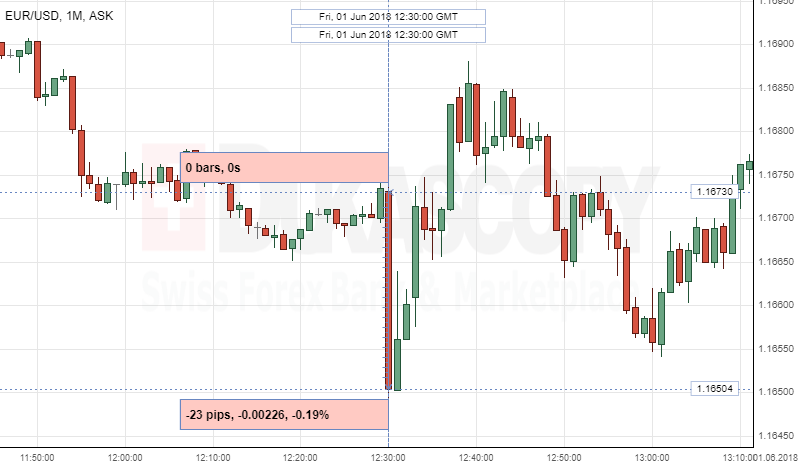
The Greenback strenghtened against the Eurozone's single currency, following the US Average Hourly Earnings data release on Friday. The EUR/USD currency pair lost 23 pips, or 0.19%, to continue fluctuating in the 1.1680 area.
The Bureau of Labor Statistics simultaneously released three data sets, where Average Hourly Earnings data that came out better-than-expected of 0.3%, compared to the 0.1% in the previous period.
Moreover, Non-Farm Employment Change data came out better-than expected of 223K, instead of economists forecast of 189K, and Unemployment Rate data came out to be less-than-expected of 3.8%.