Sample Category Title
Dollar Mixed Ahead Of Jobs Report
Wage Growth to Trump Number of Jobs Added
The US dollar is mixed on the Thursday session against the major currencies awaiting the release of the U.S. non farm payrolls (NFP) due Friday, August 4 at 8:30 am EDT. The US economy is anticipated to have gained 181,000 jobs in July but more importantly the average hourly earning to have risen 0.3 percent. The U.S. Federal Reserve could pause its monetary policy tightening if there is no clear evidence that inflation is moving closer to the 2 percent target.
US employment has been the most reliable pillar of the economy, but as headline job additions have kept a strong record, wage growth and labour participation have stagnated. The Fed is hoping the jobs recovery forces employers to offer more competitive salaries and gets people back on the hunt for jobs to keep on the path of more future rate hikes and the start of its balance sheet reduction program.
Canadian employment data will also be published on Friday. The jobs data has crushed expectations this year, with an outlier in the report published in May. While the forecast remains close to the past two month’s estimate of 11,000 jobs the Canadian economy added 54,500 and 43,300. The US NFP report will get most of the spotlight as the USD will trade based on the indicator release, Canadian dollar investors will be on the lookout for confirmation of a strong recovery north of the border.

The EUR/USD lost 0.156 percent on Thursday. The single currency is trading at 1.1866 after breaking briefly above the 1.19 price level on Wednesday. The EUR has gained against the dollar after the turmoil in Washington has impaired the American currency. Employment data yesterday was not as strong as expected and put serious question marks on the NFP jobs report due Friday.
The ADP private payrolls report came in lower than expected at 178,000 jobs but there was some positive news with the upward revision to the already strong numbers from June. Wage growth was stuck at 2.5 percent which puts the emphasis on the NFP report to really move the needle for the USD.
The market is now unsure if the Fed will hike rates for the remainder of the year. The CME FedWatch tool is showing a 98.6 percent probability of the Fed funds rate staying at 100-125 in September but the December Federal Open Market Committee (FOMC) meeting is now 50/50 to end with rates going to 125-150 basis points. The Fed moved away from the patient mode it had displayed in the previous two years and has already hiked twice in 2017 and has signalled it will start to reduce the balance sheet it accumulated starting this fall.
The Trump administration has lost credibility after squandering important political capital by failing to push through health care reform and various changes in its first six months in power. The market was pricing in tax reform and infrastructure spending in what was called the Trump trade, but as those policies kept being pushed back the USD depreciated. Tax reform is back on the agenda, but there are serious questions on how optimistic the Administration is when it talks about an obstacle free path for the policy.
August will have very little economic events to guide the currency markets, leaving a lot in the hands of political uncertainty as the US relations with China and North Korea, and the upcoming start of NAFTA renegotiations talks could prove to be tough issues for the Trump administration, but with the benefit of less oversight from elected representatives in start contrast of the healthcare reform attempt.

The GBP/USD lost 0.853 percent in the last 24 hours. The pair is trading at 1.3128 after the Bank of England (BoE) kept interest rates unchanged at 0.25 percent. The MPC voted 6-2 to keep rates at current levels. No surprise after last month the vote of 5-3, with a prominent hawk set to leave the committee. The pound dropped even after the BoE mentioned that rates could be higher after a year on the back of a strong jobs market and a global recovery but the ghost of Brexit kept the pound from gaining too much on those comments.
The BoE disclosed that Brexit uncertainty has discouraged employers from offering higher wages and with rising inflation that will continue to hit British pocket books. Updated forecasts on the UK economy were downgraded with higher inflation estimated did not leave the pound other option but to drop.
Market events to watch this week:
Wednesday, August 2
4:30 am GBP Construction PMI
8:15 am USD ADP Non-Farm Employment Change
10:30 am USD Crude Oil Inventories
9:30pm AUD Trade Balance
Thursday, August 3
4:30 am GBP Services PMI
7:00 am GBP BOE Inflation Report
7:00 am GBP MPC Official Bank Rate Votes
7:00 am GBP Monetary Policy Summary
7:00 am GBP Official Bank Rate
7:30 am GBP BOE Gov Carney Speaks
8:30 am USD Unemployment Claims
10:00 am USD ISM Non-Manufacturing PMI
9:30 pm AUD RBA Monetary Policy Statement
9:30 pm AUD Retail Sales m/m
Friday, August 4
8:30 am CAD Employment Change
8:30 am CAD Trade Balance
8:30 am USD Average Hourly Earnings m/m
8:30 am USD Non-Farm Employment Change
Dollar Digs Its Own Grave
Yesterday we wrote about potentially negative consequences of trade disputes on the US dollar, today it was soft economic data and more Russia drama hurting USD. The pound was the laggard on the day while yen led the way. US and Canadian jobs reports are up next. After closing out of the Premium cable long at 170-pip gain just ahead of the BoE decision, we opened a long above the prevailing price, which was not filled. The trade was cancelled and a new one was issued.

It's rarely one thing that sinks a currency. All the reasons to sell the US dollar would evaporate if growth was at 3%. Through the first half of the year, it's been at a 2% pace and the remainder of the year is a question mark.
One forward-looking indicator is the ISM non-manufacturing index but it stumbled on Thursday to 53.9 compared to 56.9. That set off another round of US dollar selling. Still, USD/JPY buyers made a stand at the weekly low and it bounced… at least until a few hours later when reports revealed Russia special prosecutor Robert Mueller had gathered a grand jury.
The last thing that's really propping up the dollar is the Fed. Despite a slightly more cautious tone at the Fed, the core of the FOMC is close to Williams who on Wednesday said he expects another hike this year and three more in 2018. If that happens the dollar will easily erase the last few months of losses.
The easy path to make that happen via tax reform and infrastructure spending. The problem now is that time is running out on the debt ceiling, and that will eat up more political capital, while the Russia story continues to eat up the remainder.
Still, the US economy has showed remarkable resilience despite Washington's best efforts for years and could do it again. A big signal will come Friday in the non-farm payrolls report. The consensus is 180K new jobs but the market will be almost-entirely focused on average hourly earnings, which are forecast up 0.3% and 2.4%. If those miss, the Fed and markets may begin to lose patience.
A central bank on the opposite side of the spectrum is the Bank of Canada. Canadian jobs data is also due Friday and expected at +10K. The consensus has consistently been too cautious and the numbers have beaten expectations in 10 of the past 11 months, often by a large margin. Another strong report could light another fire under CAD.
Has Swissie Bid Goodbye to its Highs for Good?
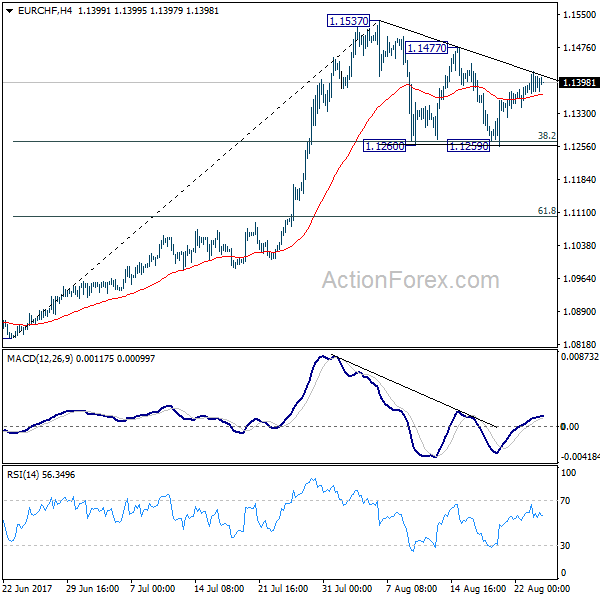
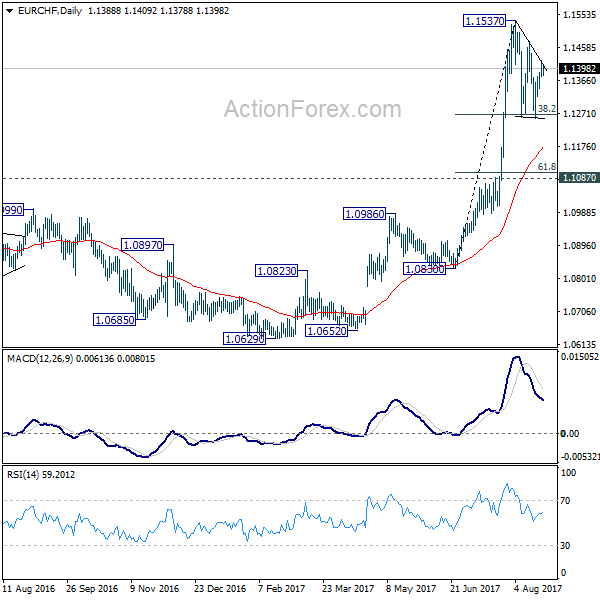
After two years of relative stability, the safe-haven swiss franc came into the spotlight again when it came under pressure against the euro last week and broke out of its long-term range. The much-desired weakness will likely be welcome by the Swiss National Bank which longs for a more export-competitive currency. However, the swissie remains "overvalued" as the level of risk aversion in the markets remains quite high despite investors' rising appetite for riskier assets. The question arising now is for how long the recent retreat will persist.
It was back in 2011 when the Swiss National Bank (SNB) decided to introduce a currency ceiling in a period when an extremely high level of uncertainty in the financial markets increased dramatically the demand for safe-haven assets and therefore strengthened the Swiss franc against other major currencies. The SNB in an attempt to protect domestic exporters from an overvalued currency set a limit of 1.20 francs to the euro, but after four years the SNB scrapped its ceiling, as the bank's foreign reserves reached almost 80% of Swiss GDP. On January 15, 2015, the swissie jumped by 20%, soaring to an all-time high of 0.8588 francs per euro. The euro managed to climb above parity only after the SNB applied an even looser monetary policy by reducing interest rates (three-month LIBOR) from -0.25% to -0.75%.

However, the swissie started showing signs of weakening recently, after the French elections this spring declared Eurozone supporter, Emanuel Macron, as the next president, removing a layer of uncertainty in the European political environment. Then, a few months later, the currency experienced further correction to the downside, when major central banks and particularly the European Central Bank (ECB) signalled to scale back their ultra-easy monetary policy soon as Eurozone economic indicators were seen to be gathering positive momentum. In addition, traders attributed the recent weakness in the safe-haven franc to decreasing spreads between European government bond yields, reflecting reduced risks for the Eurozone's periphery economies. For instance, the spread between the 10-year Italian and German bond yields narrowed by 50 basis points to 150 basis points in the last two months.
Despite the swissie having already entered a downward path, with euro/franc climbing for the first time above the 200-weekly moving average since 2008 and peaking at a 29-month high of 1.1453 on Monday, the SNB chief, Thomas Jordan, reiterated last week that the currency is still "significantly overvalued". Even though the improving economic climate in the eurozone is driving investors to reallocate their investment portfolio by switching safe-haven assets into riskier ones, political turmoil in the US, Brexit, and tension between the US, China, Russia, and North Korea is preventing traders from fully unwinding their low-risk assets that were accumulated after the financial crisis. Besides that, if inflation, which is a key determinant of monetary policy, fails to approach the target rates then major central banks will likely abandon their current hawkish stance and consequently postpone exiting from their stimulus programs.
Under these adverse scenarios, the Swiss franc will likely find renewed demand from safe-haven flows and reverse higher, harming the Swiss economy by weighing on the already feeble inflation rate (0.2% in July) and hurting exports (the Eurozone is Switzerland's biggest trading partner). The Swiss franc appreciated by around 21% against other currencies between 2007 and 2016. In comparison, its gains versus its Eurozone counterpart were more pronounced, rising by around 34%.

In the best scenario, the threat of global political uncertainty will recede and accelerating economic growth will generate inflationary pressures, giving way to monetary tightening. In this case, the tiny yet wealthy economy of Switzerland, wishing to see her European neighbours adopt a more euro-supportive monetary policy, would see the franc's strength wane, demand for its goods pick up and prices moving towards the central bank's goal. Currently, the swissie is looking bearish versus its major peers, while Swiss economic indicators are gradually recovering. GDP growth in the March 2017 quarter rose slightly to 0.3% quarter-on-quarter from 0.2%, which was upwardly revised from 0.1%. The unemployment rate edged down to 3% in July from 3.1%, whereas the KOF barometer, a closely watched measure which predicts the outlook for the next six months, jumped unexpectedly by 1 point to 106.8 in July. Taking the above into account, SNB board members in their last meeting projected the economy will continue expanding moderately in the second quarter. Nevertheless, they lowered their inflation forecasts for the next two years and pledged to continue intervening in the foreign exchange markets, as global political risks around the world have not yet faded, with Brexit talks and the dark cloud around the Trump White House remaining in the background and more elections coming up in Europe in 2018 (Italy).
Bank of England Review – More Dovish But Still Too Optimistic on Growth
6-2 vote count was interpreted dovishly
- As expected, the Bank of England maintained the Bank Rate at 0.25% and kept the targets for the government bond purchases and corporate bond purchases at GBP435bn and GBP10bn, respectively. In line with our call (but against the view of some houses), the vote count for the Bank Rate was 6-2 against 5-3 last time, as Kristin Forbes, a known hawk voting for a hike, has left the committee and it was too early for Andy Haldane to jump camp already despite a more hawkish tone in his latest speech.
- We still view the core of the Monetary Policy Committee (including governor Mark Carney) as being tilted to the dovish side.That said, since the unemployment rate has declined to NAIRU and inflation is above target, it may not take much for BoE to become more hawkish. Higher wage growth (and thus higher underlying inflation) is one trigger.
- We still expect the BoE to remain on hold until the Brexit negotiations are concluded in Spring 2019. The main reasons are that we think the BoE is still too optimistic on both wage growth and GDP growth and political uncertainty remains high due to Brexit.
- As expected, the BoE announced that it is ending the so-called Term Funding Scheme (TFS) in February 2018, as the BoE has been more worried about credit growth recently.
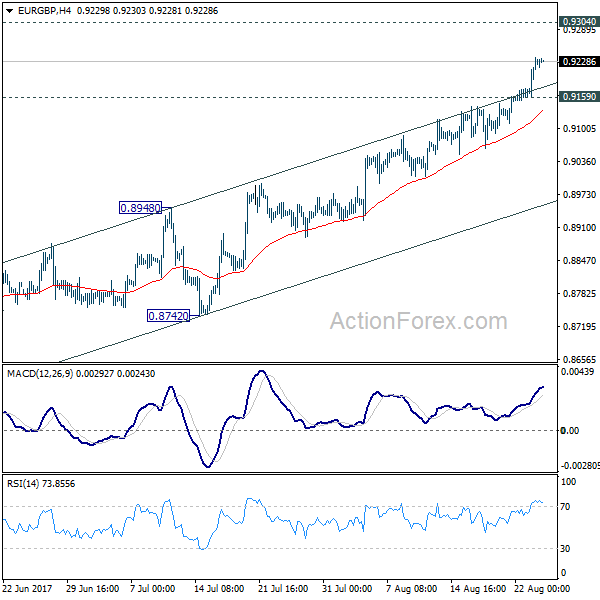
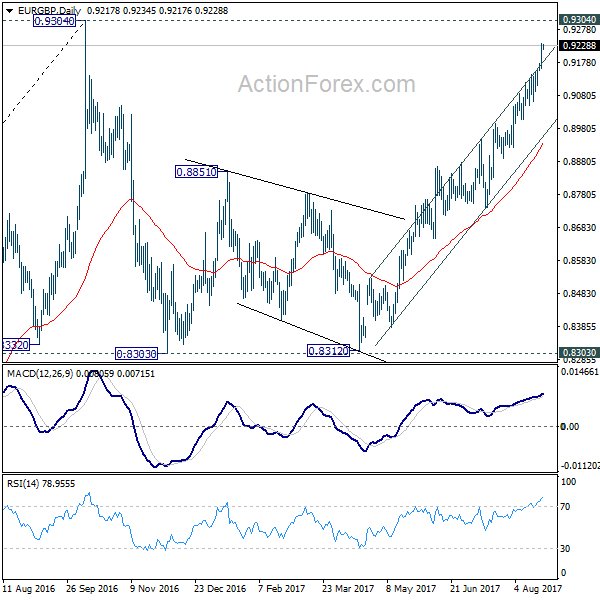
We lift our EUR/GBP targets to 0.91 in 1-3M
- EUR/GBP rose sharply and broke above 0.90 on the announcement as expected given the dovish twist from the BoE. UK yields traded some 4-5bp higher across the 2-10Y segment of curve, while the very front end of the UK money market curve was little changed. The market now implicitly indicates around 35% probability (8.5bp priced) of a November rate hike compared to 9.5bp priced prior to the BoE announcement.
- Over the coming 1-3 months, we expect EUR/GBP to test higher levels on the back of a strong EUR and BoE repricing. A 5bp decline in 2Y UK yields due to a further postponement of market expectations for the first BoE rate hike, will (everything else being equal) push EUR/GBP 0.1-0.25% higher, according to our models. We lift our 1M and 3M EUR/GBP targets to 0.91 (previously 0.88) expecting the cross trade within a narrow range of 0.90-0.92.
- Over 3-12M, we continue to see some stabilisation in GBP, expecting EUR/GBP to drift back below 0.90 on the back of potential for some clarification regarding Brexit negotiations and valuations.However, as relative growth and relative monetary policy is expected to remain EUR/GBP supportive in the medium term, we see only modest downside potential in the year ahead. We target 0.90 in 6M (previously 0.88) and 0.88 in 12M.
- Given the high political uncertainty due to the British government's weak parliamentary majority, we expect EUR/GBP to remain volatile and we generally recommend investors and corporates hedging GBP assets/income to maintain a high hedge ratio.
35% probability of a BoE hike this year, according to market pricing


BoE still too optimistic on growth
BoE expects growth to pick-up again next year
- The Bank of England has lowered its GDP forecast both because it overestimated growth in H1 17 and because it has become more pessimistic in the short term. However, the BoE still expects growth to pick up next year, as business investments pick up and consumption recovers due to higher wage growth.
- We still think the Bank of England is too optimistic on growth, as we do not think wage growth will pick up as fast as the BoE projects and think business investment growth will remain subdued.
- We expect GDP growth to continue around 0.3% q/q in coming years, slightly below trend growth of 0.4%.
- As we are more pessimistic on growth, we still expect the BoE to remain on hold until the Brexit negotiations are concluded in Spring 2019.

Inflation projection unchanged
- As expected, the CPI inflation forecast was broadly unchanged. CPI inflation is expected to stay above 2% in coming years, as it takes time for the weaker GBP and higher import prices to pass-through to consumer prices and because the Bank of England expects wage growth to pick up.
- We think the BoE is still too optimistic on wage growth and hence underlying inflation, which is one of the reasons why we do not think the BoE will hike soon.
- That said, higher wage growth remains one of the triggers for a more hawkish BoE.

Unemployment rate to stabilise around current NAIRU
- The Bank of England projects that the unemployment rate will stabilise around 4.5% (which is also the BoE's NAIRU estimate). The combination of higher inflation and lower unemployment was one of the reasons why the BoE turned more hawkish in June/July.
- Still, the tight labour market has not translated into higher wage growth yet and given that NAIRU is unobservable, the BoE may revise down its NAIRU estimate further at some point.

Macro charts: slowest UK growth since the European debt crisis
GDP growth in H1 17 the weakest since the European debt crisis


PMIs indicate GDP growth continued around current pace at the beginning of Q3


Weaker GBP => higher import prices => higher inflation => eroding purchasing power


Higher commodity prices have contributed to higher inflation


Inflation expectations have stabilised at a higher level

Copper Has Retraced Some of its Move Up in Recent Days, Silver Lower after a Marginal Break of Key...
- Copper has retraced some of its move up in recent days
- Silver lower after a marginal break of key resistance
COPPER Technicals
In our last note we commented on how the move up had some room to continue, as there was still some distance to be covered before the market reached the February 2017 highs.
This level of the February highs, around 2.82, has now been eclipsed and the move has continued to prices last seen in Q2 2015. The February 2017 highs could now be looked for as a potential support level in a move lower.
A second ascending trend-line shows how the most recent upswing has gathered pace, while the market has retraced some of its move up in recent days.

China data
Earlier this week the Caixin China manufacturing PMI, a private survey of China's factory activity, rose to four-month high of 51.1 in July, from 50.4 in June. However, the country's official manufacturing PMI fell to 51.4 in July from 51.7 in June.
In a release last Monday the IMF raised its 2017 growth forecast for China to 6.7%, a 0.1% increase from its April forecast. This comes after the previous week's Q2 GDP print, which beat expectations with growth at 6.9%.
Warehouse data
LME copper stocks recorded a net outflow for a third consecutive week, ending with inventory levels down 3% for the week ending 28 July from the close of the previous week.
SILVER Technicals
The market has traded lower after a marginal break above the key resistance of the June 29th high around 16.90. A move higher than this level will show a higher high after the market has put in a series of lower highs and lower lows in recent months and could potentially indicate a change in the trend.
In a move down, support might be found around the June 21 low near 16.34, while below that the 8 May comes in at around 16.05

Silver Coin Sales
American Eagle 1oz silver coin sales in July rose to 2,270,000 ounces from 986,000 ounces in June and up from 1,370,000 ounces sold in July 2016, according to data released by the US mint. This data suggests that investment demand in the form of physical bullion coins has recovered from the low levels seen in June 2017 and is also higher than during the same period in 2016.
Lower Forecast on the British GDP Growth Hit the Pound
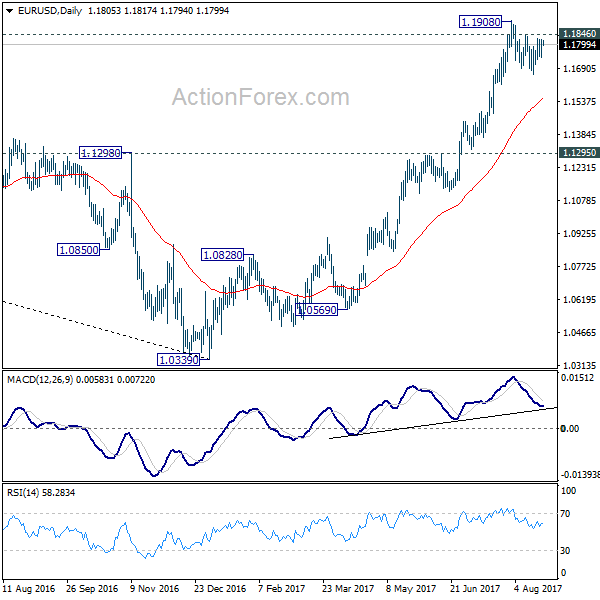
The EUR/USD rolled back after it renewed the 2.5-year maximums and currently is consolidating in anticipation of tomorrow's release of labor market data in the US. Better figures on non-farm payrolls and the unemployment rate tomorrow may become a trigger for a massive selloff due to profit taking. Today support for the common currency came from retail sales in the Eurozone that in June expanded by 0.5% against the expected zero change. Traders ignored the flash manufacturing PMI in the euro area that remained at 55.4 for June.
The GBP came under pressure today following the Bank of England's decision to keep the interest rate unchanged at 0.25%. Leading up to the event, investors were going long on the pound as they anticipated a similar vote of confidence for a rate hike of 5-3 vote. However, Bank of England members voted 6-2 to keep the rate at its current level. Disappointed investors received more dovish news from the BOE as it reduced its forecasted growth for the UK for this year by 0.2% to 1.7%. The central bank noted that Brexit is weighing in on the economy as consumers are feeling the pinch of a lower pound.
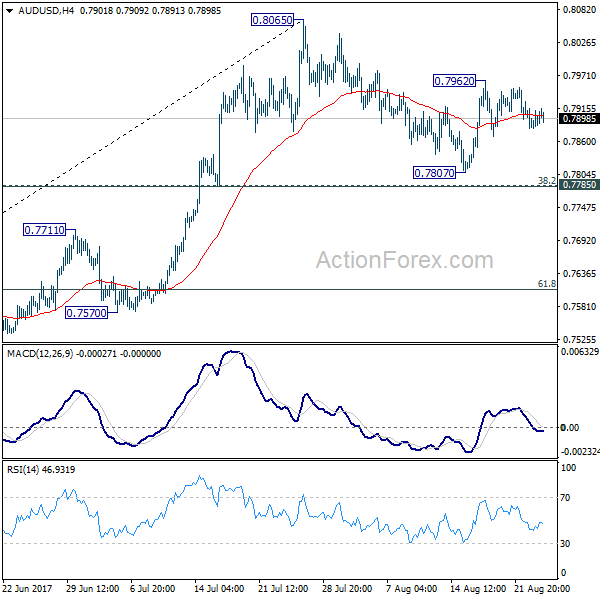
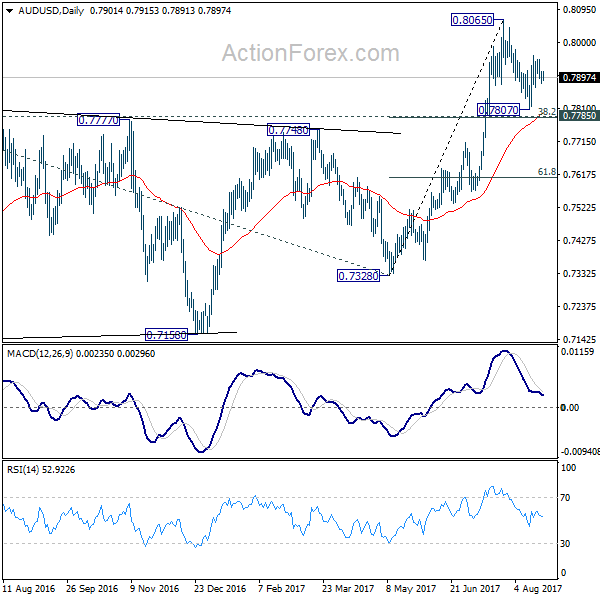
The AUD/USD is consolidating after a sharp fall caused by the weak Australian trade balance data according to which the surplus in June was only 0.86 billion compared to the expected 1.78 billion. The pair is getting support from positive growth in the commodities markets, but we do not rule out a correction in the near future. The focus for traders tomorrow will be the retail sales report in Australia and the RBA's monetary policy statement which will be released at 01:30 GMT.
EUR/USD
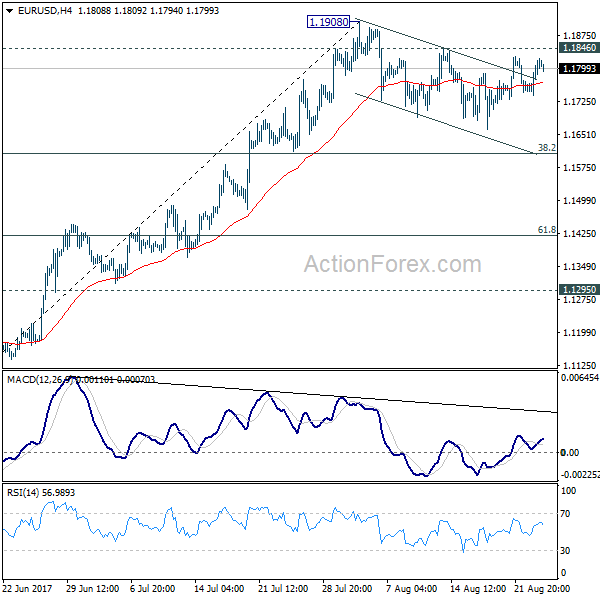
The euro price renewed positive dynamics after some consolidation during the day. Quotes previously tested the resistance at 1.1900 and in case of its overcoming the next objective will be the psychologically important level of 1.2000. On the other side, fixing below the lower limit of the current rising channel and the support at 1.1800 may lead to the trend change to negative with targets at 1.1700 and 1.1620.

GBP/USD
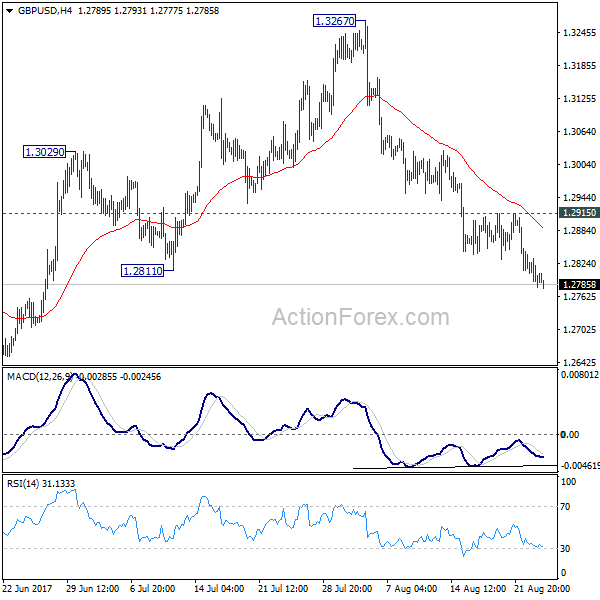
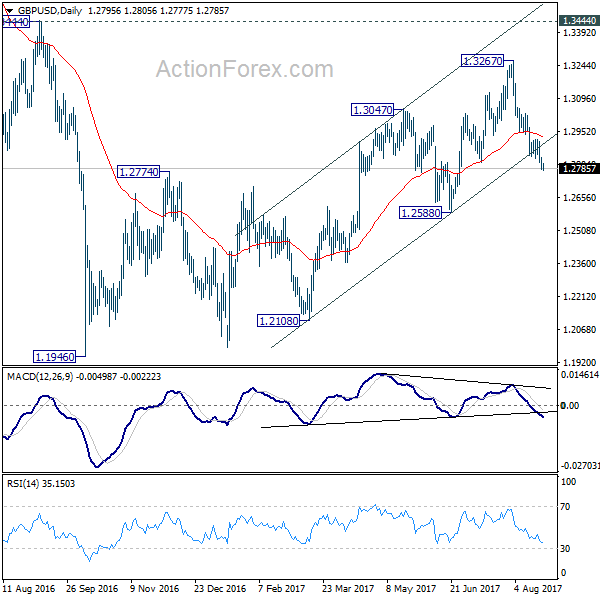
The GBP/USD price has shown a rapid descending movement as a result of which the quotes broke through the lower limit of the ascending channel and the important level of 1.3250. This fact may be the basis for a continued decline with potential targets at 1.3050 and 1.2950. The RSI on the 15-minute chart approached the oversold zone, indicating a possible rebound. The growth potential is likely to be limited by resistance at 1.3250.

AUD/USD
The aussie quotations are trying to restore some positions after they left the limits of the local rising channel. Fixing beyond its borders will be the basis for continued decline to 0.7875 after which the negative dynamics may continue to 0.7800 and 0.7740. There is strong resistance at 0.8000 and its overcoming is less likely today. Volatility is likely to rise tomorrow due to a number of important events in Australia and the US.

Gold Ticks Higher Ahead of Nonfarm Payrolls
Gold continues to have an uneventful week and has posted small gains in the Thursday session. In North American trade, spot gold is trading at $1269.20, up 0.20% on the day. On the release front, unemployment claims edged lower to 240 thousand in July, beating the estimate of 242 thousand. ISM Non-Manufacturing slowed down to 53.9, compared to the estimate of 57.4 points. This reading was well below the forecast of 56.9 points. On Friday, the US releases wage growth and non-farm payrolls, so we could see some movement in gold prices.
The US economy is in good shape, underscored by a strong Advance GDP of 2.5% in the second quarter. This strong reading came after weak growth in the first quarter, which clocked in at just 1.4%. Still, investors are skeptical about a third interest rate hike in 2017, with current odds of a December hike at just 42%. Investor appetite for risk has waned and this has been good news for gold, which touched 6-week highs earlier this week. The pessimism on the part of markets is chiefly due to inflation, which has remained stubbornly low despite a strong labor market. In June, Fed Chair Janet Yellen said that factors causing weak inflation were "transient", but there are no signs that inflation will pick up anytime soon.
With the Federal Reserve unlikely to raise rates before December, investor attention has shifted to the Fed's balance sheet, which stands at $4.2 trillion. Fed policymakers have broadly hinted at reducing purchases of bonds and securities starting in September, but San Francisco Fed President John Williams was more forthcoming about the Fed's plans, likely aimed at giving notice to the markets. In a speech on Wednesday, Williams said that the economy had "fully recovered" from the 2008 financial crisis and called on the Fed to start trimming the balance sheet "this fall". Williams added that the process would be gradual and would take four years to reduce the balance sheet to a "reasonable size". On Wednesday, two other FOMC members also came out in support of starting to taper the balance sheet – St. Louis Fed President James Bullard and Cleveland Fed President Loretta Mester.
USDJPY Retests 110.00 Support after Downbeat US PMI Data
The dollar fell back below 110.00 handle against Japanese yen after US ISM Non-Manufacturing PMI dropped to 53.9 in July, well below forecast at 57.0 and June's release at 57.4.
On the other side, US Factory orders jumped to 3.0% in June, posting the biggest gain in eight months, but positive impact on upbeat results was diminished by expectations for modest pace of growth in manufacturing sector, due to fading support from energy sector.
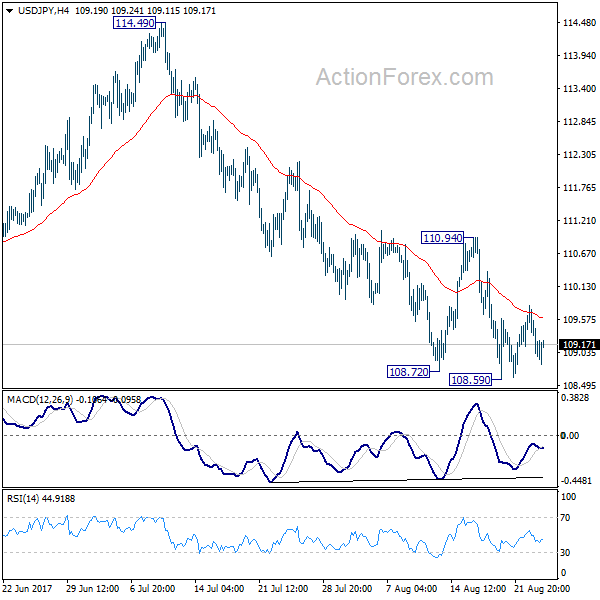
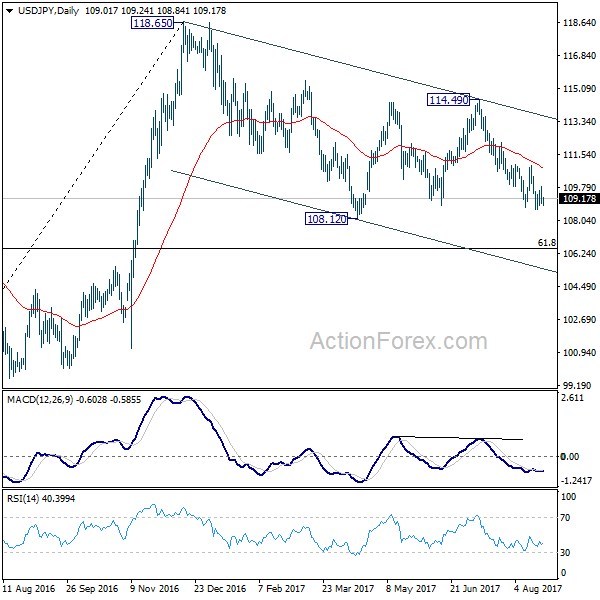
Fresh acceleration lower and retest of strong supports at 110.00 zone signaled an end of corrective phase which stalled under strong 111.00 resistance.
Close below 110.14 (Fibo 76.4% of 108.80/114.49 rally remains as minimum requirement for generating firmer bearish signal, with sustained break below 110.00/109.91 pivots to confirm bearish continuation.
Conversely, repeated failure at 110.00 support may keep the pair within near-term 110.00/111.00 range.
Res: 110.51; 110.82; 111.00; 111.34
Sup: 109.91; 109.62; 109.26; 109.00

Trade Idea Wrap-up: USD/CHF – Buy at 0.9600
USD/CHF - 0.9688
Most recent candlesticks pattern : N/A
Trend : Near term up
Tenkan-Sen level : 0.9695
Kijun-Sen level : 0.9690
Ichimoku cloud top : 0.9674
Ichimoku cloud bottom : 0.9672
Original strategy :
Buy at 0.9600, Target: 0.9700, Stop: 0.9565
Position : -
Target : -
Stop : -
New strategy :
Buy at 0.9600, Target: 0.9700, Stop: 0.9565
Position : -
Target : -
Stop : -
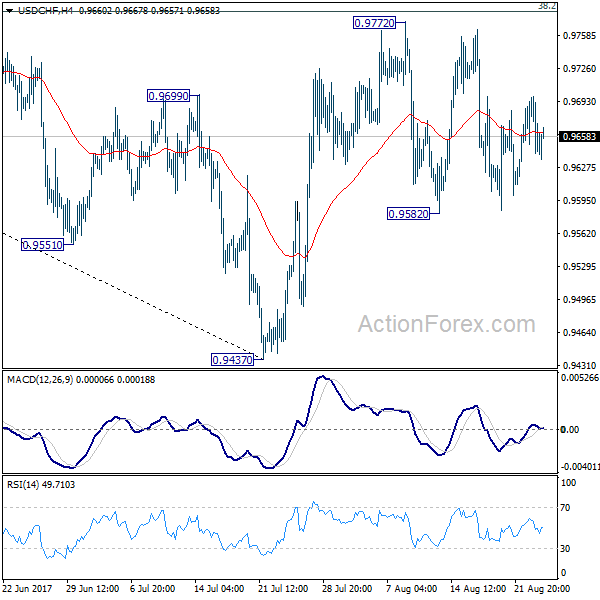
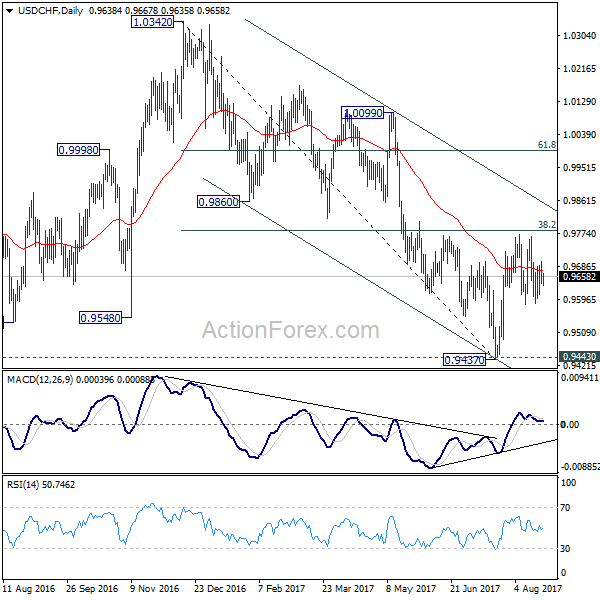
Although the greenback rebounded after finding support at 0.9631, break of indicated resistance at 0.9727 is needed to signal recent upmove has resumed and extend gain to 0.9750-60, then 0.9780, however, near term overbought condition should limit upside to 0.9800-10, bring retreat later. If said resistance at 0.9727 continues to hold, then further consolidation would take place and another retreat to 0.9650 and 0.9631 cannot be ruled out but 0.9596 (previous resistance turned support) should limit downside and bring another rise later.
In view of this, would not chase this rise here and would be prudent to buy dollar on subsequent pullback as previous resistance at 0.9596 should turn into support and contain dollar’s downside. Below 0.9580 (61.8% Fibonacci retracement of 0.9490-0.9727) would defer and suggest a temporary top is formed instead, bring correction to 0.9540-50 but price should stay well above support at 0.9490, bring another rise later.

Trade Idea Wrap-up: GBP/USD – Stand aside
GBP/USD - 1.3143
Most recent candlesticks pattern : N/A
Trend : Near term up
Tenkan-Sen level : 1.3191
Kijun-Sen level : 1.3191
Ichimoku cloud top : 1.3222
Ichimoku cloud bottom : 1.3177
Original strategy :
Exit long entered at 1.3130,
Position : - Long at 1.3130
Target : -
Stop : -
New strategy :
Stand aside
Position : -
Target : -
Stop : -
Despite intra-day brief rise to 1.3269, lack of follow through buying and current selloff suggests an intra-day top has been formed and consolidation with downside bias is seen for test of support at 1.3097, however, break there is needed to add credence to this view, bring retracement of recent upmove to 1.3070-75 and later towards support at 1.3052 but price should stay well above support at 1.2999, bring another rise later.
In view of this, would be prudent to stand aside in the meantime. Above 1.3170-75 would bring recovery to 1.3200, however, as temporary top has been formed at 13269, reckon upside would be limited to 1.3220-30 and price should falter well below resistance at 1.3269, bring another retreat later.