Sample Category Title
BoE & RBA Policy Meetings, US Employment Report, Other Key Data in Focus
Next week's market movers
- In the UK, the BoE's "Super Thursday" policy meeting will probably keep investors on the edge of their seats, amid speculation that the Bank could raise rates as early as this year.
- In Australia, the RBA is anticipated to remain on hold. We think the focus will be on whether policymakers are comfortable with the latest surge in Australian yields as well as AUD appreciation.
- The US jobs data for July are expected to show the labor market continues to tighten. Although that could support expectations for another Fed hike this year, we believe inflation data may be the main determinant of the Fed's next move.
- We also get key economic data from the UK, the US, New Zealand, and Canada.
On Monday, Eurozone's preliminary CPI data for July will be in focus. Without a forecast available yet, we see the case for both the headline and core CPI rates to have held steady, with risks skewed to the upside. The bloc's preliminary Markit composite PMI showed that prices charged rose only modestly in July. We also have to note that the July 2016 monthly CPI prints, which will be dropping out of the yearly calculation now, were -0.6% mom and -0.7% mom for the headline and core rates respectively. Therefore, all these imply that even in case we get soft monthly prints now, as long as they are better than the dreadful prints of July 2016, they could still drag the yearly rates higher.

On Tuesday, during the Asian day, the RBA will announce its policy decision and the forecast is for the Bank to keep rates unchanged once again. July has been anything but boring for AUD traders. The fuss began after the minutes of the latest meeting showed a discussion among policymakers regarding the level of the neutral policy rate in Australia, which was enough to raise speculation that the Bank may be preparing for lift-off soon. However, a few days later, both Governor Lowe and Deputy Governor Debelle poured cold water on such expectations, signaling that markets shouldn't read too much into that conversation. Lowe made it clear that the Bank is likely to stay on hold for the foreseeable future.
Nonetheless, we think that this meeting will be closely watched for any updated signals on policy, and in particular, whether the Bank is comfortable with the latest rise in Australian yields as well as AUD appreciation. Indeed, both Lowe and Debelle noted that a lower AUD would be desirable, implying there is a modest risk that the statement accompanying the decision communicates a similar discomfort with regards to the recent surge in AUD. Looking further ahead though, we believe that the main determinant of whether the RBA will turn hawkish anytime soon may be the wage data for Q2, due out in mid-August, given the latest concerns of RBA officials with regards to wage growth.

In the UK, the manufacturing PMI for July will be in focus. Then on Wednesday, we get the construction index for the same month and subsequently on Thursday, the all-important services print is due out. Even though no forecast is available for any of these figures, we think they will be closely tracked by the market for an indication of how the economy entered the third quarter, following a relatively uninspiring GDP print for Q2.

From the US, we get a raft of economic data. The core PCE price index for June, personal income and spending data also for June, as well as the ISM manufacturing PMI for July, are all due out. Kicking off with the core PCE index for June, without a forecast available, we see the case for the yearly rate to have remained unchanged. Even though the Markit composite PMI for the month showed that average prices charged by firms increased at the fastest pace so far this year, the month's core CPI rate remained unchanged, supporting a similar reaction in the core PCE rate too.

Turning to personal income and spending, expectations are for income to have slowed somewhat from the previous month, while spending is expected to have accelerated somewhat. We view the risks surrounding the income forecast as skewed to the upside, perhaps for an unchanged rate, given that average hourly earnings accelerated slightly during the month. Meanwhile, we view the risks surrounding the spending forecast as tilted to the downside, bearing in mind that retail sales declined in June.

Last but not least, we get the ISM manufacturing PMI for July and then on Thursday, we get the non-manufacturing index for the same month. Both of these figures are expected to have declined. Even though these may be discouraging news for FOMC policymakers, given that both of these indices are still expected to remain at healthy levels, we doubt that such declines are going to materially affect market expectations regarding the timing of the next rate hike.

On Wednesday, during the Asian morning, we get New Zealand's employment report for Q2. Without a forecast available, we see the case for the unemployment rate to have remained near the current low level of 4.9%, while the labor force participation rate may have risen again, for the 6th consecutive quarter. We base our view on the ANZ job ads figure, which continued to rise throughout Q2, suggesting that the labor market may have continued to tighten. Another quarter of strong employment growth would probably be pleasant news for RBNZ policymakers, but coming on top of the notable slowdown in the CPI for Q2, we doubt that these data will be enough to make the Bank shift away from its neutral bias anytime soon.

From the US, we get the ADP employment report for July, two days ahead of nonfarm payrolls. The forecast is for the private sector to have added 185k jobs, notably more than the 158k in June. Such a solid print could heighten speculation that Friday's NFP will also meet its forecast of 180k. Having said this though, we have to sound a note of caution. Even though the ADP print is the only major gauge of the NFP, the correlation between the two figures has fallen notably in recent months.

Thursday is "Super Thursday" in the UK. Besides the BoE rate decision and the meeting minutes, we also get the quarterly Inflation Report, which will be presented by Governor Carney at a press conference after the meeting. At its June meeting, the Bank kept its policy unchanged, but the vote to remain on hold was 5-3, much tighter than the forecast of 7-1.
In the aftermath of the meeting, Governor Carney and Chief Economist Haldane, both hinted that a rate hike may be in the works soon, which raised speculation that the vote may get even tighter and that we may get a hike as early as at this meeting. Nevertheless, soon thereafter, data showed that UK inflation slowed notably, raising doubts as to whether the Bank will indeed proceed with a hike in the foreseeable future. According to the UK overnight index swaps, the market fully prices in a 25bps rate increase in December 2018.
Our own view is that the effect of the weak sterling may start filtering out of the inflation equation in a few months, which combined with the softer energy prices may bring the inflation rate closer to the BoE's target. What's more, even though GDP growth accelerated slightly in Q2, its pace remains lackluster. Soft economic growth and potentially easing inflationary pressures may keep policymakers' hands away from the hiking button, at least for this year. Even if the BoE decides to hike earlier, we expect this to be a one-off move and not the beginning of a normalization period.

We also get the US ISM non-manufacturing PMI for July, as we already outlined above.
Finally on Friday, the US employment report for July will take center stage. The forecast is for nonfarm payrolls to have risen by 180k, less than the 222k in June. The unemployment rate is forecast to have ticked back down to 4.3%, while average hourly earnings are forecast to have accelerated on monthly terms. However, this would still cause the yearly rate to tick down.
Overall this would be another employment report consistent with further tightening in the labor market, which will be pleasant news for Fed officials, and may bring somewhat forth market expectations with regards to the timing of the next rate increase. While the June "dot plot" points to another rate increase this year, according to the fed funds futures, the market is only pricing in roughly a 50% probability for such action.
As for the bigger picture, we believe that the main determinants of whether the Fed will indeed proceed with another rate increase this year are inflation data. The latest prints showed that headline inflation slowed for the 4th consecutive month, while the core rate remained unchanged after falling for four months in a row as well. In our view, a strong rebound in inflation is needed before rate-hike expectations rise materially and help the dollar reverse its latest downtrend.

We also get employment data for July from Canada, though no forecast is available yet. Neither the Markit nor the Ivey PMIs for the month have been released yet ether, so we do not have any gauges of how the labor market fared in July. In any case, these data will be closely watched amid heightened speculation for another BoC rate hike this year. At the time of writing, market pricing suggests that another hike by year-end is fully priced, according to Canada's overnight index swaps. As such, we think that the risks surrounding the Loonie moving forward are likely tilted to the downside. If economic data and developments are encouraging over the next months, they would only confirm current market pricing for a hike and may thus have little effect on CAD. On the other hand, however, in case economic indicators deteriorate, expectations for a hike could come down, possibly dragging the Loonie down with them.

What’s Driving CHF Weakness?
- What's Driving CHF Weakness - Peter Rosenstreich
- The Future Of Bitcoin - Buy Fear, Sell Greed - Yann Quelenn
- USD In The Doldrums. Will It Last? - Arnaud Masset
- Video Game Industry
Economics - What's Driving CHF Weakness?
The aggressive move higher in EURCHF has FX traders buzzing. Despite rumours of M&A flows and mixed Swiss economic data there was really no fundamentals event trigger driving the move. While the timing is headscratching the mounting headwinds was eventually going to catch up with the CHF. Placing the blame on SNB Jordon calling the CHF overvalued would be completely off base as he and other Swiss central banker have held the "overvalued" corporate for years. The Swiss economic outlook remains cloudy while Europe continues to improve. Monetary policy shift have been the defining driver for FX price in the last 10 years. Weak inflation forecast will keep the SNB accommodative while the ECB is clearly shifting toward "normalization." There has been a clear trend for G10 central banks to consider balance sheet consolidation (primary driver of recent FX moves), at the same time the SNB remains focused on balance sheet expansion. This monetary policy strategy divergence makes selling CHF an obvious trade. The SNB remains dedicated to balance sheet expansion, as long as they don't get hurt.
In addition as political uncertainty in Europe has all but disappears the primary driver of risk aversion CHF inflows have diminished. The negative carry of the CHF will make holding the franc a difficult position to justify. The CHF remains the most overvalued G10 currency regardless of what model you chose indicated that further depreciation is likely. In addition, the SNB stand ready to either support further weakness by actually intervention or just spread rumors of activity. We have received countless questions this week inquiring if the SNB was in the markets (we dont think so but only site deposits will prove antidotal evidence). With the "normalizations" theme retrenching, global economic cycle expanding and the SNB expected to hold accommodating policy for some time,.


Cryptocurrencies - The Future Of Bitcoin - Buy Fear, Sell Greed
The 1st of August is a key date for Bitcoin. Indeed there is a material risk that the most famous cryptocurrency could be split into two different digital currencies. A new algorithm needs only to be activated and simply validated by a majority of miners, the people who approve transactions, for bitcoin to be broken in half.
The Bitcoin network's transactions is only able to process less than 7 transactions per second, which in this nanosecond algo-trading world, would prevent its expanded use. In order to increase the settlement speed, a new transaction process, must be implemented. If users do not accepted this change, the split will occur. Then there would be then two different bitcoins (names have not been assigned) for which owners would need to choose which one they want.
However, it seems that a small community of Bitcoins users is trying to organize a hard fork from Bitcoin to a new protocol called "Bitcoin Cash". For the time being, it is going to be a minor change. But this change may have deep consequences if other users decide to switch towards this new "altcoin" cryptocurrency.
There may be one thing to take care of there. Indeed, surprises may still happen and the new version can still be successful in the future. Yet in case of a now very likely hard fork scenario - The Bitcoin Cash creation -, the thing to do should be to leave your own bitcoin in a wallet and waiting to see which exchanges support both versions. Investors will anyway own bitcoin on both forks. On the contrary Bitcoin stored at exchanges depend on the fact that the marketplace may not fully support both assets.
Cryptocurrencies The Future Of Bitcoin - Buy Fear, Sell Greed Yet while certainly intriguing, the story is not new. Last year, the cryptocurrency Ethereum had to be split after a hack and it would have been wise to keep its Ether in a wallet. Delaying the decision, would have allowed the holder to choose the ETH version which had been up to almost $400 while the classic version ETC is stalling below $23.
Regarding the market, volatility in all cryptocurrencies have been massive on normal days. Bitcoin fork fears are definitely driving the whole crypto market at the moment. Earlier last week, the bitcoin reached again almost $3000 before bouncing lower. This has consequences as all other coins prices are also suffering at the moment. This may be a good moment to stack a few more altcoins.
Bitcoin's future looks definitely unclear at the moment and despite its innovative technology, the oldest cryptocurrency does not compete anymore with newcomers (altcoins). Bitcoin's first mover quality provides it with a strategic advantage for potential massive usage. However, in this new virtual reality it is not always the best technology that wins, it is the best experience.
Economics - USD In The Doldrums. Will It Last?
Dovish statement
Last week was another week to forget for the greenback as the USD extended losses against most of its peers amid dovish FOMC statement and lacklustre economic data. As broadly expected, FOMC members decided to leave monetary policy unchanged, maintaining the target range for the federal funds rate to 1% to 1.25% and not providing a clear timing about its balance sheet reduction plan. Little changes were made to the statement compared to the June version. The Federal Reserve acknowledged that inflation measures have declined and are now running below the 2% target. However minor - but meaningful - changes were made regarding the expected starting date of the balance sheet normalization program. The June statement says the Fed expects the program to be launched this year, while in the latest version it writes it should be implemented "relatively soon".
From our standpoint, we think this is definitely a dovish change as it removes clarity regarding the timing, giving more room to the Fed regarding the starting date of the balance sheet run off. Given the recent disappointing economic data, the Fed wants the greatest flexibility possible should this negative trend persist.
Lacklustre data
The latest batch of data were rather disappointing and were of bad omen for the future. Durable goods orders printed well above median forecast suggesting a solid recovery in June after two months of contraction. The headline gauge increased 6.5%m/m versus 3.9% expected and an upwardly revised figure of -0.1% in May. The upside surprise was essentially due to a sharp bounce in new orders for aircraft, thanks to the Paris Air Show (23-25 June). Excluding the volatile transportation components, core durable goods orders came in below estimates, printing at 0.2%m/m versus 0.4% expected and 0.6% previous reading.
Overall, the report suggests that the manufacturing activity continues to expand at a moderate pace, while the anaemic demand for consumer goods such as vehicles and electronic products signals households' consumption is not ready to take of yet, which is of bad omen for inflation.
On the growth side, second quarter GDP figures failed to impress. According to preliminary estimates, the US economy grew 2.6%q/q annualised in Q2 versus 2.7% expected. First quarter figures was downwardly revised to 1.2% from 1.4%. Finally, the core PCE gauge surprised slightly to the upside, printing at 0.9%q/q annualised versus 0.7% expected. However, previous quarter reading was downwardly revised to 1.8% from 2.0%. Let's just call it square then.
Investors have a real need to see some solid and uninterrupted flow of encouraging data from the US. This only under these conditions that we'll see a bounce back of the US dollar and the pursuit of recovery in US yields. On a side note, we think the USD sell-off is complete and that further weakness is unlikely. Investors will be eager to jump back in long USD position as soon as data improves slightly.
Themes Trading - Video Game Industry
Much ground has been covered since the first video game consoles of the early 70s, which offered only 2D games in black and white and with no sound. Since then, the video game industry has been growing exponentially as computer technology has advanced. Nowadays, blockbuster video games enjoy massive budgets, easily surpassing those of Hollywood movies: budgets in excess of $100 million are not uncommon. According to the ESAF, computer and video game sales in the US alone reached $15.4 billion in 2014, more than double the 2007 figure of $7.3 billion. However, the fastest growth is coming from social network gaming, mobile apps and online gaming, which represent more than 65% of the total revenue.
The video game industry is evolving faster than any other, constantly adapting to the latest technological breakthrough. The industry has already embarked on its latest mutation. However, it's not too late to be a part of it. We built this theme with the aim of offering exposure to the whole video game market, from traditional physical media distribution and console builders to new market entrants. We have overweighted the fast-growing part of the industry, meaning companies active in digital distribution, mobile app development and online gaming-related companies.

Elliott Wave Analysis: NZDUSD In A Temporary Correction
NZDUSD can be making a three wave correction within wave 4), which means more slow and overlapping price activity may follow on the pair. As we can see wave A looks already completed, which means only waves B and C are missing. Ideally once the following wave B unfolds, a new drop into wave C may follow with a potential projection zone near the former wave 4 near the 0.7404 level. From there a new bullish recovery may come in play.
NZDUSD, 1H

Week Ahead – All Eyes on NFP after Dovish FOMC; RBA and BoE to Hold Rates
Key data out of the United States next week may provide the struggling dollar some boost after the Fed struck a less hawkish tone at the July policy meeting. The latest non-farm payrolls numbers will be the most keenly watched indicators of the week but central bank meetings in Australia and the UK will also be in focus. In other data, the preliminary flash GDP estimates for the Eurozone will be eyed too.
RBA meets as aussie soars above $0.80
The Reserve Bank of Australia's Governor, Philip Lowe, has made it clear he isn't too happy about the recent upsurge of the Australian dollar, which hit a more than two-year high of $0.8065 this week. He has also said he is "very comfortable" with the current low interest rate policy. This hasn't stopped traders however from increasing their long positions on the aussie as risk sentiment rebounds and commodities rally. The RBA is expected to hold rates at 1.5% on Tuesday but may decide to use stronger language to warn against further appreciation of the currency. It's latest quarterly monetary policy statement, which assesses economic conditions and the outlook, will follow on Friday.
In terms of data, there are several major data releases for June which should also be watched. These are building approvals on Wednesday, trade figures on Thursday and retail sales on Friday.
Across the pond in New Zealand, second quarter jobs data on Wednesday may go some way in making up for the softer-than-expected inflation figures for the same period, giving the kiwi an extra helping hand.
Looking at other Asian markets, Japan will publish preliminary industrial output numbers for June on Monday, while over in China, PMI data will be in focus. The official manufacturing and non-manufacturing PMIs are due on Monday, followed by the Caixin manufacturing and services PMIs on Tuesday and Thursday respectively.
Eurozone to see flash estimates for inflation and GDP
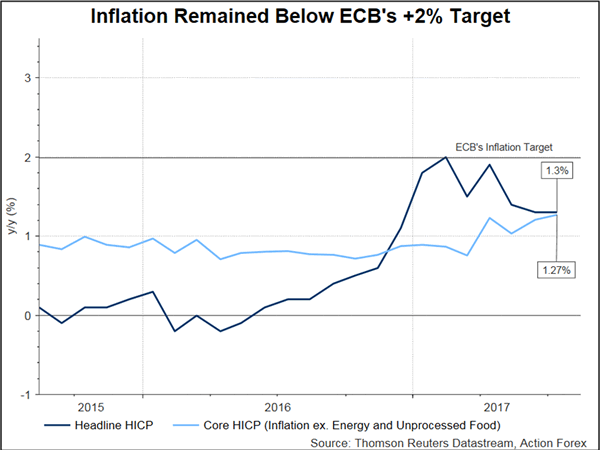
Second quarter annual growth in the euro area likely accelerated to the fastest since the final quarter of 2015, data out on Tuesday is expected to show. Quarter-on-quarter growth is forecast at 0.6%, unchanged from the prior quarter, while the year-on-year rate is expected to edge up to 2.1% in the flash preliminary reading. Flash estimates of inflation are due one day earlier on Monday. Annual CPI is forecast to remain unchanged at 1.3% in July but excluding food and energy prices, the index is expected to ease slightly to 1.1%.
Other Eurozone data includes the unemployment rate on Monday, retail sales on Thursday and German industrial orders on Friday, all for June, as well as the final July PMI readings on Tuesday and Thursday. The data is unlikely to alter much the existing outlook of the European Central Bank on growth and inflation, while the euro could find fresh momentum to challenge its recent 2½-week high of $1.1776.
Bank of England under spotlight amid split MPC
The Bank of England meets for a two-day policy meeting on Wednesday and Thursday, with the August meeting being particularly significant for a number of reasons. Next week's meeting will mark one year since the Bank announced its 'Brexit bazooka' by cutting rates and extending its asset purchases in response to the shock vote by British voters to leave the EU. One year on, the UK economy has proved more resilient than policymakers anticipated and inflation has jumped to just under 3% from around 0.5% as the pound has plummeted in the forex markets. With several monetary policy committee (MPC) members becoming uneasy about the inflation overshoot, three members voted for a rate hike at the June meeting. The surprisingly tight vote was followed by hawkish remarks from several MPC members. However, one of the hawks, Kristin Forbes, has now left the Bank and replaced by Silvana Tenreyro, who is thought to be more on the dovish side. In addition, the MPC will return to its full 9-member board in September, when the newly appointed Dave Ramsden joins the Bank, who also is thought to be more of a dove than a hawk.
Any further signs on Thursday that the MPC is tilting towards a hawkish stance even as it keeps rates unchanged at 0.25% could lead to fresh gains for sterling. Just as important though will be the BoE's quarterly inflation report which should reveal the Bank's latest forecasts on growth and inflation. Given the notable slowdown in UK growth in the first half of the year, it will be interesting to see how confident the Bank is about the growth prospect in the second half and whether a rate hike is warranted.
Ahead of Super Thursday, UK PMI figures will come into focus. The Markit/CIPS manufacturing PMI is out on Tuesday and will be followed by the corresponding construction and services PMIs on Wednesday and Thursday, respectively.
Barrage of US data awaited
The Fed pleased financial markets this week when it signalled it is worried about the recent weakness in inflation, as this means the central bank will follow a less aggressive rate hike path. However, it would only take a couple of strong data to undo that sentiment and there will be plenty of opportunities for that next week. First up on Monday are the Chicago PMI for July and pending home sales for June.
Tuesday's data will be more crucial with the release of the personal consumption and income figures. Personal income and spending are forecast to remain unchanged at 0.4% and 0.1% month-on-month in June. The core PCE price index - the Fed's preferred measure of inflation - is released alongside these data and is expected to rise by 0.1% m/m in June. The index had fallen to 1.4% in May, raising doubts about the Fed's plans to raise rates one more time this year.
However, despite inflation not picking up as expected, growth has started to quicken and survey readings such as the ISM PMIs have been improving recently. The ISM manufacturing PMI for July is out on Tuesday and the ISM's non-manufacturing PMI is due on Thursday. June factory orders are also released on Thursday and trade numbers are out the next day. The big headline grabber though will be July's jobs report on Friday. Non-farm payrolls are forecast to increase by a more moderate 187k in July after a robust 222k gain in June. The unemployment rate will likely dip back to 4.3% from 4.4% and earnings growth should accelerate slightly from 0.2% to 0.3% m/m in June. A stronger reading would be positive for the greenback as it would keep the door open for further tightening by the Fed before the year end.
Another country reporting its jobs report next week is Canada. Employment data for July on Friday, along with the June trade balance and the Ivey PMI for July should give some indication as to the likelihood of another rate increase by the Bank of Canada this year.
US Q2 GDP Expands as Expected But Dollar Plummets
The dollar extended yesterday's losses on Friday after the US GDP growth initial estimates for the second quarter of the year came in as expected but employment costs and the first look on quarterly inflation based on the PCE measure disappointed analysts.
According to the Bureau of Economic Analysis, the US economy expanded substantially as expected by 2.6% on an annualized basis in the June quarter, approaching Trump's desired growth target of 3% for 2017. The figure for the first three months of the year was revised down from 1.4% to 1.2%. The upbeat increase was attributed mainly to a 2.8% rise in consumer spending which diverged significantly from the 1.9% observed in the first quarter, while business investment also contributed positively, with business spending on equipment recording its biggest improvement since 2015 (8.2%).
However, what disappointed traders was the GDP price index reading. The index, which is a broader measure of inflation, dropped sharply to 1% quarter-on-quarter from 2% (upwardly revised from 1.9%), missing the forecast of 1.3% and reaching the weakest growth in a year.

Moreover, the employment cost index, which gauges the change in wage growth, also fell short of expectations. The index rose by 0.5%, far below the 0.8% seen in the March quarter and the 0.6% anticipated. US wages dropped by 0.7% from 0.6% in the first quarter.
Despite the initial estimates of US economic growth being encouraging, wage growth remains weak even though the economy is operating under full employment conditions, a fact that could potentially restrict consumption in the coming quarters. In addition, inflation does not show any signs of approaching the Fed's target of 2%, justifying the Fed's concerns about prices trending below the target for a longer period than anticipated.
Looking at the forex markets, the dollar continued its downward path against its major rivals despite the upbeat GDP growth. The dollar index sank by 0.32% immediately after the data, touching an intra-day low of 93.20. Dollar/yen declined by 0.38% from 111.26 to 110.91, while euro/dollar jumped by 0.20%, from 1.1720 to 1.1743.
RBA to Keep Rates on Hold; Retain Upbeat Growth Forecasts
Week beginning 31 July 2017
- RBA to keep rates on hold; retain upbeat growth forecasts.
- RBA: policy announcement, Statement on Monetary Policy.
- Australia: retail trade, dwelling approvals, trade balance, credit.
- China: Official & Caixin PMIs.
- NZ: employment.
- UK: BOE policy decision.
- Euro Area: CPI, employment.
- US: nonfarm payrolls, PCE inflation & personal spending.
- Key economic & financial forecasts.
Information contained in this report was current as at 28 July 2017.
RBA to keep rates on hold; retain upbeat growth forecasts
The Reserve Bank Board next meets on August 1.
Of course, the Board will keep rates on hold as clearly signalled by important speeches from both the Governor and Deputy Governor over the last week.
Therefore the interest directly associated with the Board meeting will be with the Governor's associated Statement. No doubt the Governor will continue to "call out" the labour market and the housing markets as the key areas of interest. In that regard the sentiment in the July Board Minutes and the Governor's July Statement is likely to be repeated.
On housing, "Conditions varied considerably across the country. Housing prices have been rising briskly in some markets, although there are some signs that these conditions are starting to ease ...."
On the labour market, the commentary is likely to be along the lines of the Minutes, "Labour market conditions had improved ... forward indicators had remained positive.......The strength of recent labour market data had removed some of the downside risk to the Bank's forecast of wage growth."
However on that latter point the Governor's speech on July 26 indicated that there was limited confidence in the call that wage rates would gradually increase over the course of the forecast period.
And then, of course, there is the Australian dollar. Since the last Board meeting the AUD has increased from USD 0.76 and a TWI of 65 to USD 0.795 and TWI of 67.
Even at USD0.76 the Governor repeated his consistent call that "an appreciating exchange rate would complicate this adjustment." The language is likely to strengthen at USD 0.795. In his speech on July 21 the Deputy Governor noted: "a lower AUD would be helpful."
In mid-2015, when the AUD was adjusting, the "path" from USD 0.80 to USD 0.75 was consistently associated with: "Further depreciation is likely/necessary."
It seems likely that the "commentary" on the AUD in the Governor's Statement will be stronger than we have seen recently but we cannot be sure that a new "terminology" will be adopted.
Be clear that even though the move in the AUD is associated with higher commodity prices, the RBA is uncomfortable. The clear offset to services; manufacturing; and agricultural exports that we might expect from higher commodity prices is not materialising. Cashed up mining companies are not reinvesting and are not lifting employment in this cycle largely because they are not convinced of the sustainability of the current increases. As such the higher AUD is a "challenge" for both growth and inflation.
In that regard the second RBA report for the week will be more significant. The Statement on Monetary Policy will be released on August 4 and will contain the Bank's revised growth and inflation forecasts.
These forecasts will be provided out to end calendar 2019, extending from June 2019 currently.
Recall the convention for the assumptions behind the forecasts. The rate profile is that indicated by market pricing and the AUD profile assumes the current level of the AUD.
When the last forecasts were released in May the rate outlook was flat while the AUD was at USD 0.74 and TWI 64.
Today markets are pricing in a 0.25% rate hike by the second half of 2018 while the AUD is likely to be assessed at USD0.80 or TWI 67.
The issue is whether the Bank will change its forecasts on the basis of the new "assumptions".
The key forecasts from a policy perspective are GDP growth in 2018 and underlying inflation in 2018 and 2019.
In May, GDP growth in December 2018 was forecast at 2.75%- 3.75% and underlying inflation at 1.5-2.5% in 2018 and 2-3% in June 2019.
We are not aware of the Bank's specific modelling methodology and of course any potential "subjective" adjustments that might be applied to the modelling before the final results are released.
However we can assess some historical "form".
In November 2016, when AUD was at USD 0.77 and the TWI at 65, growth in 2018 was forecast at 3-4% and underlying inflation at 1.5-2.5%.
In May 2017, when AUD was at USD 0.74 and the TWI at 64, growth in 2018 was forecast at 2.75%-3.75% and underlying inflation at 1.5-2.5%.
You can see that between November and May there was a US 3 cents move in the AUD yet no significant changes were made in the forecasts. In fact a lower AUD was associated with a modest downward revision in the growth rate.
Elsewhere, the positive global back drop, with upgrades to world growth, and domestically the surprisingly strong employment figures, buoyant business confidence surveys and expansionary public investment would have boosted the Bank's confidence in their above trend growth forecast for 2018 (with trend growth estimated at 2.75%). Those developments would support the Bank's inclinations to keep their growth forecasts intact.
For 2019, consistent with the above, the RBA is likely to restate their 3.25% growth forecast for June 2019 and to also forecast 3.25% for December 2019, which rolls into the forecast horizon.
Certainly there seems little chance that the Bank would react to the AUD developments by lowering its underlying inflation forecast for 2018 which already sits at the bottom of the 2-3% target band.
No doubt there will be considerable angst at the Bank around the growth forecast.
For me, rigid adherence to the assumption of an AUD holding at USD0.80 over the next 3 years with a resulting change to the confident "above trend" growth story in 2018 would be an unattractive option for the Bank.
Consequently, despite the sharp short term move in the AUD, I expect the RBA to retain its "above trend" growth forecast when it releases its forecasts in the Statement on Monetary Policy on August 4.
Bill Evans, Chief Economist
Data wrap
Q2 CPI
- Headline CPI 0.2%qtr/1.9%yr. Trimmed mean 0.51%qtr/1.8%y. Weighted median 0.55qtr/1.8%yr
- The Q2 CPI printed 0.2% compared to Westpac's forecast for 0.6%. The market median was 0.5%. The annual rate is now 1.9%yr compare to 2.1% in Q1, 1.5%yr in Q4, 1.3%yr in Q3 and 1.0%yr in Q2. The June quarter 2016 was the slowest pace since Q2 1999.
- The core measures, which are seasonally adjusted and exclude extreme moves, rose as expected at 0.5%qtr. In the quarter, the trimmed mean gained 0.51% while the weighted median lifted 0.55%, highlighting just how modest the broader inflation picture is outside of housing or health. The annual pace of the average of the core measures is now 1.8%yr flat on 1.8%yr in Q1, and up on 1.5%yr in Q4 and Q3.
- With the headline measure printing below market expectations (0.2% compared to 0.5%) why did the core measure rise as expected (0.5%)? It is all due to rent and dwelling purchases, which have a large weight and tend not to get trimmed out of the core measures. We argue that housing costs are important to factor in.
- The biggest surprise in the June quarter was the fall in fresh fruit & vegetable prices. The ABS does report something of cyclone Debbie boost in some fresh fruit and vegetables but this was offset by a seasonal fall in the price of winter fruits. This added to the known drag coming from falling auto fuel even if the fall in the quarter was not as large as we had anticipated.
- However, the more significant observation was the lack of price pressure in some major retail sectors and in particular, clothing & footwear. Normally clothing & footwear prices rise in the June quarter post the New Year sales in Q1 as prices are reset before the post June 30 sales in Q3. In the June quarter 2017, clothing & footwear fell 0.3%.
- Overall the June quarter CPI again highlighted the lack of any broad inflationary pressures in the Australian economy. While core inflation has drifted up to just under the bottom of the RBA's target band, on the back on a lift in housing cost, it is hard to see how it can accelerate much further without broader price gains.
- There is some interest in the preliminary estimates for Q3 given the known significant increase in electricity bills. Our preliminary estimate is for a 0.8%qtr rise in the headline CPI and 0.3%qtr rise in the average of the core measures. This will hold the annual pace of the average of the core measures at 1.8%yr.
Q2 trade prices
- Australia's terms of trade dipped in the June quarter 2017, representing a break from the recent rebound.
- Export prices for goods fell by 5.7% in the quarter, meeting expectations (market median -5.5% and Westpac -5.5%).
- Prior to this, in the year to March, export prices rebounded by almost 32%, up from the lows of early 2016. Annual growth has now moderated to 22.5%.
- Commodity prices eased back in the June quarter (on a quarter average basis), -10.6%. The falls were led by iron ore, impacted by rising inventories in China, and by coal.
- Import prices were little changed in the quarter, inching 0.1% lower, and also little changed relative to a year ago, edging 0.3% higher. The June result was softer than anticipated (market median 0.7% and Westpac 0.7%).
- The Australian dollar weakened in the June quarter, declining by 1% against the US dollar to 75.8¢ and falling by 2.2% on a TWI basis, to 64.5.
- While the lower dollar tends to make imports more expensive this was offset by falling global energy prices and general softness in world trade prices in the period.
- The terms of trade for goods rebounded sharply in the year to March 2017, up 30%. There was a partial reversal in the June quarter, down 5.6%, trimming annual growth to 19.3%.
- The rebound in commodity prices and the terms of trade during 2016 and into early 2017 boosted national income. Company profits, particularly in mining, jumped sharply. However there has been limited pass-through to households with wages growth still weak. The terms of trade pull-back in June 2017 will dent national income and company profits.
- Going forward, particularly during 2018, we expect commodity prices to trend lower, moving towards cost curves on softer demand and rising supply. However, in recent weeks, prices have been resilient, with spot iron ore up from US$55/t to US$70/t.
New Zealand: week ahead & data wrap
Old school
Next week's labour market figures are expected to show that firms are still keen to hire, but that the unemployment rate has remained steady at 4.9%. Financial markets are probably more vulnerable to a softer than expected outcome, given the number of factors that already point to the Reserve Bank keeping interest rates on hold for a long time.
We expect the Household Labour Force Survey (HLFS) to show a 0.7% rise in employment over the June quarter. We also expect a similar result from the employer-focused Quarterly Employment Survey (QES), with a 0.9% rise in the number of full-time equivalent employees.
Growth in employment is expected to be widespread, with larger gains in service sectors (including hospitality), retail and professional services. We also expect continued employment gains in the construction sector, though difficulties in sourcing skilled labour may provide some brake on jobs growth on this front.
However, while the demand for workers is growing, the active labour force is also growing at a strong clip. The strong rise in population growth in recent years, led by trends in net migration, has been strongly motivated by job prospects. New arrivals have risen sharply, particularly for those coming on temporary work visas. At the same time, more New Zealanders are returning from Australia and fewer are leaving in the first place, which reflects the relatively subdued Australian jobs market in recent years.
As a result, we expect the unemployment rate to remain unchanged at 4.9%. That's a marked improvement on the postfinancial crisis peak of 6.7%, but it's not particularly low compared to history. The unemployment rate was consistently below 5% from 2003 to 2008, and it wasn't until unemployment fell below 4% that the labour market tightened and wage growth really ramped up.
Consequently, with unemployment lingering around 5% now, we've yet to see a broad-based lift in wage growth in the current cycle - in fact, the Labour Cost Index for the private sector rose just 1.5% in the year to March, its slowest pace in seven years. While there are pockets such as the construction sector where a shortage of skilled workers is increasingly acting as a constraint, it doesn't appear that the labour market as a whole has been in 'tight' territory up to now.
The idea of what constitutes 'tight' or 'loose' economic conditions was addressed in a speech this week by the Reserve Bank's Head of Economics. The broad theme of the speech was that monetary policy decisions depend in part on judging where the economy stands relative to its long-run equilibrium settings, which are unobservable and can change over time.
One of those unobservable factors is potential output - the level of GDP that leaves inflation neither rising nor falling. Potential output is highly uncertain, and the RBNZ uses several estimation methods that produce a range of results. But the RBNZ's central estimate suggests that the New Zealand economy has been running at around its potential for the last two years, having been below potential for several years after the financial crisis. In other words, it has not been in 'tight' territory - implying an acceleration in inflation - at any point in the last several years.
Another key unobservable that was covered in the speech is the neutral level of the Official Cash Rate (OCR). The RBNZ's estimate of the neutral OCR has come down over time, and the latest estimate puts it at around 3.5%. That implies that the current OCR of 1.75% is providing stimulus to the economy, as is appropriate in the current circumstances.
However, lowering the estimate of the neutral rate implies that the current level of the OCR has not been providing as much stimulus as previously thought - and perhaps should have been set even lower in recent times. Of course, this is with the benefit of hindsight, but it suggests that the best way forward is to keep the OCR low for even longer.
As we've noted before, the RBNZ's projections already imply that OCR hikes are a long way off. Our forecasts are not too dissimilar - we don't expect a hike before 2019. In contrast, market pricing is still consistent with an OCR hike by August next year, and has at times implied an even earlier start to rate hikes.
We think that developments since the last OCR review will give the RBNZ even less reason to contemplate the idea of rate hikes. June quarter inflation was lower than expected, and some temporary factors are likely to keep inflation below the 2% target midpoint for at least another year. In addition, the housing market is slowing much faster than the RBNZ assumed, which is likely to have knock-on effects for the strength of domestic demand.
Finally, the New Zealand dollar has strengthened significantly in recent weeks. This is largely a product of US dollar weakness and may prove to be transitory. But if sustained, it will further undermine the outlook for inflation over the coming year.
Consequently, we think that financial markets are more vulnerable to a weak outturn in next week's labour market update, which is one of the last key pieces of economic information ahead of the RBNZ's Monetary Policy Statement on 10 August. Even a stronger than expected result is unlikely to see the RBNZ contemplate an OCR hike within the next year, whereas a weak result would see markets push out the expected timing of rate hikes.
Data previews
Aus Jun private credit
Jul 31, Last: 0.4%, WBC f/c: 0.4%
Mkt f/c: 0.4%, Range: 0.3% to 0.5%
- Private credit grew by 5.0% in the year to May, moderating from 6.4% a year earlier. Housing has slowed a little over this period, to 6.6% from 6.9%, as lending conditions have tightened. Business credit has moderated, to 3.1% from 7.0%, in part due to weakness around the time of the 2016 Federal election, as well as a soft start to 2017.
- For June, credit growth is expected to be 0.4%, matching the outcomes for the three months March through May.
- Housing credit grew by 0.55% in May, reversing a dip to 0.51% in April. The are tentative signs that the housing sector is beginning to cool, including a 1.5% decline in the total value of housing finance in the four months since January.
- Business credit grew by 0.4% in April and by 0.2% in May, representing a modest improvement on a 0.4% decline in Q1. Commercial finance, while still volatile, is up off its lows.

Aus RBA policy decision
Aug 1, Last: 1.50%, WBC f/c: 1.50%
Mkt f/c: 1.50%, Range: 1.50% to 1.50%
- The RBA will leave rates unchanged at its Aug meeting.
- Following two 25bp cuts in May and August 2016, the Bank has kept policy firmly on hold. Minutes to the July meeting reaffirmed labour and housing markets as particular areas of interest - key questions around both remain unresolved.
- A discussion of 'neutral' rates in the 'Considerations for Policy' section of the July minutes was seen by some as a more hawkish signal, contributing to a firming in the AUD.
- The RBA Governor has publicly rejected this view, reinforcing the Bank's 'firmly on hold' stance. Despite this the AUD has continue to rise. How this is treated in the Governor's decision statement and its forecasts in the Aug Statement on Monetary Policy (due Friday) will be of interest (see p2 for full discussion).

Aus Jun dwelling approvals
Aug 2, Last: -5.6%, WBC f/c: 1.0%
Mkt f/c: 1.0%, Range: -4.0% to 5.0%
- Dwelling approvals slumped 5.6% in May to be down 19.7%yr. The decline over both the month and the year has mainly been driven by 'high rise' (-20%mth, -45%yr). Nationally, May saw the second lowest monthly reading on high rise approvals since June 2013 - the lowest being the weatheraffected read in March.
- Despite the weak May update, June is shaping a little more positively. In particular construction-related finance approvals continue to suggest some firming in non-high rise activity in coming months. Meanwhile high rise approvals should start to stabilise around current lower levels although the outlook for this volatile segment is more uncertain. On balance we expect monthly total approvals to show a slight 1% gain leaving the existing strong downtrend intact.

Aus Jun trade balance, AUDbn
Aug 3, Last: 2.5, WBC f/c: 1.4
Mkt f/c: 1.8, Range: 1.2 to 3.0
- Australia's trade balance was comfortably in surplus in May, after being impacted by Cyclone Debbie in April.
- For June, we expect a $1.4bn surplus, narrowing from a $2.5bn surplus in May.
- Export earnings are forecast to decline by 4%, -$1.3bn. Metal ores, coal and fuels, together accounting for close to 50% of exports, are expected to weaken, down $1.4bn. Prices fell (iron ore and fuels), so too volumes (iron ore, coal and LNG).
- Imports are forecast to decline by 0.7%, $0.2bn, on lower prices, with oil down and the Australian dollar stronger.
- Note: since January 2016, there is additional uncertainty around the import and trade forecast. The ABS no longer publishes customs goods imports ahead of the trade release.

Aus Jun retail trade
Aug 4, Last: 0.6%, WBC f/c: flat
Mkt f/c: 0.2%, Range: -0.2% to 0.8%
- Retail sales came in better than expected for April with a 0.6% gain following on from April's 1% bounce-back from a weather-affected 0.1% contraction in March. The April detail suggested a genuine lift in momentum over and above weather-related volume and price impacts.
- Despite the lift, the backdrop in terms of consumer sentiment remains shaky with signs family finances came under renewed pressure over the first half of 2017 with mortgage rate increases in March and continued concerns around housing markets. That said, labour market conditions have improved. The Q2 CPI also suggests retail prices have been flat with continued aggressive discounting in non-food segments. On balance we expect June to post a flat result for monthly sales.

Aus Q2 real retail sales
Aug 4, Last: 0.1%, WBC f/c: 1.1%
Mkt f/c: 1.2%, Range: 0.6% to 1.5%
- Real retail sales rose just 0.1% in Q1 with weather a key restraining factor - sales in cyclone-affected Qld contracted 1%qtr but rose 0.4%qtr across the rest of Aus.
- The Q2 update is shaping as a strong one. Even with a flat monthly finish, nominal sales are on track for a 1.3% rise over the quarter. The CPI detail also points to a subdued retail deflator - up about 0.2% despite a weather-related jump in some food prices. The combination gives a 1.1% rise in real retail sales, with some upside risk if the deflator comes in weaker. Note that the retail measure remains a problematic indicator for the broader spending estimates in the national accounts - although the direction for Q2 looks right, the swings in total spending are likely to be much milder than the retail moves.

NZ June business confidence
Jul 31, Last: 24.8
- Businesses' confidence in the general economic outlook rose strongly in June, with widespread gains.
- Since the June survey, we've seen mixed economic conditions. Spending has held up, boosted by the current strong tourist season. But at the same time, housing market conditions have continued to weaken (especially in Auckland). There is also some uncertainty around how September's election will affect economic conditions.
- We'll be watching the survey's inflation and price gauges closely. Despite relatively firm economic growth in recent years, we're yet to see a broad based increase in pricing pressures. We don't expect much change on this front just yet.

NZ June building consents
Jul 31, Last: 7.0%, WBC f/c: -5.0%
- Residential building consents rose 7% in May. That followed a 7.4% drop in April that looks like it was exacerbated by the timing of the Easter and Anzac Day holidays.
- After the solid May increase, we expect some pull back in consent issuance in June.
- Smoothing through month-to-month volatility, we should continue to see a trend increase in consents over the coming year, with large amounts of building work planned in coming years. However, there are questions around how fast construction will rise going forward. Capacity pressures in the building industry have already emerged, and both building costs and borrowing rates have been creeping higher. At the same time, house price growth has levelled off and reconstruction activity in Canterbury has eased back.

NZ Q2 household labour force survey
Aug 2, Employment, last: 1.2%, WBC f/c: 0.7%, Mkt f/c: +0.7%
Aug 2, Unemployment, last: 4.9%, WBC: 4.9%, Mkt f/c: 4.8%
- We expect the Household Labour Force Survey will show that employment levels increased by 0.7% in the June quarter. Increases in employment are expected to be widespread, with larger gains in service sectors (including hospitality), retail and professional services. We also expect continued employment gains in the construction sector, though difficulties sourcing skilled labour may slow jobs growth on this front.
- Labour force participation is expected to nudge higher again in June, taking it to a fresh record high of 70.7%. Jobs growth has encouraged more people to enter the labour market. This has been reinforced by strong net migration. These factors are providing a floor under the unemployment rate, which we expect to remain unchanged at 4.9%

NZ Q2 labour cost index
Aug 2, Private sector (incl. overtime), last: 0.4%, WBC f/c: 0.4%, Mkt f/c: 0.4%
- Although the labour market has been strengthening, wage inflation remains low. We're expecting the June quarter Labour Cost Index will show that base wage rates rose by only 1.6% over the past year. Similarly, the broader QES measures of average hourly earnings is expected to have risen by only 1.3% - both largely unchanged from last quarter and still low.
- But while wage growth is currently low, this won't be the case forever. We expect that strong demand for workers, as well as increasing cost of living adjustments will contribute to rising wage inflation over the coming year.

UK Mar Bank of England policy decision
Aug 3, Last: 0.25%, WBC f/c: 0.25%
- June saw a hawkish tilt from Bank of England. While the Bank Rate was left on hold, three of the eight members voted for an immediate rate hike in June, up from just one in May. Underlying this shift in stance was earlier firmness in economic activity that raised questions about how much of the recent pick-up in inflation should be looked through.
- Rate hikes are only a realistic possibility if there are convincing signs of resilience in economic activity. However, since the June meeting, inflation has softened and GDP growth has been subdued. We expect that these developments will see renewed caution among the MPC, with the Bank Rate and asset purchase program expected to remain unchanged in July.

US Jul employment report
Aug 4, nonfarm payrolls Last: 222k, WBC 190k
Aug 4, unemployment report Last: 4.4%, WBC 4.4%
- It has been an interesting six months for employment growth in the US, nonfarm payrolls reporting month-average growth of 224k in Jan/Feb; a weak 50k in Mar; then 207k in Apr; 152k in May; and 222k in June. The net result is a month-average pace of 180k, broadly in line with 2016.
- At this stage in the economic cycle, given full employment has been reached, employment growth should have slowed. But it hasn't and partial indicators remains supportive of further strong gains. In Jul, we look for a 190k rise.
- Since January, the unemployment rate has consequently fallen from 4.8% to 4.4% in June. Participation has also been a factor, edging 0.2ppts lower to 62.8%. In Jul, we expect the unemployment rate to remain unchanged, with any surprise in employment to be offset by participation.

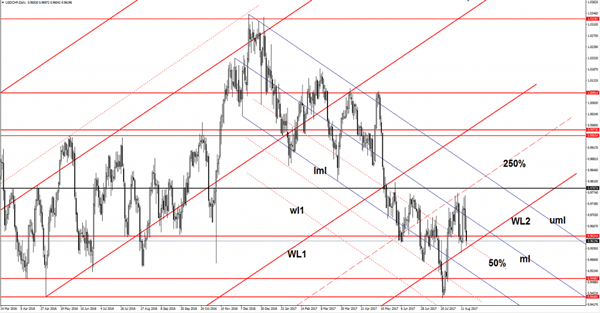
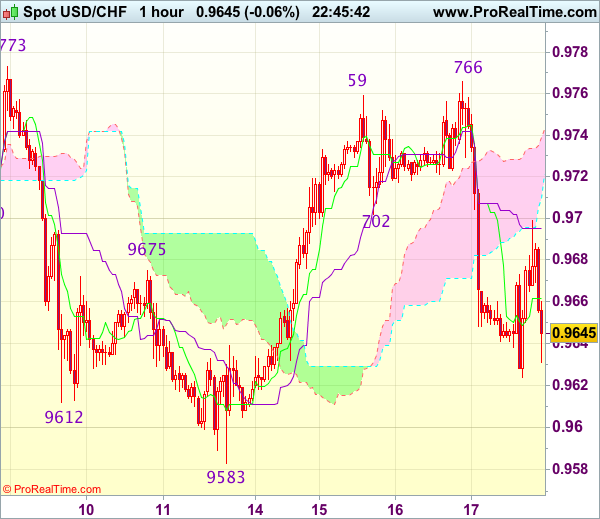
Trade Idea Wrap-up: USD/CHF – Buy at 0.9600
USD/CHF - 0.9686
Most recent candlesticks pattern : N/A
Trend : Near term down
Tenkan-Sen level : 0.9686
Kijun-Sen level : 0.9663
Ichimoku cloud top : 0.9559
Ichimoku cloud bottom : 0.9539
Original strategy :
Buy at 0.9600, Target: 0.9700, Stop: 0.9565
Position : -
Target : -
Stop : -
New strategy :
Buy at 0.9600, Target: 0.9700, Stop: 0.9565
Position : -
Target : -
Stop : -
Although the greenback slipped to 0.9490 yesterday, renewed buying interest emerged and dollar has rallied above indicated resistance at 0.9622-35, confirming recent decline has ended at 0.9438, hence upside bias is seen for the move from there to extend gain to 0.9730, however, break there is needed to retain bullishness and encourage for headway to 0.9750-60, then 0.9780 but reckon 0.9800 would hold from here.
In view of this, would not chase this rise here and would be prudent to buy dollar on pullback as previous resistance at 0.9596 should turn into support and contain dollar’s downside. Below 0.9570 would defer and risk test of the upper Kumo (now at 0.9559) but price should stay well above support at 0.9490, bring another rise later.

Trade Idea Wrap-up: GBP/USD – Stand aside
GBP/USD - 1.3118
Most recent candlesticks pattern : N/A
Trend : Near term up
Tenkan-Sen level : 1.3103
Kijun-Sen level : 1.3094
Ichimoku cloud top : 1.3118
Ichimoku cloud bottom : 1.3079
New strategy :
Stand aside
Position : -
Target : -
Stop : -
Although cable has rebounded after finding support at 1.3052 yesterday and gain towards 1.3159 (this week’s high) cannot be ruled out, break there is needed to revive bullishness and signal recent upmove has resumed and extend further gain to 1.3185-90 and then 1.3210-20, otherwise, further choppy trading below said this week’s high would take place, bring another retreat later.
On the downside,e below 1.3070 would prolong consolidation, bring weakness to 1.3050-52, break there would suggest a temporary top is possibly formed, bring retracement of recent rise to 1.3030 but support at 1.2999 should remain intact, bring rebound later. As near term outlook is mixed, would be prudent to stand aside in the meantime.
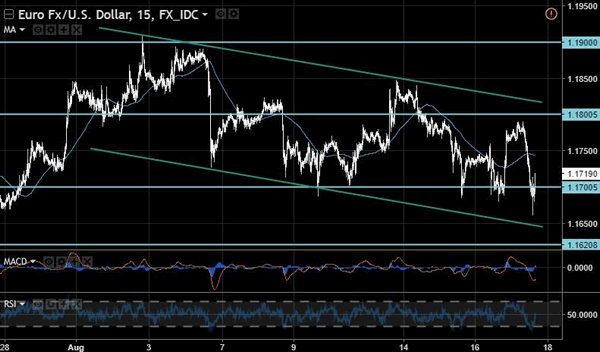
Trade Idea Wrap-up: EUR/USD – Stand aside
EUR/USD - 1.1756
Most recent candlesticks pattern : N/A
Trend : Near term up
Tenkan-Sen level : 1.1727
Kijun-Sen level : 1.1707
Ichimoku cloud top : 1.1710
Ichimoku cloud bottom : 1.1695
New strategy :
Stand aside
Position : -
Target : -
Stop : -
As the single currency found support at 1.1650 and has recovered, suggesting further recovery cannot be ruled out, however, break of this week’s high at 1.1777 is needed to signal recent upmove has once again resumed and extend gain to 1.1784-85 (50% projection of 1.1370-1.1712 measuring from 1.1613). then 1.1800 but loss of near term upward momentum should prevent sharp move beyond 1.1820-25 (61.8% projection), risk from there has increased for a retreat later.
In view of this, would not chase this rise here and would be prudent to stand aside for now. Below 1.1700 would bring test of said support at 1.1650 but break there is needed to signal a temporary top is possibly formed, bring further weakness towards support at 1.1613, having said that, price should stay well above previous resistance at 1.1583 (now support), bring another rise later.

Dollar Continues Declining after Robust Growth; Loonie Eyes Fresh High
Second quarter US GDP estimates dominated investors' attention during today's European session trading. Certain components within the data led to the dollar recording losses as the news became public, though those were short-lived. In other notable releases, Canadian growth figures for May were released today as well.
The much-awaited preliminary US GDP estimates for the second quarter of the year showed the economy expanding at an annualized rate of 2.6%, as expected. First quarter growth was revised downwards to 1.2% from the previous 1.4%. The advance GDP deflator estimate, which acts as a broad inflationary indicator by measuring the change in the price of all goods and services included in GDP calculations, showed a 1.0% quarter-on-quarter growth during the second quarter. This fell short of expectations for a reading of 1.3% and came in below the first quarter's respective number of 2.0%, which was the result of an upward revision from 1.9%.
The figures verify that the slowdown during the first quarter was temporary, as increased consumer spending led the way for stronger growth during the second quarter of the year. However, price data in the report are suggesting that inflation is moving significantly below the Federal Reserve's 2% target. The greenback initially reacted negatively to the data relative to majors including the yen, euro and the pound, though it quickly made up those losses, especially with respect to the latter two.
Other US data pertained to the final reading of the University of Michigan's Consumer Sentiment index. That came in at 93.4, above forecasts and the previous month's 93.1. Dollar/yen advanced on the data, though it didn't manage to maintain those gains for long.
In terms of forex market movements, the dollar index, which gauges the greenback against the currencies of six major US trading partners, was last down by a sizable 0.5% on the day and close to the 13-month low of 93.15 hit yesterday. Dollar/yen was 0.3% down, trading around the 111 level. Euro/dollar was up 0.6% at 1.1737 and pound/dollar 0.3% up, marginally above the 1.31 handle.
In other news, the Swiss franc continued losing ground versus the euro in today's trading, looking set to record its fourth straight day of declines. Euro/swissie today touched 1.1396, the highest since the Swiss National Bank dropped its peg on the euro in mid-January 2015. The movement is in part attributed to the European Central Bank and Swiss National Bank seemingly diverging in terms of monetary policy.
Canada saw the release of GDP numbers for May today. The nation's economy expanded by 0.6% month-on-month, far outpacing expectations for a growth rate of 0.2%, which also coincided with the previous month's figure. The loonie gained on the data, with dollar/loonie eventually falling to as low as 1.2419, close to the 25-month low of 1.2413 hit yesterday. The pair traded at 1.2525 before the numbers went public. The Canadian dollar has also been gaining on the back of rising oil prices as Canada is a major oil exporter.
Turning to commodities, gold gained on the back of dollar weakness, rising to a one-and-a-half-month high of $1267.85 an ounce in today's trading. The precious metal was last trading close to this level. WTI and Brent crude maintained momentum from previous days. They traded at $49.60 a barrel and $52.40, up 1.1% and 1.8% respectively, in afternoon European trading hours.
The Baker Hughes Oil Rig Count will be released at 17:00 GMT. FOMC voting member Neel Kashkari is scheduled to speak at 17:20 GMT.