Sample Category Title
Five Ways to Earn Additional Income Trading Forex
Many people turn to forex trading in hopes of growing their account equity. This dream is made possible by the fact that with leverage and low deposit requirements, just about anyone with a disposable income can deposit funds and can start trading forex.
However, only a handful of people can make the cut. Building consistent income trading forex is something that takes years of practice and dedication. For traders who have made the cut, trading forex can become a bit monotonous.
Of course, the forex markets never sleep and there save for occasional bouts of quiet trading sessions, for the most part, there is always some news or event that will drive the markets.
If you are one of those successful forex traders and looking to make additional income by leveraging your trading skills, here are five ways to do it.
1. Forex Signals Service
As an independent trader, you can always take advantage of selling your skills. This can be done by offering a trading signals service. You don't have to be tech-savvy in order to set up a website. Even using a free blogging platform and by using Paypal, you can easily set up a small website and charge fees for the trading signals or recommendations that you can offer.
For those who find this to be too tedious, you can always make use of existing platforms such as the MQL5 marketplace or sign up for ZuluTrade and begin selling your signals.
The advantage with this is that you don't have to worry about marketing your services, especially if you have enough (live) trading history to back up your case. This alone will become your main unique selling point.
The downside of using such services is, of course, the commissions that will be deducted. However, if your trading is good enough, then that shouldn't be a problem as you can easily expect your subscriber list to grow.
2. Teaching how to trade forex
For those who are averse to the idea of selling their forex signals, teaching or educating others can be a great way to do so. Using websites such as Udemy, or even Youtube, you can teach others how to trade.
Given the fact that beginner forex traders are always on the lookout for a good trading strategy, you can easily use the above platforms to showcase your skills. You can also combine social media such as Facebook, Twitter, and LinkedIn to build a thorough profile to establish yourself as an expert.
You should not limit yourself to just teaching trading strategies, but also explain how the markets work. While this will take a bit of time, you can spend just under 10-minutes a day to share your videos and links on social media and establish yourself as an authority on either a particular style of trading or explaining how the markets work.
3. Become a forex analyst
Traders who are good at their job can also look at working as a freelance forex analyst. Given the number of forex brokers that are now available, you can easily earn additional income as an analyst.
Of course, to be successful at this, you need to spend some time analyzing the markets and writing about it as well. Not many are skilled at writing, but with enough practice, you can hone this skill as well.
Given the fact that a trader already does their analysis of the markets they will be trading, becoming a forex analyst can be one of the easiest ways to make additional income from forex trading.
4. Becoming a PAMM fund manager
The PAMM model allows traders with the right skill sets to start their own small fund. Under this model, you will be managing the funds of other traders or clients. This puts you at an advantage as your trading equity grows and you will be able to manage your money and contract sizes accordingly.
To become one of the top PAMM fund managers, you need to keep at it on a steady and slow pace. It might take years before your PAMM account is attractive enough for others to place their funds with you.
The PAMM also allows you some flexibility in how you want to charge your clients. Typically, PAMM fund managers set a percentage of the profits as commissions. The downside to working as a PAMM fund manager is that you need to be cautious as you will be using your client's funds.
Therefore, unless you are really good at trading and know how to manage risk, this is not recommended for all.
5. Write a book
Amazon Kindle is one of the best ways to get your book published in an electronic format. Although Kindle books are priced very less if you have an idea or a topic in mind you can always publish an e-book with ease.
There are already quite a few individuals who publish their trading books on forex. The advantage is that you don't need the backing of a big publisher and the Amazon Kindle library gives you a ready market.
Sometimes the topics you choose could be very niche which means that you might be compelled to work on a more popular trading subject. Regardless, spending a few hours a day, it is not that difficult to draft a Kindle book. For just a few bucks, you can always have your content proof-read and tweaked to make it ready for publishing.
The above methods can help traders to earn some extra money. While it might not yield big results immediately, doing something related to what you do already can be a simple way to break the monotony of trading.
While there are many other methods to earn additional income trading forex, remember that no matter what option you choose, make sure that you do not end up compromising on your main source of income which is trading.
Trading Sessions
While it is true that the forex market is open 24hrs a day five days a week, it doesn't mean that it's always active. Breaking down this 24hr auction house into manageable trading sessions is important. Knowing when liquidity is likely to come into the market and when it is expected to diminish, helps one determine the best time to trade.
So, what is a trading session?
You'll often here this term thrown around news channels and trading forums. A trading session, quite simply, consists of a period of time in one, or a few, financial centres. The London session for example, begins at 8am and closes its doors at around 5pm GMT. Apart from the lunch hour (12-1pm GMT), financial institutions will be active. It may also be worth noting that when a major financial centre closes in observance of a national bank holiday, liquidity during this segment will generally be thin.
What are the major trading sessions?
A typical day in the forex market consists of three major trading sessions. First in line is the Asian session, followed by London and then finally over the pond to New York.
The Asian trading session: is sometimes referred to as the Tokyo session. This is because Tokyo is the third largest financial centre in the world, contributing over 6% to the overall daily trading volume. Be that as it may, there are also other countries active during this session, such as: New Zealand, Sydney, Hong Kong and China. We personally focus on the Sydney open as our starting point for the day, which begins at 8am local time. A couple of hours later, Tokyo then comes online.
Volatility is notoriously low during the Asian segment in comparison with its European and American counterparts. The market often enters into a phase of consolidation, benefitting range traders. As Tokyo starts wrapping up for the day, nonetheless, London's doors open for business. There is an overlap of one hour here but only when the UK adopts British Summer Time (BST) which is one hour ahead of Greenwich Mean Time (GMT) during the summer months.
The London trading session: is a heavyweight contender in the forex market, responsible for around 36% of the overall daily trading volume. London has a notorious reputation for big moves, thus this session offers speculators a particularly favourable environment to trade breakouts and trend continuation patterns. Currently, London trades during GMT. On Sunday the 26th March, however, London, and most of Europe's clocks, will be set forward one hour to DST (Daylight Saving Time). At this point, London will be five hours ahead of New York. Therefore, a little before 3pm London time (pre-open trading), the US will open, and we'll see around two hours overlap between London and New York (three hours during GMT).
The New York trading session: comes alive during the hours of 8am – 5pm local time, but some futures markets open a tad earlier. The US is the second largest financial centre out of the three and handles over 17% of the world's forex transactions. Although the US is no match for London's financial hub, the majority of the market's major economic releases are published during the US morning session, and tend to cause rapid moves. Events such as: the non-farm payrolls, the ISM manufacturing report and key speakers from the Federal Reserve can, at times, make the US/London overlap session extremely volatile (2-3pm/5pm GMT).
Specific pairs to focus on
Amid the Asian session, active (major) currencies are: the Japanese yen, the Australian dollar and the New Zealand dollar. Moving over to the London session, just about every currency pair is relatively high-spirited. Along the same vein, US markets, especially during the London/US overlap, are highly liquid, and again, just about any pair can be traded. Nonetheless, we would highly recommend sticking to the majors during this time and leaving the exotics to simmer on the backburner.
In closing
If you're looking for big moves, focusing on the London and US segment could be an idea. During these sessions breakouts of major levels often occur. If you prefer a more subdued market on the other hand, maybe consider the Asian session. As already mentioned, consolidations often form throughout this time and can offer reasonable opportunities to play these ranges.
Do You Want to be a Trader?
In this day and age, becoming an independent financial trader is easy. You just need some capital and a brokerage account, and voilà, you're a trader! The only problem is, trading the markets is not quite so straightforward!
First steps
Before anything else, you'll need to ask yourself WHY you want to become a trader. The answer to this question is crucial as it will determine if trading is for you, so it's important to be honest with yourself here. Here are three of the most common responses:
Financial freedom: Few professions allow the freedom trading does. It's important to be clear about what you want. Is it the freedom to purchase that high-end car you've always wanted, take the family on a dream vacation or simply add a few more pennies to the retirement fund?
An adrenaline rush: This, we believe, is akin to gambling in a casino. Some individuals enter the industry for a 'daily fix' of adrenaline. Unfortunately, just like most gamblers this will only end one way: an empty account.
Prestige: Do you need to be that guy who turns up at dinner parties in a Ferrari? If you're trading to impress, greed will eventually take over and could lead to ruin. You have to be humble in this game, or it WILL humble you! The ability to control one's emotions is a HUGE part of trading.
Successful traders/investors, in our experience, have one thing in common: they all have a clear purpose/goal. This is to make money. They're not trading to feed their egos, impress friends or to get a daily boost of adrenaline. It all comes down to making money year in year out.
The learning phase
Can anyone be a trader? With a healthy amount of will power and determination we believe so. With that being said, however, learning to trade is not easy. In fact, it's one of the most challenging tasks you will undertake in your lifetime.
Malcolm Gladwell gave us the 10,000-hour rule. Gladwell stated that anyone can master a skill with 10,000 hours of practice. While this number may seem a bit excessive to some, we have had the opportunity to interview traders who confessed to having studied for over five years, spending 3-5 hours a day glued to the charts before reaching proficiency. Some even admitted to studying for as long as ten years! For that reason, we believe there is some truth to the 10,000-hour rule. As such, enrolling on a weekend course will NOT, despite what the advert or guru claims, magically transform you into Warren Buffet or George Soros. To become versed in this profession, it takes time, discipline, hard work and commitment.
Learning to separate life from trading is important. In the earlier stages of your journey one has to be careful not to become addicted. While we would agree that one needs to have a certain obsession in order to succeed, we would advise trying to set scheduled study times. When it's only you and the charts with little distraction, this will help get the most out of the time you spend at the computer.
What type of trader do you want to be?
The three most common types of traders operating in the market are: the day trader, the swing trader and the position trader.
Becoming a day trader (sometimes referred to as a 'scalper') seems to be the more appealing route these days. Typically, a day trader's positions are liquidated prior to the market close. The objective is to capture profit from small moves. Trades are often short term, sometimes only lasting for a few minutes. it's not uncommon for a short-term trader to take ten trades a day, some do crank out a lot more though! Traders in this category tend to focus on the lower timeframes, using the 1, 5 and 15 minute periods.
A swing trader on the other hand takes a slightly different view on the markets and looks to take advantage of the longer timeframes such as the H1 and H4 periods. Trades usually last for a few hours, but can stretch to a couple of days or longer. Unlike a day trader, swing traders do not have to be at their computers all day and generally risk between 1-2% of their account on each trade. This allows the trader free time during the day to do other things.
And finally, we have the position trader. This approach usually entails using larger timeframes: the daily, weekly and monthly periods. Traders who adopt this method will have a long-term plan in place. Trades can span days, weeks or even sometimes years if the trend is in one's favour. You need a healthy dose of patience to trade this way, and often only need to check the charts once a day.
Technical analysis or Fundamental analysis?
We would not recommend singling one out here, since both technical and fundamental analysis are useful.
Fundamental analysis helps answer WHY a market is moving in a particular direction. For example, is the currency pair rallying due to an expected rate hike in the near future, or is the move fuelled by a country's political stance? Knowing what causes markets to move helps one pin down market direction in the future.
Technical analysis helps define WHEN to trade. Assuming that we know the underlying fundamentals are supporting a rally in the dollar, for example, but price action is seen trading at the underside of a strong resistance (which essentially means a level in the market that price has trouble breaking above in the past), this may not be the best time to buy the currency. However, once that resistance is consumed, a buy is high probability since the trade now has both technical and fundamental cues signalling that the dollar is likely to strengthen.
Psychology
Sadly, this section is often overlooked which is a shame since it is said that trading is 80% psychological and 20% technical. A plethora of books have even been written on the subject. Here are a few points to think about:
- The ability to follow your trading method flawlessly and not give in to greed and fear is a key aspect of successful trading.
- Thinking in probabilities is another crucial element to read up on.
- Learning to accept losses and not let it affect your next trading decision is also a huge part of trading.
- A patient trader is a wise trader!
Working on yourself (your mindset) as well as the trading method is just as important! Make sure to research this subject as it can make or break you as a trader.
Common mistakes traders make
- Not having a clearly defined plan of action. Without this, you're little more than a gambler, in our opinion. A plan should, at the very least, detail risk, system rules and maximum permissible drawdown. Nearly every mistake traders make can be boiled down to either not having a plan or not following it.
- Over-leveraging. Newer traders commonly misuse margin. Trading this way will, with a high probability, end with your account being wiped out. If used correctly, margin is a valuable weapon in a trader's toolbox.
- Taking advice from so-called gurus. This is not to say that all who give advice do not know what they're talking about. There are traders out there who openly prove to the public they know what they're doing. However, do yourself a favour. Rather than relying on the expertise of another trader, learn to master your own method!
- Refusing to take a loss. Taking losses is a part of trading. Think of it as a business expense such as rent or payment for stock. Not accepting a loss is a good way to lose your account! The stop-loss order is there to tell you when you are wrong. USE IT!
- Trading with emotions. Unless you're a robot, there is no way to completely remove the emotions that run through us. What one can do though is learn how to control these emotions so that it rarely affects your trading.
- Impractical expectations. Expecting to become a millionaire in a year with a $1,000 account is not really a reasonable expectation. This will cause unnecessary stress/pressure. Trading is NOT a get-rich-quick-scheme.
Do not make the mistake of thinking trading is easy. Learn to think like a professional. Take time to understand your psychology and the market you're trading.
So, where does one begin?
Here's a brief step-by-step guide we've put together for our readers:
- Start by sifting through our educational section here: Spend time learning the basics. There's no rush.
- Sign up to an unlimited Demo account. This will allow you to trade the markets using simulated funds. Here you can also test strategies and familiarise yourself with the terminal's functions.
- Begin formulating a method to trade the market. We would recommend researching price action. There's plenty of trading setups out there that solely focuses on price action. Our daily market commentary covers this in depth using a multi-timeframe approach: . Feel free to check it out.
- Read up on trading psychology. This should be done simultaneously alongside step 3.
- Practice, practice and practice!
- Once you've tested your chosen method and are satisfied with the results, you may consider opening a live account. With IC markets, you can Open an Live Account with as little as $200. That way, making your very first trade need not break the bank should you make a mistake.
- Stay down to earth. Don't set unrealistic expectations.
A Brief Introduction to Forex Basics
If you are new to trading, the following definitions and examples will help you to get familiar with the rules and guidelines of the forex market. This short overview to enhance your existing knowledge.
Financial Instruments
These include Currency Pairs (forex), CFDs in Indices, Commodities and Spot Metals. All instruments are speculative and complex by nature, and traders must be familiar with the associated risks. A large selection of educational material is available on the FXTM website to help you familiarize yourself with the terminology and trading tools used in the financial markets.
Leverage & Margin
Leverage is offered by brokers to maximize traders' buying power by giving them the ability to deposit a small amount of funds and trade larger volumes. Leverage is expressed in ratio form, so if it is 1:100 for example, a trader's buying power is magnified 100 times. It can either maximize the profits or the losses of a trade.
Margin: Since the trader is allowed to use more capital (due to leverage) than the amount he or she deposited, the broker requires that a set amount of funds remains in your account, to maintain an open position.
The leverage and margin you're eligible for with FXTM is based on your trading knowledge and experience.
To calculate your margin as it relates to your leverage, please use the Margin Calculator.
Fundamental and Technical Analysis
Fundamental Analysis studies risk-related factors such as the economic, political and environmental forces that cause prices to move up, down or sideways.
Technical Analysis is the study of prices for the purpose of identifying the market's direction. The principles of technical analysis are:
- All known fundamentals are reflected in the price charts.
- Prices move in patterns referred to as trends.
- Price patterns that worked well in the past are expected to work again in the future.
Risk Management
There are certain risks associated with trading. As with any financial contract, the inherent risk of the institution or party you have the contract with, is known as 'Counterparty Risk.' Counterparty risk is the risk that one of the members of the contract will not fulfill its contractual obligations.
Another type of risk comes from Market Forces, which are determined by the economic factors affecting the price of the financial instrument in question. For example, if you believe that your base currency is going to increase in value against the quote currency and unexpected political turmoil forces the base currency down, you risk losses.
How FXTM helps you to Manage Risks
Margin Call - is a signal from a broker that your account has exceeded the required margin in terms of percentages. In other words, there is not enough equity in the account to continue to support your open positions.
Take Profit - A price level that you set on your trading platform that locks in potential profits. Example: If you buy 1000 EUR at the exchange rate of 1.20000 EUR per USD, this equals to 1,200 USD (1000 X 1.20000).
If a take-profit order is placed at 1.30000, and the price rises from 1.20000 to 1.30000, the take-profit order closes your position for a profit of a 100 USD.
Stop Loss - A price level that you set on your trading platform, designed to protect your capital from price movements in the opposite direction. Example: if you trade the EURUSD and you put the stop loss at 1.27000, as soon as the EURUSD falls under 1.27000, your open position will be closed.
Stop Out - the level at which a trading platform will start to automatically close your least profitable positions in order to prevent any additional losses, in case of a significant price movement in the opposite direction.
What Separates Beginners from Professionals in Forex Trading?
The world of forex is full of excitement; it gives traders the possibility of controlling huge amounts of money without the need to invest a lot of their own capital. The old industry saying of 'buy low, sell high' – when done right – can be extremely rewarding.
During the early part of their trading careers, beginners will often proclaim that they're on a quest to beat the market, take full control of an instrument and go for the big win. They will be awake for days on end, looking for the 'Holy Grail' of trades and, very possibly, dig deep into a leverage that is way over their heads and level of experience. These poor habits are usually set off by the excitement that follows one profitable trade generates and judgement then flies out the window. Beginners also tend to make mistakes on the markets when they let their emotions get the better of them – usually after losing a few trades in a row. They fall into the rookie trap of risking more than they should, to try and make up for what they've lost.
There are many skills that a trader must master to tackle the markets and discipline is one of them. Those who fail to grasp the significance of discipline will more than likely end up trading in fear, with greed as their guide. This is a lethal combination. Fear often paralyses traders, preventing them from locking in orders, or entering the market altogether. Greed is never a good vice in trading because it can result in a trader over extending himself.
Proper risk management and good discipline in tandem, are the captains of every efficient trading strategy. Professional traders are well aware of this. They also understand the importance of having a personalised trading strategy; one that is based on their lifestyle, profile, history, and level of knowledge and experience. Most essential of all however, is sticking to the strategy and risk management measures no matter what. They can be the greatest techniques and strategies on paper, but if you don't have the discipline to follow them, the results will in all likelihood, be disappointing.
For a trader to make that transition from novice to professional, it is imperative for him or her to master the art of discipline with regards to mapping out a strategy and sticking by it. This is essential for obtaining the momentum they need to possibly achieve real success; they need to actualise the strategy irrespective of their current position (i.e. profit or loss). Locking in a profit at a predetermined level, for example, is equally as important as limiting a loss.
Every trader, novice and veteran, shares the same goal – but it's the way they achieve this goal that sets them apart. Professional traders practice discipline, are loyal to their trading strategies and have full control over their emotions (both positive and negative). Beginners, on the other hand, will more often than not get burned a few times before they realise the advantages of discipline. The sooner they learn how to handle these essential aspects of the profession, the sooner they could start reaping the rewards.
Existing Home Sales Pull Back in June
Existing home sales fell 1.8% m/m to 5.52 million (annualized) in June from 5.62 million in the month prior. The headline print surprised to the downside, as markets expected a more moderate pullback of only 0.9%.
The decline was concentrated in the single-family segment where transactions fell by 2.0% to 4.88 million. Sales in the smaller condo/co-op segment remained unchanged at 640 thousand.
Sales activity declined across most regions, rising only in the Midwest (+3.1%) while pulling back in the West (-0.8%), Northeast (-2.6%) and South (-4.7%).
The inventory of homes available for sale fell by a seasonally unadjusted 0.5% on the month and remained low at 1.96 million - down 7.1% from year-ago levels. At the current sales pace, inventory accounts for just 4.3 months' worth of supply compared to 4.6 a year ago - well below the six months' of sales considered a balanced market.
The low supply of homes available for sale is putting upward pressure on prices, with the median home price advancing by a robust 6.5% y/y in June - up from 5.7% in the month prior.
First-time homebuyers accounted for 32% of sales, which is down from 33% in the month prior and year-ago. Meanwhile, homes typically stayed on the market for 28 days - up from last month (27 days) but down from year-ago (34 days).
Key Implications
Today's pullback in home sales is disappointing, but not entirely unwarranted given that contract signing (pending home sales) had declined for three consecutive months through May. On a trend basis, activity has plateaued around the still-elevated 5.6 million mark for the first half of the year, supported by lower mortgage rates since March.
The June data bring the second quarter to a close, with resale activity having declined 3.7% on an annualized basis. While we expect activity to improve in the coming quarters, the decline in June does make for a weak handoff into the third quarter.
One of the main factors holding back activity in recent months has been the low inventory of homes for sale. While we see no quick turnaround on this front, rising prices should encourage more homeowners to put their homes on the market. At the same time, increased homebuilding should also help alleviate some of the pressures via the new home market.
Overall, resale activity should manage to advance by around 3.4% this year as outlined in our recent report, supported by a healthy labor market.
Pound Edges Above 1.30, Markets Eye US Consumer Confidence
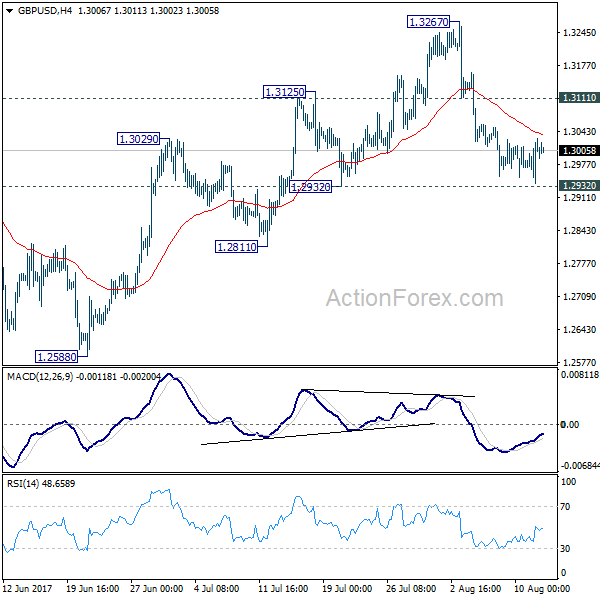
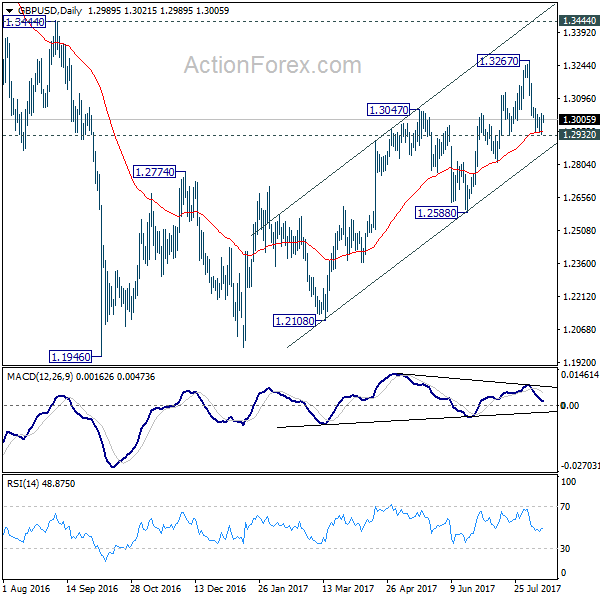
GBP/USD has posted slight gains in the Monday session. In North American trade, the pair is trading at 1.3020, up 0.23% on the day. On the release front, there are no British events on the schedule. In the US, Existing Home Sales dropped to 5.52 million, well short of the estimate of 5.59 million. Later in the day, the BoJ releases the minutes of its June policy. On Tuesday, the US releases CB Consumer Confidence.
Brexit jitters continue, as Prime Minister May's weak government must negotiate with a European Union that has no interest in providing any favors to Britain as its leaves the club. Substantive negotiations between the two sides have started, but the two sides remain far apart on key issues, such as the jurisdiction of the European Court of Justice after Brexit and the size of Britain's debt to the EU. With hard feelings on both sides, the negotiations promise to be difficult.
British CPI has been picking up speed in recent months, but the indicator slowed to 2.6% in June, down from 2.9% in May. This was considerably lower than the estimate of 2.9% and the first time in 2017 that inflation levels have not increased from the previous reading. The soft data eases the pressure on the BoE to raise rates in order to curb high inflation levels. Policymakers at the BoE have been at odds over raising rates – even though inflation is high, the economy has been showing signs of weakness, suggesting that the economy does not need higher interest rates. On Tuesday, BoE Governor Mark Carney said that the main factor behind high inflation was the fall in the pound, which has dropped sharply since the Brexit vote in June 2016. The BoE hold its next policy meeting on August 4, and analysts expect the policymakers to hold the benchmark rate at 0.25%, where it has been pegged since August 2016.
It was another tough week for President Trump. Early in the week, Trump's cherished flagship healthcare proposal, which aims to replace Obamacare, stalled in the Senate after two Republican senators said they would not support the bill. Trump has failed to pass any significant legislation so far in his term, and investors are becoming more skeptical as to whether Trump will have any more success with his tax reform and fiscal spending plans. With the Democrats forming a rock-solid wall of opposition, dissension among Republican lawmakers, many of whom are uneasy about Trump, could doom attempts by the White House to get bills through Congress. There was more bad news as Robert Mueller, the special counsel who is investigating alleged collusion between Trump and Russian officials during the US election, said he would review business transactions involving Trump as well as his associates. Trump has said that Mueller's scope is limited to Russia, so the stage could be set for a Nixon-type showdown between the president and the special counsel investigating wrongdoing by the president.
Elliott Wave Trade Ideas Performance Update
4 positions were entered last week with total profit of 375 points and the positions are listed below.
7 Jul : EUR/GBP - Short at 0.8845, exited at 0.8885 (- 40 points)
| AUD EUR/JPY EUR/GBP CAD GBP GBPJPY
Jan - 15 -275 - 35 -120
Feb + 140 -17 - 40 +11
Mar - 20 +115 +132 - 19
Apr + 30 - 40 +120 + 45
May - 55 +100 - 6 -65 -60
Jun + 81 +150 - 10 +185 -120 +205
Jul - 40
Aug
Sep
Oct
Nov
Dec
Y-T-D + 216 - 82 +67 +463 -185 +190
Euro Pulls Back from 2-Year Highs on Disappointing PMIs; Dollar Steadier
The euro retreated from fresh 23-month highs set earlier in the day as the single currency was hurt by disappointing PMI data out of the Eurozone. The US dollar came off its lows but remained near the 13-month lows reached during the Asian session, while oil reversed higher on OPEC's latest efforts to curb supply.
Eurozone PMI releases by IHS Markit dominated the European trading session on Monday as the data missed expectations on all fronts. The composite PMI for the euro area fell to 55.8 from 56.3 in July's flash reading, missing forecasts of 56.2. The manufacturing component was the worst hit with the sector's PMI dropping from 57.4 in June to 56.8 in July. Expectations were for a reading of 57.2. The services PMI was unchanged at 55.4 but this was slightly below forecasts of 55.5.
The figures suggest economic activity in the Eurozone expanded at its slowest pace in six months in July as the number of new orders moderated. However, for the third quarter as a whole, GDP in the region remains on track to grow by a solid 0.6%.
The euro had hit a near 2-year high of $1.1684 during Asian trading as the dollar suffered from the latest episode in the White House. But the single currency fell back to around $1.1640 in late European trading. It also lost ground against the yen and sterling, dropping 0.5% to 129.01 yen and 0.8928 pounds.
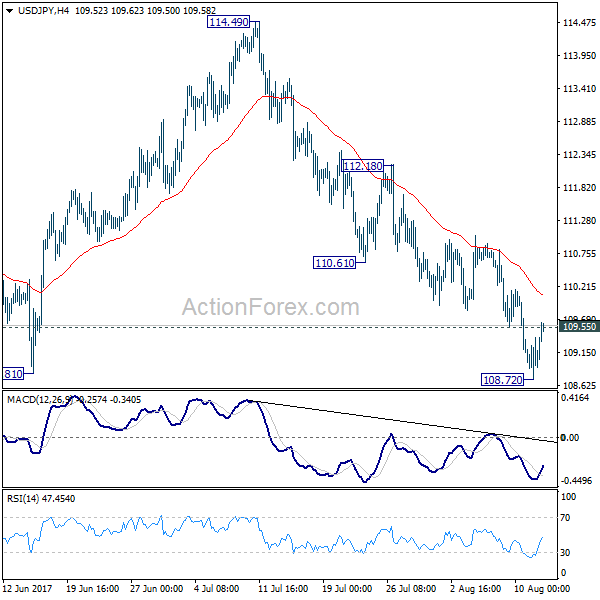
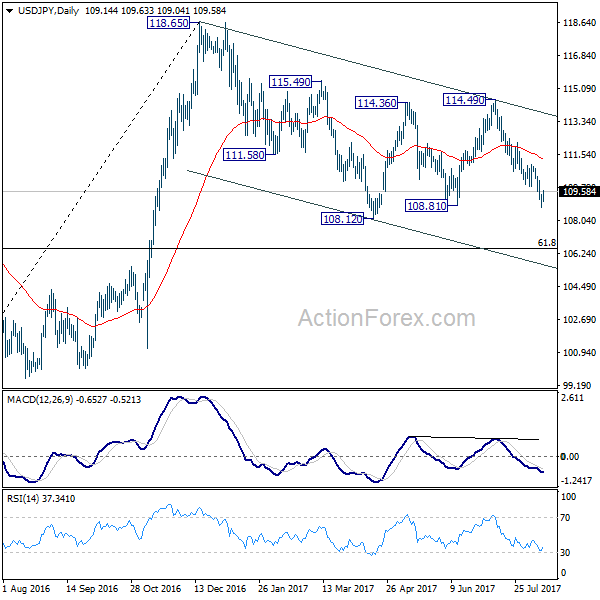
The resignation on Friday of the White House's press secretary, Sean Spicer, added to the dollar's woes, further denting hopes of a fiscal stimulus in the United States anytime soon. The US currency managed to steady however after touching fresh lows earlier in the day. The dollar index hovered around the 94 level at it attempted to moved away from its earlier 13-month low of 93.82. However, against the yen, despite recouping some of its losses, it stood down on the day at around the 111 level.
Data out of the US today provided little support to the greenback. The IHS Markit manufacturing PMI for the United States rose from 52.1 to 53.2 in July, beating forecasts of 52.0. The services PMI also came in above expectations, increasing from 53.0 to 54.2 in July, against forecasts of 54.0. Housing data was not as positive however, as existing home sales fell by 1.8% month-on-month in June, which was worse than expectations of a 1% drop.
The pound had a stronger start to the week following sharp losses the prior week when it came under pressure on Brexit uncertainty and doubts about the prospect of higher UK interest rates. Sterling rebounded back above 1.30 level on Monday and was last trading at $1.3041 as investors eyed UK GDP data for the second quarter later in the week.
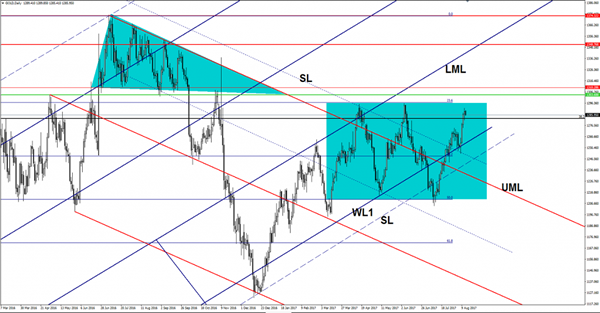
In commodities, gold climbed to 4-week highs, hitting $1258.79 an ounce in European trading on the back of the increased risk aversion in financial markets today. Oil was also up, with both WTI and Brent crude gaining over1% after Saudi Arabia said it will reduce exports in August.
At a meeting of OPEC and some non-OPEC countries in St. Petersburg today, Saudi Arabia committed to cap its exports of crude oil at 6.6 million barrels per day in August, which represents a 1 million reduction from one year ago. It was also announced that Nigeria would limit its output at 1.8 million barrels per day, though no such decision was made for Libya, which along with Nigeria, is exempt from OPEC's cuts.
US crude was last up at $46.40, while Brent crude was trading at $48.66 a barrel.
Candlesticks and Ichimoku Trade Ideas Performance Update
2 positions were entered among all 4 currency pairs with total loss of 8 points and the positions are listed below:
19 Jul : USD/CHF - Long at 0.9555, exited at 0.9547 (- 8 points)
20 Jul : USD/JPY - Long at 111.80, exited at 111.80 ( 0 point)
| JPY EUR CHF GBP
Jan + 167 - 85 - 10 + 50
Feb + 200 +150 +93 - 59
Mar -23 -70 -23 - 35
Apr + 65 + 93 + 50 - 40
May - 65 - 35 + 100 -175
Jun -100 -10 - 10 +175
Jul - 35 - 8
Aug
Sep
Oct
Nov
Dec
Y-T-D + 208 + 38 +192 - 74