Mon, Apr 06, 2026 12:52 GMT
More

    Sample Category Title

    Asian Market Update: Australia Retail Sales Disappoint Ahead Of Tomorrow’s RBA Decision

    Australia retail sales disappoint ahead of tomorrow's RBA decision

    Asia Mid-Session Market Update: China Caixin Services PMI edges lower; Australia retail sales disappoint ahead of tomorrow's RBA decision

    Friday US markets on close: Dow +0.9%, S&P500 +0.7%, Nasdaq +0.5%

    Best Sector in S&P500: Financials

    Worst Sector in S&P500: Basic Materials

    Biggest gainers: MTD +6.7%; M +6.4%; MS +5.5%

    Biggest losers: HBI -16.4%; FCX -5.8%; CMG -4.5%

    At the close: VIX 11.0 (-1.0pts); Treasuries: 2-yr 1.20% (flat), 10-yr 2.49% (+2bps), 30-yr 3.11% (+3bps)

    Weekend US/EU Corporate Headlines

    Dow and DuPont to offer sale of R&D capability to ease antitrust concerns - FT

    Board Unanimously Rejects Unsolicited Proposal from Frontline Ltd.

    Politics

    (US) Defense Secretary Mattis: not considering increasing US forces in the Middle East in response to Iran's misbehavior, but US will not ignore Iran's activities

    (US) Homeland Security has "suspended any and all actions" related to implementing Pres Trump's immigration ban on 7 Muslim-majority countries

    (US) President Trump: Will not attend May meeting with NATO leaders in Europe

    Key economic data:

    (CN) CHINA JAN CAIXIN PMI SERVICES: 53.1 V 53.4 PRIOR (first sequential decline in 4 months)

    (AU) AUSTRALIA DEC RETAIL SALES M/M: -0.1% (First m/m decline since Aug 2015) V 0.3%E; Q4 Q/Q: 0.9% V 0.9%E

    (AU) AUSTRALIA JAN ANZ JOB ADVERTISEMENTS M/M: 4.0% (2-year high) V -2.2% PRIOR

    (JP) JAPAN DEC LABOR CASH EARNINGS Y/Y: 0.1% V 0.4%E ; REAL EARNINGS (EX-INFLATION) Y/Y: -0.4% V 0.0% PRIOR; 2016: 0.5% (biggest increase since 2010)

    Asia Session Notable Observations, Speakers and Press

    Asian markets tracking the Friday rally on Wall St, where low wage growth component of the monthly jobs data eases the pressure on the Fed to deliver on its promise of higher rates in the most immediate term; Australia markets underperforming as commodity prices retreat.

    Political standoff in the US between the DOJ and the Courts remains tense after a Washington State judge temporarily blocked the administration's travel ban and Homeland Security dept suspended all implementation; White House plans to appeal the order.

    China Jan Caixin services PMI eased for the first time in 4 months after hitting a multi-month high in Dec. Economists noted the contrast of employment components in manufacturing vs services, with the former reducing employment and the latter hiring faster. Rising input prices were also cited, along with expectations of decelerating economy after Q1 given decreasing propensity for restocking.

    Ahead of tomorrow's RBA decision, where expectations are largely for a rate hold, today's Australia retail sales were disappointing registering first sequential decline in over a year. Some economists see that as a one-off given some recent liquidation activity in the industry, others expect the reduced activity to give RBA pause while also monitoring the price developments.

    Japan wage growth slowed in December, though 2016 wage inflation was still the highest since 2010.

    China

    (CN) China State Researcher Baoliang: China should assess impact of President Donald Trump’s economic policies and guard against forex market volatility and capital outflows - Chinese press

    (CN) China should raise central fiscal deficit to 3.5% of GDP - Chinese press

    (CN) China Foreign Min Lu Kang: US should stop "making wrong remarks" about security in the South China Sea - press

    Australia/New Zealand:

    (AU) JPMorgan economist: Weakness in Australia retail data was heavily concentrated in households good retailing, which may be due to liquidation sales of a major Australian hardware/home improvement retailer - SMH

    (NZ) JPMorgan: RBNZ policy statement this week may come across as hawkish as it trumpets recent return of inflation above 1% as evidence price pressure is picking up - press

    Asian Equity Indices/Futures (00:00ET)

    Nikkei +0.2%, Hang Seng +0.6%, Shanghai Composite +0.4%, ASX200 -0.1%, Kospi +0.2%

    Equity Futures: S&P500 flat; Nasdaq flat, Dax flat, FTSE100 -0.1%

    FX ranges/Commodities/Fixed Income (00:00ET)

    EUR 1.0770-1.0790; JPY 112.20-112.70; AUD 0.7655-0.7685; NZD 0.7295-0.7305; GBP 1.2475-1.2500

    Apr Gold +0.4% at 1,225/oz; Mar Crude Oil +0.4% at $54.03/brl; Mar Copper +0.7% at $2.64/lb

    SPDR Gold Trust ETF daily holdings rise 3.3 tonnes to 814.5 tonnes; 3rd straight increase; Highest since Dec 31st

    (AU) Australia Port Hedland Jan Iron Ore Exports 40.3Mt v 43.9Mt m/m, +19% y/y

    (CN) PBOC SETS YUAN MID POINT AT 6.8606 V 6.8556 PRIOR; weakest Yuan setting since Jan 20th

    (CN) PBOC skips reverse repo operations v CNY50B on Feb 2nd and raising all offer yields by 10bps

    (KR) South Korea sells 3-yr govt bonds; avg yield 1.655%

    Asia equities / Notables / movers

    7267.JP Honda: Reports 9-month Net ¥521B v ¥438B y/y, Op Profit ¥703B v ¥567B y/y, Rev ¥10.24T v ¥10.94T y/y; +2.0%

    5214.jp Nippon Electric: CLSA Raised 5214.JP to Outperform from Underperform; +6.1%

    7270.JP Fuji Heavy May report FY16/17 op profit of ¥410B, -28% y/y but above ¥373B prior forecast - Nikkei; -0.6%

    NAB.AU NAB: Q1 trading statement; +0.8%

    IGO.AU Independence Group: Credit Suisse Raised IGO.AU to Outperform from Neutral; +1.8%

    DUE.AU Duet: Establishes A$150B debt facility with Westpac; -1.5%

    AWE.AU AWE: Macquarie cut; -1.7%

    338.HK Sinopec Shanghai: Nomura cut; -1.0%

    610.HK Wai Kee Holdings: Guides FY16 net profit at least +50% y/y; +5.2%

    240.HK Build King Holdings; Guides FY16 net profit at least +50% y/y; +11.3%

    149.HK China Agri Products: Profit warning; -24.6%

    Asian Markets Followed US Equity Markets Higher

    Market movers today

    In the US, the data calendar is light and we expect focus to remain on Donald Trump's policies. One game changer may be the confirmation of Steven Mnuchin as Treasury Secretary.

    In the euro area, the first release of interest is Sentix investor confidence. Sentix trended upwards in H2 16 and reached 18.2 in January 2017, its highest level since August 2015. The current situation and expectations components have both risen to historically high levels but we have seen a loss of momentum in both ZEW and ifo expectations, which could be a drag on Sentix expectations. Therefore, we expect Sentix to rise marginally to 19.0 in February, possibly dragged down by a declining expectations component.

    We are also due to get German factory orders for December today. Factory orders have followed a rising tendency since 2013 but have experienced large fluctuations, with a 5% monthly increase in October and a 2.5% decline in November. We expect a bounce back in December, with monthly growth of 2%. Our view of another increase is supported by the manufacturing PMI in November and December, which showed strength in the new orders indicator.

    In the UK, there are no significant data releases. The main event in the UK this week is the House of Commons vote on the Article 50 bill on Wednesday. The vote is expected to be passed and put the government on course to trigger Article 50 on 9 March as planned.

    Selected market news

    This morning, Asian markets followed US equity markets higher, boosted by the US jobs report on Friday, which revealed surprisingly strong job growth while wage growth remains muted. This is a perfect match for Asian emerging markets as the underlying US economic growth suggests solid global demand, while the risks of a near-term Fed hike (earlier than our expectation of a June rate hike) appears relatively slim given the muted inflationary wage pressures in the US economy. The market is pricing in only about 45% for a rate hike in May, while about 75% for a rate hike in June.

    Furthermore, financial sector stocks were buoyed by talks on the possible easing of financial regulation by the Trump administration. The National Economic Council Director Gary Cohn indicated on Friday that the new administration will look at the Volcker Rule and ‘all aspects of the Dodd-Frank legislation' in order to free up capital and stimulate lending to the economy.

    Meanwhile, other aspects of Trump's policy agenda remain in doubt. Over the weekend, Trump lost a bid to restart the travel ban while the US appeals court reviews the immigration restrictions. Moreover, the US administration imposed new sanctions on Iran on Friday following the recent missile test by Iran. The sanctions target 13 individuals and 12 entities seen as being linked to terrorism. The policy announcements from the US administration will continue to be closely scrutinised this week, amid a very thin data calendar in the US.

    European Open Briefing

    Global Markets:

    • Asian stock markets: Nikkei up 0.10 %, Shanghai Composite gained 0.50 %, Hang Seng rose 0.65 %, ASX 200 fell 0.20 %
    • Commodities: Gold at $1125 (+0.35 %), Silver at $17.59 (+0.60 %), WTI Oil at $54.00 (+0.30 %), Brent Oil at $57.00 (+0.30 %)
    • Rates: US 10-year yield at 2.46, UK 10-year yield at 1.36, German 10-year yield at 0.41

    News & Data:

    • China Caixin Services PMI (Jan): 53.1 (prev 53.4)
    • China Caixin Composite PMI (Jan): 52.2 (prev 53.5)
    • Australia Retail Sales (MoM) Dec: -0.1% (est 0.3% prev 0.2%)
    • Australia Retail Sales Ex-Inflation (QoQ) Q4: 0.9% (est 0.9% prev -0.1%)
    • Australia Melbourne Institute Inflation (YoY) Jan: 2.1% (prev 1.8%)
    • Australia Melbourne Institute Inflation (MoM) Jan: 0.6% (prev 0.5%)
    • Japan Labour Cash Earnings (YoY) Dec: 0.1% (rev prev 0.5%)
    • Japan Real Cash Earnings (YoY) Dec: -0.4% (rev prev 0.0%)
    • PBoC Fixes USDCNY Reference Rate At 6.8606 (prev fix 6.8556 prev close 6.8727)

    CFTC Positioning Data:

    • EUR short 46K vs. 52K short last week. Shorts trimmed by 6K
    • GBP short 62K vs. 66K short. Shorts trimmed 4K
    • JPY short 58K vs. 67K short last week. Shorts trimmed by 9K
    • CHF short 17K vs. 14K short last week. Shorts trimmed by 3K
    • CAD long 3K vs. 3K long last week. Unchanged
    • AUD long 12K vs 10K long last week. Longs increase by 2K
    • NZD short 1K vs 10K short last week. Shorts trimmed by 9K

    Markets Update:

    The Dollar weakened in Asia. While the NFP number beat expectations, average hourly earnings came in below expectations, which lowered expectations of another Fed rate hike soon. Meanwhile, the Australian Dollar came under pressure as well, after retail sales disappointed. They declined 0.1 % month-on-month, while the market was looking for +0.3 % print.

    Gold rose from $1219 to $1225 amid the Dollar weakness. However, it fell slightly in the mid-Asian session after risk sentiment improved somewhat. Most Asian stock indices finished the day with a gain.

    Upcoming Events:

    • 09:30 GMT – Euro Zone Sentix Investor Confidence
    • 14:00 GMT – ECB President Draghi speaks
    • 21:30 GMT – FOMC Member Harker speaks

    The Week Ahead:

    Tuesday, February 7th

    • 02:00 GMT – New Zealand Inflation Expectations
    • 03:30 GMT – RBA Rate Decision
    • 03:30 GMT – RBA Statement
    • 07:00 GMT – German Industrial Production
    • 07:45 GMT – French Current Account
    • 08:30 GMT – UK Halifax House Price Index
    • 13:30 GMT – US Trade Balance
    • 13:30 GMT – Canadian Trade Balance
    • 15:00 GMT – US JOLTs Job Openings
    • 15:00 GMT – Canadian Ivey PMI
    • 16:35 GMT – German Bundesbank President Weidmann speaks

    Wednesday, February 8th

    • 13:15 GMT – Canadian Housing Starts
    • 15:30 GMT – US Crude Oil Inventories
    • 20:00 GMT – RBNZ Rate Decision
    • 20:00 GMT – RBNZ Statement
    • 21:00 GMT – RBNZ Governor Wheeler speaks
    • 21:45 GMT – New Zealand Building Consents

    Thursday, February 9th

    • 00:00 GMT – Australian HIA New Home Sales
    • 00:30 GMT – Australian NAB Business Confidence
    • 06:45 GMT – Swiss Unemployment Rate
    • 07:00 GMT – German Trade Balance
    • 13:30 GMT – US Initial Jobless Claims
    • 14:10 GMT – FOMC Member Bullard speaks
    • 18:30 GMT – Bank of England Governor Carney speaks

    Friday, February 10th

    • 00:30 GMT – Australian Home Loans
    • 02:00 GMT – Chinese Trade Balance
    • 07:45 GMT – French Industrial Production
    • 09:00 GMT – Italian Industrial Production
    • 09:30 GMT – UK Trade Balance
    • 09:30 GMT – UK Industrial Production
    • 09:30 GMT – UK Manufacturing Production
    • 13:30 GMT – US Employment Change
    • 13:30 GMT – US Unemployment Rate
    • 15:00 GMT – UK NIESR GDP Estimate
    • 15:00 GMT – US Michigan Consumer Sentiment

    Weekly Technical Outlook And Review

    A note on lower timeframe confirming price action…

    Waiting for lower timeframe confirmation is our main tool to confirm strength within higher timeframe zones, and has really been the key to our trading success. It takes a little time to understand the subtle nuances, however, as each trade is never the same, but once you master the rhythm so to speak, you will be saved from countless unnecessary losing trades. The following is a list of what we look for:

    • A break/retest of supply or demand dependent on which way you're trading.
    • A trendline break/retest.
    • Buying/selling tails – essentially we look for a cluster of very obvious spikes off of lower timeframe support and resistance levels within the higher timeframe zone.
    • Candlestick patterns. We tend to only stick with pin bars and engulfing bars as these have proven to be the most effective.

    EUR/USD

    Weekly gain/loss: + 94 pips

    Weekly closing price: 1.0784

    In spite of the prior week's palpable selling wick, last week's movement chalked up a nice-looking weekly bullish engulfing candle, which, as you can see, forced the pair to cross swords with a weekly resistance level coming in at 1.0819. This – coupled with the 2016 yearly opening level located just above it at 1.0873, could very well see buying fade this week.

    On the other side of the coin, nonetheless, daily action recently bounced off daily support drawn from 1.0710 and shows room to extend north up to the daily resistance penciled in at 1.0850. While the weekly and daily timeframe structures are currently opposing one another, one thing to keep in mind here is that 1.0850 sits beautifully in between the aforementioned weekly resistance and 2016 yearly opening base. Therefore, at least in our opinion, this is a nearby zone to keep an eye on for shorting opportunities this week.

    Friday's US employment report published mixed figures. Non-farm employment change came in above expectations at 227k, whereas both the unemployment rate and average hourly earnings were less encouraging. The aftermath of the event initially sent the single currency to lows of 1.0709, clipping the top edge of a H4 demand base at 1.0684-1.0709, before reversing tracks and eventually clocking highs of 1.0797 on the day.

    Our suggestions: Directly above current price on the H4 chart is a nice-looking area of resistance at 1.0819/1.08. Building a case for entry here we have the following structures in play (yellow zone): a psychological resistance barrier at 1.08, February's opening level at 1.0801, a H4 Quasimodo resistance at 1.0812, a H4 trendline resistance extended from the high 1.0873 and finally we also have the weekly resistance mentioned above at 1.0819.

    Although there is a possibility that price may fake through this H4 sell area to tap the daily resistance at 1.0850 and maybe even the 2016 yearly opening level at 1.0873, we still feel a short from the above noted H4 sell zone is something to consider. Whether you believe this area is stable enough to justify a trade without the need for additional confirmation is, of course, down to the individual trader. For us personally, we're opting to wait for a reasonably sized H4 bearish candle to take shape before deciding if a trade from this zone is worthy of our capital. As of now, risk/reward from this region looks reasonably favorable given that the next downside target on the H4 scale comes in at the H4 demand mentioned above at 1.0684-1.0709.

    Data points to consider: There are no scheduled high-impacting news events on the docket today relating to these two markets.

    Levels to watch/live orders:

    • Buys: Flat (stop loss: N/A).
    • Sells: 1.0819/1.08 ([wait for a reasonably sized H4 bear candle to form before looking to execute a trade] stop loss: ideally beyond the trigger candle).

    GBP/USD:  

    Weekly gain/loss: – 65 pips

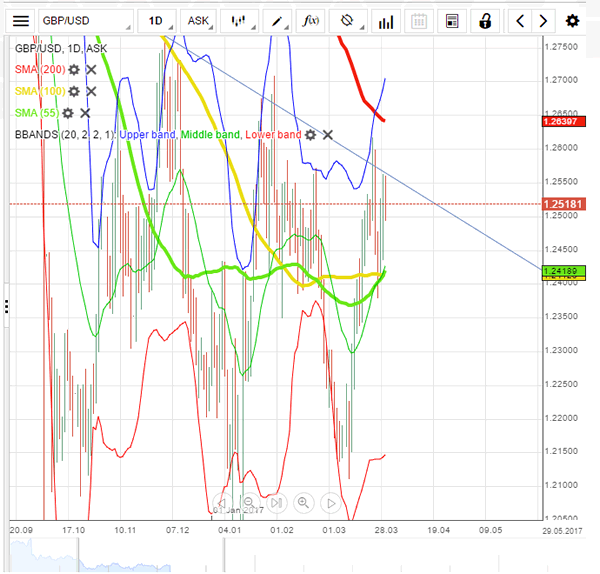
    Weekly closing price: 1.2478

    Over the last week, the weekly bulls were unable to gain much ground beyond the weekly Quasimodo resistance line at 1.2673, resulting in the unit breaking a two-week bullish phase and erasing almost 50% of the previous week's gains. The next support target from this angle is reasonably nearby at 1.2329: the 2017 yearly opening level, followed relatively closely by a weekly Quasimodo support at 1.2200.

    Moving down to the daily timeframe, we can see that Thursday's candlestick printed a strong-looking daily bearish engulfing candle out of a daily supply zone coming in at 1.2728-1.2657. As you can see, follow-through selling was seen during Friday's segment, but failed to overcome the daily support area registered at 1.2510-1.2415. Should a breakdown through this barrier take place this week, this will bring the daily demand zone at 1.2252-1.2342 in view, which happens to converge nicely with the 2017 yearly opening level mentioned above, and also a daily trendline support extended from the high 1.3437.

    A quick recap of Friday's movement on the H4 shows that a rather muted response transpired following the release of the US monthly employment figures. The H4 candles were seen capped by December's opening level at 1.2514 and a H4 trendline support stretched from the low 1.2260. That being said though, the week did in fact end with a (H4) close below the above noted H4 trendline support, indicating further selling may be on the cards today down to H4 support registered at 1.2427.

    Our suggestions: 1.2427 is a noteworthy area of support, in our opinion. Not only is it housed within the lower limits of the daily support area at 1.2510-1.2415, it's also seen in close proximity to the 1.24 handle and H4 trendline support drawn from the high 1.2432 (yellow zone). The only grumble we have concerning a buy trade from here is that weekly price, as mentioned above, looks as though it wants to cross swords with the 2017 yearly opening level, which is located around the top edge of daily demand at 1.2252-1.2342. So, there is a chance that price may ignore our pre-determined H4 buy zone!

    Therefore, In order for this zone to be considered a valid area of support, we would need to see a reasonably sized H4 bull candle form from within the walls of this neighborhood. Only then would our desk look to buy, targeting the 1.25 band as an initial take-profit zone.

    Data points to consider: There are no scheduled high-impacting news events on the docket today relating to these two markets.

    Levels to watch/live orders:

    • Buys: 1.2390/1.2427 ([wait for a H4 bull candle to form before looking to execute a trade] stop loss: ideally beyond the trigger candle).
    • Sells: Flat (stop loss: N/A).

    AUD/USD:  

    Weekly gain/loss: + 136 pips

    Weekly closing price: 0.7679

    Following a brief pause in action two weeks back the weekly bulls resumed bidding price to the upside last week. This saw the market settle for the week within striking distance of a weekly trendline resistance taken from the high 0.8163, followed closely by a weekly supply zone logged in at 0.7849-0.7752 (bolstered by yet another weekly trendline resistance stretched from the high 0.7835). As such, there's a possibility that the buying pressure may diminish this week.

    Positioned nearby the oncoming weekly trendline resistance (0.8163) is a daily Quasimodo resistance penciled in at 0.7734 and a daily resistance at 0.7720. This, along with the underside of weekly supply at 0.7752 defines what our team would label as a strong-looking sell zone with attractive confluence.

    The aftermath of Friday's US employment release initially saw price dip to lows of 0.7619, before reversing and exploding to the upside, ending the week shaking hands with the H4 channel resistance band drawn from the high 0.7569. While a downside move from this angle is feasible today, it's likely that we'll see price edge north and attack offers located around the 0.77 handle, and quite possibly the nearby daily resistance level at 0.7720. Strengthening this possibility is that Aussie retail sales is estimated to have improved, which if it turns out be the case, this would very likely be enough to lift prices up to the higher-timeframe resistance structures discussed above.

    Our suggestions: Obviously dependent on the Aussie retail sales figures, our desk favors the 0.7752/0.7722 region (underside of weekly supply and daily resistance at 0.7720) as an area of promising resistance today. Entering from here without waiting for additional confirmation, however, is not something we'd recommend! Ideally, we'd like to see price strike the above noted higher-timeframe area and print a H4 bearish close back below the 0.77 handle. Only then would we consider a sell trade, targeting the lower edge of the H4 channel support taken from the low 0.7449.

    Data points to consider: Aussie retail sales scheduled to be released at 12.30am GMT.

    Levels to watch/live orders:

    • Buys: Flat (stop loss: N/A).
    • Sells: 0.7752/0.7722 ([a H4 bearish close back below the 0.77 handle is required before looking to execute a trade] stop loss: ideally beyond the trigger candle).

    USD/JPY 

    Weekly gain/loss: – 250 pips

    Weekly closing price: 112.55

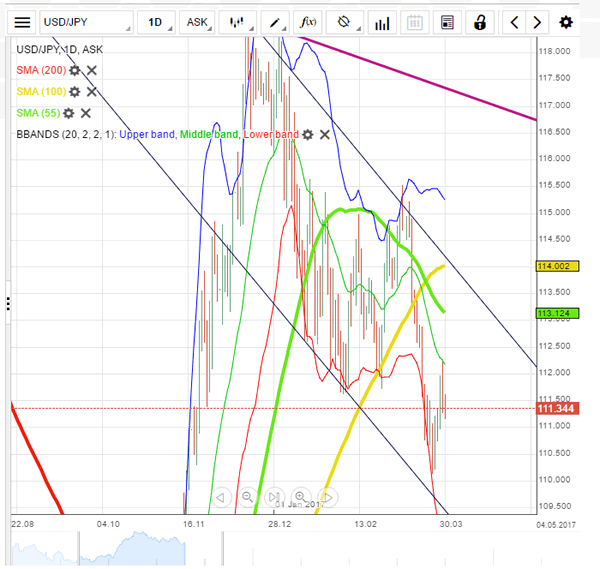
    After printing back-to-back weekly buying tails, little follow-through emerged last week with price action penciling in a near-full-bodied weekly bearish candle and touching a fresh low of 112.05. The other key thing to note here is the fact that price is now seen trading within shouting distance of a weekly support area marked at 111.44-110.10, which, in our opinion, has the potential to at least stall prices this week.

    Since Tuesday, the daily candles have been bouncing off the top edge of a daily demand area drawn from 111.35-112.37, which happens to be positioned around the upper limit of the aforementioned weekly support area. A breakdown into this daily zone would not only see weekly price tag the weekly support area, but it could also pull prices beyond the current daily demand down to a nearby daily broken Quasimodo line at 110.58.

    The after-effects of Friday's US employment report saw a rapid spike to highs of 113.47, before withdrawing lower back down to the upper wall of a H4 demand coming in at 112.05-112.37. As of current price, the pair is somewhat sandwiched in between this H4 demand base and February's opening level at 112.77.

    Our suggestions: A buy trade could be possible around the current H4 demand area, seeing as how it is reinforced by the daily demand zone mentioned above at 111.35-112.37. Still, traders need to be prepared for a violation of this H4 barrier down to around the H4 mid-way point at 111.50, since this is where the top edge of the current weekly support area is located!

    In view of how deep price has already driven into the H4 demand, we will not be looking to buy from here today.

    Data points to consider: There are no scheduled high-impacting news events on the docket today relating to these two markets.

    Levels to watch/live orders:

    • Buys: Flat (stop loss: N/A).
    • Sells: Flat (stop loss: N/A).

    USD/CAD:  

    Weekly gain/loss: – 129 pips

    Weekly closing price: 1.3019

    Weekly demand at 1.3006-1.3115 looks as if it's hanging on by just a thread at the moment! With that in mind, beneath this base sits a weekly trendline support extended from the high 1.1278 that could, given the force of last week's bearish descent, come into play this week.

    Zooming in and looking at the daily picture, the pair established support around the 1.3006 region last week which converges with a daily trendline support extended from the low 1.2654. Of particular interest here is the series of higher lows that formed from Wednesday onwards. While this does somewhat reflect a bullish tone here, we also have to take into account that Friday's session chalked up an indecision candle with a slight bearish edge to it and, in addition to this, price is potentially in the process of forming the D-leg to a daily AB=CD symmetrical bull pattern that terminates at an area below the current daily support: a daily demand base coming in at 1.2822-1.2883 (see black arrows).

    Having posted a daily high of 1.3074 moments after Friday's US employment release, we can see that the H4 candles failed to sustain gains beyond the H4 mid-way resistance point at 1.3050. As a result, the key figure 1.30 was brought into play shortly after, which, as is evident from the H4 chart, remained firm into the week's closing bell.

    Our suggestions: To our way of seeing things, this is quite a difficult market to trade at the moment. On the one hand we have what appears to be a fading weekly demand area, and on the other hand, there are signs of bullish life around the current daily support level! Although 1.30 has effectively held ground, upside from this angle is relatively limited. February's opening level at 1.3039 sits just above, alongside the H4 mid-way resistance 1.3050. Given these factors, our team will lay low going into Monday's session and look to reassess on Tuesday.

    Data points to consider: There are no scheduled high-impacting news events on the docket today relating to these two markets.

    Levels to watch/live orders:

    • Buys: Flat (stop loss: N/A).
    • Sells: Flat (stop loss: N/A).

    USD/CHF:  

    Weekly gain/loss: – 76 pips

    Weekly closing price: 0.9913

    Last week's descent marks the pair's sixth consecutive losing week, with the unit managing to touch a low of 0.9861. The pair munched through weekly support at 0.9943 (now acting resistance), and concluded the trading week rebounding from a weekly trendline support taken from the low 0.9443. Any sustained move below this line would likely place the weekly Quasimodo support at 0.9639 in the firing range.

    On the other side of the ledger, however, daily flow retested the underside of the aforementioned weekly resistance on Friday and printed a nice-looking daily selling wick. With very little daily support seen to the downside until 0.9841, this will likely encourage further selling in this market today/early this week.

    Sparked by Friday's US employment numbers, H4 action blasted to a high of 0.9988, missing parity (our pre-determined H4 sell zone) by only a few pips! The advance, nevertheless, as you can see, was a short-lived one. The pair tumbled to lows of 0.9906, ending the day closing just ahead of the 0.99 handle and nearby February opening level at 0.9890.

    Our suggestions: While selling the daily bearish candle is tempting, it's not something we'd advise. Not only do you have potential weekly buyers in play right now (see above), but you also have to contend with the possibility that 0.99/0.9899 on the H4 chart could put the brakes on any today! What's more, even with a break below this H4 barrier, H4 demand at 0.9832-0.9865 is seen just below, which happens to merge with the daily support level discussed above at 0.9841! As a result of this, opting to stand on the sidelines may very well be the better path to take today.

    Data points to consider: There are no scheduled high-impacting news events on the docket today relating to these two markets.

    Levels to watch/live orders:

    • Buys: Flat (stop loss: N/A).
    • Sells: Flat (stop loss: N/A).

    DOW 30:  

    Weekly gain/loss: – 19 points

    Weekly closing price: 20056

    During the course of last week's session, although the DOW closed marginally in the red we did see the unit chalk in a nice-looking weekly bullish tail that missed clipping the 2017 yearly opening level at 19769 by only a few points. In view of this, there are absolutely no weekly resistance levels in this market right now. Therefore, the best we can do for the time being is continue looking to ‘buy the dips'.

    However, before our team looks to buy medium term, we will need to see daily price engulf the nearby daily supply coming in at 20138-20075. As we write, the candle action is currently responding to the lower edge of this base and could send the market back down to retest daily support at 19964.

    Stepping across to the H4 candles, we can see that US stocks rallied following Friday's US employment report, forcing the market to stab above H4 supply at 20059-20043 going into the close. Right now, the H4 bears remain steady within this zone, but have yet to make any noteworthy push to the downside. The next level of interest seen from this area comes in at 20000, followed closely by the H4 support at 19989.

    Our suggestions: Regardless of the weekly chart (see above), both the daily and H4 charts indicate that selling could be the key theme today. In order for us to become sellers here, however, a lower-timeframe sell signal (see the top of this report) would need to take shape within the walls of the current H4 zone.

    Data points to consider: There are no scheduled high-impacting news events on the docket today that will likely affect the US equity market.

    Levels to watch/live orders:

    • Buys: Flat (stop loss: N/A).
    • Sells: 20059-20043 ([waiting for a lower-timeframe signal to form is advised prior to pulling the trigger] stop loss: dependent on where one confirms this area).

    GOLD

    Weekly gain/loss: +$28.9

    Weekly closing price: 1219.8

    From the weekly chart this morning, it's clear to see that the latest action overcame the weekly trendline resistance taken from the low 1130.1, and now could possibly be heading toward the weekly resistance pegged at 1241.2. Ultimately though, in order for this to be achieved, the daily supply zone drawn in at 1232.9-1224.5 would need to be consumed. However, with that daily zone out of the picture, this does not leave a lot of wiggle room before price touches base with the above noted weekly resistance.

    Looking over to the H4 candles, Friday's movement spiked below February's opening level at 1211.5 following the release of the US employment figures, but, as you can see, managed to recover relatively quickly and advance to a high of 1221.2 by the closing bell. Of note here is the H4 AB=CD bearish pattern (see black arrows) that looks as if it will complete its D-leg today around the top edge of a H4 supply area at 1232.9-1228.3 (positioned within the upper limits of the aforementioned daily supply). However, what is also interesting is the fact that the H4 AB=CD 161.8% ext. connects beautifully with the weekly resistance mentioned above at 1241.2.

    Our suggestions: The area to watch at the moment can be seen between the H4 127.2%/161.8% extensions (yellow zone – 1241.7/1232.9). Be that as it may, we would not be comfortable entering short from here UNTIL a reasonably sized H4 bear candle takes form.

    Levels to watch/live orders:

    • Buys: Flat (stop loss: N/A).
    • Sells: 1241.7/1232.9 ([wait for a H4 bear candle to form before looking to execute a trade] stop loss: ideally beyond the trigger candle)

    Market Morning Briefing

    STOCKS

    Dow (20071.46, +0.94%) rose sharply on Friday, possibly on news of Trump's order to roll back the Dodd-Frank Act that was signed by Barack Obama back in 2010. While the markets could take it positively, there could be some more rise in the next few sessions.

    Dax (11651.49, +0.20%) is testing support near 11600 and while that holds, the index could try to move up towards 11820-11920 levels again in the near term. But for an immediate rise we need confirmation above 11700 just now.

    Nikkei (18974.07, +0.30%) is almost stable near current levels and could possibly consolidate within the 18651-19258 region for some more sessions. Immediate direction is unclear just now.

    Shanghai (3155.81, +0.50%) may test levels near 3125-3100 before again bouncing back to higher levels.

    Nifty (8740.95, +0.08%) is trading just at resistance levels and if that holds, we could possibly see a small correction in the near term towards 8600 or lower. Only a break above 8760 can we vouch for medium term rally to continue targeting levels near 8800 and higher.

    COMMODITIES

    The Trump-induced political risk has kept the global investors interested in Gold (1223.81) along with a weak Dollar Index (99.72). It can test the near term resistance zone of 1230-40 but a turnaround in Dollar (check Forex section) may weaken Gold from the higher levels.

    Silver (17.60) has managed to hold above our support of 17.50-30 and that may push it to 18.00 or even 18.40 in the near term but any weakness in Gold may affect this precious metal too.

    For the last 6 weeks, both Brent (56.88) and WTI (53.89) are stuck in very narrow ranges of 53-58 and 50-55 respectively. This week, a resolution to the upside may materialize and Brent may test 60 while WTI may rise to 58.

    Copper (2.636) is finding interim support at 2.61 but a break below 2.60 may drag it down to 2.55-50. The technical structure is damaged from a larger perspective and the resistance of 2.75 may not be tested soon.

    FOREX

    A weak wage growth in the US has keep the Dollar weak but the chances of a sharp bounce by the end of the week can't be ruled out.

    Dollar Index (99.72) has been trading flat for the last 4 sessions with the downside momentum slowing down considerably but it still needs an initial break above 100.25 to take it higher to the major resistance of 101.00. While the chance of a retest of the long term support at 99.00 can't be ruled out yet, the bulls may try for a rally in the next few sessions.

    Euro (1.0780) is stalling near the resistance zone of 1.0800-50 and a failure to rise towards 1.0900 soon may encourage the sellers to take it to the major support of 1.0680 in the near term.

    Dollar-Yen (112.45) hasn't managed to break out of the 5-day range of 112-114 yet. Repeat - the next directional move depends on the breakout direction from this range. Bidirectional possibilities exist at this point despite the downtrend. Wait and watch.

    Pound (1.2485) remains weak and a break below 1.2400 may drag it deeper down to 1.2250 levels in the coming days. The chances of a rise beyond 1.2700 look weak at this point.

    The pause for Aussie (0.7664) continues after its sharp rally to 0.77 but the chances of the currency rising to the target/resistance of 0.7750 in the next 2-3 sessions remain strong.

    Dollar-Rupee (67.37) had closed near the low of the day, implying extended weakness and may decline to 67.00-66.90 in the early part of the week, where we would prefer to buy some. Immediate resistance comes at 67.50 and 67.70.

    INTEREST RATES

    The US 30Yr (3.08%) yield has risen and is almost ready to test the 3.10% resistance which if holds could push back the yields towards 3%. But in case the 3.10% level breaks on the upside, we could expect a test of major long term resistance near 3.25% in the near term. The 10YR (1.90%) and the 5YR (2.46%) yields on the other hand, have fallen slightly.

    The German-US 2Yr (-1.95%) also faced resistance near -1.94% and while that holds, a slight dip towards -1.98% to 2.00%
    Is possible; this could also pull down Euro a bit.

    The UK-US 10Yr yield (-1%) has fallen sharply from resistance near -0.92% and could head towards -1.05 to -1.10% in the near term. This could indicate some bearishness for the Pound (1.2488)

    The UK yields are testing immediate resistance levels and could come off in the medium term. The 5Yr (0.51%), 10Yr (1.46%) and the 20YR (1.92%) may head towards 0.48%, 1.36% and 1.80% respectively.

    Foreign Exchange Market Commentary

    EUR/USD

    The EUR/USD pair extended the rally coming from early January in these last few days, reaching a new yearly high of 1.0828, settling finally at 1.0777, above a bearish 100 DMA for the first time since October 2016. Dollar's weakness was fueled by a neutral FOMC's stance in its latest meeting, and a mixed employment report coming from the US. The January NFP report showed that job's creation remains strong, as the country added 227,000 new jobs, but wage growth slowed to 2.5% yearly basis from previous 2.9%, while on a month-to-month comparison wages advanced 0.1% against 0.2% expected or the 0.4% previous. The unemployment rate ticked higher, from 4.7% to 4.8% as the participation rate increased to 62.9%, a four-month high.

    Eurozone data released at the beginning of the day was also mixed, as retail sales declined by 0.3% in December, but the final Markit services and composite PMIs for the region, signaled continued economic expansion at the beginning of the year, with the EU composite PMI printing 54.4, matching December reading and the highest since May 2011. For this upcoming week the macroeconomic calendar will be light, which means that attention will remain on politics.

    From a technical point of view, the pair is poised to extend its advance according to technical readings in the daily chart, as indicators have recovered from a downward correction within positive territory, maintaining their bullish slopes. In the same chart, the 20 DMA presents a bullish slope, hovering near the 1.0710 Fibonacci support, the 38.2% retracement of the November/January decline, while the 100 DMA maintains a bearish slope, a few pips above the region. In the 4 hours chart, the price is stuck around a bullish 20 SMA, but the 100 SMA stands also in the 1.0700/10 region, while technical indicators turned higher in neutral territory. The 50% retracement of the mentioned slide stands around 1.0820, while the 1.0800/40 region has proved strong all through 2015 and 2016, being the resistance area to beat to confirm a steeper advance this week.

    Support levels: 1.0750 1.0710 1.0650

    Resistance levels: 1.0800 1.0840 1.0885

    USD/JPY

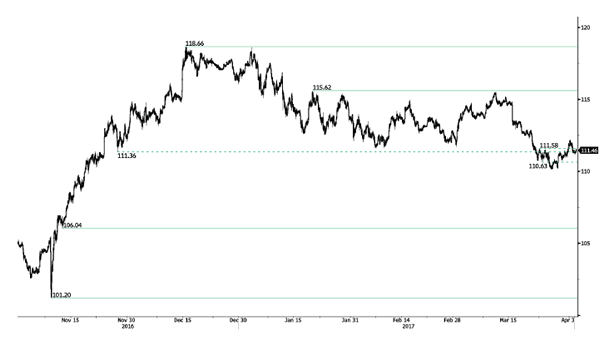
    The USD/JPY pair flirted with the 112.00 level twice during this past week and settled at 112.54, its lowest since late November 2016. Broad dollar's weakness weighed on the pair following the release of a mixed US job's report, which showed soft wages' growth. On Friday, US stocks closed higher, while US Treasury yields recovered to close the week with gains, something that usually weighs on the Japanese currency, but didn't work this time, as speculative interest is starting to perceive the latest BOJ's monetary policy, focused on controlling the yield curve, as ineffective. Next February 10th, PM Abe will meet with Donald Trump, with both leaders aiming to deepening the bilateral trade and investment relationship, according to the White House. The pair is biased lower for these upcoming days, although the mentioned 112.00 level is a major support, as it stands for the 38.2% retracement of the 101.18/118.66 rally. In the daily chart, the Momentum indicator was rejected from its 100 level, and heads sharply lower within negative territory, whilst the RSI presents a bearish slope, now around 40, in line with further slides. In the same chart, the 100 SMA heads higher around 111.25, the probable bearish target should the mentioned Fibonacci support give up. Shorter term and according to the 4 hours chart, the risk is clearly towards the downside, with the price developing below a bearish 100 SMA and technical indicators heading south within negative territory.

    Support levels: 112.00 111.60 111.25

    Resistance levels: 113.00 113.45 113.90

    GBP/USD

    The GBP/USD pair closed the week at 1.2475, with the Pound taking a double hit during the past days, as the BOE showed little rush to raise rates, despite rising inflation, and softer data at the beginning of the year. The UK January Markit services PMI released this Friday fell to 54.5 against December's 56.2 reading, in line with the soft manufacturing and construction figures released earlier this week. Also, weighing on Pound is the upcoming Brexit, as the UK government has formally set out its plans for exiting the EU with a 70-page white paper. The withdrawal bill will return to the House of Commons this week, and the vote is expected to be passed this Wednesday, clearing the path for PM May to trigger Article 50 on March as planned. From a technical point of view, the daily chart shows that the price held above the 38.2% retracement of the 1.1986/1.2705 rally at 1.2430, while a bullish 20 SMA reinforces the static support, heading higher a few pips below it. Technical indicators in the mentioned chart, however, hover within neutral territory, with the RSI heading lower around 51, indicating limited buying interest. In the 4 hours chart, the technical picture favors the downside, with indicators heading south near oversold readings, and the price well below the 20 SMA, this last around 1.2580.

    Support levels: 1.2430 1.2390 1.2350

    Resistance levels: 1.2495 1.2540 1.2585

    GOLD

    Spot gold recovered the ground lost in the previous week and closed last Friday at$1,219.00, its highest settlement since past November, backed by a neutral FED that gave no clues on upcoming rate hikes. Adding to gold's positive momentum is increasing global economic uncertainty and the continued unwind of the so-called "Trump-trade," as the new US administration failed to provide policies leading to a stronger economic expansion in the world's largest economy. On the contrary, the protectionist policies announced so far, indicate trade trouble ahead. Gold's daily chart shows that the Momentum indicator heads modestly higher above its 100 level, but that the RSI indicator accelerated its advance, standing now around 64, whilst the price settled above the 20 and 100 DMAs, both around 1,204/10, all of which supports additional gains. Around 1,230.00, the pair has the 50% retracement of the November/December slide, and an extension beyond it will probably indicating a steeper advance for this upcoming week. In the 4 hours chart, technical indicators are heading higher well above their mid-lines, whilst the 100 SMA converges with the 38.2% retracement of the mentioned decline at 1,204.50, providing a strong support in the case of downward move.

    Support levels: 1,211.56 1,204.50 1,196.10

    Resistance levels: 1,225.23 1,231.10 1,241.35

    WTI CRUDE

    Crude oil prices advanced within range this past week, with West Texas Intermediate crude futures settling at $53.84 a barrel. The commodity remains trapped between positive news of output cuts within the OPEC, and negative ones that show that US production keeps increasing. Gains at the end of the week, however, were triggered by news that the US will impose sanctions to Iran after the country performed a ballistic missile test launch. WTI closed the day pretty much unchanged on Friday, holding near the upper end of its latest range with a neutral-to-bullish bias in the daily chart, given that the price stands above all of its moving averages that anyway lack directional strength, whilst technical indicators hover within positive territory, also without clear momentum. In the shorter term, the 4 hours chart the 20 SMA heads modestly higher, moving away from the 100 and 200 SMAs, while the price is above all of them, but technical indicators have turned lower within positive territory, indicating limited buying interest at current levels.

    Support levels: 53.20 52.65 52.00

    Resistance levels: 54.30 55.10 55.70

    DJIA

    Wall Street surged on Friday, with the Dow Jones Industrial Average settling at 20,071.46, up by 186 points or 0.94%, boosted by news that President Trump began working to curb financial regulations, by undoing parts of the Dodd-Frank reforms of the banking industry. The Dow settled lower for the week anyway, by 0.11%. The Nasdaq Composite added 30 points and closed at 5,666.77, whilst the S&P finished at 2,297,42, up 0.73%, both modestly up weekly basis. Financial stocks led the way higher, and within the DJIA, Visa was the best performer, up by 4.59%, followed by Goldman Sachs, up by 4.57% and JP Morgan which added3.06%. Nike was the worst performer, down 0.83%. Technically, the daily chart for the Dow shows that the index is not far from the record highs set last January, well above a flat 20 DMA, but far above a bullish 100 DMA, whilst technical indicators have bounced from their mid-lines, maintaining strong upward slopes ahead of Monday's opening. In the 4 hours chart, the moving averages converge at 19,900, the Momentum indicator maintains its bullish slope, while the RSI consolidates at 65, all of which maintains the risk towards the upside, favoring a new leg higher on a break above 20,080, Friday's high.

    Support levels: 20,031 19,975 19,923

    Resistance levels: 20,080 20,141 20,200

    FTSE 100

    The Footsie advanced on Friday, up 47 points or 0.67% to close at 7,188.30, helped by a recovery in financial-related equities. Barclay's was the best performer, advancing by 3.39%, followed by Prudential that added 2.09%. Royal Bank of Scotland closed 2.70% higher. Gains were offset by mining-oriented equities, as metal prices fell, with Glencore topping losers' list, down 4.77%, followed by Rio Tinto that shed 3.54% and Anglo American that closed 3.30% lower. The recovery was not enough to confirm further gains ahead, as in the daily chart, the 20 SMA caps the upside at 7,128, whilst technical indicators have turned modestly higher, with the Momentum still below the 100 line, but the RSI at 56, somehow anticipating an upward extension, to be confirmed by an upward acceleration through the mentioned resistance. In the 4 hours chart, the RSI indicator turned flat at 60, the Momentum heads higher within positive territory, whilst the index is trapped within horizontal moving averages, in line with the longer term perspective.

    Support levels: 7,128 7,091 7,042

    Resistance levels: 7,212 7,258 7,312

    DAX

    The German DAX edged modestly higher on Friday, adding 23 points or 0.20% to settle at 11,651.49, bud down for the week. Stocks across Europe opened with a soft tone and traded in the red for most of the session, weighed by Chinese monetary policy's measures, but recovered alongside with Wall Street following the release of the NFP report. Continental was the best performer, up by 3.81%, followed by Deutsche Bank that added 2.68%. Heidelberg Cement topped losers' list, down 1.21%. The daily chat shows that the index has been confined to a tight range during the second half of this past week, turning technically neutral, as the index is stuck around a horizontal 20 SMA, whilst indicators are flat around their mid-lines, lacking directional strength. In the 4 hours chart, the index is between its 100 and 200 SMAs, both within a 50 points, range, the RSI indicator is horizontal around 48, while the Momentum aims modestly higher around its 100 level, also lacking technical clues on what's next for the index.

    Support levels: 11,609 11,550 11,000

    Resistance levels: 11,711 11,770 11,804

    EURUSD – Risk Remains Higher On More Strength

    EURUSD - With the pair closing higher the past week, further bullishness is envisaged in the new week. On the upside, resistance comes in at 1.0850 level with a cut through here opening the door for more upside towards the 1.0900 level. Further up, resistance lies at the 1.0950 level where a break will expose the 1.1000 level. Conversely, support lies at the 1.0700 level where a violation will aim at the 1.0650 level. A break of here will aim at the 1.0600 level. Its weekly RSI is bullish and pointing higher suggesting further strength. All in all, EURUSD faces further upside pressure short term.

    GOLD – Threatens Further Bullish Offensive

    GOLD - The commodity continues to hold on to its upside pressure as it looks to follow through higher in the new week. On the downside, support comes in at the 1,210.00 level where a break will turn attention to the 1,200.00 level. Further down, a cut through here will open the door for a move lower towards the 1,190.00 level. Below here if seen could trigger further downside pressure targeting the 1,180.00 level. Conversely, resistance resides at the 1,230.00 level where a break will aim at the 1,240.00 level. A turn above there will expose the 1,250.00 level. Further out, resistance stands at the 1,260.00 level. All in all, GOLD looks to strengthen further.

    The Pressure Cooker

    NFP

    As usual on NFP Friday, it was all about jobs data. While the headlines surged, inflation hawks ruled the skies after a tepid 0.1% month over month average hourly earnings. The USD sold across the board; equity markets reacted well to the better headlines and weaker wage growth, and the S&P500 closed up 0.7%. The Stoxx 600 gained 0.6%. Treasuries bounced higher, 10-year yields fell about 6bps, but those gains were substantially pared at the NY close

    The Australian Dollar

    The Australian Dollar was all but greenlit, higher on the back of last week's enormous trade number, but the AUD is still searching for the express elevator, as momentum struggles near critical resistance levels.

    After touching just above 77 early APAC , in Friday's London session trading, the Aussie was on its back foot after a surprise PBOC short-term lending facility (SLF) interest rate hike kicked in, which caused both Iron Ore and Copper to collapse (more on that below).The AUD then rebounded after a softer US average hourly earnings (AHE) release, which sent the USD tumbling across the board and dealers scrambling for top side exposure in the AUD. The weak wages all but all 'binned” the US March rate hike expectations and the Aussie carry appeal roared back to life.

    However, dealers will be on guard for any new fallout from last week's PBOC rate hike and eyes will be focused on commodity markets. Overall, high yielders will benefit from USD retracement and the unwinding of 'President Trump trades”.

    Last week's sour CPI had all but been forgotten, as, despite the weaker print, the RBA will look past one-off more fragile inflation prints to maintain their neutral stance, as commodity prices are on fire.

    Although the carry trade won the day post NFP, we should expect the tug of war between commodity prices and interest rate to remain the key drivers for the Aussie

    This morning Australia December adjusted retail sales come at -0.1% (expected +0.3%) . Also, Q4 Retail Sales excluding Inflation, 0.9% QoQ expected 0.9% QoQ.

    AUDUSD is slightly lower on the data and slips to 0.7660 level.

    Japanese Yen

    The dollar-yen pressure cooker is running at full wattage, after weak wage growth; a data point that significantly influences the FOMC when deciding the course of the Fed Funds Rate.

    Traders quickly sold USD, with bears showing moxie, looking poised to hammer the dollar mercilessly at the slightest opportunity. Dollar bulls, on the other hand, gave ground in the absence of fiscal policy measures. What initially started as a dollar correction in early 2017, is very much on the cusp of accelerating into a full-blown rout.

    March rate hike hopes were dealt a severe blow on Friday. While ¥112.50 offers some initial support, expect the markets to probe lower in the absence of anything new on the US economic policy front. The dollar cart all but toppled after last week's Trump verbal intervention, dovish FOMC, and tepid wage growth. The dollar downside has been exposed, but dealers remain on edge as they are very leery dealing in politically charged markets while fear of the mighty dollar whipsaw remains intact.

    The surprise BOJ, JGB operation on Friday may lend a supportive base around ¥112.00. The fallout extension from the weaker US wage growth, coupled with re-acceleration of aversion for US trade/immigration policies will continue pressure the pair, yet if this current BOJ operation successfully stabilises the market, traders will shift to rate differential correlations. In that scenario, the USDJPY should move higher, but in the meantime, every currency trader every currency trader on the planet is watching the critical ¥112 level.

    While our 'go-to” correlations are wobbly, the recent choppy price action and the lack of any significant USD upward momentum clearly suggests that dollar bulls are jaded by the US administration's focus on trade and immigration policies, rather than fiscal stimulus and tax reform.

    Weighing on Investors sentiment is increasing chatter about a possible shift in US FX policy. However, such a change would require a Plaza Accord Revival. Given what we have seen from the early days of Donald Trump's presidency, my guess is that if he is driven enough to take action on the currency front, we could see investors price in a greater possibility of a Plaza II.

    President Trump's lack of diplomatic filter will keep Forex traders on a razor's edge and on headline alert, especially given the lack of US economic data on the diary this week. Recently, the USD has traded from a weak position as there are few US economic releases, which tend to underpin the Greenback.

    Emerging Markets APAC

    The USD dollar continues to trade defensively regionally. USDASIA has retraced more than 50 % of its election losses primarily supported by a return of portfolio inflows this year, and in general, the EM space has looked backed in early February. Indeed late 2016 doom and gloom outlook has brightened considerably as a broader USD trades on a softer tone. The $ 7 billion that flowed into the region in January is a very encouraging sign.

    Lacking any active US fiscal policy agenda and tepid US wages, we should expect regional EM FX to remain well-supported this week

    Chinese Yuan

    The broader USD weakness has taken pressure off the PBOC on the Yuan front, but the mainland continues to be very much in focus. The PBOC raised their short-term lending facility (SLF) in an attempt to deleverage and derail a runaway asset freight train created by the unbridled use of credit.

    However, PBOC watchers are now wondering if the central bank will use the SLF to manage currency policy?

    Without question, the SFL move was a tentative move, given benchmark adjustments are usually flagged in .25 lb increments. The modest rate hike indicates the PBOC are cognisant about tightening for financial stability causes but are tentative to tighten so as not to burst the bubble or shutter growth prospects. I view this as only the beginning of a continuous tightening phase, designed to deleverage and I believe that the SLF will be gradually introduced as a foreign exchange policy tool.

    Expect investors to scrutinise these developments carefully and to be on alert for additional policy responses from the PBOC.

    The prospect of a US March rate hike is evaporating, so expect the PBOC's free ride to continue on the exchange policy front. Now that pressure is off on the currency front, will there be any shift in the restrictive capital controls policy? I suspect not, as, despite the recent corrective actions in the USD, most investors see higher US interest rates and a stronger USD to emerge over the course of 2017.

    On the data front, China Caixin manufacturing PMI remains in the expansion zone, rising to 51.0 versus 51.8 expected, but is playing second fiddle to the PBOC's actions.

    Without question, the SFL move was a tentative one given benchmark adjustments are usually flagged in .25 lb increments, but the modest rate hike indicates the PBoC are cognisant about tightening for financial stability causes but are tentative to tighten so as not to burst the bubble or shutter growth prospects. I view this is only the beginning of a gradual tightening phase, designed to deleverage and SLF will be gradually introduced as foreign exchange policy tool

    Malaysian Ringgit

    Foreign investors remain nervous about reengaging in the MYR markets after regulatory changes were submitted by BNM the last year. An overriding concern is one of liquidity, as without a robust currency hedging framework investors are shying away from Ringgit exposure, favouring other not so heavily regulated regional currencies. Conviction remains small, while confusion is high in the Ringgit space. Until a robust onshore market develops, investor sentiment will continue to be low.

    Near term, given the dovish overtones from last week's FOMC, tepid US Average Hourly Earnings and supportive energy prices, I expect the Ringgit to trade with a positive bias this week, but to play a secondary role to its ASEAN peers.

    Commodity Markets

    Metals Overview

    GoldThe Gold market looks primed to extend its current upward momentum. Uncertainty about the Trump Presidency and concerns for US-China trade policy, its impact on factories and jobs in China, as well as a weakening USD are collectively providing near-term support for, and making Gold an attractive, safe haven for currency investors.

    Copper

    Record speculative long positions are vulnerable, and this week, markets remain very susceptible to even deeper corrections than what we saw on Friday. Perhaps more so, as supply-side disruptions are easing, as workers have restarted wage talks at the largest copper mines in Chile and China. Given that much of the Copper, speculation is from China; the PBOC rate hike should deal a significant blow to those positions. Even more so if the market thinks that the PBOC will continue to squeeze speculators over the near term

    Iron ore

    Similarly, Iron ore prices tumbled over 5% after the PBOC rate hike. There was a ripple of concern that the PBOC may tighten financial conditions, as the debt-fuelled stimulus sent alarm bells concerning potential bursting of asset bubbles, given the unbridled use of leverage set up by the PBOC.

    Energy Sector Overview

    Brent Oil

    Brent oil is trading gingerly as increasing tensions between the US and Iran simmer. Overall, however, arduously shallow trading ranges persist, as the markets see-saw between initial OPEC data, which indicate that recent production cuts are sticking, offset by the news that US gasoline supplies continue to stockpile.

    WTI

    WTI closed the week with a whimper on small volumes, primarily driven by weekend position squaring. The geopolitical risk with Iran dominating headlines remains high as traders were less inclined to carry risk into the weekend. Overall top side WTI remains capped by the potential for US shale rigs to come back online.

    On the bullish side for Oil, the greenback continues to wobble after the recent Trump verbal intervention, a less dovish Fed and a tepid print on average hourly earnings left the dollar bears in control.

    Natural Gas

    Prices fell sharply this week as the warm weather impact influenced sentiment. Keep in mind that 50% of US households use natural gas, however positions run in oversold territory, thus are susceptible to changing weather patterns and larger than expected drawdowns on the inventory report.

    Diversify Your Commodities Trading: XAU/AUD Daily Level

    Speaking of diversification, we have taken a slightly different look at Gold today, with the level in focus being on the XAU/AUD daily chart.

    XAU/AUD Daily:

    As you can see, price has come back to test a daily horizontal level that has previously been an area of interest. As always, it's not just that the level held in the past that makes it significant, but the way in which the level holds. That is, did price simply hover around the level for a long period of time, or was there a V shaped bounce straight off it?

    Look at the wick and hard bounces on the two previously marked rejections off the level. It is definitely a level of significance!

    While the most recent swings saw price chop through it, the fact that Friday's daily low was the exact level shows it's still significant in using it as a higher time frame level to manage risk around heading forward.