Sample Category Title
Summary 9/9 – 9/13
Monday, Sep 9, 2024
| GMT | Ccy | Events | Consensus | Previous |
|---|---|---|---|---|
| 23:50 | JPY | Bank Lending Y/Y Aug | 3.20% | 3.20% |
| 23:50 | JPY | Current Account (JPY) Jul | 2.10T | 1.78T |
| 23:50 | JPY | GDP Annualized Q2 F | 3.20% | 3.10% |
| 23:50 | JPY | GDP Deflator Y/Y Q2 F | 3.00% | 3.00% |
| 01:30 | CNY | CPI Y/Y Aug | 0.70% | 0.50% |
| 01:30 | CNY | PPI Y/Y Aug | -1.40% | -0.80% |
| 05:00 | JPY | Eco Watchers Survey: Current Aug | 47.6 | 47.5 |
| 08:30 | EUR | Eurozone Sentix Investor Confidence Sep | -11.7 | -13.9 |
| 14:00 | USD | Wholesale Inventories Jul F | 0.30% | 0.30% |
| 22:45 | NZD | Manufacturing Sales Q2 | 0.70% | |
| 23:50 | JPY | Money Supply M2+CD Y/Y Aug | 1.50% | 1.40% |
| GMT | Ccy | Events | |
|---|---|---|---|
| 23:50 | JPY | Bank Lending Y/Y Aug | |
| Forecast: 3.20% | Previous: 3.20% | ||
| 23:50 | JPY | Current Account (JPY) Jul | |
| Forecast: 2.10T | Previous: 1.78T | ||
| 23:50 | JPY | GDP Annualized Q2 F | |
| Forecast: 3.20% | Previous: 3.10% | ||
| 23:50 | JPY | GDP Deflator Y/Y Q2 F | |
| Forecast: 3.00% | Previous: 3.00% | ||
| 01:30 | CNY | CPI Y/Y Aug | |
| Forecast: 0.70% | Previous: 0.50% | ||
| 01:30 | CNY | PPI Y/Y Aug | |
| Forecast: -1.40% | Previous: -0.80% | ||
| 05:00 | JPY | Eco Watchers Survey: Current Aug | |
| Forecast: 47.6 | Previous: 47.5 | ||
| 08:30 | EUR | Eurozone Sentix Investor Confidence Sep | |
| Forecast: -11.7 | Previous: -13.9 | ||
| 14:00 | USD | Wholesale Inventories Jul F | |
| Forecast: 0.30% | Previous: 0.30% | ||
| 22:45 | NZD | Manufacturing Sales Q2 | |
| Forecast: | Previous: 0.70% | ||
| 23:50 | JPY | Money Supply M2+CD Y/Y Aug | |
| Forecast: 1.50% | Previous: 1.40% | ||
Tuesday, Sep 10, 2024
| GMT | Ccy | Events | Consensus | Previous |
|---|---|---|---|---|
| 00:30 | AUD | Westpac Consumer Confidence Sep | 2.80% | |
| 01:30 | AUD | NAB Business Conditions Aug | 6 | |
| 01:30 | AUD | NAB Business Confidence Aug | 1 | |
| 03:00 | CNY | Trade Balance (USD) Aug | 82.1B | 84.7B |
| 06:00 | GBP | Claimant Count Change Aug | 135K | |
| 06:00 | GBP | ILO Unemployment Rate (3M) Jul | 4.10% | 4.20% |
| 06:00 | GBP | Average Earnings Including Bonus 3M/Y Jul | 4.50% | |
| 06:00 | GBP | Average Earnings Excluding Bonus 3M/Y Jul | 5.40% | |
| 06:00 | EUR | Germany CPI M/M Aug F | -0.10% | -0.10% |
| 06:00 | EUR | GermanyCPI Y/Y Aug F | 1.90% | 1.90% |
| 08:00 | EUR | Italy Industrial Output M/M Jul | -0.10% | 0.50% |
| 10:00 | USD | NFIB Business Optimism Index Aug | 93.6 | 93.7 |
| GMT | Ccy | Events | |
|---|---|---|---|
| 00:30 | AUD | Westpac Consumer Confidence Sep | |
| Forecast: | Previous: 2.80% | ||
| 01:30 | AUD | NAB Business Conditions Aug | |
| Forecast: | Previous: 6 | ||
| 01:30 | AUD | NAB Business Confidence Aug | |
| Forecast: | Previous: 1 | ||
| 03:00 | CNY | Trade Balance (USD) Aug | |
| Forecast: 82.1B | Previous: 84.7B | ||
| 06:00 | GBP | Claimant Count Change Aug | |
| Forecast: | Previous: 135K | ||
| 06:00 | GBP | ILO Unemployment Rate (3M) Jul | |
| Forecast: 4.10% | Previous: 4.20% | ||
| 06:00 | GBP | Average Earnings Including Bonus 3M/Y Jul | |
| Forecast: | Previous: 4.50% | ||
| 06:00 | GBP | Average Earnings Excluding Bonus 3M/Y Jul | |
| Forecast: | Previous: 5.40% | ||
| 06:00 | EUR | Germany CPI M/M Aug F | |
| Forecast: -0.10% | Previous: -0.10% | ||
| 06:00 | EUR | GermanyCPI Y/Y Aug F | |
| Forecast: 1.90% | Previous: 1.90% | ||
| 08:00 | EUR | Italy Industrial Output M/M Jul | |
| Forecast: -0.10% | Previous: 0.50% | ||
| 10:00 | USD | NFIB Business Optimism Index Aug | |
| Forecast: 93.6 | Previous: 93.7 | ||
Wednesday, Sep 11, 2024
| GMT | Ccy | Events | Consensus | Previous |
|---|---|---|---|---|
| 06:00 | GBP | GDP M/M Jul | 0.20% | 0.00% |
| 06:00 | GBP | Manufacturing Production M/M Jul | 0.20% | 1.10% |
| 06:00 | GBP | Manufacturing Production Y/Y Jul | -1.50% | |
| 06:00 | GBP | Industrial Production M/M Jul | 0.30% | 0.80% |
| 06:00 | GBP | Industrial Production Y/Y Jul | -1.40% | |
| 06:00 | GBP | Goods Trade Balance (GBP) Jul | -18.0B | -18.9B |
| 12:30 | USD | CPI M/M Aug | 0.20% | 0.20% |
| 12:30 | USD | CPI Y/Y Aug | 2.60% | 2.90% |
| 12:30 | USD | CPI Core M/M Aug | 0.20% | 0.20% |
| 12:30 | USD | CPI Core Y/Y Aug | 3.20% | 3.20% |
| 14:30 | USD | Crude Oil Inventories | -6.9M | |
| 23:01 | GBP | RICS Housing Price Balance Aug | -14% | -19% |
| 23:50 | JPY | BSI Large Manufacturing Index Q/Q Q3 | -1 | |
| 23:50 | JPY | PPI Y/Y Aug | 2.80% | 3.00% |
| GMT | Ccy | Events | |
|---|---|---|---|
| 06:00 | GBP | GDP M/M Jul | |
| Forecast: 0.20% | Previous: 0.00% | ||
| 06:00 | GBP | Manufacturing Production M/M Jul | |
| Forecast: 0.20% | Previous: 1.10% | ||
| 06:00 | GBP | Manufacturing Production Y/Y Jul | |
| Forecast: | Previous: -1.50% | ||
| 06:00 | GBP | Industrial Production M/M Jul | |
| Forecast: 0.30% | Previous: 0.80% | ||
| 06:00 | GBP | Industrial Production Y/Y Jul | |
| Forecast: | Previous: -1.40% | ||
| 06:00 | GBP | Goods Trade Balance (GBP) Jul | |
| Forecast: -18.0B | Previous: -18.9B | ||
| 12:30 | USD | CPI M/M Aug | |
| Forecast: 0.20% | Previous: 0.20% | ||
| 12:30 | USD | CPI Y/Y Aug | |
| Forecast: 2.60% | Previous: 2.90% | ||
| 12:30 | USD | CPI Core M/M Aug | |
| Forecast: 0.20% | Previous: 0.20% | ||
| 12:30 | USD | CPI Core Y/Y Aug | |
| Forecast: 3.20% | Previous: 3.20% | ||
| 14:30 | USD | Crude Oil Inventories | |
| Forecast: | Previous: -6.9M | ||
| 23:01 | GBP | RICS Housing Price Balance Aug | |
| Forecast: -14% | Previous: -19% | ||
| 23:50 | JPY | BSI Large Manufacturing Index Q/Q Q3 | |
| Forecast: | Previous: -1 | ||
| 23:50 | JPY | PPI Y/Y Aug | |
| Forecast: 2.80% | Previous: 3.00% | ||
Thursday, Sep 12, 2024
| GMT | Ccy | Events | Consensus | Previous |
|---|---|---|---|---|
| 01:00 | AUD | Consumer Inflation Expectations Sep | 4.50% | |
| 12:15 | EUR | ECB Main Refinancing Rate | 4.00% | 4.25% |
| 12:15 | EUR | ECB Deposit Rate | 3.50% | 3.75% |
| 12:30 | CAD | Building Permits M/M Jul | -13.90% | |
| 12:30 | USD | PPI M/M Aug | 0.20% | 0.10% |
| 12:30 | USD | PPI Y/Y Aug | 2.20% | |
| 12:30 | USD | PPI Core M/M Aug | 0.20% | 0.00% |
| 12:30 | USD | PPI Core Y/Y Aug | 2.40% | |
| 12:30 | USD | Initial Jobless Claims (Sep 6) | 231K | 227K |
| 12:45 | EUR | ECB Press Conference | ||
| 14:30 | USD | Natural Gas Storage | 13B | |
| 22:30 | NZD | Business NZ PMI Aug | 44 |
| GMT | Ccy | Events | |
|---|---|---|---|
| 01:00 | AUD | Consumer Inflation Expectations Sep | |
| Forecast: | Previous: 4.50% | ||
| 12:15 | EUR | ECB Main Refinancing Rate | |
| Forecast: 4.00% | Previous: 4.25% | ||
| 12:15 | EUR | ECB Deposit Rate | |
| Forecast: 3.50% | Previous: 3.75% | ||
| 12:30 | CAD | Building Permits M/M Jul | |
| Forecast: | Previous: -13.90% | ||
| 12:30 | USD | PPI M/M Aug | |
| Forecast: 0.20% | Previous: 0.10% | ||
| 12:30 | USD | PPI Y/Y Aug | |
| Forecast: | Previous: 2.20% | ||
| 12:30 | USD | PPI Core M/M Aug | |
| Forecast: 0.20% | Previous: 0.00% | ||
| 12:30 | USD | PPI Core Y/Y Aug | |
| Forecast: | Previous: 2.40% | ||
| 12:30 | USD | Initial Jobless Claims (Sep 6) | |
| Forecast: 231K | Previous: 227K | ||
| 12:45 | EUR | ECB Press Conference | |
| Forecast: | Previous: | ||
| 14:30 | USD | Natural Gas Storage | |
| Forecast: | Previous: 13B | ||
| 22:30 | NZD | Business NZ PMI Aug | |
| Forecast: | Previous: 44 | ||
Friday, Sep 13, 2024
| GMT | Ccy | Events | Consensus | Previous |
|---|---|---|---|---|
| 04:30 | JPY | Industrial Production M/M Jul F | 2.80% | 2.80% |
| 09:00 | EUR | Eurozone Industrial Production M/M Jul | 0.20% | -0.10% |
| 12:30 | CAD | Capacity Utilization Q2 | 78.40% | 78.50% |
| 12:30 | CAD | Wholesale Sales M/M Jul | -1.10% | -0.60% |
| 12:30 | USD | Import Price Index M/M Aug | -0.20% | 0.10% |
| 14:00 | USD | Michigan Consumer Sentiment Index Sep P | 68 | 67.9 |
| GMT | Ccy | Events | |
|---|---|---|---|
| 04:30 | JPY | Industrial Production M/M Jul F | |
| Forecast: 2.80% | Previous: 2.80% | ||
| 09:00 | EUR | Eurozone Industrial Production M/M Jul | |
| Forecast: 0.20% | Previous: -0.10% | ||
| 12:30 | CAD | Capacity Utilization Q2 | |
| Forecast: 78.40% | Previous: 78.50% | ||
| 12:30 | CAD | Wholesale Sales M/M Jul | |
| Forecast: -1.10% | Previous: -0.60% | ||
| 12:30 | USD | Import Price Index M/M Aug | |
| Forecast: -0.20% | Previous: 0.10% | ||
| 14:00 | USD | Michigan Consumer Sentiment Index Sep P | |
| Forecast: 68 | Previous: 67.9 | ||
Markets Weekly Outlook – ECB Rates, China and US Presidential Debate in Focus
- US jobs data missed estimates, keeping recessionary fears very much in play.
- US Equities continue their September struggles as Oil falters as well.
- ECB expected to cut rates amidst slowing European economy, while UK jobs data and US CPI figures remain in focus.
Week in Review: Jobs Data Fails to Provide Clarity as Underlying Data Flashes Warning Signs
As the week draws to a close, US jobs data failed to provide clarity on whether the US Federal Reserve will deliver a 25 or 50 bps cut at the September 18 meeting. Although the number of jobs created missed estimates, there was enough in the report to keep markets on edge for a little while longer.
In August, the non-farm payrolls increased by 142,000, which was below the expected 165,000. Moreover, the previous two months saw a reduction of 86,000 in their initial estimates. This pattern of revising numbers downward is ongoing and doesn’t account for recent benchmark revisions that indicated the Bureau of Labor Statistics overestimated payroll growth by an average of 78,000 per month for the year leading up to March 2024. For instance, June’s job growth was first reported as 206,000, then adjusted to 179,000, and is now just 118,000. Similarly, July’s figures dropped from 114,000 to 89,000.
It looks as if the apparent weakness in the labor market may finally be showing itself. Given that, is it possible to rule out a 50 bps cut. My take is not especially with the improvement we witnessed in the unemployment rate which improved to 4.2% from last month’s surprise print of 4.3%.
Another point that may concern the Federal Reserve and cited by ING Think Research, is the growing divide between fulltime and part-time employment. According to ING this tallies with the idea that the US is adding largely lower-paid, part-time jobs and is losing full-time, well-paid jobs, primarily through attrition – not replacing retiring or quitting workers.

Source: ING Think (click to enlarge)
Every recession starts this way, unfortunately. The easiest way to cut costs is not to replace workers, but if everyone is doing that, then the economy slows, and companies start making actual cuts down the line.
As for performance this week, US Equities have continued their September blues as historic seasonality suggested. Leading Wall Street indexes were all red for the week with the Nasdaq down around 5.6%, the S&P down 4% and the DJIA down around 2.84%.
The downturn is reflected in US equity funds flows which experienced their largest weekly outflow in 12 weeks by September 4. This is in line with growing concern around the health of the global economy. According to LSEG data, investors disposed of a net $11.37 billion worth of US equity funds during the week. This was also the fourth weekly outflow in five weeks.
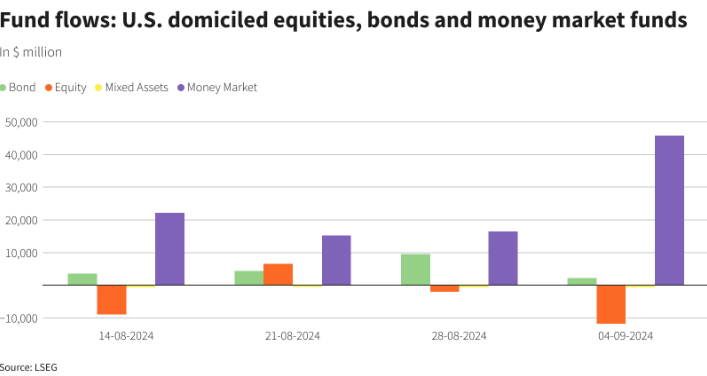
Source: LSEG Workspace (click to enlarge)
Oil prices suffered from concern around the economy as well. Word that OPEC + will defer production increases which were scheduled to start in October was not enough to rescue the selloff. This leaves oil in a precarious position heading into the new week as it looks set to end the week around 8% down.
Gold did not manage to break its all-time high despite recessionary concerns and part of this may be down to the amount of rate cuts already priced in by market participants. The US Dollar Index (DXY) saw a similar reaction and strengthened following the release of the jobs data to finish the week on a high.
The market’s reaction was similar to the swings in rate cut expectations. Initially, 65% of participants anticipated a 50 basis point cut right after the data was released. However, as the trading session progressed, expectations were adjusted significantly. The latest pricing now suggests a 75% likelihood of a 25 basis point cut.

Source: CME FedWatch Tool (click to enlarge)
The Week Ahead: ECB to Cut Rates, Trump-Harris Debate
The week ahead is not expected to be as chaotic as last week particularly from a data point of view. The US gets a reprieve on the data front as the US election comes into focus with the Presidential debate between Kamala Harris and Donald Trump. The debate itself should not have a huge impact on markets barring any significant surprises.
Asia Pacific Markets
In Asia, the upcoming week puts focus on Chinese data which has been a point of contention of late. Deteriorating data has been one of the signs that the global economy is slowing, particularly from a demand perspective.
China is about to release its trade, inflation, and credit data next week. We expect that trade growth in August continued to slow, with exports increasing by about 5% compared to last year and imports by about 3%. It’s important to keep an eye on car exports, which have been under pressure and are likely to slow down more. If car exports go from helping to hurting, it could weaken China’s overall export performance. Inflation is expected to rise slightly in August.
Europe + UK + US
In Europe and the US, it’s still a heavy data week but more so from the UK and Euro Area.
The European Central Bank (ECB) meeting being the biggest event with the ECB expected to deliver another 25 bps cut. Current inflation is nearing 2%, and longer-term forecasts are stable at about 2%, giving the ECB good reasons to ease up on strict monetary policies. Couple this with the struggles faced by the German economy and it would seem to be a no brainer.
The UK focus will be jobs data in the week ahead. Last month, there was a sudden and unusual drop in UK unemployment from 1.5 million to 1.2 million in just one month. Since the unemployment rate is calculated as a moving average, we might see it decrease further, possibly reaching 4.0% from a recent high of 4.4%. This could happen even if the number of unemployed people rises again in the most recent monthly figures. The data is however unlikely to have any long lasting impact on rate expectations as it relates to the Bank of England.
The highlights from the US with the exception of the Presidential debate will come in the form of US CPI and PPI data. The data which markets had been glued to over the last 24 months suddenly does not hold the same sway. Barring any crazy figure this should not sway rate cut expectations all that much with labor data now holding the key. Short-term volatility and fluctuations should still be expected however.
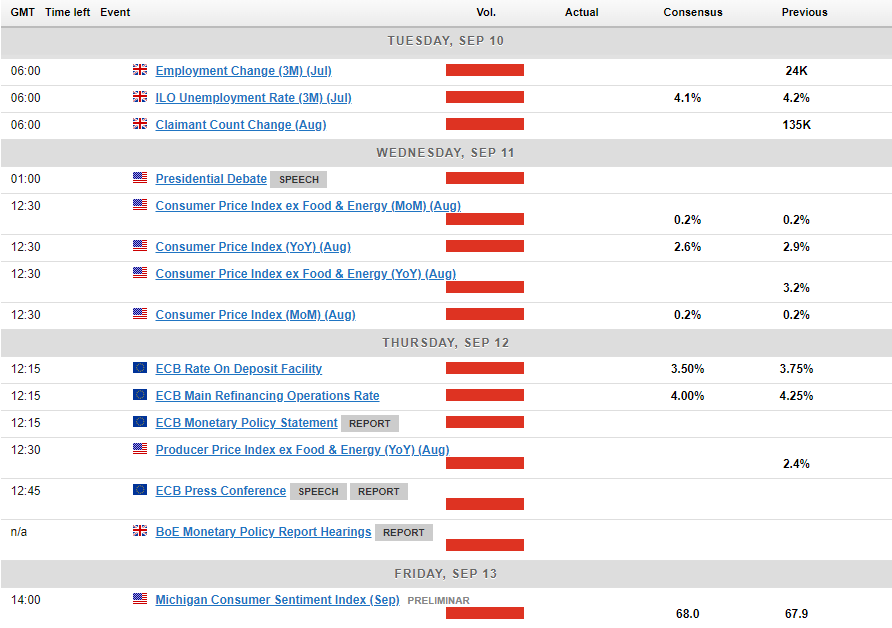
Chart of the Week
This week’s focus is on the US Dollar Index (DXY), which continues to be intriguing and surprising. The main question on my mind is how much of the expected rate cuts are already reflected in the Dollar’s value. After Friday’s data release, the Dollar initially dropped but then rose sharply, suggesting that a lot of the rate cut expectations might already be factored in.
The DXY continues to find support around the 100.50 handle and keeping a retest of the 100.00 psychological mark at bay, for now. The weekly and daily candle are however sending mixed signals. The weekly candle is set to close as a hanging man while the daily candle is on course for a hammer candlestick close hinting at a move higher on Monday. The only positive around the weekly candle is that a hanging man candle at support is not a high conviction print as it is best when it appears following a significant upside rally at a area of resistance.
There remains many hurdles on the upside with initial resistance at 101.80 and 102.16 before the 103.00 handle comes into focus.
A move back to the downside now needs to navigate support at 101.17 before the 100.50 level. The psychological 100.00 remains untested yet and remains a massive barrier if bulls are to seize control.
US Dollar Index (DXY) Daily Chart – August 30, 2024
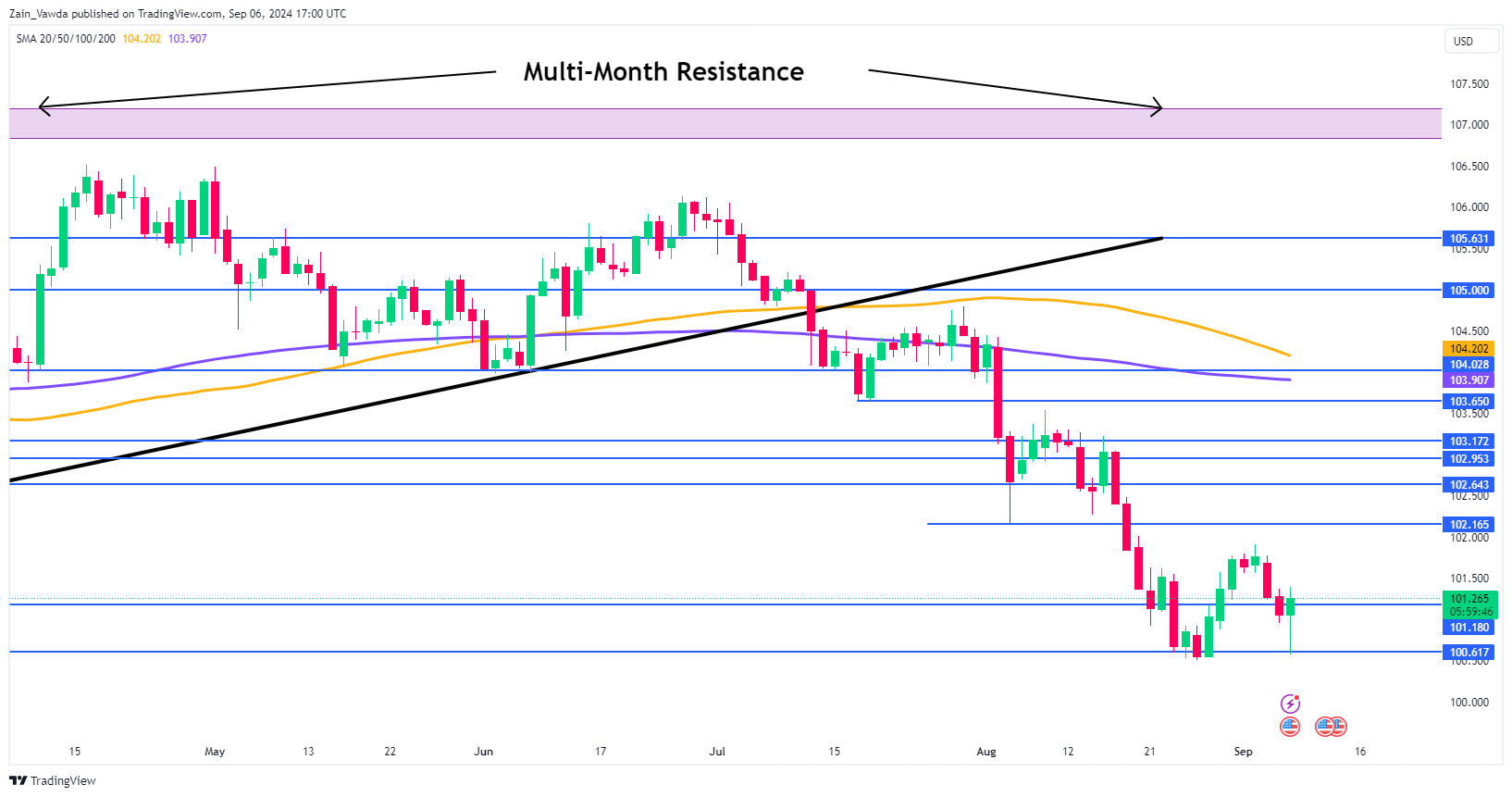
Source:TradingView.Com (click to enlarge)
Key Levels to Consider:
Support:
- 101.17
- 100.50
- 100.00
Resistance:
- 101.80
- 102.16
- 103.00
- 104.00 (200-day MA)
The Weekly Bottom Line: With Employment Slowing, The Time to Cut is Here
U.S. Highlights
- The U.S. added fewer jobs than expected in August, even as wage growth accelerated, and the unemployment rate edged down. Additionally, JOLTS data pointed to lower job openings, suggesting that the U.S. labor market continued to cool.
- Fed Governor Williams stated that the time had come for less restrictive monetary policy but remained mum on the possible size of any cut. Governor Waller, however, suggested he favored starting carefully.
- Manufacturing activity continued to contract in August, with demand easing. However, the services sector, continued to chug along as it has for much of this year.
Canadian Highlights
- There were no surprises from the Bank of Canada this week, as they proceeded with another rate cut this week. We expect two more rate cuts before the end of the year.
- Employment data for August showed modest job gains, but the details of the report indicate cooling in the labour market.
- Canada recorded a trade surplus in July, leaving net trade tracking to add modestly to third quarter growth in Canada.
U.S. – With Employment Slowing, The Time to Cut is Here
In a holiday shortened week, the labor market took center stage. Both the Job Opening and Labor Turnover Survey (JOLTS) and employment report were on the calendar. Given the Fed’s recent heighten focus on the second leg of its dual mandate – to promote maximum employment – the reports carried larger than usual significance. Notably, they provided a last look at top-tier labor market data before the Fed’s meeting on September 18th. Markets were generally down throughout the week. This morning’s employment report extended that trend as 10-year bond yields edged lower relative to last week’s close (-0.22 percentage points) and the S&P500 also dipped lower (-3.4%), as of the time of writing.
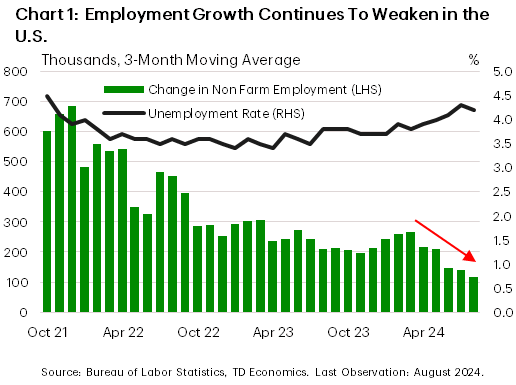
The increase in August’s payroll growth came in lower than anticipated and on a three-month basis, continued to head lower (Chart 1). Additionally, the figures for the prior two months were revised down. Despite this, there was some good news – the unemployment rate ticked down and annual growth in average hourly earnings edged up. Today’s payrolls report was a mixed bag, but overall, adds to the thesis that the labour market has eased off the gas. In a statement by Fed Governor Williams, following release of the report, he was clear in his believe that it was now appropriate to dial back policy restrictiveness. Further, speaking after the jobs data, Governor Waller pointed to starting rate cuts “carefully”, but was open to moving faster if the data warrant it.
In another sign of a cooling labor market, the more backward-looking JOLTS report revealed that job openings fell more than anticipated in July to 7.7 million. This marked the lowest level in more than three years. Additionally, the job openings to unemployed workers ratio declined to 1.1 from a high of 2 in early-2022. The job separation rate also ticked up in July after a dip in June, though it still remains relatively low. Overall, the JOLTS data suggests that the pandemic era of tightness in the labor market has receded and adds to the mounting evidence of cooling labor demand and a slowing economy.
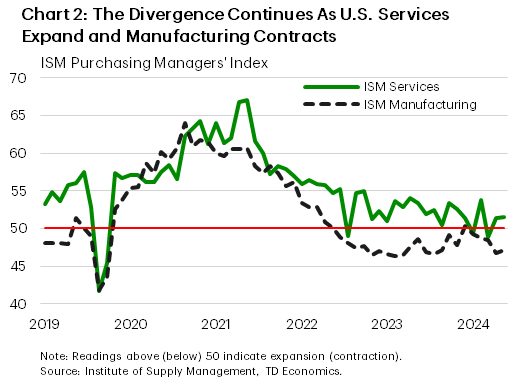
On the production side, while the ISM Manufacturing Index managed to edge up in August, it remained in contraction territory for the fifth consecutive month and came in lower than analysts’ expectations. The sector continued to experience weakness in demand as both the new orders and new export orders indexes slid deeper into contraction. The ongoing weakness in the sector rekindled some concerns over the health of the economy. On the services side, however, things were a bit better, with the ISM Services Index coming in at 51.5 in August, up just slightly from 51.4 in July. Overall, the services sector continues to hold its ground, offsetting much of the weakness evident in the manufacturing sector (Chart 2).
With the employment numbers now a known variable, the Fed’s attention will be focused on the inflation data on tap for release next week. Barring any unforeseen flare-ups, all roads seem to lead to a quarter-point rate cut at the September meeting.
Canada – Signs Point to Continued Rate Cuts
The Bank of Canada’s interest rate decision on Wednesday was front and centre to start off September. As widely expected, the Bank of Canada reduced its benchmark rate by a quarter of a percent, in line with our expectation. Their statement recognized what we have been seeing in the data since their July rate reduction – economic activity has been softening, the labour market has been cooling, and inflation is slowing further towards its target. While the Bank of Canada has maintained a measured tone around inflation, we expect the weakening trends in the labour market and growth to be their focus in upcoming meetings. We continue to expect another 175 basis points in cuts through the end of next year, at a pace of a quarter point per meeting.
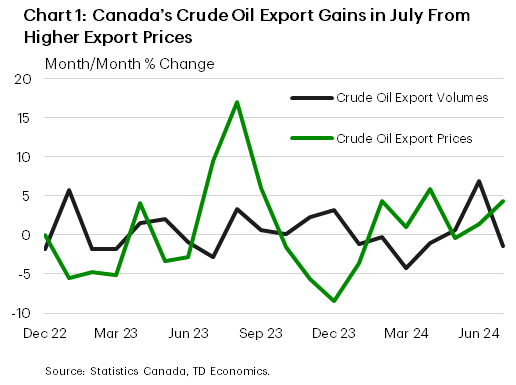
July’s trade data on Wednesday also showed some hints of softening that underscore the need for the Bank of Canada to continue on its rate reduction path. While Canada recorded a trade surplus for the month, this was on the back of declines in both import and export volumes, meaning that the surplus was driven by a combination of higher prices and greater weakness in imports than exports. Weakness in imports is often just another symptom of softening demand in the economy. There may be some brighter notes in the coming months’ trade data. While crude oil exports increased in July due to higher prices and a modest decline in volumes, we expect that volumes should be boosted in the coming months due to shipments from the newly operational Trans Mountain Pipeline (Chart 1). This is a spot to look for growth in next month’s report.
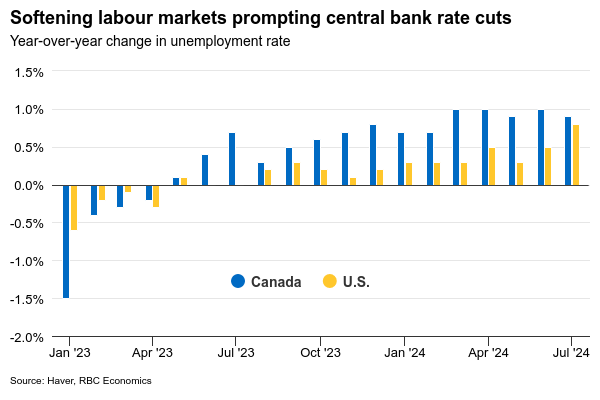
On Wednesday, the Bank of Canda noted that the labour market had continued to slow, with little change in employment in recent months. At the time, the data for June and July showed close to no monthly changes in total employment. The August data, released today, does complicate that story somewhat, showing a gain of 22k new positions – though this is not a statistically significant increase given the high volatility of this report. Also of note, all of the net new gains in employment in August were in part-time employment (Chart 2). More than that, the increases in full-time employment from the July data were reversed. Notwithstanding the relatively high volatility of the employment data, these are signs of a cooling labour market. Adding to this, labour force growth outpaced employment growth, leading to the unemployment rate to tick up to 6.6 percent. Wage growth moderated somewhat, though still rising at a healthy clip – average hourly wages in August were still up 5% from a year prior, compared to the long-run average of around 3%. Wage growth this high does mean that concerns about inflation are still relevant.
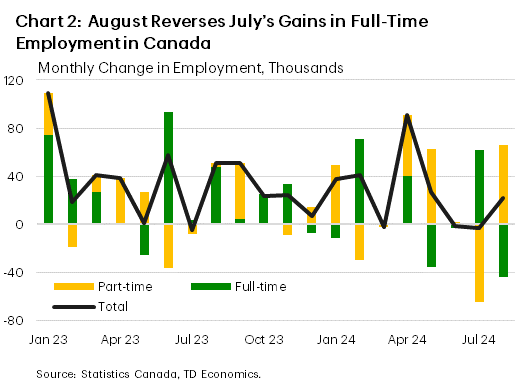
The combination of moderating wage growth, rising unemployment, and falling full-time employment is a clear signal that the labour market is cooling. When expectations for interest rates are as firmly entrenched as they are now, the main thing to look for is any signal that might upset those expectations – and we saw nothing to upset the apple cart this week. This week’s data were not game changers, leaving a clear case for the Bank of Canada to continue reducing interest rates.
Weekly Economic & Financial Commentary: Rate Cut at Sept. 18 FOMC Meeting, 25 bps or 50 bps?
Summary
United States: Rate Cuts Incoming
- The August jobs report did little to settle the debate if a 25 bps or 50 bps rate cut is coming this month. We're sticking with 50 bps, but acknowledge 25 bps as a real possibility. Firms continued to hire in August and the economy kept expanding. Attention is already turning to next week's CPI report for further clues on the degree of easing.
- Next week: NFIB Small Business Optimism Index (Tue.), CPI (Wed.)
International: Bank of Canada Cuts Interest Rates, Signals Further Easing to Come
- The Bank of Canada (BoC) cut its policy rate by 25 bps this week, citing downside risks to growth and an overall slowing in inflation. The central bank also signaled further easing, though given lingering concerns around elevated services inflation and wage growth, we expect a steady rather than accelerated pace of BoC rate cuts. In this week's economic figures, Brazil reported strong GDP growth, Australia soft GDP growth, China mixed August PMIs and Japan firm wage data.
- Next week: Brazil CPI (Tue.), U.K. Monthly GDP (Wed.), European Central Bank Rate Decision (Thu.)
Interest Rate Watch: Rate Cut at Sept. 18 FOMC Meeting: 25 bps or 50 bps?
- The weaker-than-expected labor market report for August kept a 50 bps rate cut at the Sept. 18 FOMC meeting firmly on the table. The size of the rate cut—25 bps or 50 bps—will depend crucially on August CPI data, scheduled for release next Wednesday.
Credit Market Insights: Tight Spreads Signal Optimism Despite Labor Market Worries
- Recent data have shown that spreads for investment-grade and high-yield corporate bonds have continued to tighten, signaling optimism for the future of the U.S. economy remains high. While spreads have generally been performing better, investors still remain cautious.
Topic of the Week: Inverted Yield Curve Era Nearing an End
- The spread between the yields on the 10-year Treasury and the 2-year Treasury notes, a popular recession indicator, turned positive for the first time in 26 months at the close on Wednesday. Yet, there are reasons to question the true predictive power of the yield curve on the likelihood of a recession in the real economy.
U.S. Inflation Print Expected to Tee Up First Fed Interest Rate Cut Since 2020
Headline U.S. inflation for August on Wednesday is expected to fall to 2.5% after dipping below 3% in July for the first time since 2021, setting up the U.S. Federal Reserve to cut interest rates for the first time since 2020.
Falling gasoline prices likely accounted for much of that slowing, but we also expect further signs of broader easing in price pressures. We look for core (excluding food & energy) inflation to slow to 3.1% from a year ago after a 3.2% reading in July on a modest 0.1% month-over-month increase. Rising rent prices still account for a disproportionate share of annual consumer price index growth—60% of core price growth over the last two months by our count. But, an earlier slowing in current market rent price growth has begun to filter more significantly into slower shelter CPI readings as leases are renewed. Rents are expected to post slower (though still positive) growth in August.
Excluding shelter, inflation has been hovering near the Fed’s target level through the summer. The share of CPI basket items reporting price growth above 3% has fallen below the pre-pandemic average, at just 25%. A gradual softening in the U.S. economic growth backdrop—with lower job openings flagging softening labour demand and the unemployment rate drifting gradually higher—has also increased confidence that broader inflation pressures will continue to slow. The economy hasn’t crumbled in a way that would push the Fed to panic, but it is increasingly clear that interest rates are higher than they need to be. We look for the Fed to kick off a rate-cutting cycle with a 25 basis point cut to the fed funds target range at the FOMC meeting this month.
Week ahead data watch
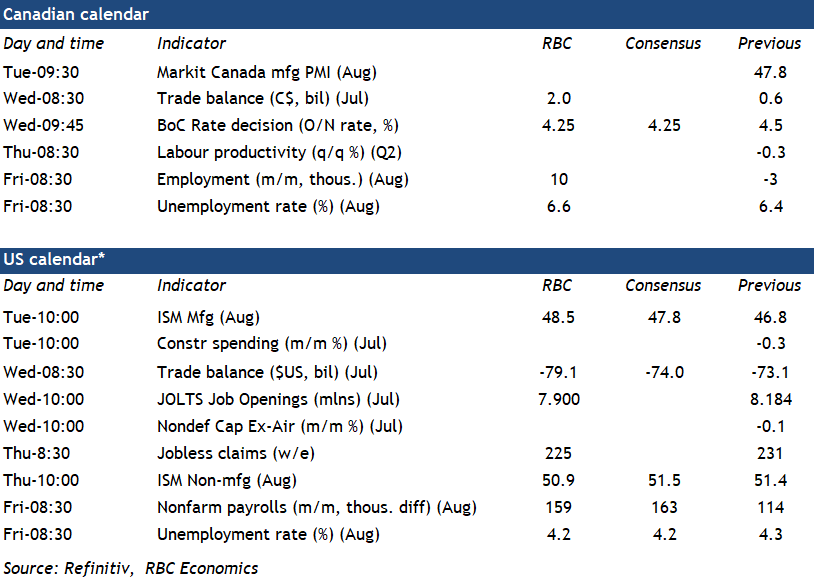
In Canada, second quarter national balance sheet numbers should show the household net worth likely improved as loan growth remained slow, and strong equity markets boosting the value of financial asset holdings.
According to Statistics Canada’s early indicator, core wholesale sales likely fell by 1.1% in July, given lower sales were observed in the motor vehicle and motor vehicle parts and accessories subsector and in the personal and household goods subsector.
Week Ahead – ECB Poised to Cut Again, US CPI to Get Final Say on Size of Fed Cut
- ECB is expected to ease again, but will it be another ‘hawkish cut’?
- US CPI report will be the last inflation update before September FOMC
- UK monthly data flurry begins with employment and GDP numbers
ECB to cut rates for second time
The European Central Bank’s carefully choreographed rate-cutting cycle got off to an awkward start in June after last-minute data upsets. For credibility’s sake, policymakers had only one choice – press ahead with the planned 25-basis-point rate reduction but present it as a ‘hawkish cut’.
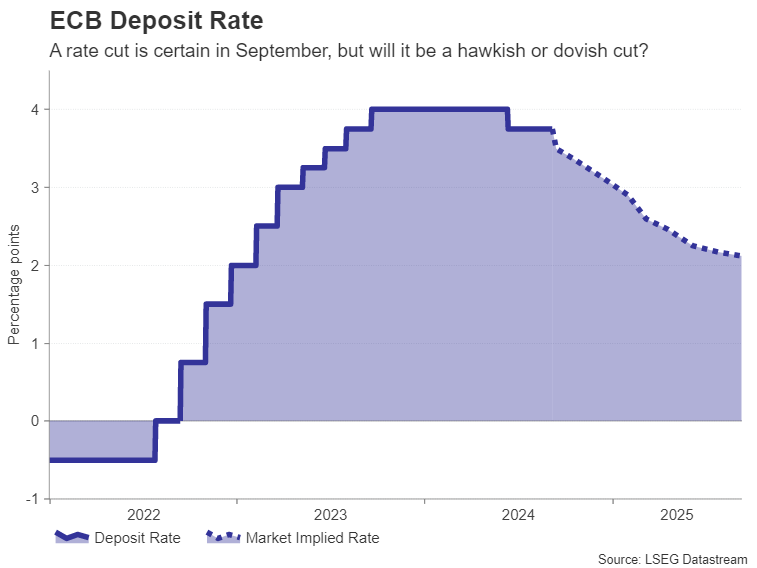
Fortunately for the doves and struggling European businesses, the case for further policy easing has strengthened since the last gathering in July when rates were kept on hold. Headline inflation dipped to 2.2% y/y in August and the rebound in euro area growth has been tepid.
The current economic backdrop has potentially set the stage for downward revisions to the ECB’s quarterly inflation and GDP projections, which are due to be published on the day of the meeting on Thursday. More to the point, President Christine Lagarde may now feel that she can tone down the emphasis on “data-dependent and meeting-by-meeting approach” and confidently flag further cuts ahead.
There is one problem, however, and that is the uptick in services CPI in August, which rose to the highest since October 2023, reaching 4.2% y/y. Whilst this isn’t concerning enough to prevent the ECB from sounding more dovish at the September meeting, Lagarde will likely maintain some caution in her press briefing.
If Lagarde signals a rate-cut path that’s shallower than what investors have priced in, the euro could resume its uptrend, having taken a knock from a somewhat firmer US dollar.
Will US CPI back case for 50-bps cut?
Talking of the dollar, it’s been navigating through choppy waters lately amid the ongoing uncertainty about whether the Fed will lower rates by 25 bps at its upcoming meeting or by 50 bps. The Fed’s much awaited policy shift finally came in August at the central banks’ annual symposium in Jackson Hole.
Chair Powell acknowledged the cracks that have started to appear in the labour market and in doing so, he opened the door to a possible 50-bps move in September. Much of the commentary since then hasn’t supported the need for aggressive action as the data has been mostly solid.
The big question is how much will the Fed prioritize its employment mandate over price stability when upside risks to inflation remain? The ISM’s prices paid gauges for both manufacturing and services edged up in August even as employment contracted for the former and barely grew for the latter.
Wednesday’s CPI report will be the last piece of the jigsaw ahead of the September decision and should provide some clarity as to what to expect. The headline CPI rate cooled to 2.9% y/y in July and is expected to fall again to 2.6% in August. The core rate, however, is forecast to have stayed unchanged at 3.2%.
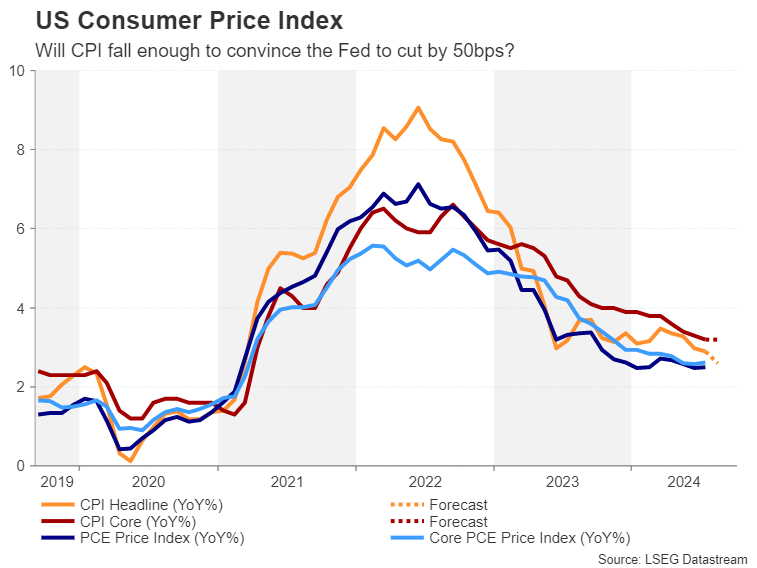
If the above numbers are confirmed, the Fed is more likely to deliver a ‘dovish cut’ of 25 bps. But there would have to be a significant downside surprise for there to be a realistic chance of a 50-bps reduction.
Investors have priced in a close to 40% probability of a 50-bps cut so there is room for disappointment, with the dollar possibly turning higher if the CPI data is more or less in line with expectations or stronger.
Producer prices will follow on Thursday and Friday’s preliminary survey on consumer sentiment in September by the University of Michigan will be important too, particularly the one- and five-year inflation expectations.
Pound eyes UK releases as BoE decision looms
The Bank of England is expected to buck the central bank trend in September and keep rates on hold when it meets on the 19th. The UK economy bounced back strongly in the first half of 2024 and with wage growth and services inflation still elevated, the BoE can afford to pause after cutting rates for the first time this cycle in August.
But the decision may yet end up being a much closer call than anticipated depending on the incoming slew of data ahead of the September meeting. On Tuesday, the employment report for July will be watched for further signs that the UK’s labour market is stabilising after significant job losses at the start of the year.
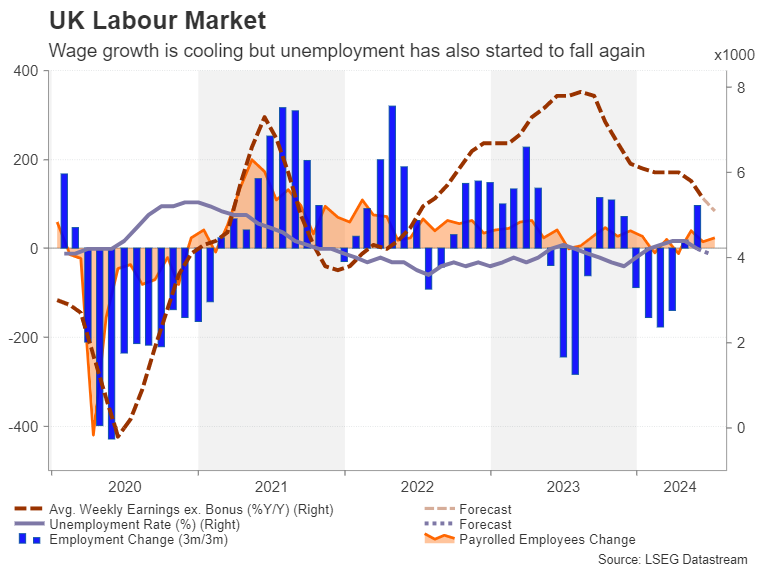
The unemployment rate declined 0.2 percentage points to 4.2% in June, but another big drop might not be so welcome as wage growth is finally headed towards levels that would be more consistent with inflation of 2.0%. A pickup in hiring could refuel wage pressures, hindering the BoE’s fight against inflation.
The spotlight on Wednesday will be on the July GDP readings, which include a breakdown of services and manufacturing sectors.
The odds for no change in September currently stand at around 75% so sterling could come under heavy pressure if next week’s releases disappoint and push up the probability of a 25-bps cut closer to 50%.
Spotlight on Asia at start of week
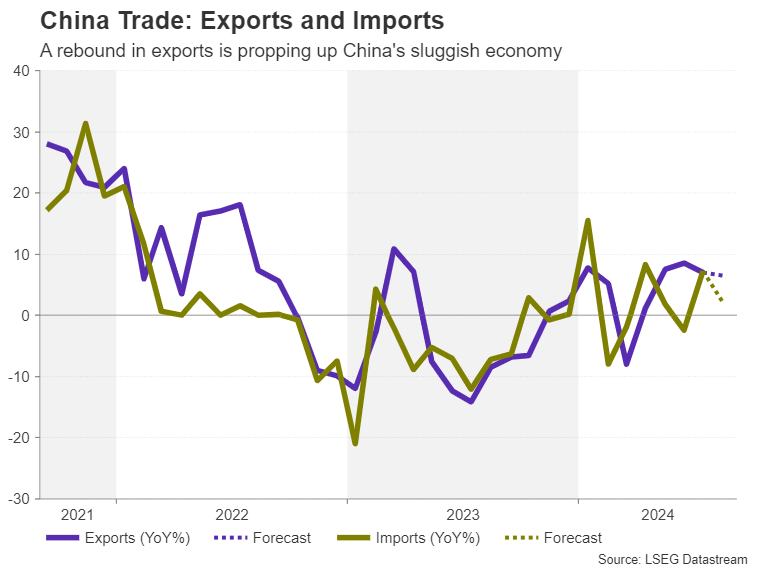
Amid lingering worries about China’s sluggish economy, CPI and PPI numbers on Monday followed by trade figures for August on Tuesday might attract some attention for risk-sensitive currencies such as the Australian dollar. There’s been a decent rebound in exports in recent months. Another strong print in August might provide some boost to risk appetite in the short term but do little in lifting the overall gloom about China’s economic outlook.
In Japan, it will be a busy week for data, the highlight of which will be Monday’s GDP revision. Second quarter GDP growth is expected to be revised higher from the initial estimate of 0.8% y/y. A higher-than-anticipated figure could boost expectations of another rate hike by the Bank of Japan this year, bolstering the yen’s latest rally.
Weekly Focus – Focus on US CPI and ECB meeting
This week, we published our updated macroeconomic projections for the main economies and the Nordics. We expect euro area and US growth rates to converge as the US economy is now losing steam, and the euro area economy is gradually picking up speed. We expect inflation to stabilise close to central bank targets by next year and interest rates to decline significantly, albeit not back to zero. The risk picture has changed, as upside inflation risks are less pronounced while downside growth risks have risen. That said, soft landing remains our base case. Nordic economies are expected to follow the trend and witness accelerating growth towards 2025. Read more on Nordic Outlook - Normalising economies, with risks, 3 September.
As the risk of inflation remaining too high for too long has abated, central banks can afford to front-load rate cuts compared to what we expected before. We have revised our calls both for the Fed and the ECB. We now expect the Fed to conduct 25bp rate cuts at each meeting until summer next year, starting this month. We expect the ECB to cut rates by 25bp both in next week's meeting, and again in December, and follow with three more cuts in 2025. If we are right, policy rate would land at 3.00-3.25% in the US and at 2.50% in the euro area by year-end 2025. Our forecast remains hawkish relative to market pricing, and the risks are tilted towards even lower rates.
The week in financial markets played an already familiar tune as risk appetite was poor on most days and volatility increased, while USD and short-term interest rates declined. Underperformance in the tech sector has been linked to sector rotation and earnings disappointments, but rising stock market volatility is also in line with weaker macro momentum and tighter liquidity in the global financial system, as central banks continue to taper their balance sheets.
Next week's main event will be the ECB meeting on Thursday where a 25bp cut now seems like a done deal. Wage growth in euro area declined significantly in the second quarter to 4.3% y/y from 4.8% y/y in Q1, measured by the ECB's closely watched compensation per employee measure. Hence, despite service inflation remaining high for now, ECB can be more confident that underlying price pressures are abating, and inflation will return to target. But even so, weak productivity and labour force growth suggest that euro area's potential growth remains weak. At roughly similar growth rates, the euro area is more prone to overheating and re-emerging inflationary pressures compared to the US.
Next week's key data point will be the US August CPI due on Wednesday. We forecast headline inflation easing to +0.1% m/m SA (2.5% y/y) but core inflation remaining steady at +0.2% m/m SA (3.2% y/y). On the political front, Kamala Harris and Donald Trump will have their first face-off in a live debate on Tuesday evening US time. Read more about the current outlook from our first US Election Monitor - Latest data shows Harris in a narrow lead, 6 September. Also, in China focus will be on Monday's CPI data. We expect rising headline inflation to 0.7% y/y from 0.5% in July, but core inflation will likely stay lower. China August trade data is released on Tuesday, and it will be interesting to see whether China's exports continue to reflect the persistent weakness in global manufacturing.
August Employment: Size of September Rate Cut Remains Unsettled
Summary
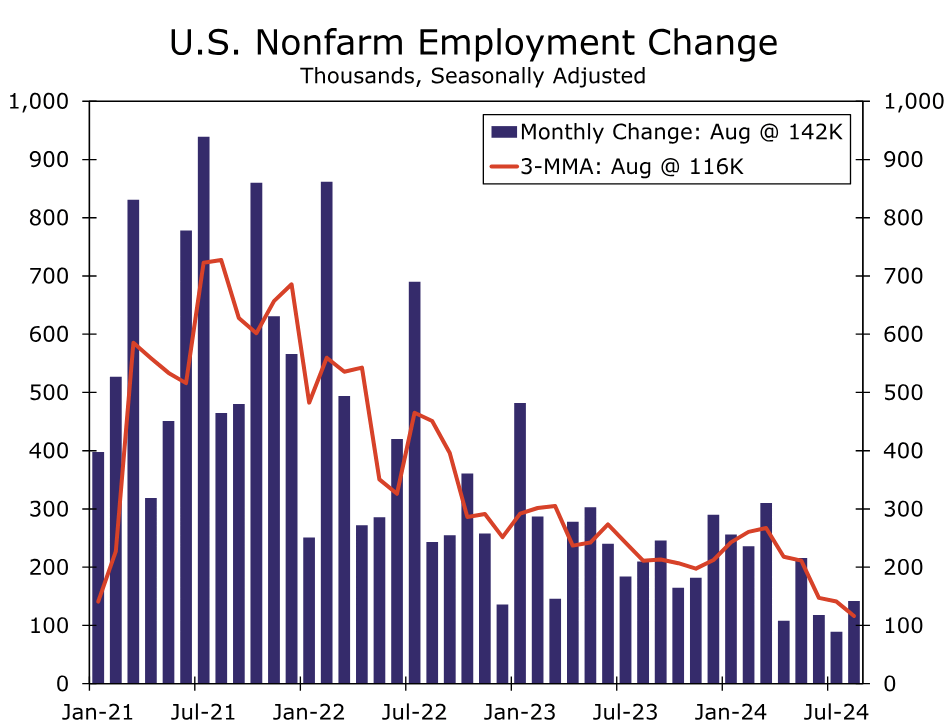
The August employment report indicated that while the jobs market is not unraveling, it continues to clearly weaken. Employers added 142K jobs in August, which was a bit less than expected, but came on the heels of another significant downward revision to prior months' hiring. Over the past three months, employers have added 116K jobs, a notable deceleration from the 207K average pace in the first half of the year. The breadth of hiring improved slightly over the month but continues to be concentrated in less-cyclically sensitive industries.
The unemployment rate ticked down to 4.2% in August from 4.3%, offering some comfort that labor market conditions are not deteriorating in a non-linear way. However, joblessness has continued to rise on trend, with the Sahm Rule indicator, at 0.57, still above the threshold historically associated with recession. The rise in the broader U-6 measure of unemployment, which also captures under-employment, to a new cycle high demonstrates further signs of softening beyond the Employment Situation report's marquee nonfarm payroll numbers.
An especially strong or weak employment report could have crystallized the 25 or 50 bps rate cut debate for the FOMC's upcoming meeting. Instead, today's data have offered something for both the hawks and the doves on the Committee.
We have been projecting a 50 bps rate cut at the September FOMC meeting for the past month, and for now we are leaving that forecast unchanged. That said, neither outcome would surprise us at this point, and we will be listening to the remaining remarks from Fed officials before the black out period and waiting for Wednesday's CPI report for final clues. Regardless of what shakes out in September, we are confident that a series of rate cuts are coming in the months ahead. Any additional labor market cooling would be unwelcome for the FOMC, and as a result shifting the stance of monetary policy from restrictive to neutral over the next year or so remains our base case.
Labor Market Still Cooling, but Expansion Remains Intact
Nonfarm payrolls grew by 142K in August, a bit weaker than the Bloomberg consensus forecast that was looking for a 165K gain and our expectation for a 145K increase. Downward revisions to job growth in the prior two months pushed the three-month moving average for nonfarm payroll growth down to 116K. This marks a notable deceleration from the average monthly job growth of 207K in the first half of the year and 251K in 2023. Furthermore, the hefty 818K downward revision to the level of employment in March implied by the preliminary annual benchmark revision suggests the current pace of hiring could be even lower if the Bureau of Labor Statistics' methodology is continuing to overstate the boost to payrolls generated by new firms.
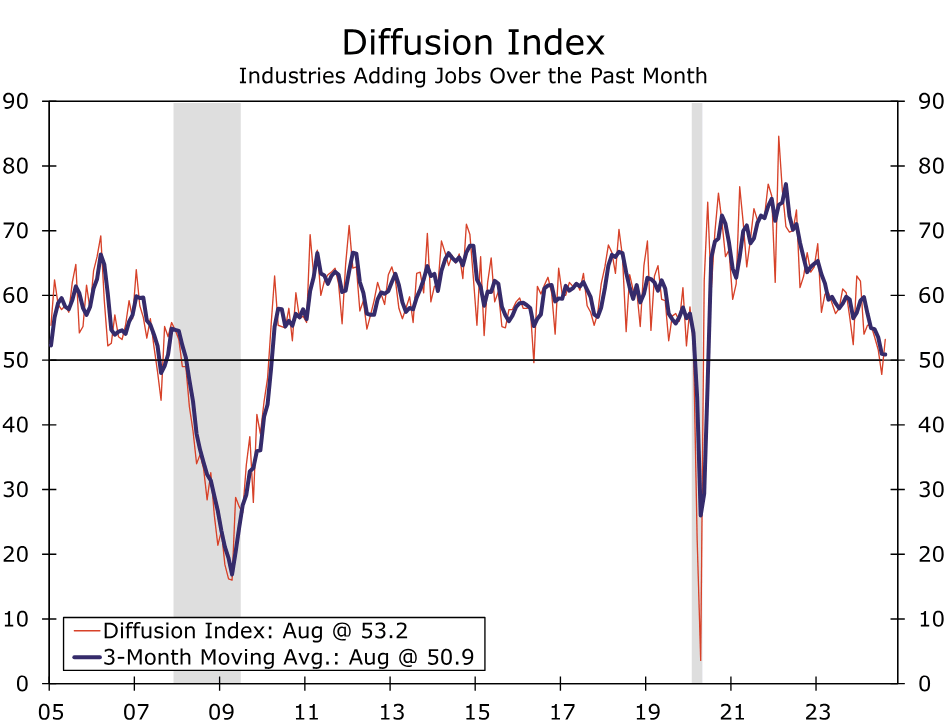
Job growth in August was a bit more broad-based than it was in July. The labor market diffusion index, a measure of the breadth of hiring across industries where higher numbers imply more broad-based hiring, rose to 53.2 from 47.8 in July, but this remains a fairly narrow hiring base relative to earlier in this expansion and the 2010s cycle (chart). Employment growth continues to be led by hiring in less cyclically-sensitive industries such as health care & social assistance (+44K), leisure and hospitality (+46K) and government (+24K). Construction employment also posted a strong 34K increase in the month, but elsewhere hiring was tepid with just a 8K increase for profession and business services and contractions in manufacturing (-24K), retail trade (-11K) and information (-7K).
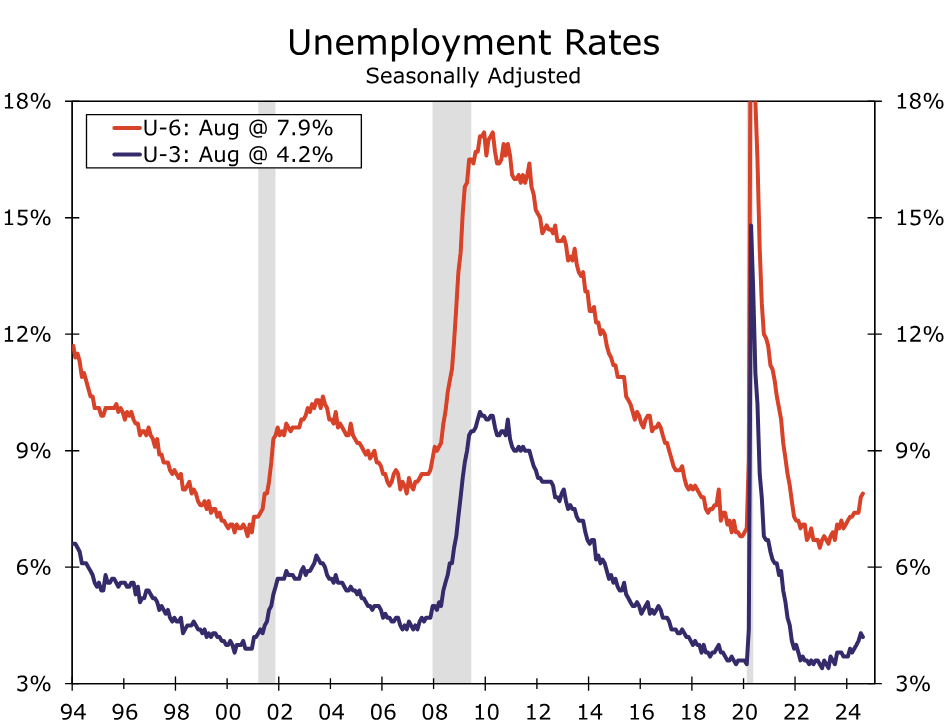
 The unemployment rate offered further signs of the jobs market continuing to weaken on trend, even if it is not falling apart. As expected, the jobless rate ticked down from 4.3% in July to 4.2% as a jump in unemployment due to temporary layoffs largely, albeit not entirely, reversed. However, even with the downtick, the unemployment rate is still up from 3.8% a year ago. In a similar vein, the Sahm Rule recession indicator, at 0.57, is still above the historical threshold associated with a recession (chart). Under-employment continues to move up as well, with the broader U-6 unemployment measure, which includes people who are working part-time but would like full time work, rising to a new cycle high of 7.9% (chart).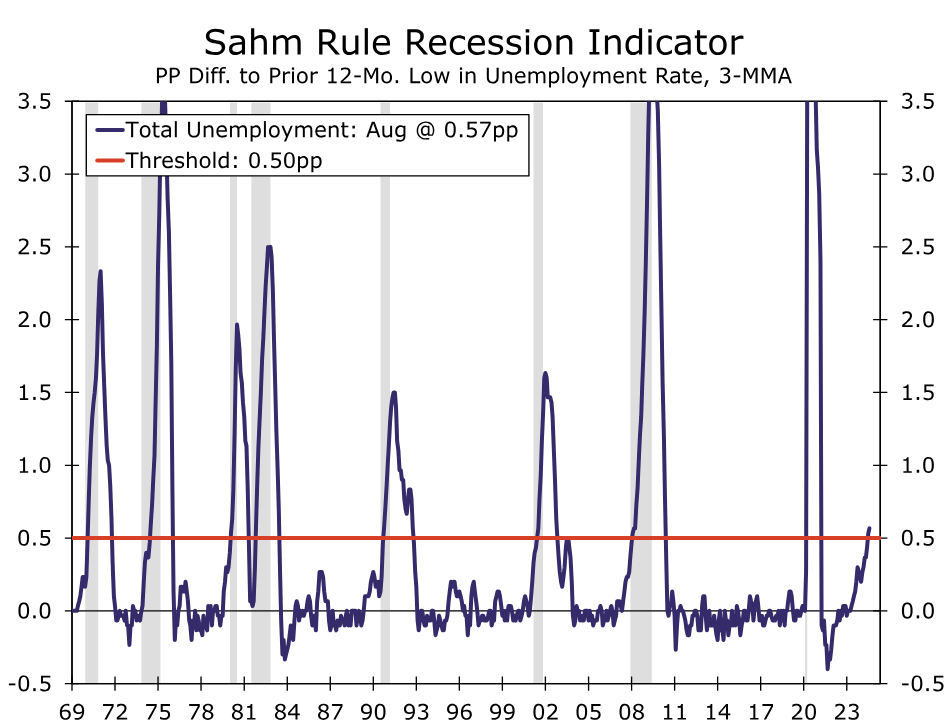
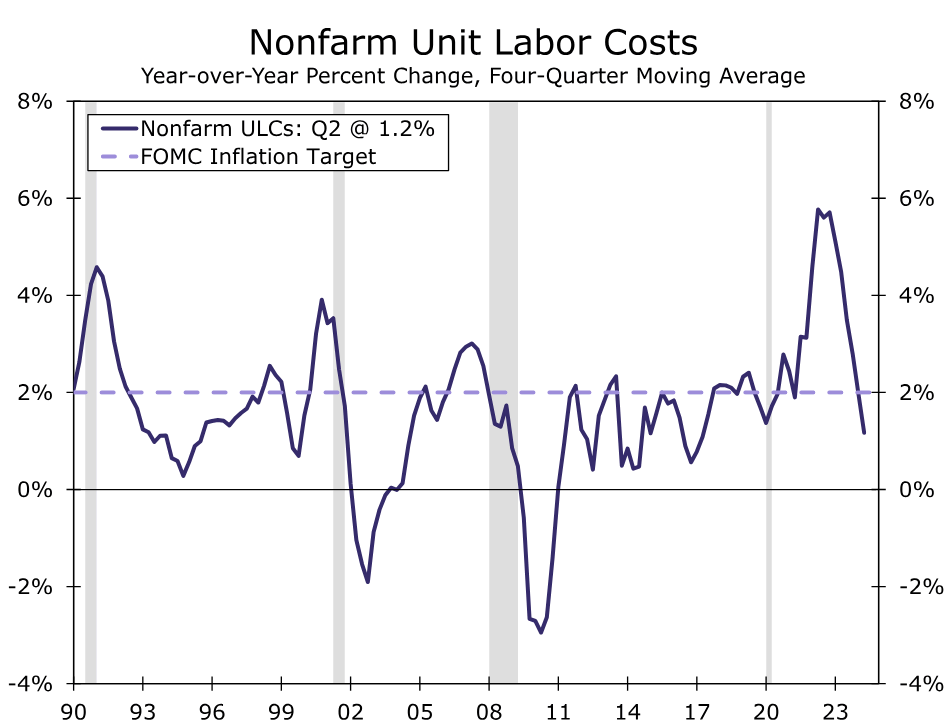
Average hourly earnings grew a touch more than expected in August, up 0.4% over the month and 3.8% over the past year. Yet despite the uptick, we believe concerns about labor costs keeping inflation uncomfortably high can be put aside for now. The overall loosening in the labor market suggests wage pressures continue to abate, while the somewhat firmer trend in productivity growth this cycle (1.6% since 2019) suggests nominal wage growth does not need to slow much further to be consistent with 2% inflation. Separately released data this week showed the four-quarter average of unit labor costs, which can be thought of as the productivity-adjusted cost of labor, up just 1.2% over the past year (chart).
In our view, today's jobs report further reinforces that the start of the Fed's easing cycle is upon us, and a reduction in the federal funds rate is coming at the September 17-18 FOMC meeting in less than two weeks. The much more difficult question is whether the Committee will agree to a 25 or 50 bps rate cut. This morning's employment data offer something for both the hawks and the doves on the Committee. The tepid pace of nonfarm payroll growth, still-triggered Sahm Rule and a slew of other labor market indicators suggest that the labor market has cooled considerably in recent months. With the federal funds rate well-above most estimates of neutral, the case for moving expeditiously to a more neutral policy stance is not hard to make in our view.
That said, the July employment report sparked fears that the labor market was deteriorating in a non-linear way, and those fears seem to have been mitigated for the time being. Initial jobless claims have edged down in recent weeks, the unemployment rate partially reversed its July-increase, and nonfarm payroll growth remains comfortably in positive territory despite its slower pace. Furthermore, inflation is not all the way back to the central bank's 2% target on a year-over-year basis, and the inflation scars from the past few years will not be quickly forgotten by some members of the FOMC.
We have been projecting a 50 bps rate cut at the September FOMC meeting for the past month, and for now we are leaving that forecast unchanged. That said, neither outcome would surprise us at this point, and based on what we know now it feels like a true coin flip between 25 and 50 bps. As we go to print, financial markets are also assigning toss-up probabilities between the two outcomes. Governor Waller is scheduled to speak on the economic outlook at 11am EST today, and we will be watching his comments closely given his history as a bellwether among the Committee. Another important factor likely will be next week's CPI report, to be released on Wednesday, September 11. Our CPI preview report can be found here.
Regardless of what shakes out in September, we are confident that a series of rate cuts are coming in the months ahead. Any additional labor market cooling would be unwelcome for the FOMC, and as a result shifting the stance of monetary policy from restrictive to neutral over the next year or so remains our base case.
Sunset Market Commentary
Markets
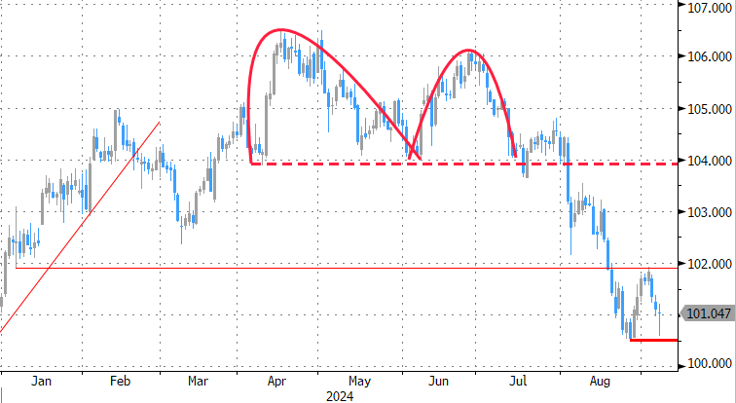
August nonfarm payrolls to settle the debate once and for all… Or not. The US economy added 142k jobs in August, compared to 165k consensus. Most other metrics printed near consensus as well. The unemployment rate ticked lower from 4.3% to 4.2%, the participation rate stabilized at 62.7% and wage growth even accelerated somewhat more than expected (to 0.4% M/M and 3.8% Y/Y). However, as we feared the report needed to be perfect across the board to stop recent market momentum (shifting towards 50 bps rate cuts). And it wasn’t. June and July payrolls faced a combined downward revision of 86k, making the total miss some 109k. It explains why US Treasuries extended their rally after some initial volatility with new cycle lows (in yields) across the curve. The jury remains out though with investors building in some caution ahead of the weekend. The dollar initially suffered from the loss of interest rate support. The trade-weighted greenback came close to testing the December 2023 & August 2024 low at 100.50. USD/JPY similarly aimed at 141.70. EUR/USD set an intraday high at 1.1155 to currently trade back near opening levels at 1.1111. NY Fed Williams said it’s appropriate to start a process of rate cuts. He didn’t comment on the potential size of a first move. By not pushing back against a 50 bps liftoff, we think it’s similar to giving the agreeing nod. A speech by Fed Waller on the economic outlook is still scheduled later today. We hold our view that the Fed could this year opt for three consecutive rate cuts by 50 bps.
Focus turns to Europe next week as the ECB is expected to cut its deposit rate for a second time this year by 25 bps, to 3.50%. As announced in March, they will also reduce the spread between the main refinancing rate and the deposit rate from the current 50 bps to only 15 bps implying an MRR rate cut of 60 bps, from 4.25% to 3.65%. Updated GDP and CPI forecasts will be closely watched for clues on the monetary policy trajectory going forward. However, we don’t expect big changes apart from perhaps some minor downward revisions to this year’s GDP and headline CPI data. Recall that ECB staff in June plotted a 0.9%-1.4%-1.6% growth path for 2024-2026 and a 2.5%-2.2%-1.9% inflation trajectory. While keeping an easing bias, we don’t expect the central bank to pre-commit to specific actions at coming meetings. The short intermeeting period between September 12 and October 17 suggests that bar any big surprise, the central bank might be more inclined to sit the October meeting out and stick with the currently, quarterly, rate-reduction scheme with a next 25 bps move coming only in December. Unlike the Fed, the ECB’s options for making policy less restrictive are smaller given limited room towards neutral territory in the current, stubborn, (core) inflationary environment.
News & Views
The Food and Agricultural Organization’s Food Price Index eased slightly to 120.7 points in August. Decreases in sugar prices, meat and cereals outweighed increases in vegetable oils and dairy products. The y/y index is down 1.1%. Breaking down into its components, the cereal price index fell on dropping wheat exports prices. The vegetable oil index was up 1 point to the highest level since January 2023. Indonesian output remained below full potential, lifting world palm oil prices more than enough to offset lower prices for soy, sunflower and rapeseed oil. Dairy prices (+2.8 points) rose thanks to surging import and tight supplies driving those for milk. Butter quotations reached an all-time high. Falling poultry and pig prices (lacklustre import vs ample export stock) weighed down on the meat price index (-0.9 points). Sugar, finally, fell to the lowest level since October 2022 (-5.7 points) on an improving production outlook for the 2024/2025 season in Thailand and India.
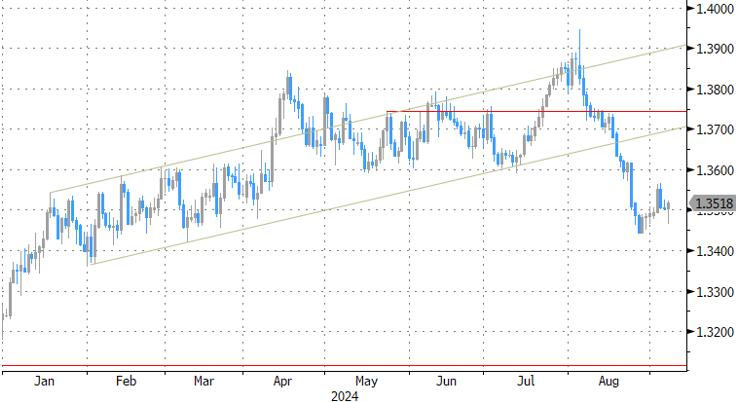
• Canadian payrolls came in at 22.1k in August, the first net job growth in three months’ time. It was, however, slightly less than the 25k hoped-for and came fully on the account of part-time employment (+65.7k vs -43.6k full-time jobs shed). The unemployment rate rose to a higher-than-expected 6.6%, which was the highest since May 2017 barring the 2020-2021 pandemic period. Statistics Canada describes August employment as “little changed”, extending the status quo to four months. Today’s numbers confirm the ongoing cooling of the labour market and vindicate the Bank of Canada which cut rates earlier this week for a third time straight. The 25 bps pace may be upped to 50 bps in October, depending on the economic data. Canadian money markets price in a cumulative 100 bps of cuts over the remaining two meetings of 2024. The fallout for the Canadian Loonie is contained thanks to broad USD weakness. USD/CAD is trading just south of the 1.35 big figure.
Graphs
USD/CAD: Loonie and USD weakness cancel each other out
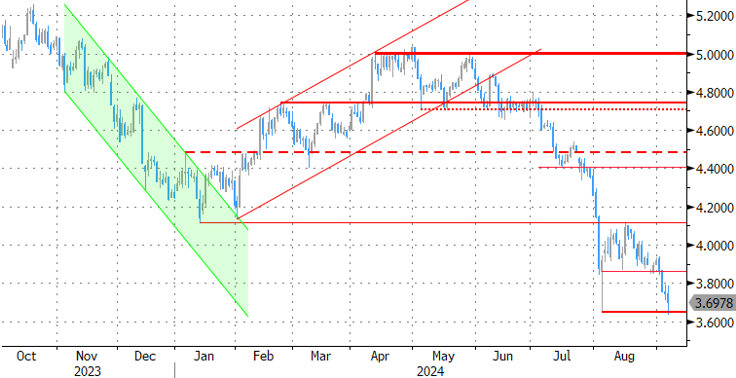
US 2-yr yield sets minor new cycle low after downward payrolls revisions
Trade-weighted dollar (DXY) comes close to testing Dec23/Aug24 low as payrolls fail to break reigning (50 bps rate cut) momentum
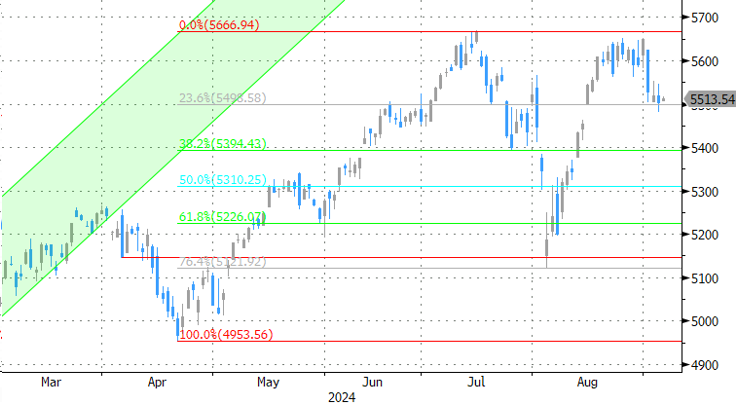
S&P 500: neutral start as key indices try to avoid a further drop
EUR/USD Mid-Day Outlook
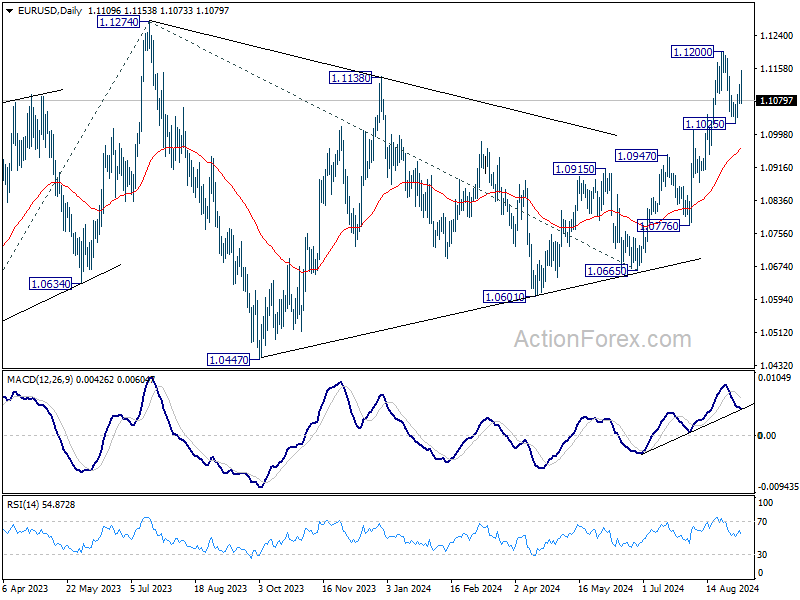
Daily Pivots: (S1) 1.1084; (P) 1.1102; (R1) 1.1129; More....
Despite edging higher to 1.1153, intraday bias in EUR/USD is turned neutral with subsequent retreat. Corrective pattern from 1.1200 could extend with another leg, and break through 1.1025. But outlook will stay bullish as long as 1.0947 resistance turned support holds. Firm break of 1.1200 will resume larger rally to 1.1274 high.
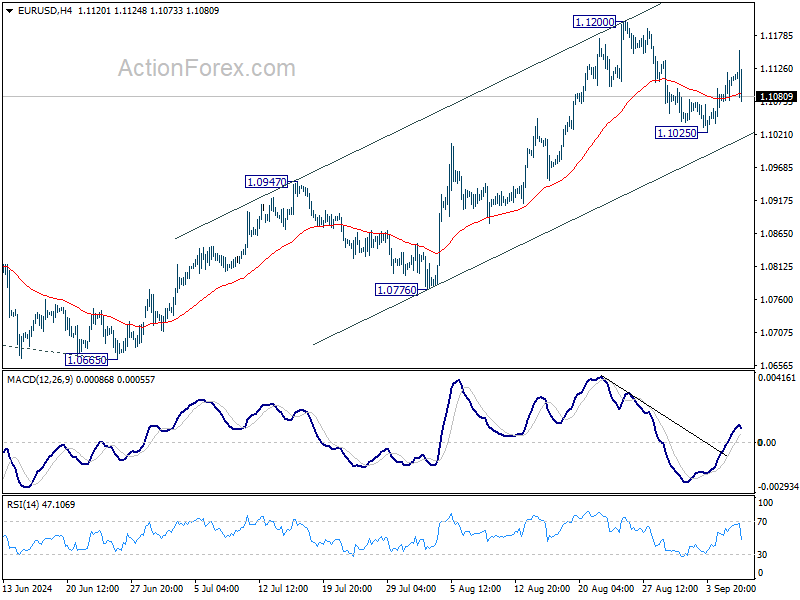
In the bigger picture, prior break of 1.1138 resistance indicates that corrective pattern from 1.1274 has completed at 1.0665 already. Decisive break of 1.1274 (2023 high) will confirm whole up trend from 0.9534 (2022 low). Next target will be 61.8% projection of 0.9534 to 1.1274 from 1.0665 at 1.1740. This will now be the favored case as long as 1.0947 resistance turned support holds.