Sample Category Title
EUR/USD Turns Bearish And Might Accelerate Lower
Key Highlights
- EUR/USD is moving lower below the 1.0820 support.
- A key bearish trend line is forming with resistance near 1.0875 on the 4-hour chart.
- GBP/USD is gaining bearish momentum below the 1.2650 support.
- The US ISM Services PMI could increase from 50.6 to 52.0 in Jan 2023.
EUR/USD Technical Analysis
The Euro struggled to clear the 1.0850 resistance zone against the US Dollar. EUR/USD traded in a range and later declined below the 1.0820 support.
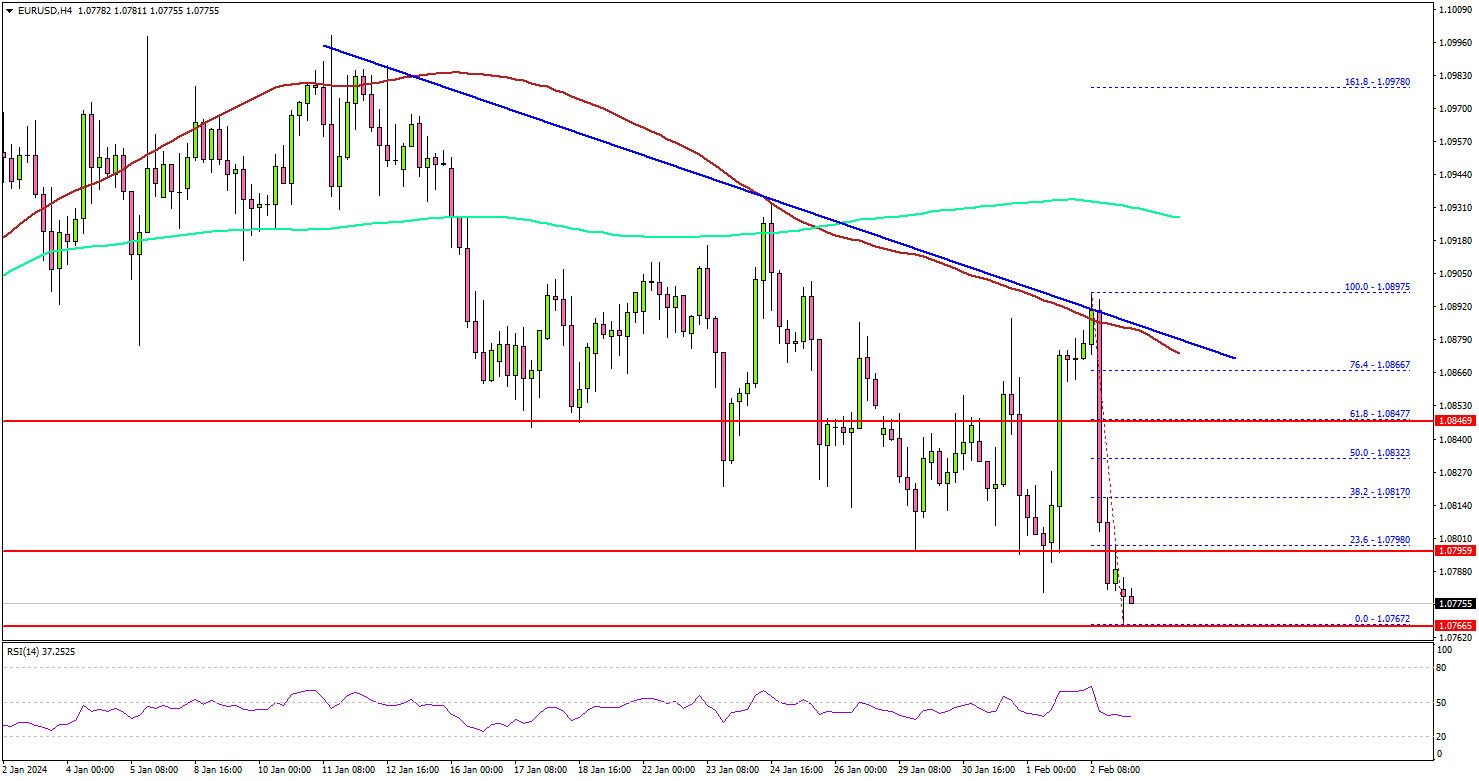
Looking at the 4-hour chart, the pair settled below the 1.0820 zone, the 100 simple moving average (red, 4 hours), and the 200 simple moving average (green, 4 hours).
The bears even pushed the pair below the 1.0800 support. It is now consolidating losses near the 1.0780 level. Immediate support is near the 1.0765 level. The first major support sits near the 1.0750 level. The next major support sits at 1.0700, below which the pair might gain bearish momentum.
In the stated case, the pair could even revisit the 1.0660 support level. On the upside, the bulls are facing hurdles near the 1.0800 level.
The next key resistance is near the 1.0820 level. There is also a key bearish trend line forming with resistance near 1.0875 on the same chart. A close above the 1.0820 zone could open the doors for more upsides. The next stop for the bulls might be 1.0850. Any more gains might send EUR/USD toward the 1.0880 level.
Looking at GBP/USD, there was a strong bearish reaction, and the bears were able to push the pair below the 1.2650 support zone.
Economic Releases
- Euro Zone Services PMI for Jan 2023 – Forecast 48.4, versus 48.4 previous.
- UK Services PMI for Jan 2023 – Forecast 53.8, versus 53.8 previous.
- US Services PMI for Jan 2023 – Forecast 52.9, versus 52.9 previous.
- US ISM Services PMI for Jan 2023 – Forecast 52.0, versus 50.6 previous.
Fed Powell repeats March too soon for interest rate cut
In an interview on CBS's 60 Minutes, Fed Chair Jerome Powell emphasized the importance of ensuring inflation is convincingly on a downward trajectory toward 2% target before the central bank cut interest rates. He candidly stated, "it's not likely that this committee will reach that level of confidence in time for the March meeting," echoing the comments he made last week at the post-FOMC press conference.
Highlighting the collective outlook of FOMC, Powell shared that the majority of its 19 participants anticipate a scenario where cutting federal funds rate would be appropriate within the year. However, he stressed that any such decision would "depend on the evolution of the economy."
Powell also underscored a forward-looking perspective, stating, "we wouldn't wait to get to 2% to cut rates," and acknowledging that rate cuts are "actively being considered" despite current inflation rates hovering between 2-
Expectations for inflation's trajectory were also addressed, with Powell predicting a decrease in the 12-month inflation figures throughout the year. He attributed this anticipated decline to the "unwinding" of "pandemic-related distortions" and the consequential impact of the Fed's "tightening of policy."
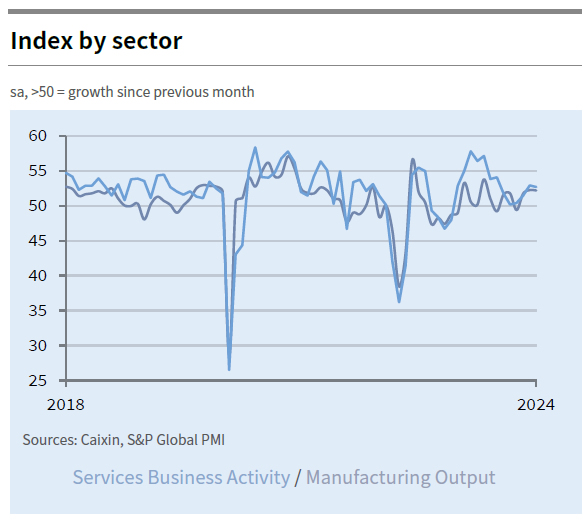
China’s PMI services dips slightly to 52.7, significant challenges remain
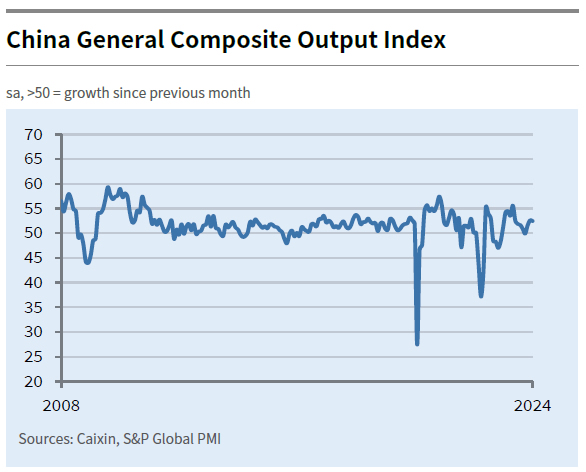
In January, China's Caixin PMI Services slightly decreased to 52.7 from 52.9, aligning with expectations. PMI Composite also and a minor reduction to 52.5 from 52.6.
Wang Zhe, Senior Economist at Caixin Insight Group, pointed out that the economy faces "significant challenges" including tepid demand, increased employment pressures, and subdued market expectations, indicating that "This status quo has yet to experience a fundamental reversal."
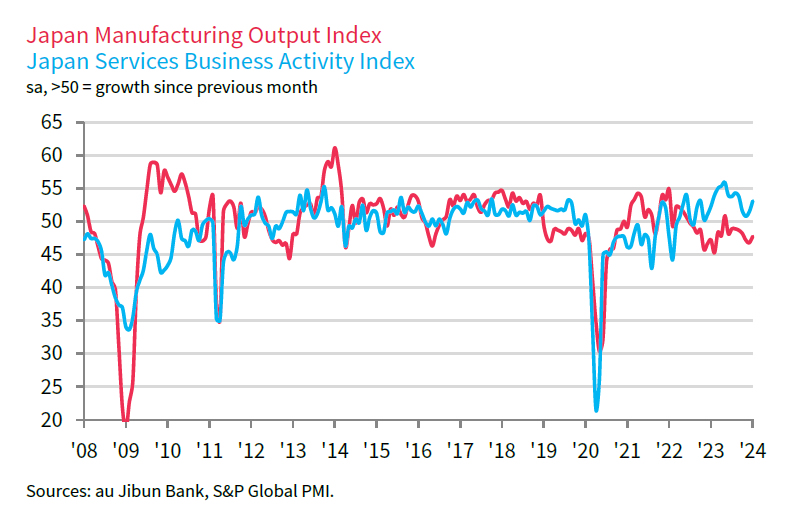
Japan’s PMI services finalized at 53.1, fueling overall economic growth
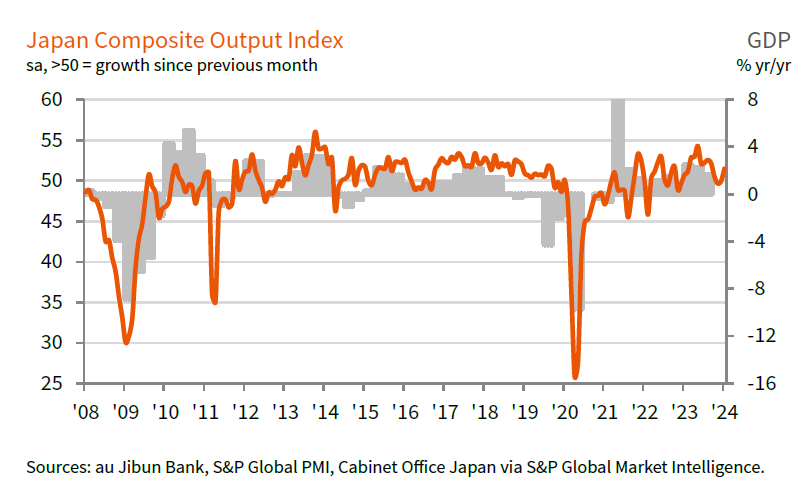
Japan's PMI Services was finalized at 53.1 in January, marking a continuous expansion for the 17th month and an improvement from December's 51.5. PMI Composite was finalized at 51.5, up from prior month's 50.0, indicating a modest uptick in overall private sector activity for the first time since October.
According to Usamah Bhatti, Economist at S&P Global Market Intelligence, key observations include accelerated growth in business activity, new orders, and the first rise in exports in five months.
Capacity pressures intensified, with the strongest backlog increase since last June and a sharper job creation rate. Business confidence for the year ahead hit an eight-month high, reflecting robust optimism.
S&P 500 Wave Analysis
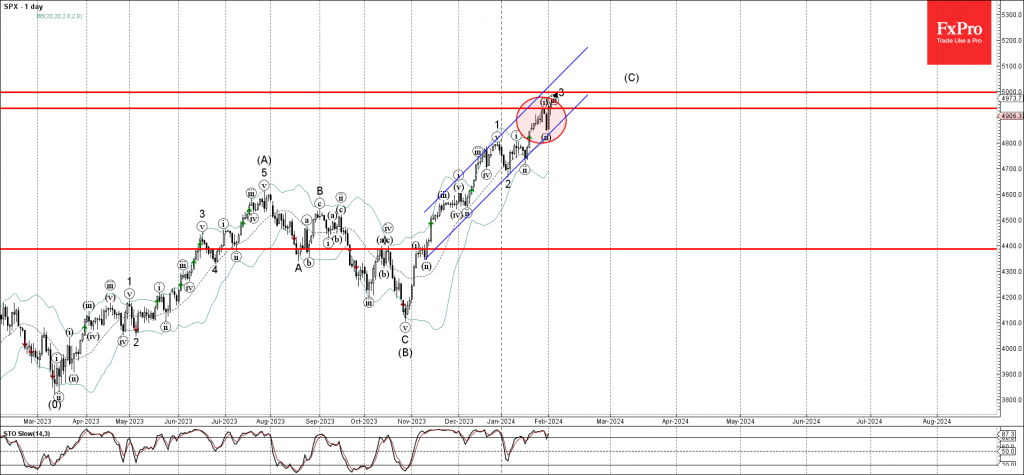
- S&P 500 broke key resistance level 4930.00
- Likely to rise to resistance level 5000.00
S&P 500 index rising inside the minor impulse wave 3 which previously broke above the key resistance level 4930.00 (which stopped the previous minor impulse wave i at the end of last month).
The breakout of the resistance level 4930.00 accelerated the active impulse waves 3 and (C).
Given the persistent daily uptrend, S&P 500 index can be expected to rise further to the next round resistance level 5000.00.
Investor Optimism Pushes Stocks to New Heights, While Dollar Rallies as March Fed Cut Speculation Subsides
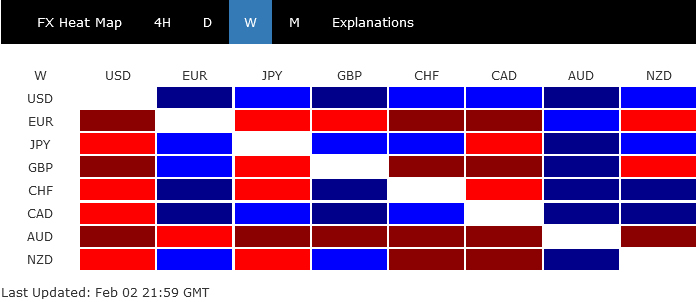
This past week in the financial markets has been nothing short of a rollercoaster, with Dollar clinching the title of the strongest currency amidst considerable volatility. The narrative that dominated was the dissipating likelihood of a March rate cut by Fed. But at the same time, investor sentiment took an unexpectedly optimistic turn, propelling stock markets to reach records. This unusual alignment of stock market exuberance with a strengthening Dollar raises questions about the sustainability of such a trend, considering their historically contrary movements.
Australian Dollar found itself languishing at the week's end, primarily bogged down by disappointing inflation data. Moreover, Aussie's woes were compounded by fresh downturn in China's stock markets, renewing concerns over economic stability in the country. Conversely, Euro and Sterling, while initially struggling, demonstrated remarkable resilience as the week progressed. Both currencies managed to recoup losses in crosses.
In the broader currency market, following Dollar's lead, Canadian Dollar and Yen captured the markets' favor and ended as the second and third strongest. However, Yen's position appeared precarious amid rebounding global yields. Swiss Franc and New Zealand Dollar, meanwhile, navigated through the week with mixed fortunes.
A Turbulent Week: Powell's Hawkish Tone and Robust Job Data Reset Fed Expectations
In a week filled with significant economic events and market volatility, the US financial markets saw an extraordinary turn of events, marked by a complex interplay of steadfast messaging from Fed, strong labor market data, and sector-specific developments. Together they fostered a climate of cautious optimism and strategic reevaluation among investors.
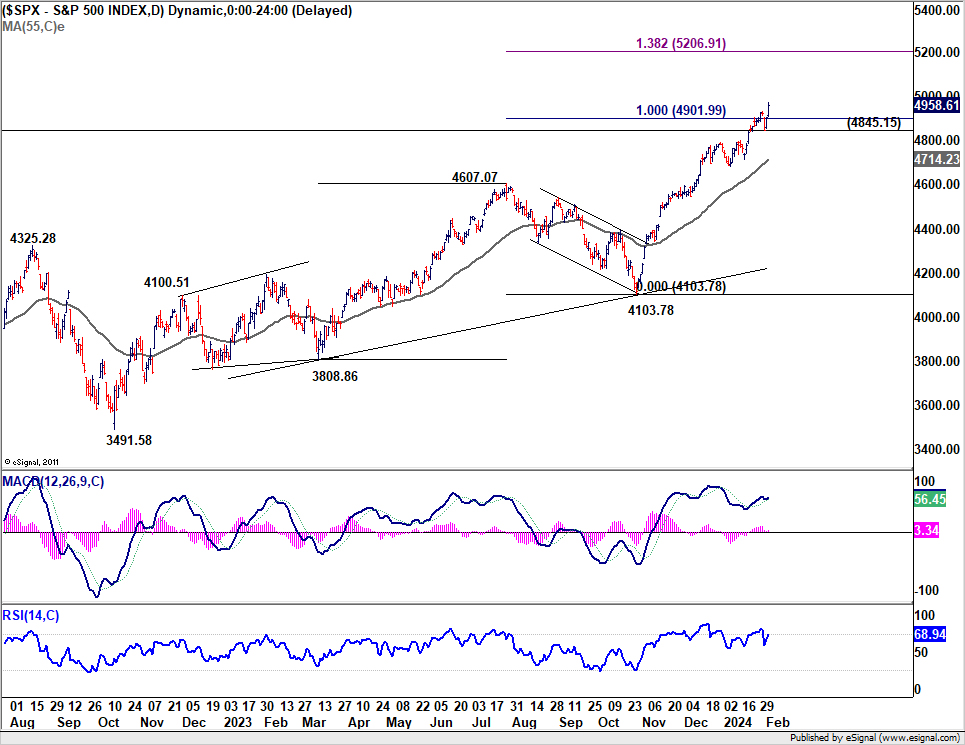
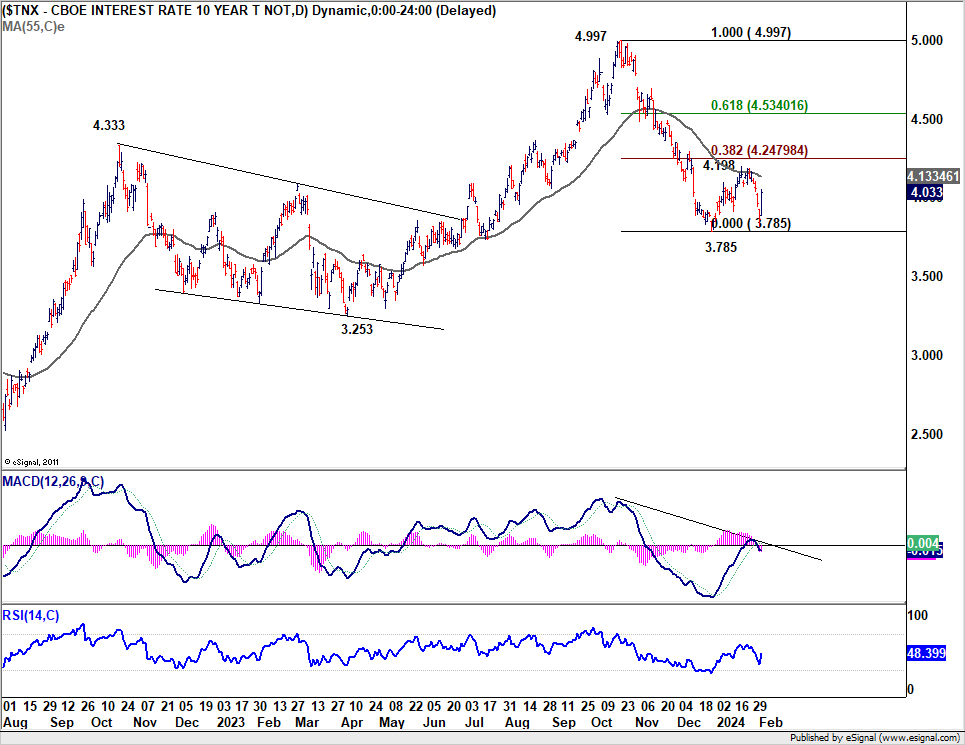
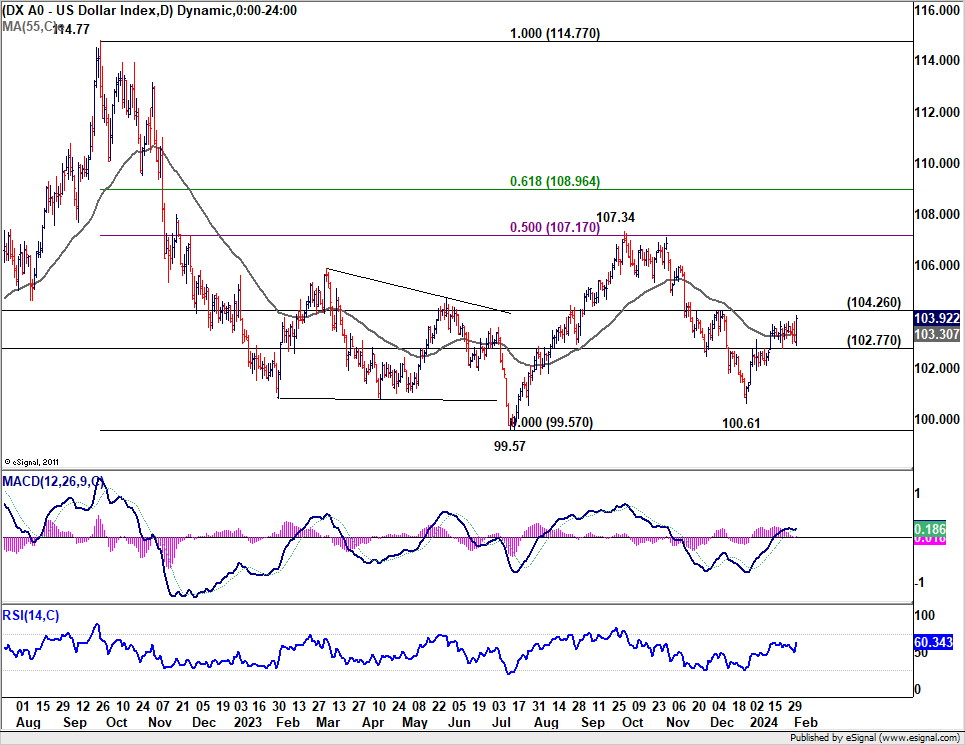
S&P 500 and DOW not only rebounded from their mid-week dips but soared to new record highs at 4958.61 and 38654.42, respectively. This surge in stocks was paralleled by a dramatic recovery in 10-year Treasury yield, which bounced back from a low of 3.817 to close the week above 4% handle, after having its most vigorous rally in over twelve months on Friday. Dollar index also resumed recent rebound to close at 103.92, with the greenback ending as the best performer in the currency markets.
The pivotal moment came during Fed Chair Jerome Powell's press conference following FOMC meeting, where he unequivocally dismissed the possibility of a rate cut in March. His firm stance initially set the markets on the edge. However, it was the surprisingly strong NFP figures that solidified market sentiment, with job growth exceeding 330k in consecutive months and wage growth accelerating to 0.6% mom in January, compelling a reevaluation of the timing for Fed's policy easing.
This reassessment significantly impacted the odds for a March rate cut, which plummeted from nearly 40% to a mere 20% following the NFP release. Furthermore, the expectation for a rate cut in May, previously priced in with high certainty, now appears overly optimistic given the labor market's strength and wage inflation's persistence.
Amidst these adjustments in monetary policy expectations, the resilience of the stock market, particularly the tech and communication sectors, was a standout. Meta's impressive earnings report spurred a surge in its stock price by more than 20% on Friday and catalyzed gains across the communication sector by 4.5%. This rally, which propelled S&P 500 to new heights, suggested a potential decoupling of tech stocks from the broader narrative surrounding interest rates, allowing them to trade more on the merits of their fundamentals.
Concurrently, concerns surrounding the banking sector flared up, notably with New York Community Bancorp's unexpected financial results stirring memories of last year's banking anxieties. This development contributed to the mid-week dip in 10-year yield on safe-haven flows and exerted downward pressure on Dollar. Nonetheless, these concerns appeared transient, with market's focus quickly back on adjusting to the revised outlook for Fed policy and absorbing the implications of the robust labor market data.
Technically, SPX should have overcome 100% projection of 3808.86 to 4607.07 from 4103.78 at 4901.99. Focus now turns to 5000 psychological level. Some resistance could be seen there to bring correction. But break of 4845.16 support is needed to indicate short term topping first. Otherwise, near term outlook will stay bullish. Sustained trading above 5000 could prompt upside re-acceleraton to 138.2% projection at 5206.91.
Friday's strong rebound in 10-year yield suggests that it's possibly now in the third leg of the sideway consolidation pattern from 3.3785 already. While further rise could be seen in the near term as range trading extends, strong resistance is expected from 38.2% retracement of 4.997 to 3.785 at 4.247 to limit upside. Downside breakout is still expected eventually, but delayed to a later stage.
Dollar Index's outlook is unchanged. The favored case is still that rise from 100.61 is the third leg of the consolidation pattern from 99.57. Break of 104.26 resistance will strength this bullish case and target 107.34 next. However, break of 102.77 support will suggest that the rebound is completed, and bring another fall back to 100.61, and possibly below.
AUD's Tough Week: Between RBA's Rate Cut Speculations and China SSE's Loss
Last week saw the Australian Dollar taking a significant hit, making it the weakest performer, amidst a complex web of economic and external factors. Domestically, the underwhelming Q4 CPI data from Australia has solidified market consensus that RBA will not alter its policy stance in the imminent session. Furthermore, the anticipation has now shifted towards identifying the timeline for rate reductions, with a majority of economists pointing towards August, conditional upon disinflation trend in the coming months.
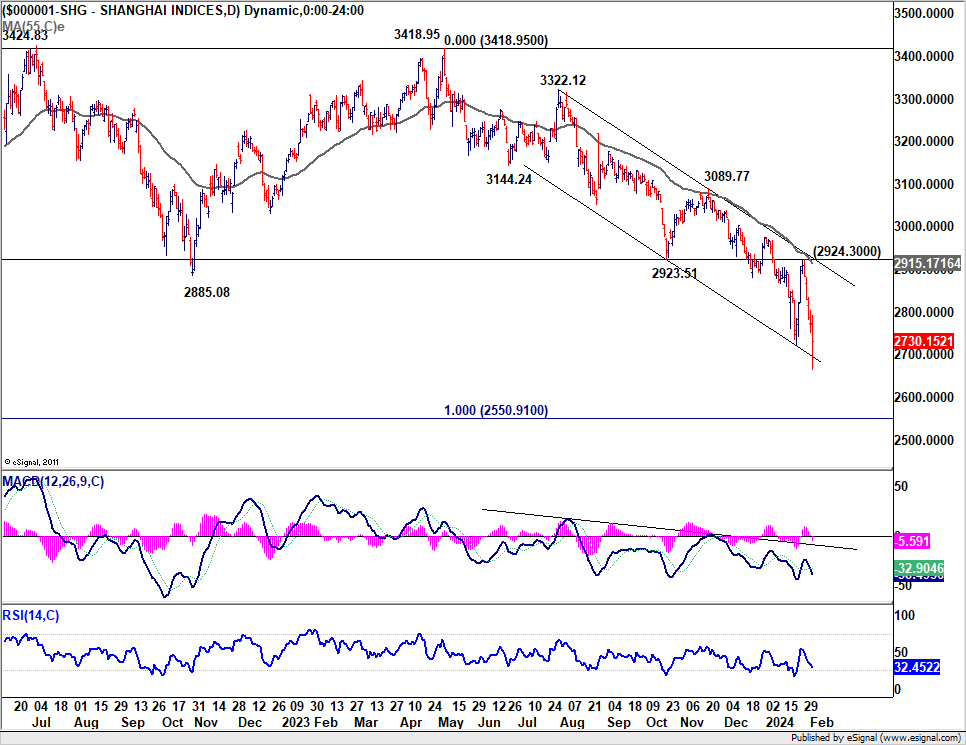
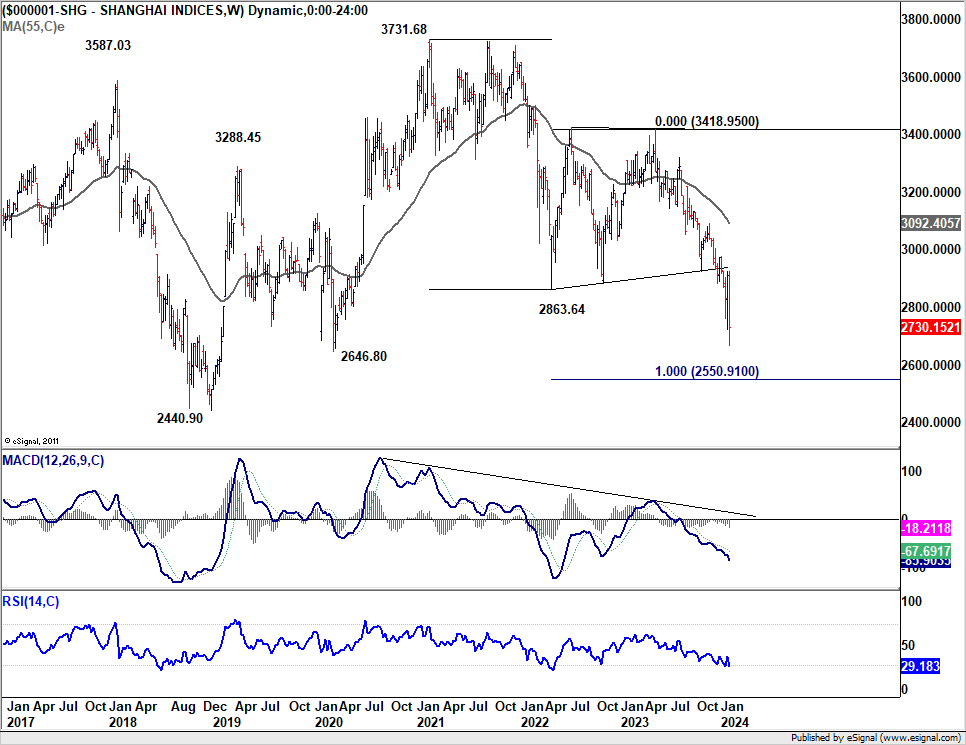
Externally, the Aussie was further burdened by the persisting vulnerabilities in China's stock market. Despite a momentary uplift following PBoC decision to cut the reserve requirement ratio in the prior week, optimism was short-lived as Shanghai SSE Composite recorded significant losses last week, marking its most considerable weekly decline since October 2018.
This downturn underscores the fleeting impact of policy measures on investor confidence and highlights the ongoing concerns surrounding China's troubled real estate sector, Hong Kong Court's liquidation order for Evergrande was far from offering a resolution, but reignited concerns over the sector's broader stability and raised pressing questions about the future prospects of similarly distressed developers.
A pressing question for the SSE now is whether there would be enough support from around, or above, 2550.91 long term projection level (100% projection of 3731.68 to 2863.64 from 3418.95) to help the index bottom. Or, it will need to dive through 2440.90 (2018 low) to find enough bargain hunter. But in any case, break of 2924.30 resistance is needed to indicate short term bottoming, or near term outlook will stay bearish.
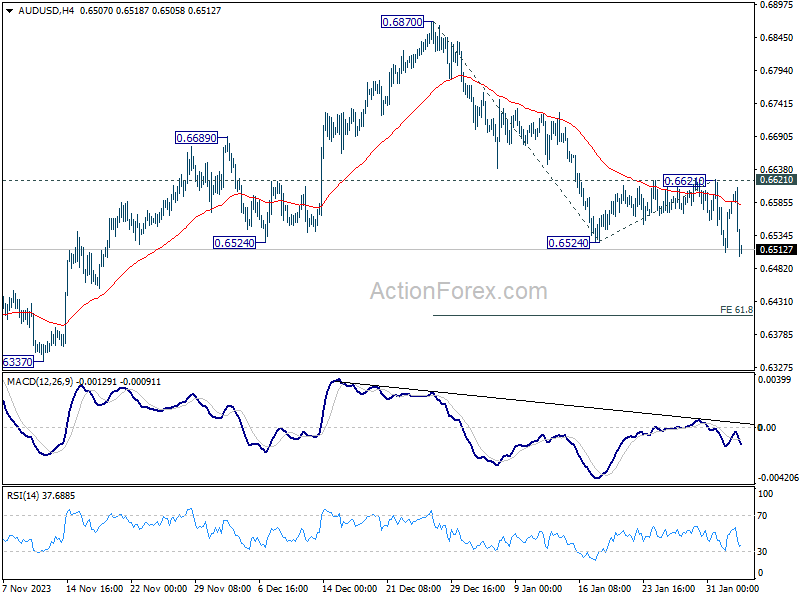
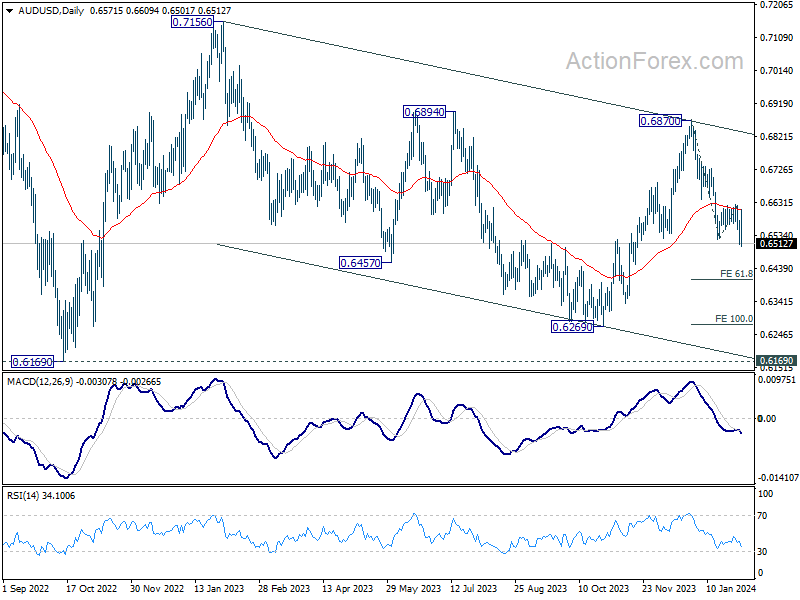
As for Aussie, AUD/USD was the top mover last week, ended down -0.97%. Rejection by 55 D EMA (now at 0.6606) is strengthening that bearish case that decline from 0.6870 is another falling leg of the corrective pattern from 0.7156. Near term outlook will stay bearish as long as 0.6621 resistance holds. Next target is 61.8% projection of 0.6870 to 0.6524 from 0.6621 at 0.6407.
Euro and Sterling Dip but Display End-Week Recovery
Euro and Sterling found themselves trailing near the bottom of the currency performance chart, yet their overall performance was far from disastrous. Both currencies managed to claw back some lost ground as the week drew to a close, particularly against the backdrop of evolving central bank narratives and key economic data releases, albeit with exceptions against Dollar and Canadian.
ECB officials suggested a timeline for the initial rate cut somewhere between April and June, with the latter appearing more probable. This cautious stance finds support in the latest economic data: Eurozone's GDP remained flat in Q4, skirting recession by the narrowest of margins. Additionally, January's headline and core CPI readings, though decelerating, were above market expectations. This juxtaposition of data might embolden ECB's hawkish faction to advocate for a delay in monetary easing.
BoE meeting painted a picture of an institution not yet poised for rate reductions. Notably, the meeting concluded with a three-way split vote - a rarity not seen since 2008, featuring two hawks pushing for a hike and one dove advocating for a cut. Subsequently, Chief Economist Huw Pill underscored that rate cuts were "some way off," citing an insufficient evidence base pointing towards inflation returning to target levels.
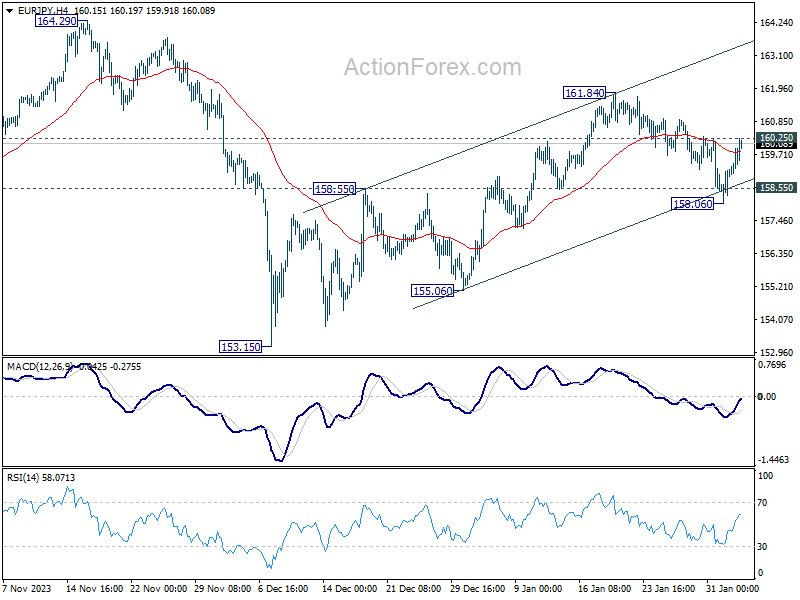
EUR/JPY rebounded strongly after dipping to 158.06, after drawing support from near term rising channel and 158.55. A break above 160.25 minor resistance will suggest that the pull back from 161.84 was compelted, and rise from 153.15 is ready to resume through this resistance.
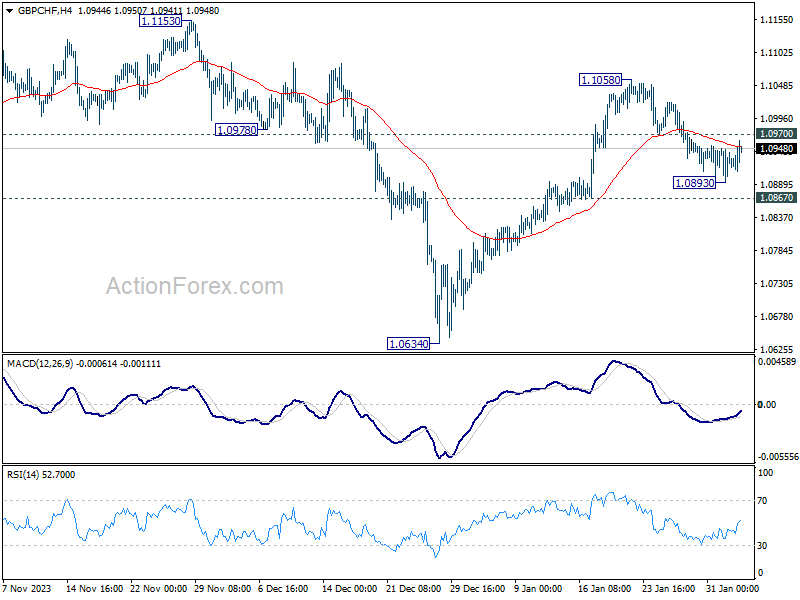
GBP/CHF's pull back lost momentum after dipping to 1.0893, ahead of 1.0867 minor support. Rise from 1.0634 is still in favor to continue. Firm break above 1.0970 minor resistance will argue that this rally is ready to resume through 1.1058 resistance.
USD/JPY Weekly Outlook
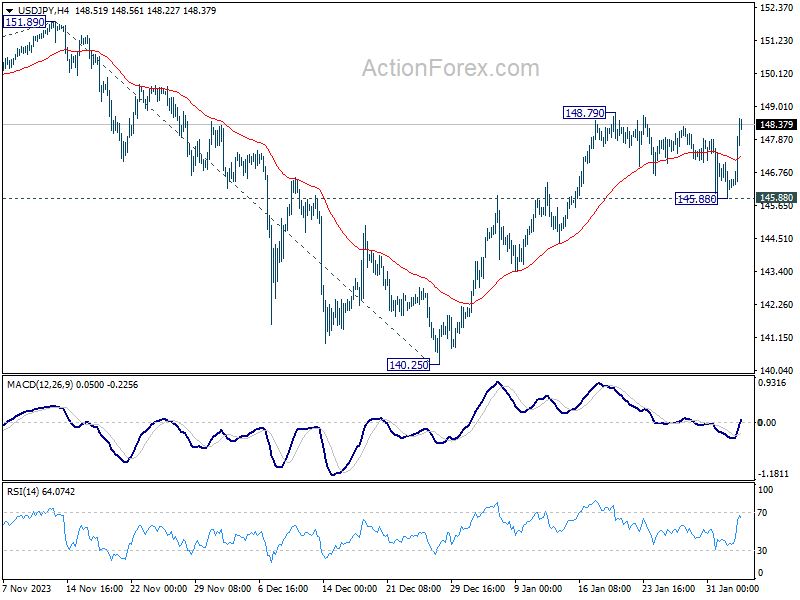
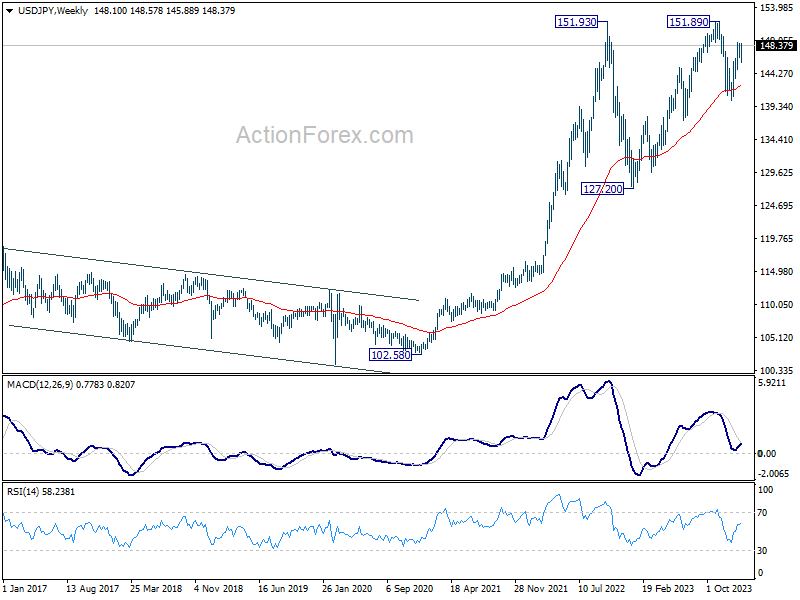
USD/JPY dipped to 145.88 last week as consolidation from 148.79 extended, but rebounded strongly since then. Initial focus now on 148.79 this week. Firm break there will resume the rally from 140.25 to 151.89/93 key resistance zone. For now, further rise will remain in favor as long as 145.88 holds, in case of retreat.
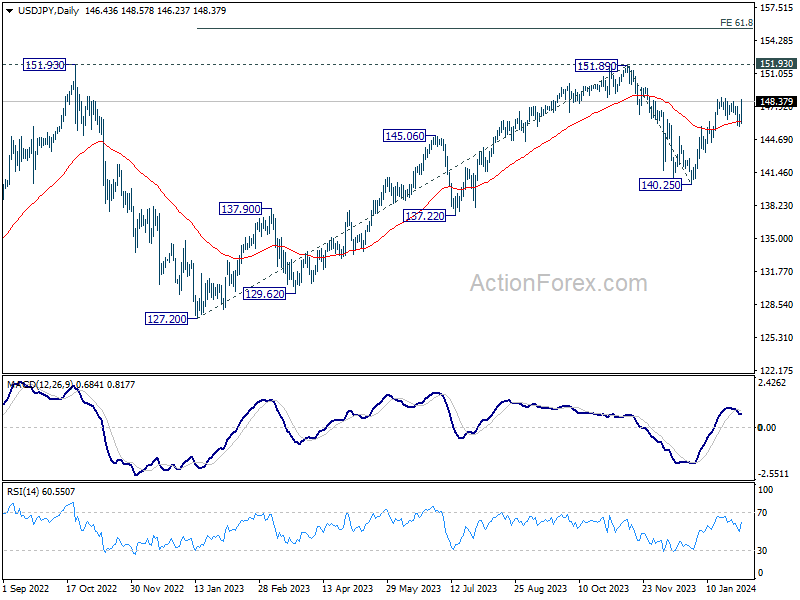
In the bigger picture, fall from 151.89 is seen as a correction to the rally from 127.20, which might have completed at 140.25 already. Firm break of 151.89/93 resistance zone will confirm up trend resumption next target will be 61.8% projection of 127.20 to 151.89 from 140.25 at 155.50. This will now remain the favored case as long as 140.25 support holds.
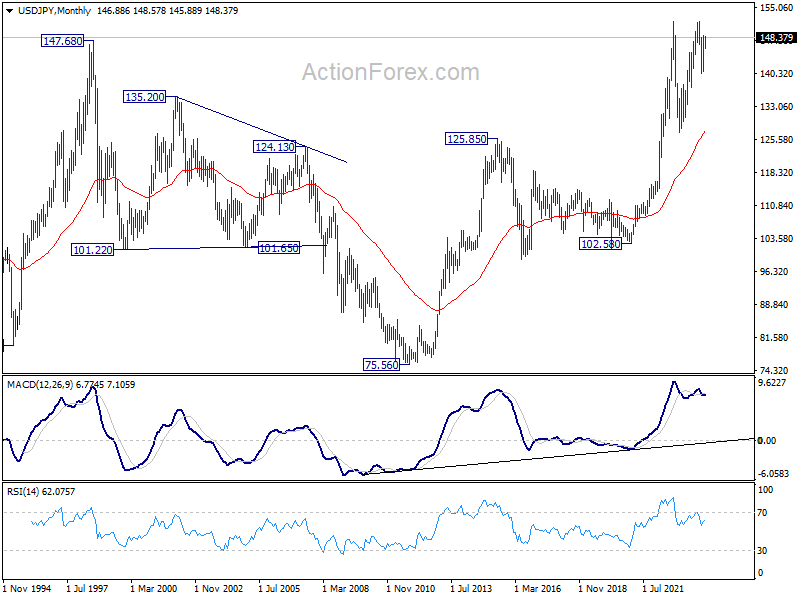
In the long term picture, as long as 125.85 resistance turned support holds (2015 high), up trend from 75.56 (2011 low) is still in favor to continue through 151.93 (2022 high) at a later stage.
EUR/USD Weekly Outlook
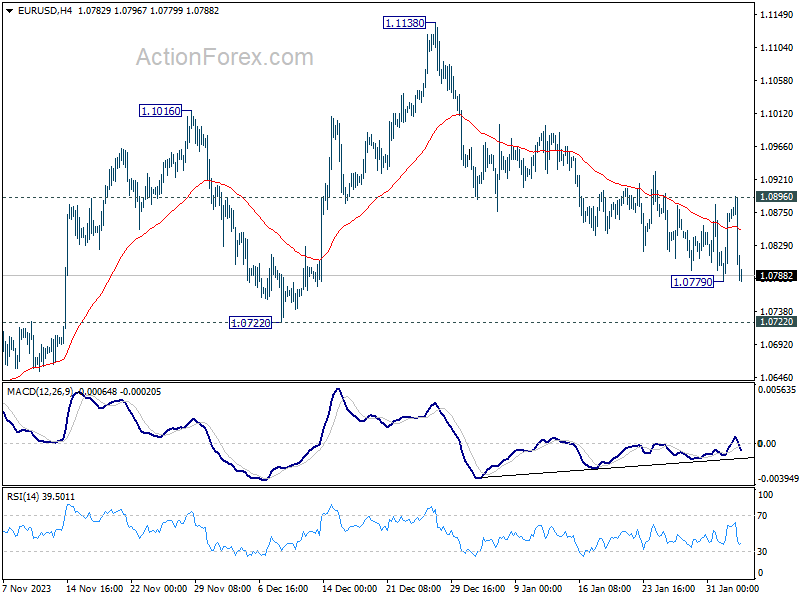
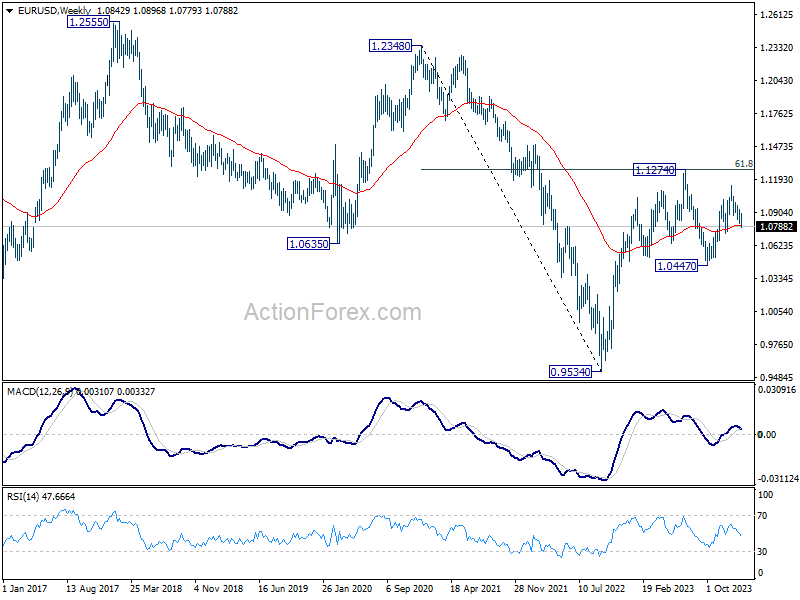
EUR/USD's decline from 1.1138 extended lower last week but continued to lose downside momentum. Break of 1.0779 will resume the fall, but considering bullish convergence condition in 4H MACD, downside could be contained by 1.0722 support. On the upside, break of 1.0896 will turn bias back to the upside for stronger rebound towards 1.1138. However, decisive break of 1.0722 will argue that whole rise from 1.0447 has completed, and target this low.
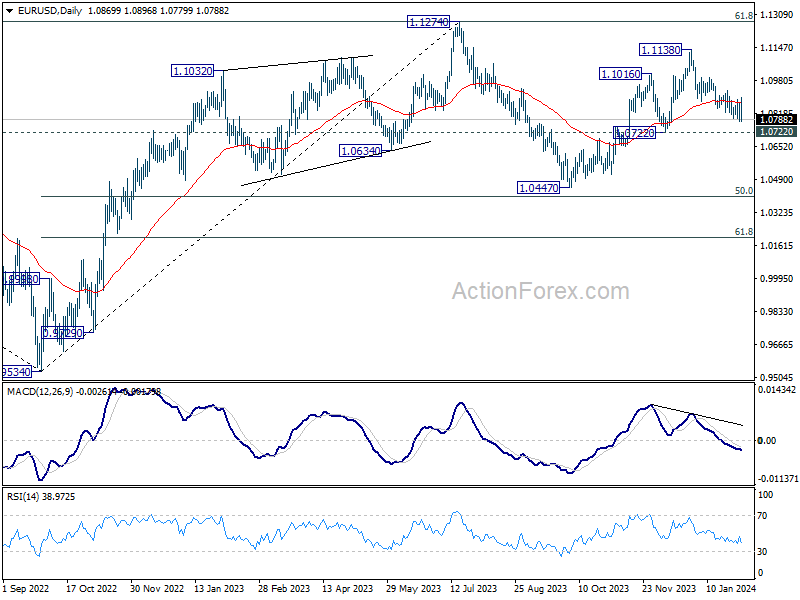
In the bigger picture, price actions from 1.1274 are viewed as a corrective pattern to rise from 0.9534 (2022 low). Rise from 1.0447 is seen as the second leg. While further rally could cannot be ruled out, upside should be limited by 1.1274 to bring the third leg of the pattern. Meanwhile, sustained break of 1.0722 support will argue that the third leg has already started for 1.0447 and possibly below.
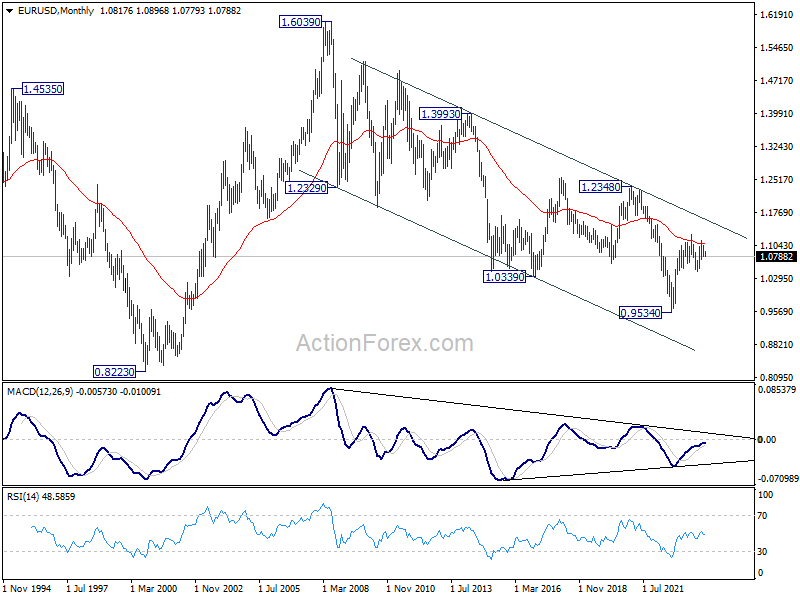
In the long term picture, a long term bottom is in place at 0.9534 on bullish convergence condition in M MACD. It's still early to call for bullish trend reversal with the pair staying inside falling channel in the monthly chart. Nevertheless, sustained trading above 55 M EMA (now at 1.1059) and break of 1.1274 resistance will raise the chance of reversal and target 1.2348 resistance for confirmation.
USD/JPY Weekly Outlook
USD/JPY dipped to 145.88 last week as consolidation from 148.79 extended, but rebounded strongly since then. Initial focus now on 148.79 this week. Firm break there will resume the rally from 140.25 to 151.89/93 key resistance zone. For now, further rise will remain in favor as long as 145.88 holds, in case of retreat.
In the bigger picture, fall from 151.89 is seen as a correction to the rally from 127.20, which might have completed at 140.25 already. Firm break of 151.89/93 resistance zone will confirm up trend resumption next target will be 61.8% projection of 127.20 to 151.89 from 140.25 at 155.50. This will now remain the favored case as long as 140.25 support holds.
In the long term picture, as long as 125.85 resistance turned support holds (2015 high), up trend from 75.56 (2011 low) is still in favor to continue through 151.93 (2022 high) at a later stage.
GBP/USD Weekly Outlook
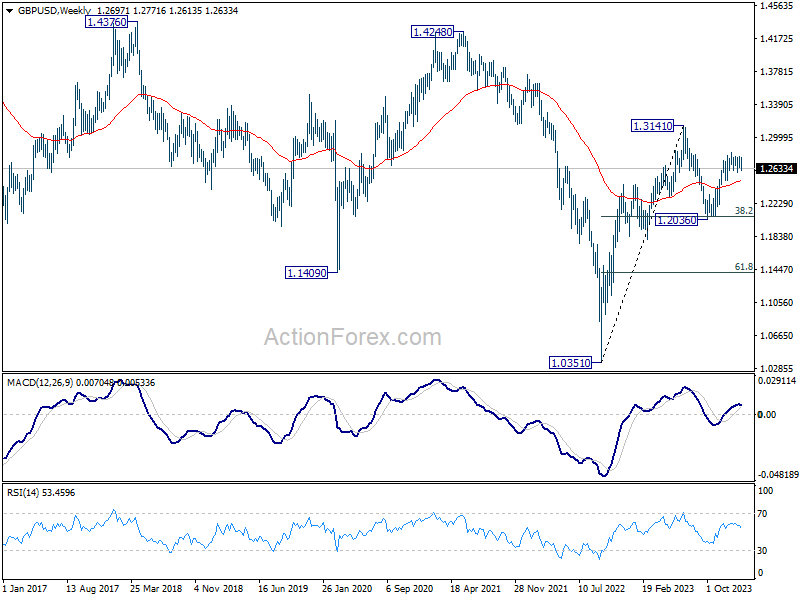
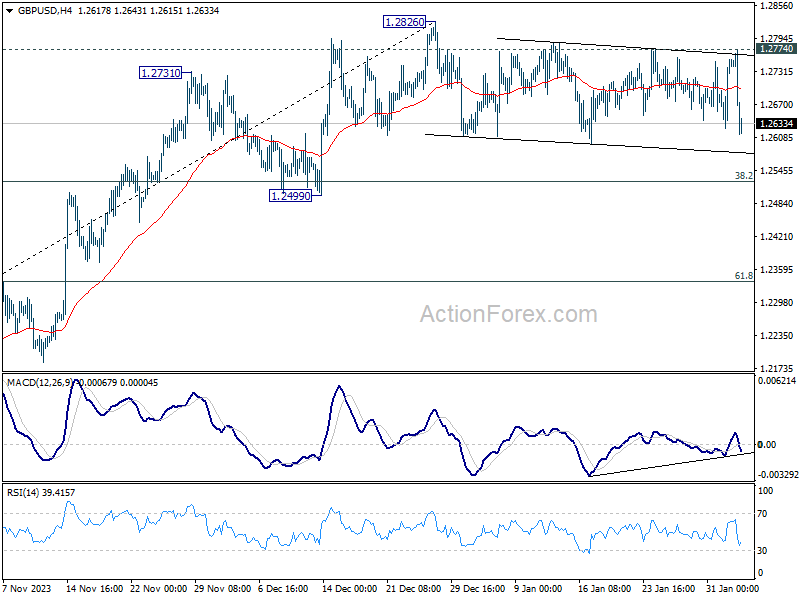
GBP/USD's sideway consolidation continued last week and outlook is unchanged. Initial bias remains neutral this week first. In case of another fall, downside should be contained above 1.2499 support to bring rebound. On the upside, firm break of 1.2774 resistance will suggest that consolidation pattern has completed. Further rise should be seen through 1.2826 to resume the rally from 1.2036. Next target will be 1.3141 high.
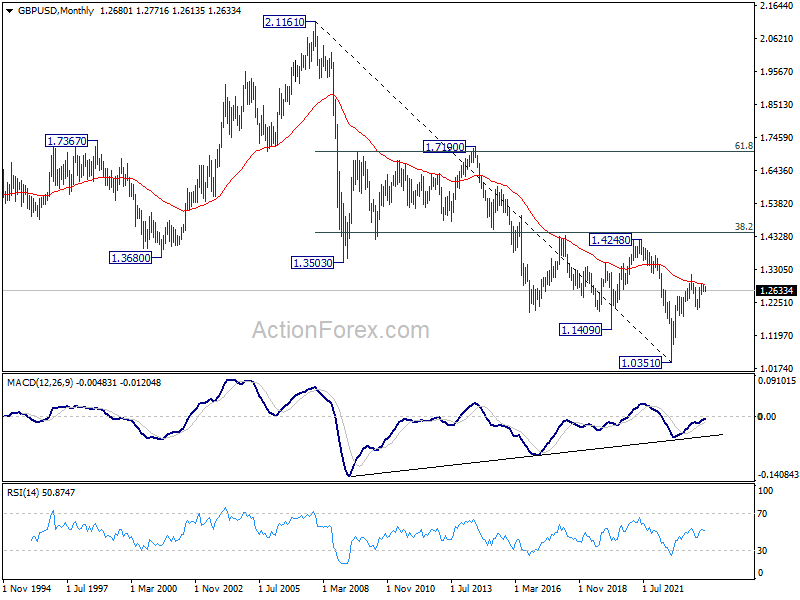
In the bigger picture, price actions from 1.3141 medium term top are seen as a corrective pattern to up trend from 1.0351 (2022 low). Rise from 1.2036 is seen as the second leg that's still in progress. Upside should be limited by 1.3141 to bring the third leg of the pattern. Meanwhile, break of 1.2499 support will argue that the third leg has already started for 38.2% retracement of 1.0351 (2022 low) to 1.3141 at 1.2075 again.
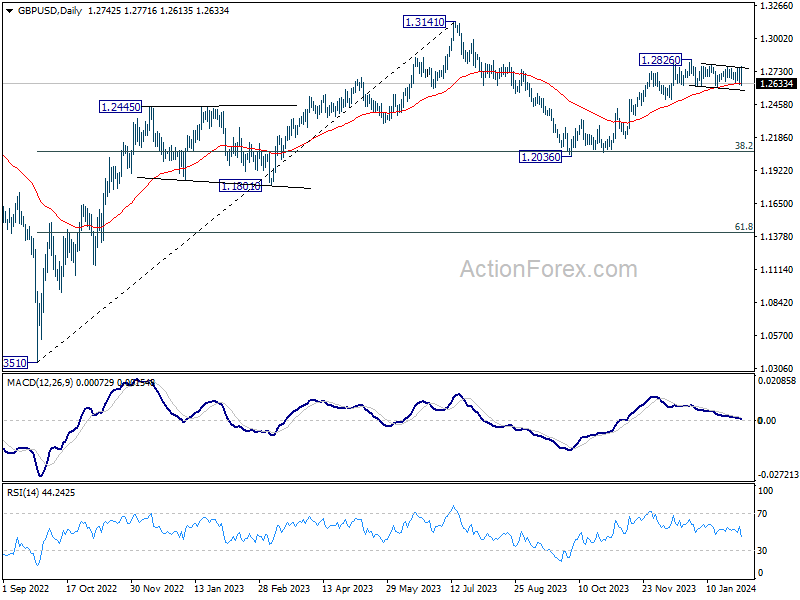
In the long term picture, a long term bottom should be in place at 1.0351 on bullish convergence condition in M MACD. But momentum of the rebound from 1.3051 argues GBP/USD is merely in consolidation, rather than trend reversal. Range trading is likely between 1.0351/4248 for some more time.