

Sample Category Title
EURUSD Consolidates After Advance Pauses
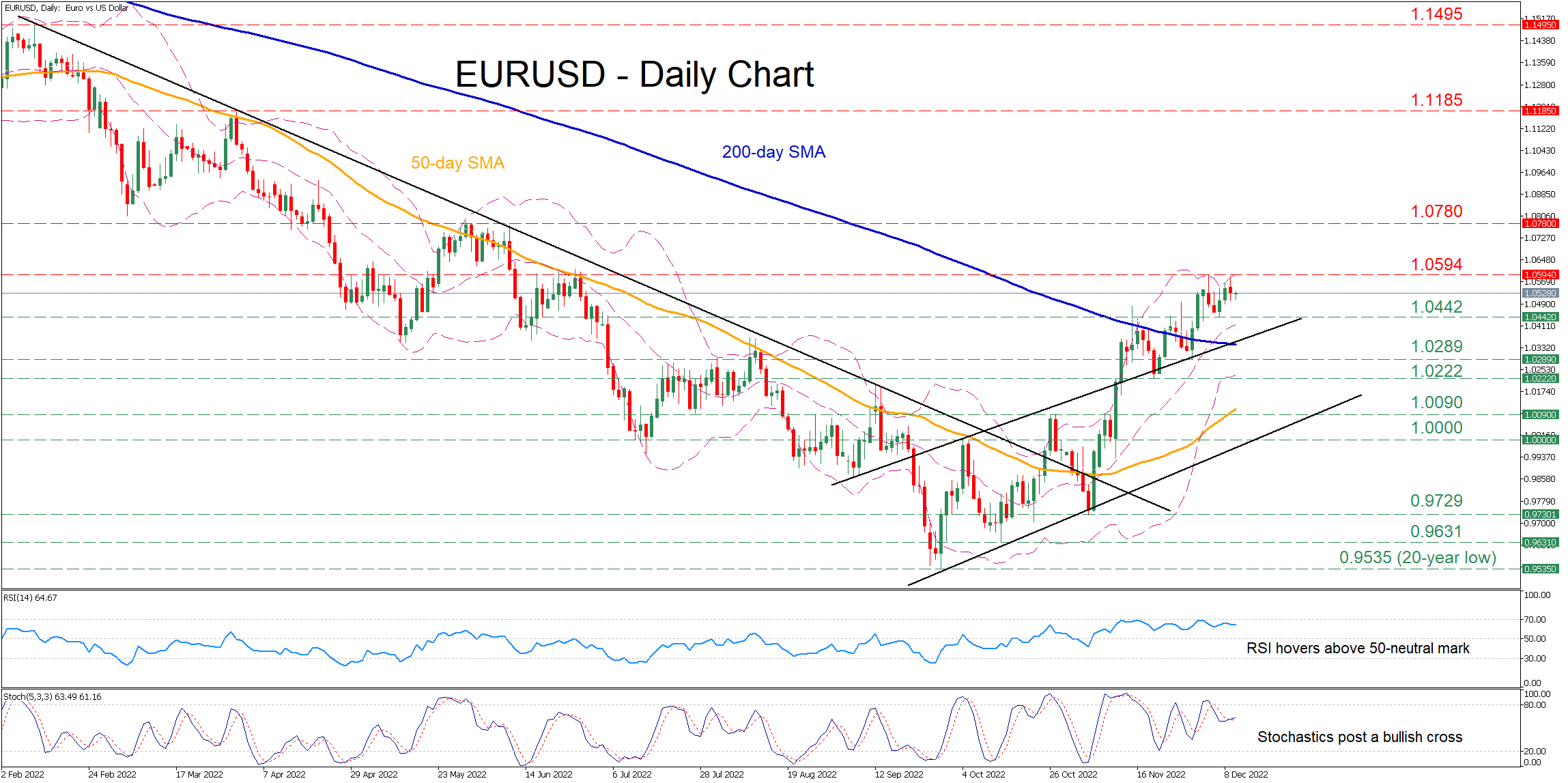
EURUSD has been edging higher since early October after its long-term downtrend paused at the 20-year low of 0.9535. However, the pair has been stuck in a sideways pattern in the last few daily sessions after its advance failed to surpass the 1.0594 barrier.
The momentum indicators currently suggest that bullish forces are in control. Specifically, the RSI is hovering above its 50-neutral mark, while the stochastic oscillator has posted a bullish cross.
To the upside, if buyers re-emerge and push the price higher, initial resistance might be encountered at the recent high of 1.0594. Conquering this barricade, the bulls could then aim at the May peak of 1.0780. Even higher, the March resistance of 1.1185 might curb any further advances.
On the flipside, bearish actions could send the price to test the 1.0442 support region. Should that floor collapse, the spotlight could turn to 1.0289 before the November support of 1.0222 comes under examination. Failing to halt there, the pair could descend towards the 1.0090 resistance zone, which could now act as support.
In brief, EURUSD appears to have altered its short-term picture back to positive after jumping above its 200-day simple moving average (SMA). Hence, a break above the 1.0594 ceiling could signal the resumption of its rebound.
Gold Bulls Look Exhausted Near 200-day SMA
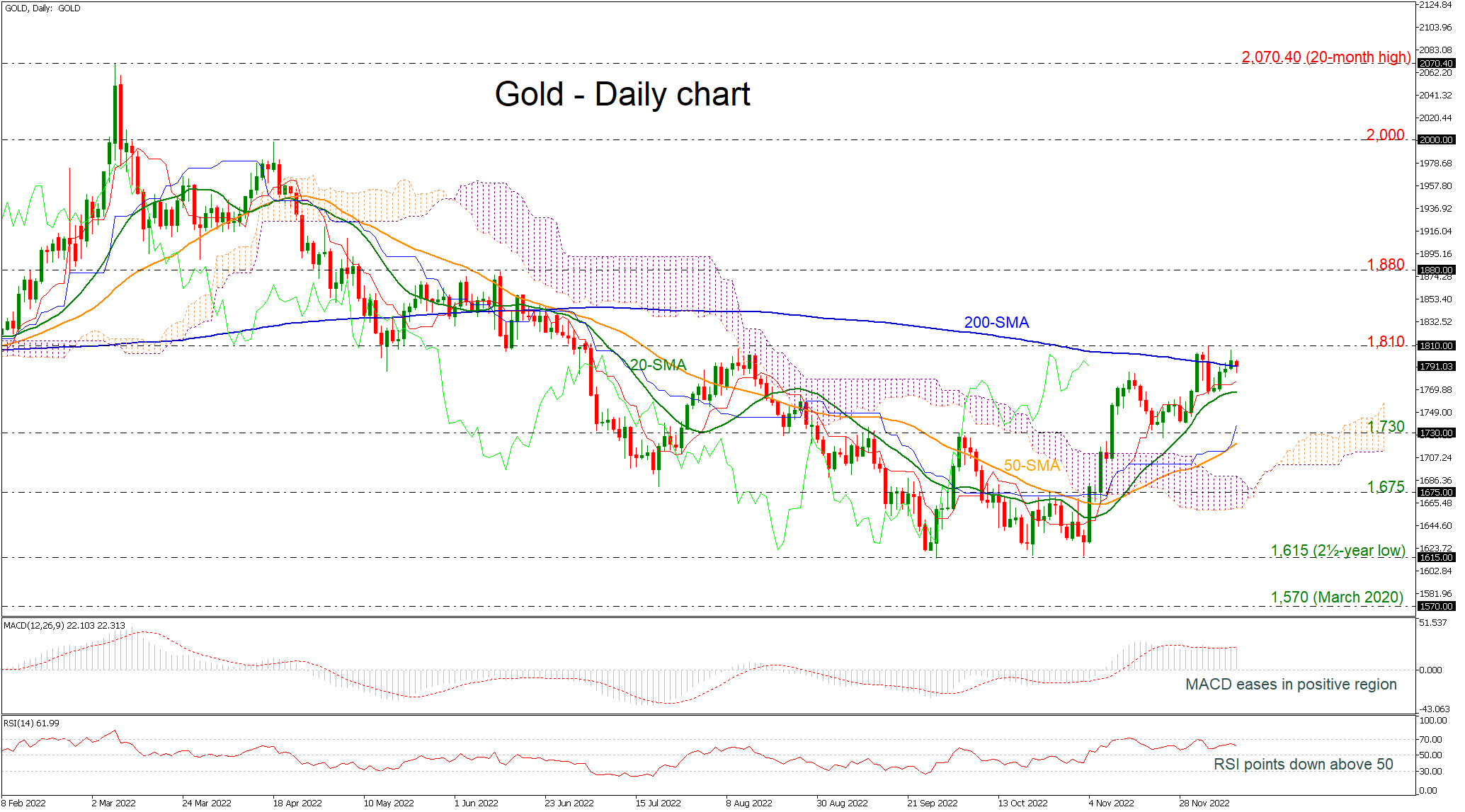
Gold prices have been battling with the 200-day simple moving average (SMA) over the last week, posting some spikes towards the 1,810 resistance level. Any movements beyond these obstacles could add to the optimism for more aggressive bullish actions.
However, the technical oscillators are suggesting some losses in the near future. The MACD fell below its trigger line in the positive territory, while the RSI is sloping downwards above the neutral threshold of 50.
Should weakness extend below the 200-day SMA line, support to downside movements could initially be detected from the 20-day SMA at 1,766 ahead of the 1,730 barrier. Clearing that zone, the next stop could be near the 50-day SMA at 1,720 before the bears hit the 1.675 line.
Alternatively, the pair needs to overcome the 1,810 resistance top to meet a key barrier of 1,880. The 2,000 psychological mark could act as resistance too before a more important battle starts near the 20-month high of 2,070, switching the outlook to strongly bullish.
In the medium-term picture, the sentiment will turn bullish if the price surpasses the 200-day SMA and the 1,810 barrier.
Risk-off/Wait-and-See Approach Makes Perfect Sense
Markets
Friday’s session had some interesting features in store. European traders eyed the second voluntary TLTRO repayment opportunity. The amount totaled a little less than €450bn, topping the €296bn in November and bringing the remaining outstanding amount to around €1.3bn. In US dealings, a higher-than-expected PPI reading served as a reminder of sticky price pressures and traders focused on more resilient headline US consumer confidence (U. of Michigan) instead of a sub indicator showing 1-year inflation expectation unexpectedly easing. Core bond yields rebounded. German yields underperformed vs swaps, in line with one could expect following the TLTRO repayment. Yields rose between 9.1 to 11.3 bps with the long-end slightly underperforming the front. US yields added 3.8 bps (2y) to 12.9 bps (30y). In both areas, the 10y yield support at 1.77% and 3.42 (and even 3.55%) respectively thus survived the week. The dollar held a slight advantage over the euro. EUR/USD returned from close to but below 1.06 to 1.054. DXY (trade-weighted dollar) closed just below 105.01 (38.2% retracement of the 2021-2022 rally). Sterling was strong but we’ve seen little reason for it. EUR/GBP tested 0.8567 critical support for an umpteenth time but it lived to fight another day. The pair eventually closed at 0.8592. Cable (GBP/USD) eked out a slight gain to 1.2259. Equities finished mixed with 0.54% gains in Europe (Eurostoxx50) but up to 0.90% lower in the US (DJI).
The Asian session this morning is a dull one. Stocks slip in the wake of WS’s performance. Core bounds recoup a tad of Friday’s slide and the US dollar enjoys some safe haven flows. This risk-off/wait-and-see approach makes perfect sense at the start of a pivotal trading week. All major central banks, Fed, ECB and Bank of England, and some smaller ones hold their final policy meeting of the year. The former two publish new forecasts that will offer guidance on what to expect for 2023. The monetary festive kicks off on Wednesday with the Fed and we probably shouldn’t expect a lot of market zest in the run-up to it. Tomorrow’s US CPI reading and to a lesser extent UK CPI on Wednesday do serve as the last wildcards though. For today, the double $40bn 3-y and $32bn 10-y auction is worth watching to gauge investor appetite after the recent yield correction lower, especially on the long-end of the curve. But it won’t dramatically alter market positioning. Perhaps capturing less (market) attention, but let’s also watch commodity markets, especially gas and power prices. Europe is facing its first serious stress test with temperatures dropping well in subzero territory this week.
News Headlines
Rating agency Fitch confirmed the UK’s AA- rating while keeping the outlook negative. The latter reflects the UK's rising government debt and significant fiscal risks derived from the country’s weaker macroeconomic outlook primarily due to the severe energy shock. The UK economy will enter recession in 2H22 and contract by 1.2% in 2023. Short term government support will avoid a deeper recession and help a gentle (1.5%) recovery in 2024. Inflation is expected to average 9.1% this year, before gradually declining to 3.4% (avg) in 2024. Fitch projects that the general government deficit will remain high at 6.6% of GDP in 2022 and 6.9% in 2023, before declining to 5.1% in 2024, consistently remaining above the projected average deficits of 2.4% for the 'AA' median. The debt ratio is forecast to rise to 107% of GDP by 2024 and roughly stabilize at that level over the medium term. The UK is rated similarly by Moody’s (Aa3; negative) and one notch better at S&P (AA, negative).
Czech Industry Minister Sikela urged governments to agree on a temporary gas market correction mechanism ahead of tomorrow’s extraordinary EU Council on transport, telecommunications and energy. The current gas price cap proposal would kick in if European reference prices (Dutch TTF) hit €275 per megawatt hour and the gap between world prices is more than €58. In response to some countries wanting a more aggressive mechanism, the Czech government, who holds the EU’s rotating presidency, floated the idea of lowering the thresholds to €220 and €35 respectively. Other countries want a cautious approach to avoid endangering the security of supply.
DAX 40 Struggles for Support
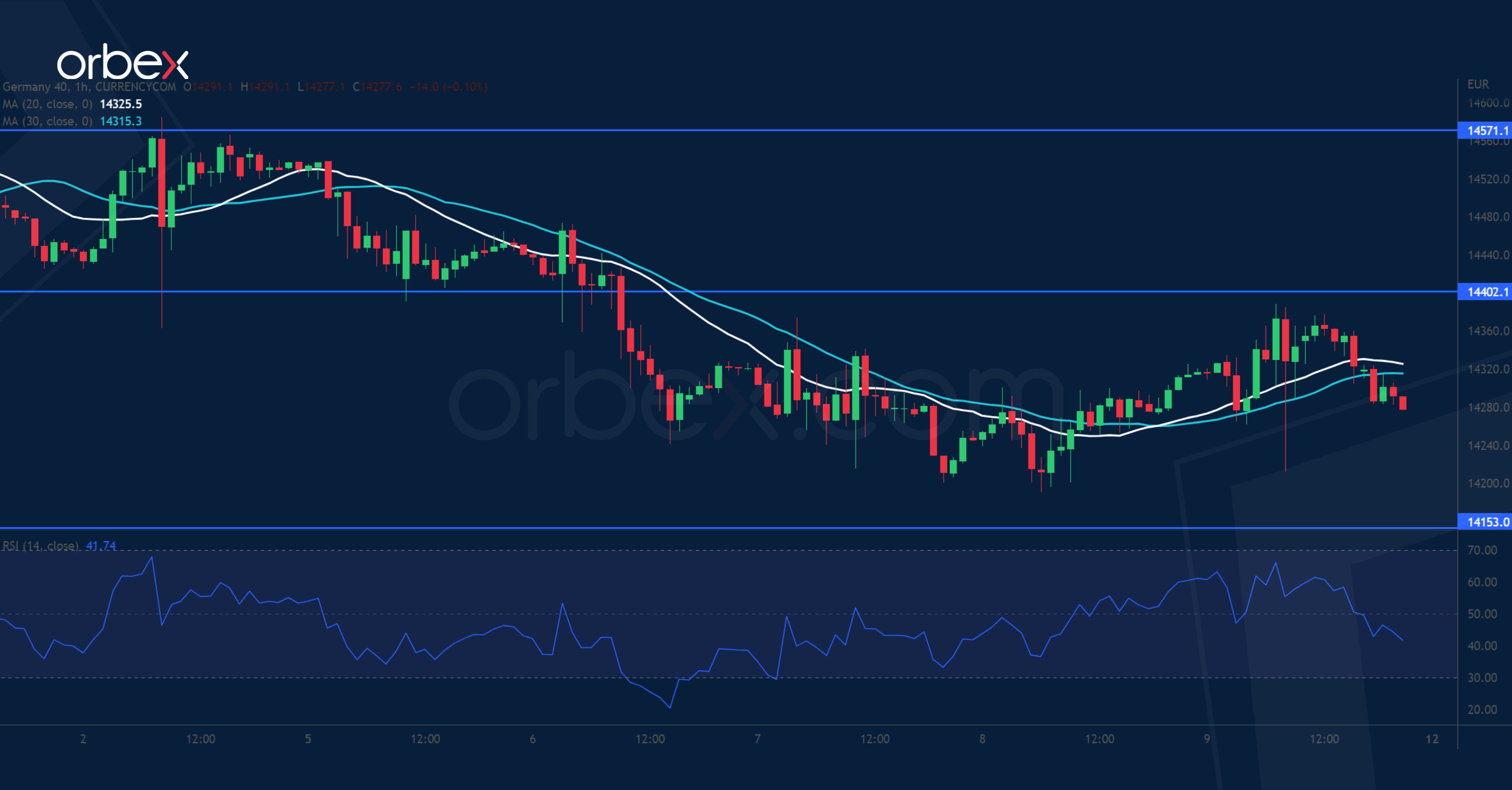
The Dax 40 fell back as traders took profit ahead of a data-intensive week. The bulls have struggled to lift offers around June’s peak of 14650. Instead, a fall below 14350 prompted short-term buyers to take some chips off the table. The former demand zone around 14400 has become a supply one, and more sellers would join the rank if the buy side fails to reclaim it. The recent low of 14150 sits on the 30-day moving average and is a major support. The index could be vulnerable to a deep retracement should it be pierced.
EUR/CHF Pulls Back
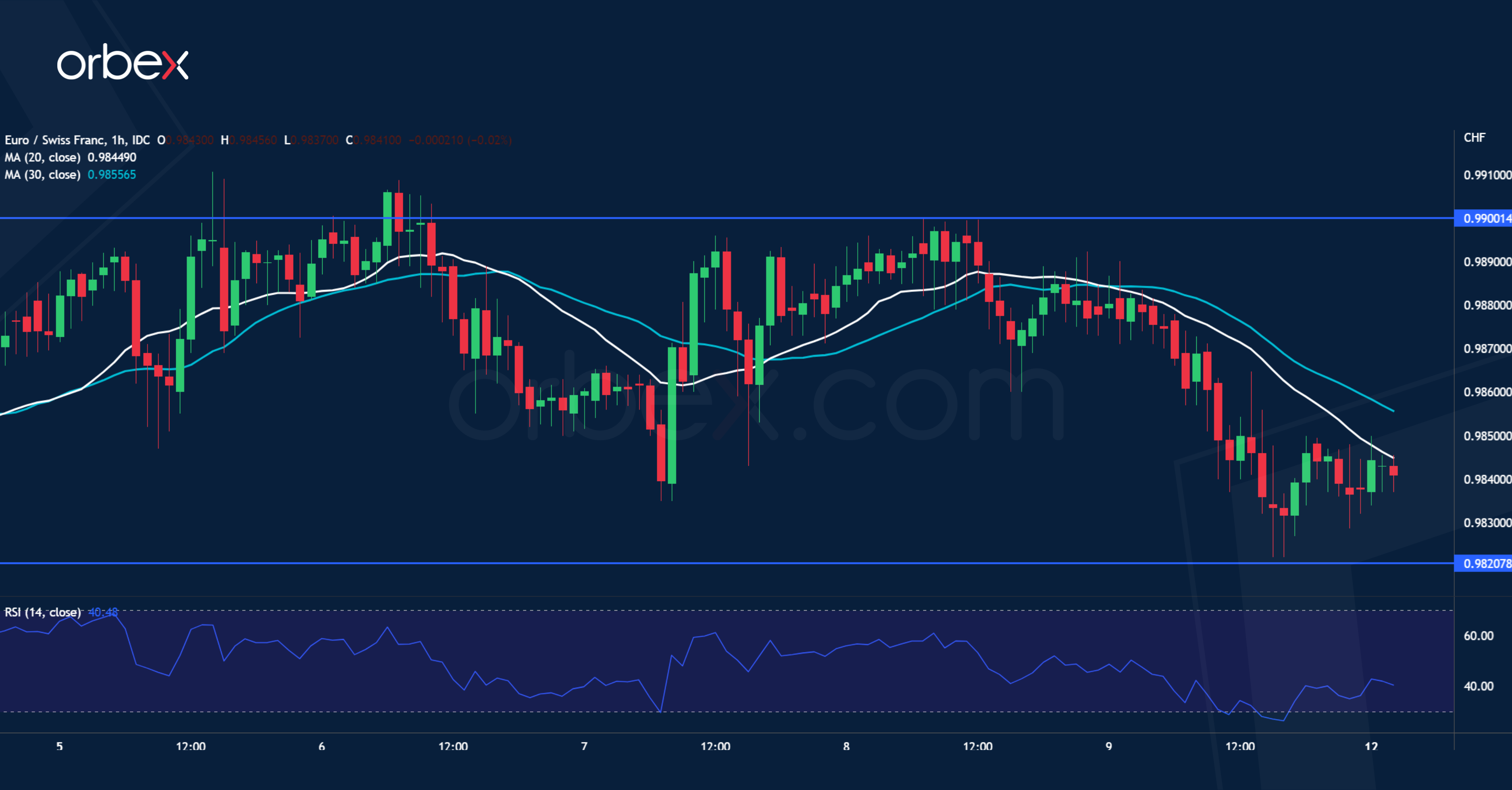
The euro retreats ahead of the ECB interest rate decision. On the daily chart, the single currency is still consolidating its gains after breaking above September’s high of 0.9850. The supply zone near the recent peak (0.9940) seems to be a hard hurdle to clear. The choppy price action is a sign of hesitation due to a lack of catalyst. 0.9820 is the closest support and the RSI’s oversold condition may attract some bargain hunters. A bounce above the psychological level of 0.9900 could trigger a sustained recovery.
USD/JPY Golds Steady
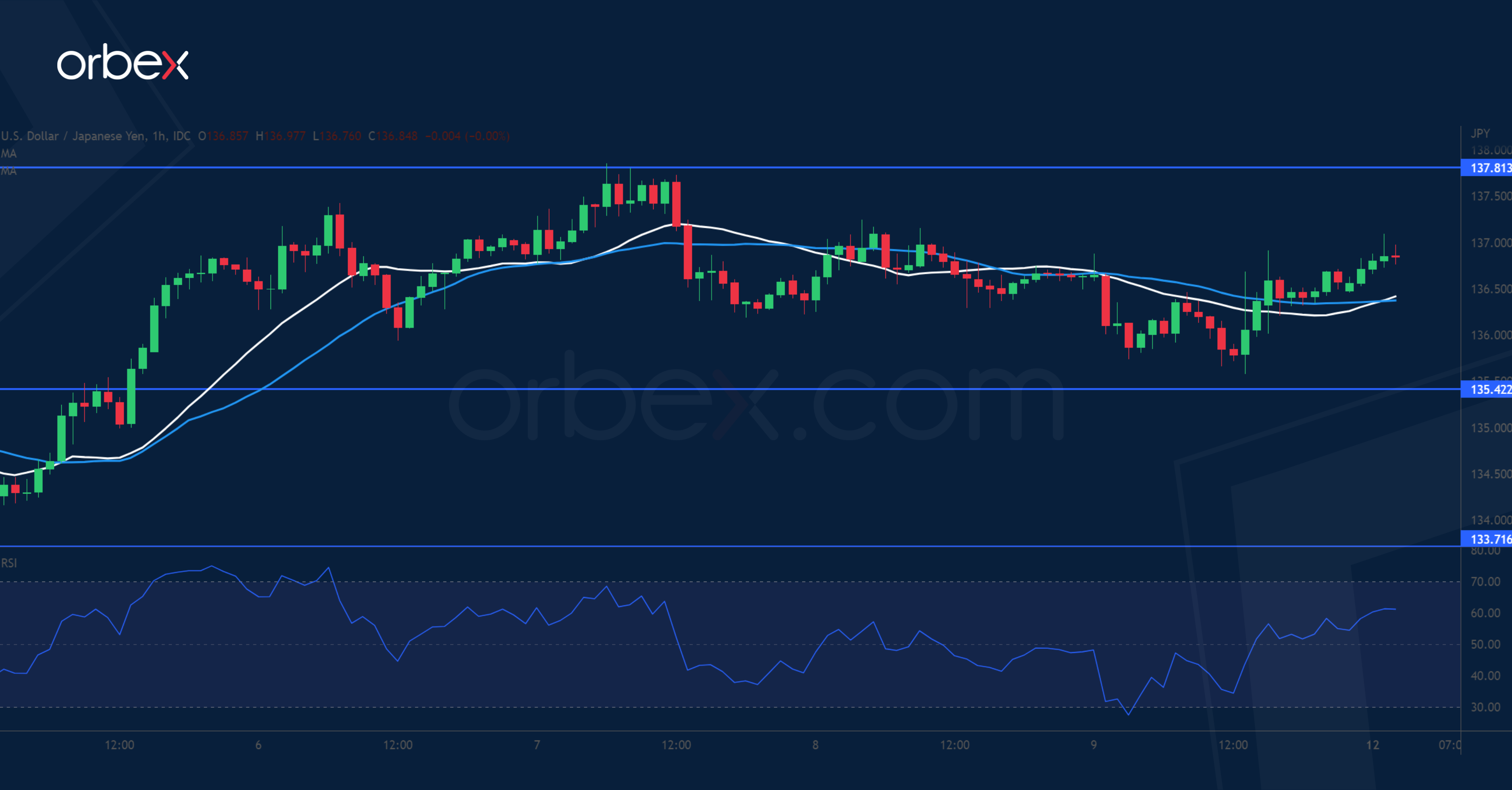
The US dollar edged higher after November’s PPI beat estimates. Sentiment remains fragile after the price made a U-turn at 137.80, which was a brief support in the previous consolidation. Some buying interest has emerged from 135.40 with the RSI returning to the neutral area. A break above 137.80 would extend gains to the top of a faded rebound at 139.70. Only its breach could lighten up the mood and attract more buyers. On the downside, 133.70 would be a critical floor to keep the current bounce valid.
One for the Road – Heavyweight Data and Central bank Decisions Before Year End
EUR/USD awaits double catalyst
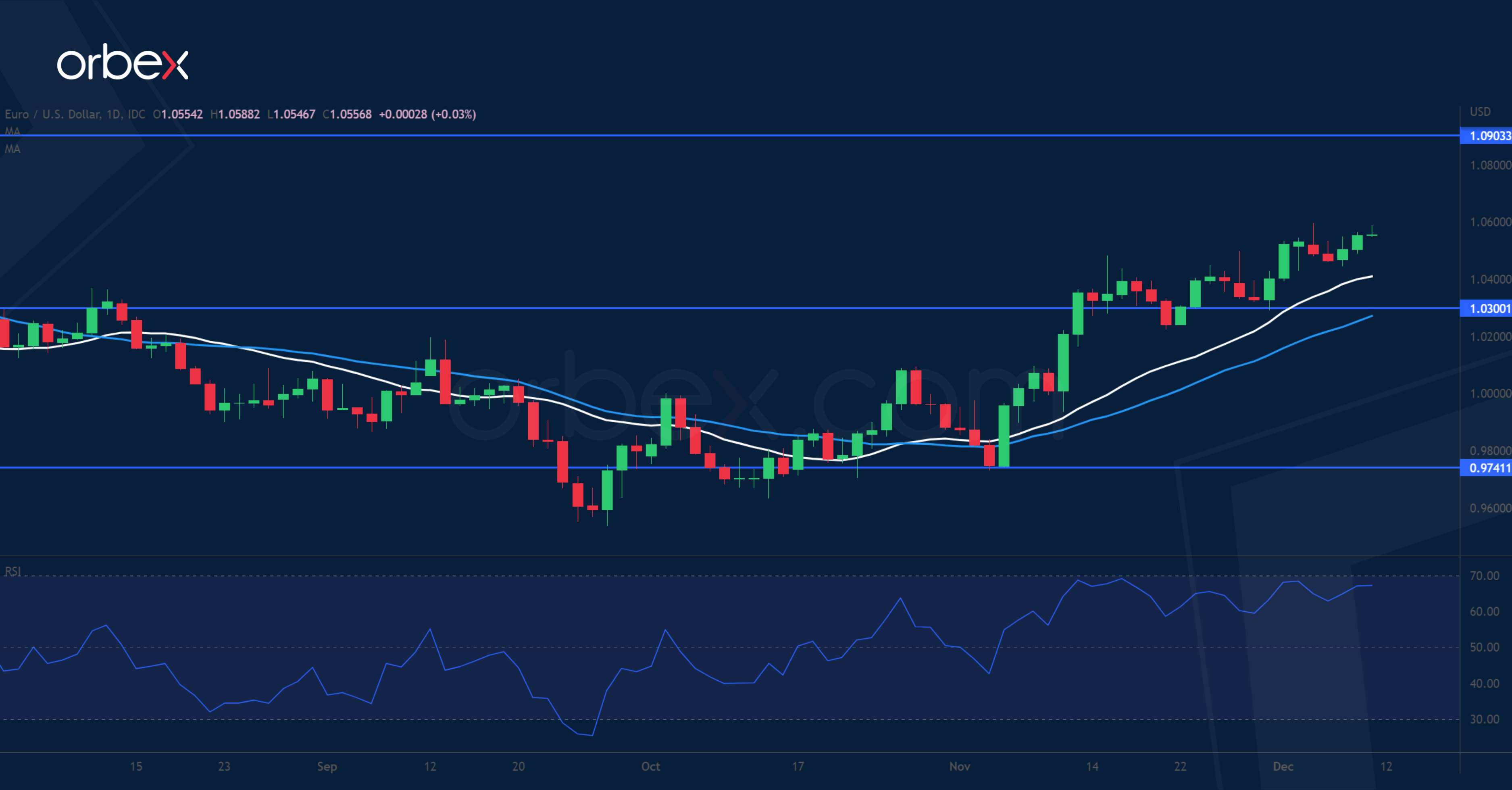
The euro consolidates as both central banks will fire their last salvos of the year. Inflation expectations remain high in the eurozone and bolster the likelihood of a 50 bp hike by the ECB. But market dynamics are driven by the greenback. Despite the euphoria from Powell’s hint of slower tightening, robust jobs and services data have sowed doubt about the terminal rate, which may end up above 5% if the Fed vows to keep interest rates restrictive for a prolonged period of time. Only a soft US CPI reading could keep the pivot hope alive and by extension the dollar in check. 1.0900 is the hurdle ahead and 1.0300 the first support.
GBP/USD braces for volatile week
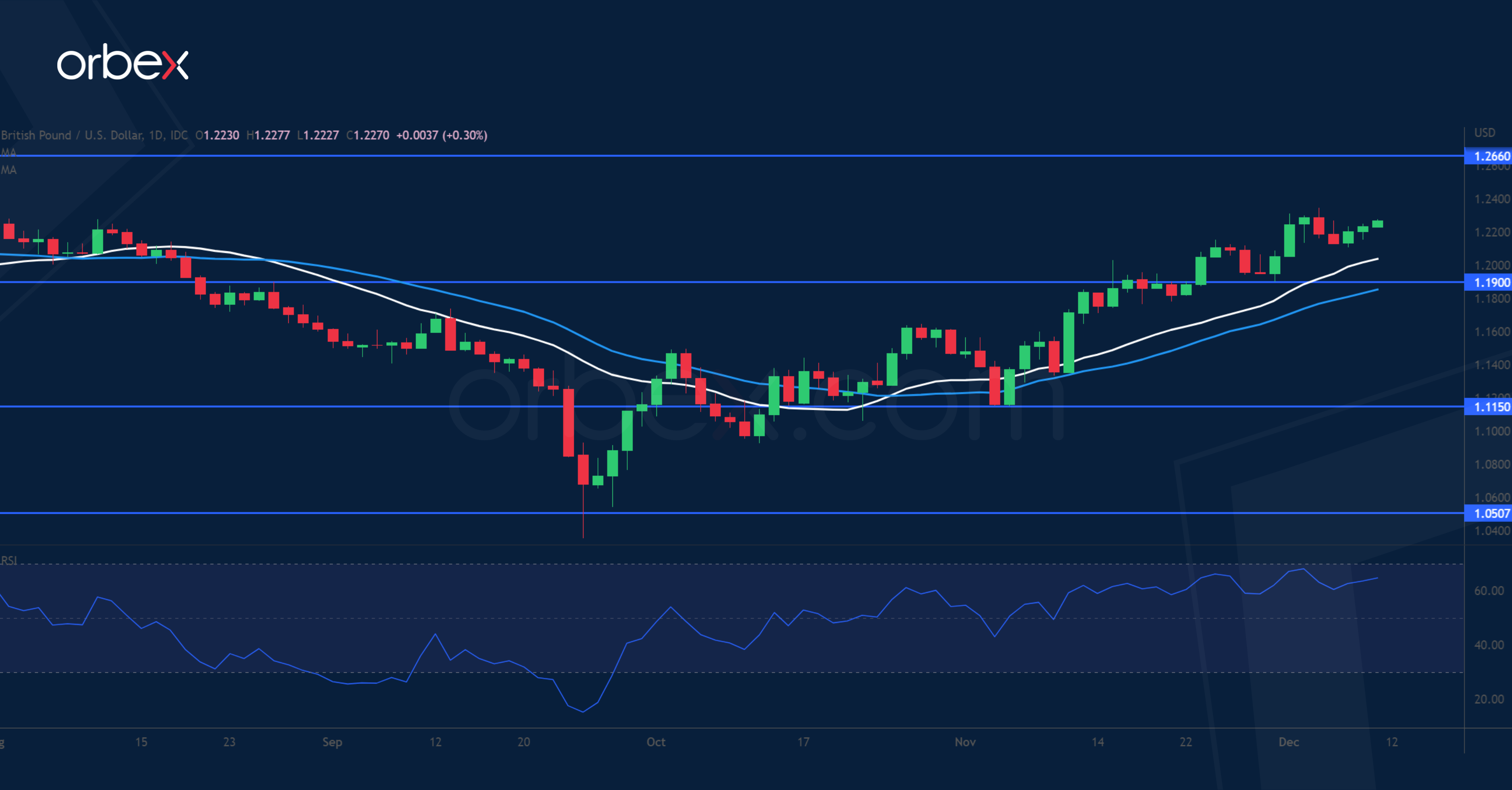
The pound steadies ahead of key economic data and the BoE’s policy meeting. Sterling continues to recover after the previous administration's mini-budget fiasco, which suggests that traders have regained faith in the UK’s policymaking. Both employment and inflation could build up volatility leading up to the BoE rate decision on Thursday. Governor Andrew Bailey has been striving to balance market expectations by saying that the peak rate could be less than currently priced in. The market is betting on a 50 bp rate rise, but a dovish forward guidance could weigh on the currency. 1.1900 is the first support and 1.2660 the next stop.
UK Oil falls as demand outlook worsens
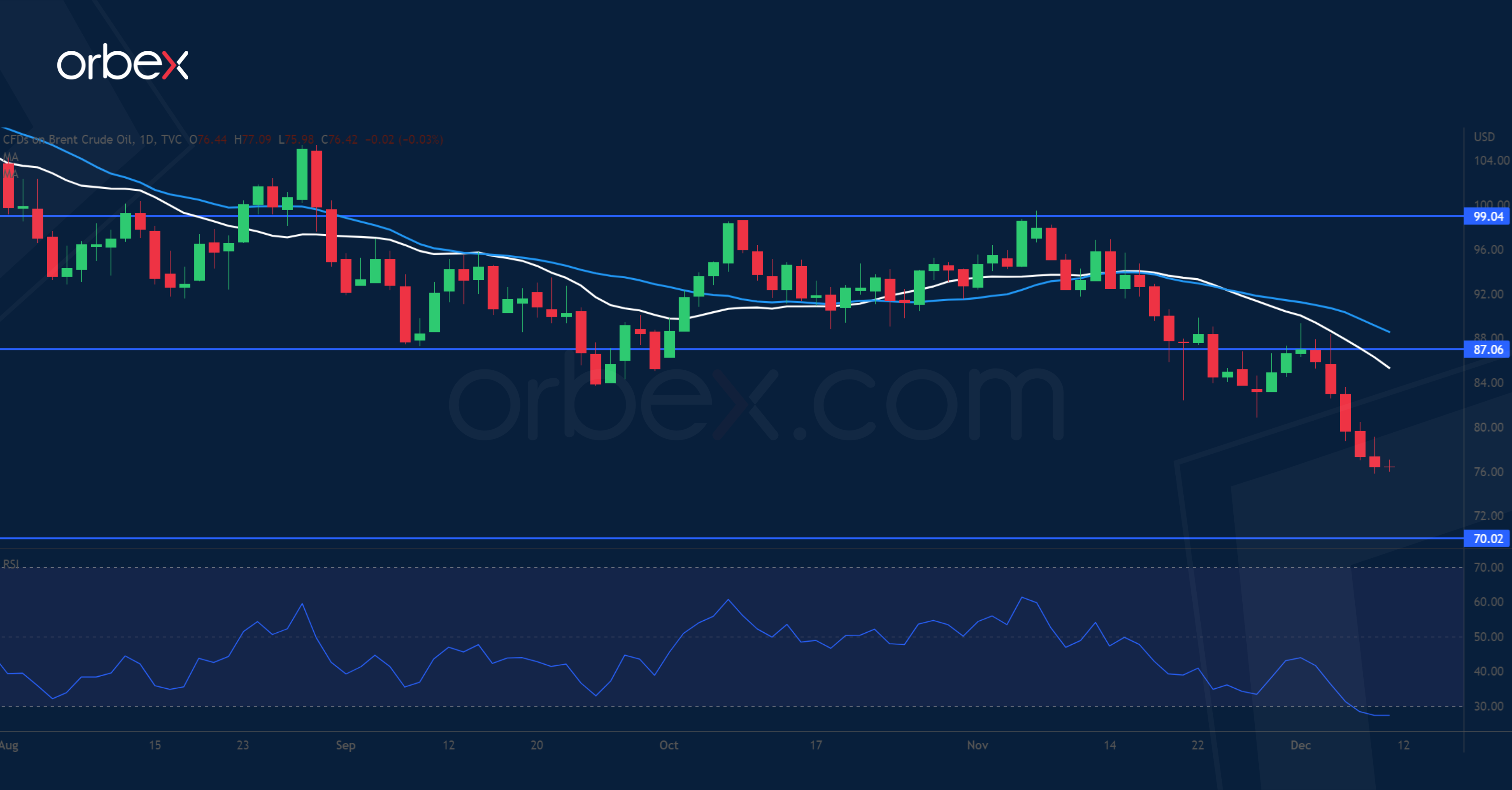
Oil prices slump over growing recession concerns. As the price cap on Russian crude may have marginal impact on production, traders have shifted their attention to the demand side. The prospect of more interest rate hikes is a reminder that the world has entered a cyclical downturn. In China, despite relaxed restrictions, surging infections could hamper economic activities in the coming months as the country learns to live with the virus. The market mood is extremely pessimistic as even the gradual reopening has failed to support the price. Brent crude is reaching a 12-month low at 70.00, and 87.00 is the closest resistance.
Nasdaq 100 hesitates over policy uncertainty
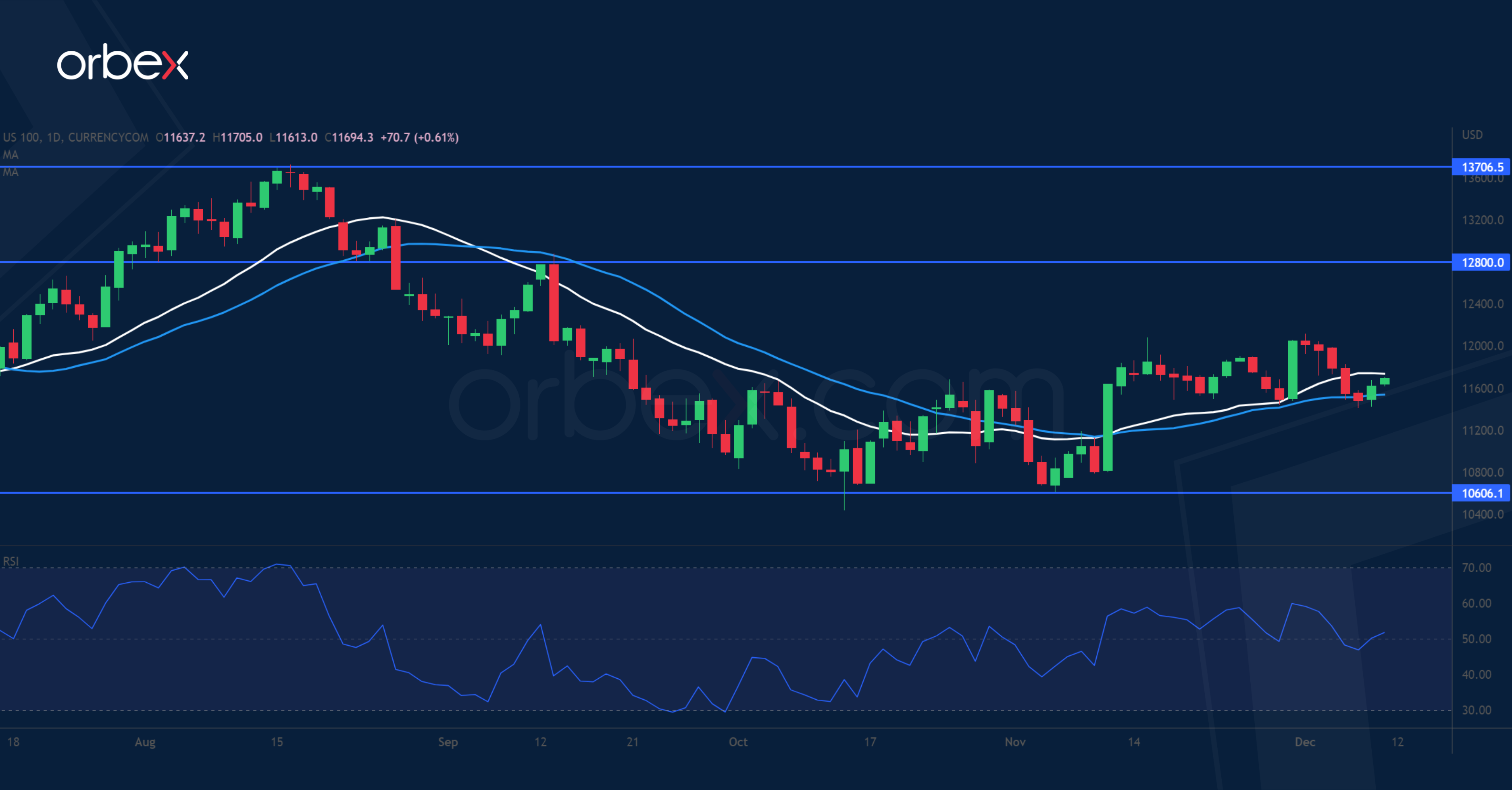
The Nasdaq 100 softens as the Fed policy remains uncertain. Investors struggle to grasp a clear direction as strong US economic data contradict the Fed’s moderate tone. The market is also contemplating the possibility and timing of a downturn as a steep rise in borrowing costs stretches corporate America, and growth sectors in particular. Inverted yield curve, a market indicator of a looming recession may keep investors on their toes. Blue chip indices S&P 500 and Dow Jones 30 have outperformed the Nasdaq in the recent rebound, a sign that risk appetite is still lacking. 12800 is the first hurdle and 10600 a critical support.
A Deluge of 50bp Hikes
Friday’s US PPI print was soft, but not soft enough to meet market expectations. The US producer prices in November rose 7.4% since a year ago, from 8% printed a month earlier, and more than 11% printed in summer. But still slightly higher than 7.2% that analysts predicted.
The kneejerk reaction was as expected. The US dollar spiked following the data, closed the week on a strong footage in America and opened the week on a strong footage in Asia. Trend and momentum indicators turned positive last week, and the dollar could gain more field before two important events that will mark the trading week: US November CPI on Wednesday, and the FOMC decision on Wednesday.
Another disappointment?
Looking at the expectations, inflation is expected to have slowed to 7.3% in November from 7.7% printed a month earlier. But because the consensus number is relatively low, we may have another Friday’s PPI-like disappointment at tomorrow’s US CPI release, which could further boost the Federal Reserve (Fed) hawks before Wednesday’s FOMC decision, fuel the US dollar, send the US yields higher and the stocks lower.
One good news about inflation, however, is that the 1-year inflation expectation unexpectedly declined to the lowest levels since September 2021. This is excellent news for the Fed, as inflation expectations are self-fulfilling, and have the power to bring inflation down just by changing the way people make their decisions.
But in reality, none of it will matter for the Fed’s policy decision this week.
Important note before the FOMC decision
There is a gap between what the Fed says it will do, and what the market thinks, and prices the Fed will do, even a tiny hawkish message could already weigh on the mood before Xmas.
For now, the pricing in the market matches a terminal Fed rate of less than 5%, while the dot plot is expected to reveal a higher median rate forecast for 2023 of around 5.125%. This means that there is room for a hawkish rectification in market pricing both in the US dollar, and in equities.
In the medium-run, while I believe that a hawkish correction should not change the dollar’s medium-term outlook - which is bearish, I think that the stock markets could take another dive, as the recession worries should keep appetite limited.
The S&P500 failed to clear an important ytd resistance last week, and slipped 3% during the course of the week. While Nasdaq tumbled 4%, having flirted with the 100-DMA the week before.
We shall see both indices extend losses this week.
Other than the Fed…
The European Central Bank (ECB), the Bank of England (BoE), the Swiss National Bank (SNB) and Norges Bank are all due to raise interest rates this Thursday.
In the Eurozone, the ECB will probably raise its policy rates by 50bp. But given that inflation advanced to double-digit numbers this year, we can’t really rule out the possibility of a third consecutive 75bp hike from the ECB.
The European policymakers are expected downgrade their growth forecasts, and upgrade their inflation projections. If that’s the case, a too-fast rate hike may not be ideal, and we shall end up with a 50bp hike, with the hint that the QT in Europe would start by March next year – which is an extra hawkish announcement.
The EURUSD recovered more than 11% since the end of September, thanks to a broadly softer US dollar, and we shall see the single currency aim for a stronger recovery. Although the direction in the short run could be blurred by the Fed decision, and the reaction to a probably hawkish decision.
Across the Channel, the Bank of England (Bo) is also expected to raise its rates by 50bp, to push the lending rate to 3.5%, the highest since 2008. Even though the BoE should keep raising rates to fight its double-digit inflation, the freefall in British home prices and the rapid slowdown in economic growth hint that the BoE cannot push too hard, either.
Cable rebounded almost 20% since the Liz Truss dip back in September, and could extend gains toward 1.30, not because the pound will do great thanks to a flourishing British economy, but because the US dollar is expected to depreciate in the coming months. And as it is the case for the euro, the short-term direction for sterling-dollar is unclear, as the US dollar’s move into and posterior to the Fed decision will determine the next short term direction in Cable.
Here in Switzerland, the National Bank is also expected to hike the policy rate by 50bp to 1%. Inflation in Switzerland has been much more moderated compared to Europe or to the US thanks to a strong franc. The dollar-franc lost more than 8% since end of December, and the pair should extend losses to 0.88-0.90 region.
All Eyes on Central Banks this Week
Market movers today
We start the week in a quiet fashion, with Danish November inflation figures the data highlight in Scandinavia today. We expect a decline in Danish CPI inflation in November to 9.7% from 10.1% in October on the back of lower energy inflation.
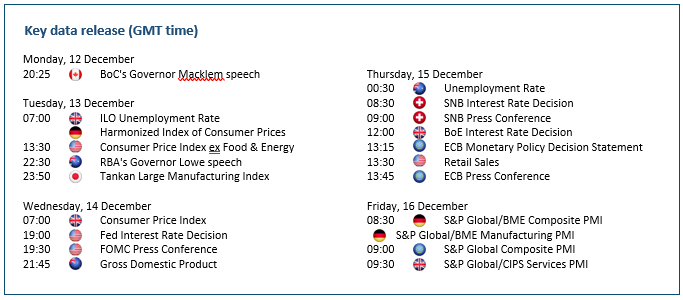
Later this week, central banks will take the market focus, with the Fed meeting on Wednesday, followed by ECB, Bank of England and Norges Bank on Thursday. Amid high inflation pressures, further rate hikes are on the agenda this week, but markets will likely take their cue from the rate guidance for 2023.
The 60 second overview
Market sentiment: Markets remain in a wait-and-see mode ahead of the flurry of central bank meetings later in the week. Stock markets are down in Asia after media reported chaos around many Chinese hospitals as a result from easing of pandemic curbs. European stock market futures also point towards a weaker opening. In line with a weaker risk sentiment and overall dollar strength, EUR is a tad weaker against USD this morning at around 1.051. See our previews for ECB and Fed from last week: Research Euro area: ECB preview - A hawkish 50bp, 8 December, and Research US: Fed preview - Tightening pressure to persist into 2023, 8 December.
BOE preview: We expect the Bank of England (BoE) to hike the Bank Rate by 50bp on 16 December bringing it to 3.50%, see Research UK: Bank of England preview - Back to 50bp as BOE nears end of hiking cycle, 12 December. Markets are currently pricing slightly above 50bp for the meeting next week (55bp). As a result of a more balanced fiscal policy, market conditions have cooled off and broadly returned to conditions we saw prior to the mini-budget. We thus expect a return to a slower hiking pace.
UK: While market turbulence in the UK has eased, the country is now heading into a new kind of chaos as strikes are planned for almost every day for the rest of the month affecting hospitals, public transport and postal services. Unions are demanding inflation-matching wage increases while the government is offering them 5%. The most wide-spread union protests since the 1980s are expected to cause disruption for millions of people in the middle of the busy Christmas season.
Ukraine: In an effort to secure international support ahead of the coldest and darkest winter time, Ukraine's President Zelenskyi talked to US, French and Turkish leaders yesterday over phone. In an assuring note, US Treasury Secretary Janet Yellen pledged that support for Ukraine's military and economy would continue "for as long as it takes". Meanwhile, Kremlin is showing no sign of backing off. Yesterday, Russian forces used Iranian-made drones to target two energy plants in Odesa, leaving 1.5 million people without electricity in the country's south.
Equities were lower on higher yields and hotter inflation data on Friday. So, it is still apparent in markets that inflation is the governing factor while earnings is secondary. Yet, note that defensives outperformed - not value - despite hotter inflation which is a difference from the past quarter. Communications, real estate and financials closed around the zero line while mainly industrials, materials and energy sold off. S&P 500 closed down -0.7% and -3% for the week. This weakness correlates well with the positioning support that ran out last week when VIX moved higher. Hence, the ones arguing for a bear market rally driven by positioning - including us - are so far correct.
FI: It is going to be a very busy week in terms of central bank meetings as we have the Federal Reserve, ECB, BoE, SNB and Norges Bank meetings this week. The Federal Reserve is meeting on Wednesday, and the consensus expectation is for a 50bp rate hike. ECB, BoE, SNB and Norges Bank are all meeting on Thursday, and we expect 50bp from ECB, BoE and SNB, respectively and finally 25bp from Norges Bank.
This is fully priced in and should not have much impact on the global financial markets. The interesting part will be how much the central banks will continue to hike after meetings on Thursday - will they signal a pivot or just continue to stress the need for rate hikes despite the looming recession.
FX: EUR/USD starts the week off around 1.05, having traded as high as 1.06 early last week. In Scandie space, the 10.90-level remains the centre of gravity for the SEK whereas the NOK lost 1% against the EUR last week. Muted trading in the GBP amid mixed markets.
Credit: Credit markets ended the week on a positive note. iTraxx main tightened 2.9bp to close at 89.1bp and iTraxx crossover tightened 14.7bp to close at 455.3bp. Primary markets however, saw very little activity despite the positive tone in secondary markets.
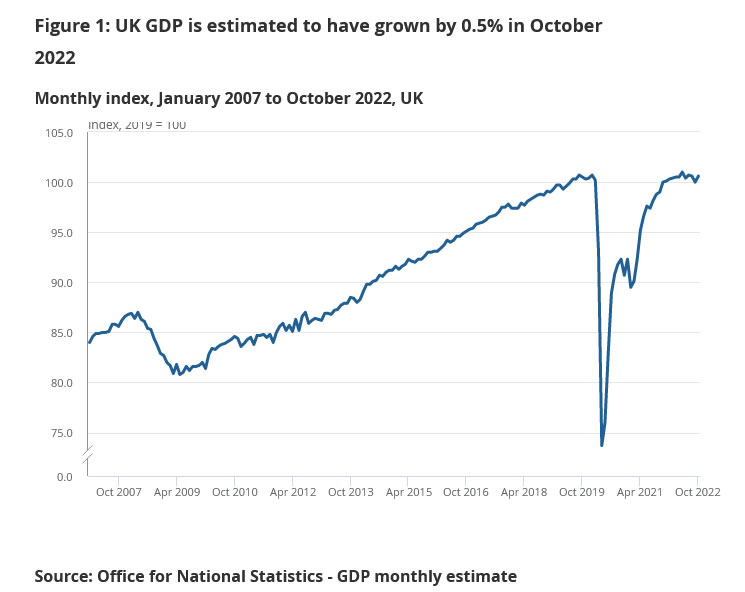
UK GDP grew 0.5% mom in Oct, driven by services
UK GDP grew 0.5% mom in October, better than expectation of 0.4% mom. Services grew 0.6% mom and was the main driver of growth in GDP. Production was broadly flat for the month. Construction grew 0.8% mom. GDP is estimated to be 0.4% above is pre-coronavirus levels in February 2020.
In the three months to October, compared with the three months to July, GDP contracted -0.3%. Services was down -0.1%. Production dropped -1.7%. Construction rose 1.1%.
Also released, industrial production came in at 0.0% mom, -2.4% yoy, versus expectation of -0.3% mom, -4.2% yoy. Manufacturing was at 0.7% mom, -4.6% yoy, versus expectation of -0.1% mom, -6.3% yoy. Goods trade deficit narrowed to GBP -14.5B, versus expectation of GBP -15.0B.