Sample Category Title
USDCAD Loses Shine Below July’s Peak
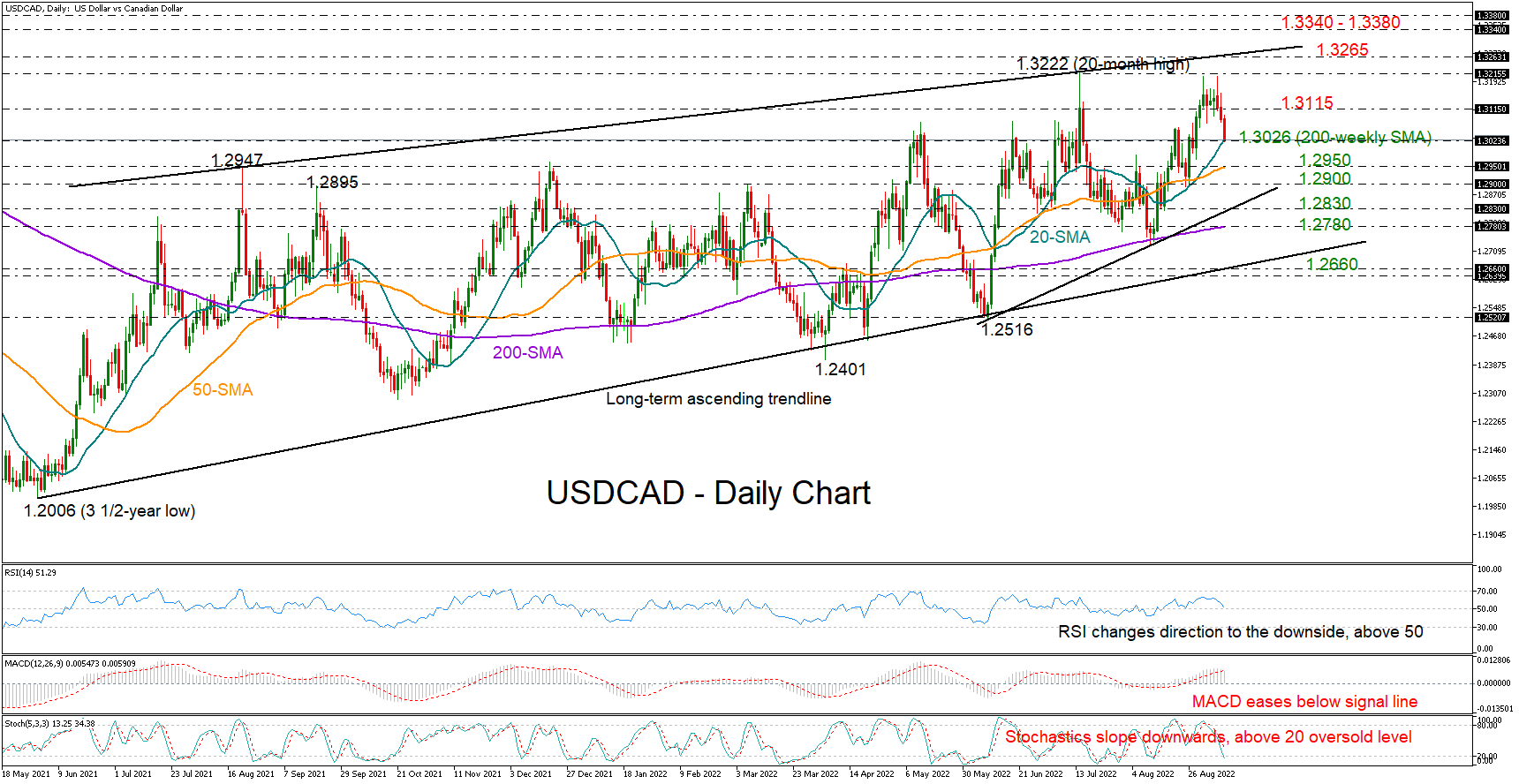
USDCAD flipped backwards after its bullish efforts fizzled out just beneath July’s top of 1.3222, with the price plunging towards the key 1.3026 level ahead of Canada’s employment report early on Friday.
The momentum indicators have all changed direction to the downside, endorsing the negative momentum in the price. However, with the RSI holding above its 50 neutral mark and the price facing support around the key 1.3026 level, where the 20-day simple moving average (SMA) resides, sellers may wait for another decisive close lower before taking further action. Notably, the 200-weekly SMA is also positioned in the same location.
Should the bears claim the 1.3026 mark, the pair may next seek shelter somewhere between the 50-day SMA at 1.2950 and the 1.2900 constraining zone. A continuation lower could then retest the tentative ascending trendline around 1.2830, while the 200-day SMA beneath at 1.2780 may come immediately to the rescue if downside pressures persist.
In the positive scenario, where the 20-day SMA puts a floor under the price, the 1.3115 restrictive region could immediately come under examination. Crossing that bar, the bulls may again attempt to snap July’s high of 1.3220, though only a goodish run above the ascending line at 1.3265, which joins the 2021 and 2022 peaks, would reinforce confidence in the slow-progressing long-term uptrend.
To summarize, although technical signals are deteriorating in USDCAD, traders may wait for an extension below 1.3026 to confirm a bearish bias.
GBPJPY Pauses Advance, But Retains Bullish Short-Term Bias
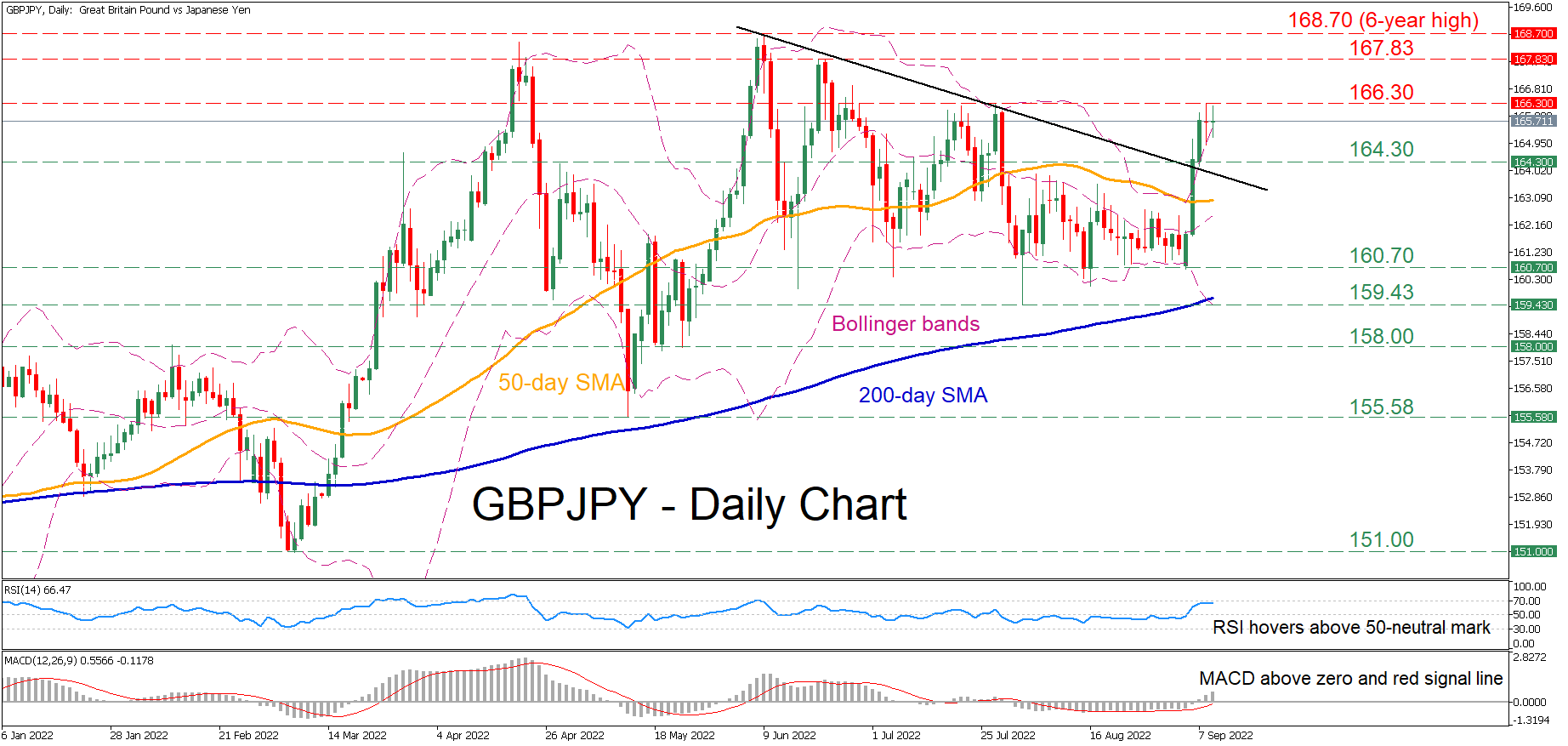
GBPJPY has been gaining ground in the last few daily sessions after its sideways pattern was broken forcefully to the upside. Even though the pair managed to jump above both its 50-day simple moving average (SMA) and the descending trendline taken from its recent peaks, its advance currently appears to be running out of steam.
Despite the recent consolidation, the short-term oscillators are indicating that near-term risks remain tilted to the upside. Specifically, the RSI is flatlining above its 50-neutral mark, while the MACD histogram is strengthening above both zero and its red signal line.
To the upside, should buying pressures persist, the pair could encounter initial resistance at the recent peak of 166.30, which has also acted as a strong ceiling multiple times in July and June. Piercing through this region, the bulls might then aim for the 167.83 hurdle. A break above the latter may open the door for the six-year high of 168.60.
Alternatively, bearish actions could send the price to test the 164.30 region. Violating this zone, the pair might descend towards 160.70 before the spotlight turns to the July low of 159.43. Failing to halt there, any further declines could then cease at the 158.00 mark, which has acted both as resistance and support in the past months.
In brief, GBPJPY seems to be entering a consolidation phase after its upside move failed to strengthen further. Nevertheless, a close above the 166.30 ceiling may signal the resumption of the pair’s rally.
Daily Technical Analysis
EUR/USD
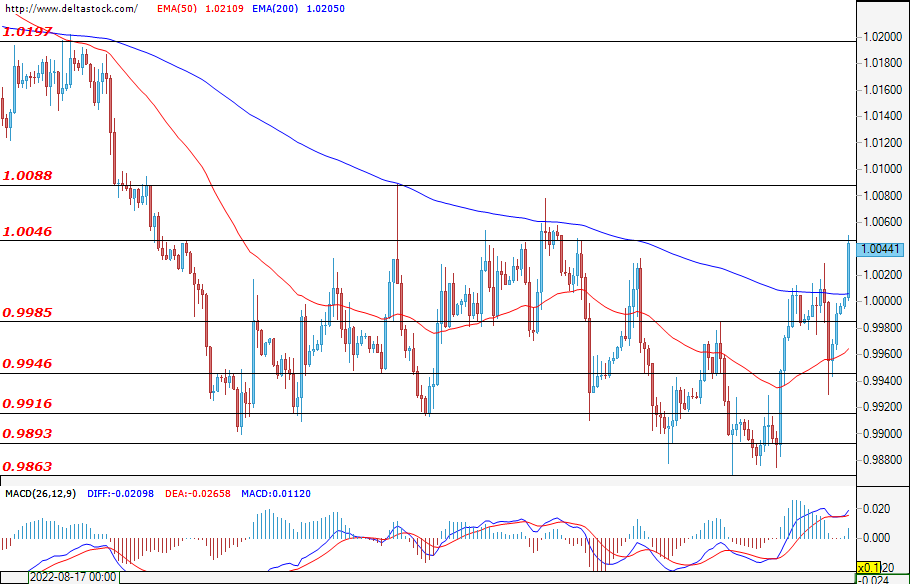
For the first time since the existence of the single European currency, we witnessed an increase in the interest rate by the ECB by 0.75 basis points. Central bankers said too high inflation is why the key rate is currently at 1.25%. Christine Lagarde's statement that rate hikes will continue fueled the bulls and they were able to breach the parity level and attempt to start a rally towards the key resistance at 1.0046. If the bulls' strength continues, then we could see an attempt to breach the next resistance at 1.0088. If even the aggressive bullish news fails to help the bulls and the bears still gain the upper hand, then we could instead see an attempt at breaching the support at the level of parity – 1.0000. On Friday, there is no news that would have a strong effect on the currency pair.
USD/JPY
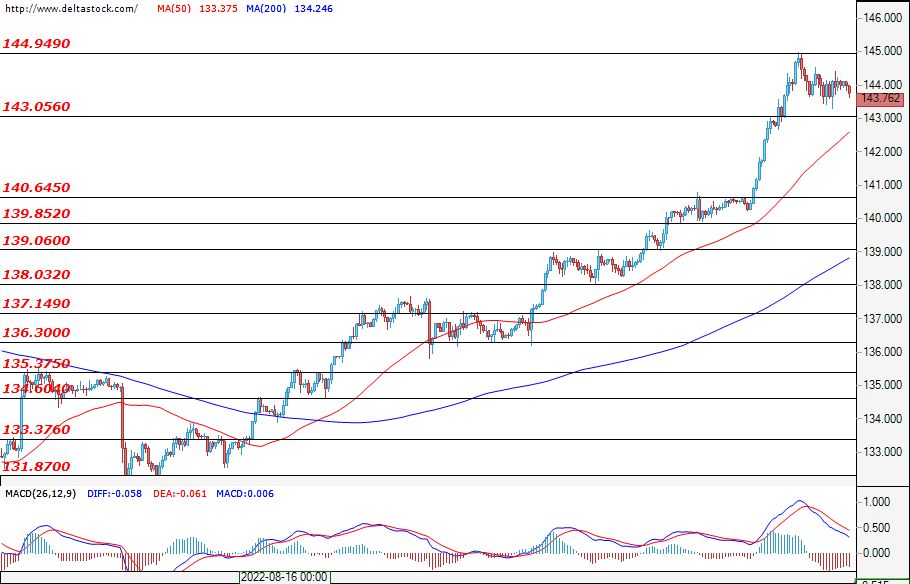
Today's trading session got off to a relatively calm start. Over the past few days, we have seen movements between the levels of 143.05 and 144.94, and it is likely that the trend is going to continue given the monetary policy divergence between the Federal Reserve and the Bank of Japan. If the bears manage to breach the "green trend", we could witness an attempt to breach the key support at 140.65 next. No important macroeconomic news is expected today.
GBP/USD
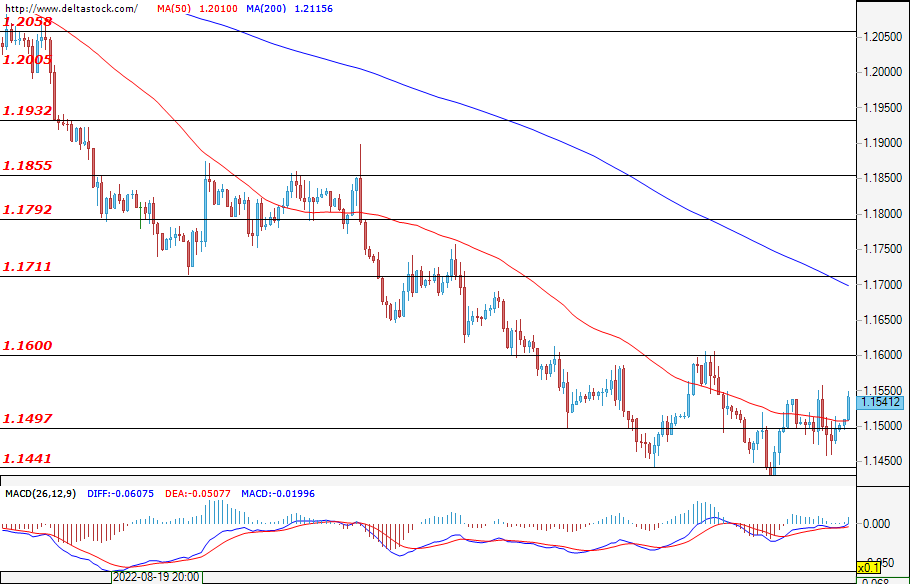
Today, we were shaken by the news of the death of the Queen of Great Britain. The sad news came towards the end of Sterling's trading session. All in all, it did not have a negative impact on the pound's value against the U.S. dollar at the moment. In fact, the trading session started with the confirmation of the resistance breach at 1.1500. The next resistance for the bulls is found at 1.1600. If the pound starts to lose its ground against the greenback again, then we could see an attempt to reach the support at 1.1441.
EUGERMANY40
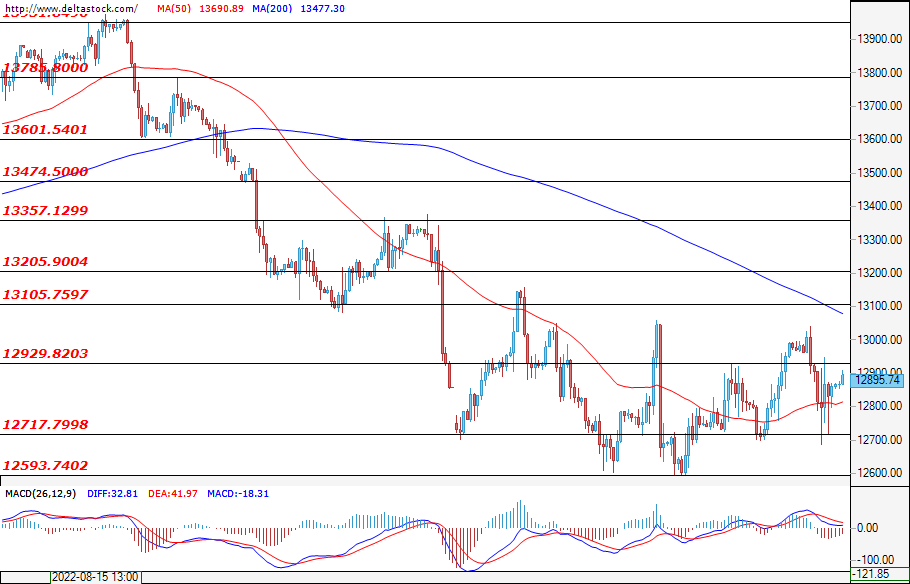
The German index started the trading session with an advantage for the bulls. At the time of writing, the buyers will try to keep the index above the level at 12930, and if they do, the EUGERMANY40 might end the week in the green. However, the more likely scenario is for a corrective move towards the mentioned level which, if breached, could head the sell-off towards a test of the support at 12718.
US30
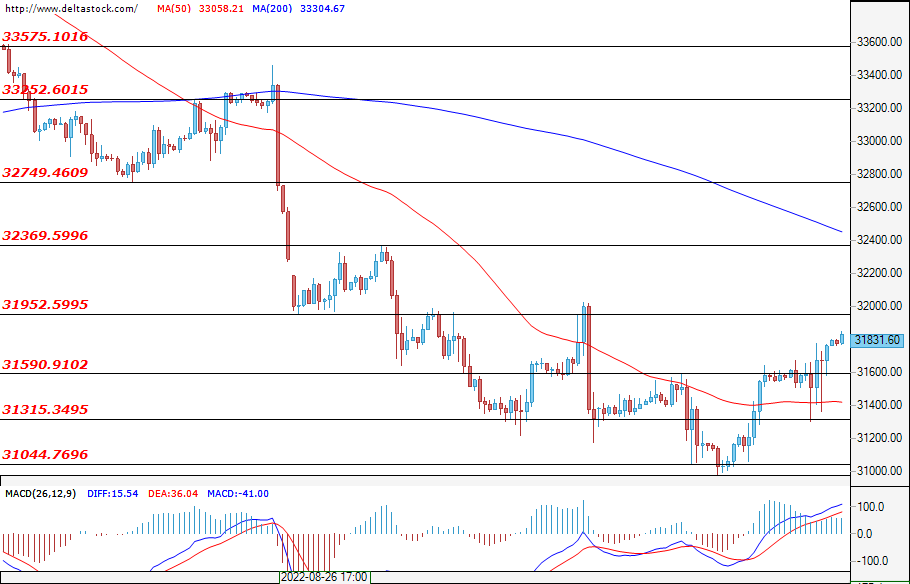
The bulls are currently testing the resistance at 31950, and if they manage to tip the scales in their favour, we could witness an attempt to break this resistance. In the event that the bulls fail to remain in control of the US30 and lead it above 31950, the index might end the week lower, at around the support of 31315. There is no news today that would have a strong effect on the instrument.
S&P 500 Bounces Back
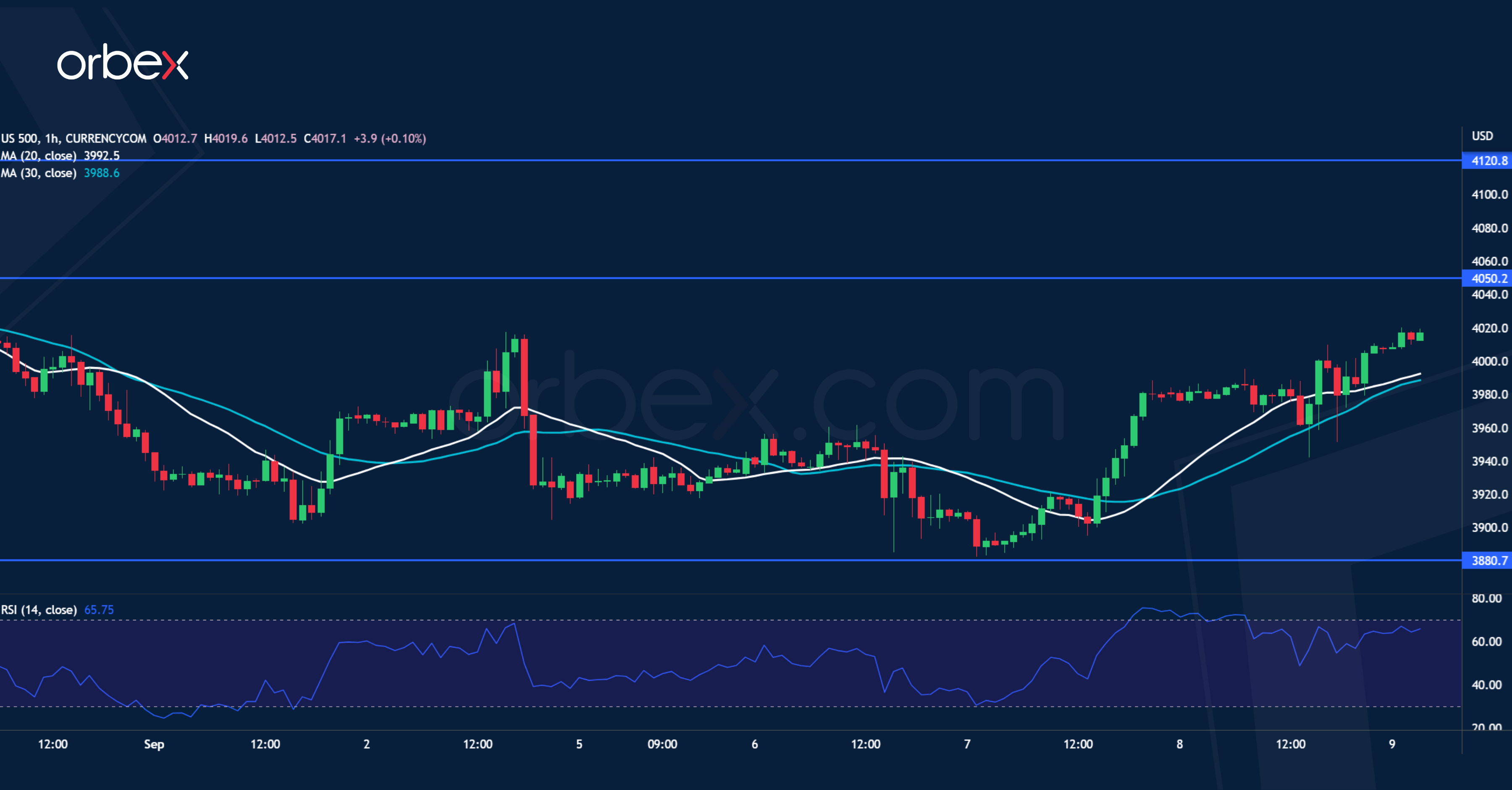
The S&P 500 clawed back some losses over a correction in bond yields. A drop below 3920 and a bearish MA cross indicates that the market mood still leans towards the cautious side. The short-term price action has found support at the origin of the July breakout near 3880. 4050 is the first resistance and its breach could attract more buying interest. Then the support-turned-resistance (4120) over the 20-day moving average would be within reach. On the downside, a bearish breakout may extend the sell-off to 3800.
EUR/JPY Keeps High Ground
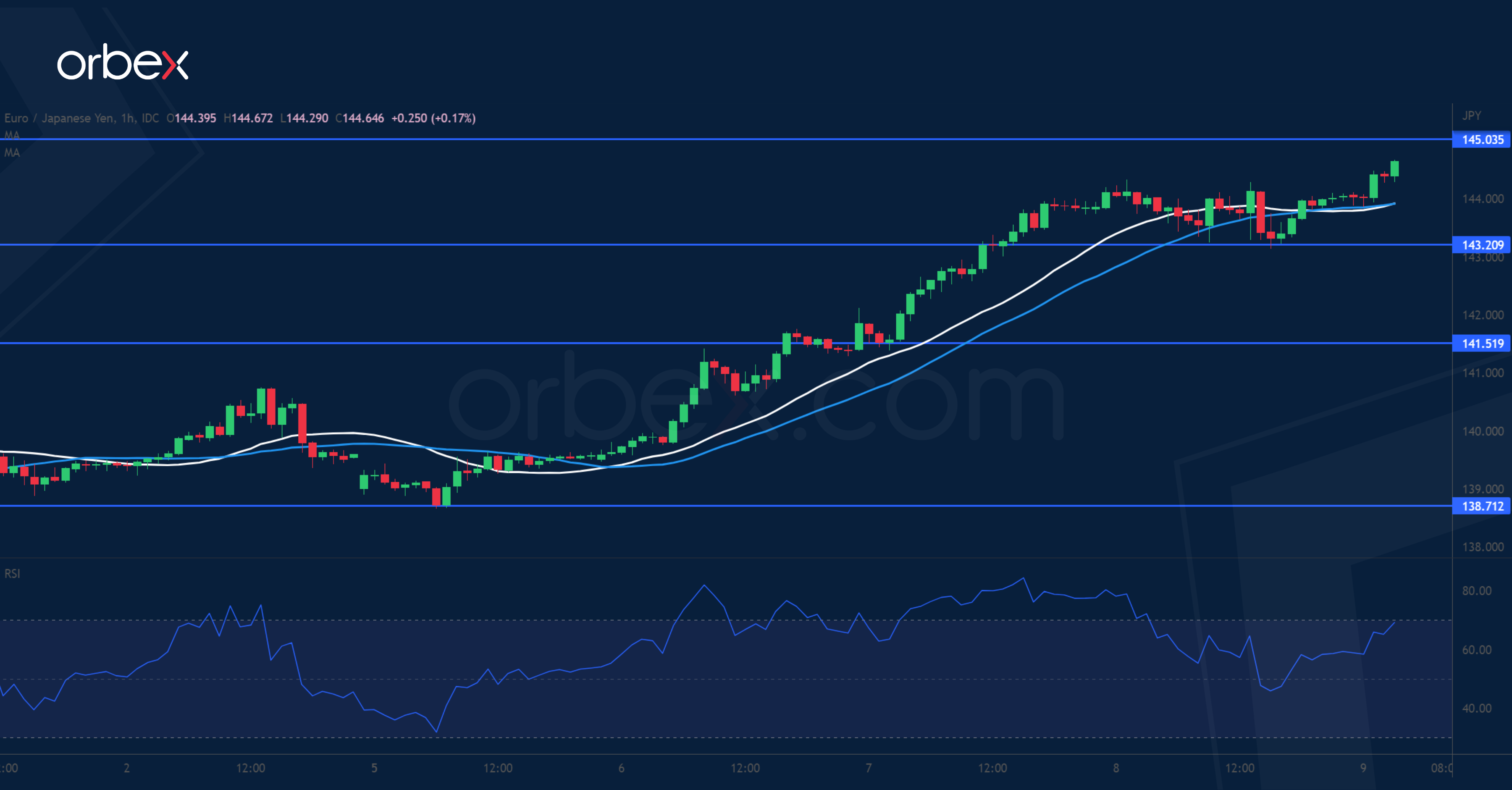
The euro finds support from a surprising 75bp hike by the ECB. The pair has climbed above last June’s double top at 144.20, which indicates strong interest in maintaining the upward trajectory. 145.00 is the closest resistance and another breakout would pave the way for an extended rally to a near 8-year high at 147.00. In the meantime, the single currency could use some breathing room. Should buyers start to take profit, 143.20 would be a first level to expect trend followers.
NZD/USD Tests Resistance
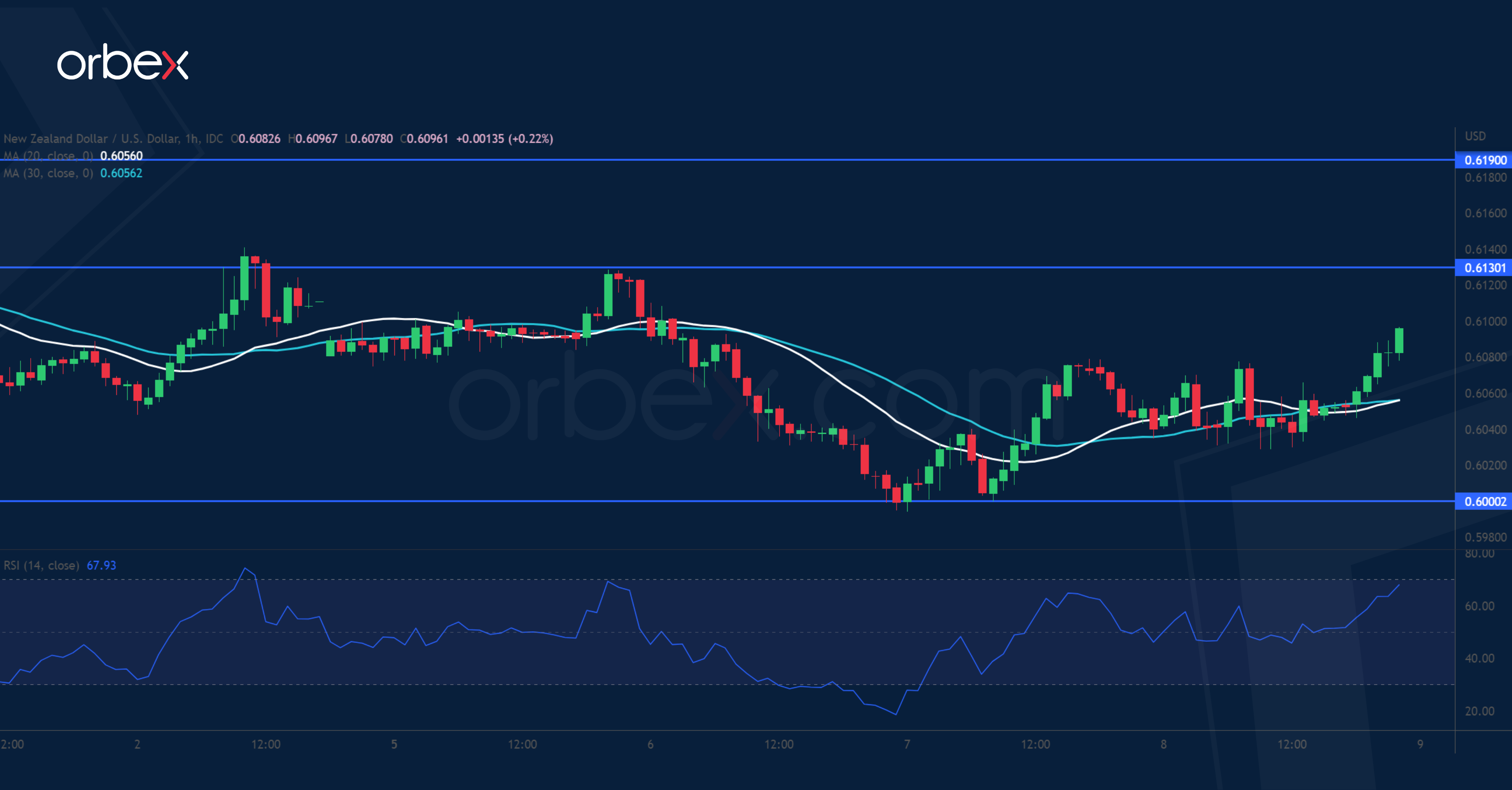
The New Zealand dollar recovers from dips as risk appetite makes its return. The pair came under pressure after it tanked below the daily support at 0.6060. With the RSI in the oversold zone, bargain hunters have been eager to buy the dip at the psychological level of 0.6000. But so far rebounds have been opportunities to sell into strength. The next one could also meet stiff selling pressure at 0.6130. The bulls will need to clear 0.6250 before they could turn sentiment around. Otherwise, the kiwi might drift towards 0.5900.
ECB Jacked Up Interest Rates by Unprecedented 75 bps
Markets
The world’s two biggest central banks were in focus yesterday. The ECB jacked up interest rates by an unprecedented 75 bps to bring the deposit rate at 0.75%. Growth may grind to a halt in the next two quarters but that’s of secondary importance to sky-high and rising inflation and the risk of unanchored expectations. The ECB sticks to a data-dependent and meeting-by-meeting approach. Lagarde, however, was crystal clear that more hikes are coming. Although saying that 75 bps was not the norm, she left the door for such a move in October wide open. It quickly became the base scenario for both markets and us. After the press conference the ECB published a statement in which it removed the 0% remuneration cap on government deposits to avoid treasuries hunting down already scarce short-term quality assets in the market. Bloomberg later still, citing officials, reported that the balance sheet reduction is expected to be debated for a first time at the October meeting.
European bonds thus took a triple whammy. German yields skyrocketed 9.8 bps (30y) to 22.9 bps (2y, new cycle high). Germany’s 10y reference surpassed first resistance at 1.63/67%. Bunds hugely outperformed USTs, which were on the way down too as Fed chair Powell held a last important speech before the September 21 policy meeting. He reiterated the Fed’s determination to quell inflation and did little to alter expectations for a third 75 bps move. US yields rose between 5.4 and 8 bps across the curve.
The euro on currency markets overcame a kneejerk move lower on Lagarde’s quote on 75 rate moves. EUR/USD finished at parity. Dollar’s trade-weighted index (DXY) closed a little lower sub 110. USD/JPY was able to eke out a small gain to 144.11 but the stretch higher went in reverse this morning. BoJ governor Kuroda called the rapid yen weakening undesirable. USD/JPY eases for the first time in 10 days to 142.8. It is however more a dollar move than it is yen strength. EUR/USD rises to test first minor resistance around 1.008. DXY (108.86) loses support from the previous cycle high at 109.29. Core bonds recoup some of yesterday’s losses.
With the ECB as key event now out of the way, we think there may be scope for some short-term consolidation in bond yields. This may be more the case for Europe than in the US, where the Fed meeting is already looming on the horizon. We stay cautious on the euro and EUR/USD. Today’s European energy summit is an important one in tackling the gas crisis. Several measures, including a Russian price cap, have already met opposition by some member states. Lack of unity on and/or feasibility or credibility of the measures taken will disappoint the euro. EUR/GBP hitting but not pushing through first resistance at 0.87 is a bad technical omen for the common currency as well.
News Headlines
Inflation in China unexpectedly eased in August as both CPI and PPI slowed more than expected in annual terms. CPI inflation printed at 2.5% from 2.7% in July. Core CPI excluding volatile food and energy costs was unchanged at 0.8% Y/Y. PPI inflation slowed to 2.3% from 4.2%, the lowest level since February last year. The decline amongst others mirrors a slowdown in some commodity prices. Soft price growth also confirms recent other data evidence on slow growth as ongoing corona outbreaks and containment measures continue to weigh on domestic demand. Today’s data reinforce the case for further policy stimulus to support activity. Despite the lower-than-expected price data, the yuan this morning rebounds on broader USD correction. USD/CNY trades at 6.936, compared to a peak just below 6.98 two days ago.
At a press conference the day after the policy decision of the National bank of Poland, Governor Glapinski said that the NBP hasn’t formally ended the rate hike cycle. He indicated that a 25 bps hike or leaving rates unchanged are on the table at the October policy meeting. The NBP in this respect maintains a data-driven approach. The NBP governor also indicated that there might be room for interest rate cuts if inflation moves fast to single digit figures. According Glapinski, inflation might fall back to the 3% by the end of 2023 if the anti-inflation shield is extended and if there are no hikes of regulated energy prices. If regulated energy prices go up, inflation might only slow to 6-7%.
ECB Hikes, Euro and European Stocks Gain
The European Central bank (ECB) raised the interest rates by 75bp at yesterday’s monetary policy meeting and said there will be more rate hikes to fight inflation. That was in line with our expectations.
The European policymakers revised their inflation expectations significantly higher and slashed their growth expectations significantly lower, but… said that they do not expect a recession in Europe. They apparently don’t want to take the possibility of a mild winter off the table.
Jonathan Ferro on Bloomberg called it laughable. But it’s maybe just a cover story.
Indeed, raising the rates into a slowing economy, combined with food and energy crisis looming on the continent, and without even talking about how the strong US dollar overcomplicates things, it will be hard to avoid recession in Europe.
BUT what’s more reasonable - and is certainly untold - is, that the ECB is frontloading the jumbo rate hikes to keep the euro strong enough to, at least, fight the negative impacts of the strong dollar. And telling the world that they expect a recession doesn’t work for keeping the expectations hawkish.
Anyway, the euro fell while Christine Lagarde spoke, but could rebound and stay above parity against the US dollar during the overnight trading session.
And now that the ECB doesn’t expect recession in Europe, they should continue hiking the rates by relatively big chunks in the next few meetings. Money markets already price in about 40% chance for another 75bp hike in October. ECB officials will also start talking about shrinking the size of the balance sheet when they meet in Cyprus at the beginning of October, which is a non-policy meeting.
All in all, there are a few elements that sound hawkish for the ECB. If the reality allows the ECB to tighten its purse’s strings, they will do it.
Does it mean that the euro could appreciate against the dollar? Nobody knows that. It depends on how strong the US dollar could become.
But what we know is that, even Japan said it won’t rule out options if the excessive FX moves continue. They also think that the fundamentals don’t explain an almost 30% ytd appreciation in the USD against the yen!
The USD strength is no longer sustainable, indeed. But inflation in the US remains high, the US labour market is relatively strong – even too strong, the medium-term outlook for the US economy is much better when compared to Europe or the UK, and the periods of global crisis normally benefits to the greenback.
Still, Bill Gross is betting on pound sterling, because he thinks that the US dollar is exaggeratedly overvalued against other major currencies, and that there should be a correction in the foreseeable future, despite all the factors I enumerated above. Cable is testing the 1.16 mark this morning. But the Brits have other things on their mind today, than their crumbling currency. Queen Elizabeth II closed her eyes yesterday. Charles could finally take the reins.
Euro Stoxx first fell than recovered to close the session slightly in the positive, the bank stocks jumped more than 2% as the higher rates will increase the risk-free income for the banks and boost their interest revenues.
The US indices also had a positive session, although the Federal Reserve (Fed) Chair Jerome Powell hinted that the jumbo rate hikes will continue to tame inflation in the US, as well. The S&P500 closed the 4000 mark, while Nasdaq added 0.50%. Futures hint at positive start at the time of writing.
ECB and Danmarks Nationalbank Hike Policy Rates by 75bp
Market movers today
Markets will digest yesterday's ECB meeting and look out for 'ECB sources' stories today.
Otherwise, focus will be on the EU energy minister meeting (press conference scheduled for 14:30 CET), where price caps, windfall profit taxes and emergency credit lines will be discussed, as possible measures to tackle Europe's mounting energy crisis.
We expect that Norwegian core inflation fell by 0.3% m/m in August, meaning that the annual rate continues to climb to 4.8%. This would again be well above Norges Bank's forecast in the June monetary policy report (4.2%), but the gap would be much smaller than in July. Inflation is clearly trending higher, but as some of the acceleration in July probably were one-offs, the uncertainty is high. Of course, the outcome will have significant impact on the rate decision on September 22.
The 60 second overview
ECB. Yesterday, ECB hiked policy rates by 75bp. The sizeable interest hike was made to dampen demand and address inflation expectations. President Lagarde stressed that we are not to assume that 75bp is the new norm, but they will remain data dependent and make the decision on the hike size on a meeting-by-meeting basis, but also that further hikes were to be expected at the coming meetings. ECB's focus is clearly on hiking rates now and discussions on APP reinvestments have been left for later, without specific guidance. Sources stories say that such discussions are expected to take place in October. In terms of technical details, the ECB decided that the tiering system is no longer needed and that government deposits are no longer capped at 0%. In our base case, we expect the ECB to hike policy rates by another 50bp in October and 25bp in December but risks are currently skewed towards more tightening. See more in Flash ECB review: 75bp, but 75bp is not the new norm.
Danmarks Nationalbank. The Danish central bank mirrored the ECB's decision and also hiked policy rates by 75bp in yesterday's session thereby ending 10 years of negative interest rate policy. It marked the second rate hike this year and the key policy rate now stands at 0.65%.We look for DN to mirror future ECB rate hikes 1:1 and hence in our base case we pencil in a DN key policy rate of 1.40% by year-end, see more in Flash Comment Denmark, 8 September. Importantly, EUR/DKK trades close to the 7.4360 floor set by DN last year. Should DN resume selling of DKK in FX intervention, it could opt to make a unilateral interest rate cut, e.g. by 10bp; increase interest by less than ECB. It is not our base case, but something to watch.
Bank of Japan. Yesterday the Japanese ministry of finance, Bank of Japan and the FSA met to discuss the JPY slide. The news of the meeting took USD/JPY somewhat lower but when markets were assured of no intention to intervene, the cross traded back above 144. This morning USD/JPY has traded back sharply lower on USD weakness and verbal intervention from Japan. We continue to expect politicians have a strong preference to refrain from intervening to support JPY and that ultimately leaves USD/JPY in the hands of the global pressure for higher yields.
UK. Queen Elizabeth II has passed away peacefully at the age of 96 according to a statement from Buckingham Palace. The queen had been the longest reigning UK monarch. King Charles III will succeed her as the new king of the UK.
Equities: Global equities were higher yesterday, lifted by the relatively rare combination of banks, health care and materials outperforming while communication service and consumer staples underperforming. It was a bit of roller-coaster day on both sides of the Atlantic with indices flipping between gains and losses before ending close to day high. VIX ticked lower and helping the gain in equities as the ECB decision was more or less as expected. In US Dow +0.6%, S&P500 +0.7%, Nasdaq +0.6% and Russell 2000 +0.8%. Asian markets mostly higher driven by a strong lift in Hong Kong stocks. European and US futures higher as well.
FI: While the 75bp rate hike took media headlines, markets reacted strongly to the announcement of the suspension of the government deposits cap of 0%. European curves bear flattened with 2y Germany up by 22bp on the day, while the 10y point was 'just' 14bp higher. The well telegraphed ECB hike of 75bp did not move markets as such, and now markets are pricing in 107bp by year end. Reinvestments were not discussed at this meeting. Slightly surprising the decision to hike 75bp was unanimous.
FX: Given that ECB's decision was largely as anticipated, there was only a small reaction in EUR/USD - thus, spot remains fixed just below parity. We also continue to target 0.95 in 12m and note that it is quite common these days to see substantial rate hikes having little or even negative effect on the domestic currency. Danmarks Nationalbank followed the ECB and also hiked interest rates. Speculation in the market as to BoJ intervening in the JPY weakness has faded.
Credit: All focus on the ECB and credit markets saw a slight tightening following the 0.75% rate hike. We saw relatively good performance from recent new issues in Scandinavia with the new Statkraft bond tightening some 10bp while the new Orsted bond was around 8bp tighter. Overall on market level iTraxx Main was 3bp tighter at 111bp while Xover was 13bp tighter at 545bp.
Technical Outlook and Review
USD/JPY:
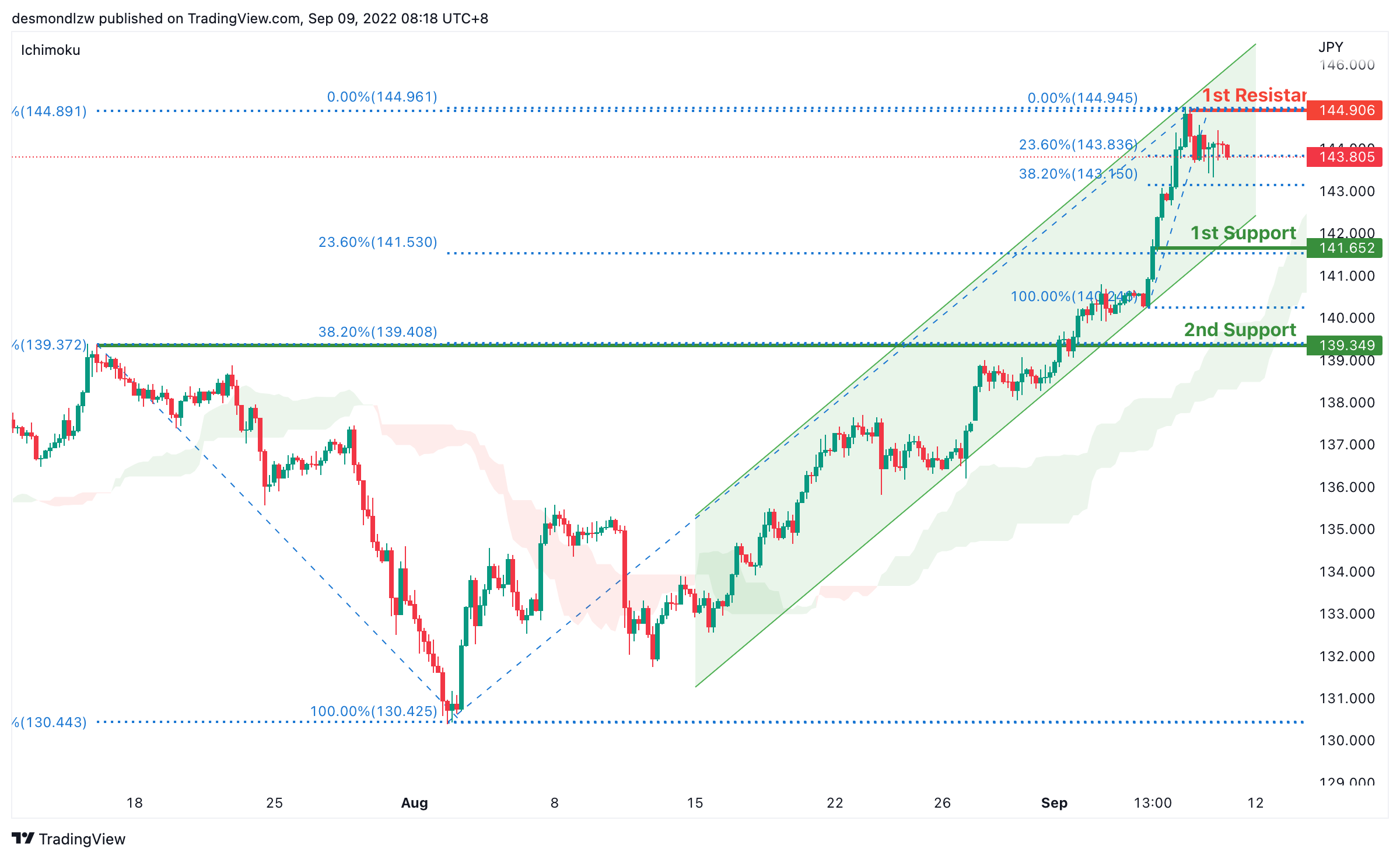
On the H4 chart, price has confirmed a bullish momentum breaking the previous high. We are bullish bias- Price has tested the first resistance and pulled back slightly. If bullish momentum continues, it should bring price to 144.906 where the 161.8% extension sits. Alternatively, if price reverses, it might pull back to test the first support at 141.652 where the 23.6% retracement sits then the second support at 139.349 where the 38.2% retracement and overlapping support sits
Areas of consideration:
- H4 time frame, 1st resistance at 144.906
- H4 time frame, 1st support at 141.652
DXY:
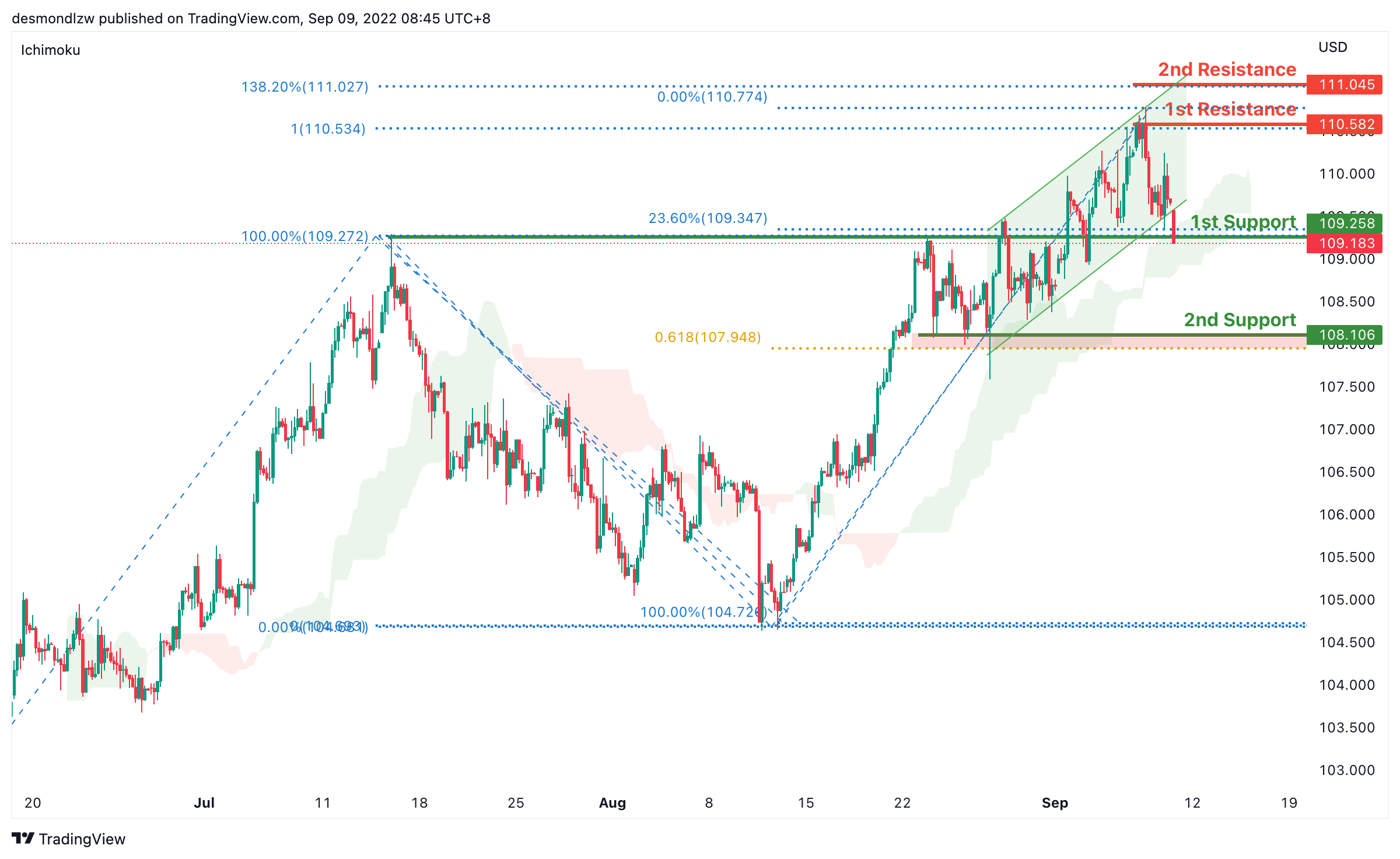
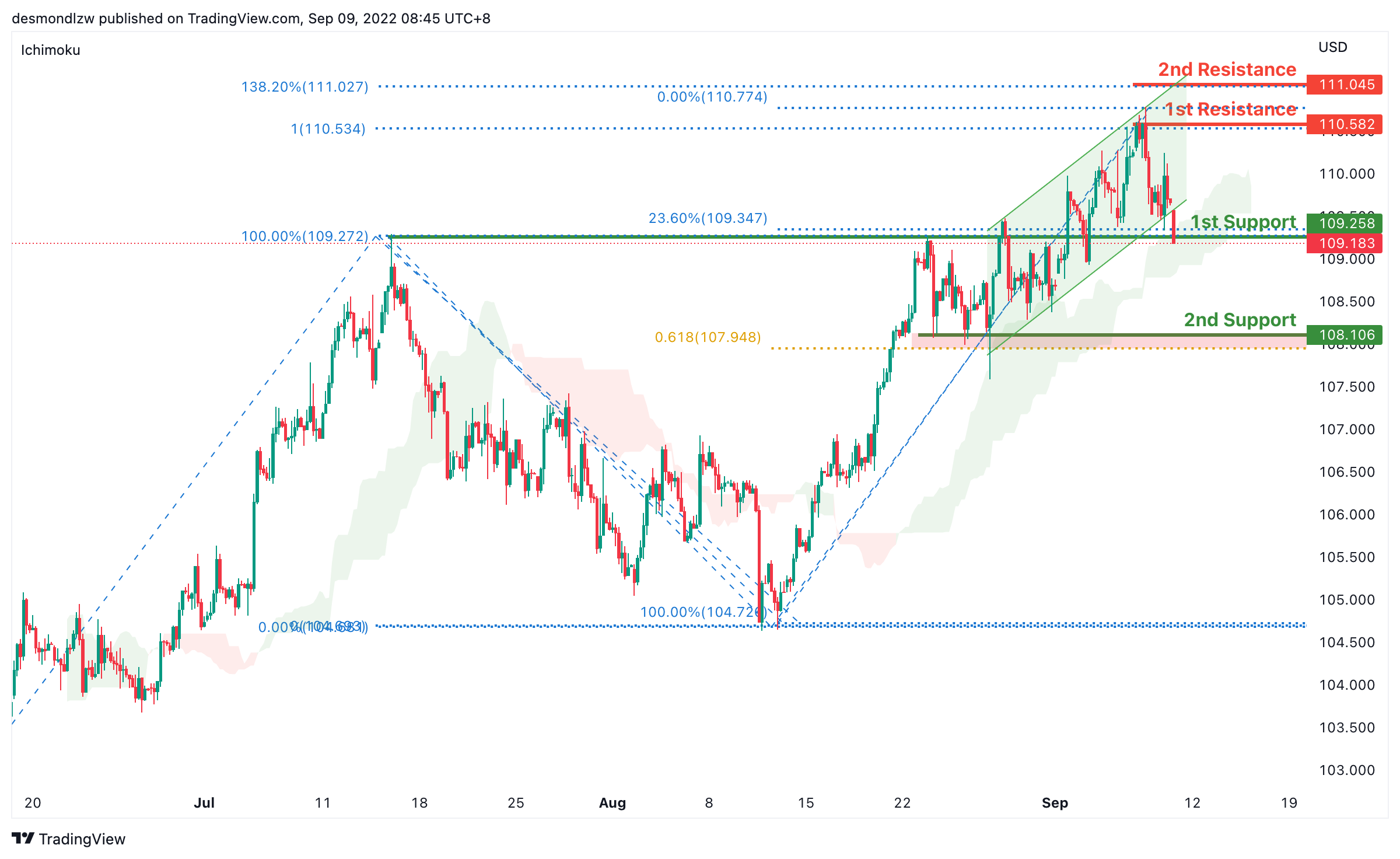
On the H4, prices have broken the ascending trend, we are bearish bias. Price has pulled back to test the first support at 109.258 where the 23.6% retracement and previous swing high sits. If bearish momentum continues, it should bring price to the second support at 108.106 where the 61.8% projection sits. Alternatively, if price reverses from the first support, it should test 110.582 where the 100% projection sits and subsequently the second resistance at 111.045 where the 138.2% fibonacci extension sits.
Areas of consideration:
- H4 time frame, 1st resistance at 110.582
- H4 time frame, 1st support at 109.258
EUR/USD:
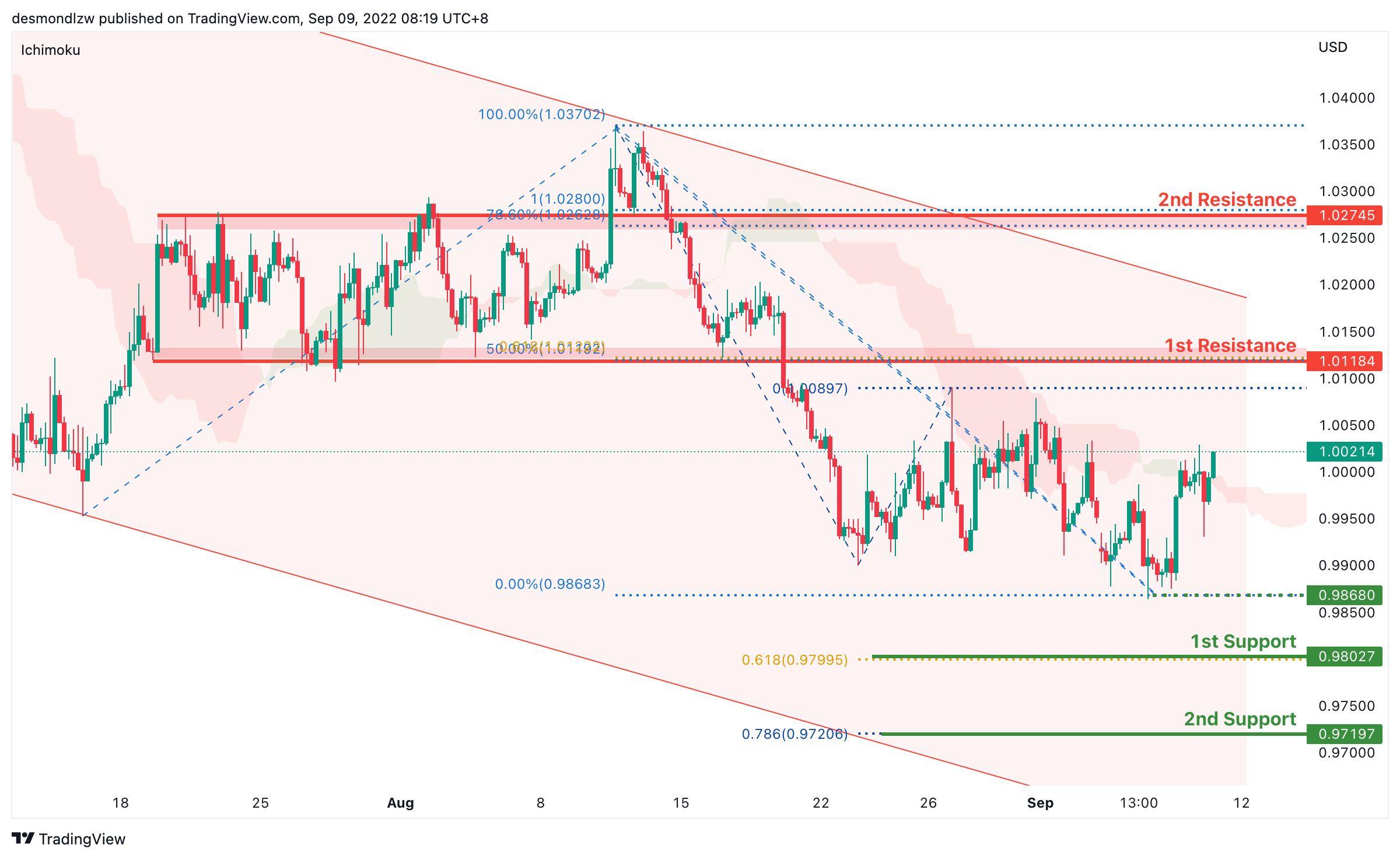
On the H4, price is moving in an ascending manner signalling bullish momentum – we are bullish bias. Price seems like it’s moving toward the first resistance at 1.0118 where the 50% retracement and 61.8% projection sits. If bullish momentum continues, it should bring price to the second resistance at 1.02745 where the 78.6% retracement and 100% projection sits. Alternatively, if price pulls back, it should test the intermediate support at 0.9868 then the first support at 0.9802 where the 61.8% projection sits.
Areas of consideration :
- H4 1st resistance at 1.0118
- H4 1st support at 0.9802
GBP/USD:
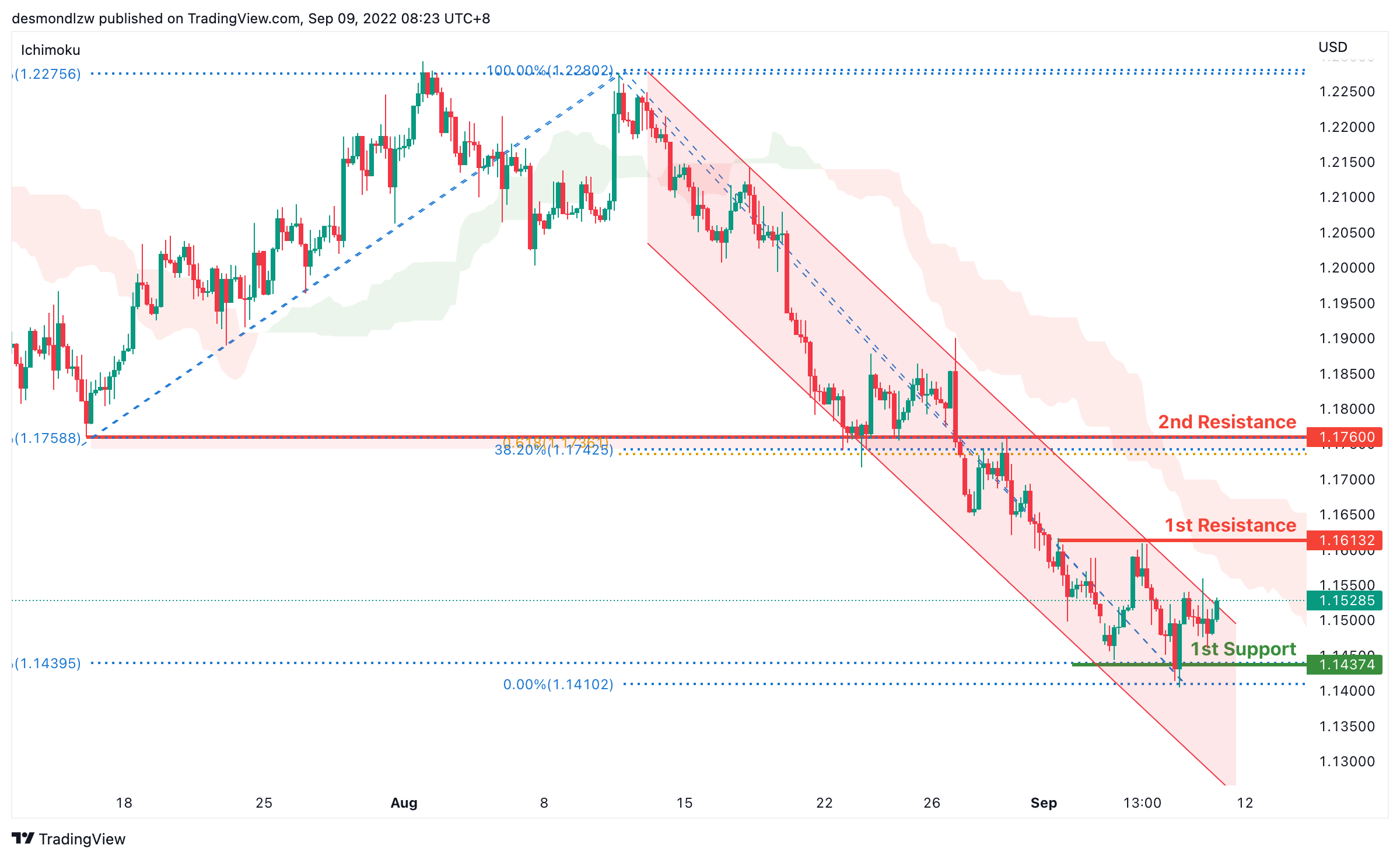
On the H4, prices seem to still be in a bearish momentum and respecting the ichimoku cloud. Prices have rebounded slightly but if bearish momentum continues it should move toward the first support at 1.1437 levels where the 161.8% extension sits. Alternatively, if it fails to break this level, it might look to test the first resistance at 1.1613 where the previous swing high sits subsequently the second resistance at 1.1760 level where the 61.8% projection and 38.2% retracement sits
Areas of consideration:
- H4 1st resistance at 1.163
- H4 1st support at 1.1437
USD/CHF:
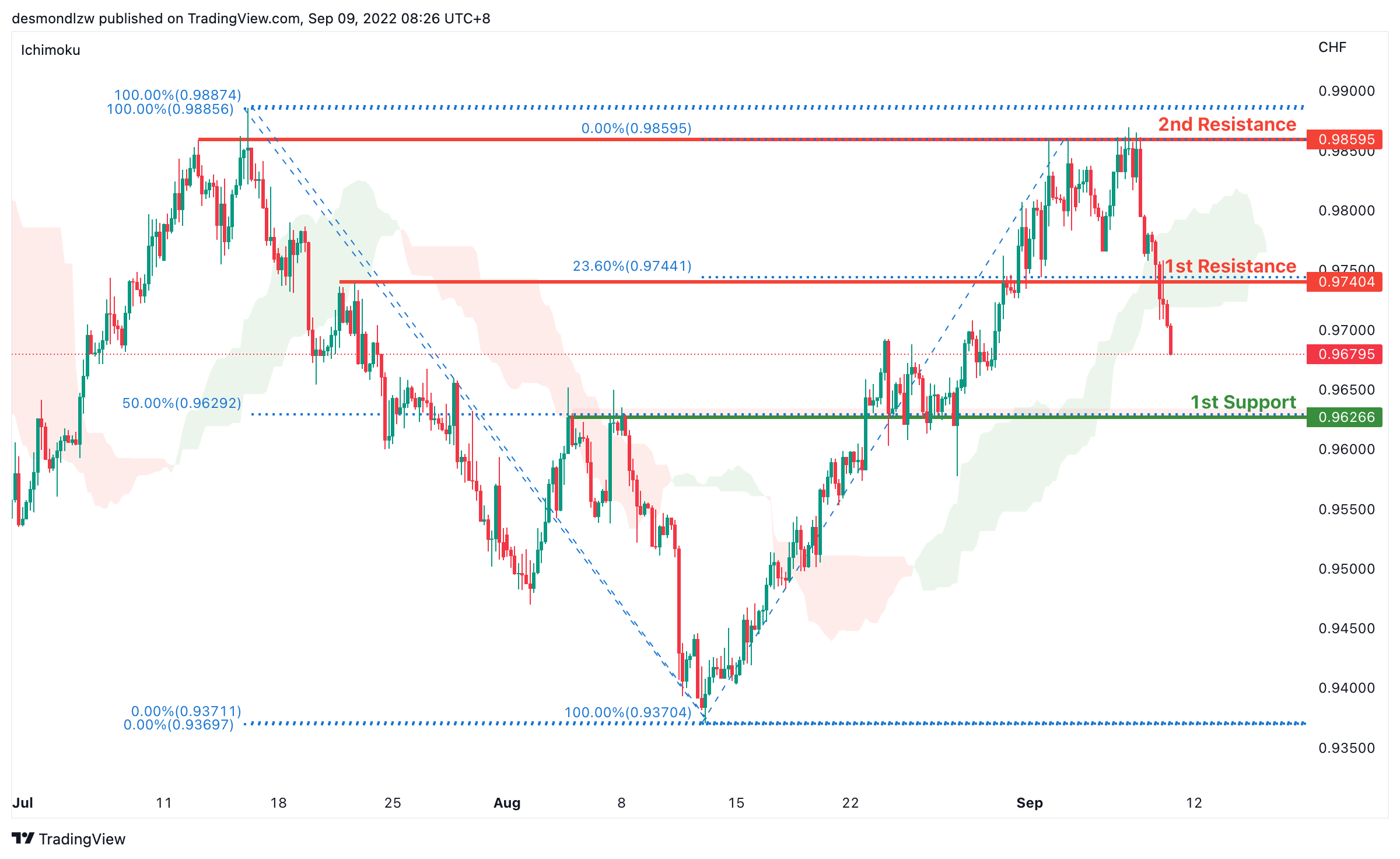
On the H4, prices have rejected the 0.9859 levels and we are currently bearish bias. Price seem like its moving toward the first support around the 0.9626 levels where the 50% retracement, 78.6% projection and overlapping support sits. Alternatively, price could pull back to test the first resistance at 0.9740 where the 23.6% retracement sits then the second resistance at 0.9859
Areas of consideration
- H4 1st support at 0.9626
- H4 1st resistance at 0.9740
XAU/USD (GOLD):
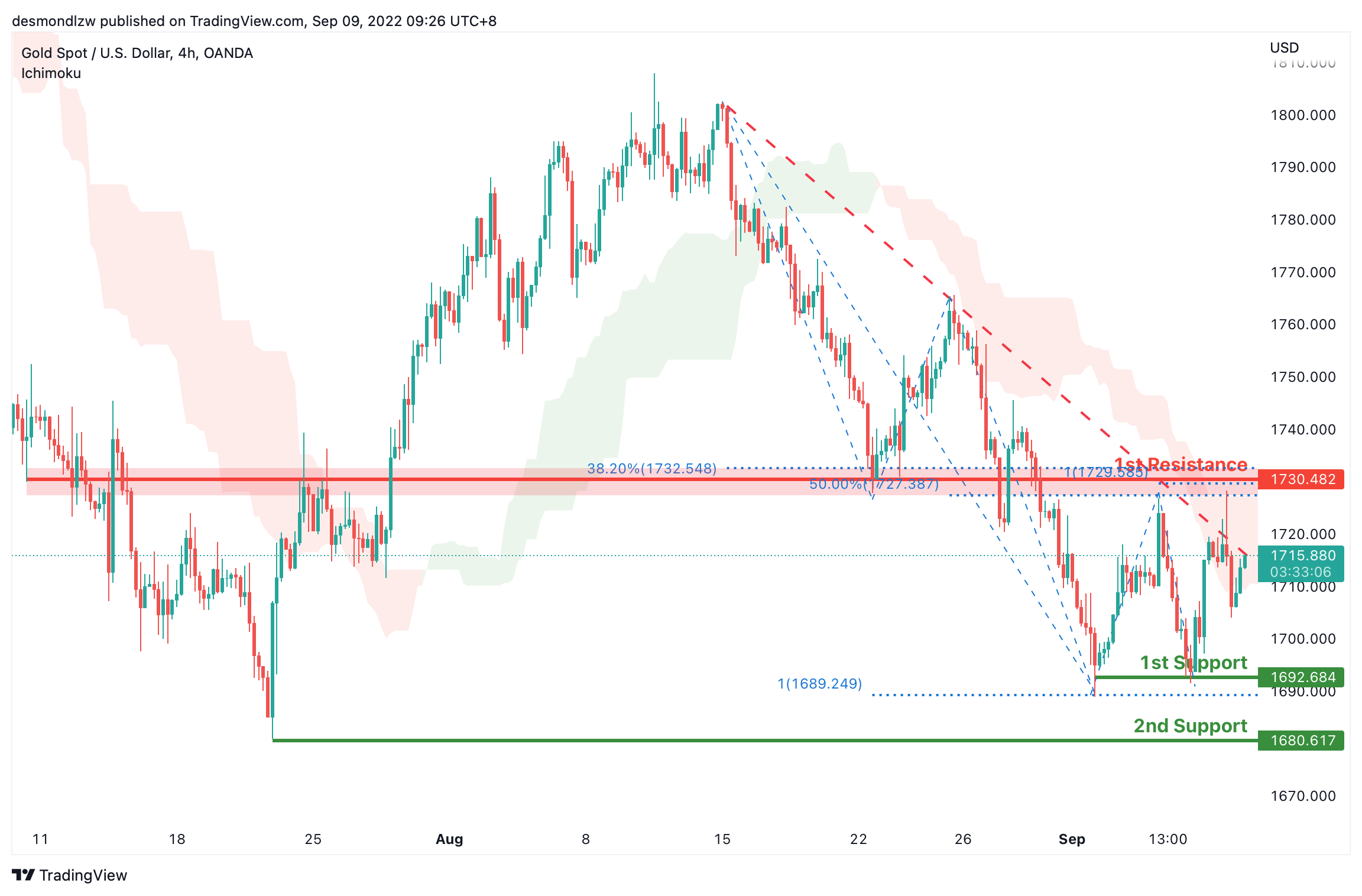
On the H4, with prices testing the descending trendline, if the price can break the descending trendline successfully, the price may rise to the 1st resistance at 1730.482 area, which is in line with the overlap resistance, 50 % and 38% fibonacci retracement, as well as 100% fibonacci projection. After testing the 1st resistance, the price may drop to the 1st support at 1692.684, which is in line with the previous swing lows and 100% fibonacci projection. If the price breaks this support level, the next support level could be at 1680.546, where the swing low is.
Areas of consideration:
- H4 time frame, 1st resistance at 1730.482
- H4 time frame, 1st support at 1692.684
AUD/USD:
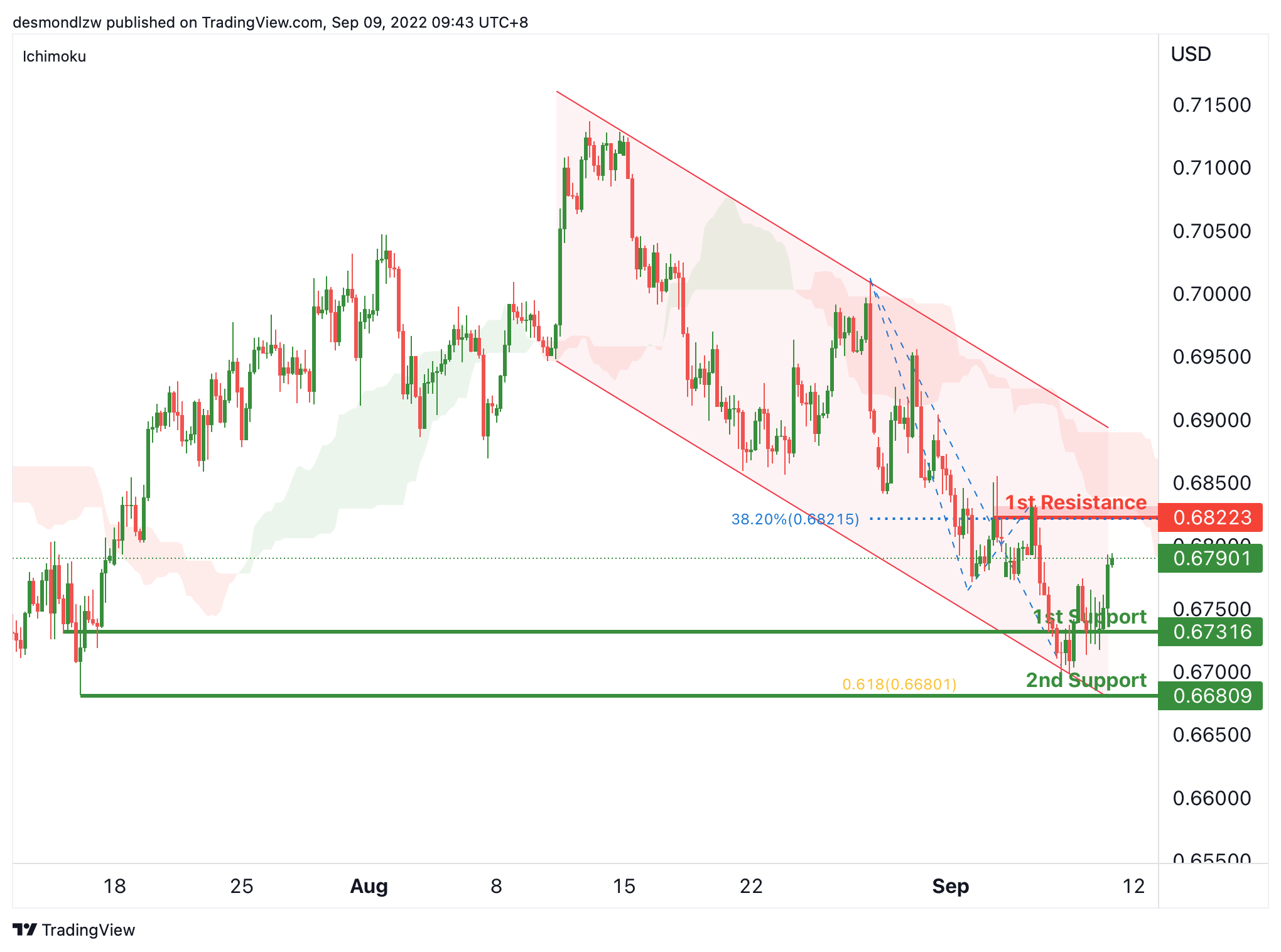
On the H4, with the price pulling back from the 1st support, we have a short term bullish bias that the price may test the 1st resistance at 0.68223, which is in line with the previous swing high and 38.2% fibonacci retracement. After testing the 1st resistance, as the price is moving within the descending channel and ichimoku cloud, the price may drop to the 1st support at 0.67316, where the previous swing lows are. If the price breaks this support level, the 2nd support level could be at 0.66809, where the significant swing low and 61.8% fibonacci projection are.
Areas of consideration
- H4 1st resistance at 0.68223
- H4 1st support at 0.67316
NZD/USD:
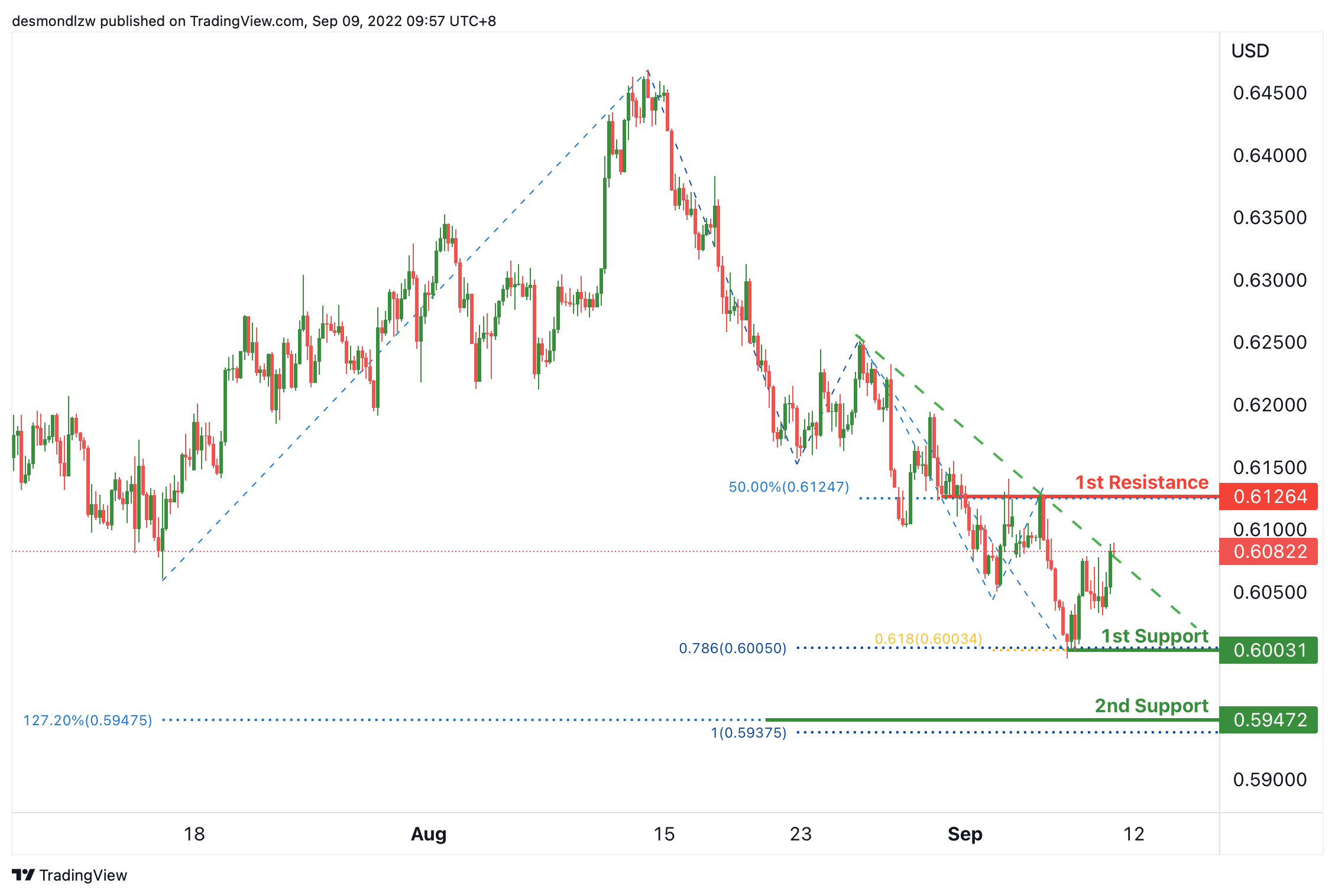
On the H4, with price breaking the descending trendline and pulling back from the 1st support, we have a bullish bias that the price may rise to the 1st resistance at 0.61264, which is in line with the overlap resistance and 50% fibonacci retracement. Alternatively, the price may drop to the 1st support at 0.60031, where the 61.8% and 78.6% fibonacci projection and swing low are. If the price breaks this support level, the 2nd support level could be at 0.59472, where the 127.2% fibonacci extension and 100% fibonacci projection are.
Areas of consideration:
- H4 time frame, 1st resistance at 0.61264
- H4 time frame, 1st support at 0.60031
USD/CAD:
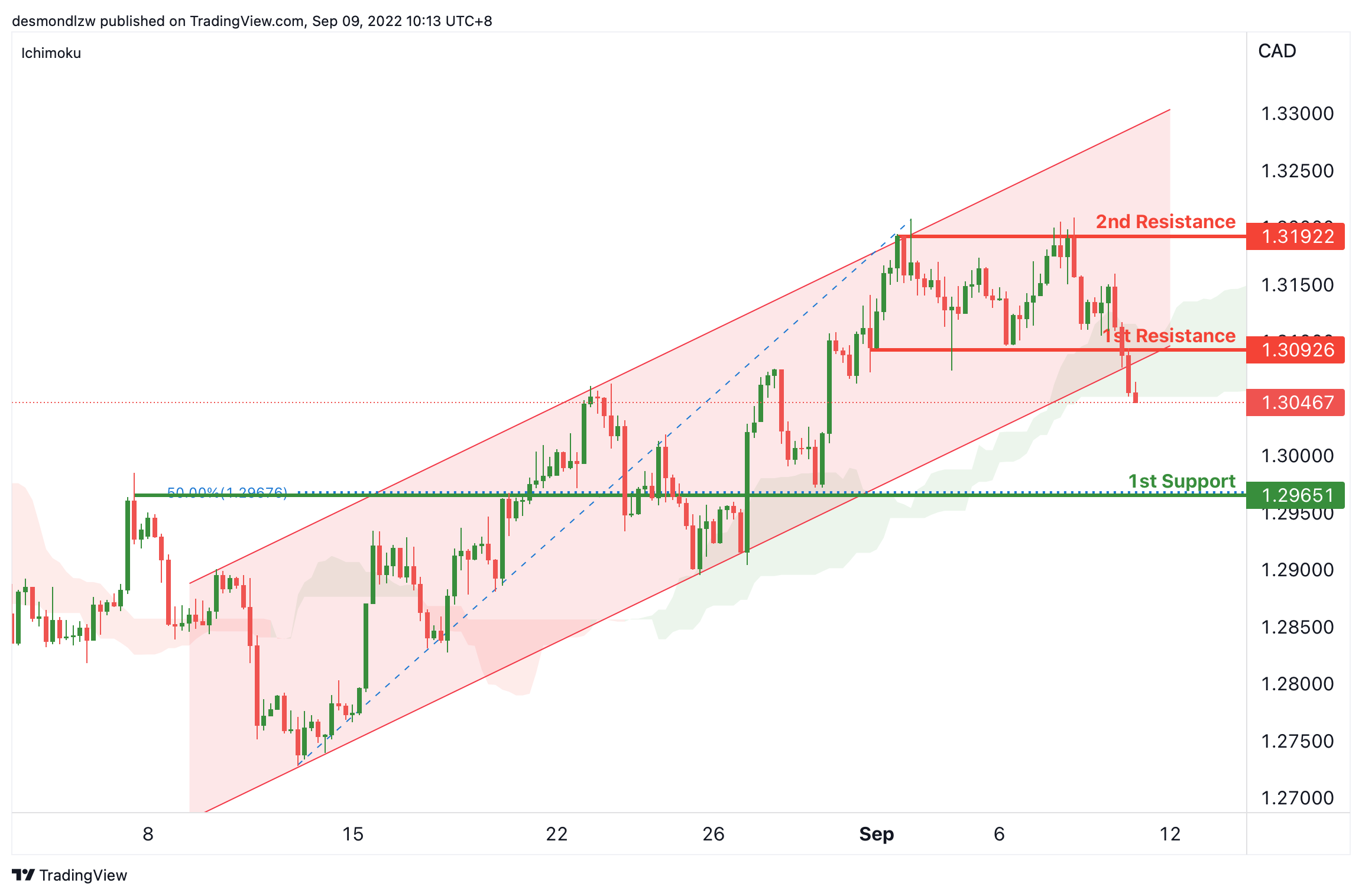
On the H4, with the price breaking the ascending channel, crossing the ichimoku cloud, and there’s a possible “double top” pattern, we have a bearish bias that the price may drop to the 1st support at 1.29651, which is in line with the overlap support and 50% fibonacci retracement. Alternatively, the price may rise to the 1st resistance at 1.30926, where the “neckline” of the “double top” pattern is. If the price can break the 1st resistance, the 2nd resistance could be at 1.31922, where the “double top” is.
Areas of consideration:
- H4 time frame, 1st resistance at 1.30926
- H4 time frame, 1st support at 1.29651
OIL:
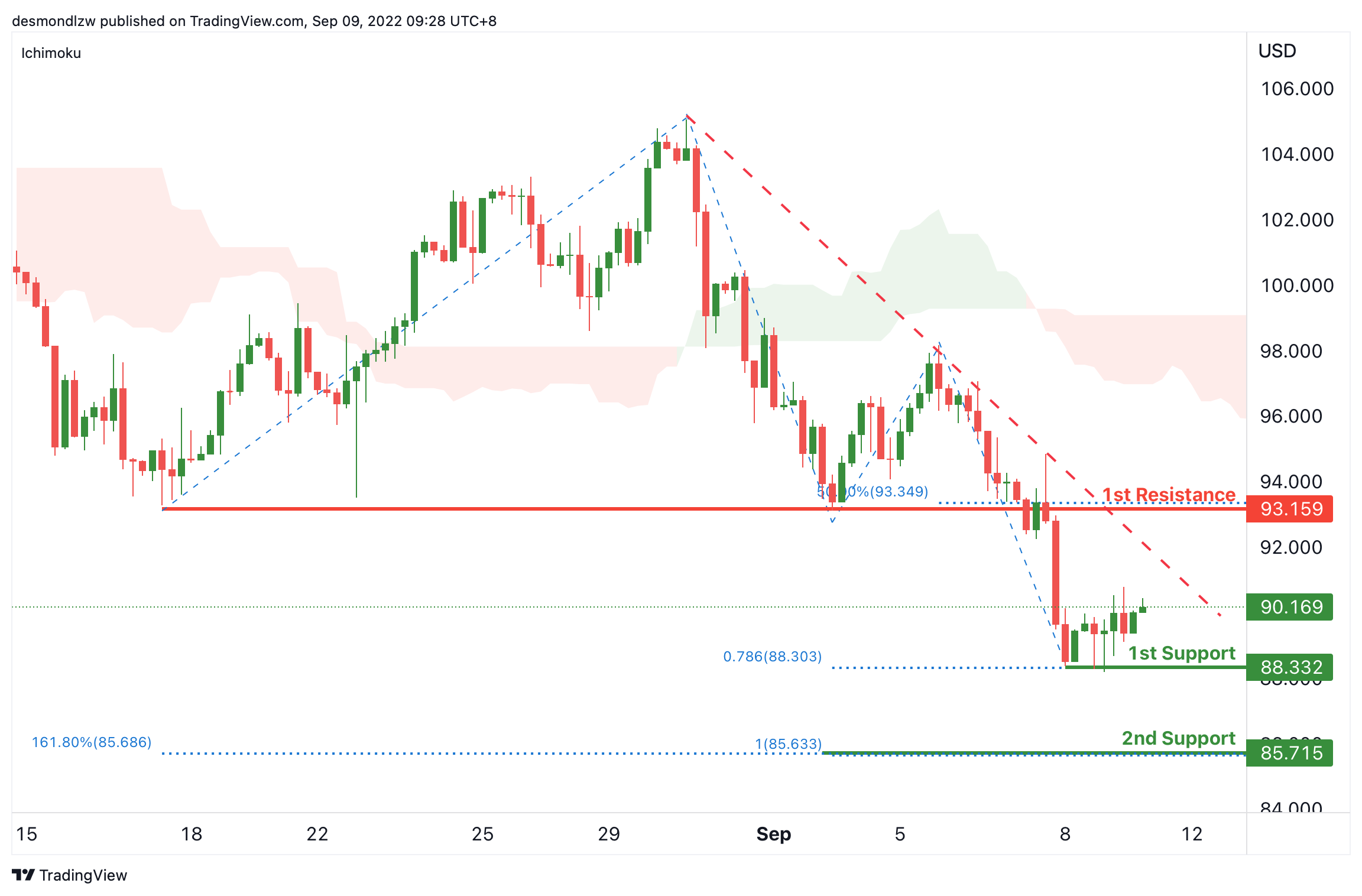
On the H4, with price below ichimoku cloud and below the descending trendline, we have a bearish bias that the price may drop to the 1st support at 88.332, where the 78.6% fibonacci projection is. If the price could break the 1st support, the 2nd support could be at 85.715, where the 100% fibonacci projection is. Alternatively, the price may continue the pullback trend and rise to the 1st resistance at 93.159, where the 50% fibonacci retracement and previous swing support are.
Areas of consideration:
- H4 time frame, 1st support at 88.332
- H4 time frame, 2nd support at 85.715
Dow Jones Industrial Average:
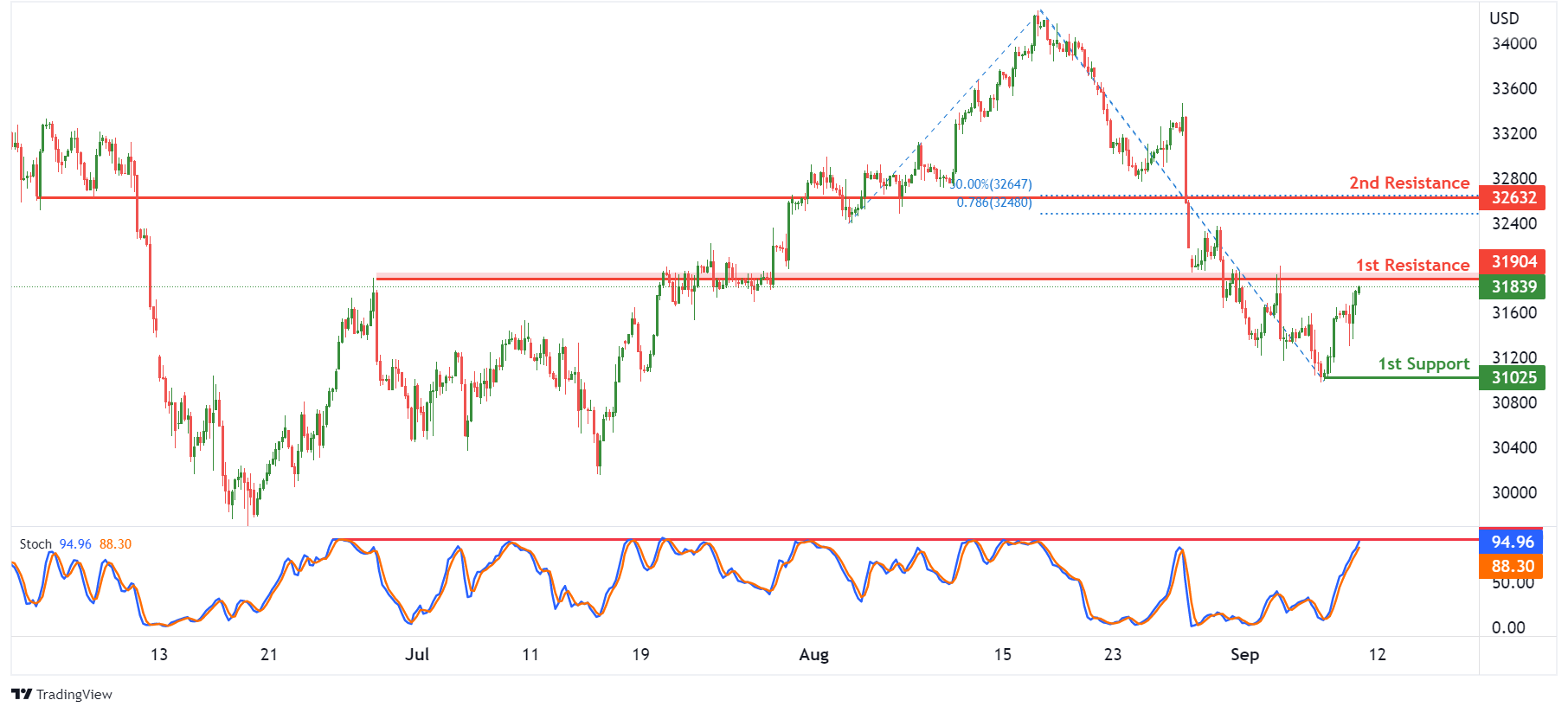
On the H4, with price expected to reverse off the stochastic resistance, we have a bearish bias that price will drop from 1st resistance at 31904 where the pullback resistance is to the 1st support at 31025 where the swing low support is. Alternatively, price could break 1st resistance and rise to 2nd resistance at 32632 where the pullback resistance, 50% fibonacci retracement and 78.6% fibonacci projection are.
Areas of consideration:
- H4 time frame, 1st resistance of 31904
- H4 time frame, 1st support at 31025
DAX:
On the H4, with price moving within a descending channel and below the ichimoku indicator, we have a bearish bias that price will drop from 1st resistance at 13017.19 where the pullback resistance is to the 1st support at 12601.62 where the swing low support and 78.6% fibonacci projection are. Alternatively, price could break 1st resistance structure and rise to 2nd resistance at 13361.47 where the overlap resistance, 61.8% fibonacci retracement and 78.6% fibonacci projection are.
Areas of consideration:
- H4 time frame, 1st resistance of 13017.19
- H4 time frame, 1st support at 12601.62
ETHUSD:
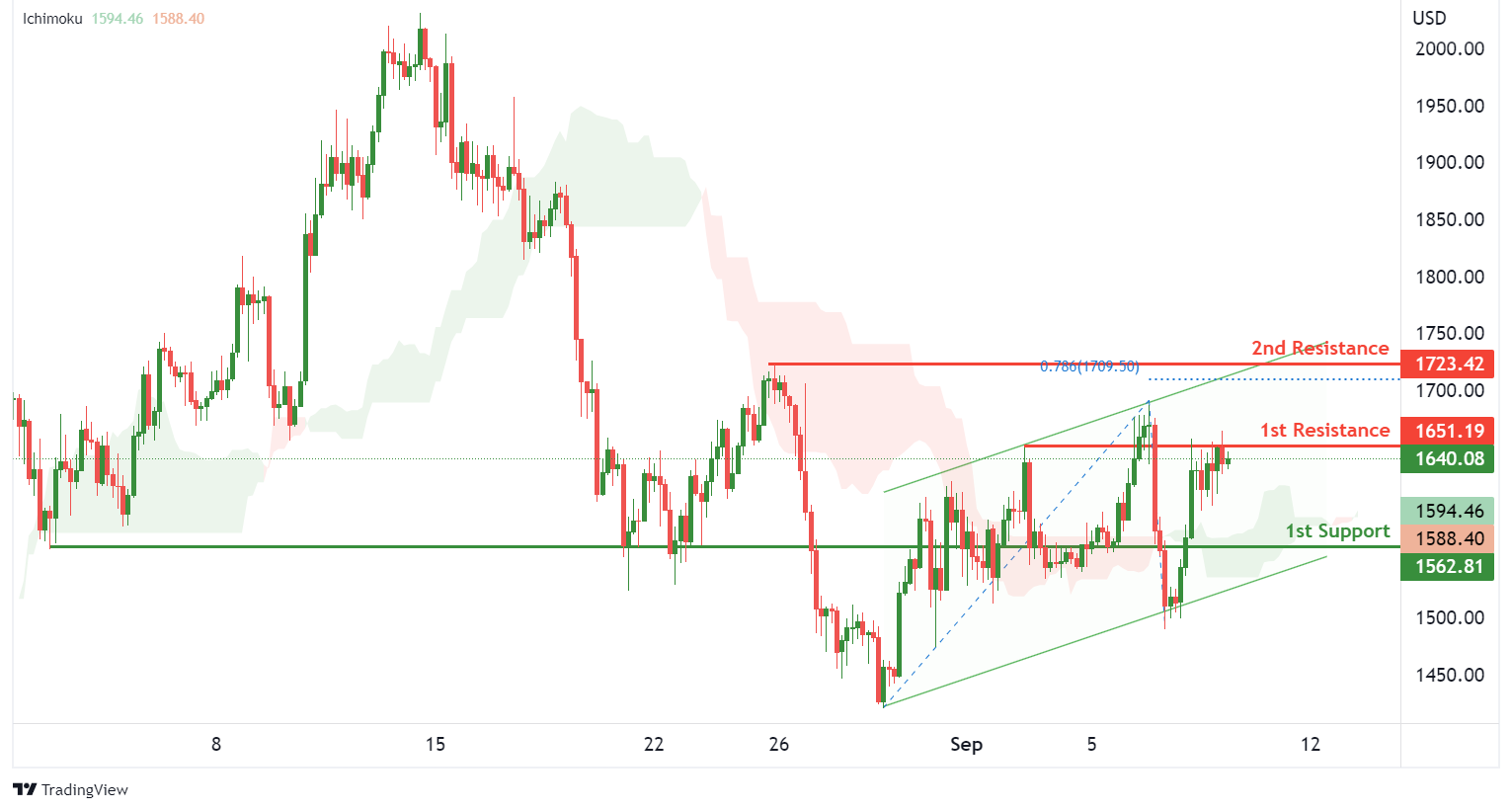
On the H4, with price moving within an ascending channel and above the ichimoku indicator, we have a bullish bias that price will rise to 1st resistance at 1651.19 where the pullback resistance is. Once there is upside confirmation that price has broken 1st resistance structure, we would expect bullish momentum to carry price to 2nd resistance at 1723.42 where the swing high resistance and 78.6% fibonacci projection are. Alternatively, price could drop to the 1st support at 1562.81 where the overlap support is.
Areas of consideration:
- H4 time frame, 1st resistance of 1651.19
- H4 time frame, 1st support at 1562.81
BTCUSD:
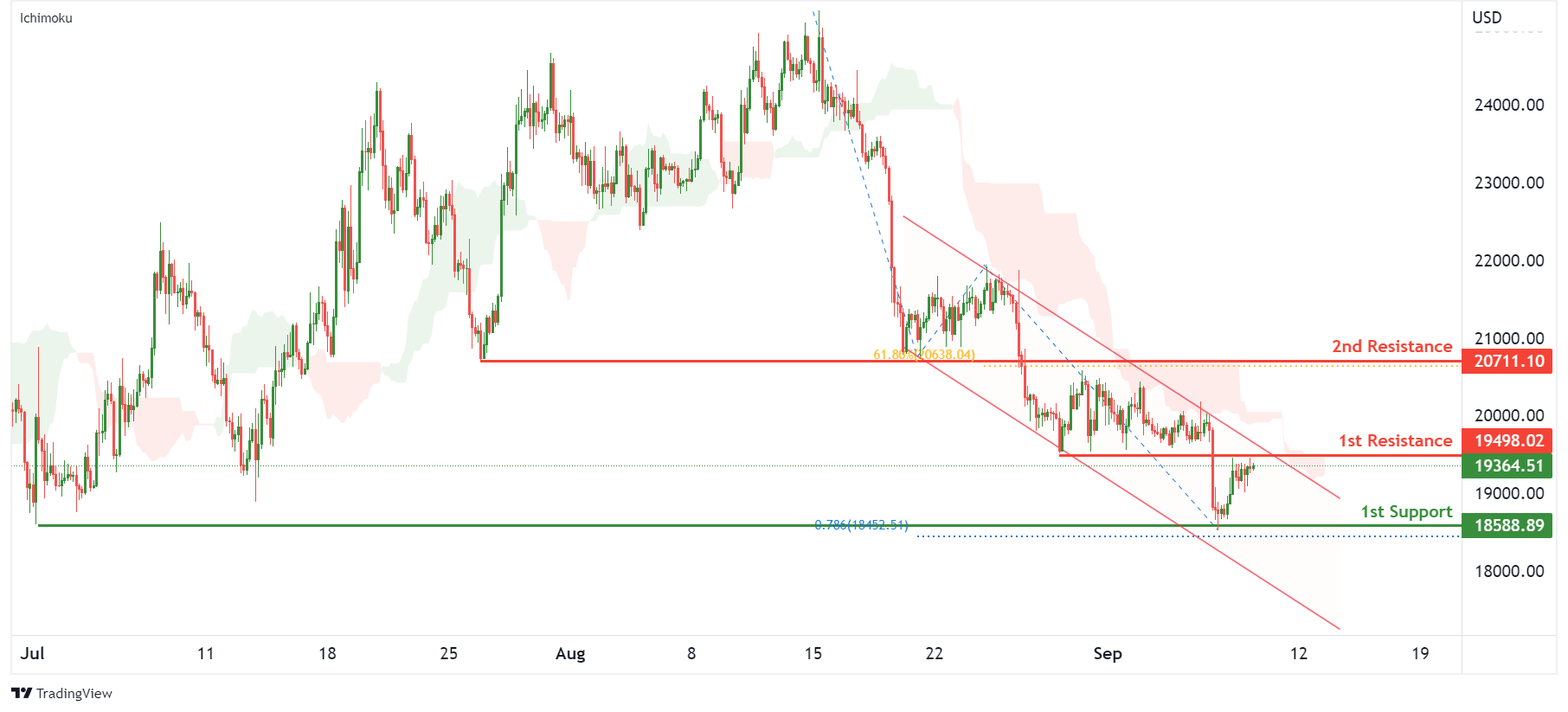
On the H4, with price moving within a descending channel and below an ichimoku indicator, we have a bearish bias that price will drop from the 1st resistance at 19498.02 where the pullback resistance and 23.6% fibonacci retracement are to the 1st support at 18588.89 where the swing low support and 78.6% fibonacci projection are. Alternatively, price could break 1st resistance and rise to 2nd resistance at 20711.10 where the pullback resistance and 61.8% fibonacci retracement are.
Areas of consideration:
- H4 time frame, 1st resistance of 19498.02
- H4 time frame, 1st support at 18588.89
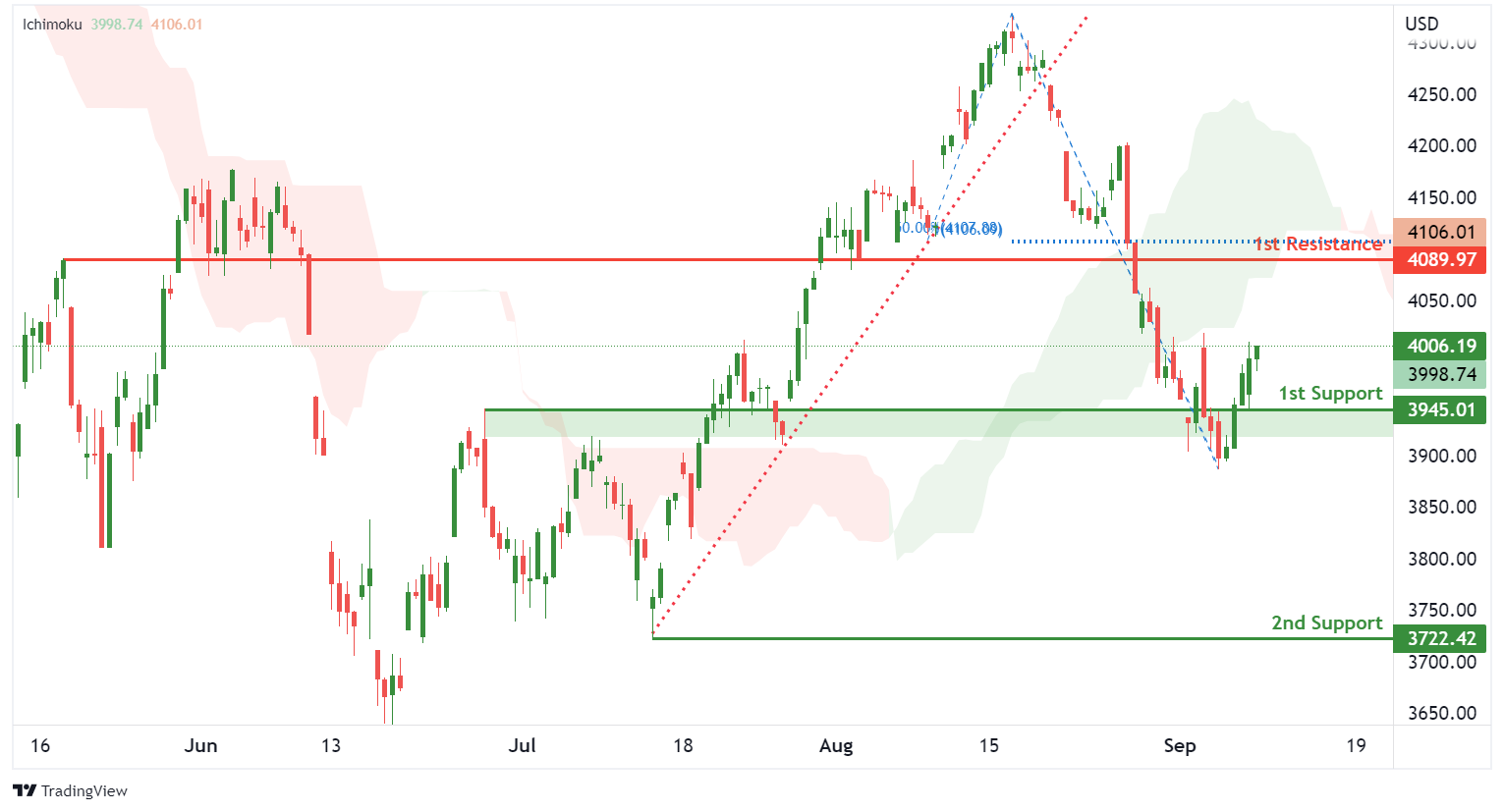
S&P 500:
On the H4, with prices breaking out of the ascending trendline and moving below the ichimoku indicator, we have a bearish bias that the price will drop to the 1st support at 3945.01 where the pullback support is. Once there is downside confirmation that price has broken 1st support structure, we would expect bearish momentum to carry price to 2nd support at 3722.42 where the swing low support is. Alternatively, price could rise to 1st resistance at 4089.97 where the pullback resistance, 50% fibonacci retracement and 100% fibonacci projection are.
Areas of consideration:
- H4 time frame, 1st resistance of 4089.97
- H4 time frame, 1st support at 3945.01