Sample Category Title
AUD/USD Daily Report
Daily Pivots: (S1) 0.7177; (P) 0.7204; (R1) 0.7222; More...
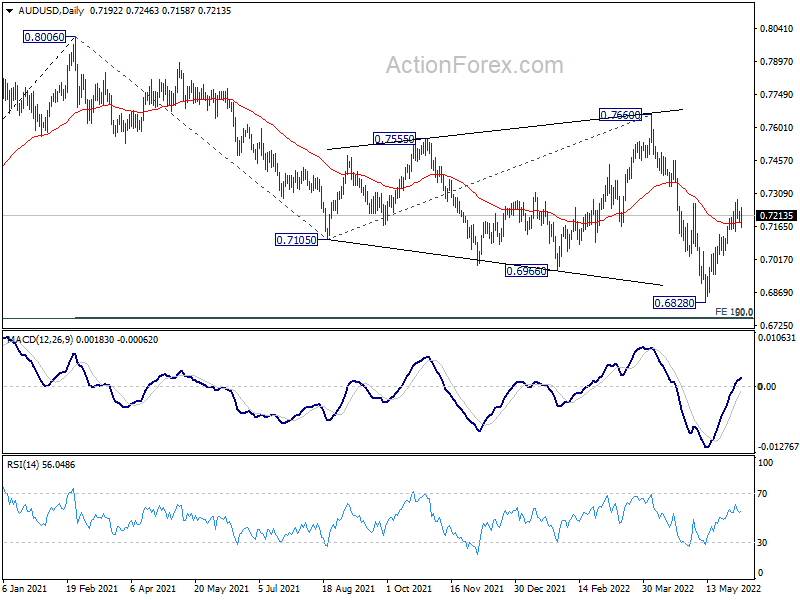
AUD/USD recovers today but stays below 0.7282 temporary top. Intraday bias remains neutral first. Further rise will remain in favor as long as 0.7034 support holds. Current development raised the chance that whole fall corrective fall from 0.8005 has completed at 0.6828. Above 0.7282 will extend the rebound to 0.7660 resistance for confirmation. However, break of 0.7034 will dampen this bullish view and bring retest of 0.6828 low instead.
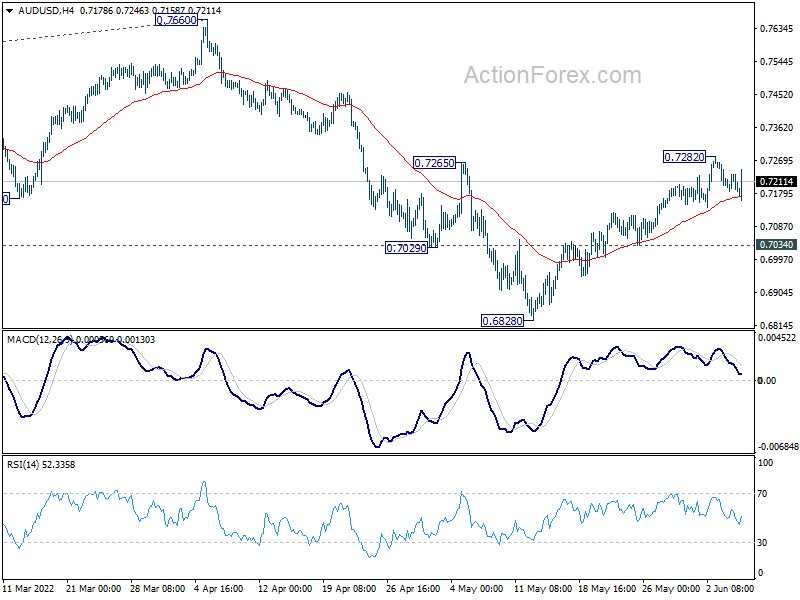
In the bigger picture, price actions from 0.8006 are seen as a corrective pattern to rise from 0.5506 (2020 low). Deeper fall could be seen to 50% retracement of 0.5506 to 0.8006 at 0.6756. This coincides with 100% projection of 0.8006 to 0.7105 from 0.7660 at 0.6760. Strong support is expected from 0.6756/60 cluster to contain downside to complete the correction. Meanwhile, firm break of 0.7660 resistance will confirm that such corrective pattern has completed, and larger up trend is ready to resume.
Aussie Jumps on Larger than Expected RBA Rate Hike, Yen Selloff Continues
Australian Dollar rises broadly after RBA surprised the markets by a larger than expected 50bps rate hike. It's now overpowering the strong Canadian and US Dollars. On the other hand, Yen's weakness persists on rising benchmark treasury yields in the US and Europe. Sterling is turning soft after Prime Minister Boris Johnson won the confidence vote while Swiss Franc is also weak. Euro, on the other hand, is rather resilient, awaiting ECB later in the week.
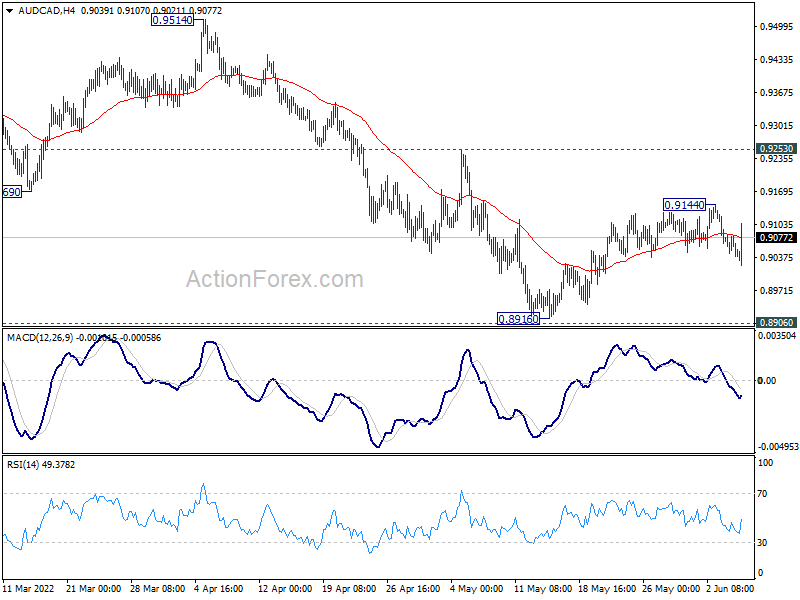
Technically, Aussie is displaying clear strength in the upside breakouts in AUD/JPY and AUD/NZD. But it's still a bit sluggish against others. To be specific, AUD/USD will need to break through 0.7282 temporary top to resume the rebound from 0.6828. Also, AUD/USD will need to break through 0.9144 temporary top to resume the rebound from 0.8916. Otherwise, it just one of the strongest at best, not the strongest.
In Asia, the time of writing, Nikkei is up 0.50%. Hong Kong HSI is down -0.12%. China Shanghai SSE is up 0.48%. Singapore Strait Times is down -0.22%. Japan 10-year JGB yield is up 0.0008 at 0.246. Overnight, DOW rose 0.05%. S&P 500 rose 0.31%. NASDAQ rose 0.40%. 10-year yield rose 0.081 to 3.035.
RBA hikes by 50bps to 0.85%, more normalization over the months ahead
RBA raises cash rate target by 50bps to 0.85% today, larger than expectation of 40bps. Interest rate on exchange settlement balances is also lifted by 50bps to 75bps. The central bank also maintains tightening bias, as "the Board expects to take further steps in the process of normalizing monetary conditions in Australia over the months ahead."
In the accompanying statement, RBA said inflation in Australia has "increased significantly", and is "expected to increase further", before declining back towards the 2-3% target range next year. The economy is "resilient" while labour market is "strong".
One source of uncertainty is "how household spending evolves", given the "increasing pressure" from higher inflation, and interest rates. The central scenario is for strong household consumption growth this year, but RBA will pay close attention to various influences on consumption.
Australia AiG services dropped to 49.2, back in mild contraction
Australia AiG Performance and Services Index dropped sharply from 57.8 to 49.2 in May, indicating mild contraction. Sales dropped -13.0 pts to 50.7. Employment dropped -10.4 to 47.4. New orders dropped -3.3 to 49.7. Input prices dropped -9.1 o 68.7. Selling prices dropped -3.6 to 61.9. Average wages dropped -9.8 to 57.4.
Innes Willox, Chief Executive of Ai Group, said: "The Australian services sector contracted mildly in May after a period of healthy expansion in the earlier months of 2022. Performance was mixed across the sector with strong growth in logistics, retail trade and personal, recreational & other services offset by sharp declines in business & property services and health & education services."
CAD/JPY targeting 2014 high as Yen selloff deepens
BoJ Governor Haruhiko Kuroda said that a weak Yen is "beneficial" for Japan's economy if the moves are "not too sharp". He emphasized again that the moves in currency markets should reflect "fundamentals", and the central bank is "carefully watching" the impact.
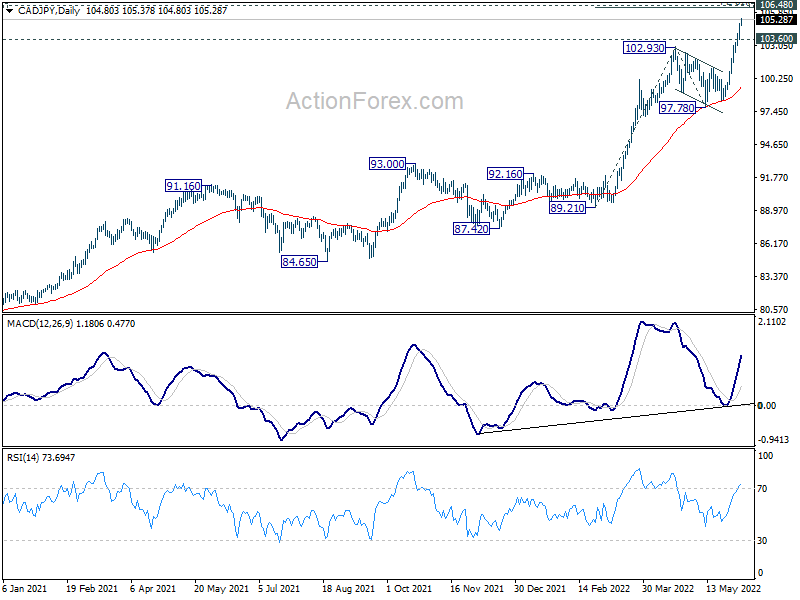
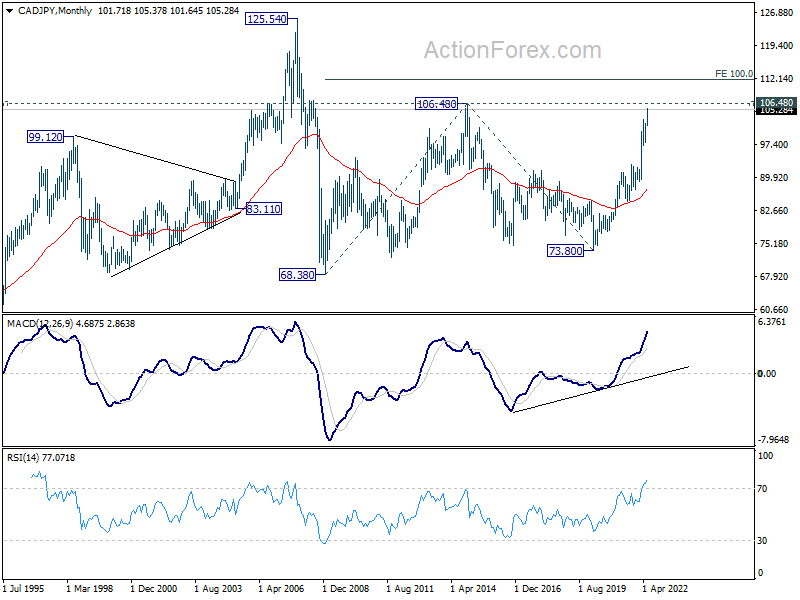
The comments came as Yen was sold off broadly, triggered by US 10-year yield reclaimed 3% handle overnight. Germany 10-year bund yield also jumped to fix at 1.323. USD/JPY hit the highest level in over two-decades while CAD/JPY is also getting close to 2014 high at 106.48.
For now, near term outlook in CAD/JPY will stay bullish as long as 103.60 support holds, targeting 61.8% projection of 89.21 to 102.93 from 97.78 at 106.25, which is close to above mentioned 106.48. Sustained break there will pave the way to 100% projection of 68.38 to 106.48 from 73.80 at 111.90. That is the key hurdle for CAD/JPY to overcome in the medium term.
Looking ahead
Germany factor orders, Swiss foreign currency reserves, Eurozone Sentix investor confidence, and UK PMI services final will be released in European session. Later in the day, US will release trade balance. Canada will release trade balance and Ivey PMI.
AUD/USD Daily Report
Daily Pivots: (S1) 0.7177; (P) 0.7204; (R1) 0.7222; More...
AUD/USD recovers today but stays below 0.7282 temporary top. Intraday bias remains neutral first. Further rise will remain in favor as long as 0.7034 support holds. Current development raised the chance that whole fall corrective fall from 0.8005 has completed at 0.6828. Above 0.7282 will extend the rebound to 0.7660 resistance for confirmation. However, break of 0.7034 will dampen this bullish view and bring retest of 0.6828 low instead.
In the bigger picture, price actions from 0.8006 are seen as a corrective pattern to rise from 0.5506 (2020 low). Deeper fall could be seen to 50% retracement of 0.5506 to 0.8006 at 0.6756. This coincides with 100% projection of 0.8006 to 0.7105 from 0.7660 at 0.6760. Strong support is expected from 0.6756/60 cluster to contain downside to complete the correction. Meanwhile, firm break of 0.7660 resistance will confirm that such corrective pattern has completed, and larger up trend is ready to resume.
Economic Indicators Update
| GMT | Ccy | Events | Actual | Forecast | Previous | Revised |
|---|---|---|---|---|---|---|
| 22:30 | AUD | AiG Performance of Services Index May | 49.2 | 57.8 | ||
| 23:01 | GBP | BRC Like-For-Like Retail Sales Y/Y May | -1.50% | -1.70% | ||
| 23:30 | JPY | Labor Cash Earnings Y/Y Apr | 1.70% | 1.50% | 1.20% | |
| 23:30 | JPY | Overall Household Spending Y/Y Apr | -1.70% | -1.00% | -2.30% | |
| 04:30 | AUD | RBA Interest Rate Decision | 0.85% | 0.75% | 0.35% | |
| 05:00 | JPY | Leading Economic Index Apr P | 102.3 | 100.8 | ||
| 06:00 | EUR | Germany Factory Orders M/M Apr | -0.50% | -4.70% | ||
| 07:00 | CHF | Foreign Currency Reserves (CHF) May | 926B | |||
| 08:30 | EUR | Eurozone Sentix Investor Confidence Jun | -20 | -22.6 | ||
| 08:30 | GBP | Services PMI May F | 51.8 | 51.8 | ||
| 12:30 | USD | Trade Balance (USD) Apr | -89.3B | -109.8B | ||
| 12:30 | CAD | Trade Balance (CAD) Apr | 1.9B | 2.5B | ||
| 14:00 | CAD | Ivey PMI May | 64.3 | 66.3 |
RBA hikes by 50bps to 0.85%, more normalization over the months ahead
RBA raises cash rate target by 50bps to 0.85% today, larger than expectation of 40bps. Interest rate on exchange settlement balances is also lifted by 50bps to 75bps. The central bank also maintains tightening bias, as "the Board expects to take further steps in the process of normalizing monetary conditions in Australia over the months ahead."
In the accompanying statement, RBA said inflation in Australia has "increased significantly", and is "expected to increase further", before declining back towards the 2-3% target range next year. The economy is "resilient" while labour market is "strong".
One source of uncertainty is "how household spending evolves", given the "increasing pressure" from higher inflation, and interest rates. The central scenario is for strong household consumption growth this year, but RBA will pay close attention to various influences on consumption.
(RBA) Statement by Philip Lowe, Governor: Monetary Policy Decision
At its meeting today, the Board decided to increase the cash rate target by 50 basis points to 85 basis points. It also increased the interest rate on Exchange Settlement balances by 50 basis points to 75 basis points.
Inflation in Australia has increased significantly. While inflation is lower than in most other advanced economies, it is higher than earlier expected. Global factors, including COVID-related disruptions to supply chains and the war in Ukraine, account for much of this increase in inflation. But domestic factors are playing a role too, with capacity constraints in some sectors and the tight labour market contributing to the upward pressure on prices. The floods earlier this year have also affected some prices.
Inflation is expected to increase further, but then decline back towards the 2–3 per cent range next year. Higher prices for electricity and gas and recent increases in petrol prices mean that, in the near term, inflation is likely to be higher than was expected a month ago. As the global supply-side problems are resolved and commodity prices stabilise, even if at a high level, inflation is expected to moderate. Today's increase in interest rates will assist with the return of inflation to target over time.
The Australian economy is resilient, growing by 0.8 per cent in the March quarter and 3.3 per cent over the year. Household and business balance sheets are generally in good shape, an upswing in business investment is underway and there is a large pipeline of construction work to be completed. Macroeconomic policy settings are supportive of growth and national income is being boosted by higher commodity prices. The terms of trade are at a record high.
The labour market is also strong. Employment has grown significantly and the unemployment rate is 3.9 per cent, which is the lowest rate in almost 50 years. Job vacancies and job ads are at high levels and a further decline in unemployment and underemployment is expected. The Bank's business liaison program continues to point to a lift in wages growth from the low rates of recent years as firms compete for staff in a tight labour market.
One source of uncertainty about the economic outlook is how household spending evolves, given the increasing pressure on Australian households' budgets from higher inflation. Interest rates are also increasing. Housing prices have declined in some markets over recent months but remain more than 25 per cent higher than prior to the pandemic, supporting household wealth and spending. The household saving rate also remains higher than it was before the pandemic and many households have built up large financial buffers. While the central scenario is for strong household consumption growth this year, the Board will be paying close attention to these various influences on consumption as it assesses the appropriate setting of monetary policy.
The Board will also be paying close attention to the global outlook, which remains clouded by the war in Ukraine and its effect on the prices for energy and agricultural commodities. Real household incomes are under pressure in many economies and financial conditions are tightening, as central banks withdraw monetary policy support in response to broad-based inflation. There are also ongoing uncertainties related to COVID, especially in China.
Today's increase in interest rates by the Board is a further step in the withdrawal of the extraordinary monetary support that was put in place to help the Australian economy during the pandemic. The resilience of the economy and the higher inflation mean that this extraordinary support is no longer needed. Given the current inflation pressures in the economy, and the still very low level of interest rates, the Board decided to move by 50 basis points today. The Board expects to take further steps in the process of normalising monetary conditions in Australia over the months ahead. The size and timing of future interest rate increases will be guided by the incoming data and the Board's assessment of the outlook for inflation and the labour market. The Board is committed to doing what is necessary to ensure that inflation in Australia returns to target over time.
Elliott Wave View: FTSE Next Bullish Cycle
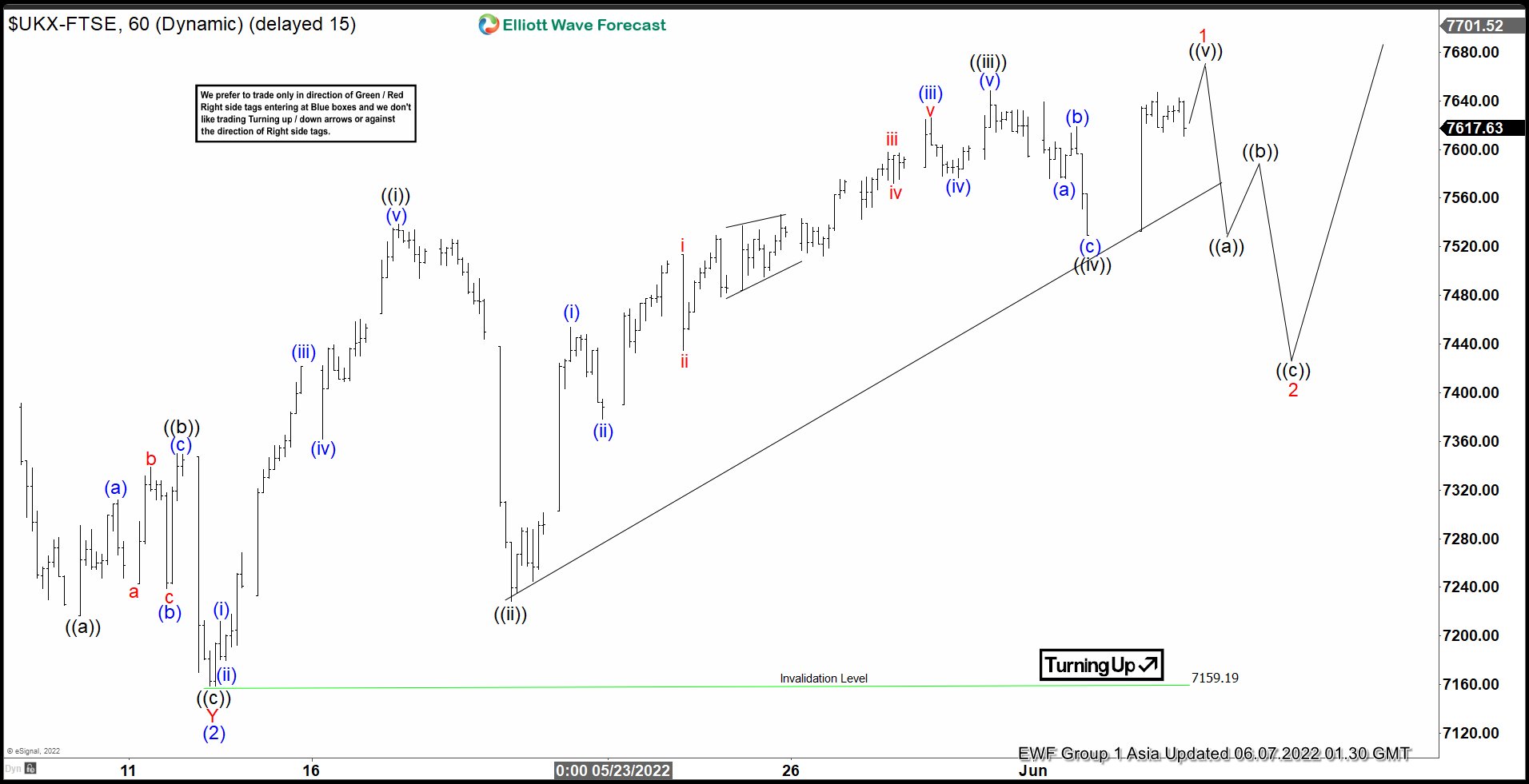
Short Term Elliott Wave View in FTSE suggests rally from 3/7/2022 low is unfolding as a 5 waves impulse Elliott Wave structure. Up from 3/7 low, wave (1) ended at 7669.56 and pullback in wave (2) ended at 7159.19. Internal subdivision of wave (2) unfolded as a double three where wave W ended at 7339.53, wave X ended at 7619.39, and wave Y ended at 7158.53 which completed wave (2). Up from there, wave (3) is currently in progress as another impulsive 5 waves in lesser degree. Index still needs to break above previous peak wave (1) at 7669.56 to confirm the next leg higher has started.
Up from wave (2) low, wave ((i)) ended at 7538.68 and pullback in wave ((ii)) ended at 7228.67. Index then resumes higher in wave ((iii)) towards 7648.26, and dips in wave ((iv)) ended at 7529.23. Expect the Index to soon complete wave ((v)) higher which should end wave 1 in higher degree. Then it should pullback in wave 2 to correct cycle from 5/12/2022 low (7159.19) in 3, 7, or 11 swing before the rally resumes. Once the Index breaks above wave (1) at 7669.56, it should open up a bullish sequence from 3/7/2022 low with a 100% – 161.8% Fibonacci extension target of 8039 – 8582.
FTSE 60 Minutes Elliott Wave Chart
Technical Outlook and Review
DXY:
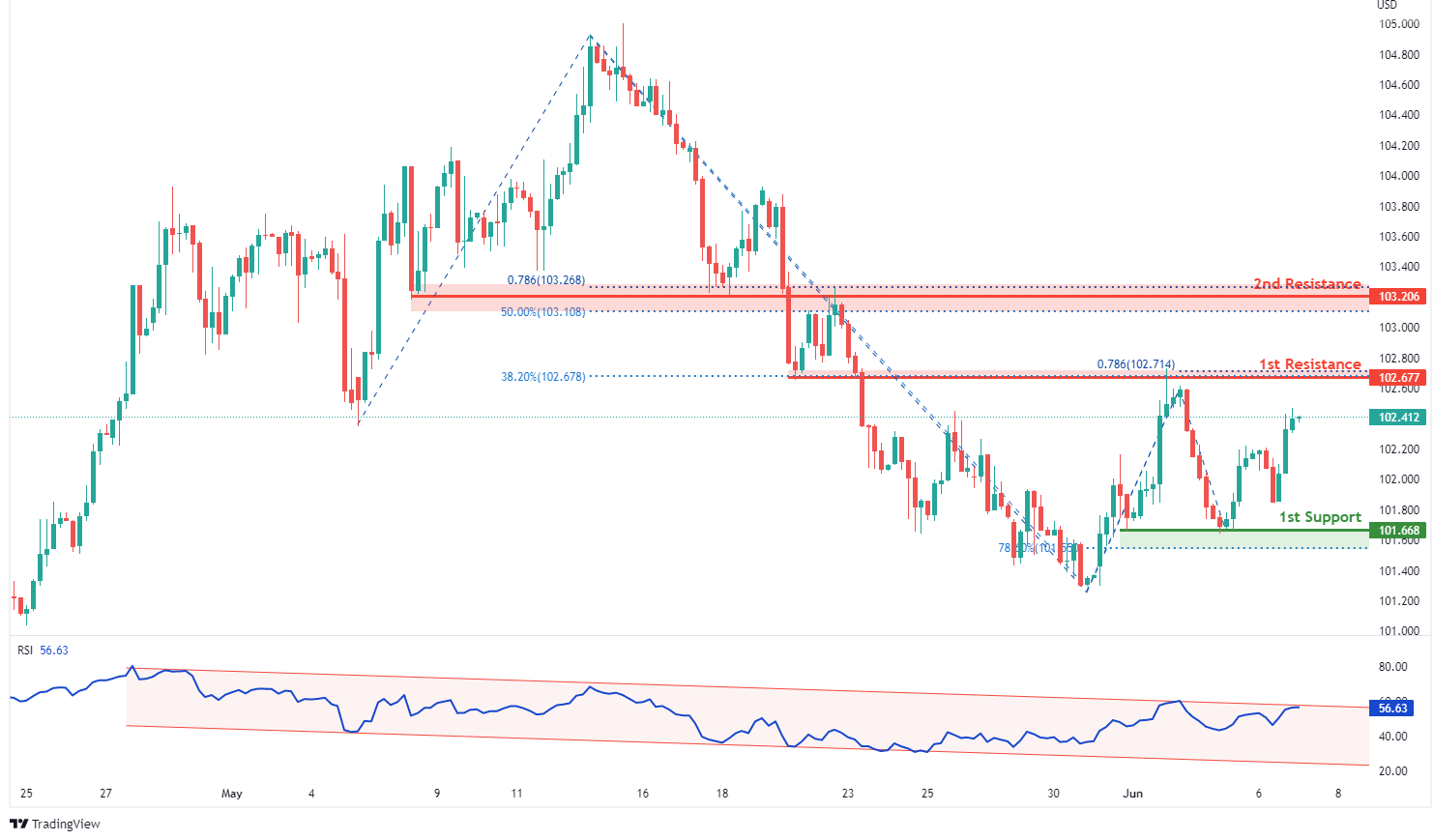
On the H4, with RSI moving in a descending channel, we have a bearish bias that price will drop to our 1st support at 101.668 where the horizontal swing low support and 78.6% fibonacci retracement are from our 1st resistance at 102.677 in line with the horizontal overlap resistance, 38.2% fibonacci retracement and 78.6% fibonacci projection. Alternatively, price may break 1st resistance structure and head for 2nd resistance at 103.206 where the horizontal overlap resistance, 78.6% fibonacci projection and 50% fibonacci retracement are.
Areas of consideration:
- H4 time frame, 1st resistance at 102.677
- H4 time frame, 1st support at 101.668
XAU/USD (GOLD):
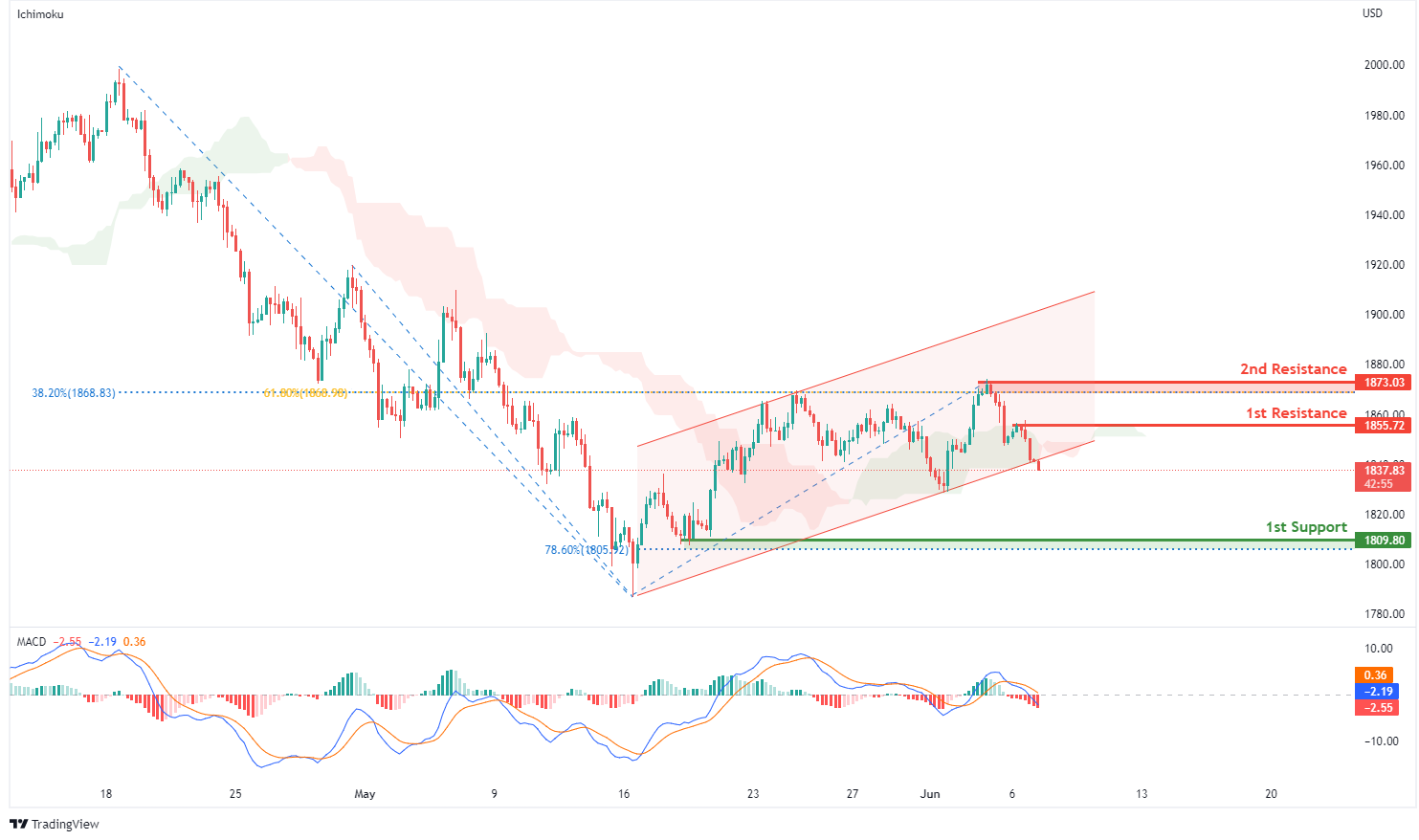
On the H4, with prices moving below the ichimoku indicator, price breakout from ascending channel and MACD moving in a bearish momentum, we have a bearish bias that price will drop from our 1st resistance at 1855.72 where the horizontal swing high resistance is to our 1st support at 1809.80 where the horizontal swing low support and 78.6% fibonacci retracement are. Alternatively, price may break 1st resistance structure and head for 2nd resistance at 1873.03 in line with swing high resistance, 61.8% fibonacci retracement and 38.2% fibonacci retracement.
Areas of consideration:
- H4 time frame, 1st Resistance at 1855.72
- H4 time frame, 1st Support at 1809.80
GBP/USD:
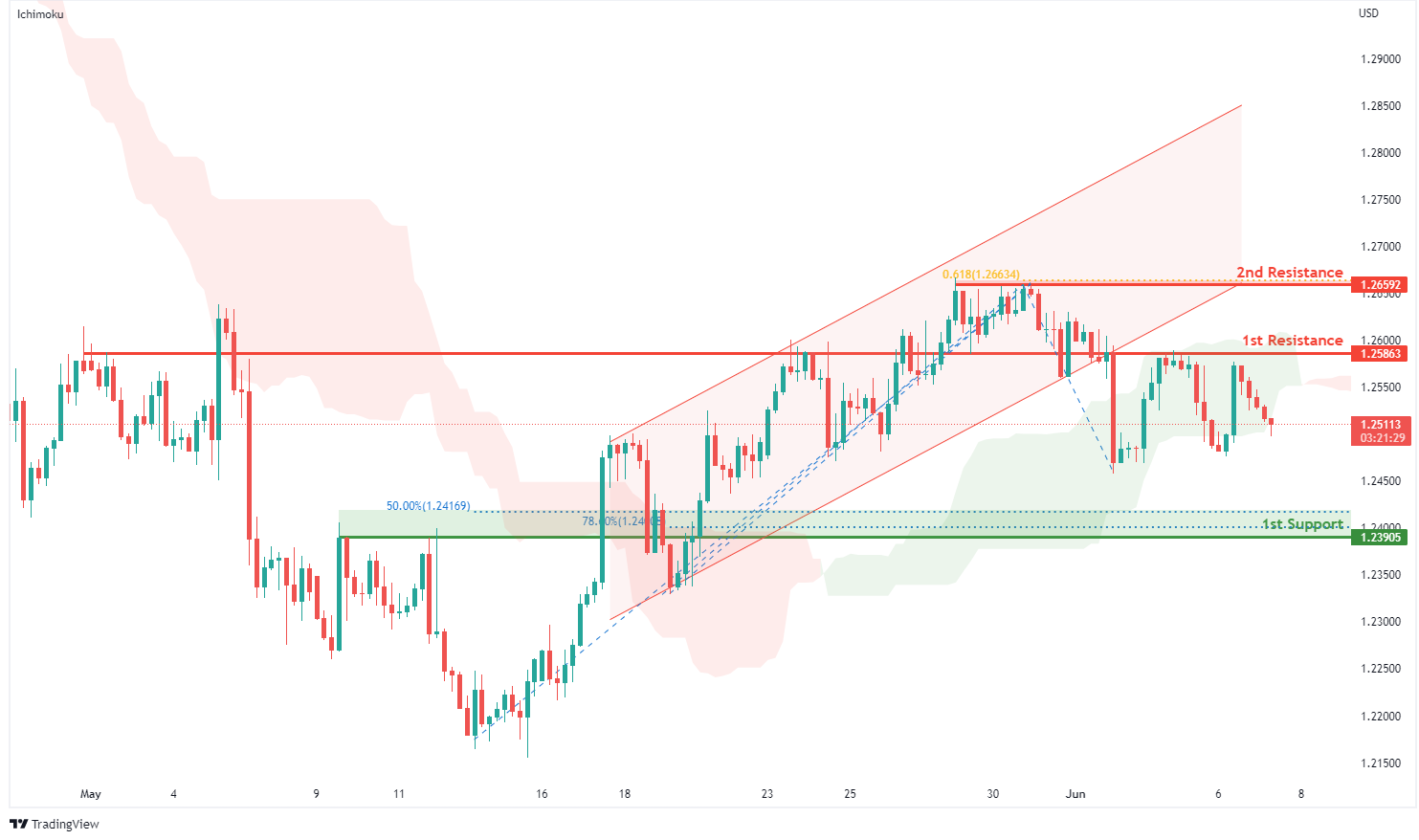
On the H4, with price breaking through the ichimoku indicator in a downwards momentum and price breakout from ascending channel, we have a bearish bias that price will drop from our 1st resistance at 1.25863 where the horizontal overlap resistance is to our 1st support at 1.23905 in line with the 50% Fibonacci retracement, 78.6% fibonacci retracement and overlap support. Alternatively, price may break 1st resistance structure and head for 2nd resistance at 1.26592 where the horizontal swing high resistance and 61.8% fibonacci projection are.
Areas of consideration:
- H4 1st resistance at 1.25863
- H4 1st support at 1.23905
USD/CHF:
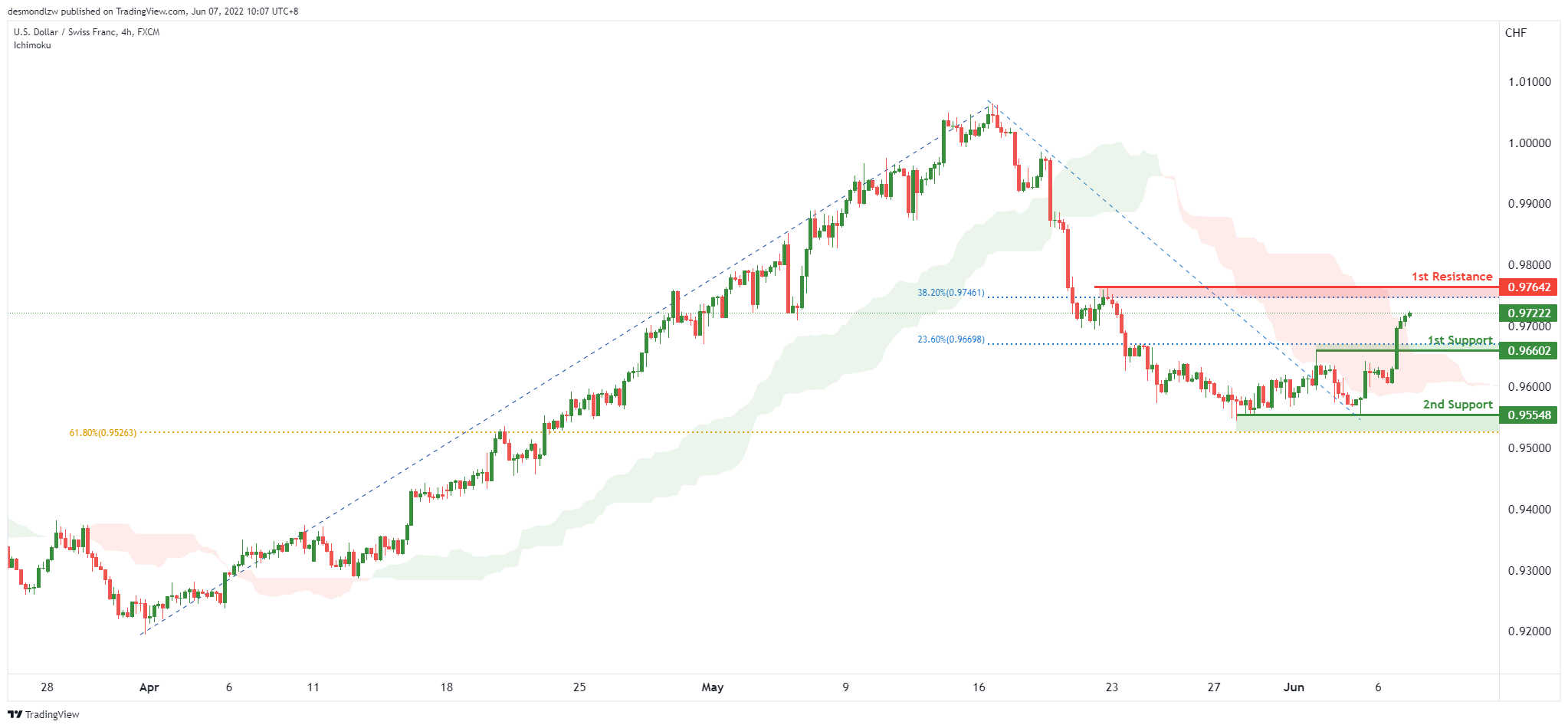
On the H4, with price moving above the ichimoku cloud, we have a bullish bias that price will rise to our 1st resistance at 0.97642 where the 38.2% Fibonacci retracement is from our 1st support at 0.96602 in line with the pullback resistance and 23.6% Fibonacci retracement. Alternatively, price may break 1st support structure and head for 2nd support at 0.95548 where the swing low support is.
Areas of consideration
- 1st support level at 0.96602
- 1st resistance level at 0.97642
EUR/USD :
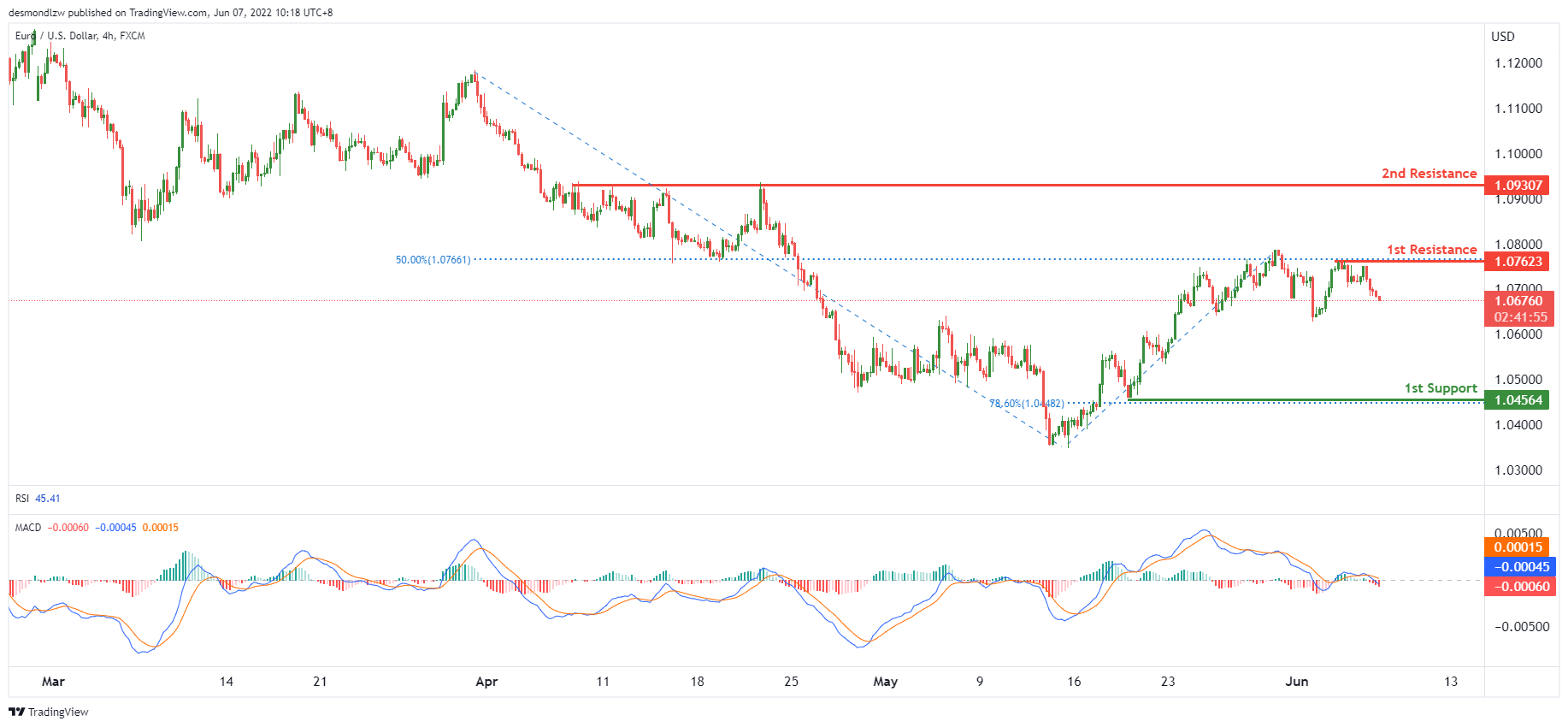
On the H4, with price moving in a bearish pressure area on the MACD indicator, we have a bearish bias that price will drop from 1st resistance at 1.07623 in line with 50% Fibonacci retracement to the 1st support at 1.04564 in line with the 78.6% Fibonacci retracement. Alternatively, price may reverse off the 1st resistance and rise to the 2nd resistance at 1.09307 in line with the overlap resistance.
Areas of consideration :
- H4 1st resistance at 1.07623
- H4 1st support at 1.04564
USD/JPY:
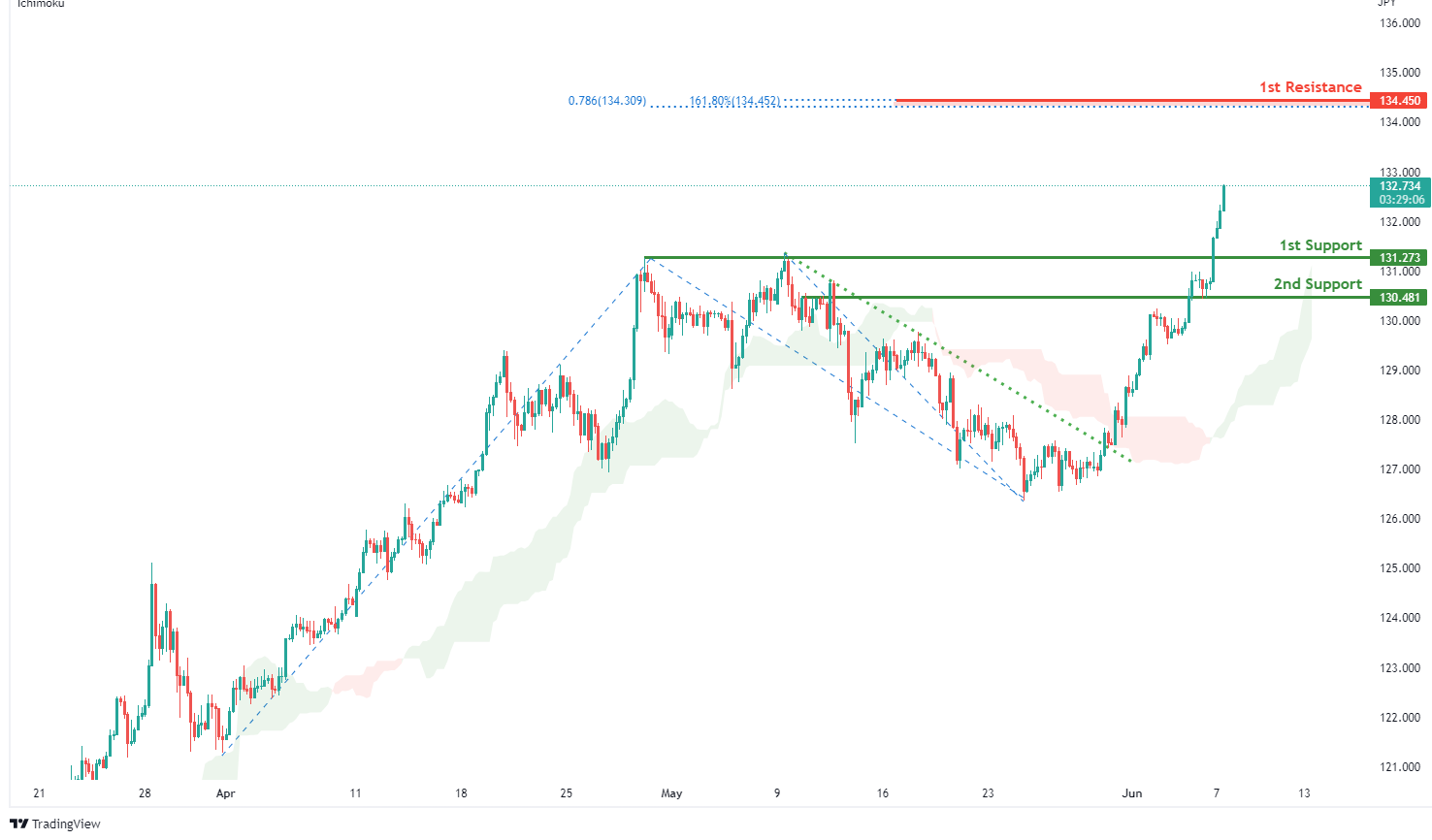
On the H4, with prices moving above the ichimoku indicator and breakout from descending trendline, we have a bullish bias that price will rise from our 1st support at 131.273 where the horizontal overlap support is to our 1st resistance at 134.450 in line with the 161.8% fibonacci extension and 78.6% fibonacci projection. Alternatively, price may break 1st support structure and head for 2nd support at 130.481 where the horizontal overlap support is.
Areas of consideration:
- H4 time frame, 1st resistance at 134.450
- H4 time frame, 1st support at 131.273
AUD/USD:
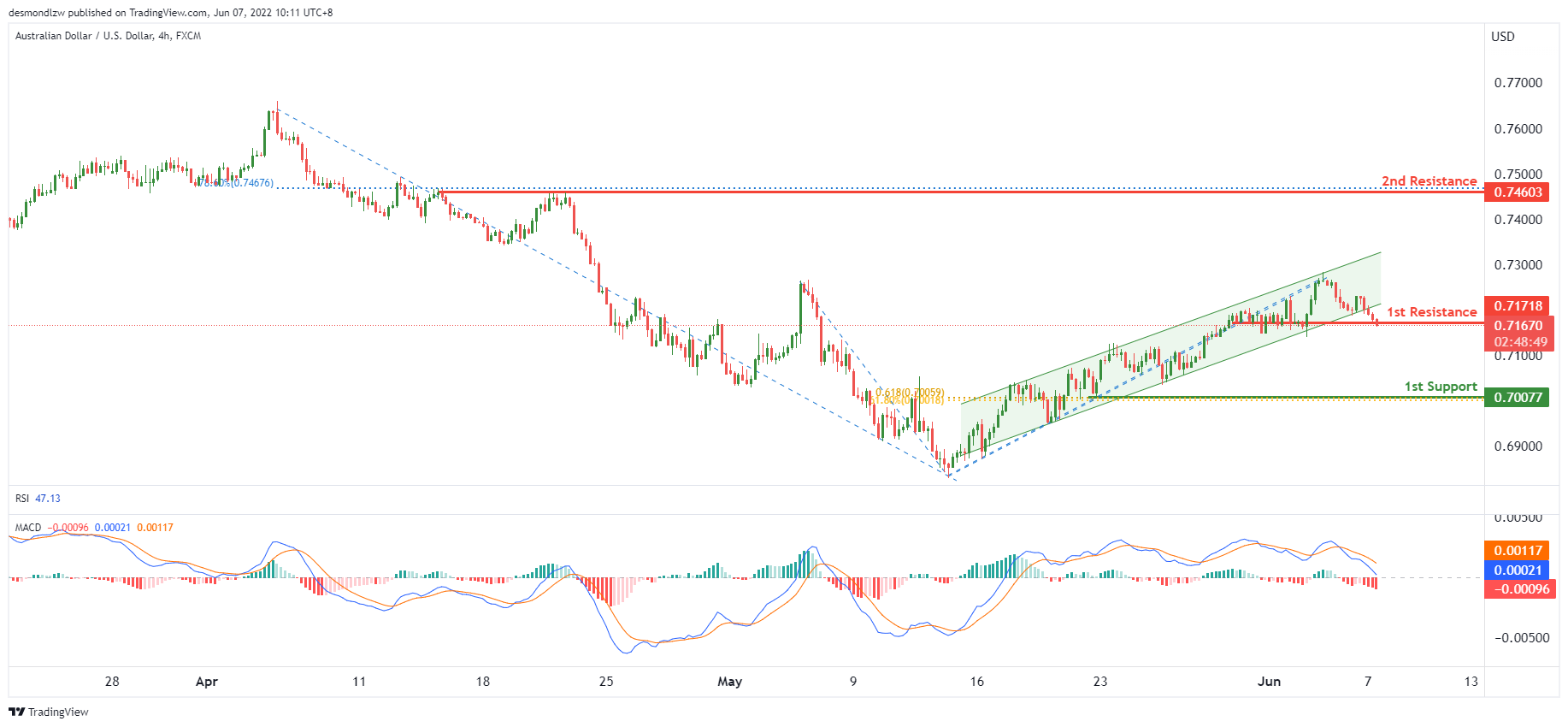
On the H4, price recently broke out of the ascending trend channel and is in a bearish pressure area indicated on our MACD indicator, which supports our bearish bias that price will drop from the 1st resistance at 0.71718 at the overlap resistance to the 1st support at 0.70077 in line with the 61.8% fibonacci projection and 61.8% fibonacci retracement. Alternatively, price may also reverse off the 1st resistance and approach the 2nd resistance at 0.74603 in line with the 78.6% fibonacci retracement.
Areas of consideration
- H4 1st resistance at 0.71718
- H4 1st support at 0.70077
NZD/USD:
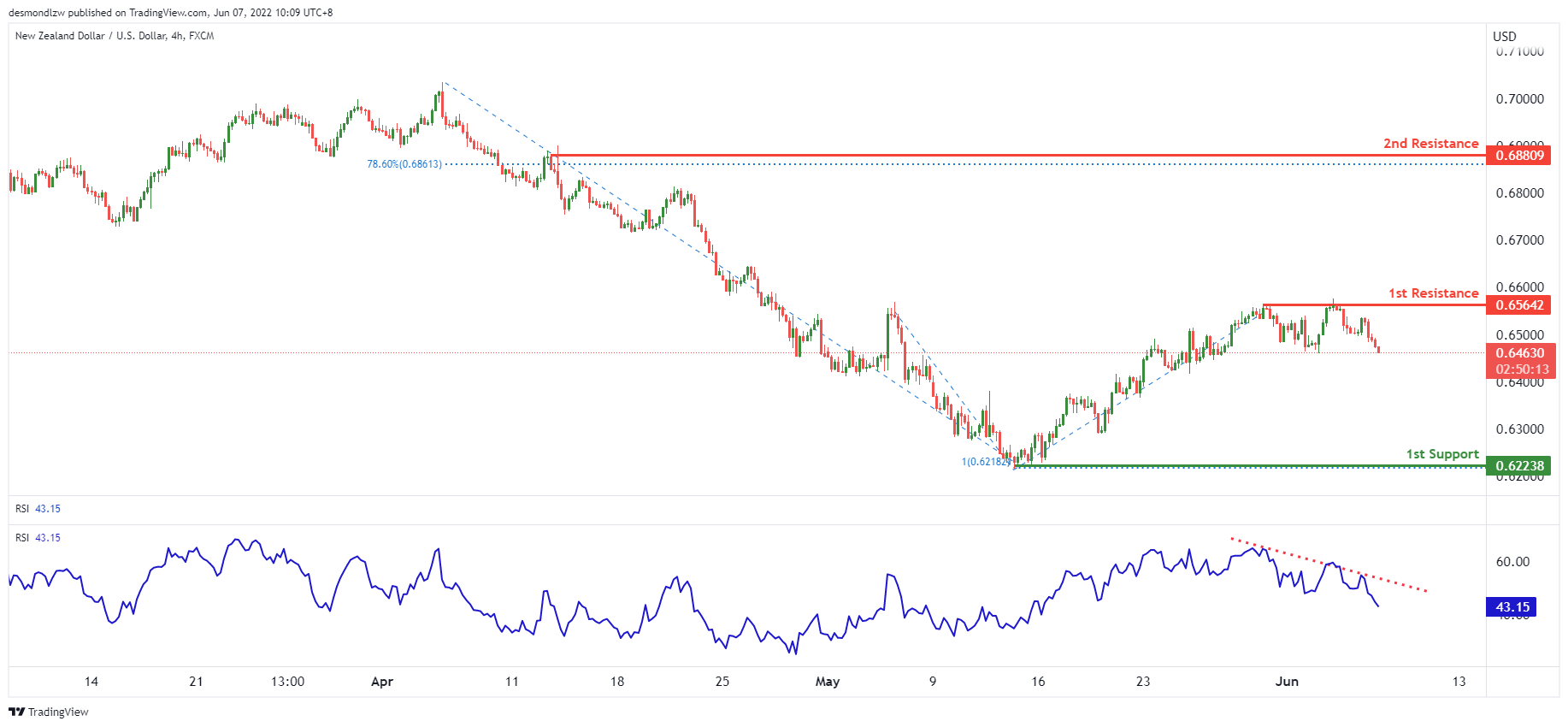
On the H4, with price moving in a descending trendline on the RSI indicator, we have a bearish bias that price will drop from our 1st resistance at 0.65642 in line with the overlap swing high to the 1st support at 0.62238 in line with the 100% fibonacci projection and swing low. Alternatively, price may reverse off the 1st resistance and rise to the 2nd resistance at 0.68809 in line with the 78.6% fibonacci retracement.
Areas of consideration:
- H4 time frame, 1st support at 0.62238
- H4 time frame, 1st resistance at 0.65642
USD/CAD:
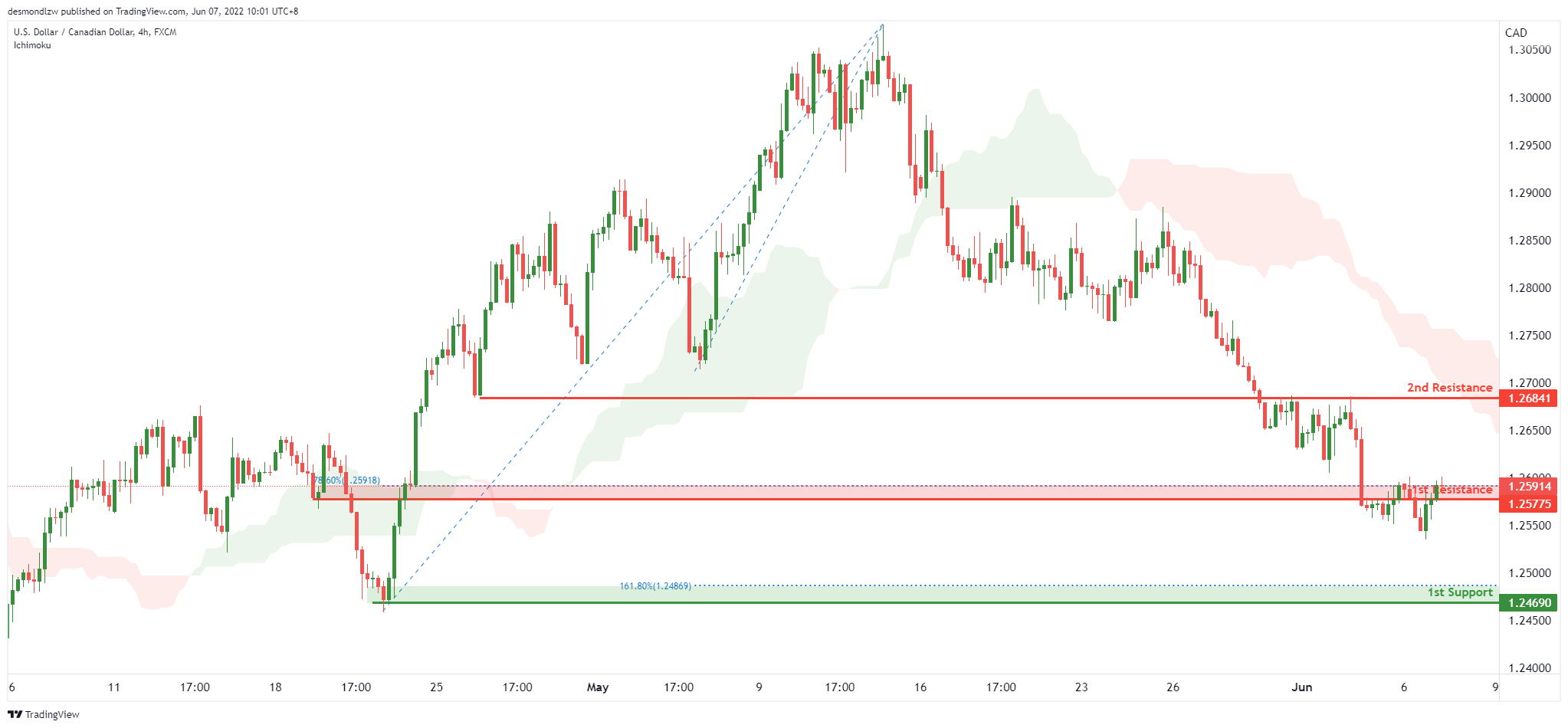
On the H4, with price moving below our ichimoku cloud and the recent break of our horizontal support level which is in line with the 28.6% fibonacci retracement level, we have a bearish bias that price will drop to our 1st support at 1.24690 in line with the horizontal swing low support and the 161.8% Fibonacci extension from our 1st resistance at 1.25775. Alternatively, price may break structure and head for our 2nd resistance at 1.26841.
Areas of consideration:
- H4 time frame, 1st resistance at 1.25775
- H4 time frame, 1st support at 1.24690
OIL:
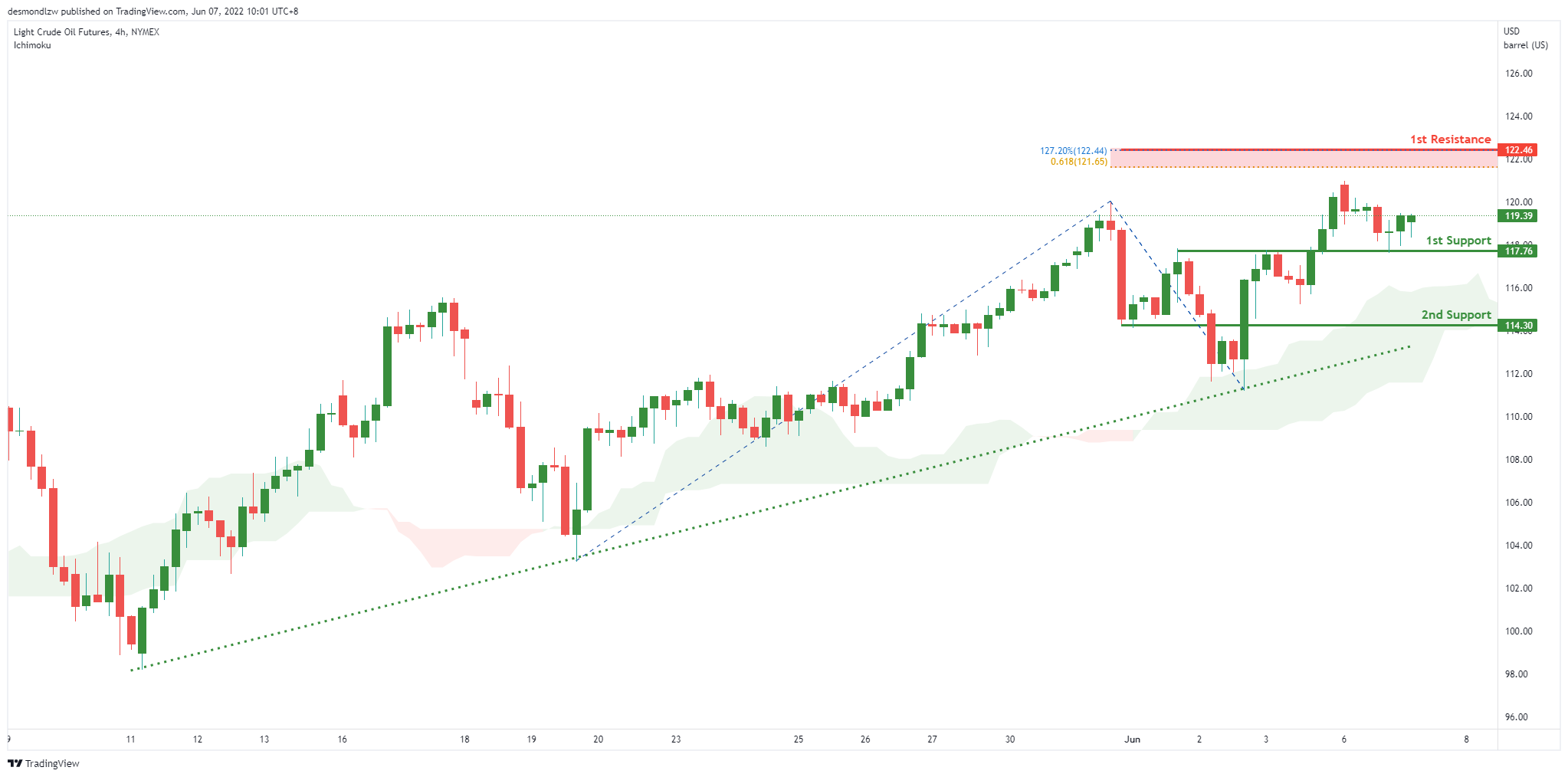
On the H4, with price moving above the ichimoku cloud, we have a bullish bias that price will rise from our 1st support at 117.86 where the horizontal pullback support is to our 1st resistance at 122.46 in line with the 61.8% fibonacci projection and 127.2% Fibonacci extension. Alternatively, price may break structure and head for 2nd support at 114.30.
Areas of consideration:
- H4 time frame, 1st resistance of 122.46
- H4 time frame, 1st support of 117.86
Dow Jones Industrial Average:
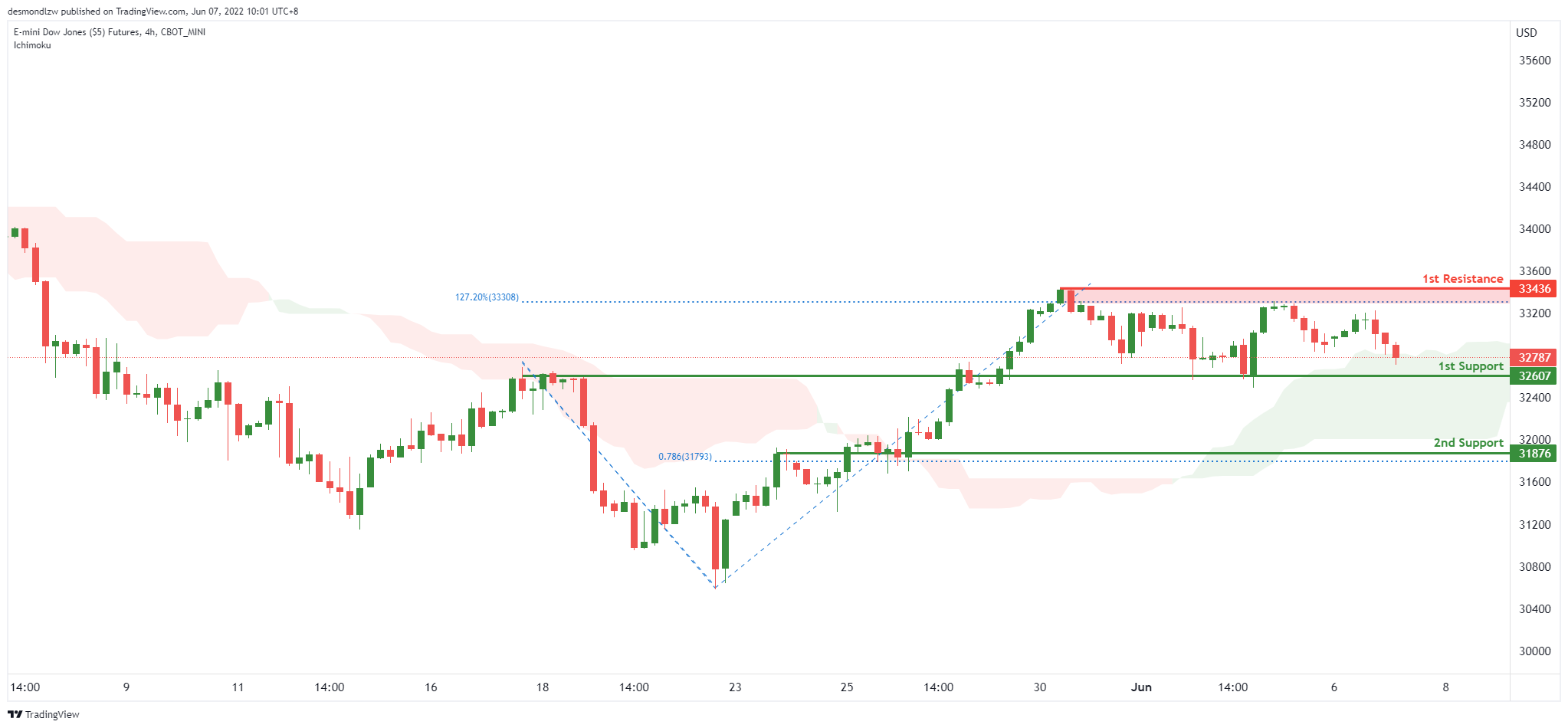
On the H4, with price moving above the ichimoku cloud, we have a bullish bias that price will rise from our 1st support at 32607 where the horizontal pullback support is to our 1st resistance at 33436 in line with the swing high resistance and 127.2% Fibonacci extension. Alternatively, price may break structure and head for 2nd support at 31876.
Areas of consideration :
- H4 time frame, 1st resistance at 33463
- H4 time frame, 1st support at 32607
CAD/JPY targeting 2014 high as Yen selloff deepens
BoJ Governor Haruhiko Kuroda said that a weak Yen is "beneficial" for Japan's economy if the moves are "not too sharp". He emphasized again that the moves in currency markets should reflect "fundamentals", and the central bank is "carefully watching" the impact.
The comments came as Yen was sold off broadly, triggered by US 10-year yield reclaimed 3% handle overnight. Germany 10-year bund yield also jumped to fix at 1.323. USD/JPY hit the highest level in over two-decades while CAD/JPY is also getting close to 2014 high at 106.48.
For now, near term outlook in CAD/JPY will stay bullish as long as 103.60 support holds, targeting 61.8% projection of 89.21 to 102.93 from 97.78 at 106.25, which is close to above mentioned 106.48. Sustained break there will pave the way to 100% projection of 68.38 to 106.48 from 73.80 at 111.90. That is the key hurdle for CAD/JPY to overcome in the medium term.
Australia AiG services dropped to 49.2, back in mild contraction
Australia AiG Performance and Services Index dropped sharply from 57.8 to 49.2 in May, indicating mild contraction. Sales dropped -13.0 pts to 50.7. Employment dropped -10.4 to 47.4. New orders dropped -3.3 to 49.7. Input prices dropped -9.1 o 68.7. Selling prices dropped -3.6 to 61.9. Average wages dropped -9.8 to 57.4.
Innes Willox, Chief Executive of Ai Group, said: "The Australian services sector contracted mildly in May after a period of healthy expansion in the earlier months of 2022. Performance was mixed across the sector with strong growth in logistics, retail trade and personal, recreational & other services offset by sharp declines in business & property services and health & education services."
Nasdaq Forecasting The Path Using Elliott Wave Theory
In this blog, we will take a look at the recent rally in Nasdaq Futures up from May 20, 2022 low, structure of this rally and some charts from the recent past showing our forecast calling for a new high to complete the sequence before starting a pull back. We will then look at how the move unfolded going forward and what we are expecting next. Before we start the blog, we will explain Impulse Elliott Wave Structures.
Elliott Wave Impulse Structure
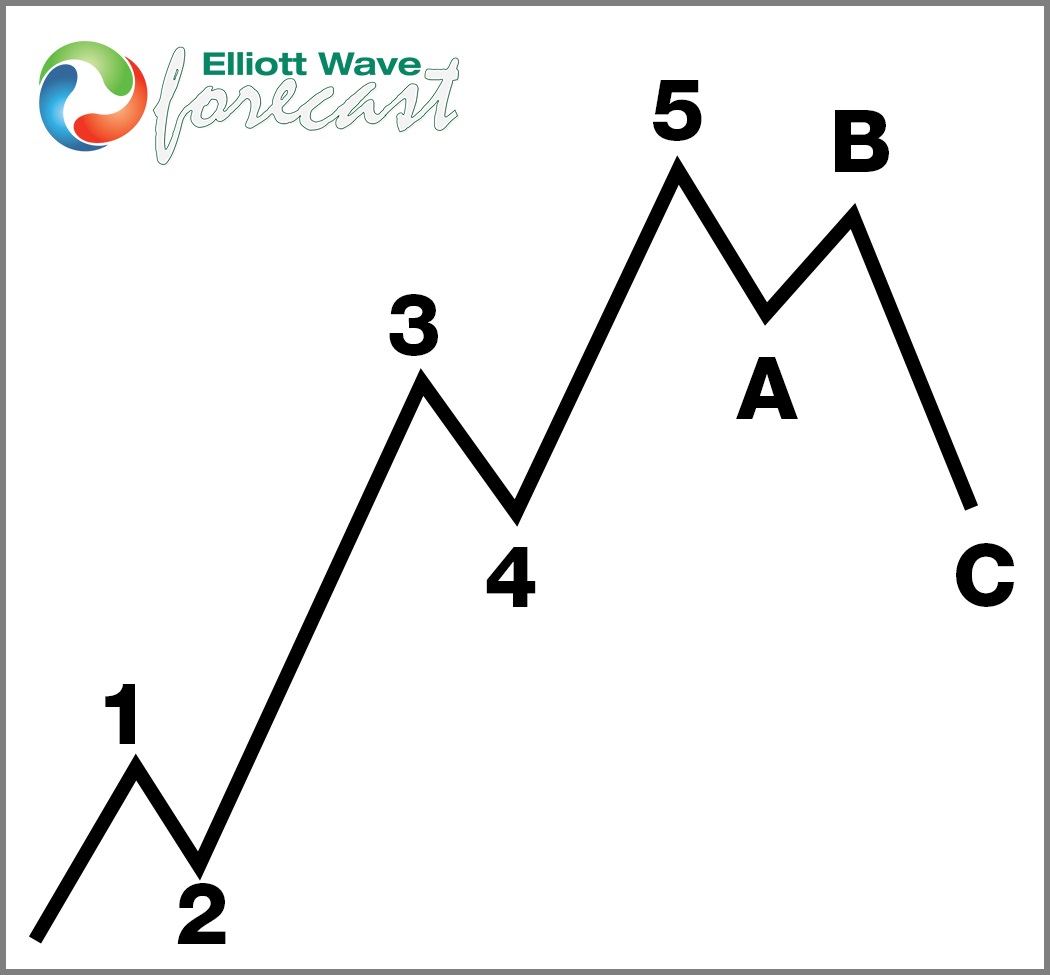
Graphic below shows a 5 waves advance from the low to the high, this is called an Elliott Wave Impulse. Wave 1, 3 and 5 should also be impulses, wave 2 and 4 should be corrective structures. Wave 3 must not be the shortest wave in the sequence, wave 4 shouldn’t enter the territory of wave 1 (unless structure is a diagonal) and there must be momentum divergence between wave 3 and 5. Following completion of an impulse wave, there is a move in the opposite direction in 3 waves at least. This move is shown as an ABC (Zigzag structure) in the graphic below.
Nasdaq Futures 1 Hour Elliott Wave Analysis – 2 June 2022
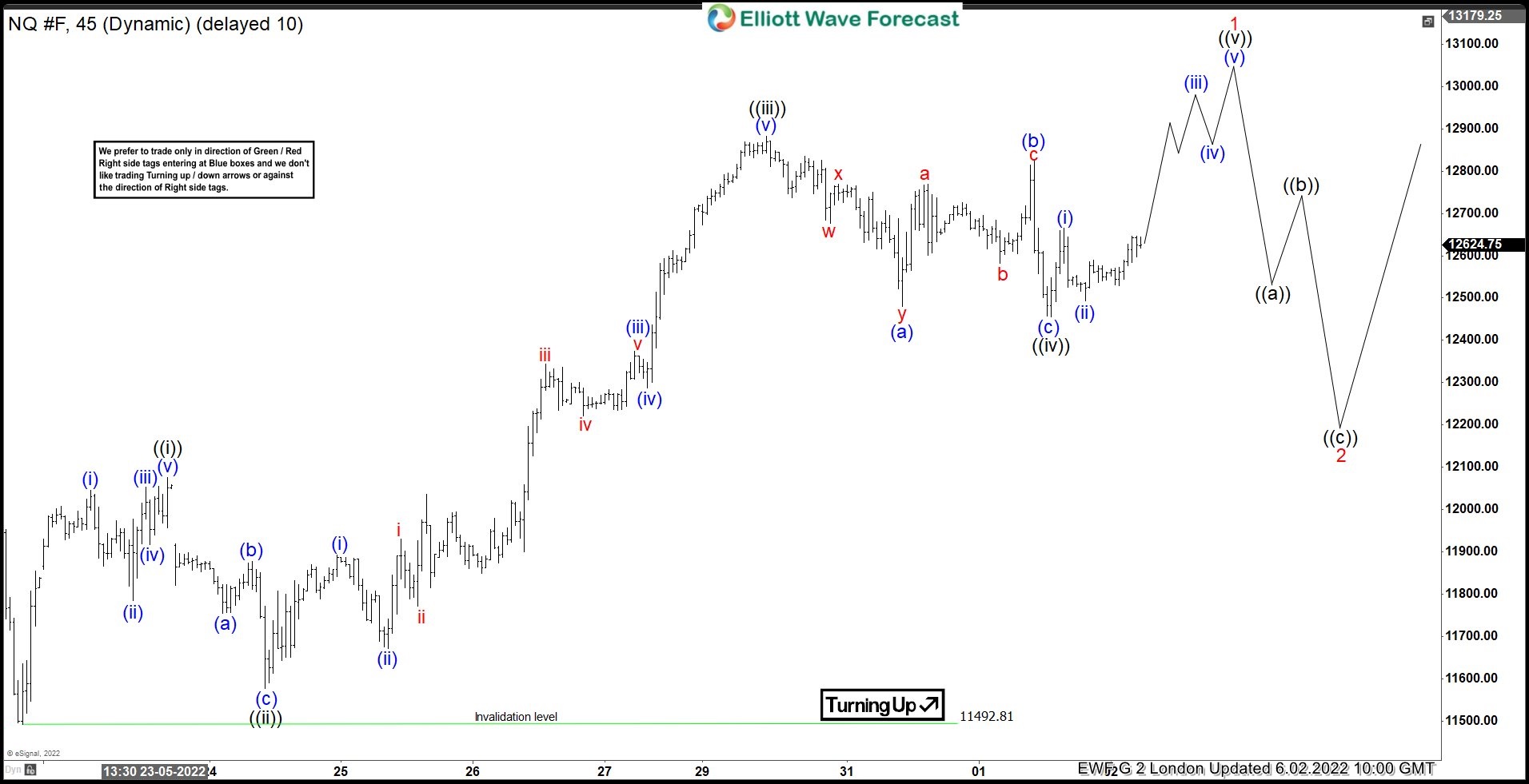
Chart below Nasdaq Futures found a low at 11492.81 on May 20, 2022. Up from there wave (( i )) ended at 12075.50, wave (( ii )) pull back ended at 11675.25, wave (( iii )) ended at 12883, wave (( iv )) ended at 12454.75 and now it is expected to trade higher in wave ((v)) to complete 5 waves up from May 20, 2022 low.
Nasdaq Futures 1 Hour Elliott Wave Analysis – 3 June 2022
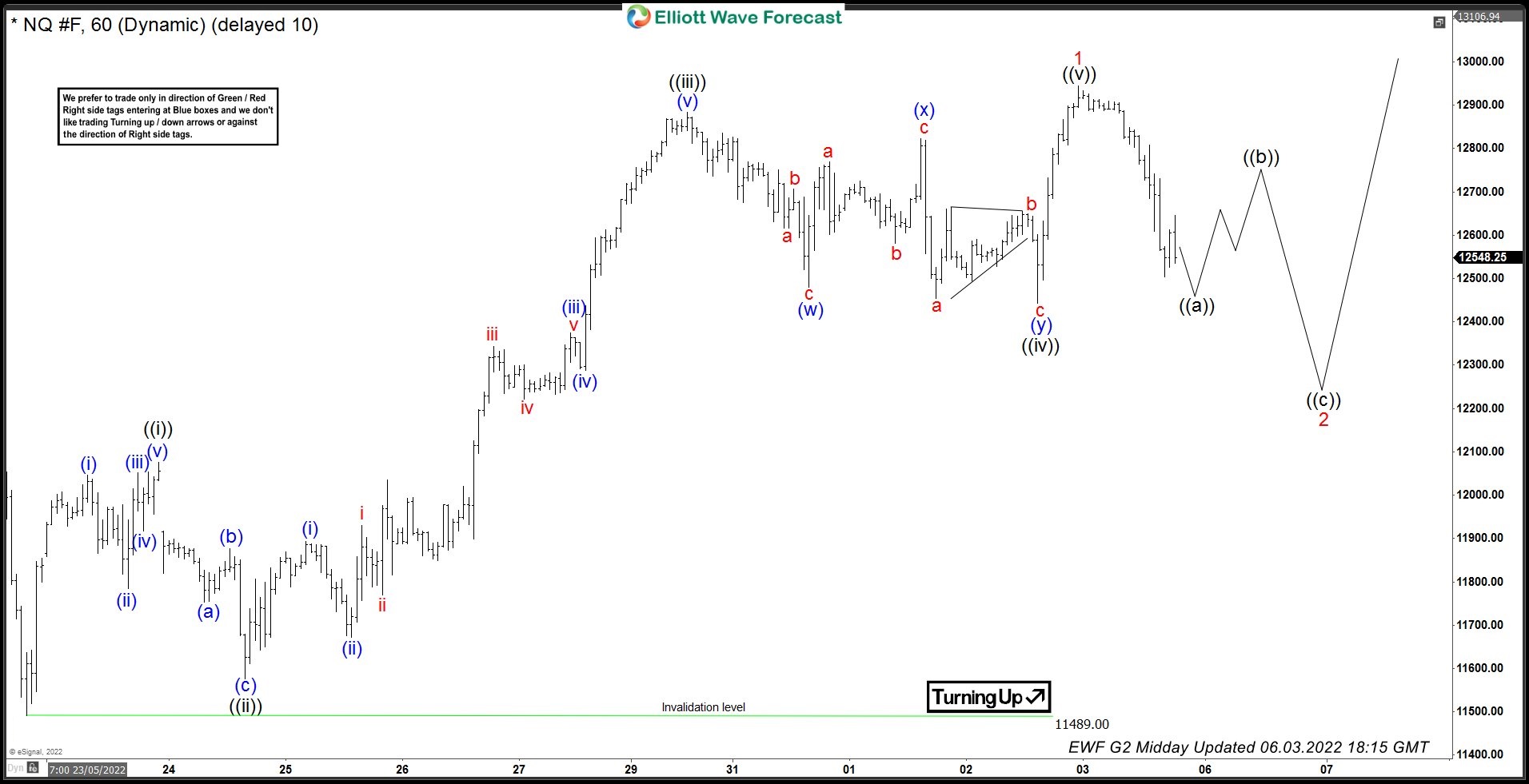
Chart below shows Nasdaq Futures made a marginal new low below 12454.75 low but rally from May 20, 2022 low was in 3 waves so this new low was treated as part of wave ((iv)) which completed at 12442.50. Price went on to make a new high above wave ((iii)) as expected and completed wave ((v)) at 12945.25 and pulled back sharply. Following an Impulse Elliott wave structure, there should be a 3 waves move at minimum in the opposite direction so we are expecting a 3 waves pull back at least to correct the cycle from May 20, 2022 low before Nasdaq futures turn higher again. We are close to completing wave ((a)) and once completed, expect a bounce in wave ((b)) to fail below 12945.25 peak before ((c)) leg lower to complete wave 2 and then resume the rally in wave 3 or bounce in 3 waves at least. If price makes a new high above 12945.25, wave ((v)) could take the form of an extended wave ((v)).
CADJPY Wave Analysis
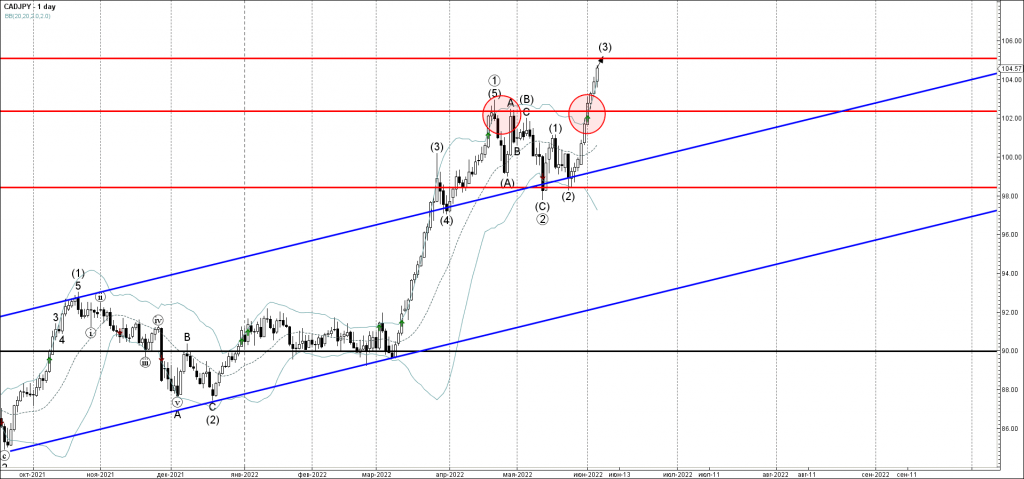
- CADJPY broke resistance level 102.00
- Likely to test resistance level 105.00
CADJPY recently broke above the strong resistance level 102.00 (which has been reversing the pair since the middle of April) .
The breakout of the resistance level 102.00 accelerated the active medium-term impulse wave (3) – which started earlier from the key support level 98.40.
Given the strong daily uptrend – CADJPY currency pair can be expected to rise further toward the next resistance level 105.00 (target price for the completion of the active impulse wave (3)).