Sample Category Title
WTI Oil: Oil price eases on growth concerns and China lockdowns but still lacking clear direction
WTI oil edges lower on Friday, pressured by prospects of weaker global growth and higher interest rates, as the International Monetary Fund cut its global economic growth forecast and Fed Chair Powell signaled that half percentage point rate increase will be on the table in central bank’s next policy meeting in May.
New Covid lockdowns in China hurt demand outlook from the world’s biggest oil importer and so far offsetting threats of EU’s ban on Russian oil that would further tighten oil supply.
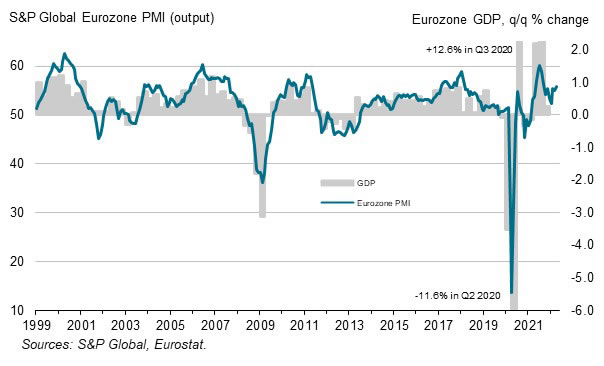
Fresh weakness emerged after the recovery action penetrated daily cloud (spanned between $103.49 and $110.26) but failed to hold within the cloud.
Near-term action is holding between $101.57 (broken Fibo 23.6% of $130.48/$92.64) and $107.09 (Fibo 38.2%) with lower range boundary being under pressure again, after previous attempts repeatedly failed to register close below this level.
Mixed daily studies lack clearer direction signal, which could be expected on firm break of supports at $101.57/$100.00 (Fibo / psychological) that would bring bears in play and risk deeper fall.
Daily Kijun-sen ($104.76) marks pivotal barrier, break of which would ease downside pressure.
Res: 104.17; 104.76; 105.39; 107.09
Sup: 101.57; 101.21; 100.00; 98.54
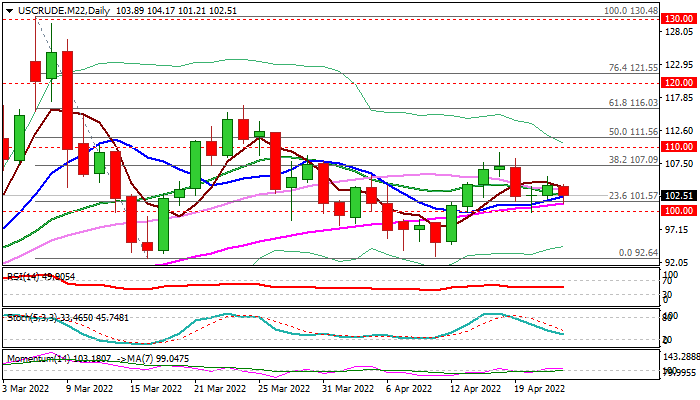
Canada retail sales rose 0.1% mom in Feb, to rise 1.4% in Mar
Canada retail sales rose 0.1% mom to CAD 59.9B in February, better than expectation of -0.5% mom decline. That's the fourth increase in the last five months. Higher sales at clothing and clothing accessories stores (+15.1%) and gasoline stations (+6.2%) were offset by lower sales at motor vehicle and parts dealers (-5.1%).
Sales were up in 6 of the 11 subsectors, representing 47.2% of retail trade. Core retail sales—which exclude sales at gasoline stations and motor vehicle and parts dealers—increased 1.4%.
According to advance estimate, sales increased 1.4% mom in March.
Bundesbanks: Germany to lose 5% of GDP on suspending all trade with Russia
In the latest monthly report, Bundesbank presented the scenario analysis on the impact of further escalation of invasion of Ukraine, with the assumption that trade with Russia, including energy imports, will be suspended.
Germany GDP could be up to -5% lower than March forecast by the ECB. Comparing to 2021, GDP would fall by almost -2% in 2022.
Price incase could be significant, with inflation 1.5% higher in 2022, and 2% higher in 2023 than ECB forecast. "The upward risks of inflation predominate, since price increases in downstream production stages or wage increases could be greater."
USDCAD Wave Analysis
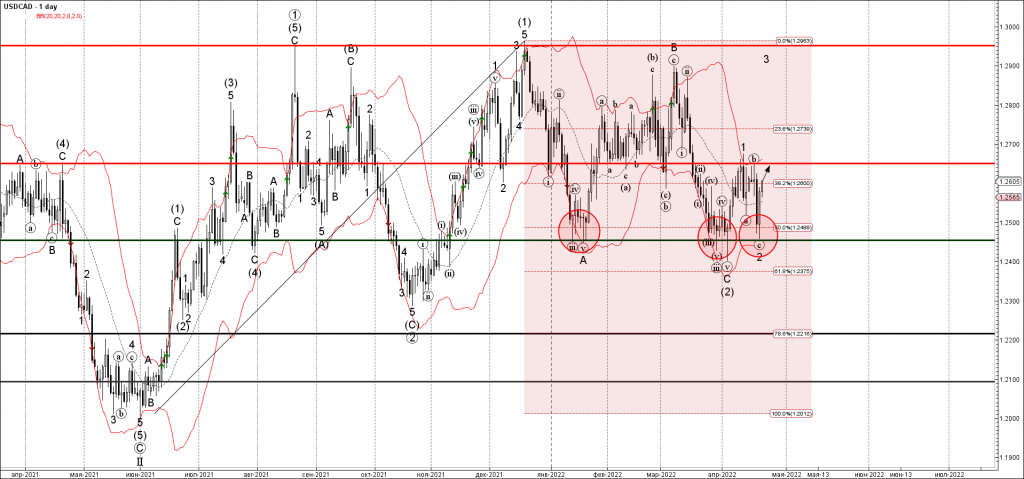
- USDCAD reversed from support level 1.2450
- Likely to rise to resistance level 1.2650
USDCAD recently reversed up sharply from the powerful support level 1.2450 (which has been repeatedly reversing the price from the middle of January).
The upward reversal from the support level 1.2450 created the daily candlesticks reversal pattern Piercing Line – which stopped the previous minor correction 2.
USDCAD can be expected to rise further toward the next resistance level 1.2650 (which stopped the previous waves 1 and (b)).
GBPUSD Falls Due to a Weak Retail Report, Risks Falling to 1.2600
GBPUSD fell below 1.3000 to its lowest level in 17 months due to a weak retail sales report.
ONS reports a 1.4% drop in total sales for March after a 0.5% decline a month earlier. Sales excluding fuel fell 1.1% after 0.9% in February and showed a year-on-year decrease of 0.6% – a clear signal of the severity of the current economic situation.
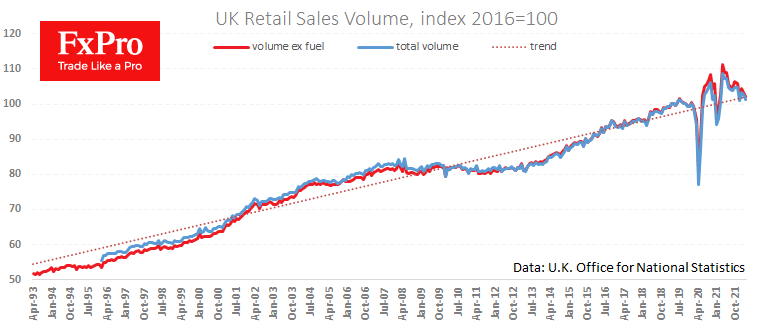
We see that rising prices and wages have little impact on retail activity so far, which may prove to be a complication for the Bank of England in further tightening monetary policy.
Sales returned to their long-term trend level in March after a significant pullback in the second half of 2020. Consumer demand is migrating from retail to services.
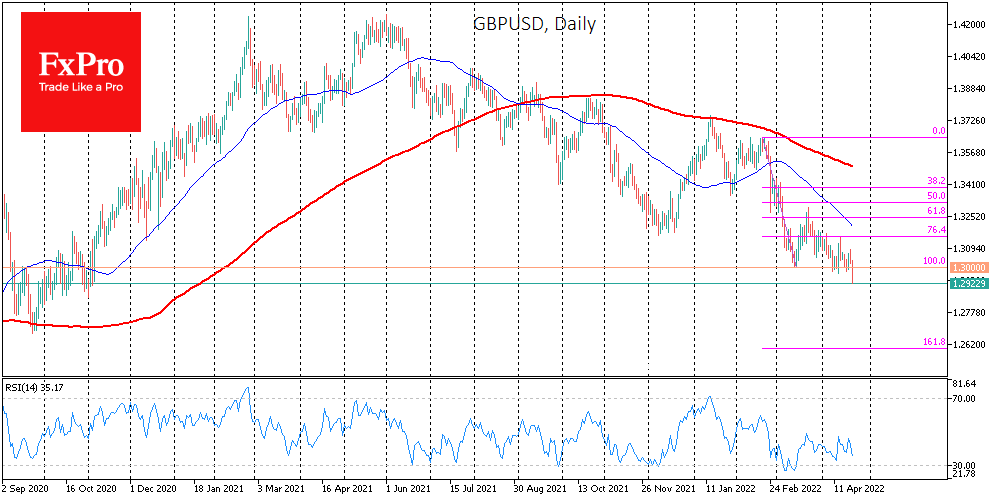
Weak sales data interrupted the Pound’s consolidation above the 1.3000 area, hoping that the UK economy could digest decisive rate tightening.
GBPUSD is renewing multi-month lows, building on the momentum formed a month ago when a rebound in the pair was interrupted.
According to the Fibonacci model, the next major stop could be near the 1.26 area, where the 161.8% mark from the initial decline from February to March passes.
Victims of the Dollar Bulls
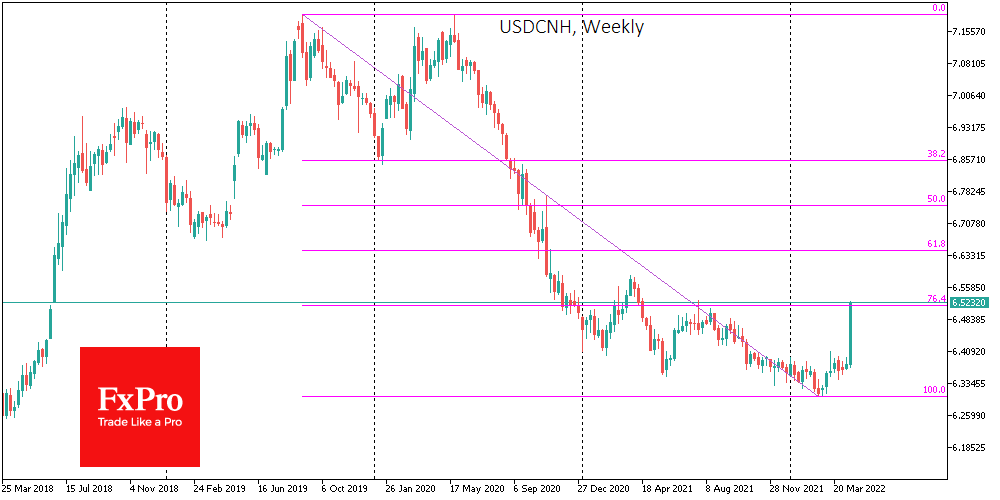
The world’s major currencies continue to surrender to the dollar one after another. Since the start of March, the yen has lost 11.5% and fallen to a 20-year low. But just as we saw the third world economy currency stabilise, the currency of the second one went on the move.
The dollar has added over 2% to the renminbi since the start of the week, the most significant move since 2015. It is also noteworthy that the Chinese currency had previously successfully resisted the strengthening of the USD since the middle of last year, but in an abrupt move, entered the area of the extremes of the last 12 months.
We see an equally impressive attack on the Pound. The GBPUSD broke the support at 1.3000 on Friday, and it is already losing more than 1% so far today. USDCHF reached its highest point since June 2020, exceeding 0.9550.
The New Zealand and Australian dollars have been declining steadily since early April, despite hawkish action and comments from respective central banks. Moreover, the export-oriented economies of these countries should benefit from the emerging commodity prices.
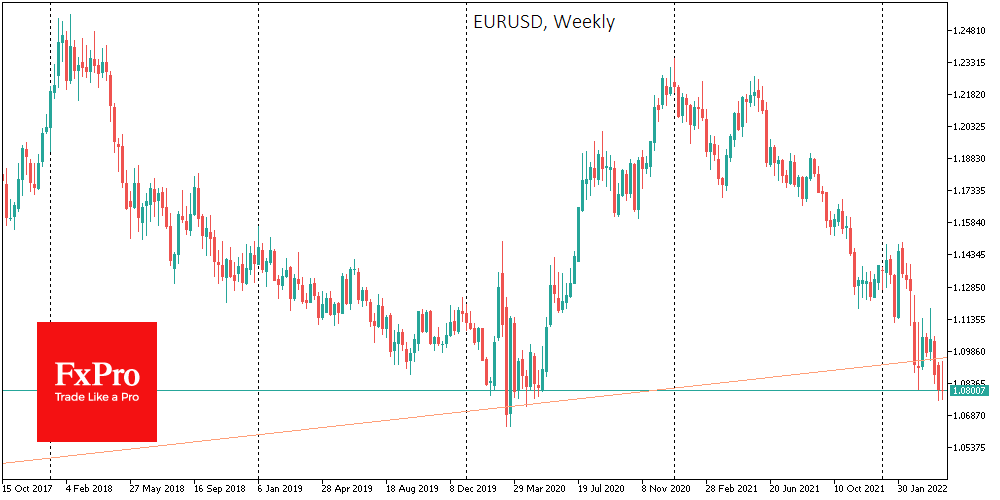
The USDCAD went back to month highs in less than two days, reversing Wednesday’s sharp rally and earlier gains from hawkish comments by the Bank of Canada. EURUSD is trading below 1.0800, near 2020 reversal levels and maintaining a very moderate trading range. However, the swing in GBPUSD today and USDCNH throughout the week and the USDJPY drama since early March suggests that EURUSD could be the next victim of dollar bulls.
BTCUSD Extends Sideways Move but Downside Risks Linger
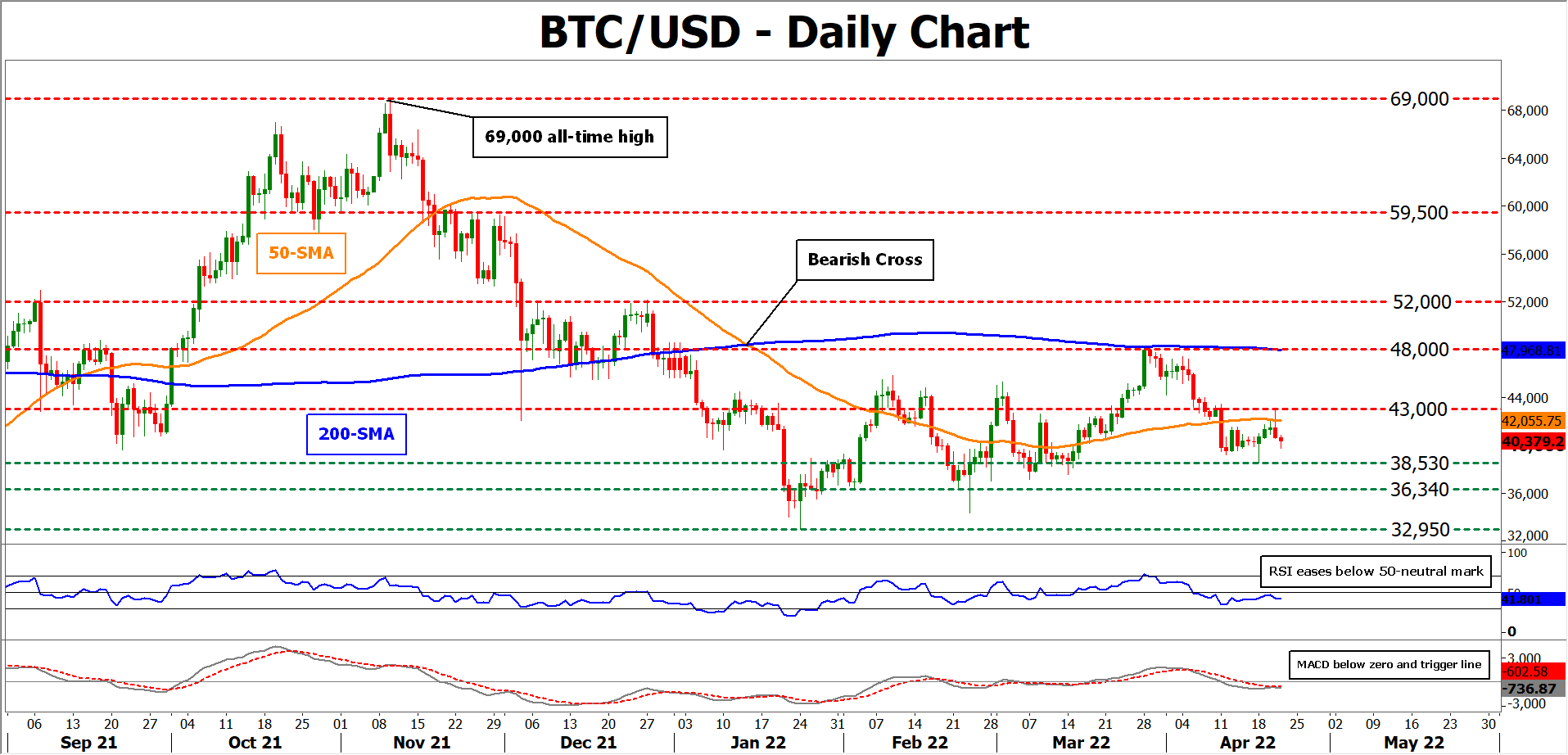
BTCUSD (Bitcoin) has been trending downwards since late March when further price advances got curbed at the 48,000 region. Although the price has managed to halt its decline and is currently experiencing a consolidation phase, the technical picture seems to be deteriorating for the cryptocurrency.
The momentum indicators suggest that bearish forces continue to hold the upper hand. Specifically, the MACD histogram is currently beneath both zero and its red signal line, while the RSI is hovering in the negative zone.
Should selling interest intensify further, the price could encounter immediate support at the recent low of 38,530. Falling beneath this floor, the bears could target the 36,340 barrier. Further downside moves may then cease at the 2022 low of 32,950.
Alternatively, if buyers re-emerge and regain control, initial resistance could be met at the 43,000 hurdle. Conquering this barricade, the price might ascend towards the recent reversion point of 48,000, which overlaps with the 200-day simple moving average (SMA). Higher, 52,000 could prove to be a tough obstacle for the bulls before the spotlight turns to 59,500.
Overall, BTCUSD has been rangebound in the last three weeks, but broader near-term risks remain tilted to the downside. Therefore, a dive beneath the 38,530 floor is needed to boost bears’ hopes for a sustained downtrend.
A Negative End to the Week
It's been another volatile week in financial markets but stocks are on course to end it in the red, with Europe down around 2% and US futures eyeing a weaker start.
This comes despite investors getting a pleasant surprise from PMIs across Europe, with the services sector, in particular, performing much better than expected as restrictions continued to be dropped. This wasn't backed up by strength in manufacturing though which should bring caution as we go into a challenging period for the bloc.
The data from the UK is disappointing, to say the least. Gfk consumer confidence data overnight got us off to a bad start and the numbers that have followed for retail sales and services since were no better. The pound plunged below 1.30 against the dollar on the releases and remains more than 1% lower on the day. The cost-of-living crisis has arrived.
Macron favourite but investors wary of Le Pen surprise
The French second-round election this weekend is expected to be close although Emmanuel Macron has seen his lead in the polls widen in the days leading up to the second vote which may be providing him with some comfort. It is still expected to be much closer than the run-off between the two five years ago though and considering how populists have outperformed polls in recent years, no one is getting complacent.
The odds may massively favour the incumbent at this point but there is still a very real chance that Le Pen's fans turn up on Sunday, more motivated to vote than those that simply oppose her more than Macron. That feeling was clearly stronger five years ago and the biggest risk for Macron is that those that oppose Le Pen more but voted for other candidates in the first round don't show up.
Markets appear relatively calm going into the vote and the latest polls will be contributing to that. But that only increases the risk of a sharp knee-jerk reaction on the open Monday if Le Pen is victorious. Whether that would be sustained is hard to say. Remember, Trump and Brexit were perceived to be negative stock market events and in both cases, they bounced back quickly and went on to perform very well. The euro may be more vulnerable as Le Pen would no doubt be a disruptive force for the bloc.
Oil choppiness continues
Oil remains choppy with China and the Fed creating a bit more two-way price action amid very tight markets. The risks are certainly more tilted to the upside, given the war in Ukraine and a potential embargo on Russian exports, but lockdowns in China and the risk of a Fed-driven economic slowdown are also significant.
Central banks may be targeting a soft landing while belatedly combating very high inflation but that is very hard to achieve and there are plenty of reasons to believe they'll fail to do so again. The economy is very strong, as is the labour market, but both can only sustain so much tightening in a short period and we may soon see whether the Fed has left itself too much to do.
A rough week for gold
After a bright start to the week that saw it come within a whisker of $2,000, gold is on course to end it around 2% lower following another negative session on Friday. It's continuing to be weighed down by a stronger dollar and higher yields as traders anticipate an aggressive tightening cycle from the Fed.
High inflation and an uncertain economic environment have been very supportive for the yellow metal and I don't expect that to change but the more tightening markets price in, the more resistance we'll see gold rallies. Of course, that may change if recession warnings start flashing but as yet, there remains some confidence that this can be avoided. The 5/30-year bonds have inverted again which may cause some alarm but at the moment, the 2/10 spread remains positive, just.
Bitcoin delt another blow but sees support
Bitcoin swiftly reversed course on Thursday after enjoying an encouraging recovery from the lows earlier in the week. We're continuing to see very choppy trading in bitcoin and what was perceived as hawkish commentary from Fed Chair Jerome Powell seems to have been blamed for the latest swing. Reports that EU officials discussed banning bitcoin trading due to concerns over its intense energy usage may have contributed to the declines. Bitcoin did see support around $40,000 which could once again be viewed as an encouraging sign.
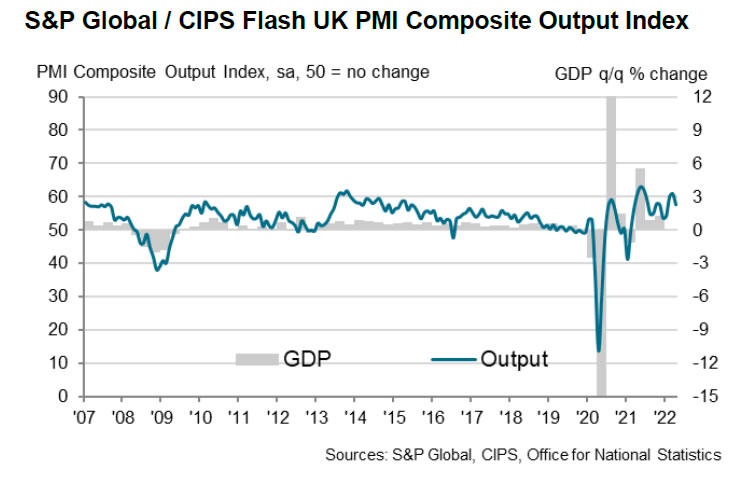
UK PMI composite dropped to 57.6 in Apr, a marked cooling in growth
UK PMI Manufacturing ticked up from 55.2 to 55.3 in April, above expectation of 54.9. PMI Services dropped from 62.6 to 58.3, below expectation of 60.3. PMI Composite dropped from 60.9 to 57.6.
Chris Williamson, Chief Business Economist at S&P Global said: "The survey data signal a marked cooling in the pace of UK economic growth during April, caused by an abrupt slowing in demand... High prices and the associated rising cost of living were often cited as a principal cause of lower demand, with covid also continuing to affect many businesses. Brexit and transport delays were seen as having further impeded export sales, while the Ukraine war and Russian sanctions also led to lost overseas trade... Concerns over the worsening inflation picture are meanwhile flamed by another near-record leap in firms' costs."disruptions and rising interest rates."
Eurozone PMIs: Two-speed economy with common cost pressures
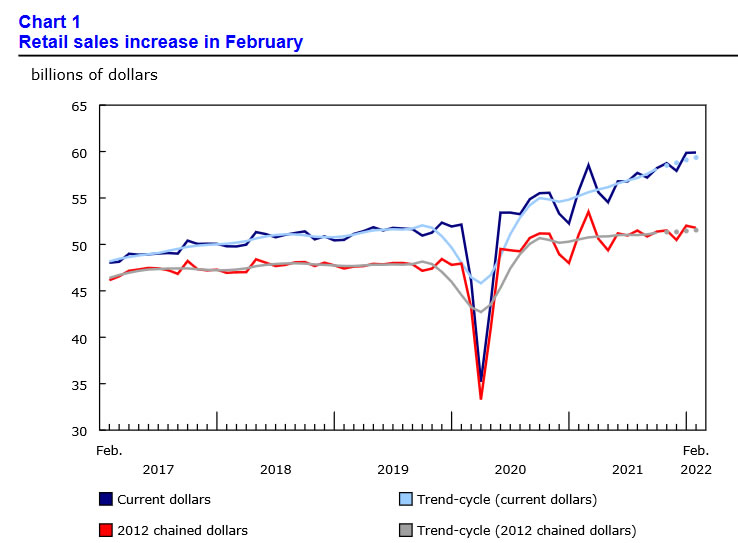
Eurozone PMI Manufacturing dropped from 56.5 to 55.3 in April, above expectation of 54.5. That's the lowest level in 15 months. PMI Services rose from 55.6 to 57.7, above expectation of 55.0. That's the highest level in 8 months. PMI Composite rose from 54.9 to 55.8, a 7-month high.
Chris Williamson, Chief Business Economist at S&P Global said:
"April saw a two-speed eurozone economy. Manufacturing came close to stalling due to ongoing supply constraints, rising prices and signs of spending being hit by risk aversion due to the war. However, April also saw manufacturers suffer due to a shift in demand from goods to services amid looser pandemic restrictions, most notably via a record surge in spending on activities such as travel and recreation.
"Common across both sectors, however, was a further surge in cost pressures, driven by soaring energy and raw material costs, as well as rising wages. Average prices charged for goods and services rose at an unprecedented rate in April as these higher costs were passed on to customers, sending a worrying signal that inflationary pressures continue to build."