Sun, Apr 26, 2026 07:10 GMT
More

    Sample Category Title

    RBA minutes signal caution as board flags risk of hotter Q3 inflation

    RBA’s September meeting minutes confirmed a steady hand on policy, with members concluding there was “no need for an immediate reduction” in the cash rate. The Board agreed that the economic data and forecasts since August supported maintaining the current level of restrictiveness, while emphasizing that decisions will remain “cautious and data dependent.”

    Discussions focused heavily on inflation risks, particularly after stronger readings in the monthly CPI indicators for July and August. While acknowledging that these data are partial and volatile, members noted that upside surprises in market services and housing costs suggest the September quarter CPI could come in higher than expected in August forecasts.

    The minutes revealed growing concern that if this pattern continues, the Bank’s assumptions about the balance between aggregate demand and supply could be too optimistic. Members also referenced lessons from abroad, where services inflation has proven stubbornly elevated, as a warning for domestic policy calibration.

    Still, the Board recognized that risks remain "two-sided". On the upside, consumption could recover faster than assumed, or capacity pressures could prove stronger. On the downside, members highlighted the drag from weak consumer sentiment, slower employment growth, and subdued wage indicators.

    The balance of views suggests the RBA will tread carefully in coming months, awaiting confirmation from the full Q3 inflation report before deciding whether further policy easing remains justified at the November meeting.

    Full RBA minutes here.

    (RBA) Minutes of the Monetary Policy Meeting of the Reserve Bank Board

    Hybrid – 29 and 30 September 2025

    Members participating

    Michele Bullock (Governor and Chair), Andrew Hauser (Deputy Governor and Deputy Chair), Marnie Baker AM, Renée Fry-McKibbin, Ian Harper AO, Carolyn Hewson AO, Iain Ross AO, Alison Watkins AM, Jenny Wilkinson PSM

    Others participating

    Sarah Hunter (Assistant Governor, Economic), Brad Jones (Assistant Governor, Financial System), Christopher Kent (Assistant Governor, Financial Markets)

    Anthony Dickman (Secretary), David Norman (Deputy Secretary)

    Meredith Beechey Osterholm (Head, Monetary Policy Strategy), Andrea Brischetto (Head, Financial Stability Department), Sally Cray (Chief Communications Officer), David Jacobs (Head, Domestic Markets Department), Michael Plumb (Head, Economic Analysis Department), Penelope Smith (Head, International Department)

    Financial conditions

    Members commenced their discussion of financial conditions by considering policy settings at other advanced economy central banks. The US Federal Reserve (Fed), the Bank of Canada and the Reserve Bank of New Zealand (RBNZ) had all reduced their policy rates further since the previous meeting, in large part because of softening labour markets. In the United States, the softening labour market had led the Fed to ease policy, notwithstanding some evidence of higher tariffs beginning to be passed through to consumer prices. Market participants anticipated that the Fed would ease policy further in 2026. Additional easing by the RBNZ was also anticipated. By contrast, expectations for the path of the policy rate in the United Kingdom, euro area and Japan had edged higher since the previous meeting. For the United Kingdom, this partly reflected growing concern about the persistence of inflation.

    Sovereign bond yields in the United States had declined since the previous meeting, reflecting growing market expectations for additional policy easing. However, the yield curve had also steepened. Members noted that there were few signs that this reflected investor concern about external pressure on the Fed. Most notably, measures of long-term inflation expectations and term premia had been stable, though members noted that the rapid rise in the gold price and a depreciation of the US dollar were perhaps indicative of some concern about the pressure on the Fed. Members also discussed the pronounced rise in 30-year bond yields in other countries, including the United Kingdom, Germany, France and Japan. These moves had occurred amid concerns about long-term public debt sustainability and political uncertainty about how those concerns might be addressed.

    Members noted that conditions in global corporate funding markets remained buoyant. Debt and equity funding were both readily available on favourable terms. Equity prices in many advanced economies had reached new highs. In part, that reflected strong US company earnings but equity risk premia were also near multi-decade lows (as were corporate bond spreads). Members noted that low risk premia continued to suggest that market participants were placing little weight on the potential for adverse outcomes from trade and geopolitical risks.

    The Australian dollar had appreciated slightly since the previous meeting. This had been supported by widening yield differentials between Australia and other advanced economies. In real terms, the Australian dollar trade-weighted index was close to estimates of the equilibrium level implied by its long-run historical relationship with the forecast terms of trade and real yield differentials. Members noted that this suggested the slight appreciation of the Australian dollar was not causing financial conditions to be any tighter than already implied by the level of interest rates.

    Domestically, members noted that the Board’s decision to lower the cash rate in August had eased financial conditions. Reductions in the cash rate had been passed onto bank funding costs and lending rates, and scheduled mortgage payments had declined. The transmission of monetary policy to financial conditions had been broadly in line with prior easing phases.

    Members turned to consider their assessment of the overall level of restrictiveness in financial conditions. They noted that a range of indicators suggested that financial conditions had been clearly restrictive in 2024 but these now presented a less clear picture.

    Members noted that the path for the cash rate implied by market pricing was well within the range of model-based estimates of the neutral cash rate. They agreed that the estimates from these models were imprecise and did not provide any direct guide to policy.

    Australian equity risk premia and credit spreads remained close to multi-decade lows, as in other countries. Equity prices had been little changed since the previous meeting, partly reflecting mixed earnings results in Australia, but were still materially higher over the year. Growth in business credit had exceeded the rate of GDP growth, although measures of aggregate business leverage remained low by historical standards.

    Growth in housing credit had picked up further, consistent with the easing in monetary policy since the start of the year. The pick-up had been driven by growth in lending to housing investors, which was above its post-2008 average; members noted that housing investors historically had been more responsive to declining interest rates than owner-occupiers. However, they also observed that, while overall household credit growth had picked up, household debt relative to household incomes had only just begun to stabilise following a long period of gradual decline.

    Households’ mortgage payments, as a share of household disposable income, remained above their historical average. Members noted that the still-elevated level of extra mortgage payments – which were running ahead of the pace recorded in 2023 and 2024 – could suggest that households with a mortgage were still saving at a relatively high rate.

    Members concluded their discussion of financial conditions by considering market participants’ expectations for the path of the cash rate. They observed that these expectations had moved higher since the previous meeting in response to some stronger-than-expected data for activity and inflation. Members noted that market participants had absorbed the Board’s prior communication that it would be guided by the incoming data and its evolving assessment of the outlook and risks when making decisions. No change in the cash rate was expected at the September meeting, according to both market pricing and economists’ expectations. Market pricing was for the cash rate to reach around 3¼ per cent by the middle of 2026, compared with 3 per cent at the time of the August meeting.

    Economic conditions

    Turning to economic conditions, members noted that GDP had increased by slightly more in the June quarter than the staff’s expectation in the August Statement on Monetary Policy. Growth had been led by a recovery in household consumption. Public demand had increased in the quarter but by less than expected, reflecting a decline in public investment. Members noted that these data provided further evidence that the anticipated shift in the composition of growth from the public to private sector was occurring.

    Growth in household consumption in the June quarter had been stronger than expected. Members noted that this had been supported by some temporary factors (the impact on measured household consumption of unwinding electricity subsidies, end-of-financial-year promotions and a rebound from weather disruptions in Queensland and New South Wales in the March quarter). Moreover, the size of the increase in the June quarter and the fact that consumption had picked up across a wide range of categories over the preceding year suggested that the recovery in household consumption was likely to persist. This assessment was also supported by early indicators for the September quarter, including the ABS Household Spending Indicator for July and information from liaison. Members noted the role of the recovery in household disposable income in this pick-up. Real disposable income had risen strongly over the preceding year, supported by ongoing strength in employment, growth in real wages and the Stage 3 tax cuts. In per capita terms, real disposable income had been back above its pre-pandemic level since late 2024. Despite this, measures of consumer sentiment remained quite low. Members considered how best to interpret this weakness in consumer sentiment and the extent to which it reflected the persistent rise in the price level over prior years, noting that consumer sentiment had been low for some time in many economies.

    Members considered the impact on the economy of the easing in monetary policy this year. There were signs that this was contributing to stronger housing market conditions. However, given the lags in policy transmission, it was too early to have discerned the expected effect on broader private sector activity. Past reductions in the cash rate would therefore provide further support for GDP growth in the year ahead, at least partly offsetting the diminishing impetus to growth from the Stage 3 tax cuts and growth in public demand.

    Turning to the labour market, members assessed conditions to remain a little tight, though there was considerable uncertainty around this assessment. The unemployment rate was 4.2 per cent in August, unchanged from July. The underemployment rate had edged lower while other measures of labour underutilisation had been broadly stable. Business surveys and liaison suggested that availability of labour had been little changed. Half of the firms that mentioned the labour market in liaison described labour availability as tight.

    Members discussed the signal to take from the slightly larger-than-expected easing in employment growth in August. While some easing in employment growth had been forecast in August as population growth slowed, the employment-to-population ratio and participation rate had also edged lower (but remained close to historical highs). Members noted that most indicators of labour demand had been broadly stable or eased only slightly, and that leading indicators (such as job advertisements and vacancies) continued to point to healthy labour demand in the near term. An easing in labour supply may also have played a part, if some individuals had become less inclined to participate in the workforce as their cost-of-living pressures became less acute.

    Members also considered the evolving composition of employment growth. The bulk of employment growth over the first half of 2025 had been in the market sector, following strong growth in non-market sector employment in 2024. This was broadly consistent with the shifting driver of momentum in economic activity more generally. Such a shift, if it persisted, would be consistent with some slowing in overall employment growth (as had been forecast in the August Statement on Monetary Policy), given that the market sector is generally less labour intensive. Members also discussed variations in employment outcomes across industries and states.

    Growth in the private sector wage price index had been broadly steady over preceding quarters (after adjusting for administered decisions). Members noted that preliminary information from liaison, together with some timely indicators of wages, pointed to a risk that private sector wages growth could ease a little faster than expected in the near term. However, it was too early to assess the implications of these indicators for future wages growth, and the staff continued to assess that a material moderation in quarterly wages growth was unlikely while labour market conditions remained a little tight. Members noted that growth in unit labour costs remained high, in part because labour productivity growth was still weak.

    Turning to prices, recent data suggested that inflation in the September quarter may be higher than had been expected in the August Statement on Monetary Policy. The monthly CPI indicator for July and August, while partial and volatile, had pointed to stronger-than-expected outcomes in the September quarter. Most notably, outcomes for the new dwellings and market services inflation components – which contain important information for the quarterly outcome – had both been stronger than expected. Shifts in the timing of electricity rebates were also expected to contribute to stronger-than-expected headline inflation in the September quarter. More broadly, members observed that services inflation was proving surprisingly persistent in several other economies, which may hold lessons for Australia. Members noted that it would be important to see how all these developments are revealed in the September quarterly data and the implications they hold for their assessment of the supply capacity of the economy.

    Turning to the global economy, members noted that risks remained heightened. Higher tariff rates imposed by the United States were now in effect for many economies, but there was still considerable uncertainty about their macroeconomic effects (given their scale and potential for further change as the United States continues negotiations with its three largest trading partners).

    On the upside, global trade had remained at a high level, in part reflecting significant shifts in global trade patterns in response to the higher tariffs. GDP growth in Australia’s trading partners had also remained resilient and stronger than expected in the June quarter. Economic activity in the United States had been surprisingly robust, though employment growth had slowed over preceding months and GDP growth was expected to slow as well. Members noted that the slowing in US employment growth could, at least in part, reflect changes in US immigration policy and measures to reduce the number of federal government employees. Higher tariffs were also contributing a little to US inflation.

    In China, growth in domestic demand had slowed by more than expected in July and August. The slowing had been particularly pronounced for fixed asset investment. Members noted that infrastructure and manufacturing investment had been affected by the fading impact of supportive policies announced in late 2024, adverse weather conditions, uncertainty over tariffs and a strengthening in authorities’ resolve to curb excess capacity. They also observed that the long-term slowdown in China’s real estate sector may have accelerated somewhat. Notwithstanding these developments, bulk commodity prices had increased slightly. Iron ore and coking coal prices had been supported by resilient underlying demand from Chinese steel mills. The staff’s assessment was still that any material slowing in activity in China would prompt incremental fiscal stimulus from the authorities to support growth.

    Financial stability assessment

    Members turned to considering the staff’s semi-annual assessment of financial stability risks. They noted that the main risks to financial stability in Australia came from abroad, and discussed ways that an international shock could spill over to the Australian economy and financial system. Domestically, credit growth had picked up, but lending standards had remained sound and household indebtedness had stabilised after a long period of gradual decline. The staff also assessed that the Australian financial system remains financially resilient and well placed to weather most shocks, including those emanating from abroad. Overall, therefore, members observed that there were no immediate implications for monetary policy arising from domestic financial stability considerations.

    Turning to the considerations supporting this assessment, members discussed several vulnerabilities in the global financial system that stood out as having the potential to affect financial stability in Australia significantly. Concerns about fiscal sustainability had become more prominent in several advanced economies, including because of the absence of credible frameworks to constrain fiscal deficits over the medium term. Aggregate supply and demand imbalances in key sovereign debt markets also increased the risk of disruptions in financial markets in periods of stress; these have the potential to be compounded in the longer run if stablecoin issuance becomes systemically important. Longstanding vulnerabilities in China’s financial and property sectors have the potential to constrain long-run growth in China, even in the absence of a discrete shock to the financial system.

    Members noted again that risk premia in global equity and credit markets had remained low, and sovereign bond term premia were only around long-term averages, despite these vulnerabilities and a backdrop of heightened geopolitical tensions. Members observed that any reassessment of the likelihood of key risks materialising, or of their potential consequences, could cause sharp adjustments in international financial markets. Highly leveraged trading strategies employed by hedge funds in fixed income markets, liquidity mismatches among open-ended fixed-income funds, concentration in equity markets, herding behaviour among passive funds and interlinkages across the global financial system each were judged as having the potential to amplify any such adjustments.

    A significant increase in risk aversion in global financial markets was viewed as having the potential to increase financing costs sharply and constrain access to funds, including in Australia. Members noted the extent of concentration of ownership in key Australian debt securities markets, as was the case in some other international fixed income markets, which make it important for these investors to assess carefully their potential liquidity needs for stress scenarios. At the same time, members noted the reduction over time in Australian banks’ reliance on offshore funding markets and the steps they had taken to mitigate their exposure to global shocks, including by building significant liquidity buffers.

    In considering the financial position of Australian households and businesses, members noted that most were in a relatively strong financial position. Cash flow pressures for households had eased as real wages had risen and interest rates had declined. Most households with mortgages had maintained their repayments and large savings buffers. Most businesses also had solid financial buffers. While the share of companies entering insolvency remained high in the retail, hospitality and construction industries, particularly for smaller firms, the insolvency rate across the economy was around its longer run average. Members also noted that banks remain well placed to continue lending and supporting the economy in the event of a significant economic downturn. This reflected their ongoing high levels of capital and liquidity, prudent lending standards and loan loss provisioning.

    Members discussed the financial stability implications of the recent pick-up in housing credit growth, particularly for investors. The pick-up to date had been within the range of previous experience in monetary policy easing cycles. Credit growth in the period ahead would likely be supported to an extent by the expansion of the Home Guarantee Scheme. Importantly, members also noted that riskier types of housing borrowing – such as high loan-to-value, high debt-to-income and interest-only lending – had not picked up. Members noted their earlier observation that business credit had continued to grow strongly, with banks and non-banks competing vigorously for market share, but that overall corporate leverage remained low in Australia. Looking ahead, members noted that it was important that lending standards remain sound for housing and business borrowing, across the bank and non-bank sectors, to forestall any build-up of vulnerabilities in the financial system. In this context, members noted their support for the work being done with industry by the Australian Prudential Regulation Authority, as the macroprudential policy authority, to ensure that a range of macroprudential policy tools could be deployed in a timely manner if needed.

    Finally, members discussed the importance of individual institutions, and the wider Australian financial system, strengthening resilience to geopolitical and operational risk. Advancing digitalisation across the financial system had increased the prospect that cyber-attacks and operational incidents could have systemic implications. Members noted the growing risk that financial and operational stress events could coincide in the future, which would complicate the nature of any crisis response and the scope of coordination required across regulators, government and industries. Members noted the significant program of work being led by the Council of Financial Regulators in this area.

    Considerations for monetary policy

    Turning to considerations for the monetary policy decision, members noted that the forecasts in the August Statement on Monetary Policy were for inflation to return to around the midpoint of the 2–3 per cent target range and for conditions in the labour market to be little changed at around full employment over the forecast period. They observed that these forecasts were based on the technical assumption that the cash rate follows the market path, which at that time implied three further 25 basis point cuts (including in August) over the year ahead.

    Since the August meeting, private demand had recovered a little more quickly than expected given outcomes from the June quarter national accounts and early indicators for growth in demand in the September quarter. In the labour market, employment growth had slowed in August but the unemployment rate had been steady, and conditions overall appeared to be little changed. Members judged that the labour market was still a little tight and noted that forward-looking indicators were not signalling any material change in the near term.

    Internationally, there continued to be considerable uncertainty about the outlook. Recent information suggested that momentum in the Chinese economy had been weak, although the staff’s judgement was that Chinese authorities would be likely to respond to any persistent weakness with additional fiscal stimulus. Members also noted that economic activity in the United States appeared to be growing at a steady rate, despite the softening labour market. The likelihood of higher tariffs having a pronounced adverse near-term effect on the world economy had diminished since April.

    Members discussed the implications to be drawn from the monthly CPI indicator outcomes for July and August. While noting the partial and volatile nature of these data, members observed that the outcomes for certain components of the indicator – including market services and housing – suggested that the September quarter inflation outcome might be higher than the staff had expected in August. Members noted that the combination of potentially higher-than-expected inflation and broadly stable labour market conditions, if sustained, could imply that the staff’s assumption regarding the balance between aggregate demand and potential supply was incorrect. They also highlighted the potential lessons for Australia from the experience of some other countries where services inflation has been elevated.

    Members observed that monetary policy was probably still a little restrictive but acknowledged the extent of restriction was difficult to determine. Financial conditions had eased further with the reduction in the cash rate target in August, and the pick-up in housing price and credit growth over prior months was indicative of the easing in monetary policy earlier in the year having an impact. Moreover, it would be some time before the full effect of the monetary policy easing flowed through the economy.

    Regarding the risks to the outlook, members agreed that there were still risks on both sides of the forecast and debated their relative importance. On the upside, it was possible that the August forecasts had underestimated the strength of the recovery in consumption or had underestimated the extent of capacity pressures in the economy at present. But, on the downside, it was possible that the forecasts were not taking sufficient signal from the persistent weakness in consumer sentiment, the recent softness in employment or some timely indicators of wages growth.

    Members agreed that financial stability considerations were not a constraint on their monetary policy decision at this meeting.

    In light of these considerations, members agreed that it was appropriate to leave the cash rate unchanged at this meeting. They agreed that the flow of information since the previous meeting, the forecasts from August and their judgement about the extent of policy restrictiveness collectively implied that there was no need for an immediate reduction in the cash rate target. Looking ahead, members noted that it was appropriate for the Board’s decisions to remain cautious and data dependent.

    In finalising its statement, the Board affirmed the importance of being attentive to the data and the evolving assessment of the outlook and risks when making its decisions. Members committed to pay close attention to developments in the global economy and financial markets, trends in domestic demand, and the outlook for inflation and the labour market. The Board will remain focused on its mandate to deliver price stability and full employment and will do what it considers necessary to achieve that outcome.

    The decision

    The Board decided unanimously to leave the cash rate target unchanged at 3.60 per cent.

    New Philly Fed chief Paulson backs gradual easing toward neutral policy

    New Philadelphia Fed President Anna Paulson used her debut speech to call for a balanced approach to monetary policy as the economy navigates rising labor market risks and uncertain inflation dynamics.

    She said policy should move toward a “more neutral stance,” stressing that the Fed must weigh both sides of its mandate. While she noted that the job market remains solid overall, she warned that conditions are “moving in the wrong direction” and that risks are “noticeably” increasing.

    Paulson indicated she supports a measured pace of rate cuts consistent with the Fed’s latest projections, which outlined a quarter-point reduction last month and an additional 50 basis points of easing before the end of 2025, followed by further cuts in subsequent years.

    On inflation, Paulson acknowledged that the recent tariff hikes could lift prices modestly, but said she does not expect those effects to persist. Still, she cautioned against rushing into deeper rate reductions given uncertainty over where the neutral rate truly lies.

    A EUR/USD Guide on How Long-Term Trends Reverse

    It is natural for traders to fade the trend.

    Seeking value, one expects that elevated prices after a steep uptrend mean overpriced and low prices after a big correction always mean underpriced.

    Looking for value is something natural for the Homo Economicus. When we go to the store, we are looking for discounts.

    But with Markets, discounts don't always translate well with good trades.

    The steep uptrend in EURUSD from January to the 1st of July brought the pair from 1.01 (close to parity) to 1.18 in a spectacular move.

    Those who bet on a reversal then initially got proven right, with the pair falling 4,000 pips during the same month. But, those who were expecting a full downtrend to form got met with a slap in the face.

    From end-July to the September FOMC meeting, the pair actually consolidated and went to break new yearly highs – Currently at 1.19188.

    Such a strong uptrend usually leaves banks and algorithms looking for spots to re-enter the trend. These strong flows lead to consolidation and continuation of the trend.

    Now turning to today – A bearish divergence double-top made at the new yearly highs is following with what resembles a longer-run correction.

    The lesson ? Strong trends often don't reverse in one shot – Double tops tend to be more accurate signals and the same works on all timeframes.

    Let's explore a multi-timeframe EUR/USD analysis to look into the details.

    EUR/USD multi-timeframe analysis

    Weekly Chart

    EUR/USD Weekly Chart, October 13, 2025 – Source: TradingView

    The 2025 rise got met with a two-wave top before the ongoing correction move formed.

    As can be observed, the uptrend was spectacular in EUR/USD throughout the first six months of trading with the first move, almost uninterrupted, leading to a +16.40% move in a tight bull weekly channel.

    The key to spot on the weekly chart, is how momentum did not follow the second wave to the new highs which happened very fast.

    For those who did not witness the move that formed the new 2025 peak in the pair, a flash US dollar pair right before the September FOMC meeting on low volumes led to the current 1.19188 wick.

    A lack of consistency, time and volume in the second move is typically where divergences form, and this one was no exception.

    After the divergence, players tend to require confirmation with price action: A long-top doji got followed by a lower weekly candle for the last week of September, leading to a break of the 2025 steep uptrend.

    Daily Chart

    EUR/USD Daily Chart, October 13, 2025 – Source: TradingView

    Looking closer, we see how the September 17 price extremes got met with sharp rejection.

    Breaking through multiple levels in a more progressive fashion than the end-July correction, the price action has formed a downward channel.

    About that first 4,000 pip correction in end-July, keep in mind in any trend reversal that happens in a sudden crash tends to be met with consequent dip-buying.

    Emergency selloffs/steep squeezes tend to not be sustainable moves but still mark a change of sentiment in the price action (which tends to scare the most leveraged participants the most).

    If the trend resumes after, the price action might be less clear; exactly what happened between August to mid-September.

    Downward channels tend to be more resilient due to their consistent and progressive speed.

    4H Chart and levels

    EUR/USD 4H Chart, October 13, 2025 – Source: TradingView

    Keep an eye on the bearish cross between the 4H MA 50 and 200.

    A rebound at the immediate support would be an important checkpoint for bulls to maintain – the mid-line of the downward channel tends to be spots to monitor.

    On the other hand, a break of the immediate support should engage a further continuation of the selloff.

    Levels of interest for EUR/USD trading:

    Resistance Levels:

    • 1.1630 Intermediate Pivot
    • 1.1750 mini-resistance
    • Main resistance 1.18 to 1.1830
    • 1.19188 2025 highs
    • Sep 2021 Highs – Resistance 1.19 to 1.1950 Zone

    Support Levels:

    • 1.1560 to 1.16 support (immediate support)
    • 1.1470 Pivotal Support
    • 1.1350 to 1.14 Main Support
    • August 1st lows at 1.13916

    Safe Trades!

    Gold (XAU/USD) Price Eyes Acceptance Above $4100/oz on US-China Trade War Fears, Up 2% on the Day

    Gold sailed toward $4100/oz on Monday with the precious metal trading up around 2% on the day.

    The precious metal saw a significant selloff last week which looked like it could be the start of a significant retracement before renewed tension between the US-China sent market participants fleeing toward safe havens once more.

    Trade tensions between the US and China escalated when US President Donald Trump announced plans to impose massive 100% tariffs on all Chinese imports starting November 1st, a move that caught market participants by surprise.

    This dramatic announcement followed China's own recent decision to control the export of rare earth elements, which are vital materials, raising fears about disruptions to global supply chains. President Trump claimed on social media that China was becoming "very hostile" by outlining these export controls to multiple countries.

    However, over the weekend, Trump softened his stance, reassuring the public that everything would "be fine" and that the US wanted to "help China, not hurt it." This slight shift in tone offered some relief to nervous markets.

    US Treasury Secretary Scott Bessent confirmed on Monday that despite the high tensions, President Trump and Chinese President Xi Jinping are still scheduled to meet later this month.

    Bessent called China's export controls "provocative" but stressed that the proposed 100% tariffs "doesn't have to happen" if China takes steps to ease the situation and remains open to talks.

    China's Commerce Ministry responded by warning that if the US continues its aggressive approach, Beijing will take strong countermeasures to protect its interests.

    Today's rally also comes as the US Dollar Index rose as well despite US markets closed for a holiday.

    Gold continued a recent trend which has seen the precious metal shrug off USD strength to continue its advance.

    Of course there has been a lot of discussion around the Gold rally in 2025 and the possible factors contributing to the rise of the precious metal. Many of those factors remain in play, but today's move appears to be largely driven by the US-China trade war question and its implications for global growth.

    Looking Ahead

    Looking ahead to the rest of the week, Federal Reserve Chairman Jerome Powell's speech on Tuesday may well be the most important event for market participants. This will be his last chance to speak before the central bank enters its "blackout period."

    This "blackout" is a quiet time before the Fed's October 29-30 meeting when officials stop making public comments to avoid confusing the market about their upcoming interest rate decisions.

    Meanwhile, the crucial Consumer Price Index (CPI) report, a key measure of inflation will be delayed due to the recent government shutdown but is now scheduled to be released on October 24th, giving the Fed just enough time to review the inflation data before their meeting.

    Several other Fed officials are also scheduled to give speeches throughout the week, adding to the information the market will receive before the official silence begins.

    For all market-moving economic releases and events, see the MarketPulse Economic Calendar. (click to enlarge)

    Technical Analysis - Gold (XAU/USD)

    From a technical standpoint, it is very difficult to pick a top at the moment. Not to mention that the lack of historical price action makes it near impossible.

    Usually market participants would hope for some form of pullback after such a move.

    The RSI period-14 is back in overbought territory after last week's foray below the neutral 50 level.

    Such a move is likely to depend on how trade talks develop between the US-China in the coming days.

    Any signs of escalation will see Gold continue tor rise, while signs of a deal is likely to lead to a pullback and some profit taking.

    Immediate support rests at 4050 before 4025 and 4000 come into focus.

    On the upside I will be watching the 4150 and 4250 handle closely.

    Gold (XAU/USD) Four-Hour Chart, October 13, 2025

    Source: TradingView (click to enlarge)

    Silver Wave Analysis

    Silver: ⬆️ Buy

    • Silver broke round resistance level 50.00
    • Likely to rise to resistance level 54.00.

    Silver continues to rise strongly after the price broke the round resistance level 50.00 intersecting with the resistance trendline of the sharp daily up channel from September.

    The price has been breaking through 3 progressively steeper upward channels – which signals the acceleration of the upward momentum.

    Given the strong daily uptrend, Silver can be expected to rise to the next resistance level 54.00 (target price for the completion of the active impulse wave 5).

    Gold Wave Analysis

    Gold: ⬆️ Buy

    • Gold broke resistance zone
    •  Likely to rise to resistance level 4200.00

    Gold recently broke the resistance zone between the key resistance level 4060.00 (which stopped the previous impulse wave i) and the resistance trendline of the daily up channel from August.

    The breakout of this resistance zone accelerated the active impulse waves 5 and (3).

    Given the strong daily uptrend, Gold can be expected to rise to the next resistance level 4200.00 (target for the completion of the active impulse waves 5 and (3)).

    Ethereum Wave Analysis

    Ethereum: ⬆️ Buy

    • Ethereum reversed from the support zone
    • Likely to rise to resistance level 4400.00.

    Ethereum cryptocurrency recently reversed up from the support zone between the key support level 3400.00 (which also reversed the price in August), lower daily Bollinger Band and the 50% Fibonacci correction of the upward impulse from June.

    The upward reversal from this support zone created the daily Japanese candlesticks reversal pattern Bullish Engulfing.

    Given the clear daily uptrend, Ethereum cryptocurrency can be expected to rise to the next resistance level 4400.00.

    Eco Data 10/14/25

    GMT Ccy Events Actual Consensus Previous Revised
    23:01 GBP BRC Like-For-Like Retail Sales Y/Y Aug 2.00% 2.50% 2.90%
    00:30 AUD RBA Meeting Minutes
    00:30 AUD NAB Business Confidence Sep 7 4
    00:30 AUD NAB Business Conditions Sep 8 7
    06:00 EUR Germany CPI M/M Sep F 0.20% 0.20% 0.20%
    06:00 EUR Germany CPI Y/Y Sep F 2.40% 2.40% 2.40%
    06:00 GBP Claimant Count Change Sep 25.8K 10.3K 17.4K -2.0K
    06:00 GBP ILO Unemployment Rate (3M) Aug 4.80% 4.70% 4.70%
    06:00 GBP Average Earnings Including Bonus 3M/Y Aug 5.00% 4.70% 4.70%
    06:00 GBP Average Earnings Excluding Bonus 3M/Y Aug 4.70% 4.70% 4.80%
    06:30 CHF Producer and Import Prices M/M Sep -0.20% -0.20% -0.60%
    06:30 CHF Producer and Import Prices Y/Y Sep -1.80% -1.80%
    09:00 EUR Germany ZEW Economic Sentiment Oct 39.3 41.7 37.3
    09:00 EUR Germany ZEW Current Situation Oct -80 -75 -76.4
    09:00 EUR Eurozone ZEW Economic Sentiment Oct 22.7 30.2 26.1
    10:00 USD NFIB Business Optimism Index Sep 98.8 100.5 100.8
    12:30 CAD Building Permits M/M Aug -1.20% 0.20% -0.10% -1.10%
    GMT Ccy Events
    23:01 GBP BRC Like-For-Like Retail Sales Y/Y Aug
        Actual: 2.00% Forecast: 2.50%
        Previous: 2.90% Revised:
    00:30 AUD RBA Meeting Minutes
        Actual: Forecast:
        Previous: Revised:
    00:30 AUD NAB Business Confidence Sep
        Actual: 7 Forecast:
        Previous: 4 Revised:
    00:30 AUD NAB Business Conditions Sep
        Actual: 8 Forecast:
        Previous: 7 Revised:
    06:00 EUR Germany CPI M/M Sep F
        Actual: 0.20% Forecast: 0.20%
        Previous: 0.20% Revised:
    06:00 EUR Germany CPI Y/Y Sep F
        Actual: 2.40% Forecast: 2.40%
        Previous: 2.40% Revised:
    06:00 GBP Claimant Count Change Sep
        Actual: 25.8K Forecast: 10.3K
        Previous: 17.4K Revised: -2.0K
    06:00 GBP ILO Unemployment Rate (3M) Aug
        Actual: 4.80% Forecast: 4.70%
        Previous: 4.70% Revised:
    06:00 GBP Average Earnings Including Bonus 3M/Y Aug
        Actual: 5.00% Forecast: 4.70%
        Previous: 4.70% Revised:
    06:00 GBP Average Earnings Excluding Bonus 3M/Y Aug
        Actual: 4.70% Forecast: 4.70%
        Previous: 4.80% Revised:
    06:30 CHF Producer and Import Prices M/M Sep
        Actual: -0.20% Forecast: -0.20%
        Previous: -0.60% Revised:
    06:30 CHF Producer and Import Prices Y/Y Sep
        Actual: -1.80% Forecast:
        Previous: -1.80% Revised:
    09:00 EUR Germany ZEW Economic Sentiment Oct
        Actual: 39.3 Forecast: 41.7
        Previous: 37.3 Revised:
    09:00 EUR Germany ZEW Current Situation Oct
        Actual: -80 Forecast: -75
        Previous: -76.4 Revised:
    09:00 EUR Eurozone ZEW Economic Sentiment Oct
        Actual: 22.7 Forecast: 30.2
        Previous: 26.1 Revised:
    10:00 USD NFIB Business Optimism Index Sep
        Actual: 98.8 Forecast: 100.5
        Previous: 100.8 Revised:
    12:30 CAD Building Permits M/M Aug
        Actual: -1.20% Forecast: 0.20%
        Previous: -0.10% Revised: -1.10%

    Sunset Market Commentary

    Markets

    Tensions between the US and China eased over the weekend after Friday evening’s dramatic turn of events in which US President Trump slapped China with an additional 100% tariff from November 1st over export restrictions for rare earth commodities. Vice-president JD Vance and Trump later indicated that negotiations are ongoing. US Treasury Secretary Bessent, the soothing market voice, indicated that to his knowledge, the Trump-Xi Jinping meeting is still on. Both leaders are scheduled to meet in person on the sidelines of the Asia-Pacific Economic Corporation (APEC) Summit which will be held in the South Korean city of Gyeongju on October 31-November 1st. It will be the first face-to-face meeting since 2019 and the first during Trump’s second term. Today’s more constructive tone helps erasing (part of) Friday evening’s panic move. We’d err on the side of caution though with US trading volumes thinned by Columbus Day holiday and as we don’t think the tit-for-that game between the US and China is already over. EUR/USD slides back from a start at 1.1613 to currently 1.1567. The trade-weighted dollar returns north of 99. European stock markets regain 0.5% after Friday’s beating but intraday sentiment is dwindling. Key US equity gauges opened over 1% stronger.

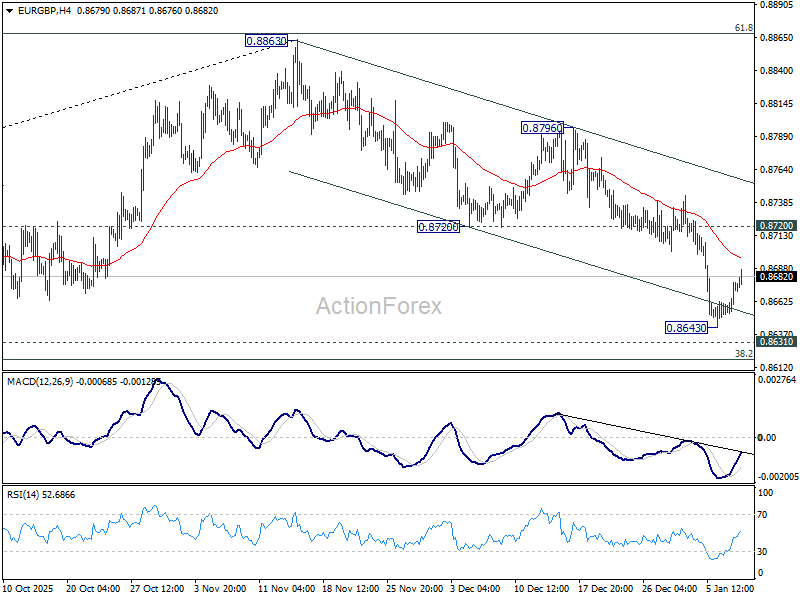
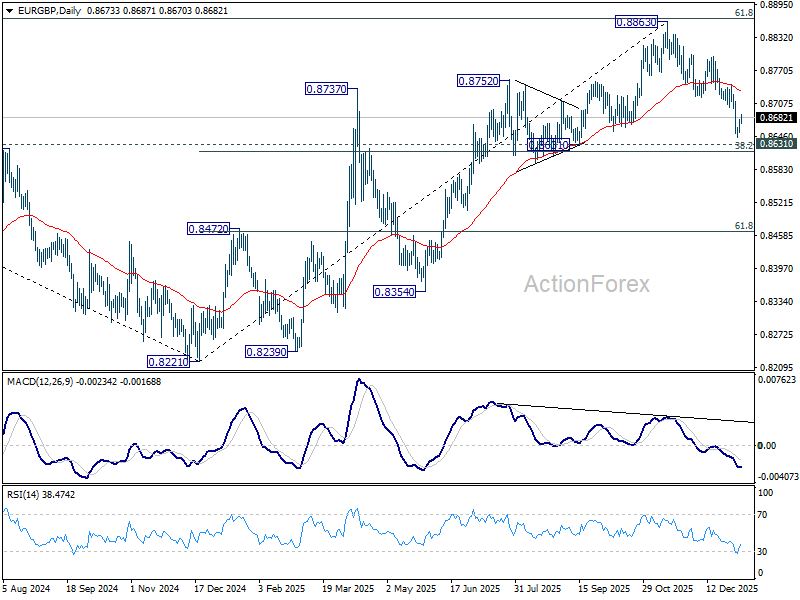
    Today’s eco calendar was empty on both sides of the Atlantic. French politics captured some headlines as PM Lecornu and his cabinet rush to pass a budget, but risk being ambushed by several confidence votes. Snap elections are an accident waiting to happen, but not yet top of mind of investors. A flurry of central bankers take parole this week with hawkish Bank of England member Greene kicking off festivities. She strongly advocates keeping UK rates unchanged into 2026 as she’s worried over the slowing disinflation process, risks of second-round effects, elevated food prices and their impact on household inflation expectations and the fact that monetary policy isn’t actually restrictive in her view. BoE Greene’s hawkish views are known in the split BoE where governor Bailey probably holds the key vote in deciding either on the status quo or the rate cut at the November 6 policy meeting. He’s scheduled to speak tomorrow on the sidelines of the annual IMF and Worldbank meetings. Before he does, the UK Office for National Statistics publishes its latest labour market report. One of Bailey’s concerns is that situation on the UK labour market is worse than some numbers suggest. EUR/GBP followed EUR/USD south today, moving from levels just north of 0.87 to 0.8675 currently.

    News & Views

    Indian inflation slowed to 1.54 % Y/Y in September from 2.07% Y/Y in August. This marks the lowest Y/Y-reading since June 2017. According to the Ministry of Statistics, the decline in headline inflation and food inflation during the month of September is mainly attributed to favorable base effects and to a decline in food prices (-0.49% M/M). Food prices also were 2.28% lower compared to the same month last year. The RBI targets inflation to stay within a 2%-6% band. However other non-food components still showed higher price rises including 2.28% Y/Y for clothing and footwear, 3.98% for housing and 1.98% for fuel and light. Other miscellaneous (weight 26% of the index) still rose 5.35%. In this respect, Bloomberg calculates core inflation(excluding volatile food and energy prices) at 4.58% up from 4.21% in August. Even so, further impact of the consumer tax overhaul end September might slow inflation further and open the path for the Reserve Bank of India to cut the policy rate further in December (currently 5.5%) in order to support the economy as it suffers from US tariffs. The rupee is holding near all-time low levels against the dollar near USD/INR 88.67.

    In its monthly oil market report, OPEC sees global oil demand growth for 2025 unchanged from previous month at around 1.3 mb/d, y-o-y. In 2026, global oil demand is forecast to grow by around 1.4 mb/d, y-o-y, also unchanged from last month’s assessment. OPEC indicated that the outlook for rising demand for oil comes as the global economy maintained its stable economic growth trajectory, supported by the consistent and strong momentum observed in 1H25. OPEC expects production of countries not participating in OPEC to grow by 0.8mb/day and to come in at 0.6mb/d next year, with Brazil, Canada, the US and Argentina as the main drivers. OPEC says that crude oil production by countries participating in the DoC increased by 630 tb/d in September, m-o-m, to average about 43.05 mb/d. Demand for 2026 Opec+ production is seen rising from 42.5mb/d to 43.1mb/d next year. Brent oil today rebounds marginally after the risk-off decline (trade tensions) on Friday (currently $63.2/b).