

Sample Category Title
Today Virtual Panel Discussion Of Central Bank Governors In The ‘Policy Panel’ And The Possible Impacts On Financial Markets
One of the most influential events today will be the virtual panel discussion of the governors of the world’s major central banks, which will be called the 'Policy panel', and during this meeting, the governors of Europe, Britain, Japan, and the US Federal Reserve also gave a speech. Due to the meeting subject, any reference to the future of the monetary policy can influence the demand for the stock market and currencies. According to the latest reports, inflationary pressures are still present in their economy. Therefore, it is predicted their plans to reduce expansionary monetary policies will be implemented in the near future, reducing demand for the stock market.
On the other hand, the debt crisis of the Chinese company Evergrande continues to worry market participants and has reduced risk-taking in the stock markets.
Technically, the Dow Jones and S&P500 indices have reached the Ichimoku cloud support range at daily timeframes after a bearish correction and have had a bullish short-term response, which may continue in the short term. Still, by start the working day of New York Exchange market is likely to return to the mid-term downtrend. In addition, the results of the mentioned meeting should be monitored after the beginning of the New York market.
Oil And Gold Challenge With Significant Technical Levels
In the gold market, following the mid-term downtrend, the price has broken the major support level of $ 1740 and is pulling back to the broken level. Meanwhile, the US Consumer Confidence Monthly Index was released yesterday, has been reduced for the third month in a row, reducing short-term demand for the US dollar and supporting the gold price pullback.
However, in the mid-term, the first possibility is that the downtrend will continue with the end of the short-term correction. In addition, the results of today’s meeting of central banks governors in the virtual event “Policy panel” could also affect the price of gold.
In the oil market and the Brent oil index, the price has continued its upward trend in the mid-term, passing the historical resistance to the highest level since October 2018. It has reached a significant level of $ 80 per barrel as a historical resistance, and, In the short term, the price has not been able to cross this significant level. It moves in the correction and reversal conditions, which is likely to continue this downward and corrective movement in the short term.
The index of weekly changes in US crude oil inventories will be announced today, which experts predict will decrease for the eighth consecutive week, and is likely to reduce by more than two million barrels. In general, the releasing of this index and its difference from the forecasted numbers can affect the short-term trend of crude oil prices.
Risk Sentiment Hit By Several Headwinds
- 10-year US Treasury yields surged past 1.5%.
- Risk mood clouded by fears over US default, Evergrande, stagflation.
- US futures attempt to recover after S&P 500’s biggest drop since May.
- ECB Sintra forum to be monitored for inflation clues from central bank chiefs.
Markets appear to be sobering up to the looming prospects of the Fed’s tapering as the market reassesses the Fed tightening cycle. Bond yields on the 10-year US Treasury have spiked back above the psychologically important 1.50% mark and are hovering around their highest levels since June. That in turn extended declines in yield-sensitive assets such as tech stocks and gold.
Asian stocks are tracking the overnight declines on Wall Street although US futures and European benchmarks are attempting a rebound. After suffering its biggest single-day drop since May, the S&P 500’s key support level appears to have shifted from its 50-day moving average to its 100-day counterpart, amid creeping concerns that the blue-chip index may have crested in the near-term.
Still, it’s important to put the recent gyrations into broader context. The S&P 500 is just 4% below its all-time high, gold bugs still have some breathing space above spot’s year-to-date low, while 10-year yields are still a long way off from breaking out of their multi-decade downtrend.
Befuddled markets
Global investors are trying to find a clear narrative even as they grapple with the cross currents that are buffeting the broader market outlook. Investor sentiment is hunting for a clear signal amid the cacophony stemming from a multitude of fears. These include a potentially “catastrophic” default by the US Treasury, in Janet Yellen’s estimation, possible contagion out of the China Evergrande saga and even the risk of stagflation.
Skyrocketing prices for natural gas, oil, and cotton have only amplified the notion that inflationary pressures may decimate the Fed’s “transitory” view, which could in turn crimp global economic prospects. Such a darkening outlook has soured risk sentiment and may have prompted this shakeup in asset allocations ahead of the final quarter of the year. Perhaps more solemnly, recent price action could herald a potential end to the heady days of risk-taking activities that have been aided by the Fed’s ultra-accommodative stance.
Will central bankers soothe markets?
Clarity may be derived from today’s ECB symposium which features a panel comprising the chiefs of the Fed, BOE, ECB and the BOJ. Their collective outlook on global inflation and respective policy responses could prompt the next move across markets.
If “Team Transitory” remains with the oft-repeated narrative peddled by the likes of Lagarde and Powell, this might help unwind some of the recent losses in equities and bullion, while calming bond markets at least for a little while longer. However, should the hawkish drums grow louder, that could exacerbate recent declines seen in Treasuries, equities and bullion as markets brace harder for the eventual unwinding of the ultra- accommodative policies lavished upon global markets since the pandemic.
‘Gidday Scotty, Do You Happen To Have Any Spare Coal?’
2021 has been another strange year, so you wouldn't completely dismiss a phone call like this from Beijing to Canberra. Australia probably has ready stocks available after China's import ban last year. Still, President Xi is more likely to tell his citizens to put on extra layers of clothing this winter than make that phone call.
It's not just China, however, with energy issues, the entire Northern hemisphere is now sweating (or is that chilling), on whether the forthcoming winter is mild or cold, because only a win for Team Mild is likely to bring relief from higher energy prices. Brent crude traded above USD 80.00 a barrel overnight, before sharply retreating as speculators booked profits, helped along by a surprise rise in US API Crude Inventories of 4.127 million barrels. Like MacArthur, it shall return.
Apart from energy, there were plenty of other doom and gloom scenarios giving equity markets are reason to pummel stocks overnight. The US debt ceiling will need to be passed line by line by the Democrats alone through the Senate. The USD 3.5 trillion spending bill is in trouble as well, not just from Republicans, but also by the progressive wing of the Democrats. They clearly haven't heard of the terms mid-term elections and unemployment. President Biden has though, and he is cancelling a trip to knock heads.
We had hawkish comments from Fed President Bullard last night and even Fed Chairman Powell, in congressional testimony, was less dovish than previously, suggesting that the conditions for a Fed taper were locked and loaded. Elizabeth Warren said she would vote against his reappointment as well, calling him dangerous. US data was mixed with confidence indicators and the Richmond Fed Manufacturing index retreating, while the Case-Shiller house price index continued climbing at a race that would make Space-X envious.
Stagflation, anybody?
That was all enough to send equities tumbling overnight and US 10-year yields higher to 1.55%. Although stagflation is now being mentioned ad nauseum, a concern mentioned many times by this newsletter in the past, but nobody listened, I believe we are facing a stagflation-lite and not stagflation-heavy. Growth remains expansionary, but if energy markets carry on the way they are going, growth momentum will slow even as input costs rise. There is not much monetary policy can do about that, the only cure for high prices is high prices and more winter woollies.
Markets too finally seem to be coming around to the author's premise that some sort of taper tantrum is going to occur in Q4 as the reality of the Fed tapering finally pokes the most one-eyed equity bull. Rice tech prices, built on stratospheric growth forecasts in a rampant bull market, will come under stress as 10-year yields approach 2.0%. Which likely explains their bronze medal last night. The knock-on effects will be felt far and wide though. ASEAN currencies will suffer as the region's monetary policy settings move out of sync with the US. You can pop Japan and Europe into that equation as well, possibly China if the energy crisis deepens. Gold will face a lot more downside pressure and it will be interesting to see how appealing cryptos become in a higher US interest rate US dollar bull market. Let's hear it for the hedge against risk, currency debasement mantra Bueller. Bueller? Ferris Bueller? Elon Musk's Twitter account may need to be super busy in Q4 to keep that party going.
To be clear though, I am not expecting a big-bang taper tantrum, more of a creeping reality bites one. We may have to get used to a lot more two-way volatility in equity markets as a result, which will be no bad thing. Even after a Fed taper, interest rates are going nowhere, anywhere in the world. And you can be sure if things get ugly, the world's central banks will be there to backstop the whole mess once again. Even if equity markets fell 10 to 15%, we would still be in a bull market, so let's keep it real.
Today Japan's LDP selects a new prime minister. Timing is everything, and the doom and gloom noise in international markets will drown out any response locally to whoever wins. USD/JPY is, and continues to be, a US/Japan yield differential play, so any fallout on the currency will be non-existent. Only if the new prime minister says there is no reason to open the fiscal stimulus taps again will Japanese markets react negatively, as much of the recent Japanese equity rally is based on just that premise.
China has apparently asked state-backed firms to start picking up Evergrande assets. That is probably the first hint of the China solution. A state-backed asset-stripping leaving a faint core, looking like a dwarf star post-super nova. Evergrande is due to make another US dollar coupon payment today of around USD 47 million. I fully expect that not to happen, as with last week's, with the company making full use of its 30-day grace period. It will add another cloud to a bleak landscape today.
The data calendar is quiet in Asia today with just the Bank of Thailand policy decision due later. Rates will be held at record lows of 0.50% although the finance minister has already been on the wires exhorting the bank to be 'accommodative.' They already are, and Thailand isn't Turkey. Nevertheless, with my comments above in mind, there are precisely zero reasons to be long the Baht right now. You can probably add the rupiah, dong, won and peso into that group as well.
The situation in the United Kingdom appears to be going from bad to worse as well. The British pound collapsed overnight as petrol shortages persist at service stations, thanks to the panic-inducing bank-run qualities of the British press last weekend. Britain has plenty of fuel, just no truck drivers to deliver it. A problem now affecting vast swathes of the UK economy in a post-Brexit no-visa world. Stagflation could be a real problem here in the months ahead, and if the winter is cold, a winter of discontent beckons, and unfortunately Boris isn't Churchill. 'Sell sterling Your Majesty?' 'Yes Mortimer, sell.'
Looking ahead over the next 24 hours, two data points leap out to me. Firstly, official US Crude Inventories this evening. Energy markets really need a chunky rise in inventories to take the heat out of energy markets temporarily. Secondly, China's official Manufacturing and Non-Manufacturing PMIs and the Caixin Manufacturing PMI. If they are soft once again Asia is in for a torrid end to the week, something that will probably spill into Europe and the US this time. If you think things couldn't get murkier, China then goes on holiday for a week from Friday with Evergrande unresolved. Add in shenanigans surrounding the US debt ceiling and spending bills on Capitol Hill and there are not many reasons to suggest the investing world will be a safer place by the end of the week.
It will be interesting to see if the Tina, fomo-gnome, dip-buying army look at this as an opportunity to do what they do best.
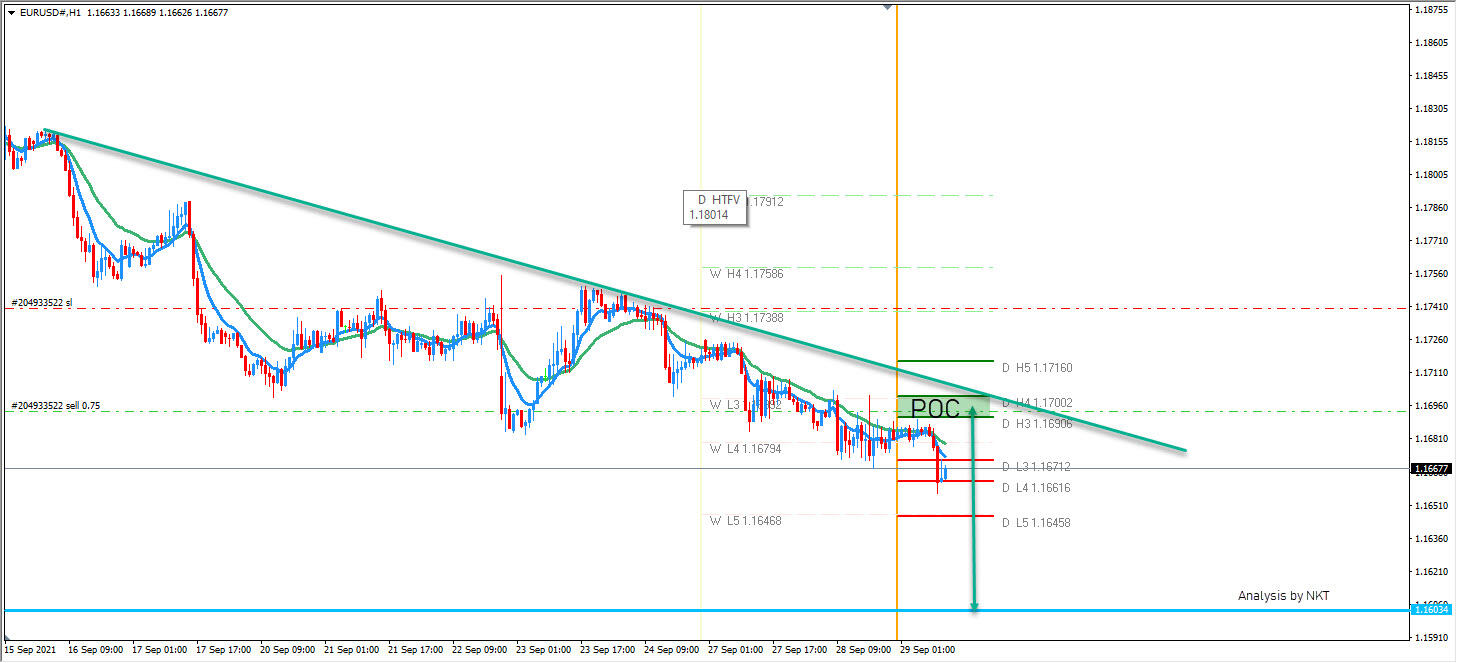
EUR/USD Strong Bearish Candle Indicates Further Selling
EUR/USD is having a potential big move to the downside. The zone for short trades is the POC.
The POC 1.1690-1.1700 is where we can see the selling happening. I am short and I can see that the first target should be the 1.1600 zone. The price needs to break 1.1660 and from there we will see a strong momentum down. Below 1.1600 1.1565 will be open. Now it is shorts who are dominating over longs.Bears are stronger.
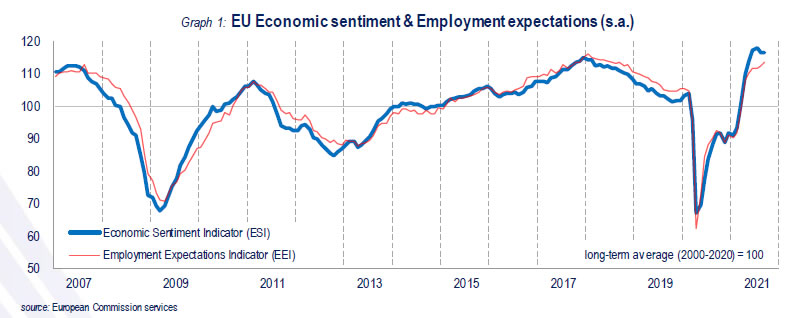
Eurozone economic sentiment rose to 117.8, employment expectation rose to 113.6
Eurozone Economic Sentiment Indicator rose slightly from 117.6 to 117.8 in September, above expectation of 116.9. Employment Expectation Indicator rose 0.8 pts to 113.6, highest since 2018. Industrial confidence rose from 13.8 to 14.1. Services confidence dropped from 16.8 to 15.1. Consumer confidence rose from -5.3 to -4.0. Retail trade confidence dropped from 4.6 to 1.3. Construction confidence rose from 5.5 to 7.5.
EU ESI was unchanged at 116.6 while EEI rose 1 pt to 113.6 (highest since 2018). Amongst the largest EU economies, the ESI rose in Spain (+1.7), Germany (+0.8), the Netherlands and Poland (both +0.6), while it worsened in France (-1.3) and Italy (-0.9).
Wall Street Calms Down After Sharp Selloff
- Rising rates and inflation worries torment stock markets
- Sterling crumbles despite mounting bets for BoE rate hikes
- Japan gets a new prime minister, China releases PMIs
Yields go into overdrive
Stock markets continue to dance to the tune of rising bond yields. It is not so much the magnitude of the spike in yields but rather the speed of this move that has caught investors by surprise. The burning question is what’s driving this sharp repricing in interest rates - is it concerns inflation will be more persistent, expectations that central banks will normalize faster, the prospect for even bigger deficits, or a combination?
The energy crisis in China probably plays into all this. Rolling power shortages threaten to kneecap industrial production, dealing another blow to struggling supply chains that ultimately ends with inflation being exported abroad as manufacturers are forced to raise prices to cope with the squeeze on margins.
Most of the damage so far has been inflicted on growth and tech stocks, which are the most vulnerable to changes in interest rates as the present value of their future cash flows depends heavily on the discount rate used to price them. Hence, the tech-heavy Nasdaq got hit the hardest yesterday, falling by 2.8%.
The good news is that when stock markets panic about rising rates, the problem usually works itself out. When investors dump stocks because yields are moving higher, there comes a point where the risk aversion becomes so overwhelming that traders are willing to rotate back into bonds just for safety, stabilizing yields and calming stocks.
Yen steadies, sterling crumbles
A similar dynamic can play out in dollar/yen. The pair rigorously followed Treasury yields higher in recent sessions, but when the selloff in equity markets intensified yesterday, its gains were capped as safe-haven flows rushed back into the yen. It is trading a touch lower today, mirroring the minor pullback in yields.
Staying in Japan, Fumio Kishida just won the leadership contest of the ruling LDP party. His victory almost guarantees he will become the next prime minister given the party’s majority in parliament, but he may not hold that position for long as a national election must take place in the next two months. The market reaction was muted, with the yen and Japanese stocks driven mainly by global forces.
Over in the UK, the pound was caught in the perfect storm yesterday. The optics of the fuel crisis and concerns over an economic slowdown joined forces with the selloff in equity markets and a stronger US dollar to push Cable to its lowest level since January.
Even mounting bets for earlier rate increases by the Bank of England couldn’t stop the bleeding in sterling. A quarter-point rate increase is now almost fully priced in for March following some signals from Governor Bailey that rates could be hiked even before asset purchases end this year, to fight inflation. Markets seem to be reading that as a potential policy mistake.
Dollar shines, China PMIs in focus
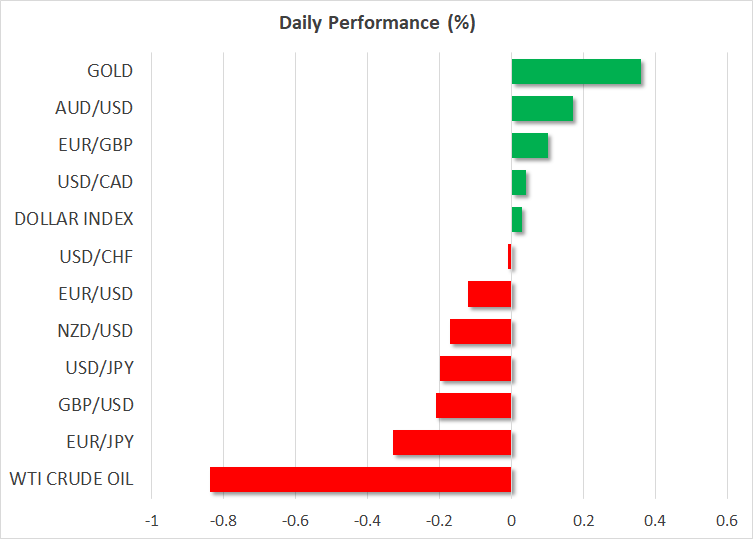
As usual, the dollar has emerged as the biggest winner from the spike in global yields and the ensuing risk aversion. Euro/dollar just touched new lows for the year as investors look for shelter from the storm and after Fed chief Powell noted yesterday that cost-push inflation doesn’t seem to be cooling.
Monetary policy signals will hit an apex today with the leaders of all the major central banks - Fed, ECB, BoJ, and BoE - appearing together in an online panel at 15:45 GMT.
But the real fireworks could come from the Chinese PMIs overnight. Between a painful deleveraging in the real estate sector and the latest energy shortages, the surveys could show economic momentum continues to evaporate. The silver lining is that in this case, Chinese authorities will likely pull on the stimulus levers soon.
GBP/USD Pair Is Now Consolidating Losses From The 1.3520 Low
The British Pound started a fresh decline from well above 1.3700 against the US Dollar. The GBP/USD pair broke the key 1.3660 support to move into a bearish zone.
It even traded below the 1.3600 level and settled below the 50 hourly simple moving average. A low was formed near 1.3520 and the pair is now consolidating losses. An initial resistance on the upside is near the 1.3560 on FXOpen.
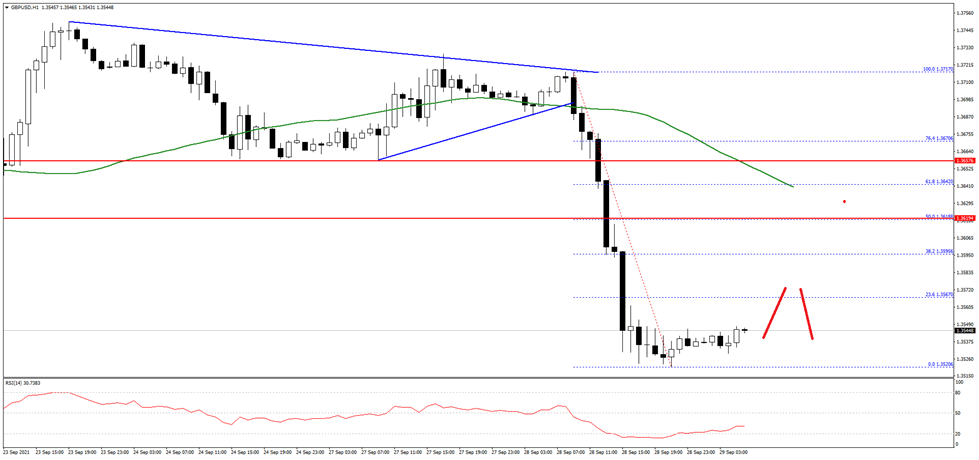
The main resistance is now forming near the 1.3620 level. It is near the 50% Fib retracement level of the downward move from the 1.3717 swing high to 1.3520 low. If there is a clear break above the 1.3600 and 1.3620 resistance levels, the pair could rise towards the 1.3700 level.
On the downside, an initial support is near the 1.3530 level. A break below the 1.3530 and 1.3520 support levels could lead the pair towards 1.3460.
The Analytical Overview Of The Main Currency Pairs
The EUR/USD currency pair
Technical indicators of the currency pair:
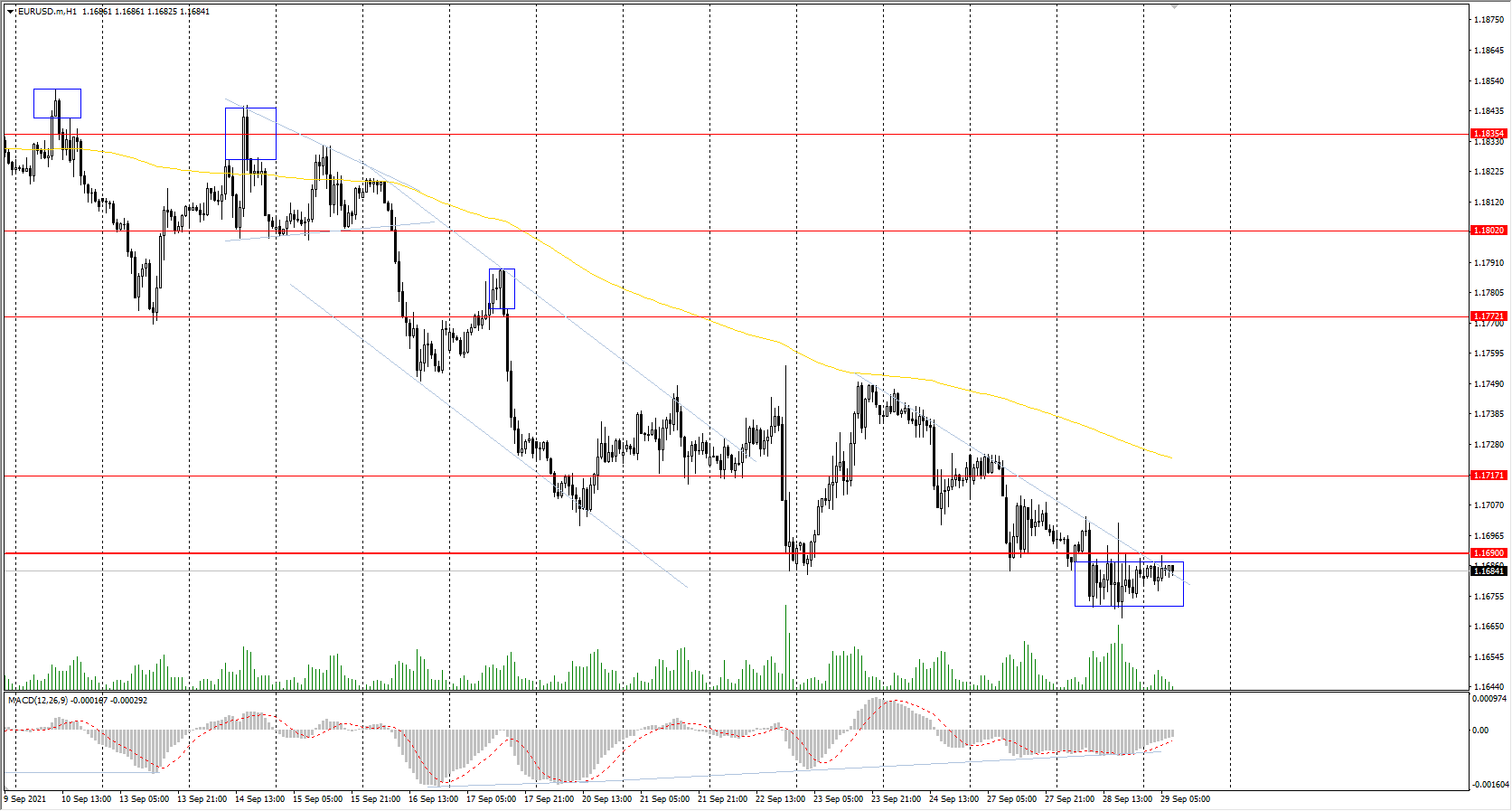
Prev Open: 1.1695
Prev Close: 1.1682
% chg. over the last day: -0.11%
The US Consumer Confidence Index decreased to 109.3 points in September from a revised 115.2 level in August. Given the growing trade deficit and anticipation of declining auto sales, such data added to fears of a slowdown in US economic growth. But the dollar index increased amid falling stock indices as investors are concerned about the risk of a default on US sovereign debt.
Trading recommendations
Support levels: 1.1620
Resistance levels: 1.1690, 1.1717, 1.1772, 1.1802, 1.1835
From the technical point of view, the situation with the EUR/USD currency pair is uncertain. On the one hand, the price has broken through and consolidated below the priority change level. On the other hand, the MACD indicator indicates a divergence, which may lead to a false breakdown of this level. Under such market conditions, traders should consider buy trades if the price returns above the priority change level creating a false breakdown zone below. It is best to look for sell trades from the resistance levels near the moving average.
Alternative scenario: if the price breaks out through the 1.1690 resistance level and fixes above, the mid-term uptrend will likely resume.
News feed for 2021.09.29:
- German Retail Sales (m/m) at 09:00 (GMT+3);
- US Pending Home Sales (m/m) at 17:00 (GMT+3);
- US FOMC Chair Jerome Powell’s Speech at 18:45 (GMT+3);
- Eurozone ECB President Lagarde’s Speech at 18:45 (GMT+3).
The GBP/USD currency pair
Technical indicators of the currency pair:
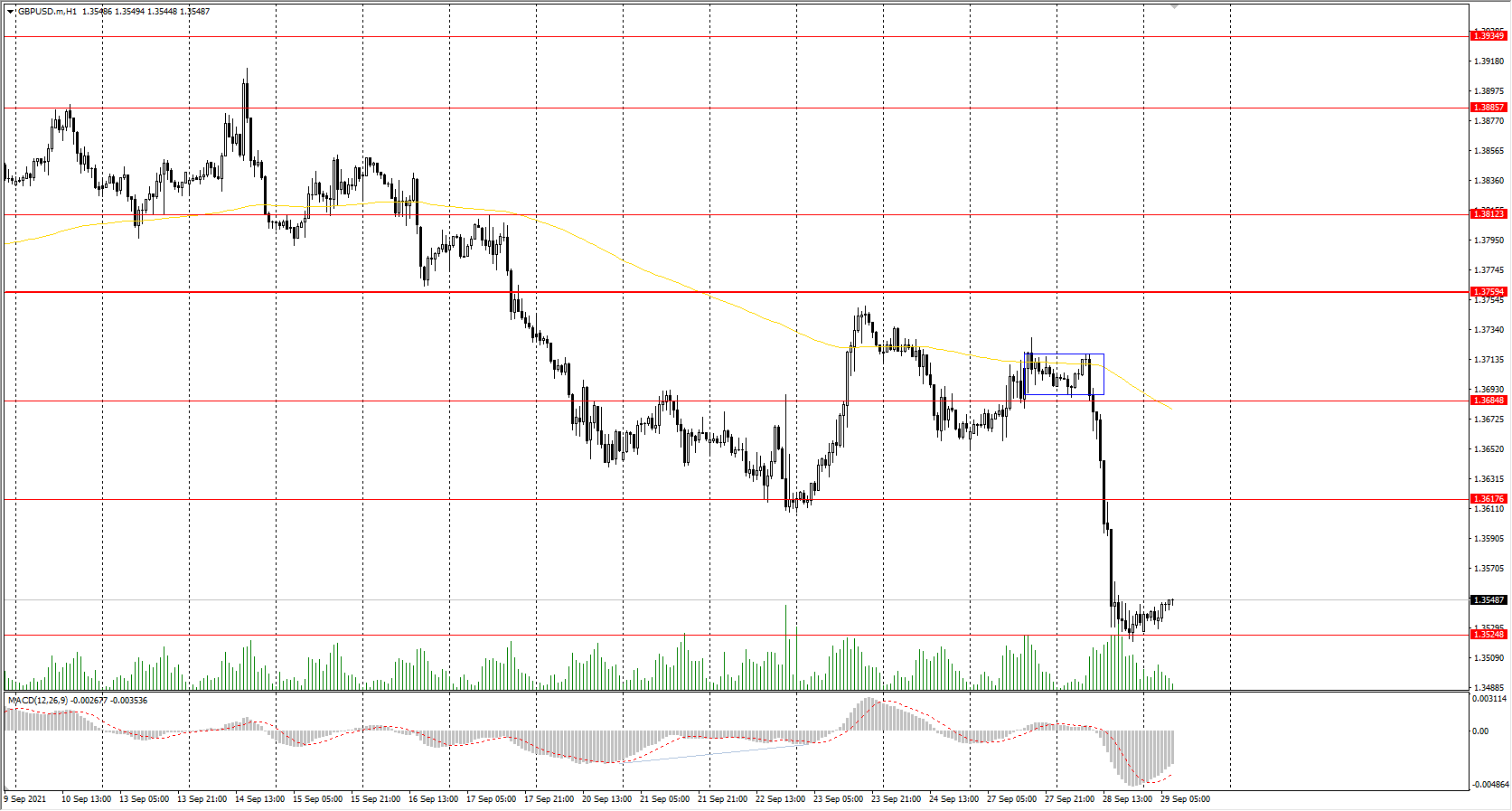
Prev Open: 1.3695
Prev Close: 1.3533
% chg. over the last day: -1.19%
The British authorities want to use the army to solve the issue of fuel delivery to petrol stations. This news negatively affected the British currency, and with the dollar index rising, the GBP/USD quotes collapsed yesterday.
Trading recommendations
Support levels: 1.3525, 1.3483
Resistance levels: 1.3617, 1.3685, 1.3759, 1.3812, 1.3886.
On the hourly time frame, the GBP/USD trend is bearish. The MACD indicator has become negative without any signs of reversal. Buy trades should be considered only throughout the day and only with short targets from the support levels. Sell trades can be found at the resistance levels above the moving average line, as the price has deviated strongly from the middle values.
Alternative scenario: if the price breaks out through the 1.3759 resistance level and consolidates above, the bullish scenario will likely resume.
News feed for 2021.09.29:
- UK BoE Gov Andrew Bailey’s Speech at 18:45 (GMT+3).
The USD/JPY currency pair
Technical indicators of the currency pair:
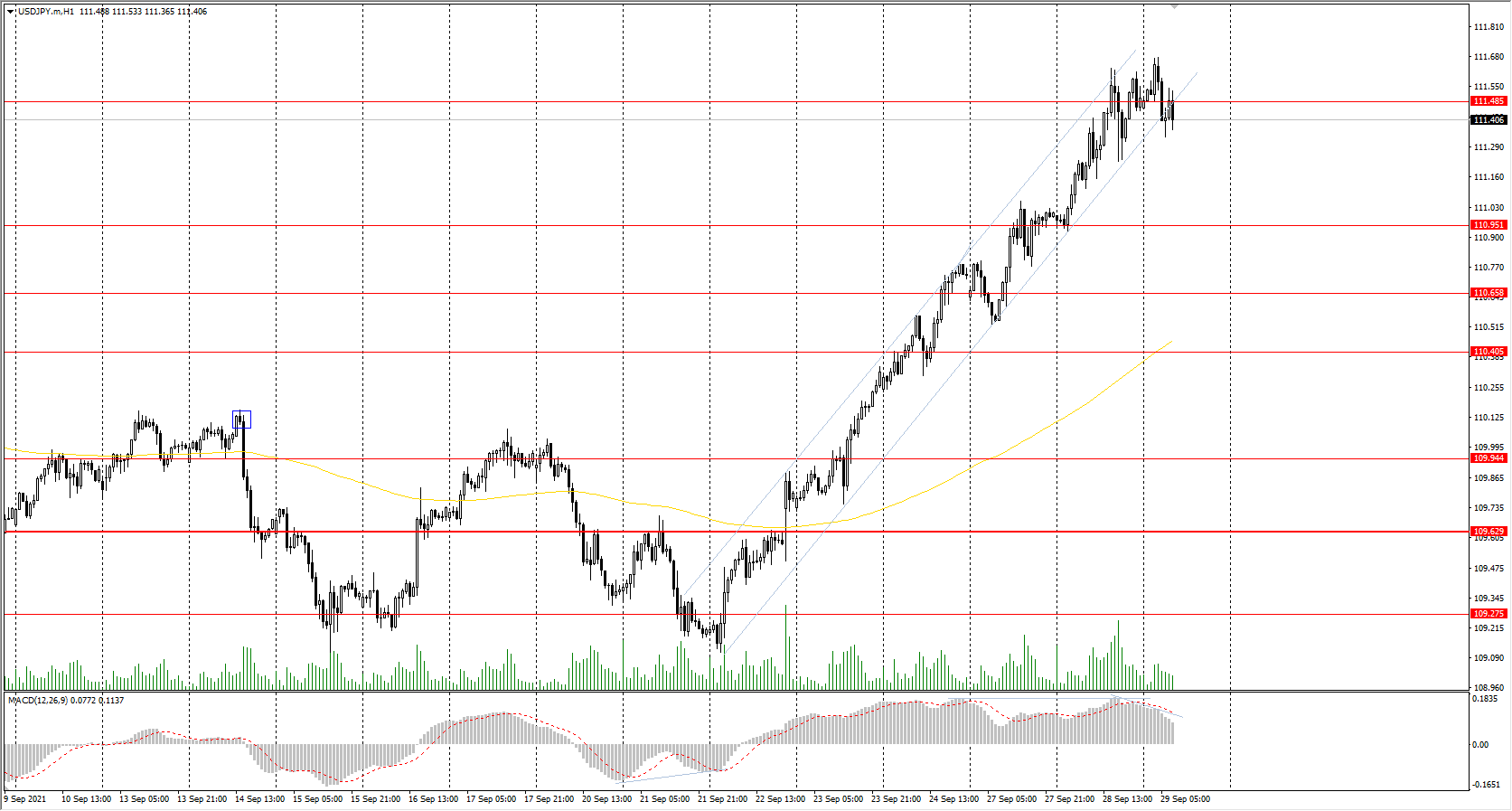
Prev Open: 110.99
Prev Close: 111.50
% chg. over the last day: +0.45%
The Japanese Yen futures continue to decline, which is caused by the strengthening of the dollar index as well as a slowdown in the economic recovery in Japan. But with the restrictions being lifted in Japan as early as September 30, the Japanese Yen may strengthen soon.
Trading recommendations
Support levels: 110.95, 110.65, 110.40, 109.95, 109.63, 109.27
Resistance levels: 111.49
The main trend of the USD/JPY currency pair is bullish. Against the background of the Japanese Yen weakness and strengthening of the dollar index, the USD/JPY quotes continue to grow. But it is obvious that the price cannot reach the upper border of the uptrend channel, while the MACD indicator begins to signal divergence. All these are signs of the buyer's weakness. Under such market conditions, it’s better to look for buy positions from the support levels after a small pullback. The price has deviated strongly from the moving average, and now there is a high probability of decline. Sell positions should be considered only throughout the day from the resistance levels but only after the sellers' initiative.
Alternative scenario: if the price falls below 109.63, the uptrend is likely to be broken.
News feed for 2021.09.29:
- Japan BoJ Gov Haruhiko Kuroda’s Speech at 18:45 (GMT+3).
The USD/CAD currency pair
Technical indicators of the currency pair:
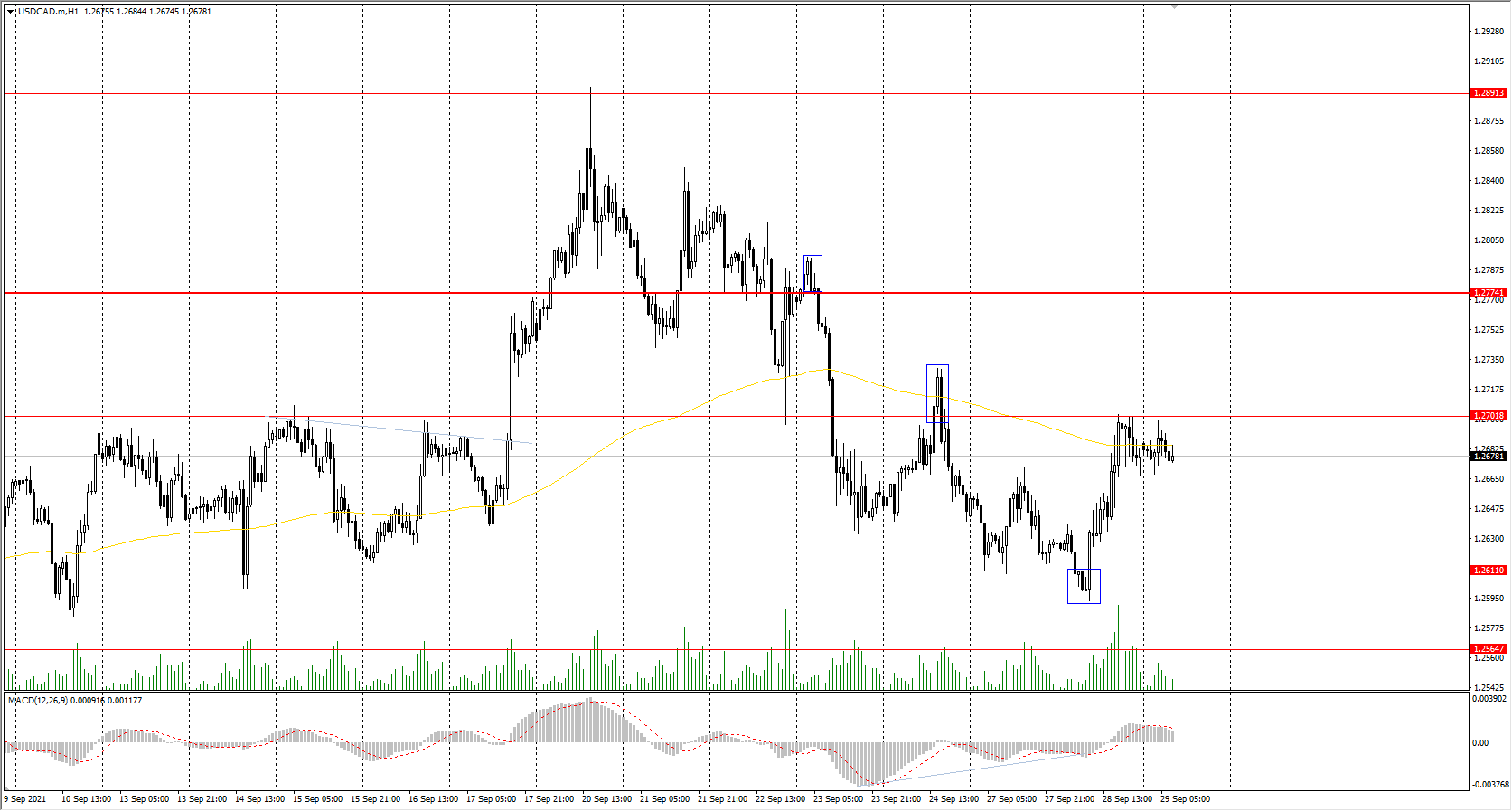
Prev Open: 1.2627
Prev Close: 1.2683
% chg. over the last day: +0.44%
The Canadian dollar is a commodity currency, so USD/CAD is highly dependent on the dynamics of the dollar index and oil prices. The dollar index increased yesterday, while oil prices decreased. As a result, the USD/CAD quotes increased due to the weakness of the Canadian currency.
Trading recommendations
Support levels: 1.2611, 1.2565, 1.2518, 1.2425
Resistance levels: 1.2701, 1.2774, 1.2891
From the technical point of view, the trend has changed to bearish. The price fell below the moving average and broke down through the priority change level. The MACD indicator has returned to the positive zone. Under such market conditions, it is better to look for buy deals from the support levels, but only with short targets. It is best to look for sell deals from the resistance levels near the moving average
Alternative scenario: if the price breaks out through the 1.2774 resistance level and fixes above, the uptrend will likely resume.
The United States Faces The Risk Of Sovereign Debt Default
The US consumer confidence index has shown a decline over the past month, confirming that US business activity is slowing as inflation remains at high levels. Consumers remain concerned about supply disruptions, the threat of higher inflation, and the Delta variant of coronavirus that will affect their lives and the economy.
The US stock market decreased sharply amid investor fears over the risk of a default on US sovereign debt. The Dow Jones Industrial Average decreased by 1.63%, the S&P 500 lost 2.04% and the Nasdaq Composite lost 2.83%. The Nasdaq showed the biggest fall since March 18, and the Dow Jones dropped for the first time in five trading sessions.
US Treasury Secretary Janet Yellen said that the Treasury would be out of money around October 18 if the debt limit was not increased. Fed Chairman Jerome Powell indicated that the Fed could not protect the American people from default if the debt limit was not increased. What's going on? On September 30, the end of the fiscal year of the federal government is marked and this is the deadline for the adoption of funding measures by Congress. The debt ceiling, which represents the amount of money that legislators allow the Ministry of Finance to occupy, should be suspended or elevated by mid-October, otherwise, the United States will most likely declare a debt default. JPMorgan Chase CEO Jamie Dimon told Reuters that the nation's largest bank is preparing for a possible US credit default as negotiations over the debt limit have stalled.
European stock indexes decreased yesterday following the US ones. The British FTSE 100 index decreased by 0.5%, German DAX lost 2.09%, French CAC 40 dropped by 2.17%, Italian FTSE MIB and Spanish IBEX 35 lost 2.14% and 2.59%, respectively. ECB head Christine Lagarde said the following: "To get out of the pandemic safely and get inflation back to 2%, we still need flexible monetary policy." Great Britain's authorities want to use the army to solve the issue of getting fuel to gas stations.
Oil decreased slightly yesterday. The pressure on prices is caused by renewed fears about the pace of global economic recovery amid the coronavirus pandemic. But analysts are confident that oil prices will continue to rise, as production in the Gulf of Mexico is still not restored to pre-Hurricane Ida levels, while crude oil inventories are at their lowest in three years.
Asia-Pacific stock markets have declined on Wednesday following a negative US trading session. Investors are concerned about the expected slowdown in China's economy, which is facing an energy crisis. China's energy crisis is connected with the fact that some Chinese regions face a real power shortage amid a sharp spike in coal and natural gas prices and other regions are demanding companies to save energy to meet the goals set by the national authorities to cut harmful emissions. Chinese industrial profits grew at a weaker pace in August than a year earlier, slowing down the sixth month in a row as manufacturers faced high raw material prices, COVID-19 outbreaks, and shortages of some key components.
Goldman Sachs worsened its forecasts for China's economic growth in 2021 against the background of restrictions in power consumption and problems with the Evergrande developer. Now bank experts expect China's GDP growth of 7.8% compared with a year earlier, while the previous forecast provided for the growth of 8.2%. International rating agency S&P Global Ratings improved its forecast for economic growth in Japan and Australia in the next two years and lowered the forecast for GDP growth in China.
On the other hand, BlackRock hedge-fund analysts told their investors that Chinese stocks are priced according to their risks and investors should consider buying them while they remain cheap.
The persistent worldwide shortage of semiconductor components will begin to ease in early 2022.
Main market quotes:
- S&P 500 (F) 4,352.63 −90.48 (−2.04%)
- Dow Jones 34,299.99 −569.38 (−1.63%)
- DAX 15,248.56 −325.32 (−2.09%)
- FTSE 100 7,028.10 −35.30 (−0.50%)
- USD Index 93.71 +0.33 (+0.35%)
Important events for today:
- German Retail Sales (m/m) at 09:00 (GMT+3);
- US Pending Home Sales (m/m) at 17:00 (GMT+3);
- US Crude Oil Reserves (w/w) at 17:30 (GMT+3);
- UK BoE Gov Andrew Bailey’s Speech at 18:45 (GMT+3);
- US FOMC Chair Jerome Powell’s Speech at 18:45 (GMT+3);
- Japan BoJ Gov Haruhiko Kuroda’s Speech at 18:45 (GMT+3);
- Eurozone ECB President Lagarde’s Speech at 18:45 (GMT+3).