Sample Category Title
Oil And Gold Lose Ground In Asia
Oil falls in Asia
With mainland China, South Korea and Japan away today, oil trading volumes are thin. Oil eased slightly on Friday as Gulf of Mexico production returns, but otherwise has remained immune to the risk aversion nerves seen elsewhere and US dollar strength. In Asia today, the broad commodity sell-off has flowed into oil markets, which have retreated modestly once again.
Brent crude fell 0.40% to USD 75.30 on Friday, retreating by 0.60% to USD 75.85 a barrel in Asia today. WTI fell 0.90% on Friday to USD 71.90, easing another 0.70% to USD 71.30 a barrel in Asia this morning. Both contracts are likely to continue trading heavily until New York hours as long as the broader commodity sell-off persists, although I do not anticipate an aggressive move lower.
Brent crude has traced out a double top at USD 76.10 which s followed by USD 76.80 a barrel. Support is at USD 74.50 and then USD 73.80 a barrel. WTI has resistance at USD 72.00, followed by more formidable resistance at USD 73.00 a barrel. A fall through USD 71.00 could see a spike lower to USD 70.00 a barrel.
Gold follows other metals lower
Platinum and palladium have been pummelled today in a broad commodity sell-off, tumbling by 3.50% and 3.50% respectively. That has dragged silver 1.15% lower to USD 22.1460 an ounce, and an already fragile gold lower by 0.45% to USD 1746.60 an ounce after finishing unchanged at USD 1755.00 an ounce on Friday.
A lack of liquidity is amplifying moves in metals in Asia today thanks to Northern Asia being on holiday. However, gold’s price action is ominous, especially as US dollar strength persists and US yields continue firming. The next few days ahead of the FOMC could be long ones for bullish investors.
Gold now has resistance at USD 1755.00, having fallen through support at USD 1750.00 an ounce. That is followed by USD 1768.00 and the far more formidable USD 1780.00 an ounce region. Today’s low around USD 1742.50 is potentially a double bottom if gold closes above there this evening, forming a modicum of support. However, gold looks far more likely to continue trading heavily which will set up a test of USD 1720.00 an ounce. From a longer-term perspective, must hold support is at USD 1675.00 an ounce. Failure opens up uncharted territory for gold.
Asian Equity Markets Seeing Red
Hong Kong and Australian equities take a beating
FOMC tapering nerves and increasing noise from Washington DC around the debt ceiling and tax hikes sent Wall Street lower on Friday. Friday also saw index futures and option and single-stock option expiries, which could have distorted an already nervously negative move. Wall Street finished the week on a continuing negative tone with the S&P 500 falling 0.92%, the Nasdaq falling by 0.91%, and the Down Jones losing 0.48%. All three indexes finished only slightly lower for the week though, which was dominated by large swings in daily sentiment thanks to a depleted tier-1 data calendar.
In Asia, the story is rather glummer. Commodity prices are tanking this morning over China growth concerns and the threat of Evergrande in China missing debt payments this week. With mainland China, South Korea, Japan and Taiwan closed, Hong Kong has borne the brunt of the risk aversion flows. The Hang Seng has collapsed by nearly 4.0% with property stocks under the hammer.
With its high beta to commodity prices, Australian markets are also suffering after the commodity sell-off today. Woes surrounding the French submarine order cancellation and its threat to an EU free-trade deal are also darkening the mood. The ASX 200 has tumbled by 2.30%, while the All Ordinaries has retreated by 1.90%.
Elsewhere, Singapore is 0.35%, while Kula Lumpur has dropped by 0.65% with Bangkok lower by 0.40% and Manila by 0.15%. Jakarta has fallen by 0.55%. The fall-out on regional Asia has been limited thus far, with investors preferring negative sentiment in the more correlated, and more liquid, Hong Kong and Australian markets. With tapering noise around the FOMC increasing, ASEAN markets will struggle to maintain material rallies this week, especially with the Northern Asia heavyweights taking holidays.
Given the negative finish on Wall Street, and the heavy selling in key Asia Pacific markets today, European markets will open slightly lower this afternoon. However, a lower euro, and much lower commodity prices are likely to be positives at the periphery for Europe, limiting negativity from tapering and China nerves.
The US Dollar Stages A Broad Rally
US dollar moves higher as markets await FOMC
Although not many are predicting a Fed taper tantrum, currency markets appear to be waking up to the possibility. The US dollar continued its rally on Friday and what is notable is that now also includes fellow havens such as the Swiss franc and Japanese yen. The dollar index soared 0.41% to 93.25 as US yields firmed, climbing once again in Asia by 0.10% to 93.35. The dollar index is now within sight of its August high at 93.72, and only a fall through 92.80 changes the technical bullish outlook. It will probably take huge bidding interest at the US long-dated bond auctions this week to slow the upward momentum.
Firming US yields sent EUR/USD 0.40% lower to 1.1725, before easing further to 1.1710 in Asia. A failure of 1.1600 will signal a new down leg for EUR/USD that could extend to 1.1200. GBP/USD has fallen 0.30% to 1.3710 today and failure of 1.3680 targets 1.3600. GBP/USD has traced out a major top around 1.3900. USD/JPY has climbed nearly 90 points over the past two sessions to 109.90 today, as a US/Japan yield differential play at the moment, it remains stick in a broader 109.00 to 111.00 range with a bias now to the topside.
USD/CHF is also on the move, climbing above 0.9300 on Friday on its way to 0.9325 in Asia, breaking out of its three-month range. Given its haven status, the fact that the US dollar has managed to rally so powerfully in the past two sessions (approximately 130 points), is to me, a firm signal that more US dollar strength generally is imminent. An FOMC signalling a year-end ostensibly dovish taper, or a more aggressive dot plot hinting at 2022 rate hikes, should do the trick.
AUD/USD and NZD/USD are on the back foot today, falling 0.50% and 0.25% respectively to 0.7235 and 0.7020. The slump in commodity prices and risk sentiment in a liquidity thinned day in Asia is to blame and both have potentially another 100+ points lower in them over the next few sessions. Watch NZD/USD for news on the delta variant front, which escaped Auckland this weekend. Any signs that the government is going to pull the national lockdown trigger will be a major negative for the New Zealand dollar.
With mainland China closed, all eyes have been on the offshore USD/CNH this morning. It spiked to 4.4850 at the open but quickly retreated to 6.4810 later to be just 0.16% higher today. The PBOC added CNY 90 billion of liquidity via the repos on Saturday, a surprise moves to calm nerves ahead of the holidays. Its impact has been negligible on equities but seems to have soothed nerves in currency markets. USD/Asia as a result is only around 0.25% higher today. However, given the nerves over Evergrande in China and its potential fallout, and increasing taper nerves ahead of the FOMC, regional Asian currencies are likely to endure a tough week unless the FOMC is ultra-dovish come Thursday. Holiday-driven liquidity will exacerbate headline-driven moves.
Sharks Circle In Holiday-Thinned Asia
Asia is off to a nervous start today with liquidity seriously thinned by holidays in mainland China, Japan and South Korea. In fact, a heavy holiday schedule amongst the Northern Asia heavyweights will likely affect liquidity to some extent all week, potentially exacerbating market moves.
The list of circling sharks is long, starting with increasing noise from the US about the debt ceiling. Raising the debt ceiling used to be a rubber stamp exercise, but in a polarised United States, that is no longer the case. Mainland China markets are closed today but all eyes are on Evergrande, which is scheduled to make bond repayments on Thursday. Their shares are already taking a beating in Hong Kong today along with property-related companies in general. Ever-Teflon actually has a grace period of 30 days before an official default is called so this story is likely to keep on giving.
China warning sends commodities lower
Commodities are also being sold heavily this morning after China’s Premier Li over the weekend, said that China will use “market tools” to stabilise commodity prices. I am assuming that means releasing more commodities onto domestic markets from China’s strategic reserves. As a price taker and not a price maker, there is only so much China can do to impact prices in the medium term. But coming on a day where liquidity is lower because of holidays, markets are nervous about a disorderly Evergrande collapse and US yields and the dollar have risen ahead of the FOMC, there is an outsized impact.
Copper had fallen by 1.45%, aluminium futures by 1.30%, with platinum down 2.55% and palladium down by 3.35%. Silver and gold are also lower. That comes after iron ore tumbled by 20% last week. Thankfully, with mainland China away today, iron ore trading is effectively closed, but one assumes, looking at its commodities brethren, that the news wouldn’t have been good. With the highest correlation to risk sentiment and commodity prices in the region, Australia is having a bad day with the Australian dollar and Australian equity markets sharply lower.
The week features a heavy schedule of central bank policy decisions, twelve by my last count. The main act will be the Federal Reserve FOMC decision on Wednesday. We are finally seeing markets awakening to the possibility of a taper with US bond yields rising and the US dollar rallying powerfully on Friday once again. I am not expecting any announcement of a taper this meeting, however, the FOMC dot plot update will be interesting, especially if rate hike expectations are brought forward. The FOMC will likely signal that a tapering decision will be live for the November meeting.
With growth concerns increasing in Asia and other regions, a more aggressive dot-plot or tapering indication will likely spark more US dollar strength. Nobody is pricing in a taper-tantrum for Q4, but I believe there is a rising likelihood it can happen, especially if US employment jumps over the next two months. I believe it is naïve that having got the world addicted to bottomless amounts of zero per cent money and a backstop to the dumbest of investment decisions over the past decade+, that the Fed can put that genie back in the bottle with no impact.
Norway will probably become the first DM central bank to raise rates this week, pipping New Zealand to the post. Elsewhere though, I expect Japan, Indonesia, the Philippines, and Taiwan to all remain unchanged. Sweden and Switzerland will similarly hold as will Turkey, but Brazil may surprise, once again. All roads lead to the FOMC though, and their tapering talking, and dot plots should see some volatility in Asia on Thursday morning. China announces its latest one and five-year Loan Prime Rates this Wednesday. It would be a huge surprise if they cut and would spark a juicy equity rally on the mainland. The PBOC is likely to prefer a RRR cut, possibly as soon as October if economic data doesn’t improve or Evergrande folds.
Canada heads to the election booths today with the Canadian dollar getting a beating at the end of last week on softer commodities and political uncertainty. The election is too close to call. Results are likely to start coming in over the Asian session tomorrow and with liquidity holiday-reduced anyway, the USD/loonie may live up to its name.
Australian markets are under pressure from China/Evergrande fears, slumping commodity prices and the fallout from the French submarine fiasco. Already there are rumblings from Europe that the Eurozone/Australia free trade agreement talks are now dead in the water. The French, for their part, are not happy, recalling their ambassadors to the US and Australia, an unprecedented move. Australia’s Prime Minister for his part is justifying the cancellation in favour of US/UK nuke submarines by saying Australia had harboured concerns over the capabilities of the to-be-built French submarines for years. The obvious question being, if that were so, why did you agree to spend USD 40 billion buying them in the first place? Keep up the good work ScoMo.
Finally, keep an eye on New Zealand this week. It appears that the delta variant has jumped the virus fence around Auckland. Auckland is in level 4 while the rest of the country is enjoying a relatively free level 2. If cases increase outside of Auckland, it doesn’t take a genius to guess what happens next, level 4 for the rest of the country immediately. That could spark a decent sell-off in the New Zealand dollar as the RBNZ’s October hike is postponed again, and New Zealand equities are likely to take a beating.
EURUSD Slides To 1.1700 As Bears Keep Control
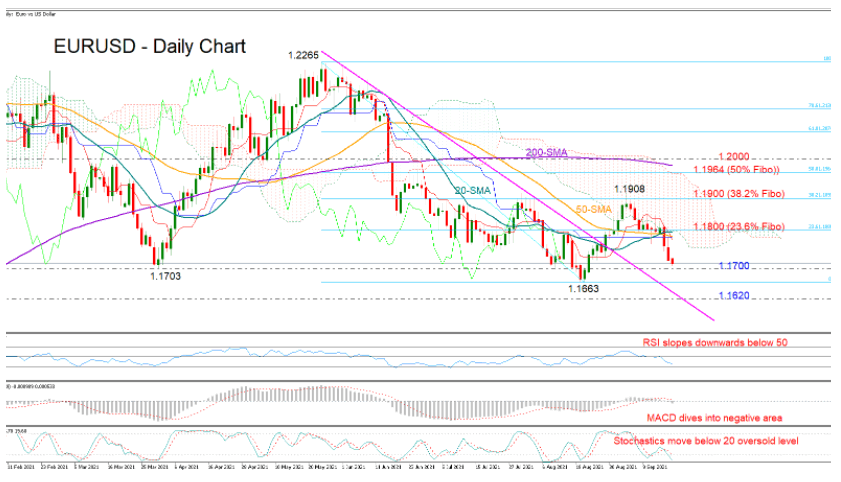
EURUSD started the week in negative mode, stretching its two-week old bearish run closer to the 1.1700 base, which proved to be a solid ground for upside reversals in March and more recently in August, though to a lesser extent.
The technical picture does not appear to be in the bulls' favor as the RSI continues to dig lower within the bearish area, while the MACD has slipped back into the negative territory with stronger momentum. The Stochastics have not confirmed oversold conditions either, making a break towards the nine-month low of 1.1663 a likely outcome. If sellers claim that floor, the broken descending trendline and the 2020 support region of 1.1620 – 1.1600 could next catch the fall, delaying any extensions towards the 1.1500 psychological level.
In the positive scenario, where the price sets a nice foothold around 1.1700, the pair may re-challenge the limits from the 1.1800 number, which overlaps with the 23.6% Fibonacci of the 1.2265 – 1.1663 down leg, the 20-day simple moving average (SMA), and the bottom of the Ichimoku cloud. A successful violation at this point would clear the way towards the 38.2% Fibonacci and the 1.1908 barrier, while higher, the pair would mark a new higher high probably near the 50% Fibonacci of 1.1964 and the 200-day SMA, resuming hopes for an up-trending market.
Summarizing, EURUSD is expected to trade bearish in the near term. Failure to hold above 1.1663 would downgrade the outlook both in the short and medium-term picture.
The Dollar Remains In Pole Position
Markets
Hesitancy was the dominant mood on global markets on Friday. Ever more topics are coming to the forefront, potentially derailing the buy-on-dips momentum that dominated trading in risky assets/equities during most of the (post-) pandemic era. Markets feel the point is nearing where monetary stimulus will be scaled, with Fed (and later ECB) tapering looming. Still, the recovery faces multiply hurdles, ranging from uncertainty on the ST development of the pandemic, over to the potential growth impact from soaring commodity and energy prices, to several potential political headwinds (China regulation, US debt ceiling) or other event risks (Evergrande). Both US and European equities finished with losses of up to 1.0%. At the same time, safe haven core bonds failed to profit. German yields extended their protracted rebound, rising 0.8 bp (2-y) to 2.2 bp (10 & 30 y). Comments/headlines on several ECB (Lane, Kazaks …) members assessing whether inflation might turn out higher than the September ECB forecasts served as a ‘sign of the times’ for European bond investors even as the comments remained ‘two ways’. The German 10-y yield tested the -0.27% resistance, reaching the highest level in more than two months. US yields rose up 2.4 bp, with the belly of the curve (10-y & 5-y underperforming). Real yields were the driver. Early in the session, EUR/USD was supported by the rise in EMU yields, but safe haven buying finally caused the dollar to win the intraday battle. EUR/USD closed at 1.1725. Aside from the euro, the likes of the yen (close USD/JPY 109.93) and the Swiss franc (close EUR/CHF 1.093) weren’t able to compete with the USD’s safe haven bid, probably due to the rise in real yields. The damage for sterling could have been bigger considering the combination of risk-off and poor UK august retail sales. EUR/GBP closed at 0.8537).
Several main Asian markets (Japan, mainland China, Korea) are closed for a regional holiday. However, indices in Hong Kong (-3.4%) and Australia (-1.9%) show that the risk-off still dominates, with the fate of Chinese property developer Evergrande and a continuation of the sharp decline in iron ore serving as catalysts for investor uncertainty. In thin markets, the dollar remains in pole position (DXY 93.3; EUR/USD 1.1720).
Today’s eco calendar only contains second tier data, leaving markets counting down to the multiple central bank meetings scheduled later this week including Hungary and Norway (Tuesday), the Fed and the BOJ (Wednesday) and the BoE, the Norges bank and the Swiss national Bank (Thursday). We assume no profound change to the risk-off correction ahead of the Fed meeting. This favours the dollar, with EUR/USD 1.17/1.1664 serving as key support. On the interest rate markets, it probably won’t be that easy for the US 10-y yield to firmly clear the 1.37% resistance. The uptrend in German/EMU swap rates looks more solid, but it is unsure whether this will help the euro.
News headlines
The ruling United Russia party, which backs President Putin, won a cracking victory in this weekend’s parliamentary election and prolongs its stay in power. The Central Election Commission put the party at nearly 48% of the vote with 64% of the ballots counted. The Communist party came in second at 21%. Despite the resounding victory, United Russia loses some ground compared with the 54% gathered back in 2016. The backlash might have even been bigger if it weren’t for the pre-ballot crackdown of opposition Kremlin critic Navalny. The Russian rouble doesn’t react to the news with EUR/RUB changing hands near 85.50.
UK Business Secretary Kwarteng warned that small energy providers are under pressure with large suppliers seeking a rescue plan to help them handle the cost of taking on the customers of smaller suppliers that may fail. Surging gas prices forced already seven unhedged energy suppliers into failure. Kwarteng will meet with industry heavyweights as well as regulator Ofgem in a third consecutive day of emergency talks. The UK government isn’t the only one to cushion the blow from surging gas prices. Italy will spend for example around €3.5bn to protect customers, France will hand out €0.58bn to poor households and Spain in planning an additional tax on power utilities while also capping consumers’ bills.
US Markets Lost Major Support, Asian Indices Are Melting
Global markets closed last week on the back foot, and no significant positive factors emerged in Asian trading, increasing the flight to safety.
The Hang Seng lost as much as 4.5% in the first four hours of trading today, cutting losses now to 3%. Japan's Nikkei225 pulled back below 30000, proving too heavy after recently updating 31-year highs.
The S&P500 closed Friday below its 50-day moving average, which is seen as a negative signal that could open the way for a deeper technical correction.
But it is worth warning that such a technical signal is not enough reason to become bearish right now. The September quarterly expiration so far is closely repeating the previous one in June. In both cases, the S&P500 closed the week below its 50-day average. But in June, around the start of trading in Europe, buyers stepped in. Now we see much less buying demand, but it is too early to conclude yet.
A strong signal that the bears will prevail in the markets is when the S&P500 falls below the previous low of 4353. In that case, a more active process of long position unwinding might start, and the declines in the indices might gain momentum.
EURUSD came close to 1.1700, an area of lows since March this year, passing a vital support test around lower range bound.
Market volatility could also increase ahead of Wednesday evening's Fed meeting. Uncertainty is weighing on the markets, although historically, the Fed comments have had more of a positive effect than amplifying the sell-off in the down markets.
The markets' caution is by no means accidental as the soft labour market report was followed by comparatively strong data on inflation and business activity, putting the appropriateness of stimulus and its secondary effects back on the agenda.
Under these circumstances, it would make sense for medium-term investors to wait for Fed comments on Wednesday evening or a test of local lows before getting active in the markets, as the situation could change drastically overnight.
Global Stocks On Edge As Evergrande Risks Rise
Global stocks declined in early trading as investors continued focusing on Evergrande, the embattled Chinese property developer. The company is 4306 billion in debt, making it the most indebted real-estate developer in the world. In a statement last week, the company said that it could fail to pay its debt as it hired restructuring advisors. According to Reuters, it has started paying some of its wealth management customers using real estate. The wealth management product has about $40 billion in outstanding debt. A collapse of Evergrande will likely lead to significant ripples globally.
The Australian dollar declined in early trading as investors focused on the falling iron ore prices. The prices continued their descent today, adding to the 20% decline that happened last week. Analysts attribute the performance to the decision by China to limit the amount of steel produced this year. Also, the ongoing Evergrande crisis could lead to slow demand for the metal as banks keep property developers at bay. The company’s woes could affect the country’s economy because of the importance of the property sector.
The economic calendar will be relatively muted today with most investors focusing on the upcoming Federal Reserve interest rate decision scheduled for Wednesday. The bank is expected to leave interest rates unchanged and hint about tapering in the fourth quarter. The Swiss National Bank (SNB) will also deliver its rate decision. It is expected to leave rates unchanged and warn about the overvaluation of the Swiss franc. Other key data scheduled for this week are US housing starts and existing home sales numbers. Also, investors will watch out for the Canadian election and the ongoing campaign period in Germany.
EURUSD
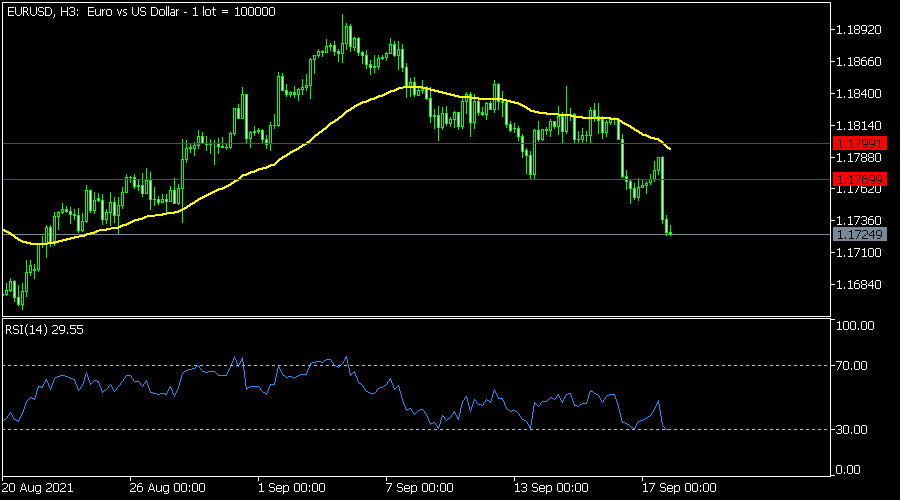
The EURUSD pair declined sharply as global risks rose. It declined to a low of 1.1725, which was the lowest level since August. On the four-hour chart, the pair moved below the 25-day and 50-day moving averages while the Relative Strength Index (RSI) dropped close to the oversold level. It also moved below the neckline of the head and shoulders pattern. Therefore, the pair will likely keep falling as bears target the key support at 1.1650.
USDCHF
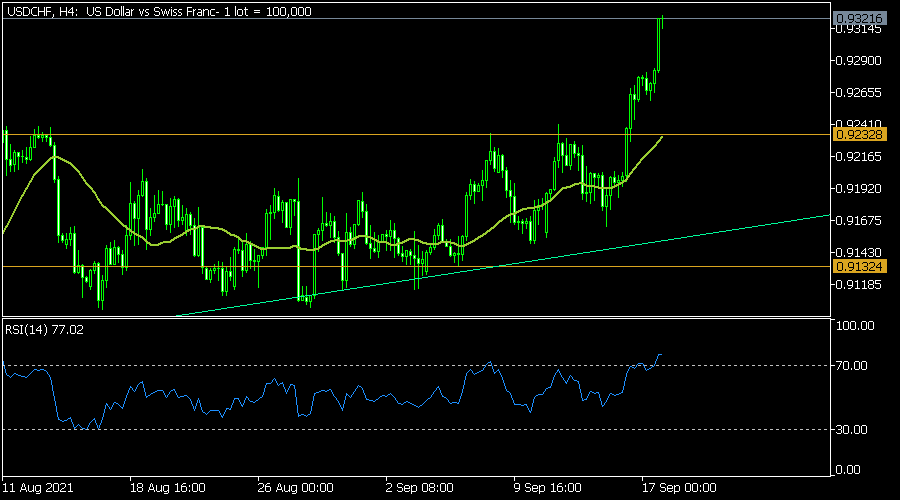
The USDCHF pair held steady as investors refocused on the upcoming Fed and SNB interest rate decisions. The pair rose to 0.9321, which was substantially higher than all moving averages. It also crossed the key resistance level at 0.9235, which was the highest point in the past few months. It was also the upper side of the ascending triangle pattern. Therefore, the pair will likely keep rising as investors target the key resistance at 0.9400.
GBPUSD
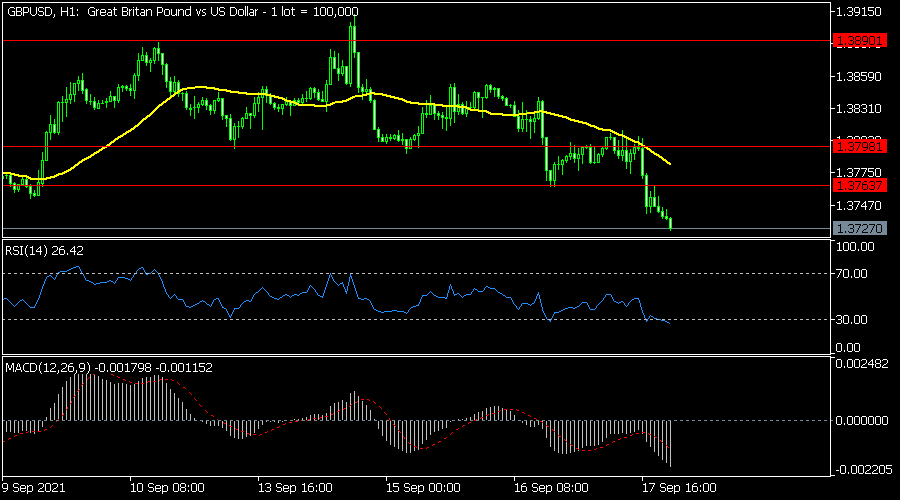
The GBPUSD pair declined to 1.3727, which was the lowest level since August. On the hourly chart, the pair managed to move below the key support levels at 1.3763 and 1.3798. It also moved below the Ichimoku cloud and the moving averages. The pair will likely remain under pressure as bears target the key support level at 1.3650.
Daily Technical Analysis
EUR/USD
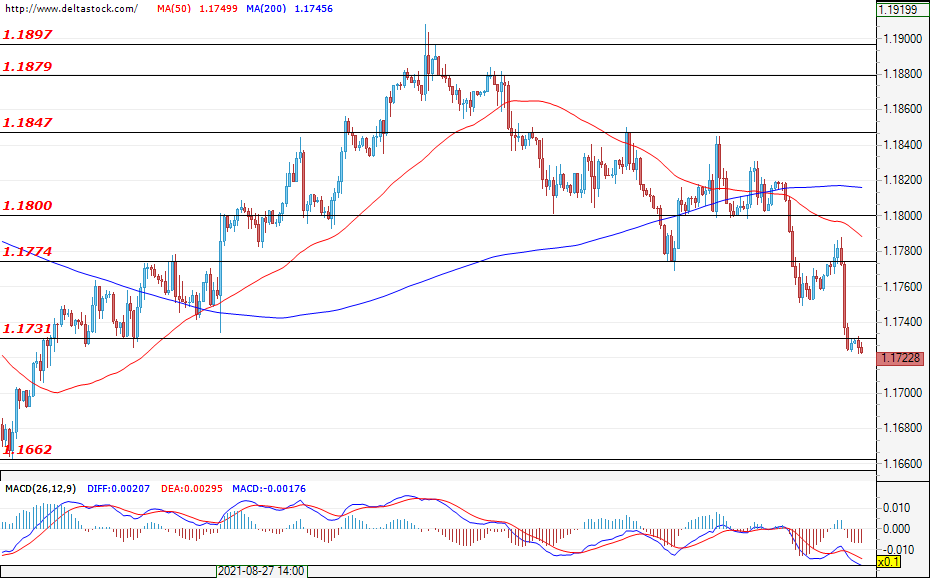
Current level - 1.1722
The dollar continues to appreciate against the common European currency and, at the time of writing, the currency pair is confirming the breach of the support level at 1.1731. If confirmed, the breach would increase the downtrend's momentum, leading the pair towards a test of the next support levels at 1.1700 and at 1.1662. In the positive direction, the first resistance level for the pair is found at 1.1774. This week, investors will focus on the Federal Reserve interest rate decision (Wednesday; 18:00 GMT) and on the data for the initial jobless claims for the U.S. (Thursday; 12:30 GMT).
| Resistance | Support | ||
| intraday | intraweek | intraday | intraweek |
| 1.1774 | 1.1847 | 1.1700 | 1.1662 |
| 1.1800 | 1.1900 | 1.1662 | 1.1600 |
USD/JPY
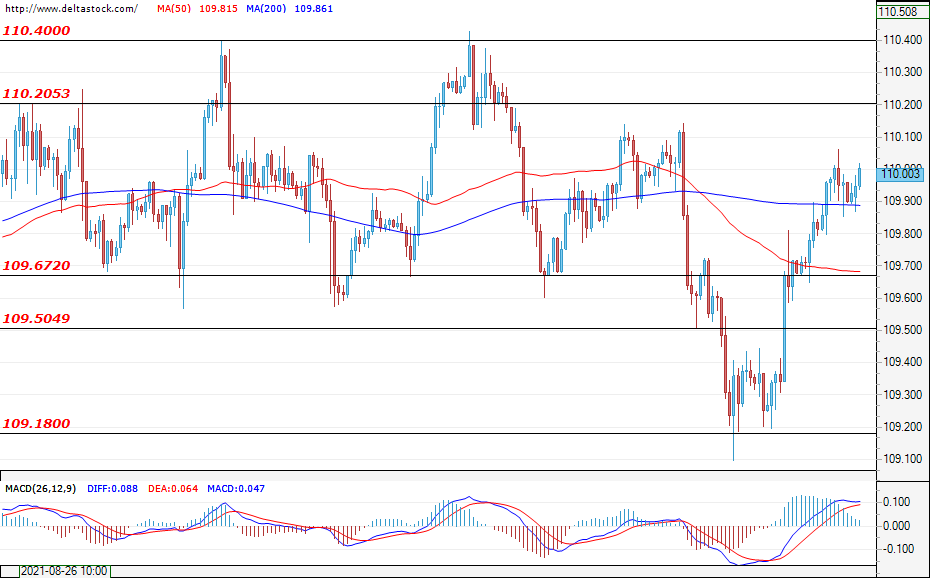
Current level - 110.00
The Ninja has been trading in the narrow range between 109.58 and 110.20 for more than two weeks now and, at the time of writing, it is headed towards a test of the upper border of the range. A possible breach of this level would lead the bulls towards a test of the next resistance levels of 110.40 and 110.78. If the test at 110.20 fails, then we'll most likely witness another couple of days of range-bound trading. A spike in volatility is expected during the announcement of the Bank of Japan interest rate decision (Wednesday; 02:30 GMT).
| Resistance | Support | ||
| intraday | intraweek | intraday | intraweek |
| 110.20 | 110.67 | 109.67 | 109.18 |
| 110.40 | 111.00 | 109.50 | 108.50 |
GBP/USD
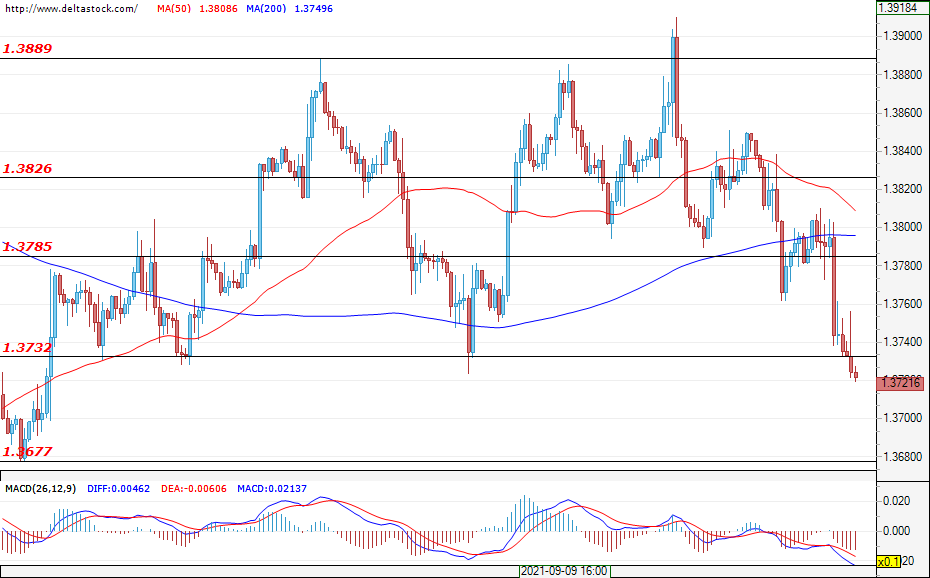
Current level - 1.3721
The Ninja has been trading in the narrow range between 109.58 and 110.20 for more than two weeks now and, at the time of writing, it is headed towards a test of the upper border of the range. A possible breach of this level would lead the bulls towards a test of the next resistance levels of 110.40 and 110.78. If the test at 110.20 fails, then we'll most likely witness another couple of days of range-bound trading. A spike in volatility is expected during the announcement of the Bank of Japan interest rate decision (Wednesday; 02:30 GMT).
| Resistance | Support | ||
| intraday | intraweek | intraday | intraweek |
| 1.3785 | 1.3890 | 1.3677 | 1.3677 |
| 1.3826 | 1.4000 | 1.3600 | 1.3600 |
USD/CAD Bulls Could Prevail
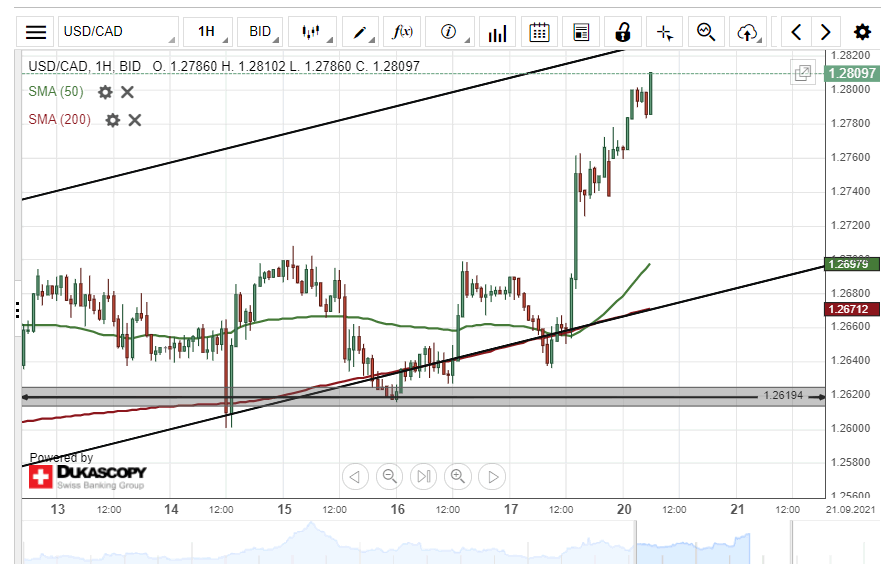
Upside risks pressured the USD/CAD currency pair on Friday. As a result, the US Dollar edged higher by 128 pips or 1.01% against the Canadian Dollar during Friday's trading session.
Everything being equal, the exchange rate could continue to edge higher. A breakout through the upper boundary of an ascending channel pattern could occur within this session.
However, if the channel pattern holds, the currency exchange rate could make a brief pullback towards the 1.2750 level during Monday's trading session.