

Sample Category Title
BOE Preview – Awaiting Signals to Exit
The focus of this week's BOE is whether the result of the policy review would be revealed. In particular, whether there will be guideline on BOE's exit sequence of QE and record low policy rate. Meanwhile, economic projections in reflection of the economic developments since the June would also be closely watched.
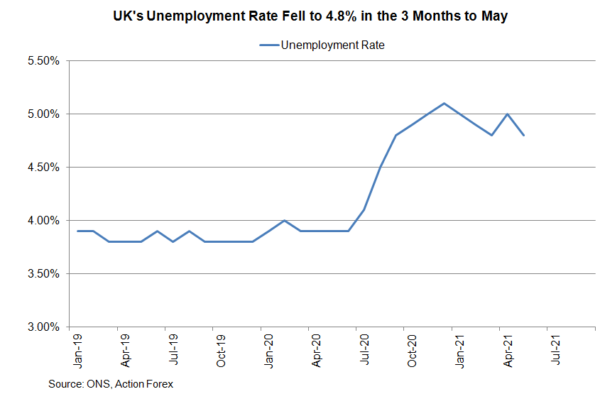
Economic data released since the last meeting have been mixed. Yet, they should not derail BOE's upbeat outlook. The unemployment rate steadied at 4.8% in the three months through to May. ONS’ data also suggests that the number of payrolls increased +356K in June to 28.9M. That said, the figure remains -206K below pre-pandemic levels. The ONS also added that some regions, for the first time since the beginning of the pandemic, are now above pre-pandemic (February 2020) levels. Inflation accelerated with the headline CPI rising to +2.5% y/y in June, beating consensus of +2.2% and May’s +2.1%. Core CPI also rose to +2.3% from +2% in May. Headline CPI has exceeded BOE’s June projection of +1.7%.

On the flip side, PMI indices revealed a slowdown in economic activities. The manufacturing PMI dropped -3.5 points to 60.4 in July. Output and new order growth moderated to lowest in 4 month. As suggested in the accompanying report, the slowdown was driven by supply chain delays (including resources and labors). The services PMI also fell to a 4-month low of 59.6 in July, from 62.4 a month ago. Again, the biggest drag was labor shortage. The reports show that the slowdown was mainly driven by the supply side while demand remained resilient.
Against this backdrop, we expect policymakers to remain upbeat about the economic outlook. Upgrades in the near-term GDP growth and inflation forecasts are likely. Although policymakers are likely to maintain the view that the current strong inflation is transitory, an upward revision to the inflation forecasts is inevitable. Recall that in the June minutes, the members noted that inflation would likely "exceed 3% for a temporary period". Some officials since the June meeting have signaled that the central bank’s expectations for peak inflation could be "well over 3%" to as high as 4%. We expect, following the June CPI data, the BOE would forecast that peak inflation could reach around 3.5% y/y.
On the monetary policy, the market anticipates that the central bank could announce at this week's meeting the result of the strategic policy review. The focus is the tightening sequence on balance sheet reduction and rate hike. Concerning the policy decision for the August meeting, we expect a unanimous vote to keep the Bank Rate unchanged at 0.1%. The decision to maintain QE purchases at 895B pound would be more divided. We expect Michael Saunders and Dave Ramsden to vote for an early end to the program. At the May and June meetings, the now-departed Chief Economist, Andy Haldane, was the only member dissenting to leave the size of QE purchases unchanged.
BoE Policy Meeting Preview
The need for emergency stimulus measures is receding but the BoE is unlikely to taper QE at this meeting. Still, the BoE may be unable to prevent the pound from appreciating, especially if there are a couple of dissenters at Thursday's MPC meeting or if the Bank unexpectedly provides hints about when tapering will begin.
Inflation expected to jump to 3.9% - NIESR
The need for emergency stimulus measures by the Bank of England are receding fast as incoming economic data continues to point to strong recovery and inflationary pressures are continuing to rise. Indeed, Britain’s respected independent economic research institute, NIESR, expects inflation to climb to 3.9% in early 2022. But like central bankers elsewhere in the developed world, Governor Andrew Bailey and his MPC colleagues are still seen calling for patience on scaling back QE on Thursday.
Hawks a bit more vocal at the BoE
The UK economy has been growing strongly in recent months as lockdown measures eased thanks to the rapid pace of vaccinations and previous lockdown helping to stem the spread of the virus. Although the delta variant has been spreading, new cases have been falling back in more recent days. This is unlikely to have hurt economic activity since all legal restrictions were lifted for England in a meaningful way. As a result, the Bank of England has become increasingly vocal about tapering QE, and the pound has responded by rising across the board. BoE’s Michael Saunders recently said that it "may become appropriate fairly soon to withdraw some stimulus." Saunders said that would be appropriate so long as economic activity and inflation indicators remain in line with recent trends, and downside risks to growth and inflation do not rise significantly. The hawkish comments from Saunders and those from Ramsden before have led to some speculation that the August MPC meeting could be a live one.
Why Bailey might call for patience
However, I don’t think the BoE will move that soon to end asset purchases, but it could nevertheless prepare the market for tapering in the months ahead. This is because inflation is expected to fall back after rising well above the Bank’s 2% target as the impact of temporary factors putting upward pressure on prices recede. What’s more, many economists, including those at the BoE, envisage a jump in UK unemployment rate as we approach the end of furlough, with some 1.9 million people still on the scheme. You also have the potential for new, deadlier, variants of Covid to emerge, while Delta continues to wreak havoc around the world.
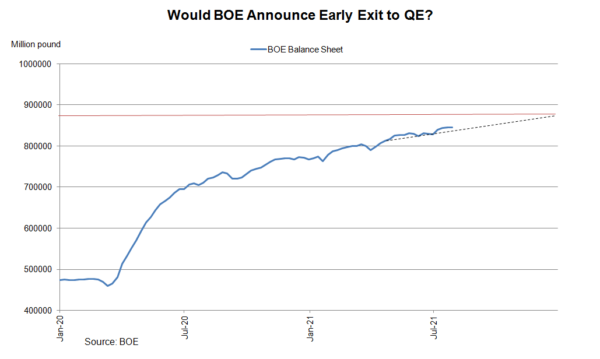
Against this backdrop, the BoE is not going to be in hurry to start the normalisation process of its monetary policy, even if the UK economic growth this year is expected to surpass the G7. Therefore, the central bank’s £875 billion bond buying programme is likely to remain intact. Needless to say, interest rates won’t be hiked either.
Could the pound still find support on BoE inaction?
Absolutely. If we see a couple of dissenters at the MPC, this could trigger a rally in Sterling as it will increase the probability of a sooner-than-expected taper in the future policy meetings. Also, there’s the possibility the BoE could provide some insights about how it will eventually reduce its QE programme, which the market may interpret as a hawkish sign.
So, while QE in unlikely to be tapered at this meeting, this outcome is likely to have been priced in. Therefore, any hawkish signs that might emerge from the rate statement or meeting minutes could still underpin the pound, especially against currencies where the central bank is expected to remain dovish longer than the BoE, such as the as euro.
Thus, the EUR/GBP may finally break below that 0.8500 key support. The next bearish targets below this hurdle will be the liquidity resting beneath April’s low at 0.8470ish, followed by last year’s low that was made in February at 0.8280ish, which happens to be very close to the 2019’s low at 0.8277. In other words, big levels are at risk of being taken out. The Chunnel just needs a push to get us there.
However, in the event of a dovish surprise, it would be best to look at selling the pound against a stronger currency than the euro.

GBP/USD Shorts Are Possible Before The BoE
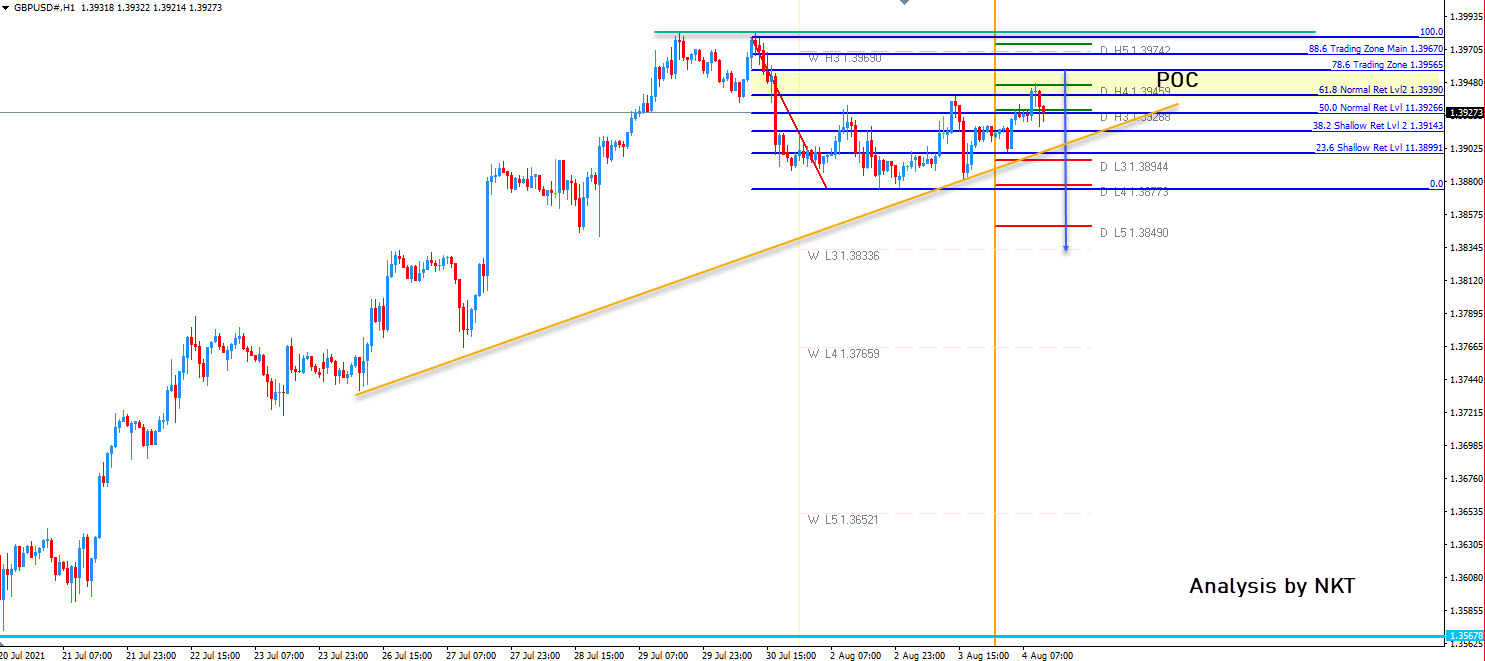
The GBP/USD is trying to make a push lower. This could be profit-taking before the BOE tomorrow.
As long as the price is kept below 1.3990, we should see a move down. 1.3645 looks bearish. Multiple confluence spots are there supporting the bears. Targets are 1.3894 all the way down to 1.3875. Only if the price breaks 1.3990, bulls will have the advantage. Watch for BOE's decision.
NZDUSD’s Bearish Tilt Offset By Upbeat Job Results
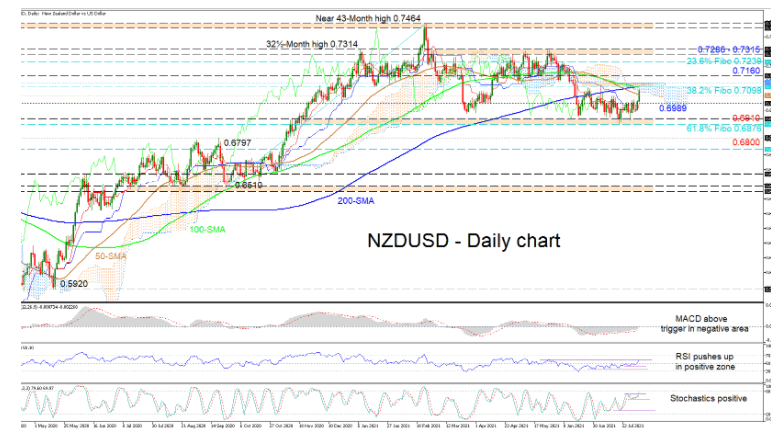
NZDUSD recently acquired a surge of positive momentum, resulting from stronger New Zealand job numbers for Q2, which has managed to somewhat neutralise the neutral-to-bearish bias in the pair. The falling 50- and 100-day simple moving averages (SMAs) and their recently completed bearish crossovers of the 200-day SMA are endorsing downward price action, in spite of the latest neutralising developments in the pair.
The Ichimoku lines are indicating a drop in negative forces, while the short-term oscillators are reflecting the upbeat mood in the price. The MACD, in the negative region, is above its red trigger line and is tackling the zero threshold, while the RSI is improving in the bullish zone. The stochastic oscillator is sustaining a positive charge as it approaches the 80 level, promoting additional buying interest in the pair.
To the upside, preliminary friction could emanate from the resistance zone shaped between the 0.7098 level, which happens to be the 38.2% Fibonacci retracement of the up leg from 0.6510 until 0.7464, and the Ichimoku cloud's upper surface of 0.7120. Pushing above the converged 100- and 200-period SMAs around 0.7100 and the cloud, the price could then hit the 0.7160 nearby high. Additional optimism in the pair may result in the 23.6% Fibo of 0.7239 testing buyers' efforts to conquer the neighbouring ceiling of 0.7286-0.7315.
Otherwise, if sellers retake control and drive the price below the 50-period SMA at 0.7045, the 0.7000 handle - reinforced by the Ichimoku lines from beneath at 0.6989 - could prove to be a durable support. However, diving below this obstacle, sellers may challenge the support boundary from 0.6910 until the 61.8% Fibo of 0.6876. Should negative pressures gain a clear advantage, they could then sink the pair towards the 0.6800 border.
Summarizing, NZDUSD is ranging between the 61.8% Fibo of 0.6876 and the cloud's upper band of 0.7120. A break either below or above these respective limits could reveal a clearer price direction in the near-term timeframe.
The Analytical Overview Of The Main Currency Pairs
The EUR/USD currency pair
Technical indicators of the currency pair:
Prev Open: 1.1867
Prev Close: 1.1864
% chg. over the last day: -0.03%
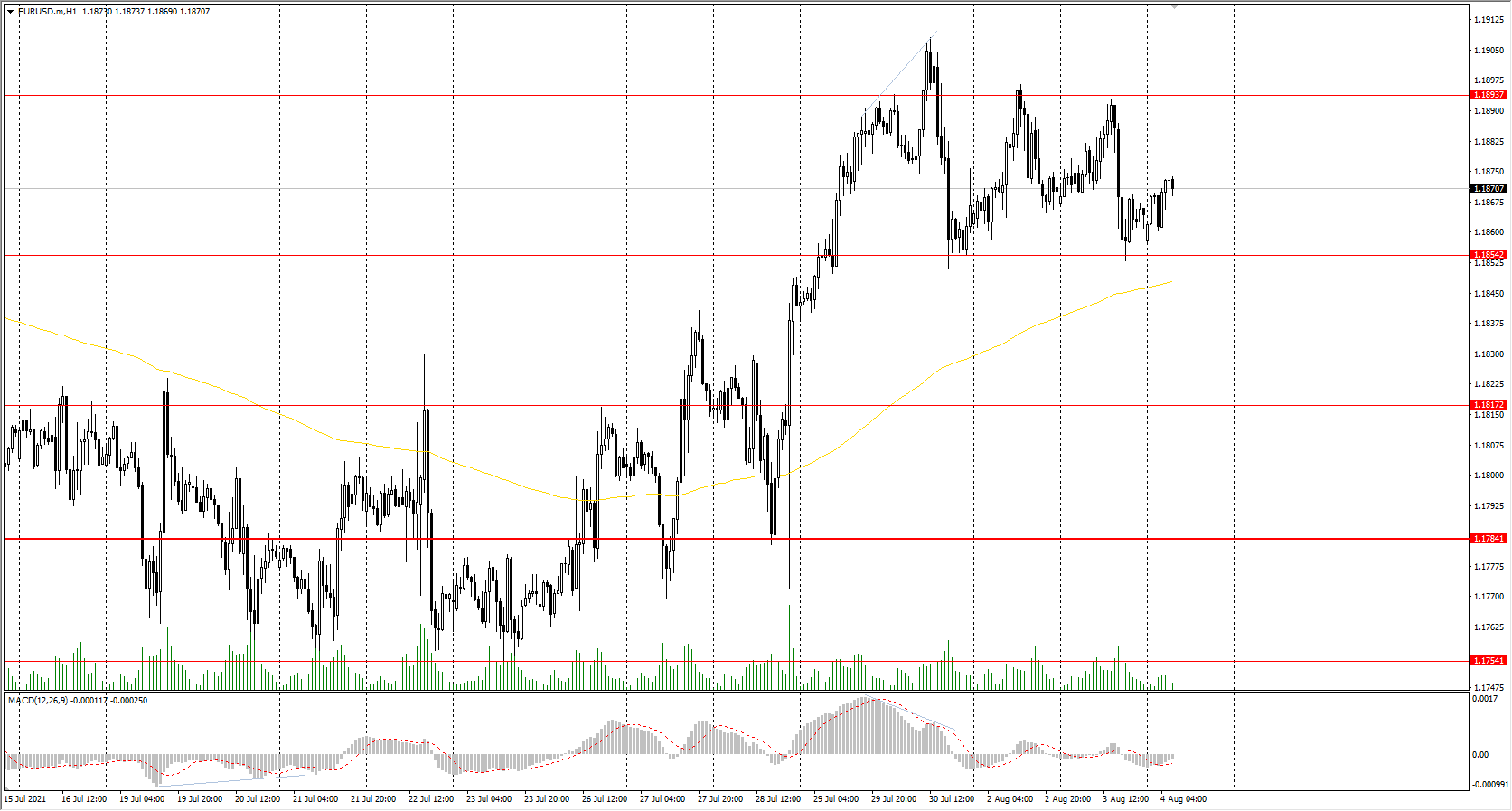
The situation with the EUR/USD currency pair has not changed compared to the previous day. Yesterday, during the European session the quotes were slowly growing, but during the American session the price sharply fell to the opening level of the day. From a fundamental point of view, the European economy demonstrates stable recovery dynamics now.
Trading recommendations
Support levels: 1.1854, 1.1817, 1.1784, 1.1754, 1.1609
Resistance levels: 1.1894, 1.1934, 1.1969
From a technical point of view, the general trend of the EUR/USD currency pair is bullish. The price is trading above the moving average now; the MACD indicator has become inactive. The price has consolidated and is in the middle of the trading range now. Under such market conditions, it’s better to consider intraday trading. Buy positions should be considered only after a pullback to the support level. Sell deals should be considered from the resistance levels, but only with short targets.
Alternative scenario: if the price breaks through the 1.1784 support level and fixes below, the mid-term uptrend is likely to be broken.
News feed for 2021.08.04:
- Eurozone Services PMI (m/m) at 11:00 (GMT+3);
- US ADP Non-Farm Employment Change (m/m) at 15:15 (GMT+3);
- US ISM Services PMI (m/m) at 17:00 (GMT+3).
The GBP/USD currency pair
Technical indicators of the currency pair:
Prev Open: 1.3873
Prev Close: 1.3913
% chg. over the last day: +0.29%
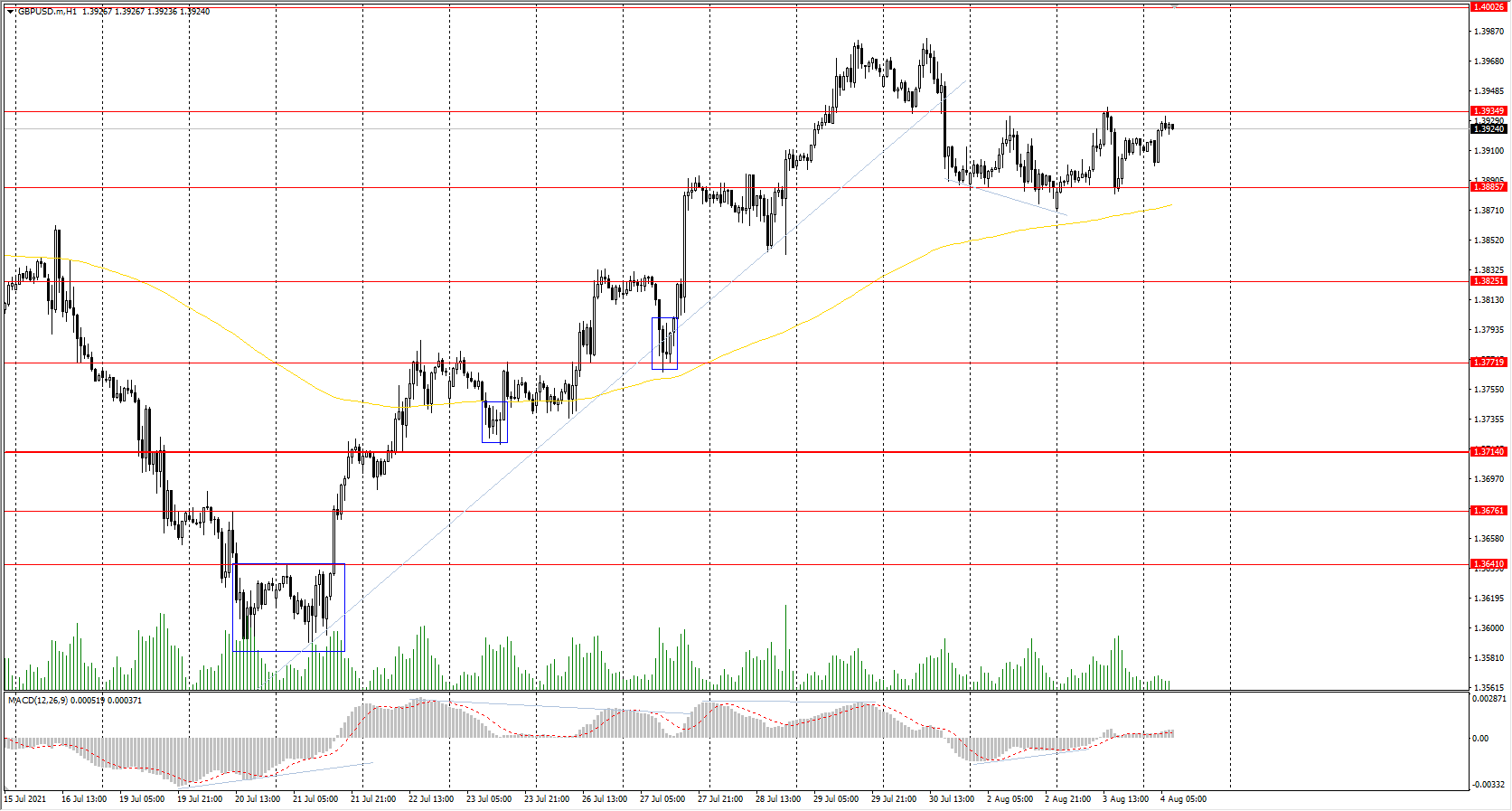
The situation with the GBP/USD currency pair is very similar to the euro. The price has consolidated and formed a trading range. Unlike the euro, the British pound gained a more confident position. But the probability of a corrective wave down is high with both instruments now.
Trading recommendations
Support levels: 1.3886, 1.3825, 1.3772, 1.3714, 1.3676 ,1.3641, 1.3614, 1.3525
Resistance levels: 1.3935, 1.4002, 1.4075, 1.4101
On the hour timeframe, the trend of the GBP/USD currency pair is bullish. The MACD indicator has become positive again, but the price is in the middle of a corridor. Under such market conditions, traders are better to look for buy trades, after buyers show initiative. There are no optimal points for sell positions right now. Traders can search for intraday sell entries from the resistance level with short targets, but they should understand that it will be trading against the main trend.
Alternative scenario: if the price breaks through the 1.3714 support level and consolidates below, the bearish scenario is likely to resume.
News feed for 2021.08.04:
- UK Services PMI (m/m) at 11:30 (GMT+3).
The USD/JPY currency pair
Technical indicators of the currency pair:
Prev Open: 109.29
Prev Close: 109.02
% chg. over the last day: -0.25%
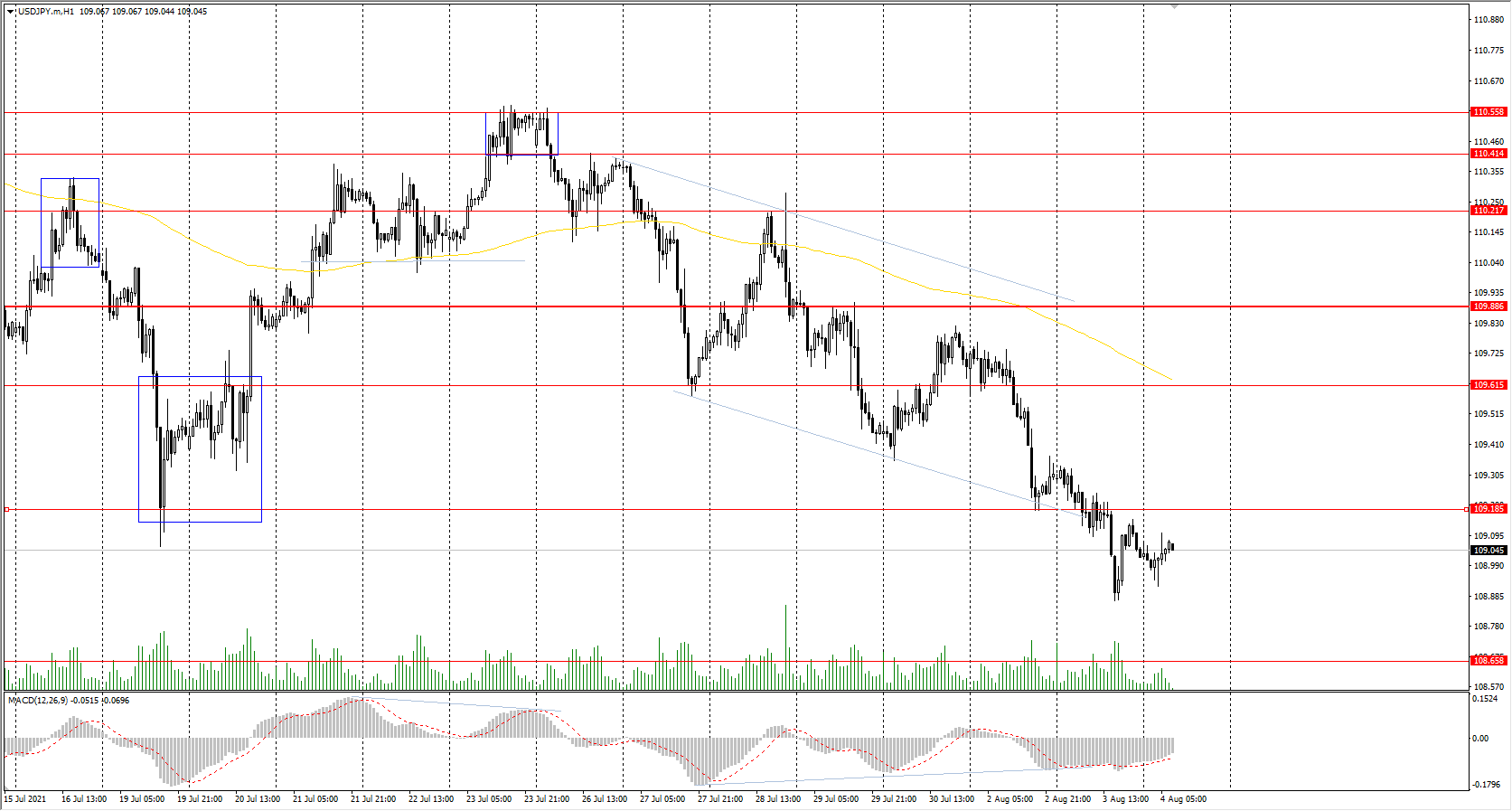
The USD/JPY currency pair is declining. Yesterday, the quotes decreased by another 0.25%. The strengthening of the Japanese currency is associated with the growth of the futures on the Japanese yen (inverse correlation).
Trading recommendations
Support levels: 108.65
Resistance levels: 109.19, 109.61, 109.88, 110.22, 110.41, 110.56
The main trend of the USD/JPY currency pair is bearish. The price is trading below the moving average now, but it has deviated strongly from the middle line. Considering the divergence on the MACD indicator, traders can look for buy positions, but only after buyers’ initiative. For sell positions, it is necessary to wait for a pullback to the resistance level, which is close to the moving average.
Alternative scenario: if the price rises above 109.88, the uptrend is likely to be resumed.
The USD/CAD currency pair
Technical indicators of the currency pair:
Prev Open: 1.2503
Prev Close: 1.2532
% chg. over the last day: +0.23%
The Canadian dollar is highly dependent on the dollar index and the oil price dynamics. Oil prices continued to fall yesterday, which caused a decline in the Canadian dollar futures and the growth of USD/CAD quotes (inverse correlation). Analysts expect some stabilization in oil prices now, but today traders should pay attention to crude oil inventories data.
Trading recommendations
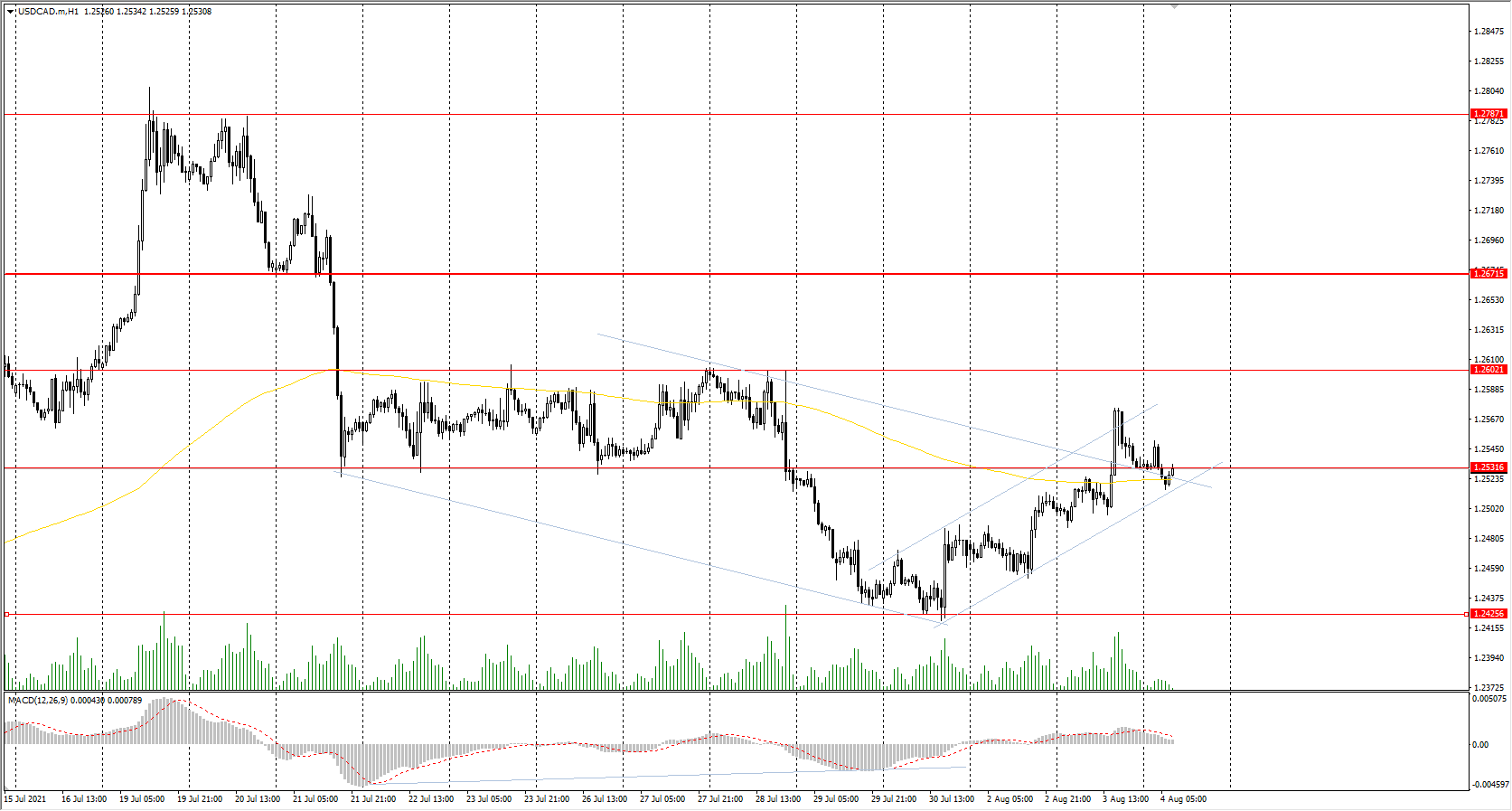
Support levels: 1.2531, 1.2425, 1.2370, 1.2312
Resistance levels: 1.2602, 1.2671, 1.2787, 1,2951
Considering technical analysis, the USD/CAD trend is bearish. The MACD indicator has become inactive again. Under such market conditions, traders should look for sell positions from the resistance levels after sellers show initiative. Buy positions can be considered only throughout the day and only with short targets.
Alternative scenario: if the price breaks through the 1.2671 resistance level and fixes above, the uptrend is likely to be resumed.
Investors Are Trying To Estimate The Potential Risks For The Global Economy With The Spread Of The Delta Covid-19...
The US stock market ended the trading session in the green zone due to good corporate reporting. The oil and gas, healthcare, and industrial sectors were the growth leaders. Dow Jones index increased by 0.80%, S&P 500 added 0.82% and Nasdaq increased by 0.55%. At the same time, there is an increase in cases of COVID-19 in the United States. Many local authorities have reintroduced mandatory wearing of masks indoors, and some authorities want to introduce mandatory forced vaccination. On Friday, the US Labor Department will release its July unemployment report. Experts are predicting an increase in the number of jobs. If the growth of the number of US jobs in July and August reaches about 800,000, the American labor market will be close to the pre-crisis level. It can make the Fed announce the reduction of the QE program in September. However, US business activity indices show that the peak of economic growth is over, and no significant increase in jobs should be expected.
European stock indices closed without a single trend yesterday. British FTSE 100 added 0.34%, French CAC 40 jumped by 0.72%, while German DAX decreased by 0.09%. There is no unified correlation between the European and the US indices now. Over 60% of the adult population has been fully vaccinated (2 doses) against COVID-19 in the European Union. These numbers put Europe among the world leaders in vaccination. British Petroleum reported a net profit of $3.12 billion in the second quarter of 2021. Last year in the same period, the company had a net loss of $16.85 billion.
Oil prices fell for the third day in a row as worries about more Delta cases around the world worsened the prospects for fuel demand. The American Petroleum Institute (API) estimated crude oil inventories yesterday. Preliminary data for last week showed inventories fell by 879,000 barrels. The government report on US crude oil inventories is expected today. Iran denied the accusations that it was involved in the second attack on an oil tanker off the coast of the United Arab Emirates on Tuesday. Britain and the US continue to hold the country responsible for an earlier attack on a tanker in the region on Thursday last week.
December gold futures decreased by 0.48% yesterday, hitting $1.813 a troy ounce. The situation in the precious metals market remains mixed. From the fundamental point of view, with the soft monetary policy and big volume of buying government bonds, the prices for gold and silver should grow. But it does not happen, suggesting that investors have stopped viewing gold as a defensive asset.
Shares of China's largest video and online gaming companies fell after the Chinese State edition, Economic Information Daily, published an article comparing online gaming to "opium" and warning about widespread dependence on games among children. The report also argues that more than half of China's children are nearsighted and that online games have a negative impact on their education. Chinese authorities intend to fight gaming addiction among children. Chinese online giant Alibaba reported strong figures for last quarter but lowered its revenue estimates for the next quarter because of slowing e-commerce growth and ongoing repressive measures by the authorities. At the same time, Beijing banned train arrivals from more than 20 Chinese provinces as the outbreak of the Covid-19 Delta variant in the country spreads further.
Main market quotes:
- S&P 500 (F) 4,423.15 +35.99 (+0.82%)
- Dow Jones 35,116.40 +278.24 (+0.80%)
- DAX 15,555.08 -13.65 (-0.09%)
- FTSE 100 7,105.72 +24.00 (+0.34%)
- USD Index 92.07 0.0 (0.0%)
Important events for today:
- New Zealand Unemployment Rate (q/q) at 01:45 (GMT+3);
- Australia Retail Sales (m/m) at 04:30 (GMT+3);
- Eurozone Services PMI (m/m) at 11:00 (GMT+3);
- UK Services PMI (m/m) at 11:30 (GMT+3);
- US ADP Non-Farm Employment Change (m/m) at 15:15 (GMT+3);
- US ISM Services PMI (m/m) at 17:00 (GMT+3);
- US Crude Oil Reserves (w/w) at 17:30 (GMT+3).
Concerns Over Delta Spread Linger, European PMI Services Data Revised Lower
Notes/Observations
- Major European PMI Services remain in expansion territory (Beats: UK; Misses: Euro Zone, Germany, France, Italy, Spain).
- Worsening amid the spread of the Delta variant helping to keep bond yields capped for the time being over recovery concerns.
Asia
- Australia July Final PMI Services: 44.2 v 44.2 prelim (confirmed its 1st contraction in 11 months).
- Australia Jun Final Retail Sales M/M: -1.8% v -1.8%e; Q/Q: .8% v 0.8%e.
- China July Caixin PMI Services: 54.9 v 50.5e (15th consecutive expansion).
- Japan July Final PMI Services: 47.4 v 46.4 prelim (confirmed its 18th month of contraction).
- New Zealand Q2 Unemployment rate 4.0%vV 4.4%e.
Coronavirus
- Total global cases 200.3M (+0.3% d/d); total deaths: 4.3M (+0.2% d/d).
Europe
- Times Shadow Committee reiterated Bank of England (BOE) should cancel the final £50.0B of QE, BOE should deliver clear signal that it was concerned about rising inflation.
Americas
- Biden administration announced a targeted Federal eviction ban to replace the current and last until Oct 3rd.
Energy
- Weekly API Crude Oil Inventories: -0.9M v -4.7M prior.
- Tanker ship Asphalt Princess said to be detained near Fujairah. Iranian-backed forces believed to have seized the tanker.
- Iran Revolutionary Guards spokesperson denied that Iranian forces or allies were involved in ship incident off UAE coast; Called it a pretext for 'hostile action' against Iran.
Speakers/Fixed income/FX/Commodities/Erratum
Equities
- Indices [Stoxx600 +0.49% at 467.68, FTSE +0.25% at 7,123.75, DAX +0.64% at 15,654.35, CAC-40 +0.46% at 6,754.56, IBEX-35 -0.37% at 8,740.00, FTSE MIB +0.17% at 25,399.50, SMI +0.18% at 12,185.66, S&P 500 Futures -0.08%].
- Market Focal Points/Key Themes: European indices open higher across the board and stayed upbeat as the session progressed (notable exception being the IBEX); technology and consumer discretionary sectors among those leading to the upside; while underpeformers include health care and energy; Thales enters negotiations to sell GTS unit; Rolls Royce confirms sale of Bergen Engines; financials weighed on after Commerzbank results disappoint; THG raises guidance after acquiring Cult Beauty; earnings expected during the upcoming US session include The New York Times, General Motors, Patrizia, Uber.
Equities
- Consumer discretionary: Hugo Boss [BOSS.DE] +2.5% (earnings; targets).
- Financials: Commerzbank [CBK.DE] -4% (earnings).
- Industrials: Thales [HO.FR] +2% (confirms discussions; adjusts outlook).
- Materials: Ferrexpo [FXPO.UK] -5% (earnings), Rheinmetall [RHM.DE] -1% (earnings).
Speakers
- ECB's Kazaks (Latvia) stated that the new forward guidance was not tying ECB's hands as language could change; ECB decision on PEPP future in Sept would be premature as ECB to give reasonable warning before ending Pandemic Bond Buying program.
- Poland Central Bank's Lon stated that it was still too early to begin raising interest rates but could consider raising rates after Nov Staff Projections.
- Thailand Central Bank Policy Statement noted that the vote was 4-2 to keep policy steady. Financial measures were more helpful than cutting the key rate. Policy to remain accommodative and prepared to use policy tools as appropriate. Saw significant downside risks to outlook and noted that fiscal policy and exports to support the economy.
Currencies/Fixed income
- EUR/USD drifted lower as the major European PMI Services data for July were revised lower although at multi-year highs.
- Worsening amid the spread of the Delta variant helping to keep bond yields capped for the time being over recovery concerns. Italy 2-year govt bond yield trading below the ECB Deposit rate of -0.50% for the 1st time ever.
Economic data
- (RU) Russia July PMI Services: 53.5 v 55.7e (7th straight expansion); PMI Composite: 51.7 v 55.0 prior.
- (SE) Sweden July PMI Services: 69.1 v 67.9 prior; PMI Composite: 68.0 v 67.2 prior.
- (HU) Hungary Jun Retail Sales Y/Y: 5.8%4.0%e.
- (TH) Thailand Central Bank (BoT) left the Benchmark Interest Rate unchanged at 0.50% (as expected).
- (ES) Spain July Services PMI: 61.9 v 63.2e (4th month of expansion); Composite PMI: 61.2 v 62.2e.
- (ZA) South Africa July PMI (whole economy): 46.1 v 49.0e (1st contraction in 10 months).
- (IT) Italy July Services PMI: 58.0 v 58.7e (3rd month of expansion and highest reading since July 2007); Composite PMI: 58.6 v 59.5e.
- (FR) France July Final Services PMI: 56.8 v 57.0e (confirmed 4th month of expansion); Composite PMI: 56.6 v 56.8e.
- (DE) Germany July Final Services PMI: 61.8 v 62.2e (confirmed 3rd month of expansion and a record high);; Composite PMI: 62.4 v 62.5e.
- (EU) Euro Zone July Final Services PMI: 59.8 v 60.4e (confirmed 4th month of expansion and highest since Jun 2006); Composite PMI: 60.2 v 60.6e.
- (IT) Italy Jun Retail Sales M/M: 0.7% v 1.9%e; Y/Y: 7.7% v 13.6% prior.
- (UK) July Final Services PMI: 59.6 v 57.8e (confirmed 5th month of expansion); Composite PMI: 59.2 v 57.7e.
- (UK) July Official Reserves Changes: +$1.0B v -$2.2B prior.
- (FR) France Jun YTD Budget Balance: -€131.3B v -€118.8B prior.
- (EU) Euro Zone Jun Retail Sales M/M: 1.5% v 1.7%e; Y/Y: 5.9% v 4.4%e.
- (NO) Norway July House Prices M/M: -1.1% v -0.2% prior; Y/Y: 8.5% v 10.1% prior.
Fixed income issuance
- (VN) Vietnam sold total VND 7.3T vs. VND6.5T target in 5-year, 10-year and 15-year bonds.
- (IN) India sold total INR 170B vs. INR170B indicated in 3-month, 6-month and 12-month bills.
- (DK) Denmark sold total DKK4.69B in 2024, 2030 and 2031 DGB bonds.
- (SE) Sweden sold total SEK10B vs. SEK10B indicated in 3-month and 9-month bills.
Looking ahead
- (EG) Egypt July Gross Official Reserves: No est v $40.6B prior; Net Reserves: No est v $40.6B prior.
- 05:25 (EU) Daily ECB Liquidity Stats.
- 05:30 (DE) Germany to sell €4.0B in 0% Oct 2026 BOBL.
- 05:30 (GR) Greece Debt Agency (PDMA) to sell 13-Week Bills.
- 05:30 (HU) Hungary Debt Agency (AKK) to sell 12-month Bills.
- 05:30 (ZA) South Africa announces details of next bond auction (held on Tuesdays).
- 06:45 (US) Daily Libor Fixing.
- 07:00 (RU) Russia to sell 2031 and 2041 OFZ Bonds.
- 07:00 (US) MBA Mortgage Applications w/e July 30th: No est v 5.7% prior.
- 07:00 (MX) Mexico July Domestic Vehicle Sales: No est v 87.1K prior.
- 07:30 (TR) Turkey July Real Effective Exchange Rate (REER): No est v 59.77 prior.
- 08:00 (UK) Daily Baltic Dry Bulk Index.
- 08:15 (US) July ADP Employment Change: +683Ke v +692K prior.
- 08:30 (CA) Canada Jun Building Permits M/M: 6.3%e v -14.8% prior.
- 08:30 (US) Treasury Quarterly Funding Announcement.
- 09:00 (BR) Brazil July PMI Services: No est v 53.9 prior; PMI Composite: No est v 54.6 prior.
- 09:45 (US) July Final Markit Services PMI: 59.8e v 59.8 prelim; Composite PMI: # v 59.7prelim.
- 09:45 (UK) BOE to buy £1.147B in APF Gilt purchase operation (7-20 years).
- 10:00 (US) July ISM Services Index: 60.5e v 60.1 prior.
- 10:00 (US) Fed’s Clarida at Peterson Institute Event.
- 10:30 (US) Weekly DOE Oil Inventories.
- 12:00 (CA) Canada to sell C$5.5B in 1.5% 2031 Bonds.
- 17:30 (BR) Brazil Central Bank (BCB) Interest Rate Decision: Expected to raise the Selic Target Rate by 100bps to 5.25%.
- 20:01 (IE) Ireland July PMI Services: No est v 63.1 prior; PMI Composite: No est v 63.4 prior.
- 20:30 (AU) Australia to sell combined A$2.0B in 3-month and 6-month bills.
- 21:00 (PH) Philippines July CPI Y/Y: 4.0%e v 4.1% prior.
- 21:30 (AU) Australia Jun Trade Balance: A$10.5Be v A$9.7B prior; Exports M/M: 6%e v 6% prior; Imports M/M: 4%e v 3% prior.
- 23:30 (TH) Thailand July CPI M/M: 0.4%e v 0.4% prior; Y/Y: 0.9%e v 1.3% prior; CPI Core Y/Y: 0.2%e v 0.5% prior.
- (JP) Japan to sell 6-Month Bills.
- 23:35 (JP) Japan to sell CPI Linked 10-Year JGB Bonds.
New Zealand Dollar Rallies
The dollar index had another sideways overnight session, finishing unchanged at 92.07, before edging lower to 92.02 in Asia in directionless trading. The dollar index remains mid-point between its breakout at 92.60 and structural support at 91.50, also home to its 100-day moving average. A break of either 91.50 or 92.60 will signal the dollar’s next directional move.
EUR/USD and GBP/USD edged higher overnight, rising to 1.1870 and 1.3930 in Asia, but remain in range-trading mode ahead of Friday’s US employment data. USD/JPY fell 0.25% to 109.00 overnight as US yields continued to soften. With JGB’s also easing today, USD/JPY has climbed back to 109.10, but as a yield differential play, the risks still favour a test of support at 108.50.
New Zealand job data sends kiwi higher
The morning’s main mover has been the New Zealand dollar, which has spiked 0.60% higher to 0.7060 after stellar unemployment data had markets scrambling to price in an RBNZ rate hike this morning. Markets are also pricing in two more hikes before the year-end, and the kiwi is now set to outperform in the weeks ahead, especially against low yielders like the JPY, AUD and CHF. Against the greenback, the kiwi looks set to test resistance at 0.7100, opening up a further rally targeting 0.7300. AUD/NZD looks like it will test the December 2020 lows at 1.0420 sooner rather than later. A weekly close below 1.0420 targets an extended move lower targeting 1.0000.
The Chinese yuan remains in a holding pattern versus the US dollar at 6.4640 today, and I am not expecting any fireworks before Friday evening. The Malaysian ringgit, Thai baht, and Indonesian rupiah remain under delta-variant and political pressure in the regional space. The fourth member of the fragile four, the Indian rupee, rallied once again overnight, supported by international inflows to the equity market and subdued oil importer buying. USD/INR is approaching support at the 100-day moving average (DMA) at 73.865, and if USD/INR falls through it, the cross will target 73.60. Although fragile three doesn’t sound nearly as good, I may have to review its fragile four membership at that stage.
Could Nonfarm Payrolls Promote September Tapering?
The Federal Reserve clearly reiterated during its policy meeting last week that significant progress in the labor market is a necessary condition to settle the landscape for when it will start to taper its QE bond purchases. Hence, all the attention will be on the Nonfarm payrolls report due this Friday at 12:30 GMT, with investors expecting July’s employment release to outperform June’s numbers. Any bigger surprises could boost the US dollar.
Jobs' growth could strengthen in July
According to forecasts, the US economy added 880k new jobs in early July, slightly more than the 850k addition registered in June, pressing the unemployment rate to a fresh low of 5.7% after the slight rebound to 5.9% previously.
As regards average hourly earnings, they have probably kept a steady speed of 0.3% on a monthly basis but flourished from 3.6% to 3.9% year-on-year partially because of the so-called base effects, and perhaps because of the wage incentives provided by employers such as McDonalds and Papa John’s which aim to solve the scarcity of qualified workers and draw back those who are still living under the generous unemployment benefits.
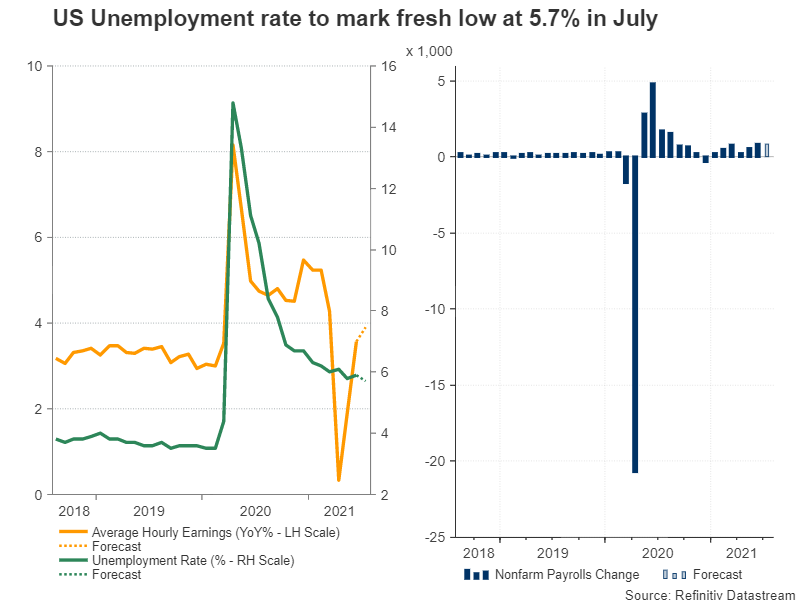
The questions that arise at this point are how long will the Fed delay its bond tapering and when will the desired significant progress in the labor market take place? Despite the increased hiring, there are still some 7 million jobs to recover completely, of which a significant portion has retired and is not expected to return.
Tapering announcement as soon as September likely
Thankfully, Fed speakers came to shed some light on the matter this week. Particularly, Fed Governor Lael Brainard, who is considered a leading candidate to replace Powell If he fails to log a second term in November, foreshadowed fresh clues on the timing of any tapering decisions, saying that September’s employment data could be crucial to assess the rate of progress. Meanwhile, according to another Fed Board Member, Christopher Waller, a 1.6 – 2 million employment increase in July and August could meet the bar for a decision to curtail bond purchases.
In other words, the above suggest that the Fed could put its bond tapering plans in action as soon as September 21-22, or in the best case, in the following policy meeting on November 2-3, after September’s NFP data are released on October 8. Note that the unemployment benefits expire on September 6. Therefore, more people could integrate into the labor market before that day, allowing the Fed to have a clearer view on the economy by then.
The certain thing is that the Fed prefers a smooth transition to monetary tightening to avoid any aggressive declines in bond, stock and FX markets. So, it will probably try to send some hints to prepare investors before making any official announcements, with the Jackson Hole symposium on August 26-28 currently seen an ideal event for Powell to unveil new guidelines around the timing of tapering.
Market reaction
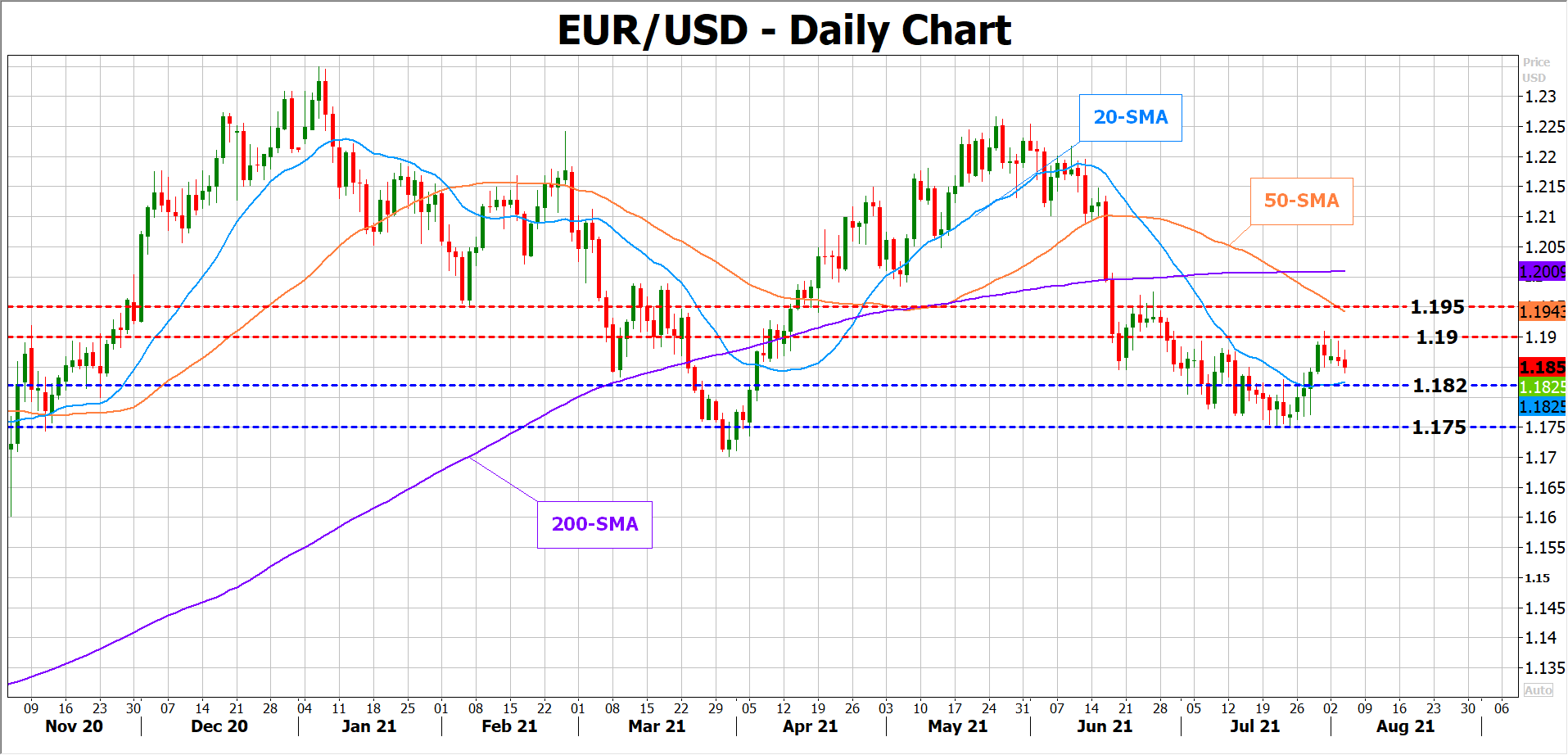
In market reaction, the focus will be on euro/dollar on Friday, which is more sensitive to Fed decisions as the ECB is not expected to adjust its super accommodative policy anytime soon. A stronger-than-expected NFP report could boost the dollar, squeezing the pair towards the 20-day simple moving average (SMA) at 1.1820, while a bigger positive surprise could open the door for the previous low of 1.1752.
Alternatively, if the jobs data miss expectations, signaling that the Fed could delay any tapering of its QE program beyond September, euro/dollar may rebound to fight the 1.1900 ceiling again and meet the 50-day SMA slightly higher at 1.1950.
Dip Buyers Hunt For China Equities
Asia in mixed territory after Wall Street surges
Another day, another record close for Wall Street, as strong corporate earnings and subdued US yields keeps the party going. The S&P 500 rose 0.82%, the Nasdaq climbed 0.55%, while the Dow Jones finished a respectable 0.80% higher. Delta nerves have been pushed to the sidelines once again, and the US Infrastructure Bill continues to make progress, it seems.
In Asia, it has been a mixed day notable for the dip-buyers in China equities. After yesterday’s “spiritual opium” comments from the government press and a new enquiry into auto semiconductors sparked a panicked sell-off in tech heavyweights, the irresistible lure of seemingly cheap China shares has buyers back once again. The Shanghai Composite has risen 0.75%, with the CSI 300 climbing 0.65%. The tail-chasing herd have lifted the Hang Seng by 1.15%. Today’s bargain is tomorrow’s expensive mistake with China at the moment, and the rebalancing between price and regulatory risk still has some way to go, I believe.
Japan’s worsening Covid-19 outlook is weighing on the Nikkei 225 today, which is 0.25% lower, but the Kospi has leapt by 1.15%, with Taipei climbing 0.40%. Singapore has risen by 1.0%, boosted by excellent results from banking heavyweights UOB and OCBC. The Singapore banking sector has long been a favourite, with well run, well-capitalised and digitally savvy incumbents that are well-placed to benefit from both Singapore and the region’s recovery, even if it is slower than hoped. A Singapore Airlines A380 filmed lifting off from desert storage to return home sees the share price 1.40% higher today in the hopes of better times ahead.
Elsewhere, Covid-19 and political turmoil see Kuala Lumpur falling 0.80%, with Malaysia one of my fragile four. Until one of those things changes materially to the positive side, it shall remain there. Jakarta has risen by 0.30%, while Bangkok has eased by 0.40%, with Manila climbing 0.40% and quietly outperforming this week. Australian markets have followed Wall Street higher, as is their want, although the ongoing Covid-19 situation is tempering the bulls. The ASX 200 and All Ordinaries are finishing the day 0.35% higher.
European stock markets should take their cues once again from Wall Street to open higher shortly.