


Key takeaways
- AUD/NZD nears breakout: The pair rallied 1.10% since 6 October 2025, approaching the key long-term resistance at 1.1470.
- RBNZ turns more dovish: The central bank cut its cash rate by 50 bps to 2.5%, signaling openness to further easing to boost demand.
- Yield spread widens: The AU–NZ 10-year bond yield spread expanded to 0.16%, reinforcing bullish momentum for AUD/NZD.
- Technical setup remains strong: Uptrend within a medium-term ascending channel; breakout above 1.1470 could target 1.1510 next.
Since our last analysis, the price actions of the AUD/NZD cross pair have staged the expected up move and rallied by 1.10% from Monday, 6 October 2025 low of 1.1320 to print a current intraday high of 1.1446 on Wednesday, 8 October 2025, just a whisker below the key resistance of 1.1470.
RBNZ maintained dovish monetary policy guidance with a larger 50 bps rate cut
The bulk of the bullish movement seen in the AUD/NZD since the start of this week has come today, exuberated by a much more dovish New Zealand central bank.
The RNBZ cut its short-term official cash rate by 50 basis points, more than the median consensus forecast of a 25-bps cut to 2.5% from 3%. It is the eighth rate cut by the RBNZ since it kick-started its current interest rate-cutting cycle in August 2024 from 5.50%. Today’s rate cut brought the official cash rate to its lowest level since mid-2022.
The RBNZ’s latest monetary policy statement signalled its commitment to maintaining a dovish stance, expressing willingness to continue monetary easing and openness to further rate cuts aimed at stimulating demand, while placing less emphasis on immediate inflation risks.
A further steepening of the AU/NZ sovereign yield spread supports AUD/NZD bulls
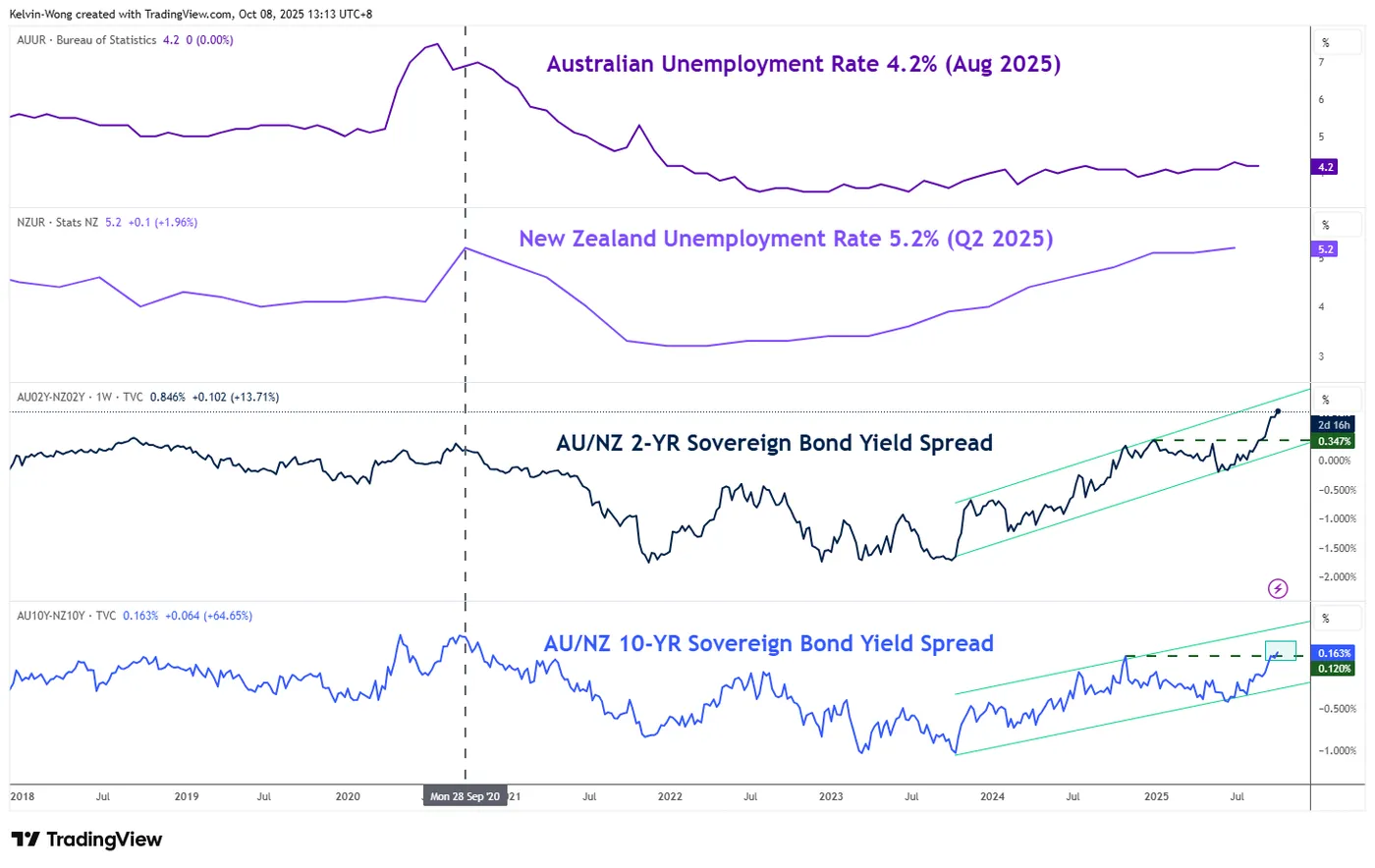
Fig. 1: AU & NZ unemployment rate with yield spreads of AU/NZ government bonds as of 8 Oct 2025 (Source: TradingView)
The more dovish monetary policy guidance from the RBNZ than its antipodean counterpart has triggered a further steepening of the 2-year and 10-year yield spreads between Australian and New Zealand sovereign bonds.
Currently, the 10-year spread with a longer tenure has just broken above its October 2024 peak of 0.12% and is trading at 0.16% at the time of writing.
Hence, the 2-year and 10-year yield spreads between Australian and New Zealand sovereign bonds are likely to widen further, which in turn could propel a further bullish movement in the AUD/NZD cross pair.
Let’s now focus on the short-term (1to 3 days) trajectory, key elements, and key levels to watch on the AUD/NZD from a technical analysis perspective.
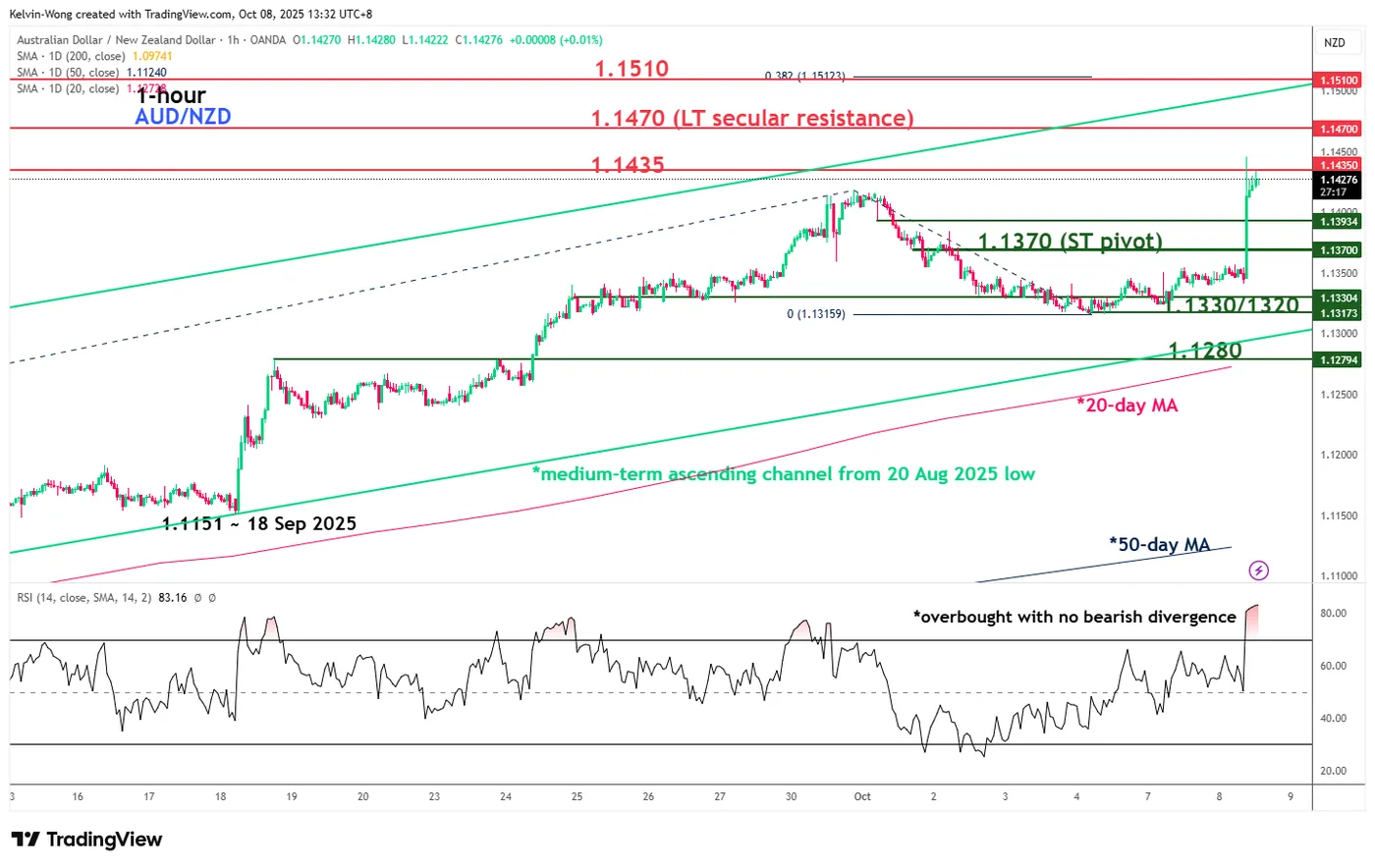
Fig. 2: AUD/NZD minor trend as of 8 Oct 2025 (Source: TradingView)
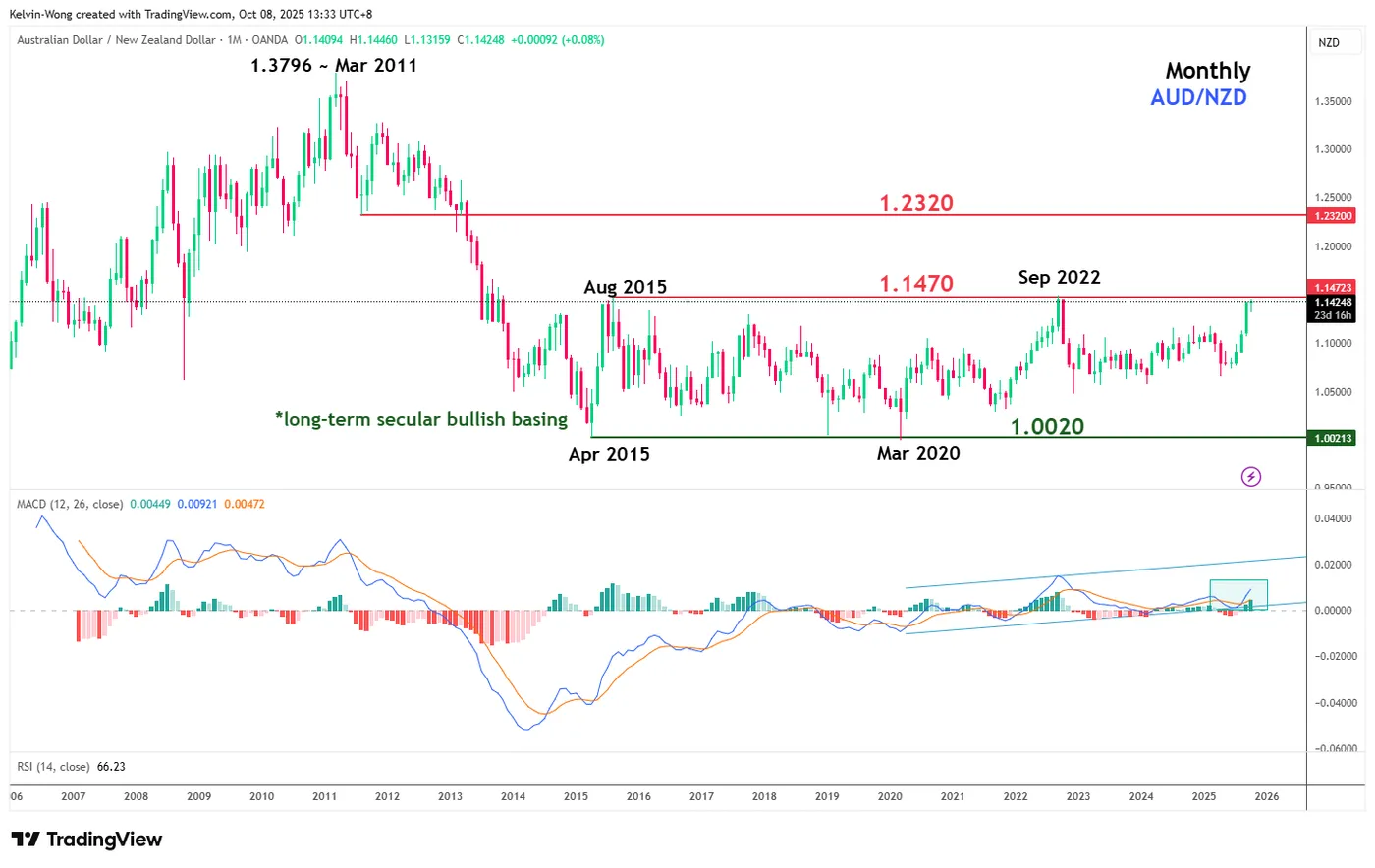
Fig. 3: AUD/NZD long-term secular trend as of 8 Oct 2025 (Source: TradingView)
Preferred trend bias (1-3 days)
Maintain bullish bias in any minor setbacks for the AUD/NZD with adjusted short-term pivotal support at 1.1370. A clearance above the key long-term secular resistance of 1.1470 may trigger a further bullish acceleration towards the next intermediate resistance at 1.1510 (also a Fibonacci extension) in the first step.
Key elements
- The price actions of the AUD/NZD have continued their upward movement within a medium-term ascending channel in place in place since the 20 August 2025 low (see Fig. 2).
- The upper boundary of the medium-term ascending channel will be projected as a resistance at 1.1510 for the AUD/NZD (see Fig. 2).
- The hourly RSI momentum indicator of the AUD/NZD has reached an extreme overbought level of 83 at the time of writing, but without any bearish divergence condition. These observations suggest that the AUD/NZD is likely to see a minor pull-back first below 1.1435 at this juncture before its next bullish impulsive up move sequence materialises (see Fig. 2).
- The 1.1470 long-term secular resistance of the AUD/NZD is defined as the upper limit of a 10-year-plus bullish basing configuration in place since April 2015 (see Fig. 3).
- In addition, the monthly MACD trend indicator of the AUD/NZD has continued to drift higher above its centreline after a retest of its ascending channel support. This observation suggests the potential start of a long-term secular bullish trend for the AUD/NZD, which increases the odds of a major bullish breakout above 1.1470 (see Fig. 3).
Alternative trend bias (1 to 3 days)
A break below the 1.1370 key short-term support for AUD/NZD negates the bullish scenario to expose the next intermediate support at 1.1330/1.1320 (also close to the lower boundary of the medium-term ascending channel).





