- Fed, ECB and BoJ to sit on the sidelines after September hikes.
- But RBNZ and BoC poised to lift borrowing costs.
- Inflation data out of the US, Japan, Australia to also be important.
- UK budget: no surprises would be good news for the Pound.
- Big Tech earnings gather pace as AI jitters persist.
Fed to stay on hold despite hot inflation
After joining the rate-hike club in September, the Federal Reserve looks set to stand pat in October, waiting to assess more data before deciding to hike again. Whilst this isn’t an unusual move for a central bank, it somewhat contradicts Fed Chair Kevin Warsh’s new mantra of data dependency and zero forward guidance.
Having created a lot of fuss about the importance of markets being solely guided by the data rather than running commentary from the Fed and policymakers in turn being guided by market expectations, Warsh turned to his top lieutenant, John Williams, to steer market expectations in the opposite direction following the CPI and PPI shocks.
The timing of the next rate decision – less than a week before the midterm elections – likely played a large role in Williams and other Fed officials pushing back so strongly against a back-to-back rate hike. However, there also seems to have been deliberate messaging by the Fed to the markets that the current environment does not warrant a tightening pace faster than once a quarter.
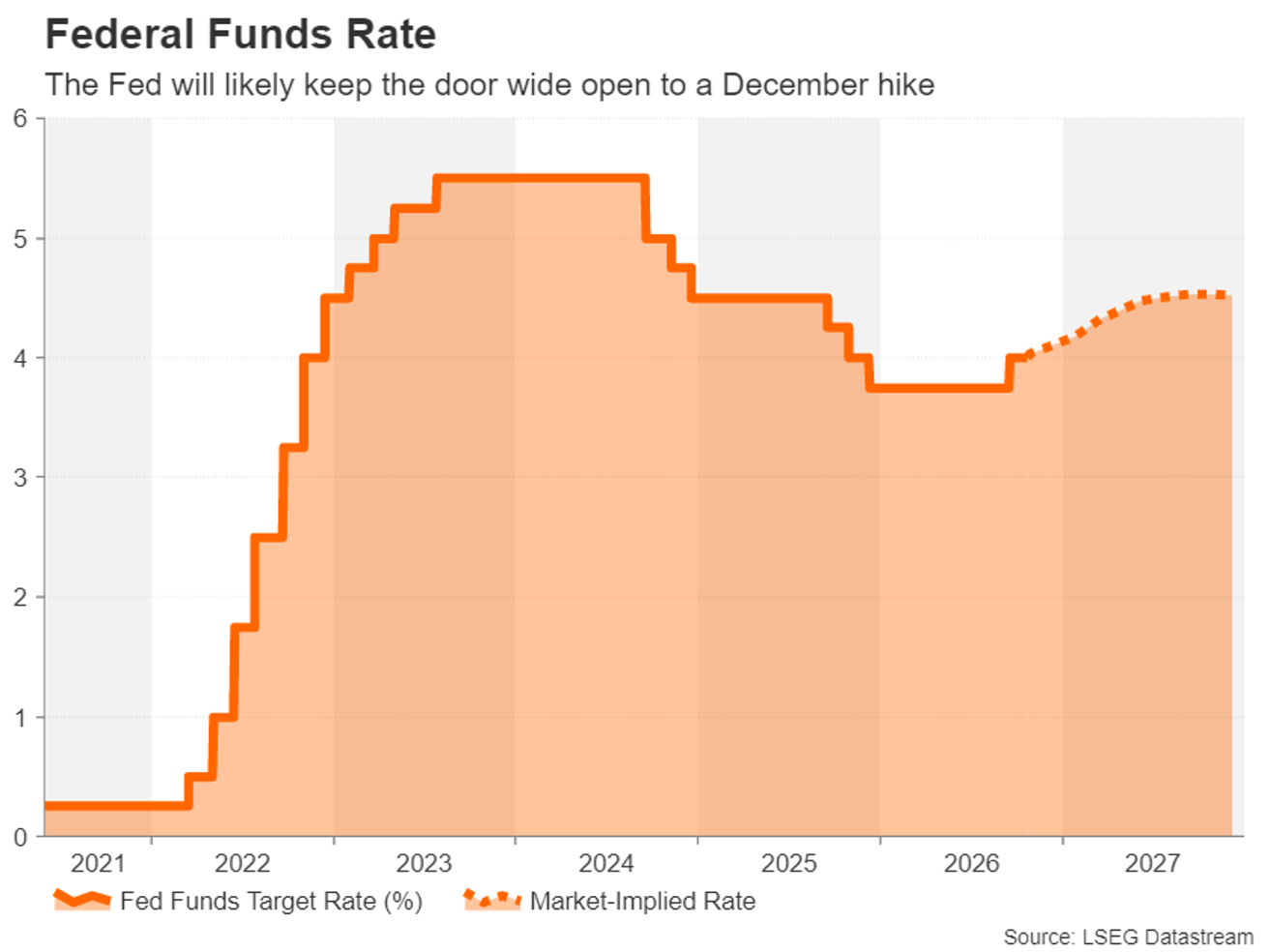
Again, this is typical Fed behaviour whenever market bets run ahead of themselves. Wherein lies the problem is Warsh removing himself from the discussion and sending conflicting signals on his policy stance. Hence, with the Fed almost certain to leave rates unchanged at 3.75-4.00% on Wednesday, the focus for investors will be Warsh’s press conference. Of course, hawkish dissents cannot be ruled out, but markets will primarily be seeking to get some clarity from Warsh on the interest-rate outlook.
Dollar and Wall Street brace for rollercoaster week
For the US dollar, however, complicating matters is the flurry of data due the following day. PCE inflation figures for September and the advance GDP report for Q3 have the potential to either reverse or fuel the immediate reaction to the FOMC decision.
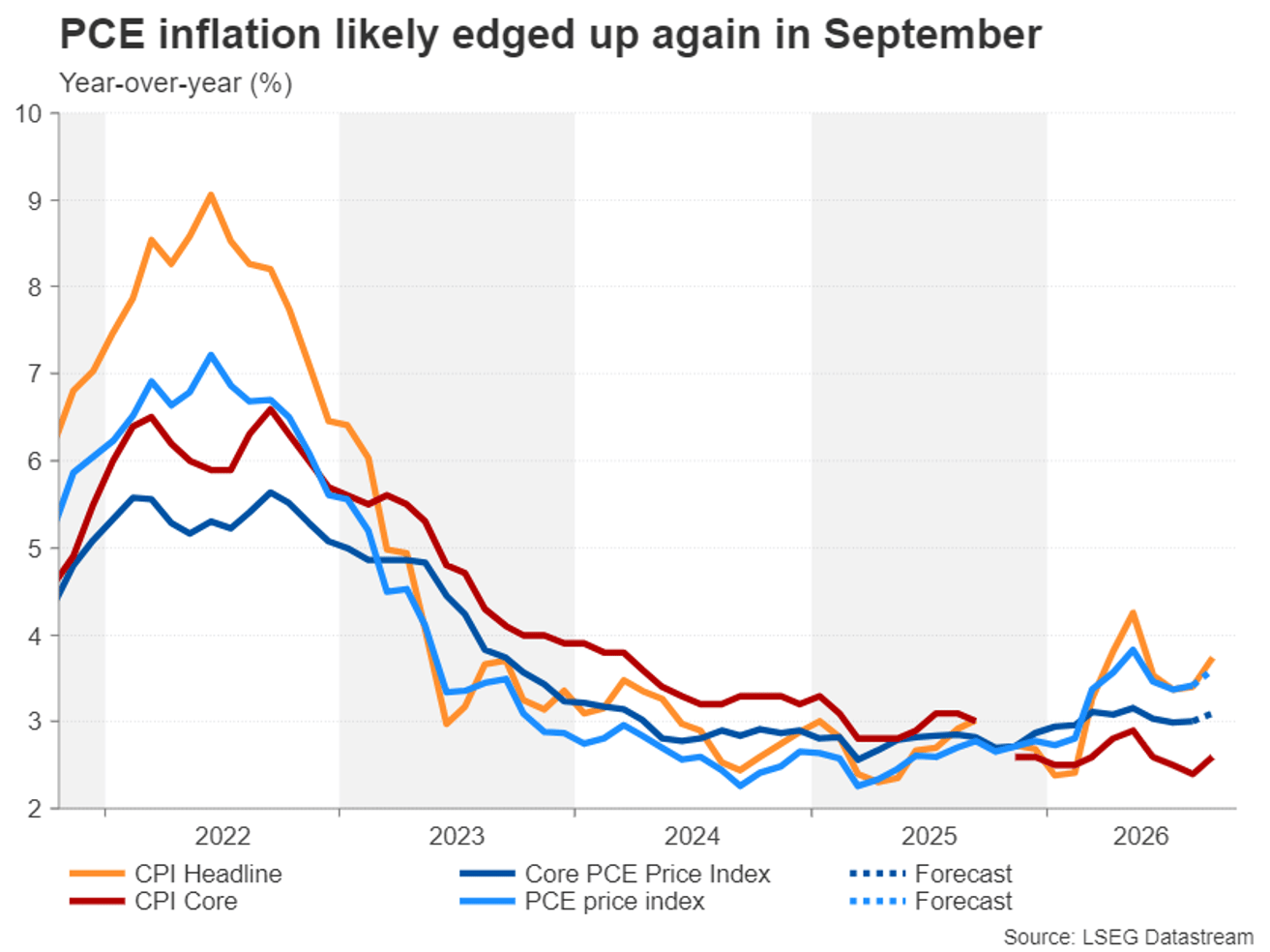
The core PCE price index – the Fed’s preferred inflation metric – is expected to have risen to 3.1% y/y in September, while GDP growth likely quickened to a 3.2% annualized pace in Q3. Personal consumption data will also be key in gauging the strength of household spending.
Other releases include durable goods orders for September, the consumer confidence index for October and September new home sales on Tuesday, as well as the Chicago PMI on Friday. Treasury auctions for two-, five- and seven-year notes will also be watched as weak demand could spark renewed selling.
A hawkish hold followed by stronger-than-expected PCE and GDP numbers could revive bullish momentum for the dollar following the mid-October pullback.
However, this would be the least favourable scenario for Wall Street where rising Treasury yields have raised scrutiny for lofty AI valuations. The Q3 earnings season has so far gotten off to a solid start. But this hasn’t done much in calming market jitters around the AI trade, as investors remain worried about the sustainability of AI demand amid higher borrowing costs and rising competition from China.
With fears over an AI bubble still hanging over the markets, the bar is high for Microsoft, Alphabet and Amazon to impress investors with their latest quarterly results. Any fresh increases in AI spending by these hyperscalers could overshadow earnings growth even if they’re at the top end of expectations.
Battered Euro hopes for hawkish ECB hold
The budget debate in France, which coincides with the latest wave of violent protests across French cities, has not been too kind on the euro. The widening spread between French and German 10-year yields has reawakened memories of the Eurozone debt crisis, sending the euro into a spin.
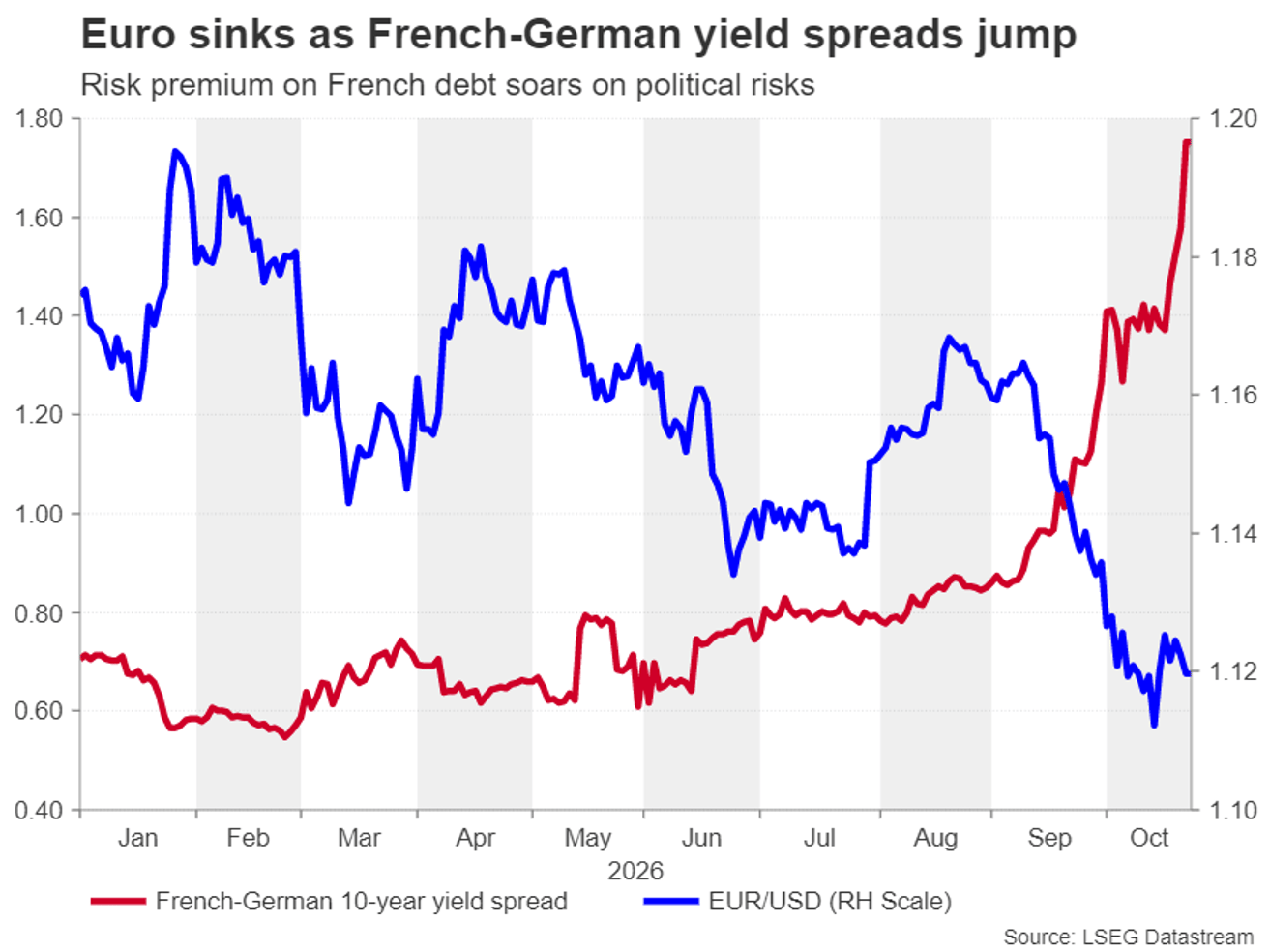
Discussions on the various budget measures will continue over the coming week in the National Assembly, but the more important question for investors is whether there is internal debate within the European Central Bank on how to respond to a worsening rout in French and broader European bonds.
Any hints by ECB President Christine Lagarde in her post-meeting press conference on how worried the Governing Council is about a new debt episode will be grabbed on by reporters. As for Thursday’s meeting, the ECB is widely anticipated to keep policy unchanged.
In the absence of updated economic projections, Lagarde’s comments will be the main driver for the euro, particularly about any changes to the inflation outlook since the September meeting. Any suggestions that a December hike is on the cards could buoy the euro somewhat.
On the data front, the flash estimate of GDP growth in Q3 could attract some attention on Friday along with preliminary CPI readings for October out of France and Germany.
Can the BoJ keep Yen bulls happy?
Another central bank that’s expected to keep its monetary policy settings on hold is the Bank of Japan. Having raised rates in September, an October hike was never on the table, but a December move is. However, a 25-bps increase isn’t fully priced in until January, which means there is potential for December expectations to shift sizeably from any hawkish commentary by BoJ Governor Kazuo Ueda in his press briefing on Friday.
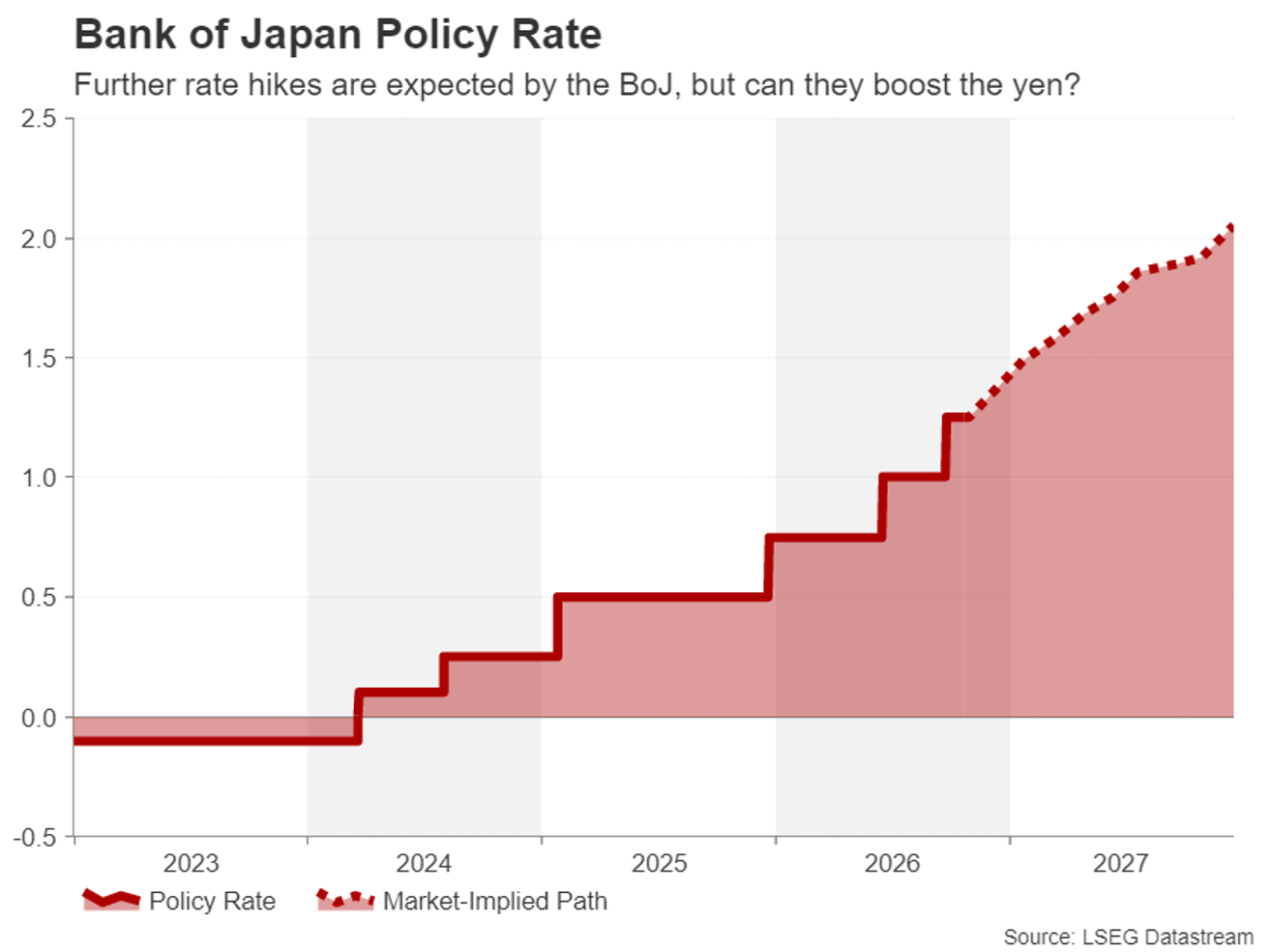
Recent BoJ comments have been on the hawkish side, while there is fresh inflation data on the way in the form of service PPI on Tuesday and Tokyo CPI on Friday that could add to tightening expectations.
However, the yen’s best chance of capitalizing on hawkish BoJ bets is if the dollar takes a hit from a dovish Fed surprise or US data misses. The 159- and 157-yen levels remain the key resistance and support areas, respectively, against the dollar.
Will the BoC hike rates?
Expectations that the Bank of Canada will lift rates in October shot up earlier this week following reports that the central bank will raise its inflation outlook at the meeting when it publishes its latest quarterly forecasts. The odds of a 25-bps hike have since been fluctuating around 80%, leaving some room for a surprise on Wednesday.
With oil prices not only still elevated but also maintaining their upward bias, a rate hike seems like the most likely scenario. However, recent data supports the case for the BoC to stick to its wait-and-see stance.
Canadian employment unexpectedly shrunk in September, pushing the jobless rate up to 6.5%. The CPI data for September was also on the soft side. Both headline and core inflation came in below expectations, removing the urgency for immediate tightening.
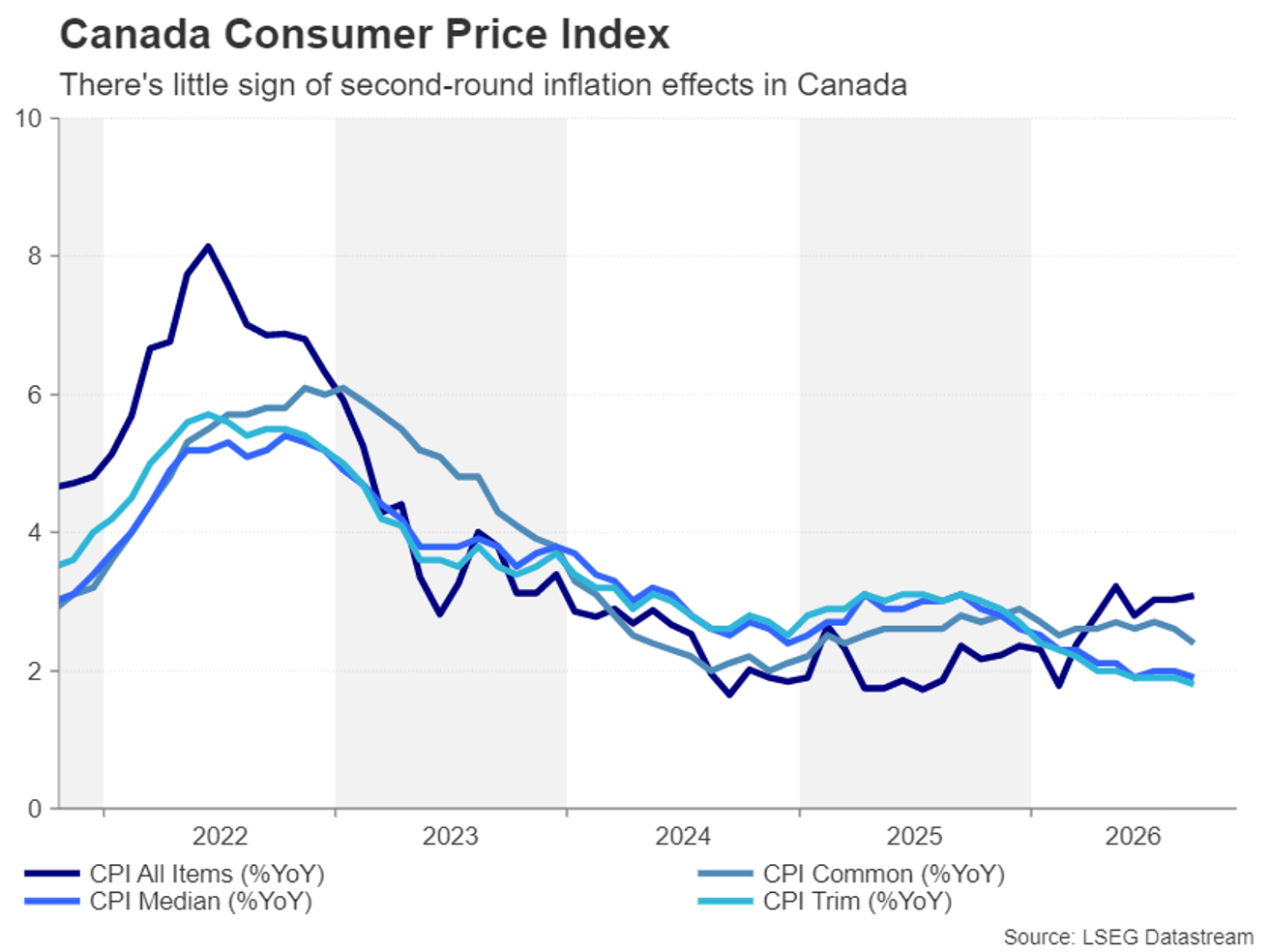
Yet, the BoC’s own surveys show inflation expectations are on the rise, indicating prices won’t stay tamed for much longer. The question is, will policymakers use the October meeting to flag a December hike, or will they take the plunge now?
For the Canadian dollar, a hawkish hold is more likely to be positive than either a dovish or cautious hike, as it would keep tightening expectations in play.
RBNZ headed for third hike
In New Zealand, an October rate increase is a much bigger certainty, as it’s almost fully priced in. The Reserve Bank of New Zealand has already lifted rates twice this year and investors have baked in a further 100-basis-points of increases by the end of 2027.
The hawkish rhetoric was reinforced this week by the bank’s deputy governor, Andrew Hauser, who said the inflation outlook has become “materially worse”. However, New Zealand CPI eased more than expected in the third quarter, declining from 4.1% to 3.7%.
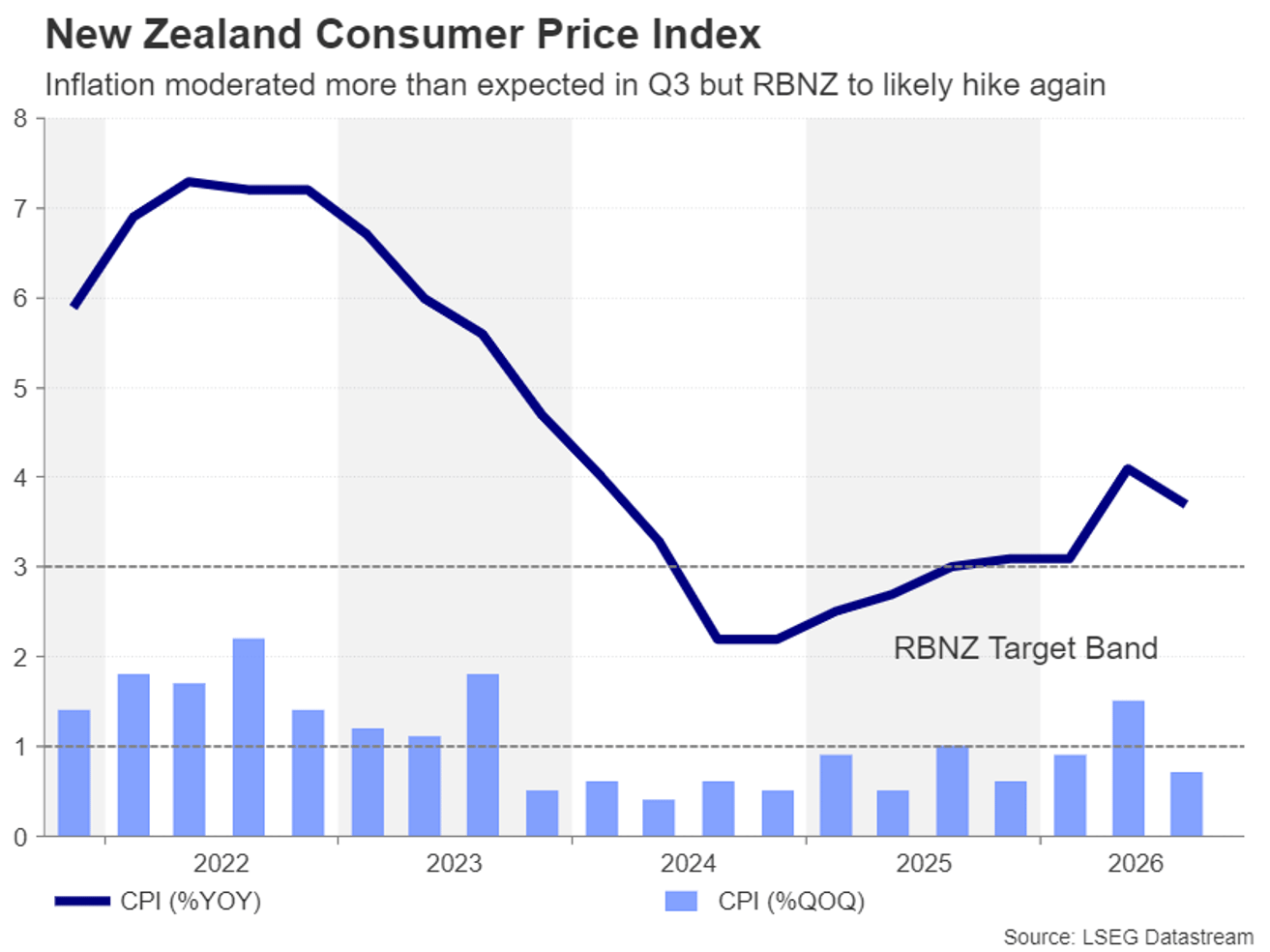
This raises the risk of a dovish surprise when the RBNZ meets on Wednesday, but most probably with its guidance rather than the decision itself.
The New Zealand dollar could slip back below $0.56 if the RBNZ doesn’t accompany the expected rate hike with a convincingly hawkish tone.
Aussie CPI and UK budget also on tap
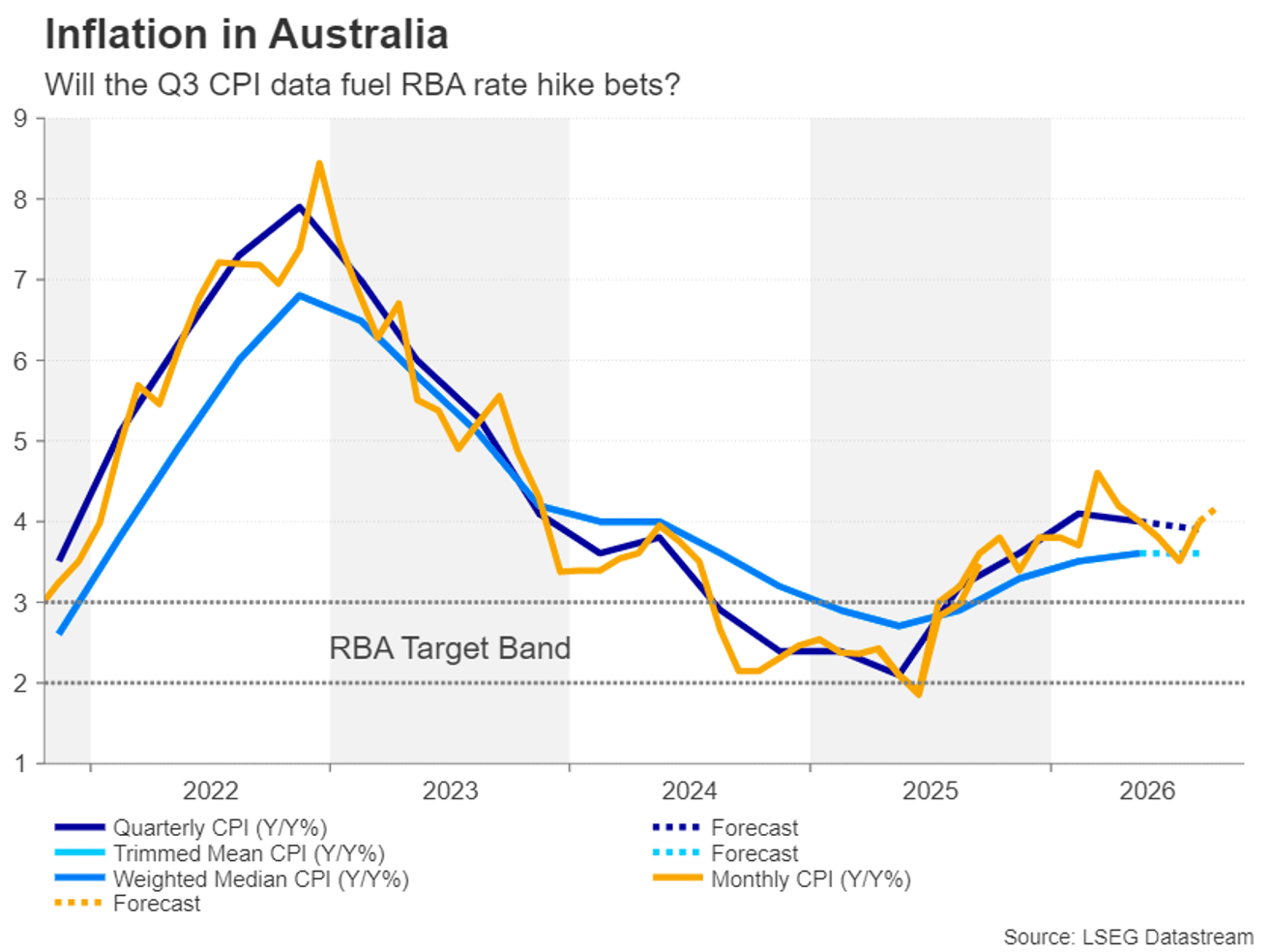
Across the Tasman Sea, the RBNZ’s Aussie counterpart will be keeping a close eye on Australia’s latest CPI figures. Inflation data for Q3 and September will be watched to see whether underlying measures continued their broad uptrend over the quarter and if the headline rate rose further above 4.0% in September. Stronger-than-expected readings could encourage traders to price in one additional 25-bps rate increase by the RBA over the coming year, helping the Australian dollar to extend its rebound versus the greenback.
In the UK, the focus for the pound will be on the Autumn Budget, which will be Chancellor John Healey’s first following his appointment by Prime Minister Andy Burnham when he replaced Keir Starmer in July. But even though the recent volatility in bond markets has raised the stakes for Healey and Burnham, the risks to UK gilts are far greater from contagion from the continent than the budget itself.
In fact, ‘budget day’ is unlikely to bring any major policy overhauls and stick to the theme of the already announced measures of incrementally easing the pain of the energy shock on households and businesses by mostly reallocating funds from lower priority programs.
Still, if markets are unimpressed by the pro-growth measures and Healey doesn’t take more substantial steps to bring borrowing down, gilt yields could spike higher, pressuring the pound.