UK CPI rises to 3.6%, goods prices jump, services sticky

    UK inflation came in hotter than expected in June. Headline CPI accelerated from 3.4% yoy to 3.6% yoy, above consensus of 3.4%. Core CPI (excluding energy, food, alcohol, and tobacco)also surprised to the upside, rising from 3.5% to 3.7%, versus expectation of 3.5% yoy.

    Goods inflation picked up from 2.0% yoy to 2.4%, its highest since October 2023. Services inflation remained stubbornly high, unchanged at 4.7% yoy.

    On a monthly basis, CPI rose 0.3%, adding to signs that disinflationary progress may be stalling.

    Full UK CPI release here.

    Fed’s Logan cites fiscal tailwinds, inflation risk in case for rate hold

      Dallas Fed President Lorie Logan said overnight that she expects a slight pickup in the Fed’s preferred inflation measure following June’s CPI release and warned against easing policy prematurely. With the PCE inflation gauge at 2.3% in May, Logan said the latest CPI data “probably” means it will “move up a bit.” She stressed the need for a longer trend of subdued inflation before being confident in the disinflation process.

      At the same time, Logan pointed to a solid labor market, near-record stock prices, and the recently passed Trump fiscal package as “tailwind” for continued economic strength.

      Against that backdrop, Logan argued that the Fed can afford to “hold tight for a while longer,” maintaining modestly restrictive policy to ensure inflation returns to target sustainably.

      Fed’s Collins favors “actively patient” stance amid tariff-driven inflation risks

        Boston Fed President Susan Collins said overnight that the Fed should remain “actively patient” in its stance. Despite the complexity of current conditions, she argued that “solid” fundamentals give the Fed room to carefully assess incoming data before making policy moves. “Calibrating appropriate policy in this context is challenging,” she acknowledged in her speech.

        Collins highlighted the inflationary impact of newly imposed trade tariffs, which she said are beginning to show up in the prices of some goods. She projected core inflation to climb toward 3% by the end of the year, while warning that growth and employment may slow as a result.

        However, she pointed to mitigating factors—such as firms narrowing profit margins and consumers maintaining spending. “As a result, the adverse impact of tariffs on labor market conditions and economic growth may be more limited,” she said.

        Fed’s Barkin sees inflation stickiness, defends Fed independence

          Richmond Fed President Tom Barkin warned that inflation pressures remain persistent, with recent data showing signs of renewed pricing power among suppliers.

          Speaking at an event in Baltimore, Barkin noted that many firms—still emboldened by the inflation surge of the past two years—are attempting to pass on rising costs, including those tied to tariffs. However, he cautioned that consumers, fatigued by prolonged inflation, may push back. “You’ve got consumers who are exhausted by inflation, who are already trading down,” he said.

          Barkin’s comments also touched on the institutional integrity of the Fed amid speculation surrounding Fed Chair Jerome Powell’s future. With Powell’s term set to expire in May next year, US President Donald Trump is widely expected to nominate a more dovish successor.

          Barkin emphasized the importance of policy independence, saying he hoped any new appointee would “try to decide the best policy for the country.” He added that rate-setting decisions aren’t necessarily driven by the Fed chair alone.

          BoE’s Mann stresses inflation still a challenge, backs policy patience

            BoE policymaker Catherine Mann emphasized the importance of keeping monetary policy restrictive in the face of lingering inflation pressures.

            Speaking in an interview with Business in Wales Mann said, “wage rates come down” and “inflation come down quite a bit”. But inflation is “still a challenge”, as it’s well above the 2% target.

            Mann, who has voted to keep rates on hold at the last two meetings—including one where most colleagues backed a cut—framed inflation as a broad economic burden. “Inflation is a tax on everybody,” she said, adding that it’s crucial to maintain policy discipline until inflation is fully under control.

            Canada’s CPI rises to 1.9% yoy in June, core measures unchanged

              Canada’s CPI rose 0.1% mom in June, falling short of the expected 0.2% mom gain. On an annual basis, headline inflation accelerated from 1.7% yoy to 1.9% yoy, matching expectations. The increase was driven partly by a smaller year-on-year decline in gasoline prices and firmer price gains in durable goods like vehicles and furniture.

              Meanwhile, BoC’s preferred core inflation measures remained unchanged, with median and trimmed CPI steady at 3.0% and the common measure holding at 2.6%.

              Full Canada CPI release here.

              US CPI jumps to 2.7% yoy in June, core CPI undershoots expectation at 2.9% yoy

                US CPI climbed 0.3% mom in June, matching forecasts, with the increase largely driven by a 0.2% mom rise in shelter costs and a 0.9% mom gain in energy prices. Food prices also edged higher, up 0.3% mom on the month. While the headline data aligned with expectations, the core CPI—excluding food and energy—rose just 0.2% mom, slightly below the anticipated 0.3% mom gain.

                On a year-over-year basis, headline inflation jumped from 2.4% to 2.7%, in line with projections. However, core inflation ticked up only marginally from 2.8% to 2.9%, coming in under the 3.0% consensus. The annual energy index fell -0.8%, offering some offset to stickier components like food, which rose 3.0% over the year.

                Full US CPI release here.

                German ZEW jumps to 52.7, positive sentiment firmly established

                  Germany’s ZEW Economic Sentiment index jumped from 47.5 to 52.7 in July, beating expectations of 50.2 and marking the third consecutive monthly rise. Current Situation Index also improved sharply from -72 to -59.5, above forecast of -66.0. The data suggests that investor confidence is firming despite lingering global trade tensions, likely supported by hopes for a de-escalation in US-EU tariff threats and anticipated domestic fiscal stimulus.

                  Eurozone sentiment also edged up modestly, with the expectations index rising from 35.3 to 36.1, though falling short of the 37.8 consensus. The current conditions measure rose by 6.5 points to -24.2, signaling a gradual improvement in the broader bloc’s outlook.

                  ZEW President Achim Wambach noted that nearly two-thirds of respondents expect Germany’s economy to improve, citing optimism tied to a resolution of the US-EU trade standoff and government-led investment. Expectations were especially upbeat in sectors like machinery, metals, and electrical manufacturing.

                  Full German ZEW release here.

                  Eurozone industrial production grows 1.7% mom in May, EU up 1.5% mom

                    Eurozone industrial production jumped 1.7% mom in May, comfortably beating market expectations of 1.1% mom. The strength was broad-based across key sectors, with notable gains in energy (+3.7%), capital goods (+2.7%), and non-durable consumer goods (+8.5%). However, weakness in intermediate goods (-1.7%) and durable consumer goods (-1.9%) tempered the overall picture.

                    Across the broader EU, industrial production rose 1.5% mom. At the national level, Ireland led the surge with a sharp 12.4% mom rise, followed by Malta (+3.4%) and Germany (+2.2%). On the flip side, industrial activity contracted most in Croatia (-2.9%), Slovakia (-2.8%), and Belgium (-2.7%).

                    Full Eurozone industrial production release here.

                    China Q2 GDP growth slows to 5.2%, but beats expectations

                      China’s economy expanded 5.2% yoy in Q2, slightly above expectations of 5.1% yoy but down from 5.4% yoy in Q1. Sector data showed balanced growth across industries—primary output rose 3.7%, secondary 5.3%, and tertiary 5.5%. The National Bureau of Statistics noted that macroeconomic policies have supported stability, but also flagged persistent weakness in domestic demand and external headwinds.

                      June’s data painted a mixed picture. Industrial production accelerated from 5.8% yoy to 6.8% yoy, beating forecasts of 5.6% yoy and suggesting continued strength in export-facing sectors and manufacturing. However, retail sales cooled to 4.8% yoy, down sharply from May’s 6.4% yoy and missed expectation of 5.2% yoy.

                      Fixed asset investment year-to-date slowed to 2.8%, well below expectations of 3.7%. The decline in property investment deepened, falling -11.2% in H1, and private investment contracted -0.6%.

                      Australia Westpac consumer sentiment edges up to 93.1, RBA hold damps household optimism

                        Australia’s Westpac Consumer Sentiment index edged up 0.6% mom to 93.1 in July, but the modest gain masked a clear sense of disappointment among households.

                        Westpac noted that sentiment was noticeably stronger before the RBA’s July meeting, with those surveyed prior to the decision reporting a reading of 95.6. That slipped to 92 among those surveyed after the RBA unexpectedly held rates steady, suggesting the decision dashed hopes for relief.

                        As a result, consumer confidence remains stuck at what Westpac called “cautiously pessimistic” levels.

                        Looking ahead, markets are eyeing the RBA’s next meeting on August 11–12. While the central bank may pause again if Q2 inflation overshoots, the more likely scenario is a confirmation that inflation stays inside the 2–3% target range. That would pave the way for a 25bps rate cut in August, with another expected in November.

                        Full Australia Westpac consumer sentiment release here.

                        Fed’s Hammack sees no urgency to cut rates, focuses on inflation

                          In a Fox Business interview, Cleveland Fed President Beth Hammack signaled that she sees little urgency for rate cuts given the current strength of the US economy. Hammack said Fed is “pretty close to where the neutral rate is,” and noted that unless there’s “material weakening on the labor side,” she doesn’t see a compelling case for policy easing.

                          While leaving the door open to shifts based on incoming data, Hammack emphasized that Fed is meeting its employment mandate, but still falling short on inflation. “We’re not there yet on the inflation side of the mandate,” she said, adding that a restrictive stance should be maintained until clear progress is made.

                          Silver hits near 14-year high and targest 40 as global flows accelerate

                            Silver’s rally picked up pace on Monday, hitting its highest level since late 2011 after last week’s decisive upside breakout. The metal has surged alongside broad-based strength in precious metals, with Palladium reaching its highest since October 2024 and Gold rebounding to a three-week high. Renewed investor interest across the complex suggests increasing demand for portfolio diversification amid geopolitical and trade policy risks.

                            One notable driver has been rising demand out of India, where investors are shifting from Gold to Silver as a catch-up trade after years of underperformance. Silver is also seeing structural demand growth tied to industrial applications—especially in solar energy and electric vehicles—which is outpacing domestic production. This dual push from both speculative and real-economy buyers is adding fuel to the current run.

                            Technically, Silver is on track to 61.8% projection of 31.65 to 37.28 from 36.24 at 39.71, or even further to 40 psychological level. However, upside could be capped by medium term level of 100% projection of 21.92 to 34.83 from 28.28 at 41.20 on first attempt.

                            China’s exports growth accelerates to 5.8% yoy in June on tariff truce window

                              China’s exports rose 5.8% yoy in June, beating expectations of 5.0% yoy and marking a pickup from May’s 4.8% yoy. The improvement comes as exporters moved quickly to take advantage of the 90-day tariff truce with the US, front-loading shipments ahead of anticipated disruptions.

                              The stronger-than-expected performance helped lift China’s trade surplus to USD 114.8B, slightly above consensus and up from USD 103.2B in May.

                              Imports rose 1.1% yoy, the first positive reading of the year and a tentative sign of stabilization in domestic demand.

                              NZ BNZ services rises to 47.3, but outlook remains grim

                                New Zealand’s services sector showed mild improvement in June, with BusinessNZ Performance of Services Index rising to 47.3 from May’s 44.1. Despite the gain, the index remains well below its long-run average of 52.9 and firmly in contraction territory. Subcomponents showed modest upticks—new orders rose from 43.4 to 48.8, employment edged up from 47.1 to 47.4, and activity/sales climbed to 44.5. Inventories just breached the 50-mark at 50.6.

                                Still, the broader backdrop remains discouraging. 66.2% of surveyed businesses offered negative comments, citing subdued consumer confidence, elevated living costs, and policy-related uncertainty. Public sector retrenchment, inflation, and rising interest rates continue to bite, while seasonal factors like winter and lower tourist activity weigh on demand. BNZ’s Doug Steel summed it up bluntly: “The timeline for New Zealand’s long-awaited economic recovery just keeps getting pushed further and further out.”

                                Full NZ BNZ PSI release here.

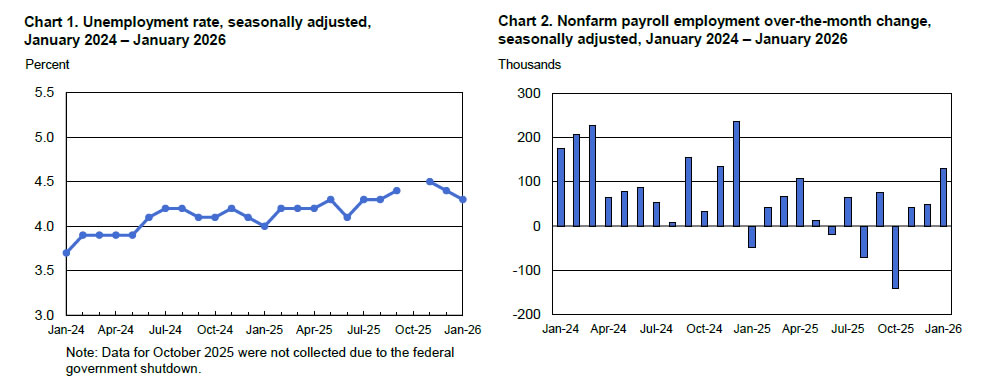
                                Canada job growth surges to 83k in June, unemployment rate unexpectedly falls

                                  Canada’s labor market posted a strong rebound in June, adding 83,000 jobs, far above expectations of just 900. Unemployment rate dipped from 7.0% to 6.9%, defying forecasts of an increase to 7.1%.

                                  The decline ends a three-month stretch of rising joblessness and was supported by a 0.1 percentage point uptick in the employment rate to 60.9%. Total hours worked also rose by 0.5% on the month, putting them 1.6% higher than a year earlier—a sign of sustained underlying momentum.

                                  Wage growth continued to moderate, with average hourly earnings rising 3.2% yoy from a year ago, down from May’s 3.4% yoy.

                                  Full Canada’s employment release here.

                                  ECB’s Schnabel: Inflation on track, economy resilient, bar for further rate cut very high

                                    ECB Executive Board member Isabel Schnabel signaled in an interview with Econostream Media that there is urgency for further easing. Schnabel noted that inflation is now projected to be at 2% target over the medium term, and expectations remain “well anchored”, while interest rates are in a “good place”. She added that “the bar for another rate cut is very high”.

                                    Schnabel emphasized that there is “no risk of a sustained undershooting” and that core inflation is forecast to meet target throughout the horizon. She also downplayed concerns over the disinflationary impact of Euro strength, calling such fears “exaggerated” given limited pass-through effects. Schnabel argued that temporary factors such as low energy inflation are unlikely to derail the ECB’s price stability goals.

                                    On the growth front, Schnabel was notably upbeat. Recent PMI data suggesting further recovery ahead. Manufacturing indicators such as new orders and export demand have all reached three-year highs, pointing to more than just temporary momentum. Combined with record-low unemployment and the expectation of a large fiscal impulse, she argued that risks to the growth outlook are now “more balanced”, reducing the case for near-term rate action.

                                    Full interview of ECB’s Schnabel here.

                                    UK GDP shrinks -0.1% mom in May, but underlying momentum still holds

                                      UK GDP unexpectedly contracted by -0.1% mom in May, missing expectations for 0.1% mom growth. The weakness was driven by a sharp -0.9% mom drop in industrial production and a -0.6% mom fall in construction output, partially offset by a modest 0.1% mom gain in services—the largest sector of the economy.

                                      Still, broader momentum remains positive. Real GDP rose 0.5% in the three months to May, thanks to steady growth in services (+0.4%) and solid gains in construction (+1.2%). Production also rose 0.2%.

                                      Full UK monthly GDP release here.

                                      Bitcoin blasts to record ahead of House Crypto Week, 135k next

                                        Bitcoin has broken decisively to a new all-time high with upside acceleration, confirming a bullish breakout from its recent consolidation range and setting sights on 135k level. The rally gained additional momentum as bullish sentiment grows ahead of “Crypto Week” in the US Congress, where the House Committee on Financial Services, led by the Republicans, plans to advance crypto-friendly legislation. The committee said the measures are designed to help position the US as the “crypto capital of the world.”

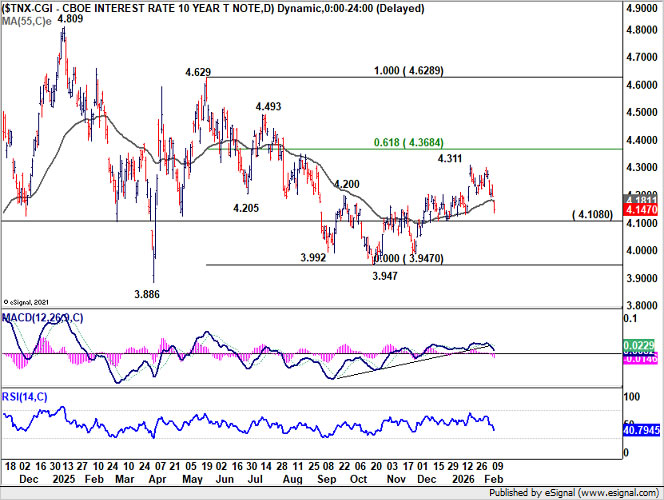
                                        Behind the scenes, the rally continues to be supported by a trifecta of macro forces: rising institutional interest, increasing fiscal strain in the US, and a broadly dovish Fed outlook that is keeping real yields contained. Combined, these drivers are encouraging investors to seek alternatives and store-of-value assets like Bitcoin, with the added appeal of regulatory clarity possibly on the horizon.

                                        Technically, near term outlook will now stay bullish as long as 11060 resistance turned support holds. Two major projection levels mark the next target zone at 135k, 100% projection of 49008 to 109571 from 74373 at 134946 and 100% projection of 74373 to 112013 from 98148 at 135788.

                                        New Zealand BNZ manufacturing rises to 48.8, conditions still very tough

                                          New Zealand’s manufacturing sector showed modest signs of stabilization in June, with the BusinessNZ Performance of Manufacturing Index rising from 47.4 to 48.8. While still signaling contraction, the gain was underpinned by an encouraging rebound in new orders, which jumped from 45.4 to 51.2—breaking back into expansion. Employment (47.9) and production (48.6) also improved slightly, though both remained under the 50 threshold. The headline PMI remains well below the historical average of 52.5.

                                          The proportion of negative comments from respondents held steady at 65.5% (May 64.5), with widespread concerns over weak consumer demand, high living costs, and a murky economic outlook. Input cost pressures and a drop in construction activity also continue to weigh on manufacturing sentiment.

                                          BNZ Senior Economist Doug Steel said that despite hopes of recovery, “conditions are still very tough.” All key sub-indices remain below their long-run averages, highlighting that while some green shoots are emerging, the overall manufacturing environment is still struggling to gain traction.

                                          Full NZ BNZ PMI release here.