Sample Category Title
Fed Preview: Aiming for Stability
- We expect the Fed to maintain its monetary policy unchanged in March, in line with wide consensus and market pricing.
- We do not expect Powell to guide explicitly towards a cut in May, but we do still anticipate three 25bp reductions later in the year starting from June.
- The Fed could signal either tapering or completely ending QT in the coming meetings. We do not anticipate strong immediate market reactions.
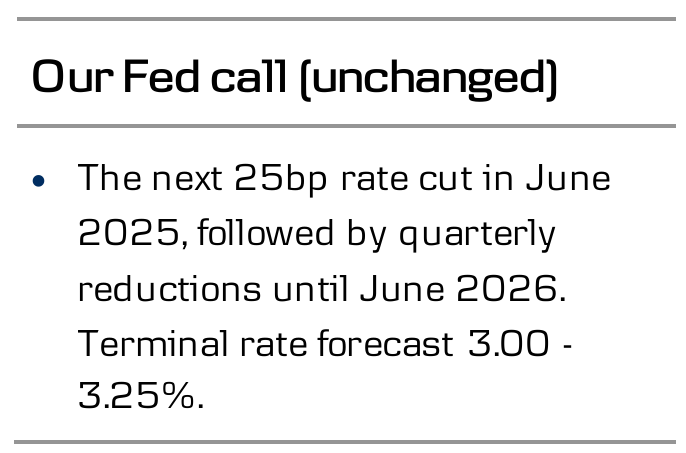
The Fed is inarguably navigating uncertain waters, but with hard data signalling little reason for concern, we doubt Powell will sound the alarm next week. While anything other than an unchanged rate decision would be a major surprise, markets are pricing in 35-40% probability of the Fed restarting cuts already in May.
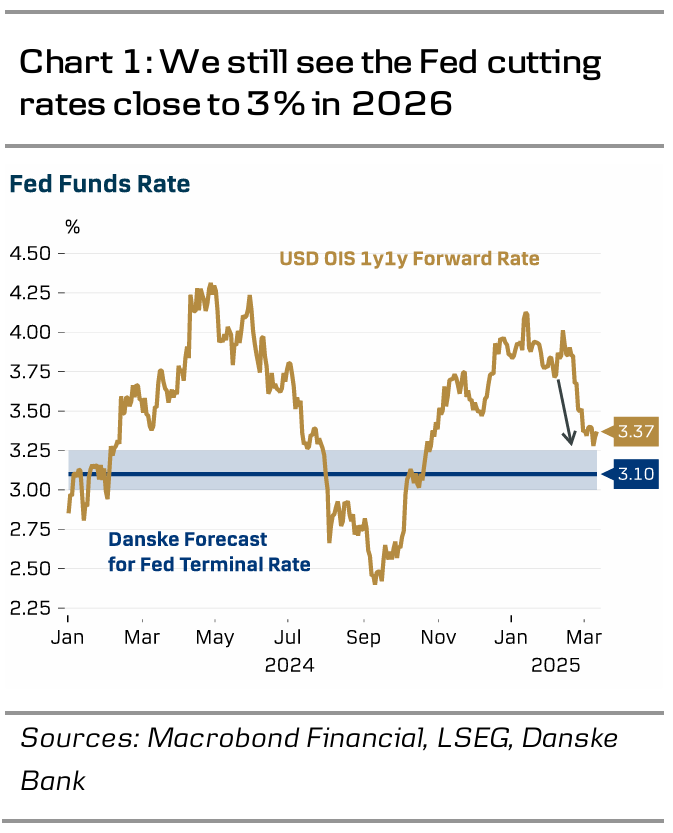
And while Powell has no incentive to close any doors, we do not expect explicit guidance towards a cut in May. We continue to forecast three rate cuts for 2025 followed by two more in 2026, which would take the terminal rate down to 3.00-3.25% - a level below current market pricing. But with employment growth remaining solid and the number of layoffs still low, we think the Fed has room to opt for a more gradual approach.
The updated rate projections could be revised slightly lower to indicate a faster return to neutral (currently only by 2027). The GDP forecast could also be revised slightly lower, while inflation forecasts will likely see only marginal changes. Forecast for unemployment rate could be revised lower as slower immigration tightens labour supply growth.
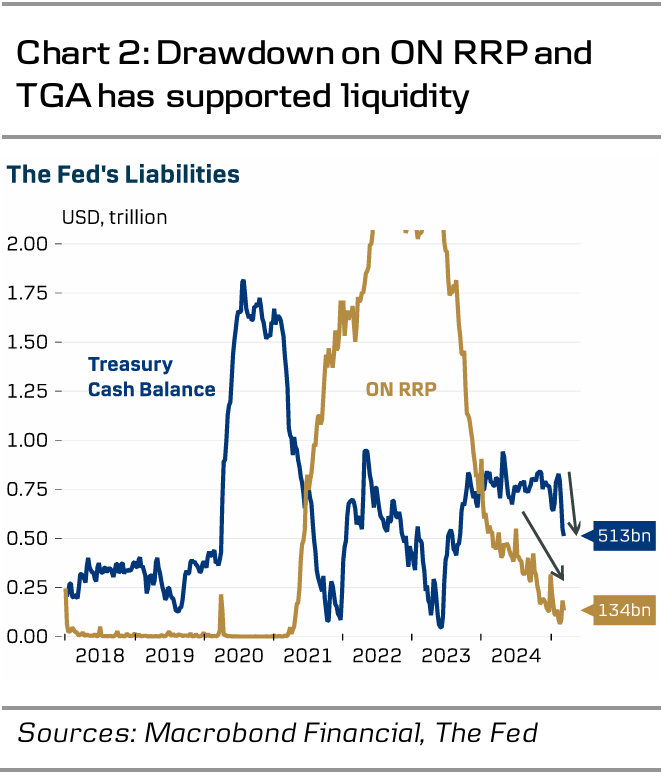
The latest minutes revealed that the policymakers had discussed the endgame for QT in detail already in January, and while we expect no changes next week, the decision to taper or even completely end the balance sheet run-off could be announced already now. While we think that the current level of bank reserves is still generally ample, the policymakers have previously communicated a preference for a cautious approach. The spread between SOFR and Fed Funds Rate has seen occasional upticks especially around month-ends and the liquidity buffer from the ON RRP facility is now mostly depleted. The April tax date and the ongoing process for lifting the debt ceiling create further near-term uncertainty around the liquidity outlook. While passing the debt ceiling raise as part of the Republicans' budget reconciliation package could still be weeks or even months away, it could theoretically be approved already in April or May. Together with larger-than-usual tax payments, rebuilding the Treasury cash balance could lead to an unexpected tightening of liquidity before the June meeting, which could justify ending the runoff already in May.
With 70bp worth of cuts priced in total for 2025 and 10y UST yield not far from our 12M target (4.20%), we do not anticipate strong market reactions to Wednesday's announcements. Even if the Fed likely does not see May as the base scenario for restarting the cutting cycle, Powell will have to choose his words cautiously, as sounding too hawkish might drive unwanted tightening of financial conditions. At times of extraordinary uncertainty, a 'boring' reaction in the markets is likely high up on Powell's wish list.
Week Ahead – Central Banks in Focus Amid Trade War Turmoil
- Fed decides on policy amid recession fears.
- Yen traders lock gaze on BoJ for hike signals.
- SNB seen cutting interest rates by another 25bps.
- BoE to stand pat after February’s dovish cut.
Tariffs remain at the top of investors’ agenda
The US dollar exhibited a mixed performance this week against its major counterparts as US President Donald Trump’s erratic tariff strategy left investors in a state of uncertainty. On Tuesday, Trump announced a 50% tariff on steel and aluminum imported into the US from Canada, only to backtrack after the Canadian province of Ontario suspended its 25% surcharges on electricity that it sends to some northern states in the US.
Nonetheless, the 25% tariffs on steel and aluminum went into effect on Wednesday, with both Canada and the EU retaliating on Thursday. Further escalation remains a possibility, as the introduction of reciprocal tariffs and a potential increase of the steel and aluminum duty to 50% loom on the horizon, with April 2 being the critical date for imposition.
All this uncertainty has led to a marked deterioration in risk appetite, with Wall Street indices tumbling. The US dollar, too, has been caught in the crossfire of Trump’s tariff threats and attacks, as investors shifted their focus from inflation concerns to the broader implication on economic growth. They are currently penciling in around 72bps worth of rate cuts by the Fed this year, which is nearly one additional quarter-point rate cut compared to the 50bps indicated in the December dot plot.
Fed decision: Mind the dots
With all that in mind, next week’s FOMC decision, scheduled for Wednesday, may attract amplified attention. This will be one of the bigger meetings where, besides the decision, the statement and the press conference, the Committee will release updated economic projections, including a new “dot plot”; and with no action expected until June, the spotlight is likely to be firmly on the dots.
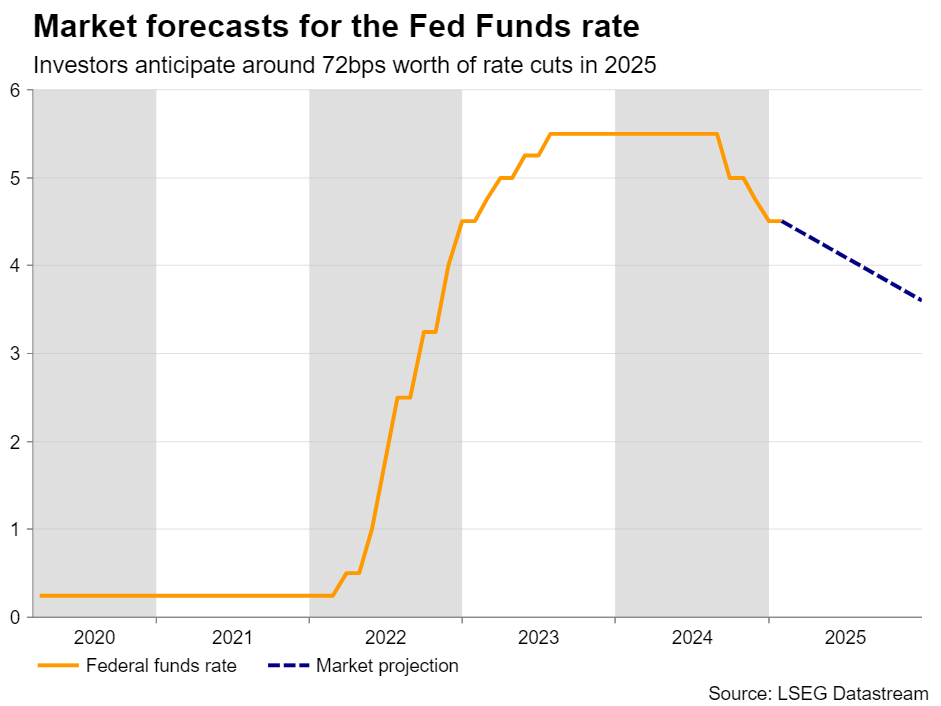
If Powell and Co. appear genuinely concerned about the impact of tariffs on the US economy and the dots are revised lower to point to more basis points worth of rate reductions this year, the US dollar is likely to extend its slide. Equities, which in the recent past were celebrating the prospect of lower borrowing costs, are more likely to continue their downturn as expectations grow that the US economy may tip into recession.
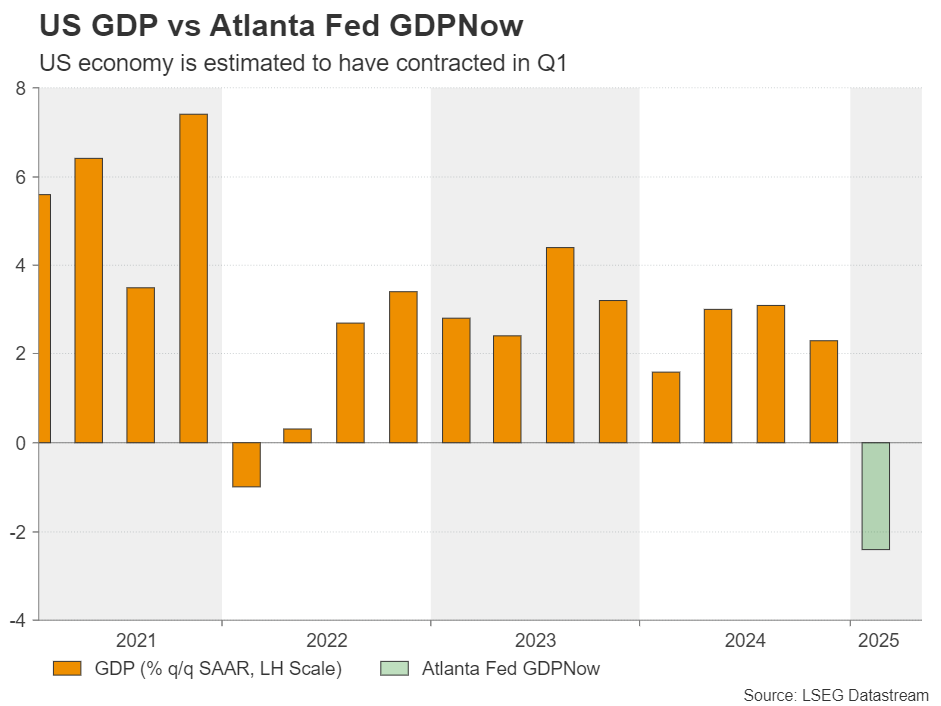
Speaking of recession, the day before the decision, the Atlanta Fed will release its updated estimate of GDP for Q1. The GDPNow model is already projecting a 2.4% qoq SAAR contraction, and a worse print may intensify speculation about the need for further rate cuts. Weaker-than-expected retail sales on Monday could indeed trigger such a downside revision.
Yen bulls await BoJ hike signals
The Fed is not the only central bank to decide on interest rates next week. During Wednesday’s Asian session, the Bank of Japan (BoJ) will announce its own decision. At its first gathering of 2025, this Bank raised its key interest rate by 25bps to 0.5%, with Governor Ueda reaffirming his stance that additional hikes will probably be needed if economic conditions unfold as anticipated.
Since then, data has continued to suggest that underlying trends of wage growth remain solid, with consumer prices accelerating to 4.0% y/y from 3.6% in December and the BoJ’s own core CPI metric rising to 2.2% y/y from 1.9%. Although the Tokyo prints for February pointed to a mild slowdown, they were far from indicating that price pressures are well anchored around the Bank’s 2% objective. The Nationwide prints for February will be released during Friday’s Asian session, after the rate decision.
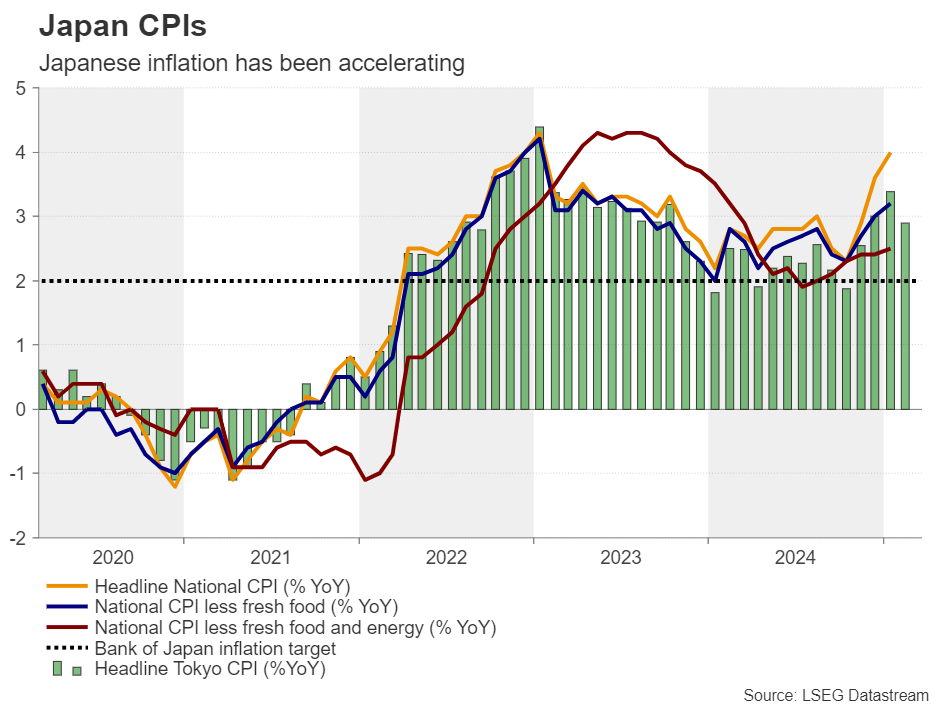
Taking all of this into account, along with the recent hawkish remarks by BoJ policymakers and the acceleration in economic activity during the last quarter of 2024, investors are fully pricing in the next 25bps rate increase to be delivered in September, assigning a strong 80% probability for it to occur in July. What further bolsters investors’ expectations is the fact that many of Japan’s biggest companies have met union demands for substantial wage hikes for a third straight year, helping employees cope with rising cost of living.
Thus, although the Bank is not expected to alter its monetary policy decision at this gathering, any hawkish commentary may allow the yen, which has been the top-performing currency this year, to extend its prevailing uptrend.
Will the SNB press the cut button again?
On Thursday, the central bank torch will be passed to the SNB and the BoE. Getting the ball rolling with the SNB, this will be the Bank’s first policy meeting since the turn of the year. Back in December, policymakers delivered a bigger-than-expected 50bps rate cut in an effort to curb gains in the Swiss franc.
However, the uncertainty surrounding Trump’s tariff policies has further fuelled the currency, while Swiss inflation fell to its lowest level in nearly four years in February, increasing the likelihood for another rate cut this year. The probability for another 25bps reduction next week rests at 75%, with the remaining 25% pointing to no action.
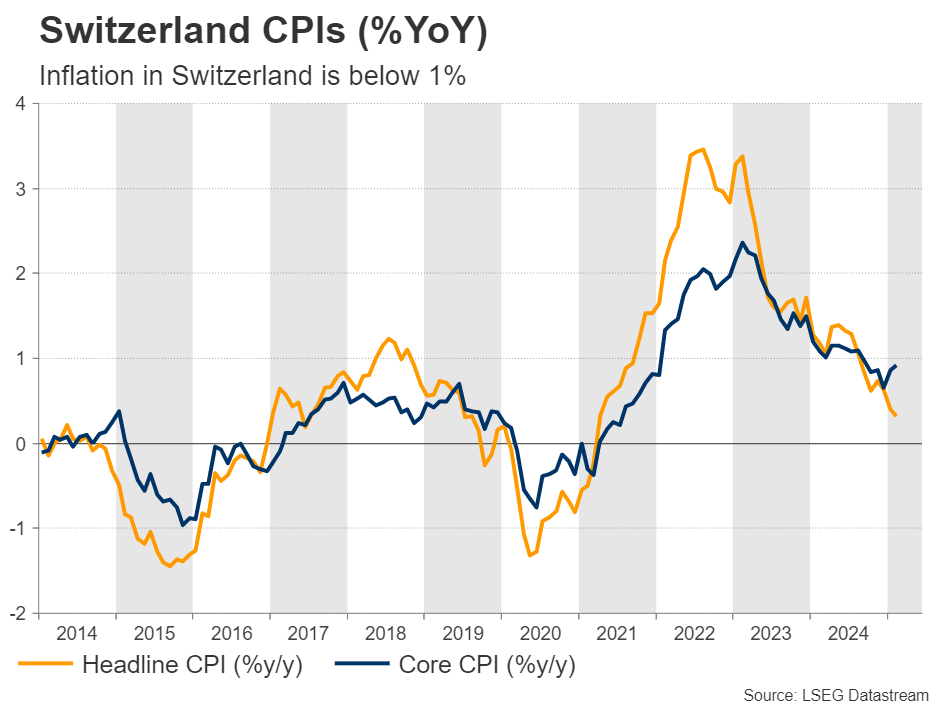
Thus, the rate cut alone is unlikely to spark significant volatility in the Swiss franc. For the currency to surrender a notable portion of its recent gains, the Bank may appear willing to proceed with more reductions if necessary.
Will the BoE sound hawkish or dovish?
Passing the ball to the BoE, UK policymakers are widely anticipated to remain on hold after cutting interest rates by 25bps in February. At that meeting, the Bank downgraded its growth projections and raised its inflation forecasts. That said, the direction of the revisions was largely anticipated. What caught markets off guard was the fact that two members voted for a 50bps cut, with notorious hawk Catherine Mann – who was the sole advocate for keeping rates steady in November – this time voting for a double reduction.
Since then, economic data has mostly surprised to the upside, leading market participants to price in only two additional quarter-point reductions for this year, with the next one expected in June. However, a week ago, Catherine Mann said that Trump’s tariffs and volatility in financial markets mean policymakers need to act more decisively.
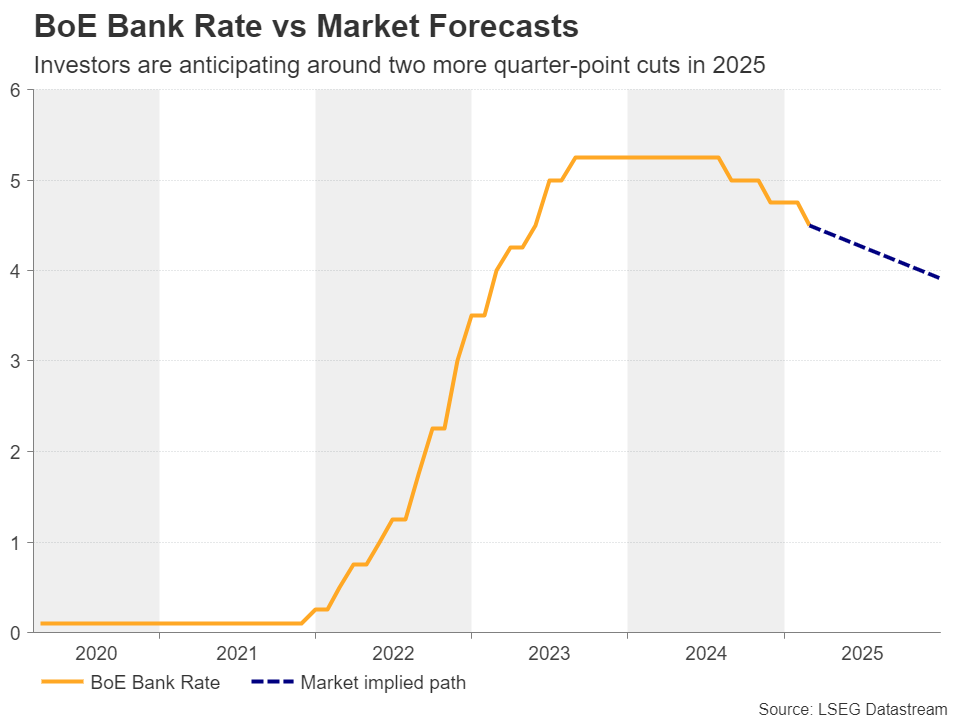
Thus, although no action is expected next week, a dovish stance, suggesting that more policymakers are holding the same view, could hurt the pound as investors may revive bets on deeper rate cuts. For the pound to extend its gains, the Committee may need to sound more concerned about inflation spiralling out of control.
Canada’s CPI, NZ GDP and AU jobs report also on tap
Elsewhere, Canada’s CPI numbers for February and the nation’s retail sales for January are set for release on Tuesday and Friday, respectively. This week, the BoC cut rates by another 25bps, warning that the nation is now facing a “new crisis” due to Trump’s tariffs. Market participants swiftly pencilled in another reduction for the April decision and weaker-than-expected data could further solidify that view.
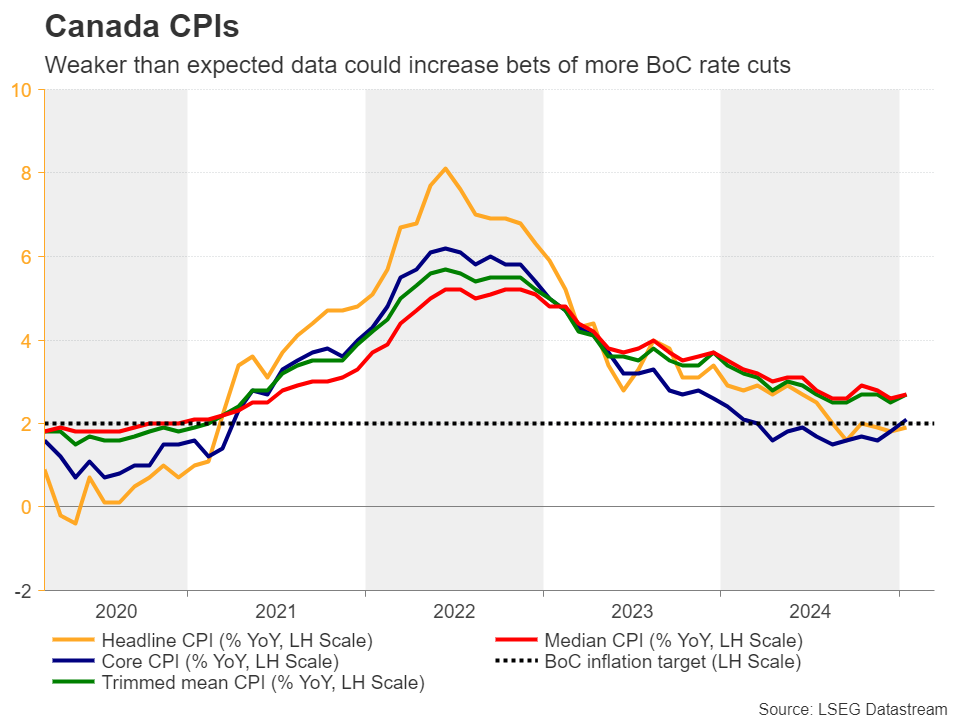
New Zealand’s Q4 GDP report and Australia’s February employment data are also on the radar, which are both set to be released during Thursday’s Asian session.
Weekly Focus – Trade War Escalation Weighs on Markets
An intensifying trade war weighed on risk appetite in a week when particularly US equities traded lower still. The dollar stabilised at the new much weaker levels and global yields largely traded sideways. US steel and aluminium tariffs took effect, and the EU Commission responded with a range of countermeasures, including jeans and bourbon tariffs, but also highlights that they would prefer to remove them and find a solution with the US. The measures cover around 5% of total EU exports to the US and thus should have limited direct macro impact. In an uncertain world, gold prices tested new highs this week.
After a possible US recession has been gradually priced back into markets, some largely uplifting data was welcome, with inflation pressures moderating in February as core CPI declined to 0.2% mom, a relief for the Fed and markets not least with the recent surge in consumers' inflation expectations in mind. The number of job openings ticked a bit higher again in January, and jobless claims declined slightly despite the concerns related to federal layoffs, both confirming the solid picture of the labour market we got with the jobs report for February. The NFIB business survey revealed another sentiment decline among small US businesses with the uncertainty index climbing to the second highest level on record since the 70s. That said, business sentiment remains above levels prior to the presidential election.
Some positive data signs are also worth noting on our own continent. The ECB wage tracker continues to indicate slowing wage growth and thus price pressures, while the Sentix index, which has been a good indicator of PMI directions recently, surprised to the topside, indicating further improvement in economic activity over the recent month.
In Japan, the Shunto, spring wage negotiations, came off to a strong start as many of the big corporates decided to fully meet their labour unions' quite high wage demands. Strong wage growth is a prerequisite for further rate hikes from the Bank of Japan. We expect them on hold on Wednesday, though, not least supported by the recent yen strength.
We also have the Bank of England (BoE) and the Fed on hold. On the FOMC meeting, all eyes will be on the communication on the outlook for further rate cuts as well as the updated rate and economic projections. The Fed could also provide signals about further tapering or even completely ending QT over coming months. We think the BoE will stick to its previous guidance of gradual removal of policy restraint. Swiss inflation remains muted, which is also why we expect a 25bp rate cut to 0.25% from the SNB.
On the data front, we kick off the week with key Chinese housing data for both January and February. We will also look out for retail sales in China and in the US. We can draw no conclusions on the German fiscal package yet, as the CDU/CSU, SPD and The Greens have yet to agree. We will also look out for the votes in the Bundestag and Bundesrat (Upper House) on the German fiscal package.
Caught in the ‘Net’
A single event or trend never occurs in isolation. Reactions to it, as well as independent forces working in the opposite direction, mean the net overall effect can be uncertain and changeable.
This week we release our Market Outlook for March, updating our economic and financial forecasts. As well as the abrupt shift in market sentiment over the past few weeks, stemming from developments overseas, forecasting has been challenged by the prevalence of forces that are working in opposite directions on the same outcome. The net effect of these opposing forces can go either way, and it is often hard to know which direction will prevail.
The US tariffs are a case in point. They are likely to boost US inflation at the same time as being negative for growth. Which consideration will weigh more in the Federal Reserve’s monetary policy decision? You can rely on quantitative analysis to the extent possible, but often there is an element of judgement to these assessments. While it is hard to be sure, given the associated deterioration in market and consumer sentiment, we have – like market pricing – put more weight on the implications for growth and brought forward our expected timing of future Fed rate cuts.
More broadly, we cannot assess the net effect of tariffs and other US policies without also considering how the tariffed countries will react. This was one of the messages from our December/January Market Outlook, as expanded in a note with Westpac economist Illiana Jain. For Australia, the most salient reaction is how China will respond to the tariffs, particularly via domestic stimulus. More recently, countervailing tariffs – though not by Australia – and increased defence spending in Europe all come into the mix as responses to Trump administration policies.
The importance of how others react is also highlighted in the geopolitical sphere. Recent weeks have seen a clear break in how the US is perceived by its longstanding allies, and in the reliance those allies can place on US defence cooperation. We had already factored in the imperative for higher defence spending into our thinking to some degree, including in Europe. This was one of the shifts tilting the balance of global saving versus global investment relative to the pre-pandemic period that informed our house view that the global structure of interest rates is likely to average higher in future than it did in the period between the GFC and the pandemic. Developments in recent weeks reinforce the underpinnings of that view.
On the domestic front, we likewise see opposing forces with uncertain net effects. For consumption growth, we see a pick-up as tax cuts and declining inflation translate into stronger growth in real household incomes. Against those forces, though, population growth is slowing as the post-pandemic catch-up washes through. This could weigh on growth in total consumption even as per capita consumption and sentiment improve.
The unwind from the surge in population growth also complicates assessments of the outlook for the labour market. Recall that if population growth is high, employment growth needs to run very hard to keep pace with rising labour supply, else labour market slack will emerge. In the Australian context, a rising trend in the participation rate has added to this imperative. As the post-pandemic surge in population growth unwinds, that imperative will lessen.
At the same time, though, we know that the boost to employment from the ramp-up in the care economy will end, and employment growth in that sector will normalise. So we have a potential slowing in growth in labour demand at the same time as growth in labour supply (from population growth) is also slowing. The net of these two shifts is uncertain, and it could evolve over time and perhaps even change sign.
On top of the complexities of balancing two shifts in trend with uncertain net effects, any situation where trends are shifting presents measurement issues. A sharply changing growth rate is also one that is hard to measure accurately in real time. Interpreting the data to infer a trend becomes more complicated in this situation. For the labour market, one way to look through these changes in trend is to focus on ratio measures such as employment-to-population or the unemployment rate, rather than employment growth. It remains the case, though, that the dynamics of labour supply will reflect the net of the opposing forces of slowing population growth and a still-rising trend in participation.
There is a broader point here: when considering the effect of a shock, you cannot trace through its effect alone. It is important to factor in the reactions and whether there are other independent (ie not explicit reactions) forces that are offsetting. You also need to hold your assessment of the sign of the net effect lightly and recognise that small changes in relative strengths could flip that sign. This sounds like the general equilibrium thinking economists are trained to do. Most of the time, though, strategic behaviour by conscious actors is a better way to frame the situation.
Importantly, if the net effects of two or more opposing forces flips in sign (or could do so), you need to acknowledge that possibility, rather than getting caught in a narrative favouring one direction. Understanding those forces and how they might evolve can in any case be more useful for your own decision-making than a fixed view of their net effect.
US Michigan consumer sentiment plunges to 57.9, inflation expectation jumps to 4.9%
US consumer confidence took another sharp downturn in March, with University of Michigan Consumer Sentiment Index falling from 64.7 to 57.9, well below expectations of 63.8. Current conditions dipped slightly from 65.7 to 63.5, but Expectations saw a much steeper fall from 64.0 to 54.2.
Of particular concern is the dramatic jump in inflation expectations. Year-ahead inflation expectations rose from 4.3% to 4.9%, the highest level since November 2022. This marks the third consecutive month of unusually large increases of 0.5 percentage points or more, suggesting that consumers are beginning to view inflation as a more entrenched issue.
Even more alarming, long-term inflation expectations surged from 3.5% to 3.9%, the largest month-over-month increase since 1993.
The report also revealed a rare bipartisan consensus regarding the weakening economic outlook. The University of Michigan noted that consumers across all political affiliations cited uncertainty over policy and economic conditions as a major concern, making it difficult to plan for the future.
Even among Republicans, who had shown greater confidence following the election, expectations dropped by 10%. Independents and Democrats posted even steeper declines of 12% and 24%, respectively.
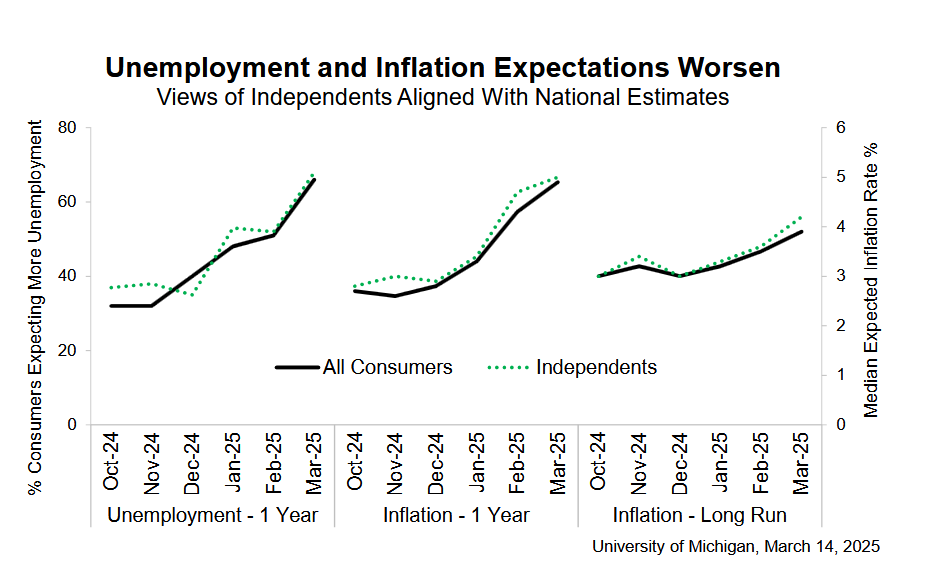
Full University of Michigan Consumer Sentiment release here.
XAU/USD: Gold Cracks $3,000 Milestone
Gold broke above psychological $3000 barrier on Friday. Historical move through a milestone came a bit faster than expected, although I predicted this in my comments and live presentations last year, as a bigger picture, particularly fundamental, was clearly pointing to such scenario.
Thursday’s fresh acceleration higher took out previous record high and boosted signals for attack at $3000 that materialized today.
The latest negative developments in geopolitical and economic fields accelerated migration into safety, which will likely persist as there are no significant encouraging signals on the horizon.
Trade war is gaining pace and threatening to further hurt already fragile conditions in most large economies, with deepening economic crisis to spill over through the smaller economies.
Geopolitical situation, like another key driver, is darkening, with signals of more Fed rate cuts adding to supportive signals.
However, clear break higher is likely to take some time, due to significance of $3000 barrier, with initial technical support at $2980 (hourly higher base) remaining intact for now.
Shallow correction, in the first scenario, should stay above $2980, while deeper pullback should find firm ground above former record high ($2956) to keep larger bulls in play.
Close above $3000 is needed to validate bullish signals and unmask targets at $3032 and $3050 (Fibo projections 161.8% and 176.4% respectively).
Res: 3004; 3017; 3032; 3050.
Sup: 2986; 2980; 2956; 2942.
USD/JPY Mid-Day Outlook
Daily Pivots: (S1) 147.35; (P) 147.87; (R1) 148.32; More...
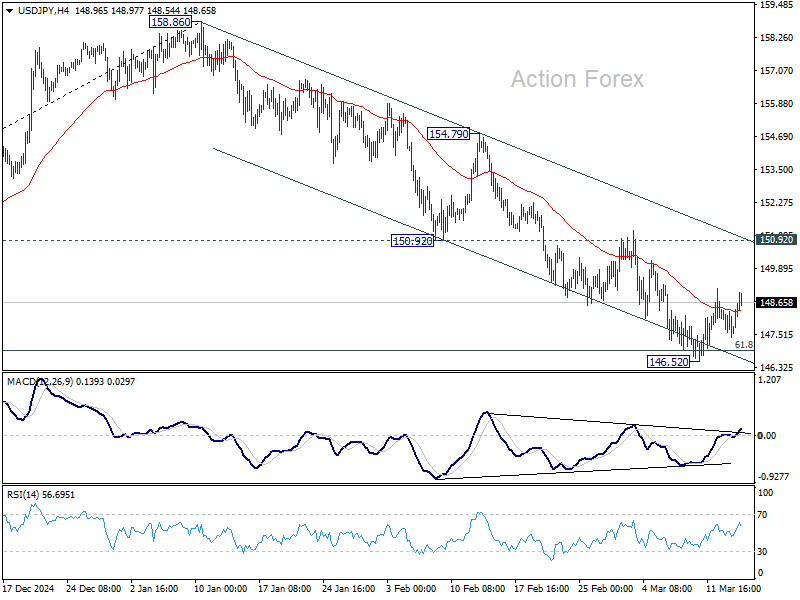
USD/JPY is staying in consolidation from 146.52 and intraday bias remains neutral. Upside of recovery should be limited by 150.92 support turned resistance. On the downside, sustained trading below 61.8% retracement of 139.57 to 158.86 at 146.32 will pave the way to 139.57 support.
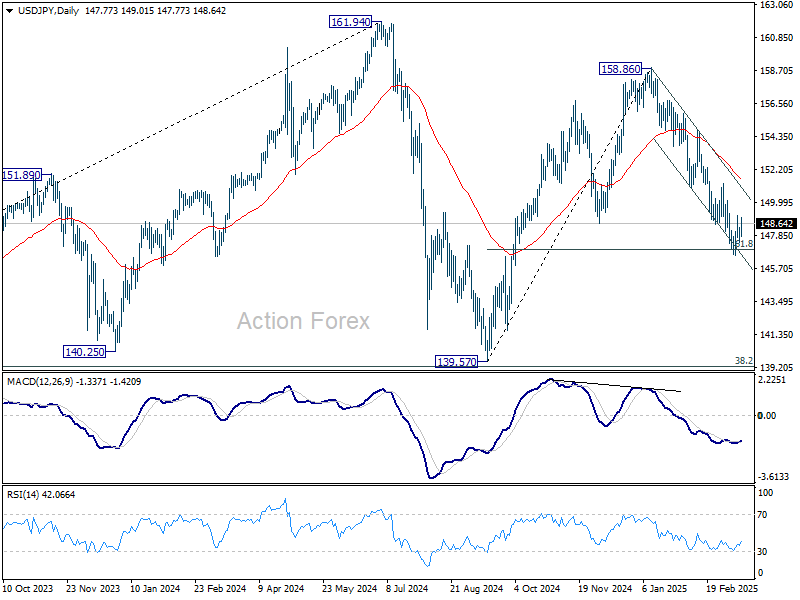
In the bigger picture, price actions from 161.94 are seen as a corrective pattern to rise from 102.58 (2021 low), with fall from 158.86 as the third leg. Strong support should be seen from 38.2% retracement of 102.58 to 161.94 at 139.26 to bring rebound. However, sustained break of 139.26 would open up deeper medium term decline to 61.8% retracement at 125.25.
USD/CHF Mid-Day Outlook
Daily Pivots: (S1) 0.8798; (P) 0.8827; (R1) 0.8849; More…
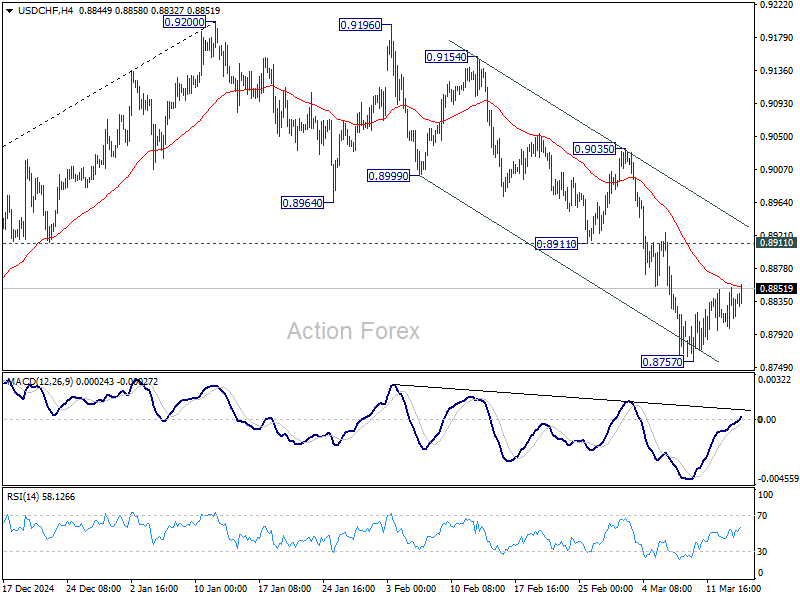
USD/CHF is extending consolidation from 0.8757 and intraday bias remains neutral. Upside of recovery should be limited by 0.8911 support turned resistance to bring another fall. On the downside, below 0.8757 will resume the fall from 0.9200 and target 61.8% retracement of 0.8374 to 0.9200 at 0.8690. Sustained break there will pave the way back to 0.8374 support.
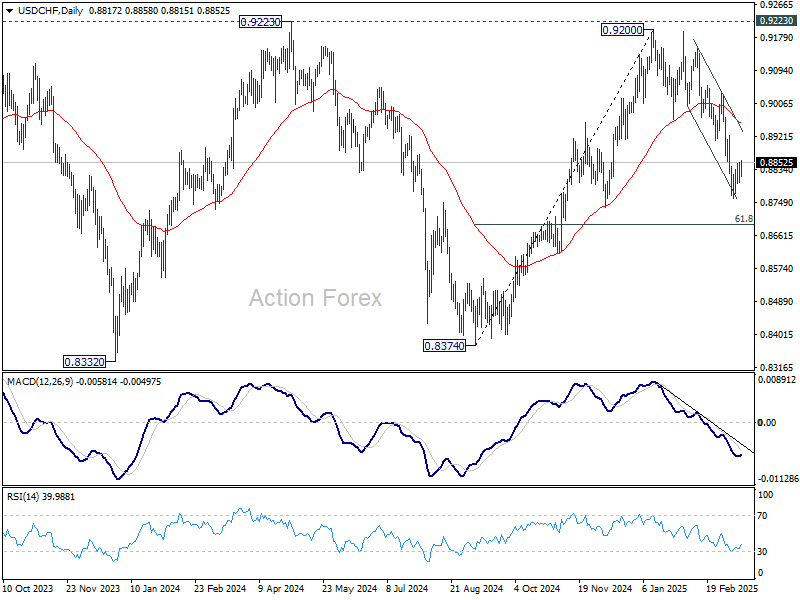
In the bigger picture, rejection by 0.9223 key resistance keep medium term outlook bearish. That is, larger fall from 1.0342 (2017 high) is not completed yet. Firm break of 0.8332 (2023 low) will confirm down trend resumption.
GBP/USD Mid-Day Outlook
Daily Pivots: (S1) 1.2923; (P) 1.2949; (R1) 1.2978; More...
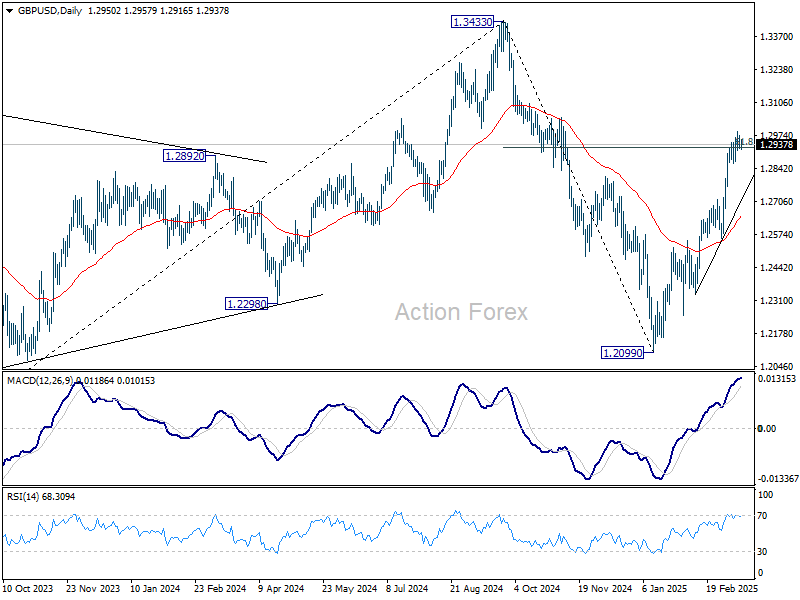
With 1.2860 minor support intact, further rally remains in favor in GBP/USD. Sustained trading above 61.8% retracement of 1.3433 to 1.2099 at 1.2923 will resume the rise from 1.2099, and pave the way back to 1.3433 high. Nevertheless, break of 1.2860 support should indicate short term topping and turn bias back to the downside for deeper pullback.
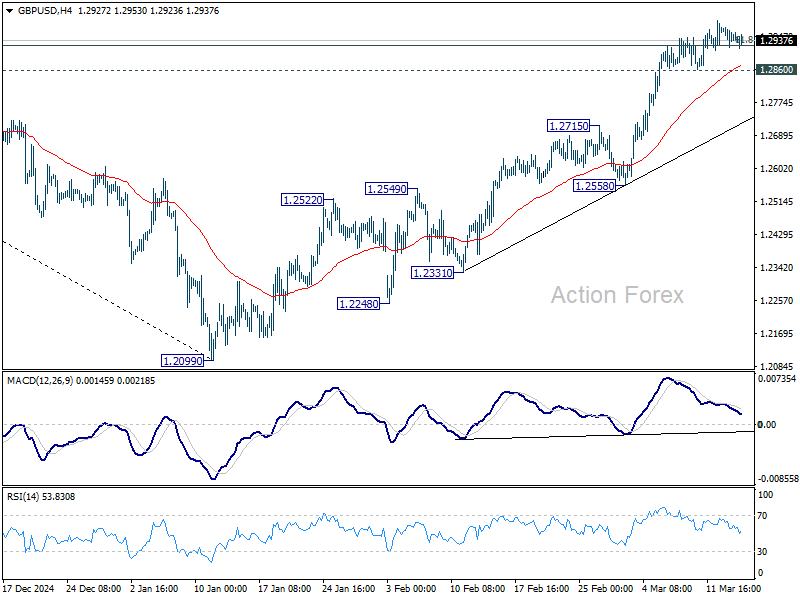
In the bigger picture, fall from 1.3433 (2024 high) should have completed at 1.2099 as a corrective move. Up trend from 1.3051 (2022 low) is still in progress but it's too early to say that it's resuming. Corrective pattern from 1.3433 could extend with one more down leg. But after all, eventual upside breakout is expected at a later stage.
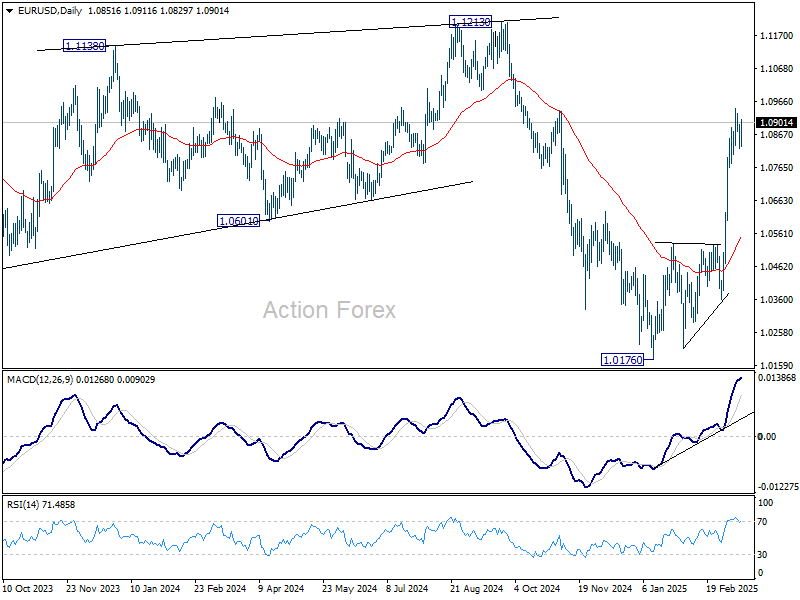
EUR/USD Mid-Day Outlook
Daily Pivots: (S1) 1.0818; (P) 1.0857; (R1) 1.0892; More...
EUR/USD recovers mildly but stays below 1.0946 temporary top. Intraday bias remains neutral and more consolidations could be seen. In case of another fall, downside should be contained by 38.2% retracement of 1.0358 to 1.0946 at 1.0721. On the upside, break of 1.0946 will resume the rally from 1.0176 to retest 1.1274 key resistance next.
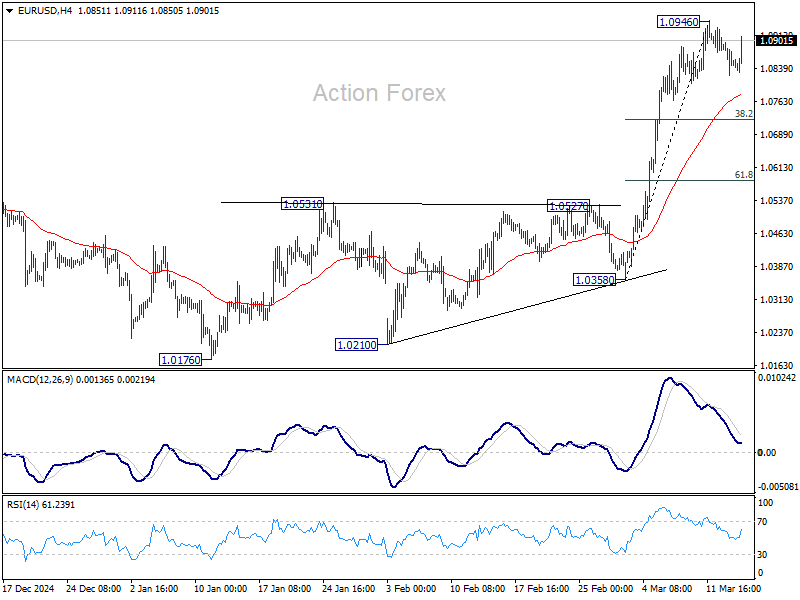
In the bigger picture, the strong break of 55 W EMA (now at 1.0675) suggests that fall from 1.1274 (2024 high) has completed as a three wave correction to 1.0176. Rise from 0.9534 is still intact, and might be ready to resume. Decisive break of 1.1274 will target 100% projection of 0.9534 to 1.1274 from 1.0176 at 1.1916. Also, that will send EUR/USD through a multi-decade channel resistance will carries larger bullish implication. This will now be the favored case as long as 1.0531 resistance turned support holds.