

Sample Category Title
Fed’s Kashkari Says Inflation Still “Much Too High” as Energy Shock Spreads
Federal Reserve Bank of Minneapolis President Neel Kashkari warned that inflation remains the Fed’s primary concern despite growing uncertainty surrounding the global economy and Middle East conflict. Speaking at the Bank of Japan-IMES Conference in Tokyo, Kashkari said inflation in the United States is still “much too high,” while the labor market remains in “decent shape.”
Kashkari emphasized that the Fed must continue taking a “balanced approach” toward its dual mandate, but acknowledged that inflation persistence is becoming increasingly worrying after more than five years of elevated price pressures. “The longer inflation remains elevated, the greater the risk that inflation expectations become unanchored and move higher,” he warned. Kashkari added that if inflation expectations were to drift higher, policymakers “would have to respond even more aggressively”.
The Minneapolis Fed President also pointed directly to the Iran conflict as an important inflation driver, alongside the pandemic, tariffs, and the war in Ukraine. He said rising energy and fertilizer prices are now feeding broader inflation pressures across the global economy. “One of the things I’m going to be looking for is, when do we see energy prices affecting the broader economy,” Kashkari said, highlighting growing concern inside the Fed about second-round inflation effects spreading beyond oil markets alone.
ECB’s Lane Warns Iran Energy Shock Could Keep Inflation Elevated Even After Peace Deal
European Central Bank Chief Economist Philip Lane warned that the inflation impact from the Middle East conflict is likely to persist even if a quick diplomatic resolution is reached. Speaking at a conference hosted by the Bank of Japan and its think tank in Tokyo, Lane said policymakers are concerned that energy-driven price pressures may continue feeding through the broader economy long after the initial oil shock fades.
“Even if the initial energy shock starts to reverse, the second round effect will be with us for a while,” Lane said. He argued that the conflict could leave lasting structural effects on supply chains and global energy strategy, warning that “even if Iran war sees resolution, prolonged conflict could prompt shifts in optimal diversification strategy.”
Lane’s remarks add to increasingly hawkish messaging from senior European Central Bank officials this week as markets prepare for a likely June rate hike. Policymakers are becoming more focused on preventing higher energy costs from feeding into wages, pricing behavior, and broader inflation expectations across the Eurozone economy. The comments also suggest that even a reopening of the Strait of Hormuz may not quickly reverse the inflation pressures already embedded into Europe’s economic outlook.
Traders Are Desperate for More News, but the Status Quo Is Positive
Global financial markets are on edge as traders wait for clear details about the new US-Iran peace plan.
After two months of intense tension and repeated ceasefire extensions, a concrete framework is finally being discussed.
Both sides know what is at stake: the US wants the Strait of Hormuz reopened without conditions and Iran’s nuclear program dismantled, while Iran wants a full regional ceasefire and a withdrawal of US troops.
The big question for markets now is whether negotiators can bring some still-contradicting demands together in the next 60 days.
Even with uncertainty still in the air, the current situation is giving strong support to risk assets.
The fact that tensions are not turning into a wider war is a major positive change. This relief has pushed the tech-focused Nasdaq to new record highs above 30,000 this morning, up 4% since last week.
The Dow Jones Industrial Average also broke records on Monday’s holiday and is trying to move higher, though today’s trading has been slower and steadier.
This particularly reflects the large change seen in crude oil prices, down just shy of 10% since the weekly open.
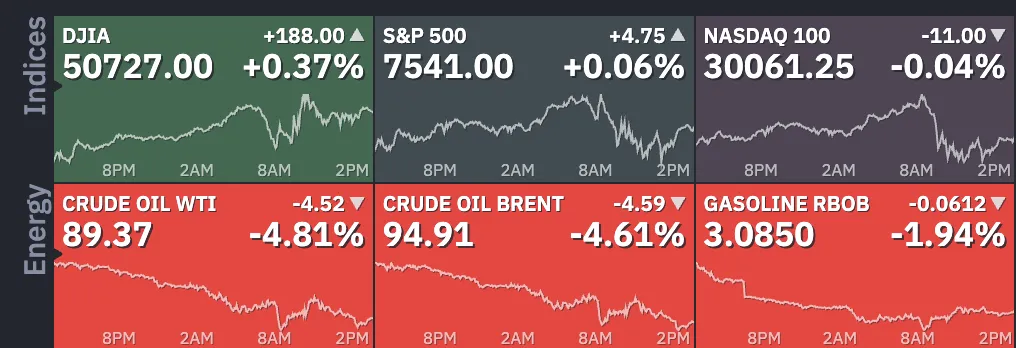
Daily FX Performance (15:56), May 27, 2026 – Courtesy of Finviz.
Still, there is some caution in the market because the White House has not shown much excitement about the final details of the deal.
President Trump made it clear that Iran will not get immediate sanctions relief for giving up its highly enriched uranium.
This firm position shows that, even though there is a Memorandum of Understanding, reaching a full treaty remains very complicated and faces many diplomatic challenges.
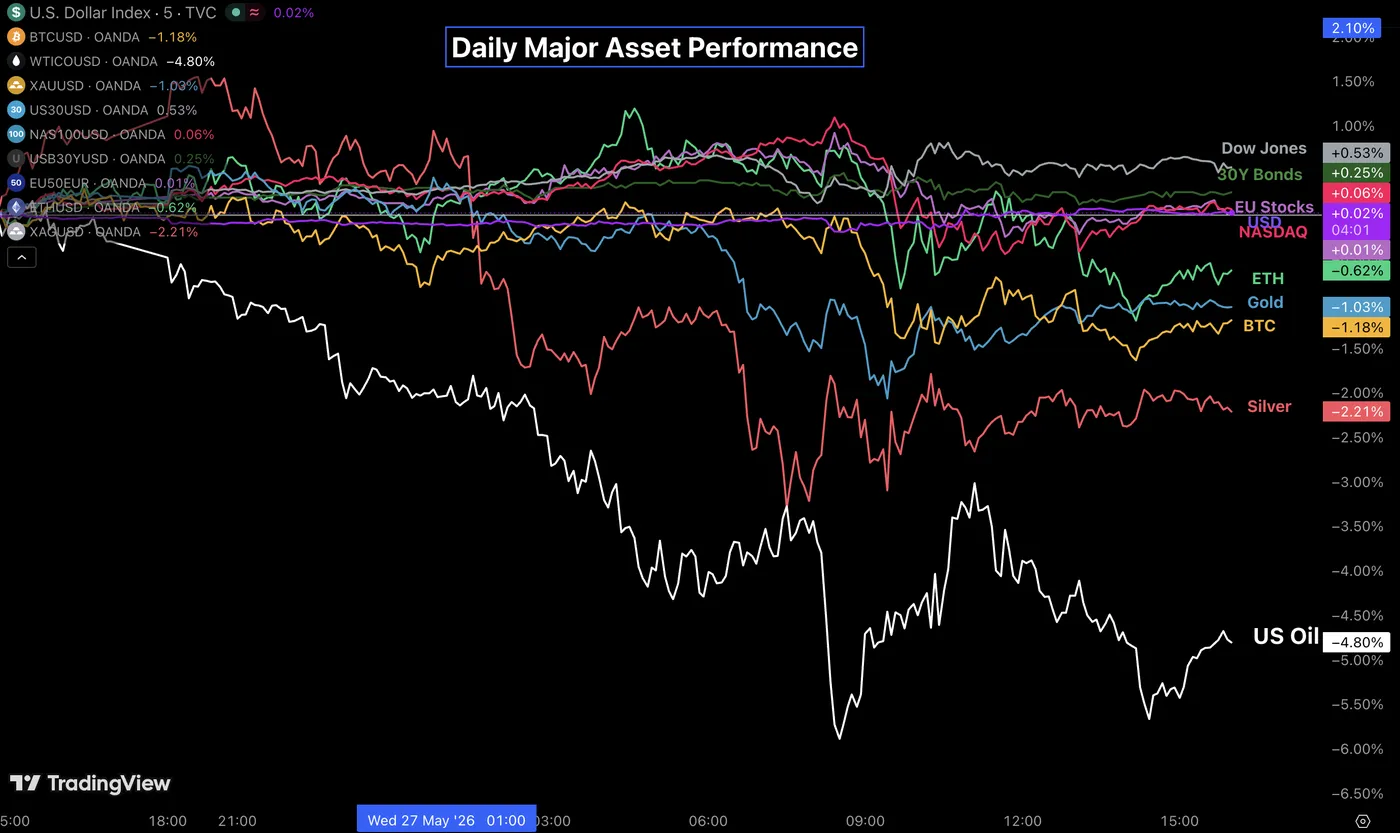
Cross-Asset Daily Performance, May 27, 2026 – Source: TradingView.
Even if the risk of re-escalation has eased, many details are still unclear and traders are turning their attention back to economic data while awaiting further headlines.
With few major events early this week, big investors are waiting for tomorrow’s important Core PCE report.
This key inflation number will show if the recent oil-driven supply shocks have hurt the US economy more than expected, which could make things harder for the Federal Reserve’s next moves (the next FOMC meeting is on June 17).
These are my final pieces on MarketPulse, so thank you to everyone who enjoyed the posts over the past year. I wish you success in the world of trading and a long life in markets.
With time, resistance and resilience, things will fall in order.
Don't forget to follow me on X, send me messages for any questions, and you can check out my website if you want to stay in contact.
Safe trades and keep your eyes on the news!
Buyers Likely to Support Nikkei Futures (NKD) Pullback, Eyeing 72,870 Extension
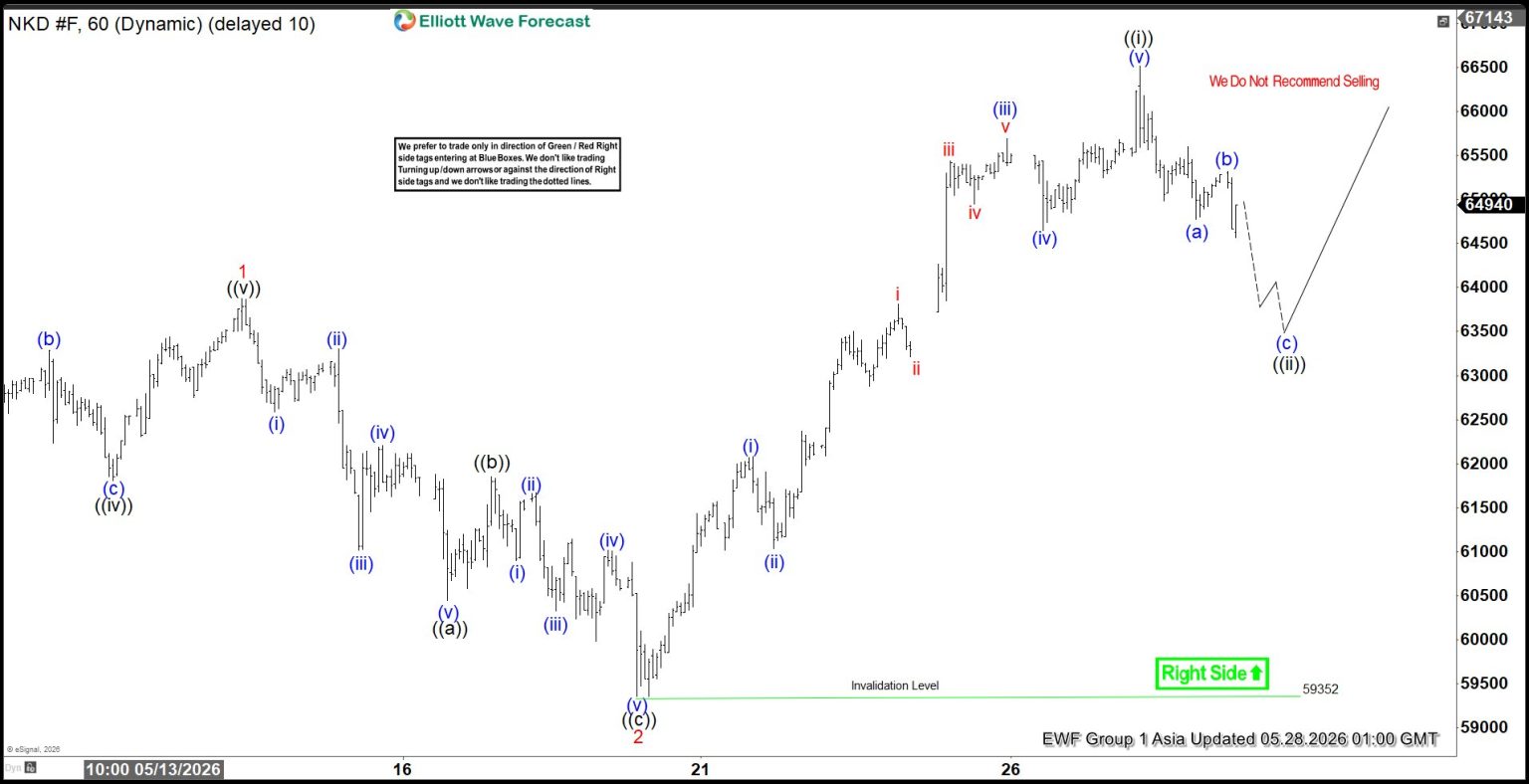
Nikkei Futures (NKD) continues to demonstrate remarkable strength as it extends into new all‑time highs, reinforcing the bullish sequence that began from the March 23, 2026 low. This upward momentum favors additional gains in the near term. From the March 23 low, wave 1 concluded at 63,880, followed by a corrective pullback in wave 2 that ended at 59,352. The internal subdivision of wave 2 unfolded as a zigzag, a common corrective structure, before the Index resumed higher. The decisive break above the wave 1 peak confirmed that wave 3 had begun, signaling continuation of the impulsive advance.
From wave 2, the initial leg wave (i) ended at 62,075, while the subsequent pullback in wave (ii) found support at 61,040. The rally extended further, with wave (iii) reaching 65,695, before a modest dip in wave (iv) concluded at 64,650. The final leg, wave (v), advanced to 66,520, completing wave ((i)) of a higher degree. At present, a corrective phase in wave ((ii)) is unfolding, designed to retrace the cycle from the May 20, 2026 low. This correction is expected to provide a healthy consolidation before the broader rally resumes.
In the near term, as long as the pivotal support at 59,352 remains intact, the pullback should ultimately find support within the typical 3, 7, or 11 swing sequence. Consequently, the broader outlook continues to favor further upside once the current consolidation completes, maintaining the bullish trajectory established since March.
Nikkei Futures (NKD) 60-Minute Elliott Wave Chart
NKD_F Elliott Wave Video:
https://www.youtube.com/watch?v=mffic6woNVU
Eco Data 5/28/26
| GMT | Ccy | Events | Act | Cons | Prev | Rev |
|---|---|---|---|---|---|---|
| 01:30 | AUD | Private Capital Expenditure Q1 | 6.50% | 1.00% | 0.40% | 0.70% |
| 09:00 | EUR | Eurozone Economic Sentiment May | 93.5 | 92 | 93 | 93.2 |
| 09:00 | EUR | Eurozone Services Sentiment May | 2.2 | 0.1 | 0.9 | |
| 09:00 | EUR | Eurozone Industrial Confidence May | -8 | -7.8 | -7.7 | |
| 09:00 | EUR | Eurozone Consumer Confidence May F | -19 | -19 | -19 | |
| 11:30 | EUR | ECB Monetary Policy Meeting Accounts | ||||
| 12:30 | CAD | Current Account (CAD) Q1 | -1.9B | -0.7B | ||
| 12:30 | USD | Initial Jobless Claims (May 22) | 215K | 210K | 209K | 210K |
| 12:30 | USD | Personal Income M/M Apr | 0.00% | 0.40% | 0.60% | 0.50% |
| 12:30 | USD | Personal Spending M/M Apr | 0.50% | 0.50% | 0.90% | 1.00% |
| 12:30 | USD | PCE Price Index M/M Apr | 0.40% | 0.50% | 0.70% | |
| 12:30 | USD | PCE Price Index Y/Y Apr | 3.80% | 3.80% | 3.50% | |
| 12:30 | USD | Core PCE Price Index M/M Apr | 0.20% | 0.30% | 0.30% | |
| 12:30 | USD | Core PCE Price Index Y/Y Apr | 3.30% | 3.30% | 3.20% | |
| 12:30 | USD | Durable Goods Orders Apr | 7.90% | 3.30% | 0.80% | 1.30% |
| 12:30 | USD | Durable Goods Orders ex Transport Apr | 1.10% | 0.50% | 0.90% | 1.10% |
| 12:30 | USD | GDP Annualized Q1 P | 1.60% | 2% | 2% | |
| 14:00 | USD | New Home Sales Apr | 622K | 661K | 682K | 663K |
| 14:30 | USD | Natural Gas Storage (May 22) | 92B | 96B | 101B | |
| 16:00 | USD | Crude Oil Inventories (May 22) | -3.8M | -7.9M |
| 01:30 | AUD |
| Private Capital Expenditure Q1 | |
| Actual | 6.50% |
| Consensus | 1.00% |
| Previous | 0.40% |
| Revised | 0.70% |
| 09:00 | EUR |
| Eurozone Economic Sentiment May | |
| Actual | 93.5 |
| Consensus | 92 |
| Previous | 93 |
| Revised | 93.2 |
| 09:00 | EUR |
| Eurozone Services Sentiment May | |
| Actual | 2.2 |
| Consensus | 0.1 |
| Previous | 0.9 |
| 09:00 | EUR |
| Eurozone Industrial Confidence May | |
| Actual | -8 |
| Consensus | -7.8 |
| Previous | -7.7 |
| 09:00 | EUR |
| Eurozone Consumer Confidence May F | |
| Actual | -19 |
| Consensus | -19 |
| Previous | -19 |
| 11:30 | EUR |
| ECB Monetary Policy Meeting Accounts | |
| Actual | |
| Consensus | |
| Previous | |
| 12:30 | CAD |
| Current Account (CAD) Q1 | |
| Actual | |
| Consensus | -1.9B |
| Previous | -0.7B |
| 12:30 | USD |
| Initial Jobless Claims (May 22) | |
| Actual | 215K |
| Consensus | 210K |
| Previous | 209K |
| Revised | 210K |
| 12:30 | USD |
| Personal Income M/M Apr | |
| Actual | 0.00% |
| Consensus | 0.40% |
| Previous | 0.60% |
| Revised | 0.50% |
| 12:30 | USD |
| Personal Spending M/M Apr | |
| Actual | 0.50% |
| Consensus | 0.50% |
| Previous | 0.90% |
| Revised | 1.00% |
| 12:30 | USD |
| PCE Price Index M/M Apr | |
| Actual | 0.40% |
| Consensus | 0.50% |
| Previous | 0.70% |
| 12:30 | USD |
| PCE Price Index Y/Y Apr | |
| Actual | 3.80% |
| Consensus | 3.80% |
| Previous | 3.50% |
| 12:30 | USD |
| Core PCE Price Index M/M Apr | |
| Actual | 0.20% |
| Consensus | 0.30% |
| Previous | 0.30% |
| 12:30 | USD |
| Core PCE Price Index Y/Y Apr | |
| Actual | 3.30% |
| Consensus | 3.30% |
| Previous | 3.20% |
| 12:30 | USD |
| Durable Goods Orders Apr | |
| Actual | 7.90% |
| Consensus | 3.30% |
| Previous | 0.80% |
| Revised | 1.30% |
| 12:30 | USD |
| Durable Goods Orders ex Transport Apr | |
| Actual | 1.10% |
| Consensus | 0.50% |
| Previous | 0.90% |
| Revised | 1.10% |
| 12:30 | USD |
| GDP Annualized Q1 P | |
| Actual | 1.60% |
| Consensus | 2% |
| Previous | 2% |
| 14:00 | USD |
| New Home Sales Apr | |
| Actual | 622K |
| Consensus | 661K |
| Previous | 682K |
| Revised | 663K |
| 14:30 | USD |
| Natural Gas Storage (May 22) | |
| Actual | 92B |
| Consensus | 96B |
| Previous | 101B |
| 16:00 | USD |
| Crude Oil Inventories (May 22) | |
| Actual | |
| Consensus | -3.8M |
| Previous | -7.9M |
Sunset Market Commentary
Markets
Oil prices erased yesterday’s bounce back towards the $100 barrel. There’s little news to report on the ongoing talks between the US and Iran. Markets take it as a positive sign. Iran’s state TV did say it obtained a draft of the initial unofficial MoU framework which included the withdrawal of US military forces and lifting the naval blockade. Iran in return would commits to allow commercial transit through the Strait of Hormuz to pre-war levels within one month. Future management of the Strait will be handled by Iran in cooperation with Oman, the draft stated. Brent crude fell to currently trade around $96. Core bonds benefit slightly from these lower oil prices. US changes are limited to <2 bps though. German yields ease a similar amount with the front end slightly outperforming (-2.0 bps) but that didn’t weigh on money market bets for an ECB June hike, on the contrary. The market implied probability grew from +/- 92% yesterday to 95% today as ECB heavyweight Schnabel’s comments from yesterday continue to linger. Stock markets march higher again. The EuroStoxx50 recoups part of yesterday’s losses and the likes of the S&P500 hold near record highs. Economic data was limited to the weekly ADP employment estimate but came with zero impact on markets. Coming in at nearly 36k (on a four-week moving average basis), weekly job growth remains among the quickest in the series, be it still short, history.
Currency markets show little movement. The kiwi dollar is the exception to the rule after the central bank barely kept the policy rate at 2.25% during this morning’s decision. The status quo came with strong messaging that hikes were imminent though and “most likely more and sooner”. Markets upped tightening bets with a first move fully priced in for September, to be followed several more through March next year. The 3.25% currently expected puts it in line with the Reserve Bank of New Zealand’s own view. NZD/USD sprints towards the 0.59 barrier. Most other dollar pairs hold a tight range with EUR/USD treading water around 1.165. USD/JPY sticks around 159.4, unfazed by Bank of Japan governor Ueda’s veiled hint for near-term hike(s) this morning. Sterling loses ground to EUR/GPB 0.866 amid Gilt outperformance.
News & Views
New EU car registrations increased by 4.2% YtD in April 2026 (to 3794k). The market continued to benefit from strong consumer demand for a range of electrified technologies, supported by new and revised tax benefits and incentive schemes across major European countries. In absolute terms, new battery-electric car registrations (BEV’s) rose by 33.8% when comparing April YtD 2025 with April YtD 2026 (747k). BEV’s accounted for 19.7% of the EU market, an increase from 15.3% a year earlier. Hybrid-electric (HEV’s) car registrations captured 38.2% of the market (from 35.3%), remaining the preferred choice among consumers in the EU. Moreover, the combined market share of petrol and diesel cars declined to 30.2%, down from 38.1%. In Belgium, new car registrations are 4.5% lower (151.6k) YtD compared to 2025. Petrol cars remain the dominant choice (43.8% from 42.2%), ahead of BEV’s (35.2% from 33.3%) and HEV’s (12.2% from 12%). Compared with the first four months of 2025, only new registrations of BEV’s increased (+1.1%).
UK energy regulator Ofgem today announced a 13% increase of the energy price cap for the third quarter of this year. Customers will see a smaller price increase of around 5% on their electricity bills compared to gas bills which are rising by 24%. The current price cap for a typical household paying by direct debit for gas and electricity is £1,641. In practice, the increase will be much smaller than an increase to £1,862 though as Ofgem updated its Typical Domestic Consumption Review. That’s how much energy a typical household uses. From 1 July, the figures will be updated to reflect the fact that households are using less energy than before - around 7% less electricity and 17% less gas compared to the last review. As a result, the price cap level from 1 July will be £1,663 per year - reflective of these updated values. At the height of the energy crisis, the government stepped in to cap bills at £2500. Currently, 40% (22 mn) of accounts are fixed tariffs and are therefore unaffected by this price rise.
EURAUD Wave Analysis
EURAUD: ⬆️ Buy
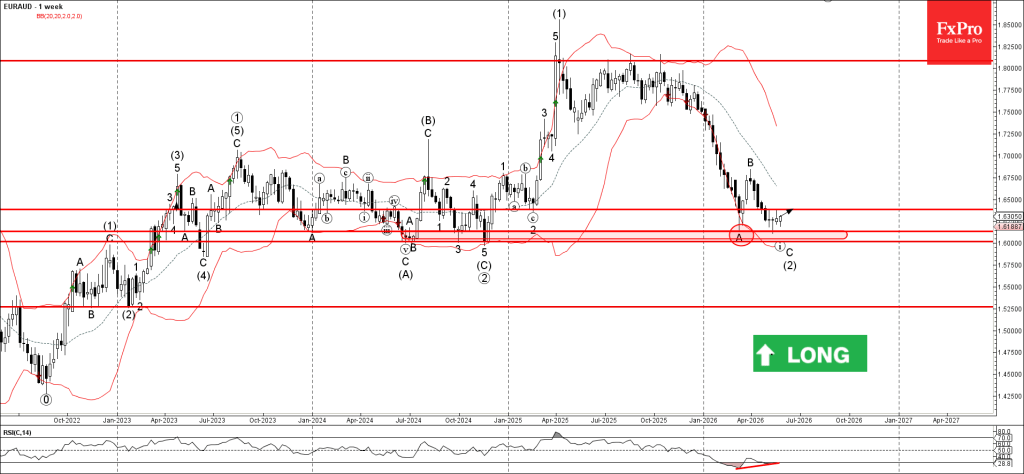
- EURAUD reversed from multi-month support level 1.6130
- Likely to rise to resistance level 1.6385
EURAUD currency pair recently reversed up from the strong multi-month support level 1.6130 (upper border of the narrow support zone, which has been reversing the price from the middle of 2024).
The upward reversal from the support level 1.6130 stopped the previous weekly impulse wave C of the weekly downward ABC correction (2) from the start of 2025.
Given the strength of the support level 1.6130 and the bullish divergence on the weekly RSI indicator, EURAUD currency pair can be expected to rise to the next resistance level 1.6385.
EURGBP Wave Analysis
EURGBP: ⬆️ Buy
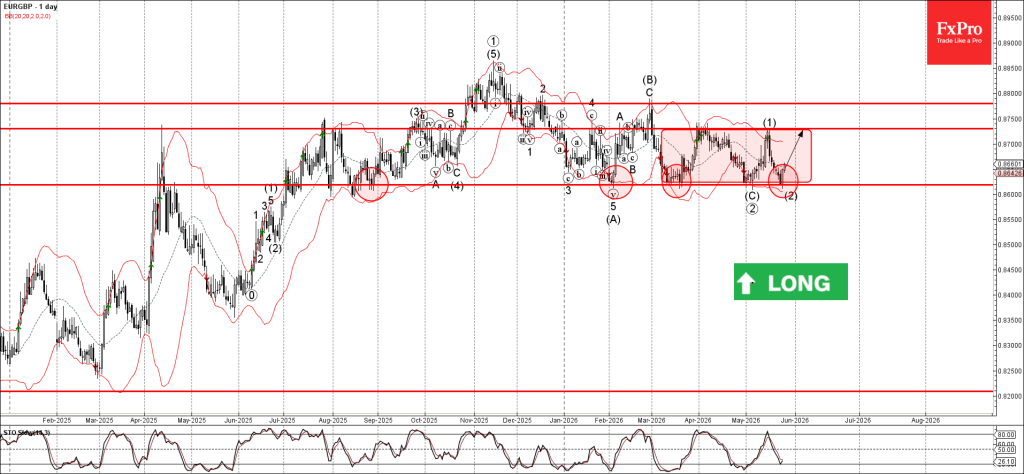
- EURGBP reversed from key support level 0.8620
- Likely to rise to resistance level 0.8730
EURGBP currency pair recently reversed up from the support zone between the key support level 0.8620 – which is the lower border of the sideways price range from the middle of May, which has also been reversing the pair from August.
The upward reversal from this from the support zone stopped the previous intermediate correction (2).
Given the bullish euro sentiment seen across the FX markets today and sterling outflows, EURGBP currency pair can be expected to rise to the next resistance level 0.8730 (upper border of the active sideways price range).
Oil Slips, Kiwi Jumps, Euro Firms as Markets Cautiously Price Iran Deal
Markets are still trading as though peace is coming — even though not with the same confidence seen at the start of the week. Brent oil prices slipped again today to below $93 as investors continued betting that the United States and Iran are inching closer toward a broader agreement that could eventually reopen the Strait of Hormuz and ease fears of a prolonged global energy shock. But the easy part of the “peace dividend” trade now appears over. Traders are demanding proof before pushing oil sharply lower again.
The most important signal may actually be coming from bond markets rather than oil itself. Treasury yields have eased from their recent highs but are refusing to collapse, suggesting fixed-income traders remain deeply skeptical that inflation risks will disappear quickly. The logic is straightforward: if negotiations fail or energy disruptions intensify again, another inflation shock could rapidly force central banks back into a much more aggressive tightening posture. That is particularly important for Europe, where policymakers increasingly believe the energy shock is already spreading through the broader economy regardless of whether a final Iran deal eventually materializes.
Meanwhile, currency markets reflected widening central bank divergence rather than pure geopolitical positioning. New Zealand Dollar led gains after the Reserve Bank of New Zealand delivered a sharply hawkish hold that surprised markets. Policymakers split evenly 3-3 on whether to raise rates immediately, forcing Governor Anna Breman to use her casting vote to keep the OCR unchanged at 2.25%. The RBNZ also warned that rates would likely need to rise “sooner and by more” than previously projected. That dramatically strengthened expectations that the July meeting is now live for a hike, even though broader market consensus still leans toward September tightening.
Euro also remained firmly bid as senior European Central Bank officials continued preparing investors for a June hike. ECB Executive Board member Isabel Schnabel warned this week that “looking through is no longer an option,” while ECB Chief Economist Philip Lane effectively endorsed tighter market pricing by saying investors did not need “extra guidance.” The key issue for the ECB now is no longer whether inflation will rise — it is whether policymakers can stop energy costs from embedding themselves into wages and broader pricing behavior across the Eurozone economy.
On the other side of the spectrum, Australian Dollar and Canadian Dollar both struggled. Aussie weakened after softer-than-expected April inflation data reduced urgency for another Reserve Bank of Australia rate increase. While markets still see some possibility of an August hike, deteriorating labor-market conditions and easing headline inflation have clearly weakened conviction compared with a week ago. Canadian Dollar also remained under pressure as falling crude prices eroded one of the Loonie’s key macro supports.
Meanwhile, Dollar traded closer to the middle of the performance table, caught between losses against the increasingly hawkish Kiwi and Euro, and support from cautious Treasury markets that still see meaningful inflation risks if Iran negotiations ultimately fail.
EUR/CAD Rally Continues as ECB Officials Prepare Markets for June Hike
EUR/CAD surged as ECB officials increasingly prepared markets for a June rate hike while falling oil prices weakened Canadian Dollar. The widening divergence between Europe’s inflation fears and Canada’s fading commodity support is now becoming one of the main macro themes in FX markets. Read More.
Fed’s Kashkari Warns of Rising Inflation Risks, But Says It’s Too Soon to Predict Rate Hike
Minneapolis Fed President Neel Kashkari warned that inflation risks are “higher, not lower” as the Iran conflict continues pushing energy and supply-chain costs higher globally. But despite rising market bets on a Fed hike later this year, Kashkari said it remains “far too soon” to predict the timing of the next move. Read More.
AUD/NZD Correction Risk Growing After RBNZ and Australia CPI, But Confirmation Still Missing
AUD/NZD tumbled after markets were hit by simultaneous surprises from both sides of the Tasman — a much more hawkish RBNZ hold and softer Australian inflation data. Correction risks are clearly building, but traders are still waiting for the decisive technical breakdown needed to confirm a larger reversal. Read More.
RBNZ Delivers Hawkish Hold as Split Vote Signals Rate Hikes Coming Soon
The RBNZ may have held rates unchanged at 2.25%, but the decision was one of the most hawkish holds in years. A shock 3-3 split vote forced Governor Anna Breman to use her casting vote, while policymakers warned that OCR hikes will likely come “sooner and by more” than previously expected. Read More.
Australia CPI Slows More Than Expected to 4.2% as Fuel Inflation Eases
Softer fuel inflation helped cool Australia’s headline CPI in April, easing immediate pressure for another RBA hike. But trimmed mean inflation climbed to its highest level since mid-2024, reinforcing concerns that underlying price pressures are still proving sticky. Read More.
EUR/JPY Daily Outlook
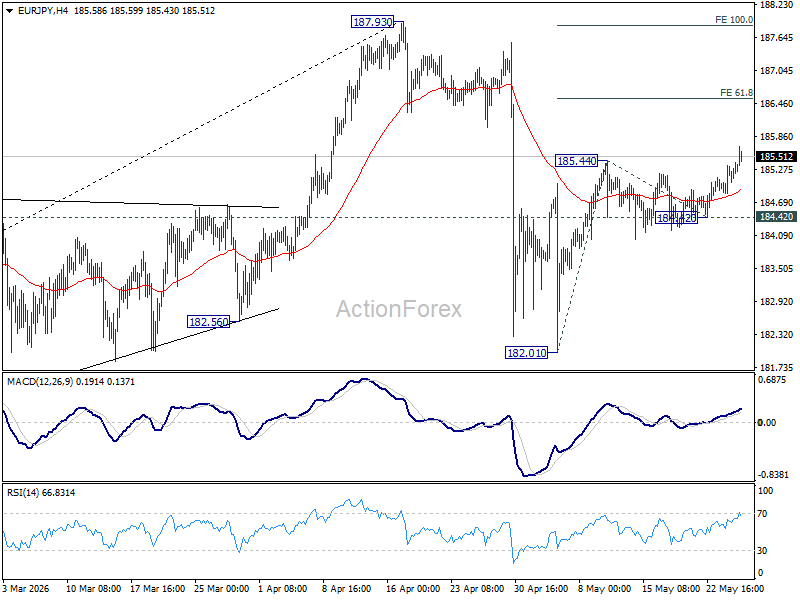
EUR/JPY's rebound from 182.01 resumed today and intraday bias is back on the upside. Next target is 61.8% projection of 182.01 to 185.44 from 184.42 at 186.53. Near term risk will stay on the upside as long as 184.42 support holds, in case of retreat.
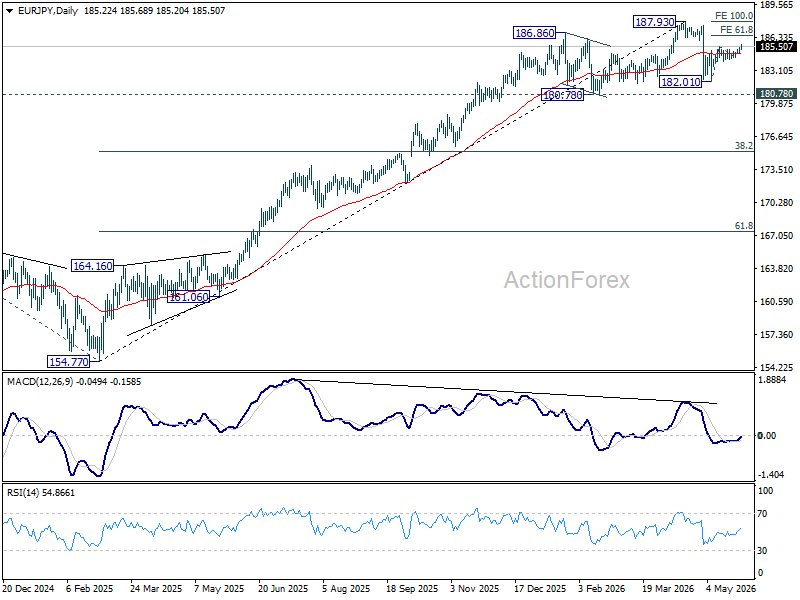
In the bigger picture, the pullback from 187.93 is steep, there is no sign of reversal yet. Uptrend from 114.42 (2020 low) is still expected to resume at a later stage to 78.6% projection of 124.37 (2022 low) to 175.41 (2025 high) from 154.77 at 194.88. However, sustained break of 55 W EMA (now at 178.51) will argue that it's already in a medium term down trend to 175.41 resistance turned support and below.
Is It Too Late for a US-Iran Breakthrough to Stave Off an Inflation Shock?
- US and Iran talks make progress but key obstacles remain.
- Hopes rise of an end to the Strait of Hormuz blockade.
- But oil inventories are depleting fast; how long before they run out?
- Is the worst of the energy crisis yet to come?
Risk of complacency
It’s been almost two months since the United States and Iran agreed to a ceasefire, bringing a temporary pause to the intense missile and drone strikes that crippled the region’s energy infrastructure. Yet, the cessation of hostilities has not brought about a reopening of the Strait of Hormuz – a vital passageway for global energy shipments – that handles about 20% of the world’s oil and gas supplies. While some traffic has resumed, daily volumes are a fraction of pre-war levels.
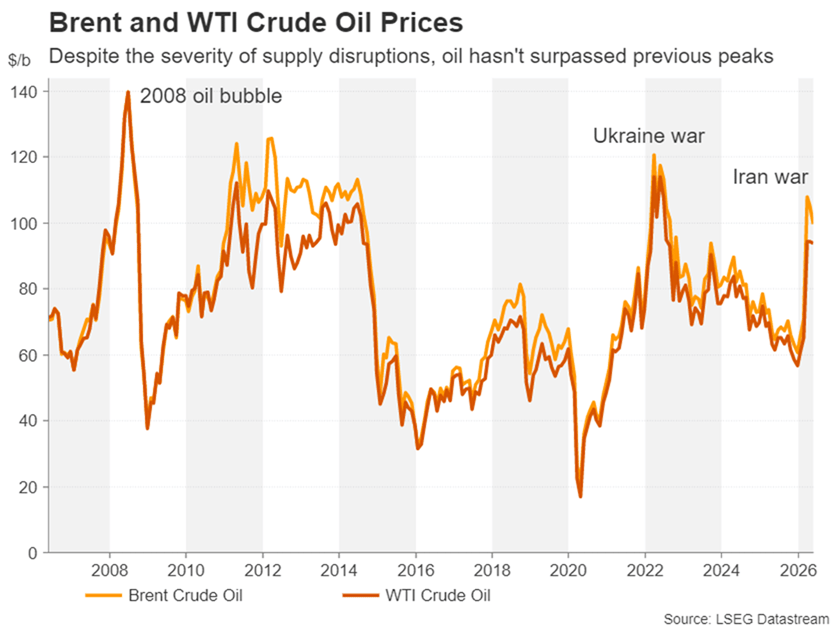
The severity of such a critical chokepoint remaining shut for a prolonged period should not be underestimated. But there’s a real danger that investors have been complacent about the risks. From a historic measure, the key crude oil benchmarks – Brent and WTI futures – peaked below the previous shocks in 2008 and 2022. This, despite the current crisis in the Middle East posing a bigger threat to longer-term supplies than either the supply-demand imbalance of 2008 or the sanctions imposed on Russia for its invasion of Ukraine in 2022.
A US-Iran deal may not be easy
The complacency can likely be explained by optimism that the war will not last long. Investors believe President Trump will not want the war to drag on for too long, as his popularity has plummeted in domestic polls, just months before November’s mid-term elections. Many are already speculating that the current ceasefire was initiated because Trump is seeking an exit from the war after failing to achieve a quick win by toppling the Iranian regime and imposing a one-sided deal on Tehran.
But the Iranians are remaining defiant and taking a tough stance in the negotiations by defending their right to a ‘civilian’ nuclear programme. The Americans, however, are adamant that Iran must not be able to develop nuclear weapons and are demanding that Iran surrender its existing stockpile of enriched uranium.
As things stand, the best that can be hoped for is a framework agreement for a permanent solution that would pave the way for the reopening of Hormuz. Nevertheless, after weeks of talks, the negotiations finally seem to be going somewhere, with reports suggesting that a deal is 95% complete.
Oil’s rollercoaster ride
In many ways, oil’s price action since March demonstrates the frequently shifting sentiment on the expected duration of the conflict. The simultaneous formation of lower highs and higher lows that typically constitute a pennant pattern reflects the mood swings from hope to fear, with the pennant’s very wide angle indicative of the heightened volatility. But essentially, oil has been in a consolidation phase that may now be coming to an end.
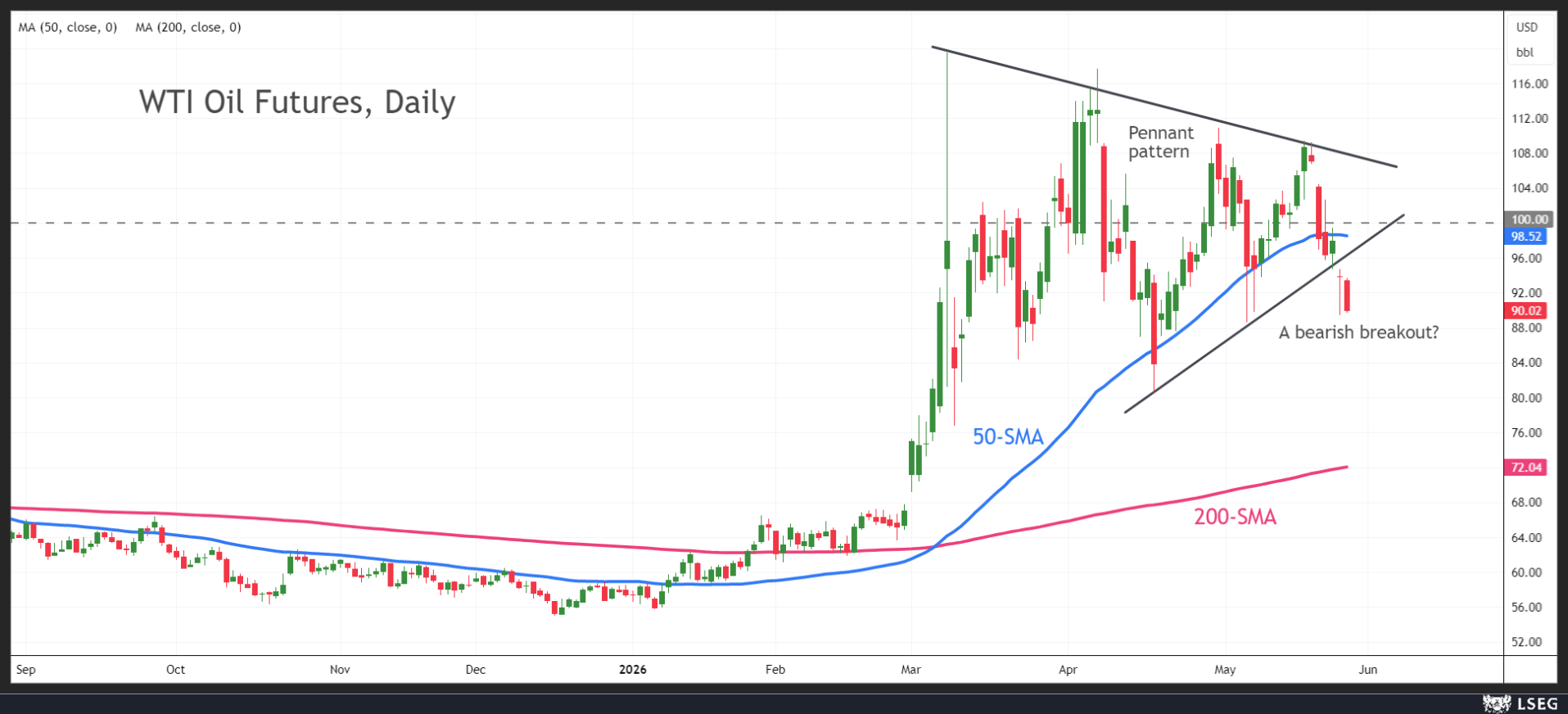
The guarded optimism that kept oil from surpassing the March 9 peak of just below $120 a barrel but still very elevated near $100 barrel, has given way to the bears. News over the weekend that the US and Iran standoff could soon be over has led to a downside breakout below the pennant.
Is Oil turning bearish?
At this point, the risk of this being a false breakout is quite high, as a lot could still go wrong in the negotiations and there’s already been one military flare-up this week. Whilst there are a number of sticking points that must be resolved, the two most critical ones are about Iran’s nuclear disarmament and control of the Strait of Hormuz.
The fact that Iran appears to have agreed in principle to give up its highly enriched uranium in return for sanctions relief is encouraging. It’s also positive (for the global economy, not so much for the oil rally) that both sides are prioritizing the reopening of Hormuz.
Trump wants a deal
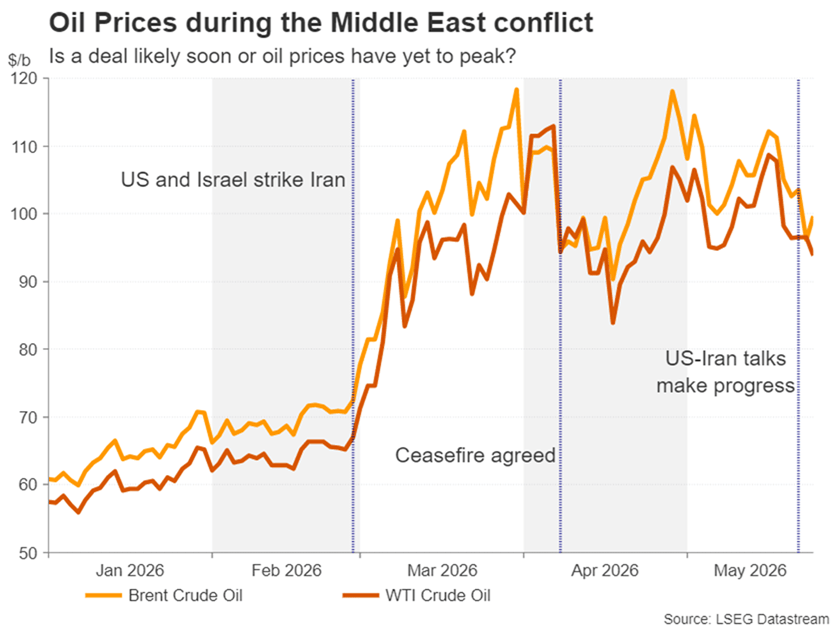
With regional mediators and powers stepping up diplomatic efforts, and President Trump signalling his willingness to allow the negotiators some time to work out the details, there is a good reason to be hopeful. However, the devil is in the details and so an agreement could take far longer than anticipated, not to mention the risk of the talks breaking down, particularly over the thorny issue of Tehran handing over its enriched uranium.
So where does all this leave oil supplies? Even in the best-case scenario that the US and Iran end their respective blockades of the Strait of Hormuz, it could be some time before any deal goes into effect and after that for energy flows to fully normalize. Hence, there’s a danger that it may be too late for the energy market to avoid a crunch point.
Are energy shortages looming?
One of the reasons why oil prices didn’t skyrocket even higher during this crisis is that most countries had significant inventories of crude oil and natural gas to fall back on. But with only a handful of oil and LNG tankers being allowed to pass through the Strait, some countries could begin to run out of stockpiles within weeks.
Many governments have sounded the alarm about impending energy shortages, taking various contingency measures, but it’s unclear how well prepared the world is for a worsening energy crisis if the Hormuz issue isn’t resolved soon.
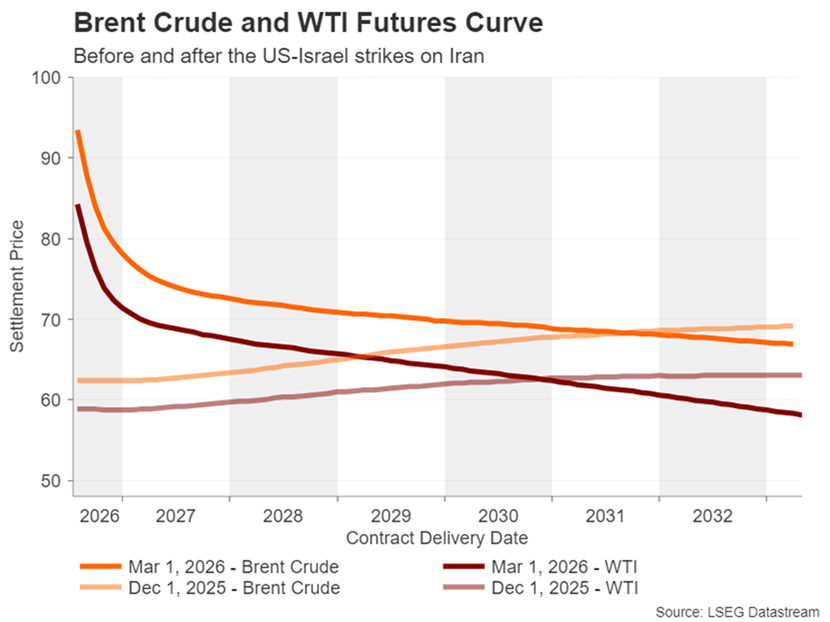
Yet, even with inventories depleting at a worrying speed, oil traders don’t seem too concerned. In fact, the oil futures curve has been in backwardation since March, signalling that oil prices will begin to fall substantially towards the end of the year.
Gulf Oil buyers look elsewhere
This may not be totally improbable. There are several factors why the energy crisis may not be as serious as many people fear. Despite all the headlines, the Strait of Hormuz isn’t completely closed off, and some oil and gas shipments have been able to get through. Moreover, both Iran and Saudi Arabia – the region’s largest producer – have alternative export routes to the Persian Gulf, so they are still able to export some oil.
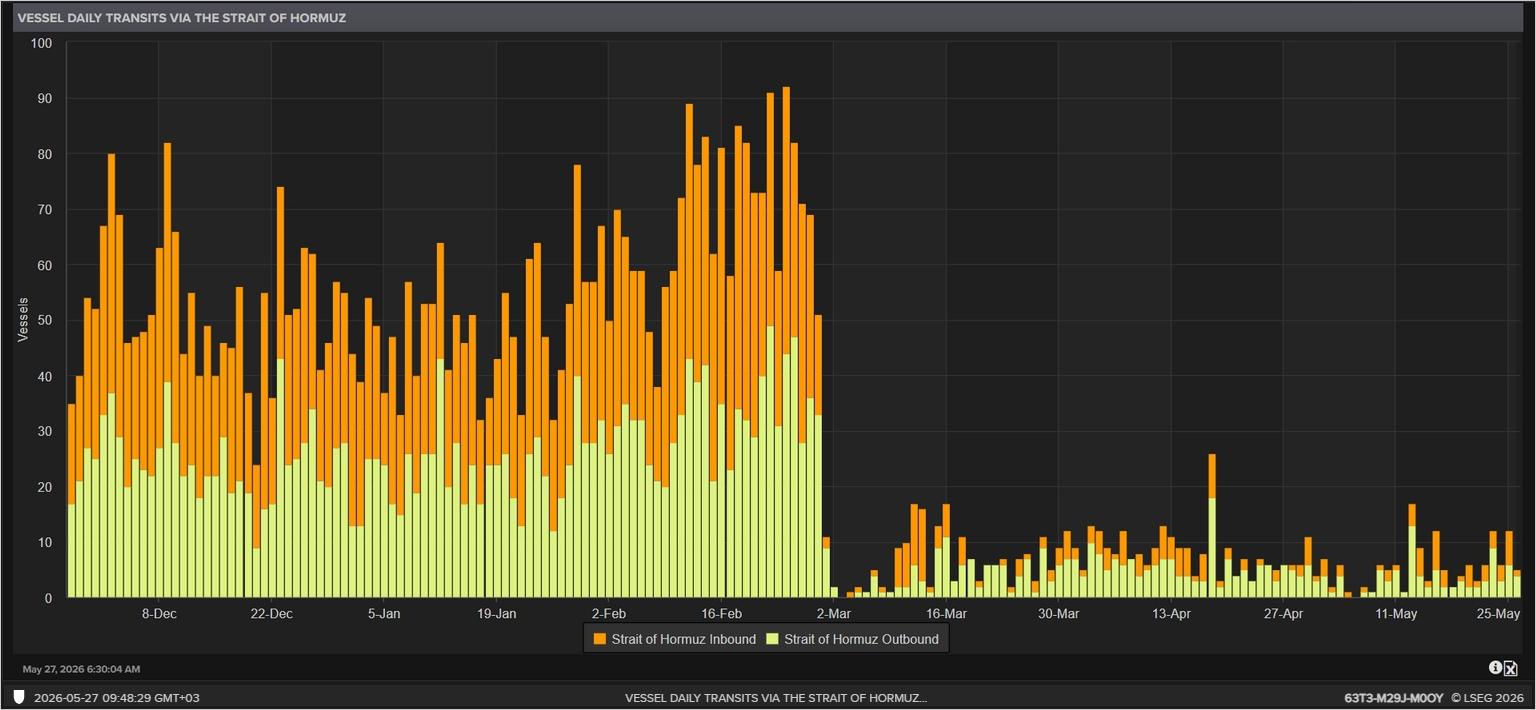
Primarily, though, Iran’s largest customer – China – continues to buy Iranian oil, maintaining at least 50% of its imports from the country. In the meantime, India, which is another big energy importer, has been able to buy more oil from Russia, following the easing of some sanctions on Moscow to alleviate the oil supply problems.
Aside from Russia, other countries such as Brazil and Norway, not to mention the United States, have benefited too from the blockade of Hormuz. This diversification away from the Middle East, not just towards alternative suppliers but also towards alternative sources like renewable energy, could prevent the energy price shock from becoming too acute.
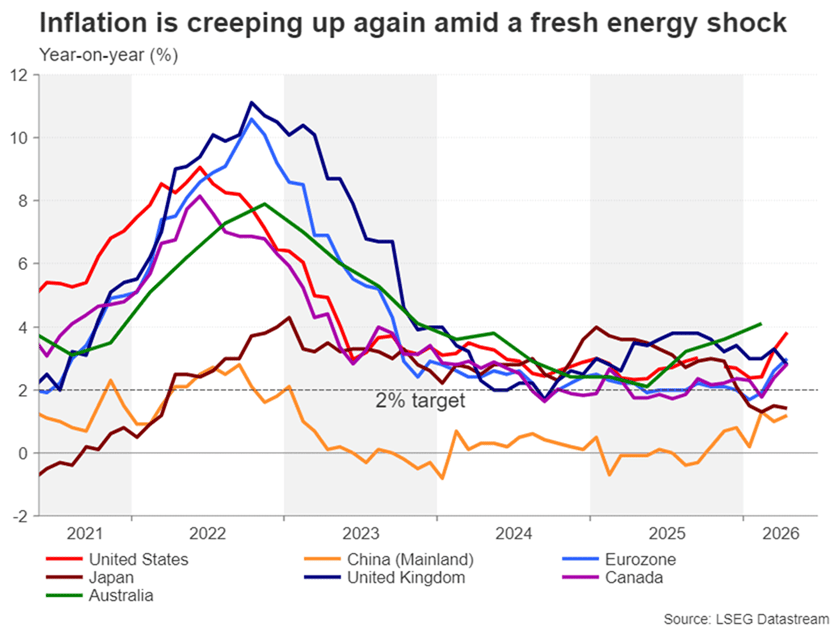
Inflation is on the way up
However, it’s not just the disruption to oil and gas exports that poses a major inflation headache. The region is a key hub for other vital exports around the world such as agricultural fertilizers, industrial chemicals, petrochemicals, and even aluminium. Hence, one way or another, the inflation effect will be felt.
More crucially, the backwardation in the oil futures curve could be explained by the anticipation that at some point, higher energy prices will cause demand destruction, rather than by the optimism that the US and Iran will be able to settle their differences quickly and reach a deal.
Demand destruction can occur not just from the higher prices themselves, but from higher interest rates too, as central banks would need to respond to rising inflation. According to the World Bank, a 10% jump in oil prices causes a 0.35% rise in global inflation within a year and a 0.55% increase within three years.
Rate hikes are coming
If those estimates are applied to the current crisis and taking the international benchmark of Brent crude as the oil price, then the 60% year-to-date gain could lead to a more than 2% increase in global inflation next year. With inflation in most countries already above central banks’ 2% target, such an acceleration is enough to warrant tighter monetary policy.
So far, only the US Federal Reserve appears to be looking through this latest inflation uptick. If there is a deal soon, it may just get away with keeping interest rates on hold. But a more likely outcome is that it will be months before oil prices retreat substantially below the $100 region and the Fed will have no choice but to follow its global peers in hiking rates.
The bigger question mark, though, may not be whether interest rates will go up or not, but by how much. Right now, there’s a greater risk investors have been too conservative with their rate hike expectations and once reality hits, they will overcompensate by pricing in more tightening than is needed. However, if the worst-case predictions do not materialize, a relief rally is almost certain to follow.